
Bozcaada – A Sunday of Church Bells, Castle Walls and Windmills
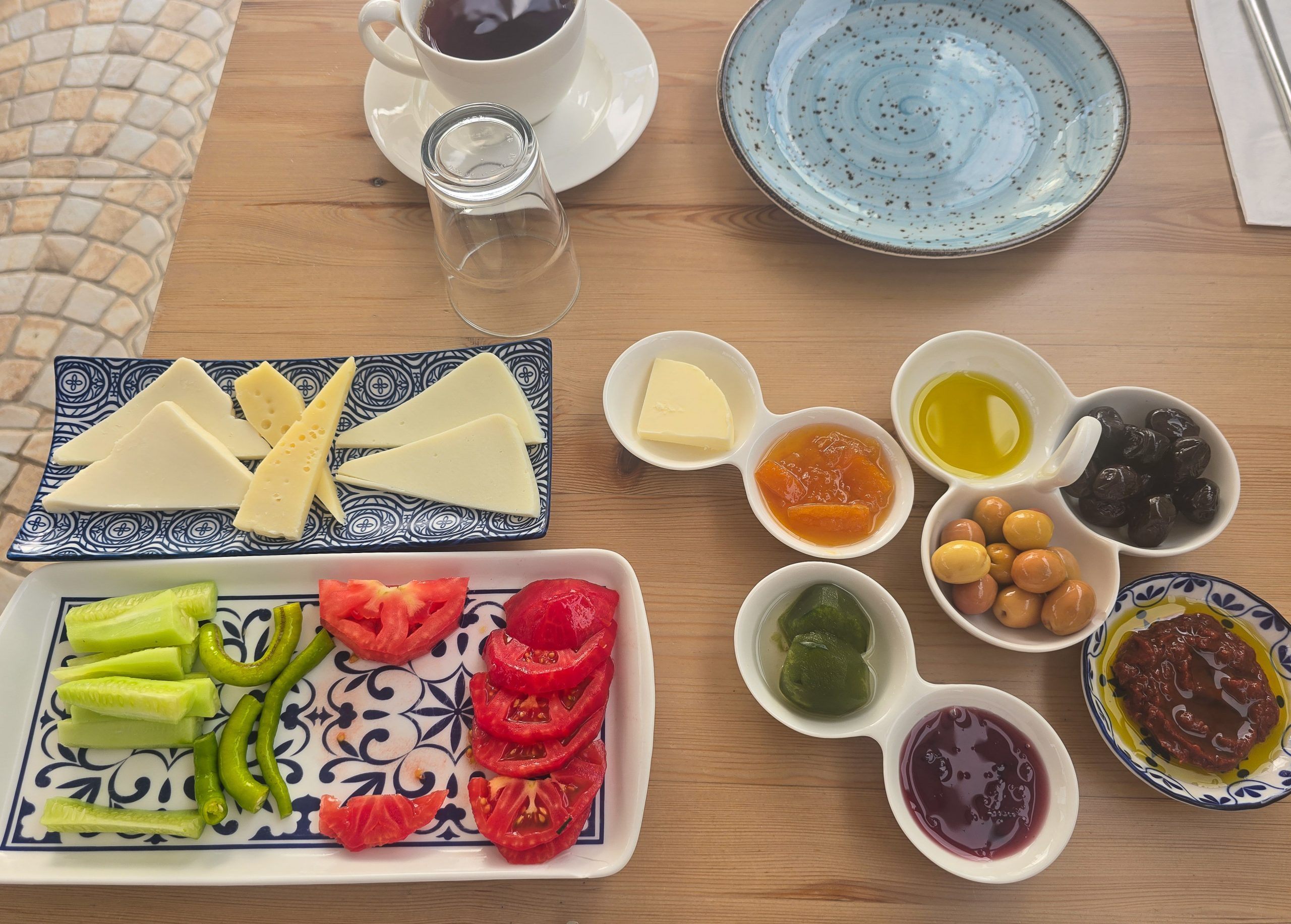
This morning on Bozcaada, the day began with Rabia appearing like a breakfast fairy on the roof terrace, carrying yet another feast. Today’s preserves were sour cherry (my favourite), fig and apricot. The cheese omelette, pastries and cakes that followed made for the best start to the day we could have hoped for.
Today had an added layer of curiosity. It was Sunday, and we’d been wondering whether the Church of the Virgin Mary in the village was still active. As we tucked into our feast, our answer arrived on the breeze before we’d even finished our tea — the sound of church bells drifting in through the open windows. That was enough to send us straight into the centre of the village after breakfast.
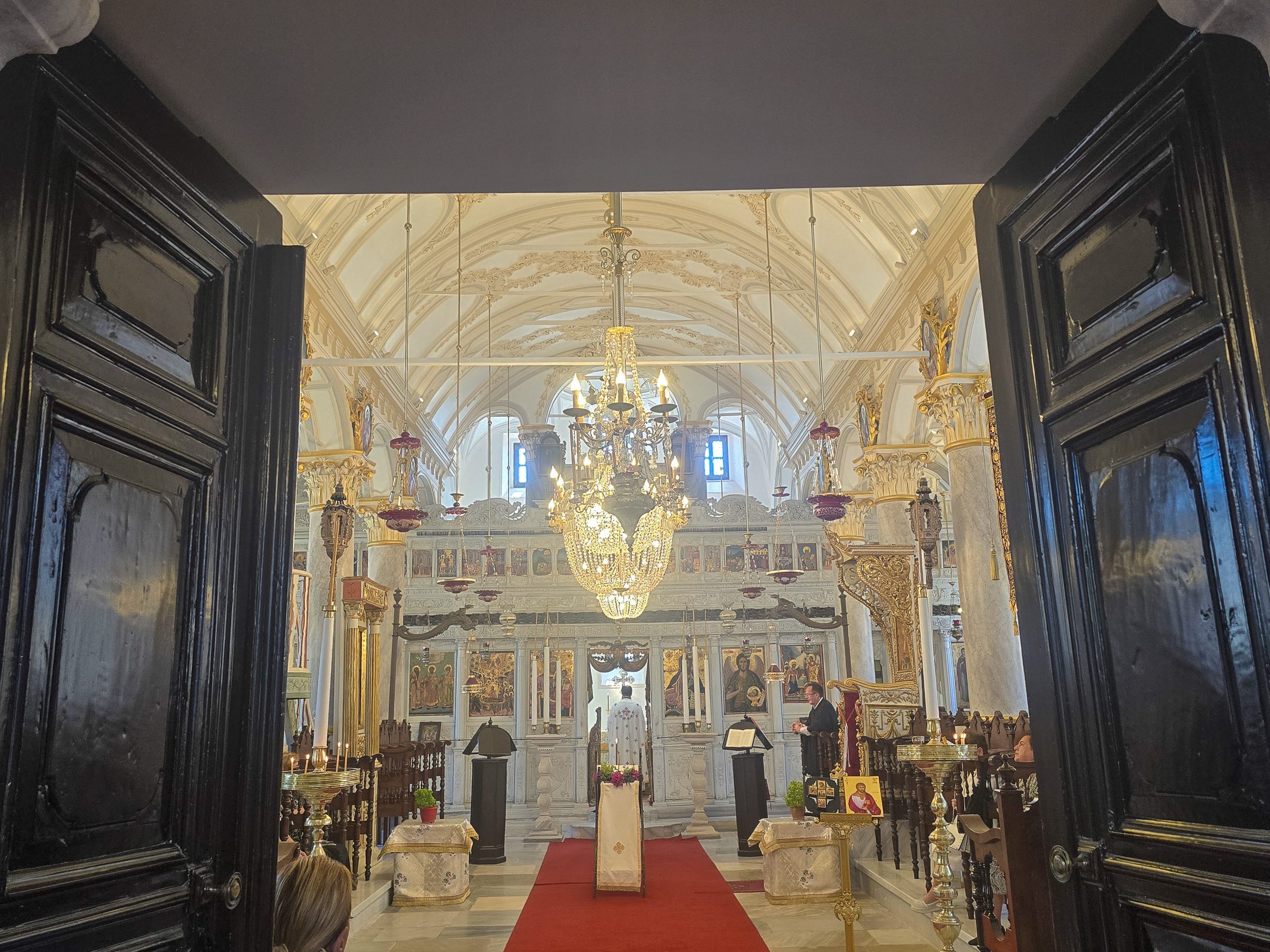
The big iron gates, that had until now been shut tight, were wide open. We stepped into the courtyard feeling a bit hesitant, and found the doors to the church open too, revealing a tiny congregation inside. There couldn’t have been more than a handful of people. A priest chanted the liturgy in Greek — fragments of sound rising and falling in that familiar way — and for a moment the island’s Greek past felt very close. We stayed just long enough to absorb the atmosphere, though both of us felt a little like voyeurs despite Peter being an Orthodox Christian himself. Still, it was moving to see this thread of heritage continuing quietly here in this little part of Anatolia.
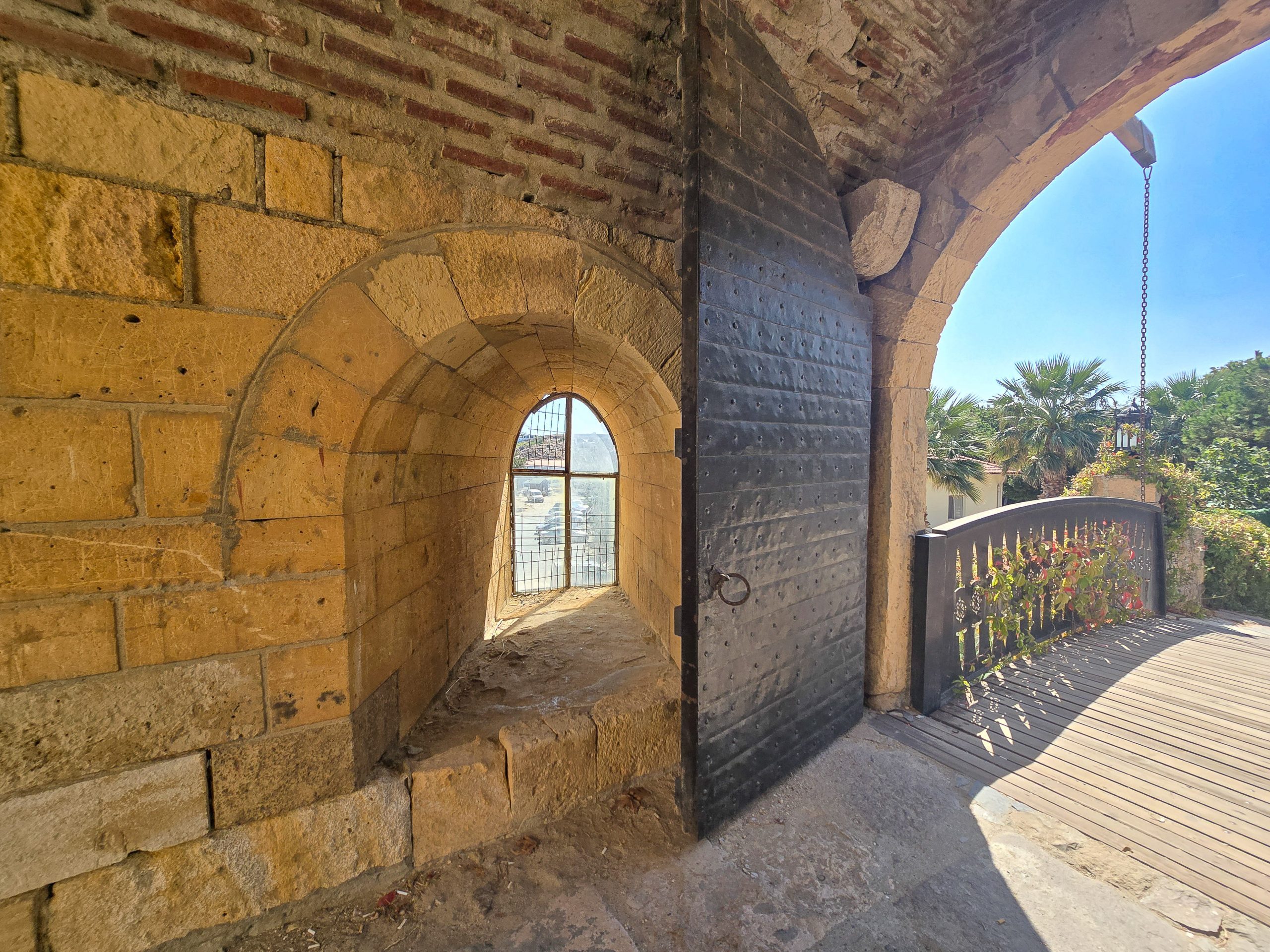
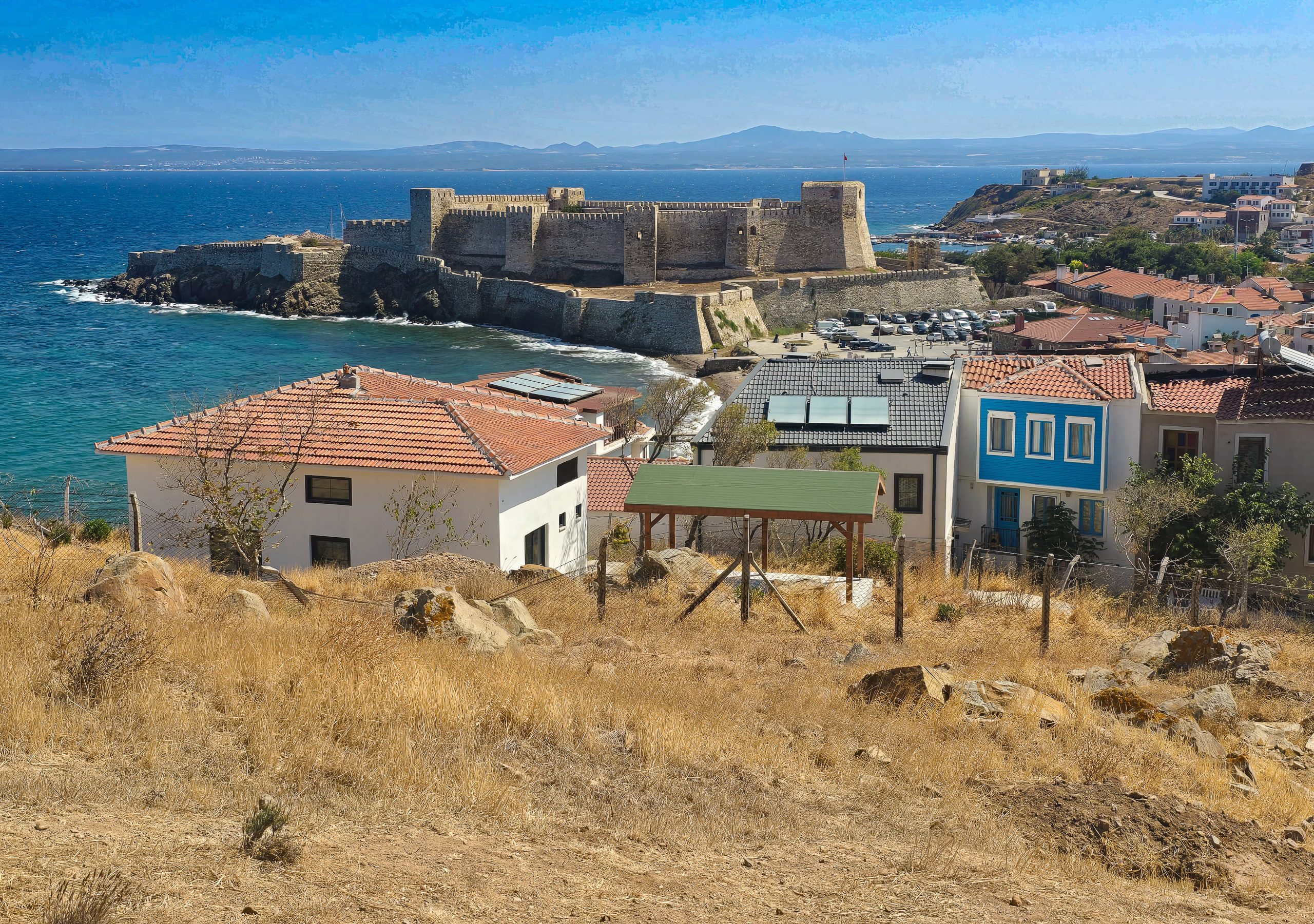
With no real plans for the rest of the day, we decided to turn our attention to Bozcaada Castle. It’s impossible to ignore as it dominates the harbour and village — and we do like a castle! At the entrance, the ticket booth was empty, but the huge wooden doors were open. We crossed the bridge, and inside the castle grounds, we found a café kiosk and a small cash tin on a table. Tickets, Turkish island style.
If Bozcaada Castle looks imposing today, it has every right to — it’s been built, demolished, rebuilt, dismantled and resurrected repeatedly. According to myth, it all began with King Priam of Troy, who commissioned a fortress sturdy enough to withstand any naval attack, which he named Tenedos. The Venetians later constructed their own mighty version on the same spot, borrowing bits of Byzantine masonry, and then spent years squabbling with the Genoese over who it actually belonged to. This ended in 1381 with a peace treaty that declared the island a neutral zone, demolished the fortress entirely and removed the island’s population to Crete.
The Ottomans rebuilt the castle yet again under Mehmed the Conqueror in 1478–79, only for the Russians and British to come along in 1807 and reduce it to ruins once more. When the Ottomans regained control, Mahmud II ordered an extensive restoration — the fortress equivalent of picking yourself up, dusting yourself off and starting over. The most recent repairs took place between 1965 and 1970, which probably felt like déjà vu for the poor castle.
Originally, the whole structure was separated from the town by a 10-metre-wide, water-filled moat stretching 250 metres, complete with a drawbridge that could be hoisted up with chains and pulleys. Today it’s filled in and far less dramatic, but once you know its history, it’s hard not to view Bozcaada Castle with a certain admiration.
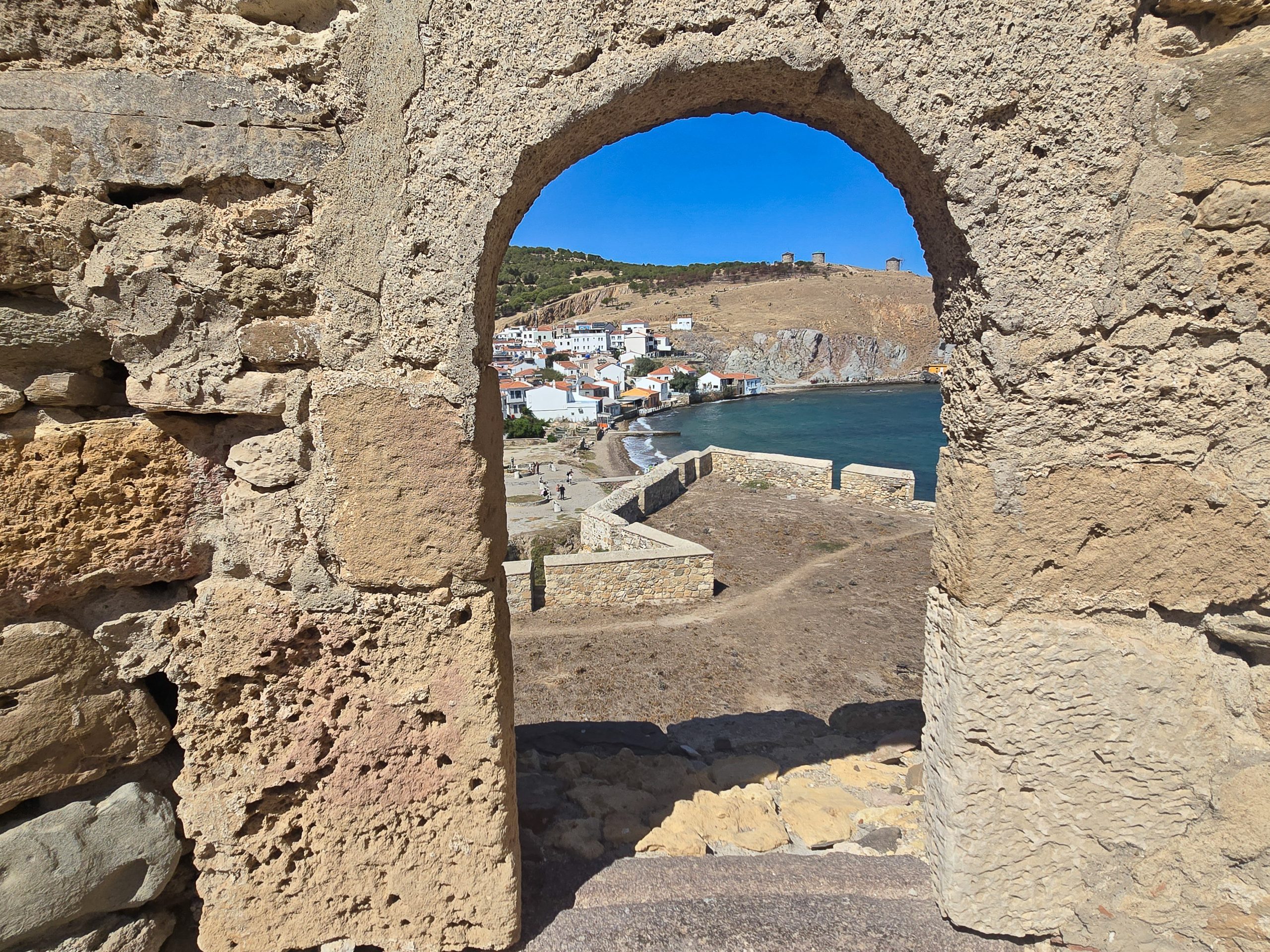
We climbed the paths through the fortified layers until we reached the lighthouse bastion. After the Russians left the island and the castle in need of repair, Sultan Mahmud II stepped in. Determined to strengthen the Dardanelles, he ordered major fortifications, including artillery batteries positioned to watch the straits. Sultan Abdul Hamid II later added further defensive structures. Today, the bastions host little more than tourists looking for good photography angles, but the sense of history is thick in the air. From the ramparts, the views were superb — the deep blue Aegean stretching out to meet the curve of Bozcaada’s beach, the cluster of windmills perched on the hill, and the harbour shimmering below.
At the top of the gravel walkway stands the mosque, said to be the first mosque built on any of the Aegean islands, constructed soon after the Ottomans took the island in 1455. If I hadn’t read the signage, I wouldn’t have realised it was a mosque. The minaret was long gone. During the Gallipoli campaign, the castle was used as a makeshift hospital. A photograph from 1915, taken by a French doctor, is the earliest known image of it.
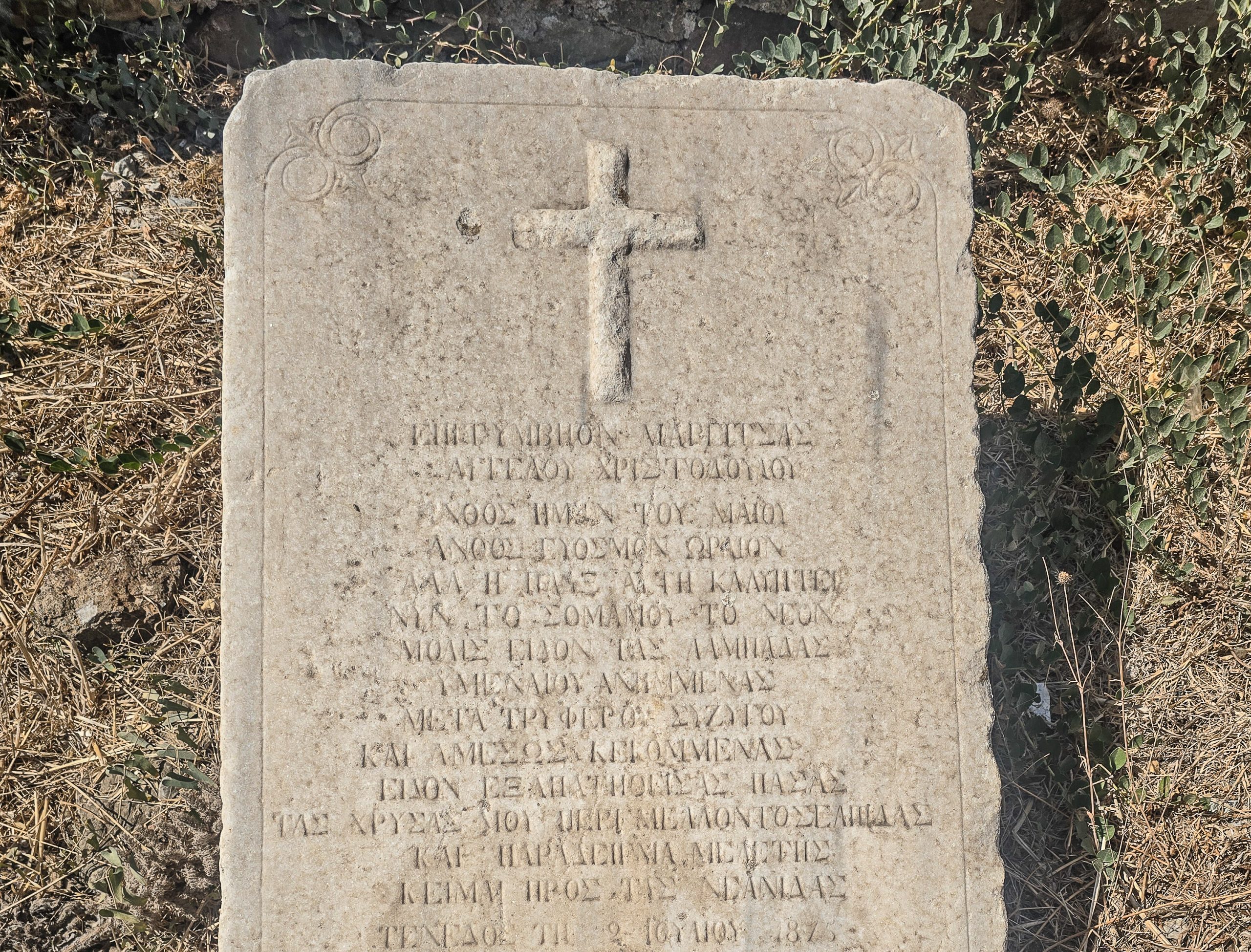
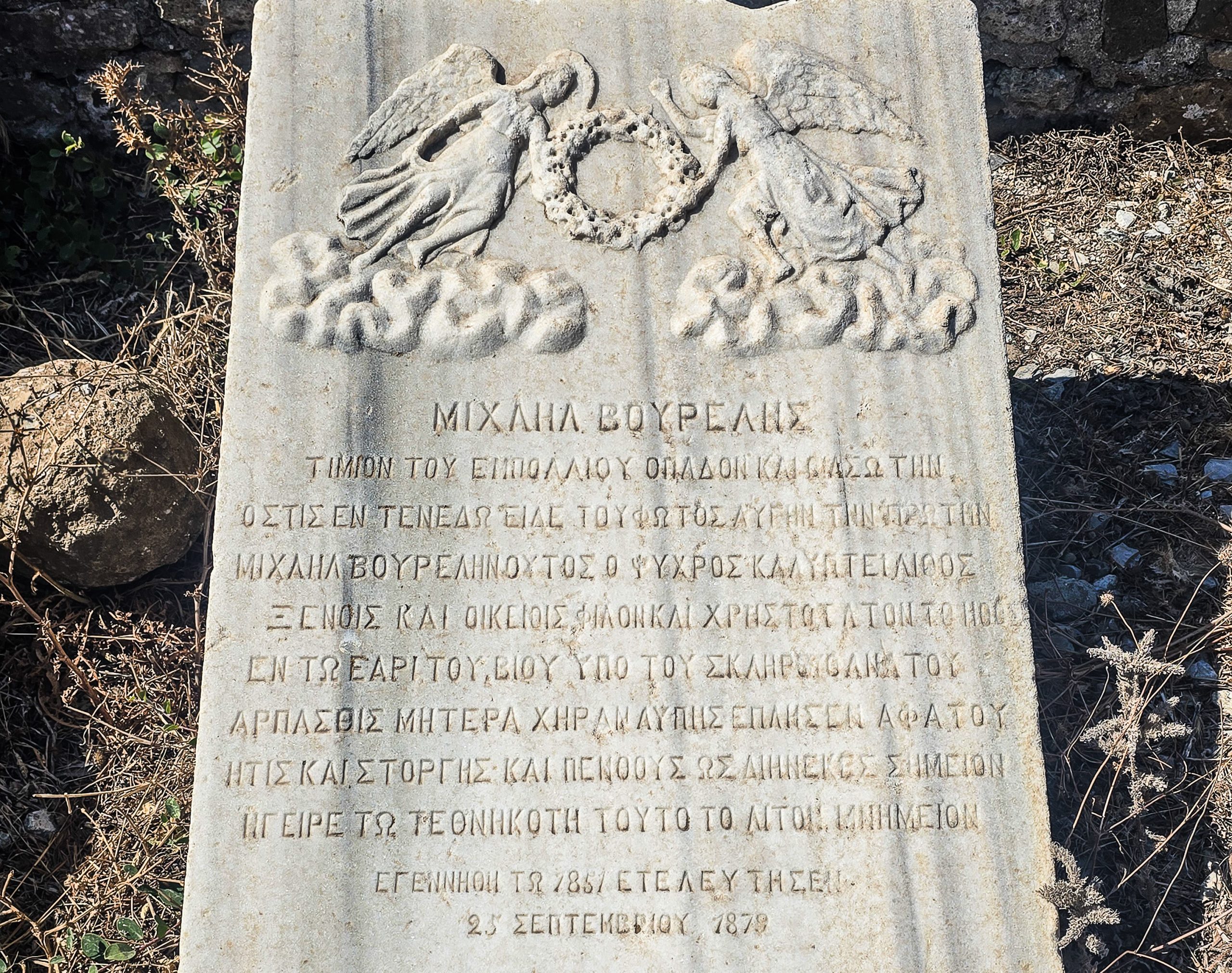
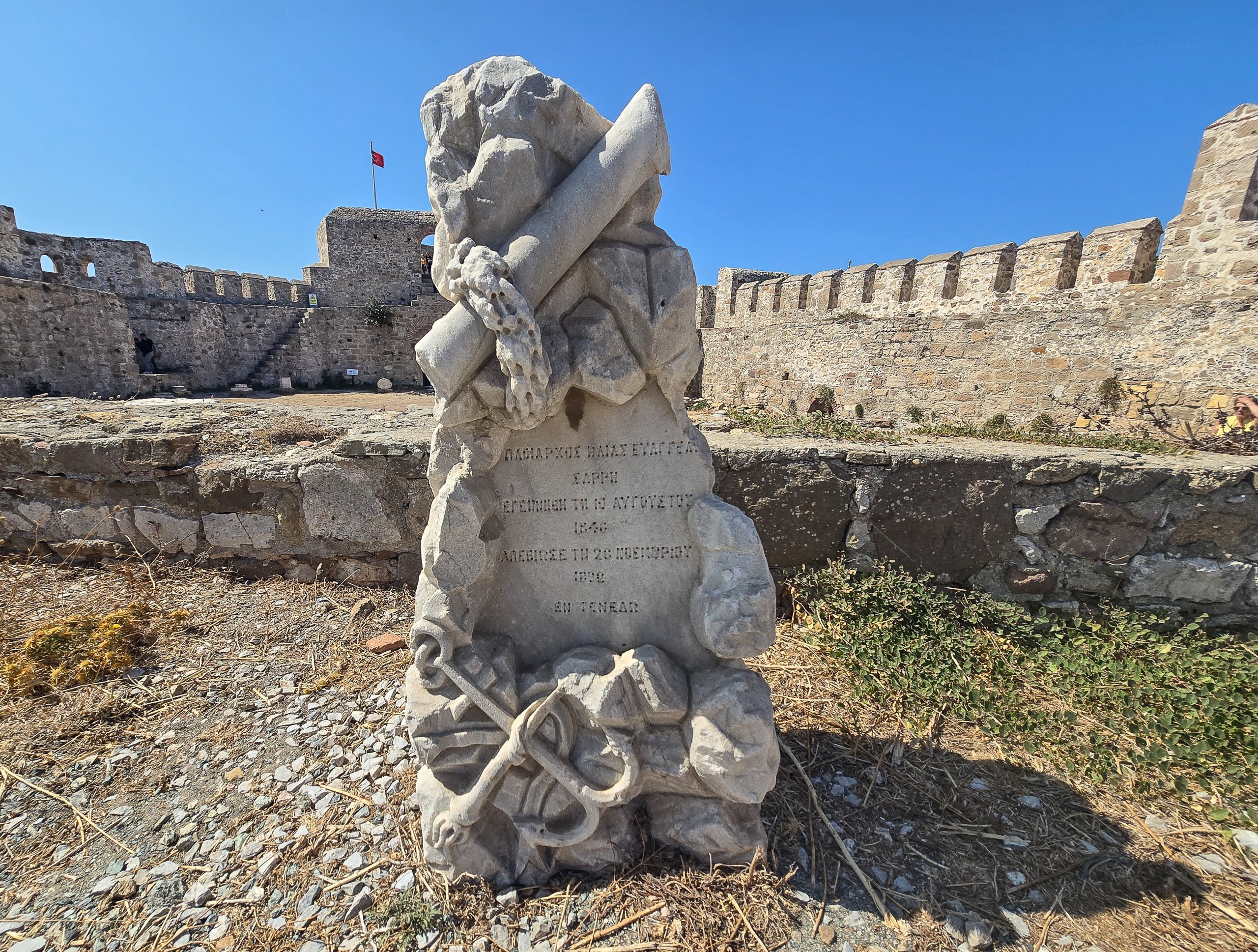
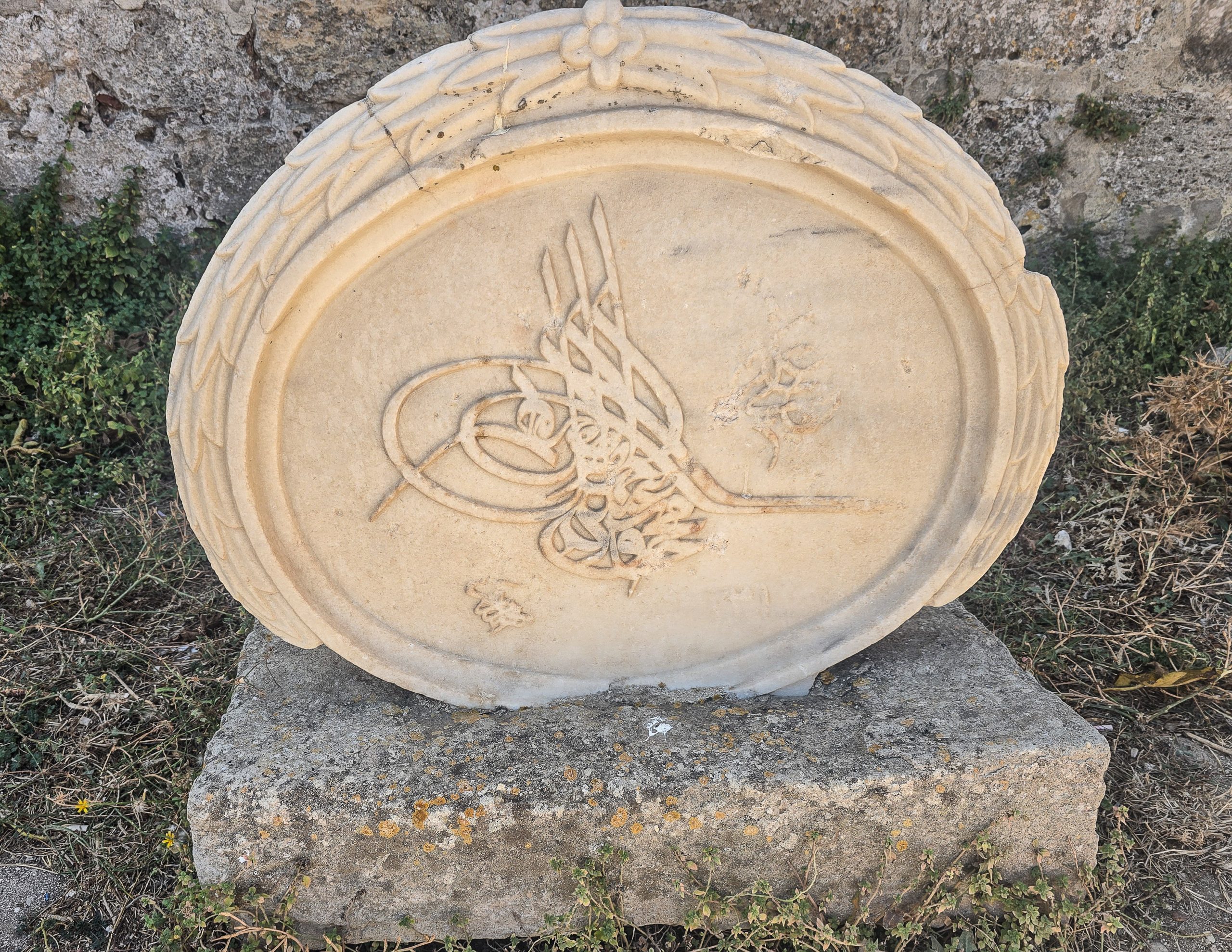
In the courtyard we also found the Epitaph of the Bastion, part of the so-called New Fortress built by Hafız Ali Pasha during the reign of Mahmud I. A small, slightly overgrown side area contained several Greek headstones from the late 1800s and some old Ottoman ones too. There wasn’t any indication as to their significance in the castle context. Nearby was the Tugra of Sultan Mahmud II, the elaborate imperial signature declaring him “Victorious, always just.” Tugras are beautifully stylised calligraphic insignias used by Ottoman sultans, and this one is carved right into the stone.
The most striking feature of the castle is its polygonal tower. Taller and stronger than the other bastions, it’s topped with an enormous nine-metre dome. This domed ceiling instantly reminded me of the Greek tholos tombs — that same hypnotic, beehive-like swirl. In reality it’s an Ottoman-era dome, part of the 17th-century castle bath built by Köprülü Mehmet Pasha. The concentric brick rings create a beautiful spiral effect, a kind of architectural fingerprint that links Bozcaada’s Ottoman history with much older building traditions across the Aegean.
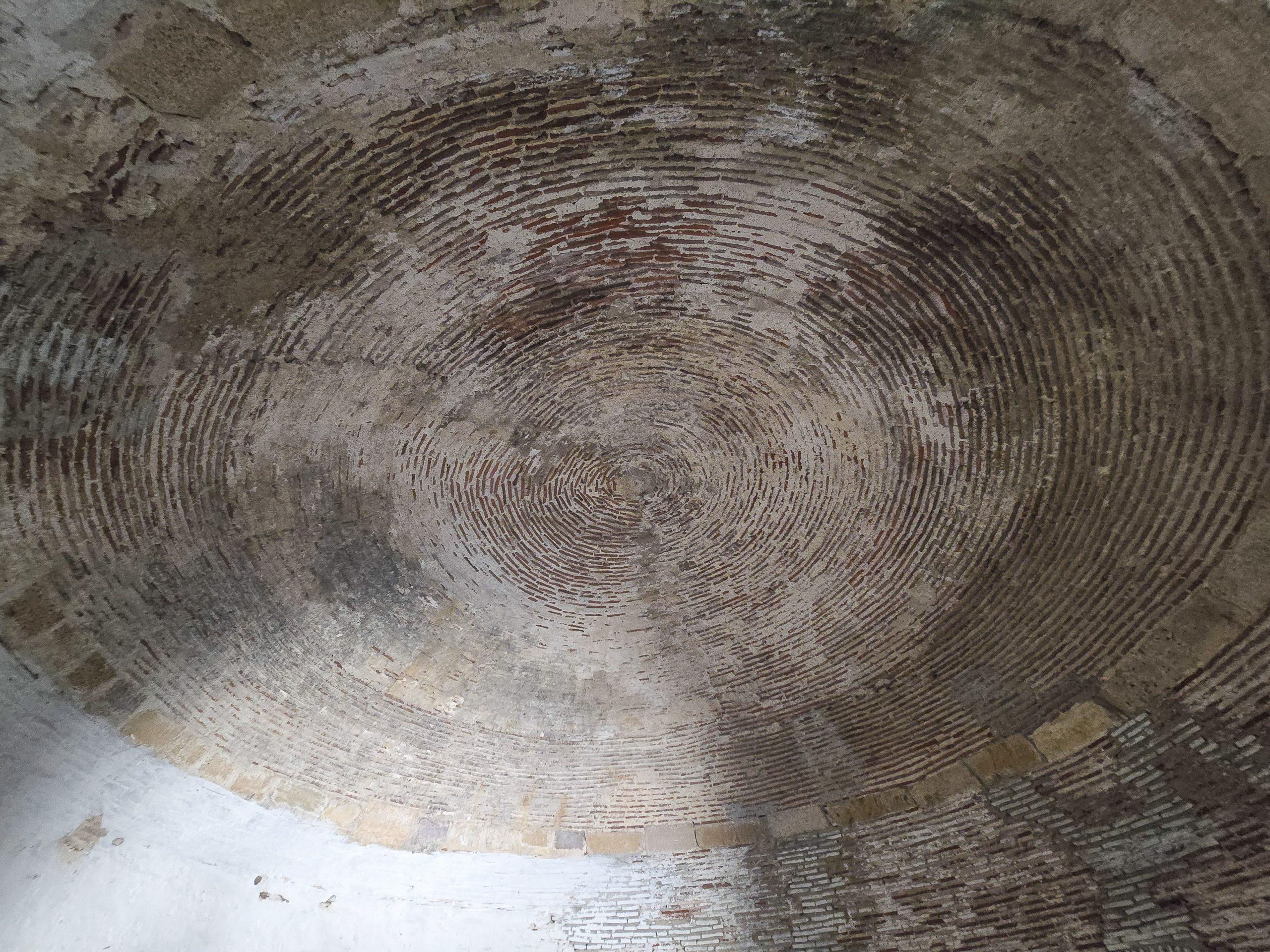
Inside the tower, there were several information boards, one of which told the story of the myth of Tenes — the island’s legendary namesake. The story goes that Tenes whose father Kyknos, king of Koloni, threw him and his sister into the sea after being tricked by their stepmother (I’ll spare you the lurid details). Poseidon guided the chest safely to Bozcaada (then called Leucophrys), where Tenes later became king and gave the island its ancient name, Tenedos. We all love a bit of myth with the history!
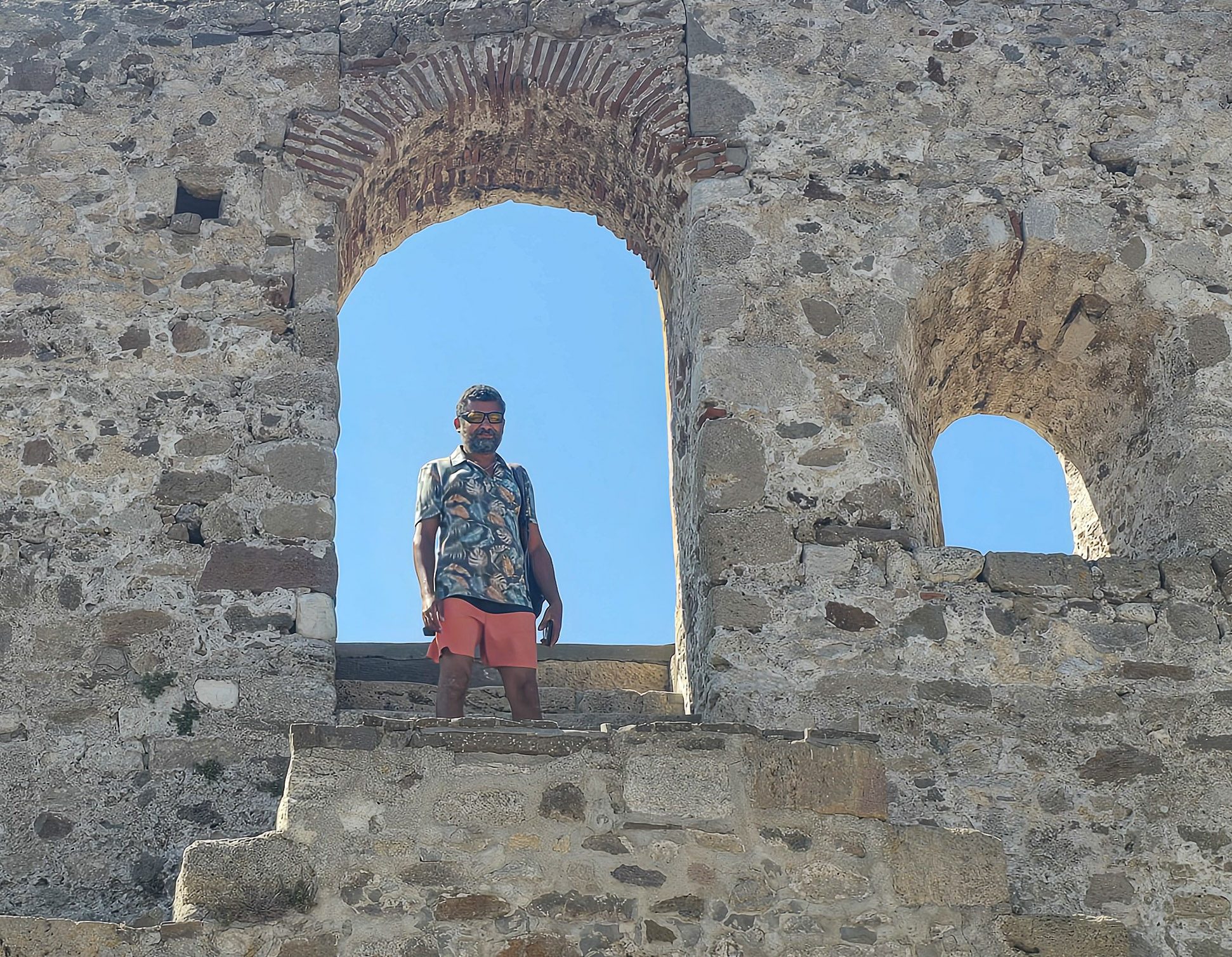
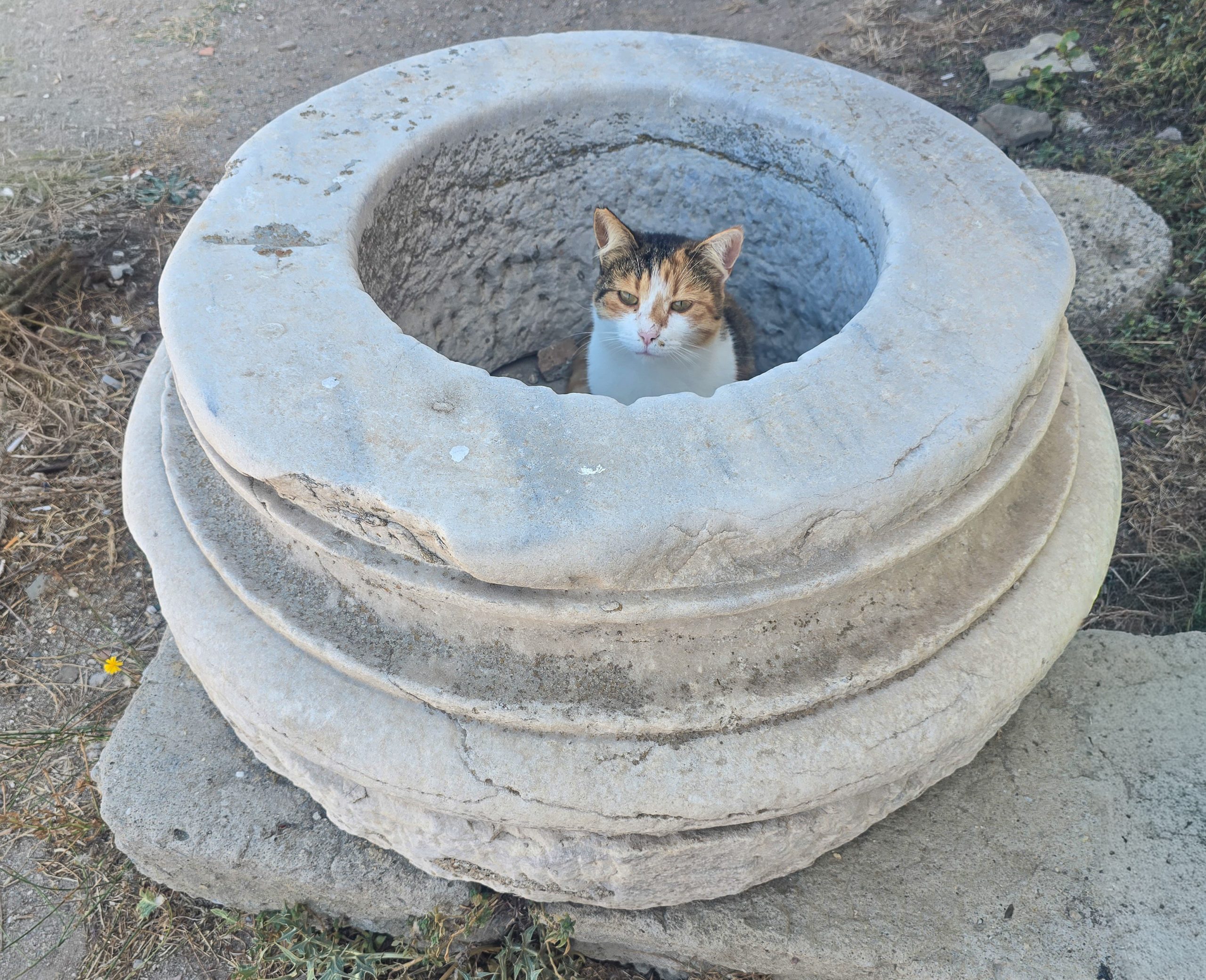
The arches around the top once served military observation and defence. Now they make perfect posing frames for Instagram photos. Peter is always a little awkward when posing for photographs – he hates it (as do I), but this little cat nesting amongst the marble remains was far more obliging!
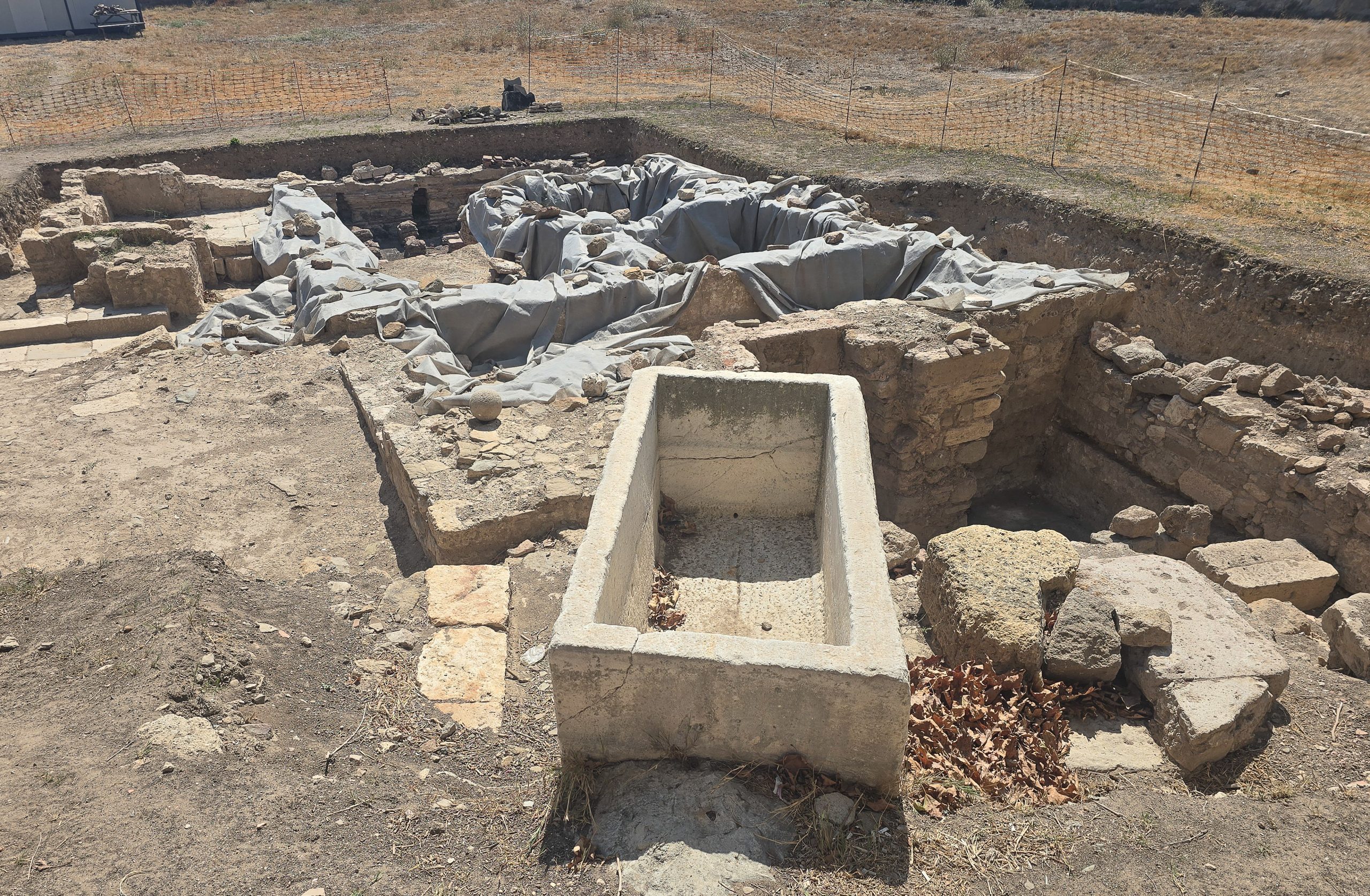
After an hour or so wandering through every nook and cranny and admiring the views, we made our way back down to the castle courtyard where we stopped for refreshments. Another curiosity sits just below: Still undergoing excavation, the castle baths, built in 1658 by Grand Vizier Köprülü Mehmet Pasha after the Ottomans retook the island from the Venetians. Baths were central to Ottoman castle life — essential, practical and social.
Now, Peter had his sights set on the windmills. I was a bit dubious as sun was not at fully force and it looked a fair trek. Nonetheless, we made our way along the coastal path passing a couple of little spots we hadn’t yet discovered. The heat was draining so we stopped again at another cafe where I couldn’t resist another glass of the lavender juice I’d developed a taste for. Maybe it was a delaying tactic – I mean, who climbs hills in the midst of the midday heat? Apparently a mad Egyptian (no dogs) and an Englishwoman whose tenacity clearly outpaces her stamina.
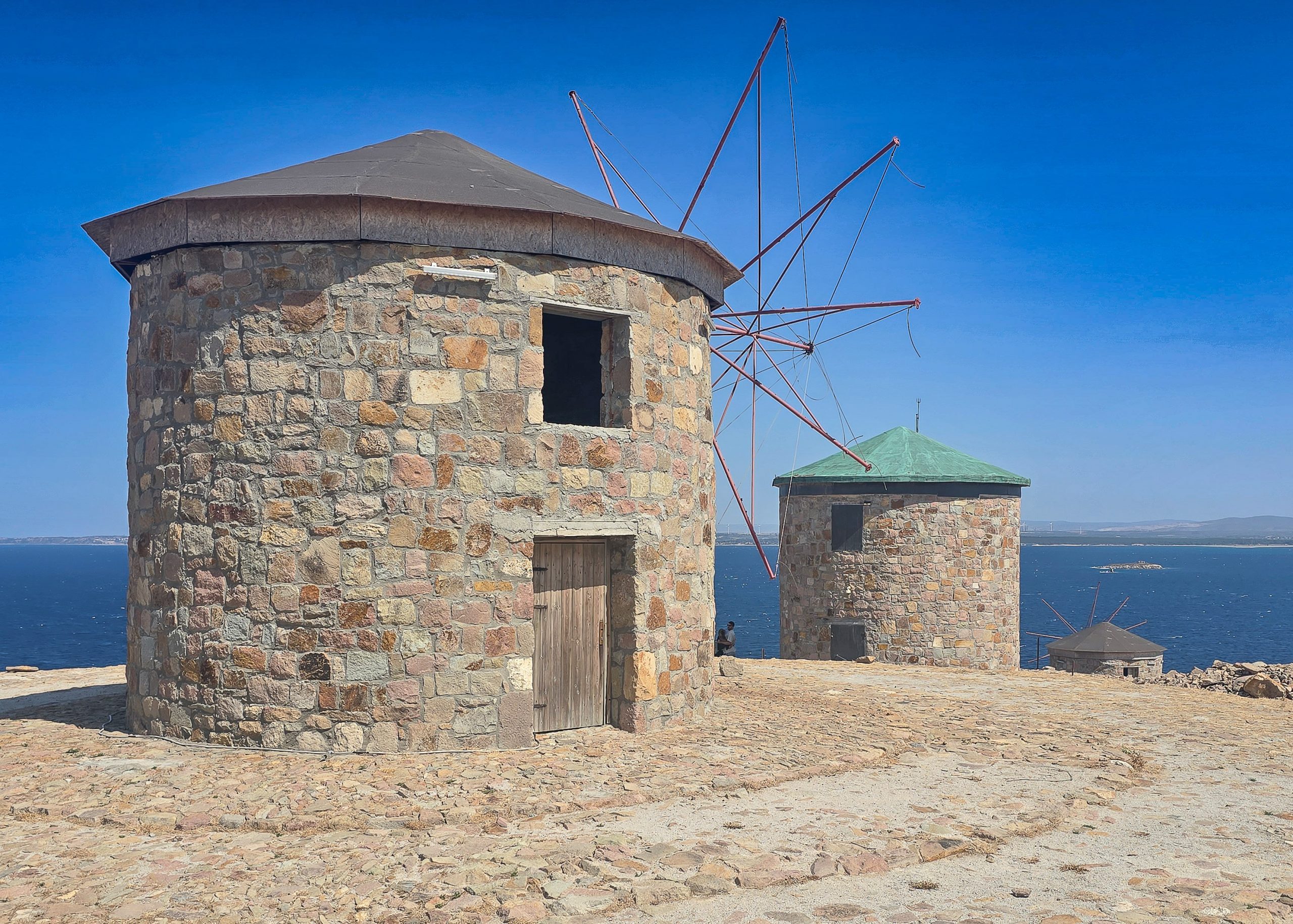
Actually, it looked higher than it actually was, and the slow climb was very doable – even for me. The windmills were still in good shape, a couple even retaining the skeleton of their sails. From the top of the hill, the views stretched down to the castle and over to the mainland, and over to the right, views to the green, forested interior of the island. As I watched cargo ships sailing towards the Dardanelles, I was reminded again that I WASN’T in Greece. Bozcaada had felt so familiarly Greek to me – the architecture and the blue-green waters of the Aegean. With this view, I couldn’t help but stop and reflect. What I was seeing was the legacy of earlier generations, maintained over time by both Turks and the island’s remaining Greek families. Perhaps that’s why I’ve always gravitated toward the parts of Greece where cultures intersect rather than stand apart. It gives a place depth.
After all of the exertion in the heat, we felt we’d well and truly earned our dinner that evening! Back in the village, we wandered the alleyways again, finding little corners we hadn’t yet discovered. Posters on noticeboards hinted at a surprisingly full cultural calendar. We tried the museum, but it was closed — out of season, island life once again dictating its own timetable.
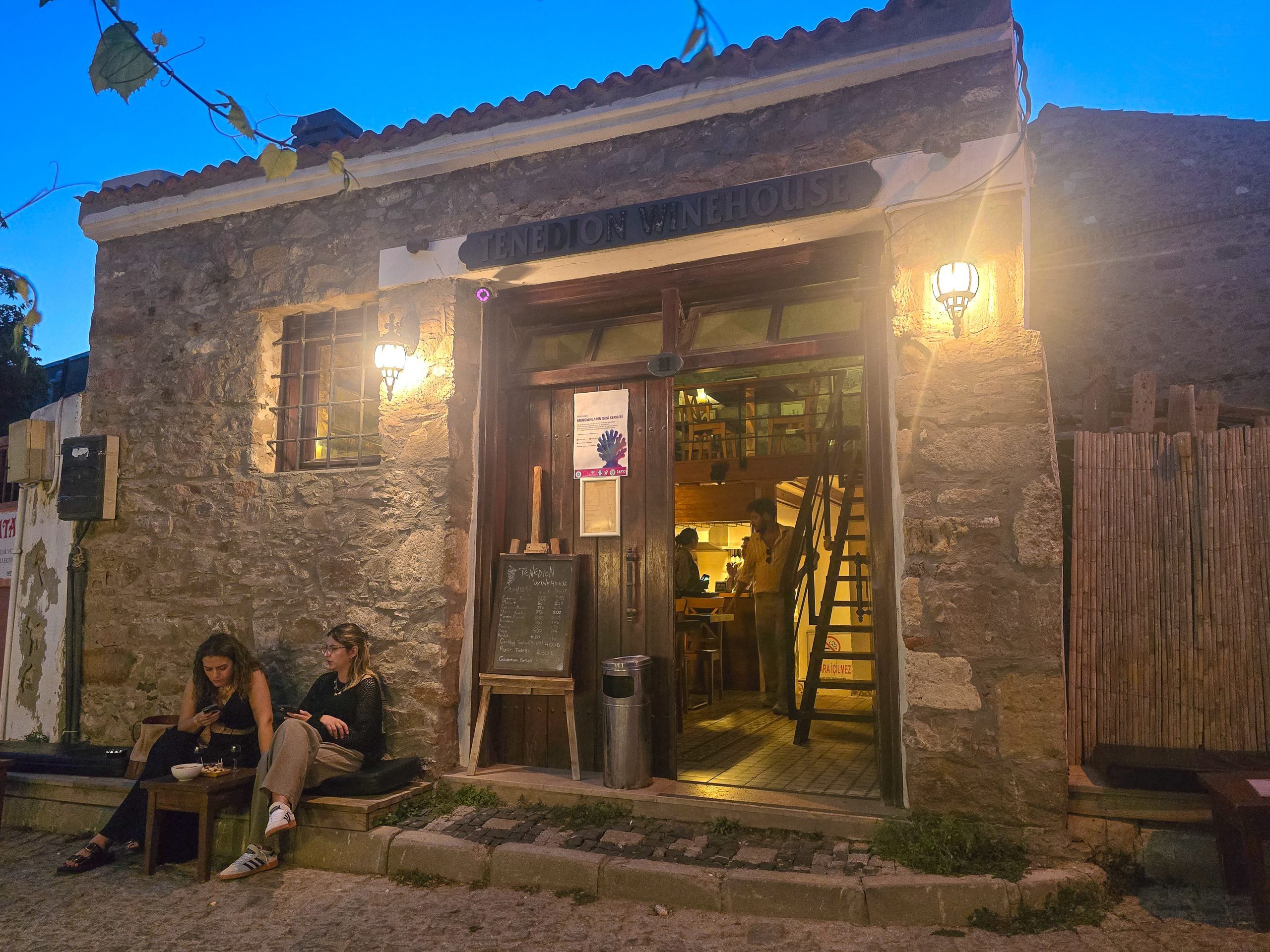
Later that evening, we headed out for the wine tasting we’d promised ourselves. How could we come to an island like Bozcaada and not sample its most famous product – the most significant of the island’s Greek heritage that we could see, feel and taste! We climbed the cobbled path up towards the church and along the side street to the Tenedon wine house. The interior was atmospheric — dark wood and soft lighting, modern but with a quiet nod to the old island wine cellars. Outside, stone mastabas lined the walls, scattered with cushions, and little square tables waiting to be laden with wine. Once we’d decided how many wines to taste (we decided on ten!), we settled down at our table and waited for the magic to begin.
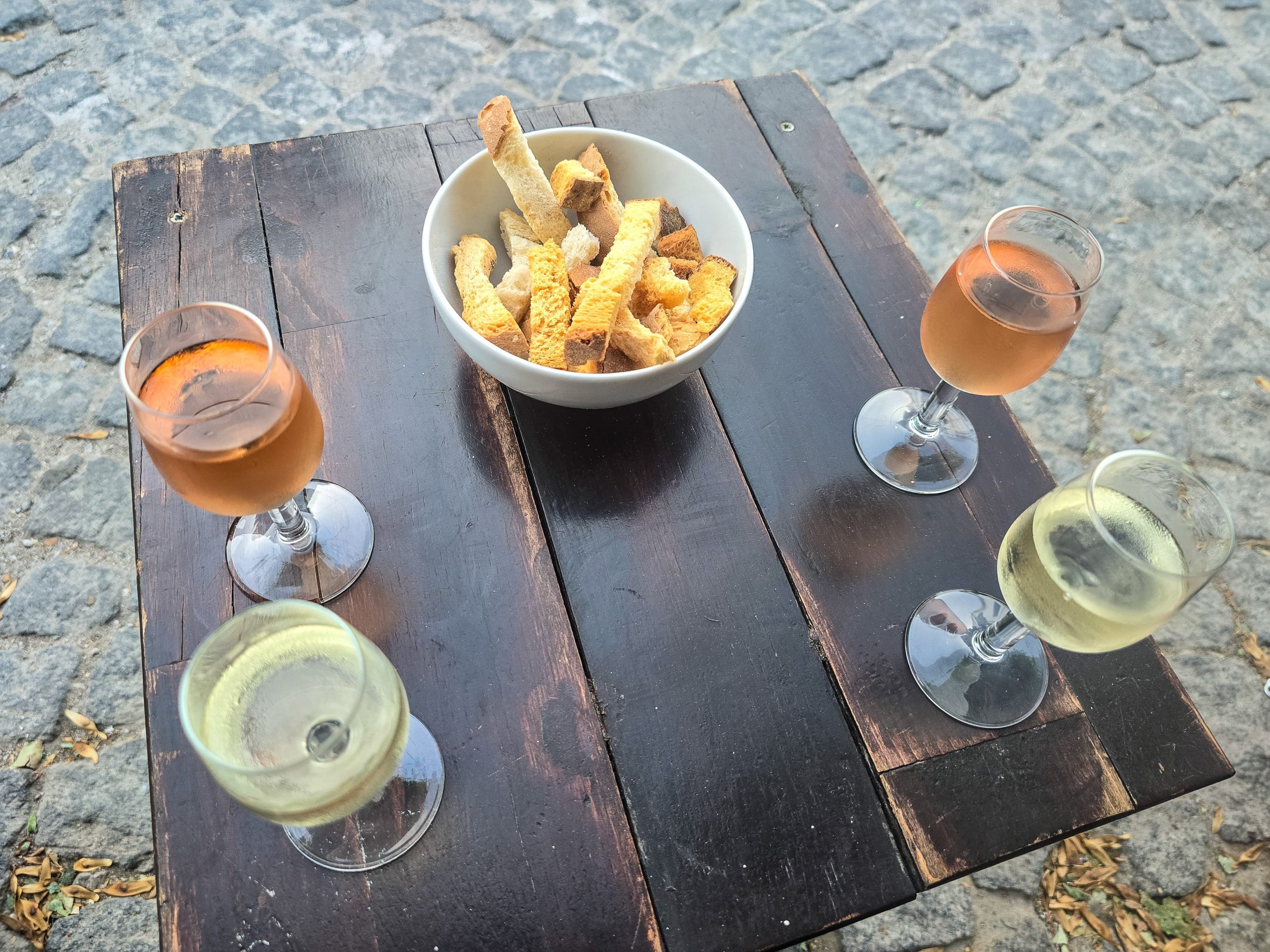
We were presented with our first two wines. I was glad that they didn’t all appear on the table at once, especially as the table couldn’t have been more than fifteen inches square. These were also accompanied by smoked cheese, dried bread cubes and tasting notes. The selection of wines began with white and rose and finally with red. Although Peter and I are wine drinkers and know what we do and don’t like, connoisseurs we are not. Even so, we dutifully sipped, nodded in thoughtful approval, and made our choices in a rather unscientific, “that one tastes nice” sort of way.
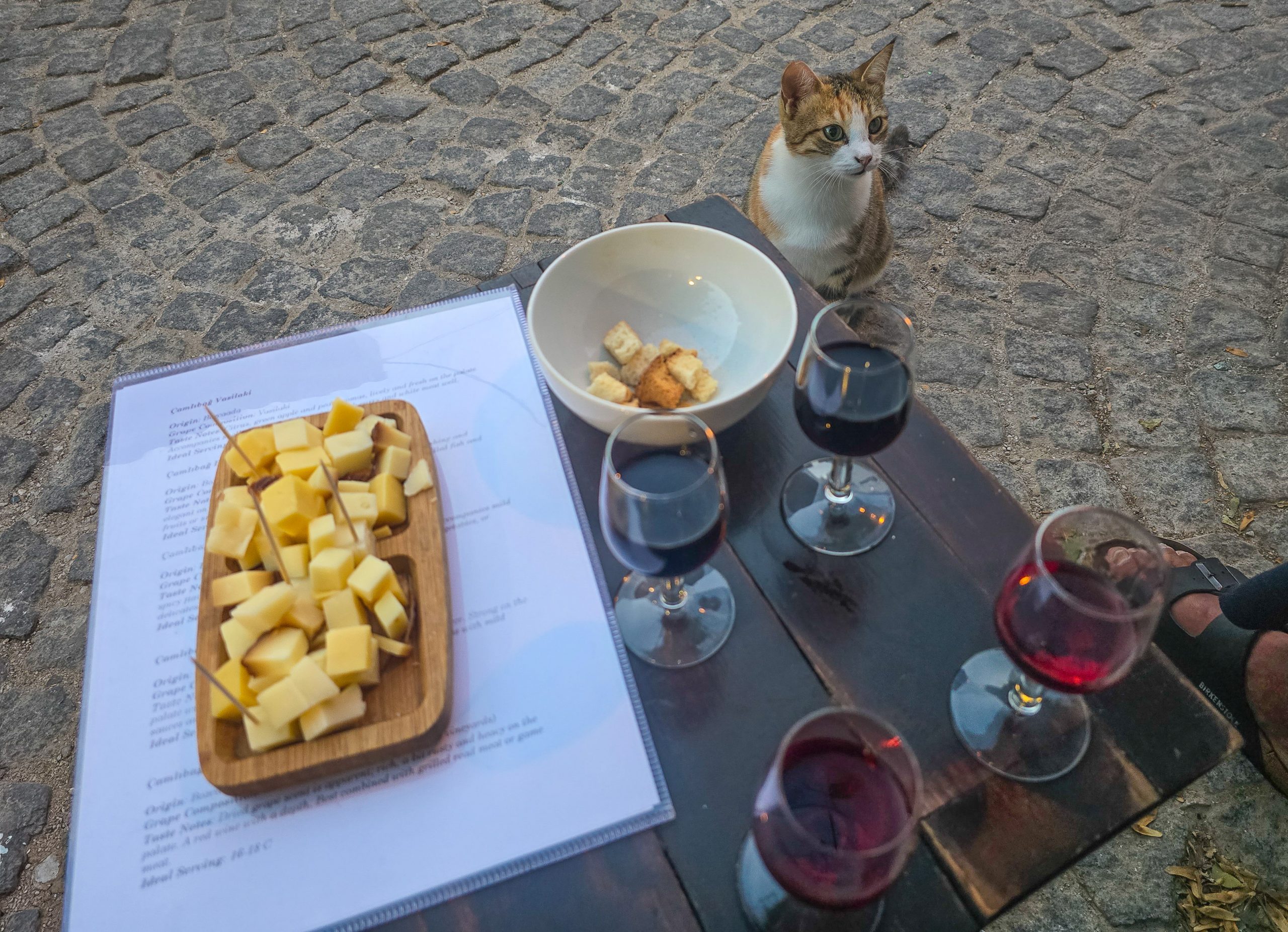
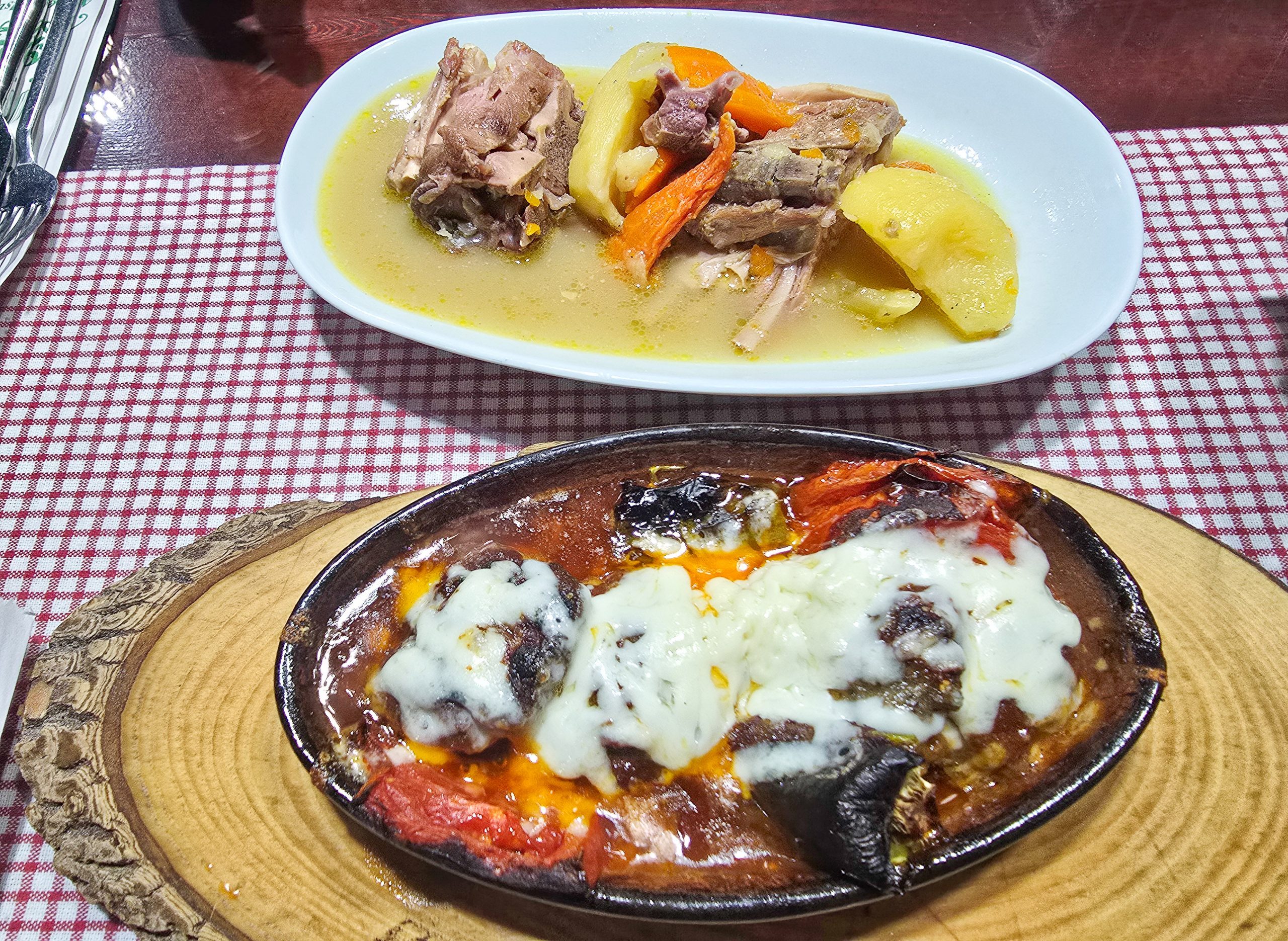
Ten delicious wines later, with rosy cheeks and wobbly legs and the realisation we’d bitten off more than we could chew, we decided that it was probably time to have a proper meal. Neither of us was hungry after the cheese and bread but we knew this was the sensible decision. We made our way to Hanif An’nin Sofrası where we had a couple of delicious lamb dishes (actually I think Peter had goat). No alcohol was served here, which was probably for the best after our earlier liquid enthusiasm.
Today was one of those gently meandering days that shape themselves as they go — a bit of history, a bit of myth, a bit of wandering, a bit of wine. Perfect!
Tomorrow we leave for another Turkish island, also richly laden with Greek heritage – Gokceada!


More amazing food , wine tasting, and some scenic history – that’s a good day !!
It certainly was Liz! 🥰