
Gökçeada Travel Diary — The Long Way Round to yet Another Bucket List Island
Our final breakfast at the Alicante Hotel was exceptional — easily the best we’d had so far on this trip — and we left feeling both full and grateful. After thanking Okan and Rabia for their warm hospitality, we grabbed our bags and walked down to the port. This, as it turned out, was where the day grew… interesting.
Peter had checked ferry times the day before with the intention of buying the tickets too. Judging by the amount of visitors on the island this weekend the ferries were going to be in high demand. Peter returned saying the man in the booth kept repeating, “It’s free! It’s free!” I’d assumed he’d misunderstood, because when does that ever happen? Yet here we were the next morning, asking again, only to hear the same thing. No tickets. No payment. Just “free.” Surely this meant we’d pay on board, and if not… well, we’d tried. Pleading ignorance was always an option.
The car ferry Sehid Omer Halisdemir from Geyikli appeared on the horizon, rolling steadily towards us. What surprised me was the number of cars and passengers coming to the island. During our stay on Marmara Adasi about a week ago, the season had well and truly come to an end. It seems the season is certainly extended here.
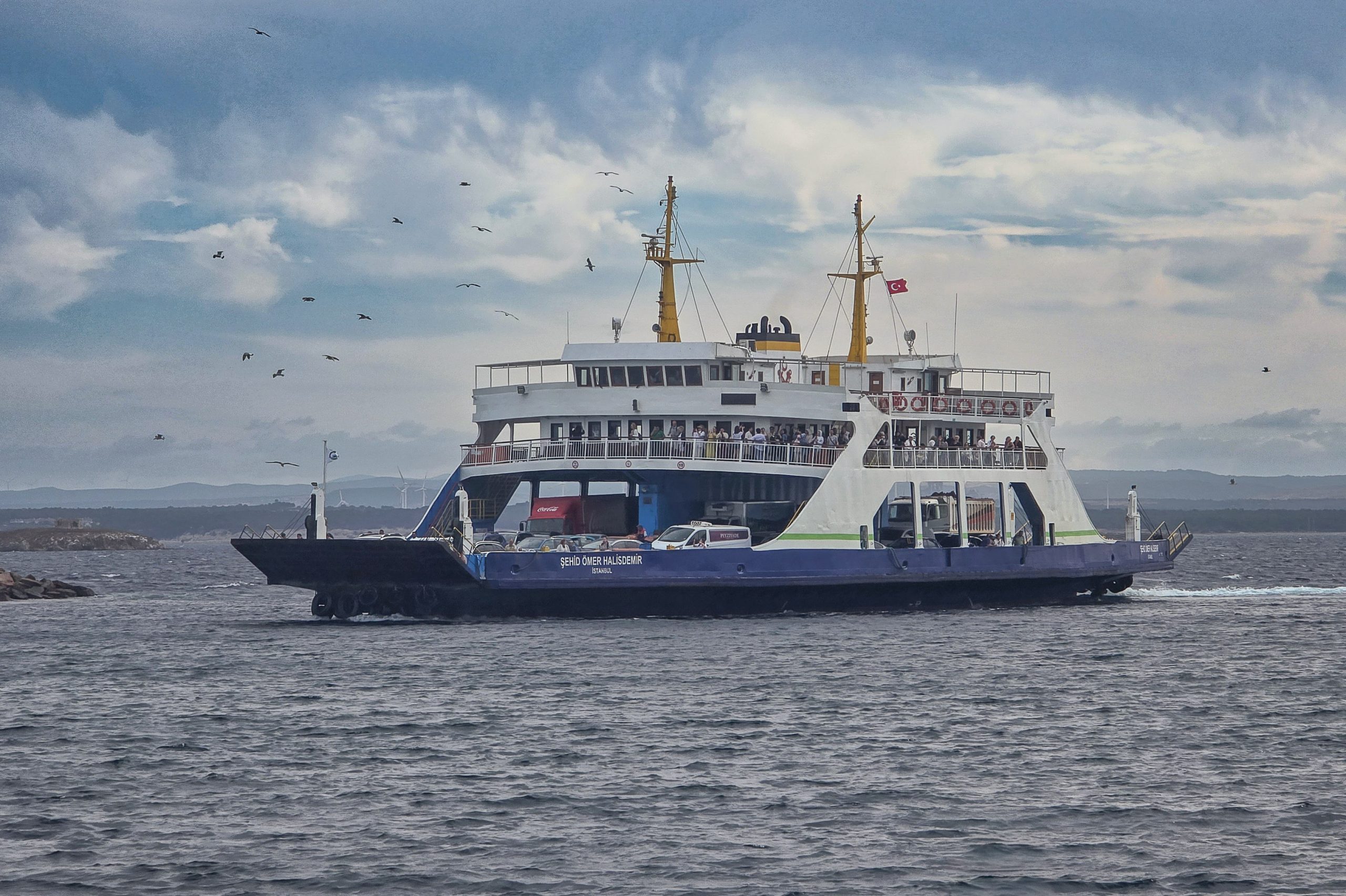
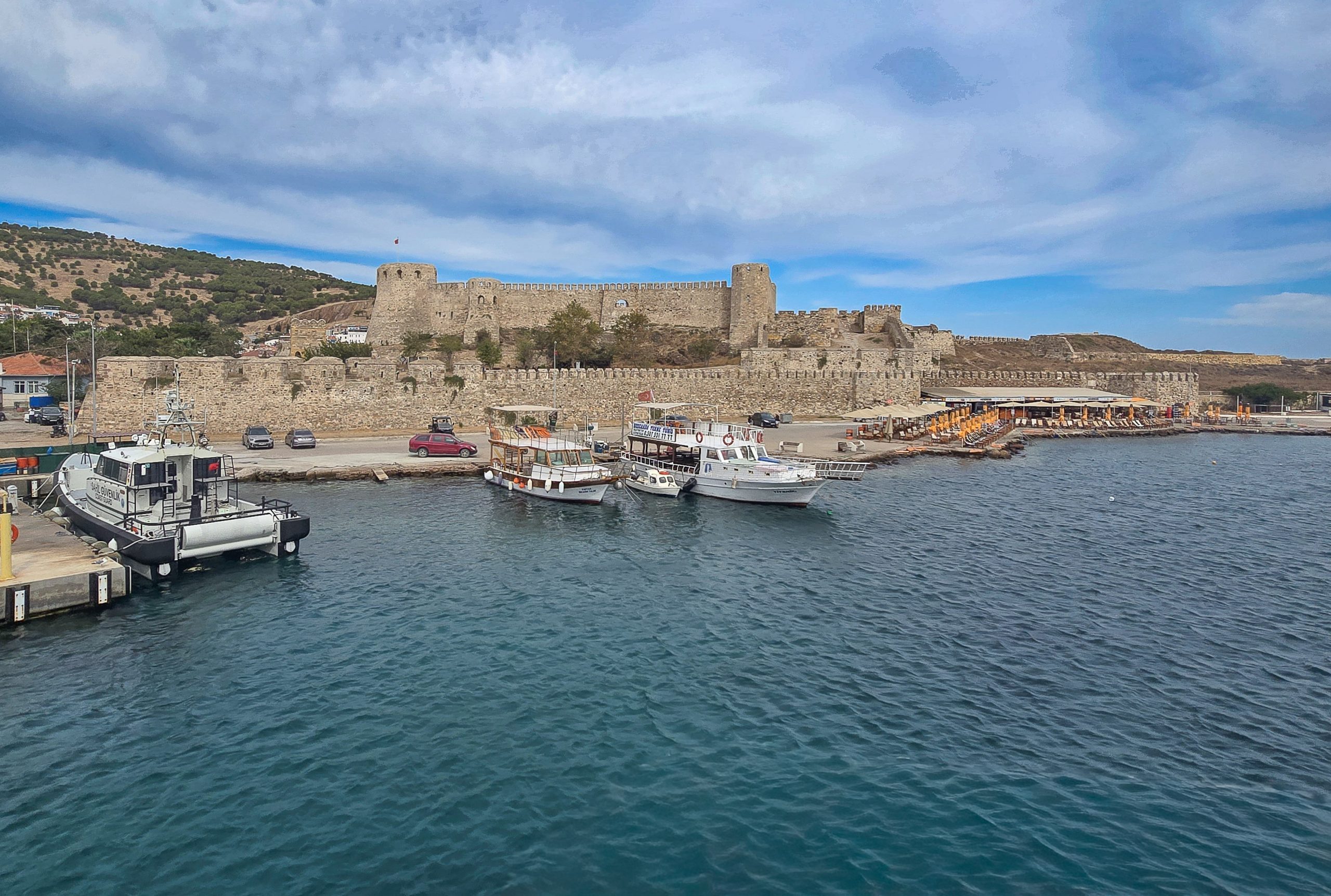
The Turkish approach to boarding is less queuing, more strategic jostling, but we managed our way on board, left our luggage on the car ramp and climbed up to watch the spectacle below. The crew were experts at squeezing cars into every possible inch. As the last vehicles were wedged into place, we looked back to see the queue of cars snaking up the hill. Not everyone made it on, but with boats running throughout the day, they’d all get home eventually. The important thing was that we were on our way — and hopefully in time for the connections that would eventually deliver us to our next island destination – Gökçeada. Bozcaada Castle shrank behind us as we crossed the edge of the Aegean Sea once more. You know, I’d definitely come here again!
BTW – the ferry journey WAS free. I’ve no idea why.
Back on the mainland at Geyikli, the next challenge was catching the little minibus back to Çanakkale Bus Station. A surprising number of people all seemed determined to board at the same time. Whilst we were ready to get on, we weren’t able to until the driver came and opened up the back for our luggage. This made me anxious as the bus began to fill rapidly. By some miracle, we managed to squeeze on board. The usual ritual followed — money passed hand to hand towards the driver, change passed back in the opposite direction — a system that seems chaotic but somehow always works.
The journey back took us through the beautiful and by now familiar rural landscape: farmland, distant mountains, the skyline shifting between minarets and wind turbines. When we passed the blackened remains of the recent wildfires, we knew Troy wasn’t far. After another thirty minutes, we were back at Çanakkale Bus Station – 75 minute bus journey in total.
Gestas Ferries operate the Geyikli – Bozcaada service. Their timetable can be found below.
Gestas Ferry schedules – Geyikli – Bozcaada
The bus meets every ferry to return to Canakkale. The updated bus timetable is below.
Bus timetable between Geyikli Port and Canakkale Bus Station
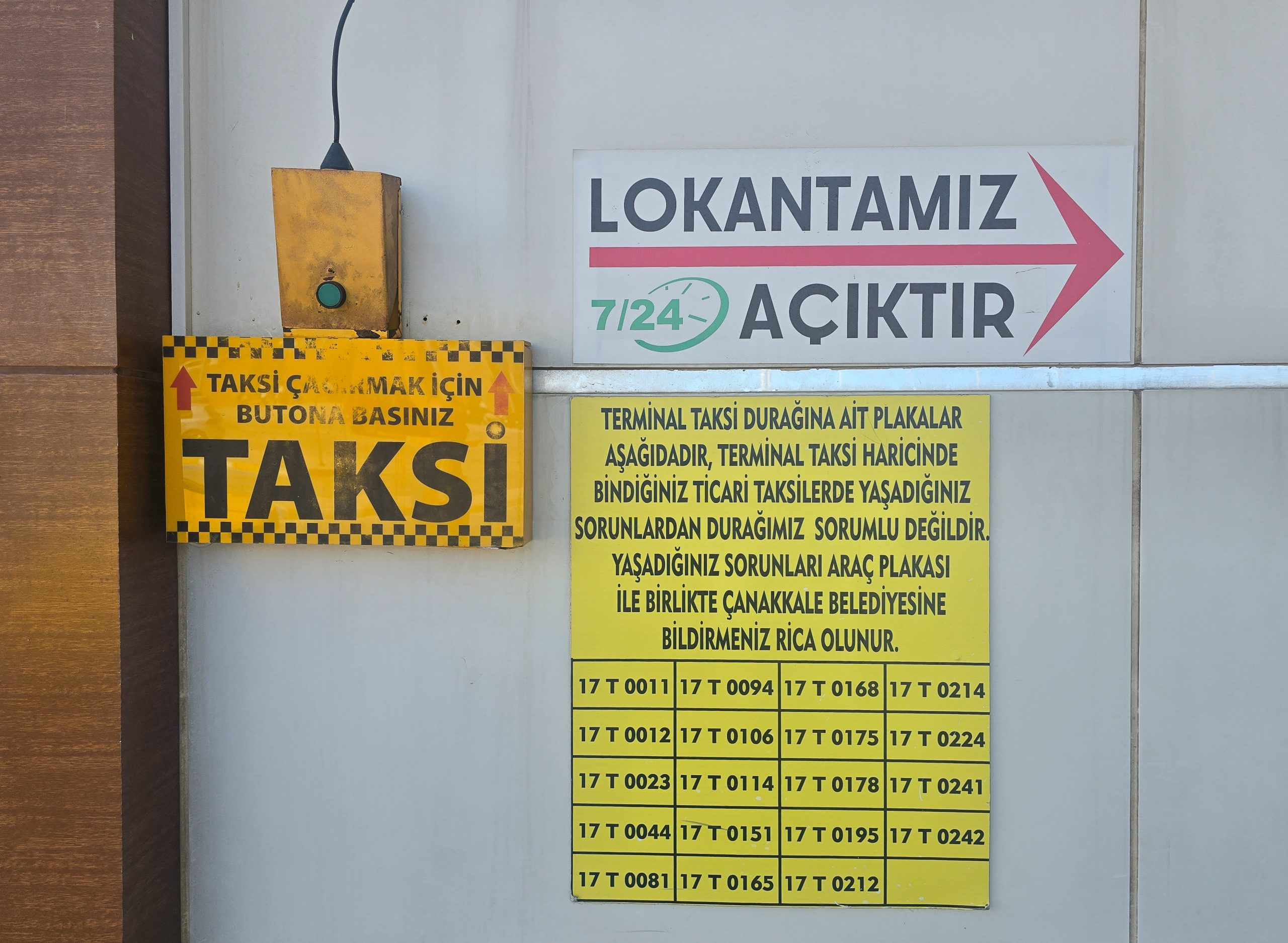
Finding the right minibus from the bus station to town was beyond us, so we opted for a taxi. This was how we discovered a button on a wall which, when pressed, summoned a taxi appearing like a genie from a bottle. Within no time, we were whisked back to Çanakkale Port.
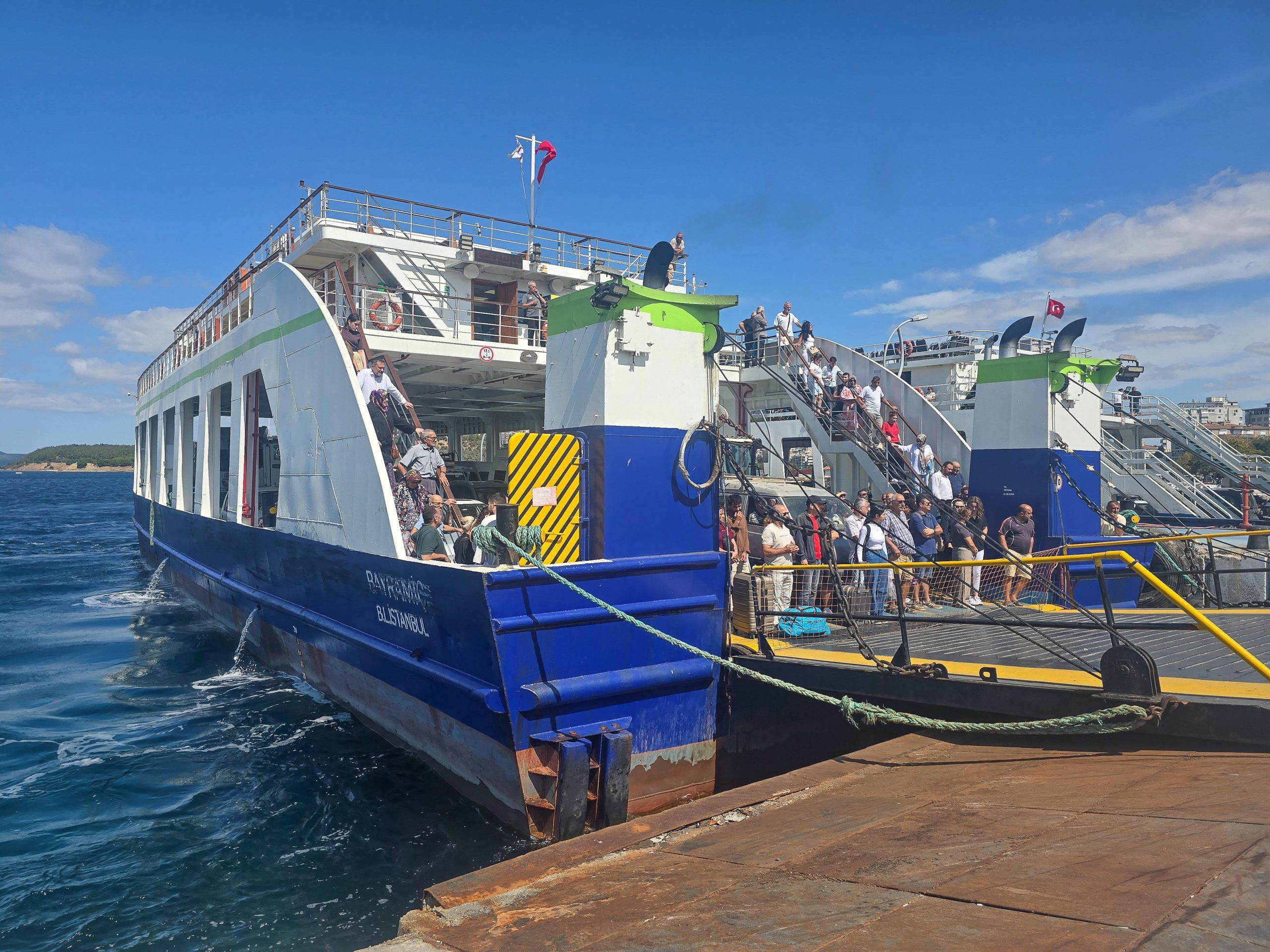
Now back on familiar territory, we walked to the ticket office and soon after boarded ferry number 2 to Eceabat. Crossing the Dardanelles again, I finally felt confident enough to book our accommodation. Gökçeada had been on my bucket list for a long time, and I’d already had an idea of the best place to stay. From what I’d read, the port area was very nondescript, and even looking at it on the map, it didn’t seem to have anything of interest in and around it. Yes, there is a cluster of hotels here, but I would assume aimed at those with a car. Instead, we decided to stay in Kaleköy, close to the sea and on the bus route. Anyway, the journey across the straits to Eceabat was over before we knew it.
Once in Eceabat, our next challenge presented itself to us. Close to the port was a lone bus showing no signs of life or signage. Once again, I suggested a taxi. Kabatepe, the small port where we’d catch our third and final boat of the day, was just a 10-15-minute drive away across the width of the Dardanelle Peninsula. As we made to leave the port in search of a taxi, a man who seemed to have been interested in our decision-making process had other ideas for us. He shook his head and said, “No taxi, no taxi,” whilst he pointed insistently at the bus. ‘Kabatepi Feriboat?’ I said. ‘Ne, Ne’, he said. His Greek response wasn’t lost on me. So we obeyed and, of course, ten minutes later, the bus driver appeared, passengers gathered, and everything began to fall into place. The man who’d stopped us boarded too, giving us a knowing smile. If nothing else, Turkey had taught us to stop thinking too hard and trust the process.
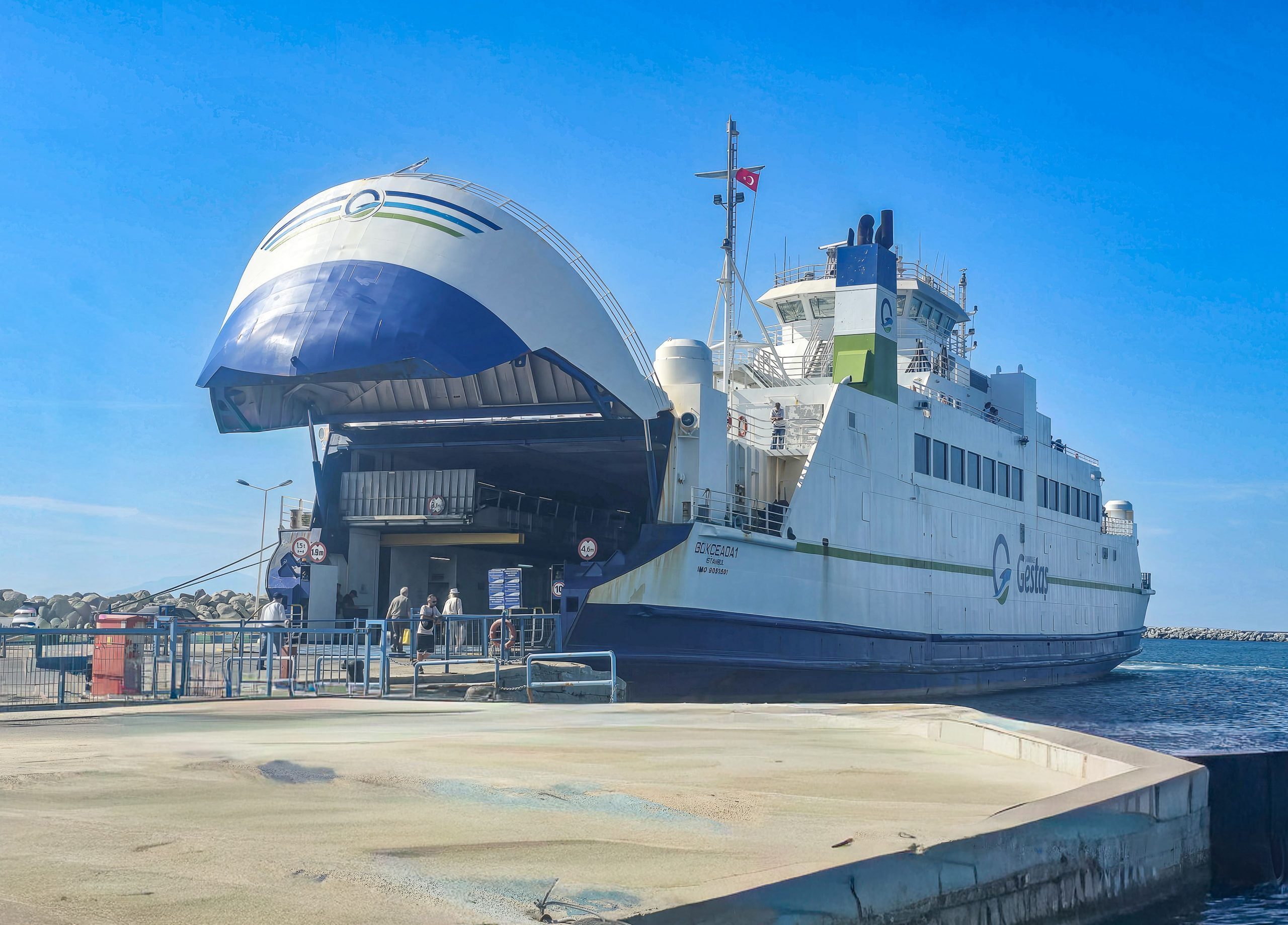
At Kabatepe, the Gökçeada ferry was waiting — though rather than with open arms, it felt more like an open mouth about to swallow us whole. Once on board the Gokceada 1, we stowed our luggage and climbed up onto the deck. We finally had a moment to take in the view: sandy beaches stretching out on either side, acres of pine and fir forest gathering behind them. If we hadn’t been on a mission to get to Gokceada, we might have stayed longer, but hey ho.
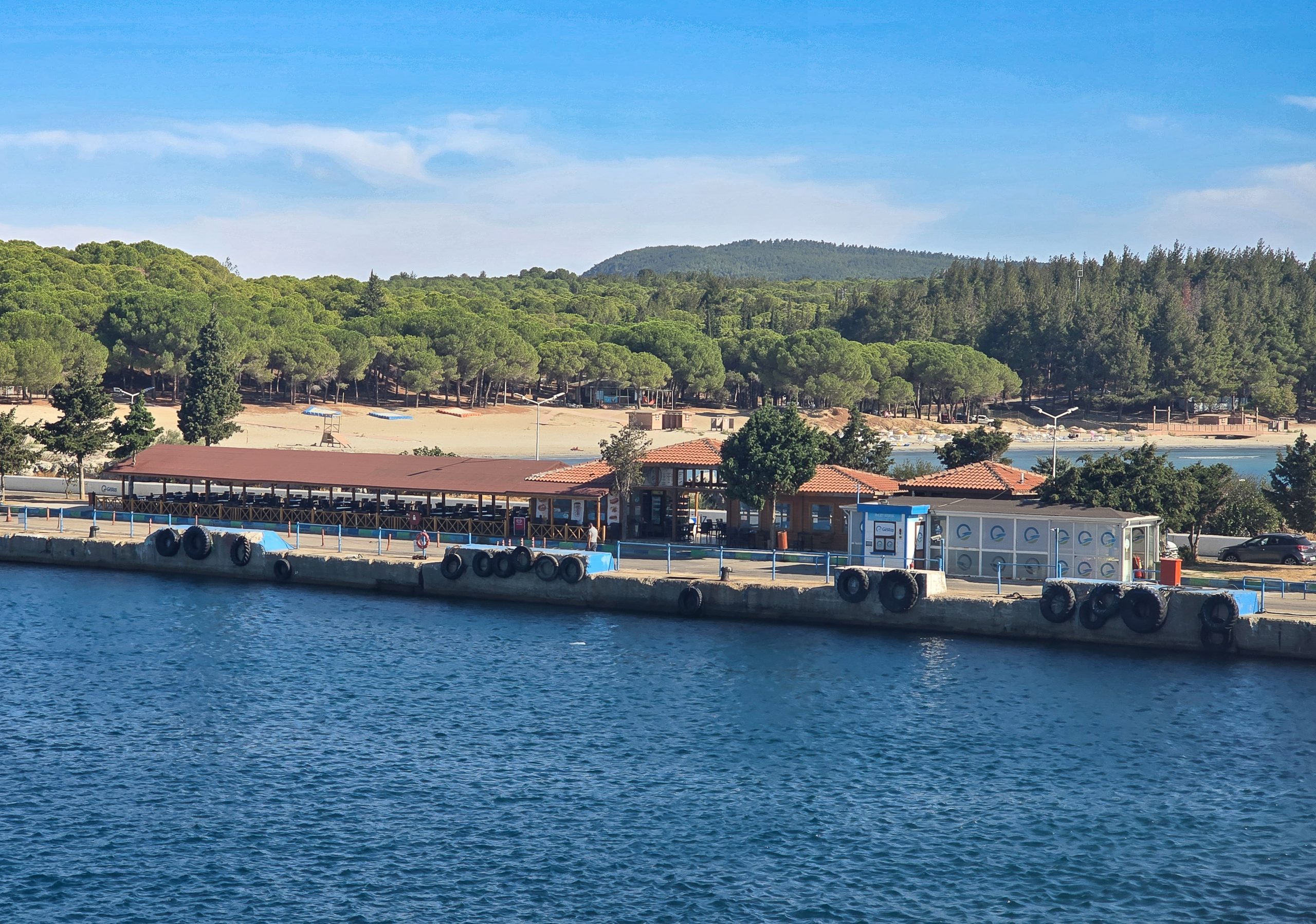
As Gökçeada emerged from the haze on the horizon, the sense of anticipation grew. I’d wanted to visit this island for a while. Back in 2023, when I was on Samothrace, I’d driven around the far side of the island just to see whether I could glimpse Gökçeada. Now the reverse was about to be true — I’d finally be standing on Gökçeada, looking back at Samothrace.
When the ferry docked, another bus was waiting. We asked the familiar man — the same one who’d herded us onto the correct bus earlier — whether this one would take us to Kaleköy. ‘Ne, Ne!’ he said again. What wasn’t immediately obvious was that this bus would take us to Merkez, the island’s main town. As the bus emptied, we did the same, a little confused, but our helpful travel companion pointed to the bus stop, indicating that we were to wait for another bus to Kalekoy.
Here we joined an enormous queue for the connecting bus, bags at our feet, hoping. When the bus arrived, there was nothing short of a stampede for a place on the bus. Somehow, we managed to squeeze on with standing room only. The bus was packed with young people, and soon enough we realised why — they were all headed to the university perched above the island. As soon as we reached it, the bus emptied dramatically, leaving us space to breathe. This now left just the two of us and a local to make the now short distance to Kalekoy. Just to double check, Peter asked him, ‘Kalekoy?’. He confirmed with a nod. At the next bus stop, the man got up to leave, and again Peter pointed out of the window and asked the man ‘Kalekoy?’ Again, another nod. We followed him off the bus, unsure whether something had been lost in translation. It had. Once I checked Google Maps again, I could see that we hadn’t reached Kalekoy at all. We were in the village of Yenibademli. Thankfully, it was just a twenty-minute walk to our destination.
After leaving Yenibademli, we found ourselves on an open stretch of road. Not many cars passed, but it gave us an idea of the lay of the land. Up above, we could see a castle atop the hill. Soon, we passed through the entrance to the village nestled in a small bay.
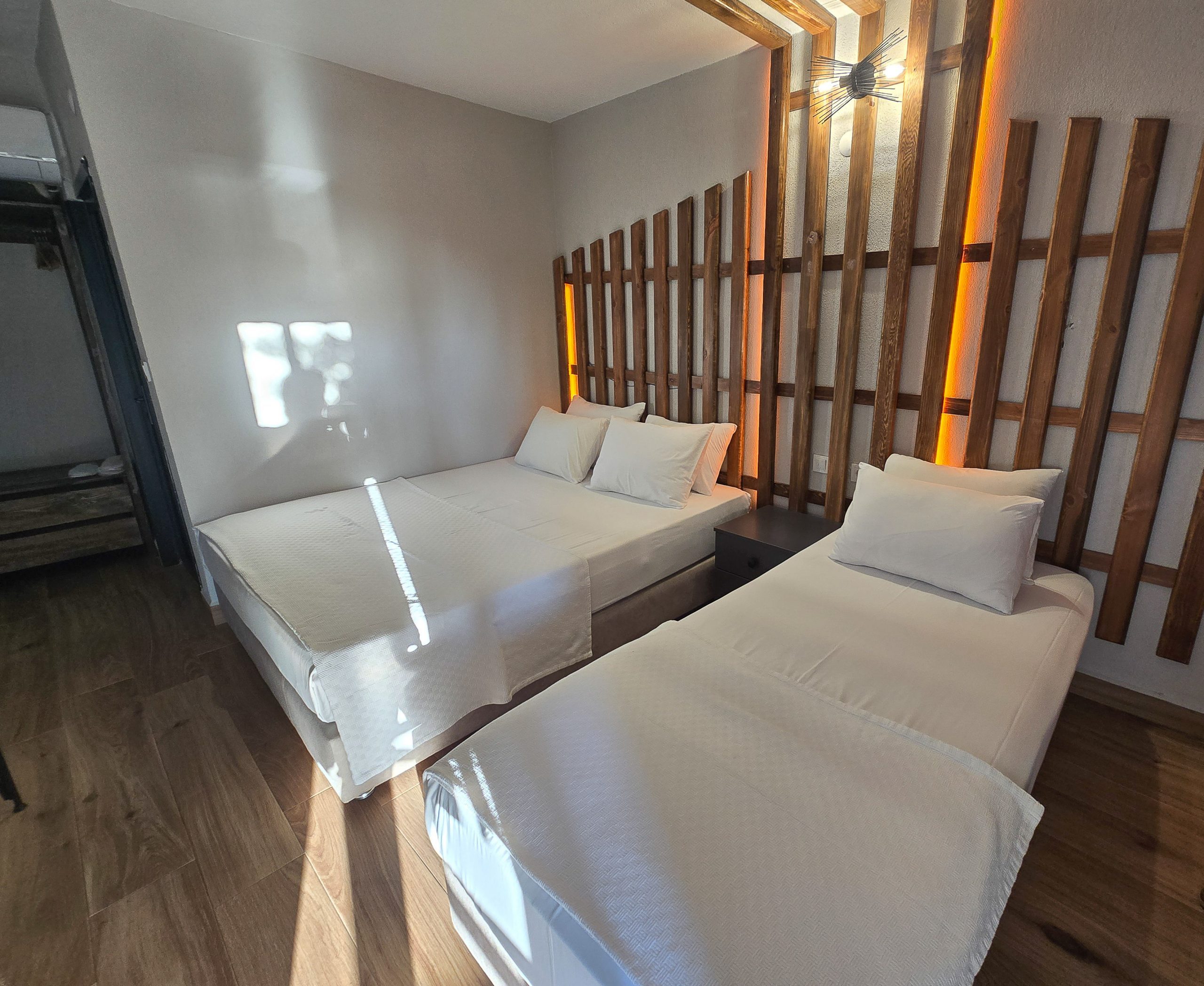
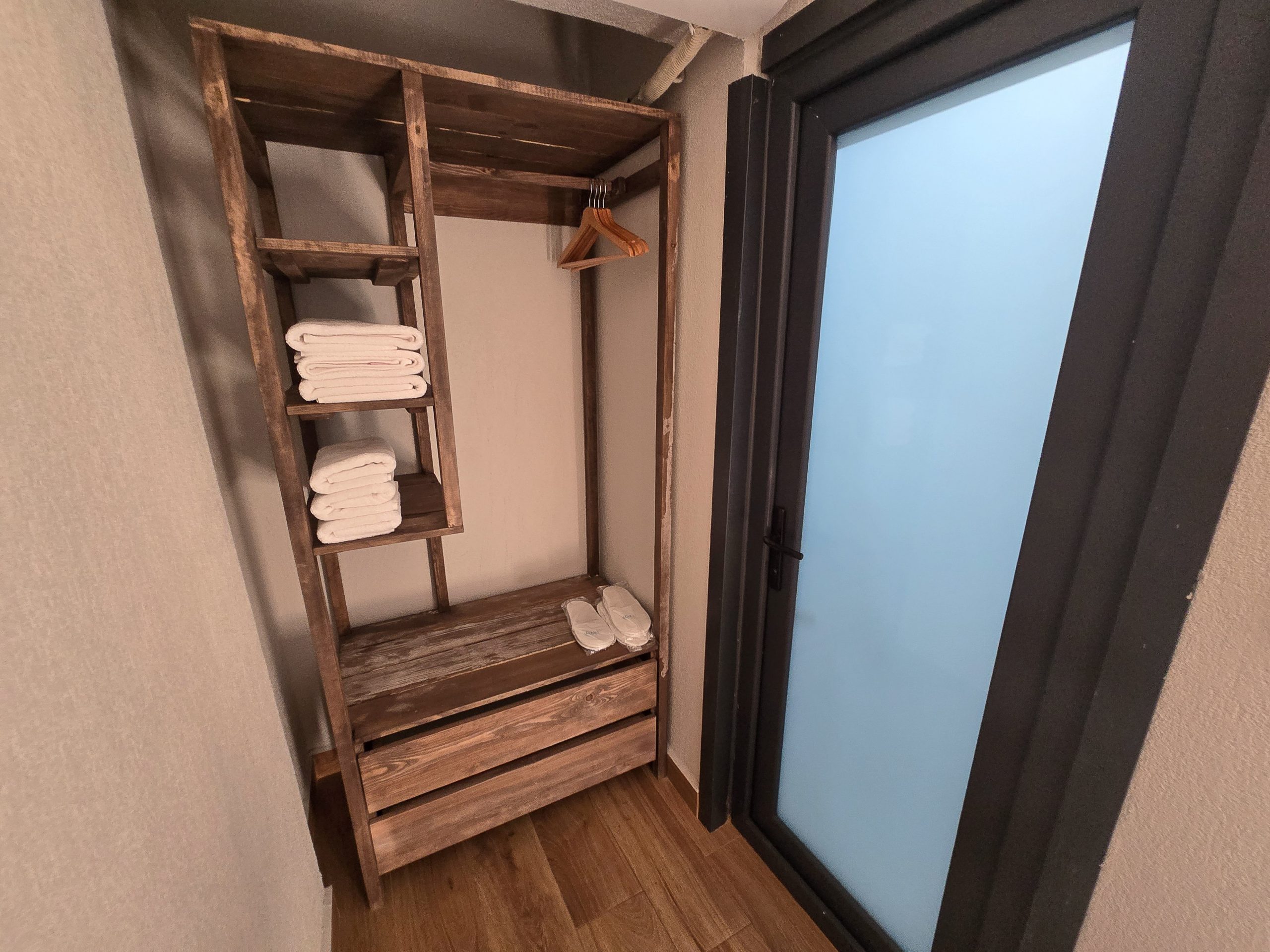
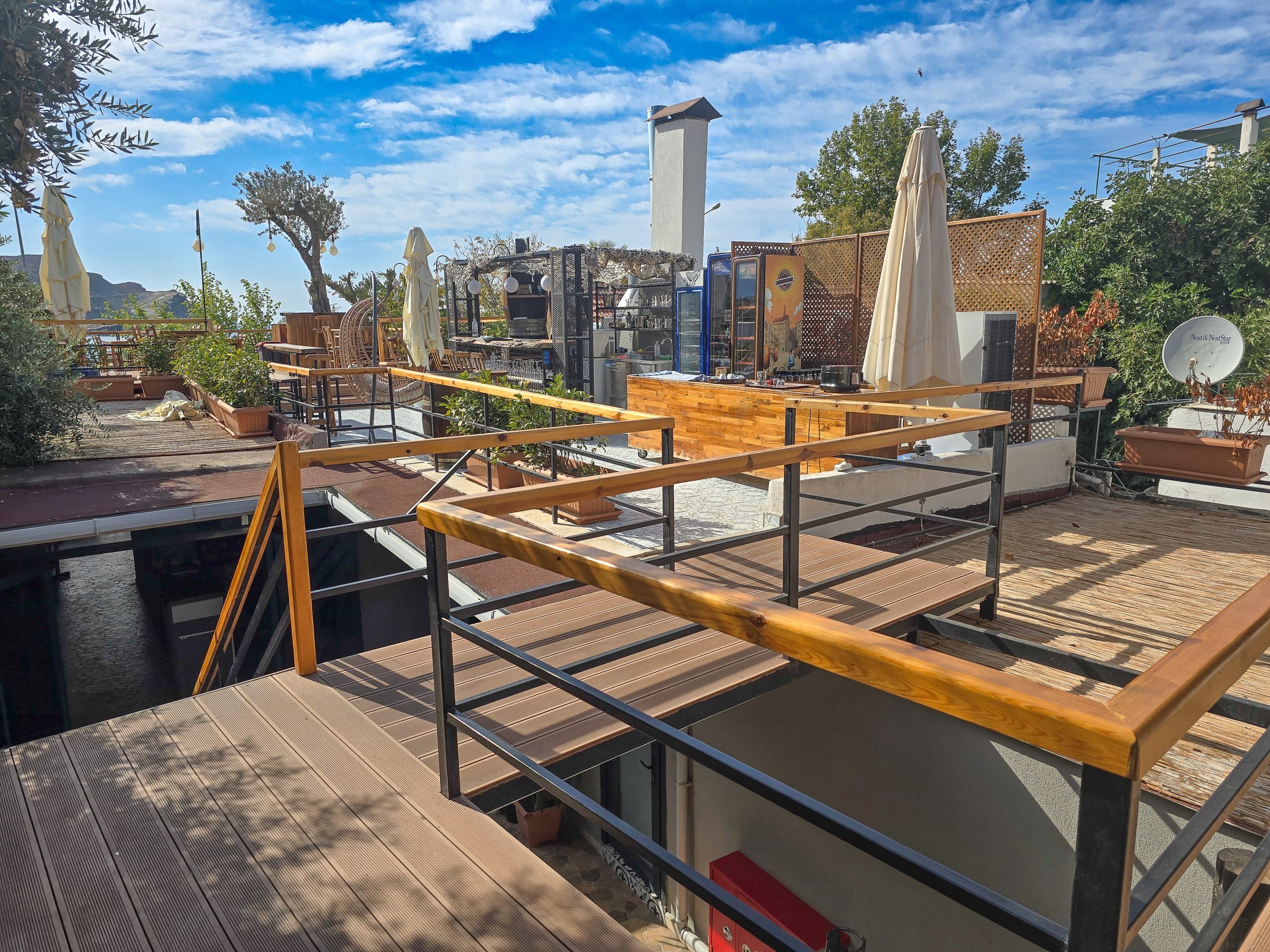
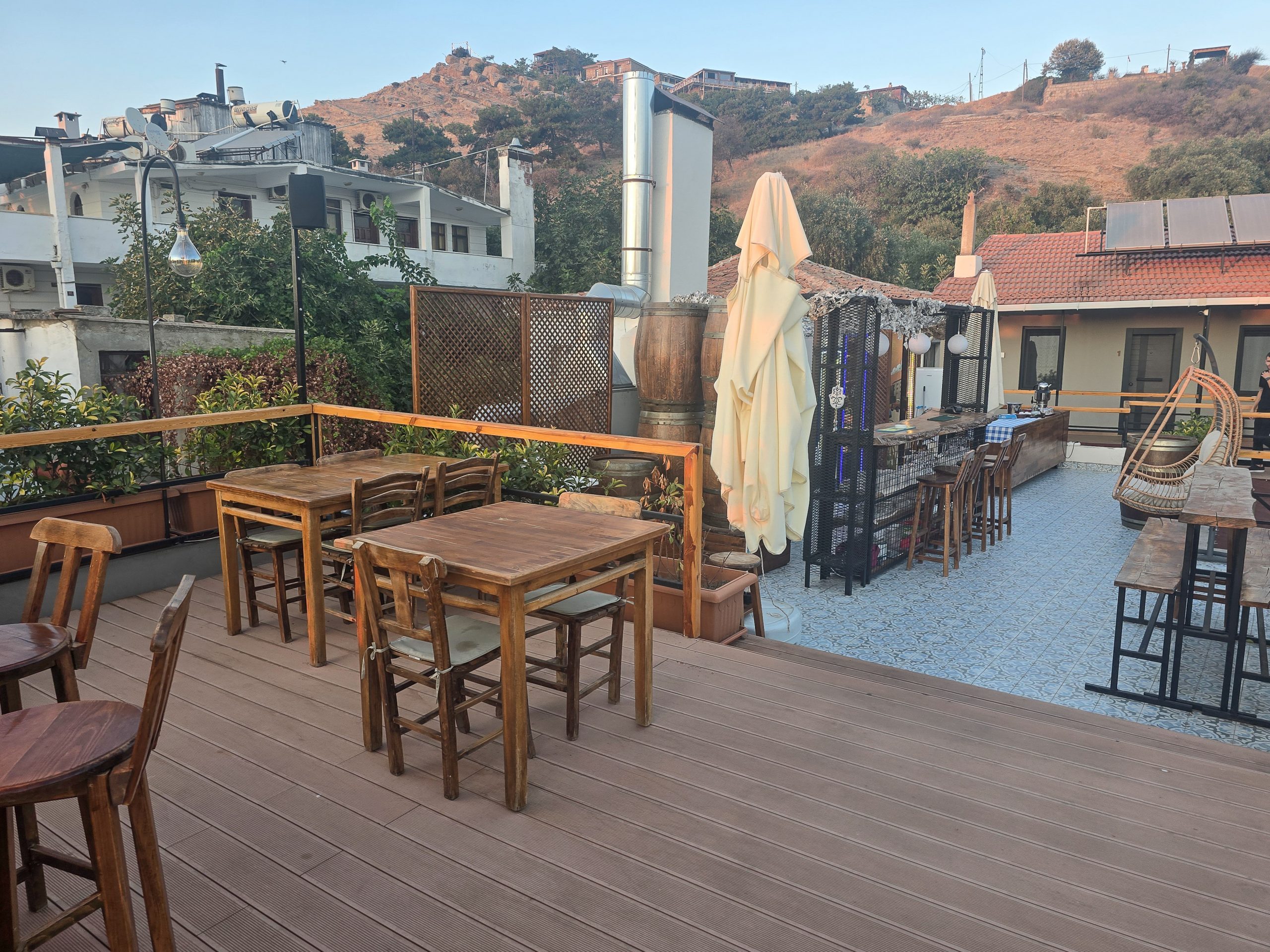
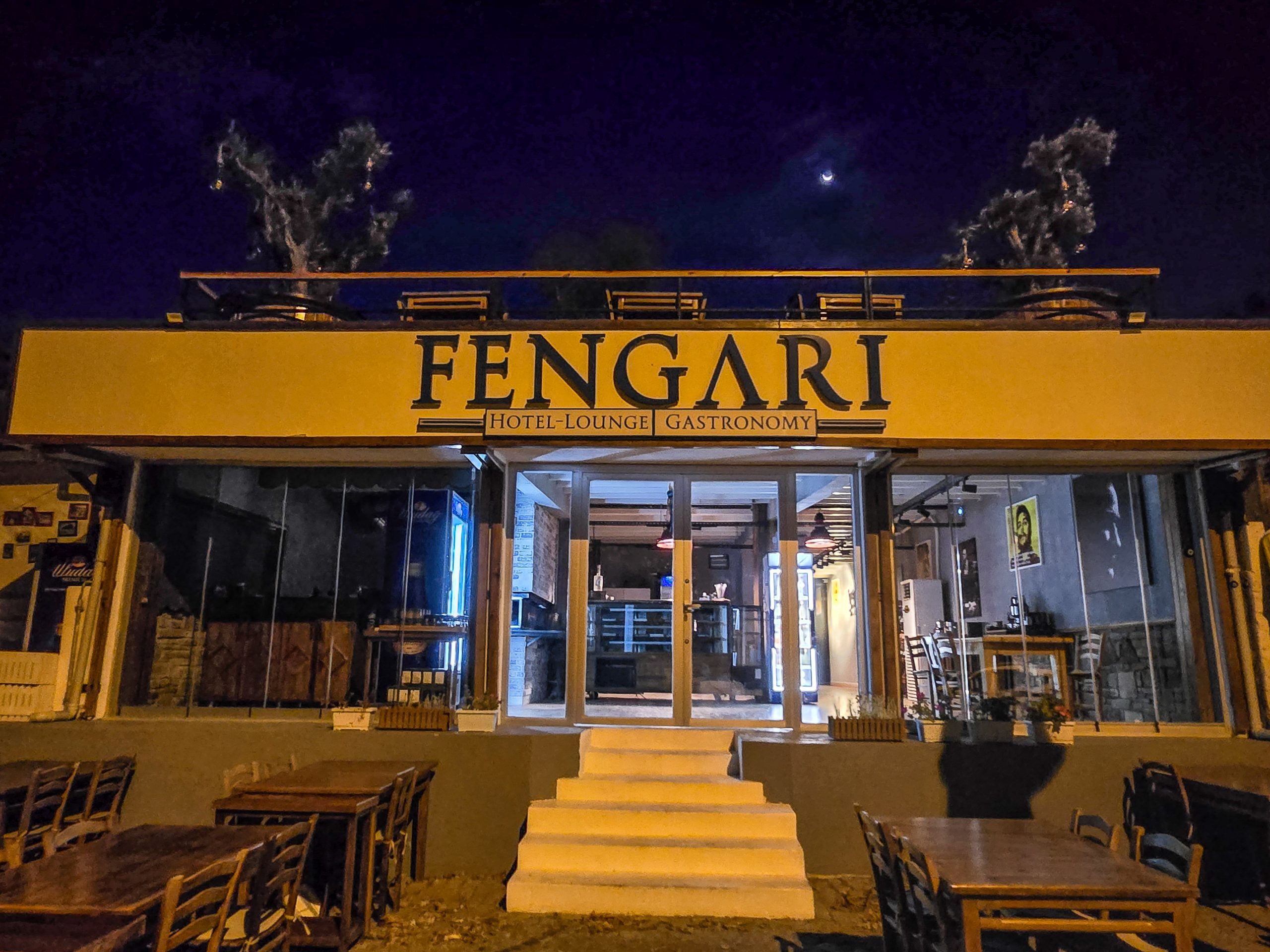
Finally, at the Fengari, our host, Andreas, greeted us warmly and showed us to our room. The rooms were newly built additions behind and above the street-side restaurant. We climbed onto a decked platform with a large terrace that doubled as another bar and restaurant. And just as I’d suspected, the view stretched all the way across the water to Samothrace’s mountain, Fengari. I knew there was a connection! I couldn’t help but feel a small sense of satisfaction.
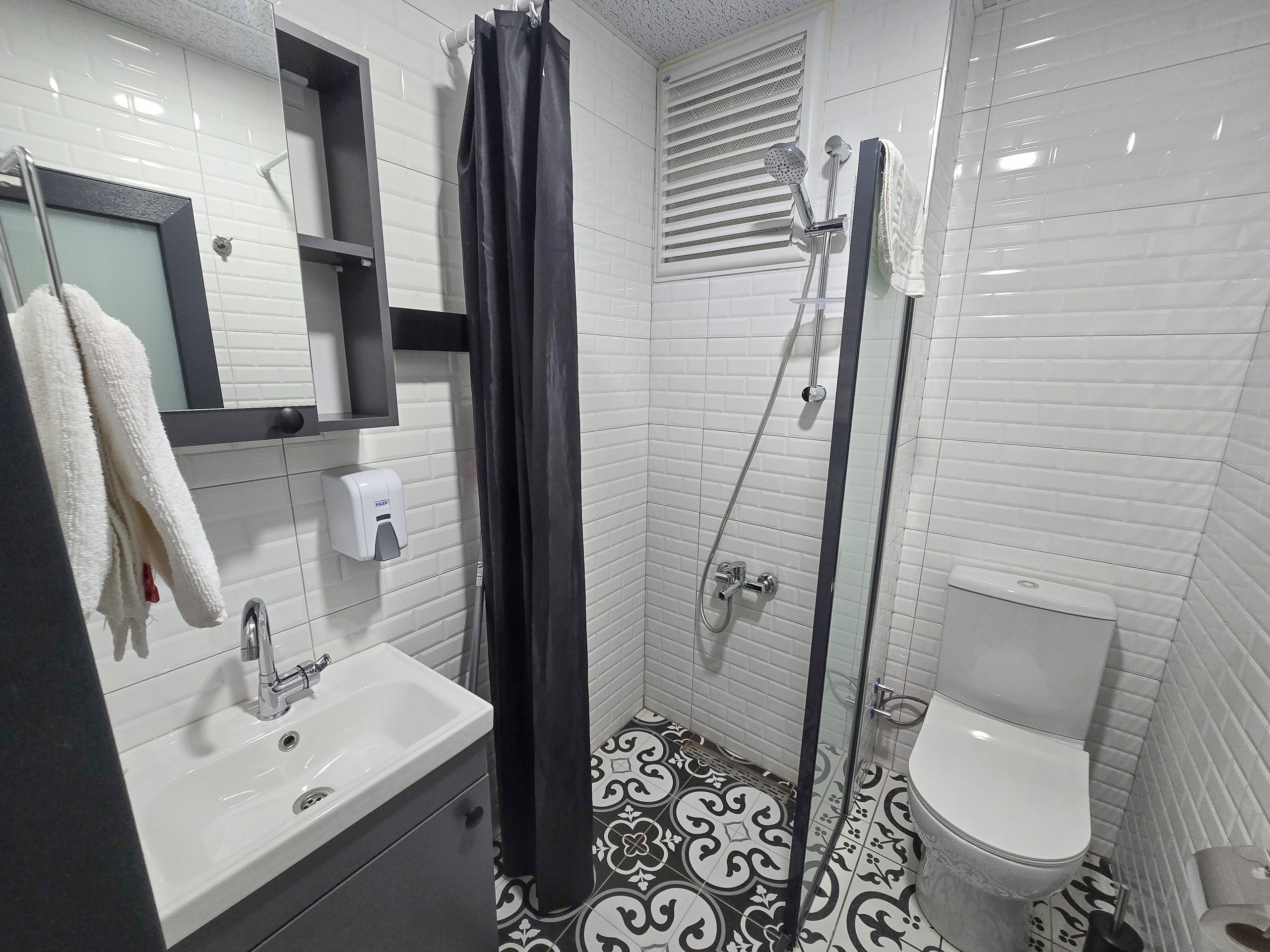
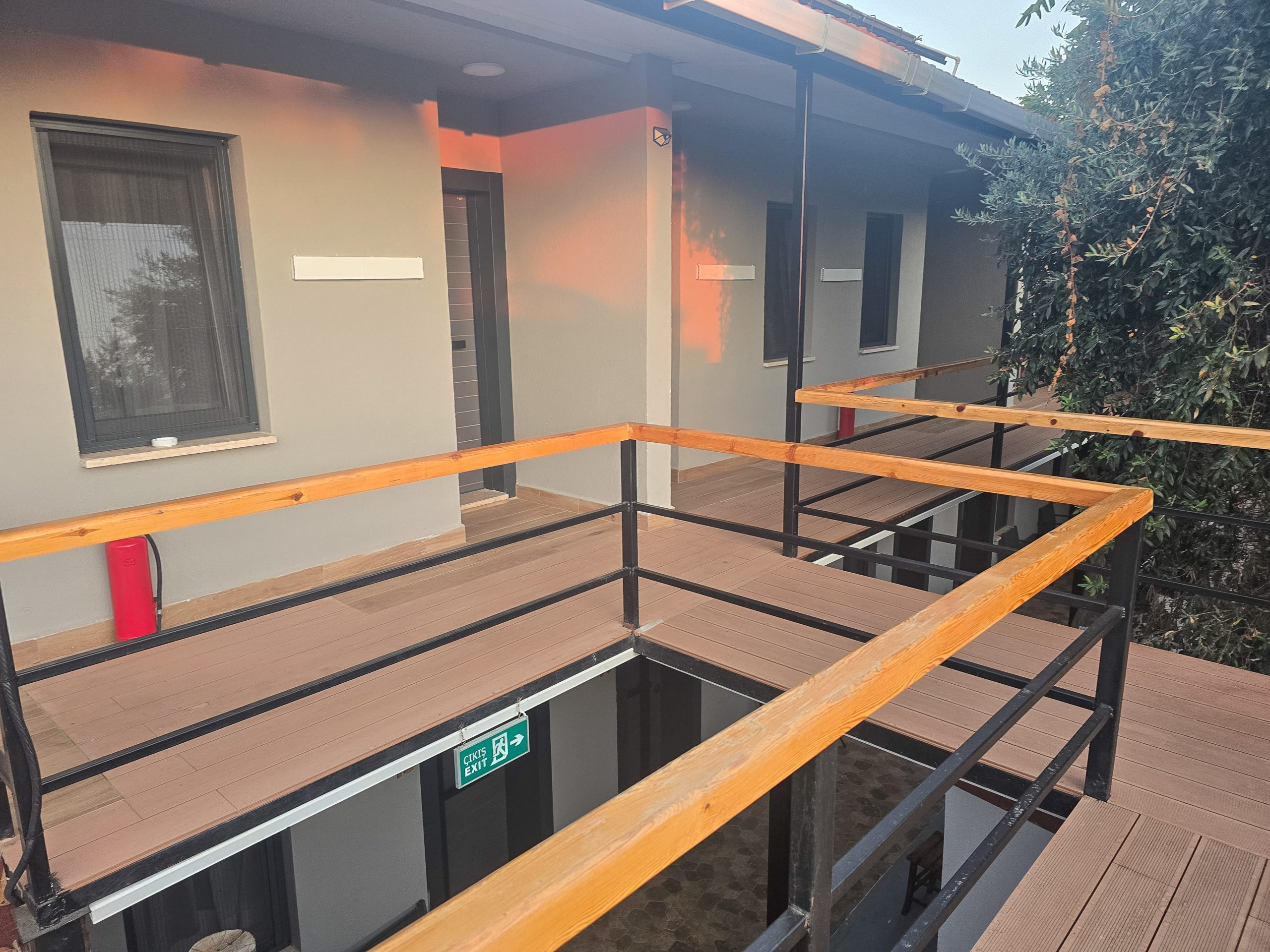
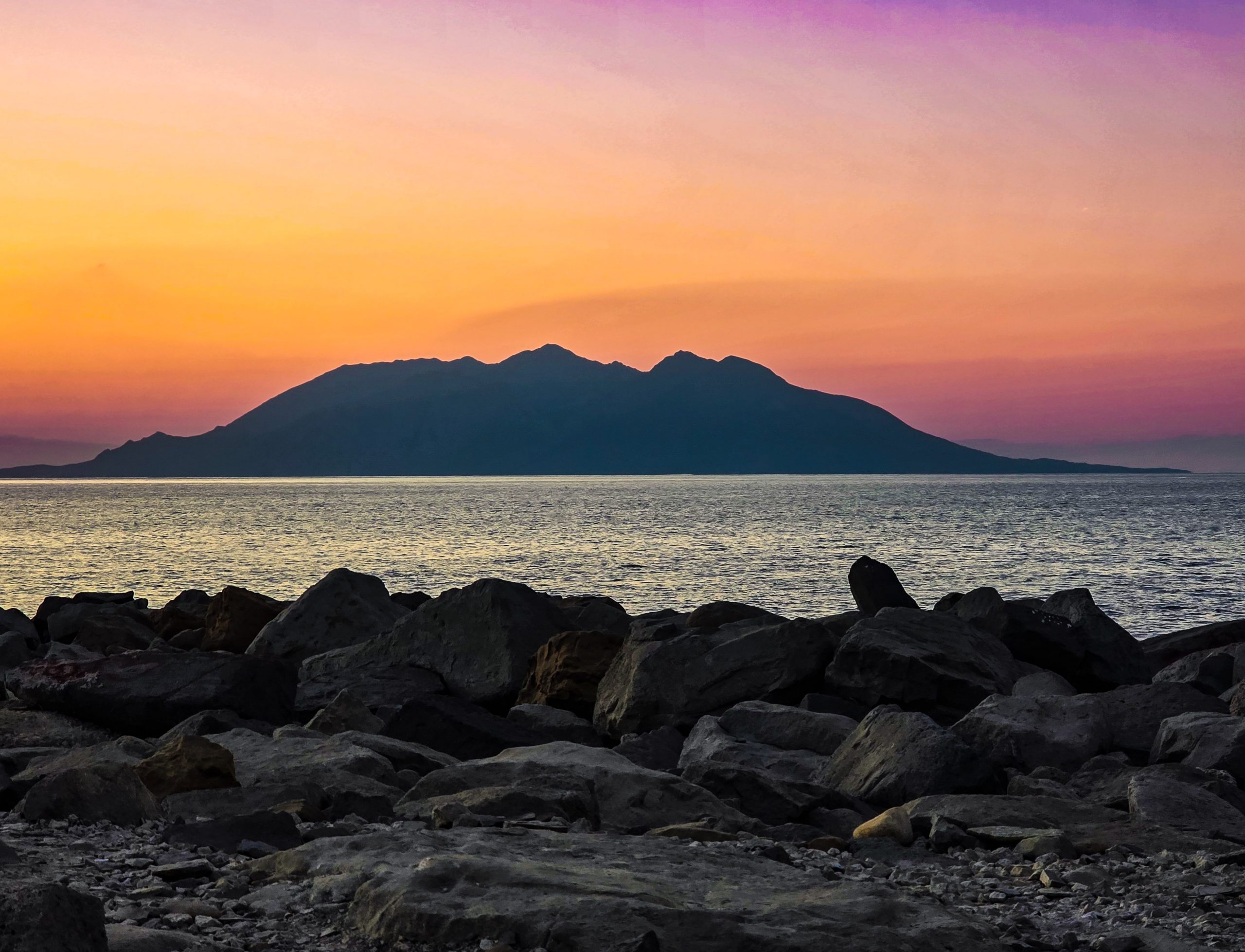
We dropped our luggage, showered and reassembled ourselves after a long day of ferries, buses, taxis, ferries, buses, ferries and yet more buses. With the sunset creeping in, we wandered along Kaleköy harbour towards a tiny lighthouse, the castle above catching the last light. In the distance, the sun dropped behind Samothrace, illuminating it with a rose gold glow, making it appear as magical from a distance as it was actually there. (You have to have stood in the Sanctuary of the Gods to appreciate this) Exploring Samothrace Chora and the Sanctuary of the Gods Part 2
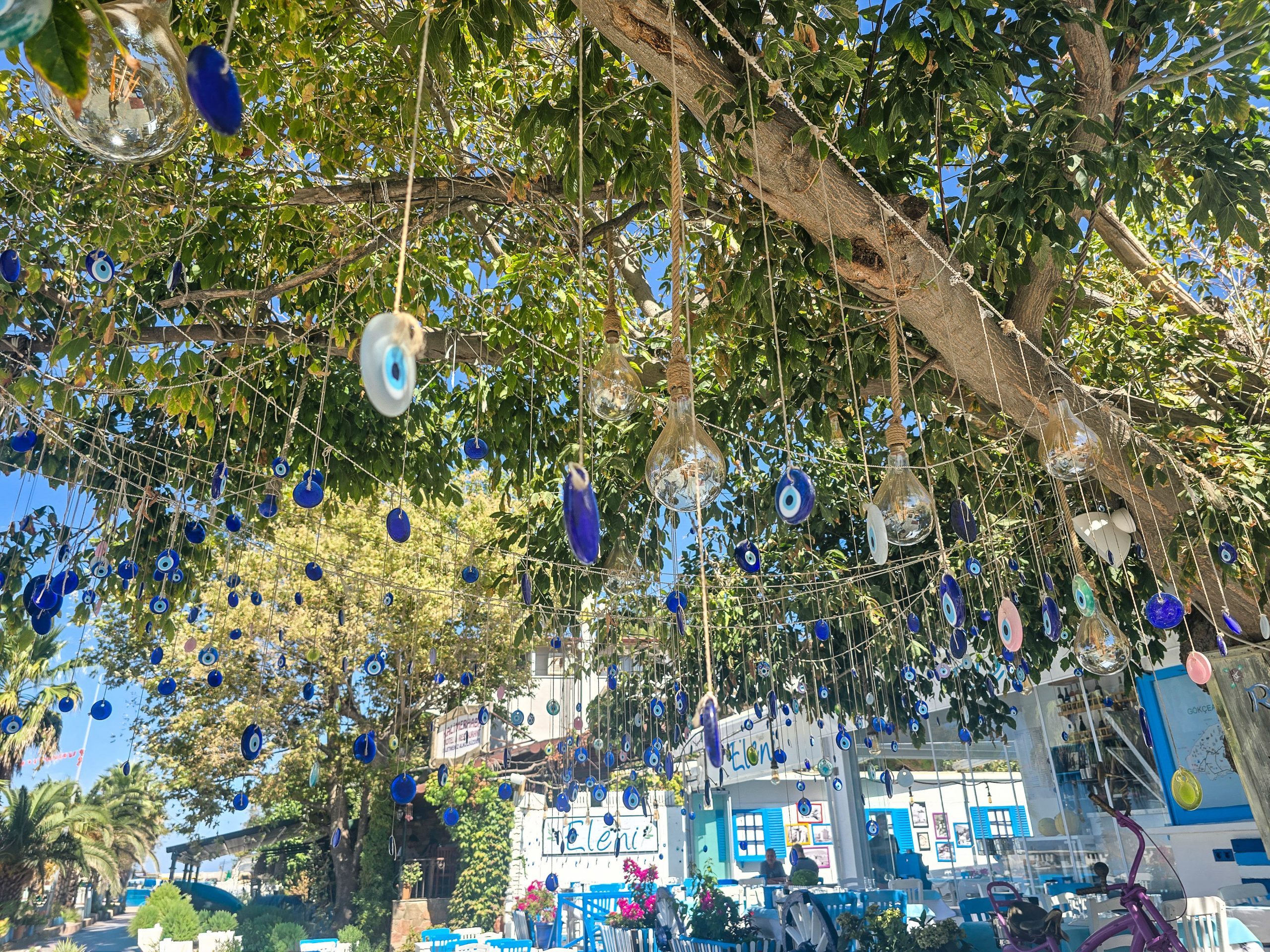
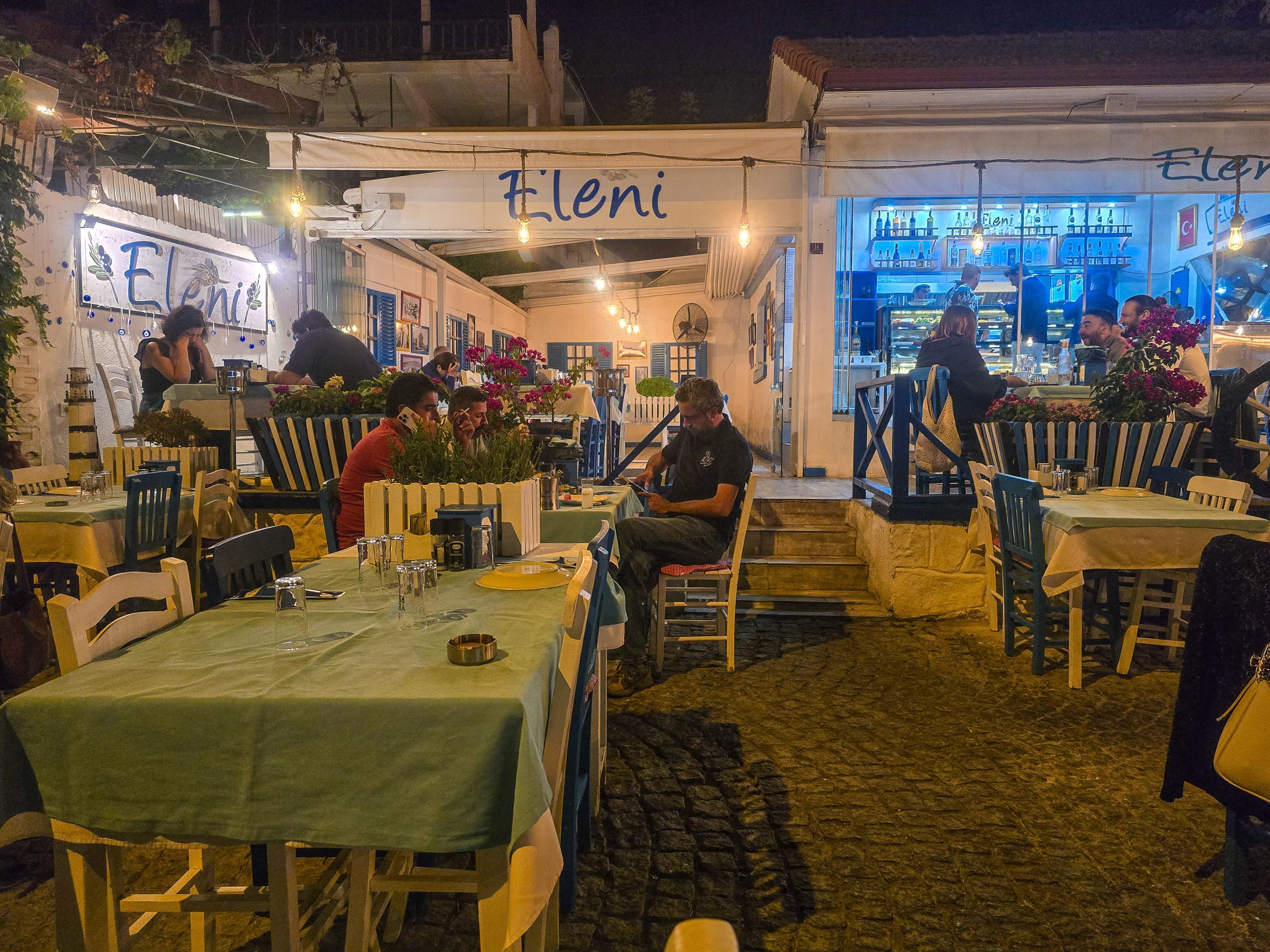
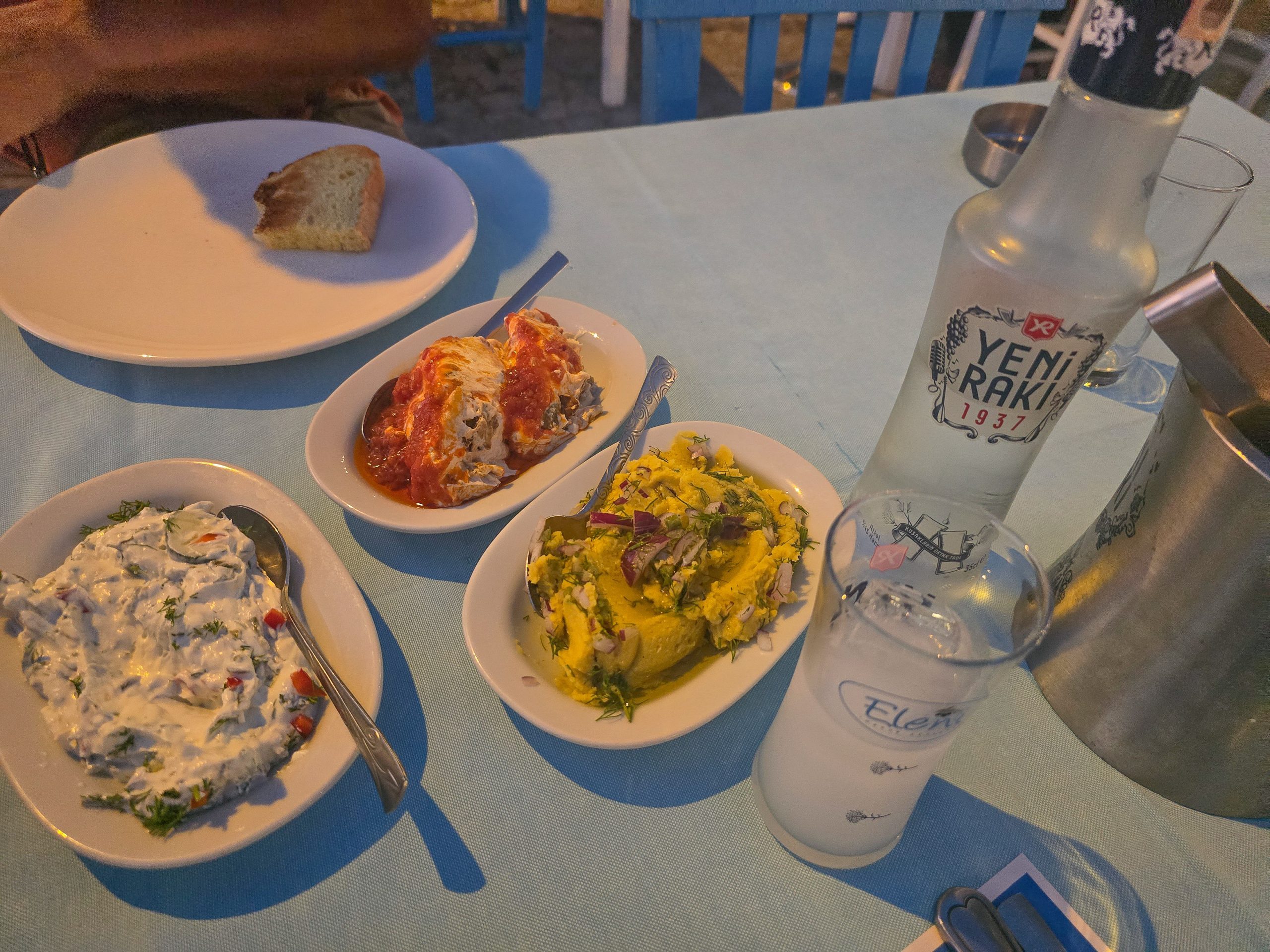
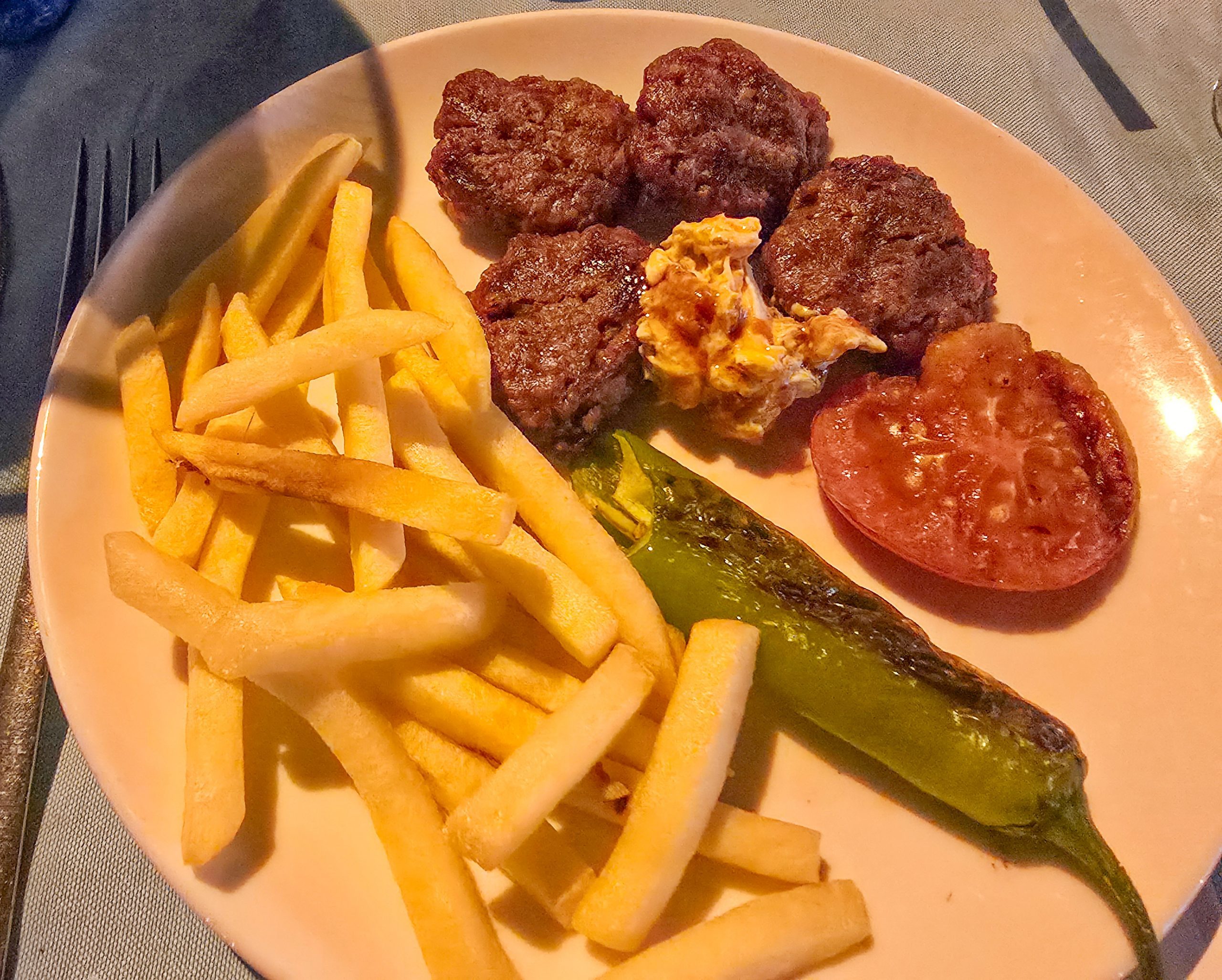
By now, we were ravenous and more than a little worn out. Almost next to the Fengari was a restaurant called Eleni, where we were drawn in by its blue Mediterranean décor and a tree draped in Mati – evil eyes. Although it looked and sounded Greek, the food was very much Turkish. We were invited into the kitchen to choose our starters — something that now felt charmingly familiar — before settling on our mains. After a journey involving more connections than the multi-plug extension at the back of my PC, we decided we’d earned a Yeni Rakı or two! I think Gokceada is going to be everything I hoped it would be!


Sorry for yet another comment, Stephanie, but I’d like to ask whether you would recommend visiting any of the islands in Çanakkale in the month of March. We’re a bit afraid they might be completely empty and soulless.
Thank you!
Ah now if this was a question about the Greek islands I’d be in a better position to answer. I really don’t know what Gokceada and Bozkaada are like in March. What I can say though is that if the weather is nice, Bozkaada in particular is a popular weekend getaway retreat for the locals. It felt a bit more touristic that Gokceada which felt like an island that is a place for real people – not just tourists if that makes sense. If you’re brave enough to hire a car you can visit some of the amazing villages – we only got to see a few. I really liked both islands so if I had the chance to go in March I’d do it. Again I hope this helps. Ask me anything anytime. I hope you both have an amazing trip! ❤️