
Exploring Gokceada: Castles, Beaches, Villages and the Island’s Salt Lake
So we made it! Gökçeada — known for most of its history as Imbros — has a past that’s far longer than the borders drawn around it. The island was Greek-speaking from antiquity through the Byzantine and Ottoman eras, with thriving villages, churches and schools that continued under Ottoman rule. Even during the Ottoman period (1455–1912), the island retained autonomous local governance, Greek schools, churches, and agricultural traditions. In fact, when the Ottoman Empire administered the Aegean islands, Imbros (and neighbouring Tenedos/Bozcaada) were known for their peaceful coexistence and relative autonomy, especially because of their strategic position guarding the Dardanelles.
In 1923, the Treaty of Lausanne placed Imbros under Turkish sovereignty but guaranteed the Greek inhabitants local self-governance and protection of their cultural and educational rights. Those guarantees gradually eroded. By the 1960s, with the closure of Greek schools, land expropriations and the establishment of an open agricultural prison near Greek villages, many families left. A community of several thousand dwindled to only a few hundred.
In recent years, though, there has been a slow return: Greek schools have reopened, some ancestral houses are being restored, and families from the diaspora come back each summer. Today, Gökçeada’s identity is a layered one — shaped by its Greek past, its Turkish present and its strategic position in the Aegean. I’ve shared this video before, but I find it fascinating, and it was the catalyst for me deciding to do this trip.
And with that bit of background in mind, we began our first full day on Gökçeada the way all good days should start — with breakfast.
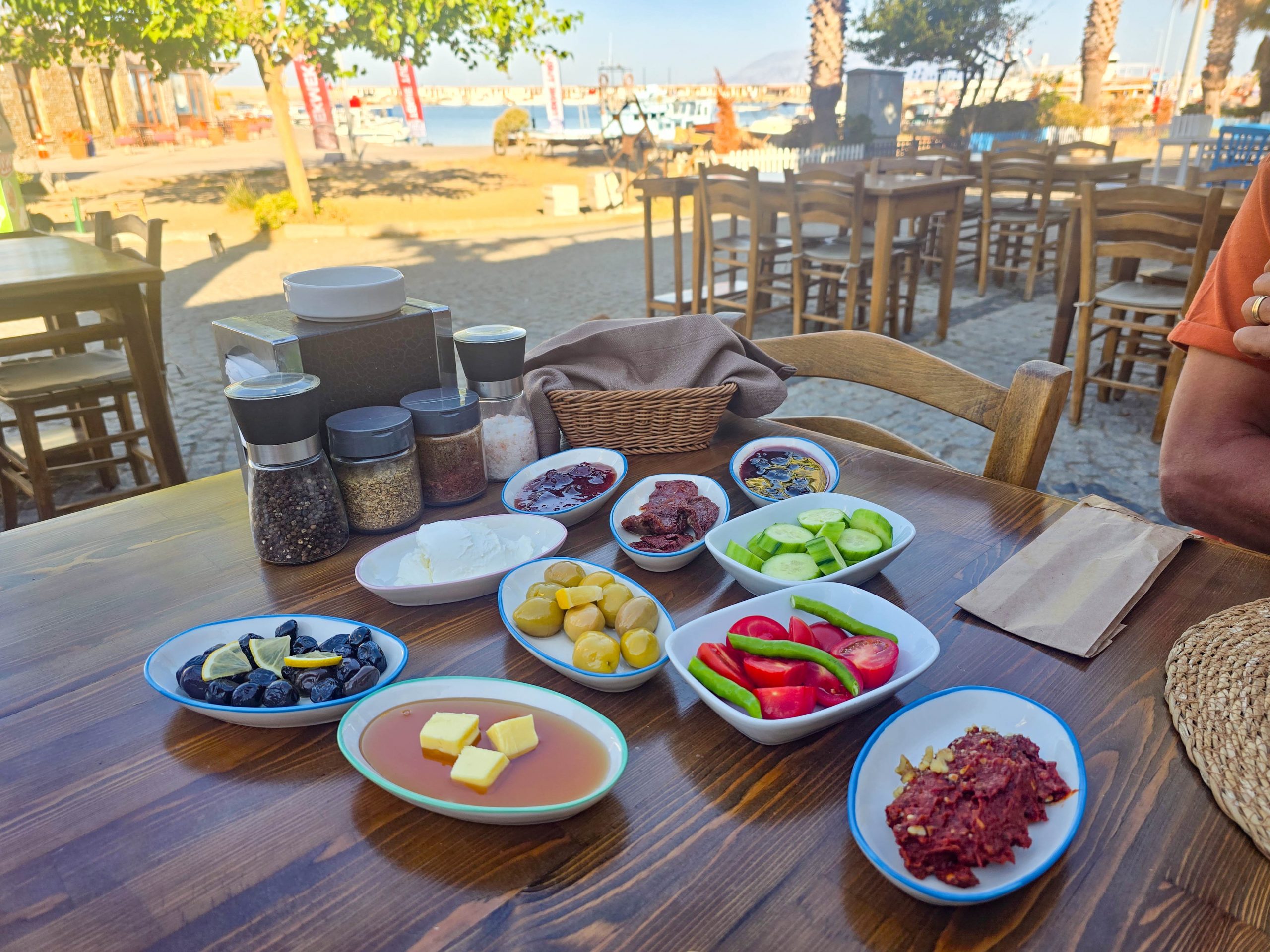
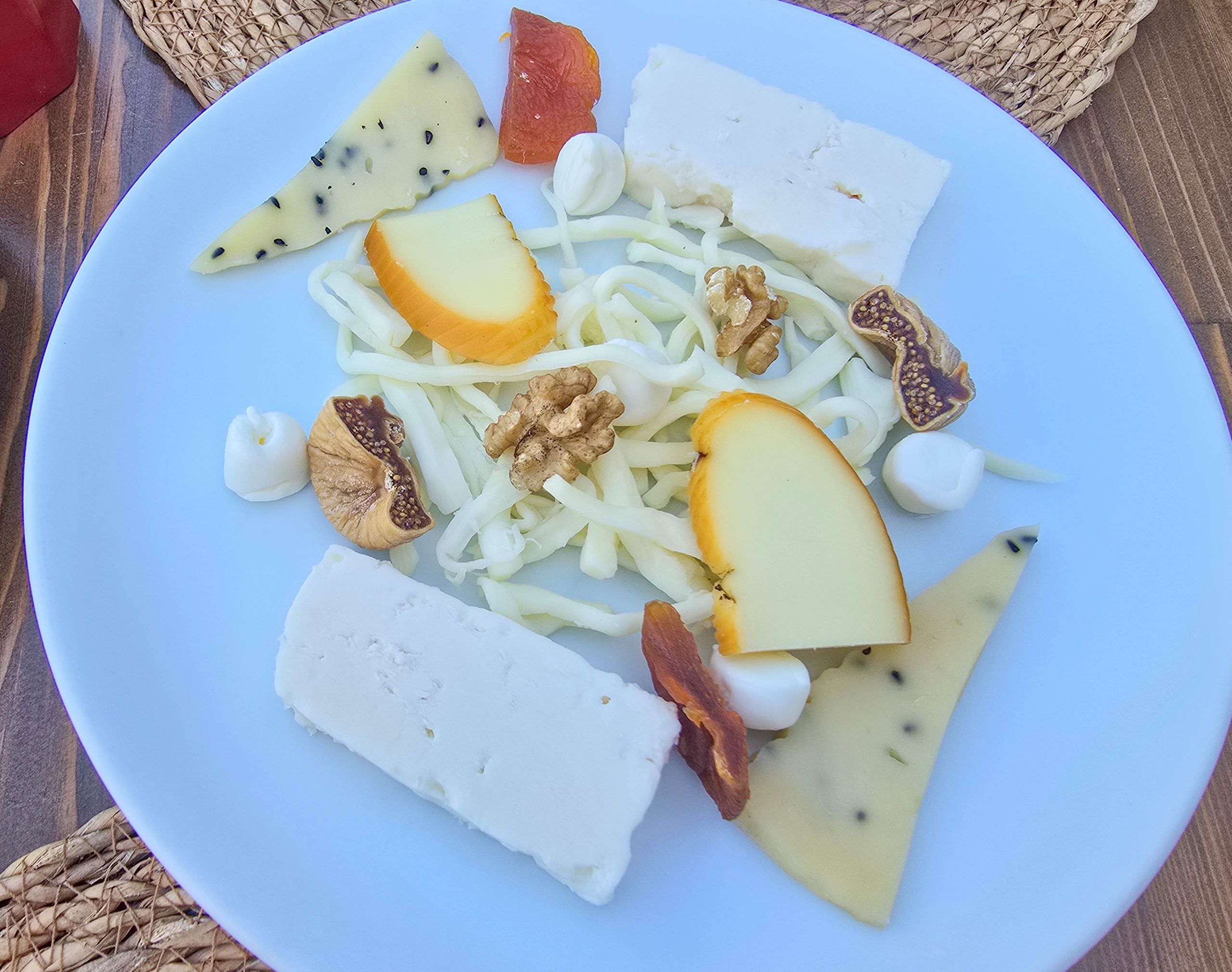
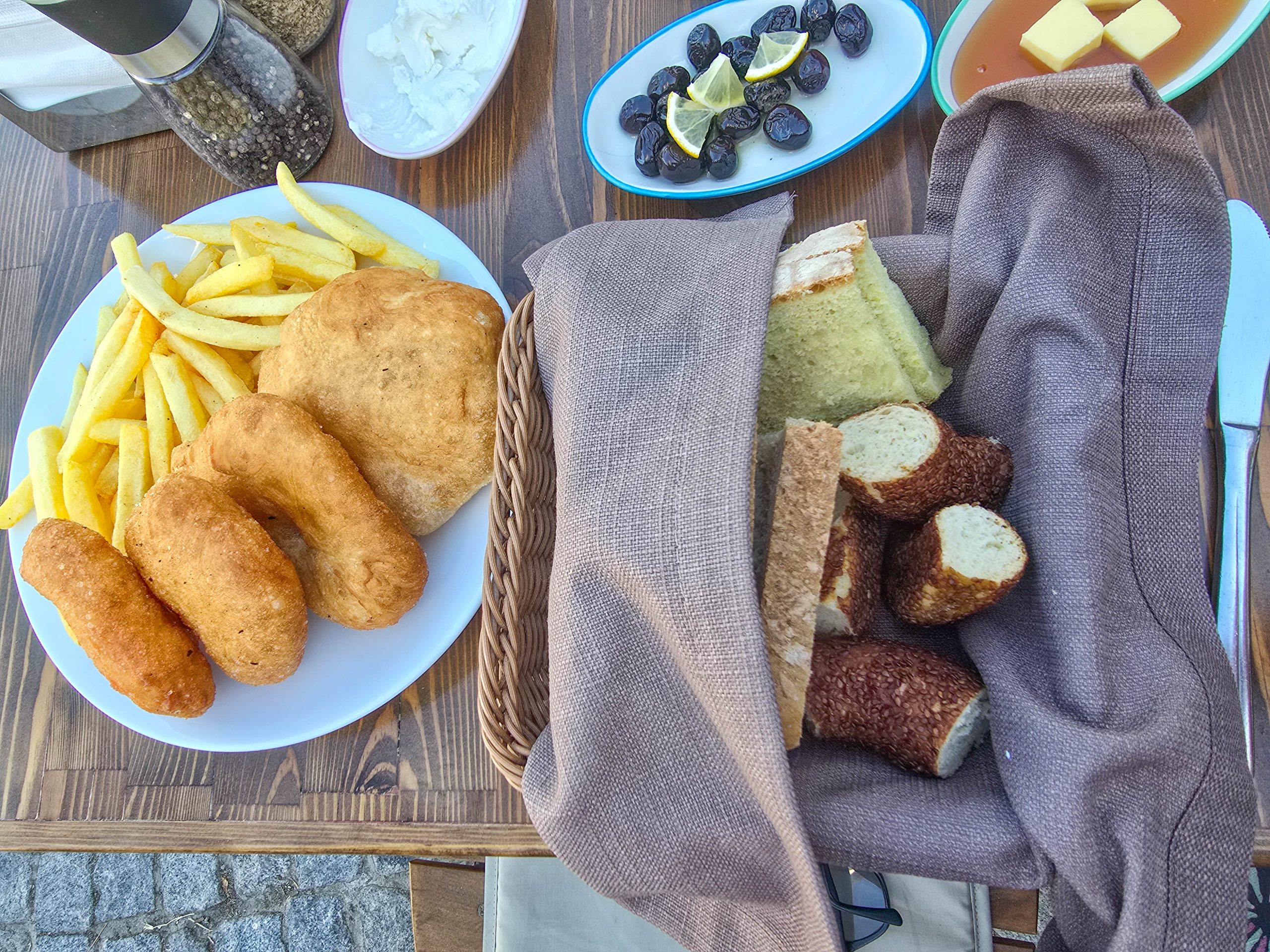
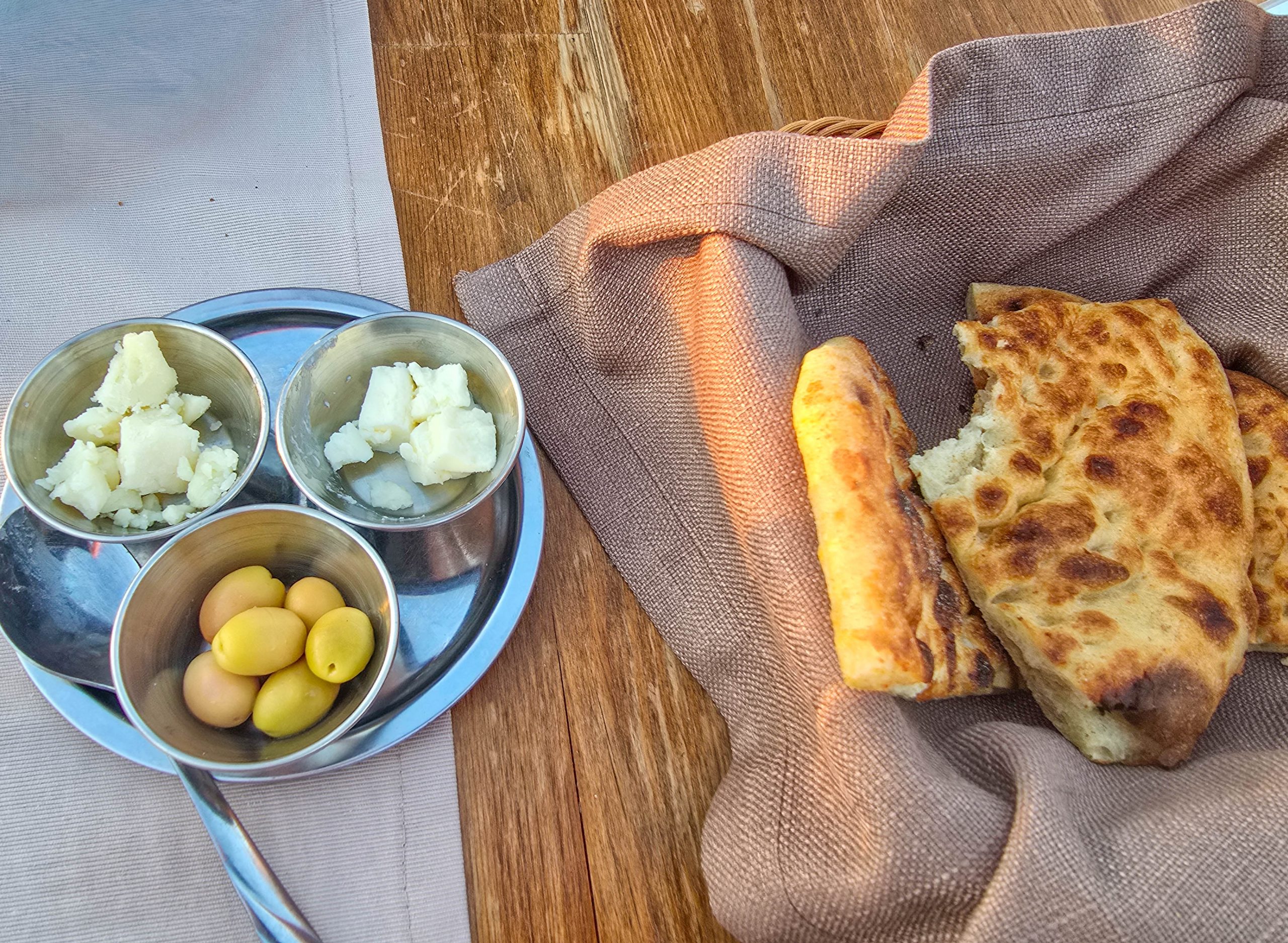
We had now reached the stage where we judged our accommodations in Turkey largely by this first meal of the day. It was becoming quite the competition. This morning’s offering at the Fengari Hotel may well be closing ranks on our most recent stay at the Alicante Hotel on Bozcaada which quickly claimed the No. 1 spot. As we took an outside table a short hop from the sea, Andreas arrived with an array of small dishes — spicy tomato paste, tomatoes, cucumbers, more varieties of olives than I knew existed, yoghurt, sour cherry and raspberry preserves, sun-dried tomatoes, and honey with butter. Then came a basket of breads, including simit, the Turkish version of koulouri, followed by a plate of savoury doughnuts, strangely accompanied by French fries. And finally, a platter of Turkish cheeses decorated with walnuts, dried apricots and figs. We stared at the table, wondering where on earth to begin. My god, the Turks know how to do breakfast!
This morning, Peter had his sights set on the castle ruins sitting on the hill above us. So we set off on foot, passing a tiny branch of Istanbul University — this one a faculty for marine biology and aquatic sciences. Once out of the village and on the main road, we followed a street uphill, stepping past chickens wandering freely across the road.
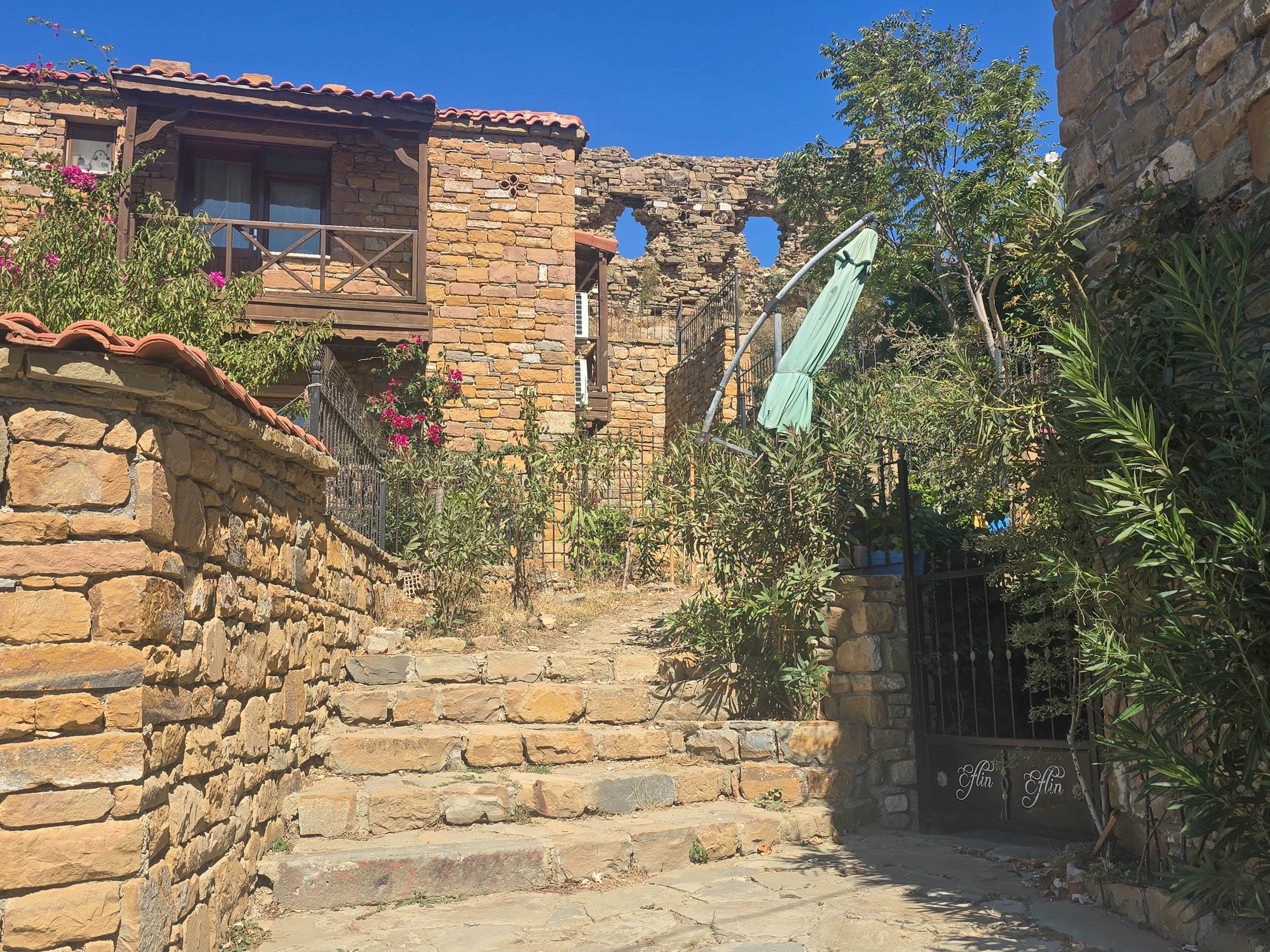
We passed Kaleköy Mosque, its minaret gleaming in the midday sun, and eventually reached the small village above Kaleköy harbour with a scattering of cafés, small hotels and a crafty workshop or two. Beneath the touches of modern polish, it still felt very rural — a place where goats, tractors and art installations all somehow coexist.
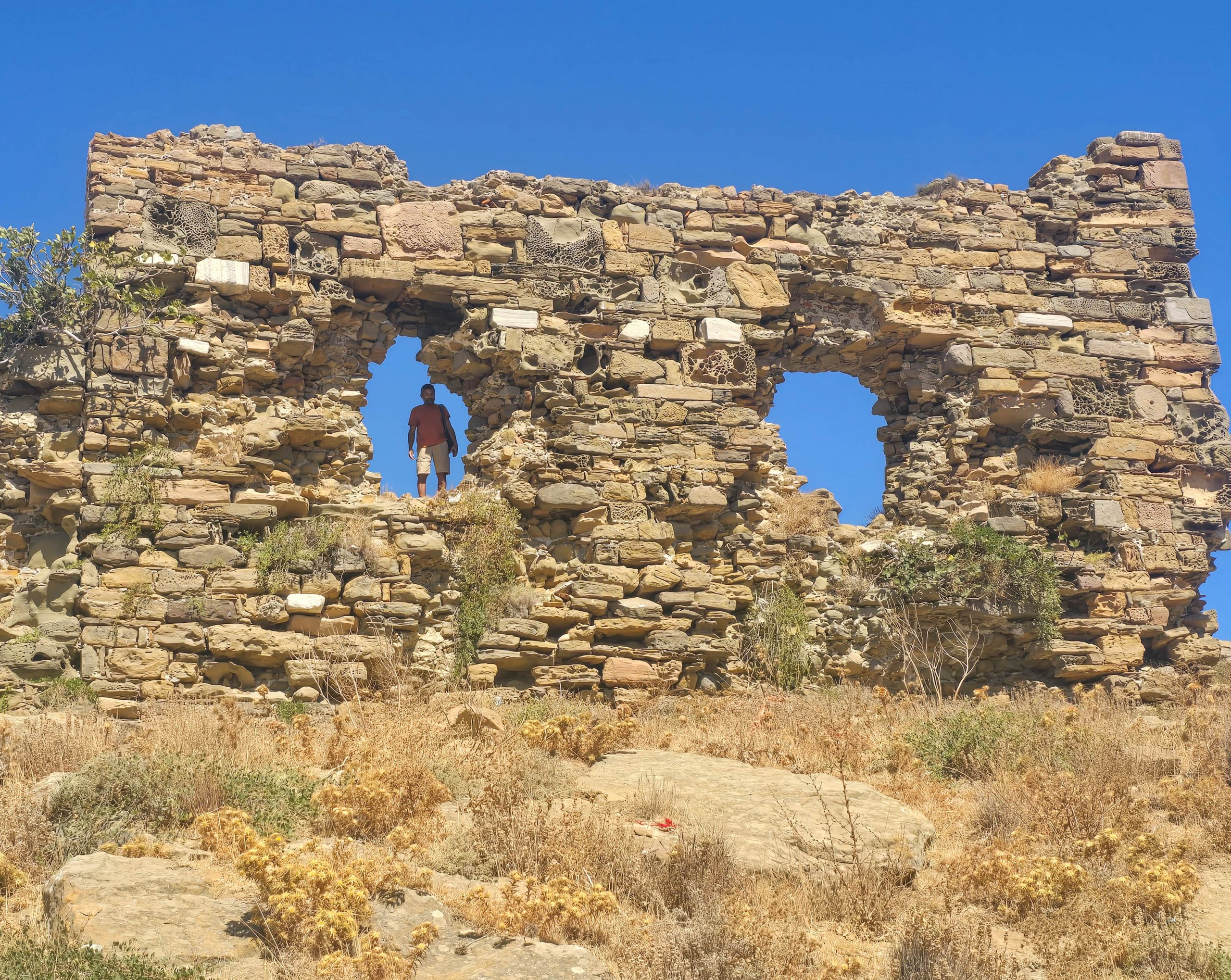
Finding the kastro proved slightly more challenging. Google Maps had clearly decided we needed additional exercise, sending us on an extended scenic route. But eventually logic prevailed, and after weaving our way around private properties, we found the ruins perched on the ridge. From a distance, the remains looked a little like the head of an owl, the two openings of the upper tower staring out across the landscape. It looked as though it had been cobbled together from mismatched marble and sandstone blocks, which, now weather-worn, formed a delicate network of lines like fine embroidery.
Kastro is one of the oldest inhabited parts of the island. An old path that leads from the village down to the harbour is said to date back to ancient times, built for Queen Valentina in the 1440s. The fortifications themselves are even older than they look, with origins before the Hellenistic period and later repairs and additions made during Byzantine times. Peter scrambled up for a closer inspection while I wandered to a viewpoint overlooking the incredible plateau stretching beneath the mountains.
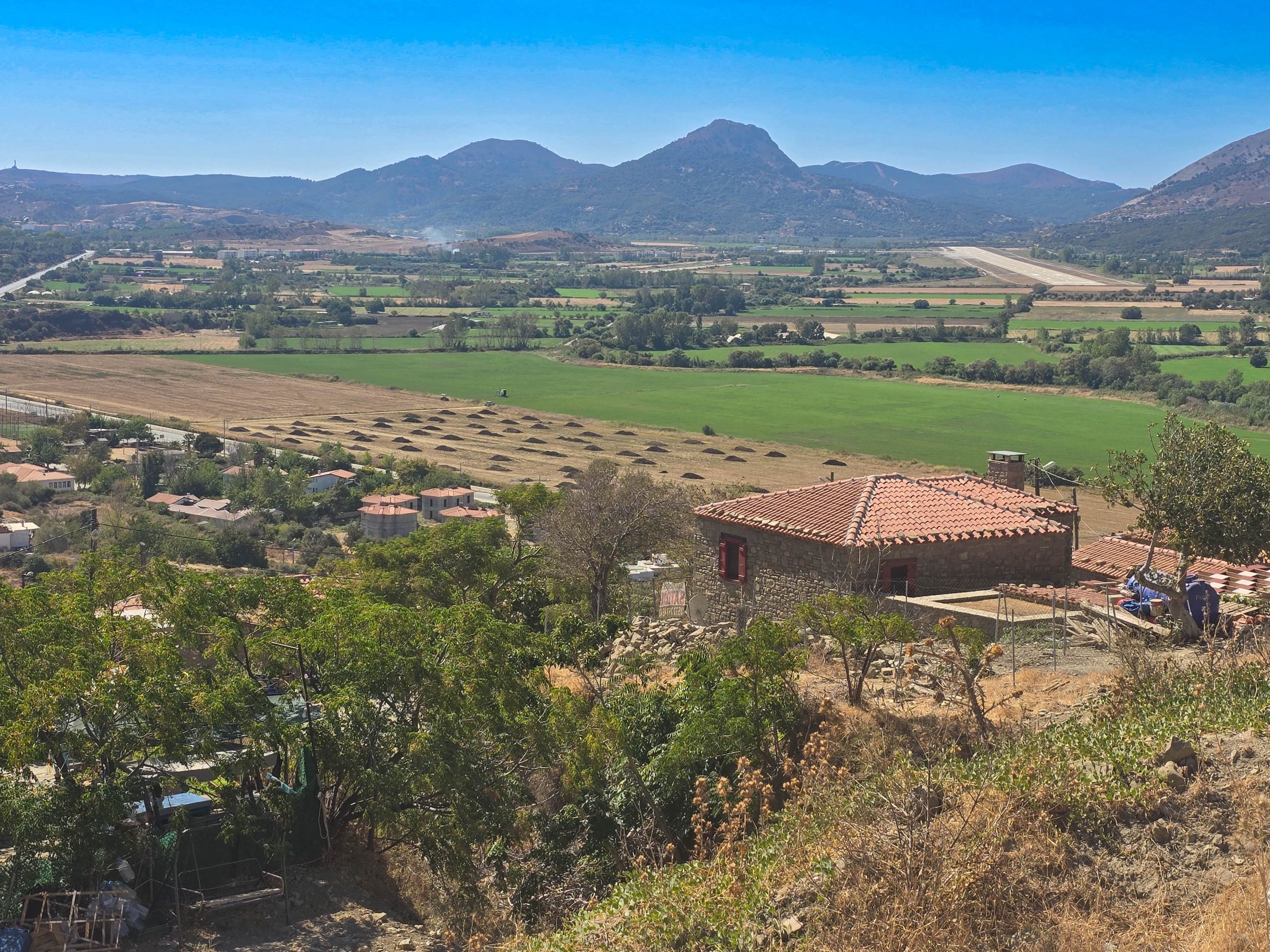
Out in the middle of the plateau was the small runway of Gokceada Airport, which I’d read serves the occasional charter service, private craft and possibly the military. (This reminded me that Peter still had to book his return flight home. His ‘plan’ (and I use that term loosely) was to return to Istanbul and fly from there. However, he’d made little movement to get this tied up so far. More of that later!)
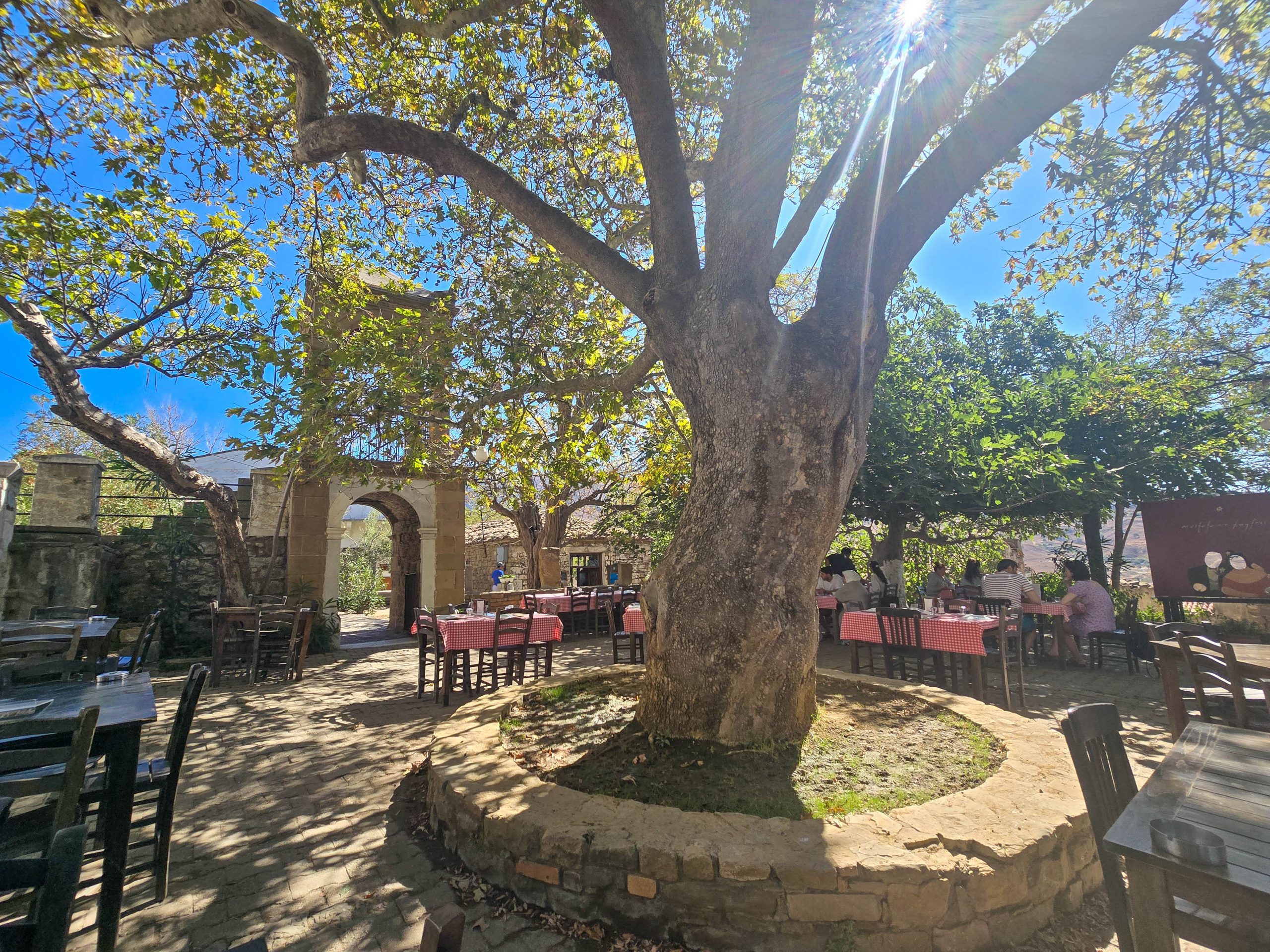
After exploring the ever-so-slightly boutiquified sections of the village, Google Maps insisted there was a church nearby. In reality, it took us to Cafe Mustafa’nın Kayfesi with tables covered in chequered tablecloths beneath a huge plane tree. It was too inviting to resist a short tea break. Just beyond the courtyard, an arched entrance beneath a bell-less bell tower took us to the small church, which we could see had been renovated in 1949 by a local benefactor. Agia Marina is a modest, whitewashed village church with a weathered façade and a shaded portico held up by sturdy stone columns. I got the sense that the church was either used for festivals only, or not at all, now mainly operating as an extension of the cafe space.
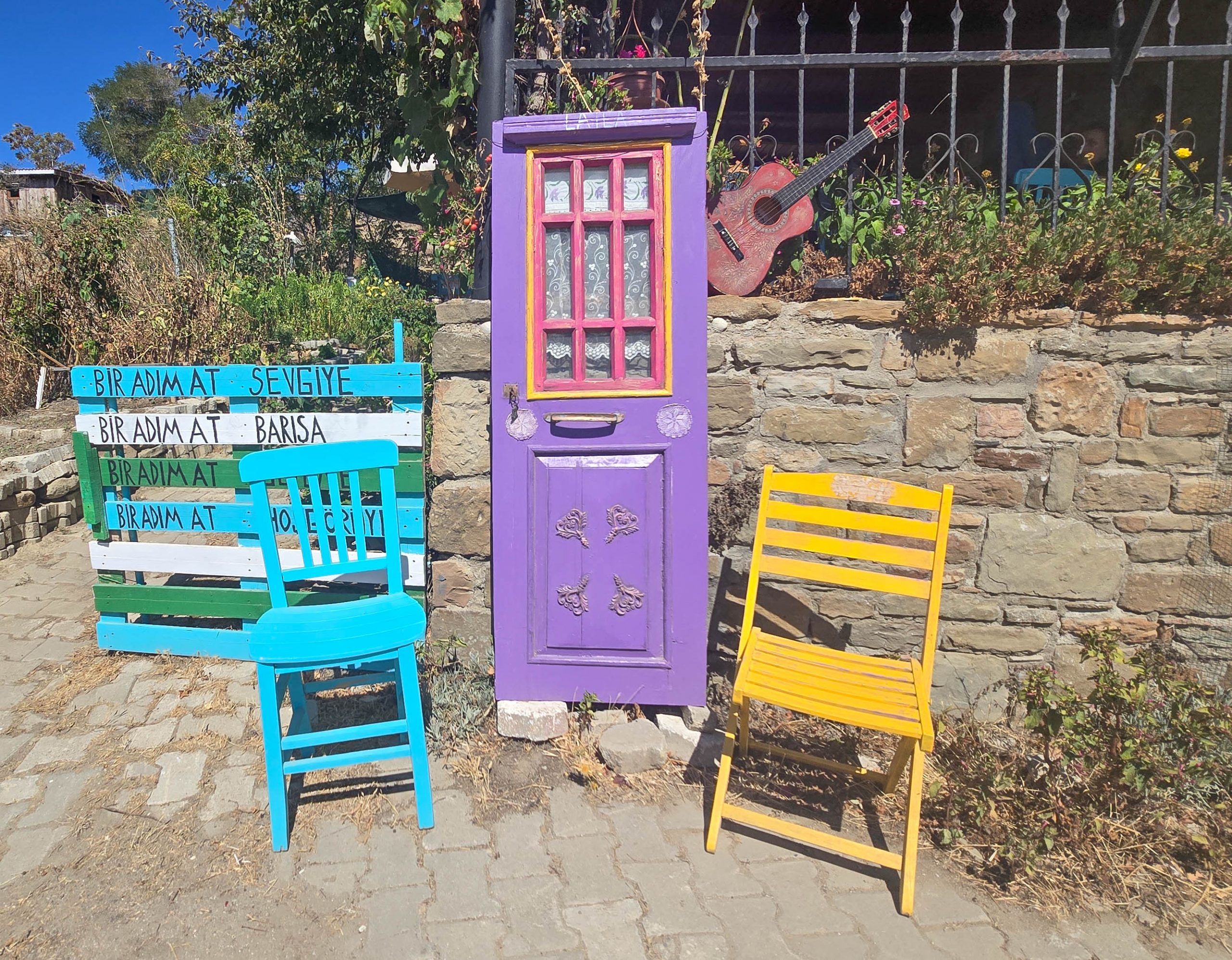
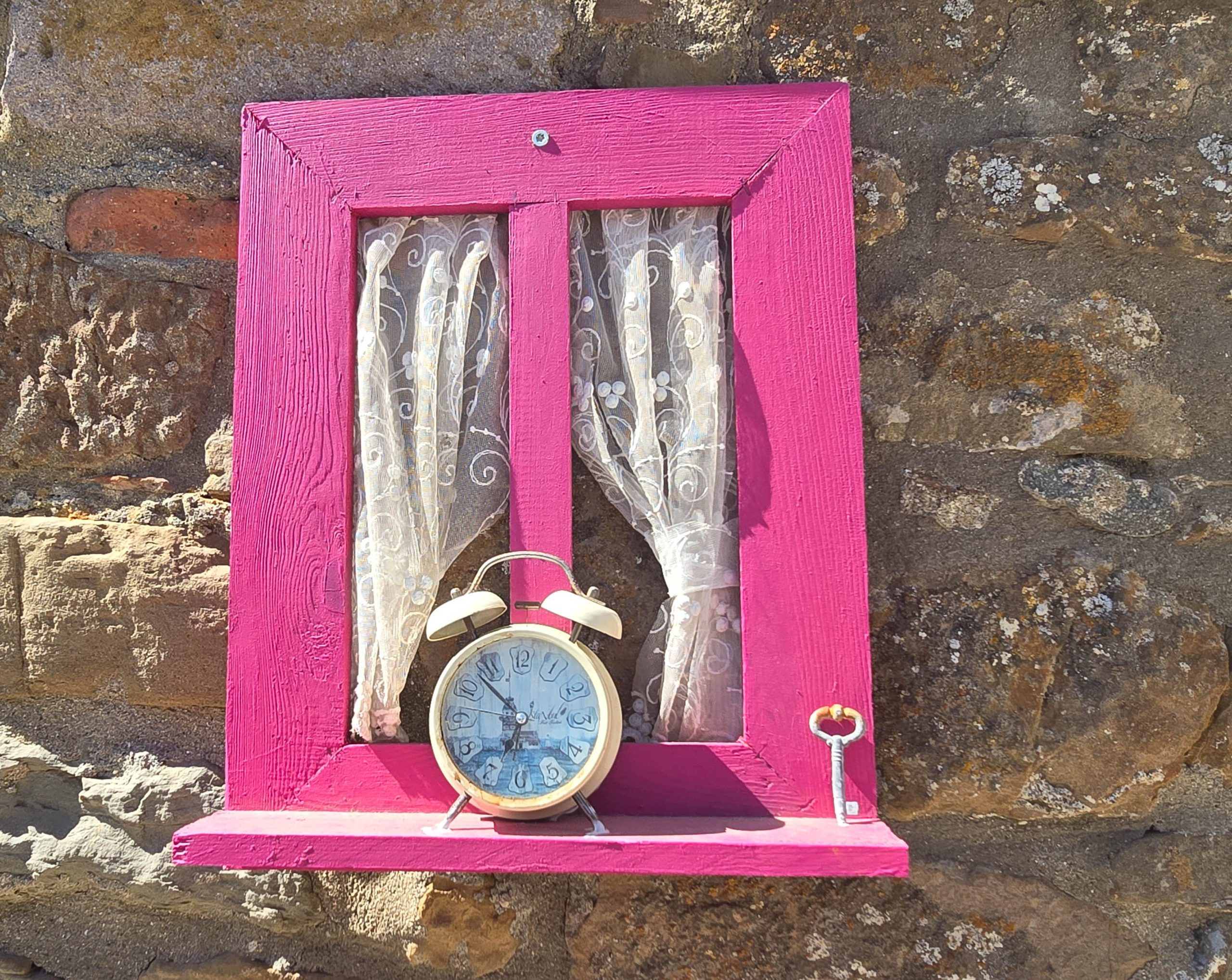
As we made our way back down the hill, we spotted the Poseidon Restaurant, probably the most sought-after restaurant on the island. During the summer, you need to book well in advance to get a table. Apart from the excellent food (so I’d read), the views overlooking the harbour at sunset are one of the island’s main draws.
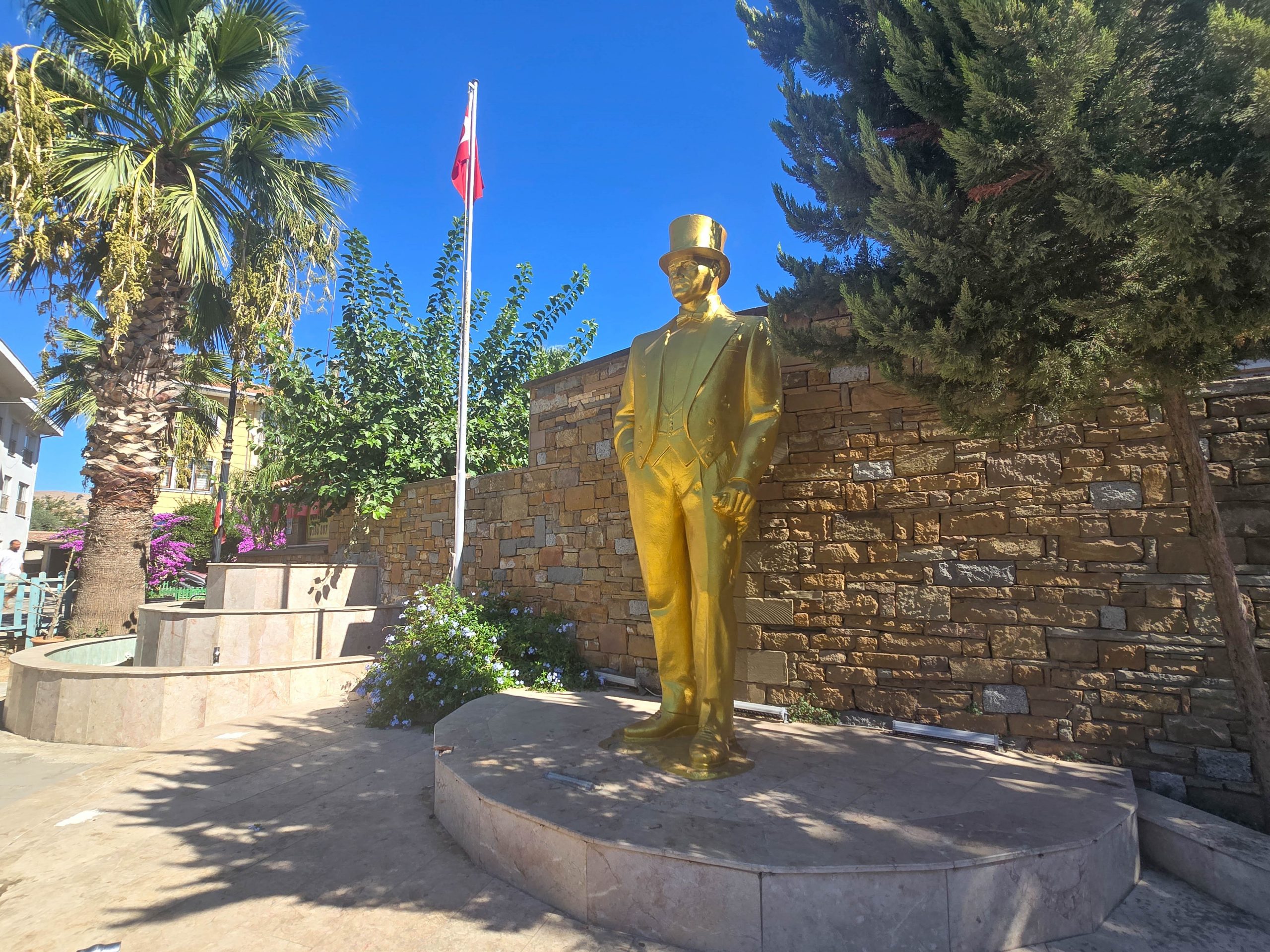
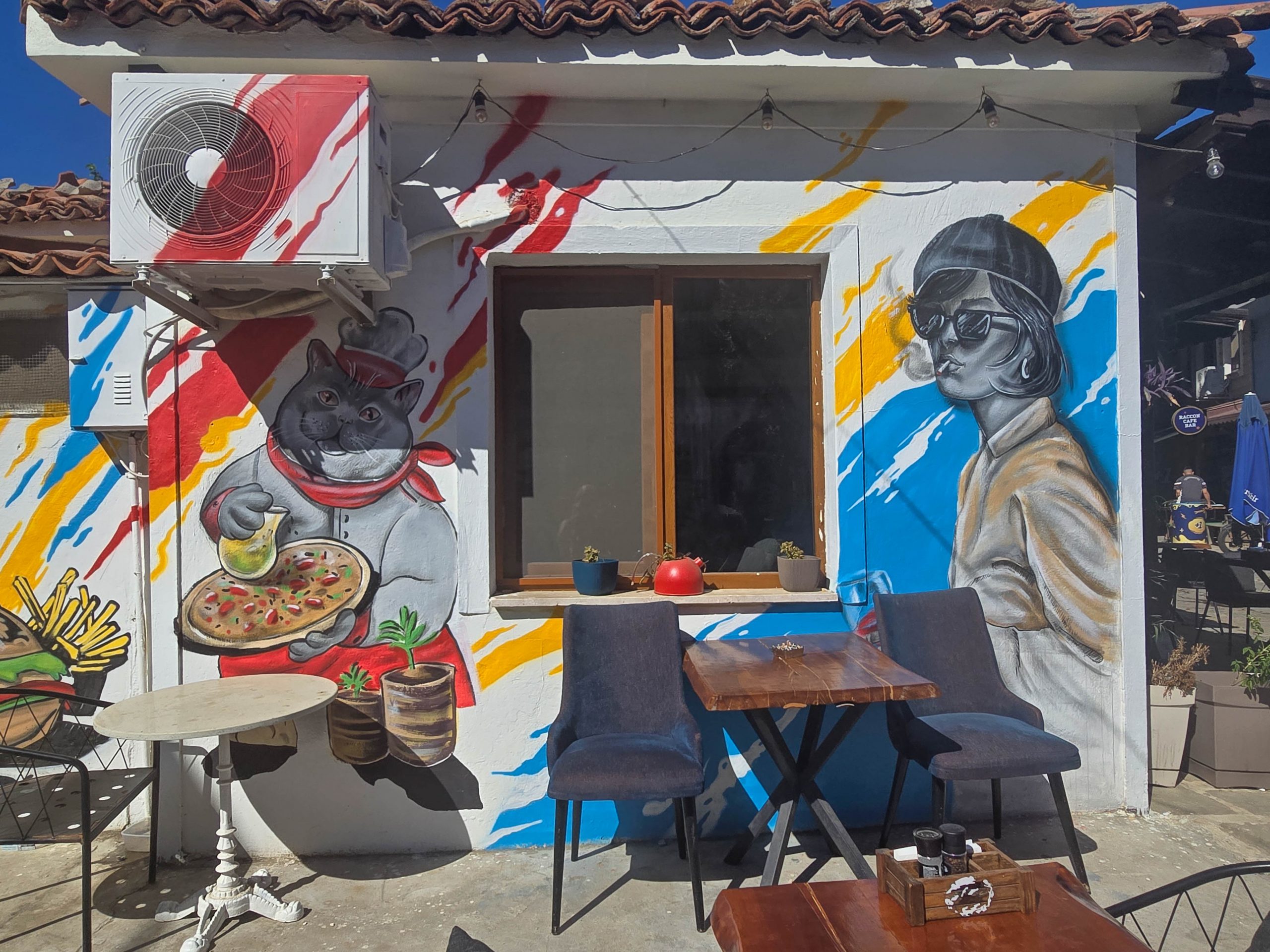
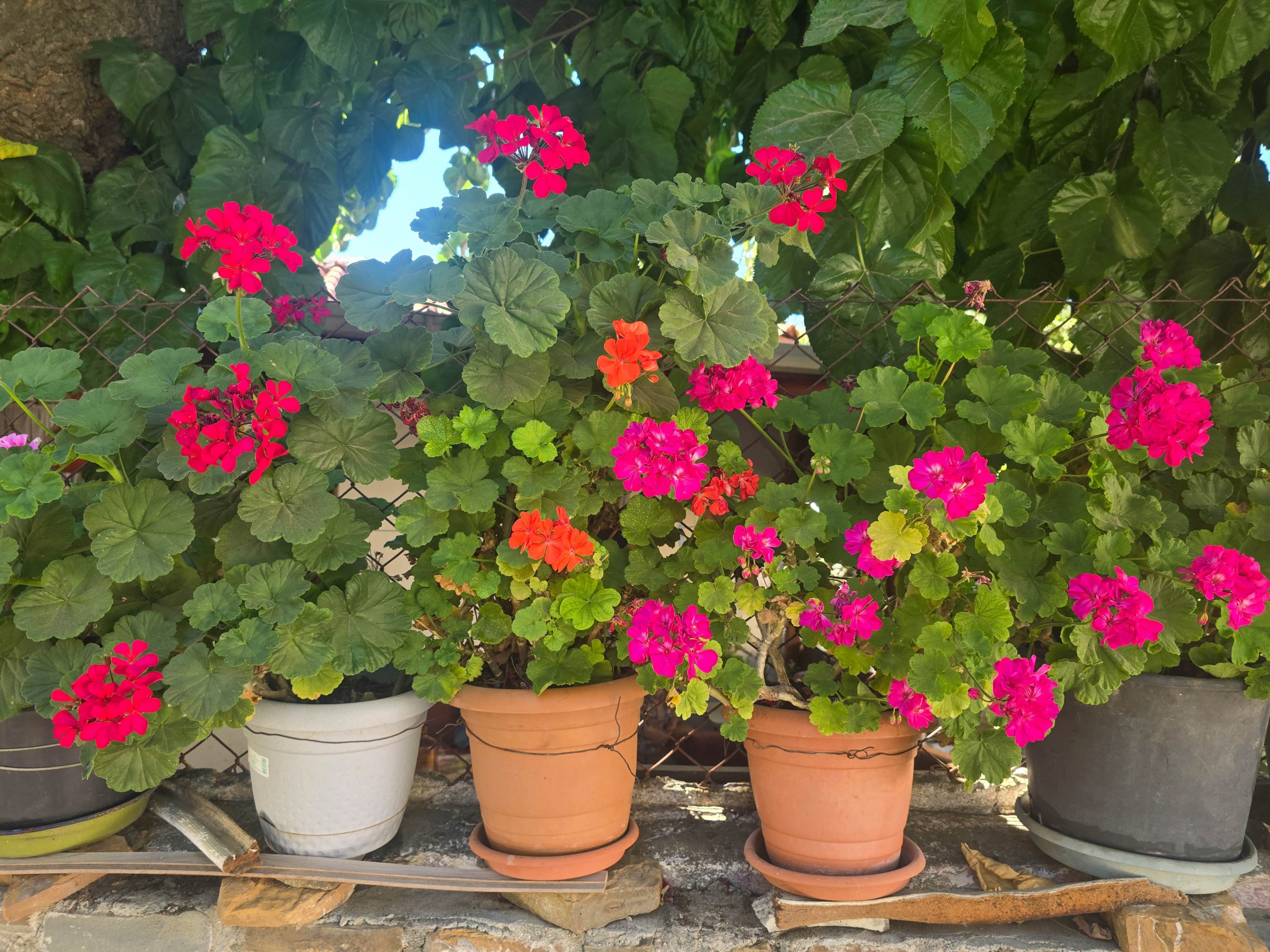
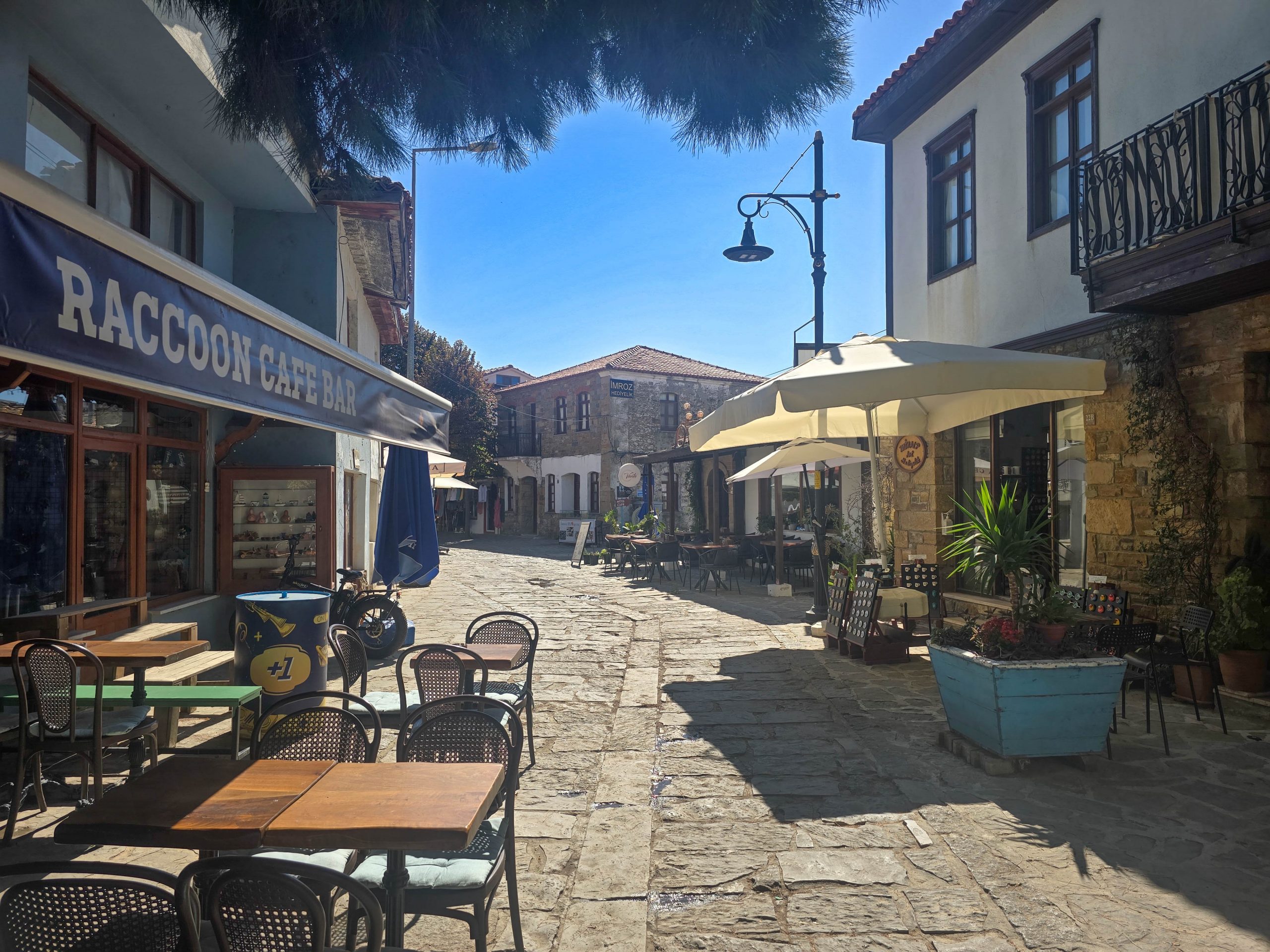
We made it back down to the main road just in time to catch a bus to Merkez. Once there, we had an amble around the main square and the residential area close by. As the island’s main town, it had a pleasant, lived-in feel: traditional stone houses, some with sachnisi overhangs, a vibrant cafe culture, modern street art tucked between alleyways, and a rather dapper statue of Atatürk in a suit and top hat presiding over the square.
With just an afternoon left, we checked out the timetable at the bus stop to see where we could get to and, more importantly, where we could get back from. We decided to head south of the island and check out Aydıncık Salt Lake (Tuz Gölü) and Kefalos Beach, Gökçeada’s long sweep of golden sand and a popular summer destination. As the bus took us up over the island and then slowly dropped towards Aydincik, we were struck by how good the road infrastructure on Gökçeada was. Some of this had existed for years, but much has been upgraded more recently as part of wider investment across Turkey.
The bus conveniently parked facing the Salt Lake, so we made this our first port of call. The Salt Lake, or Lake Tuz, lies behind both Aydıncık and Kefalos beaches, formed by the sandbanks that the wind has pushed in from both sides over the years. It’s surprisingly shallow—only about a metre deep on average—and entirely fed by seawater and rainfall, with no streams flowing into it at all. In summer, the water evaporates quickly, leaving great crusts of salt across the surface and turning the whole area into something other-worldly. In summer, flamingos settle here in small numbers, and the surrounding flats often turn pink depending on the minerals.
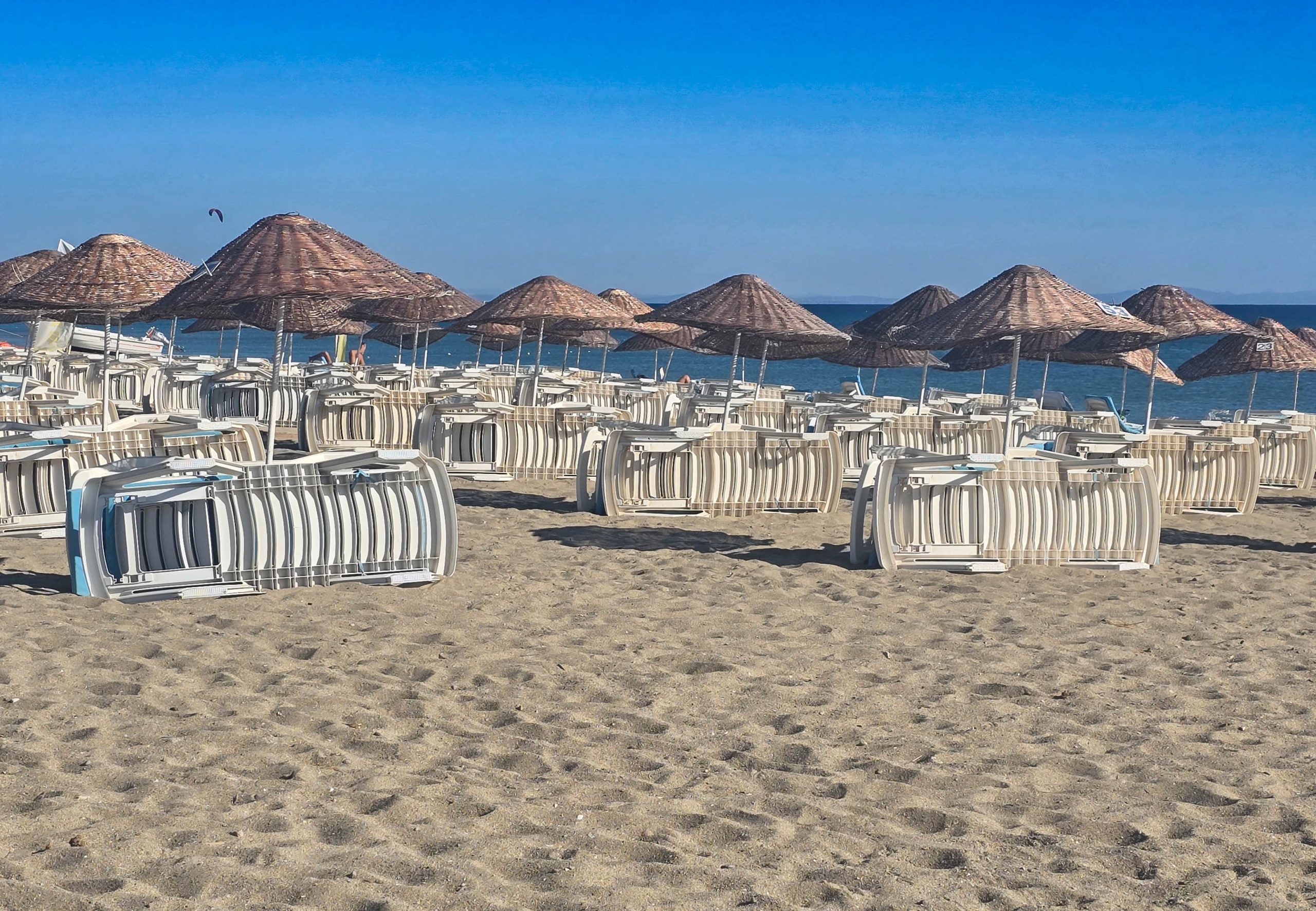
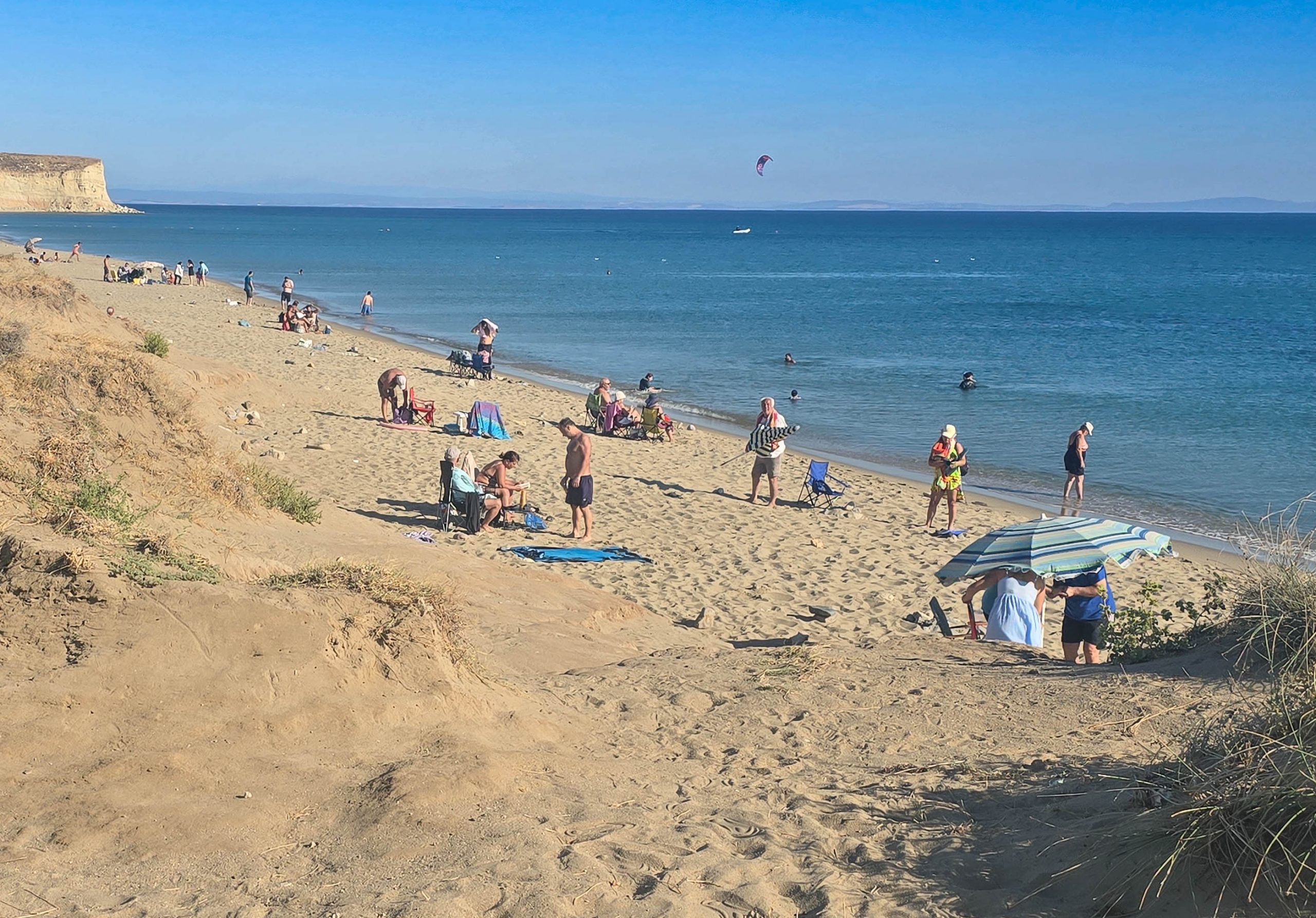
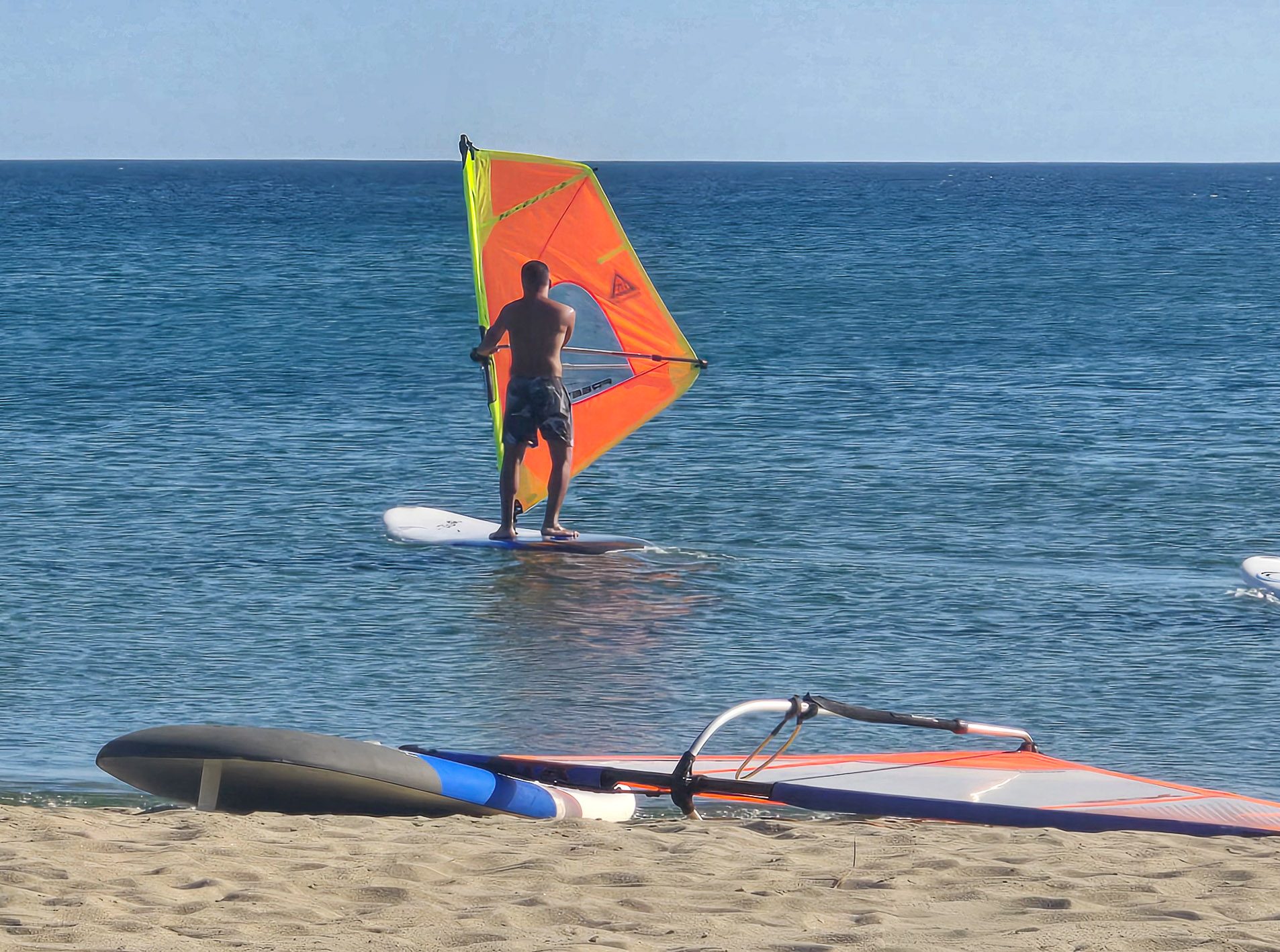
Just beyond the lake lay Aydincik Beach, fully organised and stretching for miles. The sand was the soft, sinking kind — the sort that makes every step feel like ten. Surfboard rentals, beach bars and umbrellas lined the shore, though seemingly on the cusp of the end of the season today.
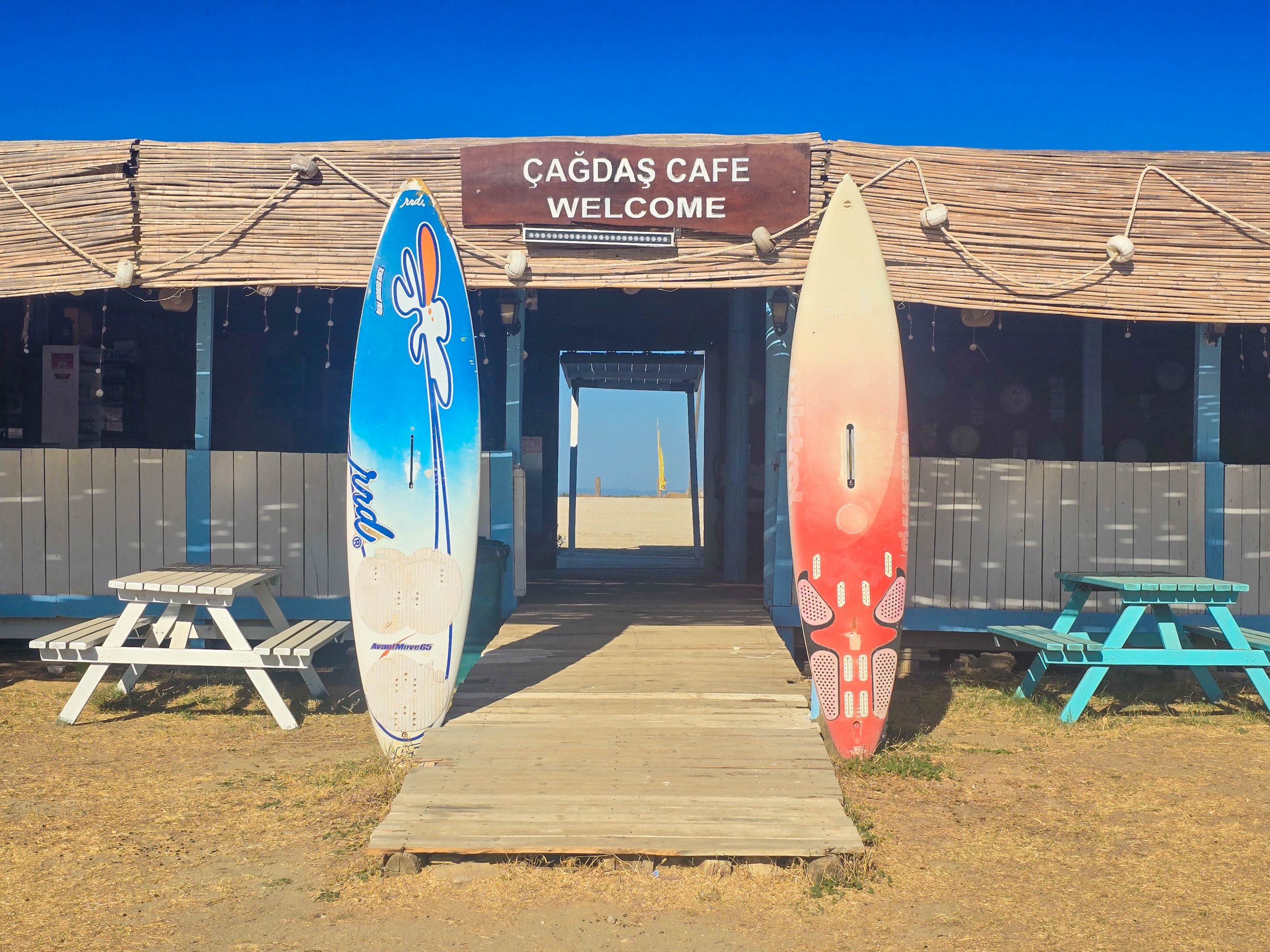
We stopped at one of the beachside cafes for refreshments whilst watching the watersports from the comfort of our chairs. Wandering further along the coast we came to a small beach enclosed on either side by sand dunes which we assumed was Kefalos Beach. It was hard to see where one began an ended. Here the beach was sheltered and unorganised – ideal for families. This part of the island one of the most popular kite-surfing spots in Turkey thanks to its steady Meltemi winds. It’s a shame we didn’t get a chance to spend more time here, but it was good to get a sense of this side of Gökçeada — broad beaches, salt lakes and a windswept, open landscape.
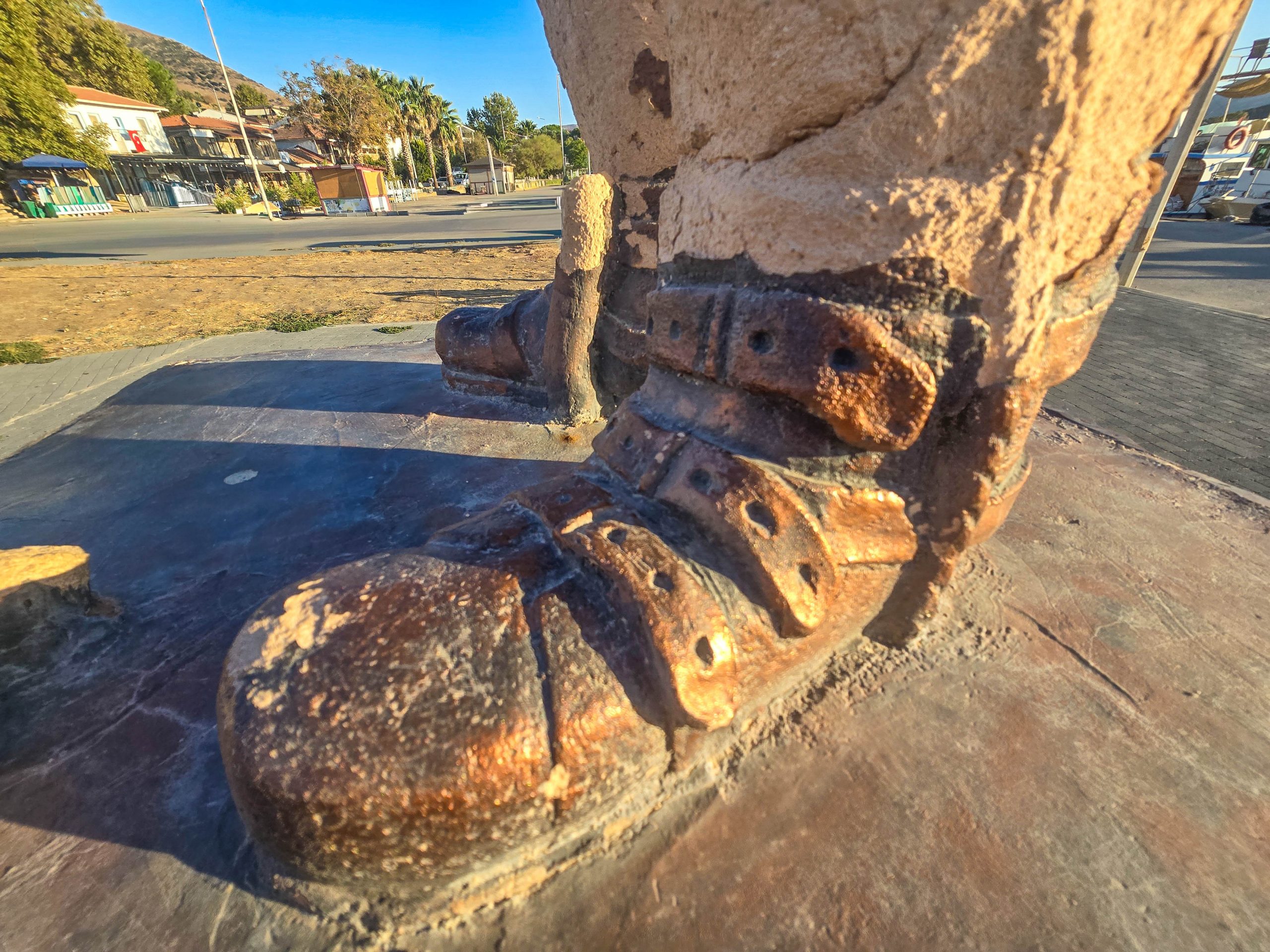
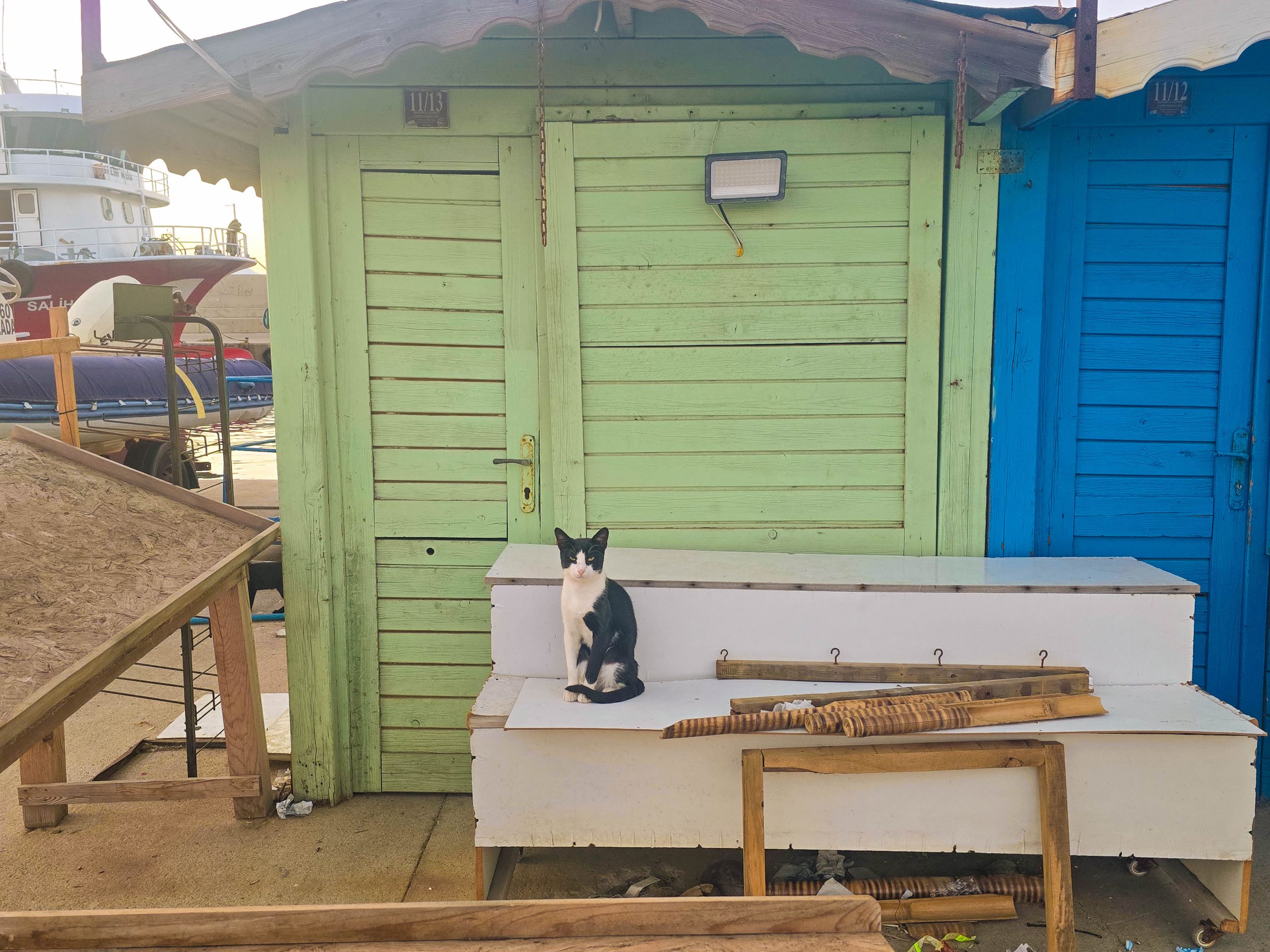
Two bus rides later, we were back in Kaleköy where we explored the harbour in more detail. A square at the water’s edge displayed a statue of a deep-sea diver — a nod to the island’s long maritime traditions — while a row of colourfully painted cabins housed local artisans selling handmade jewellery, ceramics and crafts. Only a few were open, but it added charm to the waterfront.
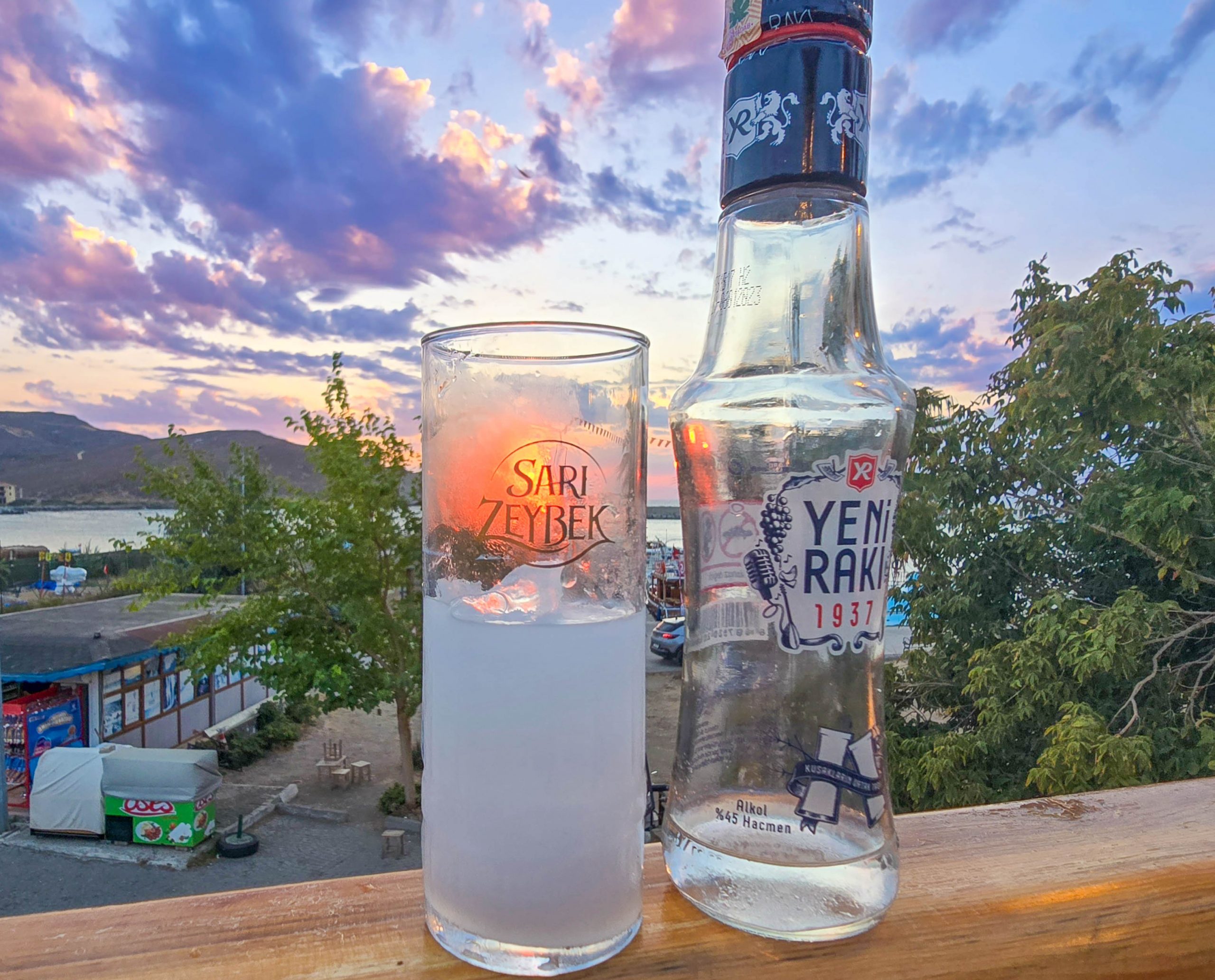
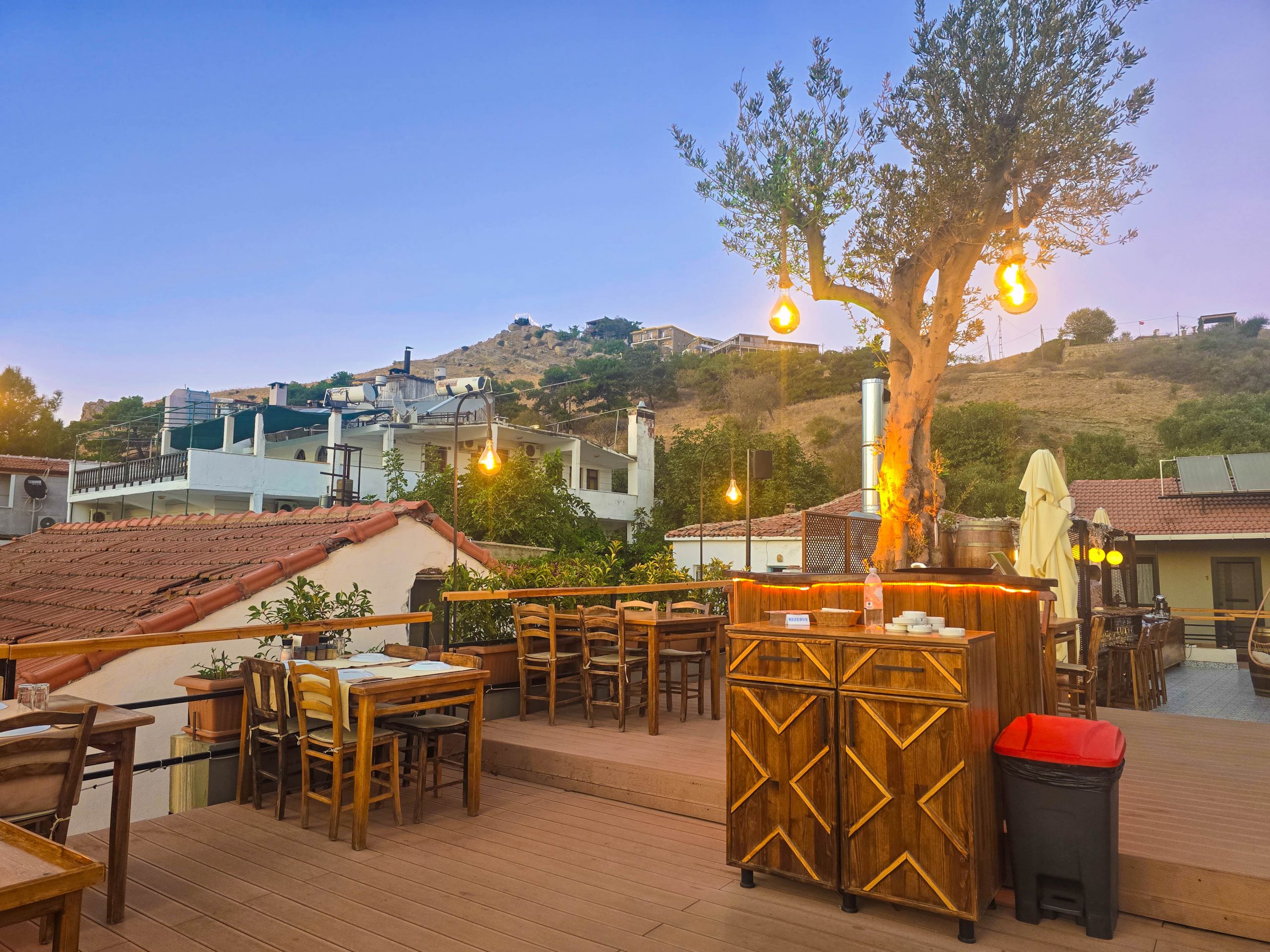
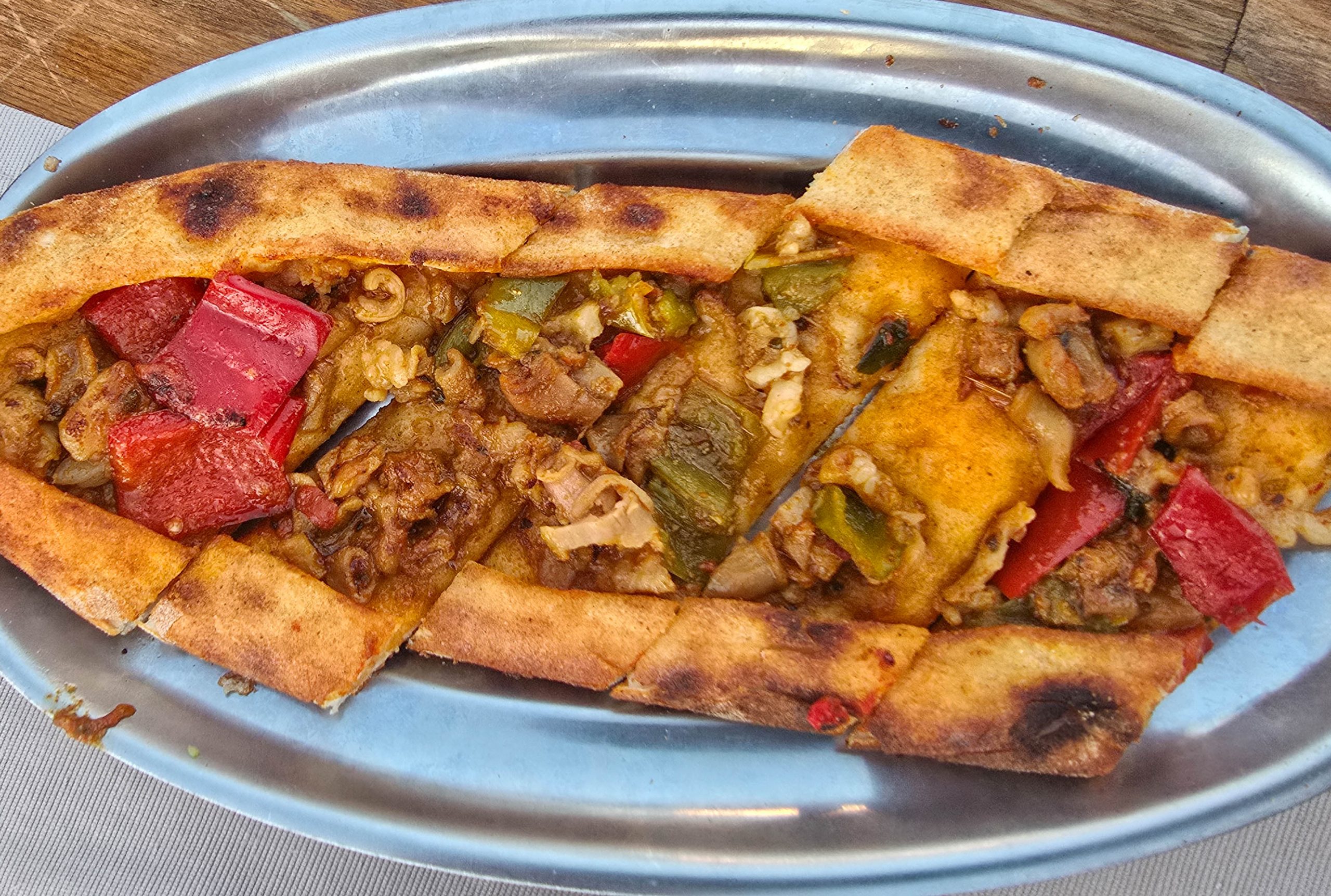
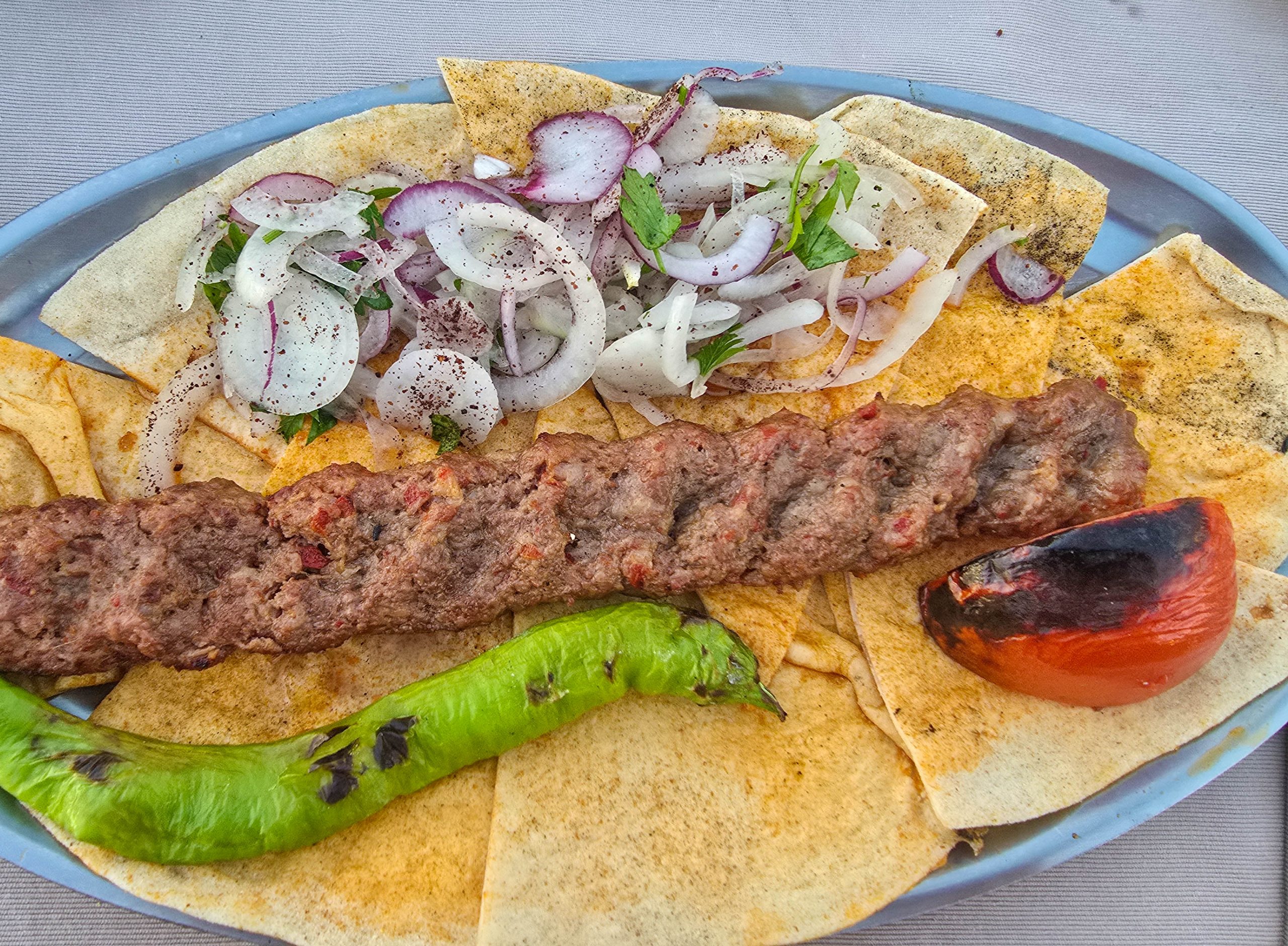
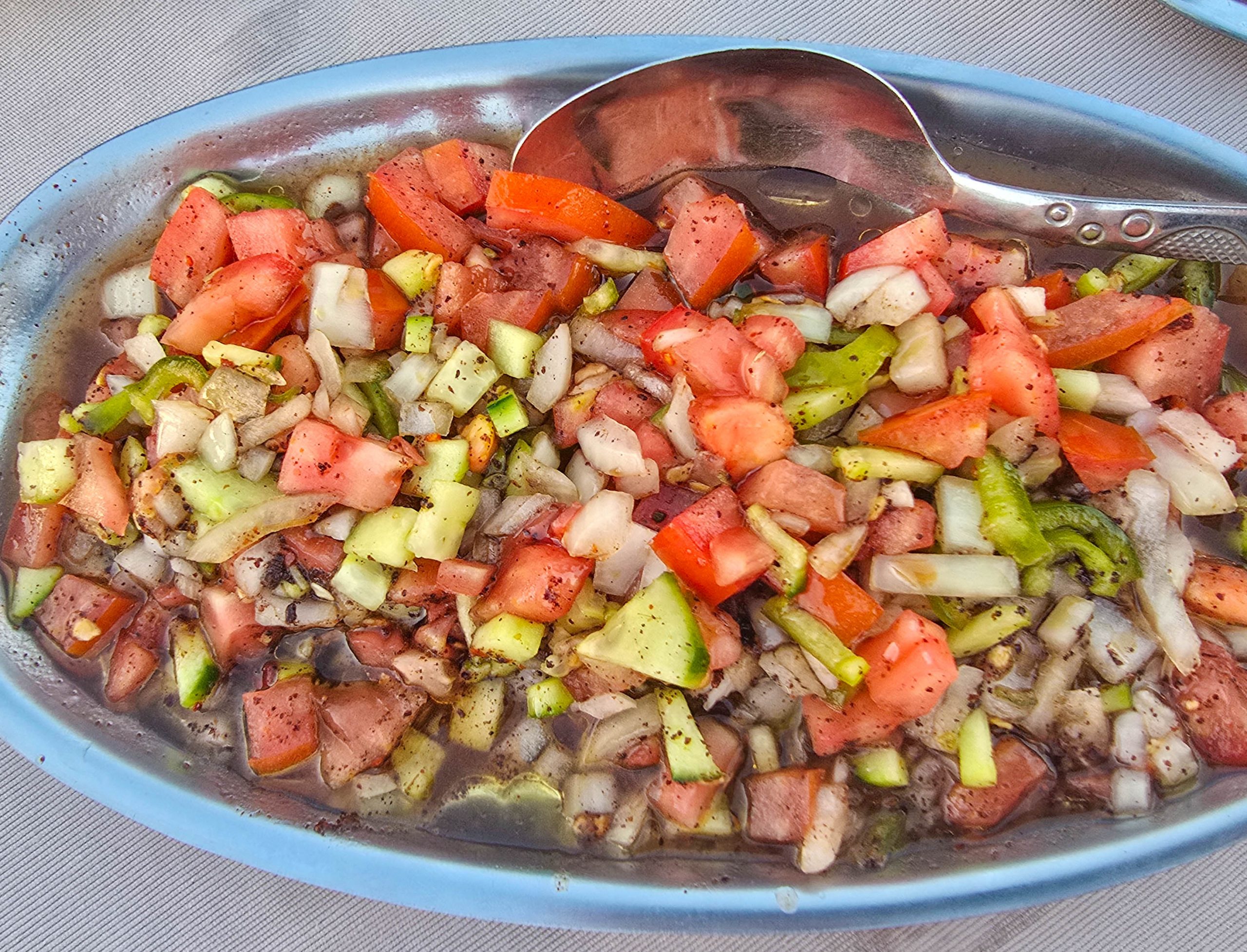
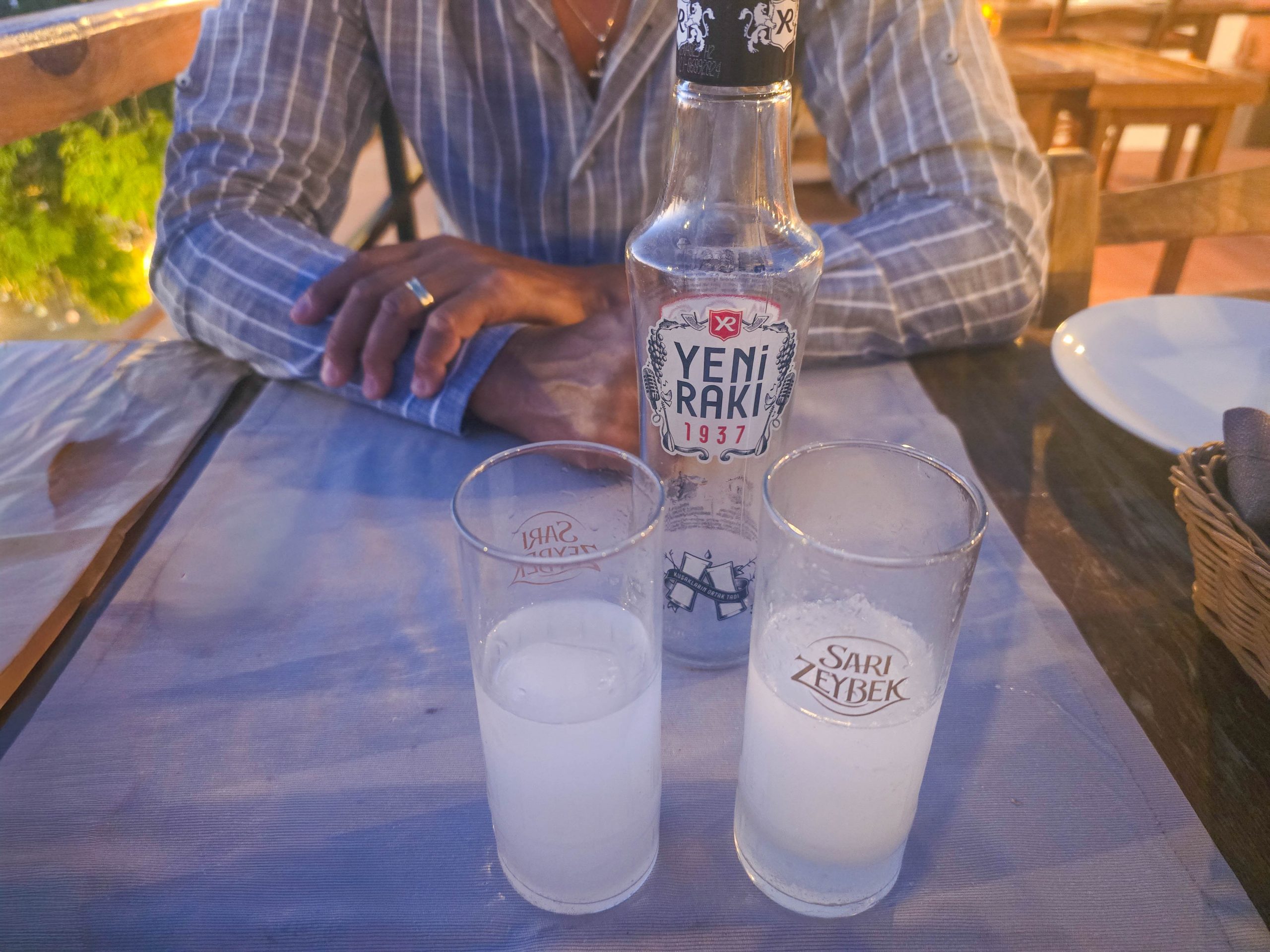
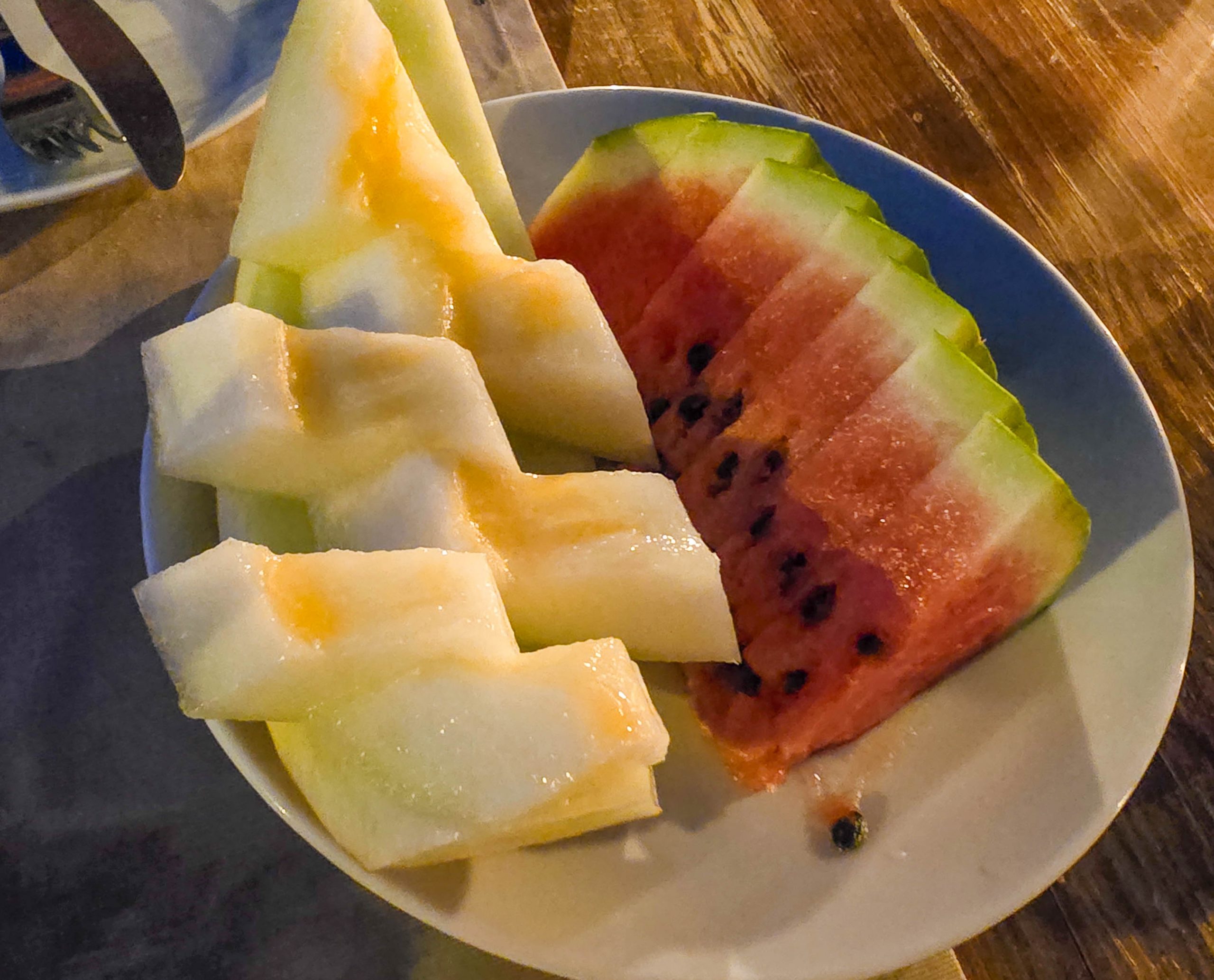
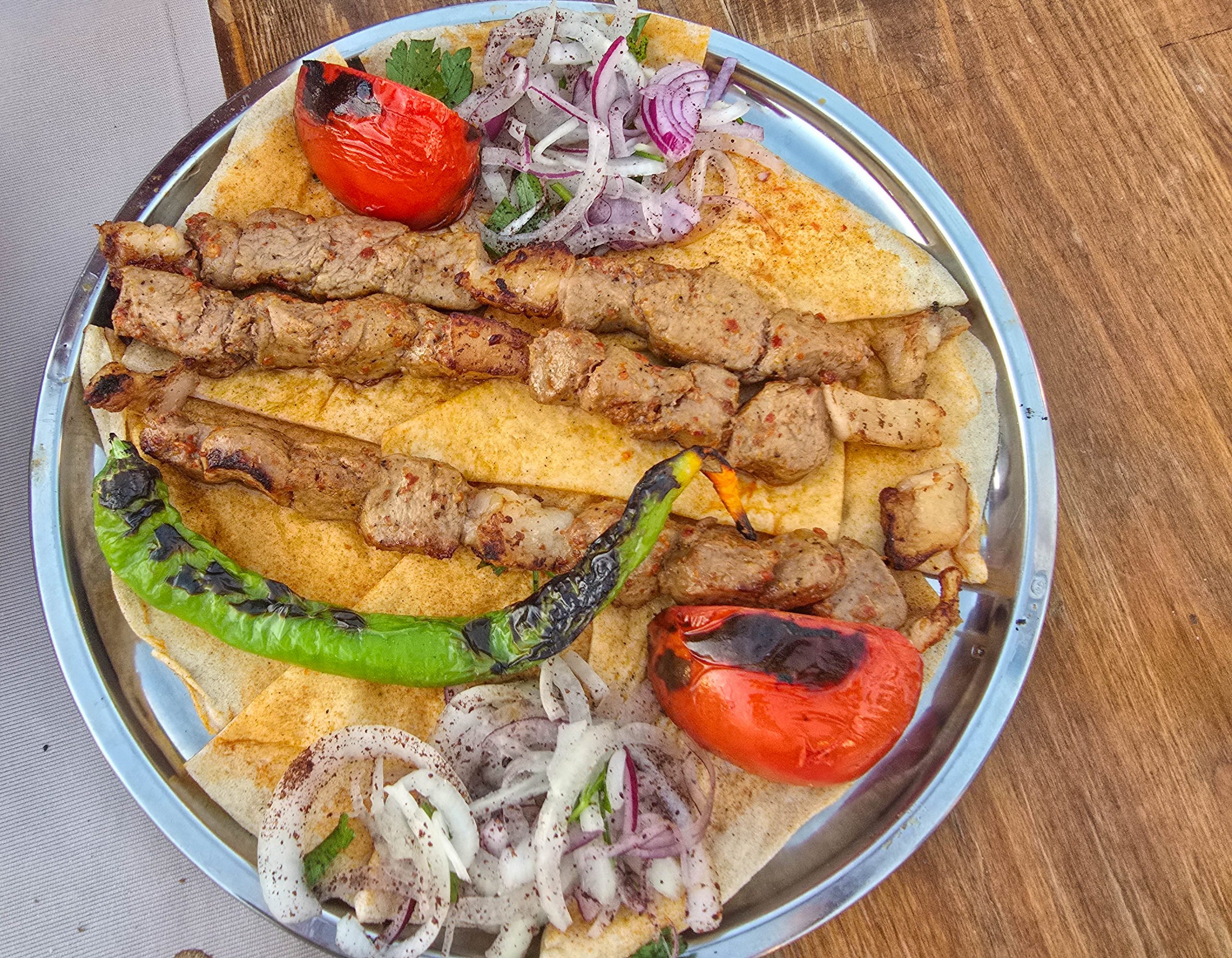
That evening we dined at the Fengari Hotel, on the upper terrace overlooking the bay. It turned out to be an excellent choice. Here we were looked after really well by Soner who smile (not laughed) at our attempts at the Turkish language. To start, Yeni Raki felt appropriate, and before we knew it, a small feast appeared before us — including a Turkish pizza with kokoretsi (for Peter, naturally).
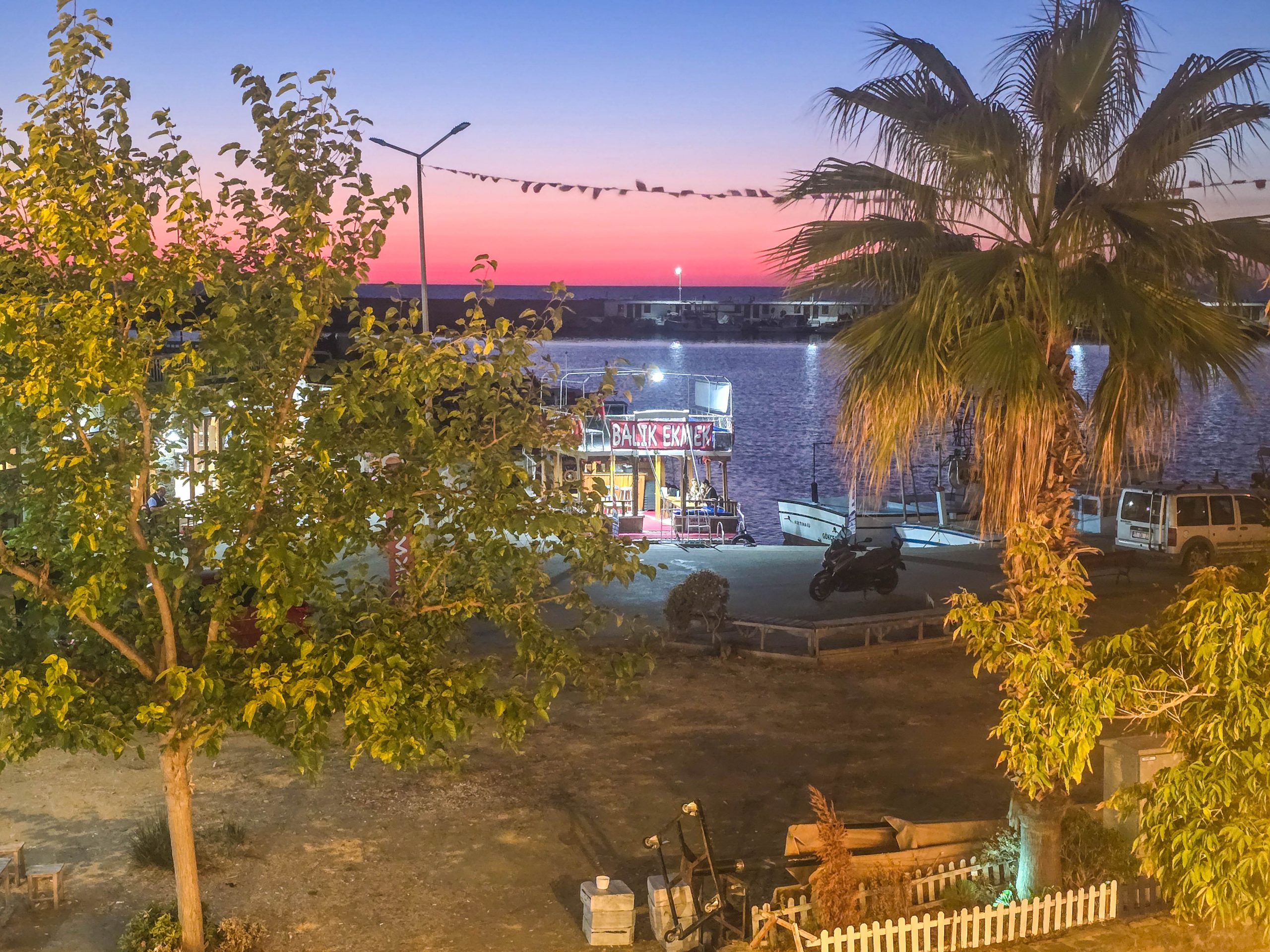
From our table, we watched the sunset wash the water in warm reds and oranges, Mount Fengari on Samothrace glowing faintly in the distance. We were finally beginning to get a taste of Gökçeada — not everything, but enough to know the island had far more layers than we could possibly uncover on this trip. With only a few days and a limited bus network, we’d see what we could. For now, this felt like a very good start.
Now, onto more important matters – how was Peter going to get home. He had a fixed return to work date in less than a week. I know I can sometimes cut it fine, but thankfully I’m able to work flexibly and whilst travelling. Now that we were once again close to Canakkale, I suggested that he should book a flight from Istanbul and think about his journey back there. His response nearly made me fall through the terraced decking into the hotel reception area below. Apparently, Peter had been looking at the map and thought that we could travel to Lesvos, where he could fly from there. Travel planning isn’t Peter’s forte (or interest), and as an Egyptian very last-minute with everything. I wasn’t averse to the idea, but I’d had some kind of vague notion that from Canakkale, I would head over the border into Alexandroupoli and work my way east.
The more I thought about it, the more Lesvos actually became a great idea. I’d planned to go back there anyway – being such a large island, I’d barely scratched the surface on my previous visit, even over two weeks. I hummed and I hawed, letting the idea churn around in my head until I finally decided that Lesvos it would be! The only irritating thing was that the logical order would have been Gökçeada first, then Bozcaada. But hey ho. What’s a few more ferries and bus journeys?
Anyway, we still have one full day left to explore Gokceada. More tomorrow.
Discover more from A Greek Oddity
Subscribe to get the latest posts sent to your email.
Fifteen years of writing about Greece. Thirty plus years of travelling it. Now condensed into a travel planning toolkit.
Take a look


