Mytilini Photo Walk: Harbour, Kastro and Hidden Corners
This post follows a slow, reflective walk through Mytilini, exploring its harbour, historic buildings and everyday street life at a moment of transition. It’s a photo-led travelogue shaped by observation, memory and the quiet recalibration that comes with travelling solo, before deciding where to head next on Lesvos.
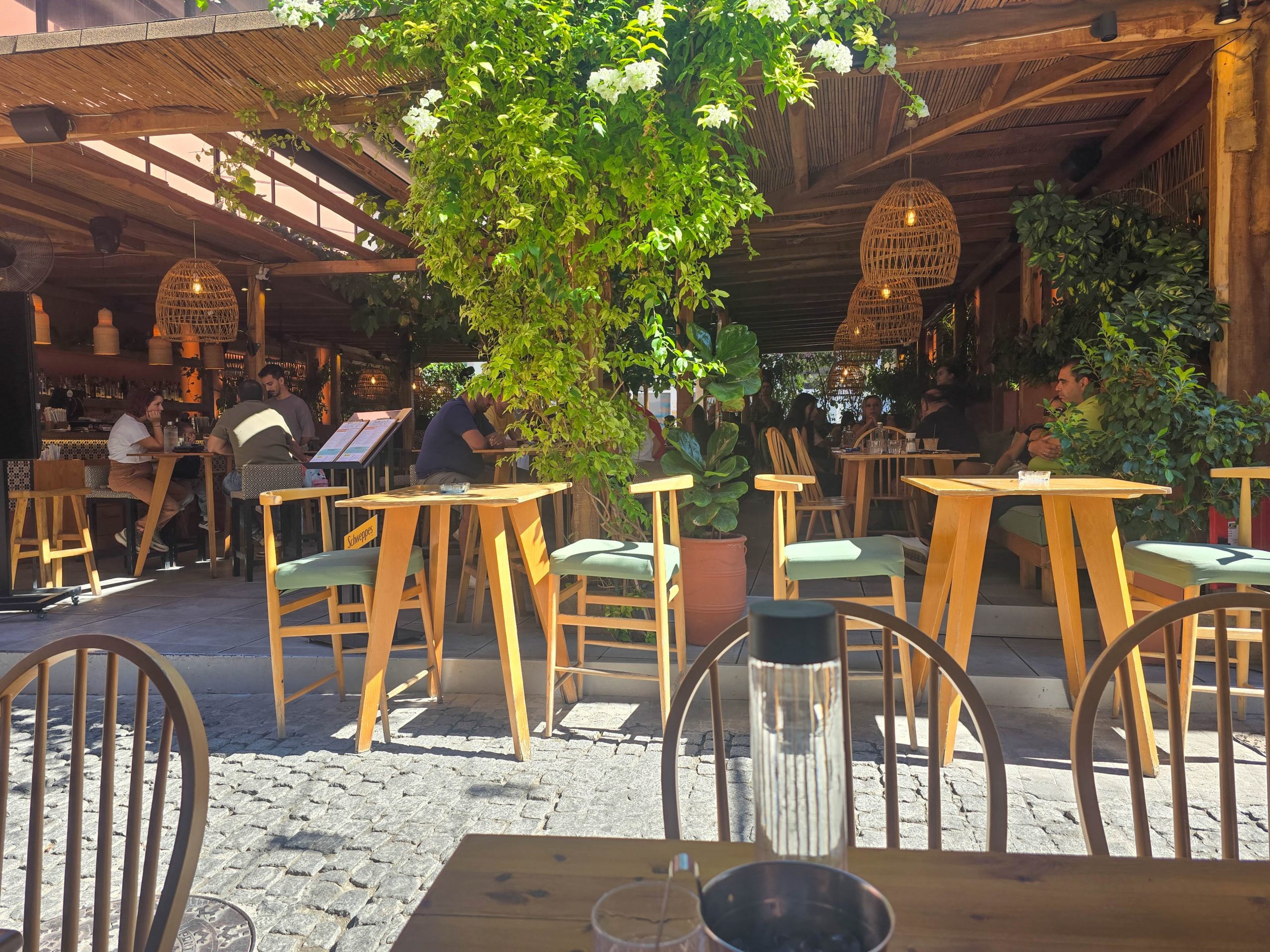
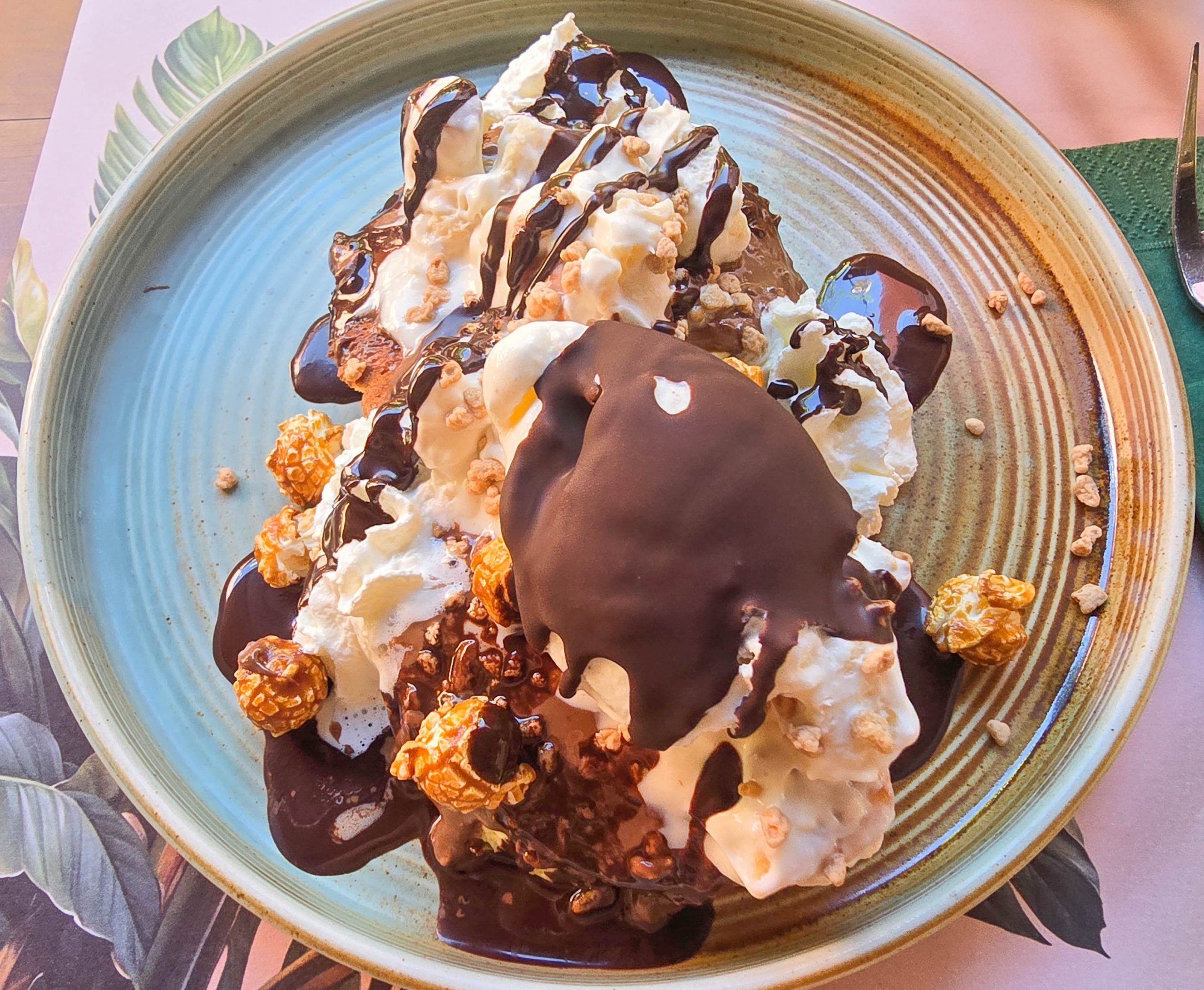
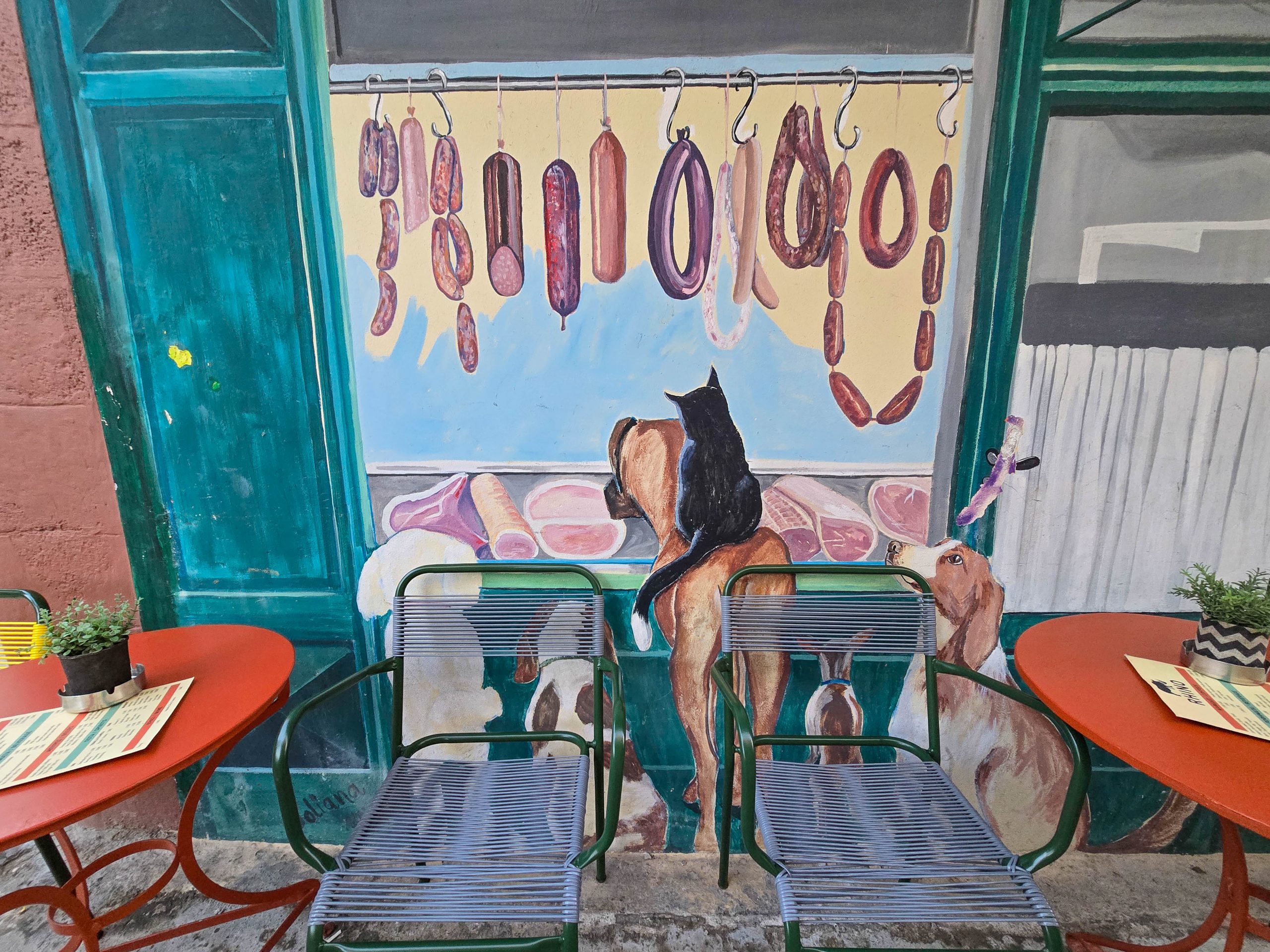
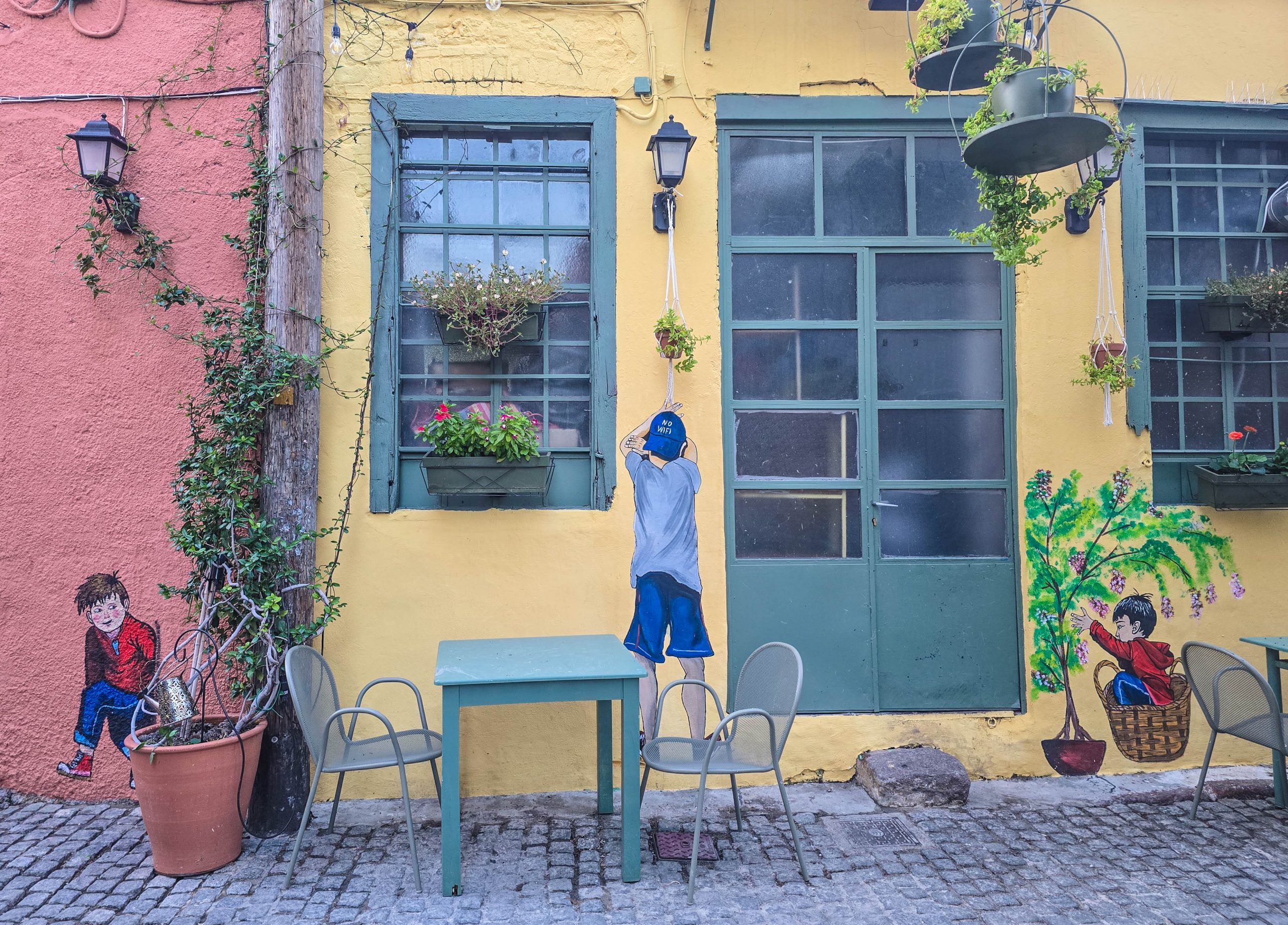
Peter was packed and ready to go. However, he had time — or rather we had time — to get breakfast before he headed to the airport. One of my favourite places in Mytilini for breakfast is a spot called Home – It’s a Feeling. It’s tucked away in the back streets of a trendy quarter of town, surrounded by beautiful old architecture, interesting street art, and a really good vibe. It’s Sunday, and friends and families are already gathering together to make the most of the day or rest. I think I slightly overdid it with a very indulgent waffle.
After breakfast, Peter caught his taxi and headed off to the airport. I have to say, I felt rather conflicted about my emotions. Peter had been with me for the first three weeks of this trip, and it’s always good to have his company while travelling. He’s my husband, my friend, my wingman and the perfect travelling partner. However, as a typical introvert, I also crave my own space. It’s sometimes hard to explain, but I need occasional bouts of solitude to help recalibrate, reflect and be inside my own headspace to make sense of the world. And yet, I knew I would feel his absence.
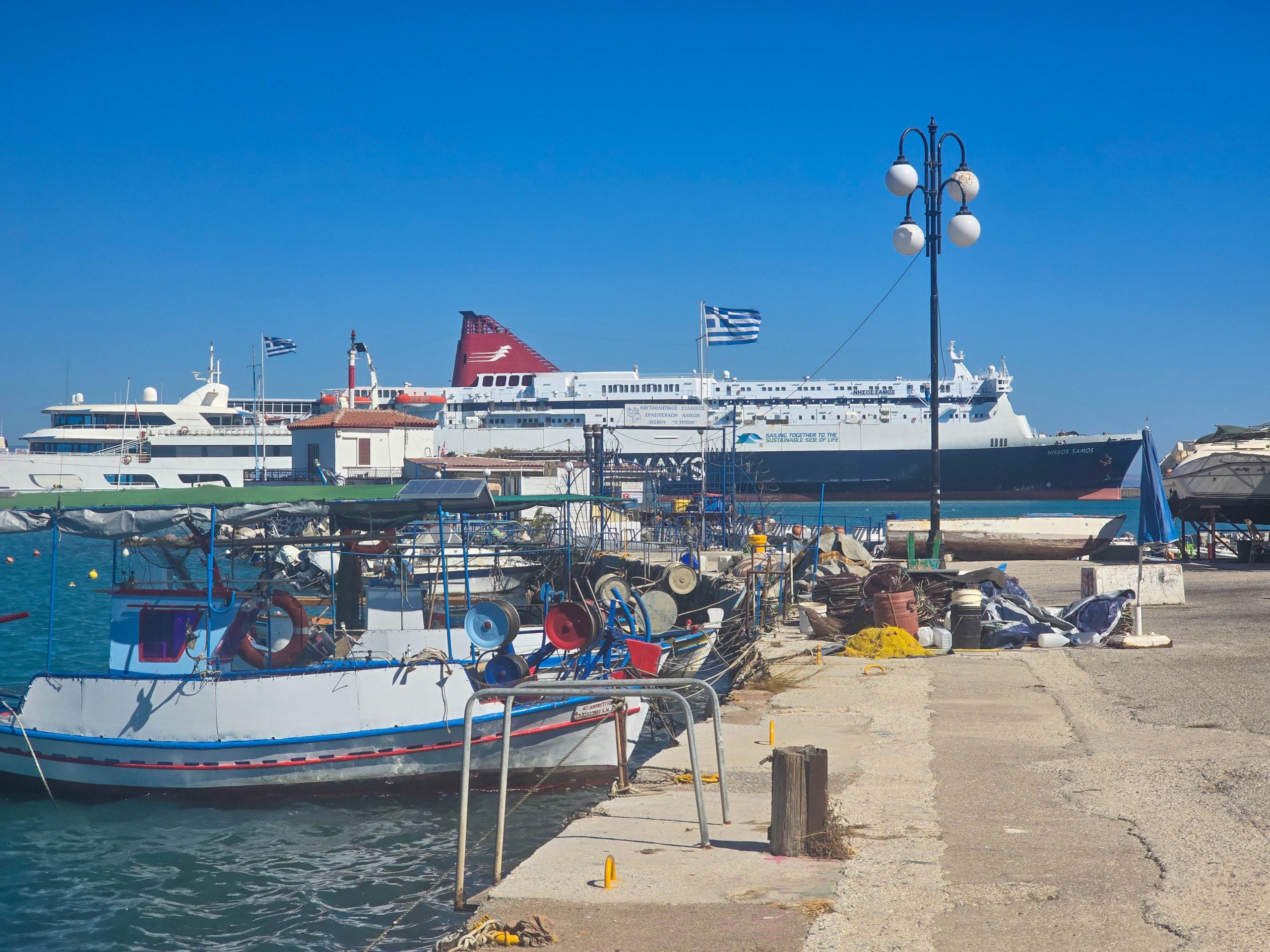
There’s no better distraction than one of my favourite walks. This easy circular trail loops from the harbour, around the Kastro and along the coastal road, where small, easily missed details begin to reveal themselves.
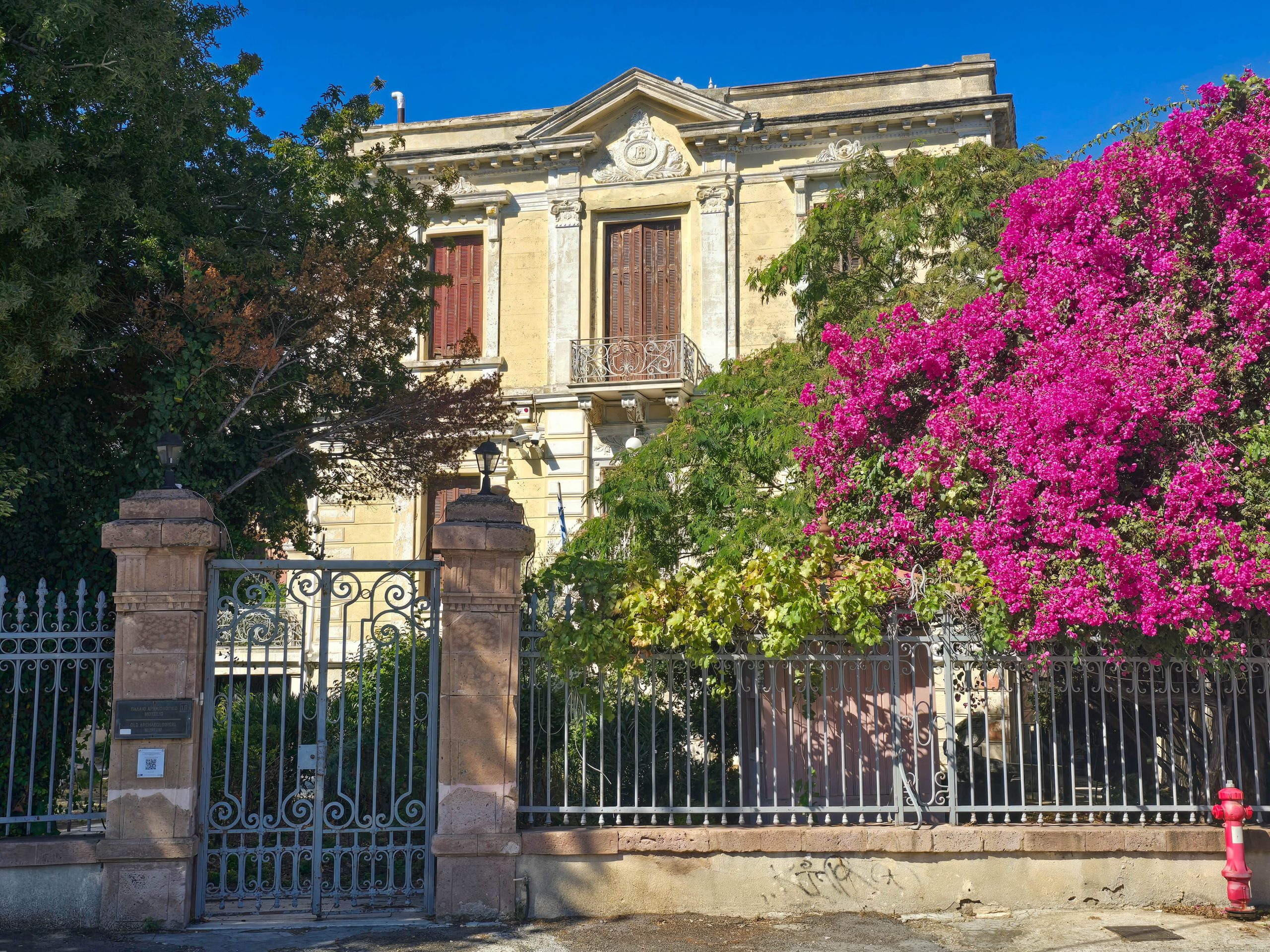
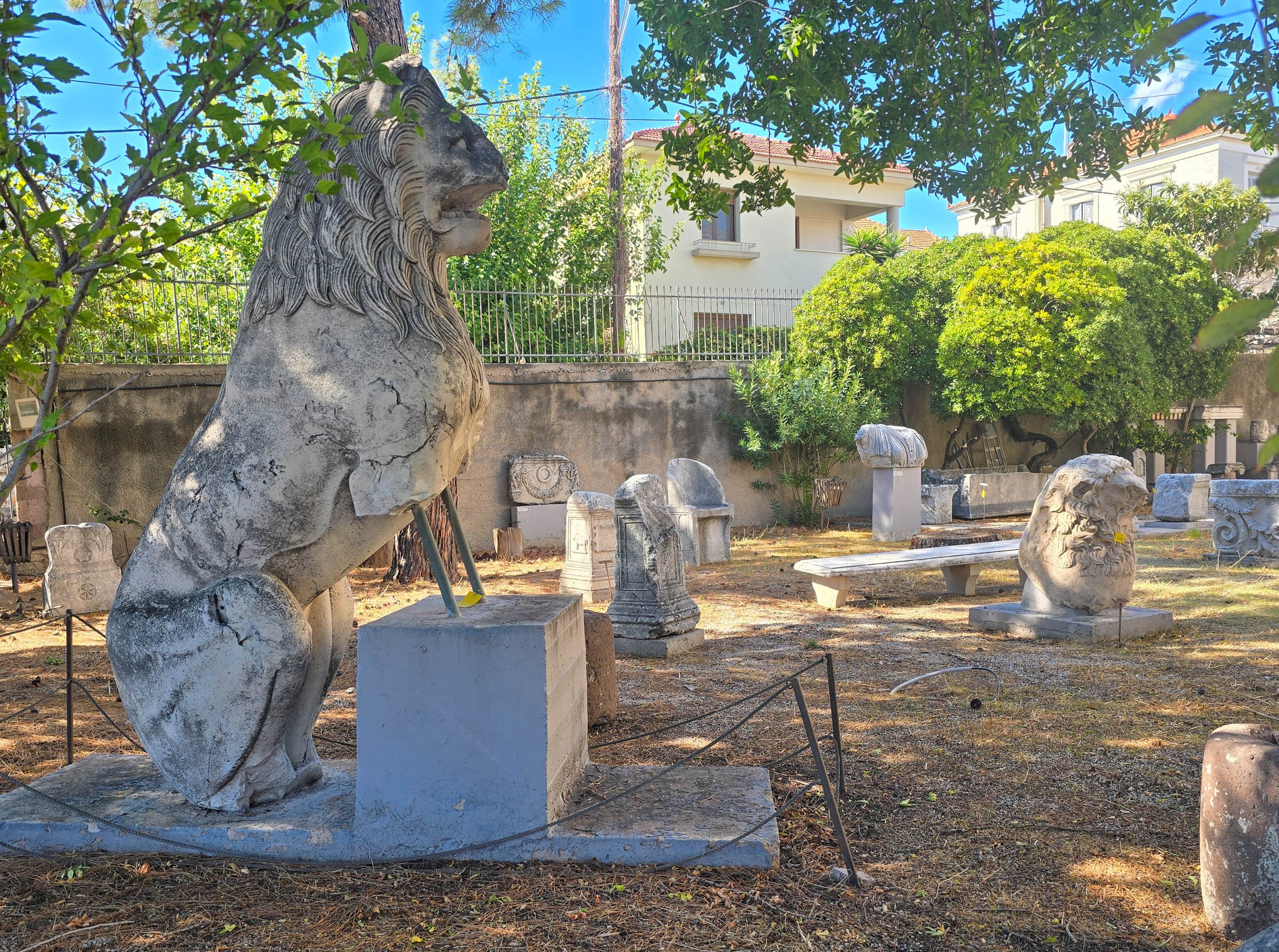
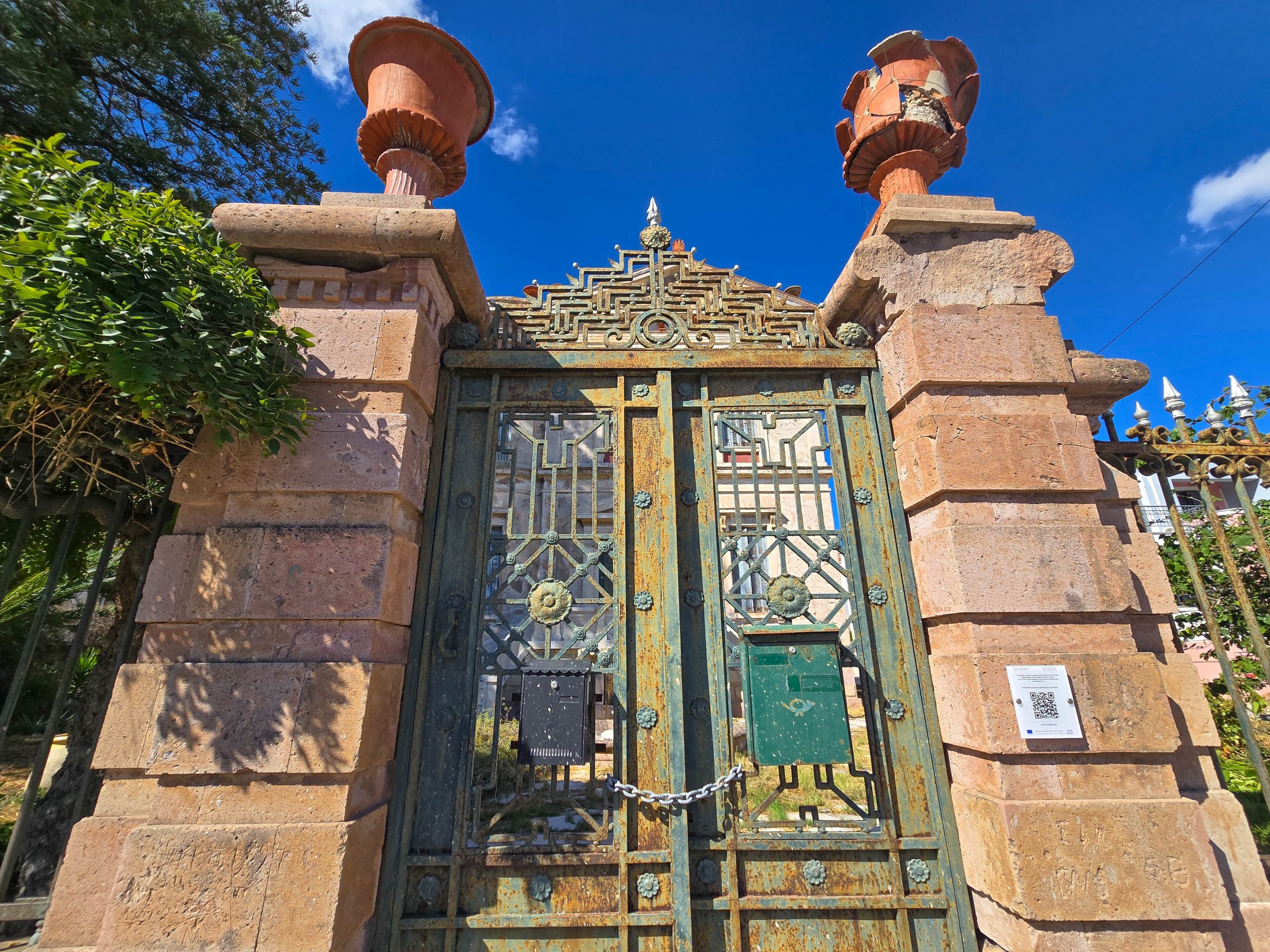
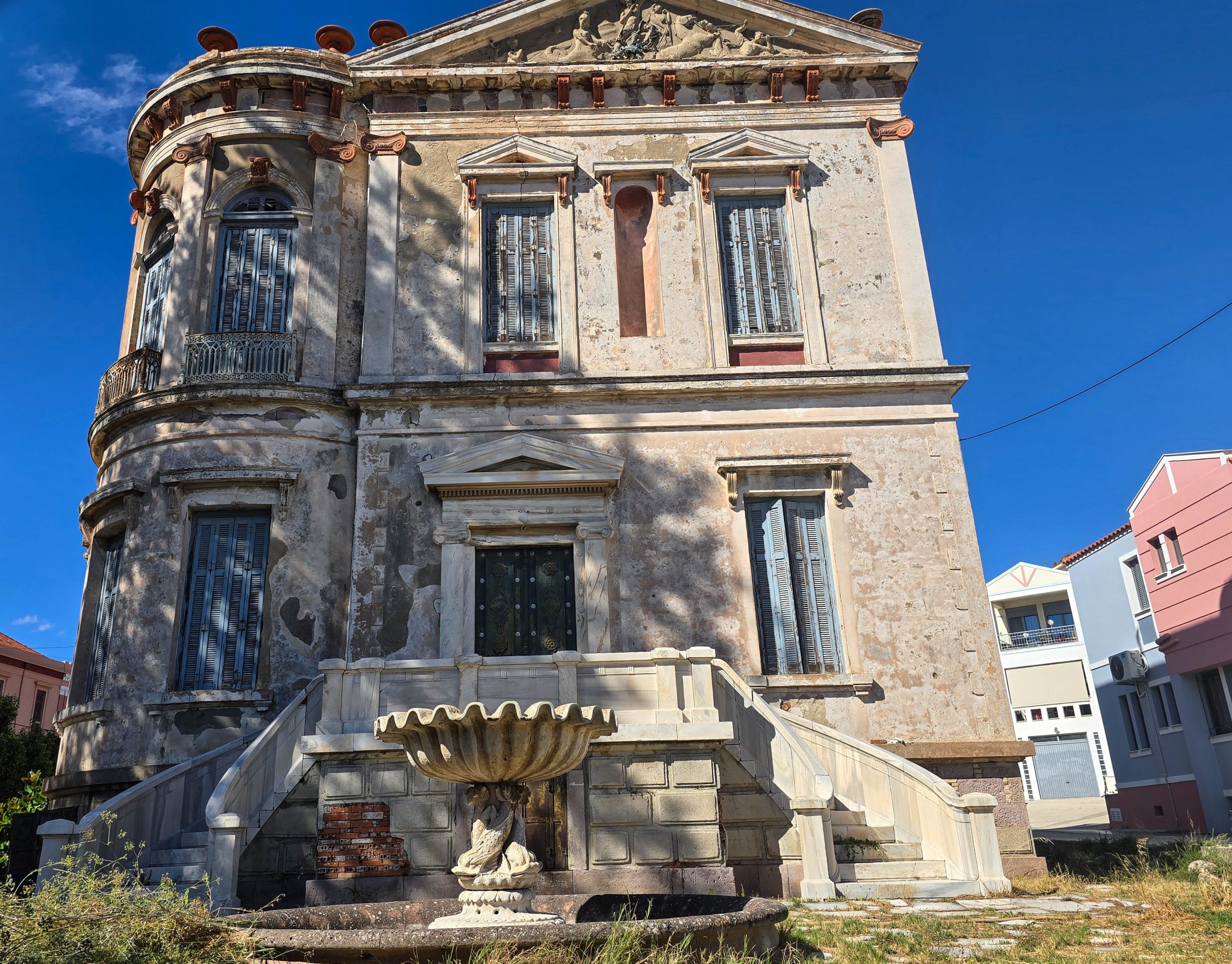
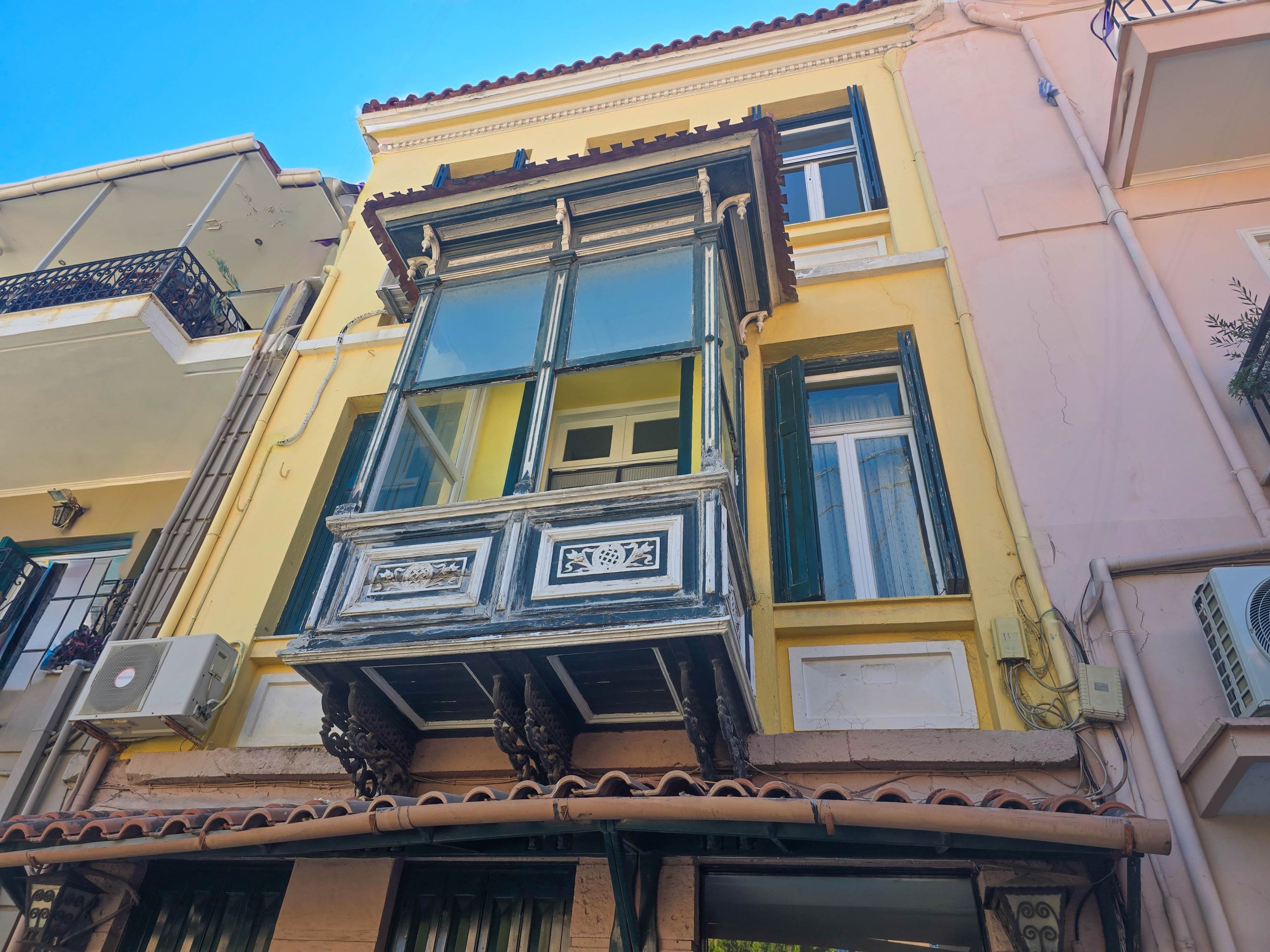
I began at the back of the port, where I could see the Nissos Samos preparing for her departure. Across the road are some of the town’s most impressive grand mansions. Facing the sea are two particularly striking buildings. One is the Old Archaeological Museum, its front lawn scattered with marble fragments and statues, including carved lion heads. Heavy wrought-iron gates give just enough space to peer inside. Next door stands the Achilleas Vournazos Mansion, its grand double staircase leading up to the main entrance — architecture designed to impress, and still doing so. The QR code at the entrance told me that “the Achilleas Vournazos Mansion is a fine example of late-19th-century bourgeois architecture from Mytilene’s final Ottoman period, when the town prospered as a major Aegean trading hub. A Neo-classical framework of symmetry, stonework and strong cornices is softened by European flourishes, most notably the curved corner bay and the elegant wrought-iron gate with its fin-de-siècle, almost Art Nouveau detailing. Built as a statement of wealth and modernity, the mansion reflects the confidence and cosmopolitan outlook of the Greek merchant families who shaped Mytilene’s distinctive architectural character at the end of Ottoman rule”.
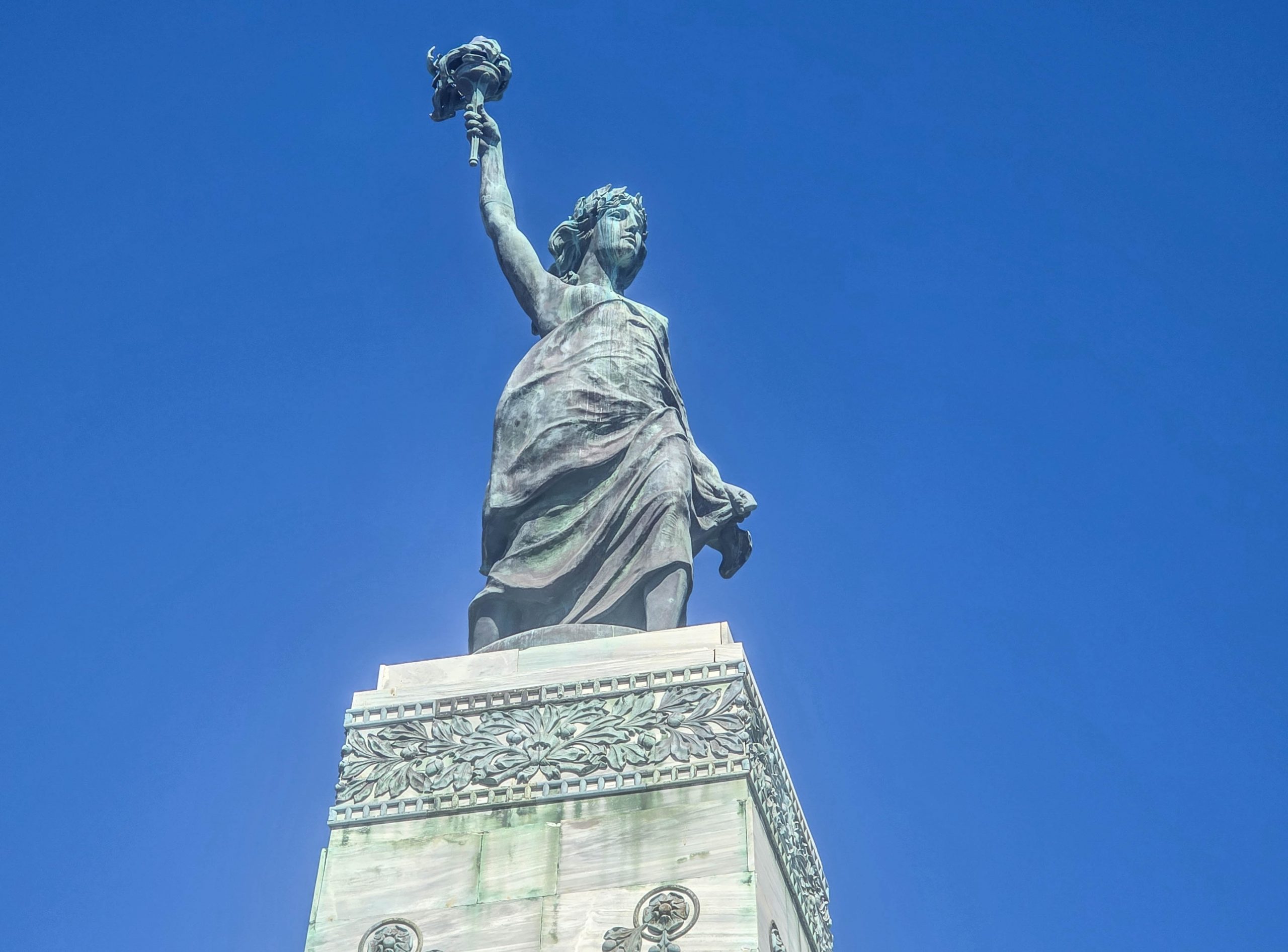
Across the road from the mansions is the Statue of Liberty, one of Mytilene’s most impressive landmarks, and also located near a popular sunbathing and swimming spot. This symbolic landmark greets visitors arriving by sea. Erected in the early 20th century, it reflects the optimism of the period following Lesvos’s incorporation into the modern Greek state, drawing inspiration from European ideals of freedom rather than its grand New York namesake. Facing the open water, the statue has become part of the everyday portscape — less a monument to spectacle and more a gentle reminder of Mytilene’s long relationship with the sea, movement, and new beginnings.
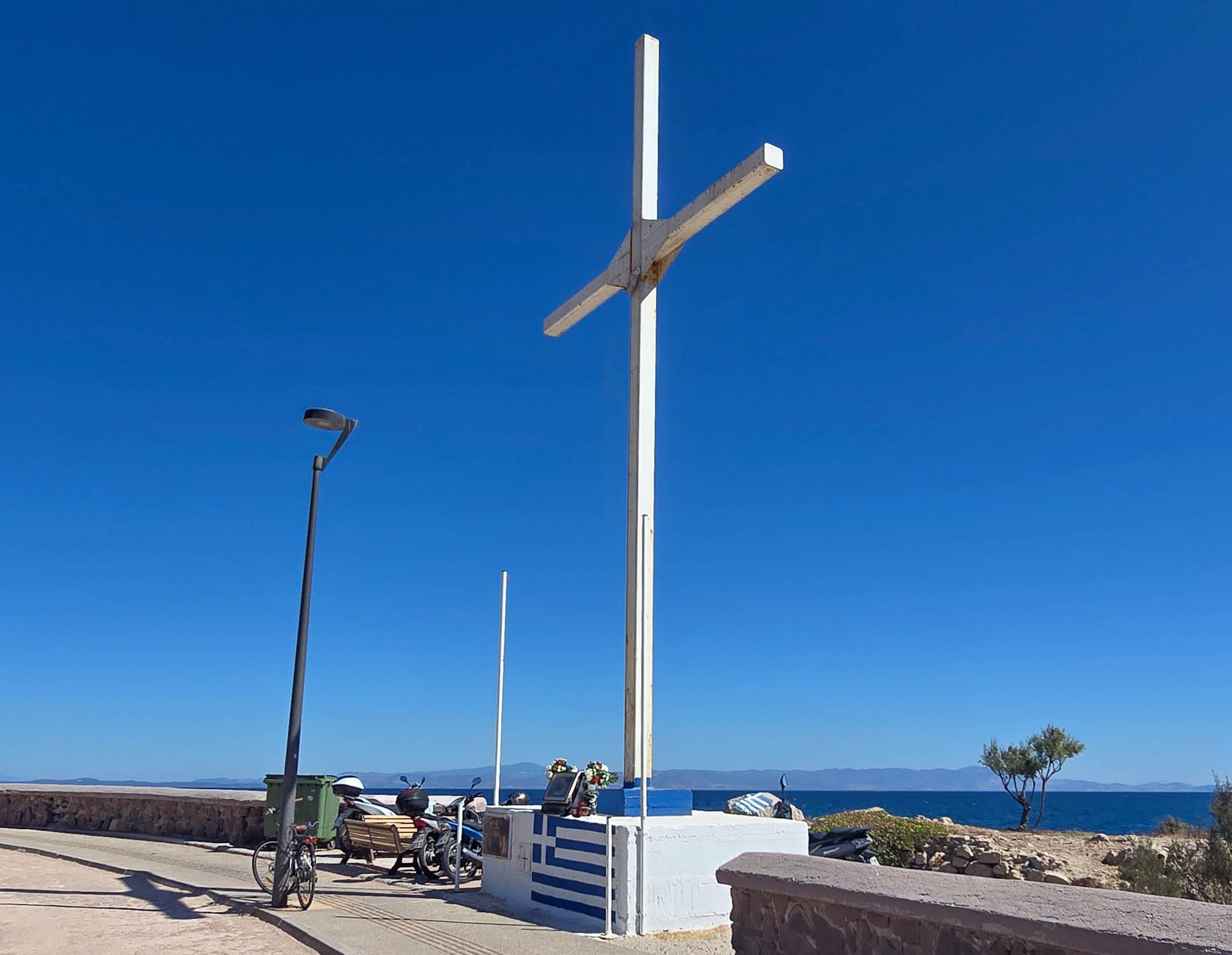
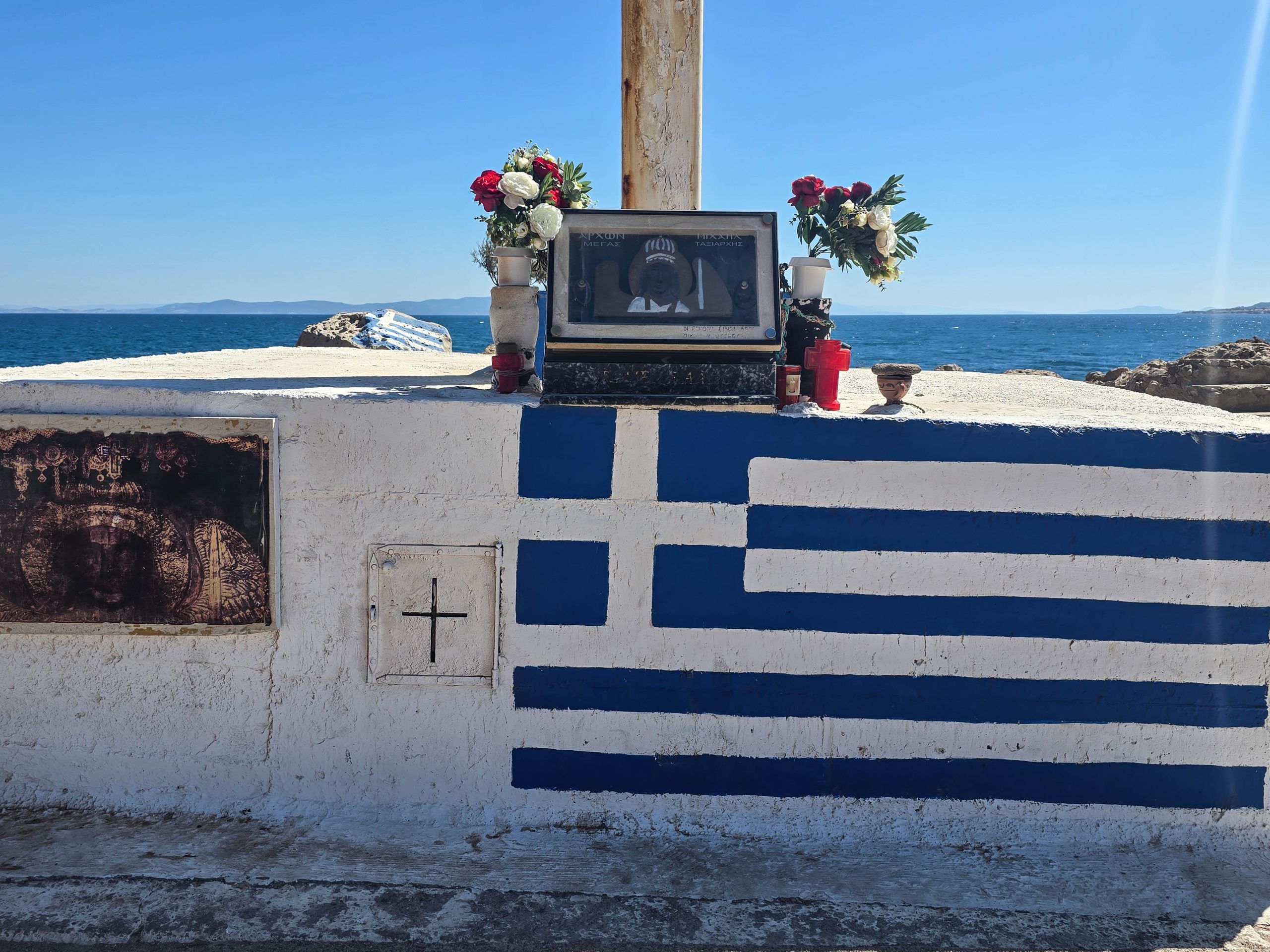
From here, the path and cycle lane run along the base of the castle complex, the hillside below the Kastro thick with pine trees. On the right is Tsamakia Beach with an organised beach club called Plaz, which I noted for another time. A little further in the area known locally as Apelli, there is a memorial cross with an icon of the Archangel Michael below it. This unofficial and somewhat controversial memorial is dedicated to people who lost their lives whilst swimming in this part of Mytilene, where the waters are known to be treacherous. In 2018, the cross was erected here without official approval from the authorities. Technically, it also sits on grounds of archaeological interest, i.e. within the footprint of the castle. Soon after, a local action group tore it down because they believed it was offensive to non-Christian refugees and migrants who also swam there. The following year, a larger metal cross was erected on the same site, which subsequently led to arrests. Anyway, I’m unsure what has happened since then or what version of Cross I see here today, but it seems fairly well established.
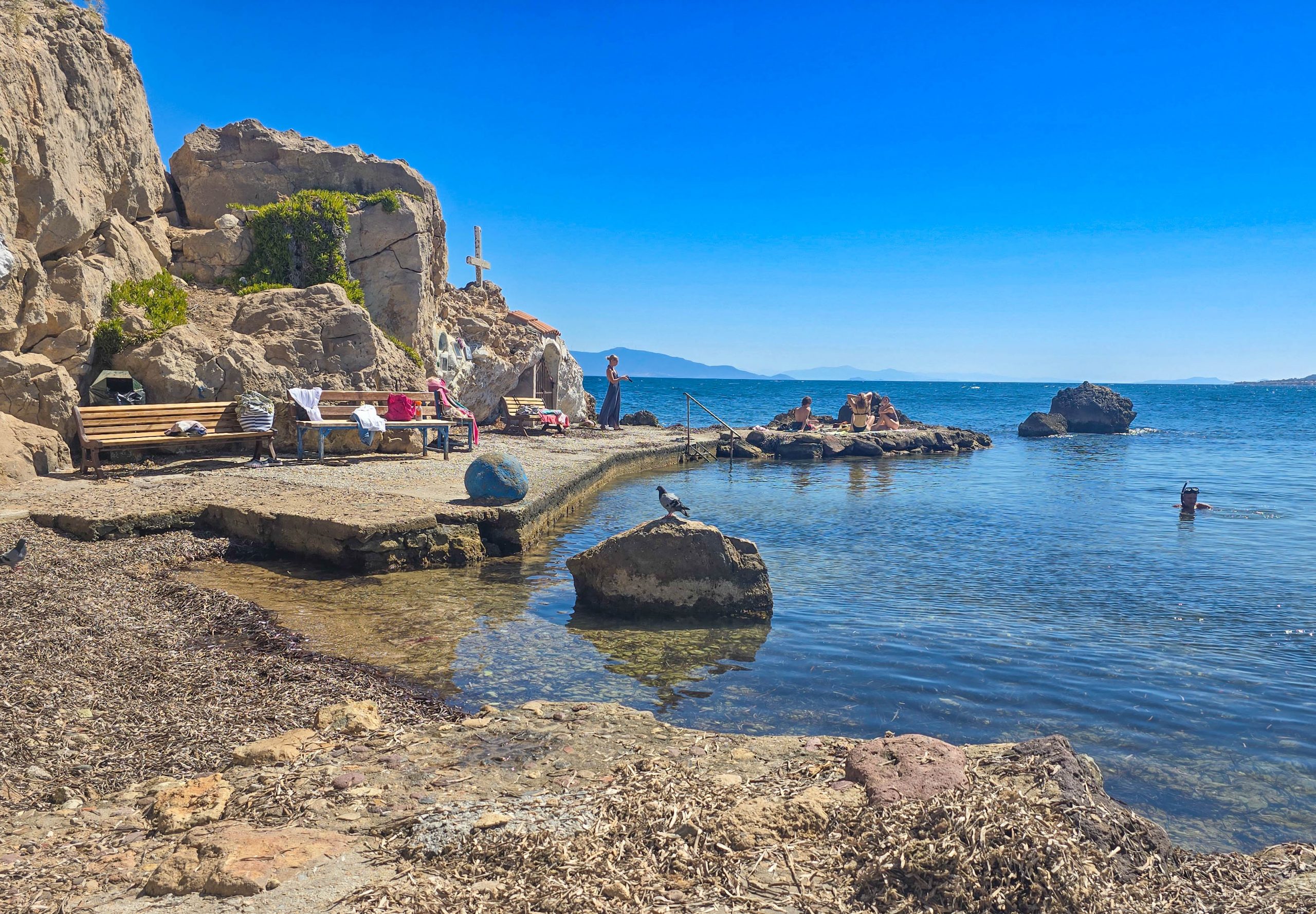
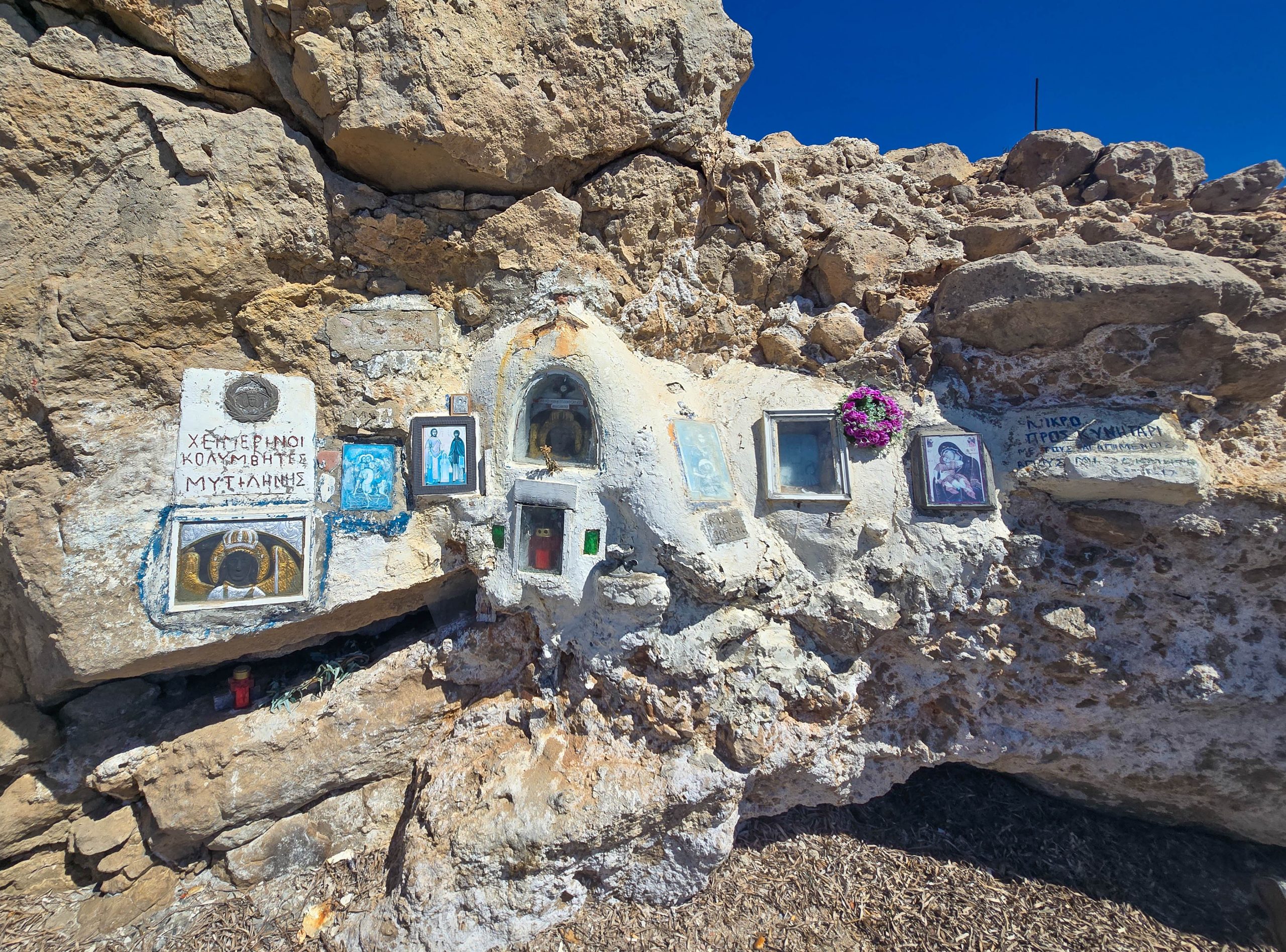
Down below is a small rocky cove, another popular bathing spot. Several people were sunbathing on the concrete jetty, which also seemed the best place to access the sea. Set into the rocks is yet another shrine, again with dedications to various saints and also to people who had died in these waters, along with personal messages carved directly into the rocks. It was a nice place to linger for a while.
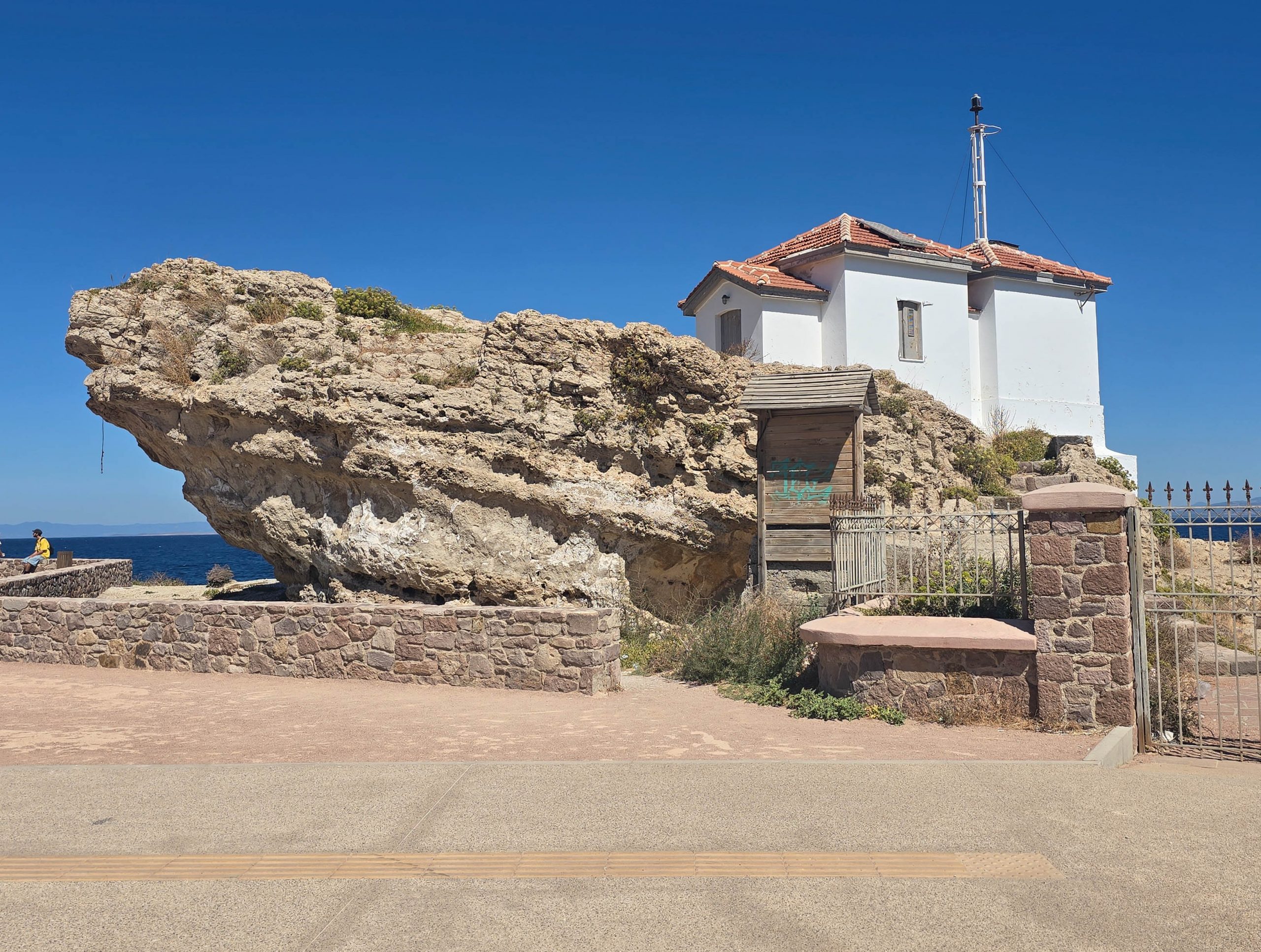
Back on the main path, I reached another of Mytilene’s iconic landmarks – the Fikiotripa Lighthouse located atop an unusual rock formation. The lighthouse built during the Ottoman rule in 1863 protects the approach to Mytilene port.
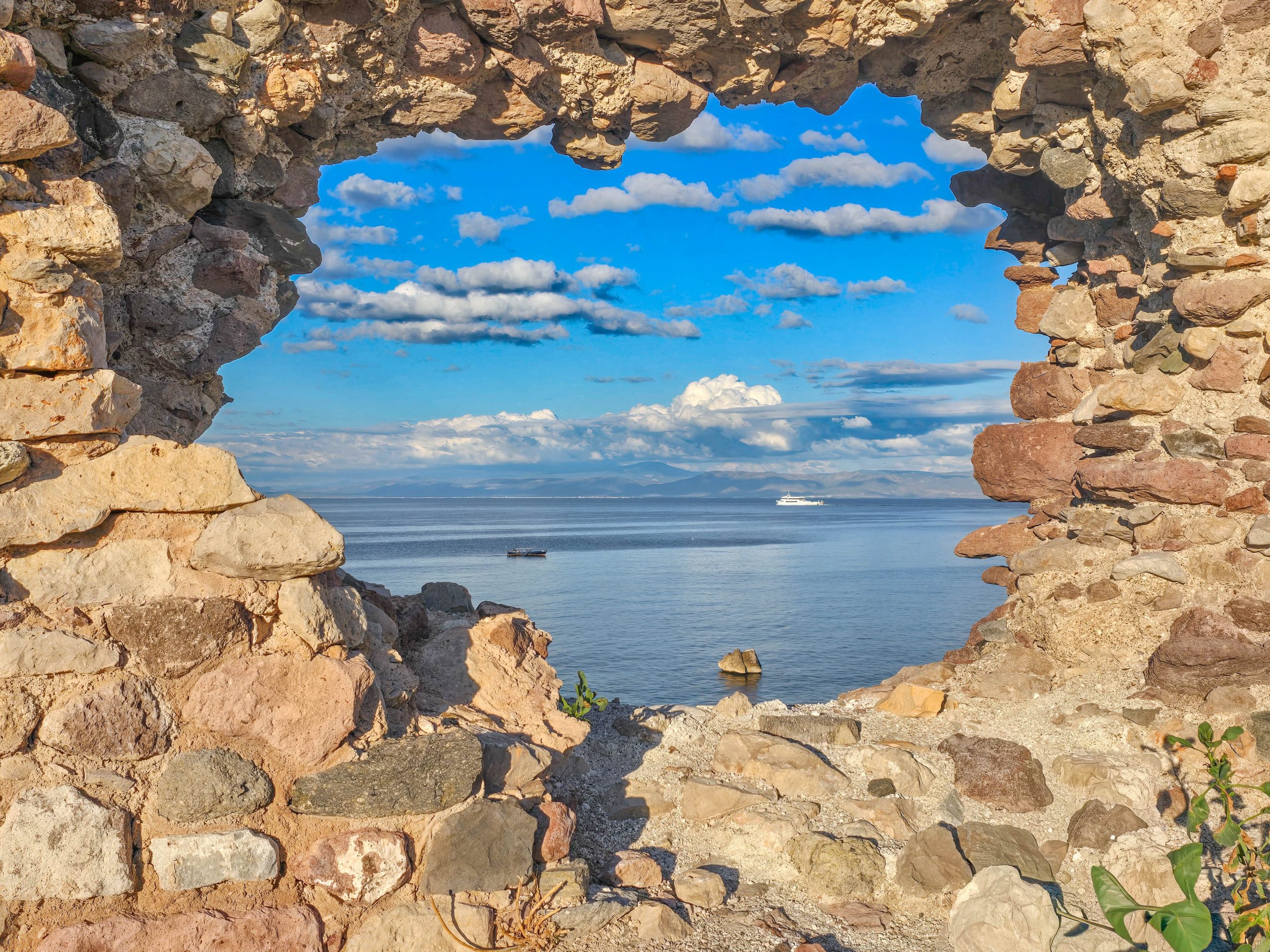
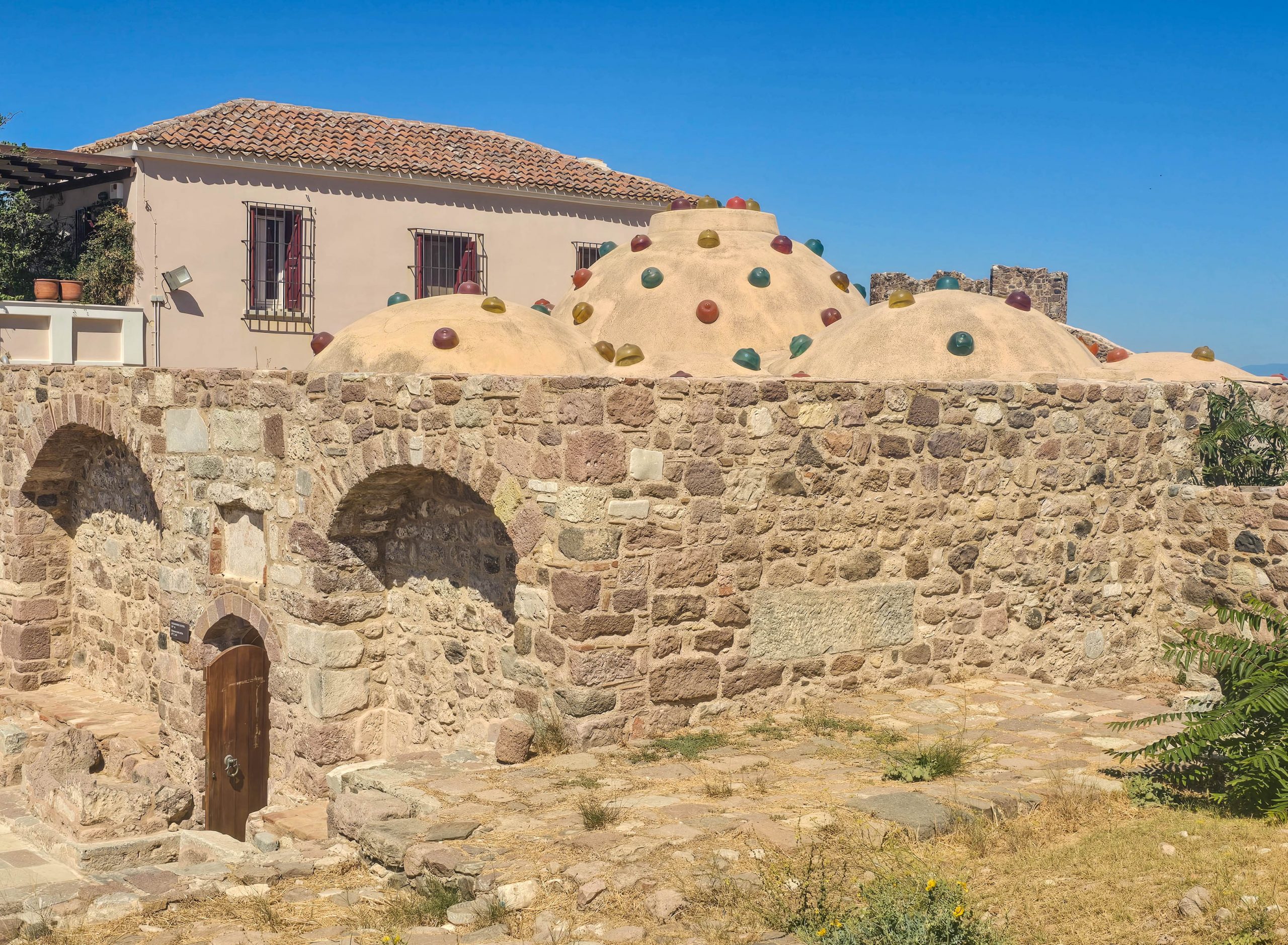
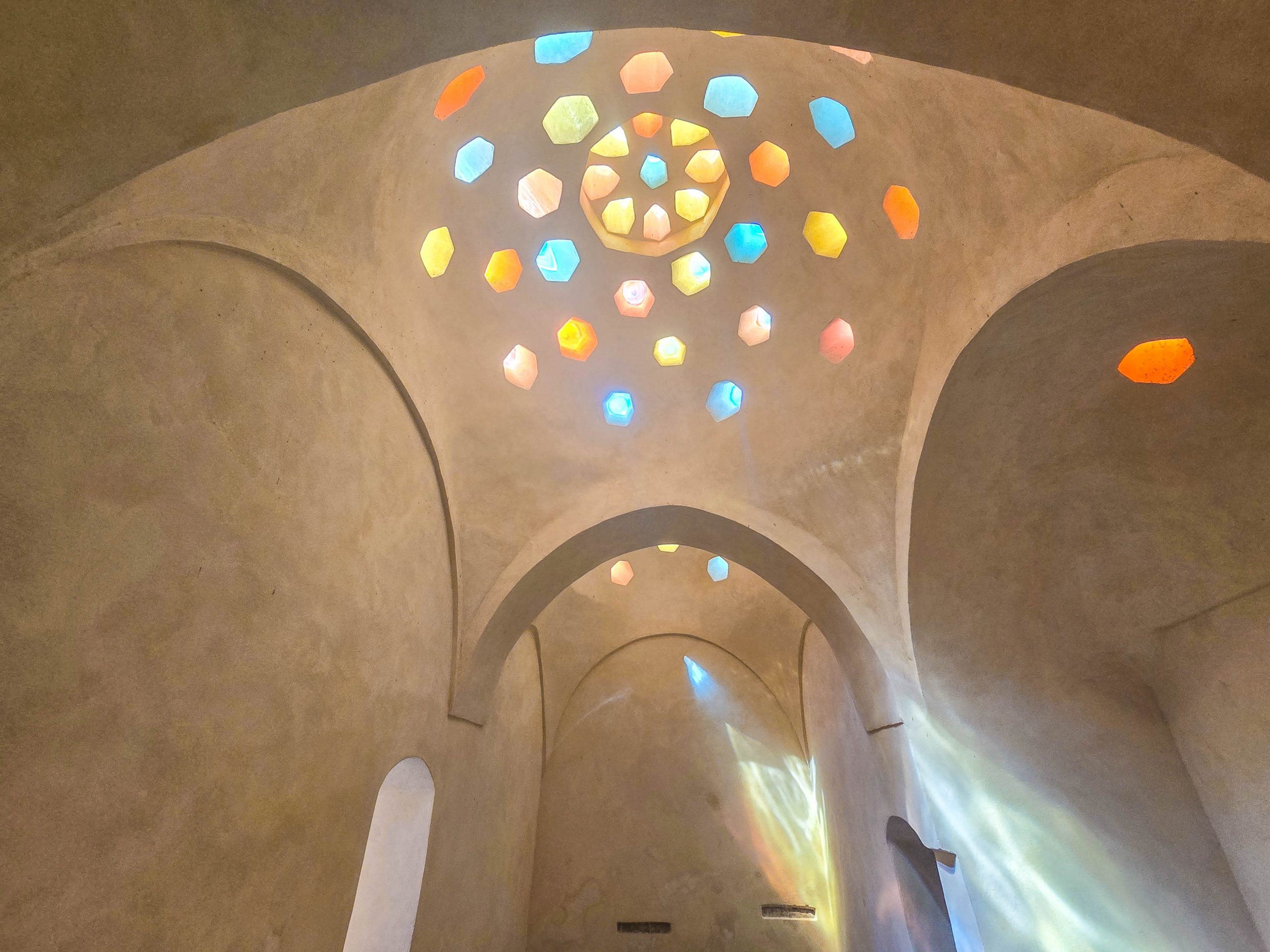
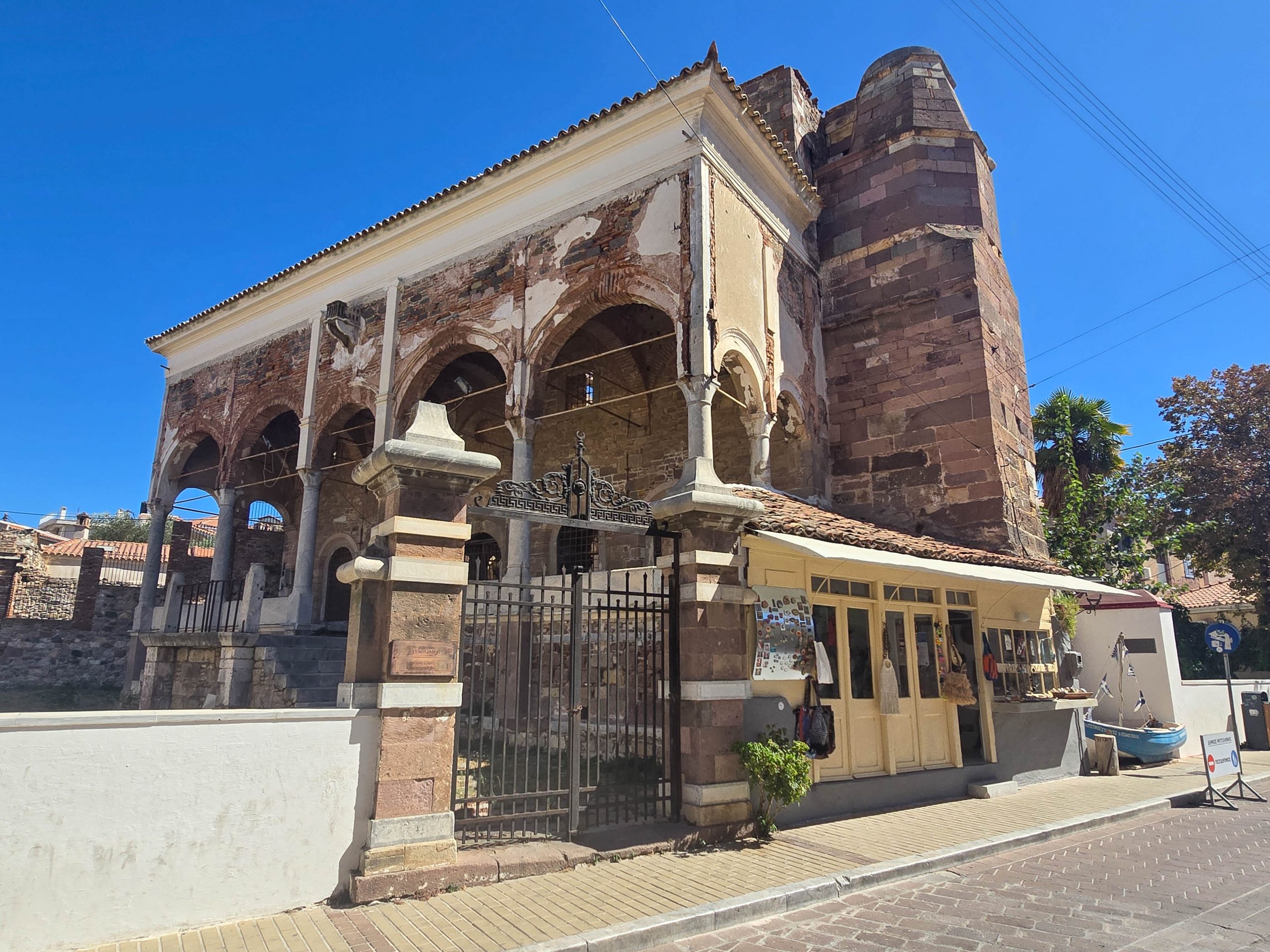
Continuing along the shaded path, more of the castle’s defensive walls were gradually revealed, including the east gate of the lower castle, which reaches right down to the sea. Just before the main road, I reached the old hamam — and was pleased to find it open as it had been closed for renovation the last time I was here. Dating to the 17th century and likely built on an earlier site, it once served the residents of the lower castle. Inside, the simple tripartite layout remains – a cool room, warm room, and hot room, with light filtering softly through small openings in the domes. These baths were used by both Muslim and Christian communities and functioned as important social spaces, not just places of hygiene.
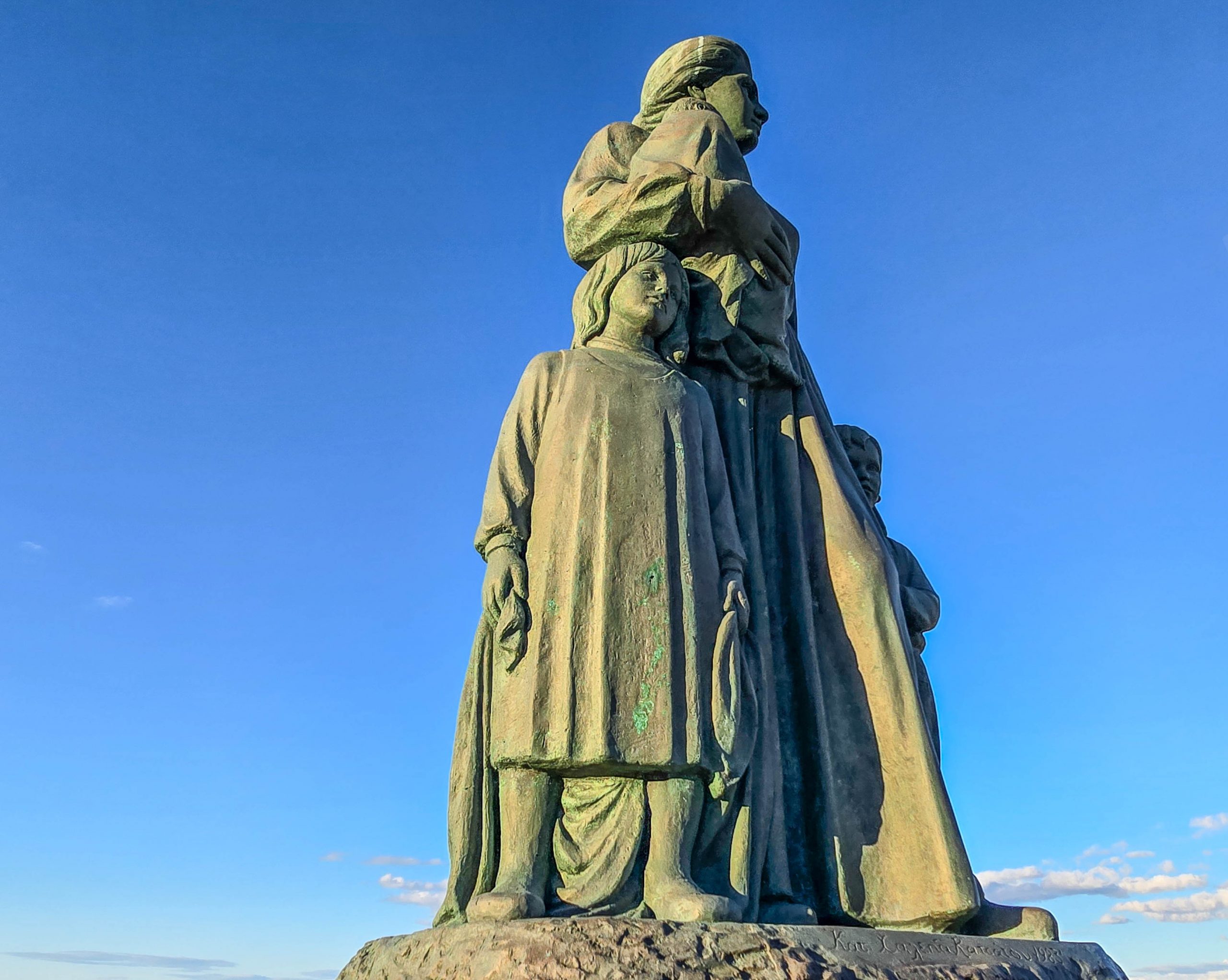
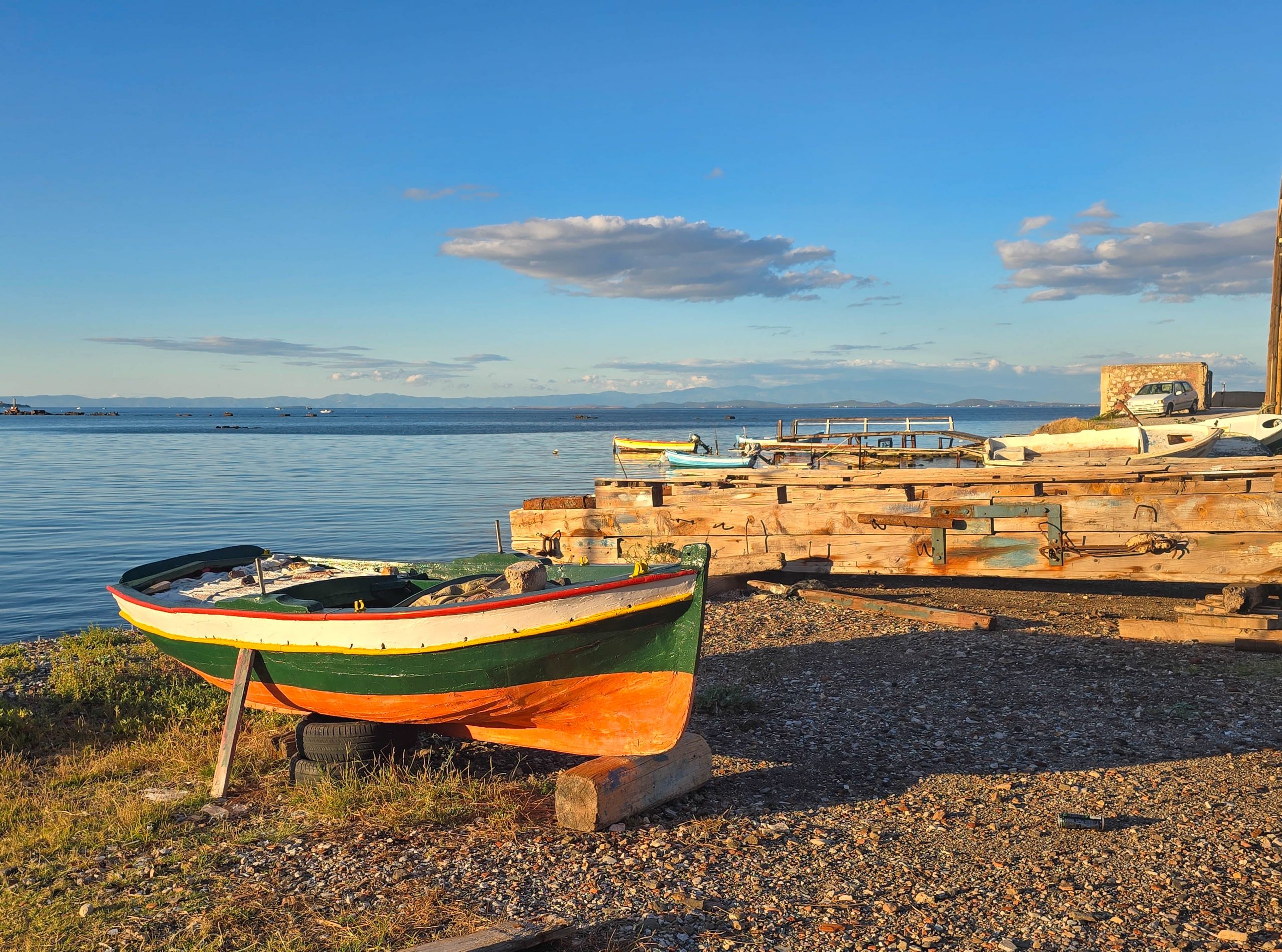
Back on the main road, I passed an old boatyard, a line of popular fish tavernas and the emotive statue of the Asia Minor Mother (Mikrasiatissa Mana). The statue depicts a refugee mother with her children and commemorates the Asia Minor Catastrophe of 1922, when thousands of Greek refugees arrived on Lesvos after being forced from their homes in Anatolia. It is a powerful, understated memorial to displacement, loss and survival, reflecting Mytilene’s role as a first point of refuge and a place of arrival rather than departure. The figure’s forward gaze and protective stance capture both grief and resilience
After crossing the road, I skirted the remains of another hamam, an old market and the small archaeological site on Nikomideias Street. Excavated in 1961, it’s thought to be the remains of a private house or inn destroyed at the end of the 4th century AD.
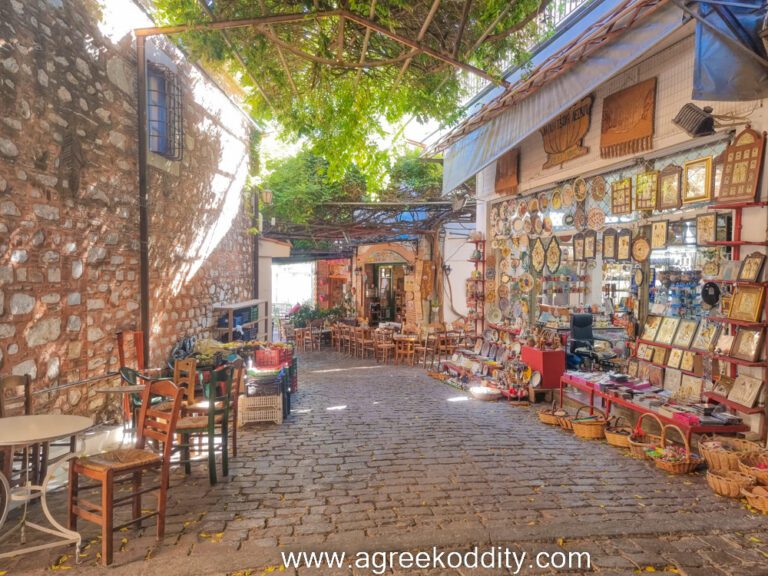
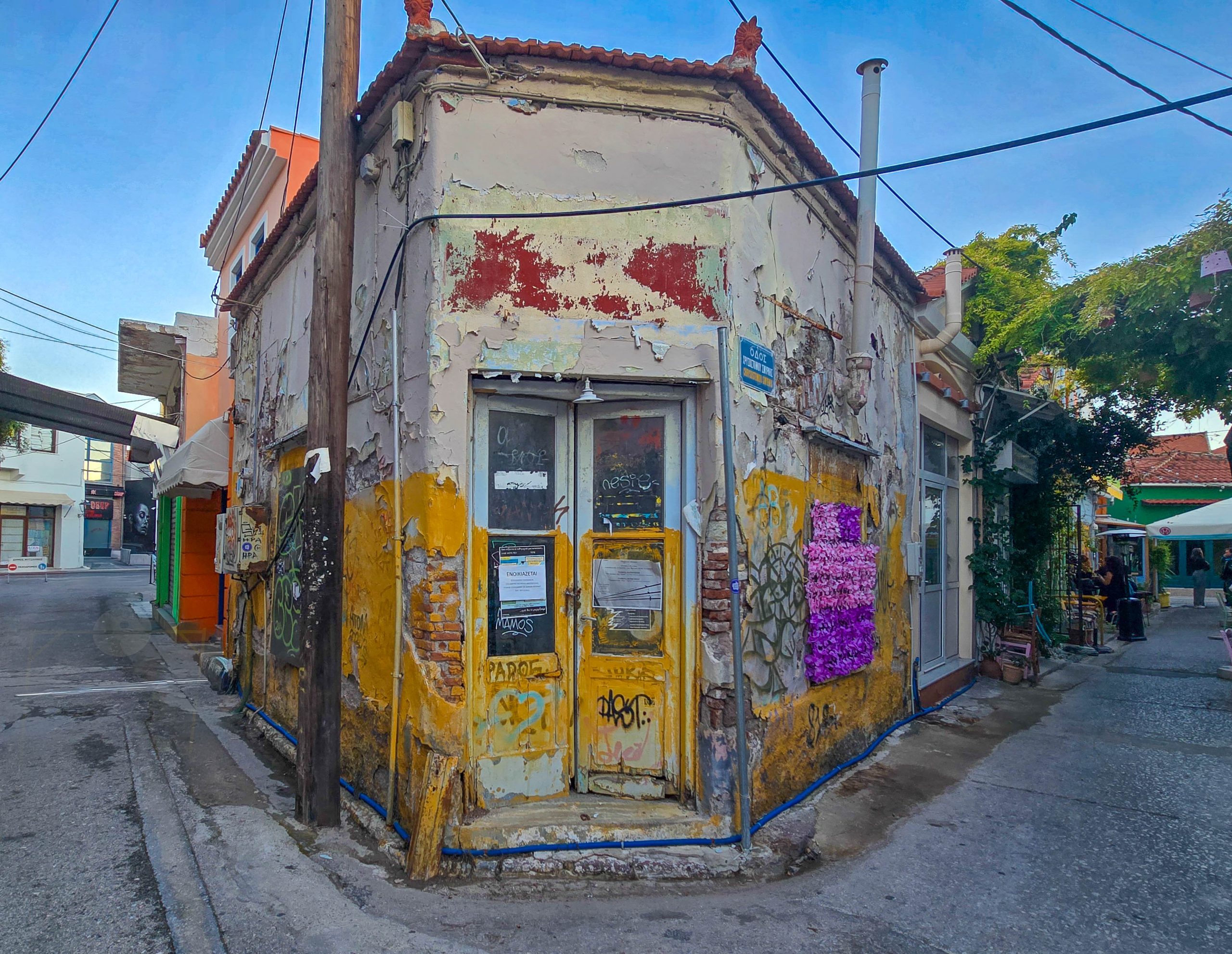
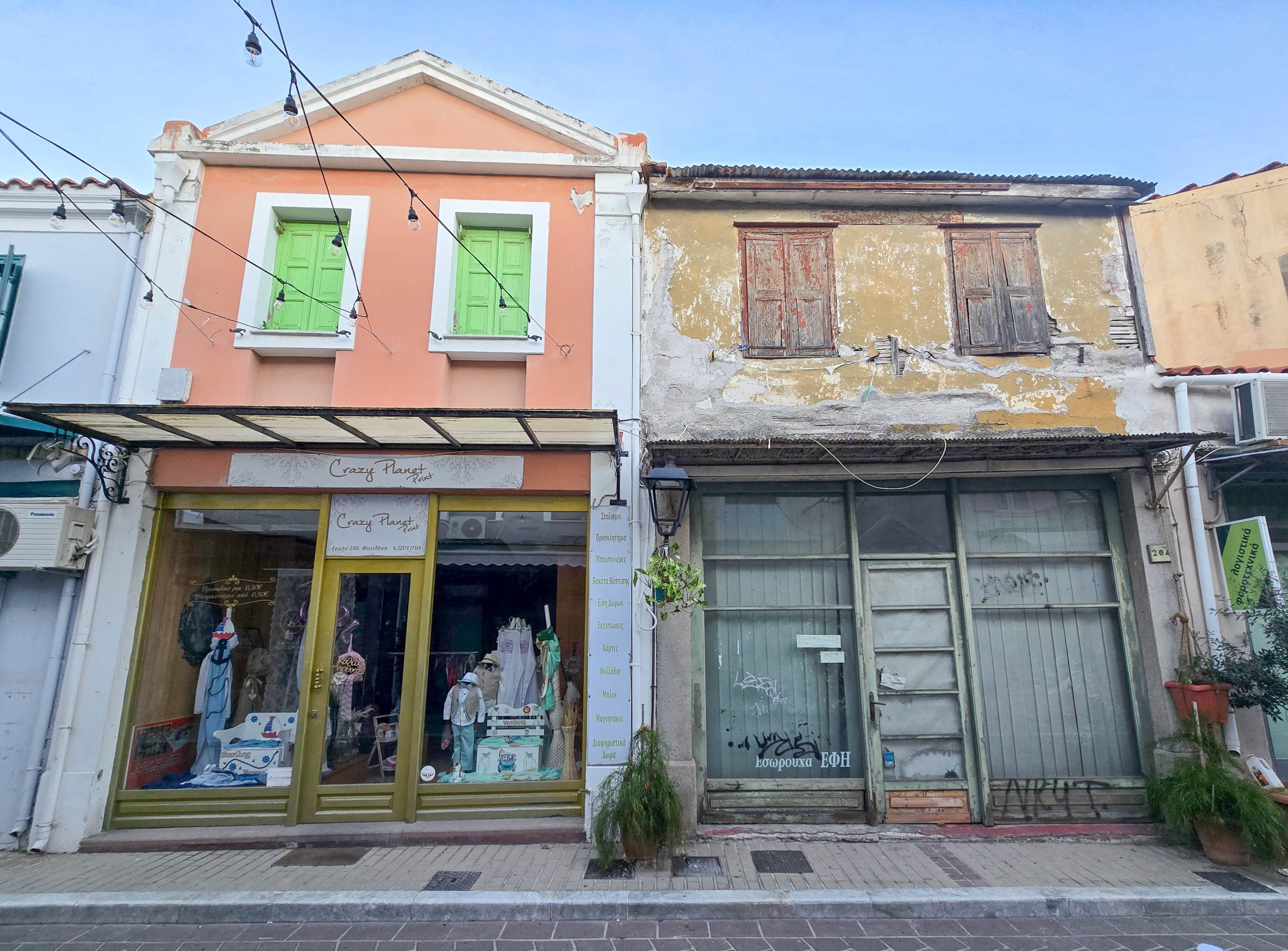
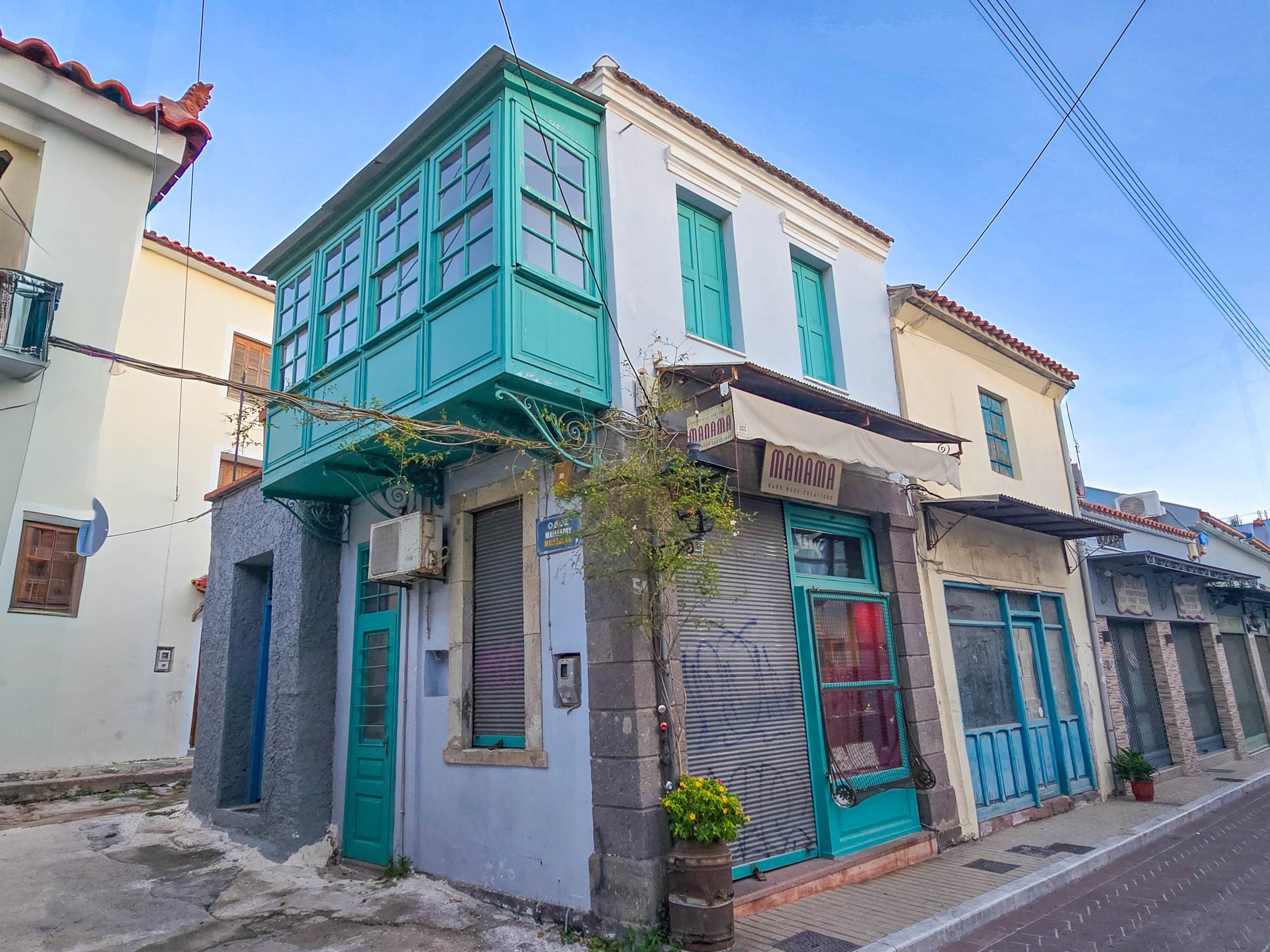
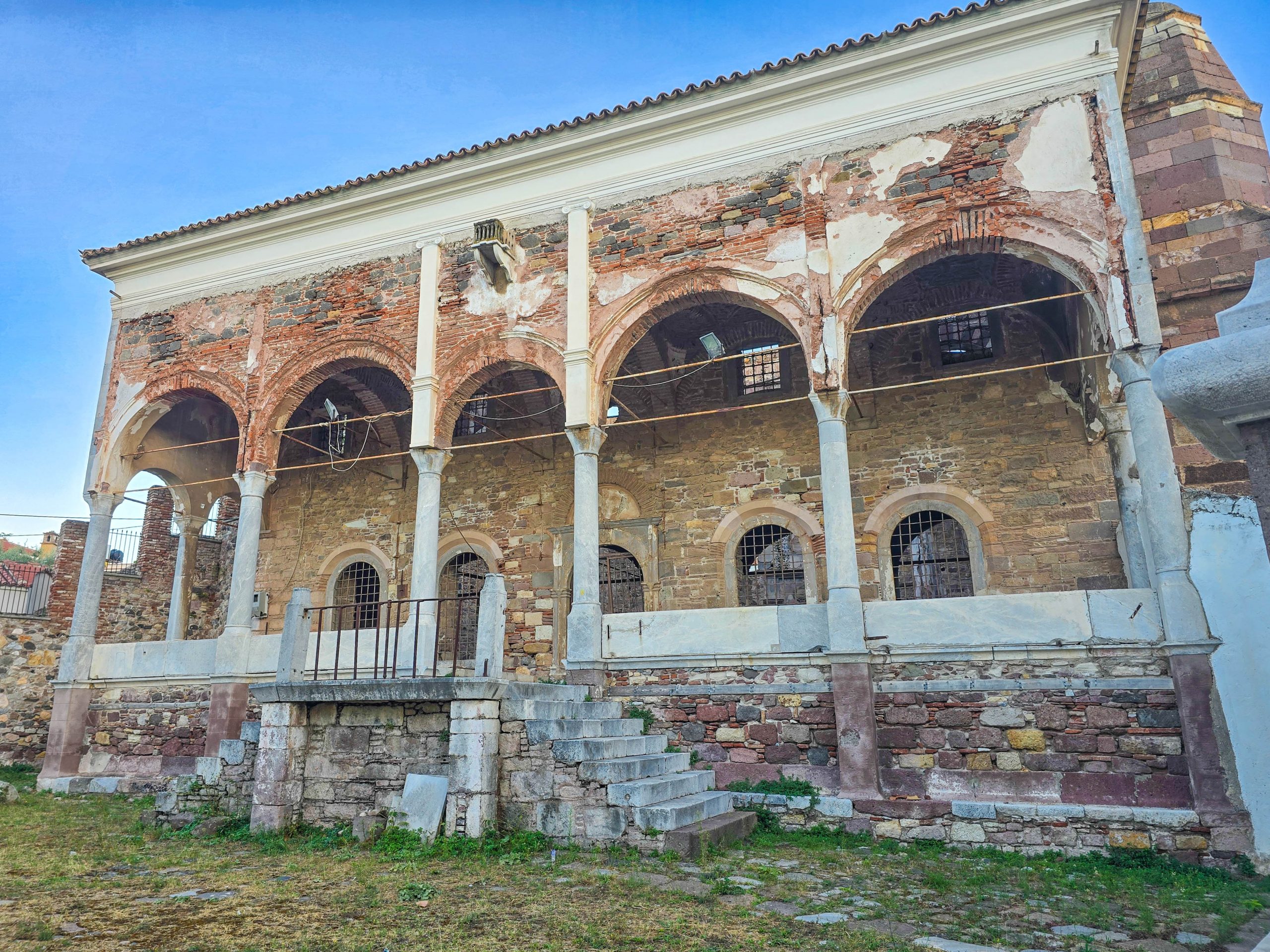
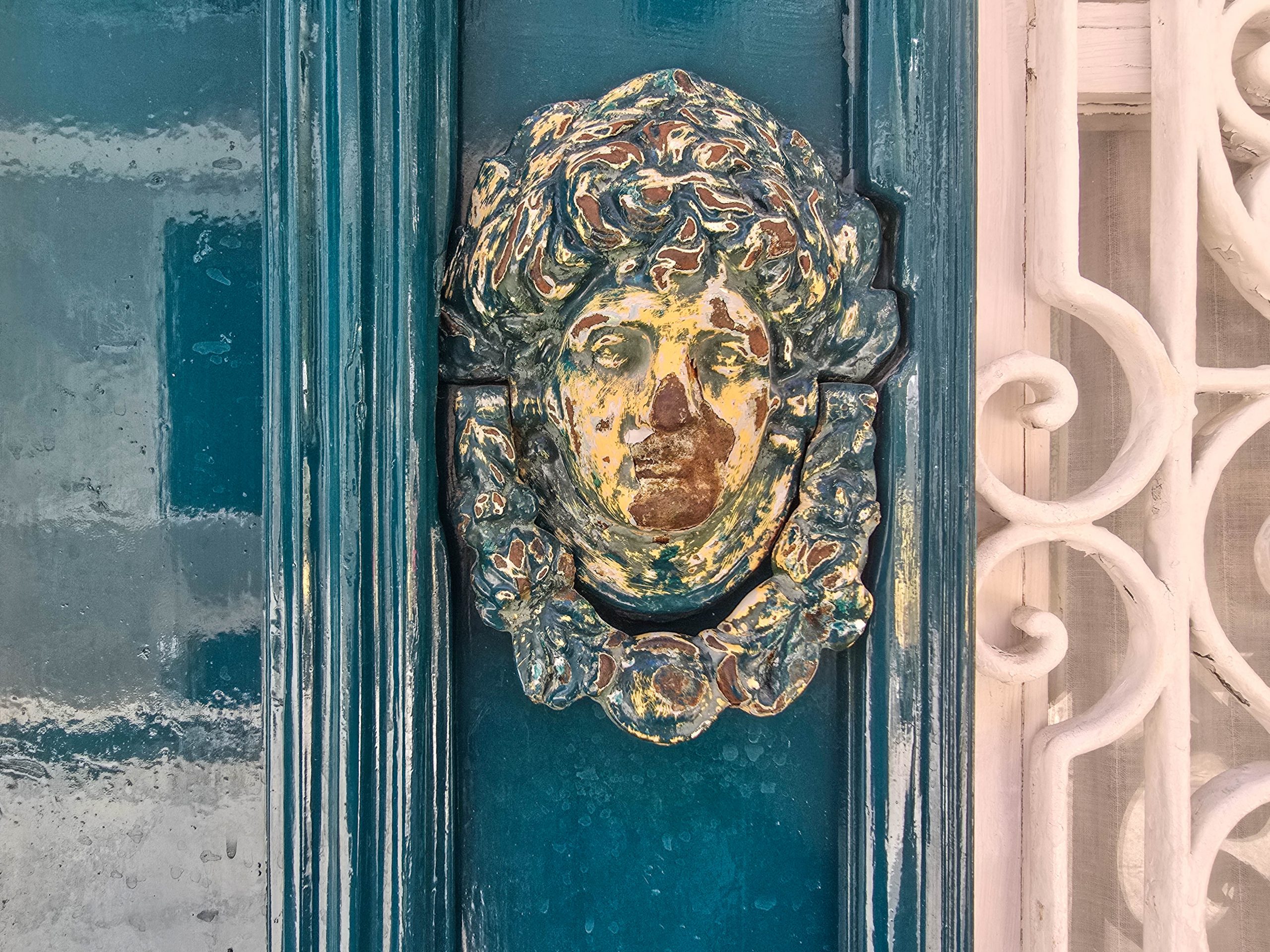
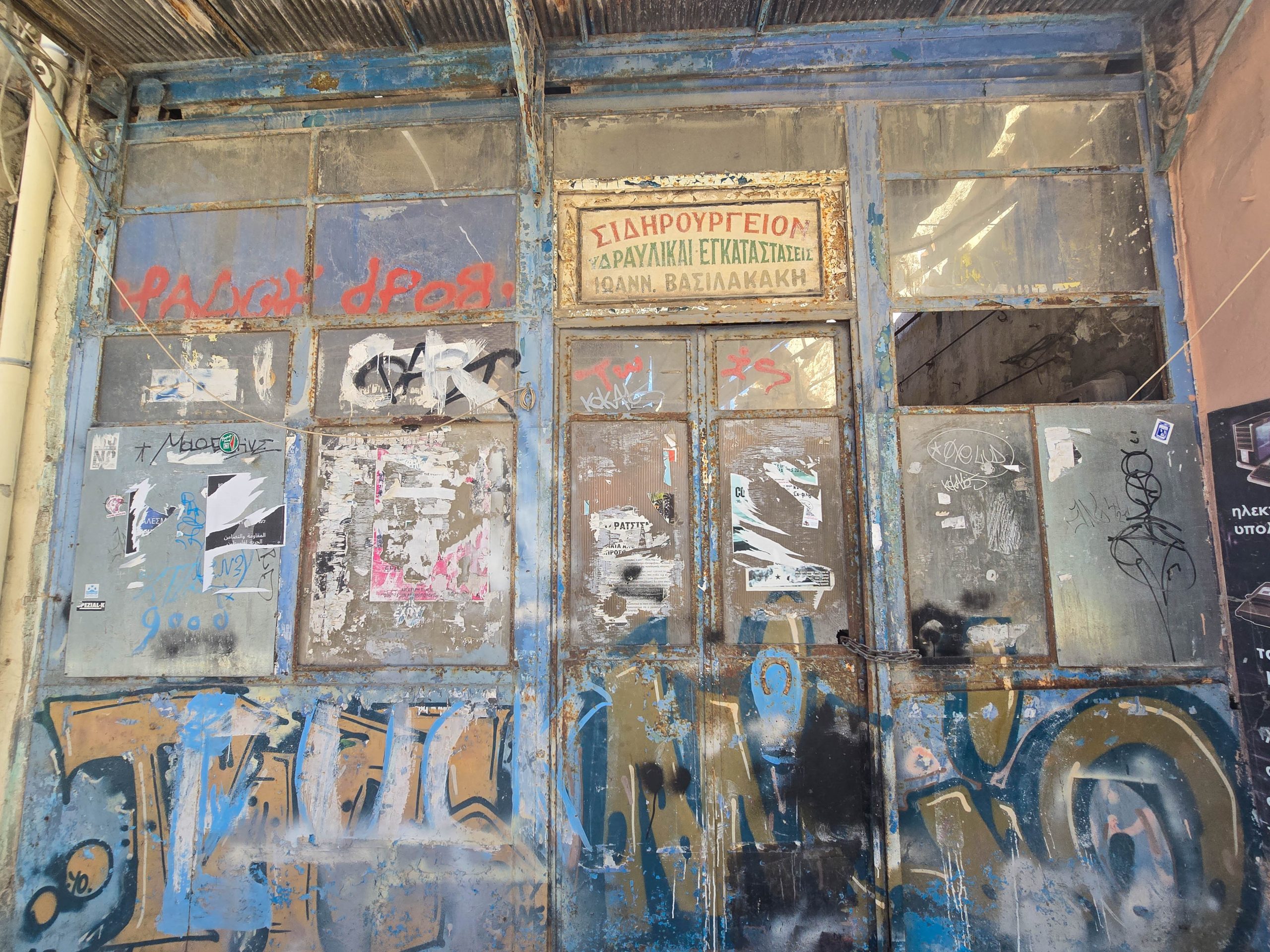
From there, I made my way to the near-empty shopping quarter – Sunday is the only day of the week when the streets are practically deserted and the best time to take photographs. This part of Mytilene is typical of what I love – a place where its historic past is still very much present in the pores of every shop front, every architectural feature and every piece of street art. The layers of patina, each with a story of a time and a place – and people. I could wander here forever.
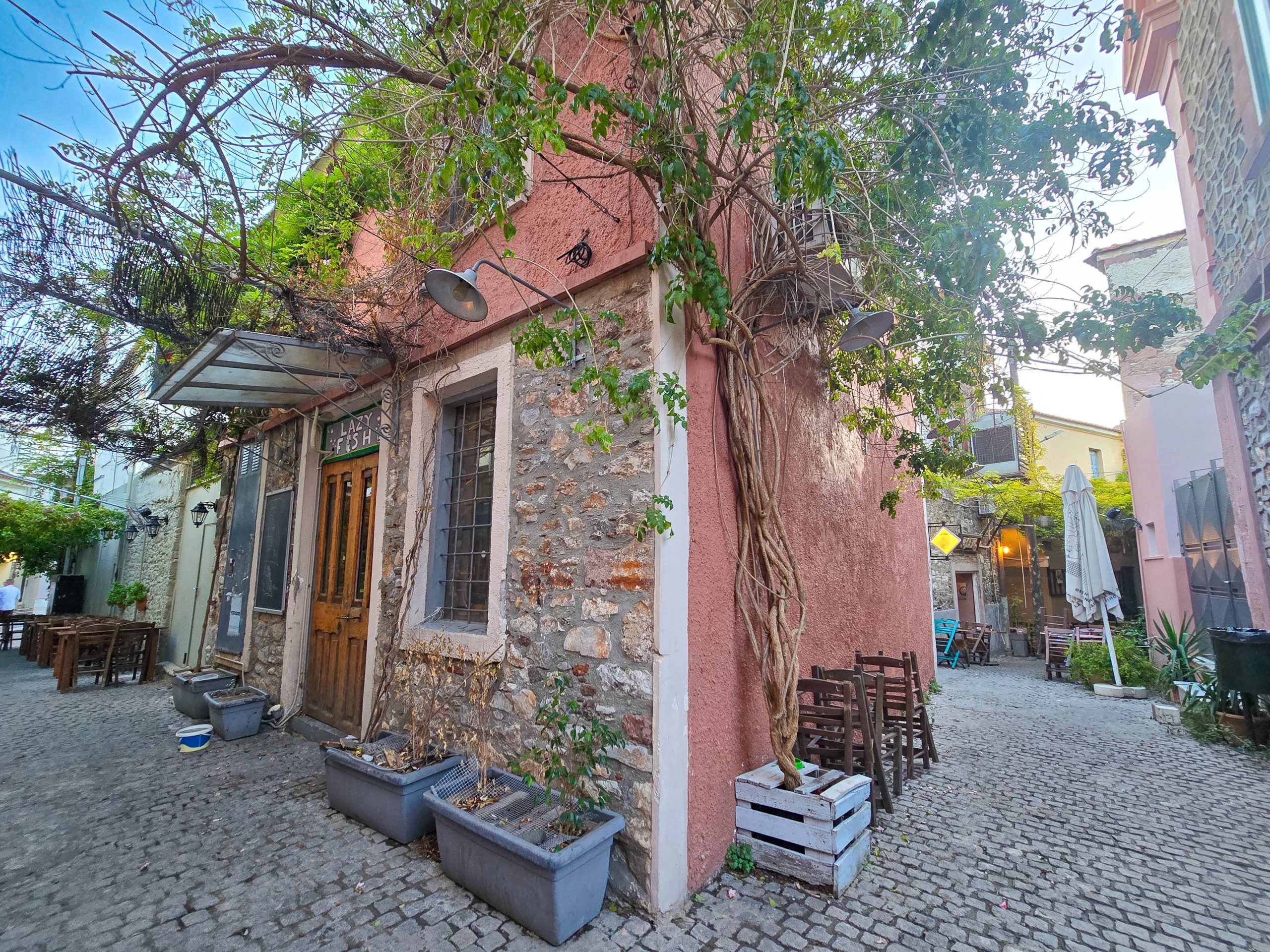
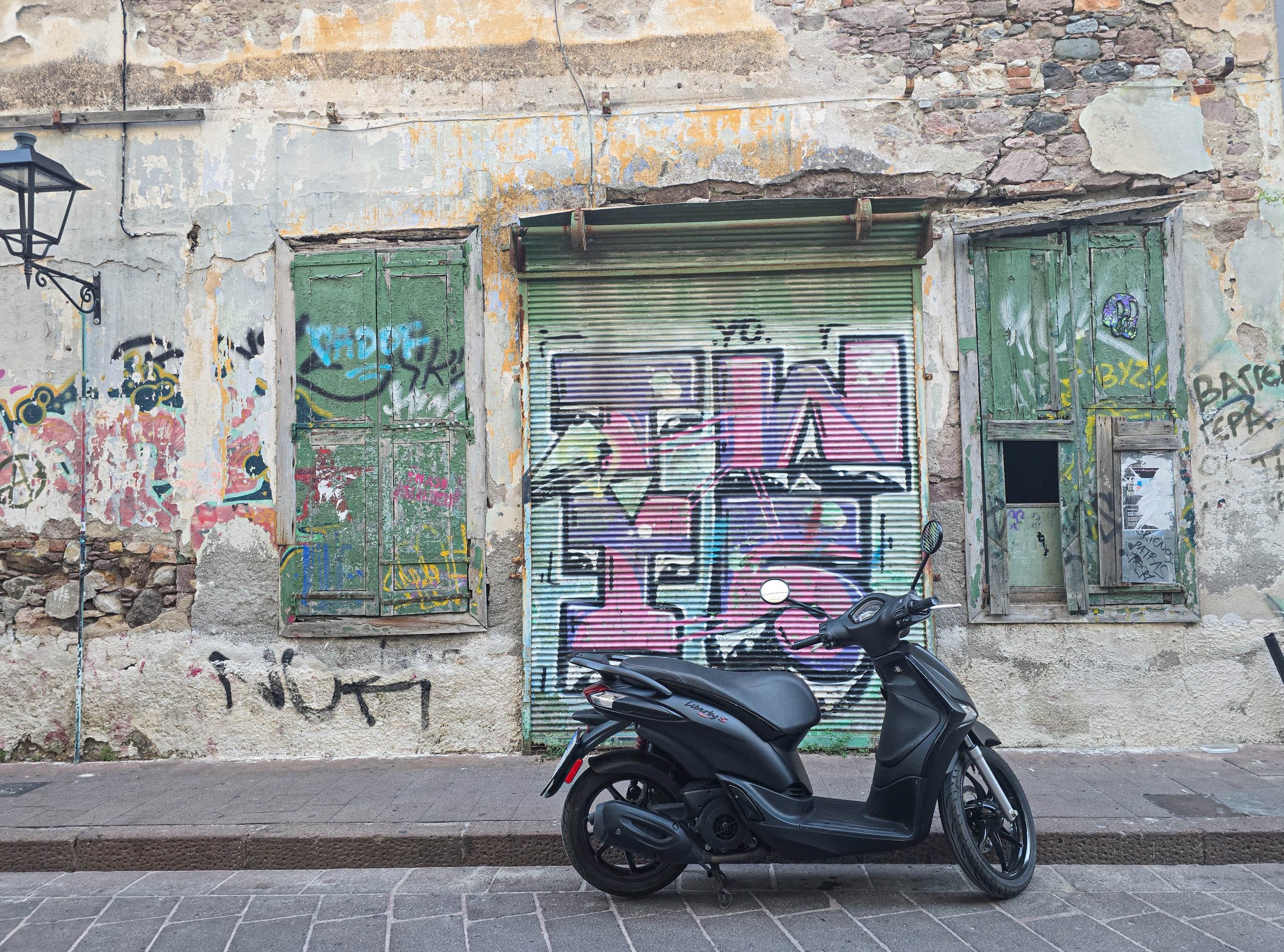
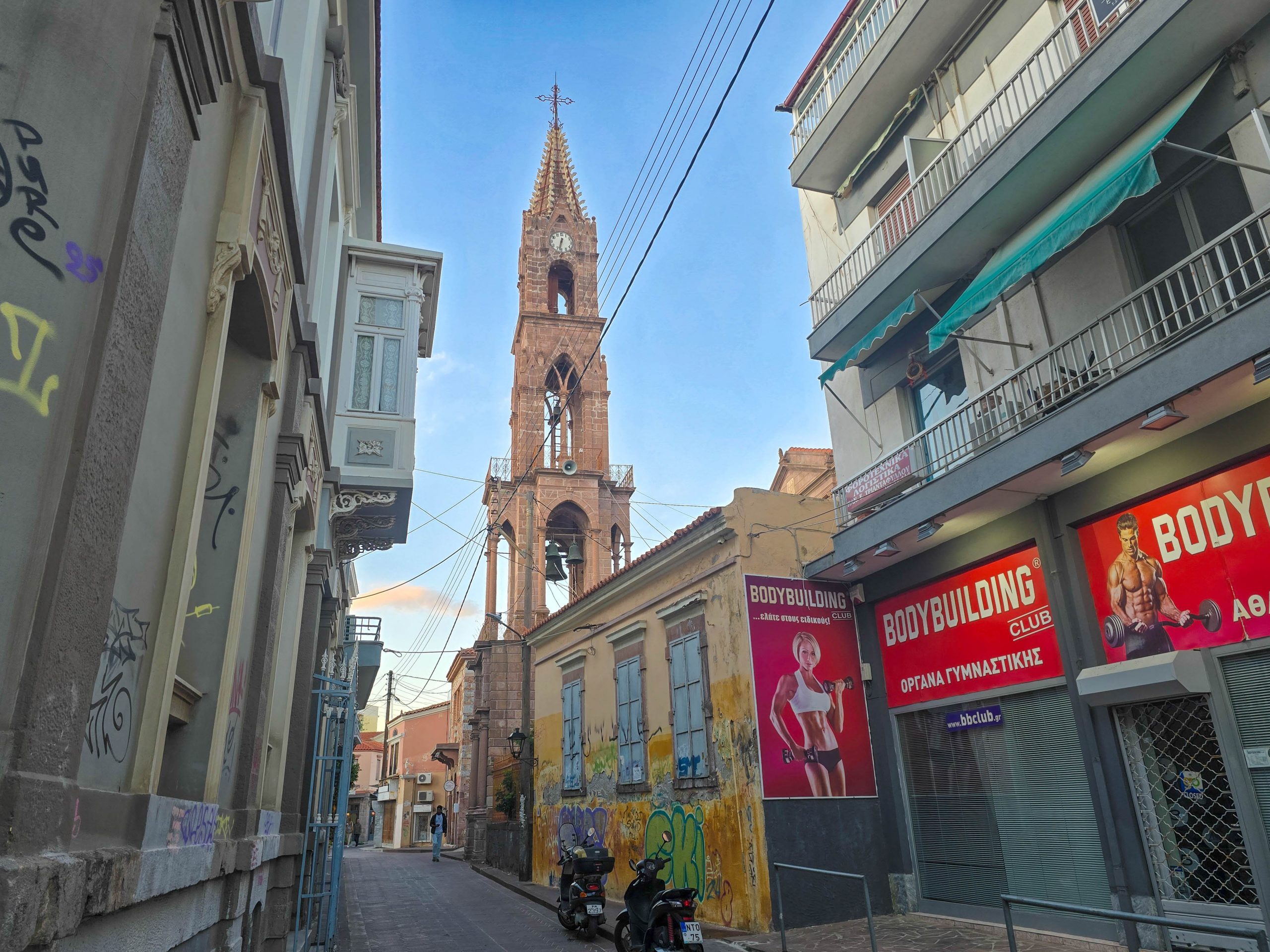
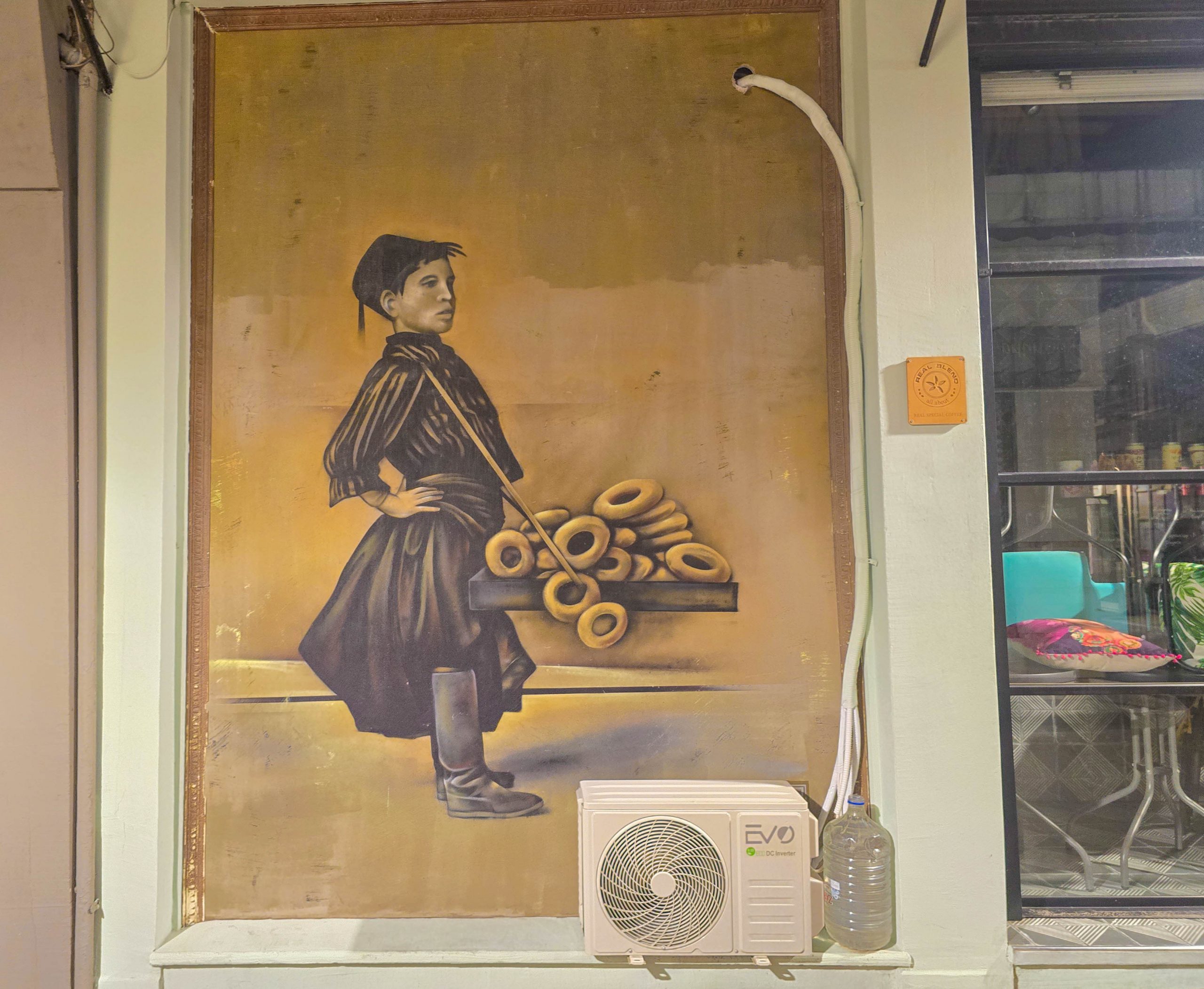
Back at the Secret Garden, I finished packing and set aside some time to plan where to head off next. I wanted to stay on Lesvos for a bit longer and see parts of the island I hadn’t managed to on my previous visit. Being a Sunday, the intercity bus service doesn’t really operate to any reliable schedule at weekends. That meant I’d had to have this extra night in Mytilene anyway. After studying the bus timetable, I decided that I’d head to Skala Eresou — somewhere to slow down, reflect, and think about where this unexpected detour to Lesvos might take me next.
********
The following day, I left the little haven of the Secret Garden and walked towards the town for breakfast – one last bougatsa at Sugar House, an ideal spot to watch life go by and the arrivals and departures into the port. After killing a bit of time, I walked to the bus station. And so began the 90km journey from Mytilini to Skala Eresou. As expected, the journey involved multiple bus changes — via Kalloni and then Antissa — including a lively stretch on the school bus. The journey took several hours through an absolutely stunning landscape. Eventually, the bus approached Skala Eresou along a long rural road and finally stopped on the edge of the village.
What followed was one of those very Greek accommodation interludes. I arrived at the place I’d booked, having had a message from my host that the key was in the door of room 6. I immediately realised the room wasn’t what I’d reserved. Messages were exchanged. Suggestions were made. Alternatives were floated. Eventually, the owner said it I wasn’t happy he’d offer a refund, which, TBH, I wasn’t. I was disappointed – but not defeated.
Whilst pondering my options, I’d noticed the hotel next door — complete with a swimming pool — and wandered over to investigate. Elefteria, the owner, told me she could take me from the following day, just not that night. Progress. All I needed now was somewhere to stay for one night.
I walked onto the main street, spotted a sign for Katerina Apartments, rang the number, and was told yes — there was a room, and the key was already in the door. If I could wait ten minutes, the owner would be there.
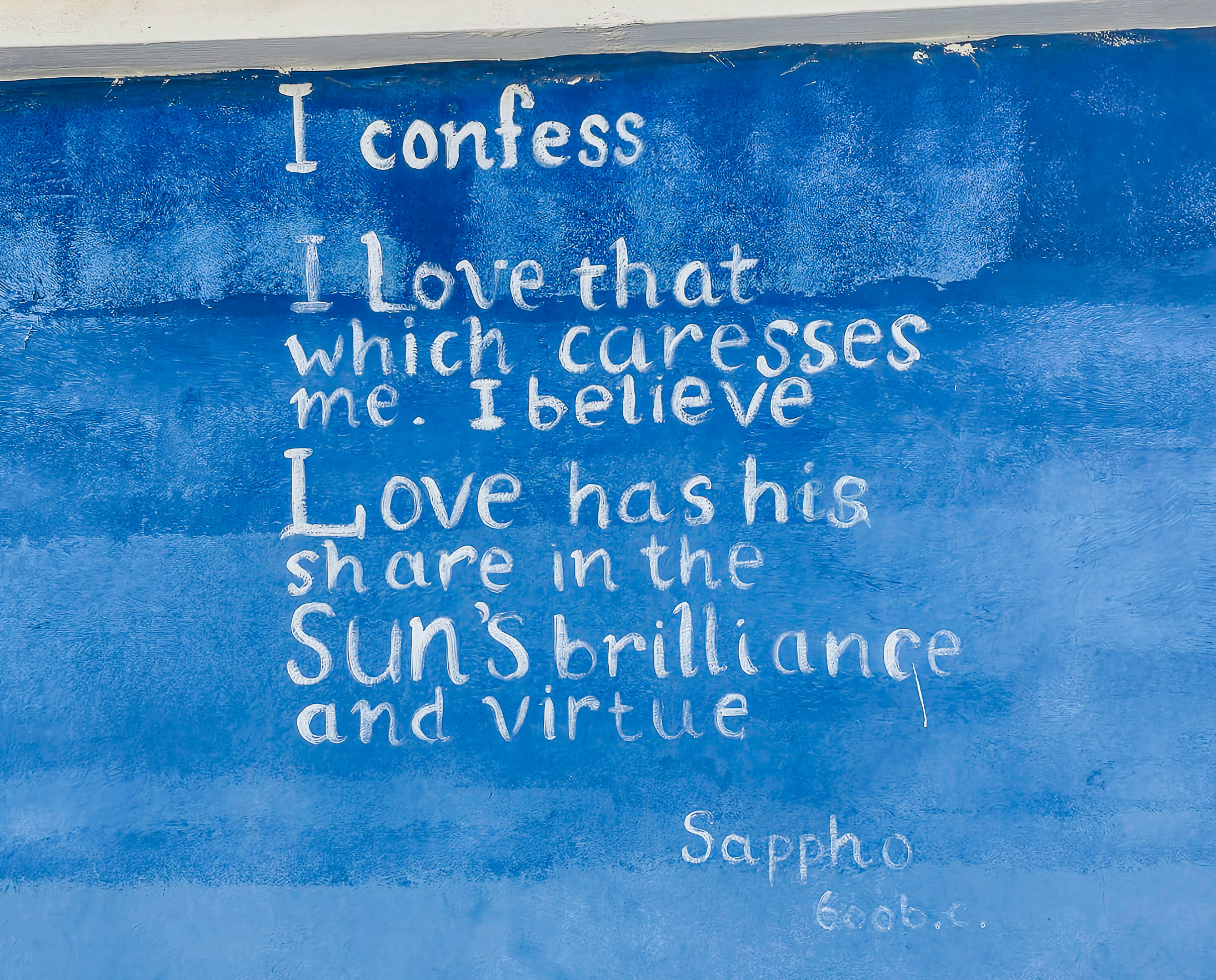
While waiting, another guest arrived and asked if I’d come for the festival. “What festival?” I asked. “The Women’s Festival,” she said. I knew of the festival, but I hadn’t realised that it would coincide with my stay. Skala Eresou, birthplace of the ancient poet Sappho, has long been associated with women’s travel and creativity. Since the 1990s, it has hosted an annual international Women’s Festival — not a single event, but weeks of workshops, music, poetry, discussion and shared experience. I’d arrived just as it was winding down, but there was still an energy about the place.
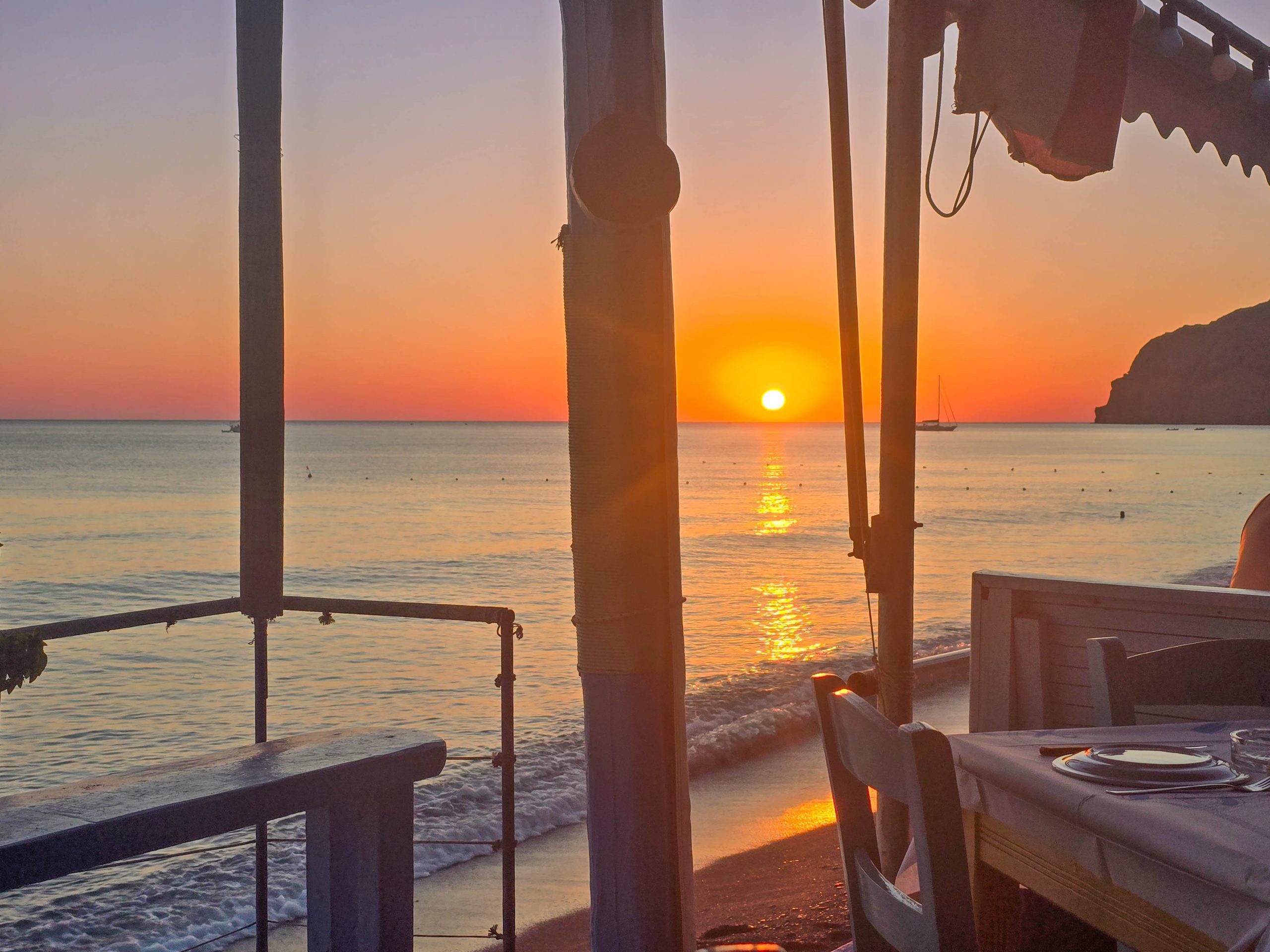
That evening, after getting settled at Katerina’s, I headed to the waterfront for dinner at Karavogiannos Taverna, a perfect spot to watch the sun set. Next door, Flamingo Bar began to fill with groups of women, laughter spilling out onto the promenade. After a few cocktails, several ladies flung off their bikini tops and ran laughing into the sea, carefree and unselfconscious, full of joie de vivre. Later, it all began to get a little raucous. If nothing else, I had a feeling my stay in Skala Eresos was going to be interesting.
Fifteen years of writing about Greece. Thirty plus years of travelling it. Now condensed into a travel planning toolkit.
Take a look