
A Visit to Gliky, the Sweet Village of Eski Bademli – Gökçeada’s Balcony Village
The breakfast at Hotel Fengari set us up well for another day of exploration. It was our last day on Gökçeada, and I wanted to reach at least one of the island’s traditional villages — somewhere that still carried a trace of its Greek heritage. Tapeköy, once Agridia and the highest settlement on the island, had been my initial choice. Every year it hosts the great 15 August Panagiri, drawing Imvriots and the wider Greek diaspora back home. But its height alone suggested that reaching it by public transport might be ambitious.
Dereköy tempted me for different reasons. Formerly Schoinoudi, it had once been one of the most populous villages in Turkey, with 1,950 households, twenty-two cafés, two cinemas, countless shops and two olive presses. But it lay far to the west and was even less likely to be accessible without a car. Zeytinliköy was another possibility — home to Agios Georgios and birthplace of Patriarch Bartholomew I, who, despite leading 300 million Orthodox Christians from Istanbul’s Ecumenical Patriarchate, returns to his village several times each year.
We headed into Gökçeada Town (Merkez) to see what was realistically within reach. Before even making our enquiries, we made a short detour to the Holy Metropolitan Church of Panagia. Built around 1800, when Imbros still had a thriving Greek community, it served as the island’s spiritual centre and seat of the bishop. Architecturally, it’s a simple stone basilica with a tiled roof and a generous, columned narthex. The detached bell tower — added later — is one of the town’s defining landmarks. Its unadorned exterior reflects both local styles and the constraints placed on Christian buildings during the late Ottoman period. That it still stands at all feels remarkable, given the turbulence of the 20th century.
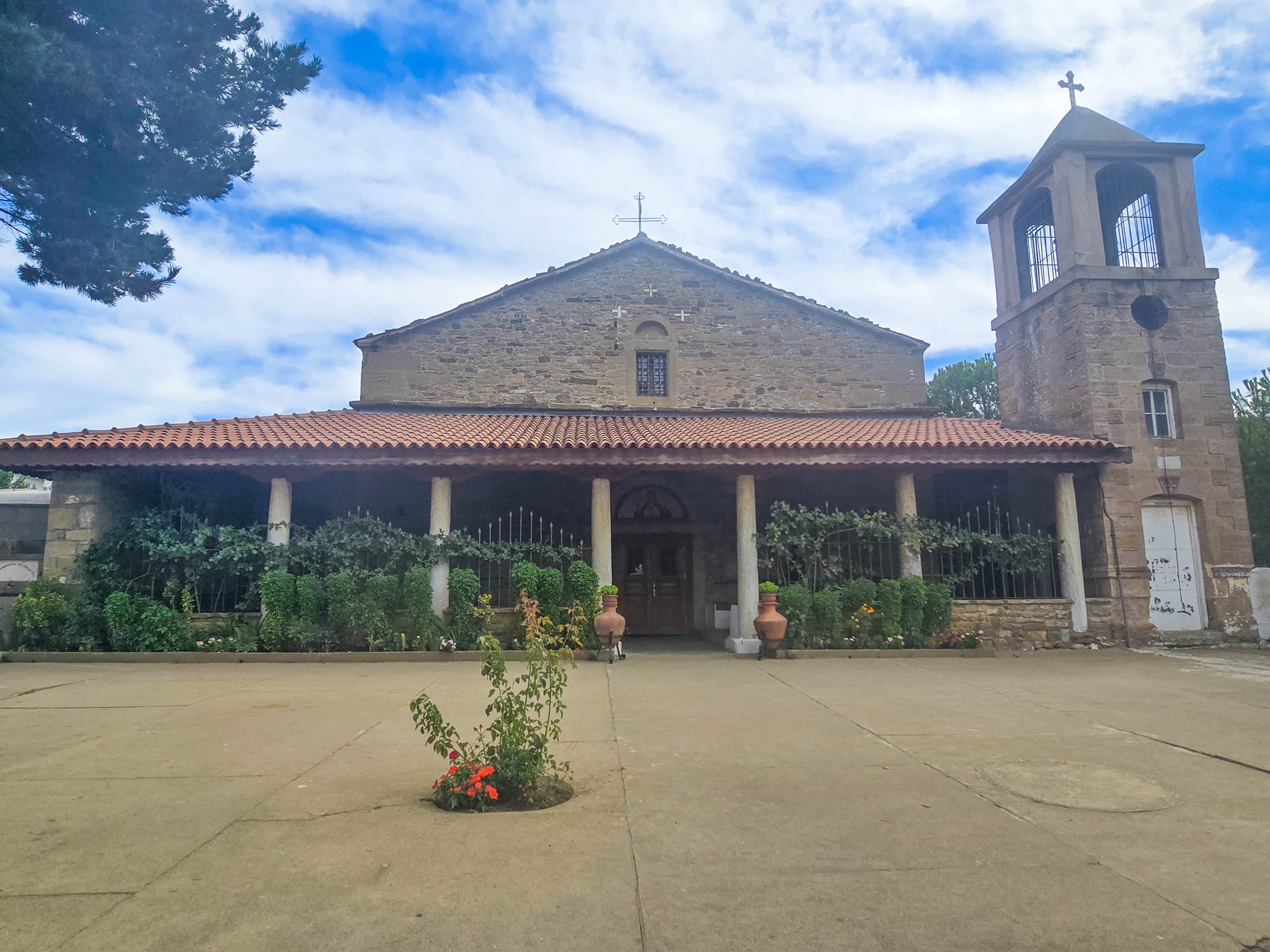
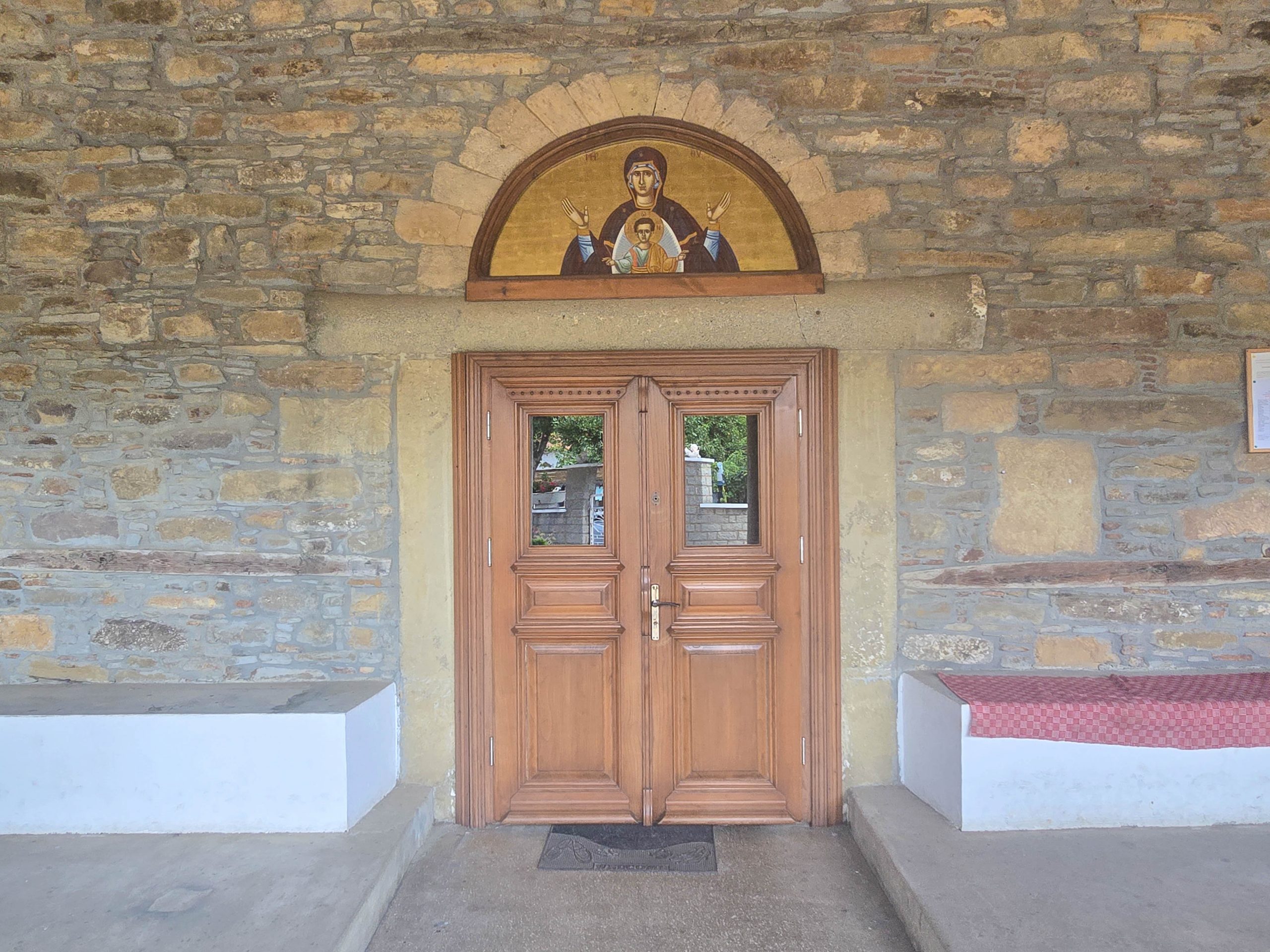
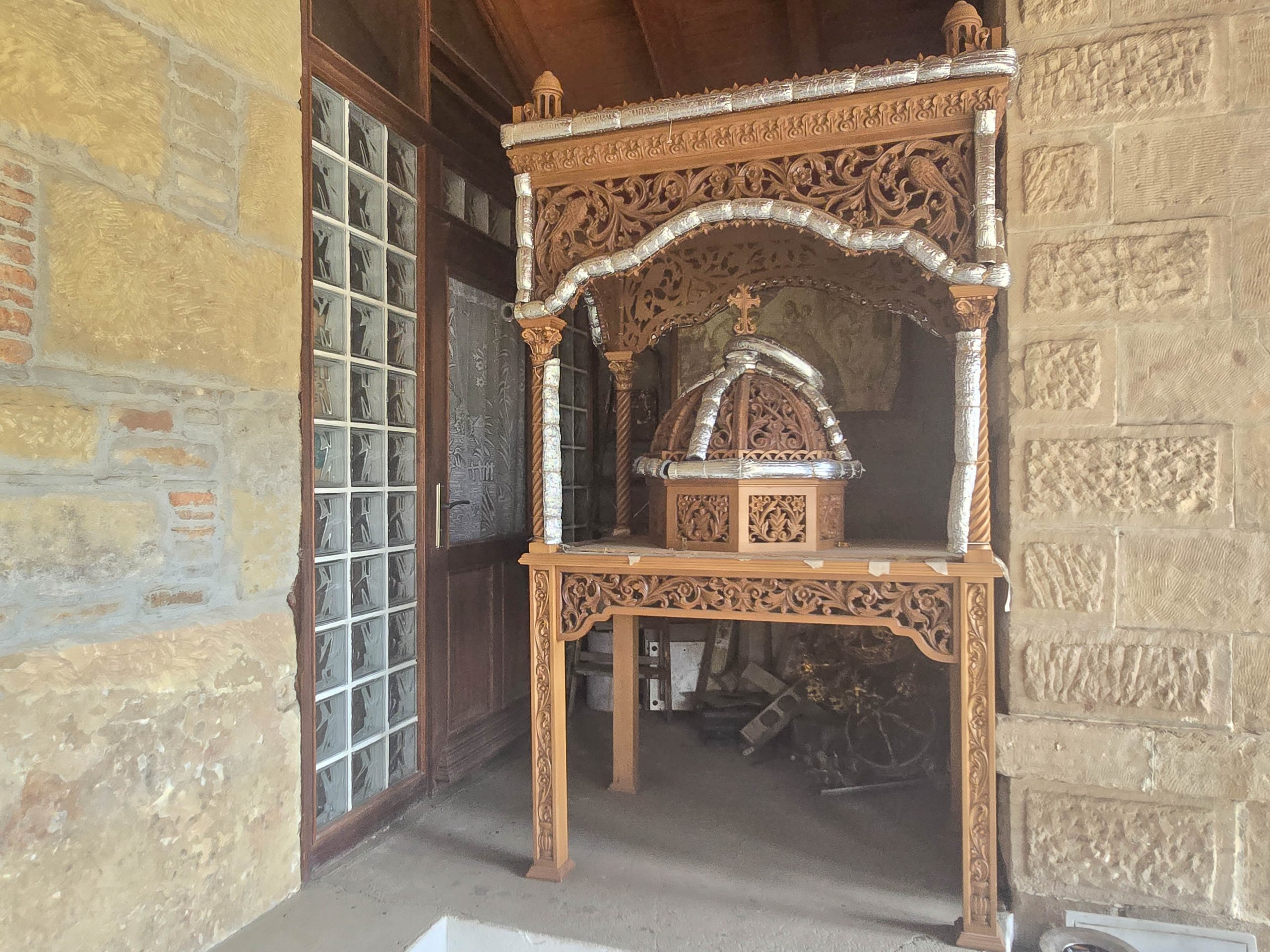
Back in the square, whilst I wrestled with the timetable at the bus stop, Peter had fallen into a deep conversation with a man. Their gestures were so expressive and fluid that I assumed they were speaking the same language, though Peter had not yet mastered Turkish fluently. When I joined them, I could hear they were speaking Arabic. The man, Bahri, came from eastern Turkey near the Syrian border and was fluent. He now lives in Istanbul but owned a couple of holiday lets on the island and clearly knew Gökçeada well.
Peter explained that we wanted to visit either Dereköy or Tapeköy. Bahri smiled and suggested something far simpler — Eski Bademli, practically on our doorstep. He assured us it offered everything we were looking for. Moments later, he had summoned a taxi, instructed the driver firmly, and waved us off as though we were old friends. His kindness set the tone for the rest of the day.
The taxi dropped us at the entrance to the village. Vehicles aren’t permitted in the narrow lanes, so everyone parks outside. A sign welcomed us in both Greek and Turkish, explaining that Glykí means “sweet” and that life here should be lived in peace and without stress — even the reminder about leisurely service felt like an invitation to step into a slower pace of life.
Further information — pieced together from Turkish and Greek — explained that Bademli is one of the island’s oldest villages, long known as the ‘balcony of the island’ for its wide, uninterrupted views. Once famous for almonds, it had a church, fountain, laundry house, plane tree, inn, olive press, café and stone houses. Not all of those remain today, but the words invited us to explore further.
The Stenáda — literally “the narrow lanes” — had once been the heart of the village. Here were the school, the village hall and coffeehouse, the grocer, barber, butcher, and a line of small shops. At its centre stood Our Sten Ada, one of the village’s earliest and last-standing shops. It belonged to Athanasios Kondoyiorgis and remained open until 1985. The description evoked shelves of everyday essentials, jars of herbs and preserves, and the kind of familiarity that makes a place indispensable.
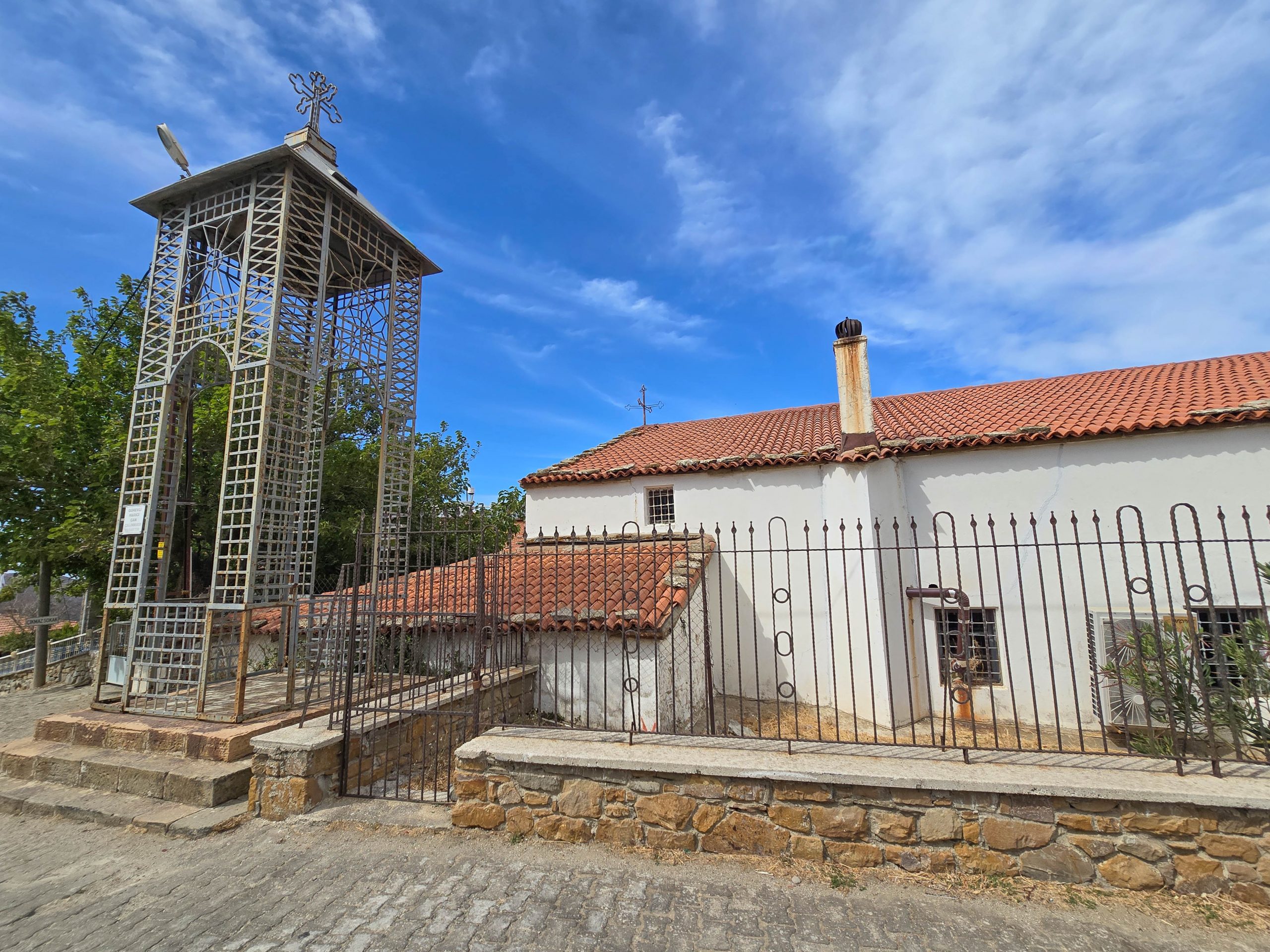
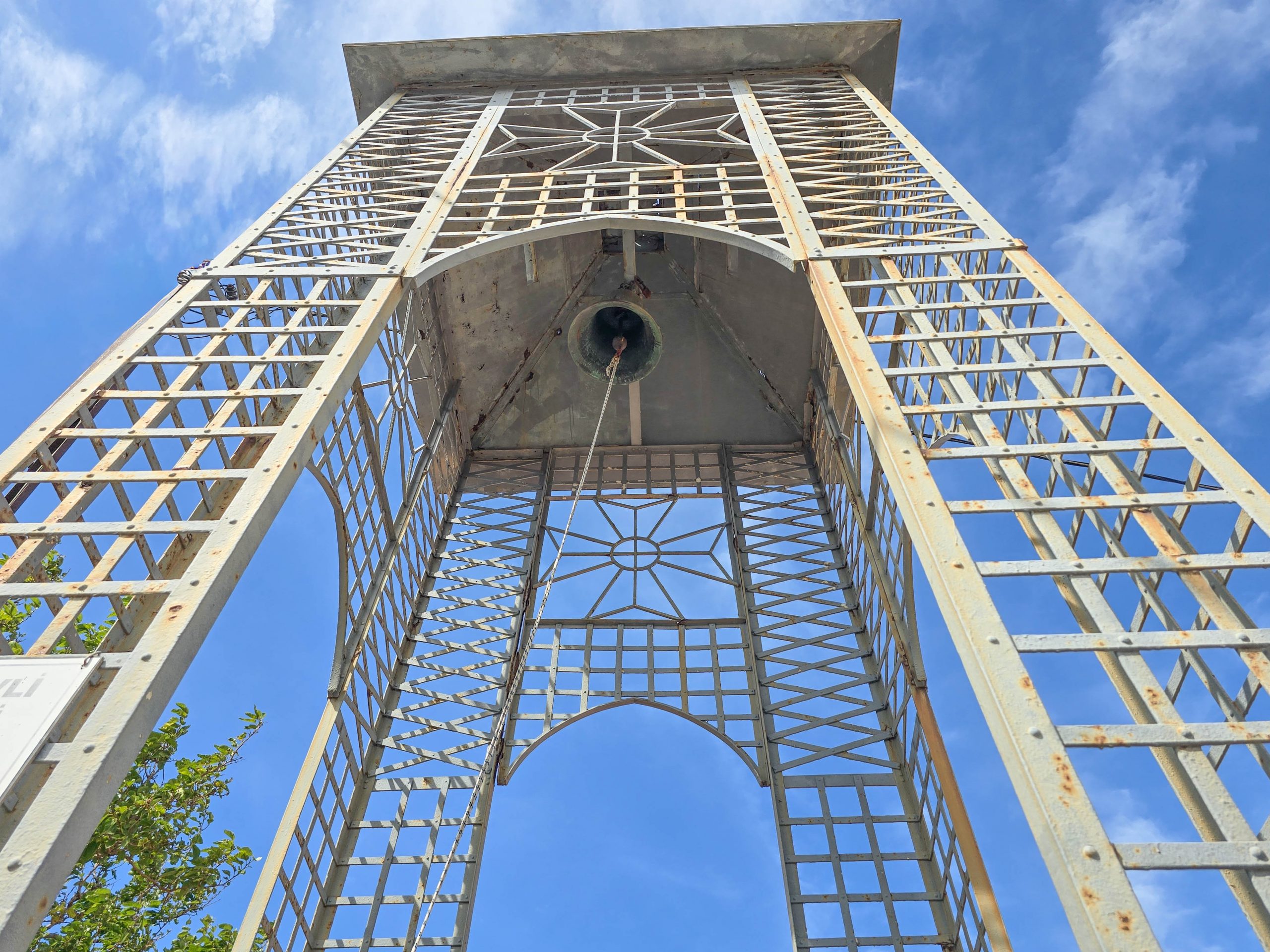
Before exploring the village further, we stopped at the Church of the Dormition of the Theotokos (Panagia Kimisis), dating from 1837. A traditional Greek Orthodox basilica, it once anchored village life — baptisms, festivals, weddings, memorials. It was closed during our visit, but the distinctive metal bell tower made up for it.
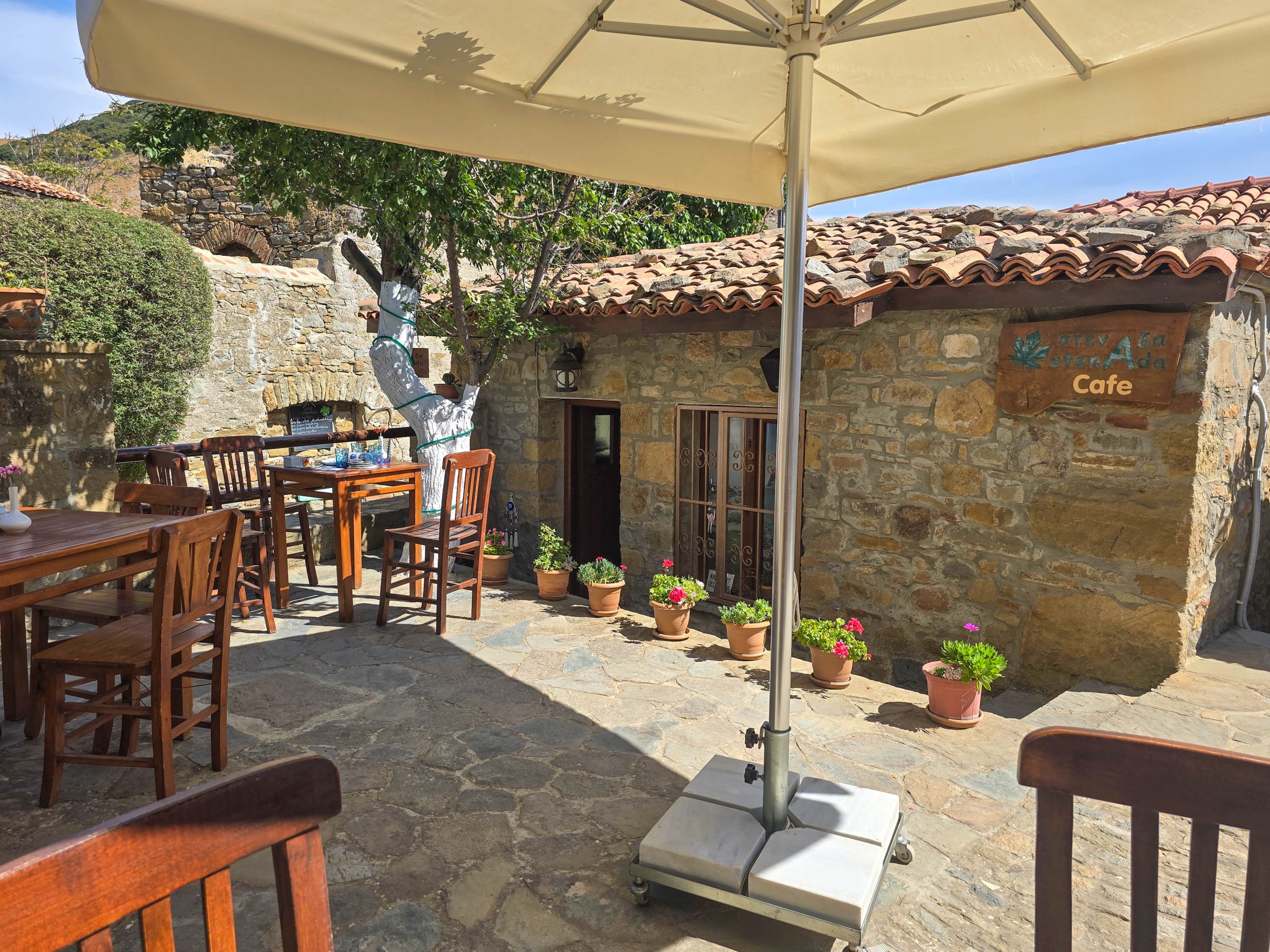
Rounding a corner, we found ourselves suddenly in the centre of the village — it really was that compact. A café with shaded corners sat at its heart, with a sign written in Greek script but using Turkish words. Sten Ada is a playful hybrid: taking the Greek stená (‘narrow lanes’) and combining it with the Turkish ada (‘island’), echoing both the old Stenáda and the bilingual past of Gökçeada.
Two women who seemed to run the place welcomed us warmly, offering recommendations. The owner appeared too — a man we both felt we somehow recognised but couldn’t place. One of those odd, familiar-but-not moments.
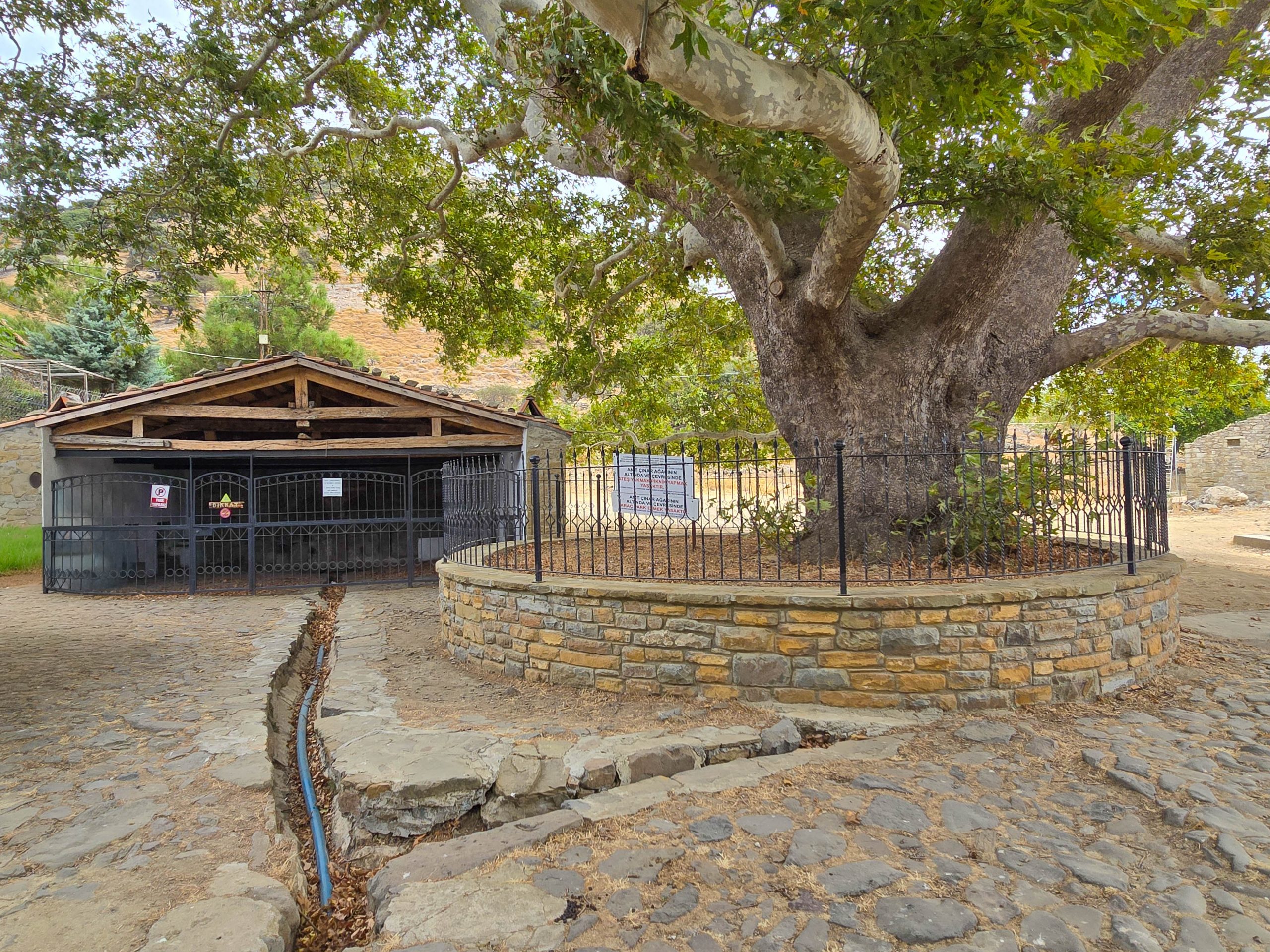
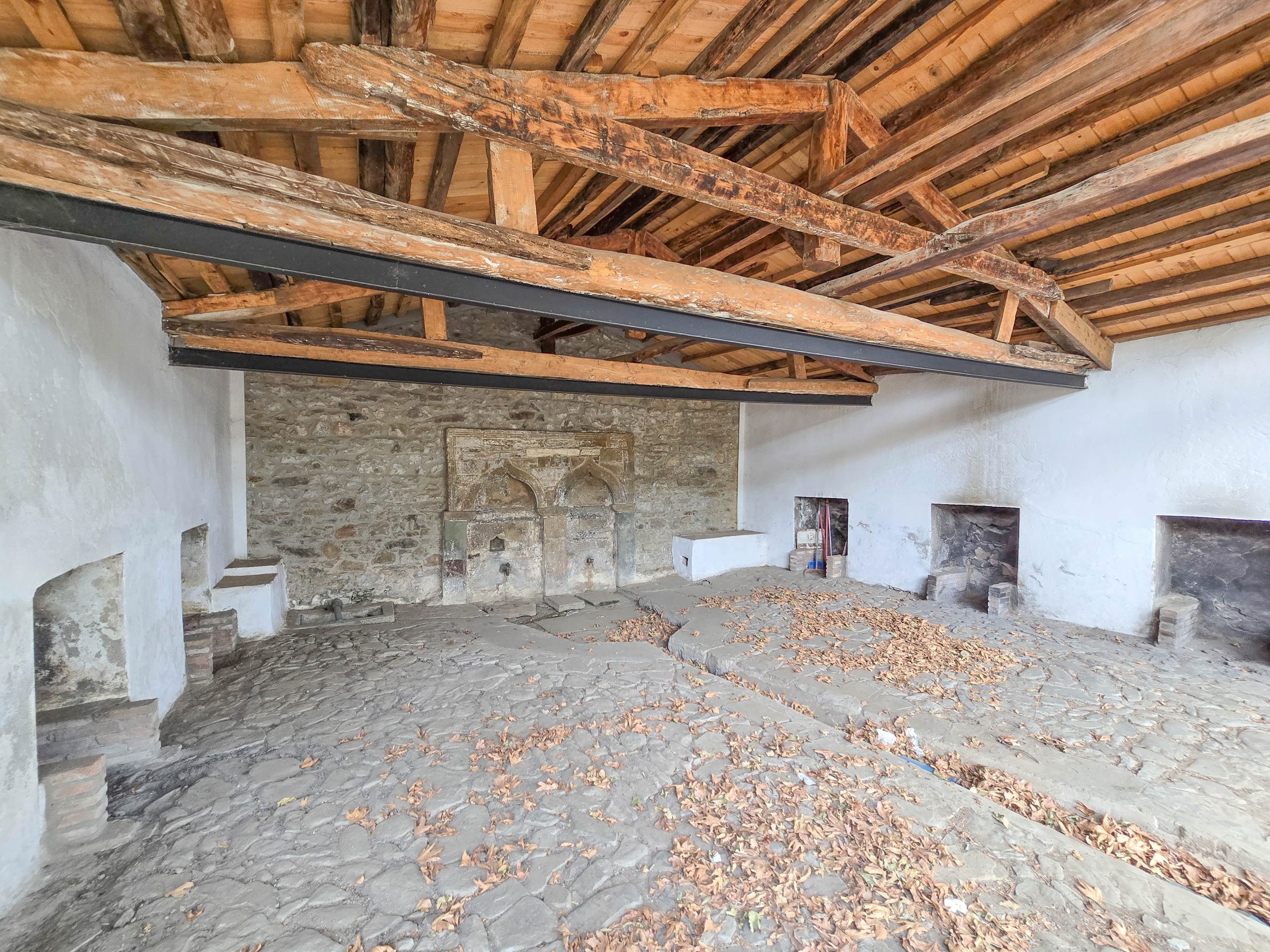
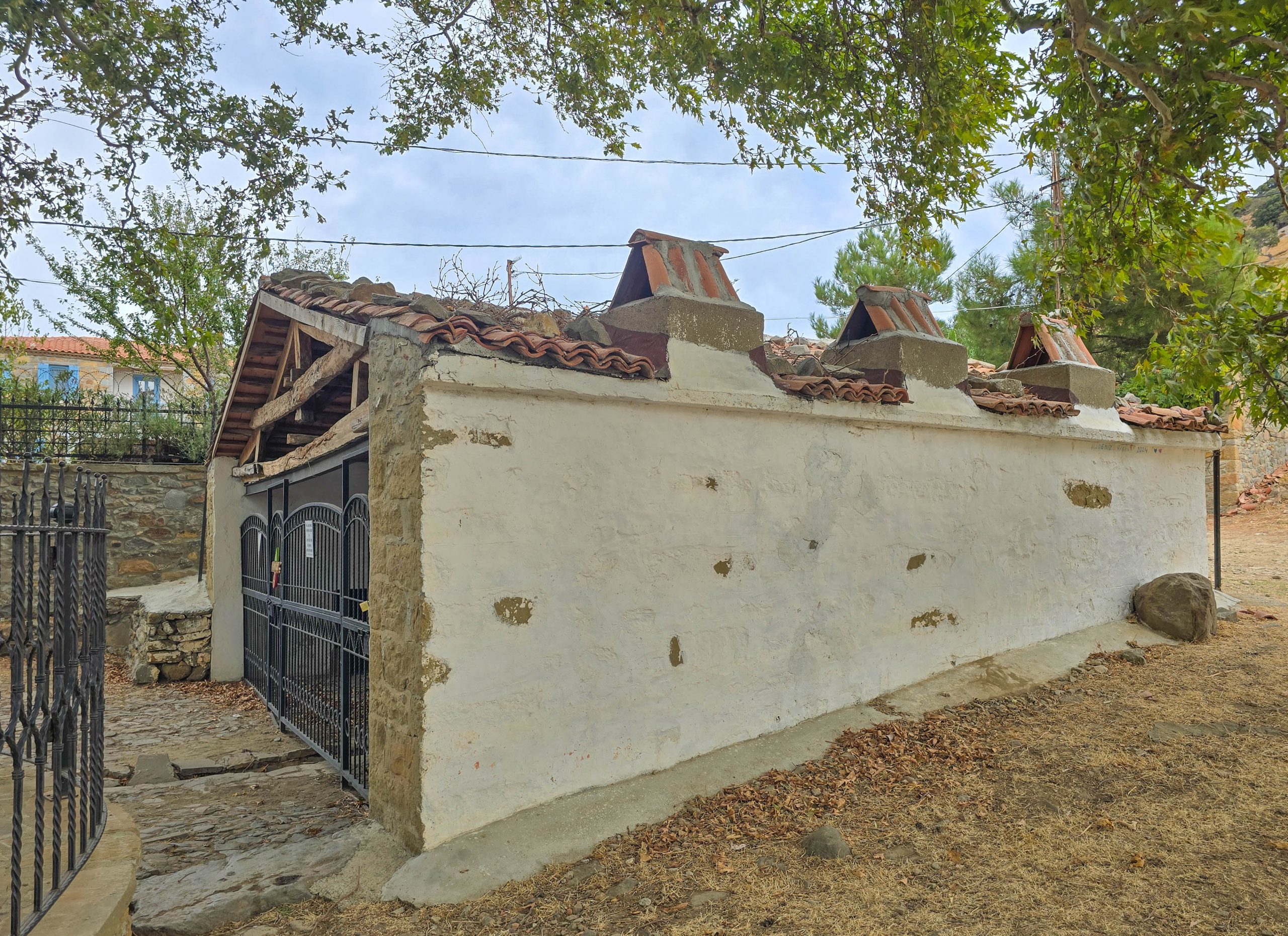
As we left, he pointed us towards the 650-year-old plane tree and the old laundry just a short walk away. The plane tree, growing directly above a water spring, fed a channel that once supplied the laundry house. I peered inside the wash-house to see hearth-like recesses where water was heated, with chimney pots still visible on the roof. These communal laundries were vital — places to work but also to gather, exchange news, and exist together.
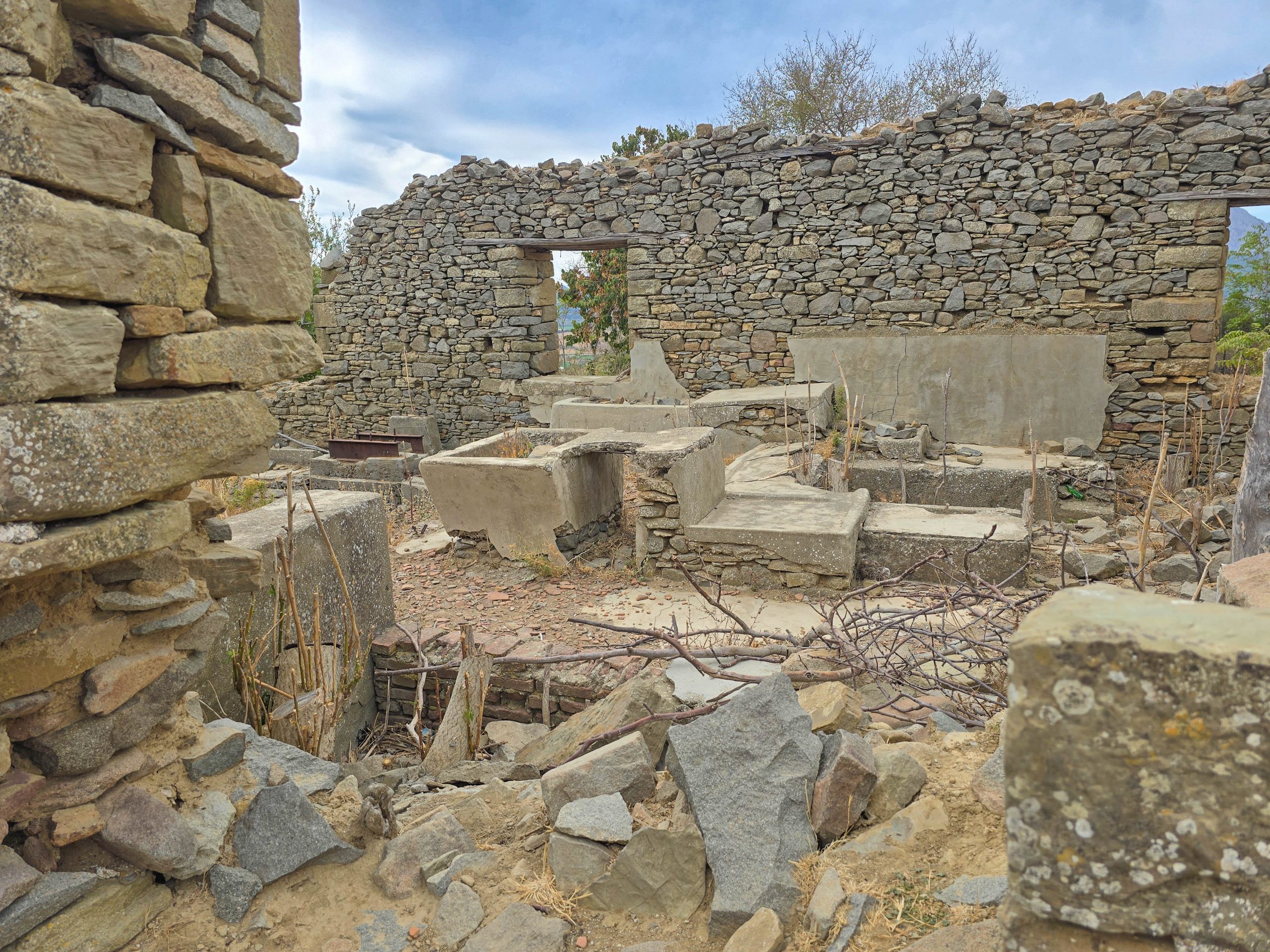
Nearby stood a derelict stone structure that must have been part of the laundry complex — a rinsing area with basins and stone platforms where cold spring water once flowed through troughs. Seeing both areas together hinted at how organised and communal village life once was.
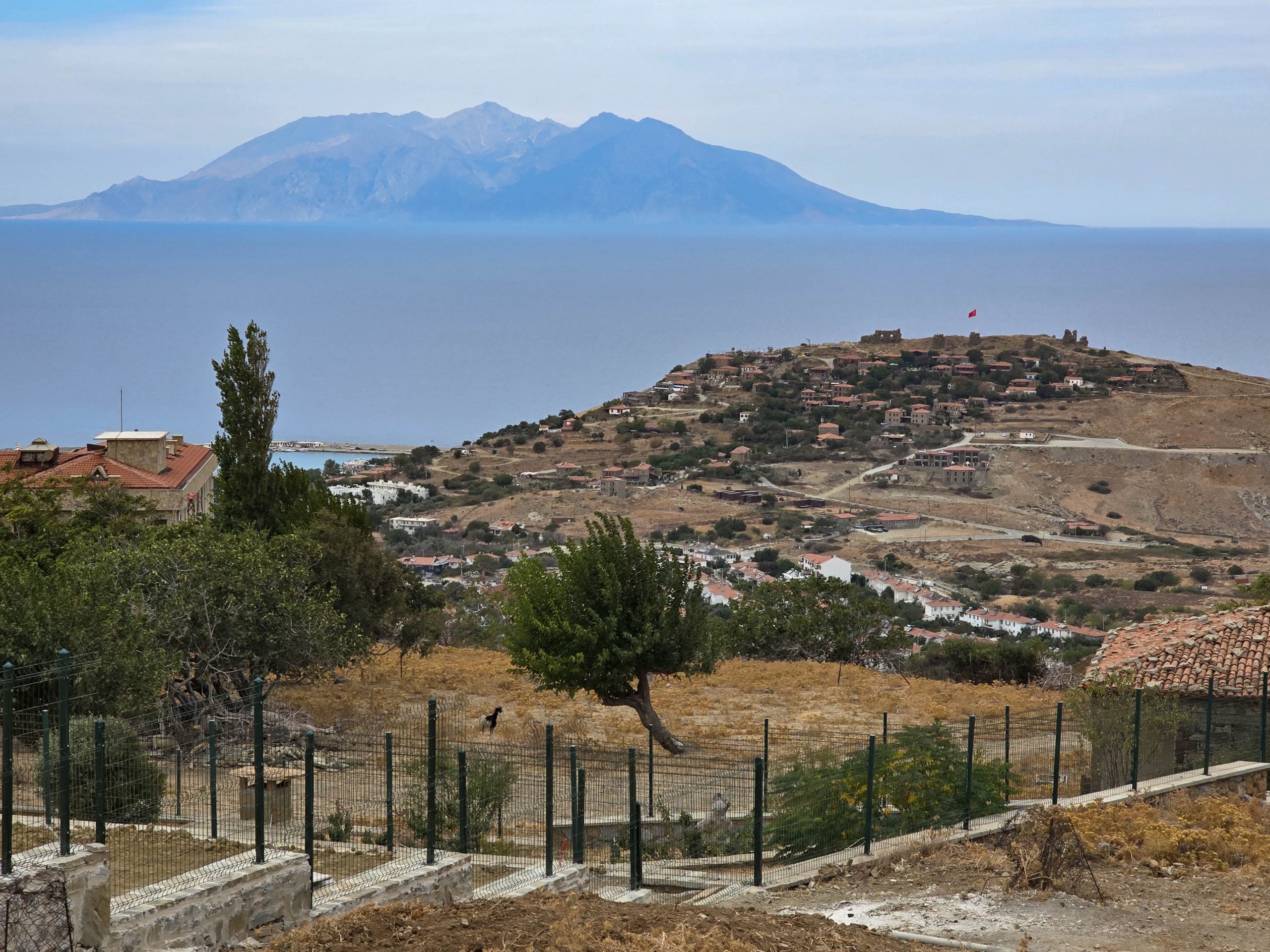
After exploring the ghost-like remains of Bademli’s past, we continued along a path skirting the edge of the village. The hillside was dotted with fig and oak trees, and then the landscape opened wide. Across the valley, the ruins of Kastro clung to the low hill above the harbour, and beyond that, in the haze, lay the silhouette of Samothrace. At that moment, it was obvious why Eski Bademli is called the Balcony of Imbros.
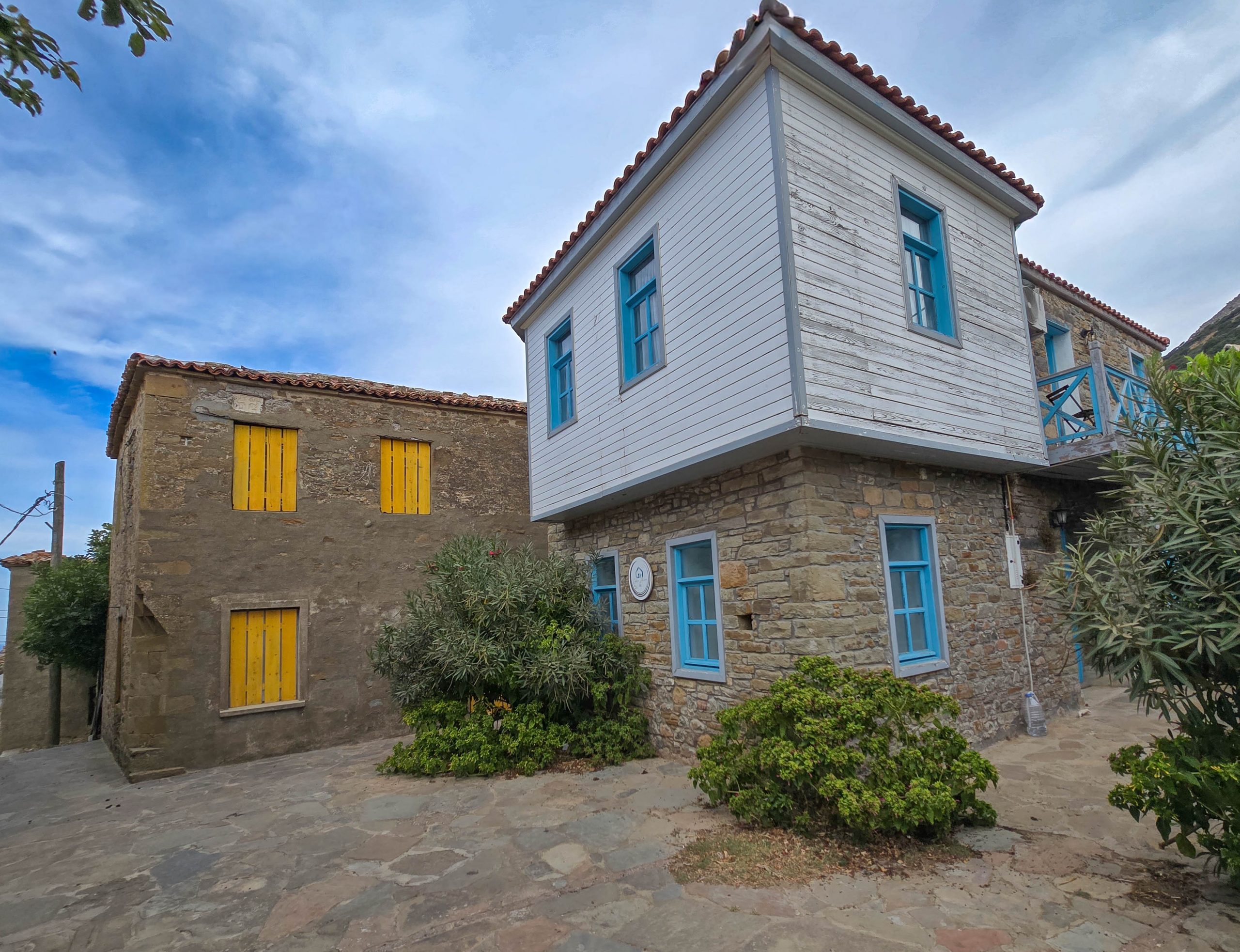
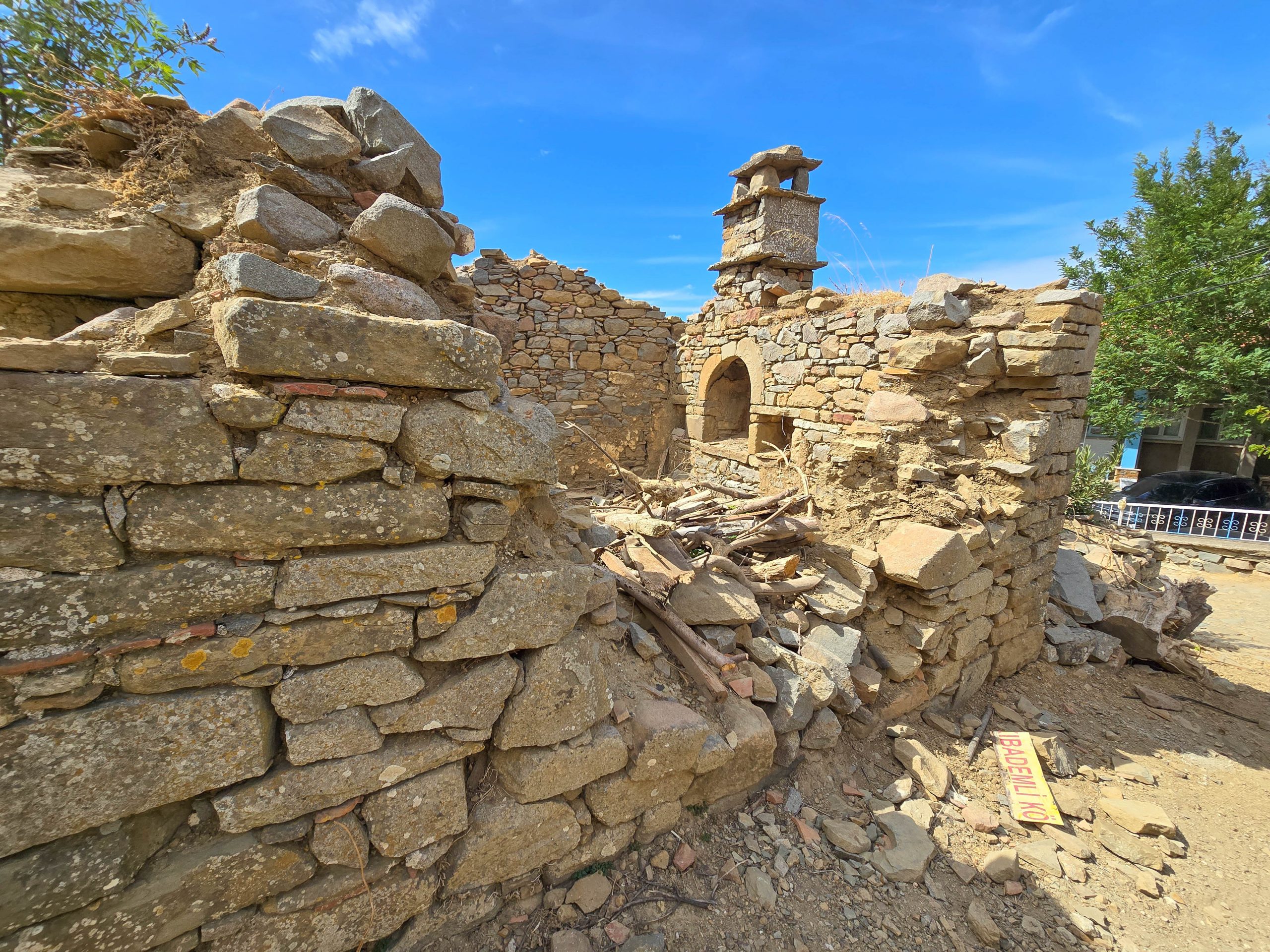
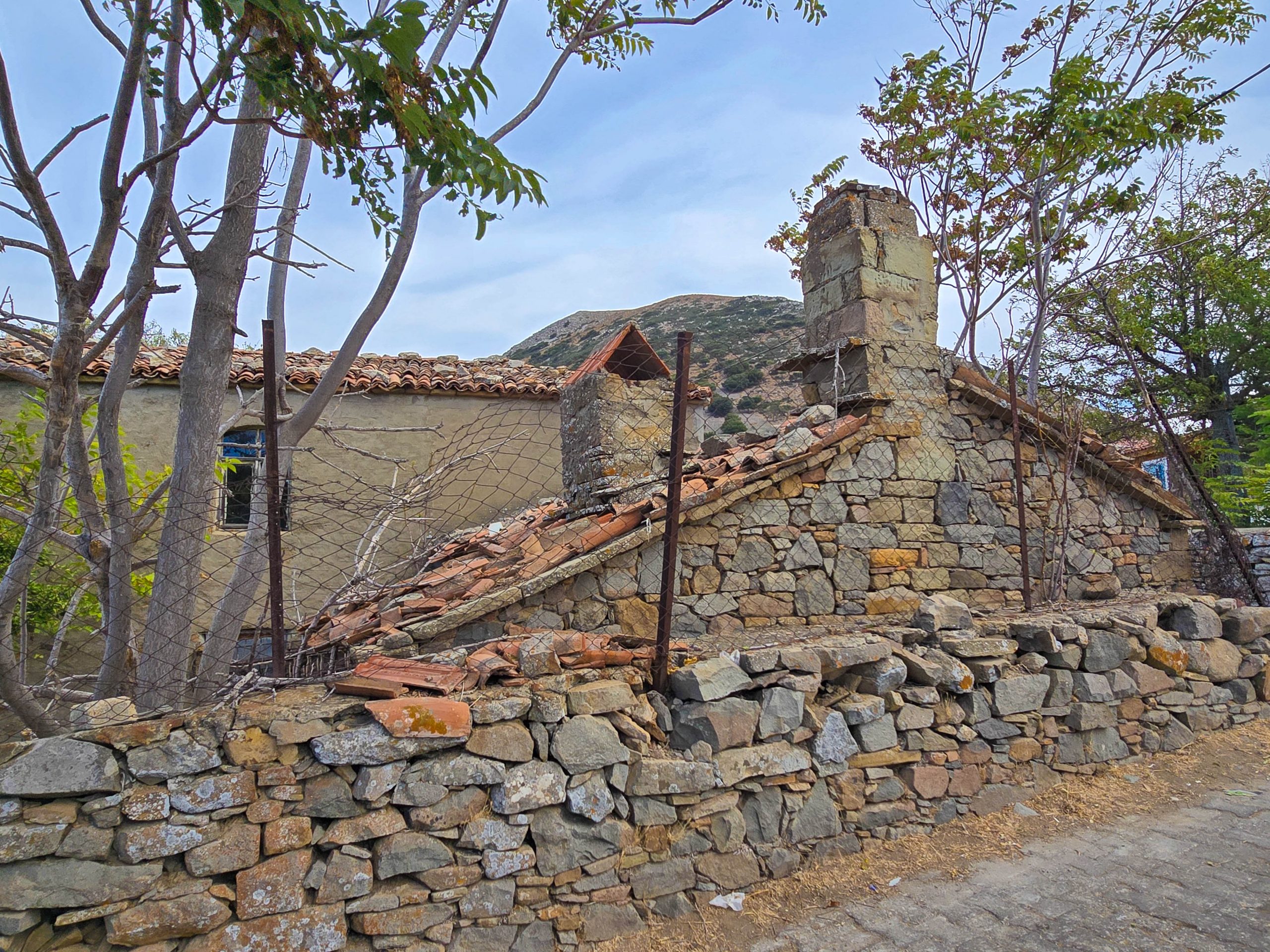
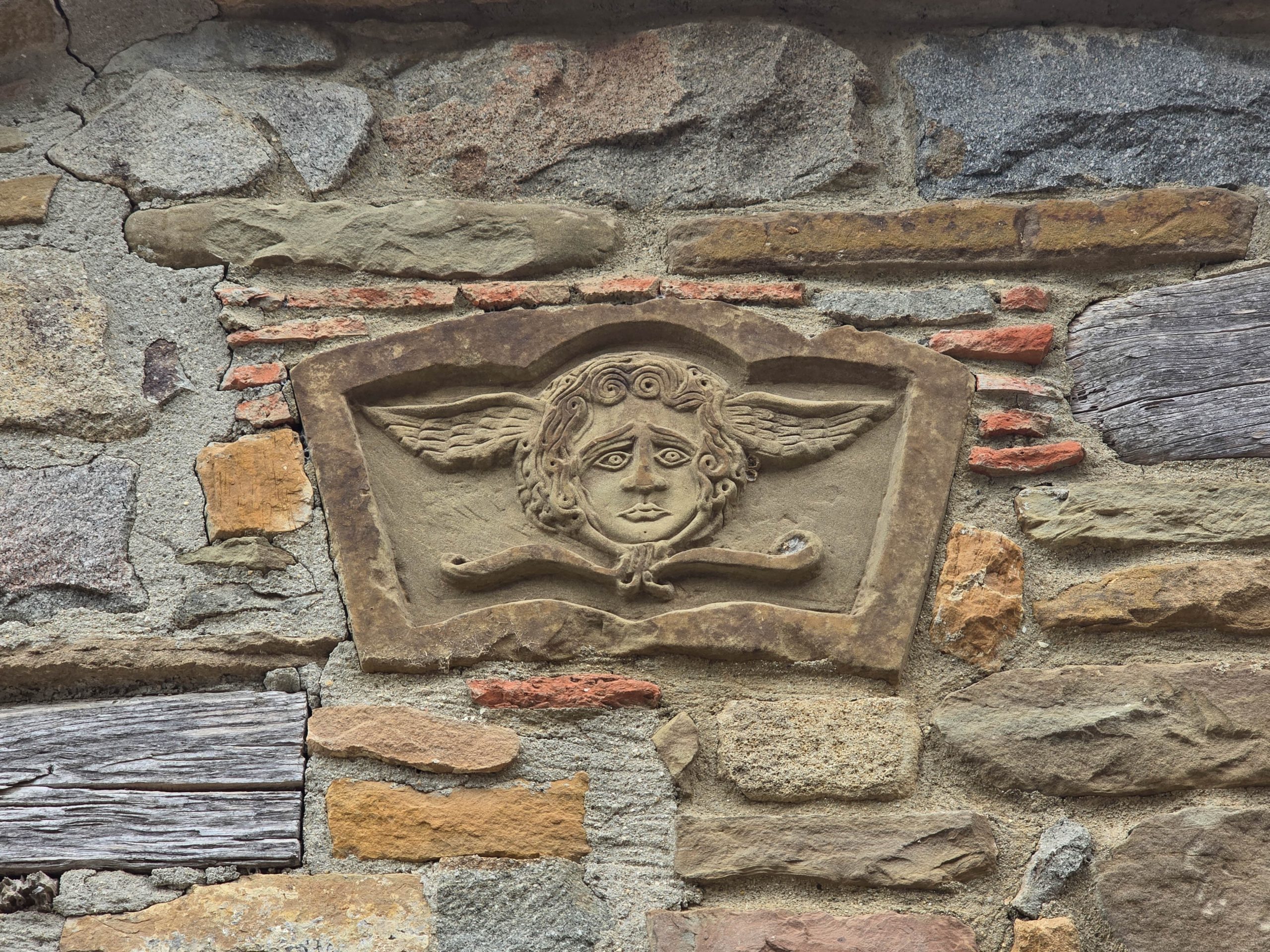
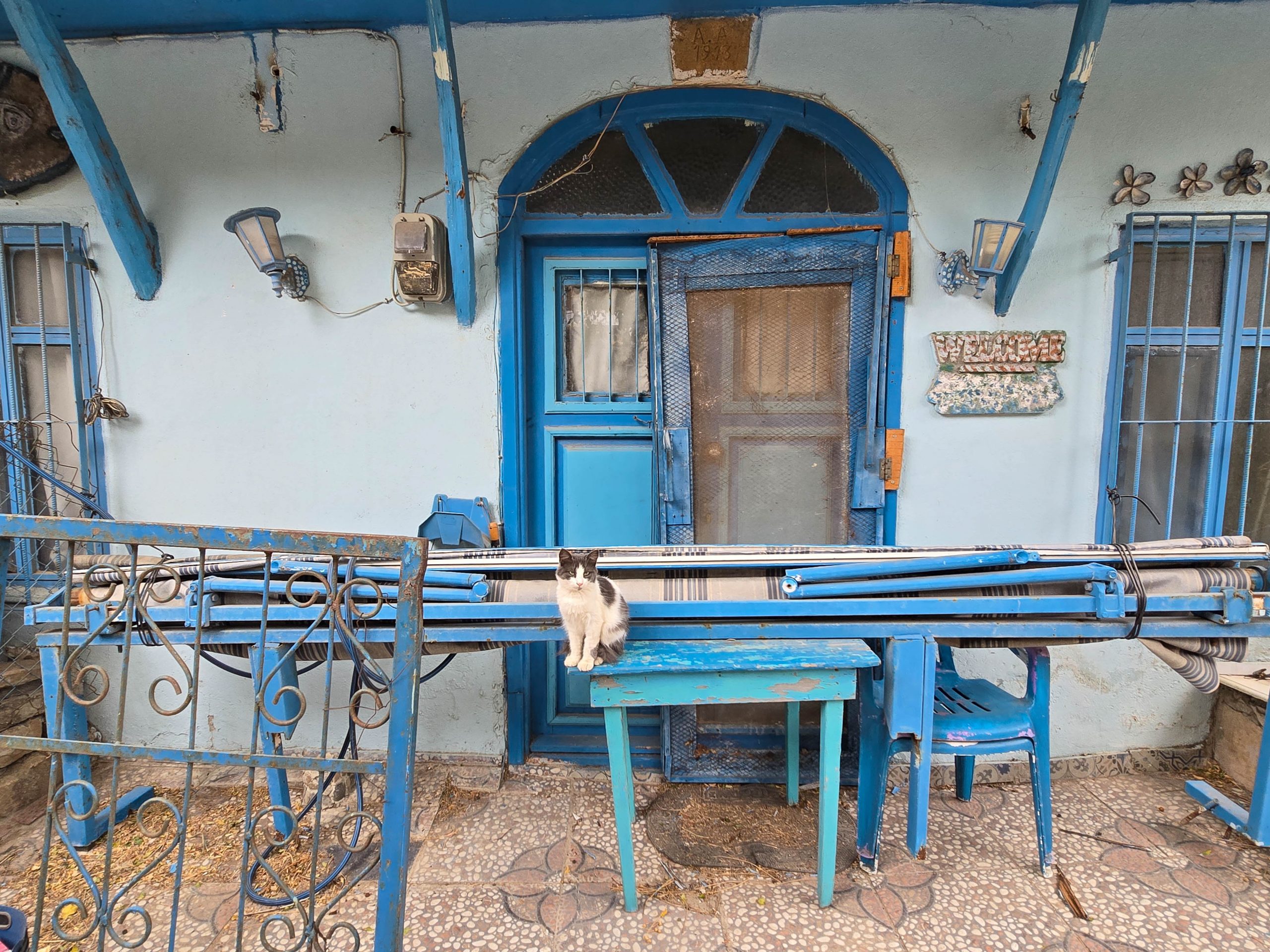
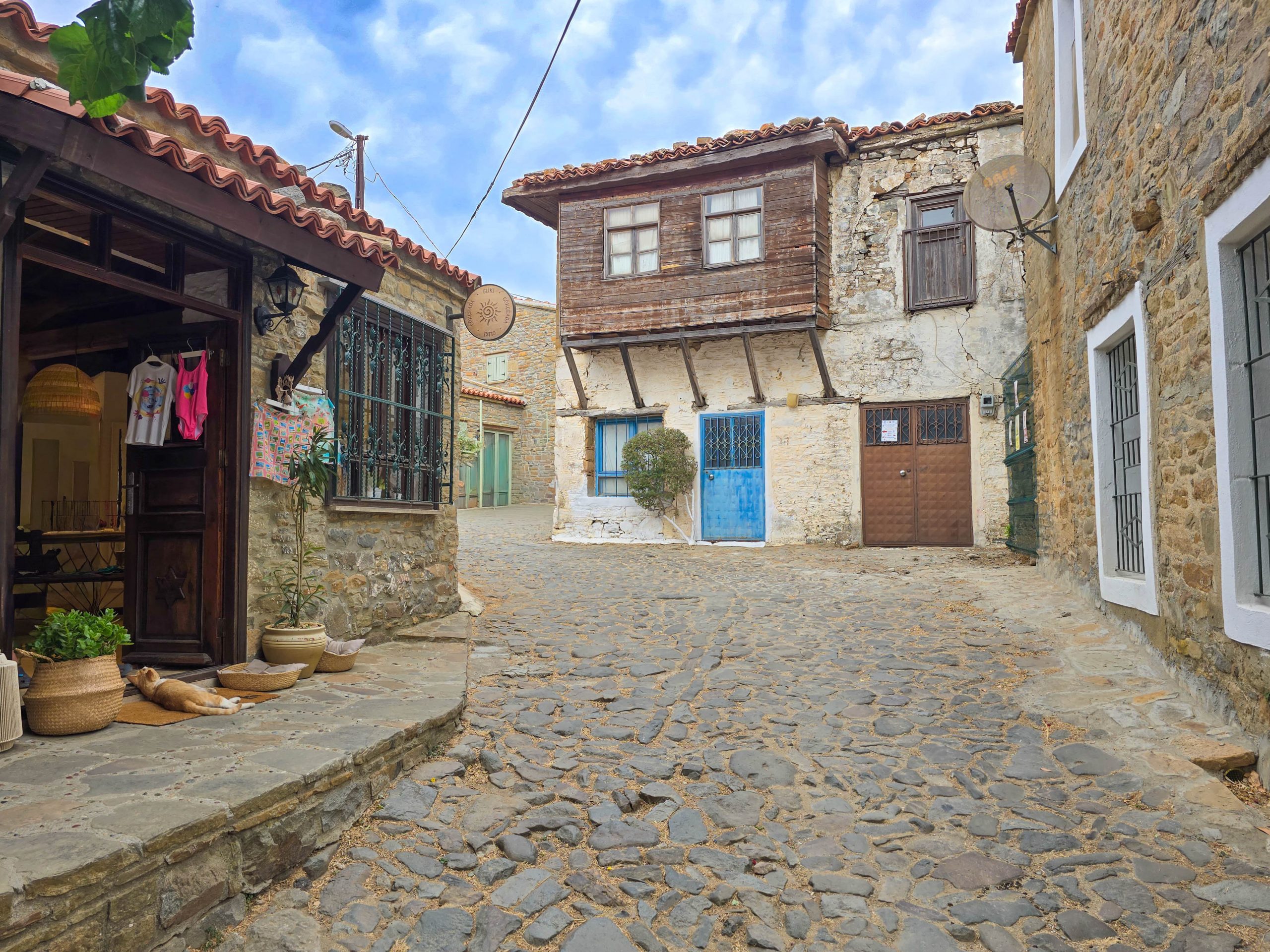
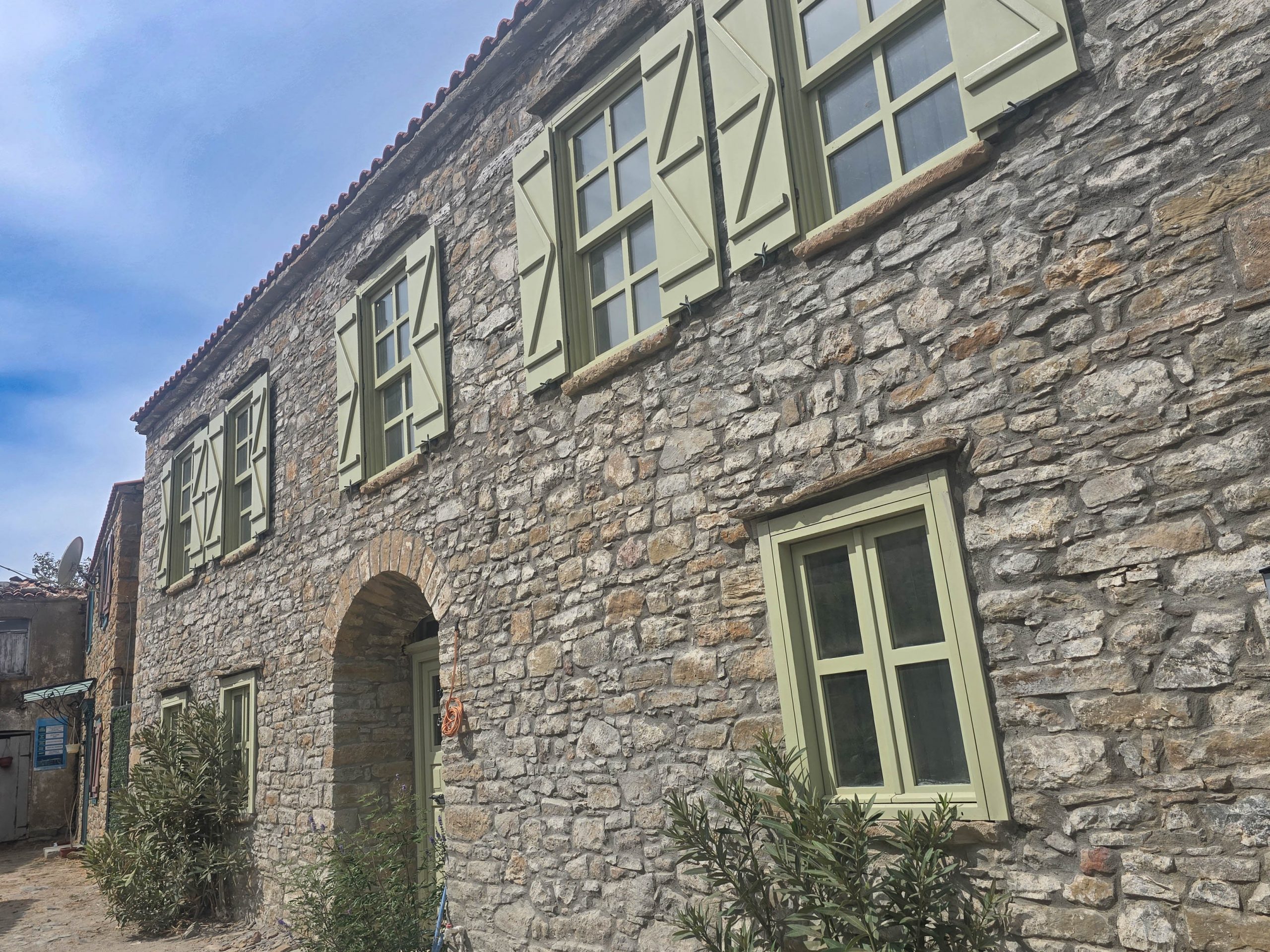
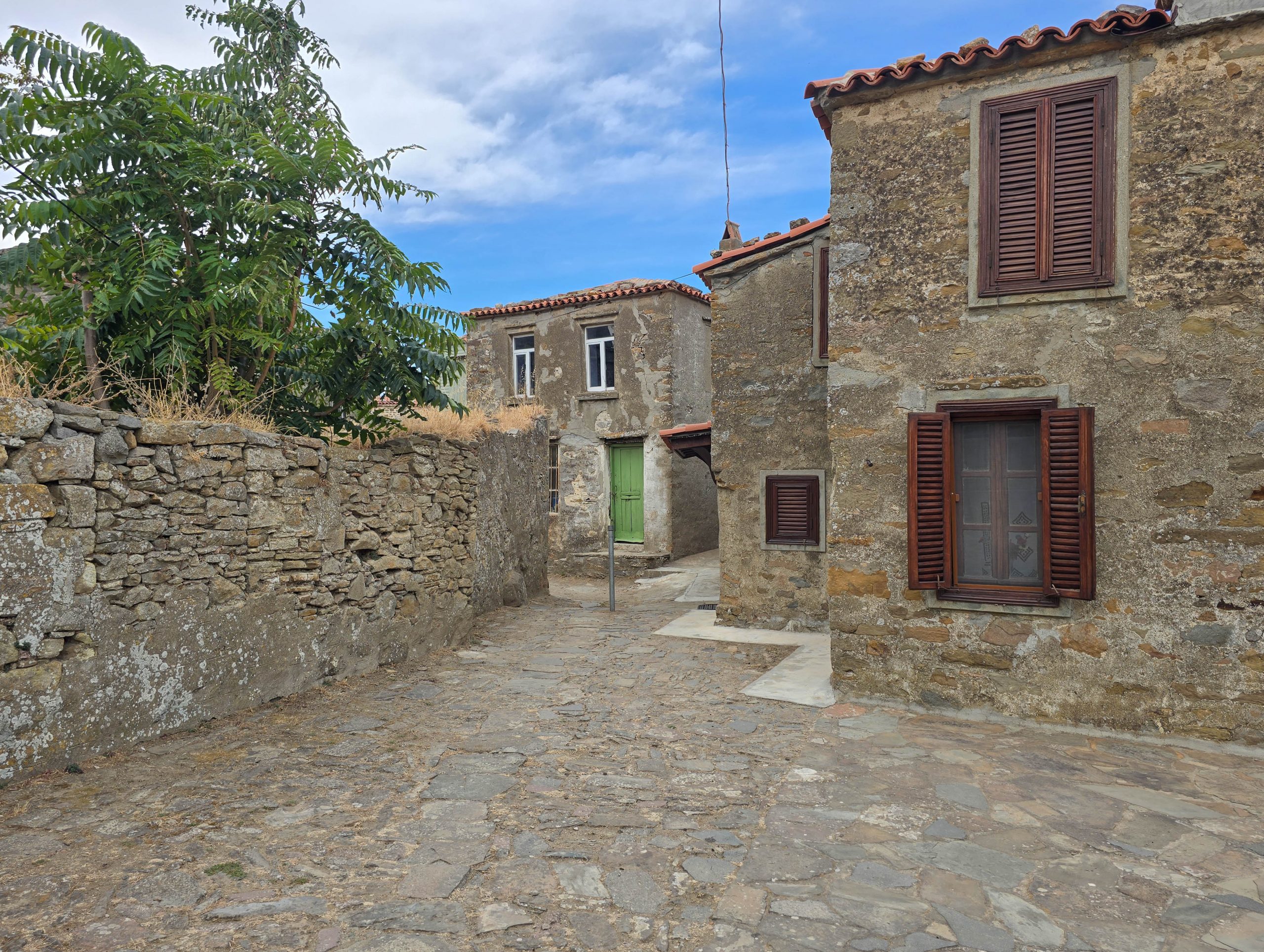
Back in the village, we wandered past picture-perfect stone houses, some with sachnisi overhangs, leaning gently into the narrow lanes. Geraniums spilt out of pots. Cats and sheep mooched in shaded corners, vying for prime position amongst stone walls. I was in my element wandering around these picturesque little streets with barely another soul around. There were so many pretty little corners and therefore so many photographs of sweet Glyki – here they are on a carousel.
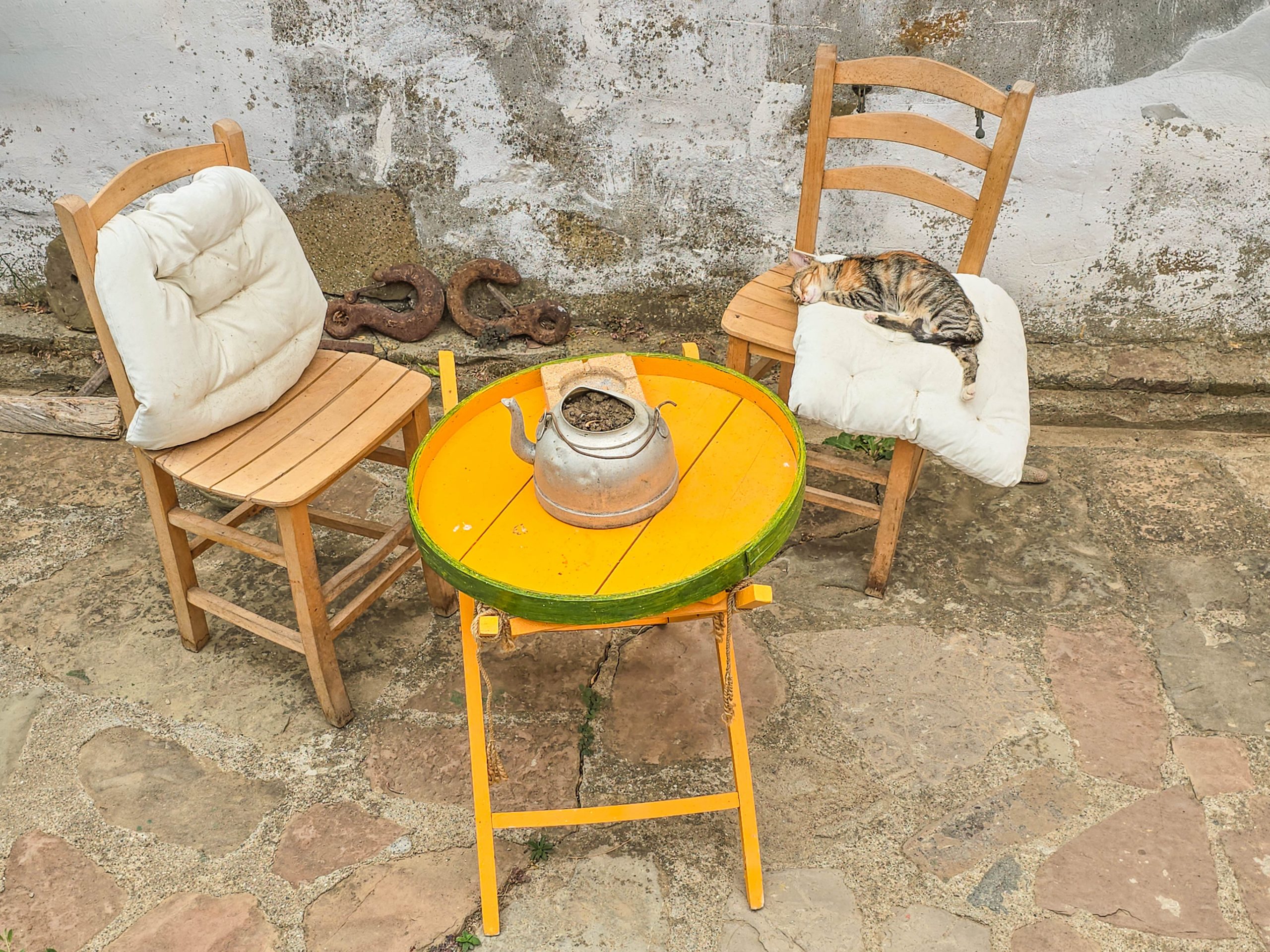
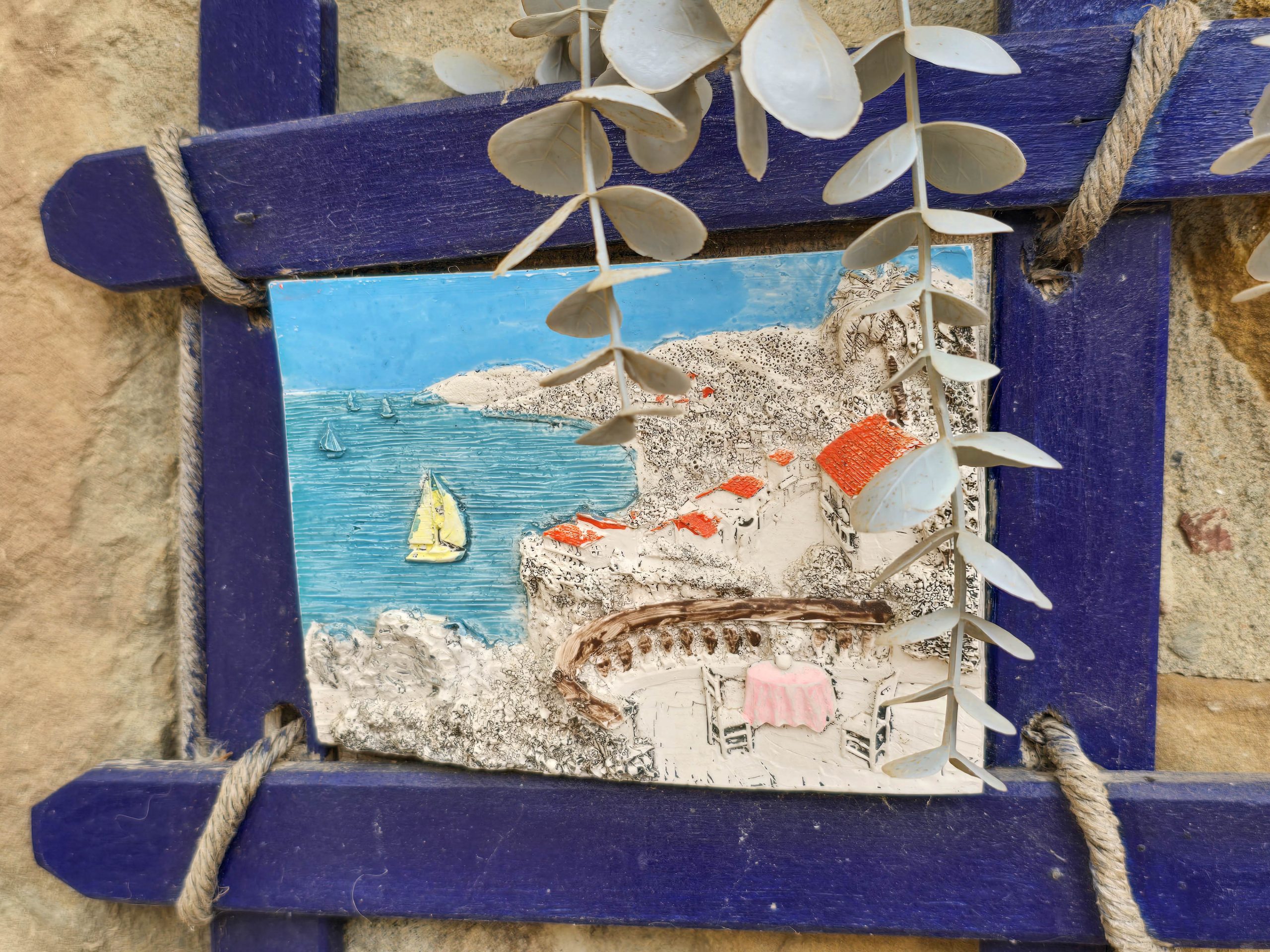
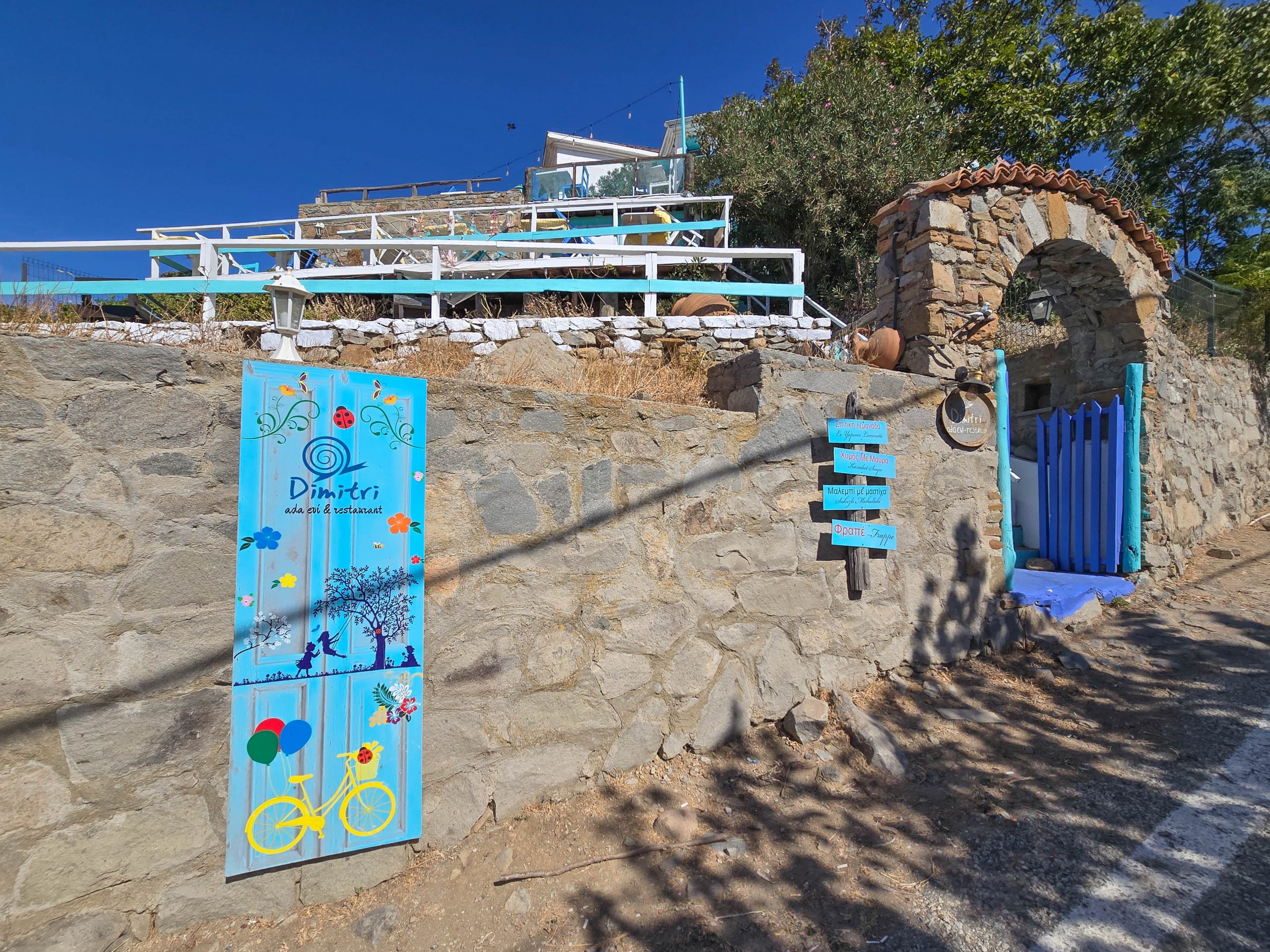
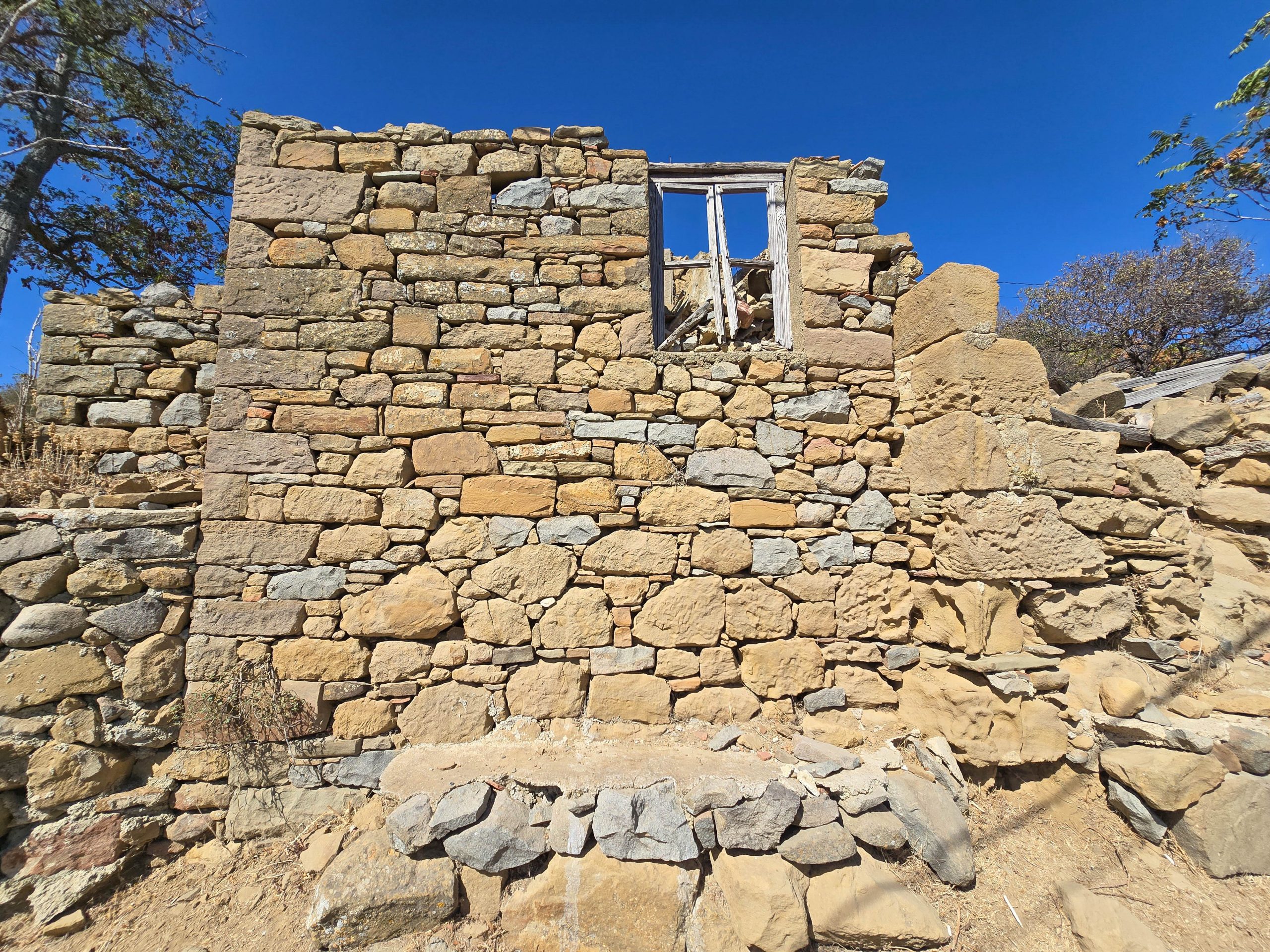
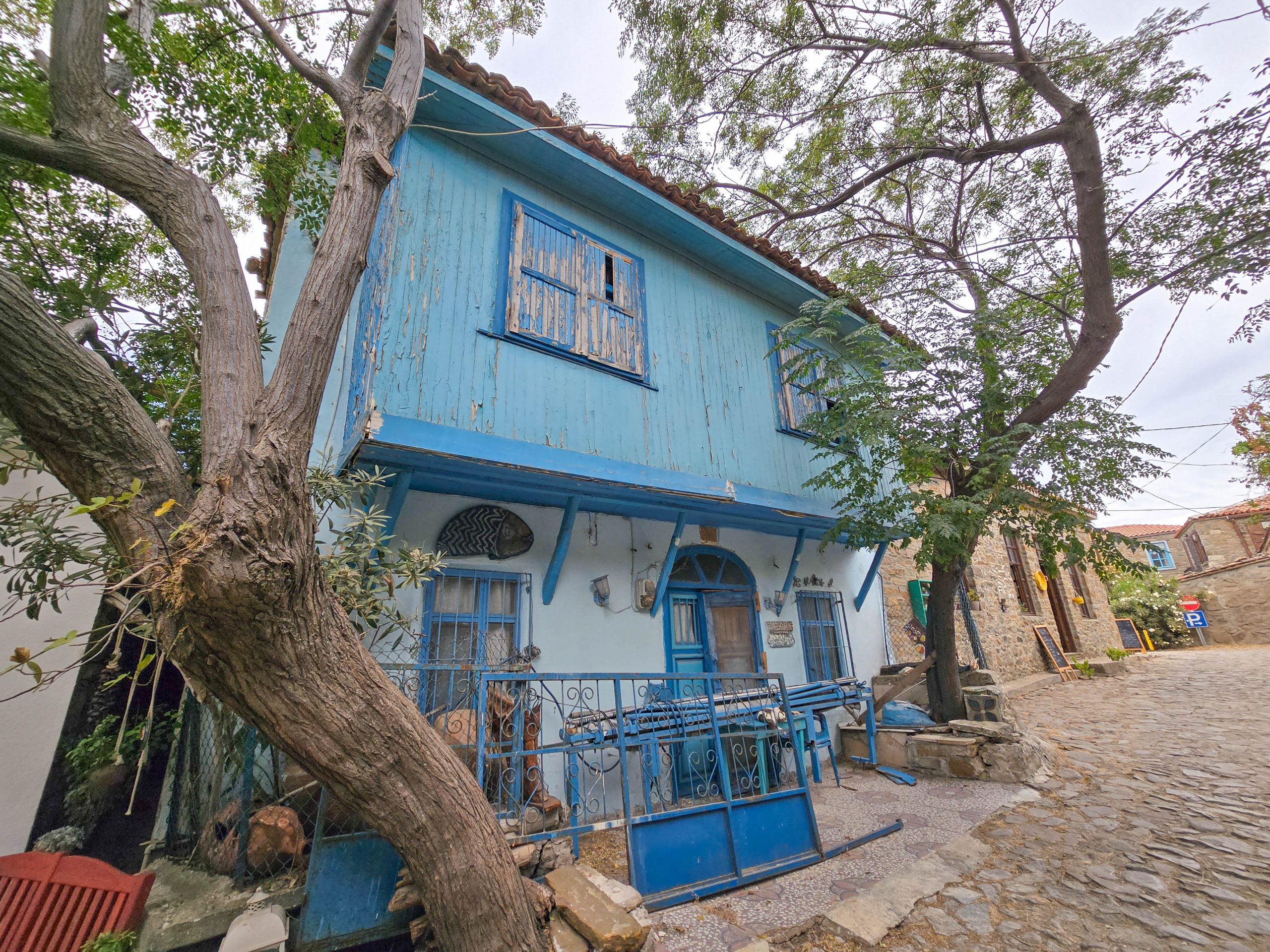
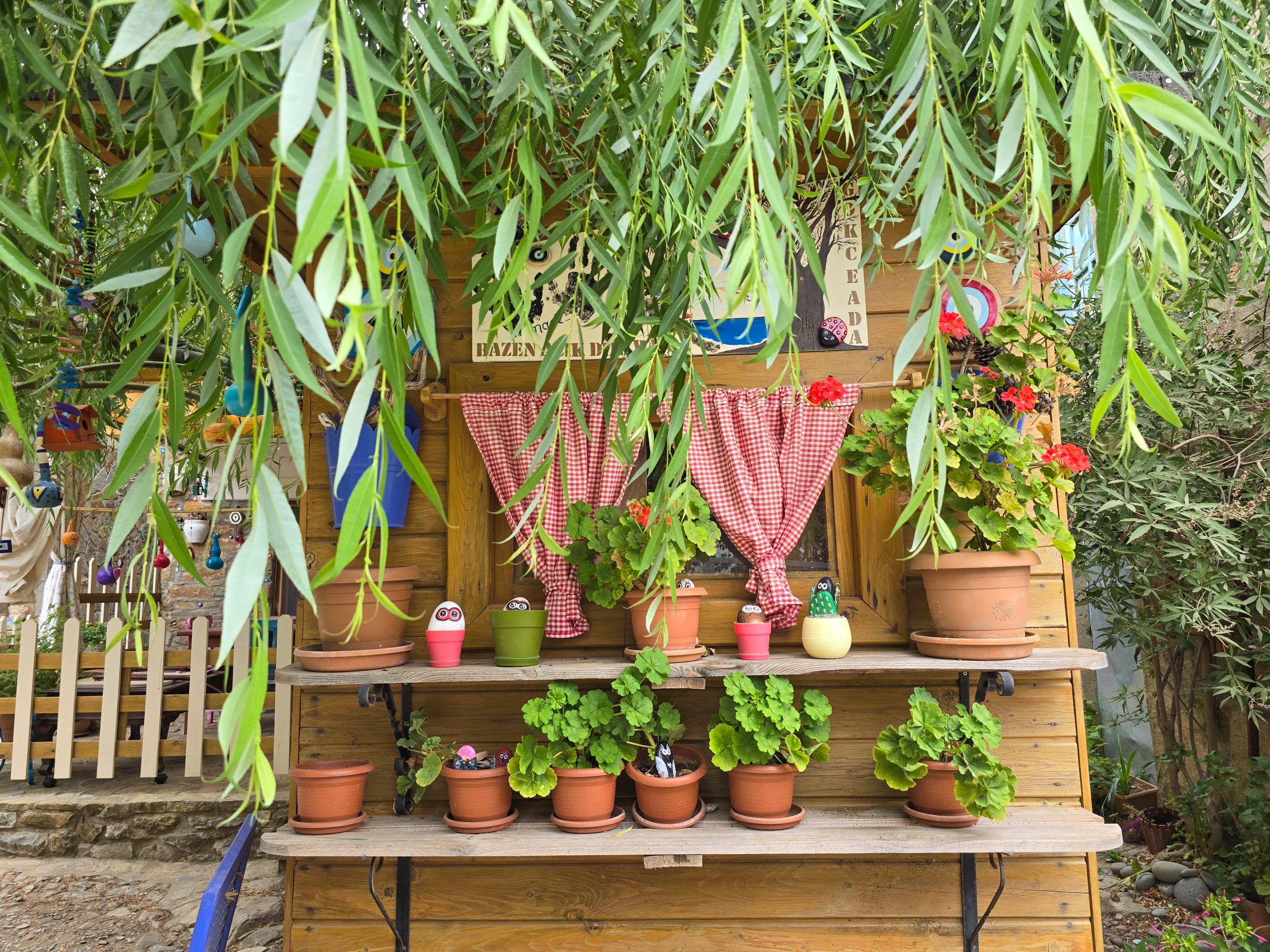
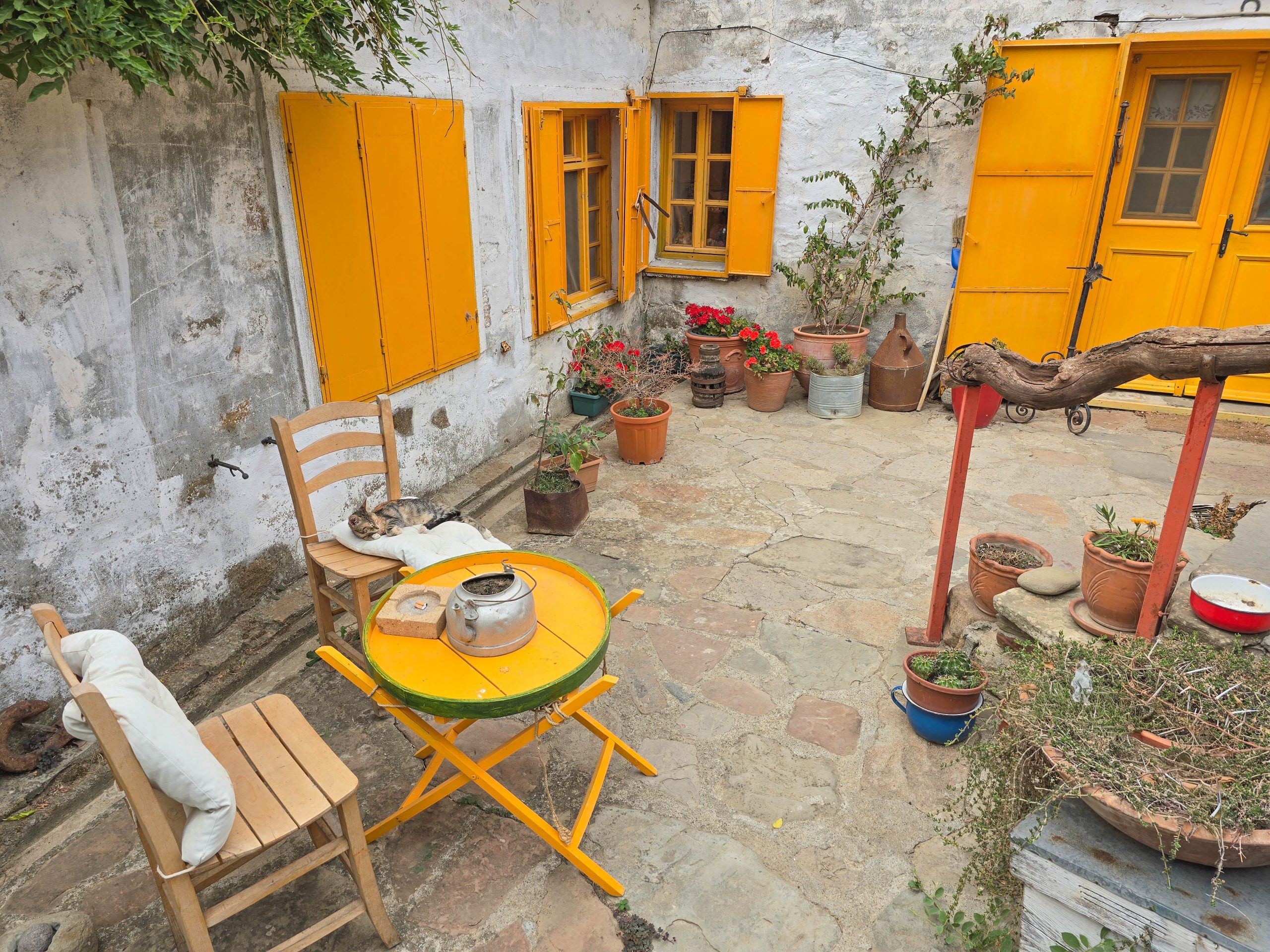
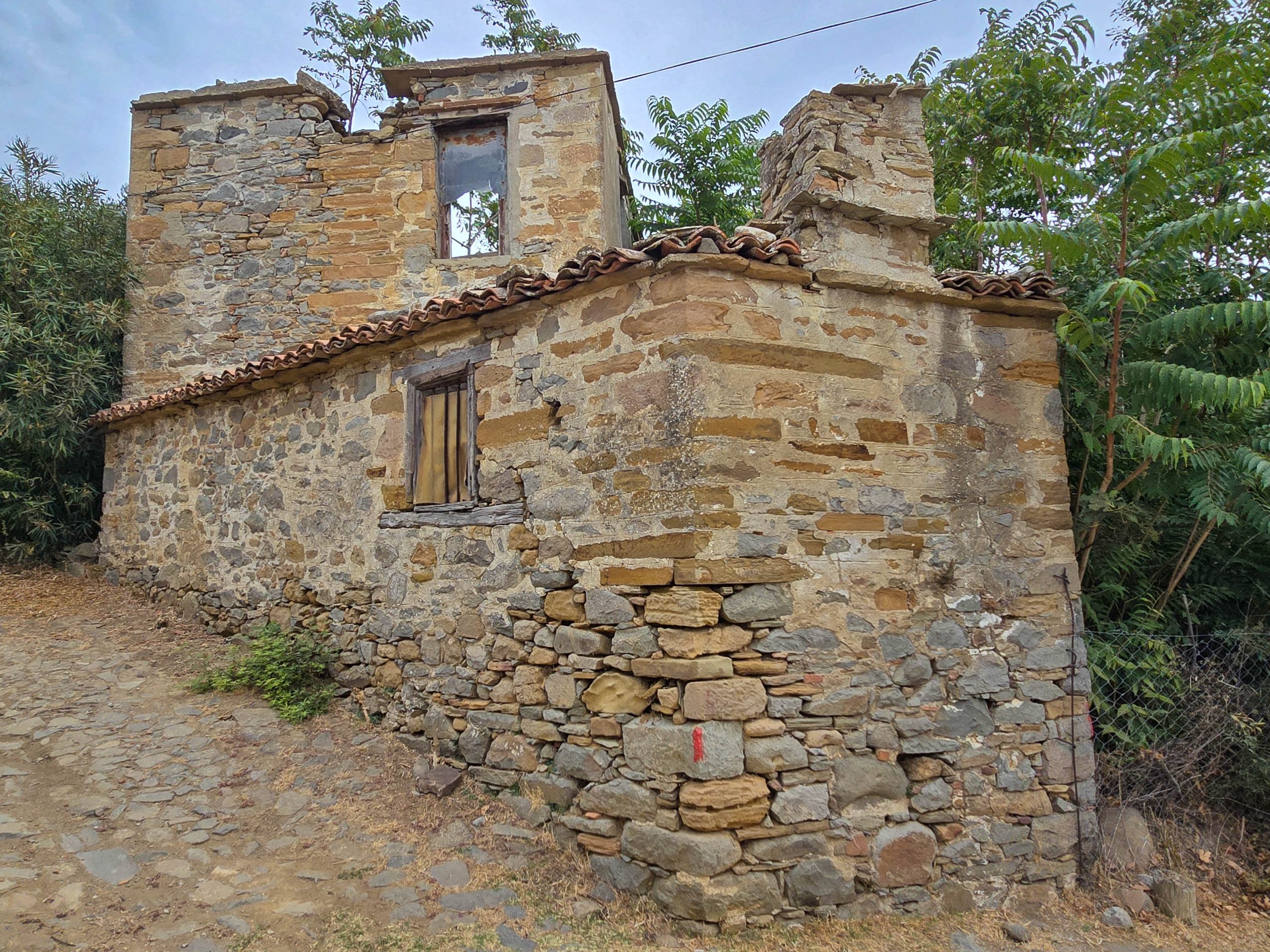
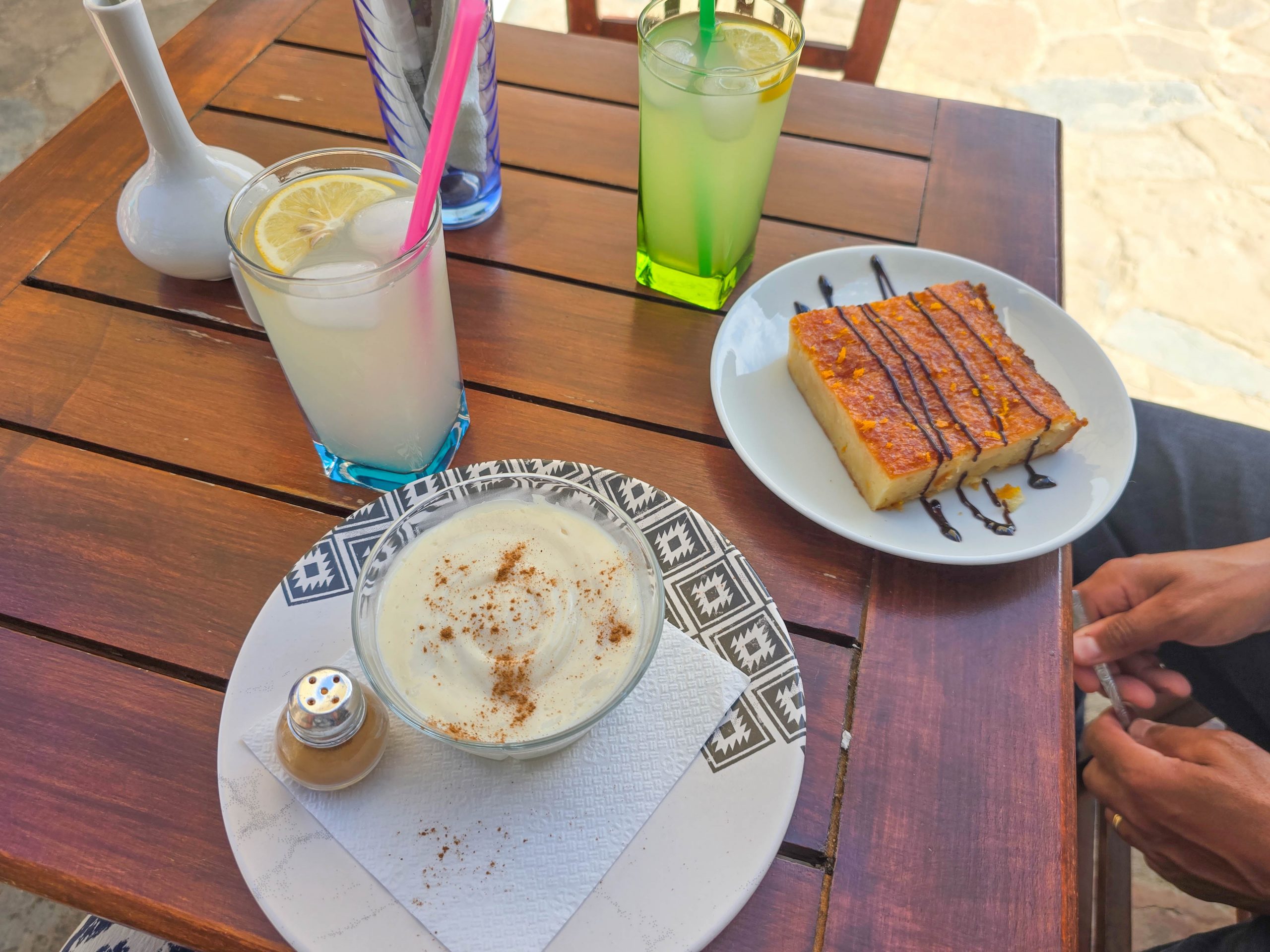
Returning to Sten Ada Café, we ordered lemon juice and something sweet. I had the traditional island mastic pudding; Peter had portokalopita. The owner explained they source their mastic from Chios — naturally — and she gladly shared the recipe, though whether I ever attempt it to make it remains to be seen.
Before we left, the owner asked where we were from. When Peter mentioned Egypt, his expression changed — warmer, somehow. He beckoned us to the wall of family photographs and pointed out his grandmother, who had left the island for Alexandria at around twenty years of age, working there for many years.
Peter, aware of the long Greek diaspora in Egypt, asked instinctively, ‘Ah, so she was Greek?’ The man smiled gently. ‘No. She was from here.’
There was something in the nuance of that reply — something we could sense but not fully grasp. There was something in the nuance of that reply — something we could sense but not fully grasp. It spoke of identities understood from within, not imposed from outside. The closest comparison I could make was Peter himself. As a Coptic Christian in Egypt, he identifies wholly as Egyptian, speaks Arabic — the language of the land for over a millennium — yet his faith forms another strand of who he is. National identity first, faith system second. The owner’s reply seemed to carry that same layered implication that I only half understood.
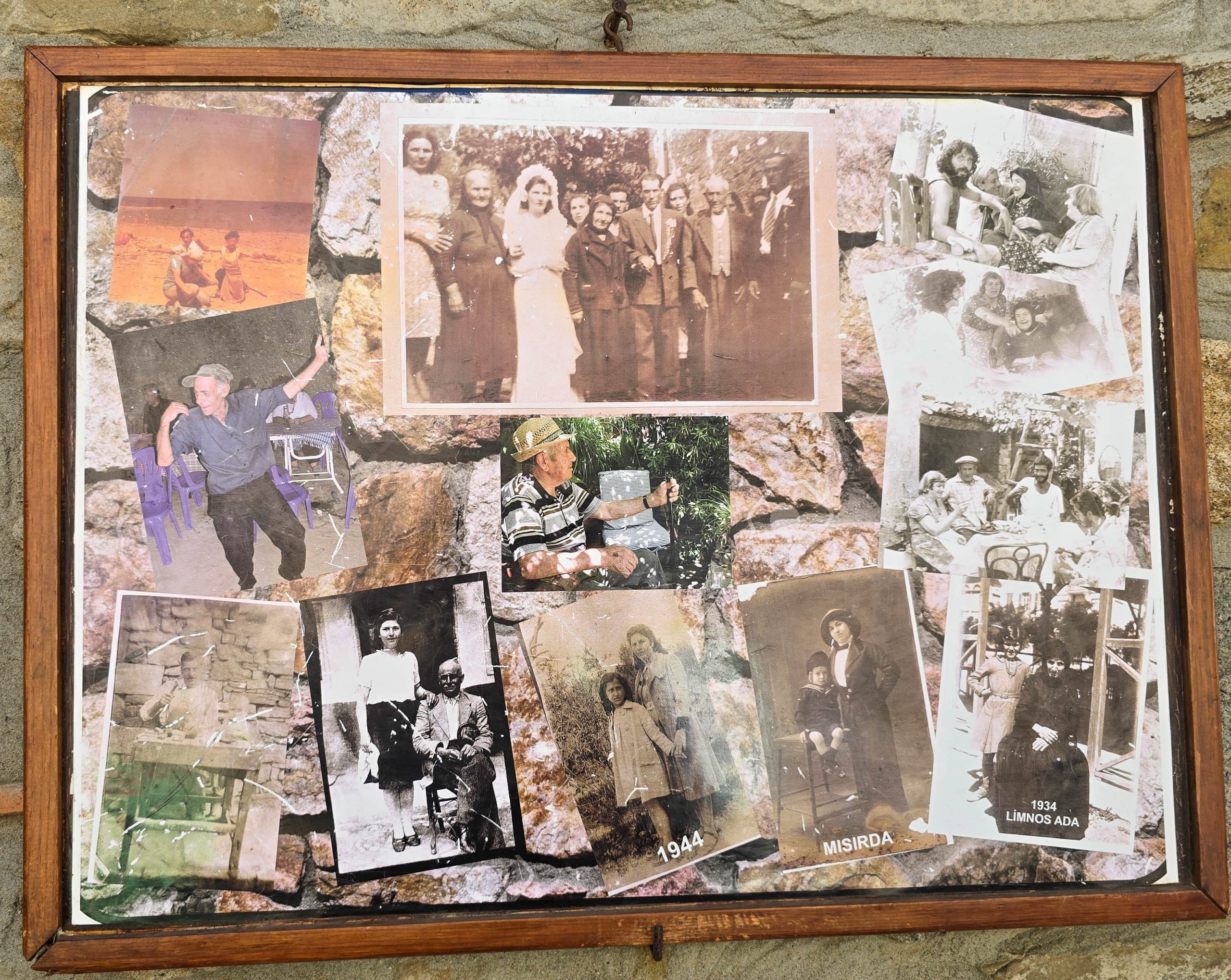
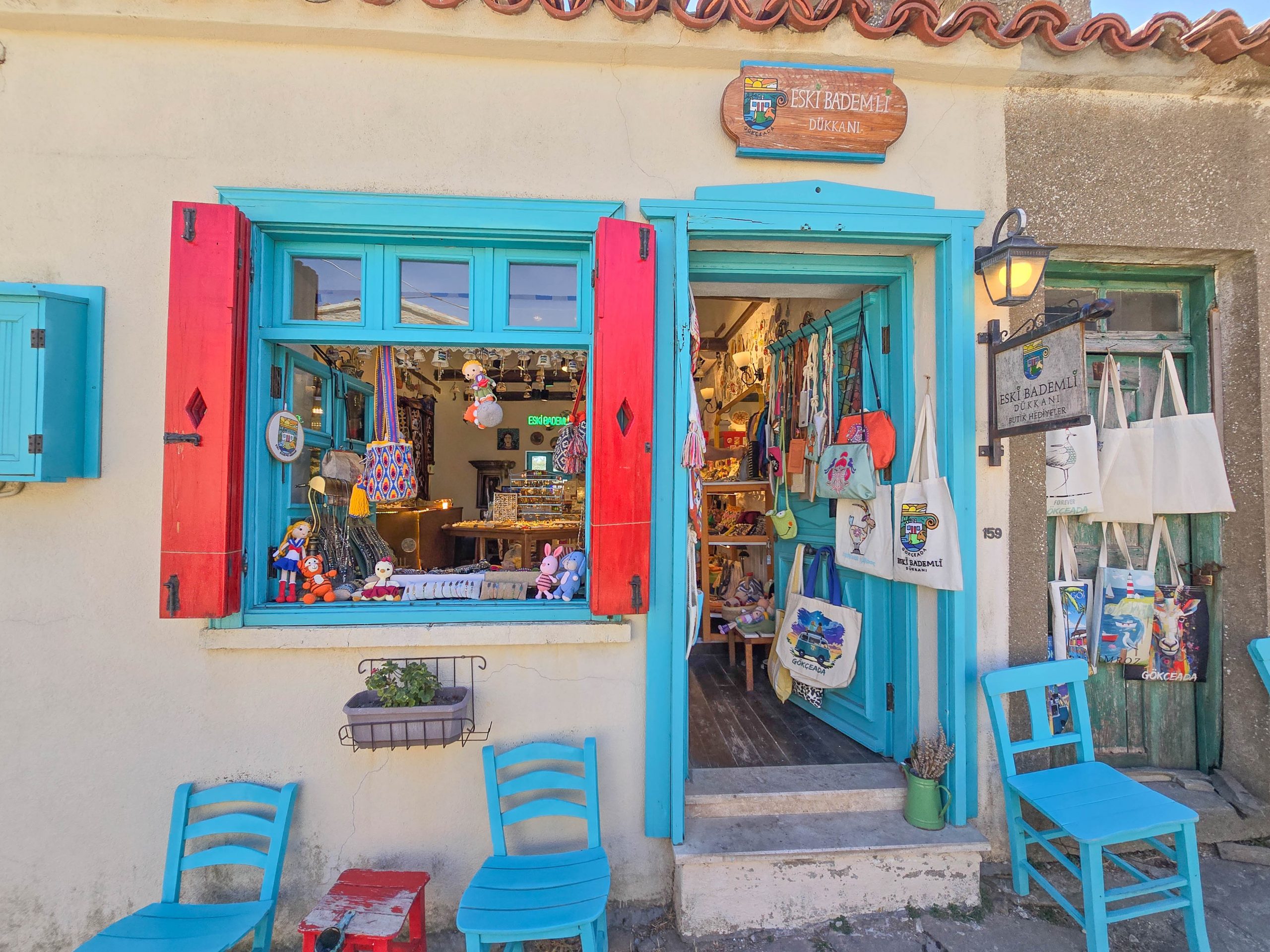
Before we left, he urged us to visit Eski Bademli Dükkanı, the little artisan shop, almost next door, whose owner spoke excellent English.
Inside, it felt as though someone had opened a treasure chest: woven bags, ceramics, jewellery, wind chimes, each object rooted in the island. The owner called it a “concept store,” a term usually lost on me, but everything had a story, a maker, and a place. I bought a couple of pieces, partly as souvenirs, partly because it felt right. I’m not a souvenir shopper usually, but occasionally I’ll buy a few small pieces to sit on the shelves above my desk, to remind me of the places that I felt were very special. Eski Bademli was that for sure.
Eventually, we managed to pull ourselves away from this little heaven on earth. Its charm was undeniable, and I wished we’d had more time. The road, snaking down in front of us, followed the balcony-like edge of the village, with views spilling down towards the harbour. A gentle breeze and warm sun made the descent feel invigorating. The sea shimmered beneath us, the verdant plain catching the light, and Samothrace still looking as mysterious as ever. Do you know those rare moments when peace, joy and contentment align in a moment you wish you could hold onto forever?
This was one of them.
Back at the hotel, we showered, changed and headed out for our final meal on this beguiling island. With packing still looming, we chose another sea-view table at the Fengari Hotel, a few steps from our room. Once again, the restaurant outdid itself. I found myself eyeing Peter’s choice with a hint of regret: Hamur Kapama Güveç, a slow-cooked meat stew baked under a sealed dough lid — rich, tender, and exactly the sort of dish I wish I’d ordered the moment I tried a forkful!
Tomorrow we have a bit of a trek to get to our next destination. After two and a half weeks in Turkey, we will soon be Hellas-bound!
Discover more from A Greek Oddity
Subscribe to get the latest posts sent to your email.
Fifteen years of writing about Greece. Thirty plus years of travelling it. Now condensed into a travel planning toolkit.
Take a look


What a lovely write up Stephanie – I really enjoyed reading this. Such an interesting place and lots of interesting history and anecdotes.
Aww thank you Liz. Yes it was a lovely village and TBH – that whole trip was really something quite unique. ❤️