
6 Days in Skala Eresou: Walking, Beaches and Village Life
Staying somewhere for more than a few days changes the way you see it. Familiar routes replace first impressions, small details begin to surface, and places reveal themselves not through landmarks but through repetition. This post follows six unhurried days in Skala Eresou on Lesvos — shaped by walking, beach time, village rhythms, and the gradual discovery of a place where modern tourism sits lightly over deep historical layers.
After an overnight stay in my temporary abode, I began by checking out of Katerina’s. When I say “checking out”, I quite literally picked up my bag and left. I’d already paid the owner the day before and sent a message to say the room was empty — simple!
Elefteria was waiting with a welcoming smile. She had told me that the room wouldn’t be ready until early afternoon, but happily took my bag into storage. I’d booked five nights, giving me six in total, with the comforting option to extend. Now my stay in Skala Eresou truly began.
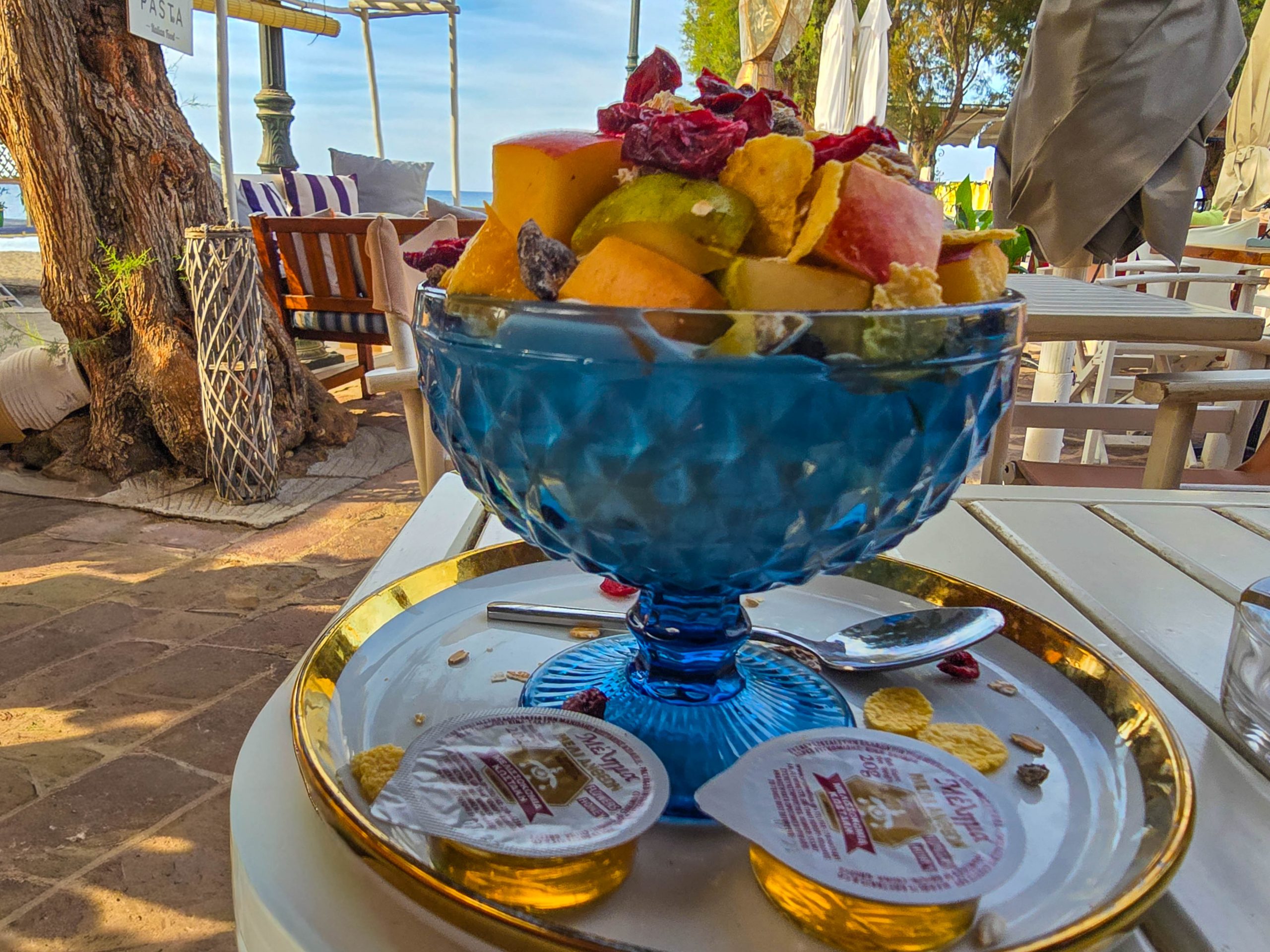
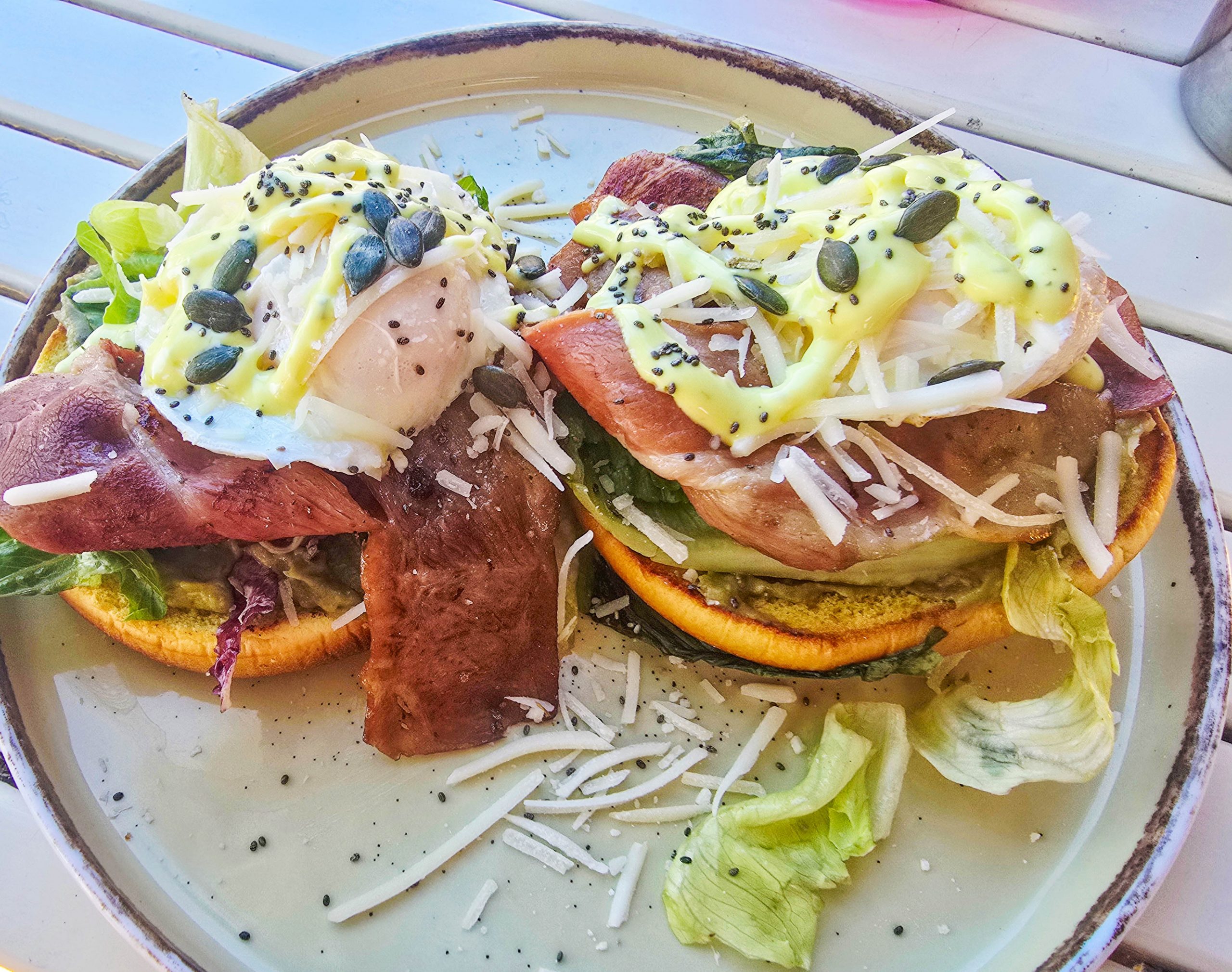
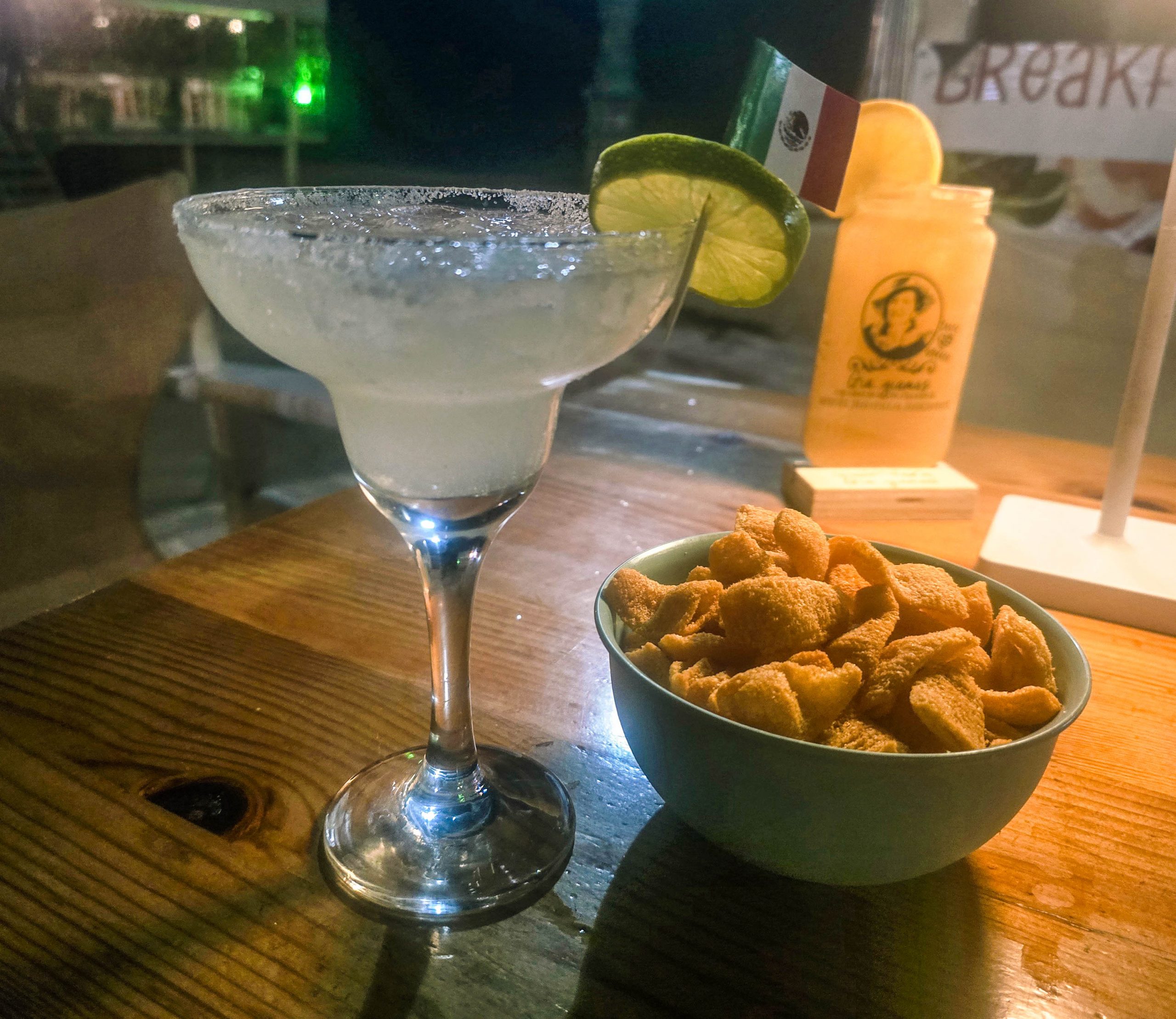
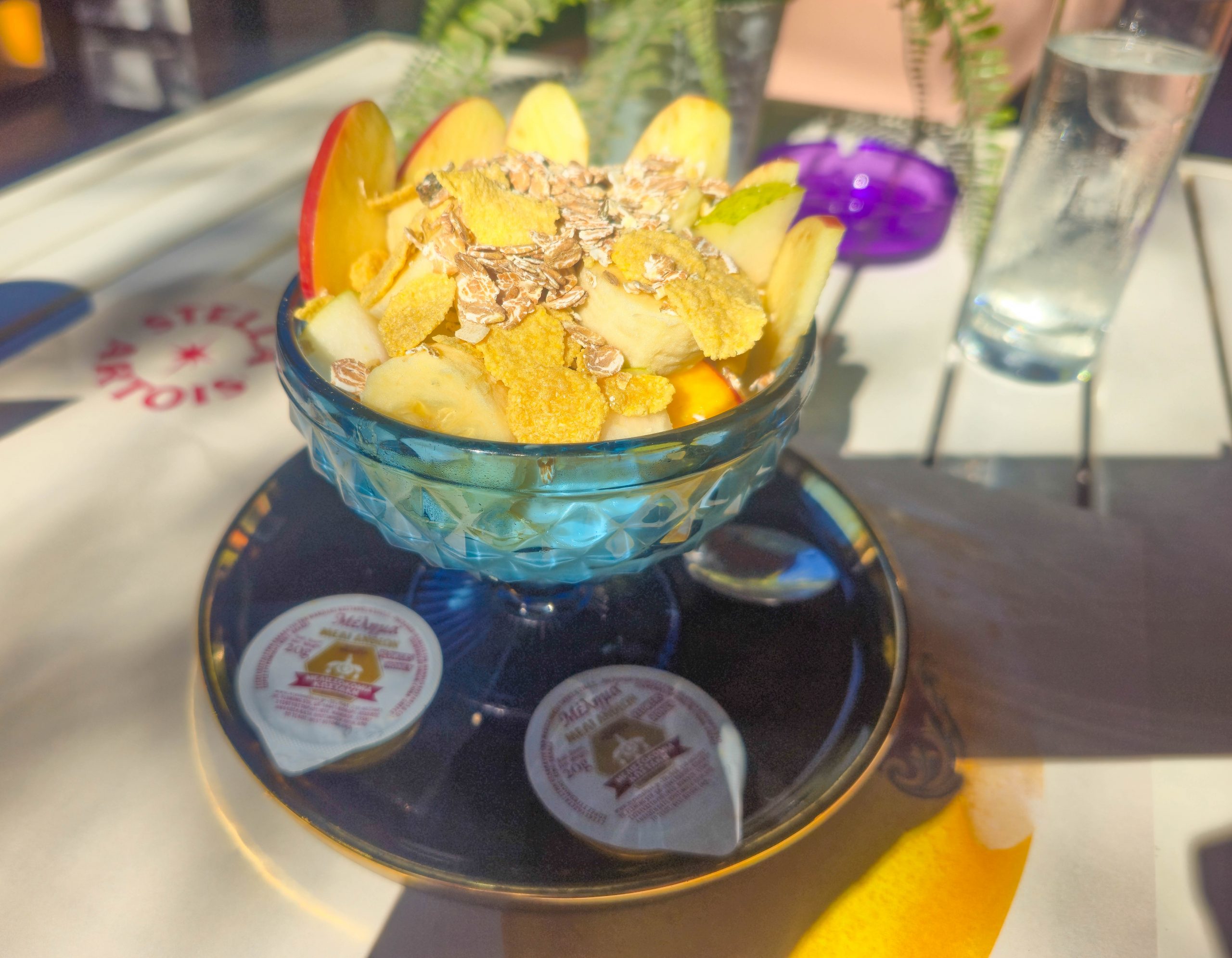
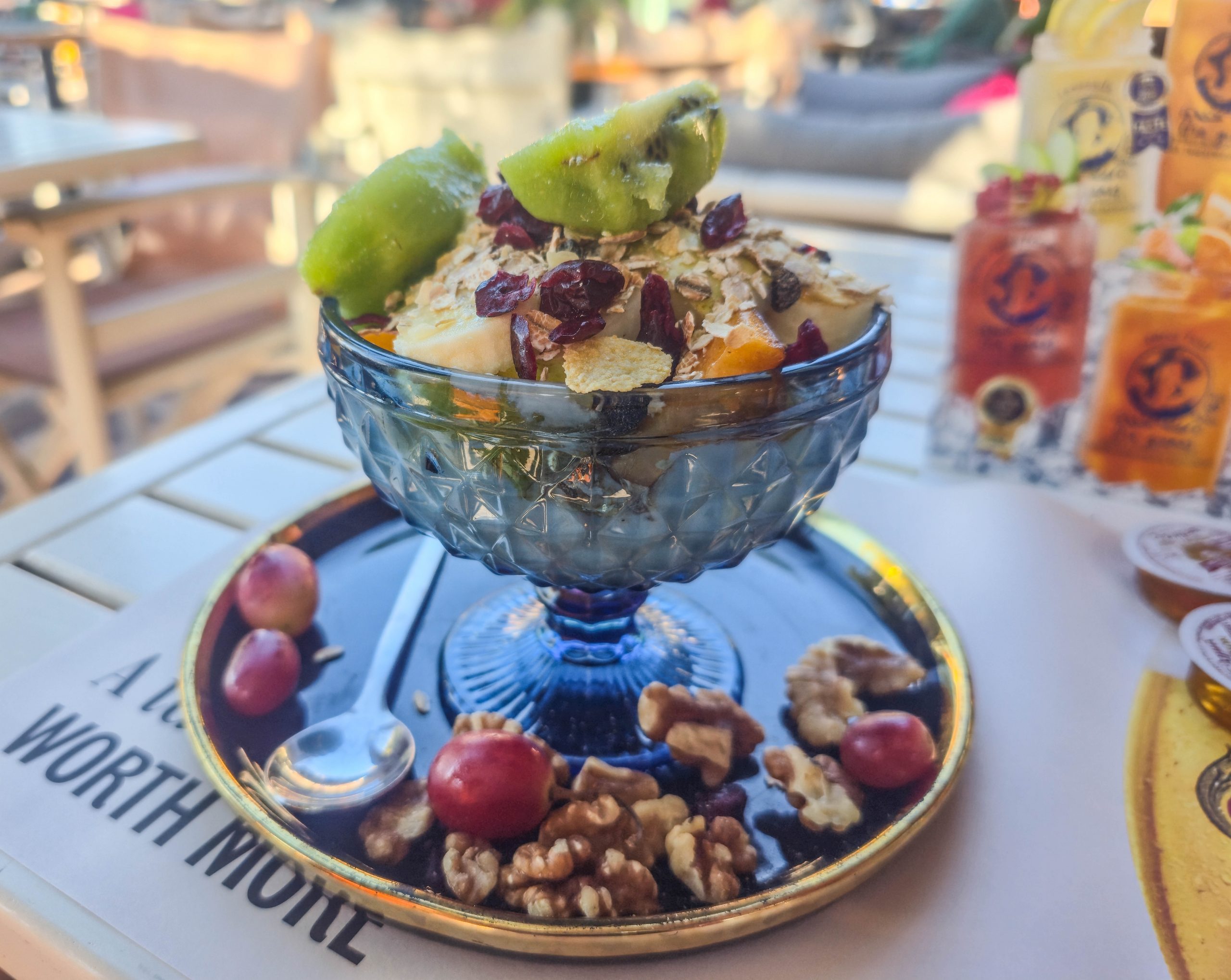
During my stay, I began to develop several rituals, the most important being breakfast. In the centre of the village, on the edge of the beach, is Yalos All Day, which quickly revealed itself as one of the village’s social hubs. Locals, visitors, early risers and late sleepers drifted in and out. Breakfast was exceptional — a beautifully presented bowl of Greek yoghurt and fruit, which became more elaborate on each subsequent visit. Sometimes I’d mix it up and replace the yoghurt with Eggs Benedict. On a couple of occasions, I also came here for an indulgent dessert and an early evening Margarita – classic, of course.
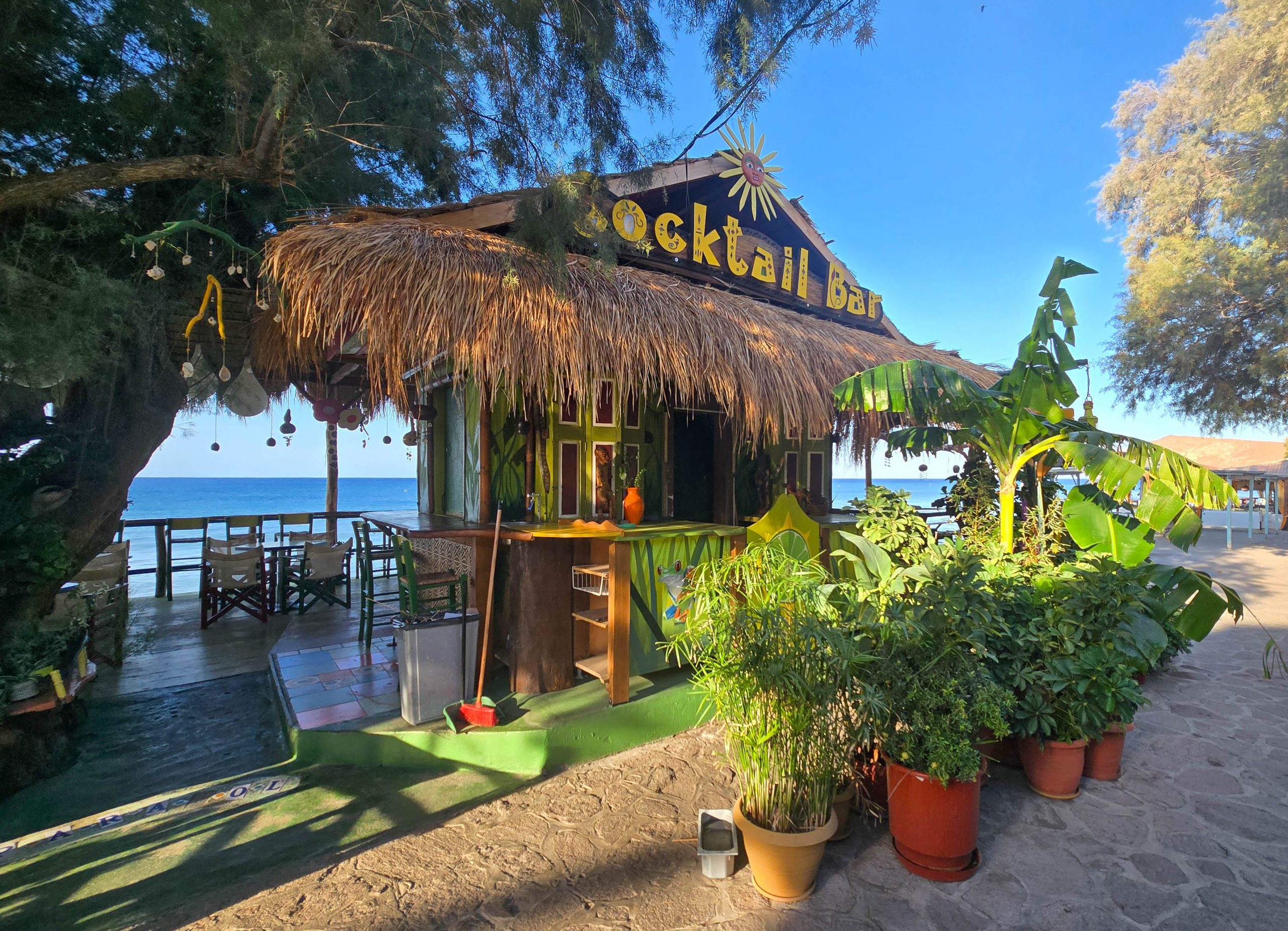
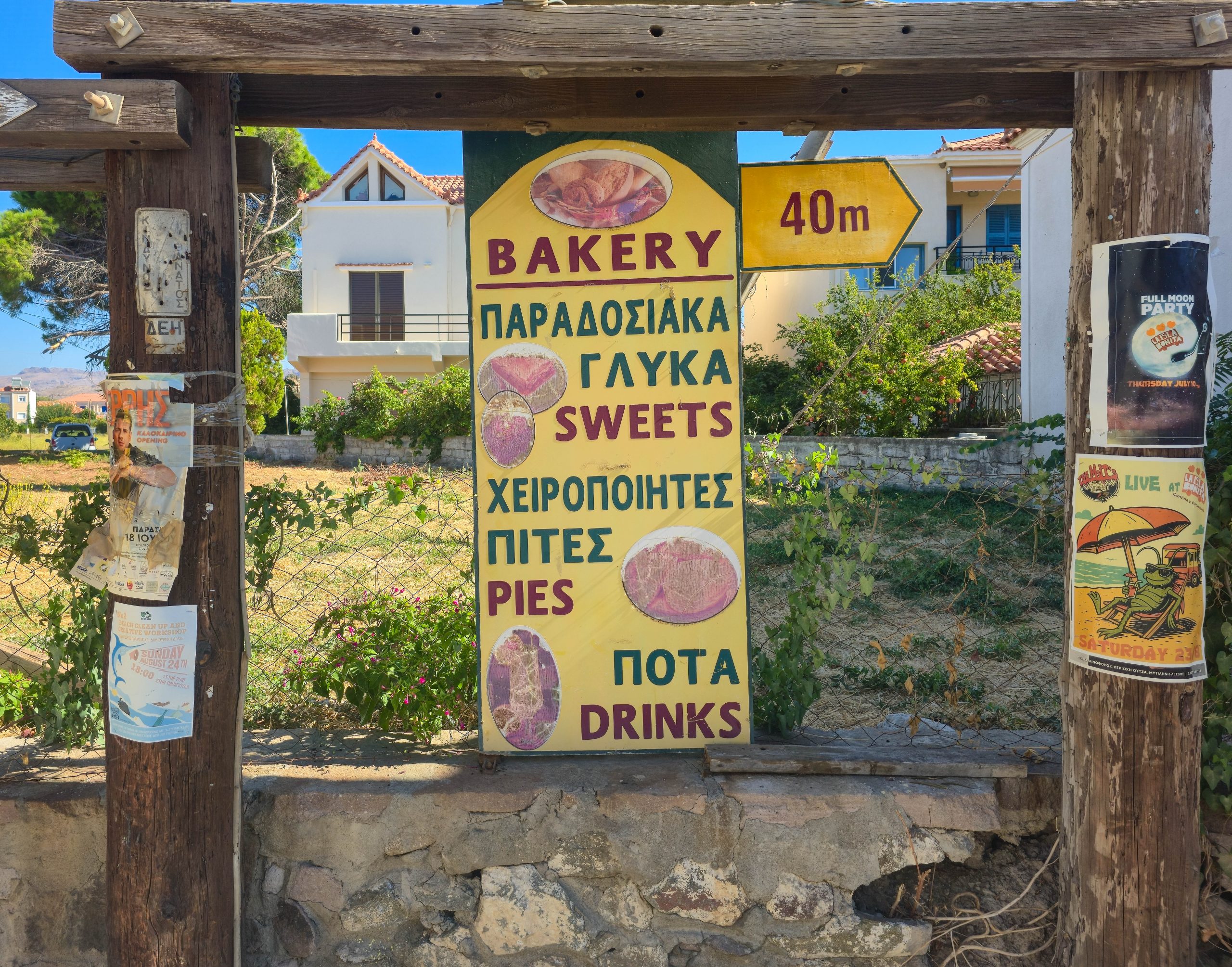
Skala Eresou is compact and easily walkable. Its streets follow a loose grid, clearly planned with visitors in mind rather than a large permanent population. Everything needed for an extended stay sits within easy reach: bakeries, mini-markets, fruit and vegetable stalls, cafés, tavernas and bars. I got the sense that this was a place developed for tourism and was mainly seasonal. Before Skala Eresou developed as a tourist destination, it served as the port for the inland town of Eresos. It consisted of a working shoreline of fishing boats and storage huts rather than sunbeds and tavernas. Tourism arrived slowly from the 1960s onwards, gathering momentum in the 1980s and 90s as independent travellers — particularly women drawn by the legacy of Sappho — began to return year after year. What followed was a gradual transformation from functional harbour to a consciously welcoming seaside settlement.
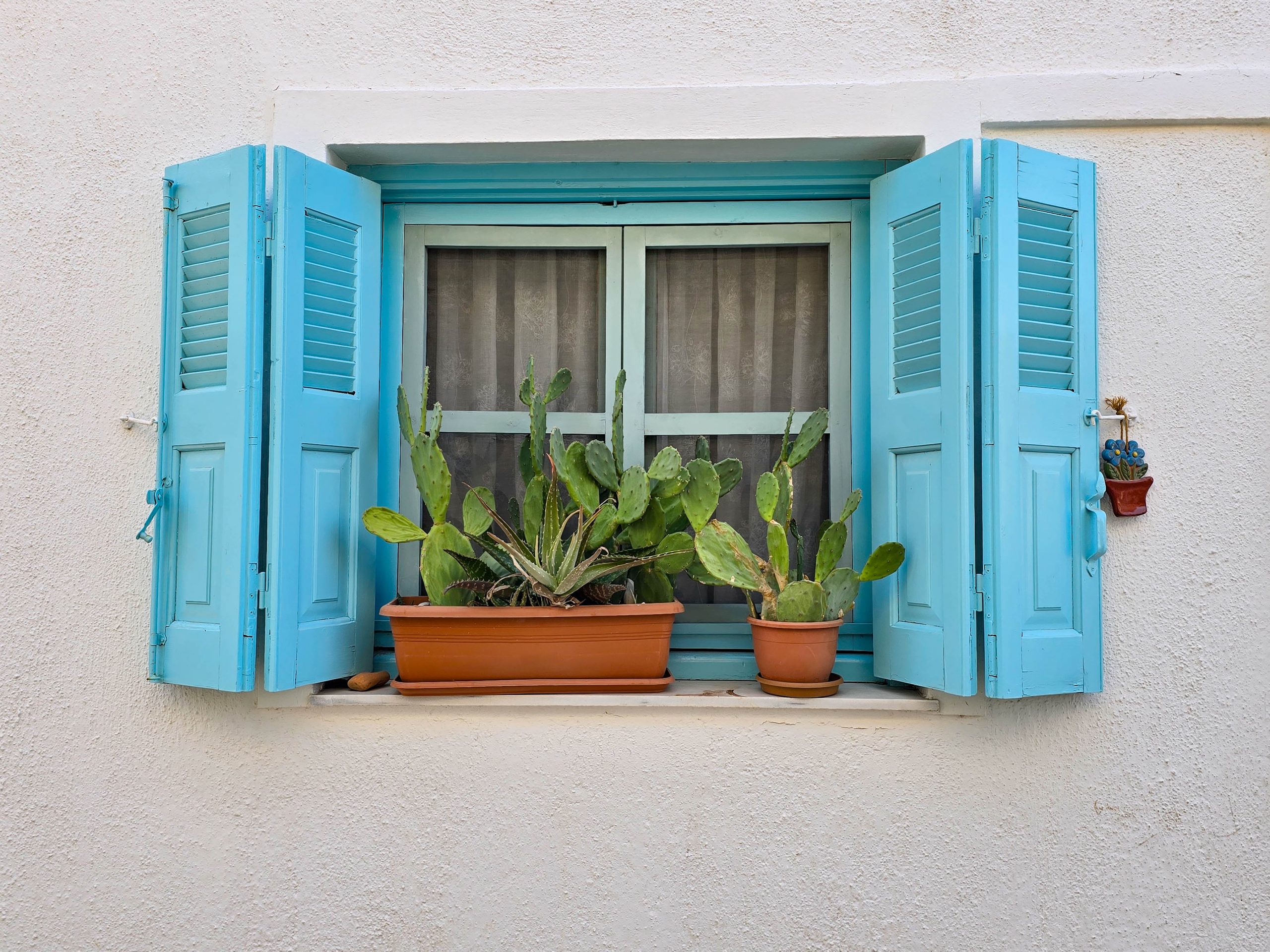
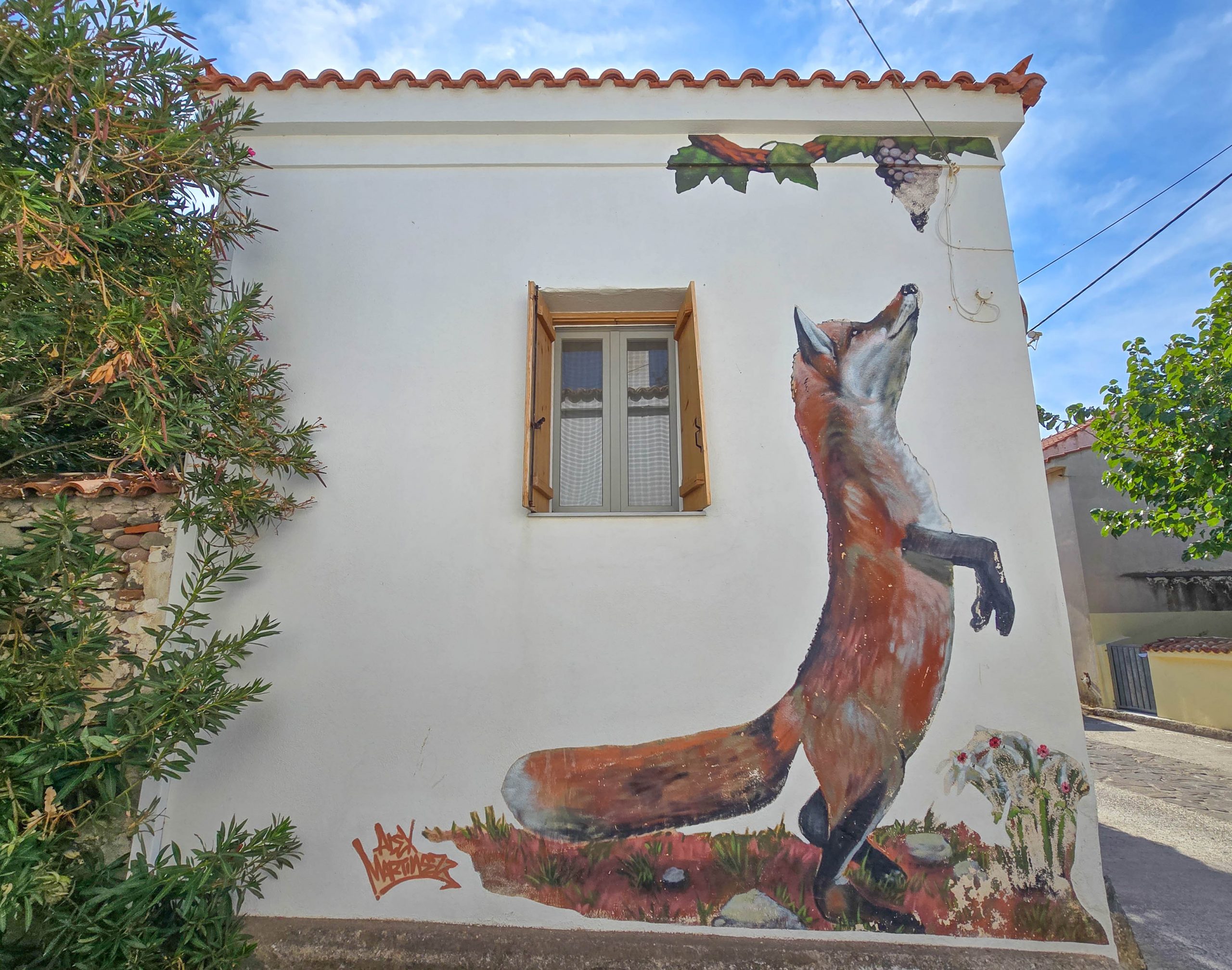
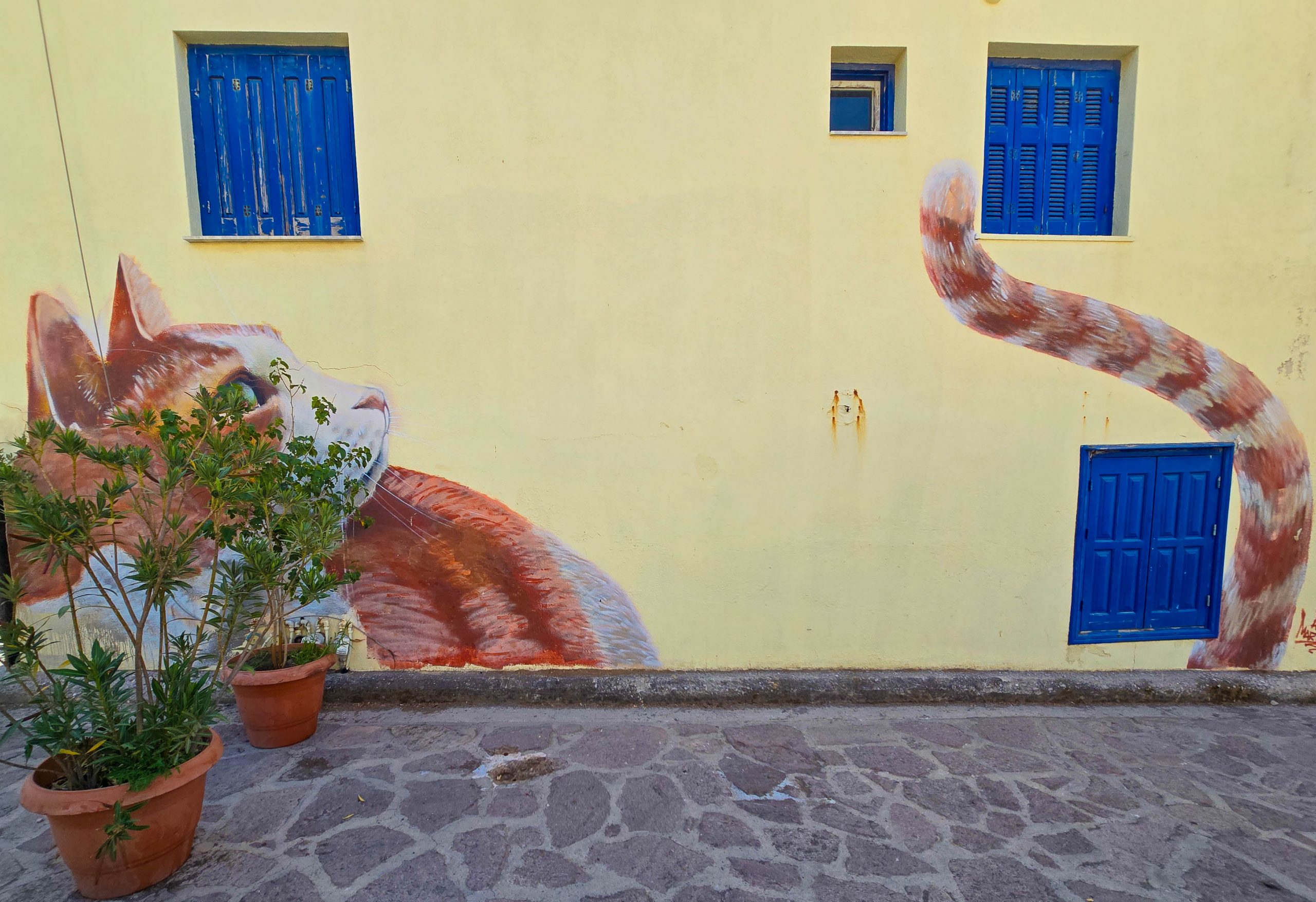
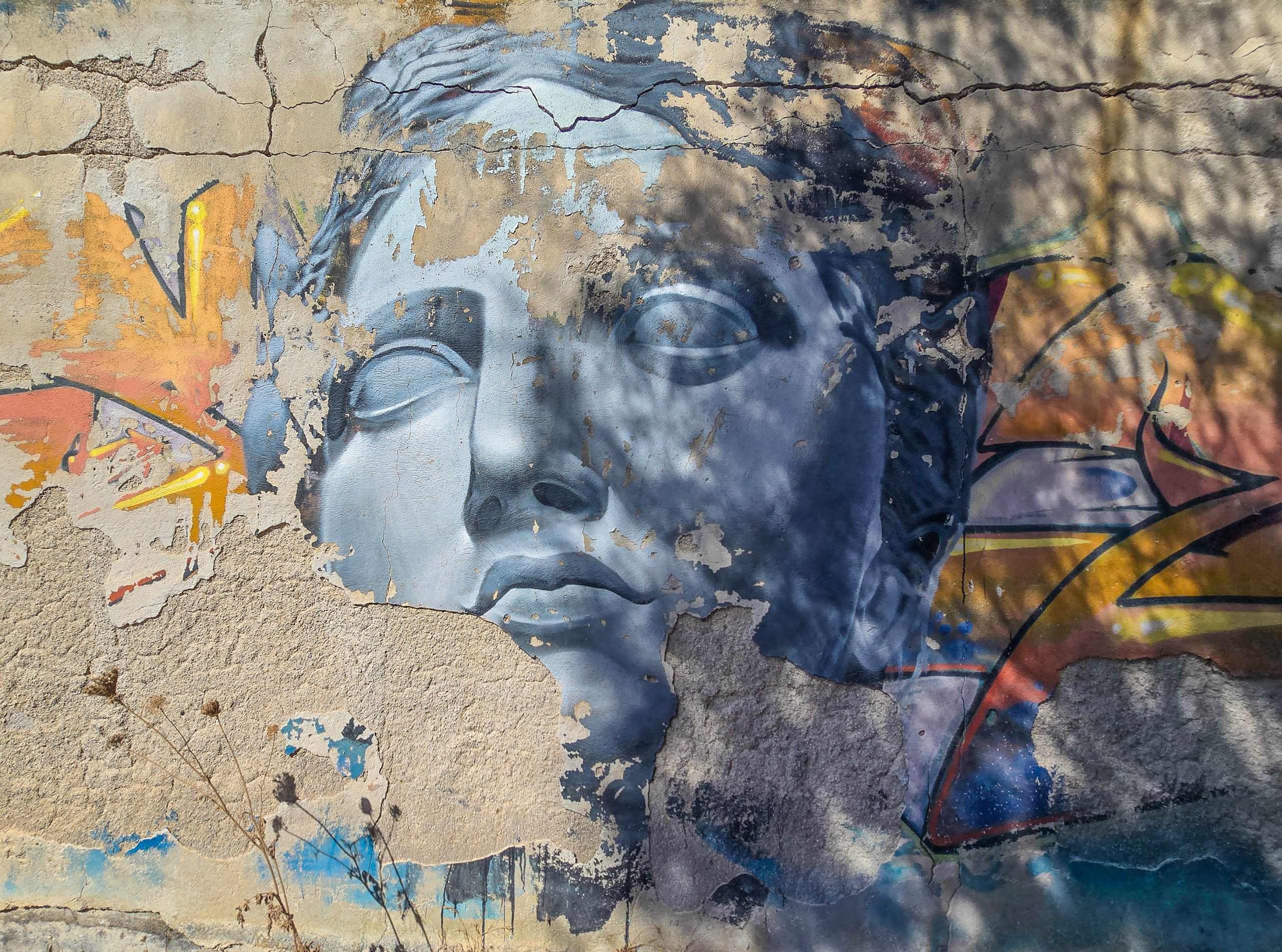
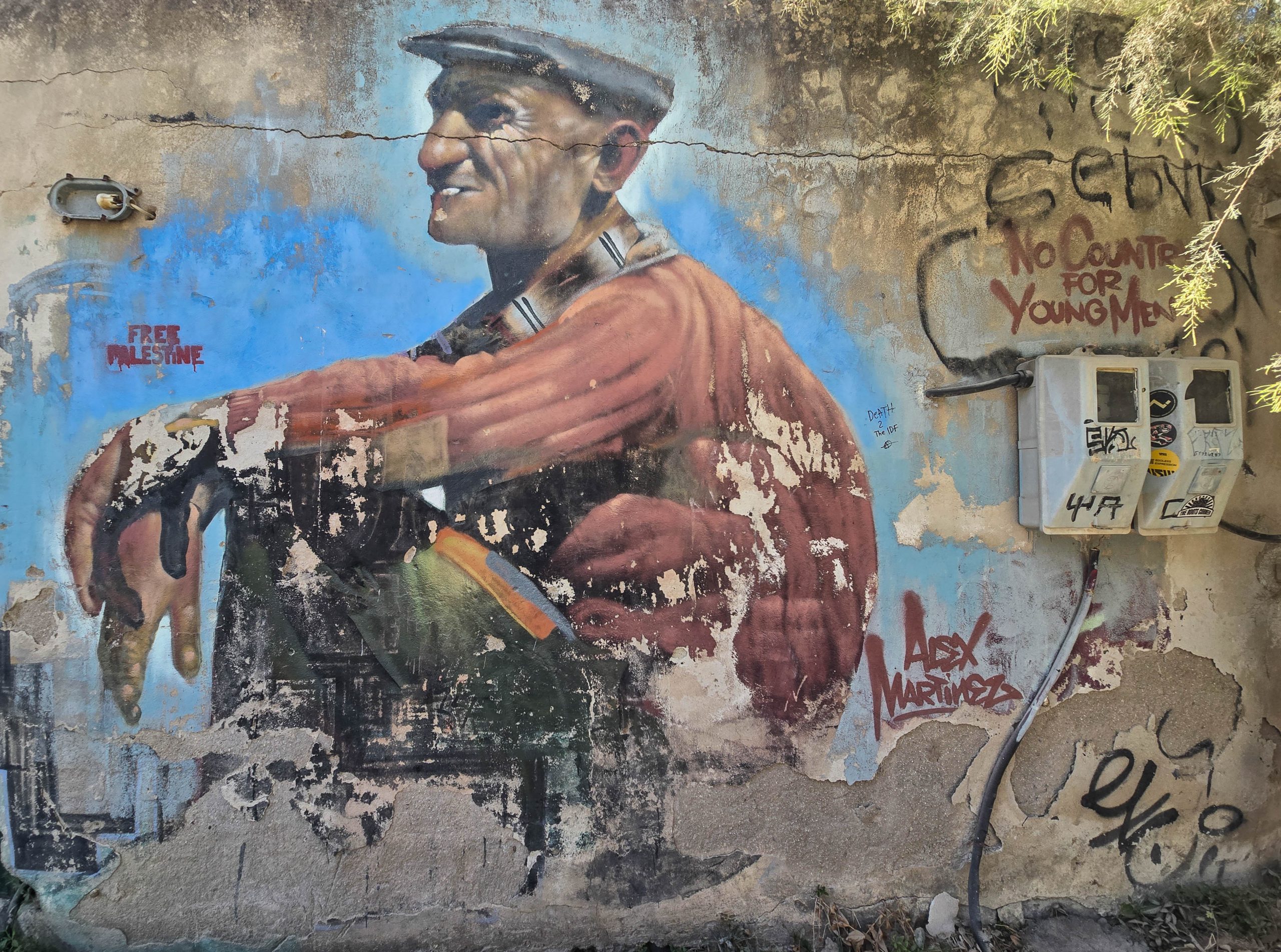
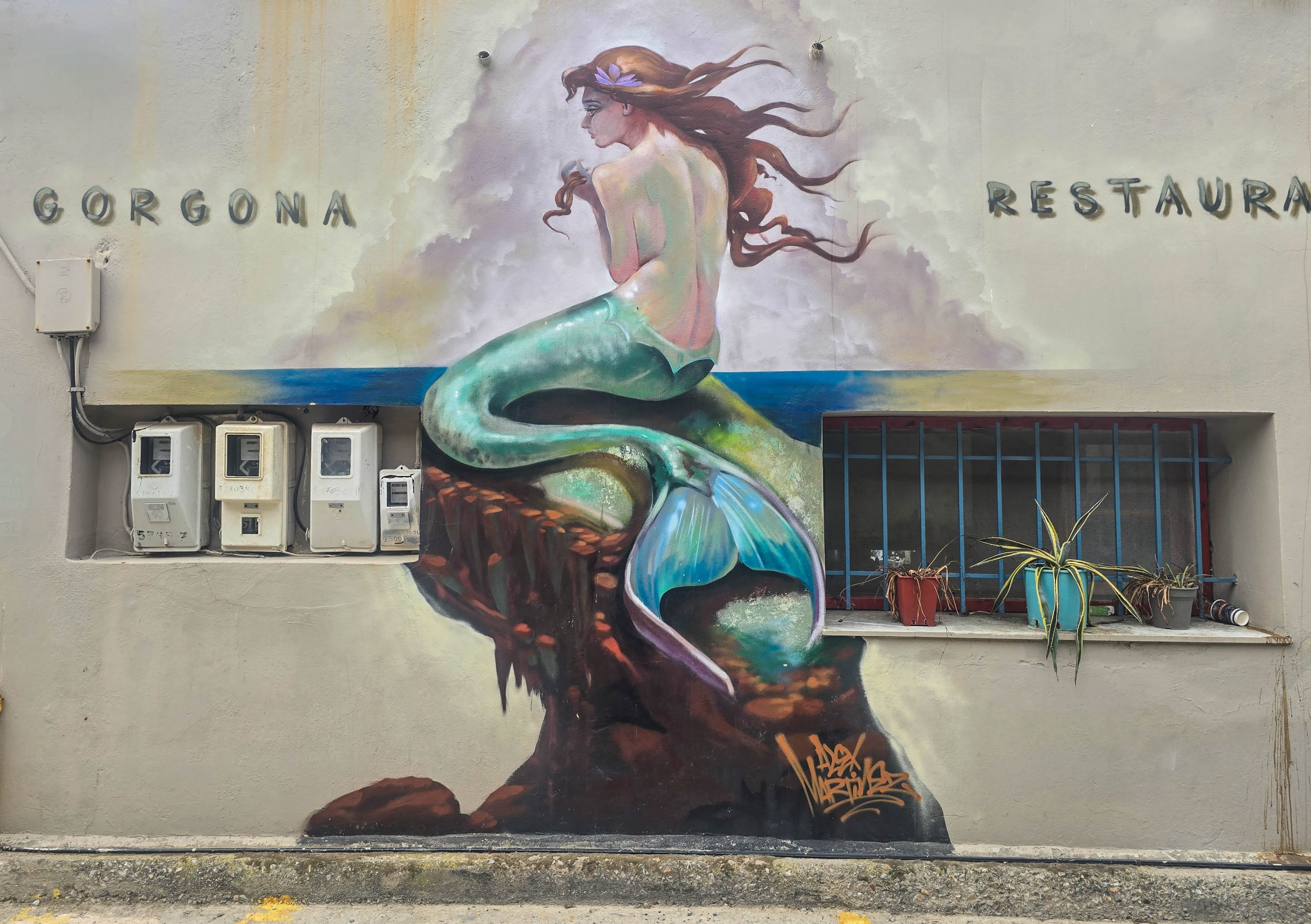
Despite its contemporary, concrete and cubist architecture, Skala Eresou isn’t completely without charm. Brightly coloured doors and shutters soften the geometry, while murals and street art — some of it said to be by an artist connected to Banksy, a claim I’ve yet to verify — add an expressive, slightly rebellious edge. Posters advertising talks, performances and workshops from the International Eressos Women’s Festival are pinned everywhere: on noticeboards, shop windows, café walls. In the centre of the village, the festival’s events office anchors this seasonal influx of creativity. Even as the festival winds down, its presence lingers — an atmosphere rather than an event.

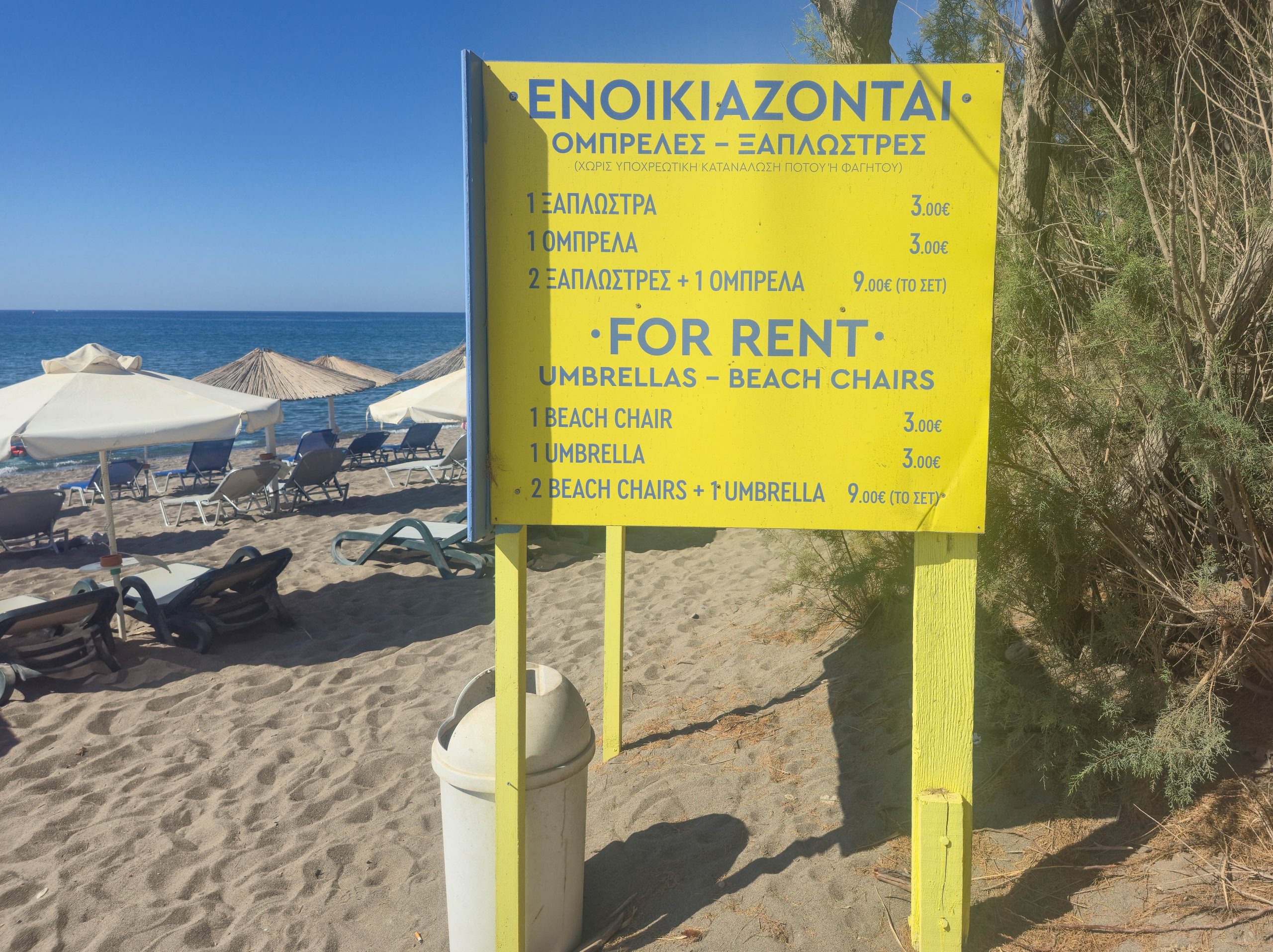
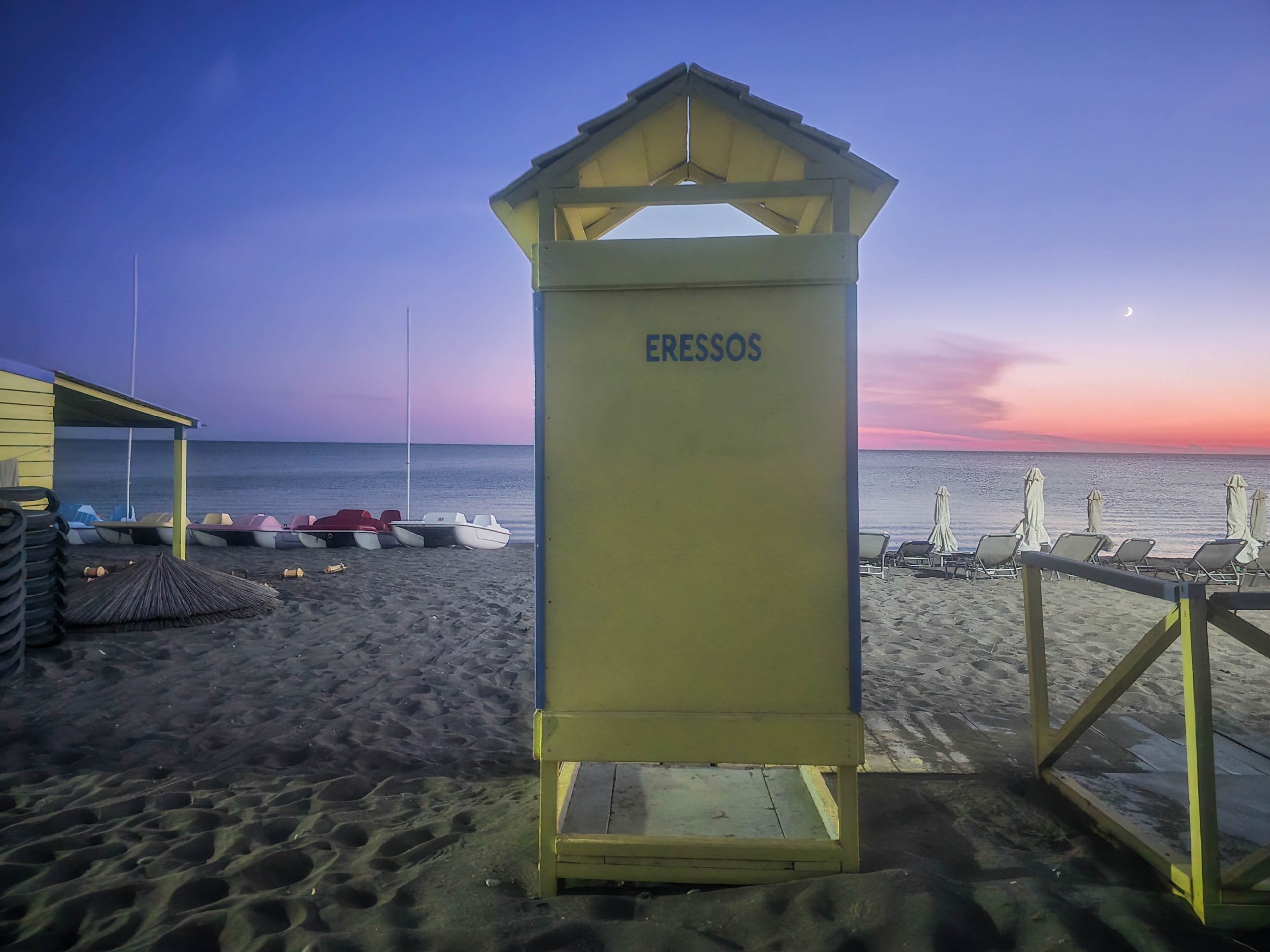
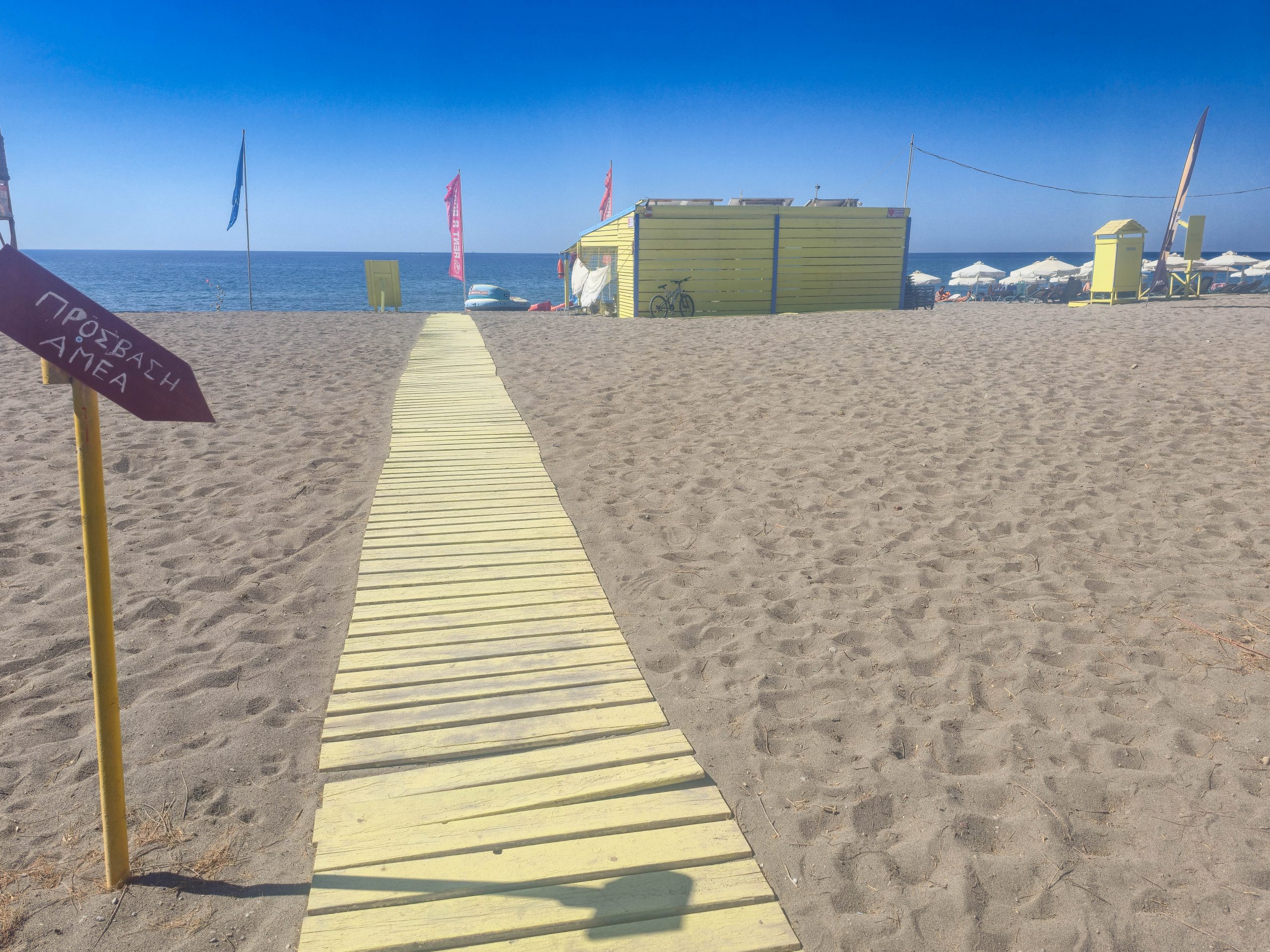
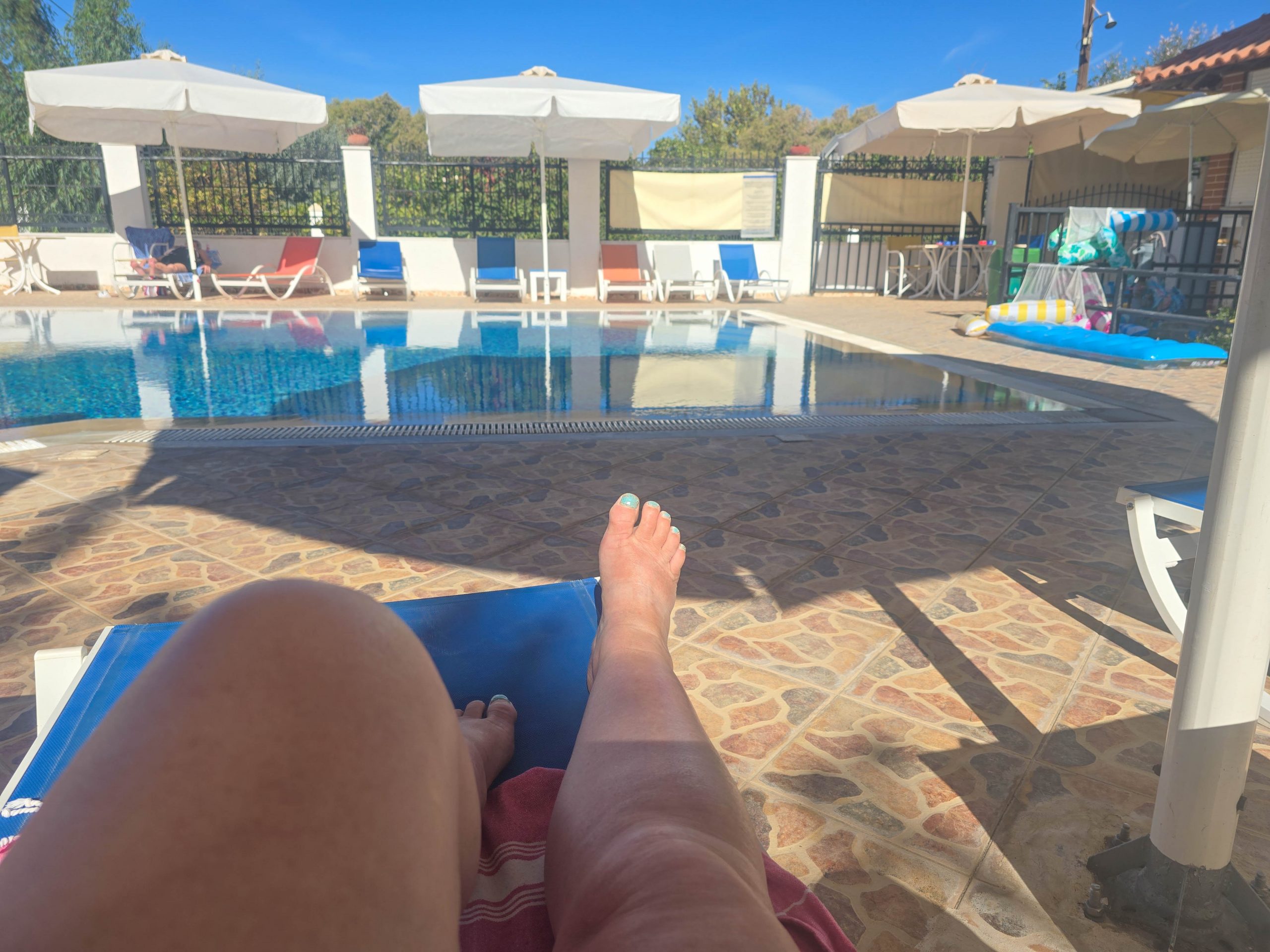
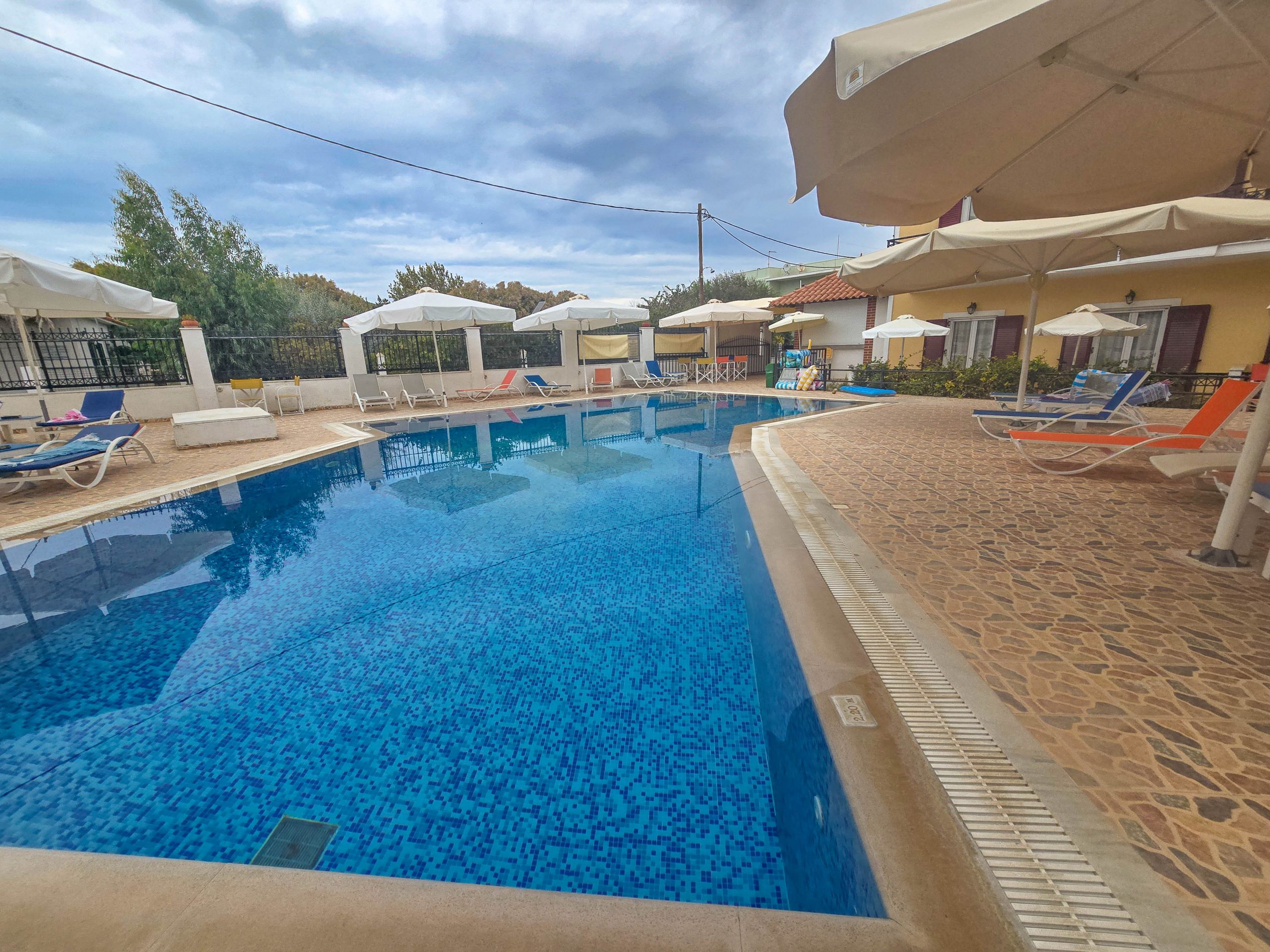
Walking west from the centre of the village is the organised section of Erisou Beach, a long stretch of sand with sunbeds at prices that feel refreshingly old-fashioned: €3 for a sunbed and €3 for an umbrella. Over the course of six days, I alternated between the beach and the lovely little pool at Eleftherias. On the beach, I observed various encampments defined by established friendship groups where the boundaries were fluid. Women seemed free to move from one to the other with ease. Snatches of conversations caught on the breeze that made me smile. Not that I habitually eavesdrop, but at times it couldn’t be helped. “They outed her on a paddleboard board, and she’s 81!” and “Who’d have sex in those toilets anyway…” There were also more gentle conversations about finding love, as well as updates on new relationships, alongside discussions about politics. These women had a powerful presence which set the dynamic for the place. With British accents from north, south, east and west dominating, at times, it was hard to remember that I was in Greece.
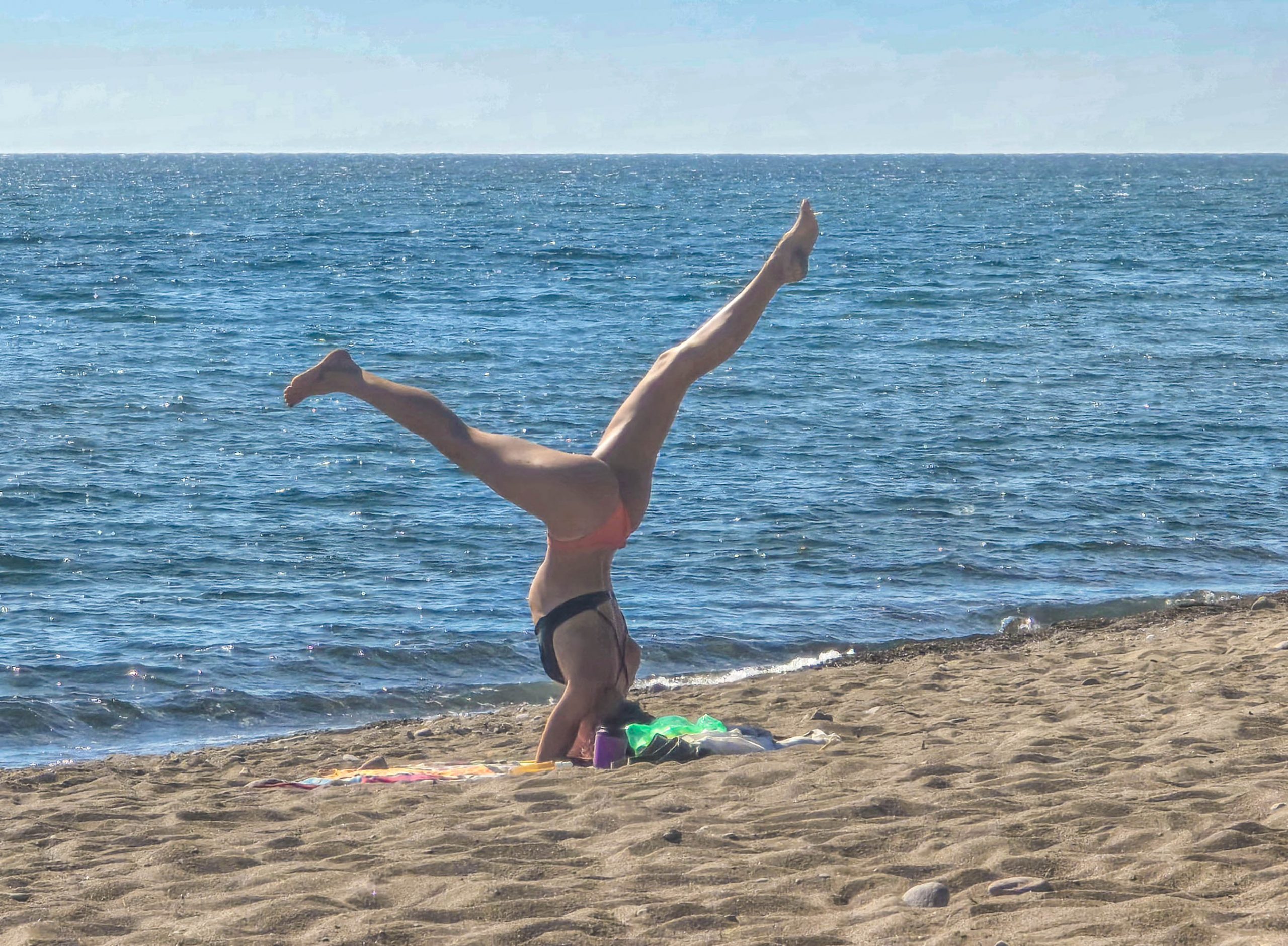
In quiet moments, I began to recognise faces, notice routines, and understand how different parts of the beach attracted different rhythms — early swimmers, long readers, yoga enthusiasts, families, solitary thinkers and some of that spilt out around the pool at Eleftherias.

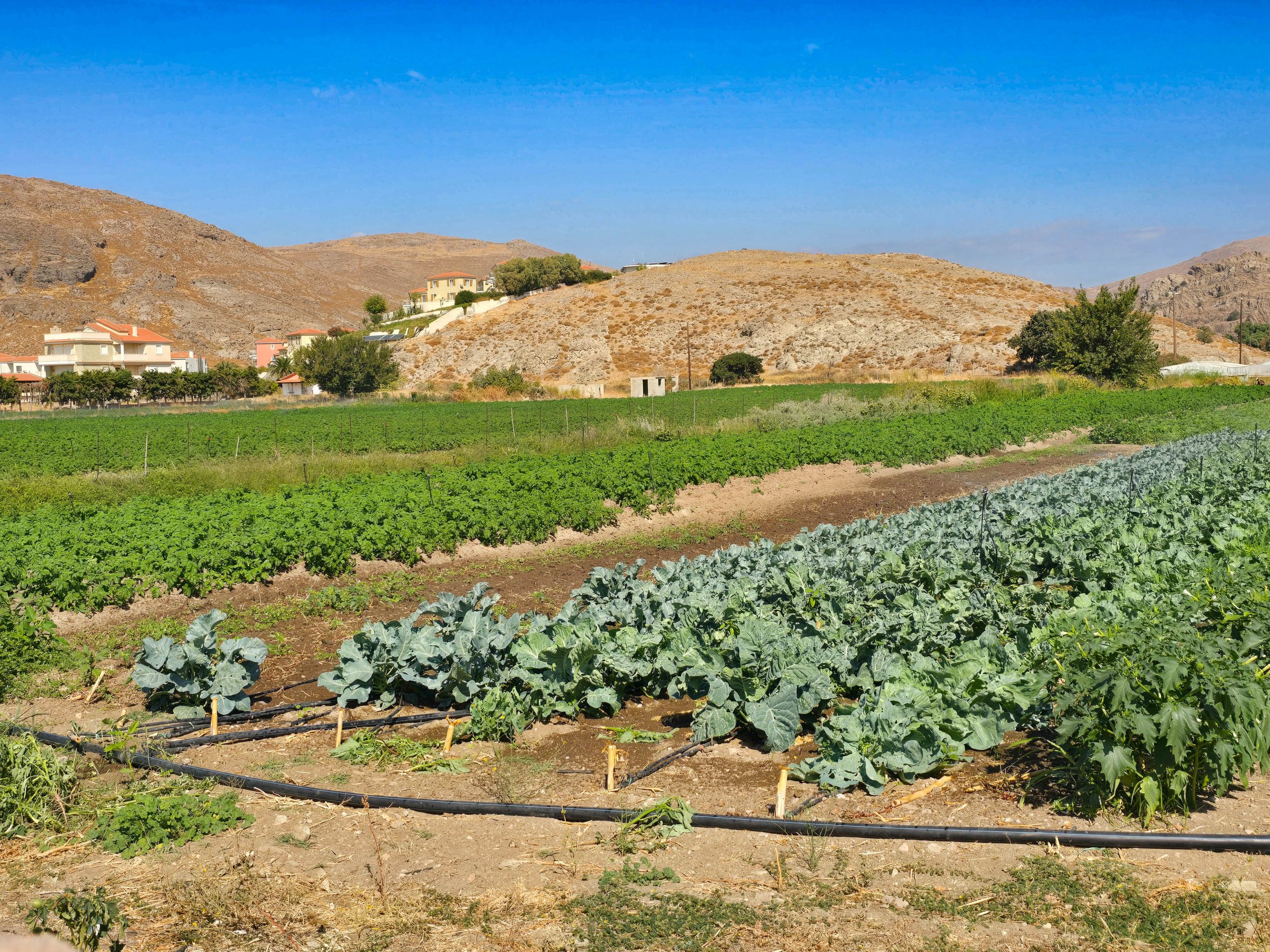
Another routine that I established during my stay was a walk to Turtle Bridge and into the landscape beyond. A dusty, tree-shaded track behind the beach leads past cultivated plots that are clearly more than gardens — smallholdings where vegetables are grown for self-sufficiency rather than sale. Here you can see how the landscape is so different to other parts of Lesvos. Low, rolling volcanic hills surrounding a rich and fertile plain.
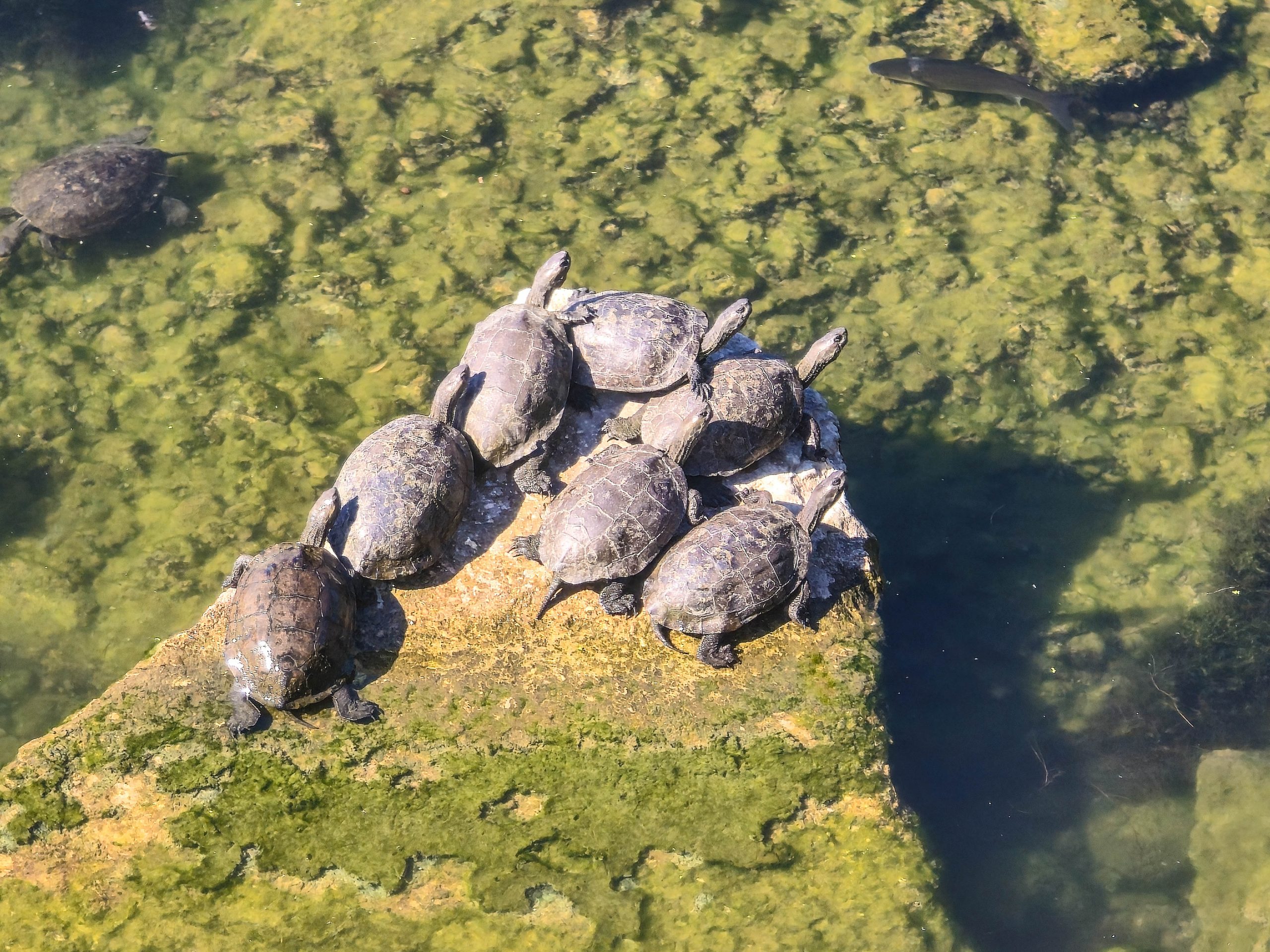
Following the road around to the right is Turtle Bridge, where turtles bask motionless on rocks jutting out of the shallow stream. Grey mullet drift through the shallows almost like sharks circling their prey. Most turtles gathered in small groups, with the odd turtle alone on a small rock, enjoying its own company. It felt like an echo of life on the beach itself — clusters of friends drawn together, alongside those who preferred a little space of their own.
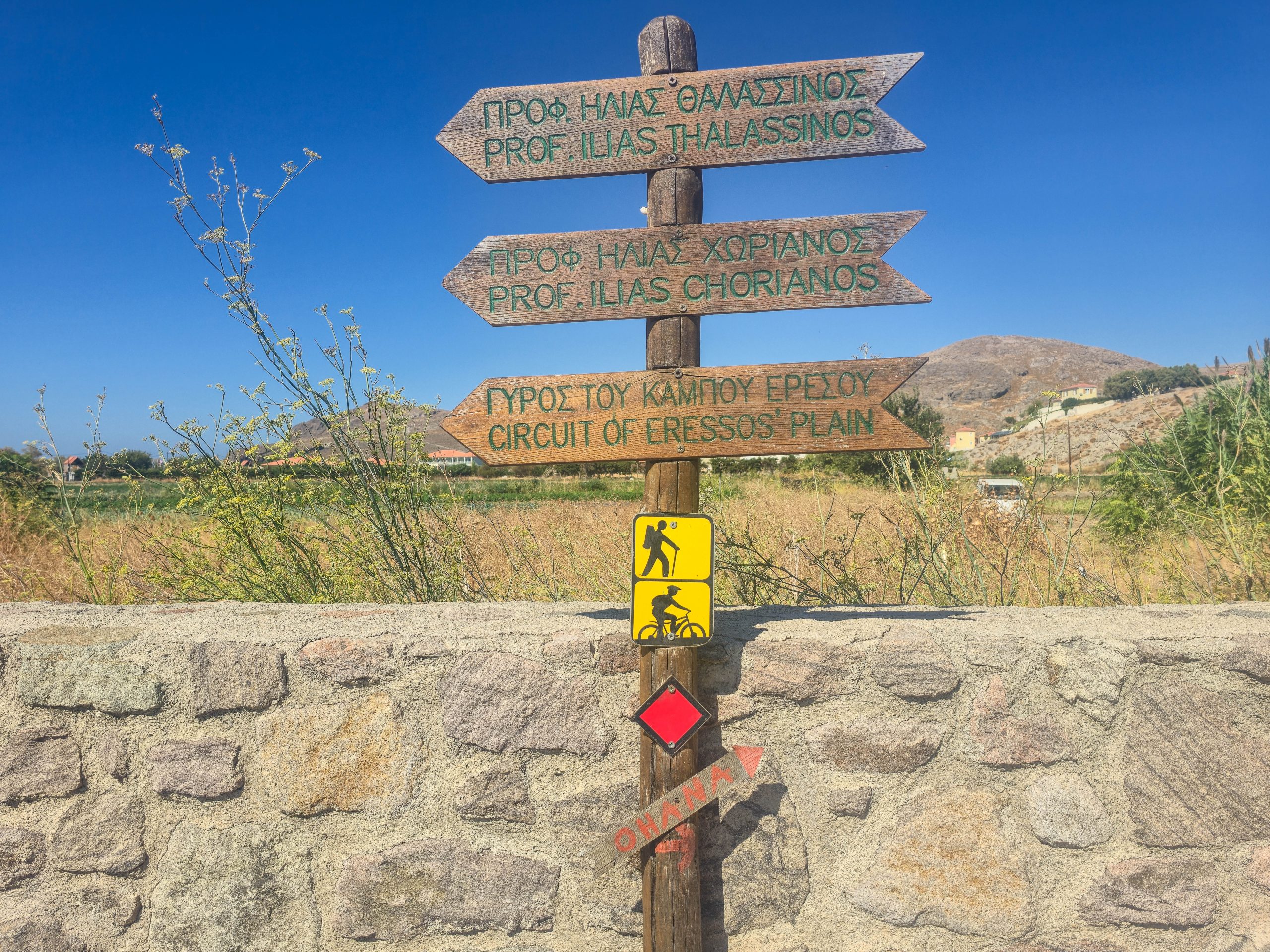
Further on, the landscape opens out. Scattered bars, the turn-off for the nudist beach, and the sprawling Aeolian Village Beach Resort punctuate a stretch of countryside that also forms part of the wider walking network around the Eresou Plain. From here, trails loop inland and climb towards Profitis Ilias, a classic Greek high point offering long views back across the bay and out to sea.
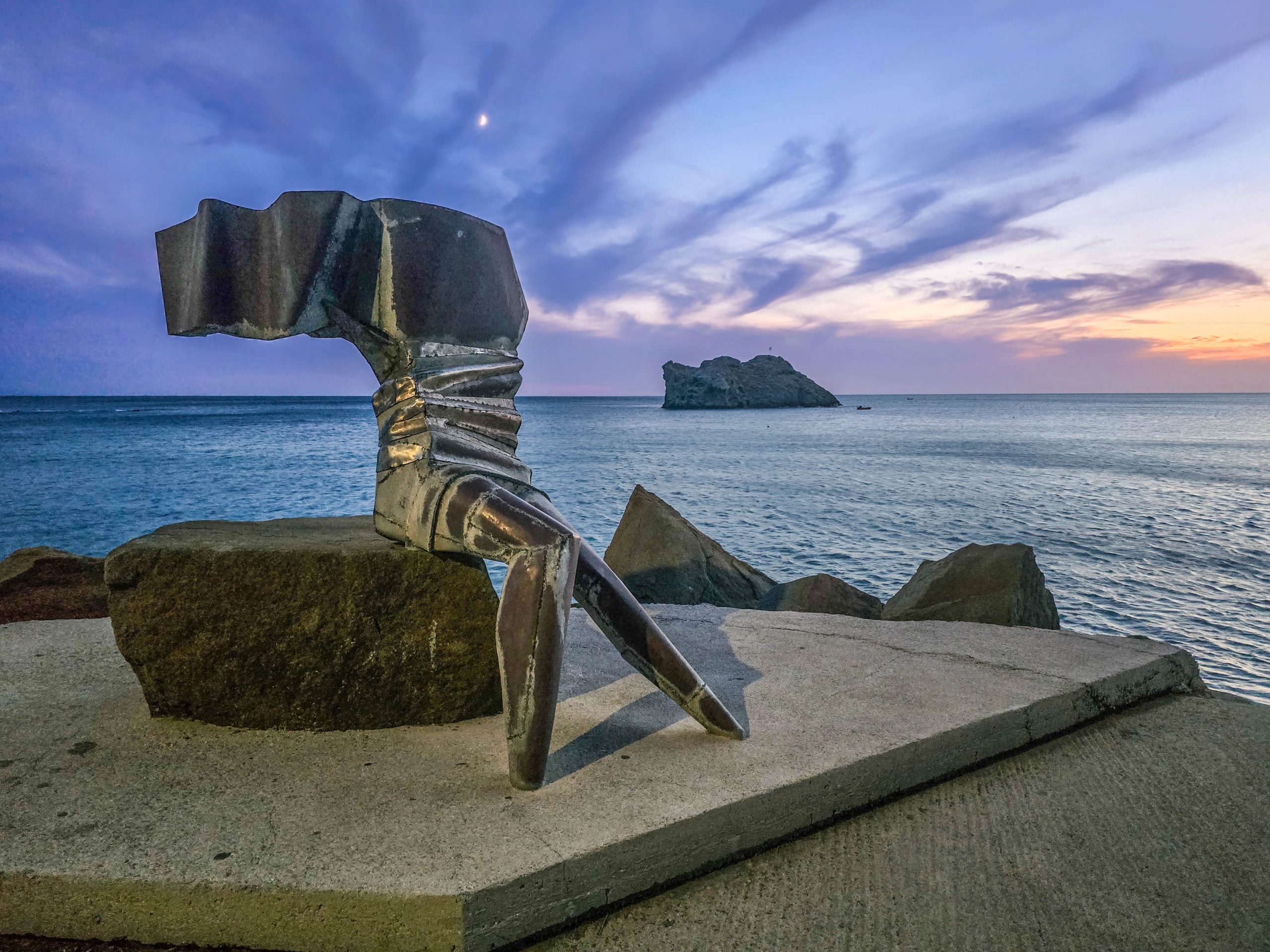
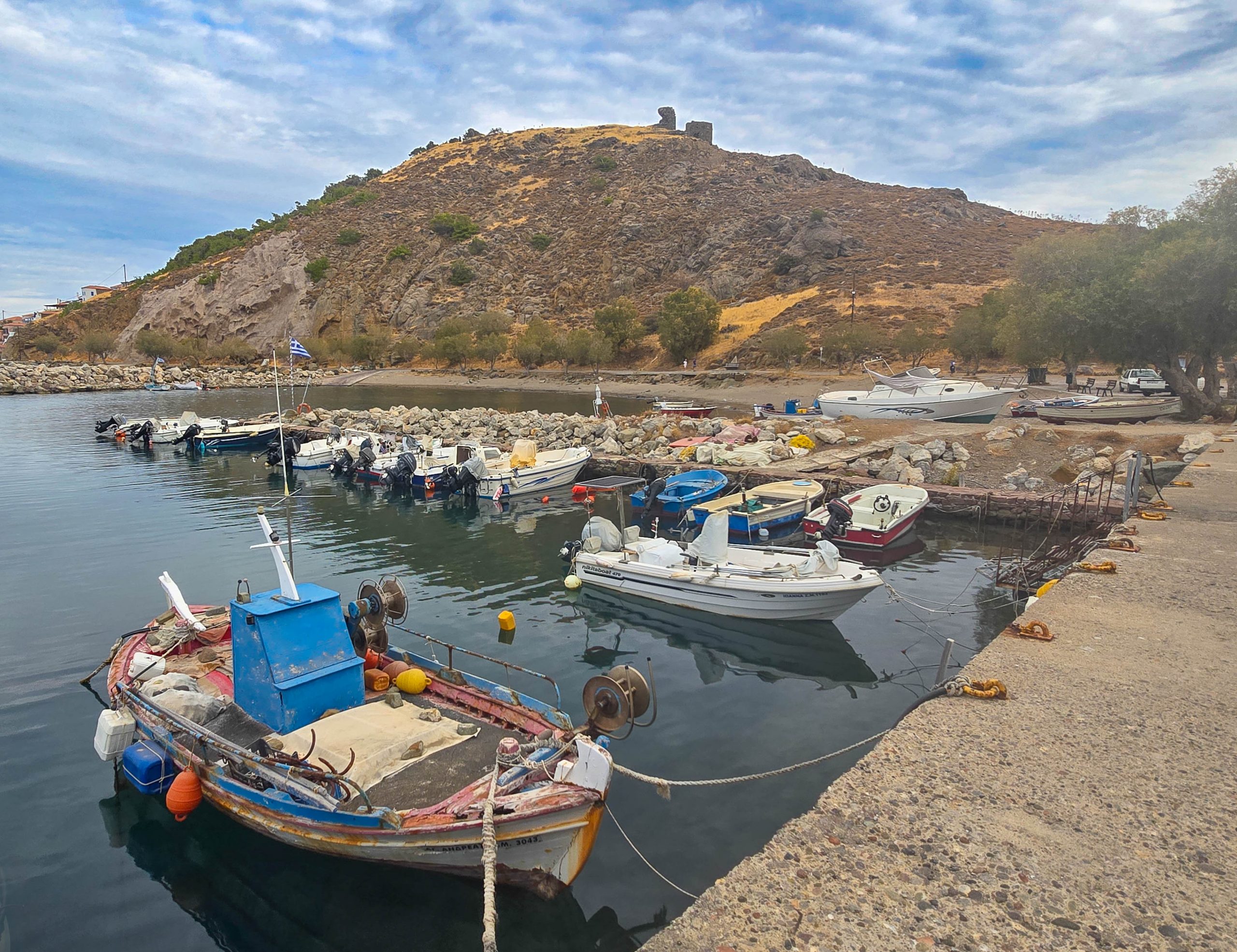
Back in the centre of the village and heading east, the bay curves gently and the sand becomes slightly shinglier. This end is noticeably quieter and unorganised. Sculptures appear along the shoreline — contemporary pieces placed thoughtfully, inviting passersby to pause. Badger Rock, a short distance out at sea, is the perfect backdrop. Nearby, a small marina hums with low-key activity: fishermen mending nets, tinkering with engines, continuing routines that long predate tourism.
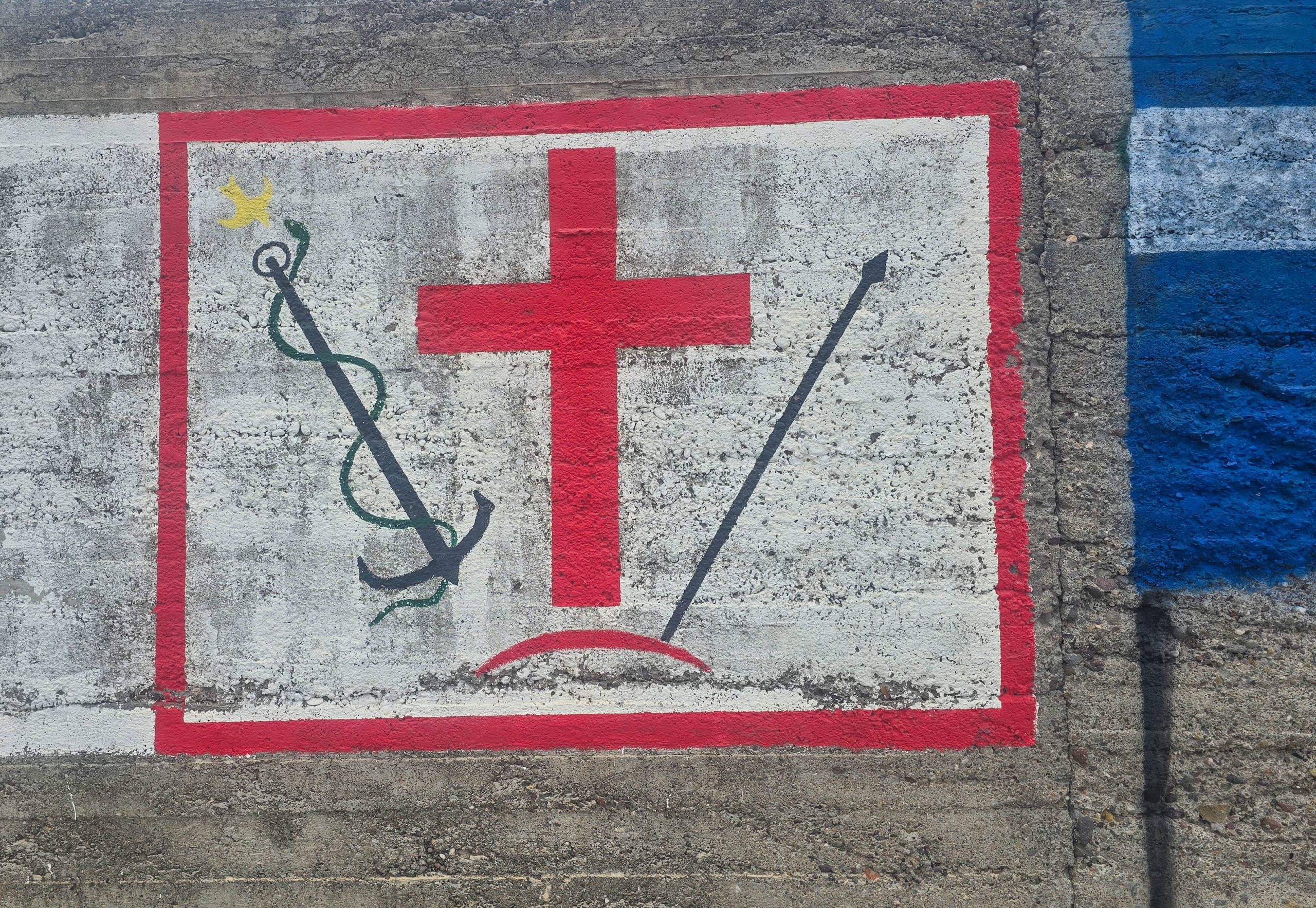
Above, on the hillside, stands a small vigla — a watchtower — alongside the remains of earlier structures. Such lookout points were once vital in coastal defence networks across Lesvos, offering early warning of approaching ships. Along the harbour arm, a large commemorative painting marks 200 years since the start of the Greek War of Independence. This reflects the broader national story that reshaped the island’s identity in the 19th century.
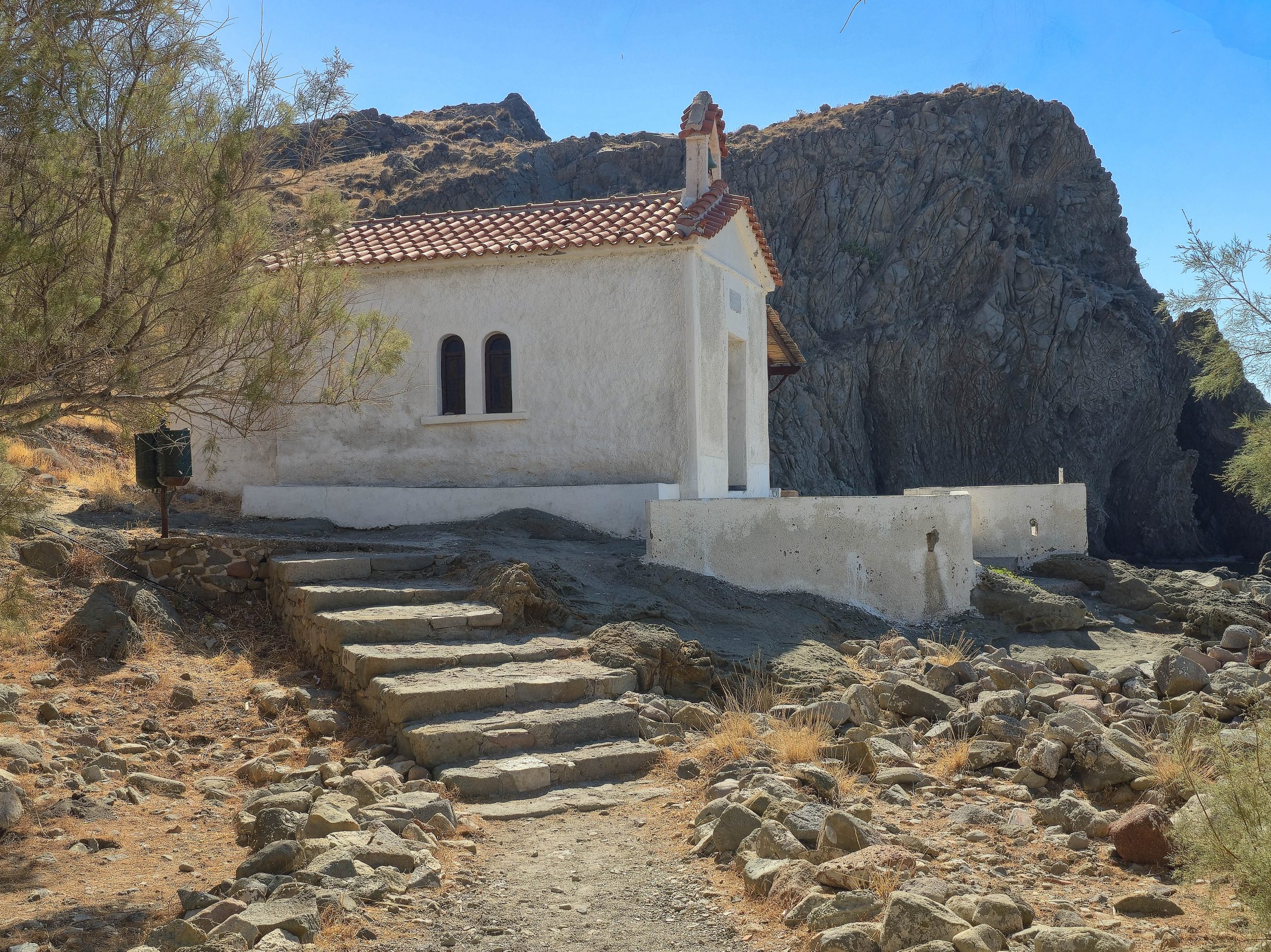
Nearby, a small, modest chapel dedicated to Panagia sits quietly by the water — less a landmark than a presence, echoing the long tradition of coastal chapels offering protection and reassurance to those who live and work by the sea. The door is open.
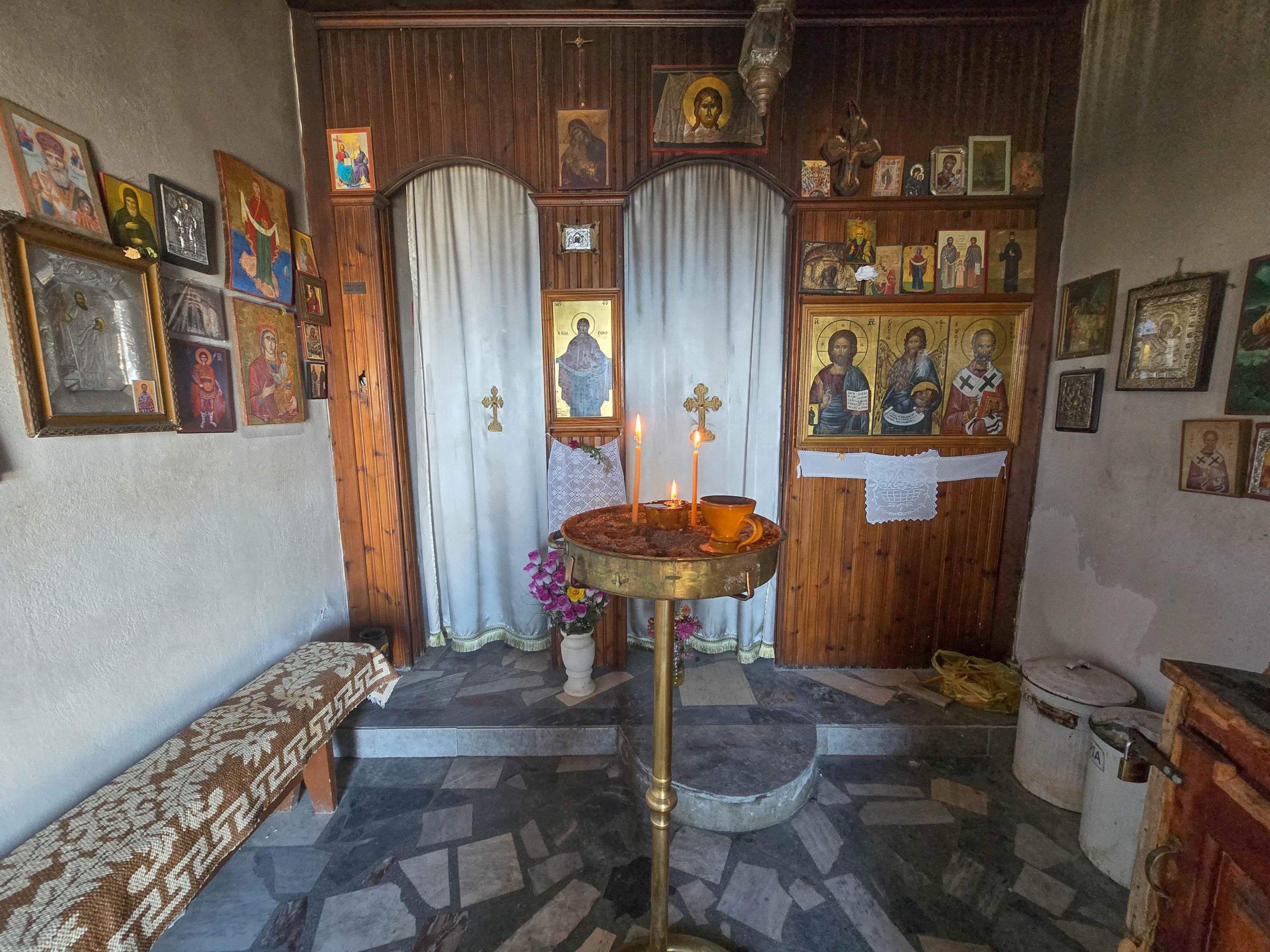
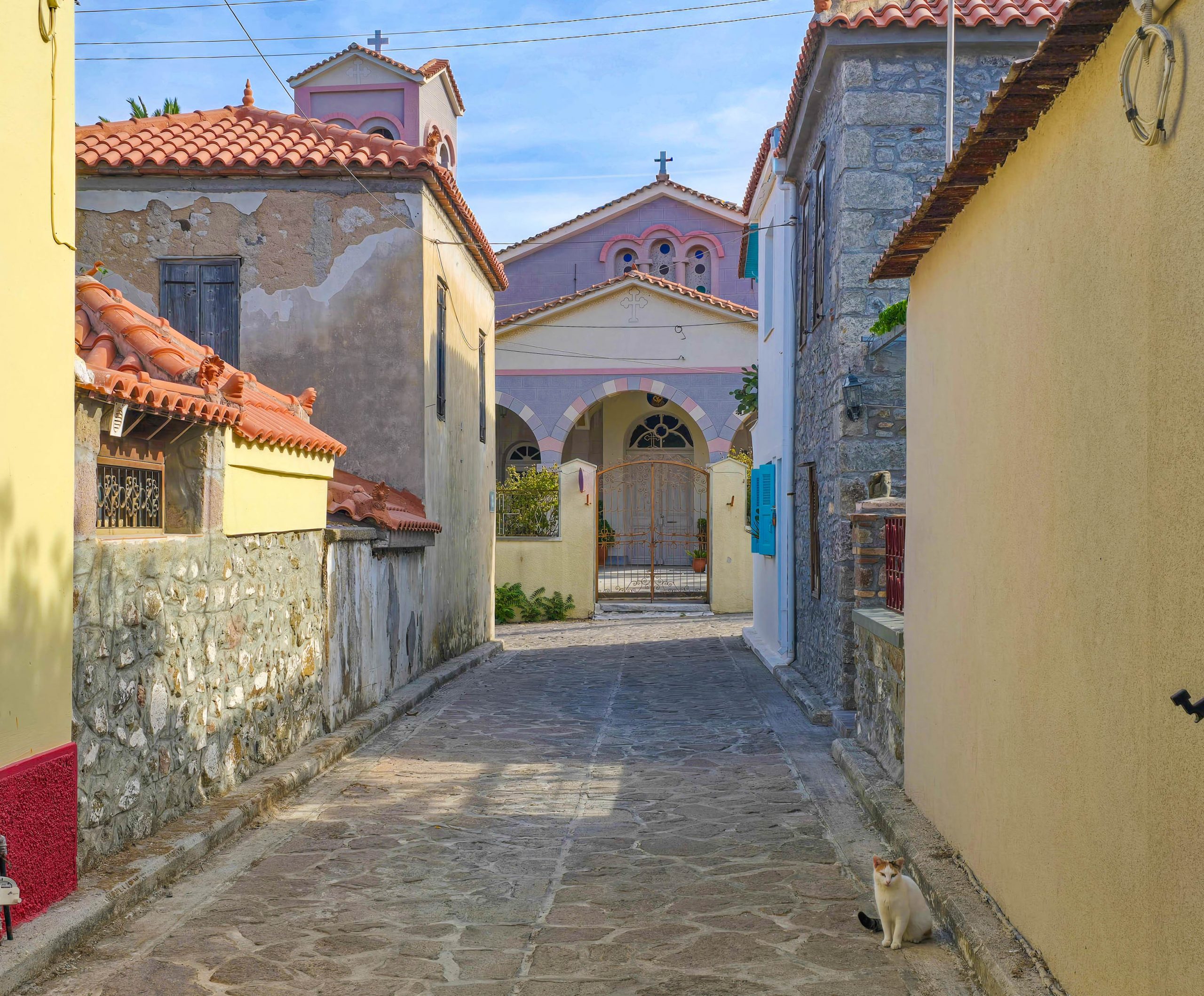
At the heart of the village stands the church of Agios Andreas, sometimes referred to as Agios Andreas of Crete. Dedicated to Saint Andrew, one of the Twelve Apostles, it reflects the long-standing importance of Orthodox faith in everyday village life.
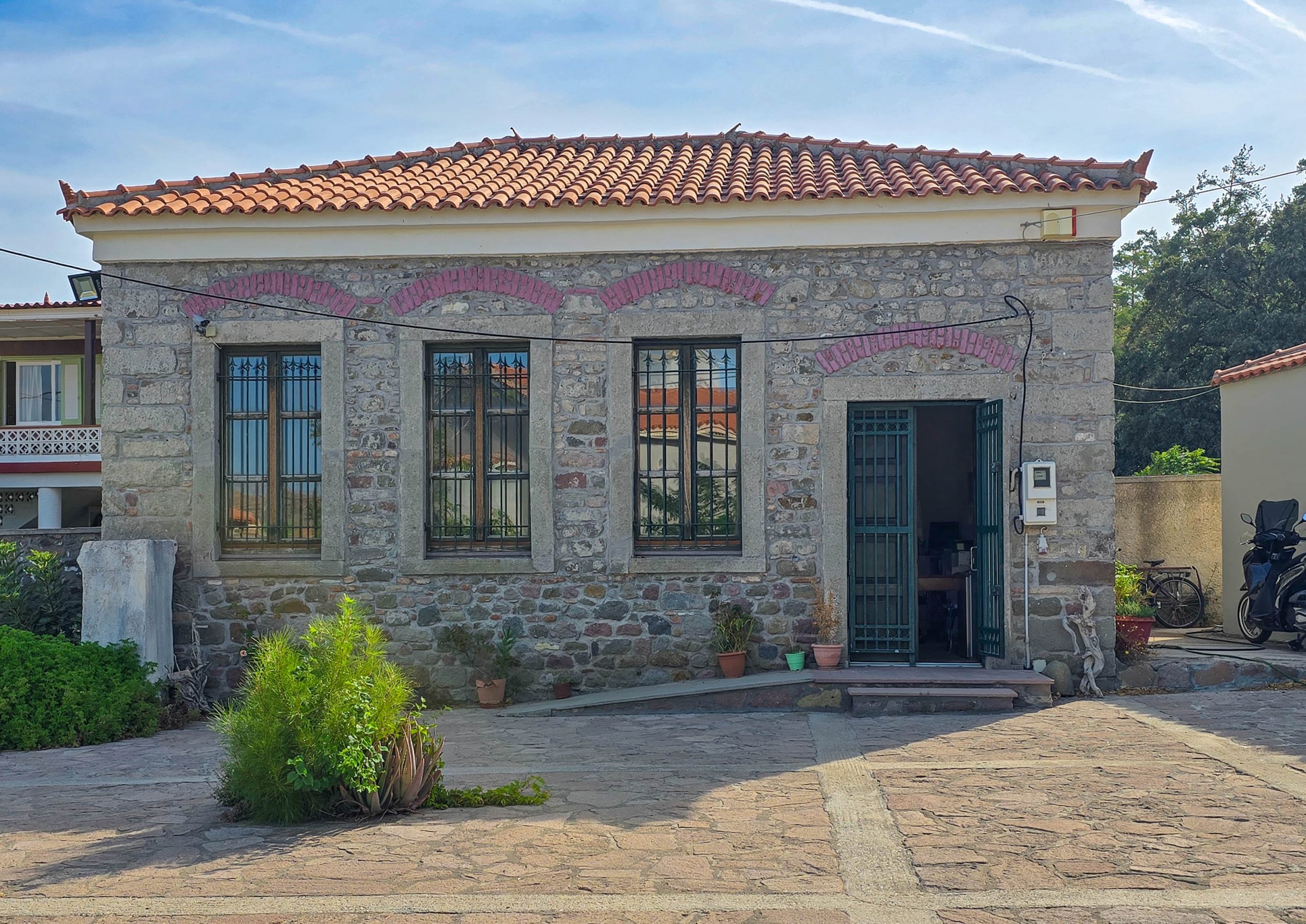
Inland from the village centre stands the Archaeological Collection of Eresos, housed in a former school building. Small but surprisingly rich, it holds finds from the ancient city of Eresou — grave reliefs, inscriptions and everyday objects dating from the Late Bronze Age through to early Christian times.

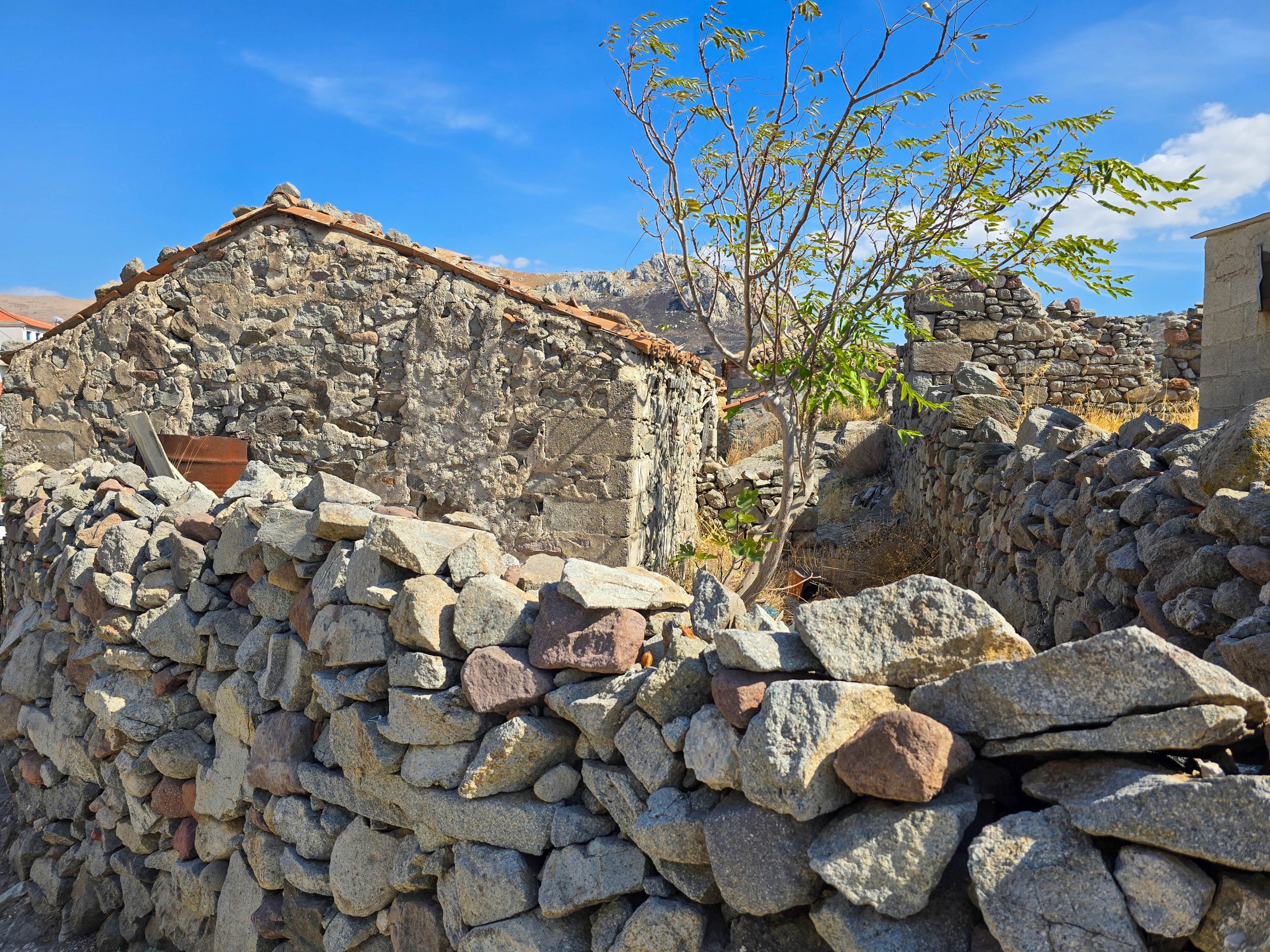
Just outside the museum lie the remains of the ancient fortification walls of Eresos, built in the 4th century BC. Their massive stone blocks still trace the outline of a city that once held real regional importance. Paths lead beyond, past substantial houses and wide agricultural plots, alongside tumble-down stone cottages that hint at lives lived far from the seasonal rhythms of tourism.
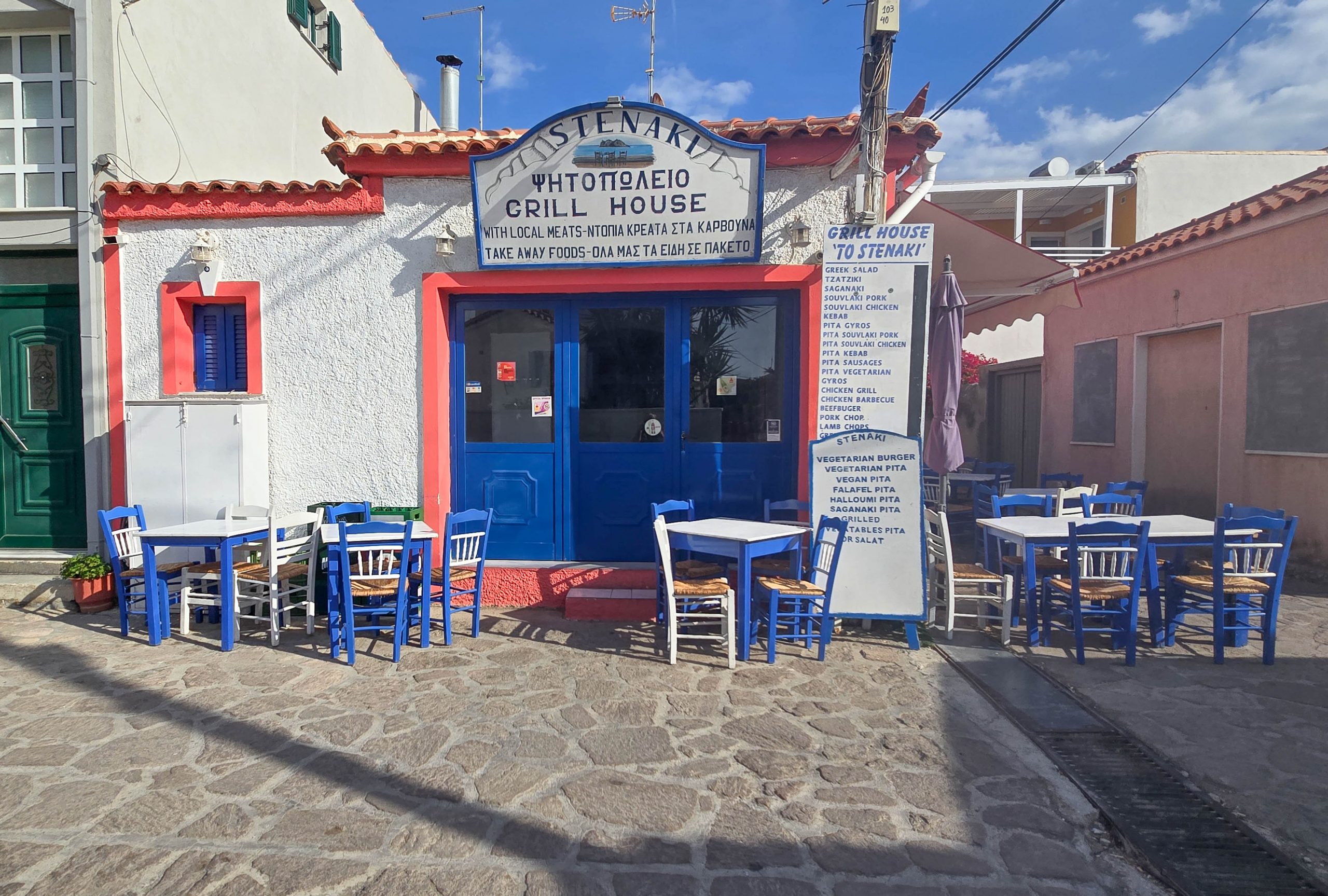
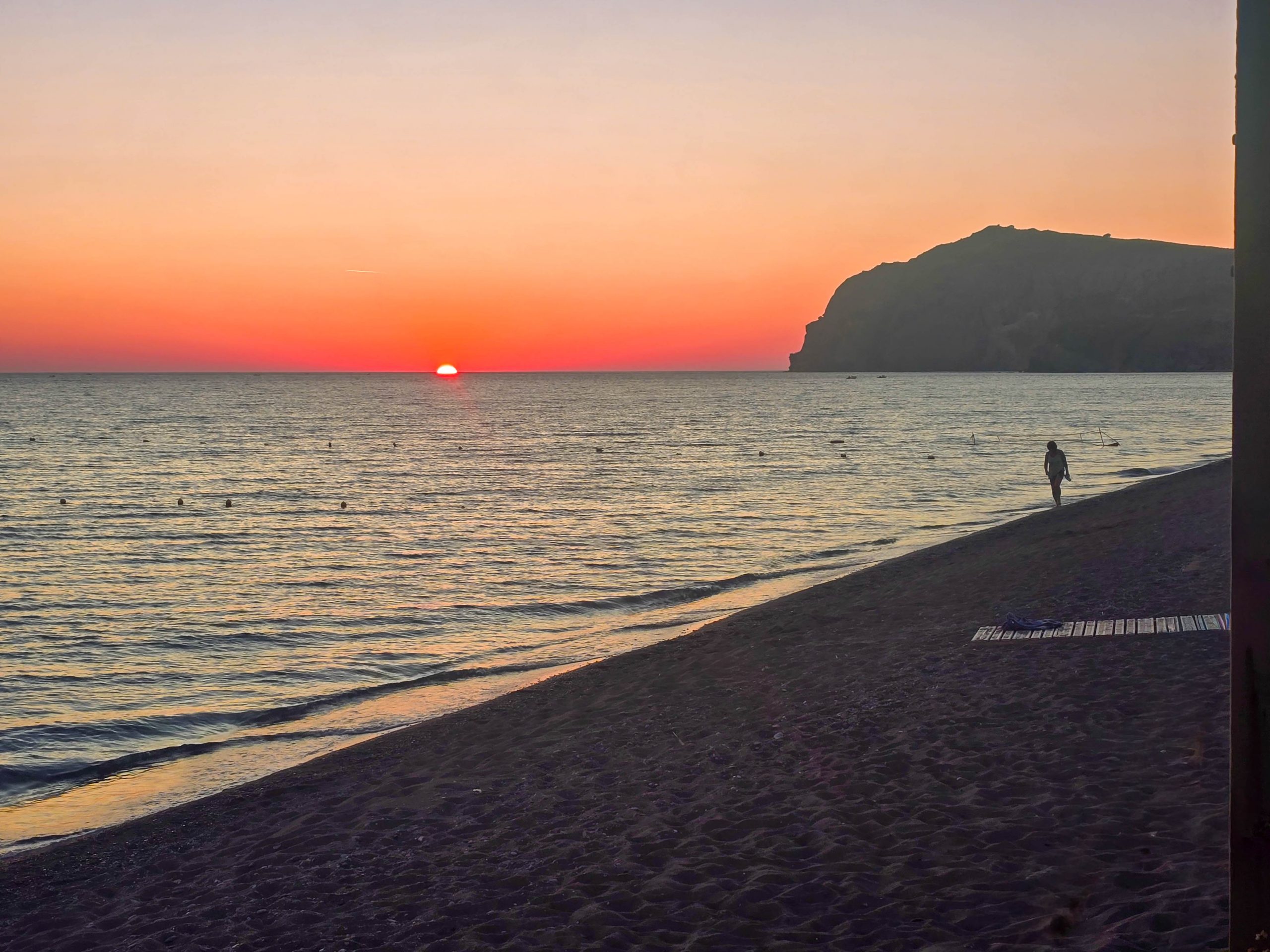
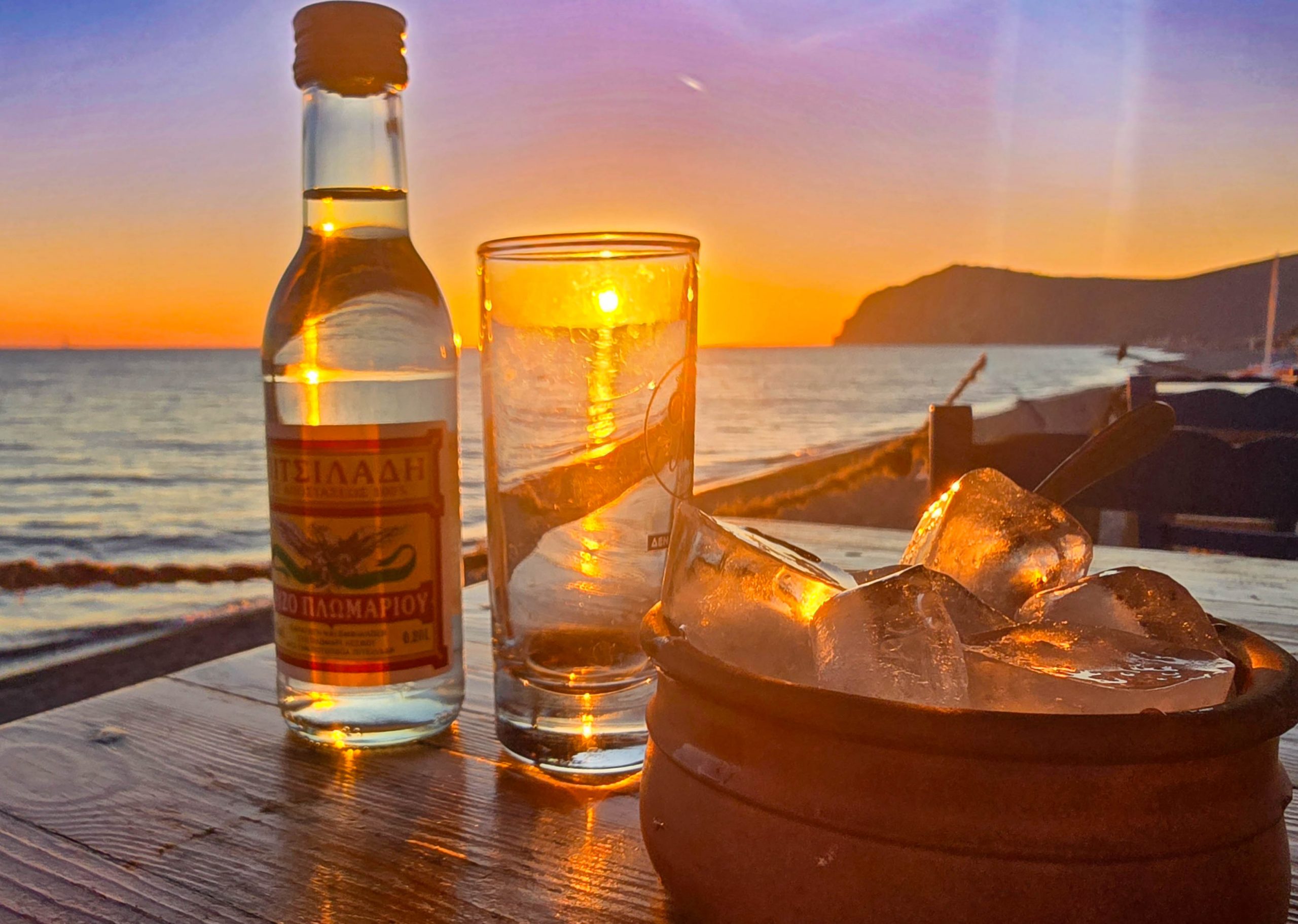
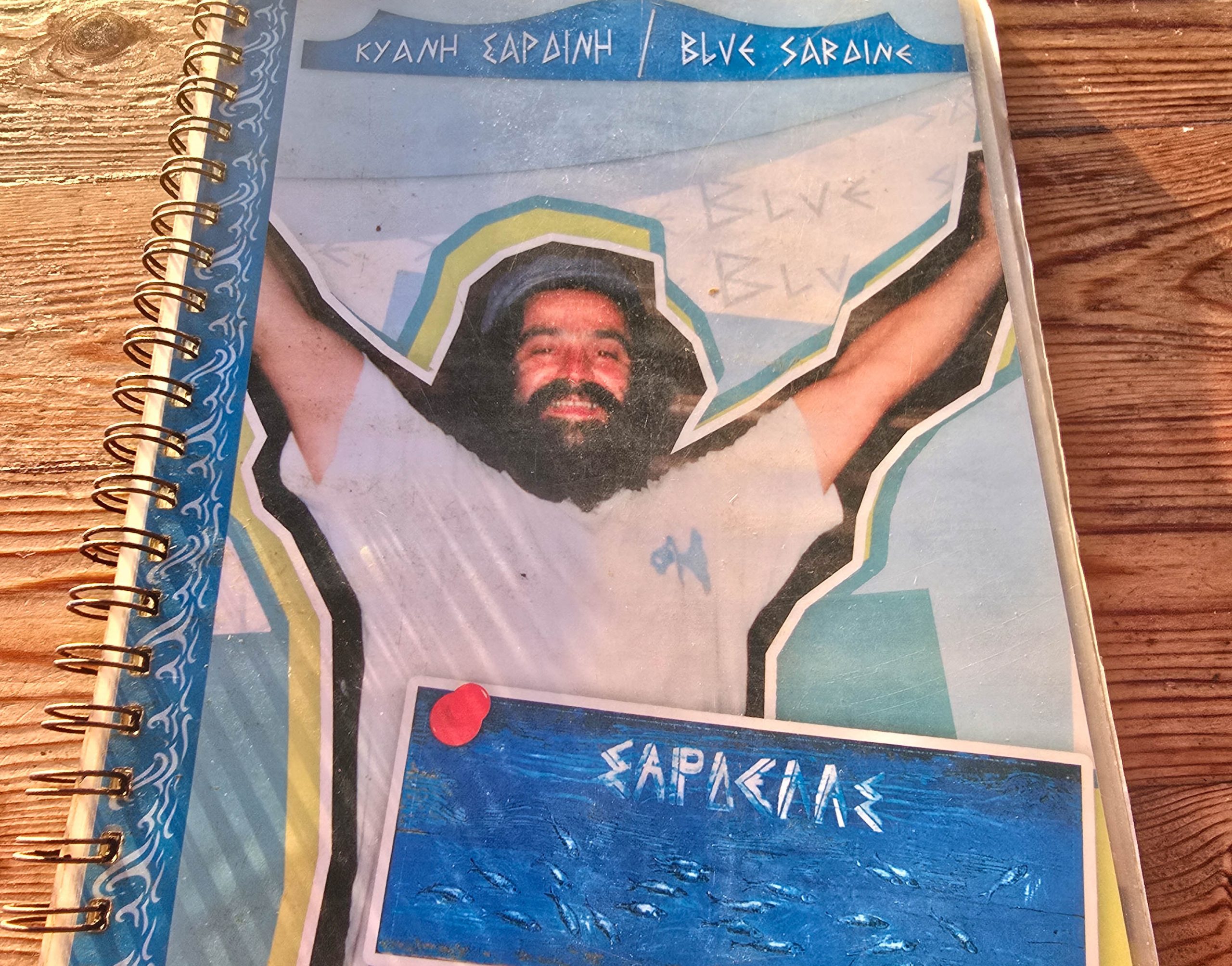
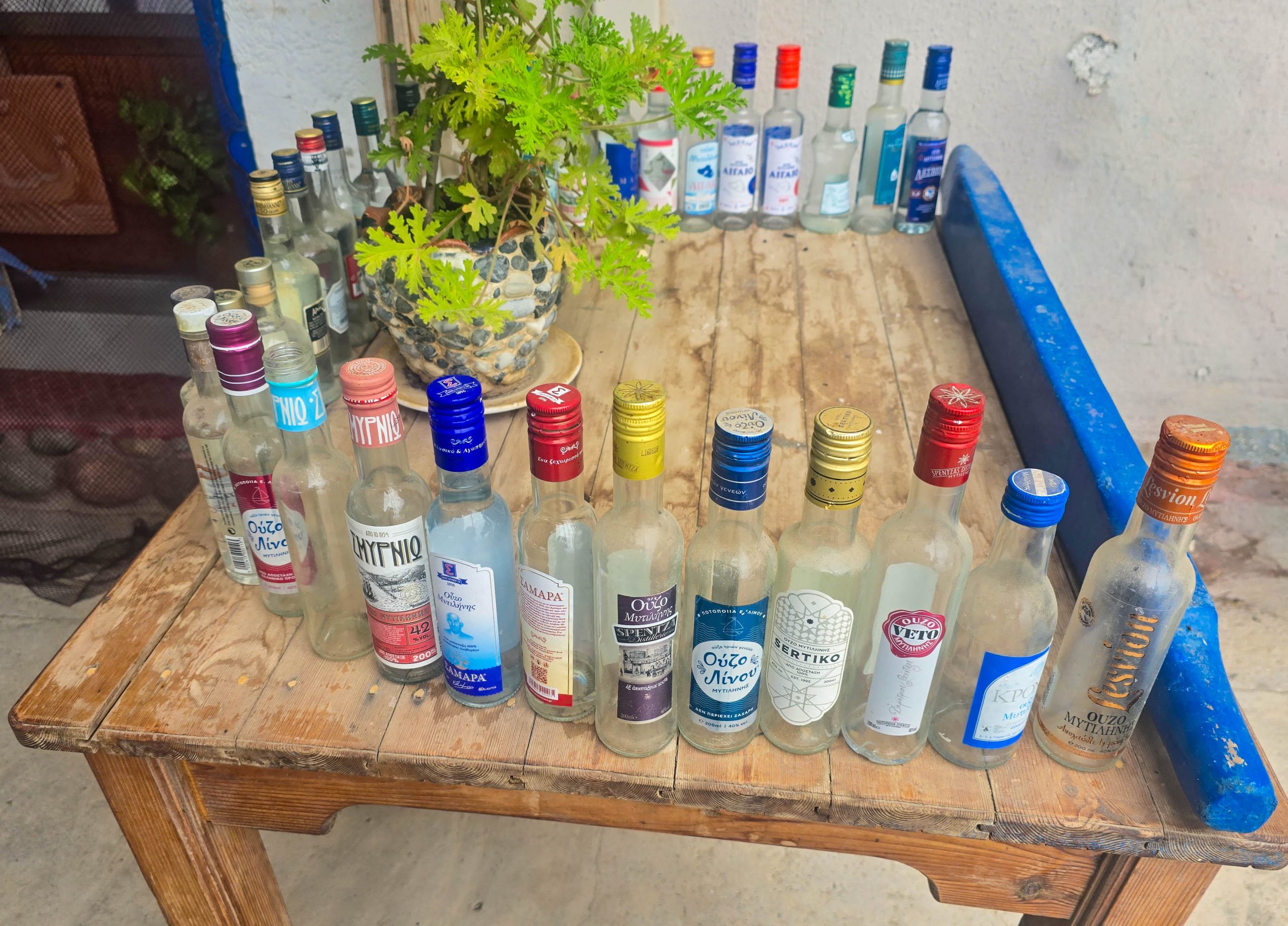
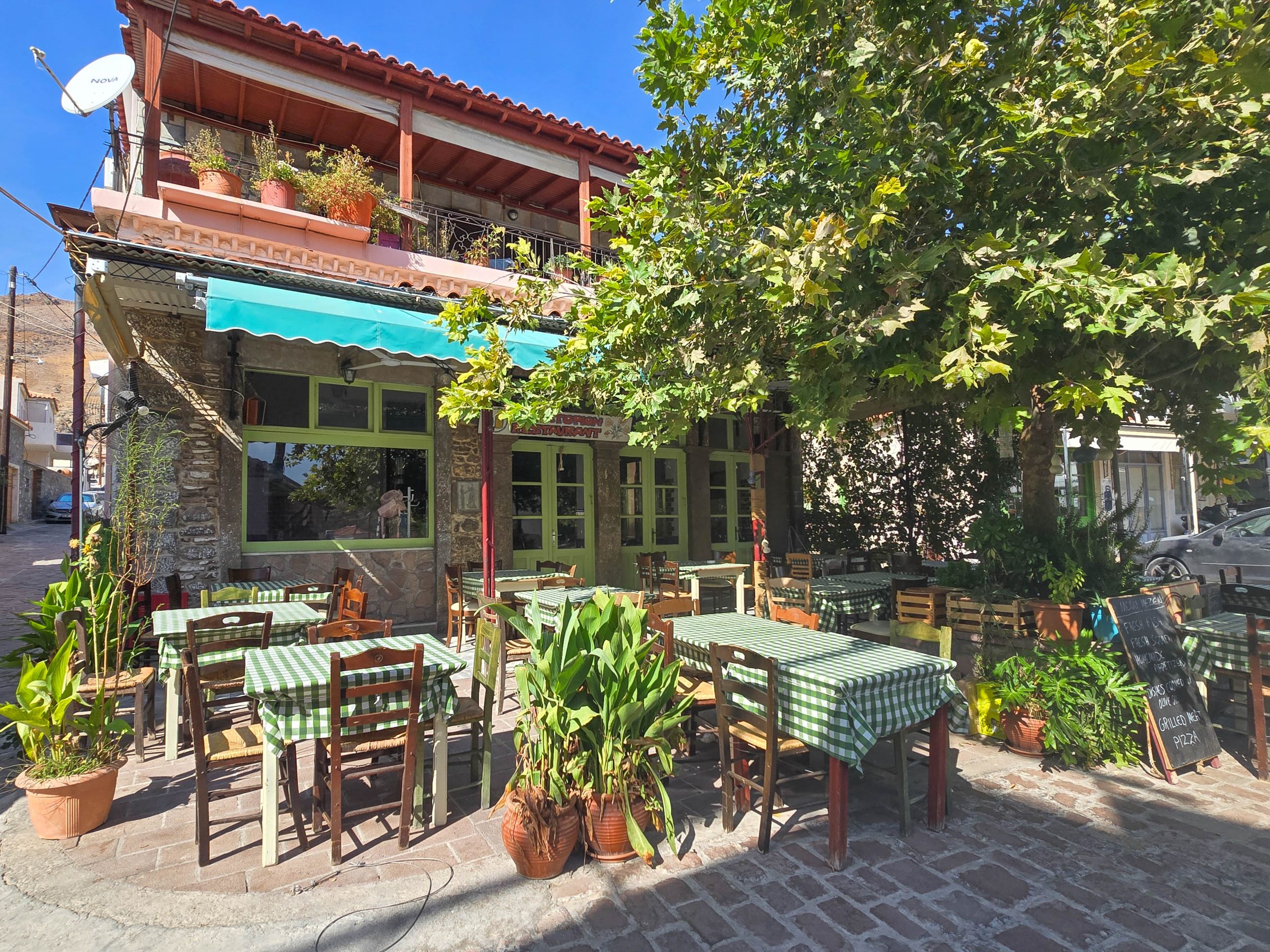
Dining in Skala Eresou was easy. With so many tavernas to choose from, the hardest decision was where to eat. I mostly gravitated towards the beachside places, perfectly positioned for sunsets that never failed to impress. A couple of favourites quickly emerged. Blue Sardine stood out from the rest — a little different in feel, with a genuinely warm welcome from Kosta and his mama, an impressive selection of ouzo, and uninterrupted views across the beach as the sun slipped into the sea. It was the perfect place to spend my birthday. Just a few doors down, Adonis was another dependable favourite, alongside Karavogiannos.
Not everywhere along that stretch left such a good impression. As an early diner — something that suits me perfectly — I often arrive at empty tavernas, and this occasion was no different. When I politely asked if I could sit at a beachside table, I was told I could, but that I would have to move if anyone else turned up. I was genuinely taken aback. Quite apart from the unlikelihood of the place suddenly filling in the next half hour, it felt at odds with the spirit of Skala Eresou, home to the largest women’s festival in Europe, where I’d expected a more welcoming, female-friendly approach. Needless to say, with the thought of being evicted from a table mid-meal, I moved on. I’d prefer to spend my evening somewhere that values guests for more than their potential turnover.
My one ‘excursion’ out of the village was to the inland village of Eresos, the place where the hoteliers and restaurateurs retreat to in winter (some of them anyway!). Eleftheria had suggested that I’d find the taxi drivers hanging out at Los Amigos. And sure enough, that is where I found Stelios, who drove me up to the village. He told me to give him a call when I wanted to be picked up.
Eresos, the older, original settlement from which Skala Eresou takes its name, is perched around 280 metres above sea level. It feels a world away from its coastal skala — cooler, quieter, more authentic and grounded in the surrounding volcanic landscape. It’s a place that feels shaped by everyday life rather than seasonal arrivals. Stone houses made from volcanic stone cluster around narrow streets, small cafés and kafenia anchor the square, and the pace feels resolutely local.
In antiquity, Eresos was far more than a rural settlement. It was an independent city-state with its own political identity, agricultural hinterland and access to the sea via its port. While none of its ancient houses survive, a sense of that long-standing importance is echoed in some of the larger, more substantial homes in the village, reflecting Eresos’ continued prosperity in later centuries.
Strategically positioned in the eastern Aegean, Eresos was repeatedly drawn into the power struggles of the Classical world, shifting allegiances between Athens, Sparta and Persia, and even suffering destruction and re-foundation as a result. Economically, its combination of fertile inland land and a working harbour made it resilient, while culturally it punched well above its weight as the birthplace of Sappho, whose poetry ensured the town’s name travelled far beyond Lesbos. No specific record of her birthplace survives. Born around the 7th century BCE, her presence lingers not in a single site, but in the town as a whole — claimed through history and a deep sense of local pride.

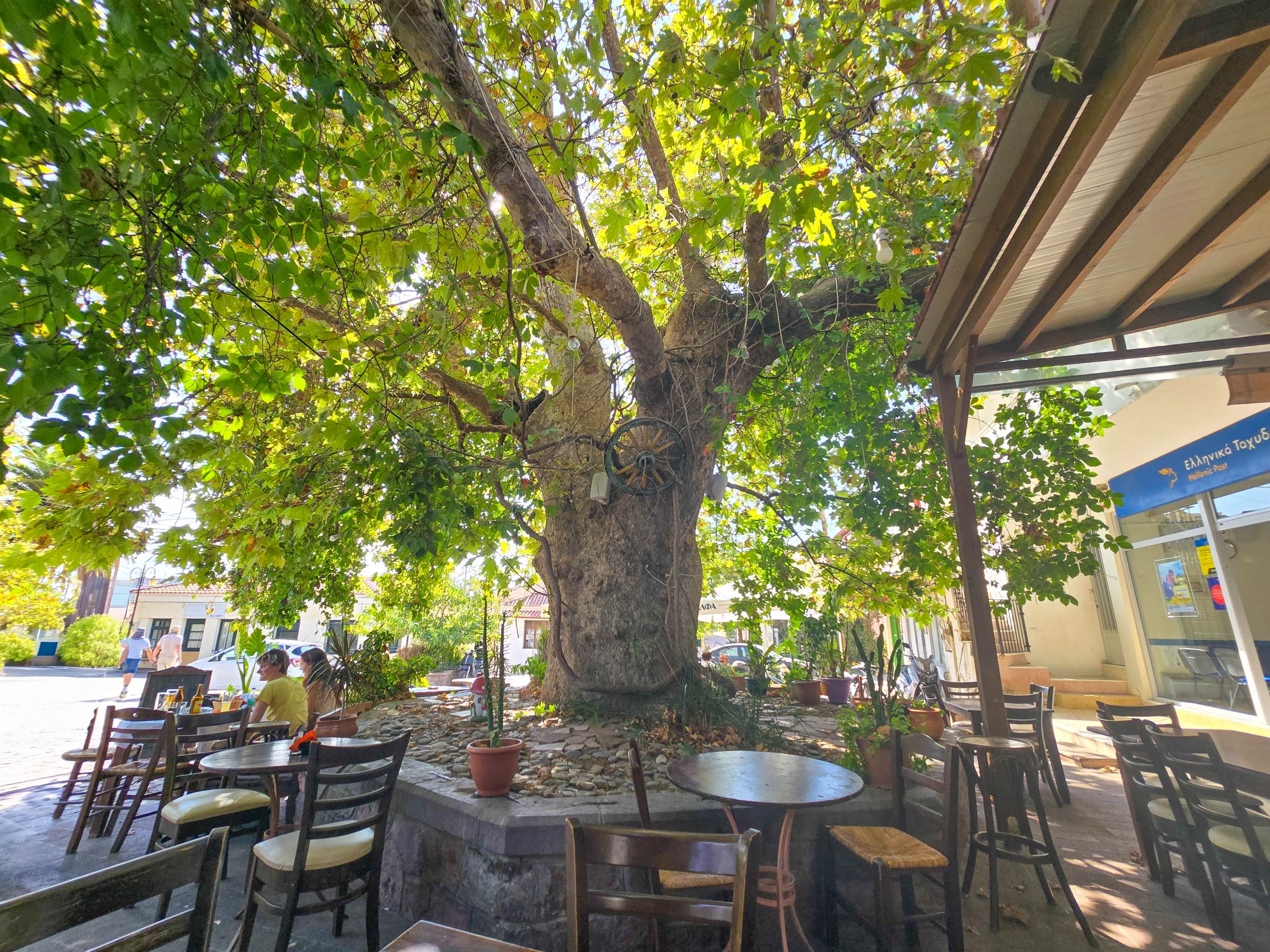
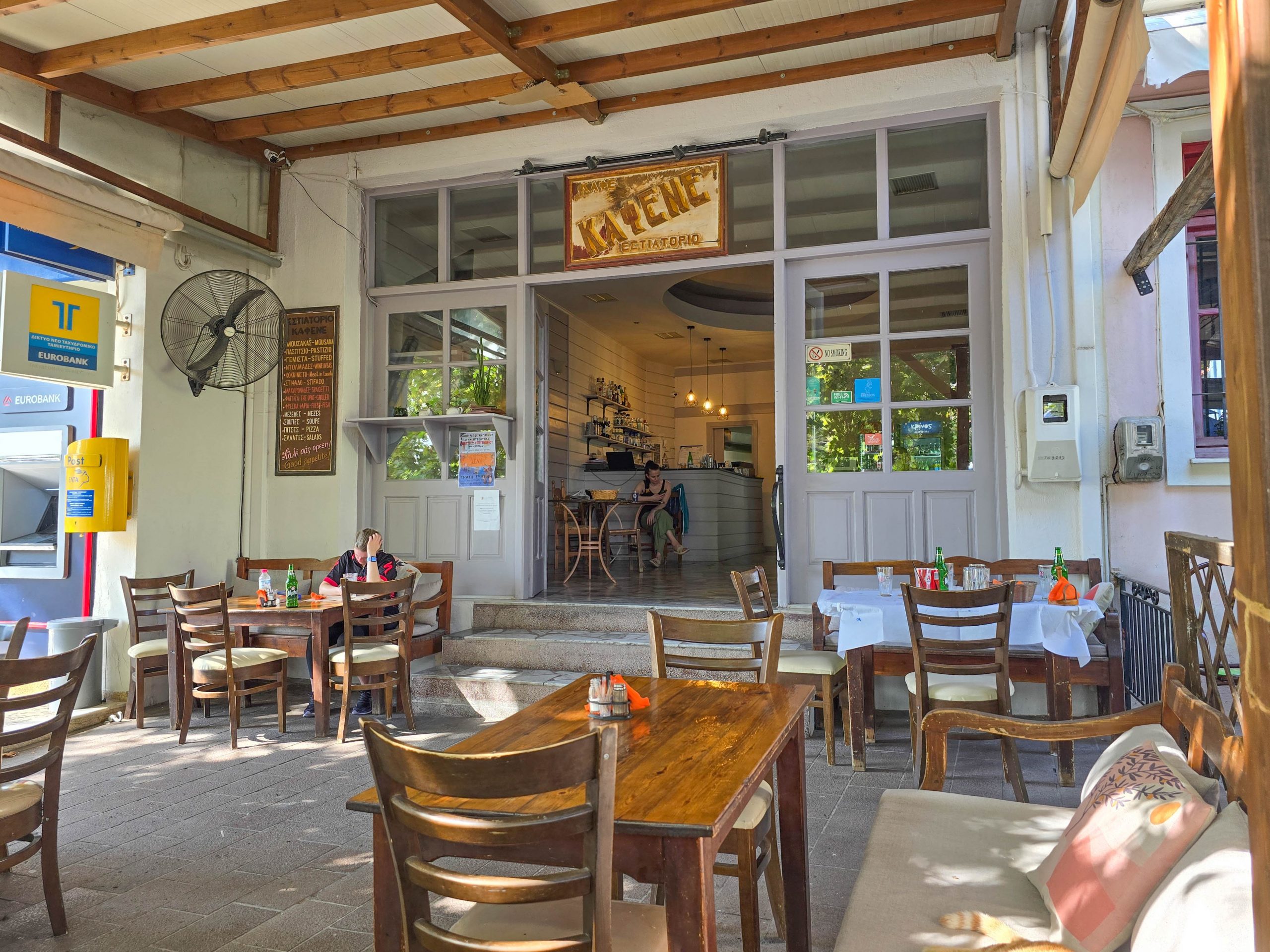
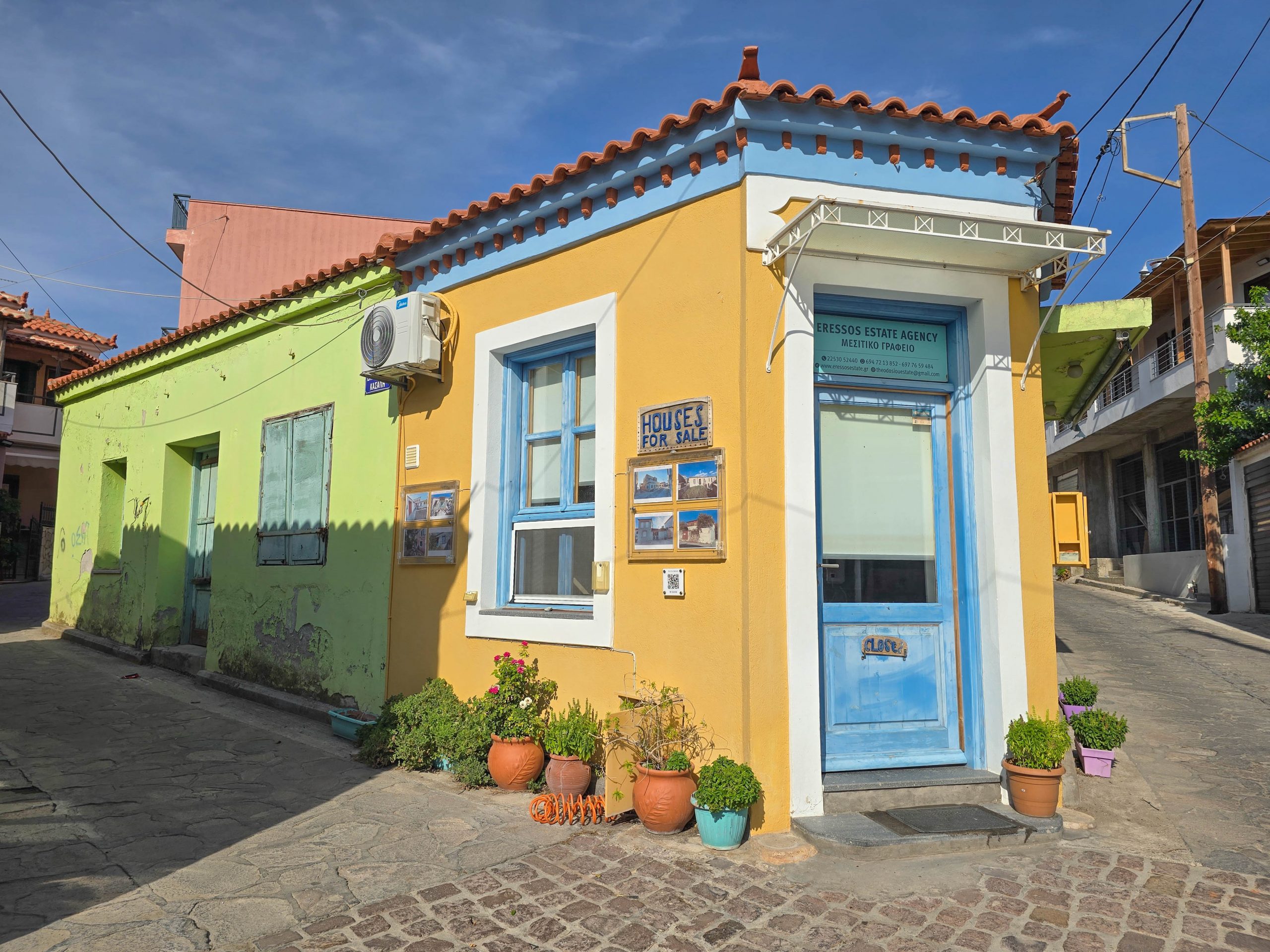
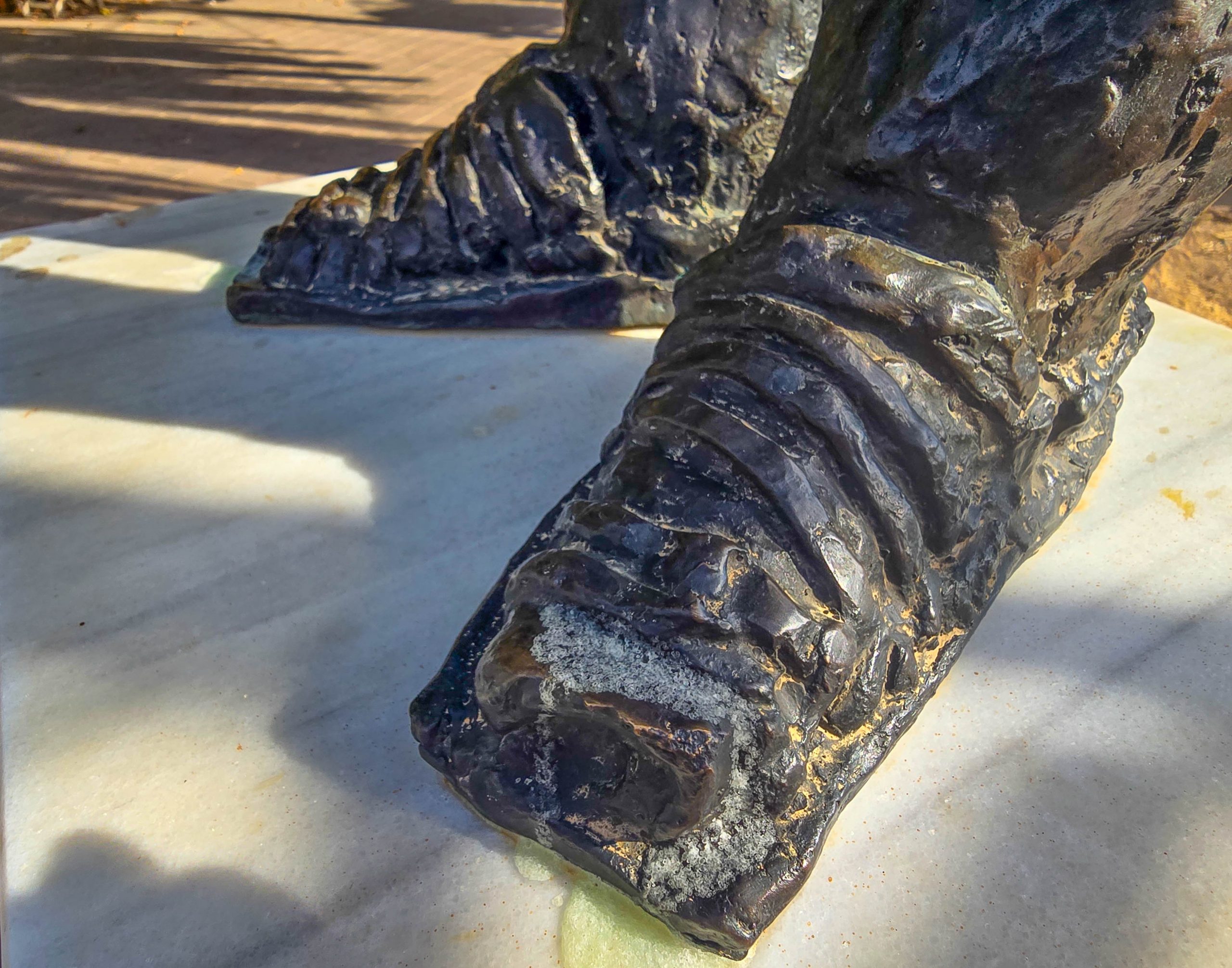
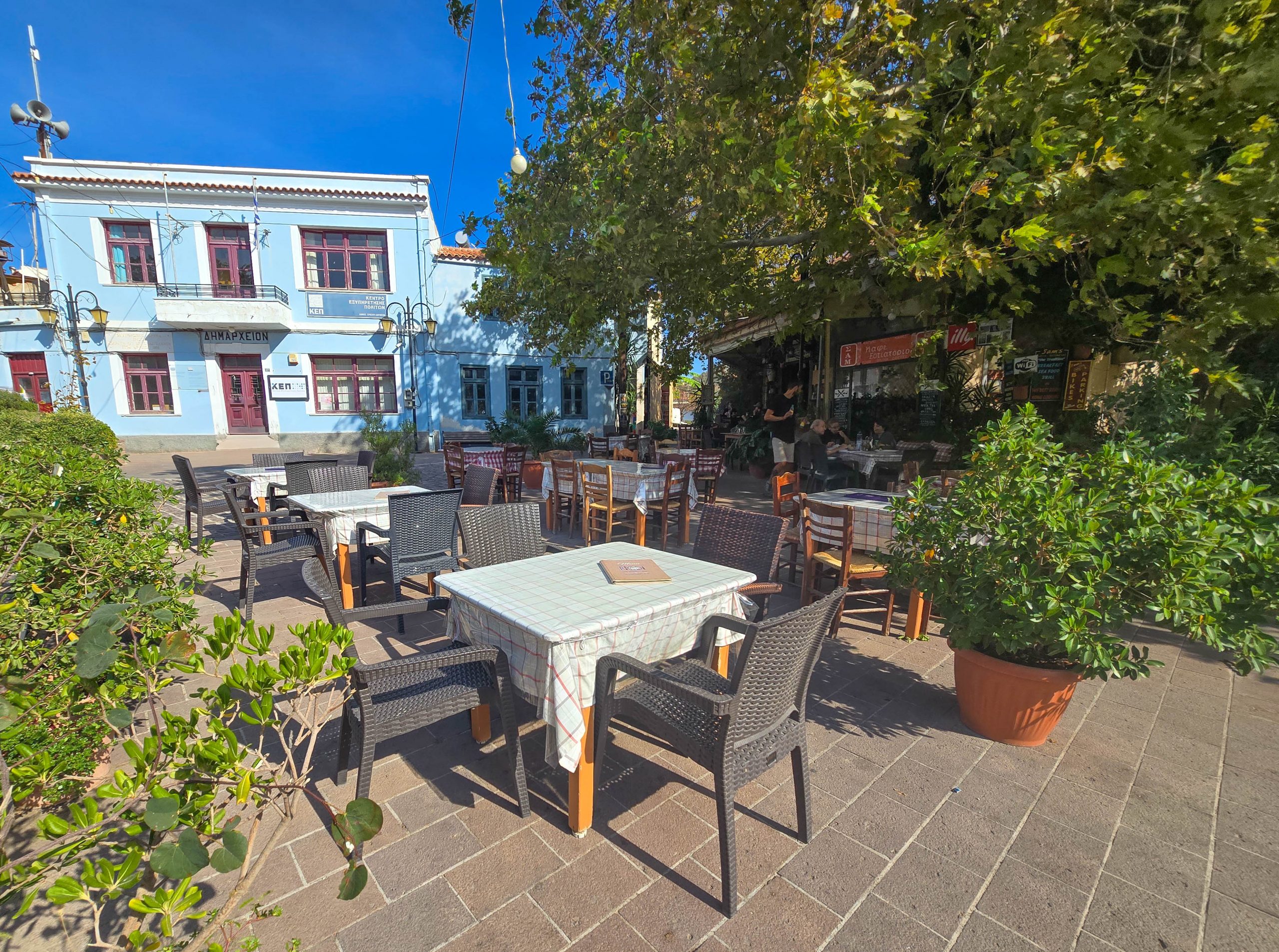
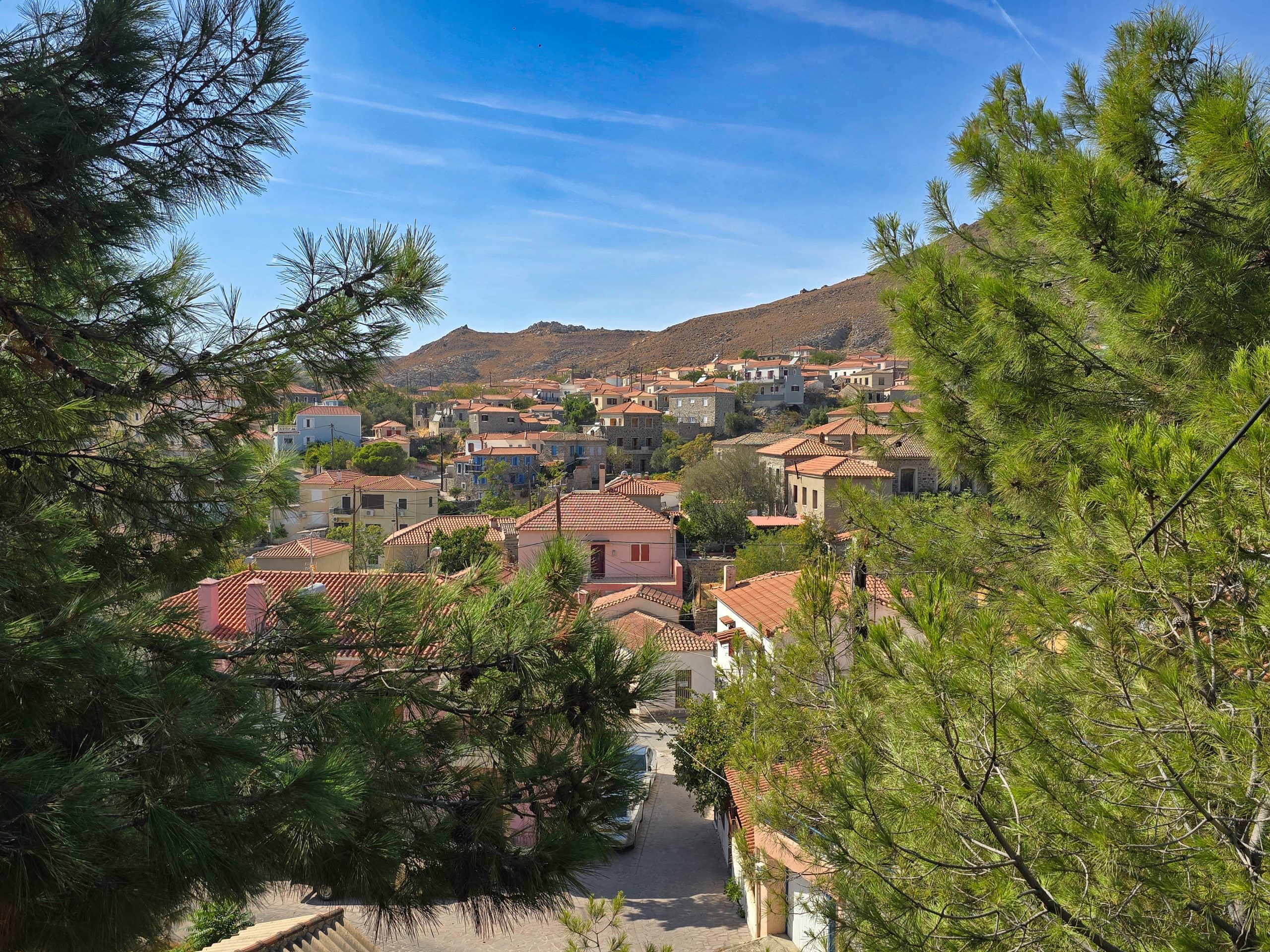

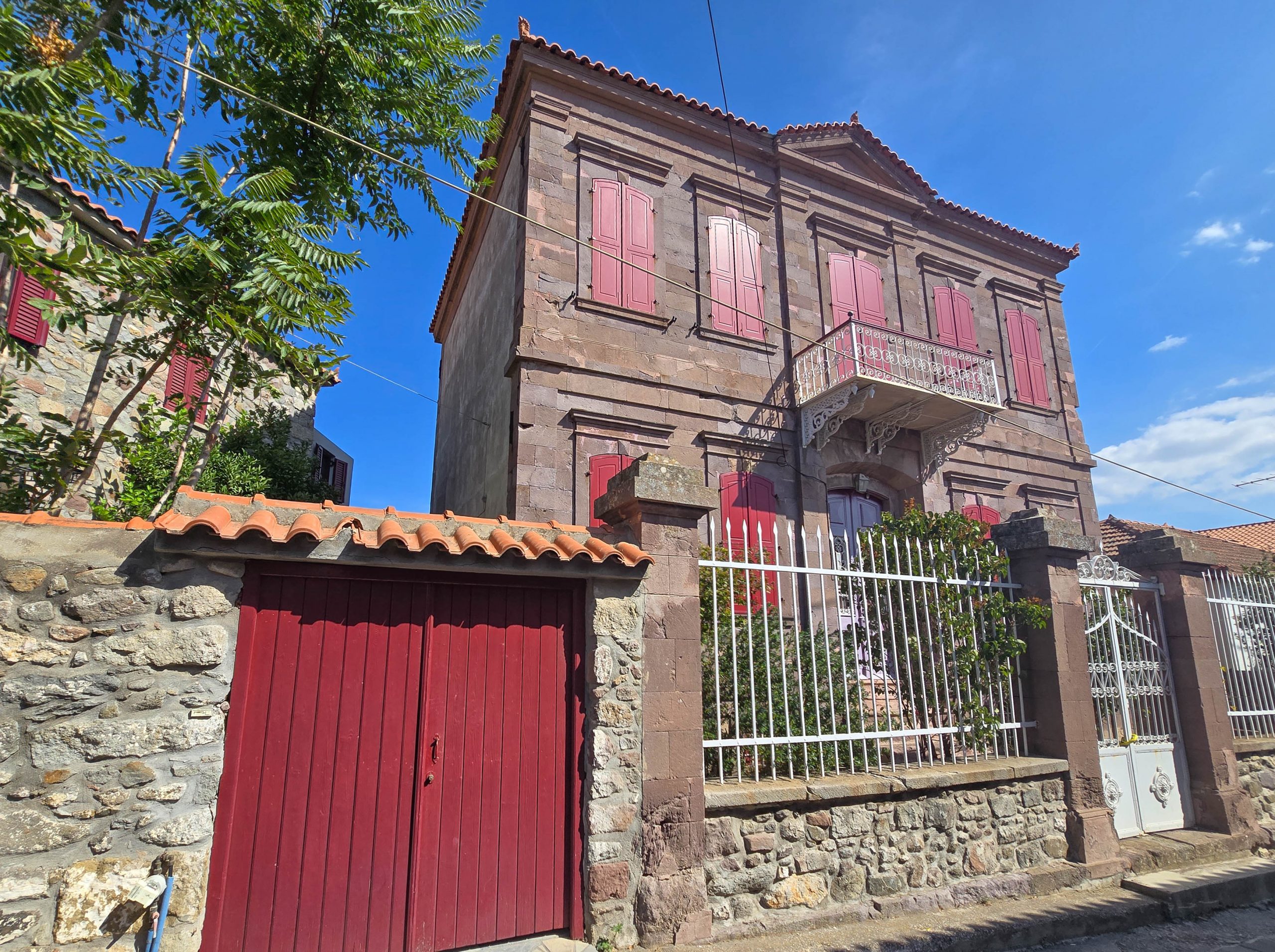
And so, over the remaining days, my rituals continued. A walk to the bridge to say good morning to the turtles, breakfast at Yalos, another walk to the marina and then beyond, into the surrounding landscape. I made use of Elefteria’s lovely little pool, its small snack bar run by her son (sometimes I didn’t need to move all day!). I walked the same streets at different times of day. I watched arrivals and departures. I let the place settle around me. Because sometimes, when a place offers both ease and depth, the most meaningful thing you can do is stay still long enough to notice.
It’s fair to say that at times, Skala Eresou also left me with a strange, unsettled feeling — one I can only describe as being ‘out of sorts’. At first, I couldn’t quite fathom whether this was simply part of adjusting to Peter’s absence, or a combination of quieter, less tangible things. I had time — more than enough time — to sit with it, and eventually I realised what it was. I felt like an outsider.
Not in the way I often do when travelling solo, happily observing life from the periphery, never quite alone. What I eventually understood was that Skala Eresou has its own strong rhythm, shaped in part by the women’s festival and the many long-standing friendships it has fostered over the years. There was a sense of a community already fully formed — warm, welcoming, but inward-looking — and for the first time in a long while, I felt less like an observer and more like someone passing through the edges of something well established. I think also the liveliness of the place seemed to leave less space for connection.
After further reflection, I realised that Skala Eresou had given me the space to rest, recalibrate, and the time to figure out the direction of travel — literally — and in that sense, it was mission accomplished. It was now time to move on, and I decided to head north-west to Sigri, drawn by the quiet contrasts and small curiosities that make Lesvos such a rewarding island to explore.
🏩 Book Skala Eresou Accommodation here
Discover more from A Greek Oddity
Subscribe to get the latest posts sent to your email.
Fifteen years of writing about Greece. Thirty plus years of travelling it. Now condensed into a travel planning toolkit.
Take a look


What a lovely place – pleased you had some time to relax Stephanie.
Thank you Liz. Yes it was a lovely place to have a bit of downtime! ❤️