
Exploring Lesvos: Plomari, Agiasos and a Last Night at Fat Jimmy’s
We were absolutely thrilled with our accommodation, The Secret Garden. The bed was so sumptuously comfortable that the moment we hit the mattress, we were both out cold. It was a little further from the town centre than I might normally choose, but still perfectly walkable to the port (20-25 minutes), the bus station, and the centre of Mytilini. That extra ten minutes paid off handsomely, because this place was exceptional.
The Secret Garden describes itself as a small complex of eight carefully designed apartments, where the experience doesn’t begin and end with the room itself. That’s no exaggeration. The beautifully manicured garden on the ground floor and the roof terrace upstairs were perfectly thought through, calm and inviting. Inside, everything had its place: even the bed lifted to reveal a huge drawer underneath, housing storage, an ironing board, an iron and a hairdryer, keeping the space sleek and uncluttered. The kitchen was well equipped, and there was even a small gift bag waiting for us.
Check-in was entirely contactless. We were sent codes in advance, from the secure front gate to the digitally managed apartment door. Communication with the hosts was remote but efficient and friendly, and it all worked seamlessly. Honestly, it was the outdoor spaces that stole the show. Truly stunning!
🏩 Book Secret Garden Studios here
With just two days on Lesvos before Peter had to fly home, I knew exactly where I wanted to take him first. As someone who appreciates ouzo rather more than the average person, Plomari felt like the obvious choice.
I like the slightly chaotic bus station in Mytilene. It’s a wonder how so many buses manage to park in such a small space, albeit rather haphazardly. The office where you buy your tickets, however, is very organised. The same man seems to operate it with efficiency and is always happy to share additional information with non-locals. We purchased our tickets and waited. While we did, several Roma children worked their way around the passengers. It’s never easy to know how to respond, but Peter had some Turkish lira in his pocket, which seemed to send them on their way, content enough.
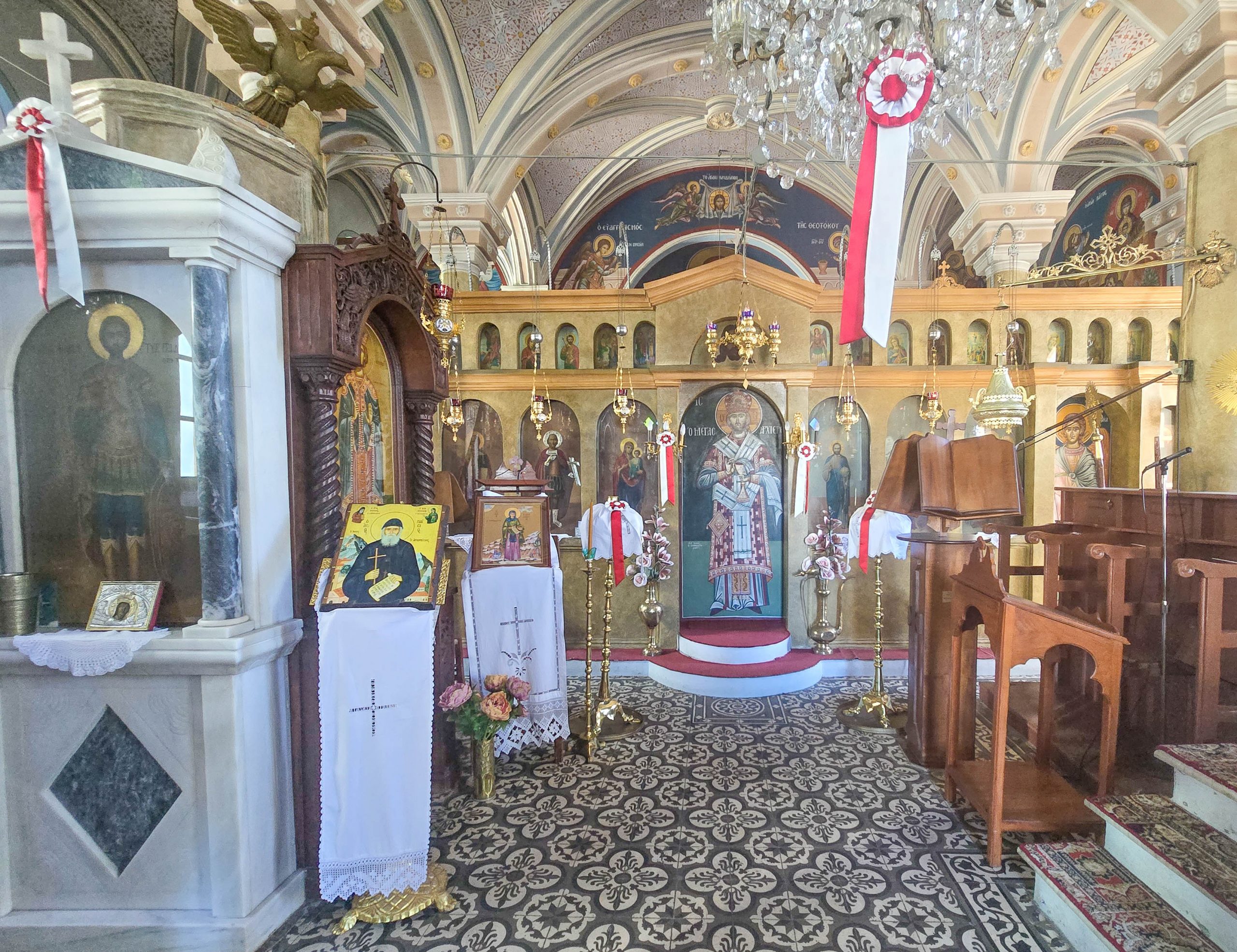
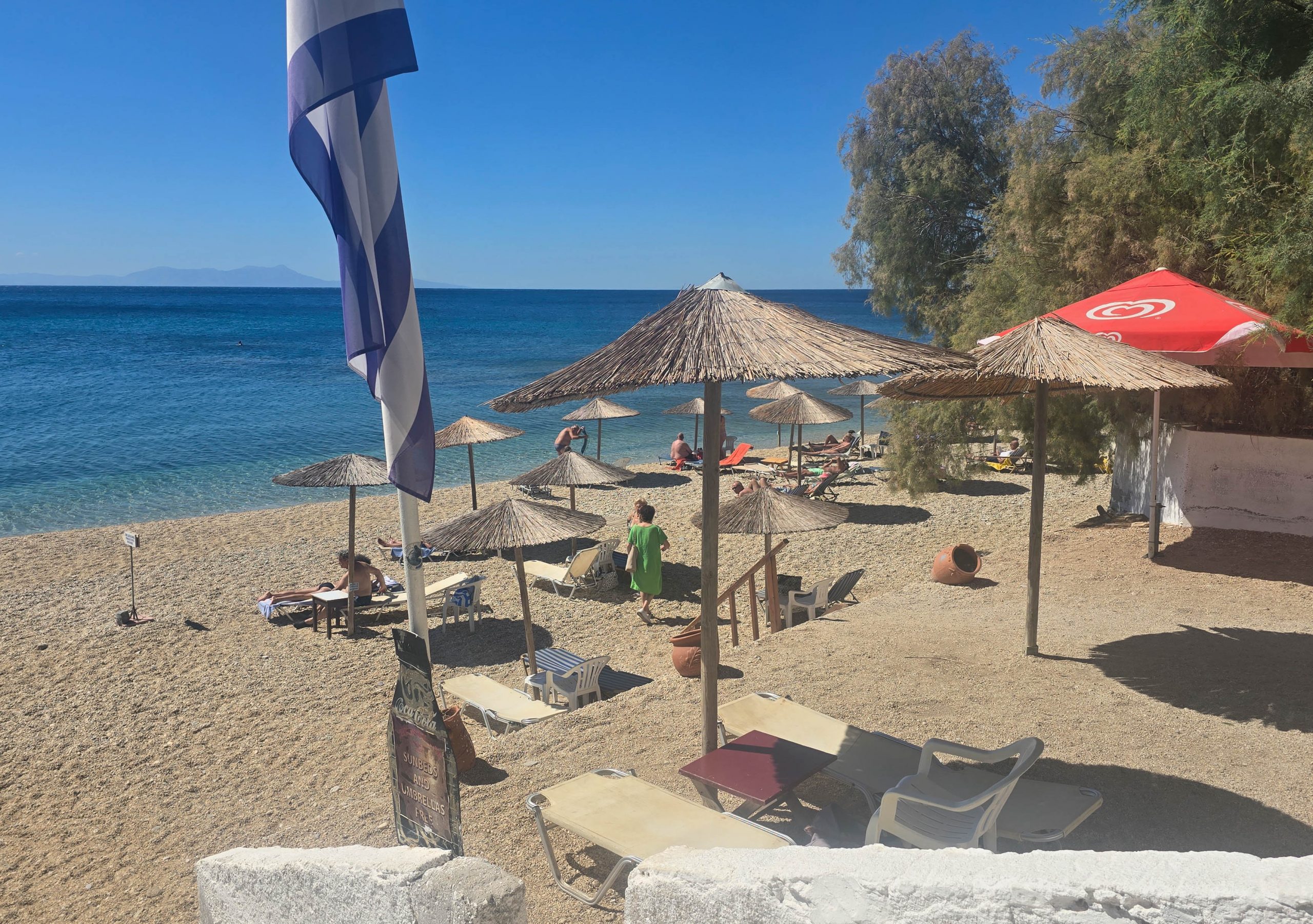
The bus was on time, and soon we were rolling through thick swathes of olive groves, the landscape opening out in a way that always reminds me just how fertile Lesvos is. I’d learned from a previous visit to ask the bus driver for a request stop near the distillery rather than riding all the way into town and trudging back uphill. A small group of visiting Greeks requested a stop at the small hamlet of Agios Isidoros, located just before the distillery, so we jumped off with them. The small church of Agios Isidoros sits above the beach that takes its name. The beach is one of the island’s most popular swimming spots, combining clear water with easy access from town.
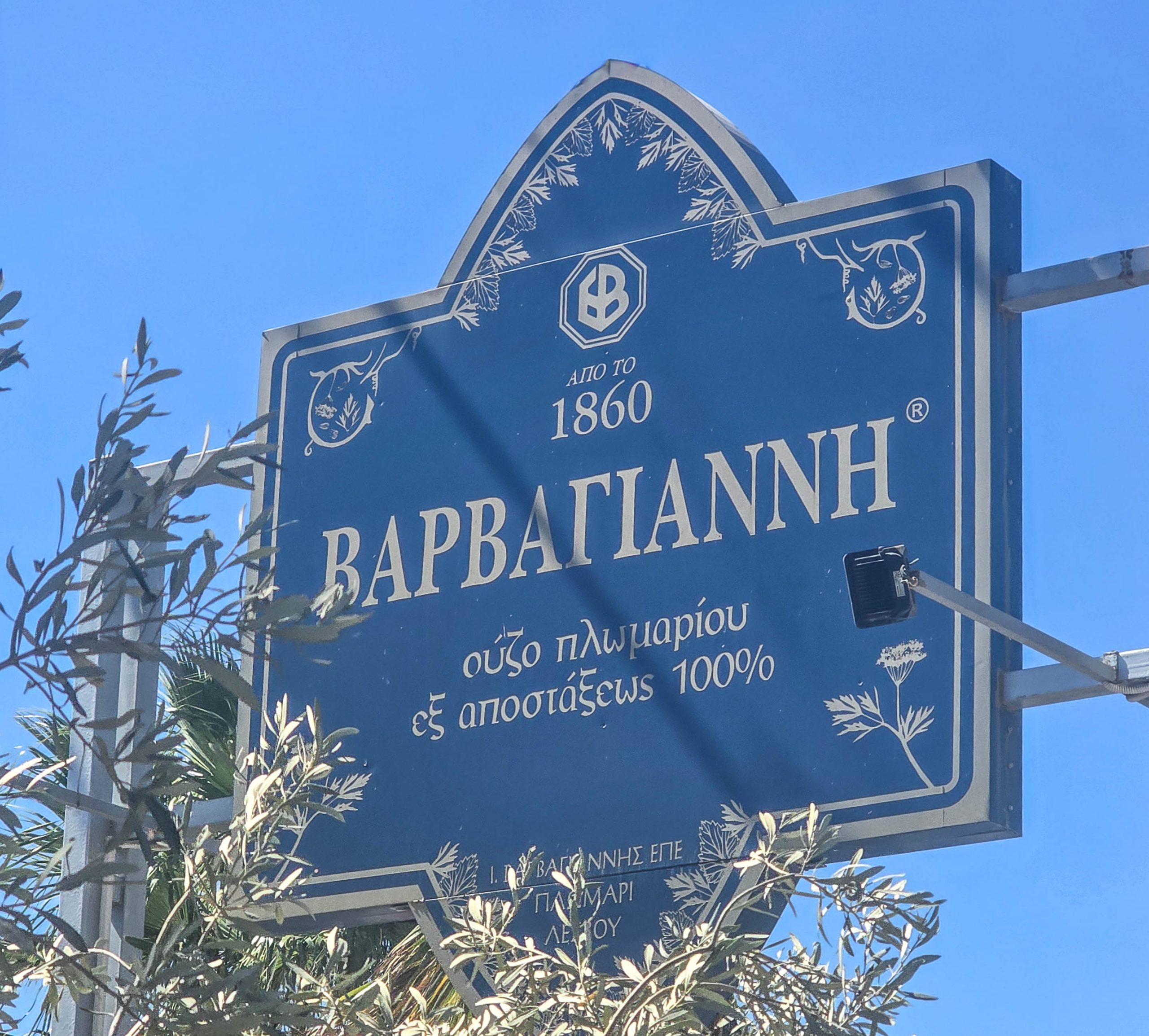
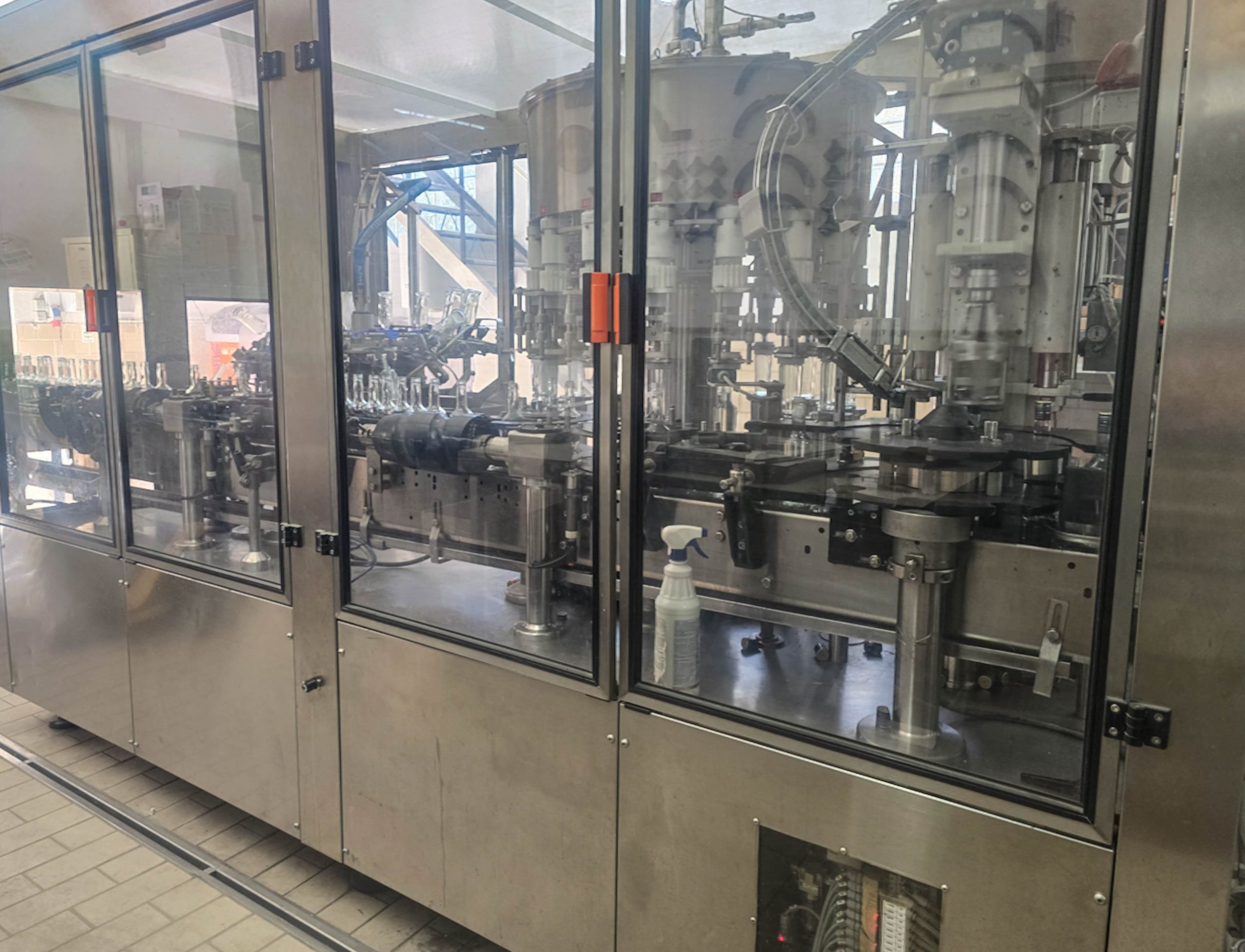
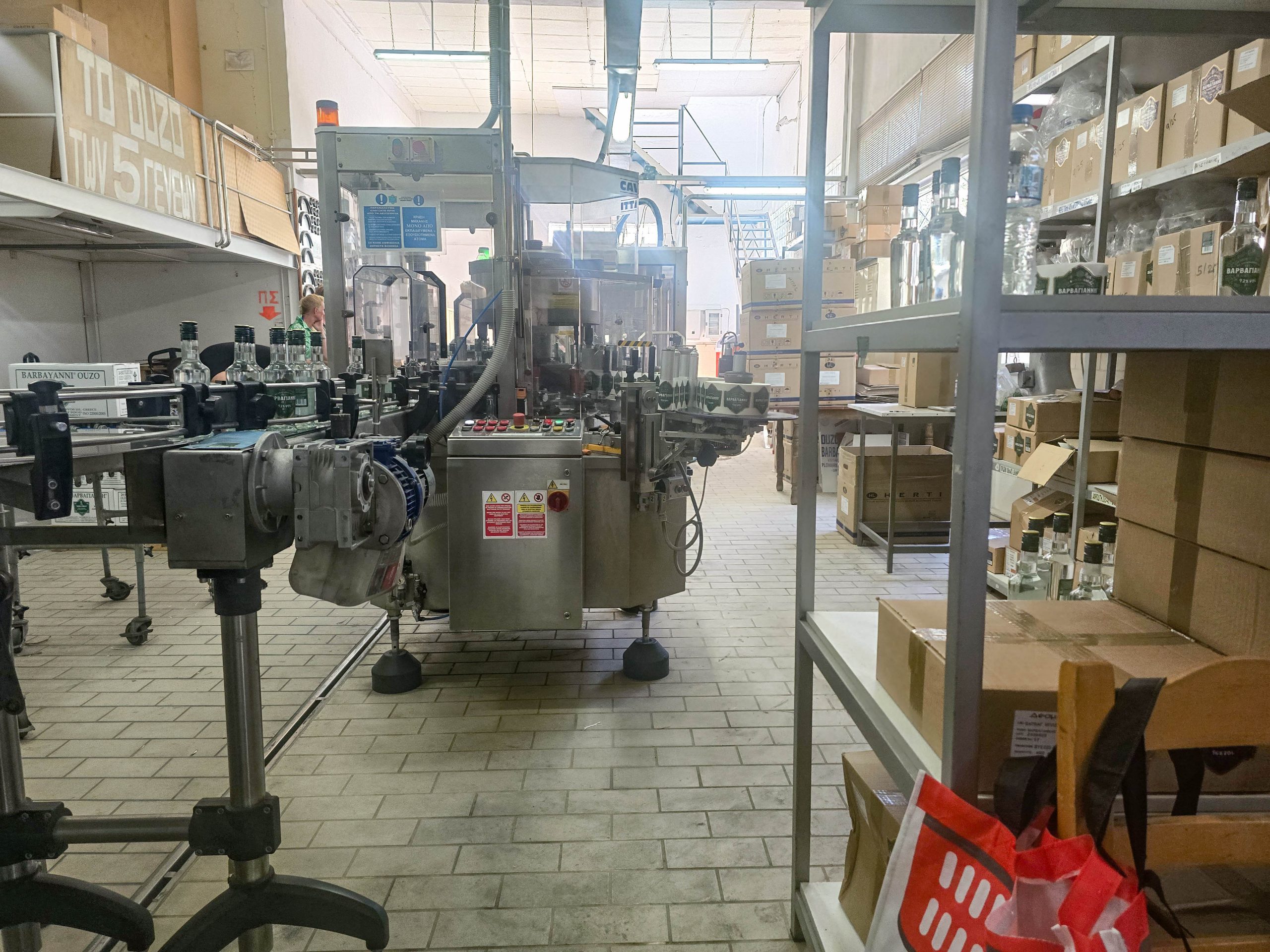
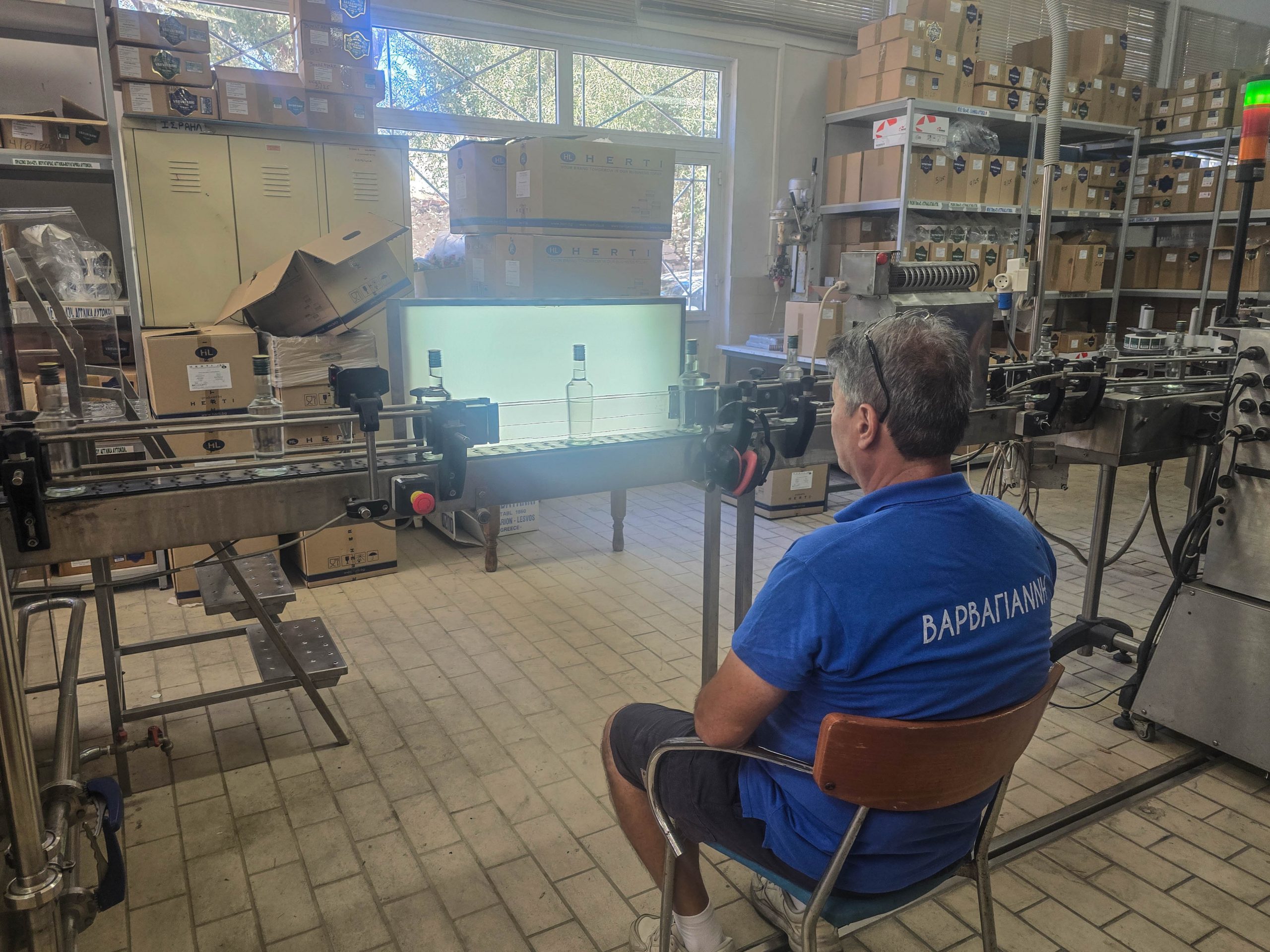
Just a few minutes walk from the beach is the Barbayanni Ouzo Museum. A coach party had just arrived, but we were invited to join them straight into the factory before returning to the museum itself. Inside, ouzo production was in full swing, and it was oddly mesmerising with its Willy Wonka-like production line. Bottles moved along conveyor belts, filled, capped and labelled with rhythmic efficiency. Despite the machinery, quality control still came down to a man sitting on a chair, scrutinising every bottle as it passed. Anything that didn’t meet his standard was removed without hesitation. Hmmm – I could do that job!
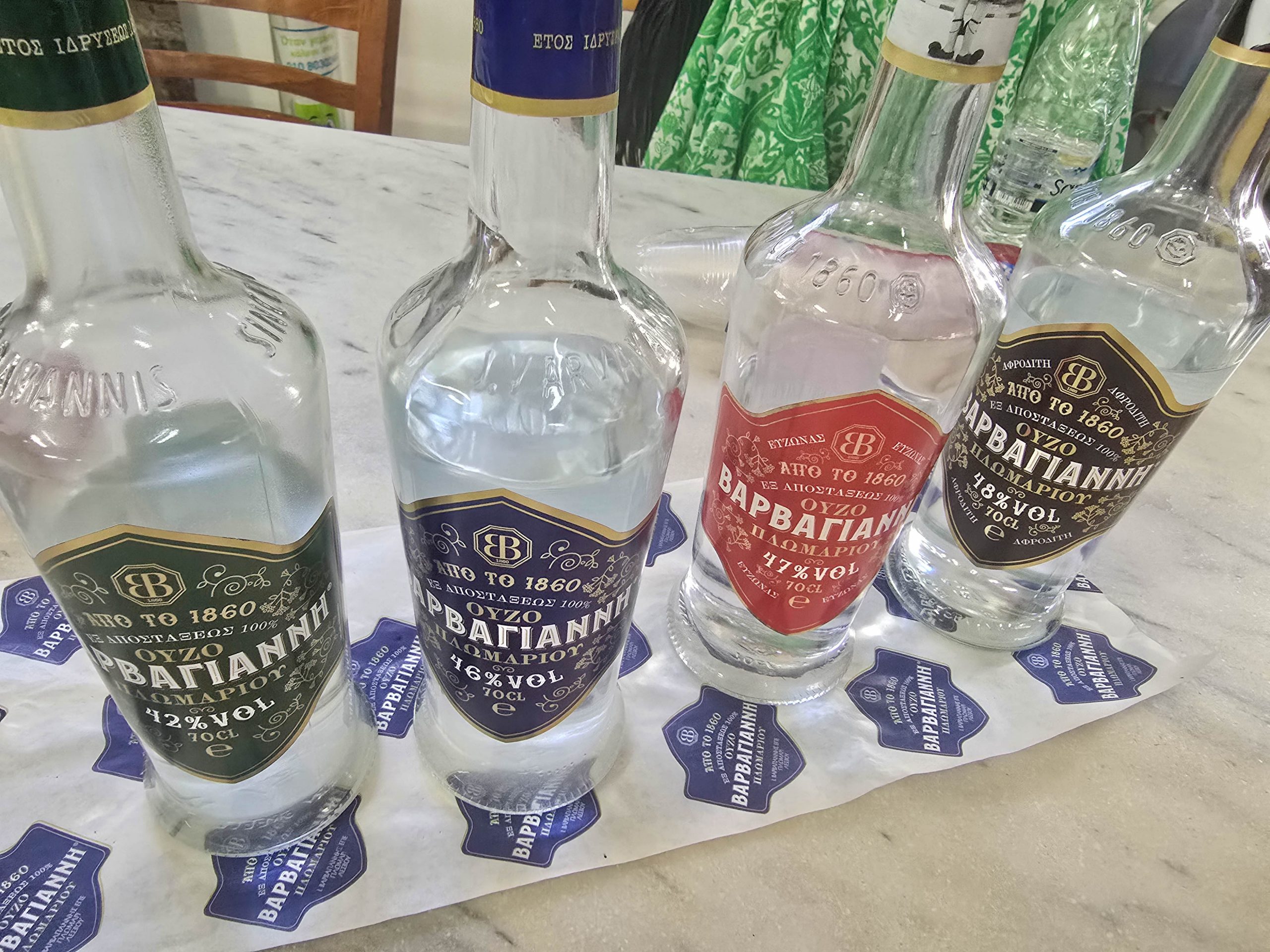
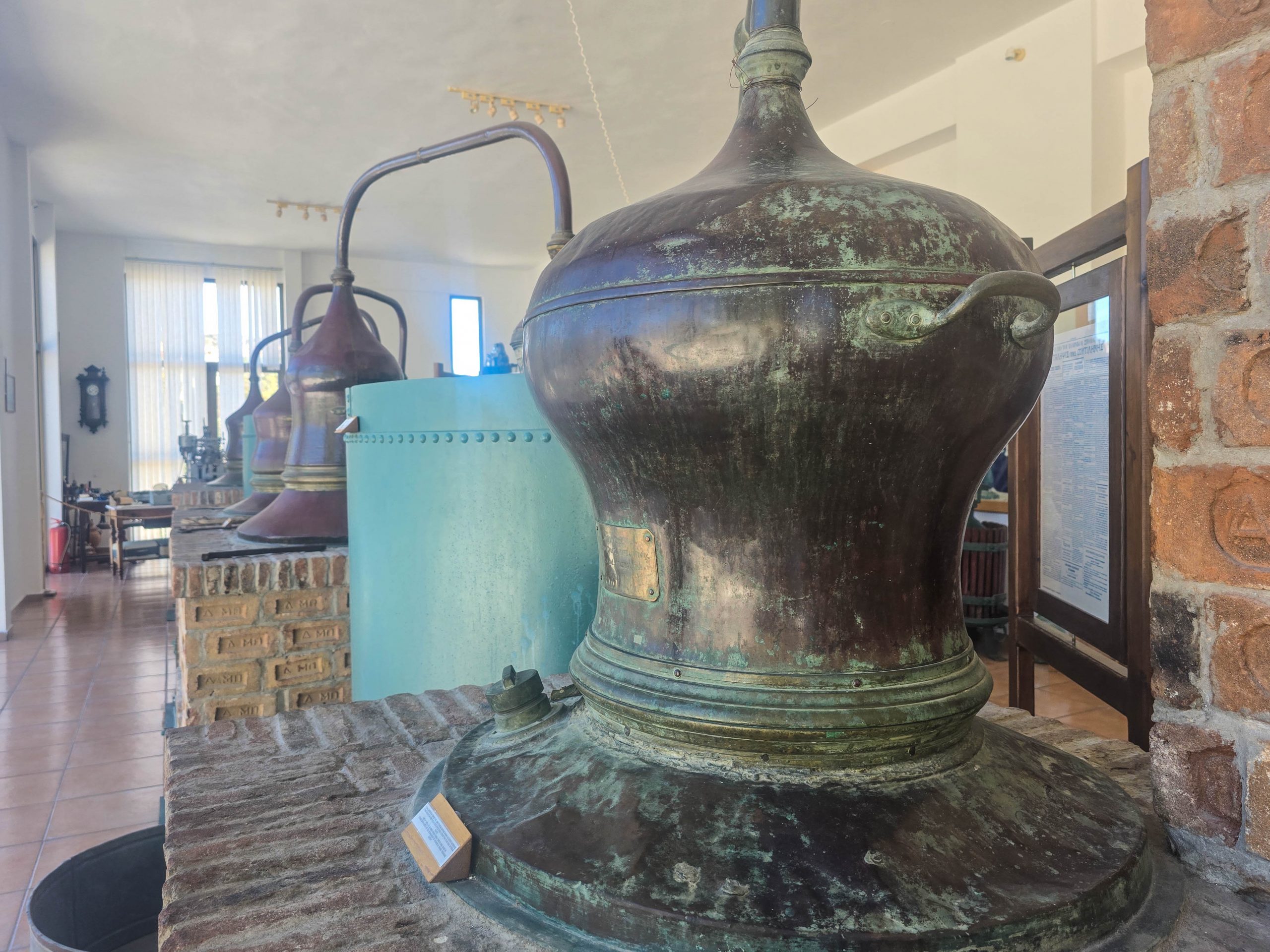
We were offered tastings of the different varieties and, unsurprisingly, didn’t leave empty-handed. A bottle of Barbayanni Black, at a robust 48%, will be coming home with us. Back in the museum, we were shown the old copper stills and given a clear explanation of ouzo production and Plomari’s long association with it. The Barbayannis story begins in the mid-19th century with Efstathios J. Barbayannis, who arrived in Plomari around 1860, bringing with him knowledge of distillation acquired through trade and work beyond the island, including in major centres such as Constantinople. Like many Greek families of the period, the Barbayannis family moved within the wider Aegean and Asia Minor world, where commerce, shipping and craft knowledge circulated freely. Plomari, with its access to good anise, fresh water, olive wood for fuel and a busy port, proved an ideal place to put that expertise to use.
Efstathios established a distillery that soon gained a reputation for its quality. Traditional copper stills, including one dating back to 1858 brought from Constantinople, are now displayed in the museum. The business passed through successive generations of the family, expanding alongside Plomari’s growth as an ouzo-producing centre, and remained firmly family-owned throughout political upheavals and changing times. More than a century and a half later, the Barbayannis name is still closely tied to Plomari, reflecting both the town’s industrial past and the movement of skills and people from Asia Minor into the Aegean islands. Lesvos proudly claims its role in the story of ouzo (as do several other places), but Plomari’s reputation is well earned.
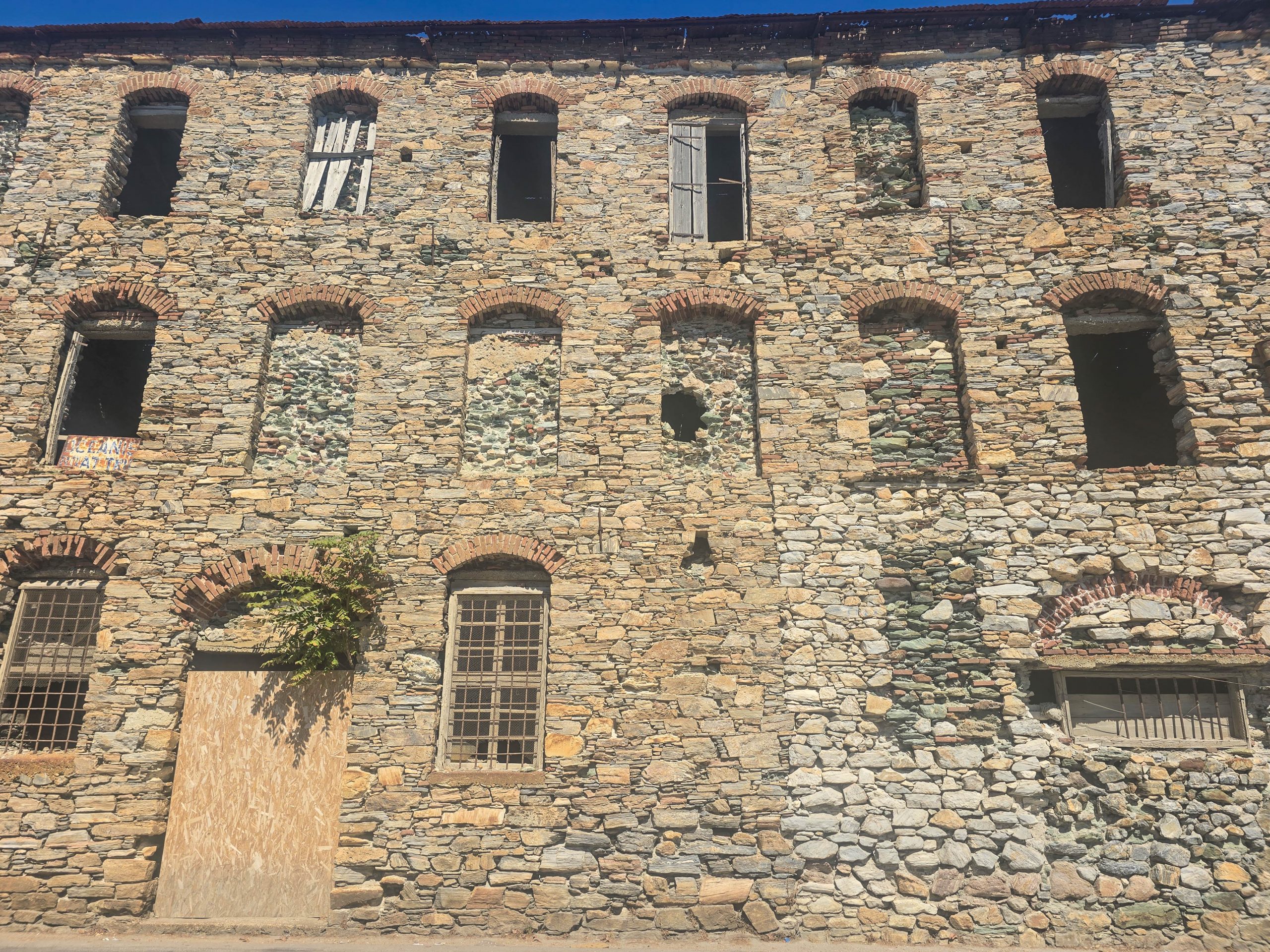
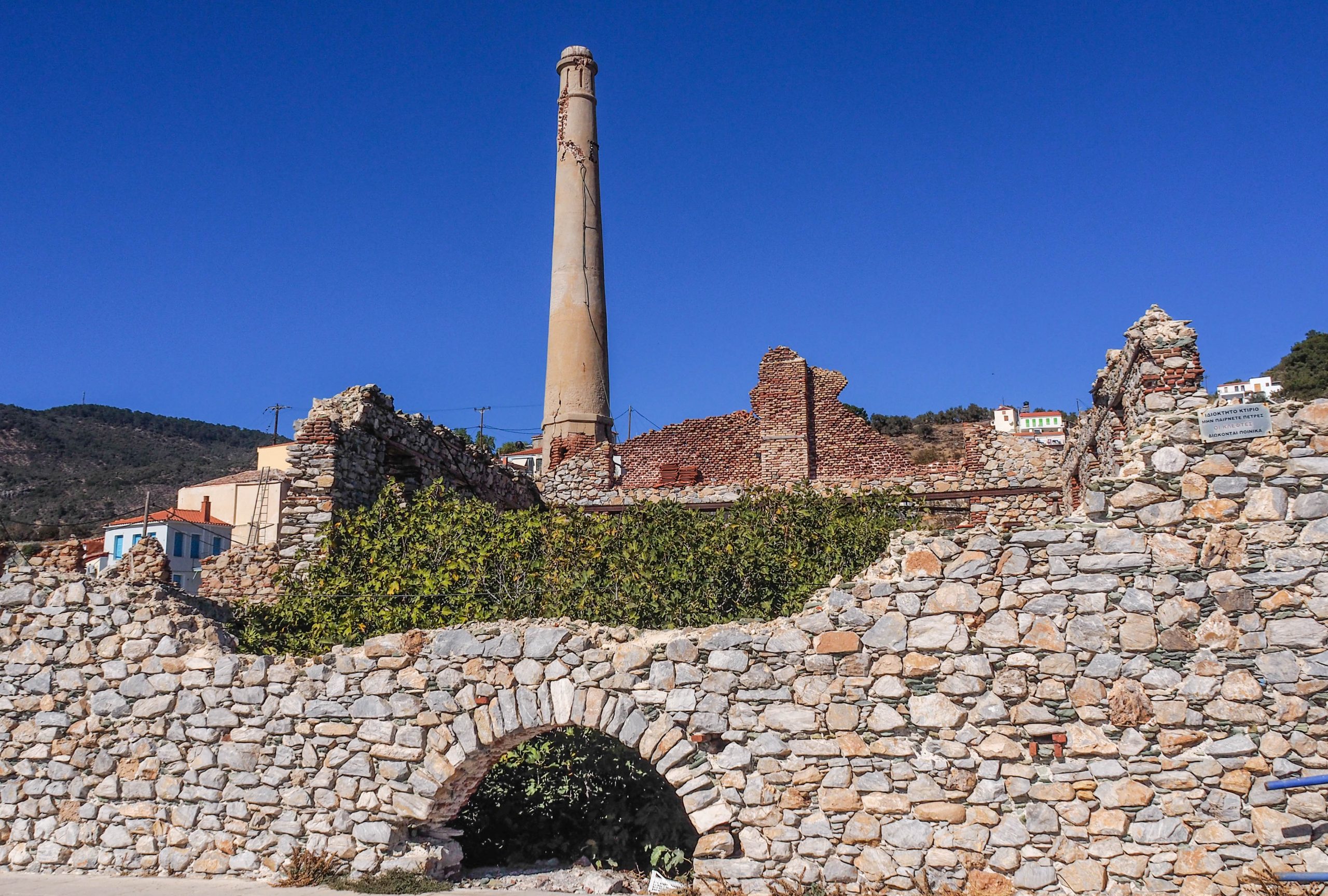
From the museum we wandered into town, walking past golden stretches of sand and some striking but dilapidated industrial buildings along the seafront. One large structure in particular, resembling an old mill, has always piqued my curiosity. Plomari isn’t just famous for its ouzo production. It has a rich shipbuilding and naval tradition, and its shipyards were at one time the most significant in the Aegean. The large stone building on Plomari’s seafront was part of the town’s old industrial waterfront and is linked to the Xypteras factory. It was associated with the processing of olive products, most likely olive oil and soap, drawing on the island’s vast olive groves and easy access to maritime routes. Designed for function rather than appearance, buildings like this once played a central role in the town’s economy before falling into decline. It was later purchased with the intention of housing a maritime and shipbuilding museum that wanted to preserve Plomari’s working past, but as of yet, that vision has yet to be realised.
As we reached Plomari’s centre, it was easy to see why this small coastal town became so closely associated with industry rather than just fishing or farming. Sheltered by the hills behind it and facing the open Aegean, Plomari had everything it needed – fresh spring water, olives in abundance, and a harbour that once connected it easily to Asia Minor and beyond. Walking along the seafront, past long sandy stretches and imposing, slightly crumbling industrial buildings, you get a real sense of its past prosperity. These weren’t decorative structures; they were built for work, for production, and for export, and ouzo still feels woven into the fabric of the town rather than presented as a novelty.
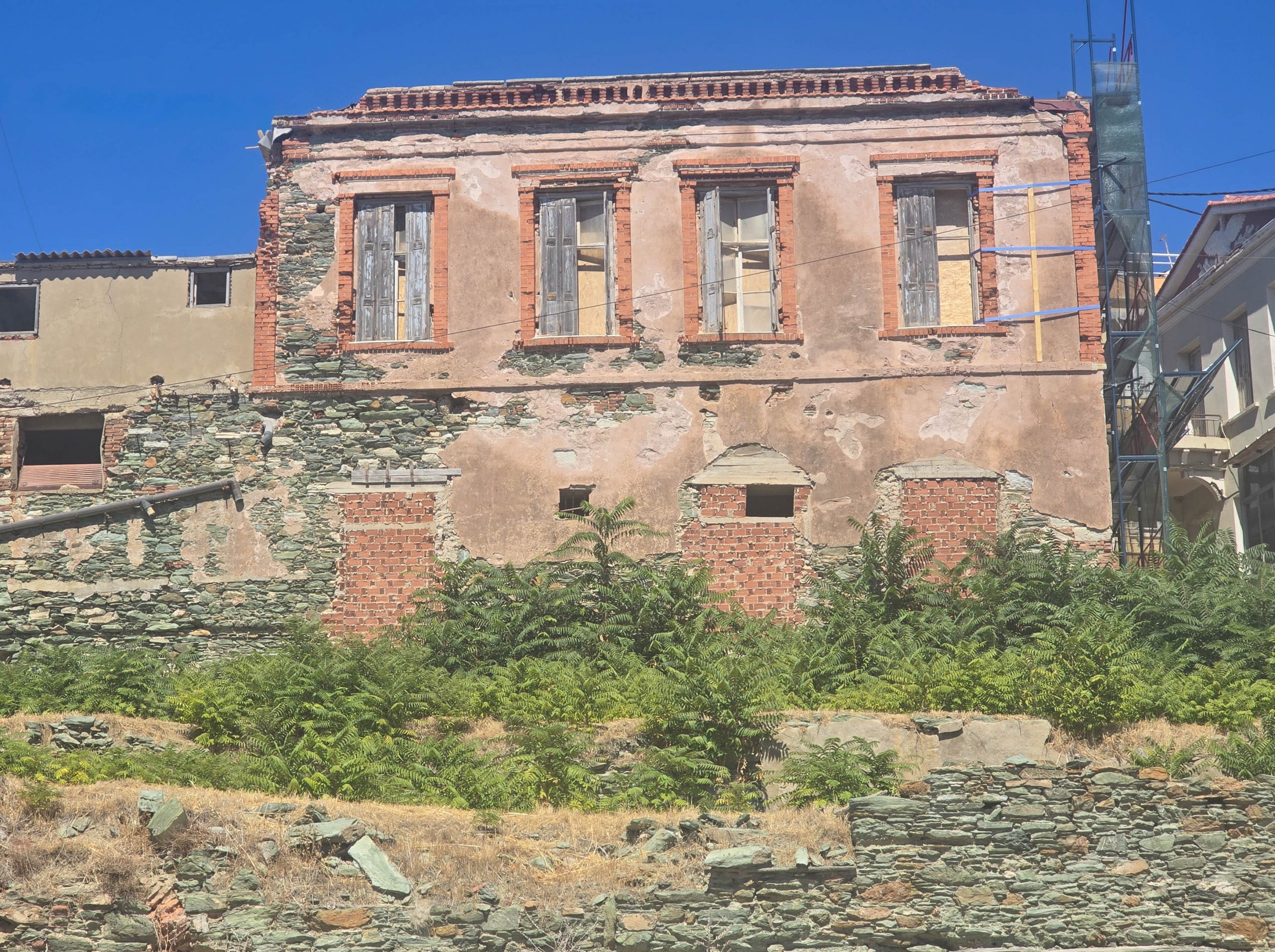
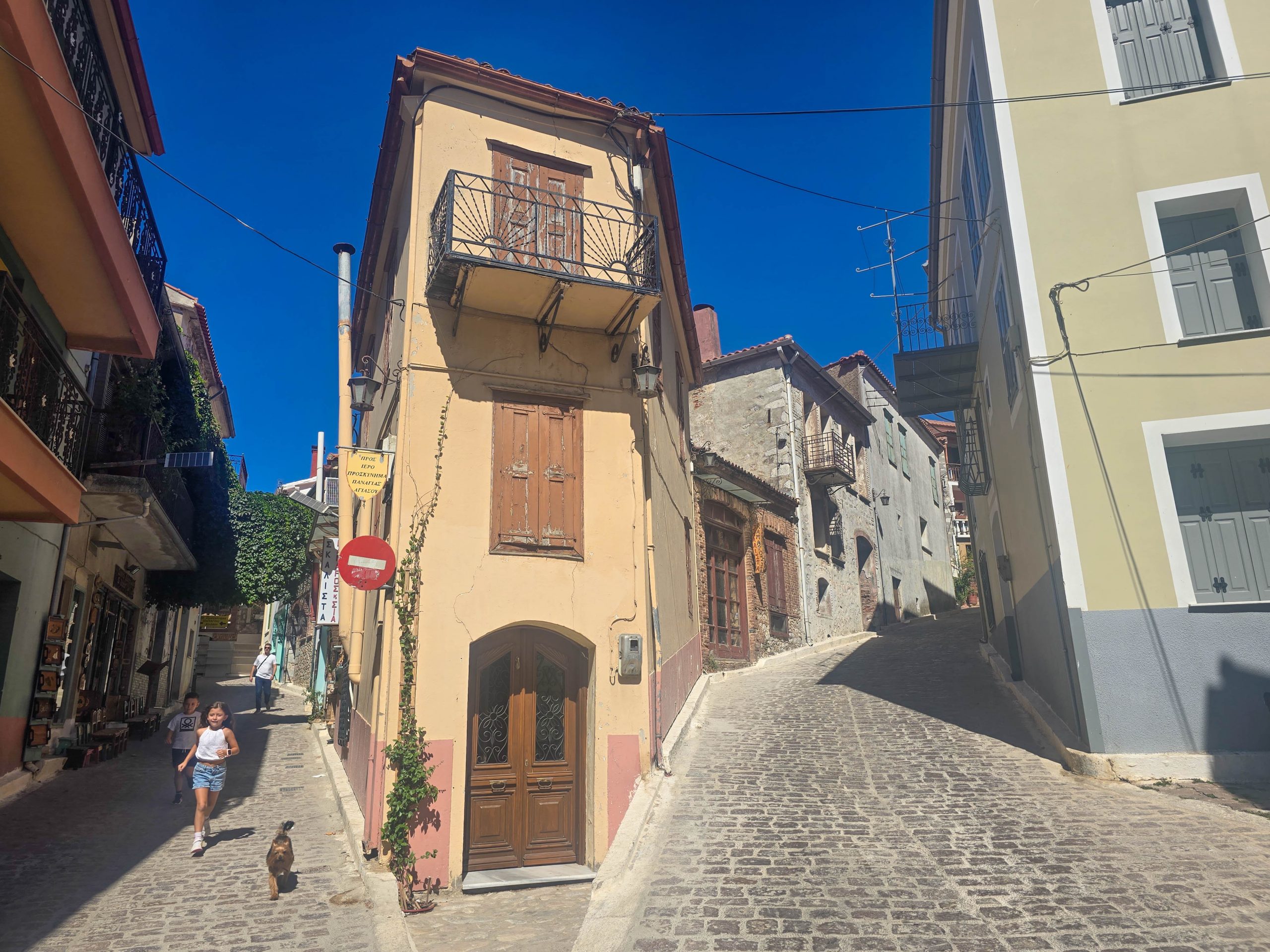
Away from the seafront, Plomari reveals itself as a proper village, with steep streets winding their way uphill and houses stacked tightly into the slope. Many are built in pale stone or painted in soft, sun-faded colours, with balconies that seem to hover over the lanes below. Small cafés and ouzeries appear almost by chance as you wander, often tucked into corners or shaded by trees, and they feel geared towards everyday life as well as passing visitors. There’s a sense that people still use the village spaces as they always have — stopping for coffee, greeting neighbours, sitting outside in the shade — it’s utterly charming.
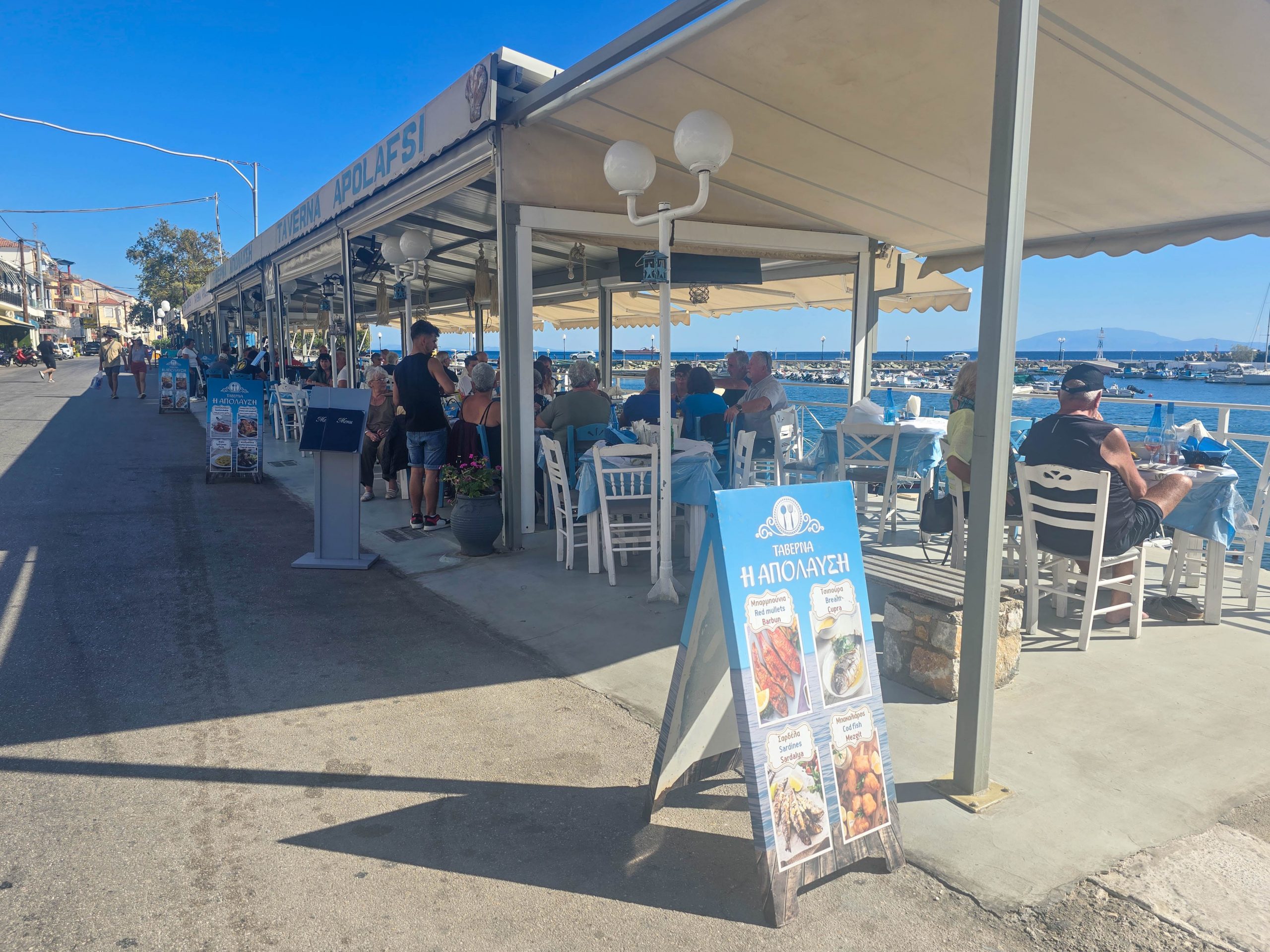
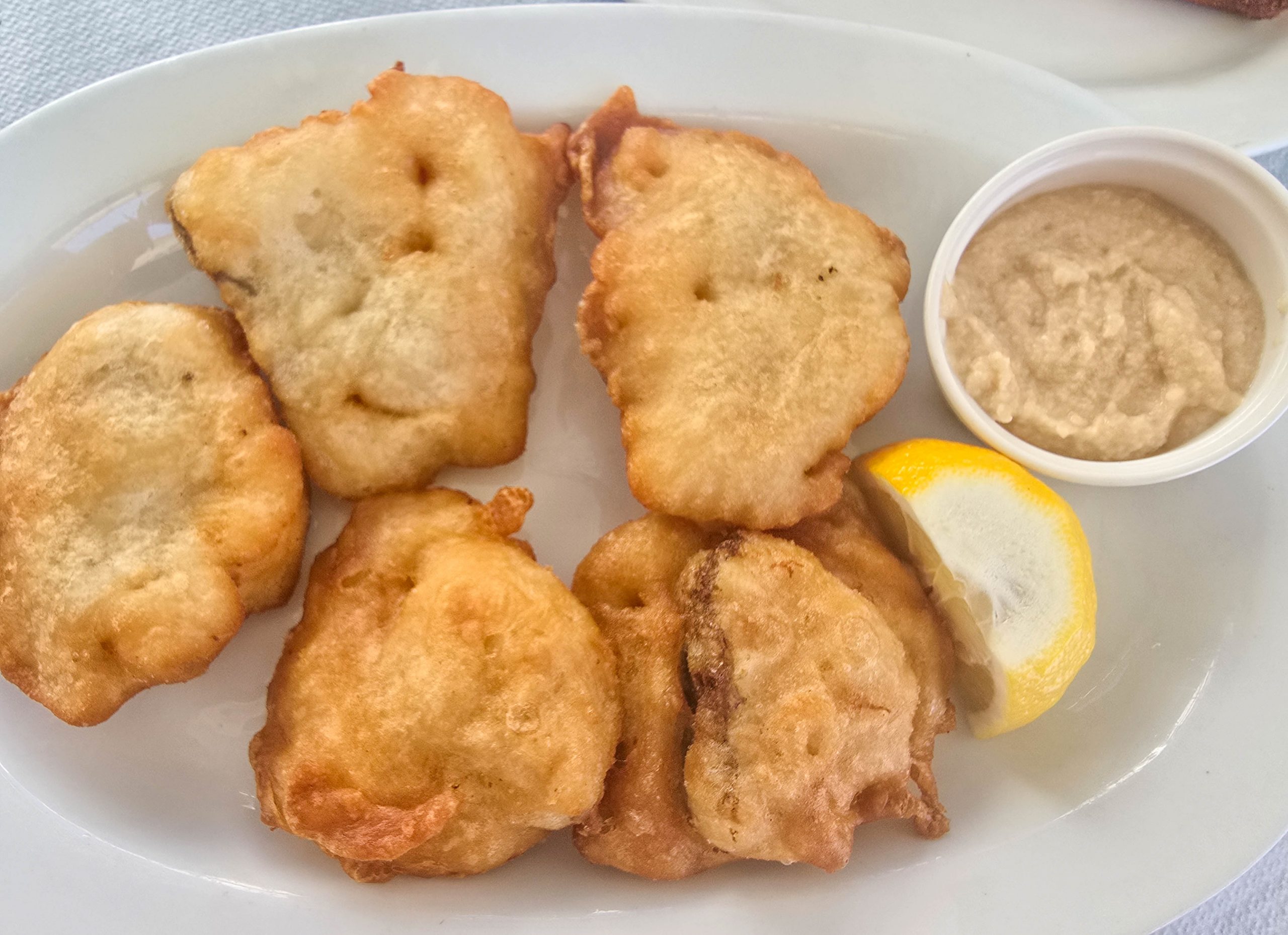
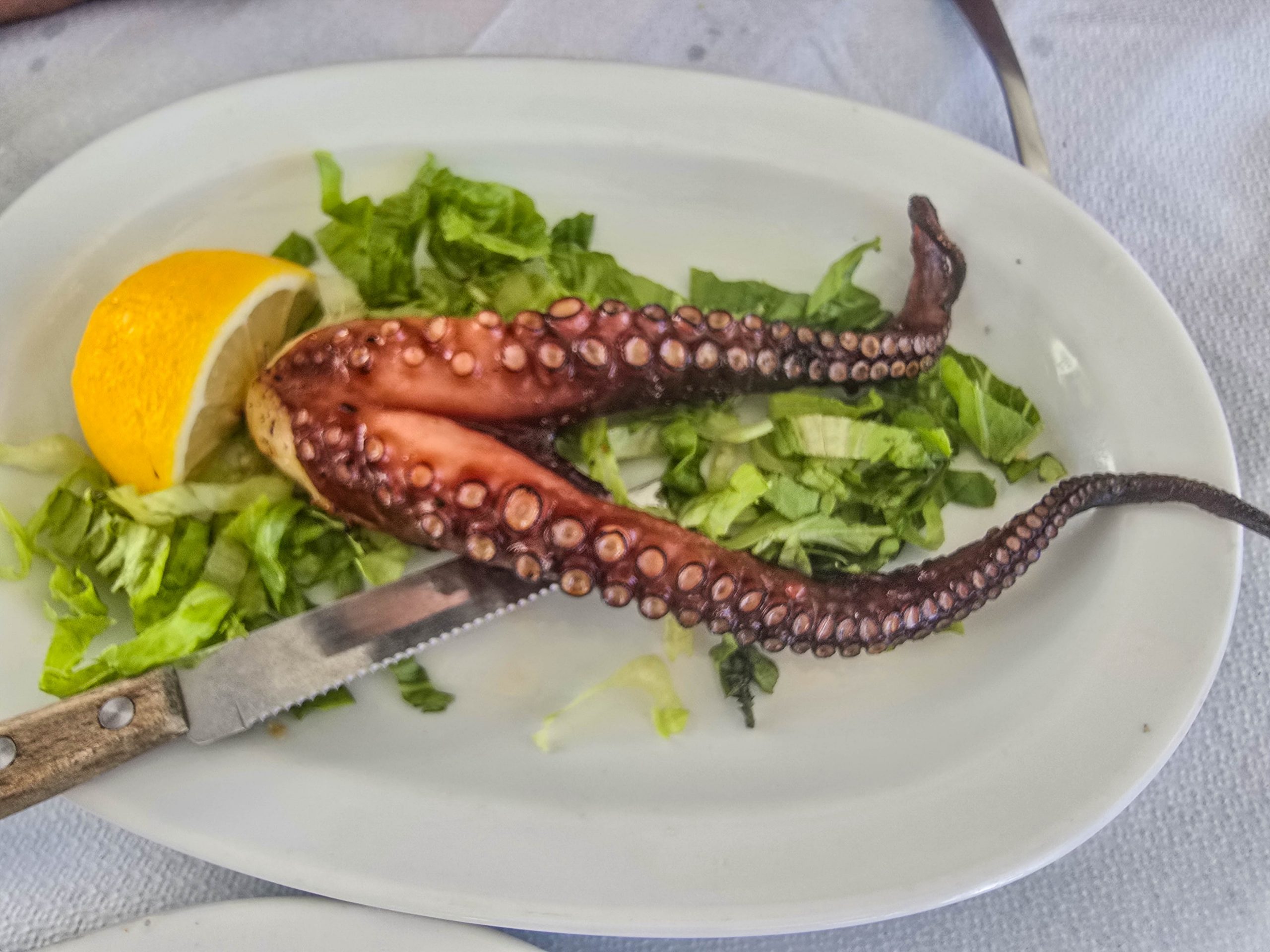
Now feeling a little weary, we stopped at Taverna Apolafsi on the harbour’s edge for lunch. Unfortunately, our timing coincided with the arrival of another coach party and the wait — and the food — didn’t quite live up to expectations. It’s fair to say that I was feeling the weight of yesterday’s travel, a touch of fatigue and perhaps the after-effects of the ouzo tasting, so we sucked it up and put it down to experience. We took a slow amble around the cobbled streets until it was time to catch the bus back to Mytilene. The rest of the day was written off in the best possible way – rest, sleep and a quiet evening. We determined to grab tomorrow by the horns.
*********
Peter’s final full day on Lesvos felt like it needed something special, and Agiasos fitted the bill perfectly. Sitting on the slopes of Mount Olympus, it’s one of the island’s most characterful villages. Before heading to the bus station, we began with bougatsa and tea at Sugar House, just behind the harbour. One of the best places in Mytilene for bougatsa IMHO.
The journey up to Agiasos was beautiful, revealing just how fertile and verdant Lesvos really is. As the road climbed, the air seemed to cool, and the landscape shifted, becoming noticeably greener and more enclosed. Chestnut trees replaced olives, and the village appeared tucked into the slopes of Mount Olympus as though it had grown there naturally rather than been built. Agiasos has long been shaped by its position — high, self-contained, and inward-looking.
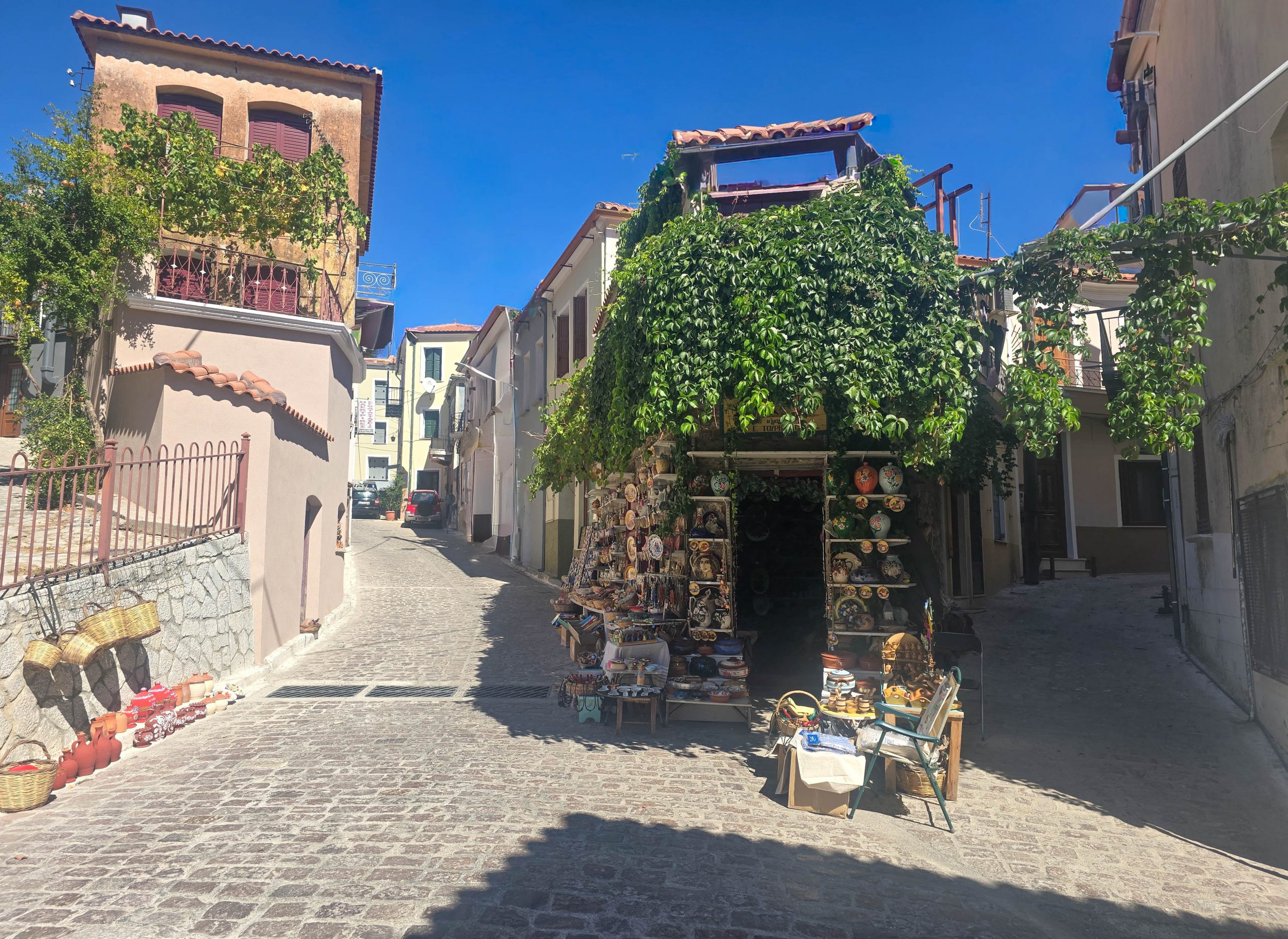
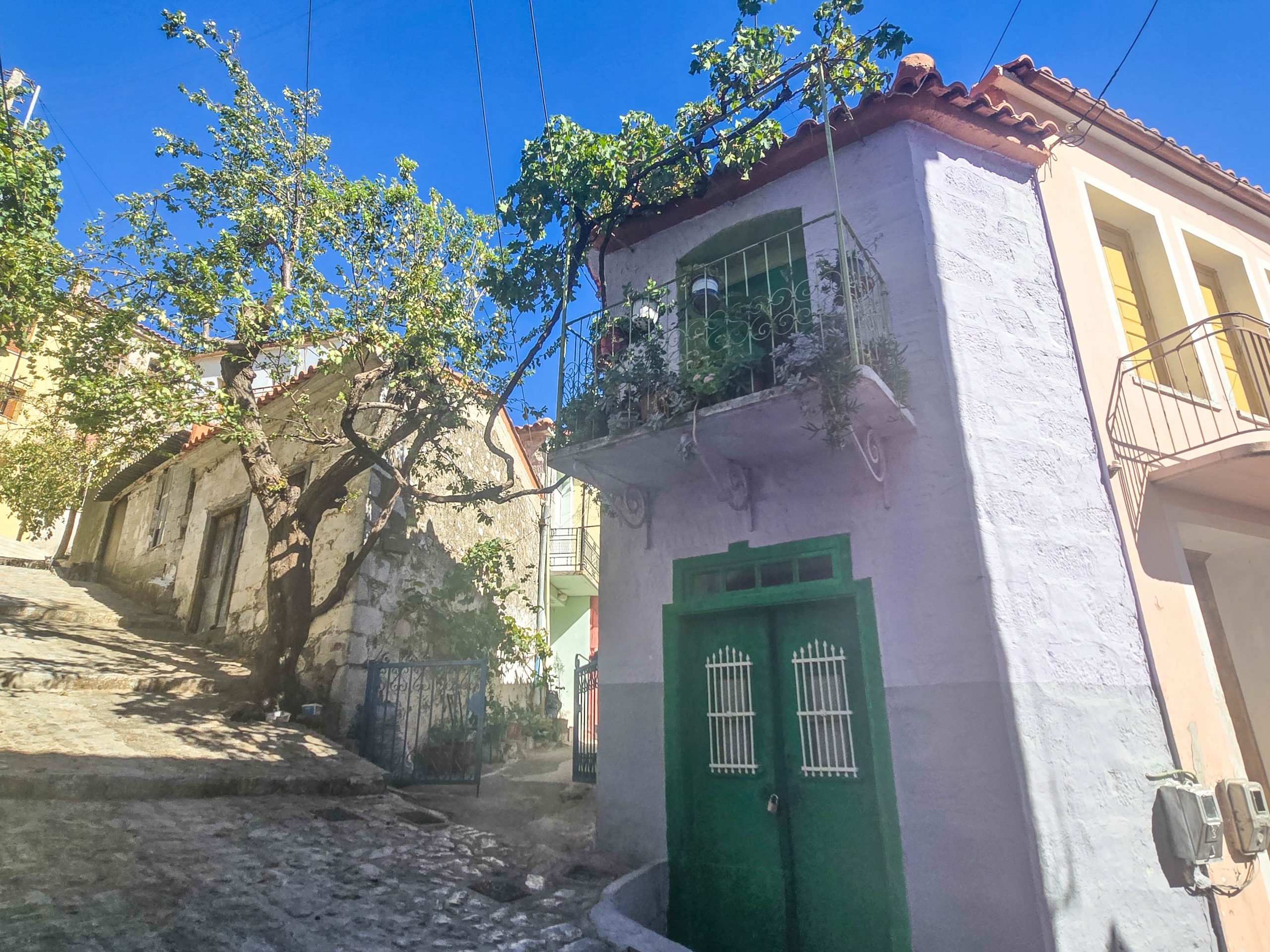
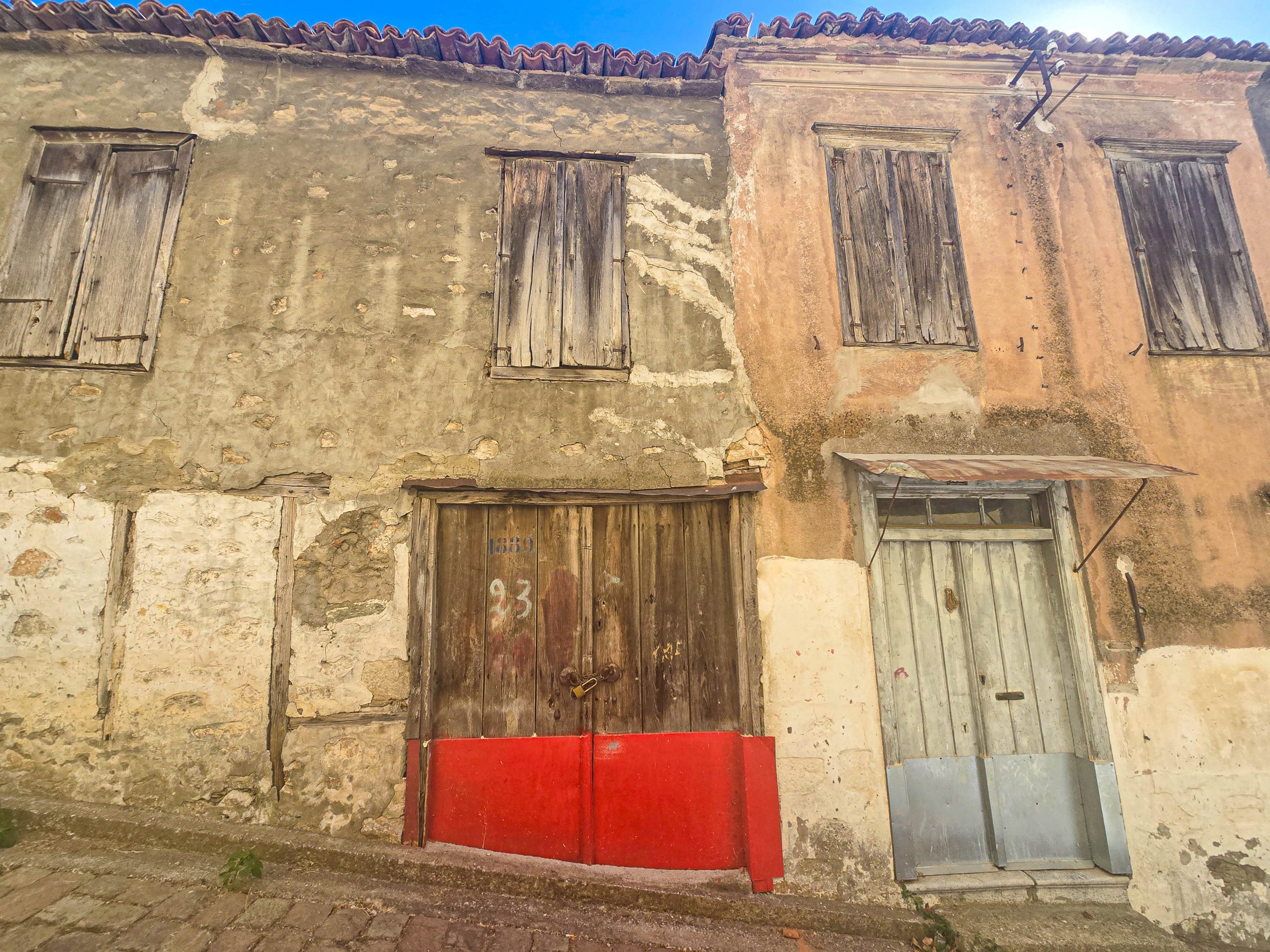
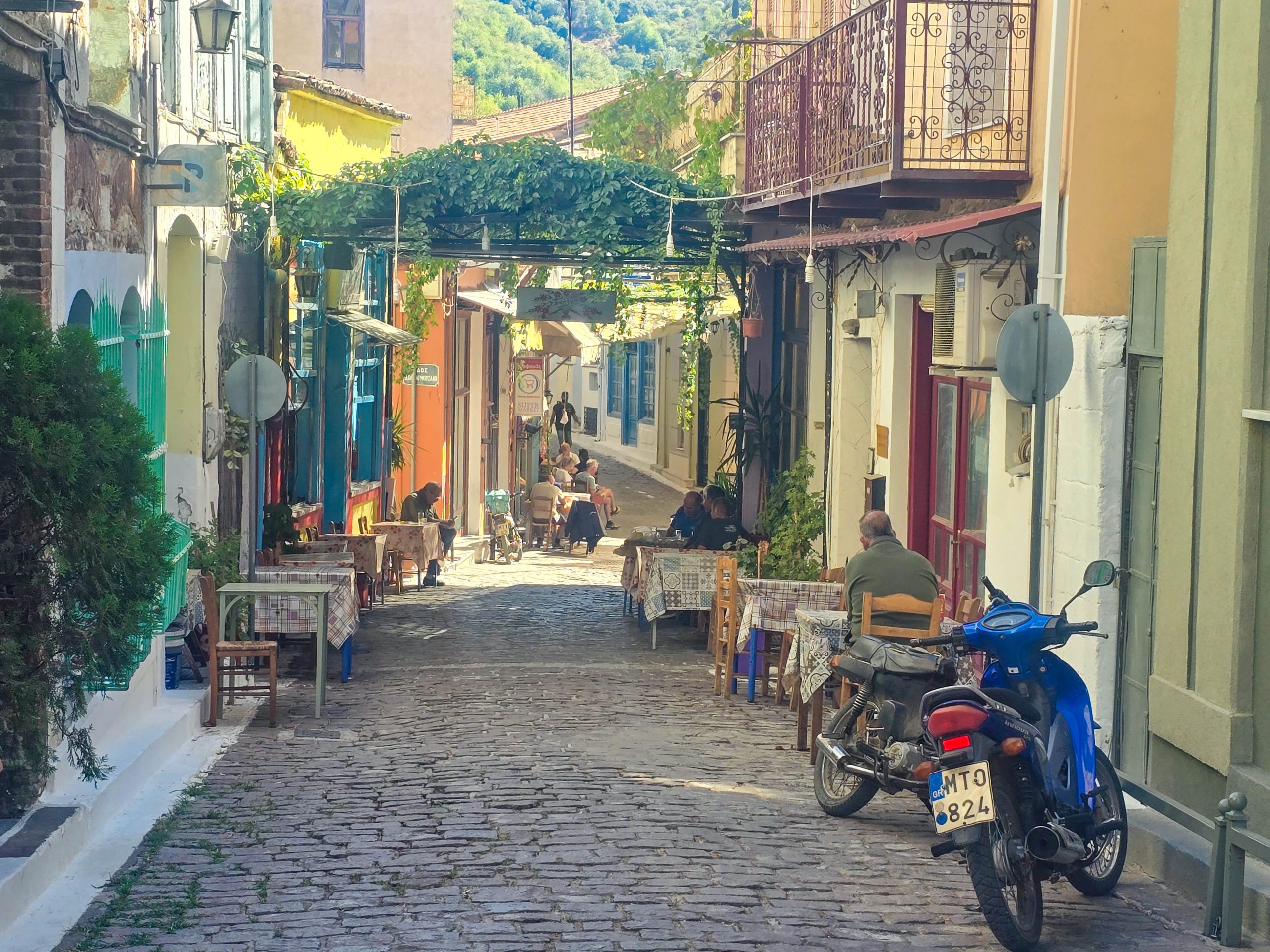
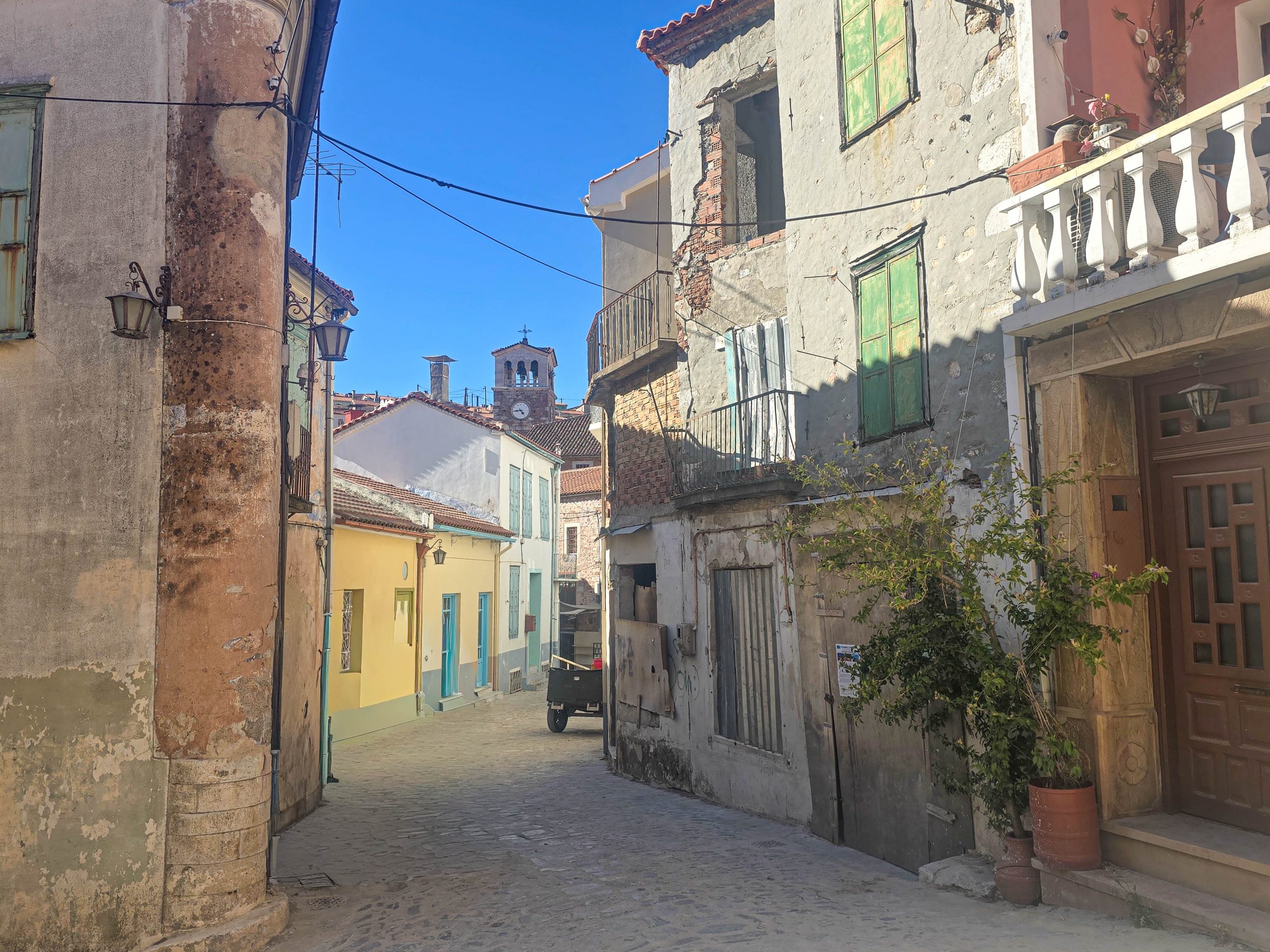
Once there, exploration is effortless. One cobbled street draws you upward into the village, and at the fork, it hardly matters whether you take the left or the right. The houses feel as though they belong to another era, frozen gently in time.
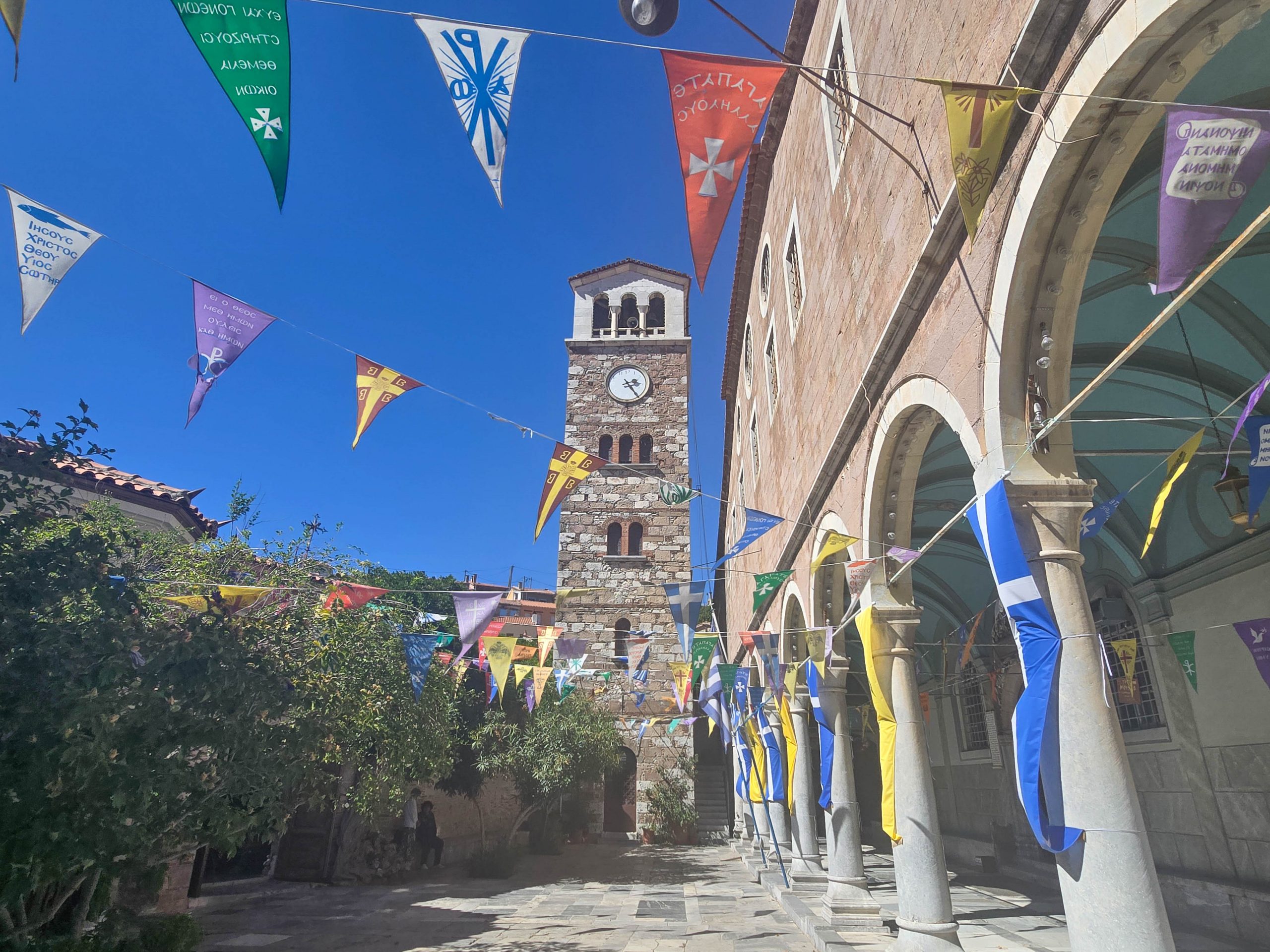
We reached the main square and passed through a large door into a courtyard, where the village’s Church of Panagia sat in all its glory, decorated with brightly coloured bunting. The Church is one of the most important pilgrimage sites on Lesvos, built around a revered icon of the Virgin Mary, believed to date back to the Byzantine period. The church has long shaped the religious and cultural life of the village, drawing worshippers from across the island, particularly during major feast days when Agiasos fills with visitors. The interior was magnificent, although photography wasn’t permitted inside.
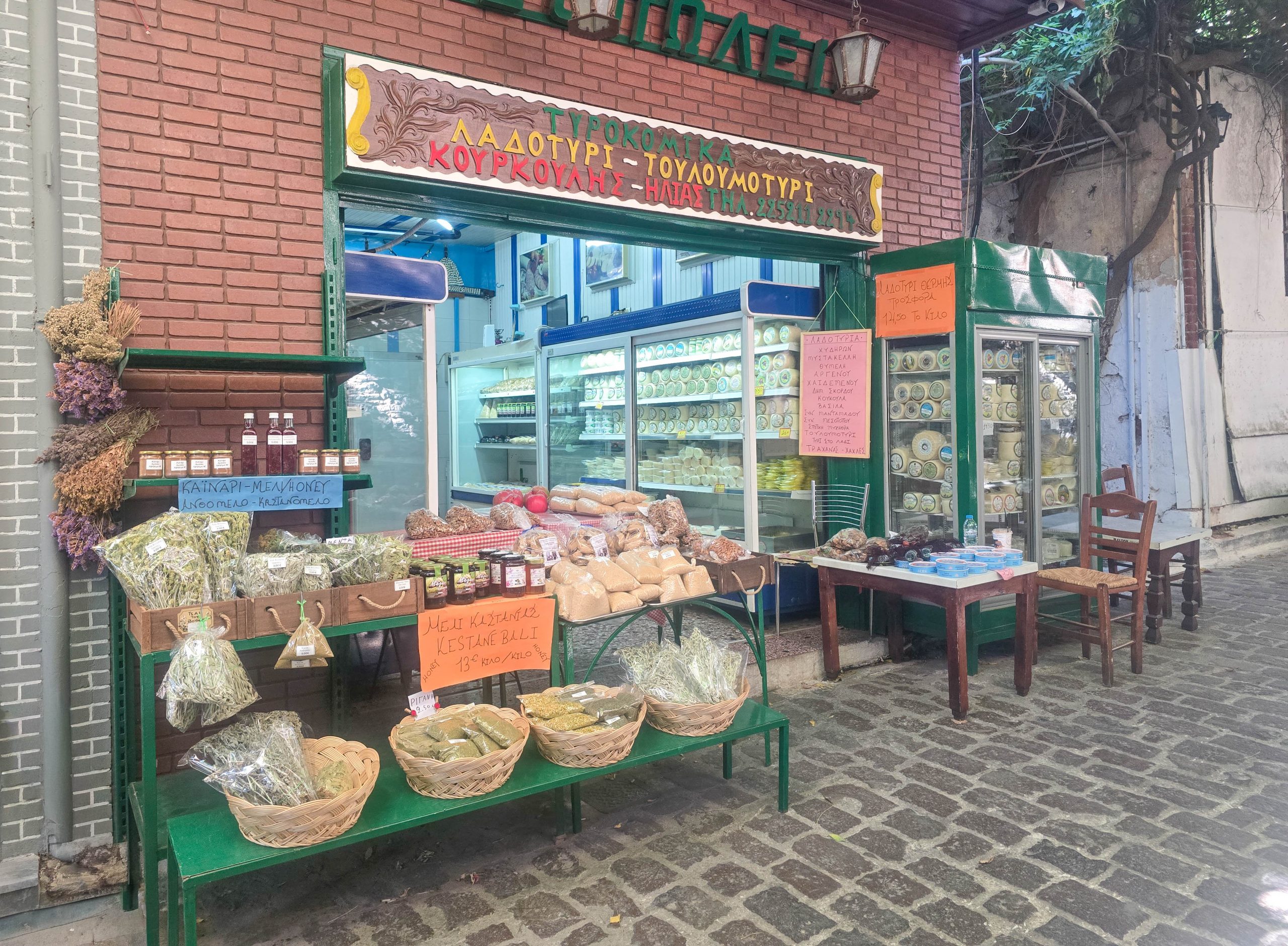
When I was here last time I’d visited a small museum called the Museum of Traditional Professions, but after circling the perimeter of the church several times, I couldn’t find it. It seemed it was no longer there, which was a shame. Another door opposite the church led us out into a cobbled street lined with artisan shops, cafés and farmers selling local produce. The village had developed around the church, and it still retains a strong sense of community, historically supported by crafts and trades that suited mountain life. Wandering its cobbled streets, with houses stacked neatly into the hillside, it felt less like a place designed to impress and more like one that simply carried on doing things the way it always had.
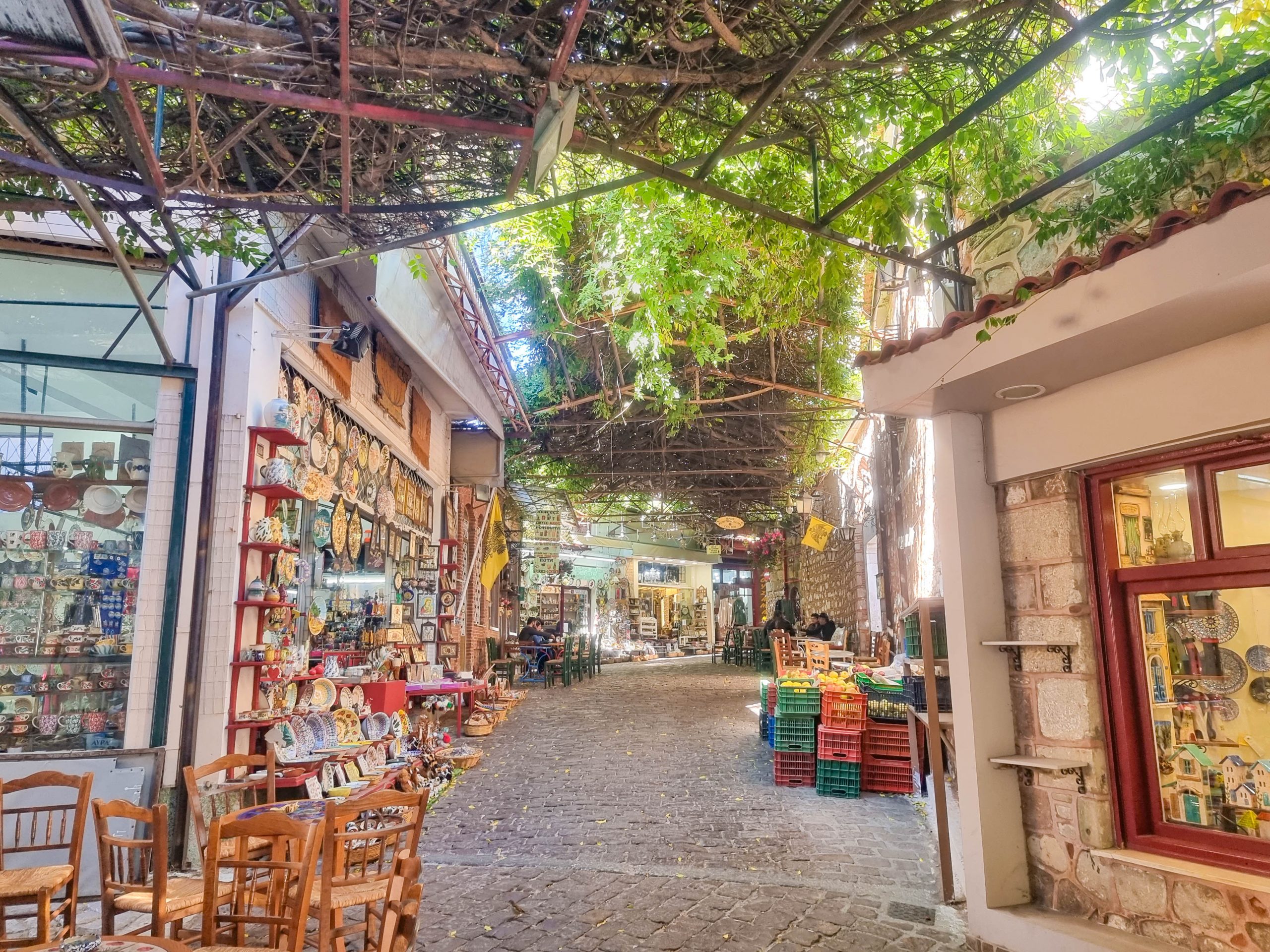
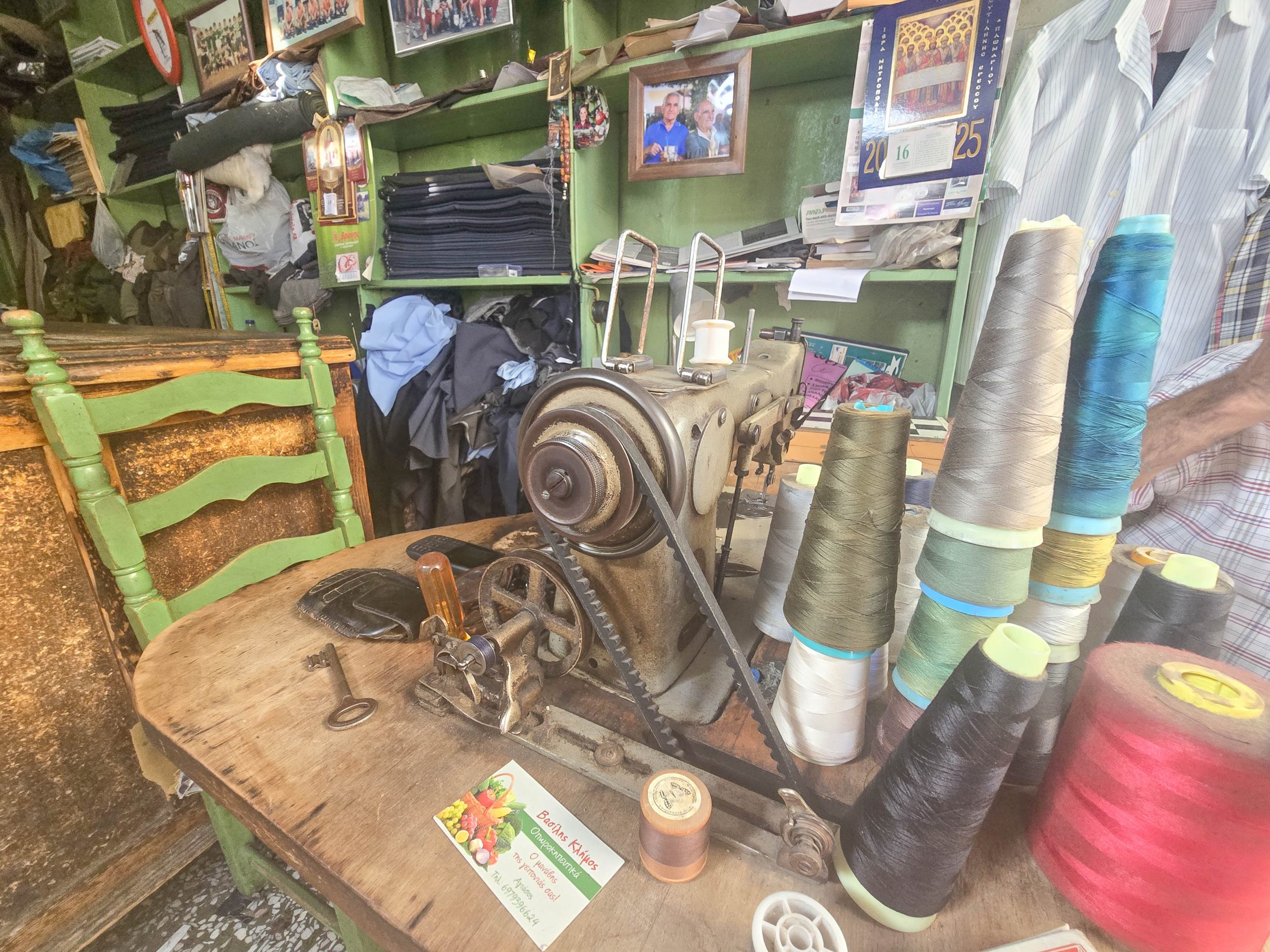
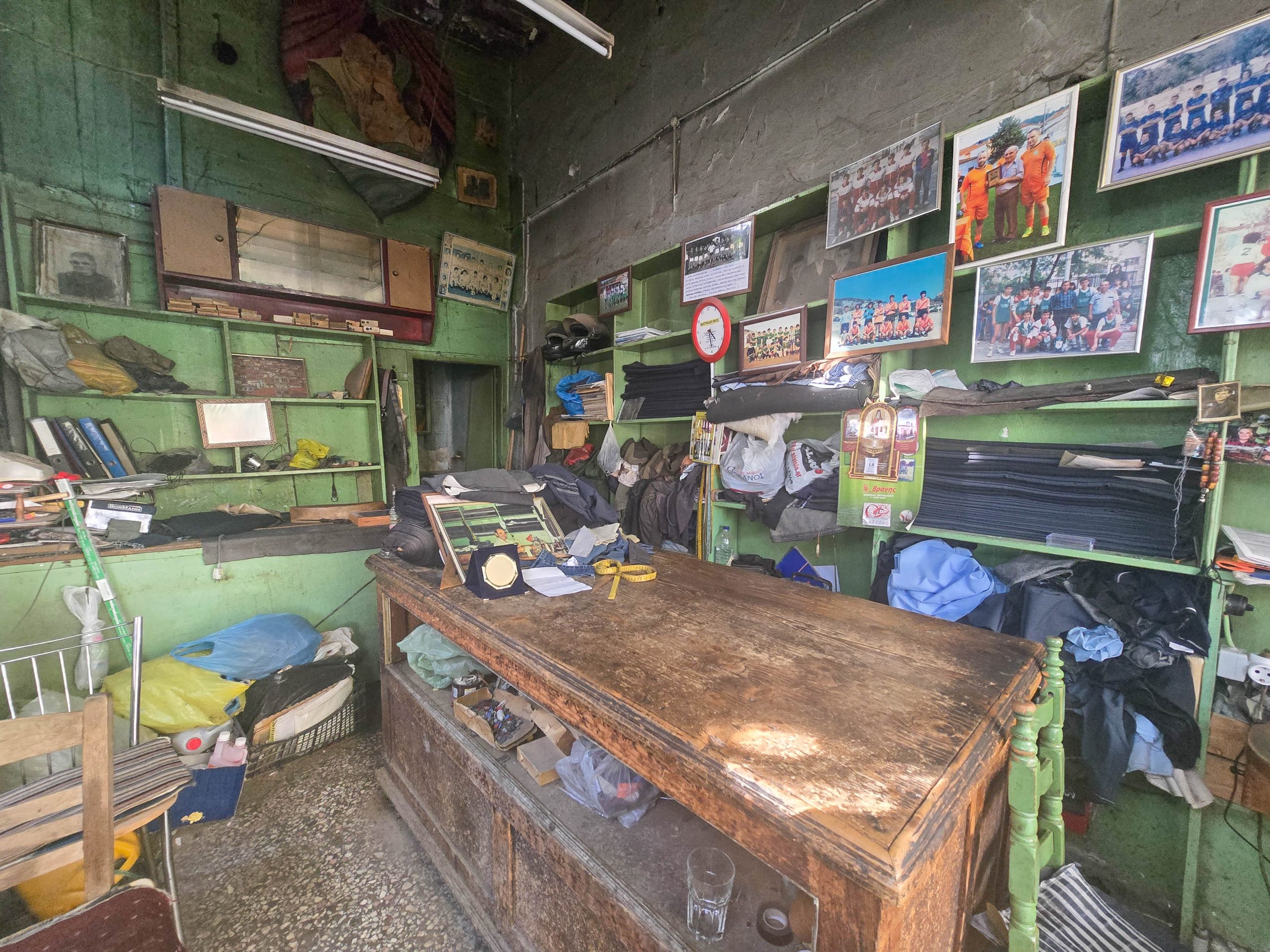
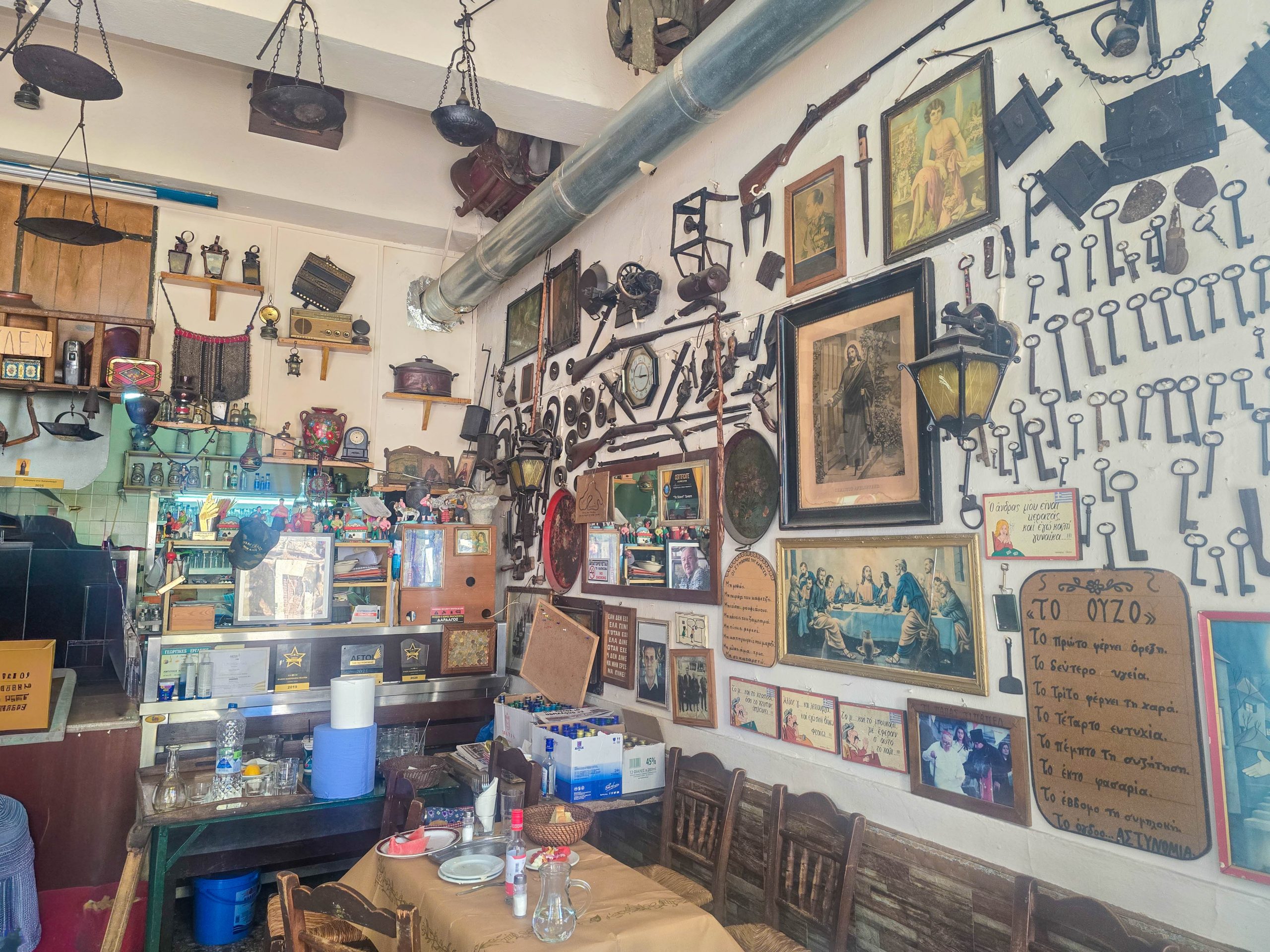
Climbing further, the village revealed itself in small, intimate scenes of daily life. A couple of traditional shops still function as living museums. In one tailor’s shop, the owner sat at his sewing machine and happily invited us in to take photographs. As someone who has sewn most of her life, this place really tapped into my own memories of working with fabric and pattern, and the quiet satisfaction of making something by hand.
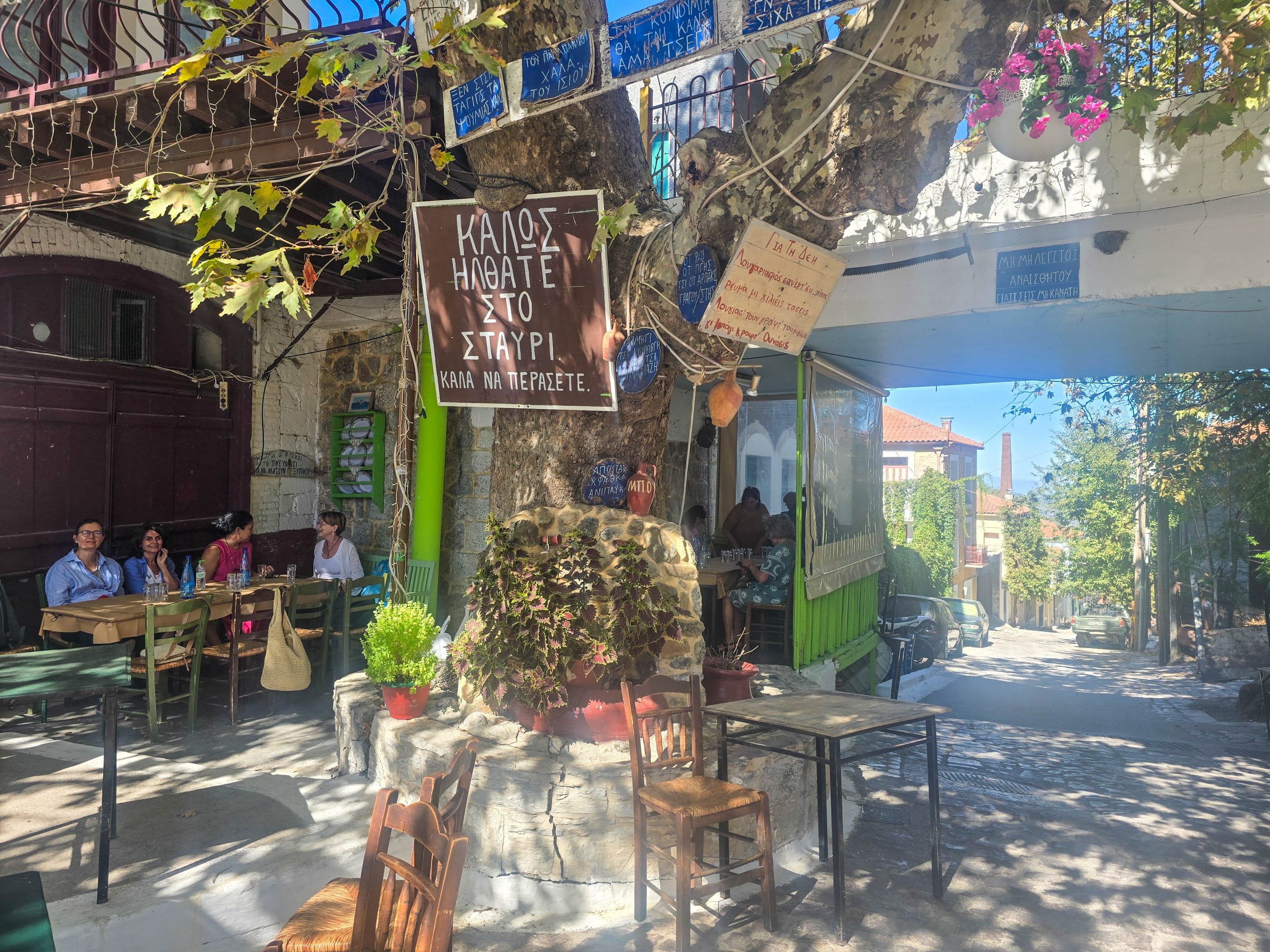
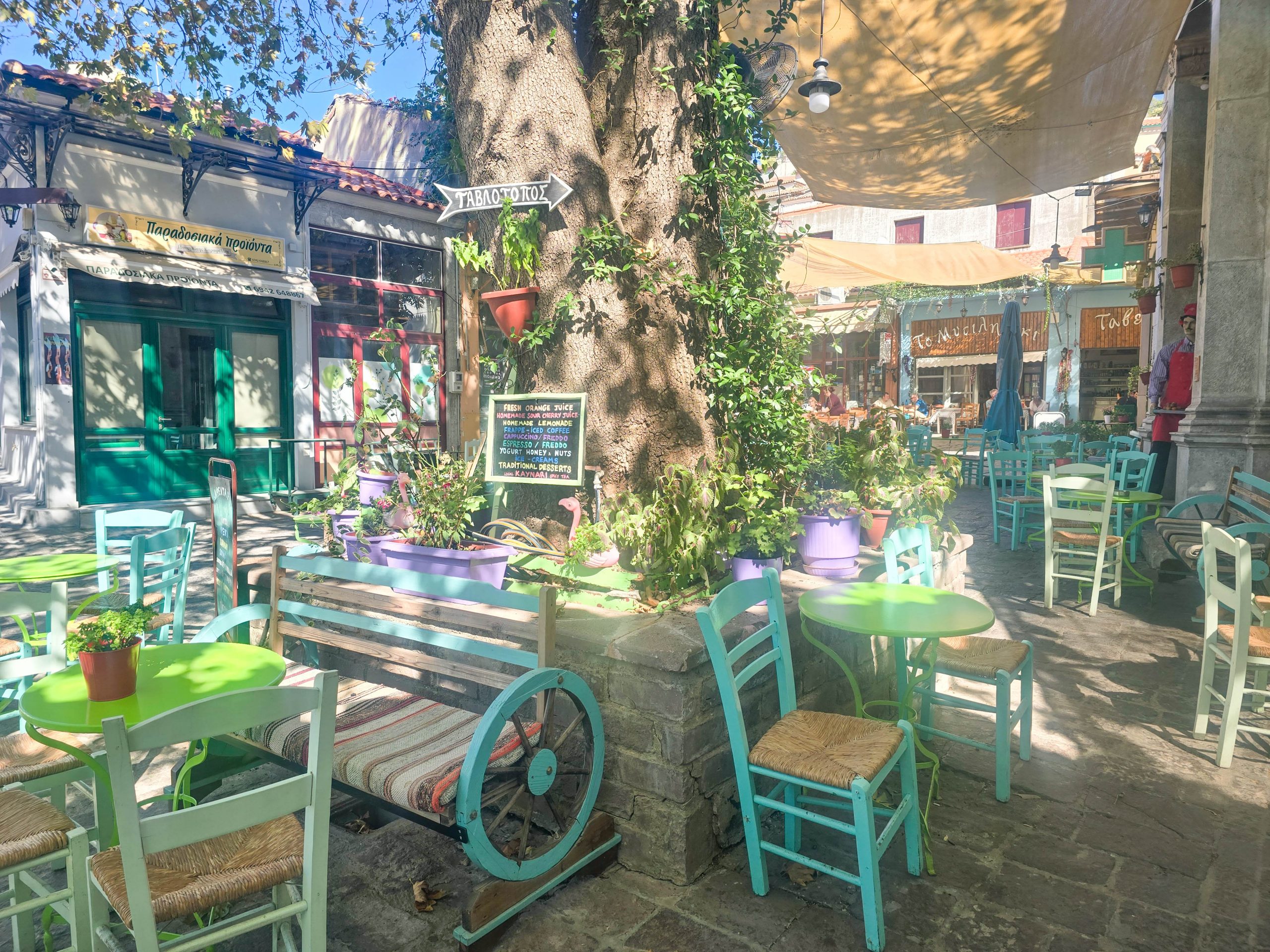
At the top of the village, we stopped at To Stavri, one of the most well-known traditional tavernas in the village. It sits in the part of the village known locally as “Stavri” (meaning “the Cross”), where the main street curves near an old stone bridge and a large plane tree — a natural meeting place along the route that climbs up from the central church square. Locals and visitors alike describe it as a classic Greek taverna and ouzeri, the kind of place that feels as much a part of village life as the surrounding cobbled lanes and old stone houses. The focus is on local dishes made with seasonal and traditional ingredients — things like crispy meatballs, mountain greens, omelettes with wild asparagus or soutzouki, local meats and cheeses — often enjoyed with a glass of local ouzo or red wine.
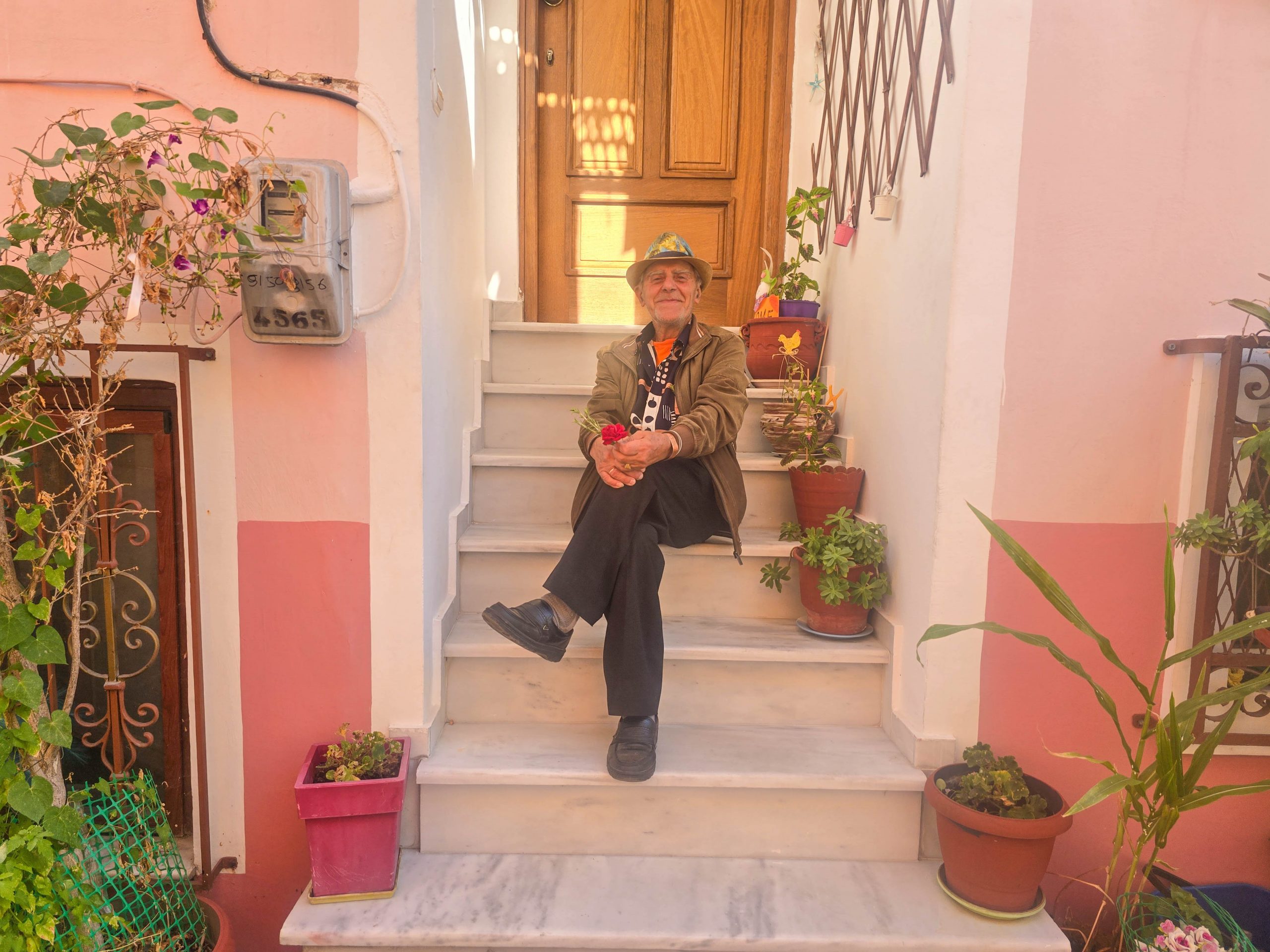
After our brief refreshment stop, we continued up the hill to the viewpoint above the village, where the landscape opened out below us in rich greens and folds of land. Down in this landscape, you’ll find old stone bridges and waterfalls, associated with Epirus rather than an island in the Aegean. On the way back down, taking a different route, we met a delightful gentleman called Mr Dimitrios. After greeting us, he reached into his jacket and handed me a sprig of rosemary. In his other hand, he held a rose, explaining it was for his wife. He told us he had once been a photographer, and when I asked if I could take his photograph, he instinctively chose his backdrop and pose. These small, unplanned encounters are always what stay with me longest.
Before leaving Agiasos, we stopped at the bakery Sousamli of Agiasos, to buy some ‘vasilopita’, a cake famously consumed at New Year. Even though the new year was three months away, this rich, dense cake is sold here at any time of the year. This local version is made with trachana, a dried, fermented wheat mixed with goat’s milk, which gives it a dense, slightly granular texture and a depth of flavour you don’t get in the usual sponge-style cake. Lightly sweetened and closer to bread than dessert, it’s very much a village bake. With our tasty purchase in our hot little hands, we had one final wander around the streets and the hidden gems around every corner.
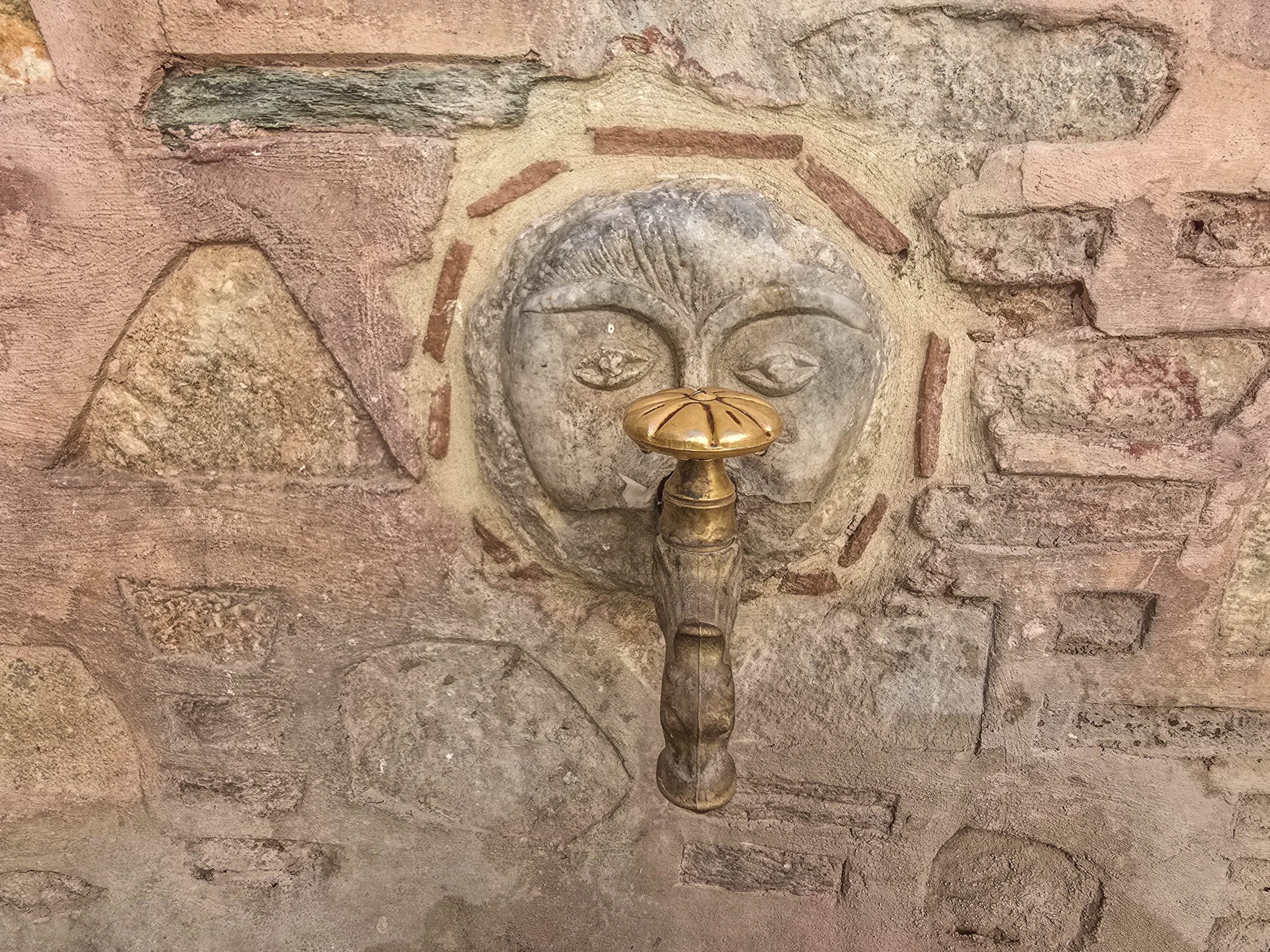
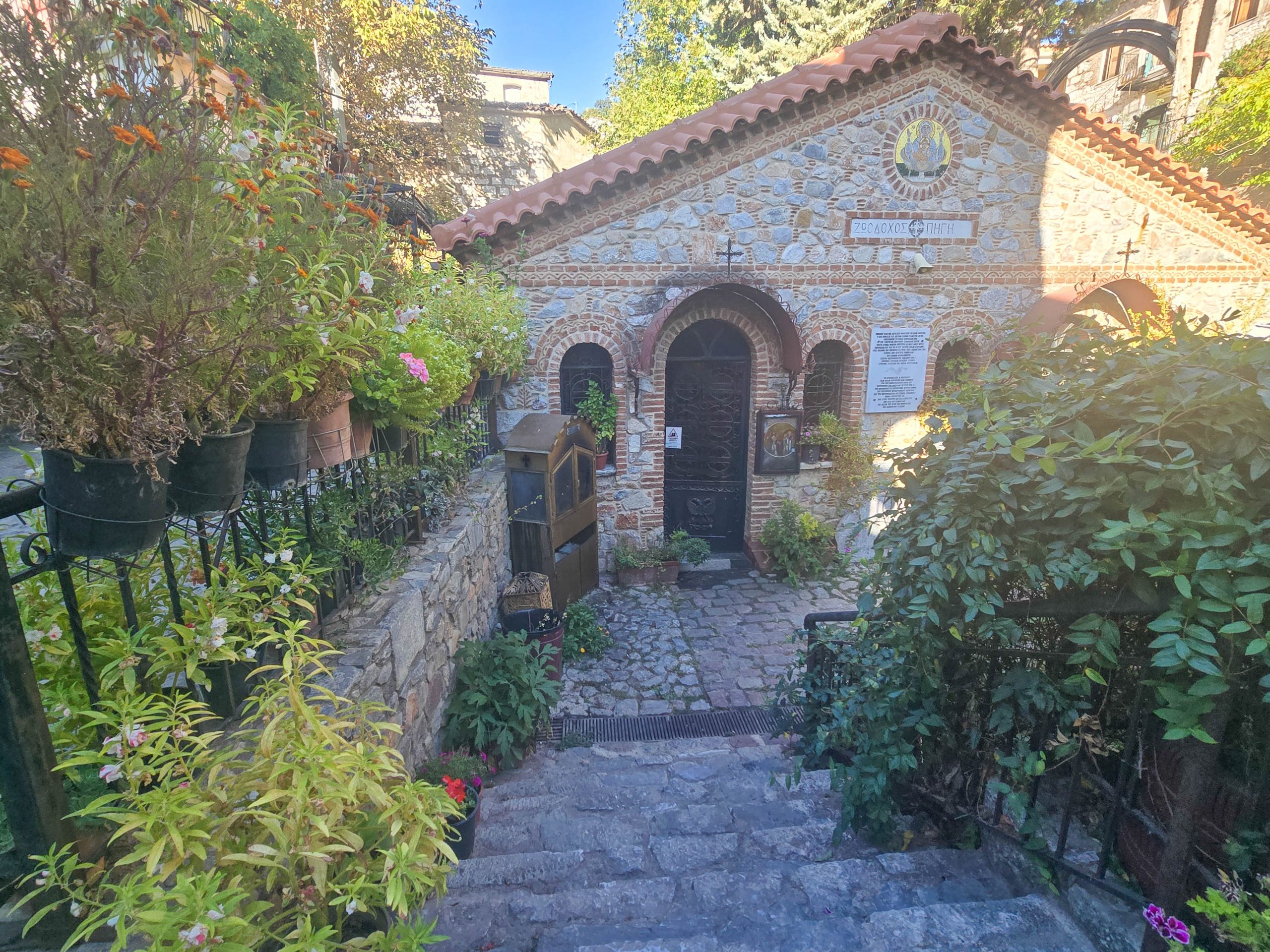
Still with a bit of time to kill, we slowly made our way back to the entrance of the village, taking a short detour to the tiny church of Zoodochos Pigi. This small chapel sits in a carefully kept garden and is dedicated to the Life-Giving Spring, linked to water and fertility. At the centre of the carefully tended garden is a simple stone fountain with a metal spout. This is likely the remnant of an earlier spring or water source, which would neatly explain both the chapel’s dedication to the Life-Giving Spring and its setting outside the village core.
At the bus stop, the bus trundled down the road towards the village entrance ready to take us back to Mytilene. One day, I will come back and stay in Agiasos. You never really get the sense of a place with just a day trip.
Back in Mytilene, there was only one place for Peter’s last night of his holiday – Fat Jimmy’s! Sitting in a corner of the harbour and a short staggering distance from the Secret Garden, it would be perfect. It’s Saturday night, and there will invariably be live music. As we approached the harbour, the Nissos Samos was making her stately entrance into port, and we paused to watch her arrival. This ship never fails to take my breath away!
We arrived early enough to secure a table, though the taverna quickly filled, mostly with visitors from Turkey. The menu, helpfully, is written in both Greek and Turkish. We ordered generously — skordalia, grilled whitebait, sausages, porterhouse pork and kotopoulo schnitzel and of course ouzo. As we ate, the musicians arrived and began to set up. It didn’t take long before both traditional and Greek pop songs had everyone singing along, and soon the dancing started. What I love about Fat Jimmy’s is that it feels authentic. It’s a place where Greeks, Turks and the occasional tourist come together to enjoy good food, excellent music and the company of friends and family.
We knew when to call it quits when the effects of the ouzo began to take effect. Whilst Peter went to pay the bill inside, a Turkish lady took my hand and insisted I join in – every introvert’s nightmare! I had to quickly make a decision – offend the lady and decline the offer or bust out my best old lady dance moves. Anyway, it didn’t happen, Peter didn’t film it and let’s move swiftly on! 😍 Seriously though, it was exactly the kind of night a last night should be — warm, musical and full of laughter — and a fitting end to Peter’s short but memorable time on Lesvos.


Love Fat Jimmy’s !!
You can’t beat a night of music and ouzo at Fat Jimmy’s! 😍