
Walking the North Shore of Spetses: Beaches, Villas and Hidden Chapels
Walking north from Dapia reveals a slightly quieter, more layered side of Spetses. Away from the harbour and grand hotel façades, the island unfolds through coastal paths, historic mansions, accessible beaches and little detours inland. This walk along the north shore brings together architecture shaped by maritime wealth, landscapes softened by pine and cypress, and chapels — including a remarkable cave church — that offer insight into the rhythms and resilience of everyday island life.
Leaving Dapia port and following the coastal path north beyond the Poseidon Grand Hotel, the character of Spetses begins to change. There is no dramatic reveal, but there is a definite shift in gear as the town loosens its grip. The road traces the shoreline, with another small town beach. Some of the houses along this stretch have a distinctly Venetian influence — symmetrical with solid façades, wrought iron balconies and evenly spaced windows. This is not accidental. Spetses spent long periods under Venetian rule during the Middle Ages, and while little survives in the way of formal Venetian monuments, their influence lingered in building styles and town planning. The Venetians also left their mark linguistically: the island’s very name is thought to derive from Isola di Spezie (Spice Island), a reminder that Spetses once sat firmly within wider Mediterranean trading networks rather than at the margins of them.
Some of the beautiful neoclassical mansions date from the period when Spetses was shaped by maritime wealth. The Town Hall occupies the mansion of the Kyriakou family, donated to the Municipality by heir Mina Izailof. One of the oldest buildings in the settlement, it’s a fine example of the pre-revolutionary architecture that predates the island’s grander neoclassical mansions. The nearby Archontiko Economou is an example of a classic Spetsiot archontiko, reflecting the prosperity once generated by shipping and trade.
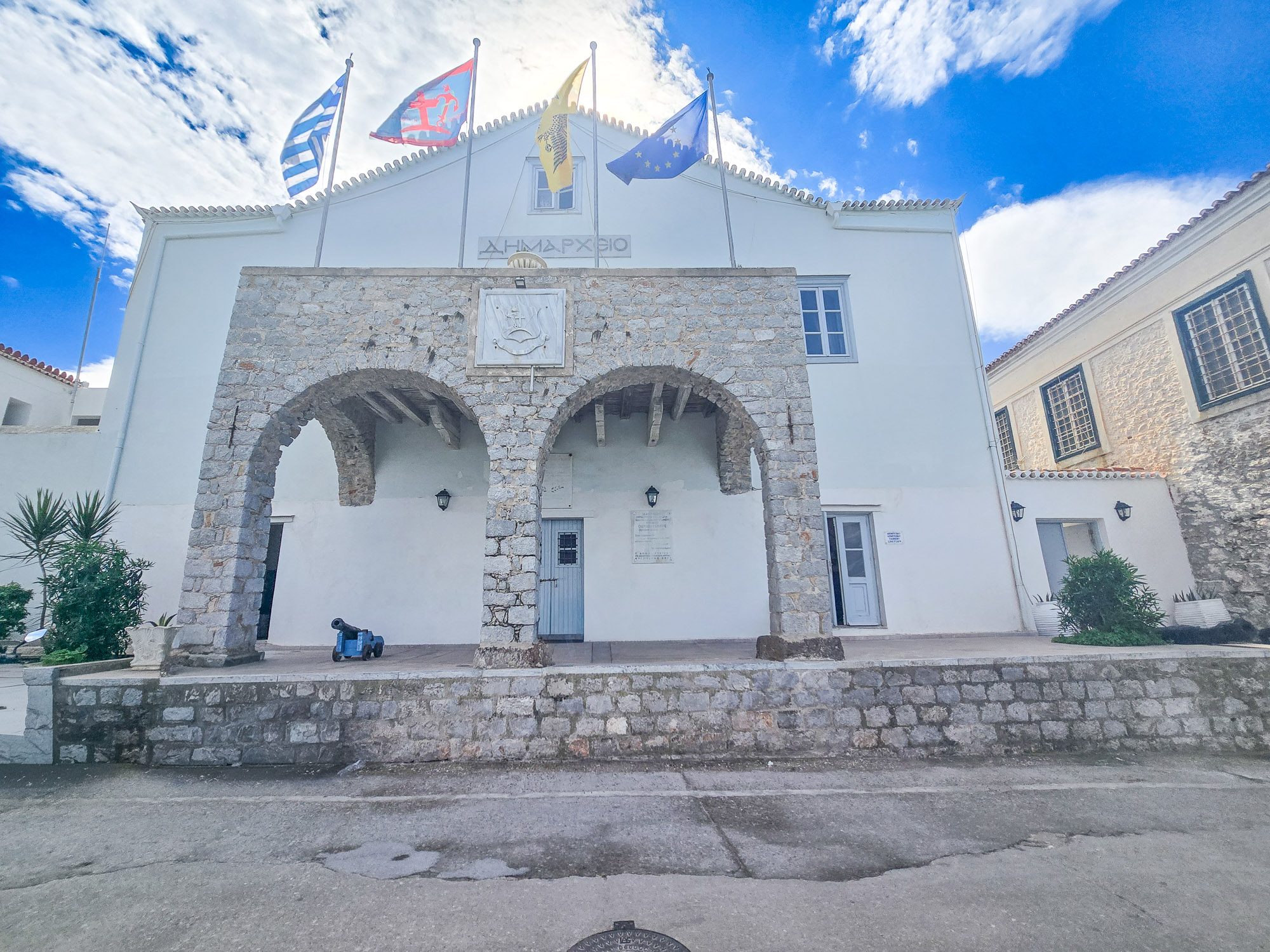
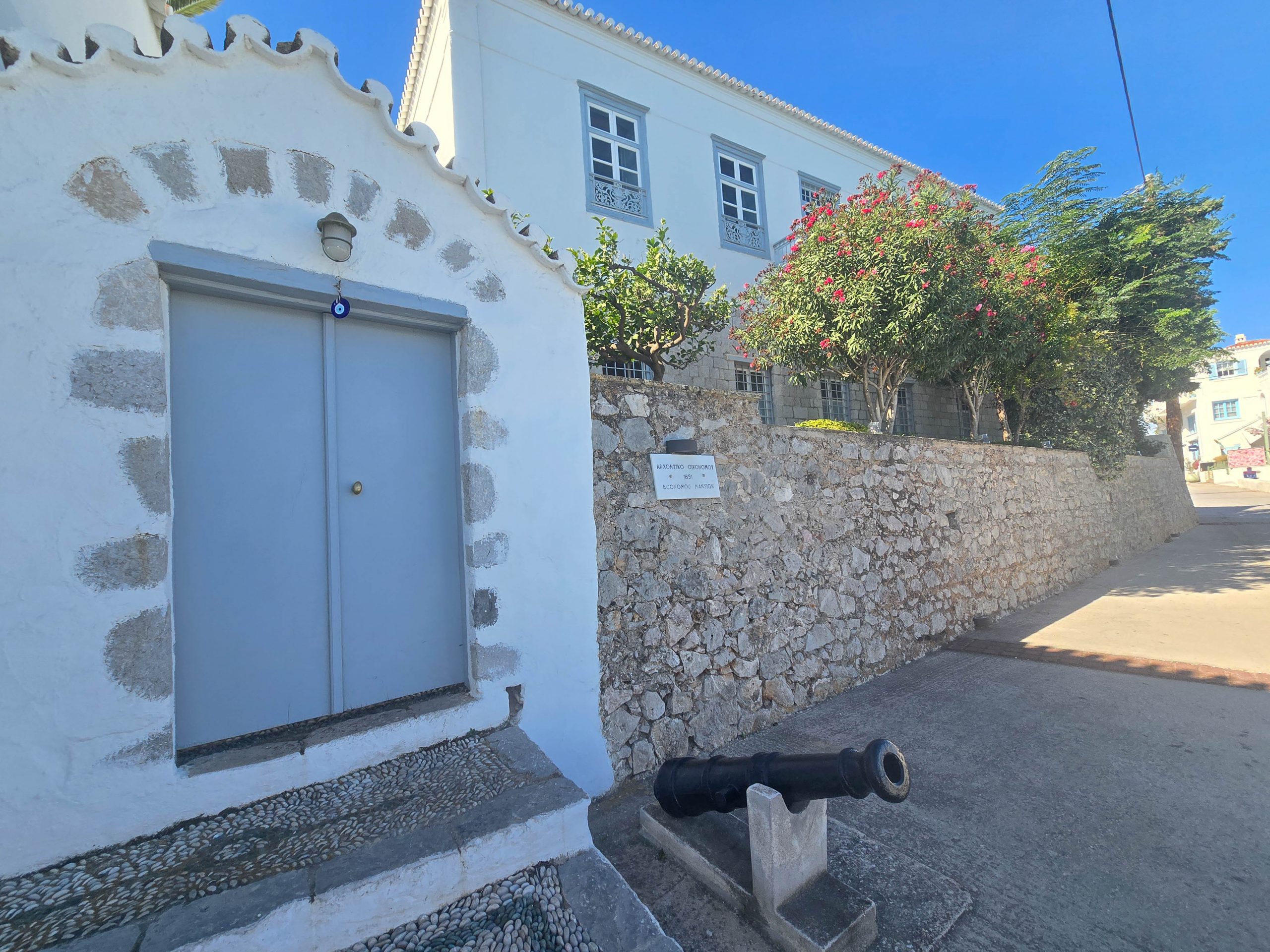
These houses, set back behind walls and greenery, speak of families whose identities were shaped as much by the sea as by land.offering fleeting glimpses of crystal-clear turquoise water between beachside houses, while architecture takes centre stage. Architecture says so much about a place and its history. Others belong to a later phase of carefully managed tourism development. Buildings such as the Nissia Residences Hotel sit comfortably within this landscape, elegant without dominating it.
Small sand-and-pebble beaches appear intermittently along the way. They are not the island’s grandest, but they are close at hand and remind you that swimming here does not always require a long journey in either direction.
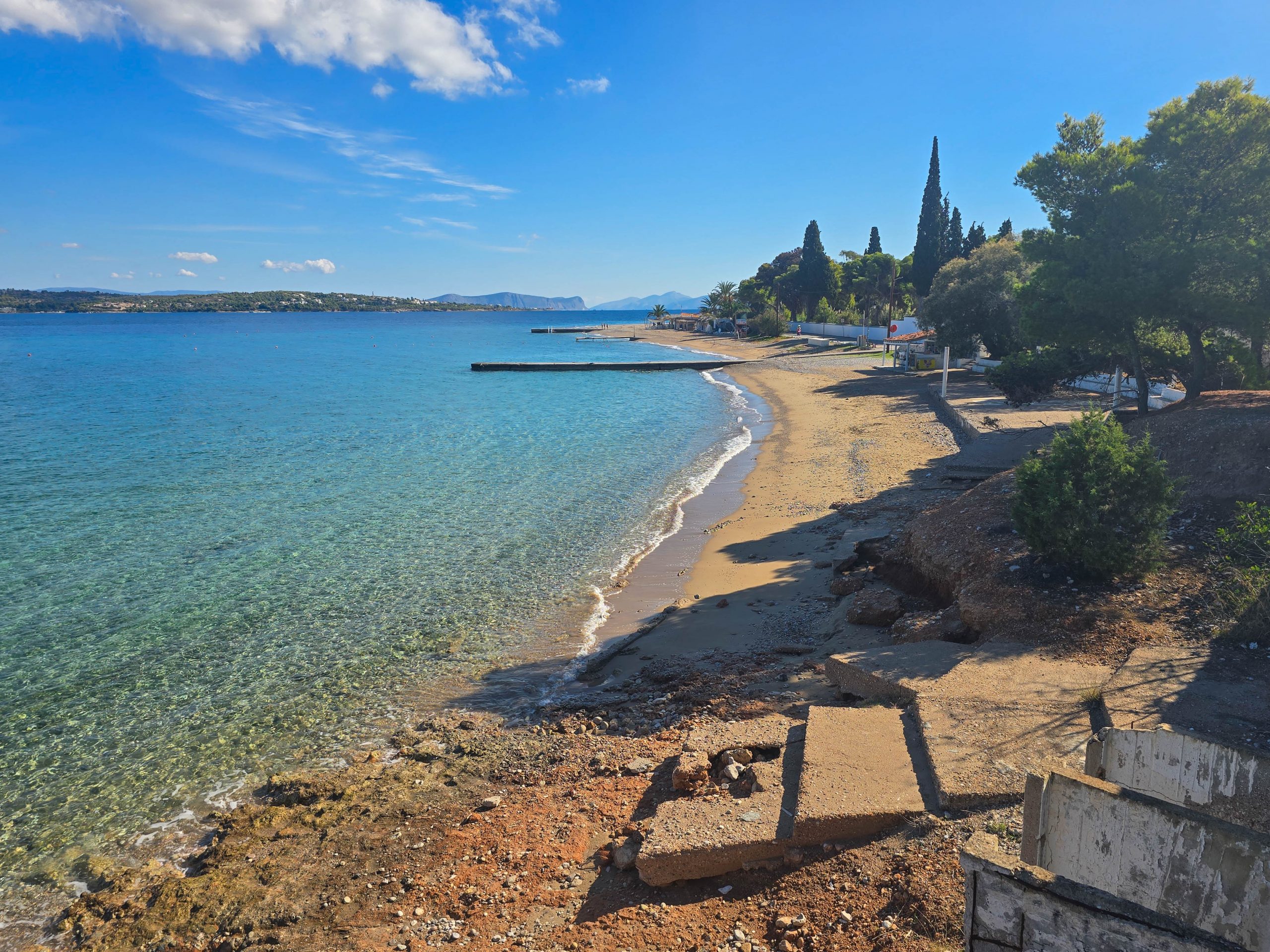
The walk along the coastal road is pleasant and becomes much quieter. Soon the road opens out onto Kaiki Beach, one of the easiest to reach on foot from the town. At its southern end stands the small Church of the Resurrection, painted in a deep Venetian red and serving as a subtle landmark marking the transition from townscape to open coastline.

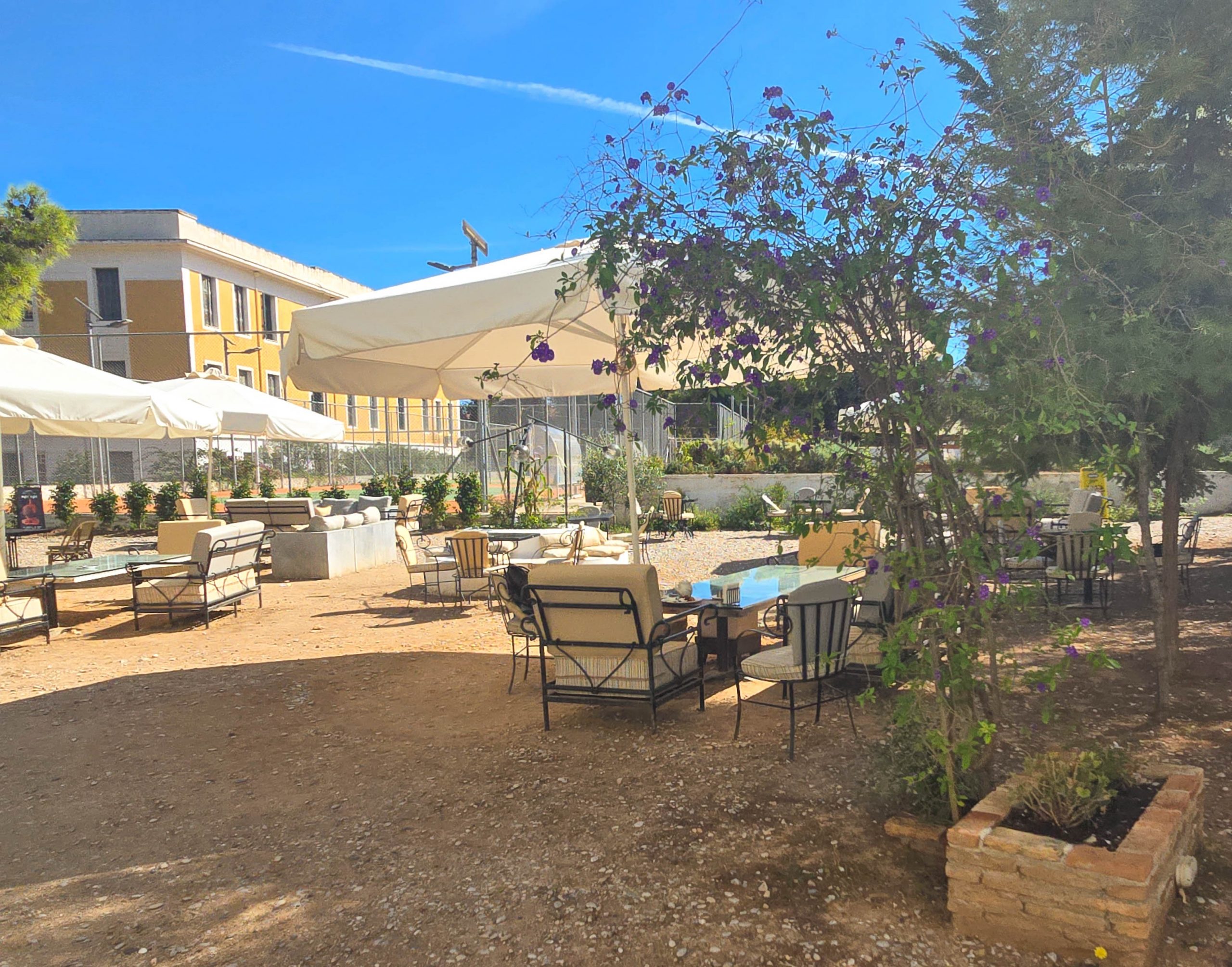
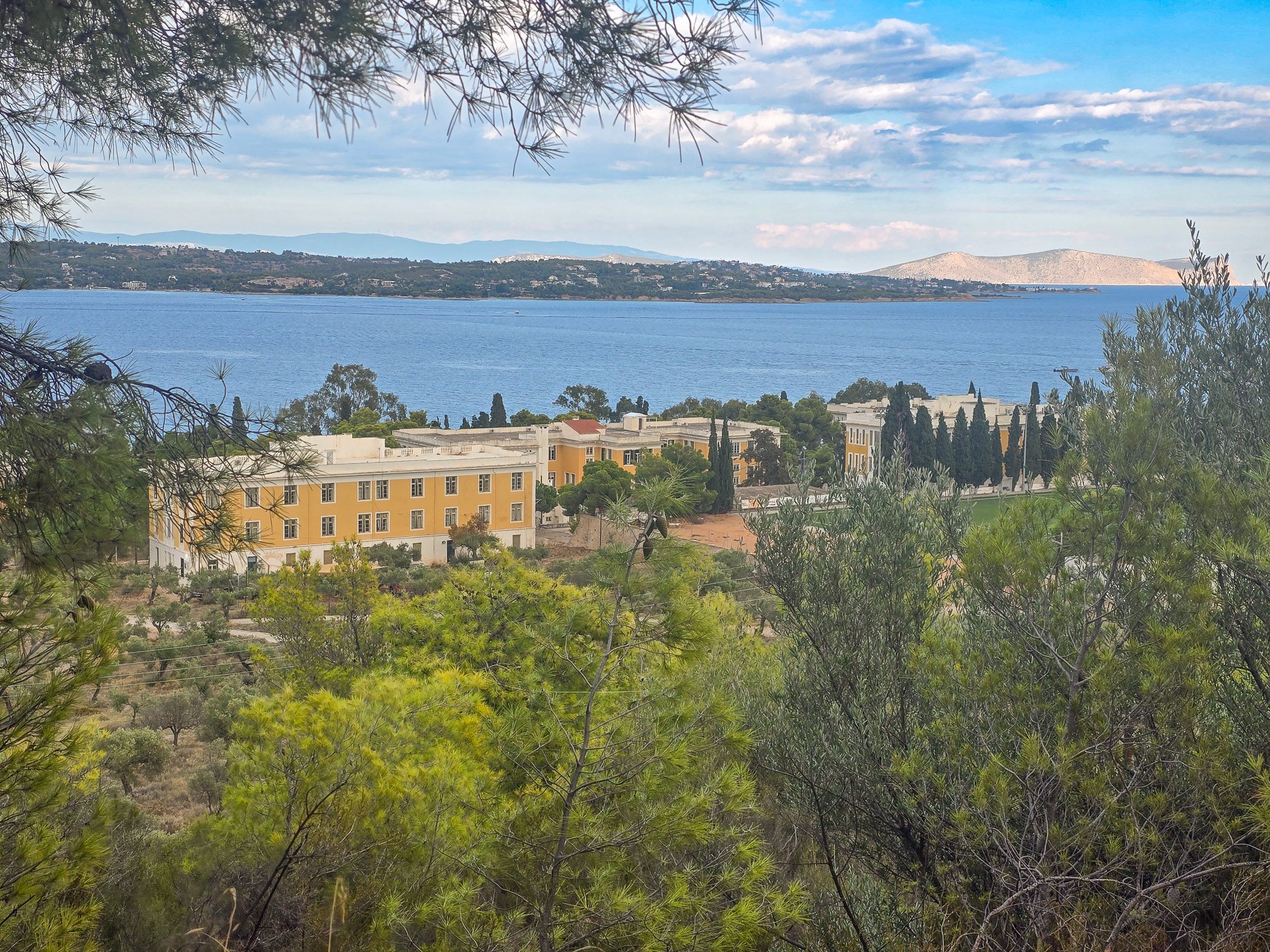
Set adjacent to the beach is the extensive campus of the Anargyrios and Korgialenios School of Spetses. Founded in 1927 through the vision of Sotirios Anargyros, the school was conceived as a Greek equivalent of an English boarding school. When it opened, it had just four male students. By the time it closed in 1983, it had produced graduates who went on to influential careers in Greece and abroad. The school complex consists of several substantial yellow buildings, three storeys high, arranged as a self-contained campus. Today, the site has found a second life, hosting conferences, summer schools and cultural events.
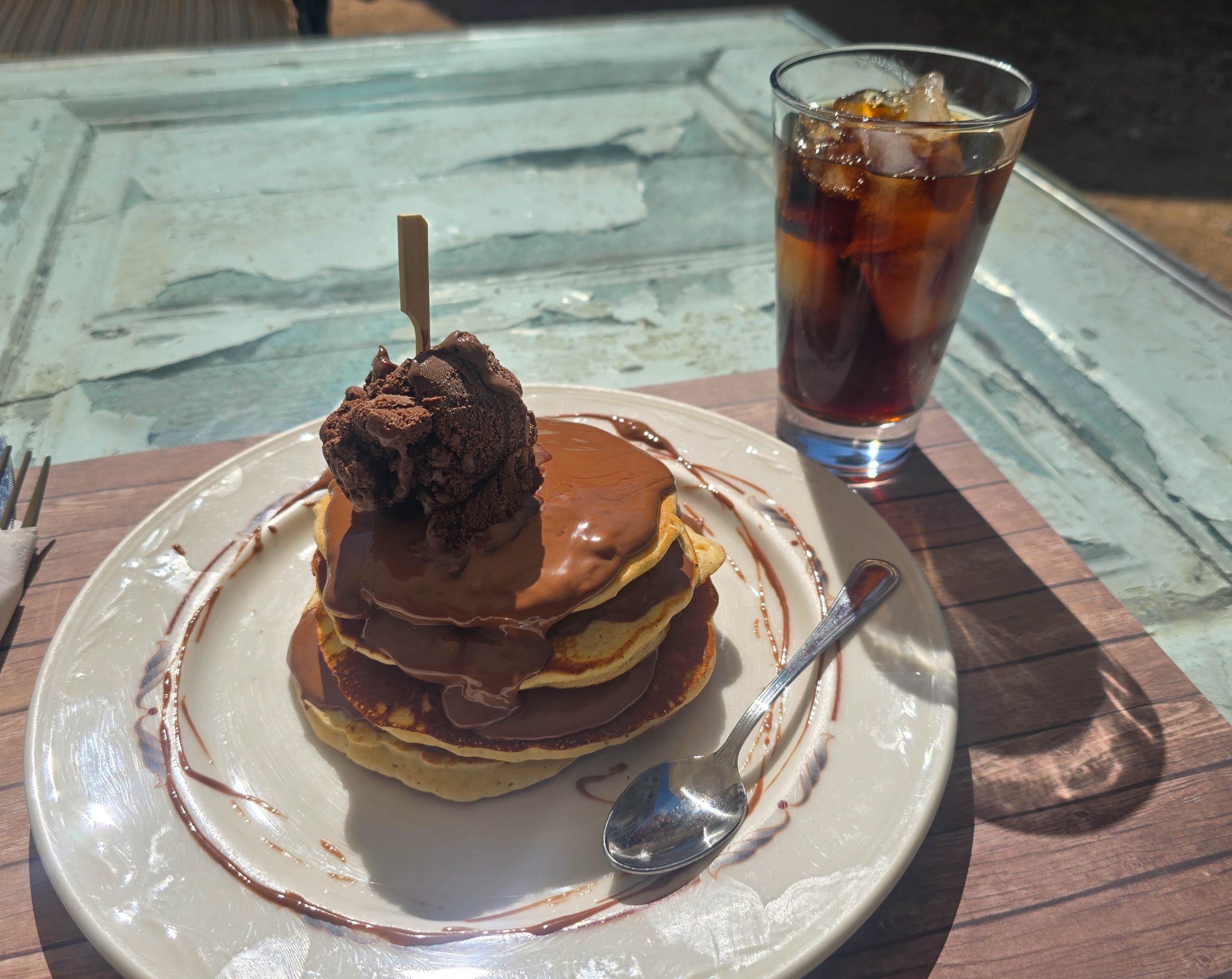
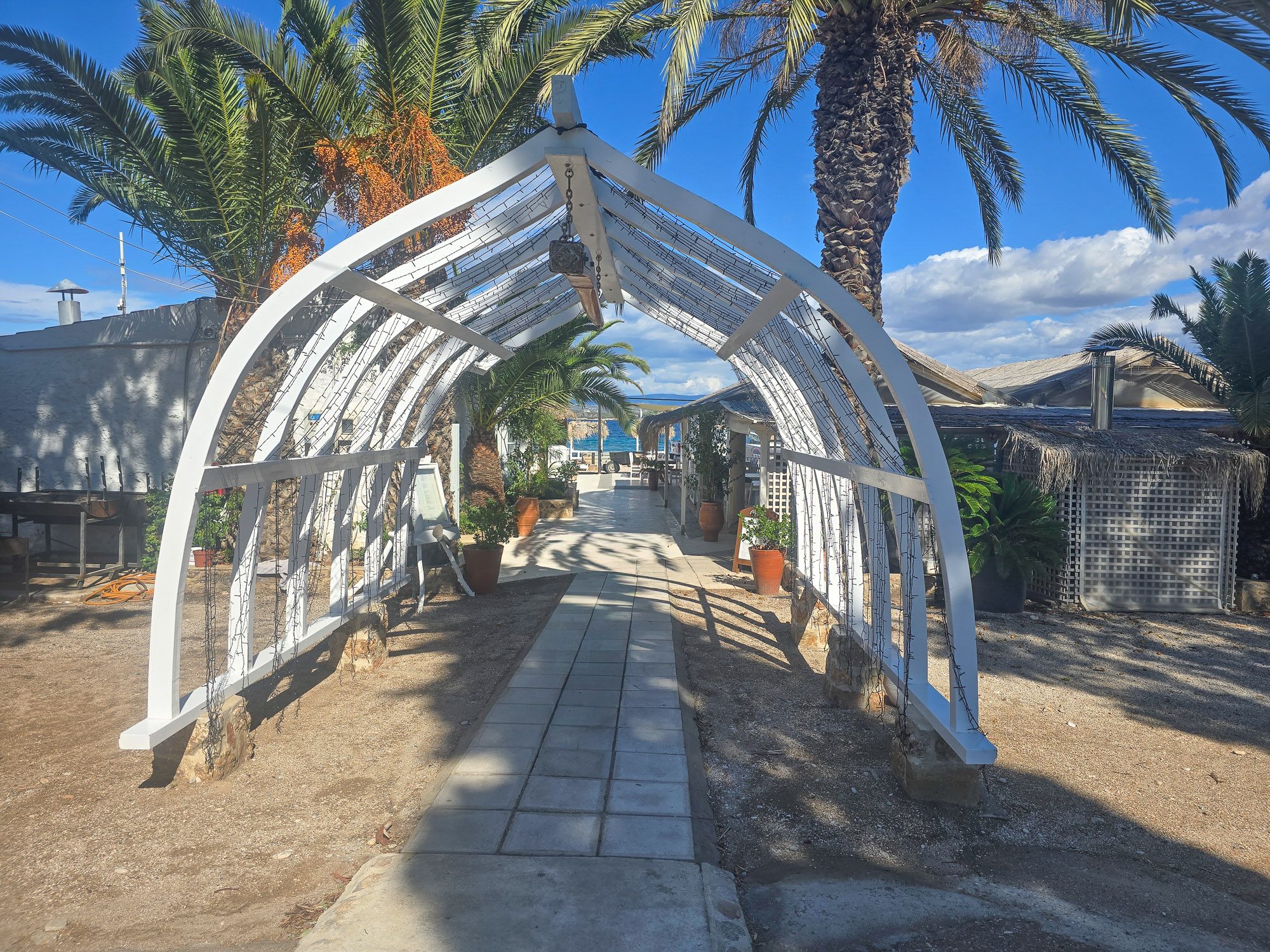
Within the grounds sits Magus café, reached through green metal gates and along a pebble-mosaic path beneath an arch that resembles the upturned hull of a boat. It is an unexpectedly delightful place to pause, particularly if you are inclined towards indulgent desserts (which of course, I am!).
Why is it called the Magus, you may ask. Well, John Fowles, author of the famous book, taught at the school which later immortalised Spetses as the island of ‘The Magus’.
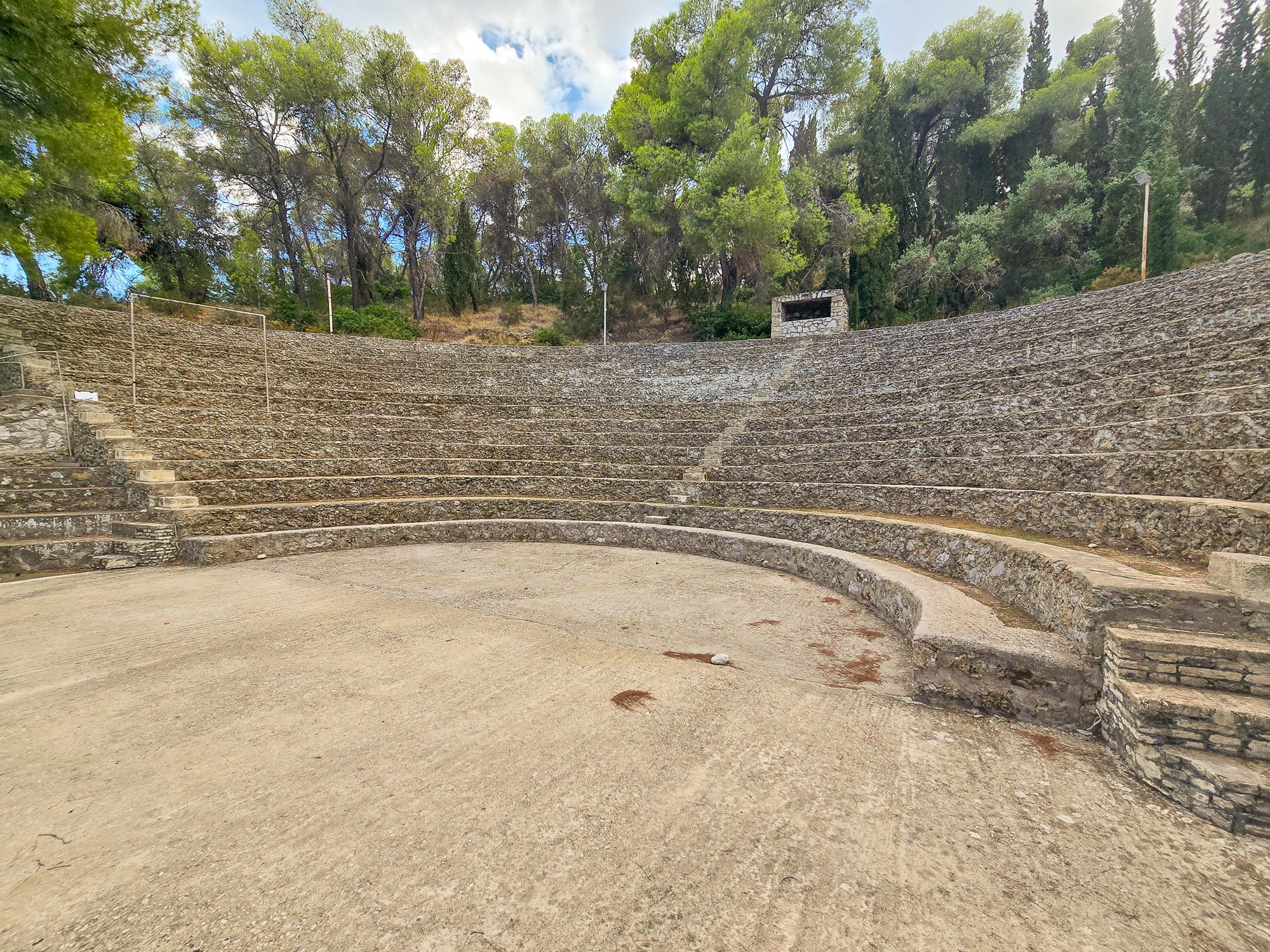
At the far end of the school complex, a detour leads uphill via the Spetses Yacht Club boathouse to the Anargyrios College Open Air Amphitheatre. This is not an ancient theatre, but a modern-day facility used occasionally for small theatrical productions, concerts and cultural events, particularly during the summer months. It rewards the steep climb with expansive views back across the harbour and the town.
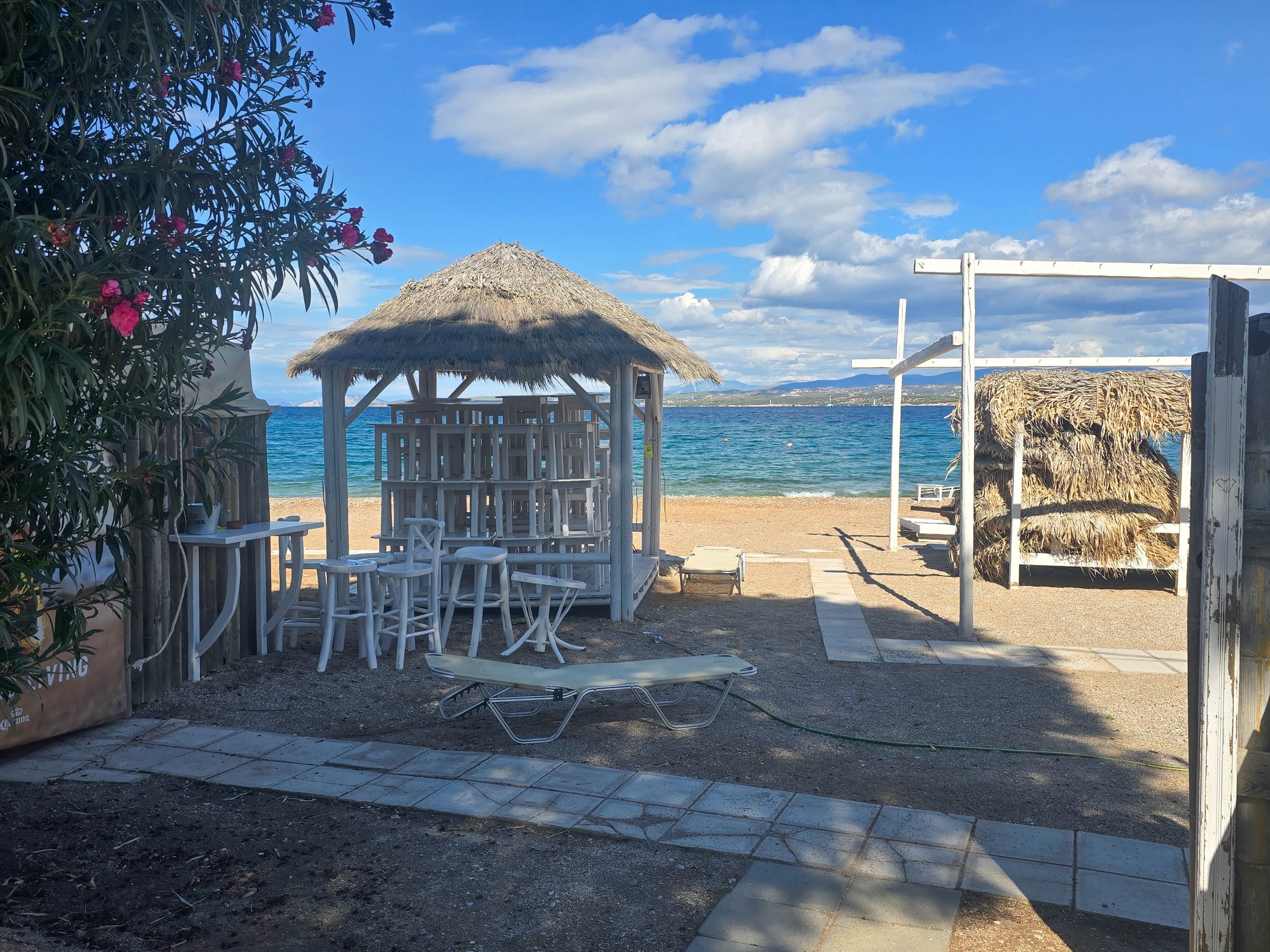
Kaiki Beach itself is an organised stretch of sand and fine shingle. When I passed through, workers were dismantling the palm-frond sun shelters, signalling the end of the season. From here, the view stretches across the narrow channel to the Peloponnese, close enough to feel almost within reach. Further along, the beach gives way to a quieter section, where a small cantina was still serving refreshments, even in early October. This quickly became my preferred spot to catch a few autumn rays and to watch the arrivals and departures across the strait to and from Kosta.
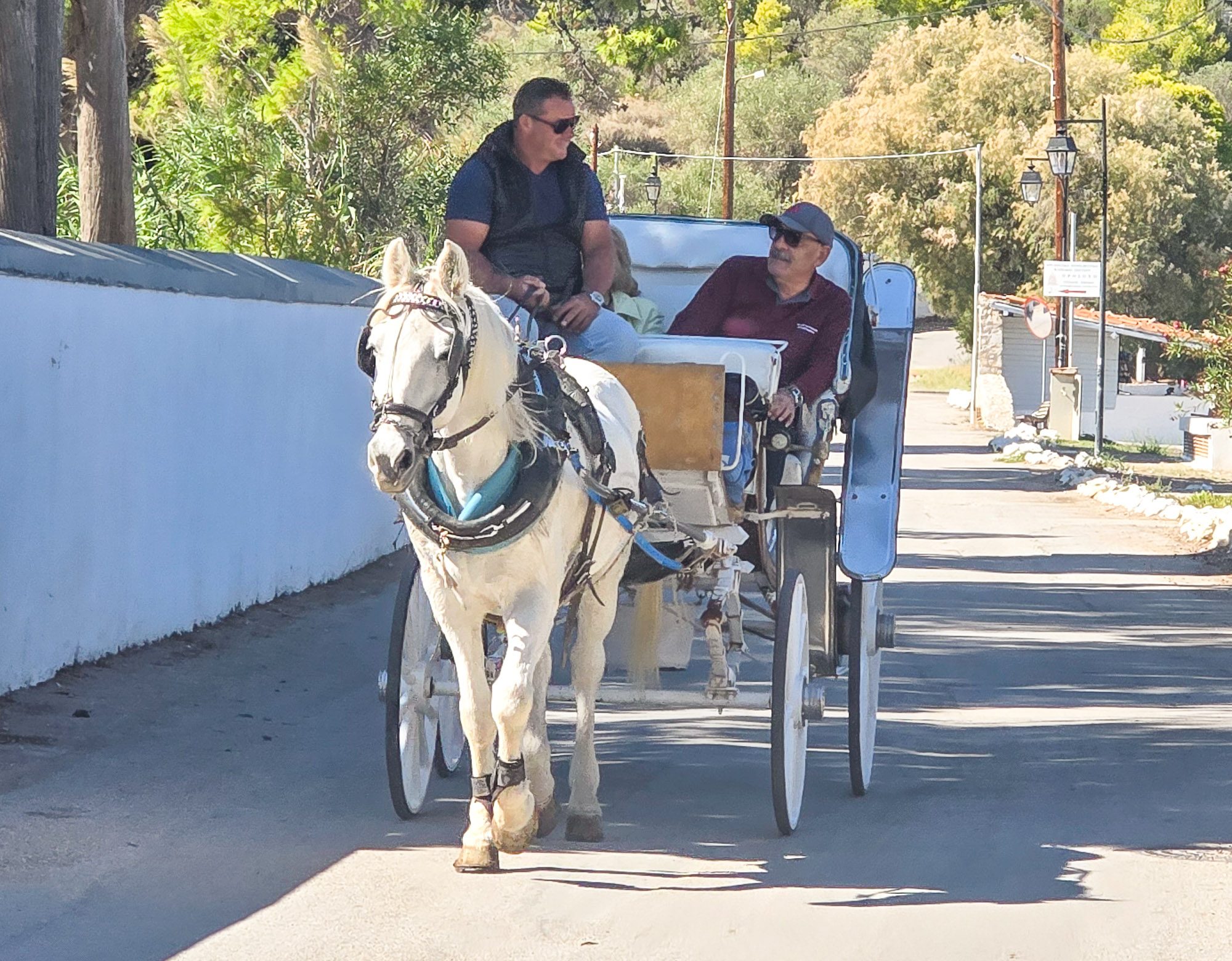
One day, my host Aggeliki suggested I walk to what she simply called the ‘church in the cave’. Her directions were reassuringly vague: follow the coastal road north, head uphill, and when you reach the peacock, soon after, turn left.
At the end of Kaiki Beach, continuing north, the road climbs past substantial villas hidden behind high stone walls, thick foliage providing an additional layer of privacy. Heavy wooden doors set into those walls hint at permanence and privilege, and it is hard not to linger on the thought of living with uninterrupted views across to the Peloponnese.
I was not entirely sure what sort of peacock I was meant to be looking for until I found it. Or rather, them. A private aviary appeared, complete with peacocks, ducks in a small pond, exotic-looking parrots and chickens.
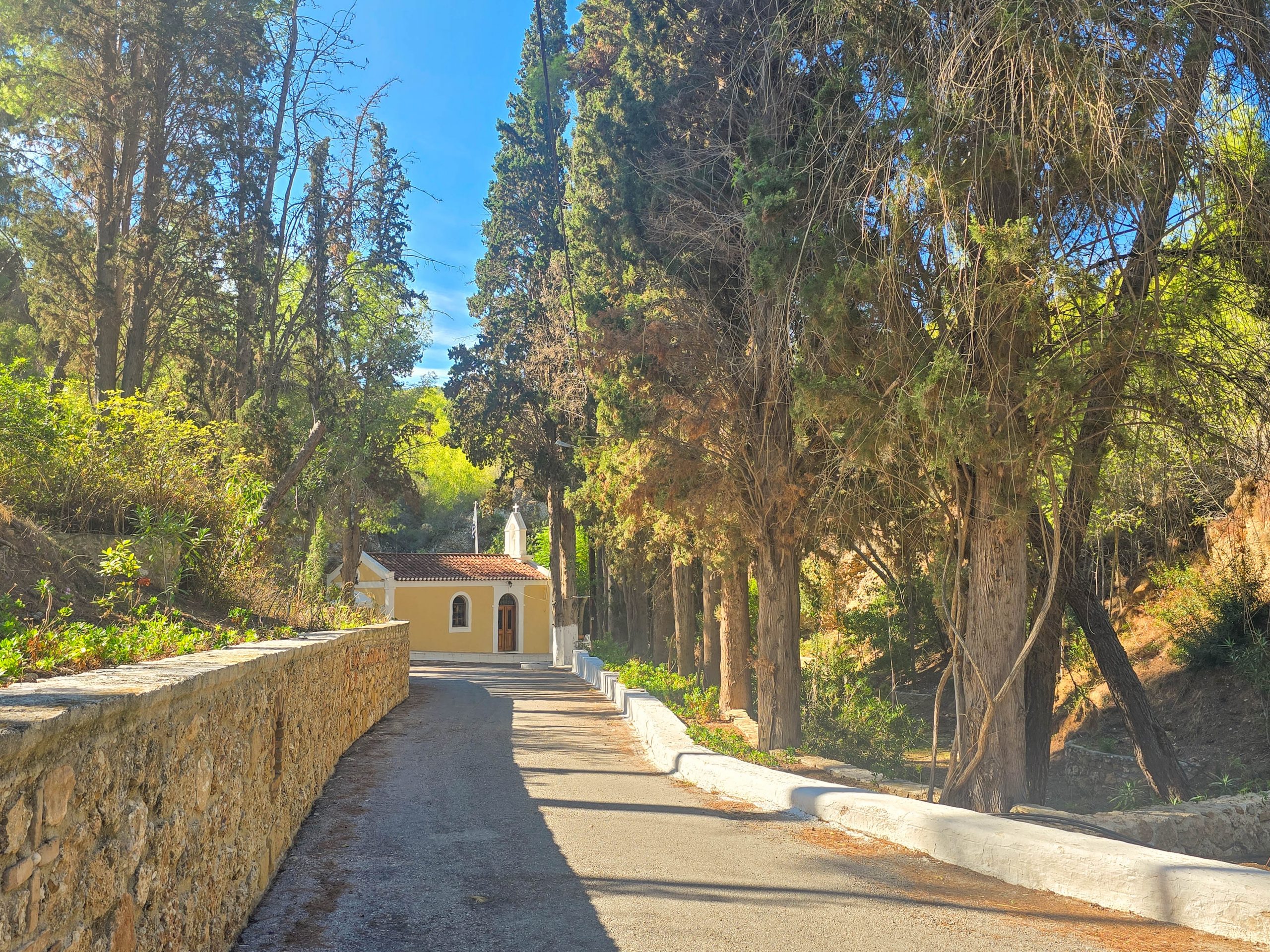
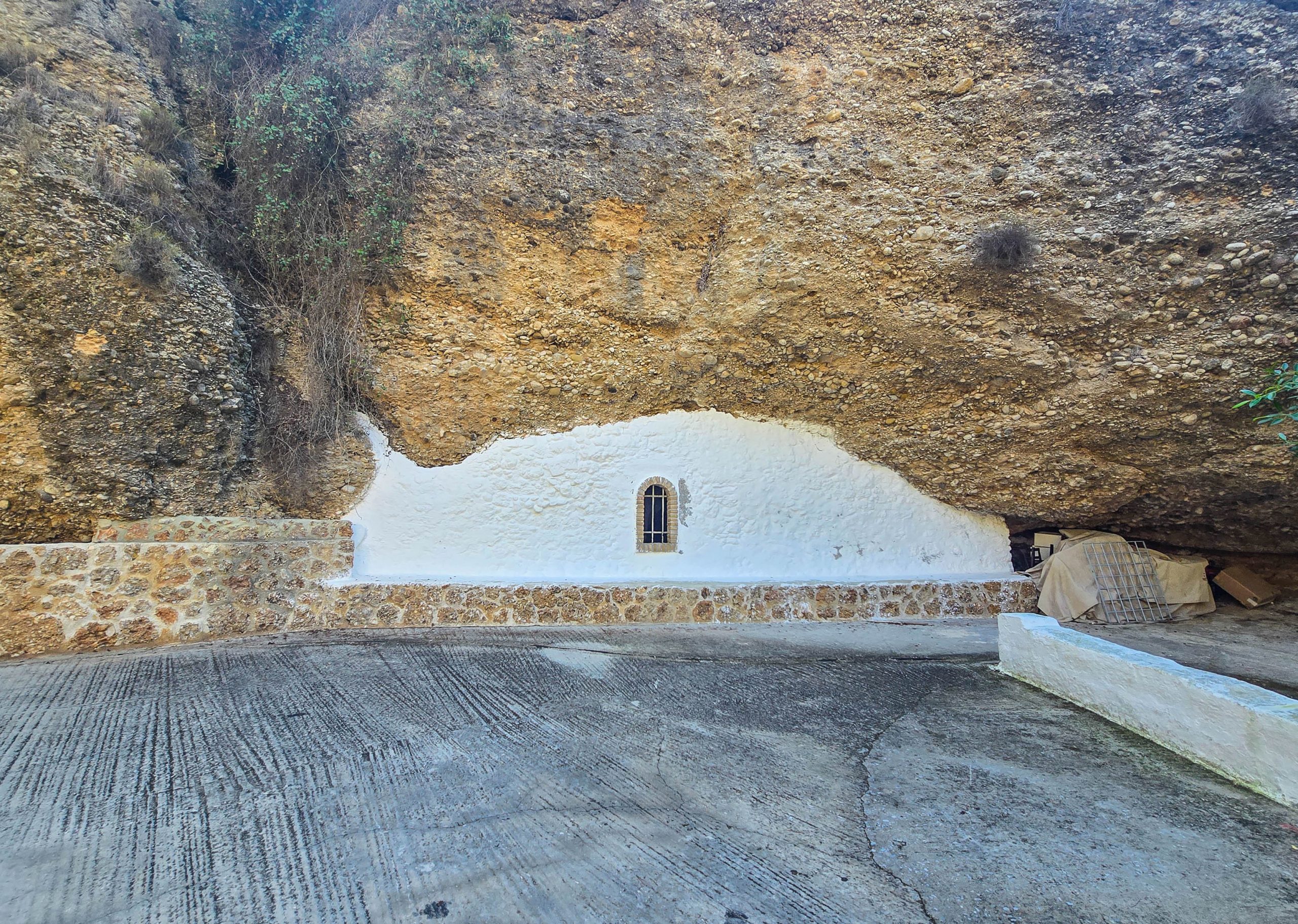
Just beyond, an avenue lined with pine and Italian cypress led past a low stone wall to the church of Zoodochos Pigi, meaning Life-Giving Spring. Just behind it is a small cave church set into the rock. Looking through the window into the cave church, I could see that the floor was inches deep in water. Given Spetses’ long-standing water scarcity, the sight felt striking. Even today, much of the island’s water arrives by boat from the mainland, making the presence of a spring here all the more significant.
It remains unclear whether the dedication refers primarily to the newer chapel or the older cave church, but traditionally, the name is tied to a natural spring. In this case, the cave itself appears to shelter the source, a rare and precious feature on an island where fresh water has always required careful management.
It is only when I looked back through my photographs as I began to pull these walks together into words that I realised how integral churches and chapels are to the Spetses experience. They are everywhere, scattered across hillsides, embedded in neighbourhoods, carved into rock. Although I am an atheist (tipping towards agnostic as I age), visiting churches and monasteries while travelling feels essential. In Orthodox communities, faith is woven deeply into daily life, and understanding that gives far greater insight into a place than any viewpoint ever could. Above all, it speaks of determination and grit, qualities that felt especially present as I tried to imagine how a cave church like this was first conceived, built and sustained.
I didn’t get a chance to visit, but from the main road close to the cave church, paths lead down to the secluded coves of Ligonierie Beach and Lovers Cove, both popular sunbathing spots tucked discreetly below the road.
That more or less covers my explorations of the area north of Spetses town. All very walkable.
In my next post, I will recall my visits to some of the island’s fascinating museums and a very interesting event that takes place on Spetses every year.
Discover more from A Greek Oddity
Subscribe to get the latest posts sent to your email.


