
From Sigri to Mytilene Lesvos: A Weekend of Wandering
Arriving in Mytilene Lesvos at the start of a weekend, with limited bus services and no fixed plans, turned out to be a gift rather than a constraint. Over a couple of unhurried days, moving through villages, thermal landscapes, harbour edges and familiar corners of town, Lesvos revealed itself not through headline sights but through everyday life.
The taxi drive from Sigri to Mytilene took just over an hour with a knowledgeable driver who turned out to be good company. As the landscape kept shifting character, it felt like one last slow unfolding of Lesvos before reaching the island’s capital. Soon we were out of the stark volcanic landscape of the west and were back into the verdant landscape I’d come to recognise in Lesvos. There had been no landslips in the storm. I’d stressed myself out unnecessarily.
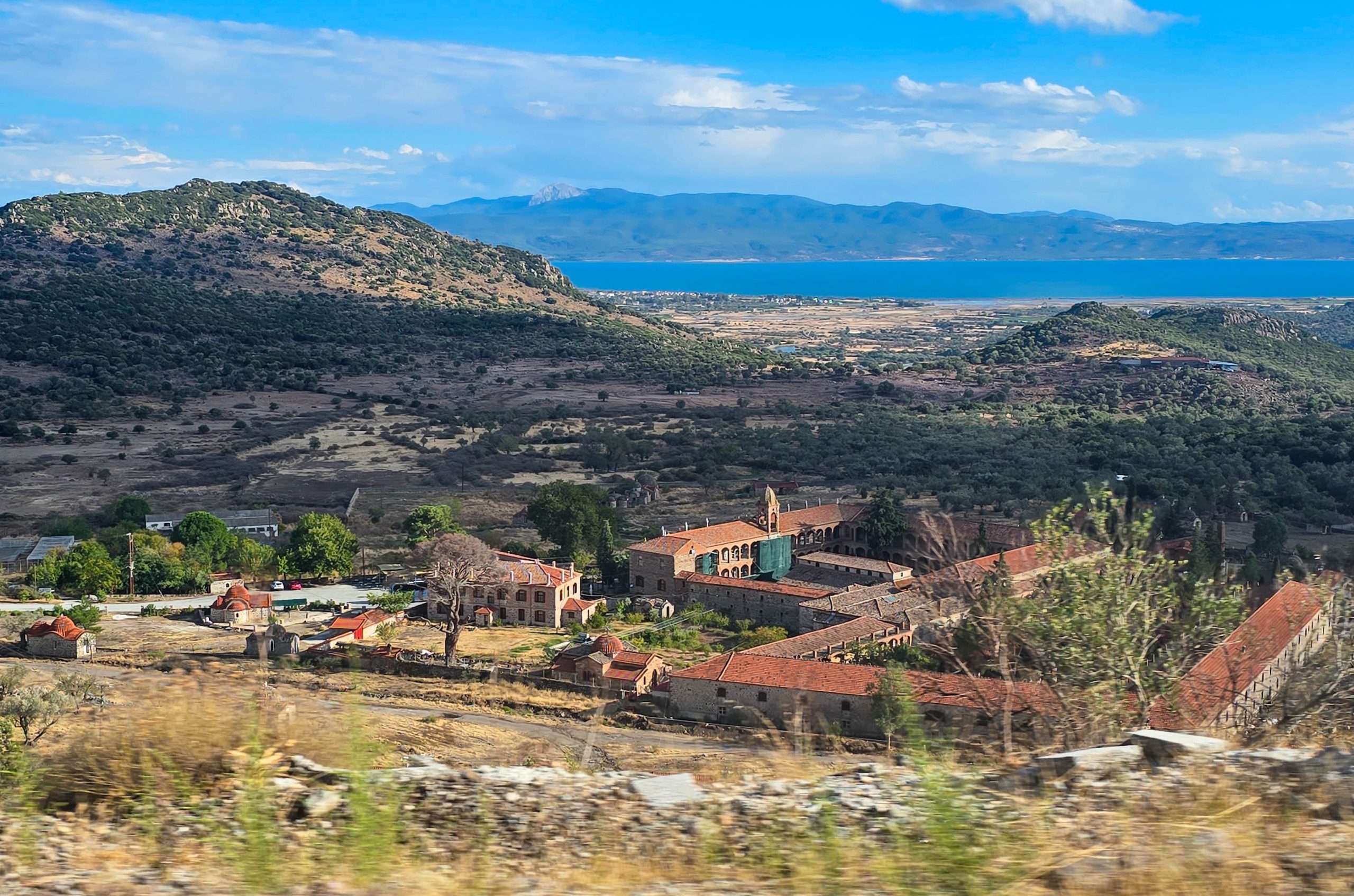
As we passed the wetlands of Kalloni, I caught a fleeting glimpse of flamingos wading in the shallows, their pale forms barely registering before the road curved again. Further on, Lesvos’ own Mount Olympos rose suddenly from a forest of deep green fir trees, a solid mass of limestone pushing its way out of the landscape. I tried to imagine the streets of Agiasos, somewhere in its foothills, where everyday life goes on. The driver slowed to point out Moni Limonos, set down in a valley below — a 16th-century monastery that once played a significant role in education and religious life on Lesvos, quietly embedded in the countryside rather than set apart from it.
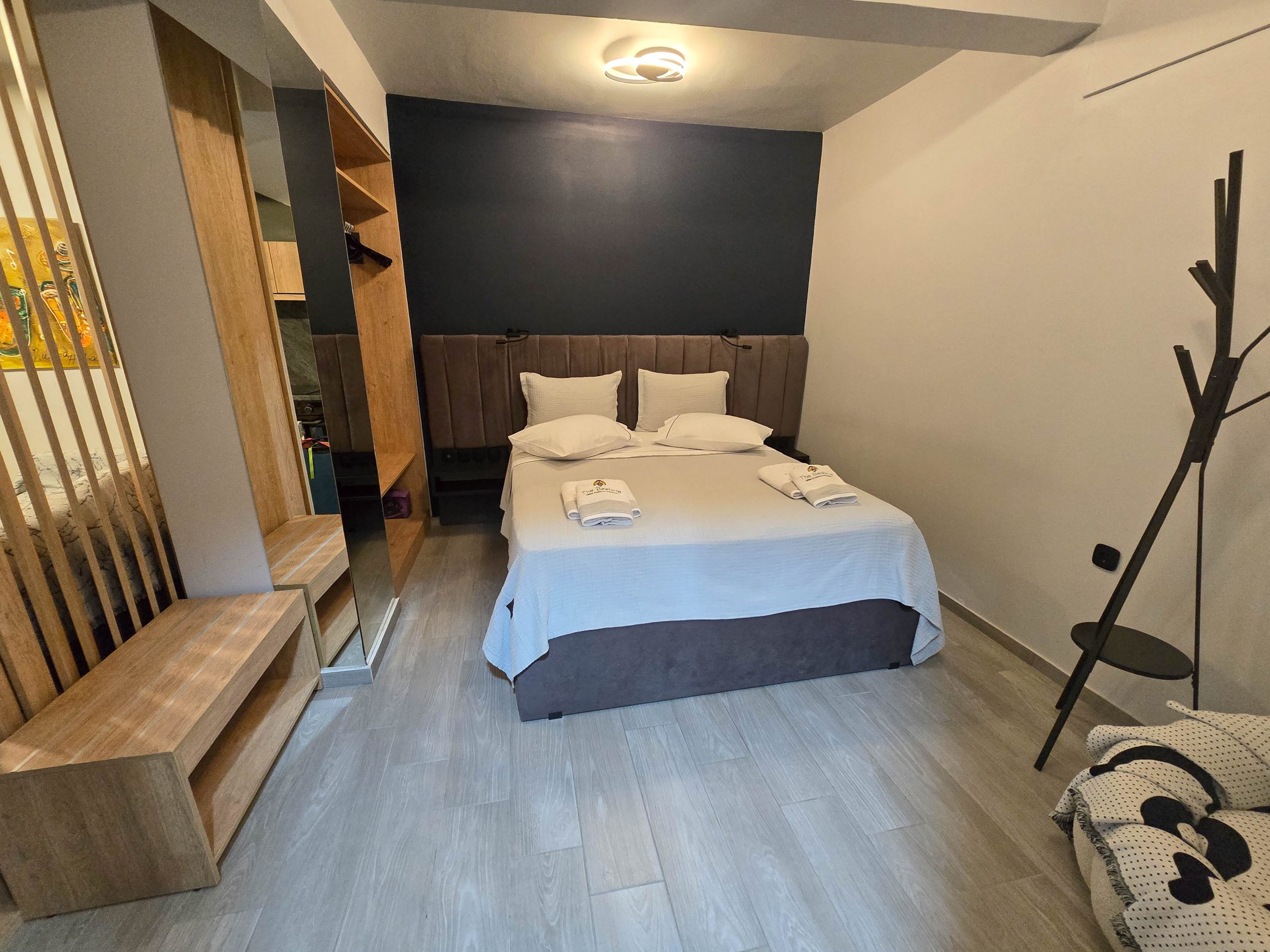
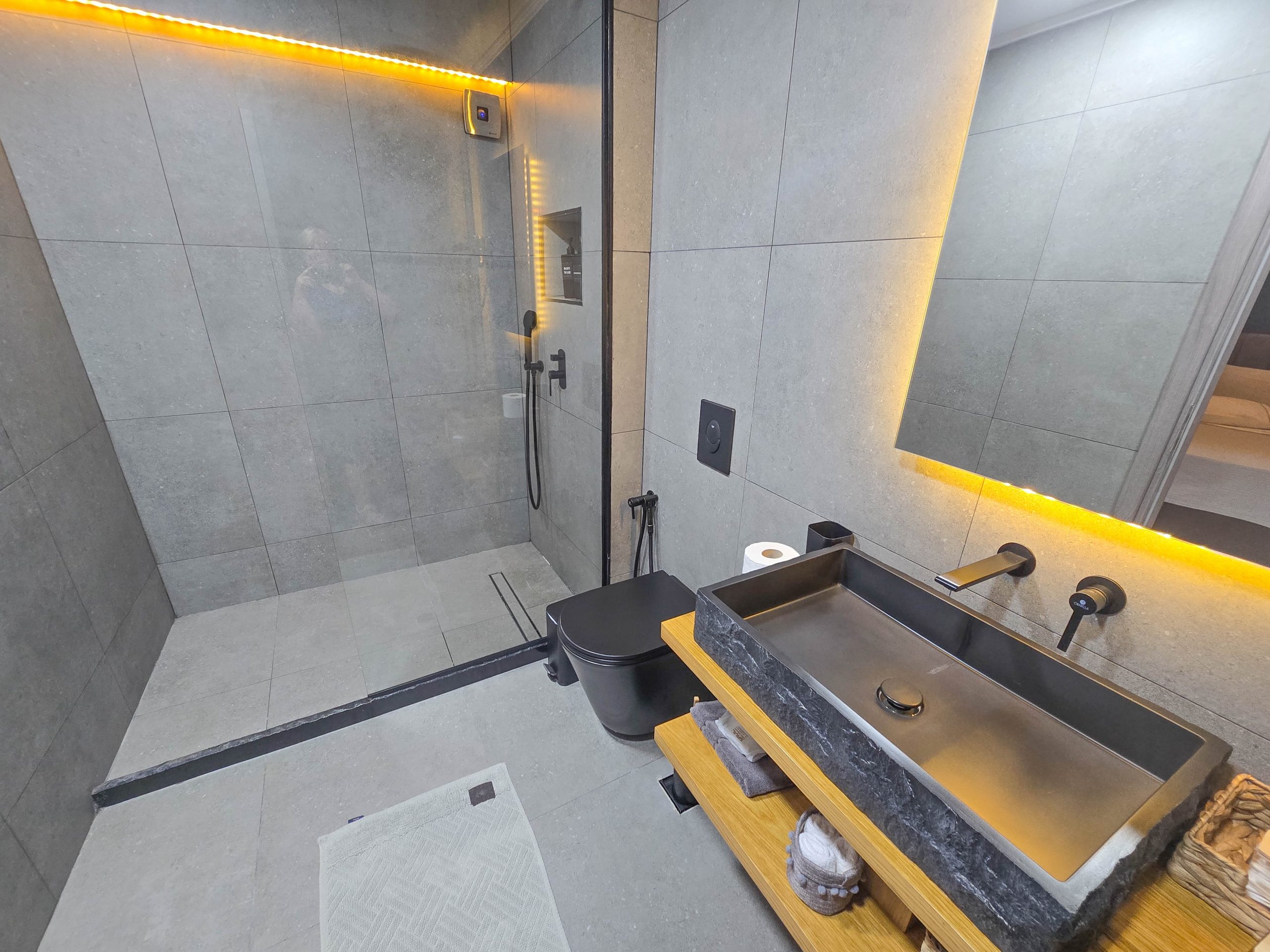
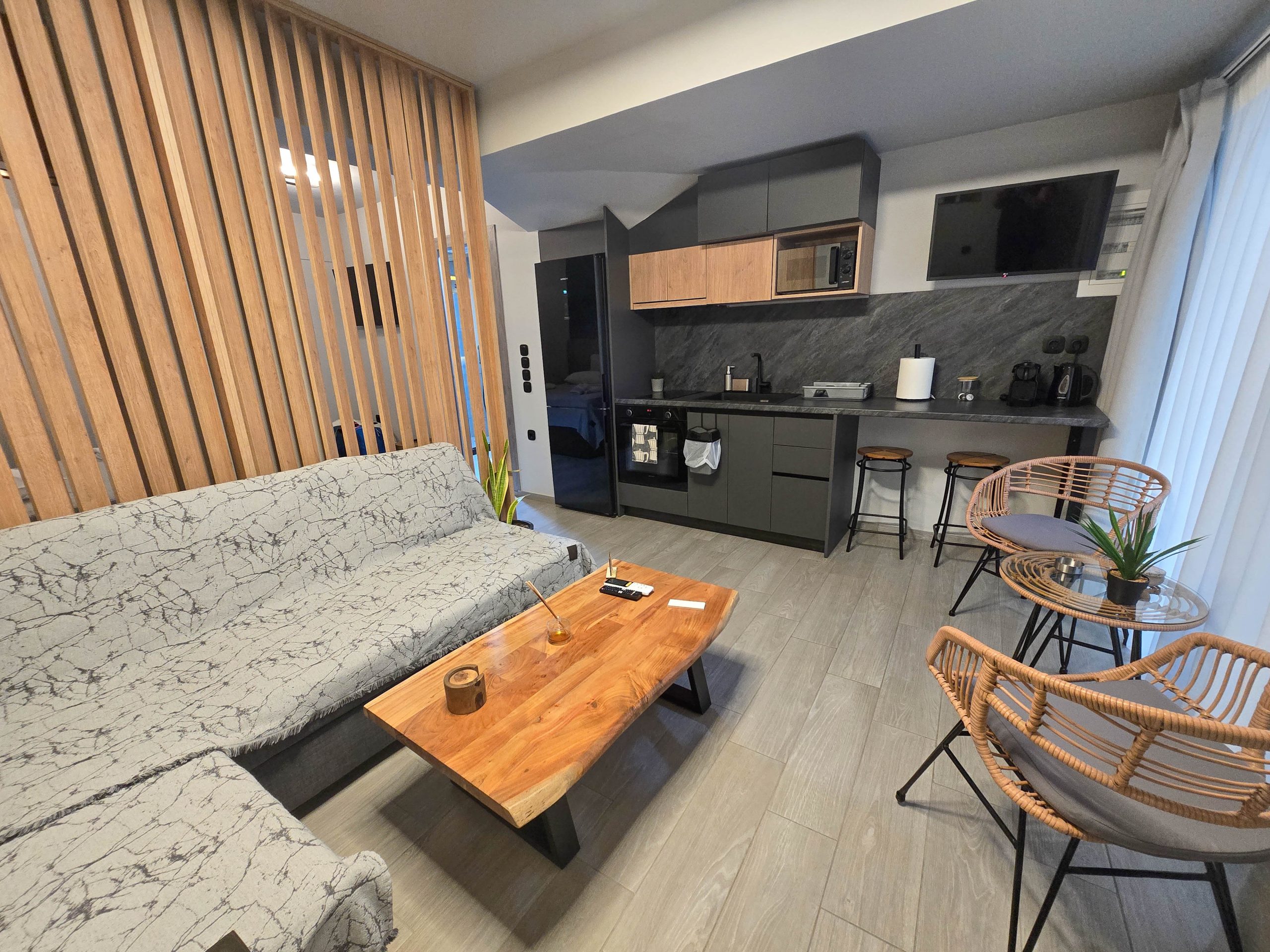
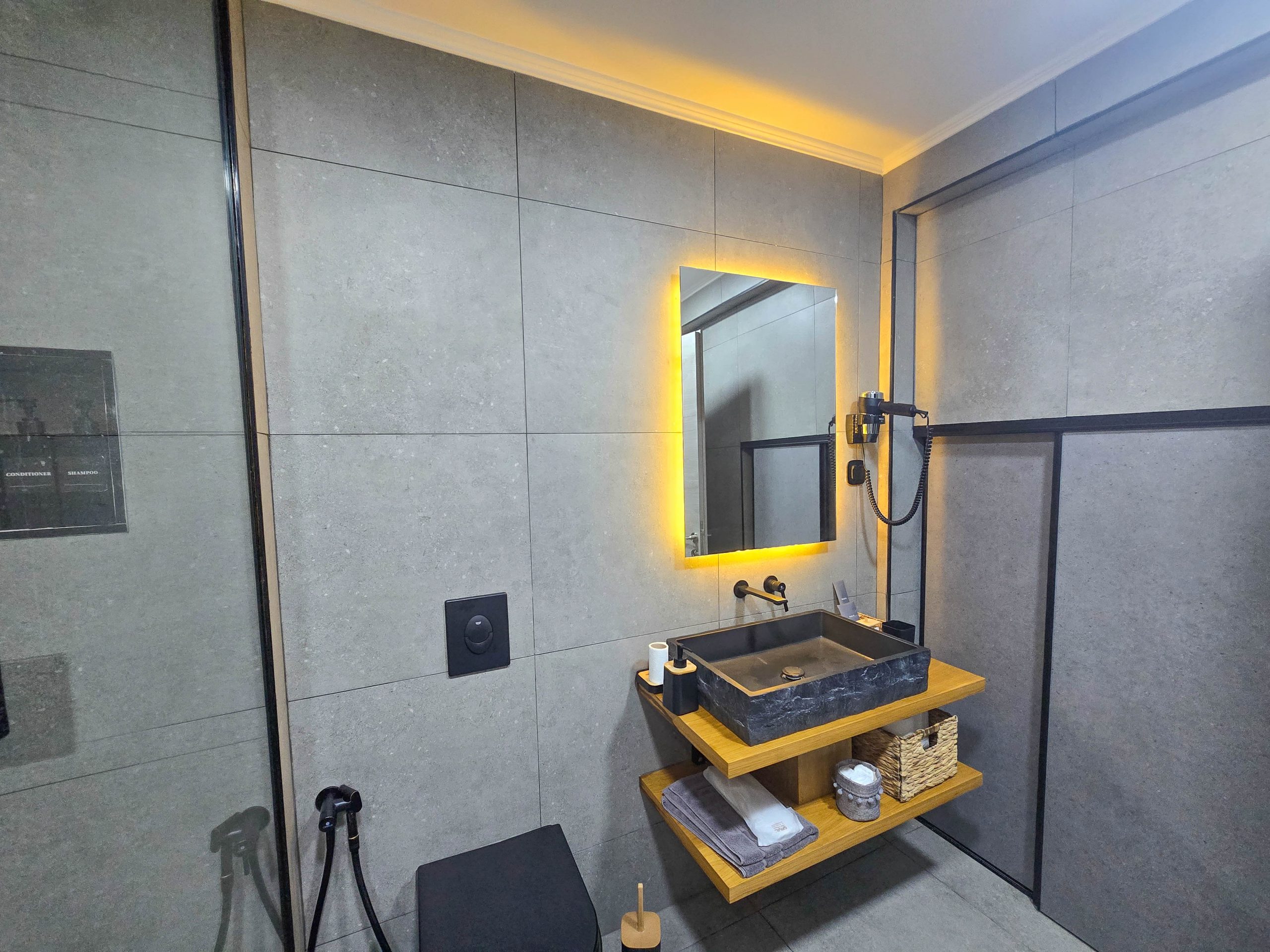
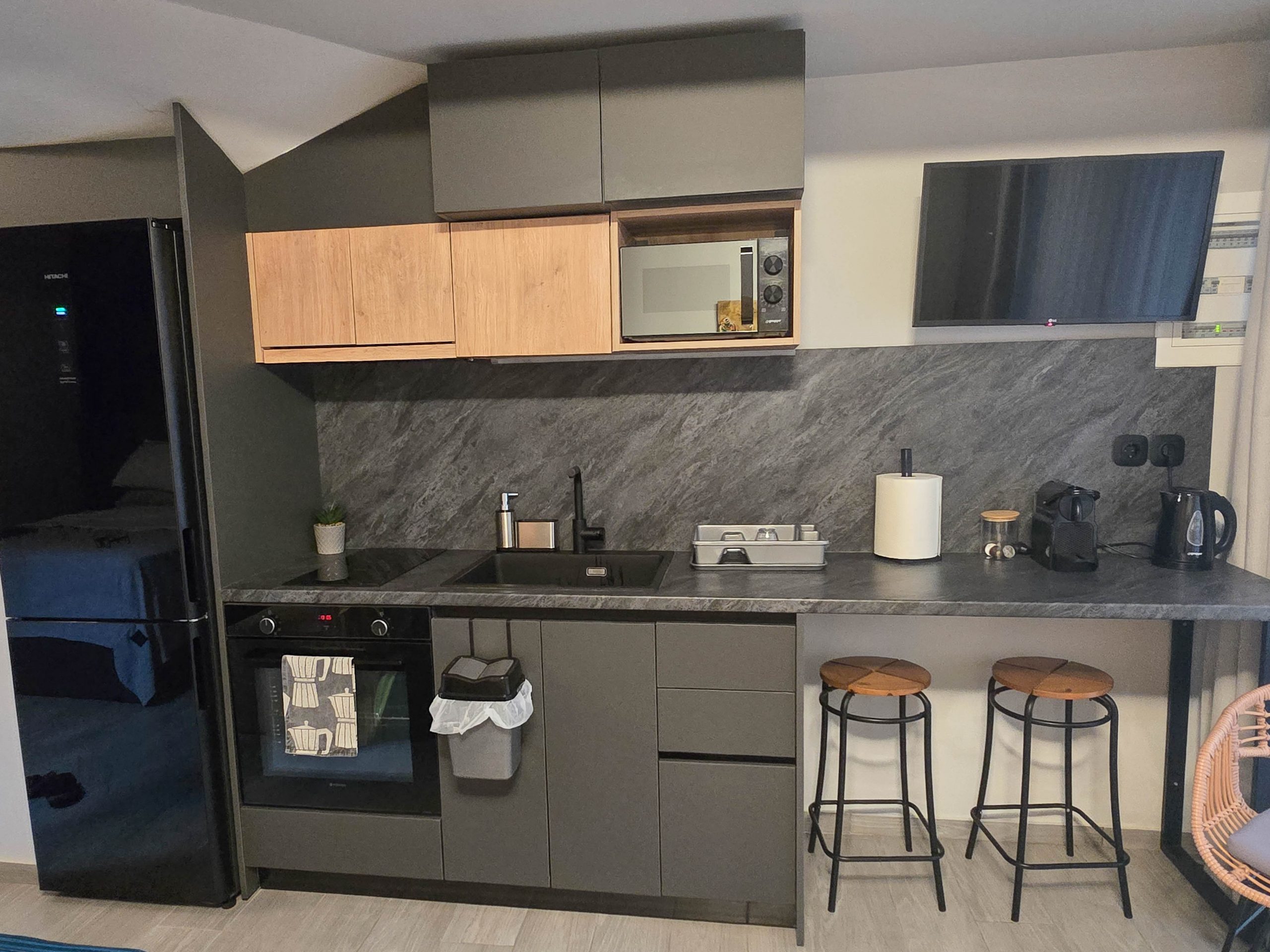
We eventually arrived at Sappho Square, where I took the short walk to my next accommodation, the Beehive, back in my favourite part of Mytilene, right in the midst of the hubbub of the shopping quarter. I had been in contact with my host, Dimitris, who was waiting for me in his small shop down an alleyway next door to the property. Apart from the location, what drew me to Beehive was its ultra-modern feel, and I wasn’t disappointed. Stepping through the door, I was presented with a small living area and a fully functioning kitchen. The bedroom area was well organised and comfortable, with a sumptuous bed. The bathroom was very modern, with a large walk-in shower, and there was even a washing machine, which I was most certainly going to make the most of.
🏩 Book The Beehive in Mytilene here
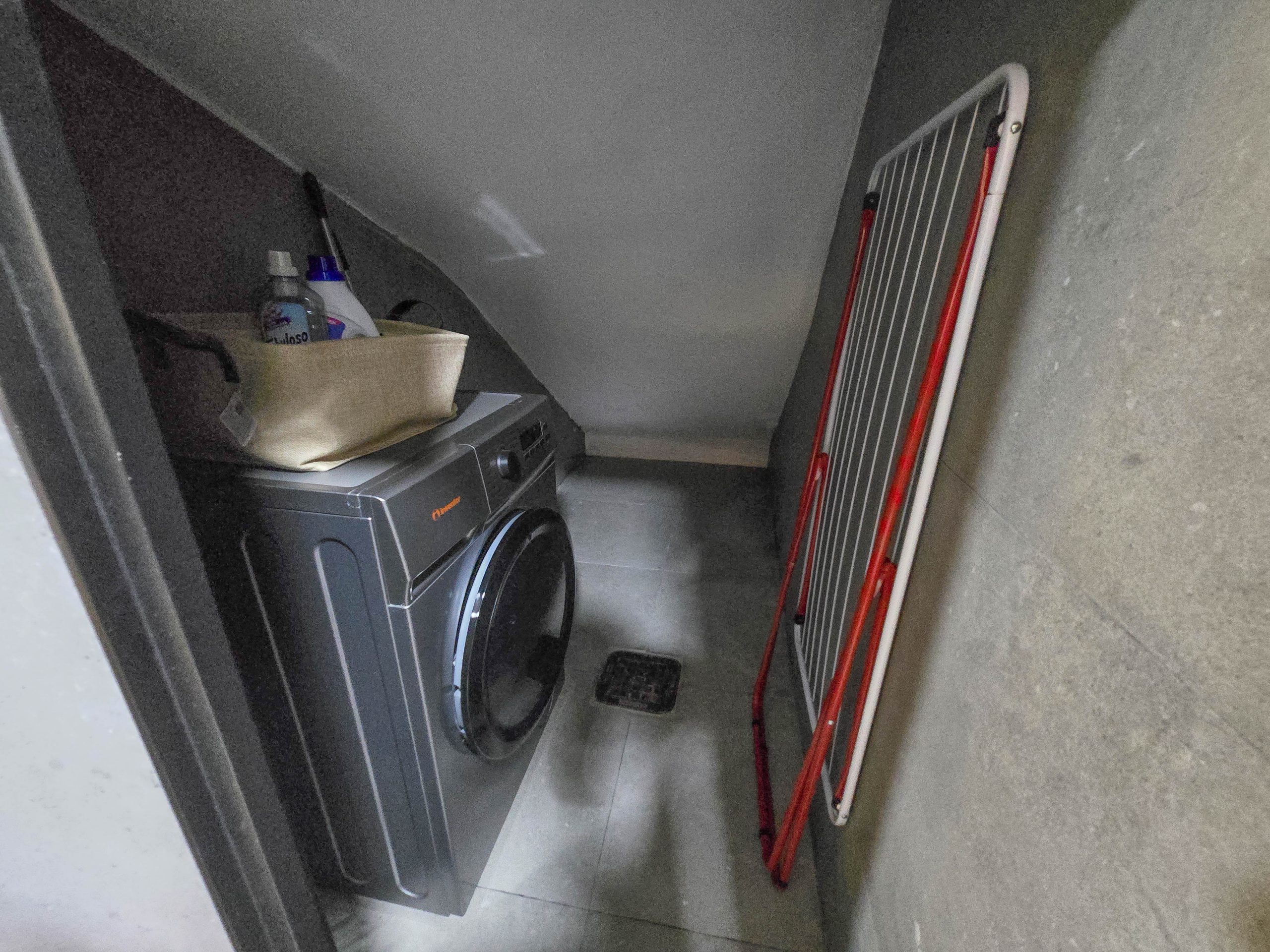
After tipping my clothes into a pile on the floor, I began the familiar ritual of sorting, washing and drying. I wanted to head to my next destination feeling as though I’d freshly packed for a new trip. Leaving Lesvos, having crossed Turkey and followed traces of Greek life through Anatolia, felt like the end of part one. I was now just over a month into the trip was ready for the next chapter.
As evening drew in, I walked the few short steps to another old haunt, Kalderimi Taverna, a traditional taverna set down yet another alleyway, serving good, honest food at reasonable prices. Exhausted from the lack of sleep the night before, I called it an early night.
The following morning, I wanted to make the most of the day. Arriving just as the weekend began meant that getting out to some of the more far-flung villages by intercity bus wasn’t going to be straightforward. With reduced services on Saturdays and Sundays, I decided instead to make use of the urban bus network (blue bus line).
After studying the timetable at the bus stop at Sappho Square, I boarded a bus heading towards Loutropolis Thermis, the town that sits above the island’s thermal springs. The bus passed through the village of Moria, a name that inevitably carries heavy associations because of the refugee camp once located nearby. That chapter ended after the camp was destroyed by fire and the residents were dispersed elsewhere. What has always existed, though, is the village itself — a place where everyday life continues quietly, detached from the narratives attached to it.
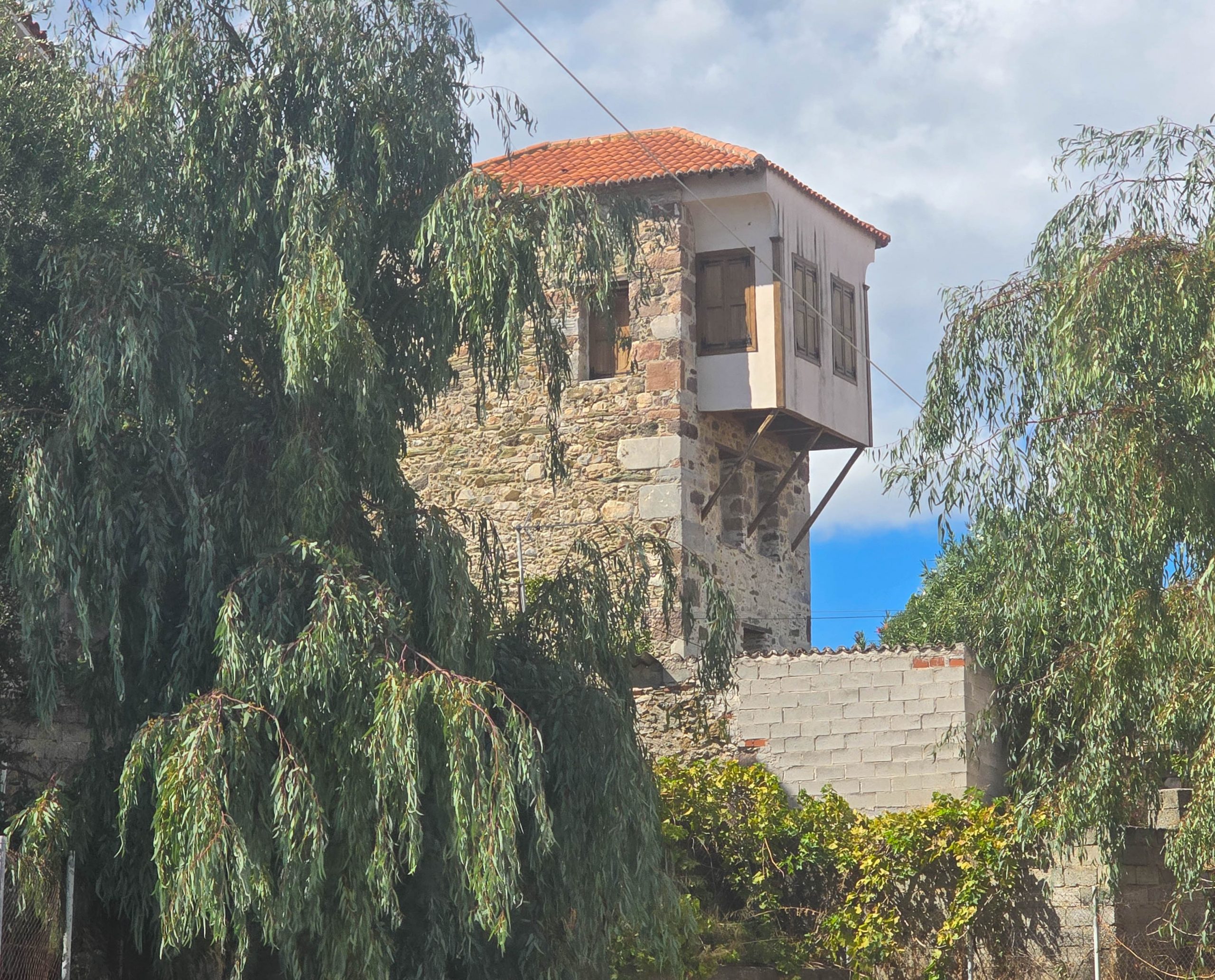
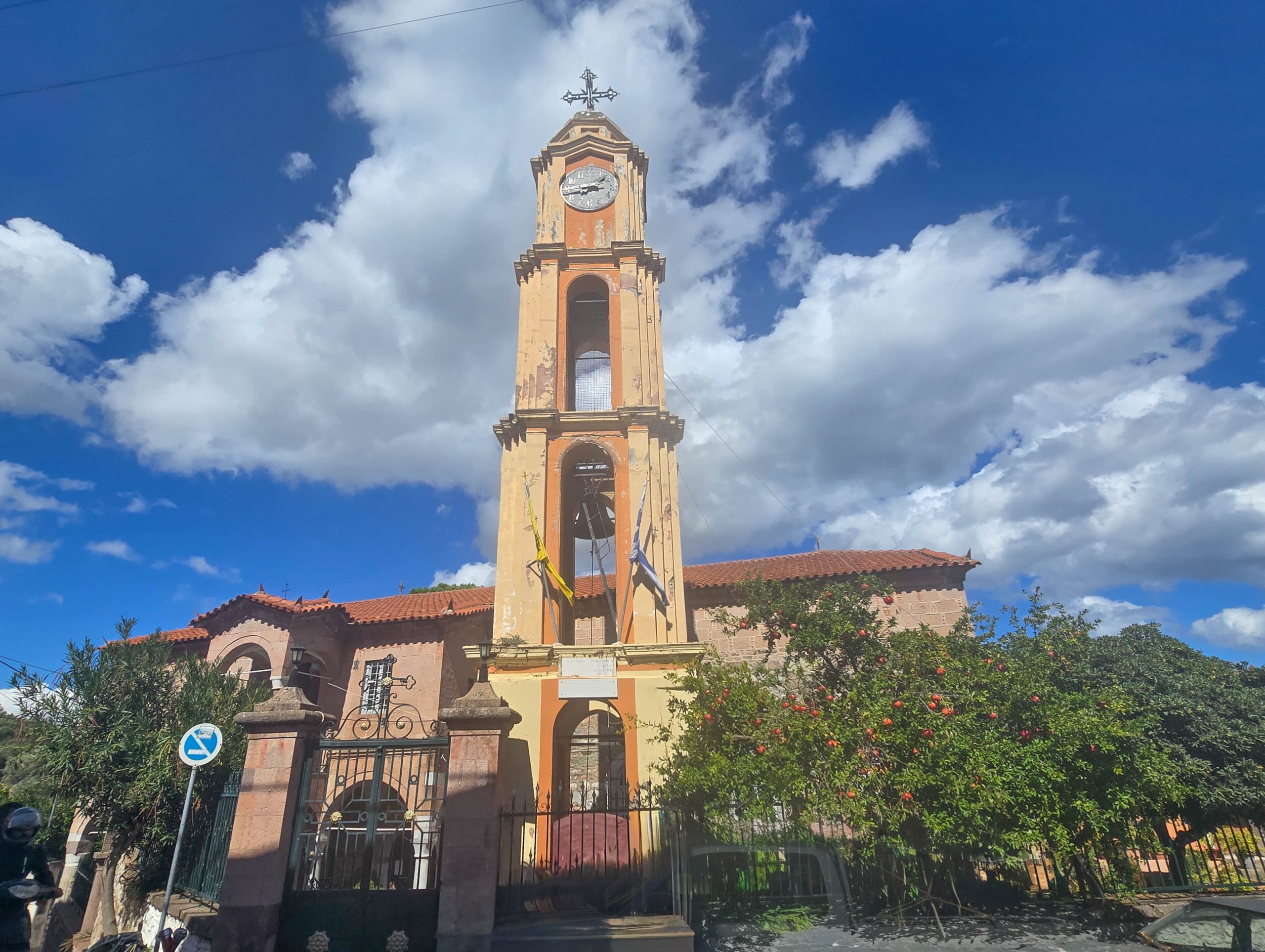
I was dropped at an unassuming street corner. A path lined with olive groves on either side climbed steadily until it reached the entrance to the village. What I found was a place of steep streets and shaded alleyways, tumbledown stone cottages, and a church with an impressive bell tower. Nearby stood the Tsoukaladellis Tower, an 18th-century stone house that belonged to the local Tsoukaladellis family and once formed the centre of their agricultural estate. Built at a time when rural homes needed to be defensible as well as practical, its thick stone walls, narrow openings and height give it an almost fortress-like presence. Closed now and quietly weathering, it still feels firmly rooted in the village.
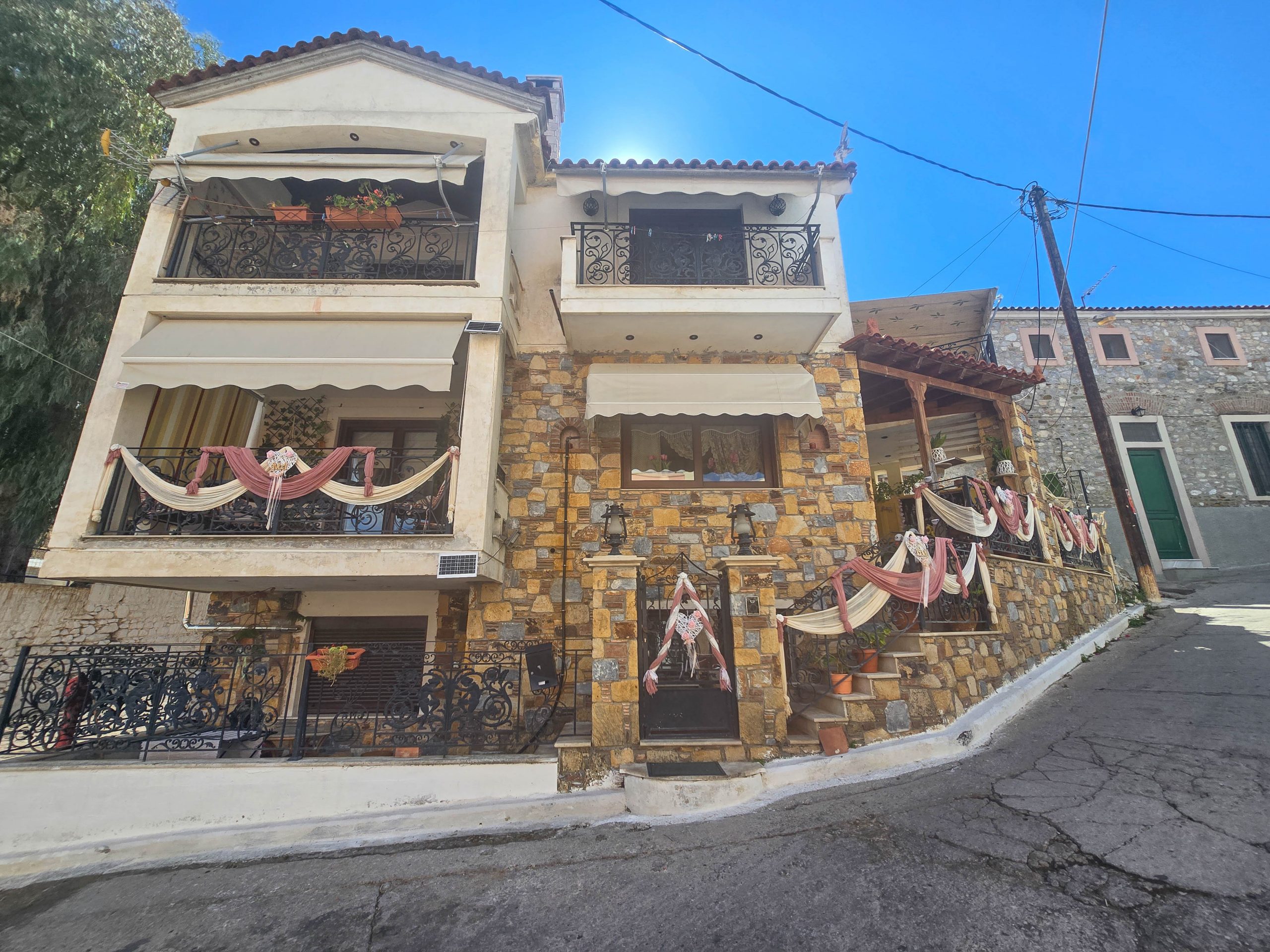
In the village square, a war memorial bears a quote by Kostis Palamas, and nearby railings, decorated with ribbons, hint at an upcoming wedding. Moving through the village, little gaps between houses opened up to reveal views down towards the bay. On a clear day like this, Turkey sat across the water in what looked like touching distance.
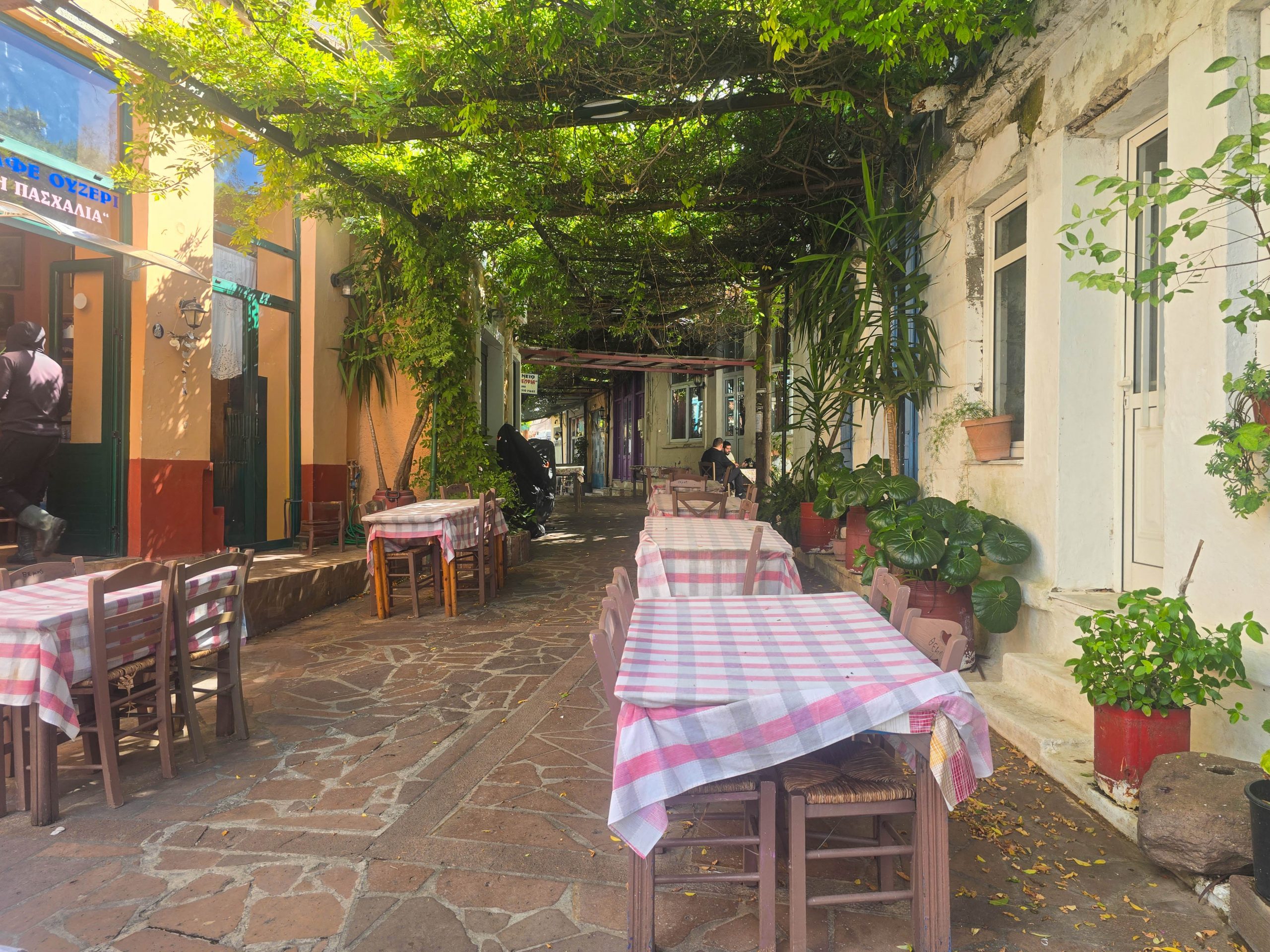
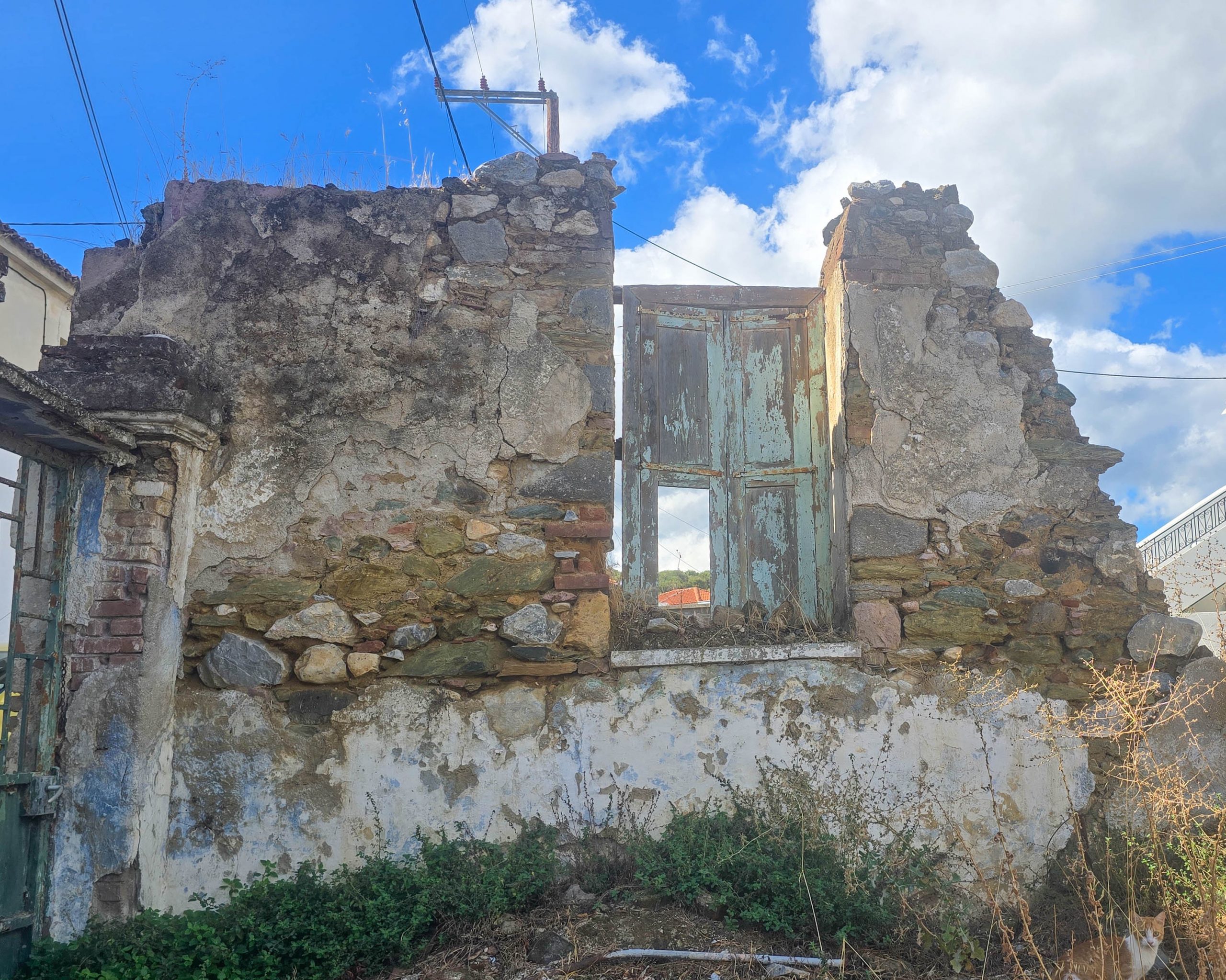
The walk down towards the coast was an easy one. The sun was bright, but a light chill in the breeze kept things comfortable. It was one of those walks that feels invigorating and restorative — the kind that charges the soul. Along the way, I passed a small church with no name marked on Google Maps, its grounds scattered with fragments of older architectural pieces. Curious, but with no information to be found.
Further down, buildings in various stages of dereliction began to appear, and it was here that the “Thermi” in Loutropolis Thermis started to reveal itself. A small domed structure, roofed with pantiles, with steps leading down into an arched entrance, bore the unmistakable rusty staining of mineral-rich thermal water. I would have loved to have had a peep inside, but the standing water and the precarious state of the building kept me firmly on the periphery.
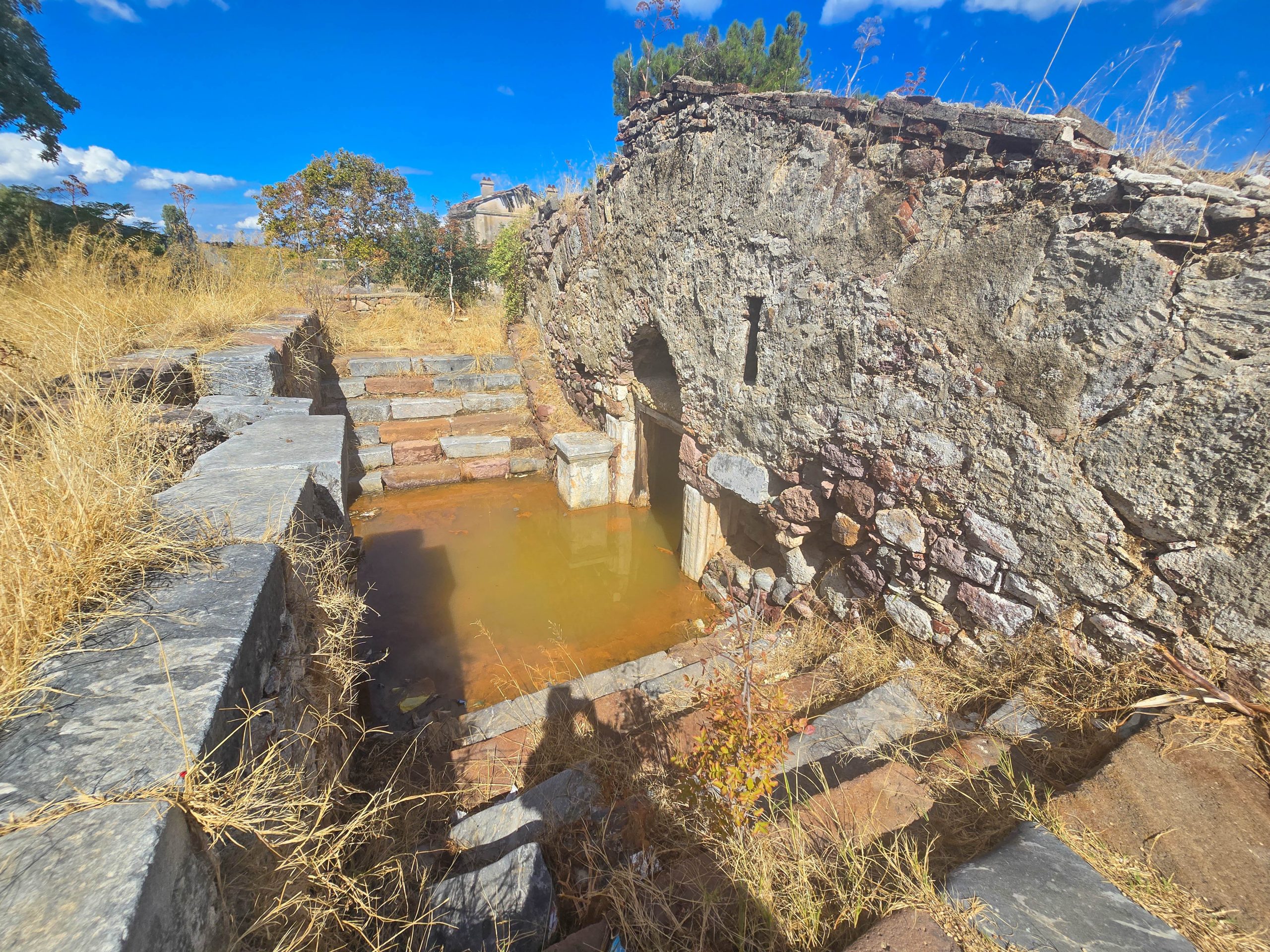
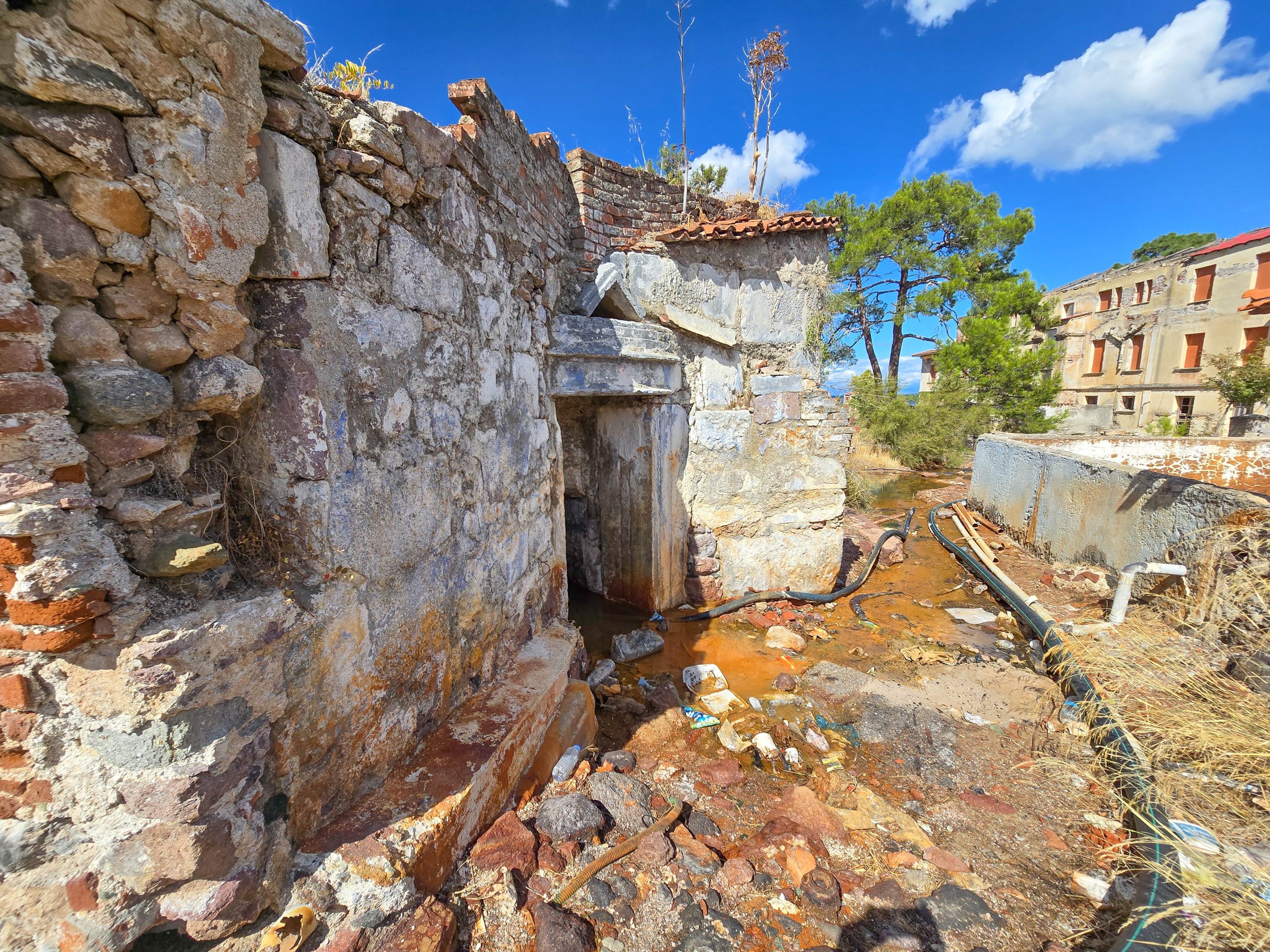
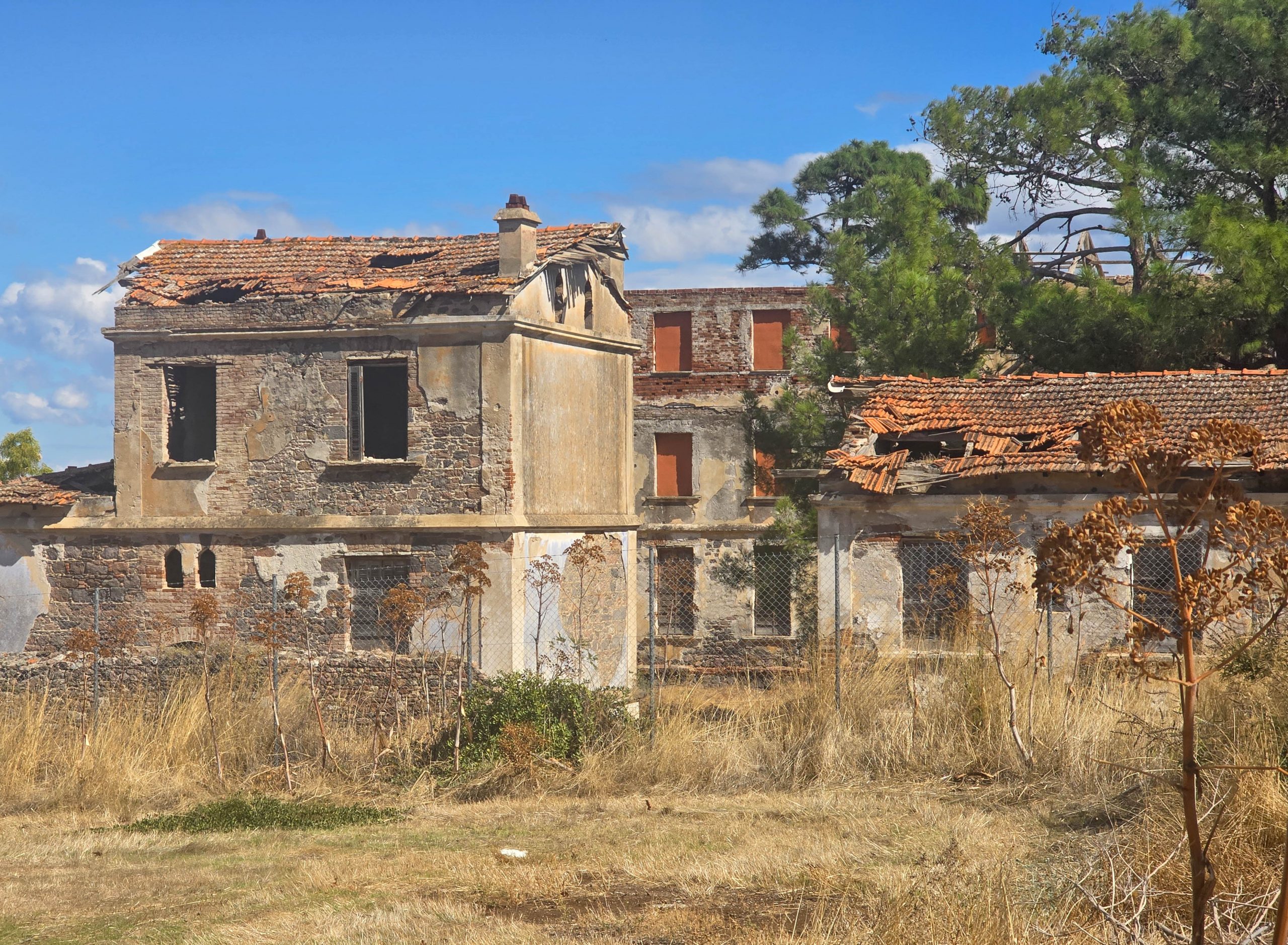
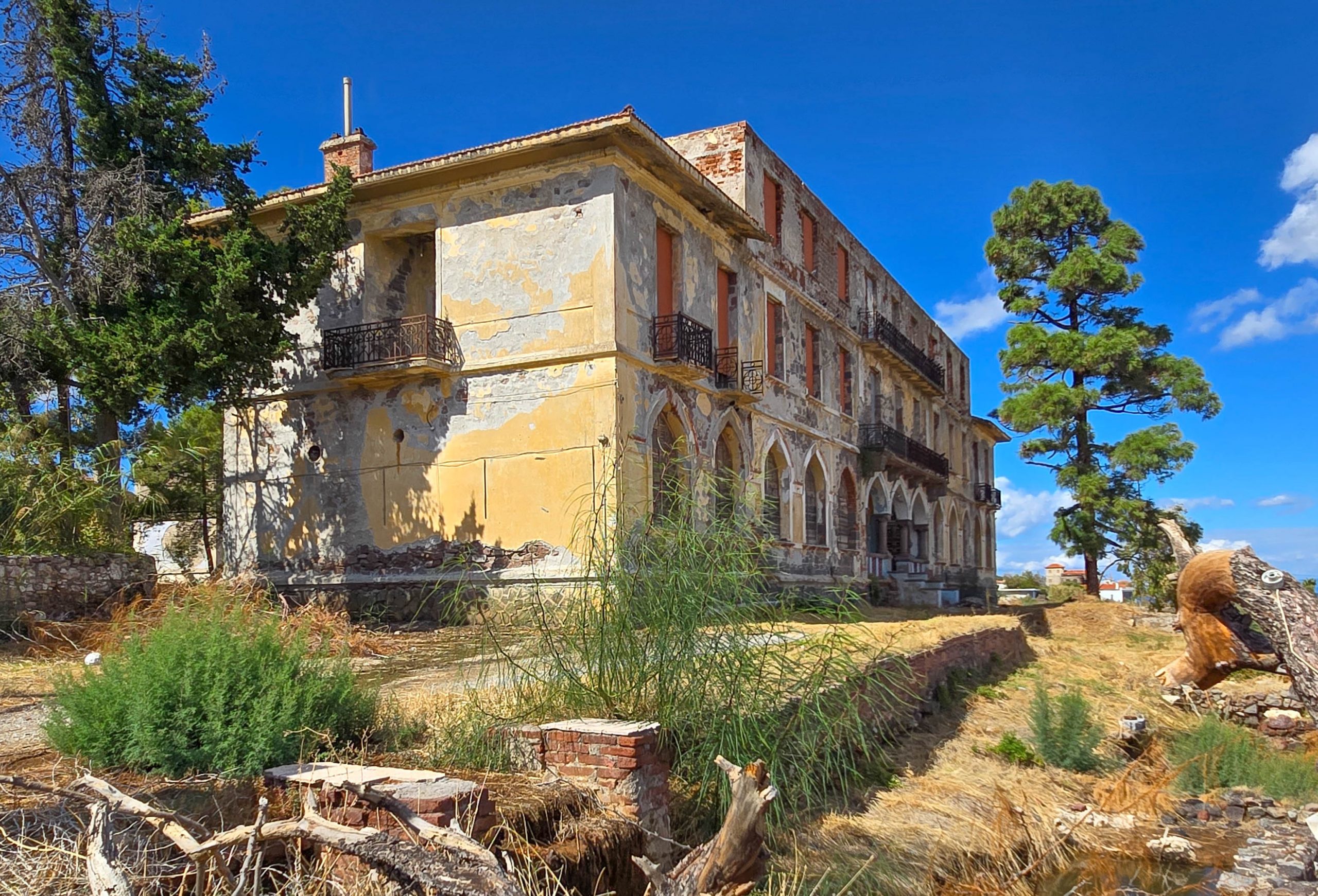
Just beyond stood the once-resplendent Sarlitza Palace, now looking forlorn and fenced off. Built in 1909, when Lesvos was still under Ottoman rule, it was part of a self-contained spa complex centred on the thermal springs. Designed to attract long-stay visitors seeking the healing properties of the mineral waters, it reflected a brief moment when Lesvos looked outward, confident enough to mirror the great European spa towns of the era. Wars, changing travel habits and shifting attitudes to spa culture eventually left it behind. In recent months, it has returned to local discussion, with regional news reporting renewed efforts to bring investors together to restore and redevelop the site, alongside ongoing upgrades to the nearby thermal facilities. For now, it remains fenced off, but no longer entirely forgotten.
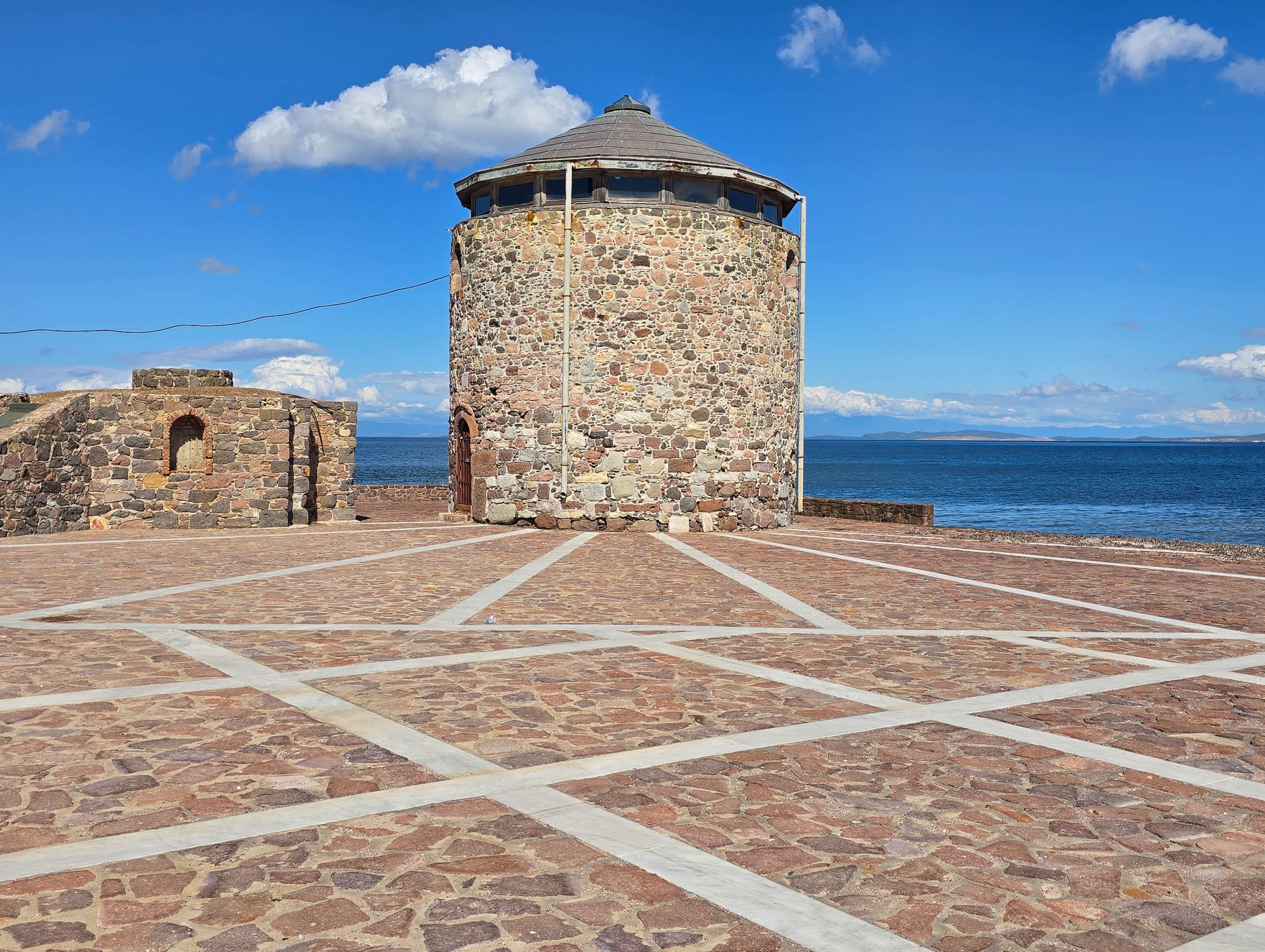
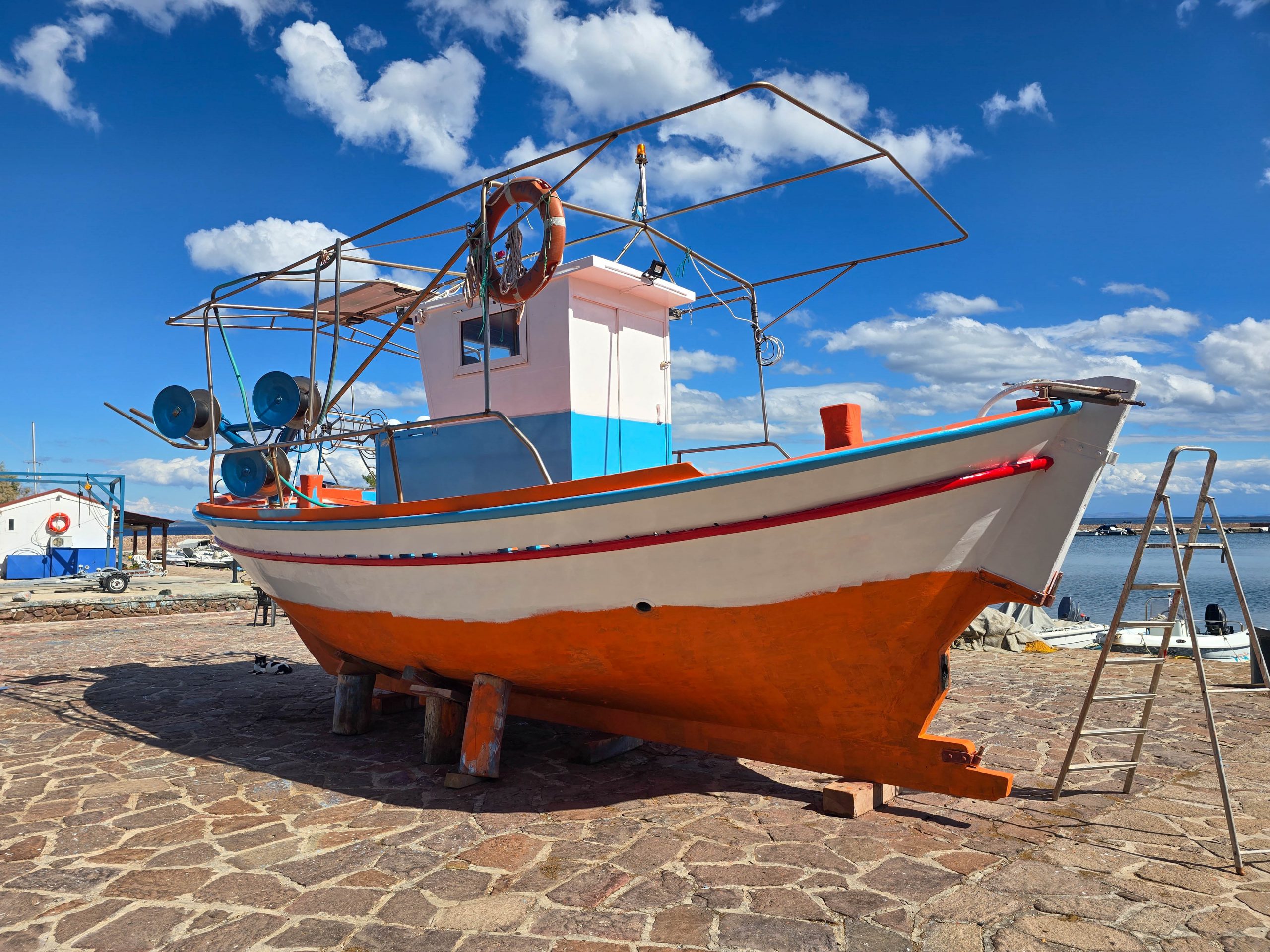
Down at the harbour, a small square opens out beside a stone windmill. Fishing boats bobbed gently, framed by a cluster of cafés and tavernas. Just as I was getting caught up in the mooching, I spotted the bus back to Mytilene pulling in. Unsure how long it would be before the next one, I ran for it, the driver waiting patiently as I crossed the road.
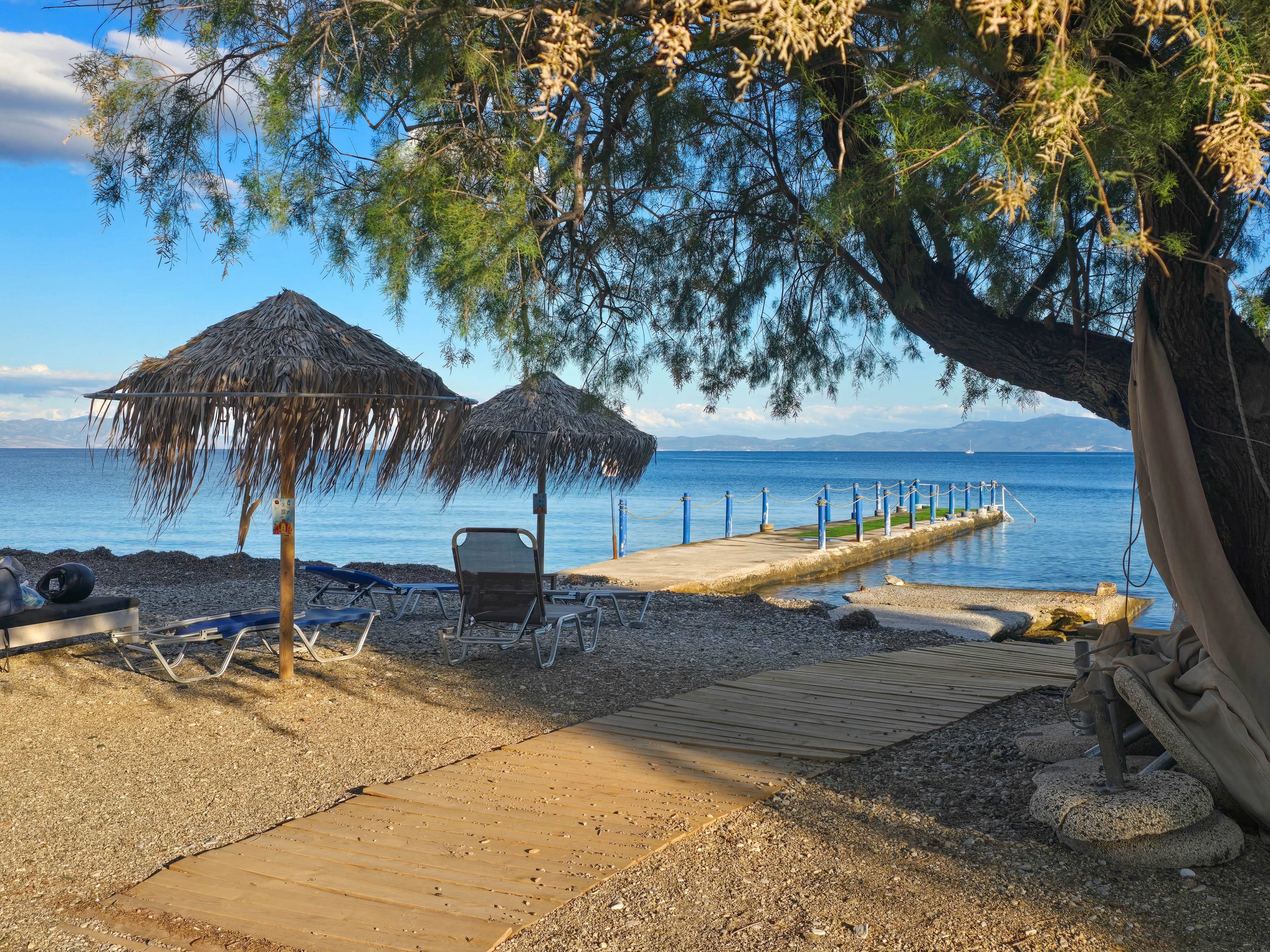
Back in town, I spent the afternoon at Plaz, the beach club just below the kastro. For €1.50 a day, you get access to a sunbed, changing rooms and all the other facilities. From my lounger, I watched the Blue Star Mykonos and Nisos Samos glide in and out of the port. Nothing else – just chilling and watching life and the world go by.
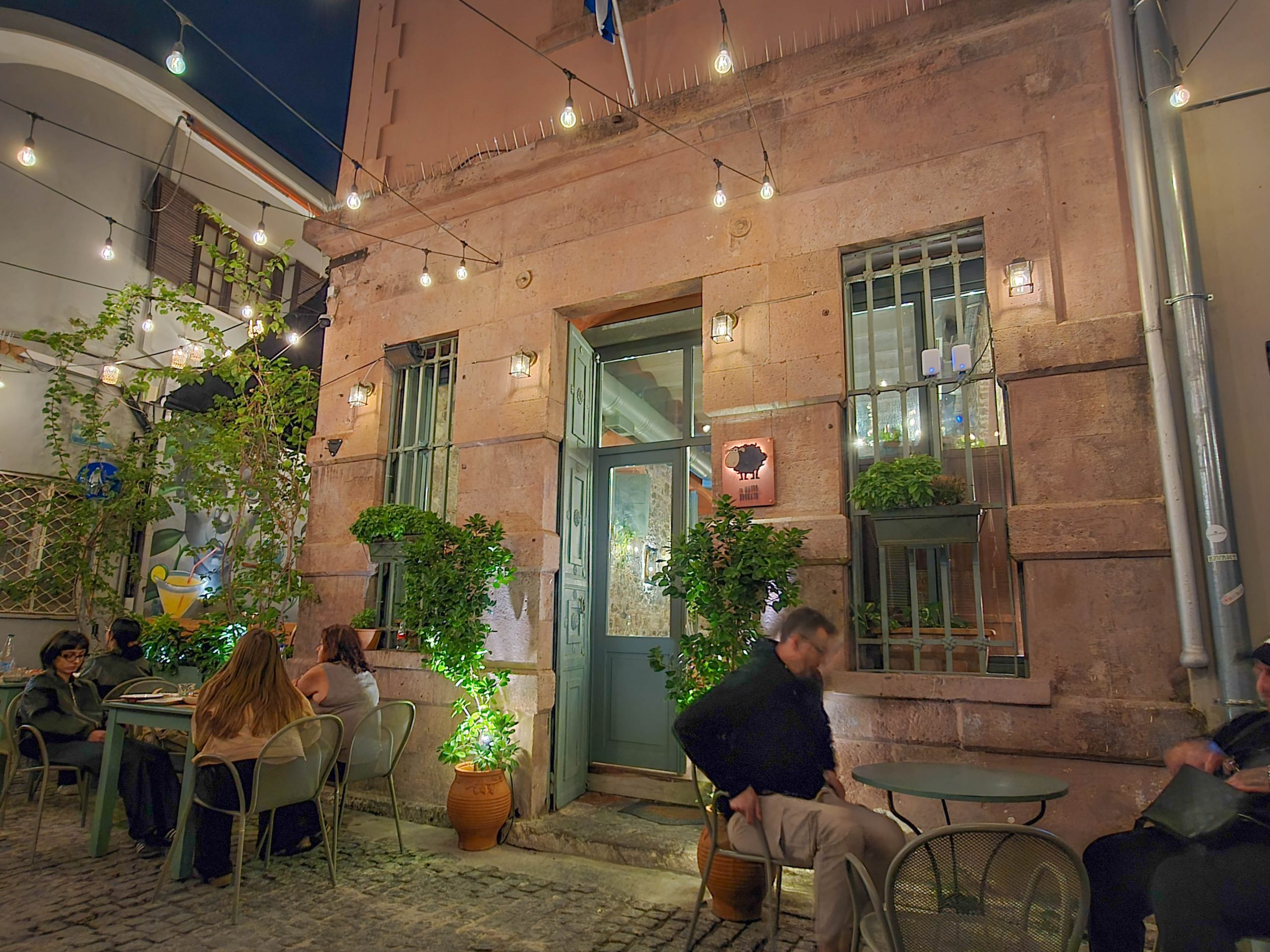
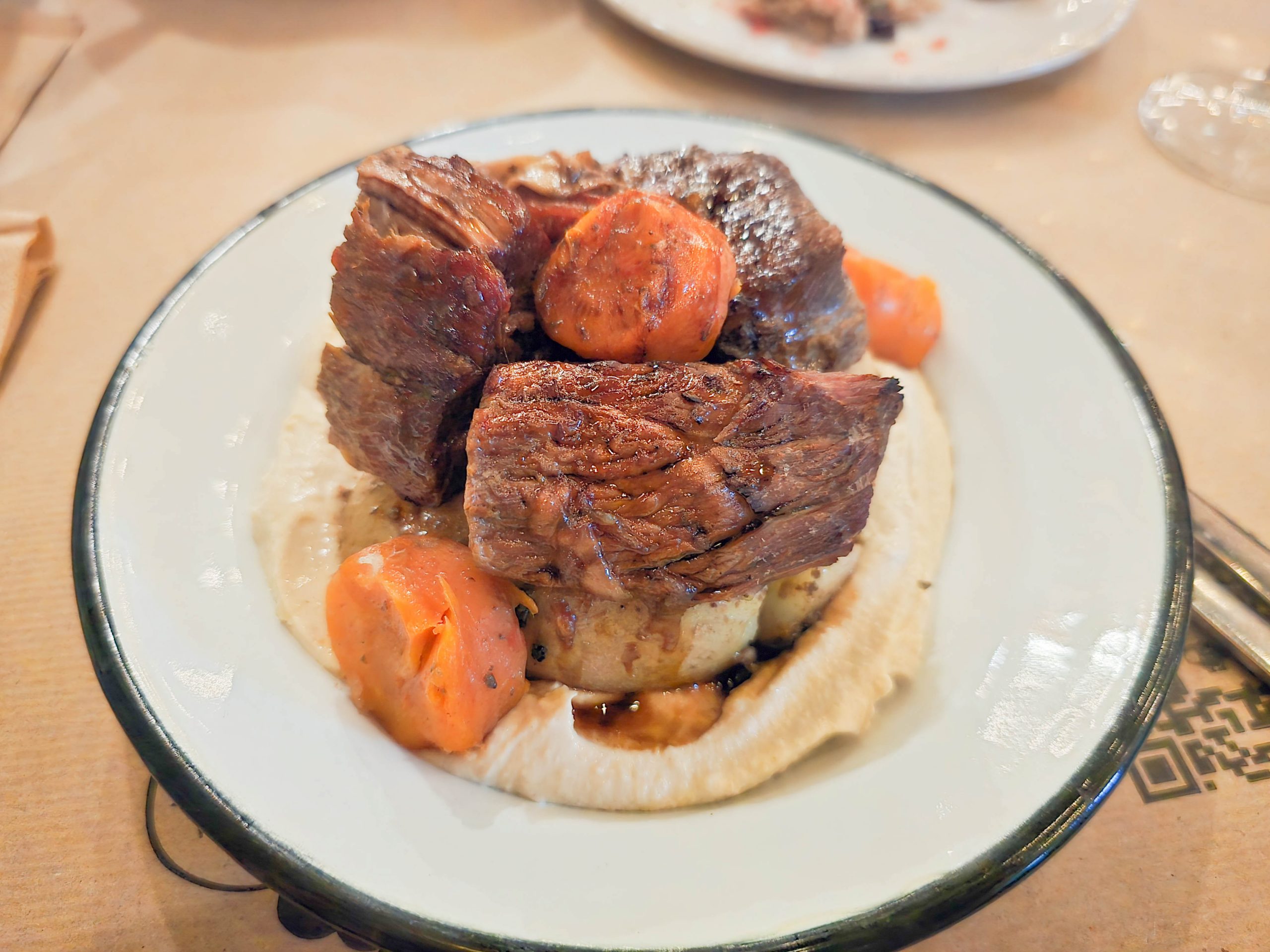
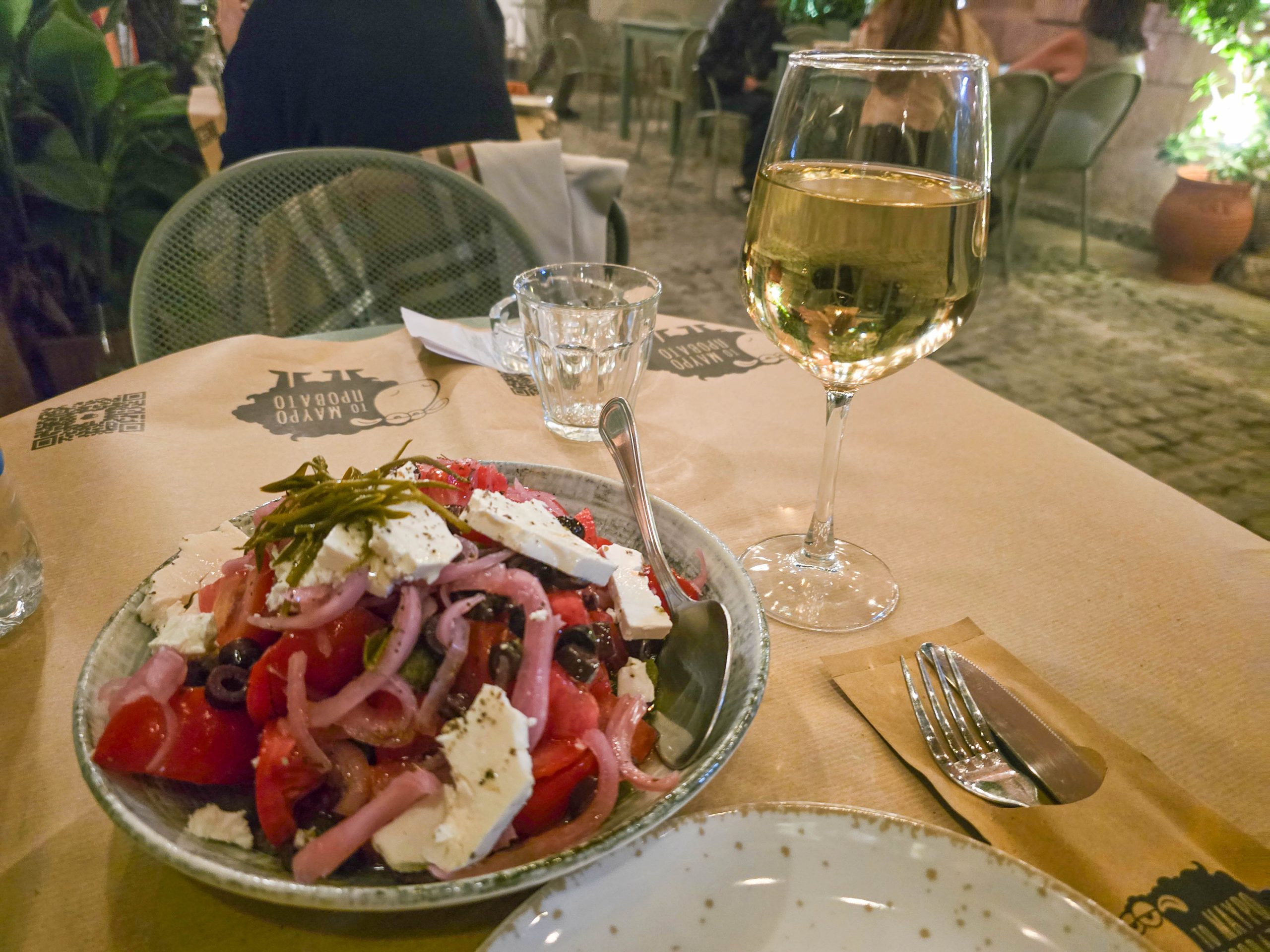
That evening I returned to my favourite part of Mytilene and dined at To Mavro Provato, next door to Home – It’s a Feeling. The meal was exceptional: a Greek salad followed by bekri meze, rich with succulent chunks of beef served on a bed of hummus — a confident modern twist that suited the place perfectly.
While planning the following day and factoring in the limited Sunday bus service, I realised I had been close to the monastery of Agios Rafael, just beyond Loutra. It was only a few stops further along the same route, and while the return bus would be a long wait (Sunday service), I was prepared to take a taxi back if needed.
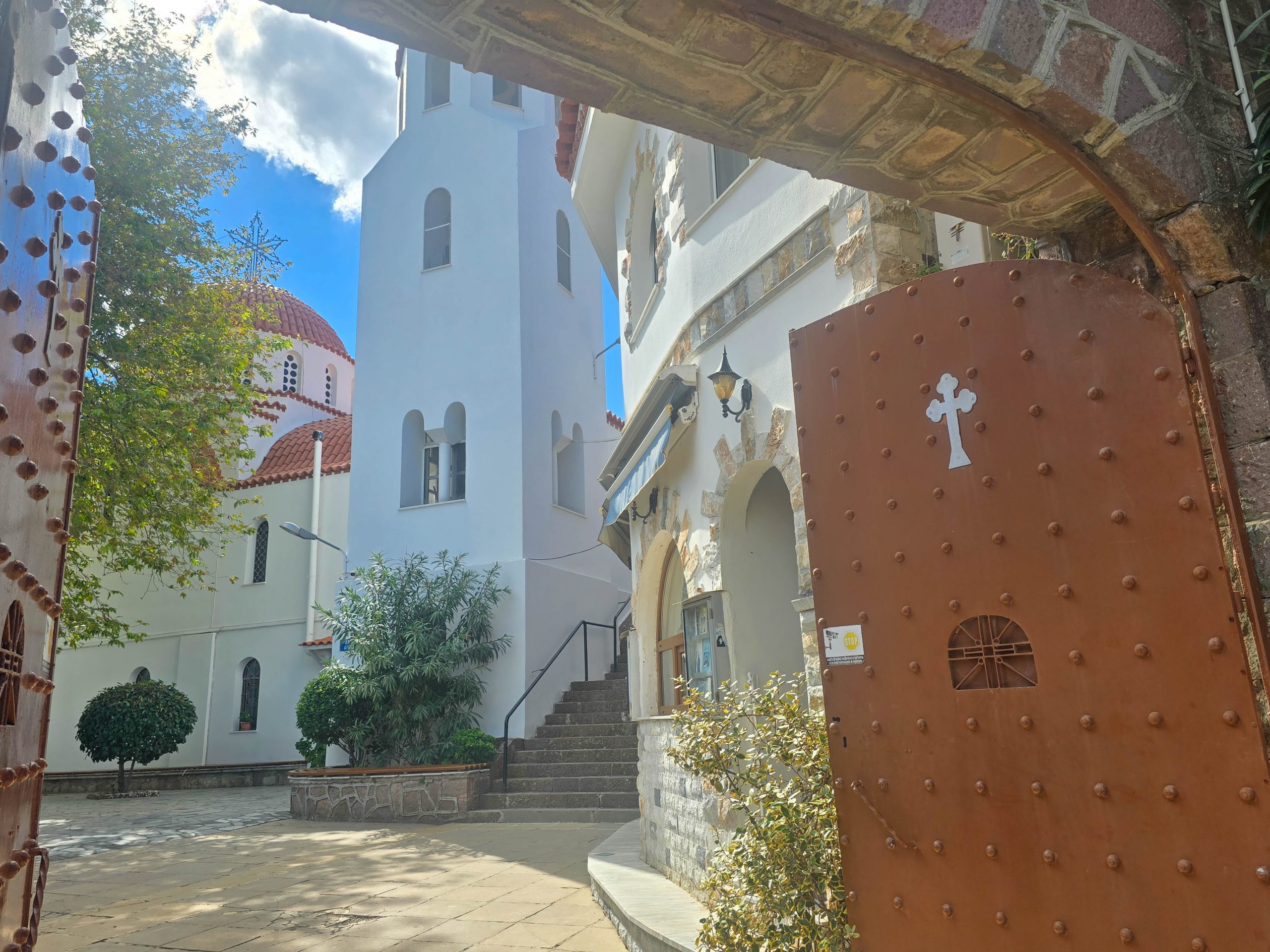
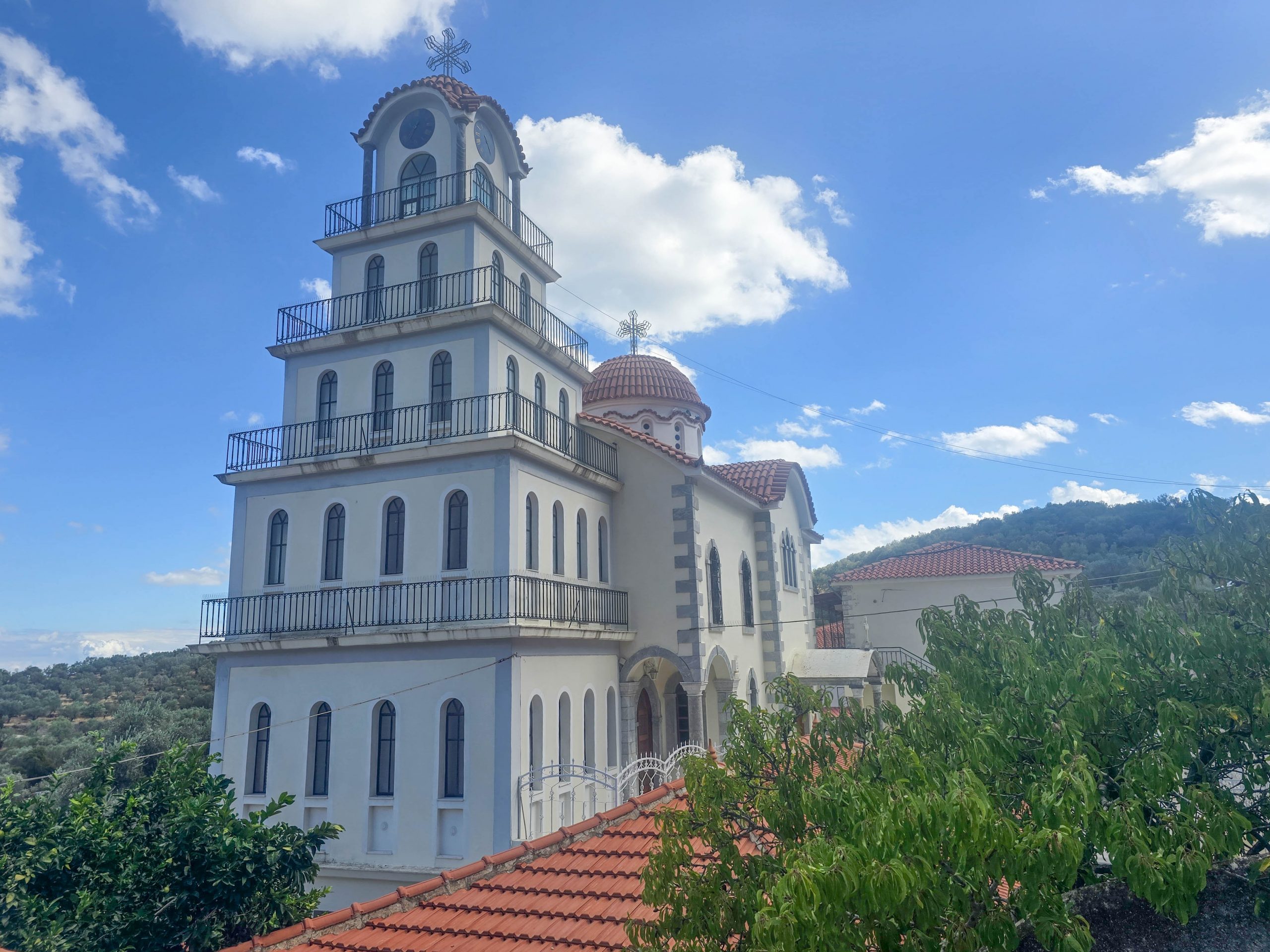
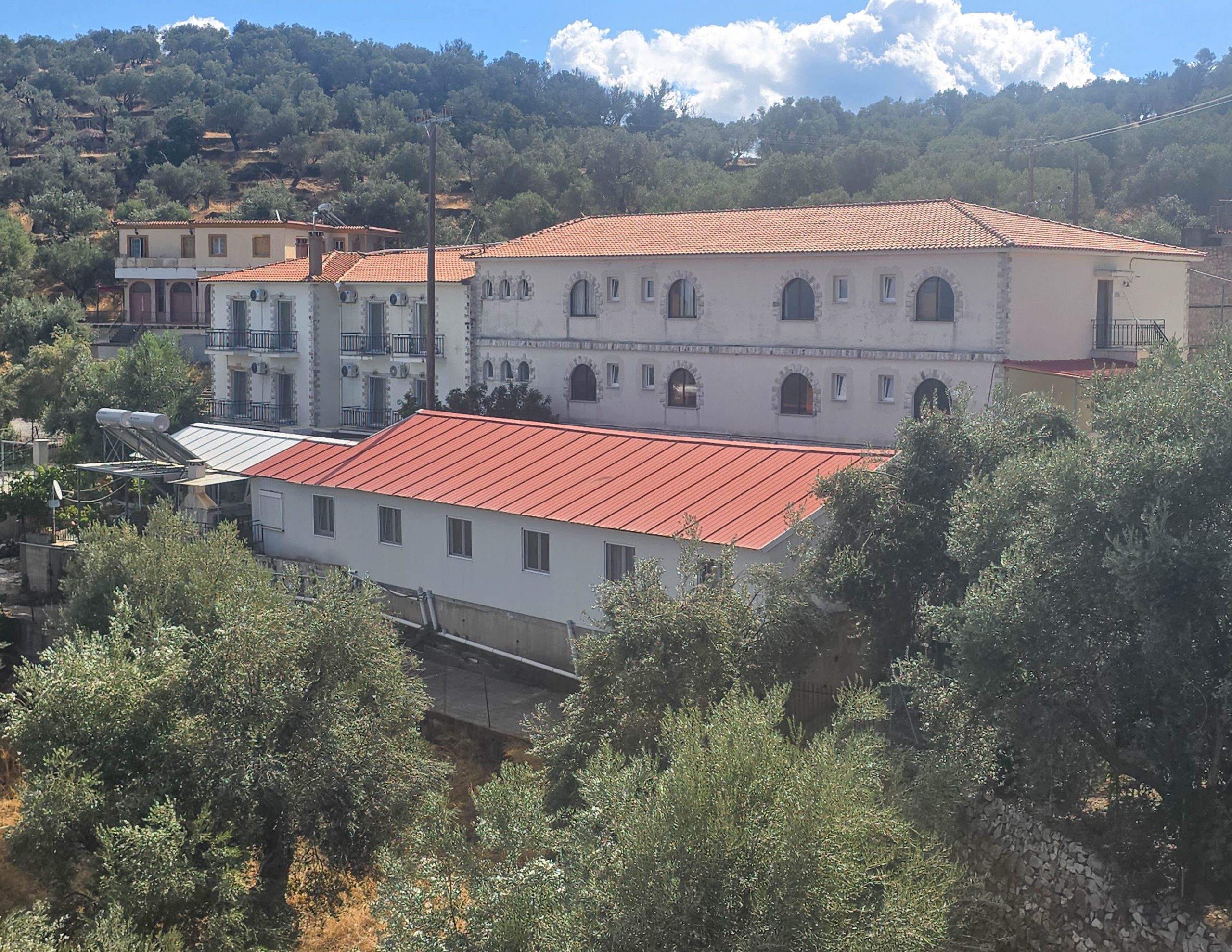
The monastery sits on the hill of Karyes above Thermi, and the views alone make the journey worthwhile, olive groves falling away beneath you as the landscape opens out towards the sea. The site is tied to stories of martyrdom dating back to 1463, set around three figures — Saints Rafael, Nicholas and the young Irene of Lesbos.
What struck me most was how recent the monastery’s revival actually is. The present monastery stands on the site of an earlier Christian foundation, thought to date back to the 12th century, which later became a nunnery before its destruction during pirate raids. In 1463, Raphael and his companion Nicholas were said to be living here when local villagers sought refuge during a failed uprising against Ottoman rule, events that led to the brutal deaths of Raphael, Nicholas and the young Irene. Centuries later, accounts describe how visions reported by villagers in the late 1950s and early 1960s led to excavations on the hill, during which a long-dried spring was said to begin flowing again. In response, the monastery that stands today was built from the ground up, completed in 1964 under Abbess Evgenia Kleidara and dedicated to the three New Martyr Saints.
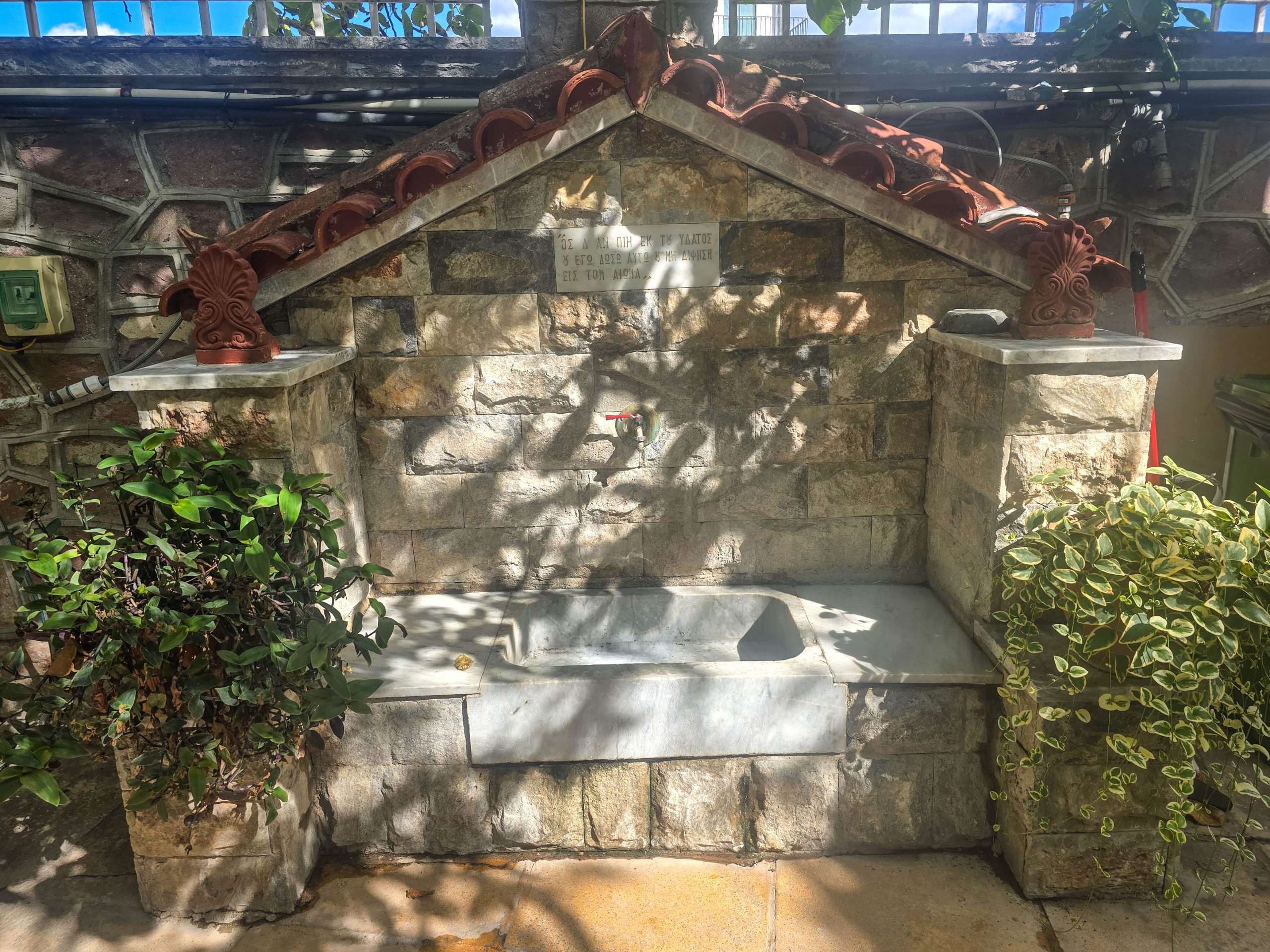
The water became central to the monastery’s rediscovery, linked to healing and protection, and often told alongside the story of a young boy, Akindynos, who was born with paralysis in one leg and was said to have recovered after it was washed with water from the spring. The sign at the fountain says, “Whoever drinks of the water that I shall give him will never thirst forever.” This is a quotation from the Gospel of John (4:14). Whether taken as faith, folklore or coincidence, the fountain and its legend have become an integral part of the visitor experience. Did I drink the water? Of course I did. Just a sip — but at my age, you take the health benefits when offered, however slim the chances of a miracle!
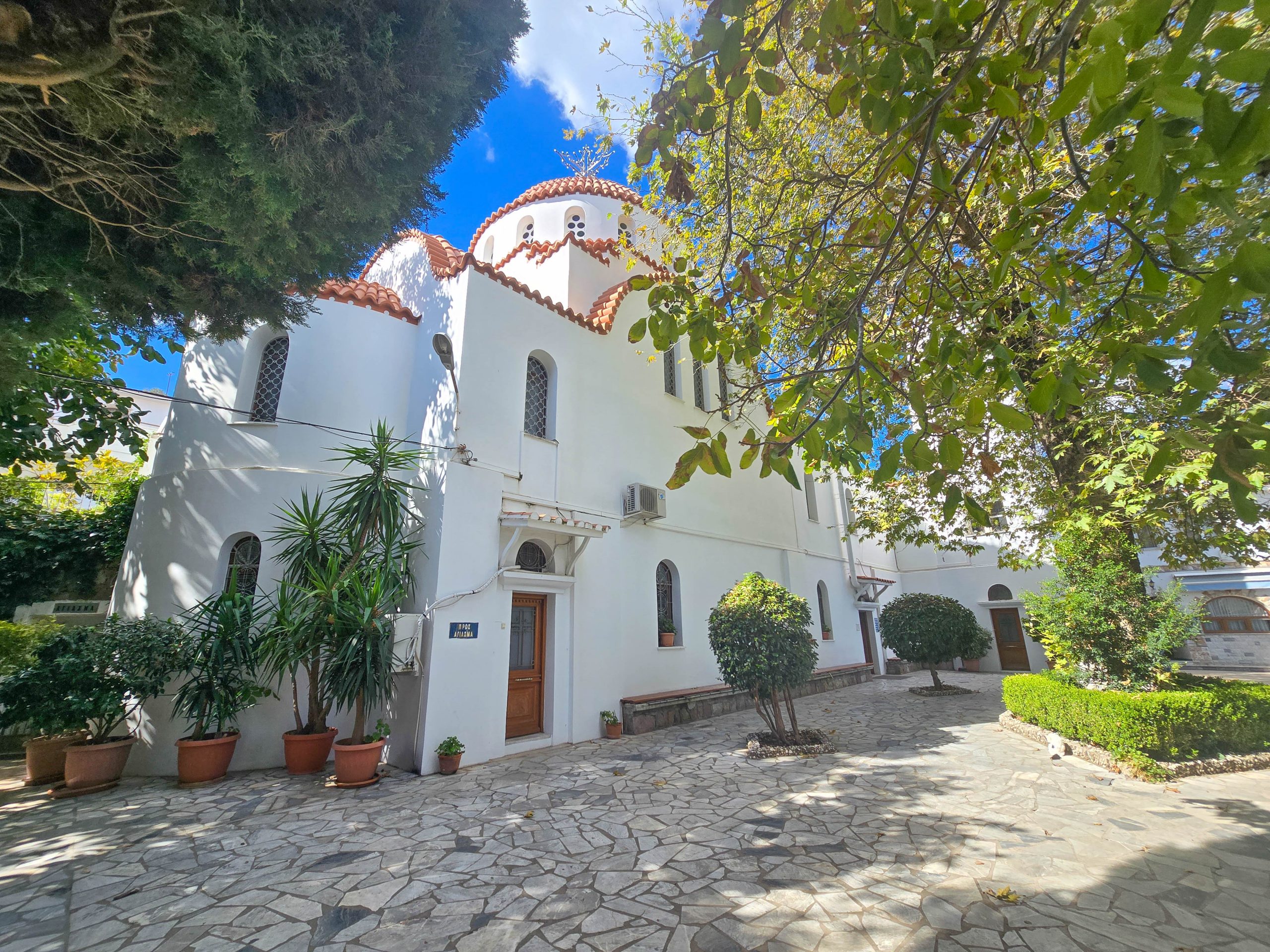
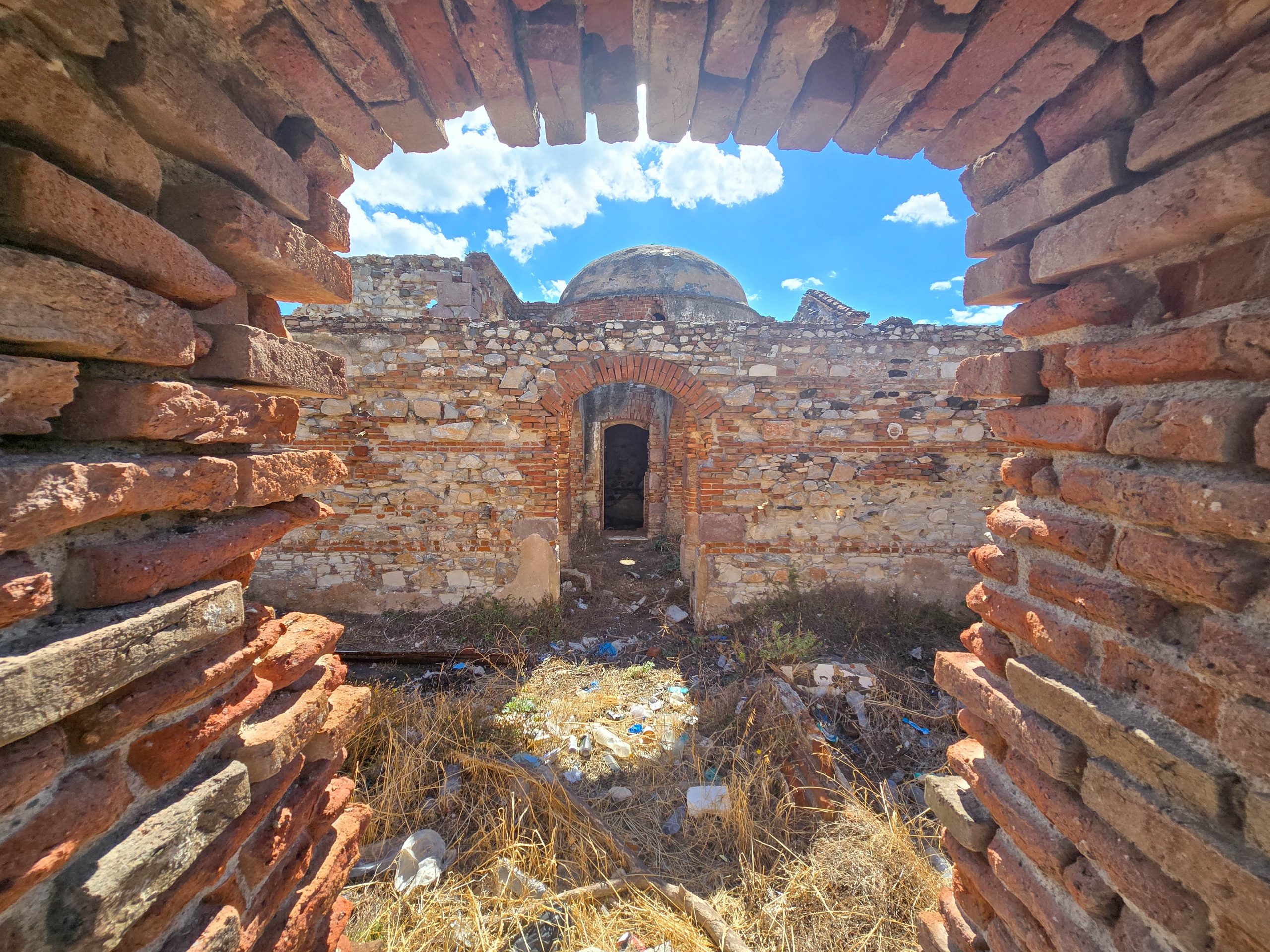
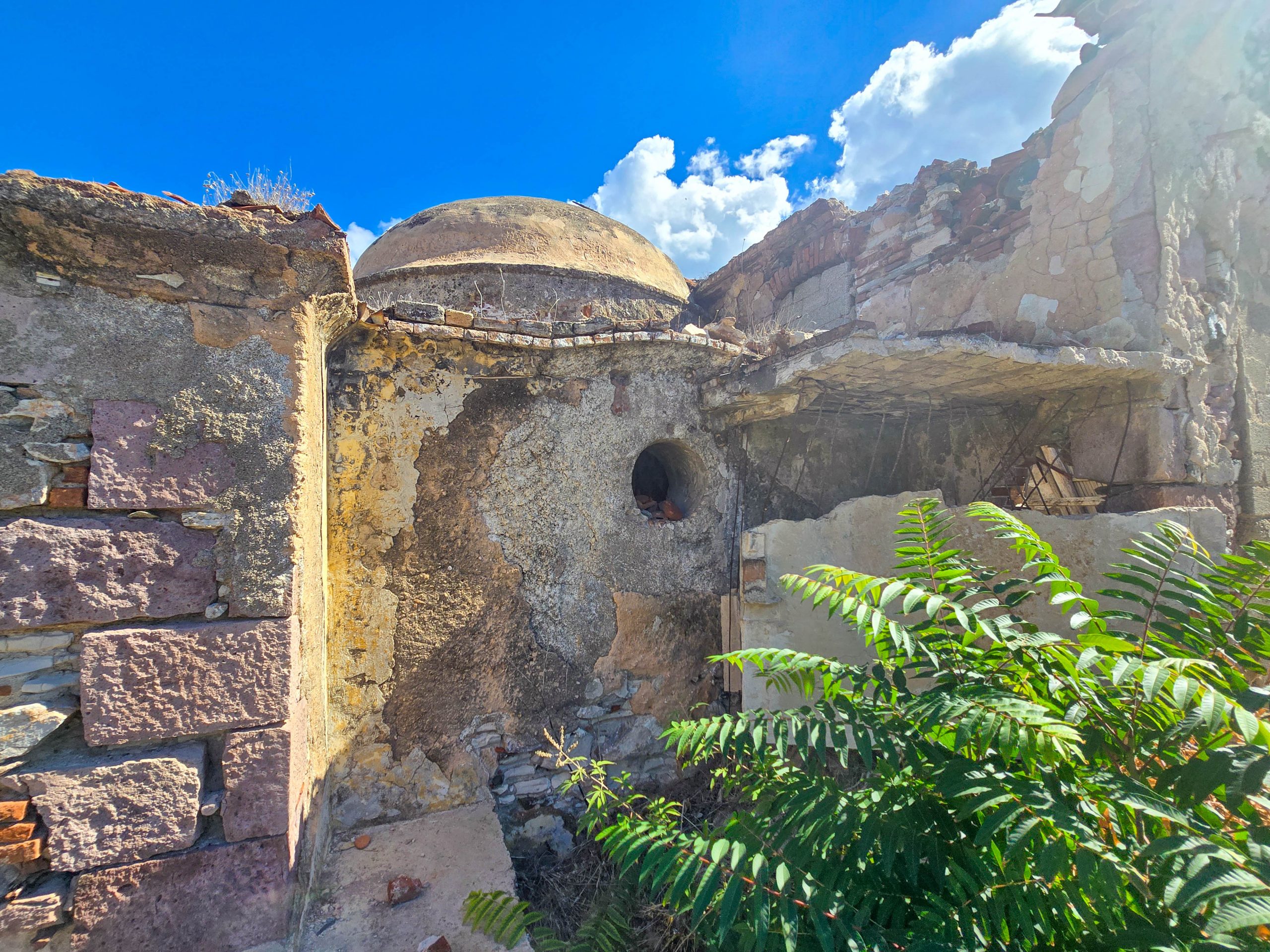
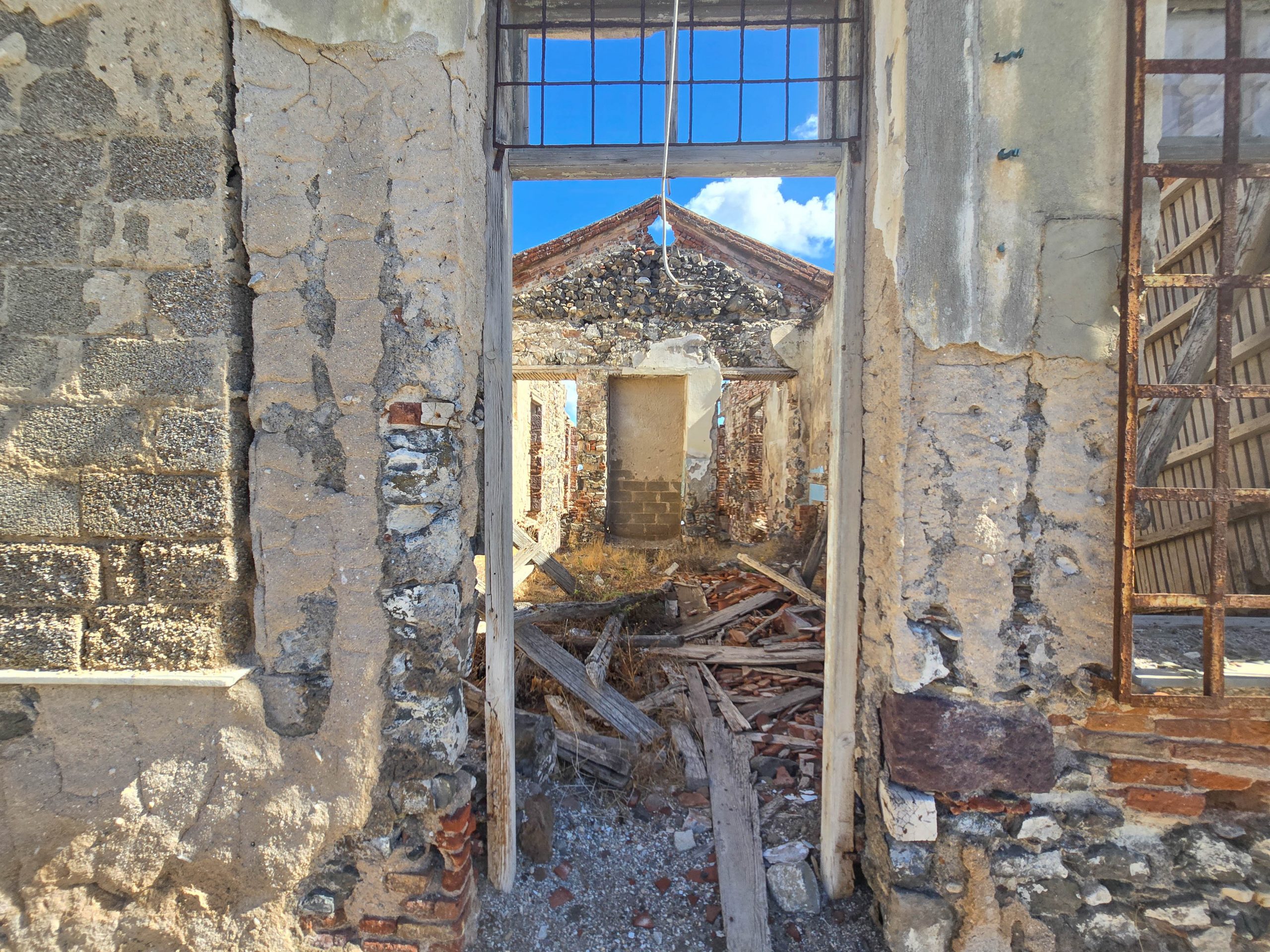
A waiting taxi solved the problem of the return journey, and as we drove back towards Mytilene, I asked the driver to drop me near an old, crumbling structure sitting right on the water’s edge. I had noticed it from the bus the previous day, derelict and unmarked on the map, but deeply evocative. There is something deeply moving and beautiful in the way history lingers in decay. It’s when the ghosts of lives that once moved through these spaces bring the place alive.
The structure was Ottoman in style, and its location suggests it may once have functioned as a hamam, or perhaps something more substantial. My research has only revealed that it was later used as a temporary shelter for refugees, with concerns also raised about pollution from the nearby PPC factory. Even so, people have been seen swimming and fishing here, unaware of the health risks. After exploring the various rooms, now littered with bottles and cans, it became clear that it had been used as a makeshift refuge. It’s sad on many fronts.
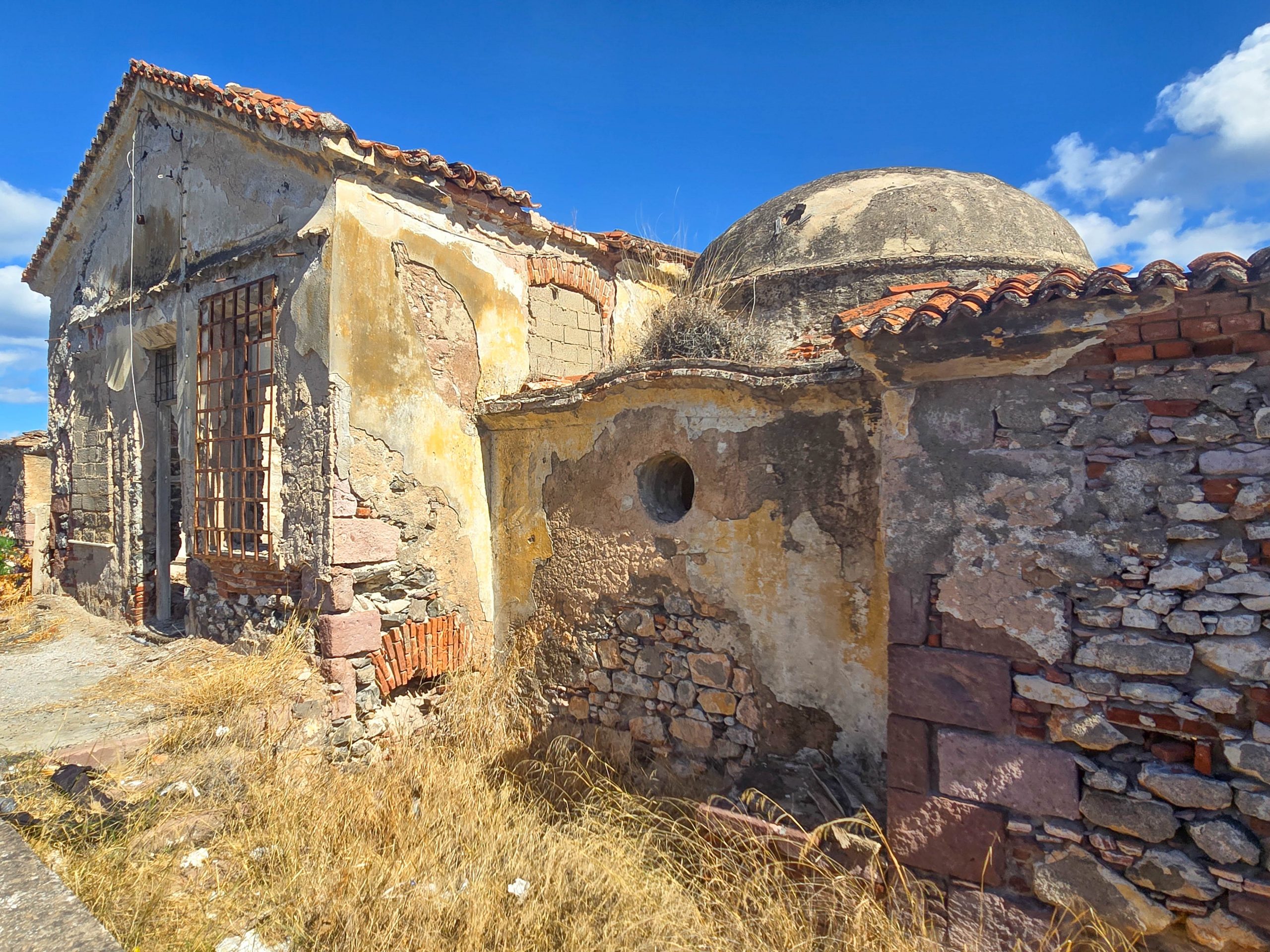
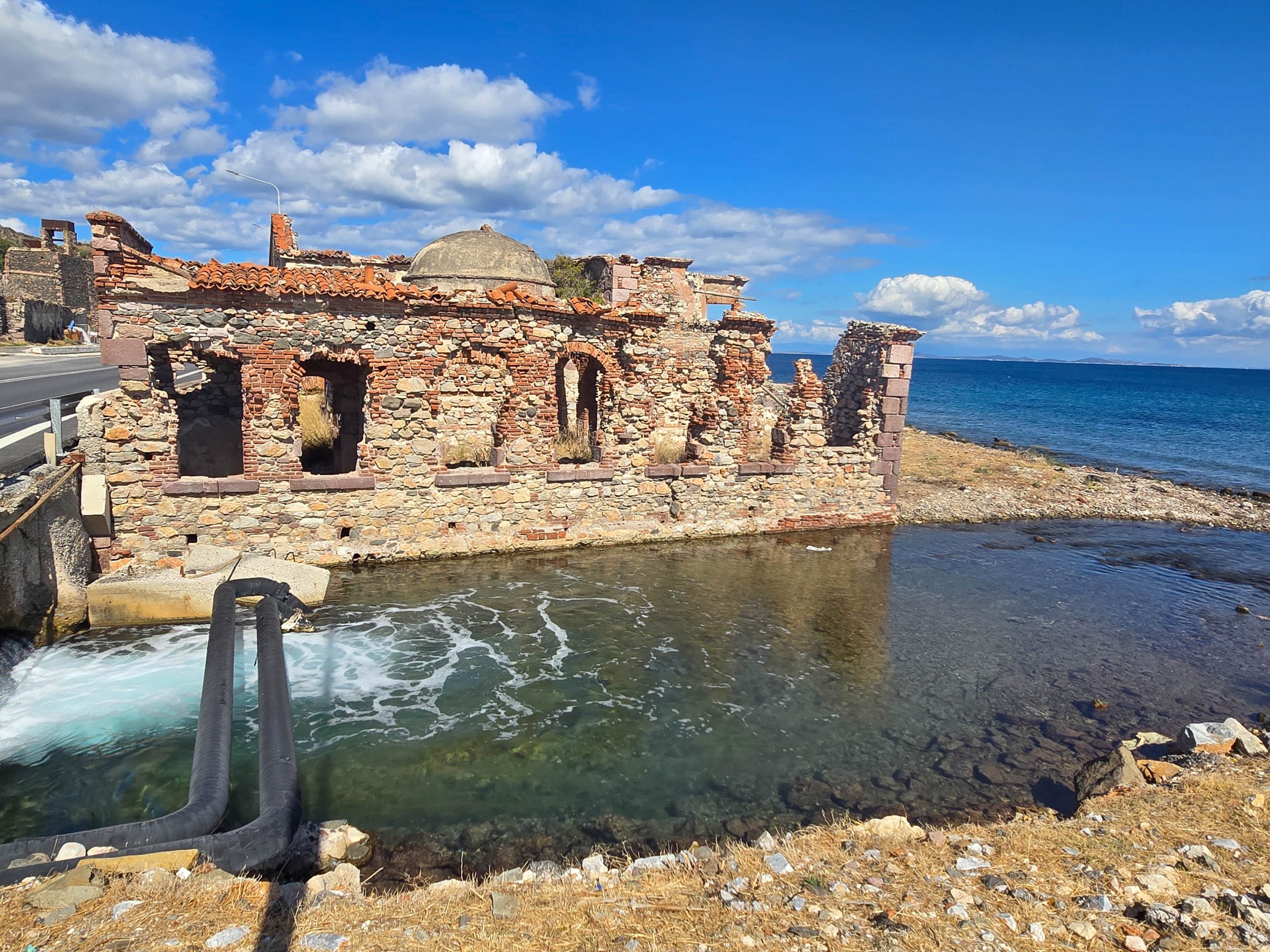
The walk back into town took me past more crumbling and abandoned mansions and the closed Moria factory — a landmark you can’t fail to notice when passing through this part of town.
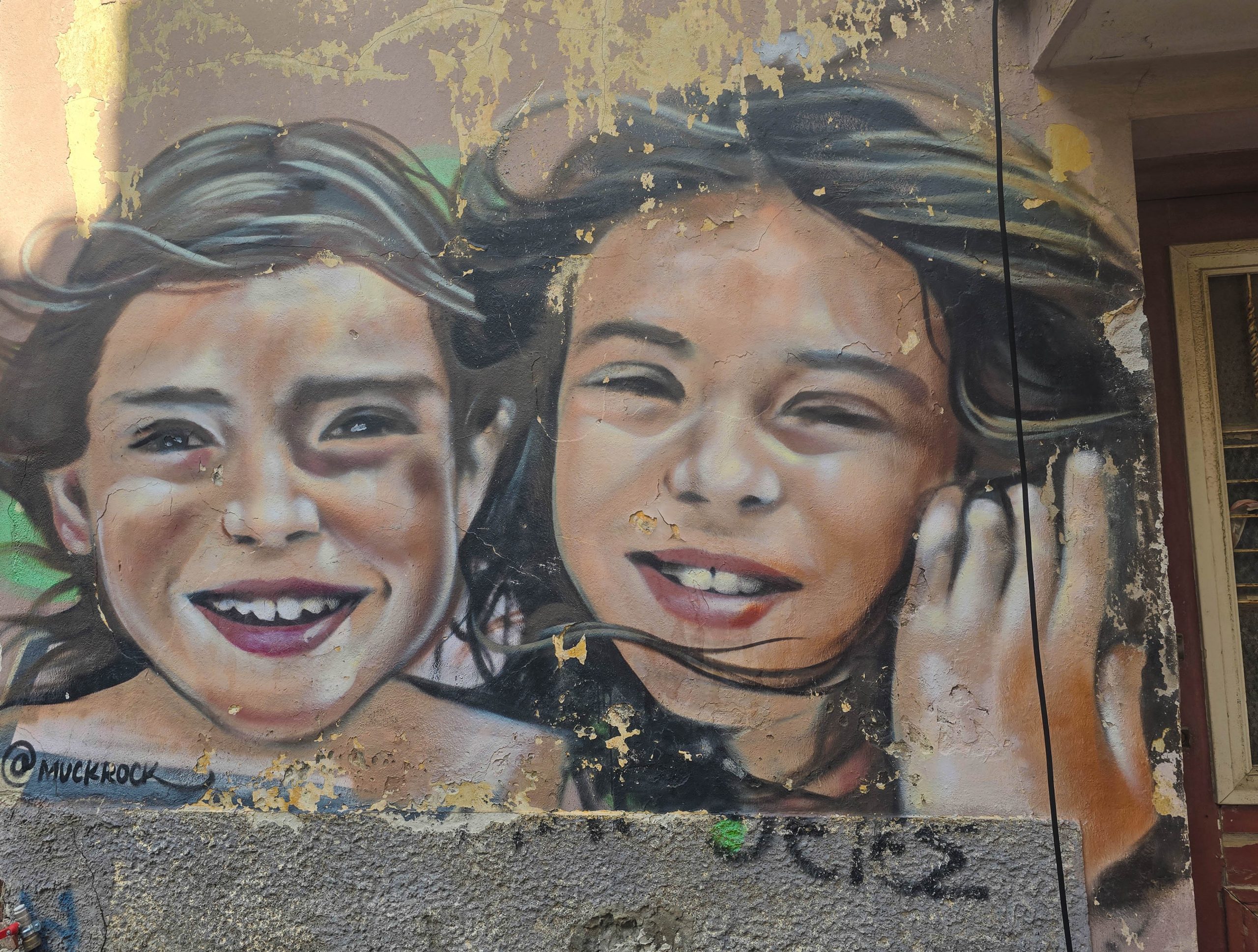
Back in Mytilene and its empty Sunday afternoon streets, I wandered through nooks and crannies once again, stumbling upon a small quarter I hadn’t discovered before, along with more examples of intriguing street art. There’s a noticeable and growing urban art presence in the town. Street art — graffiti, murals, call it what you will — tends to divide opinion. Personally, I love it, especially when it’s done well. It gives you a sense of a place and adds another layer, a visual shorthand for what matters. It’s also thought-provoking and unravelling the message behind the work is part of the fun.
On Lesvos, that often reflects a strong countercultural streak, with themes shaped by activism, solidarity, and compassion for those less fortunate woven quietly into the walls. Those values may mirror my own, which may go some way to explaining why Lesvos resonates with me so strongly.
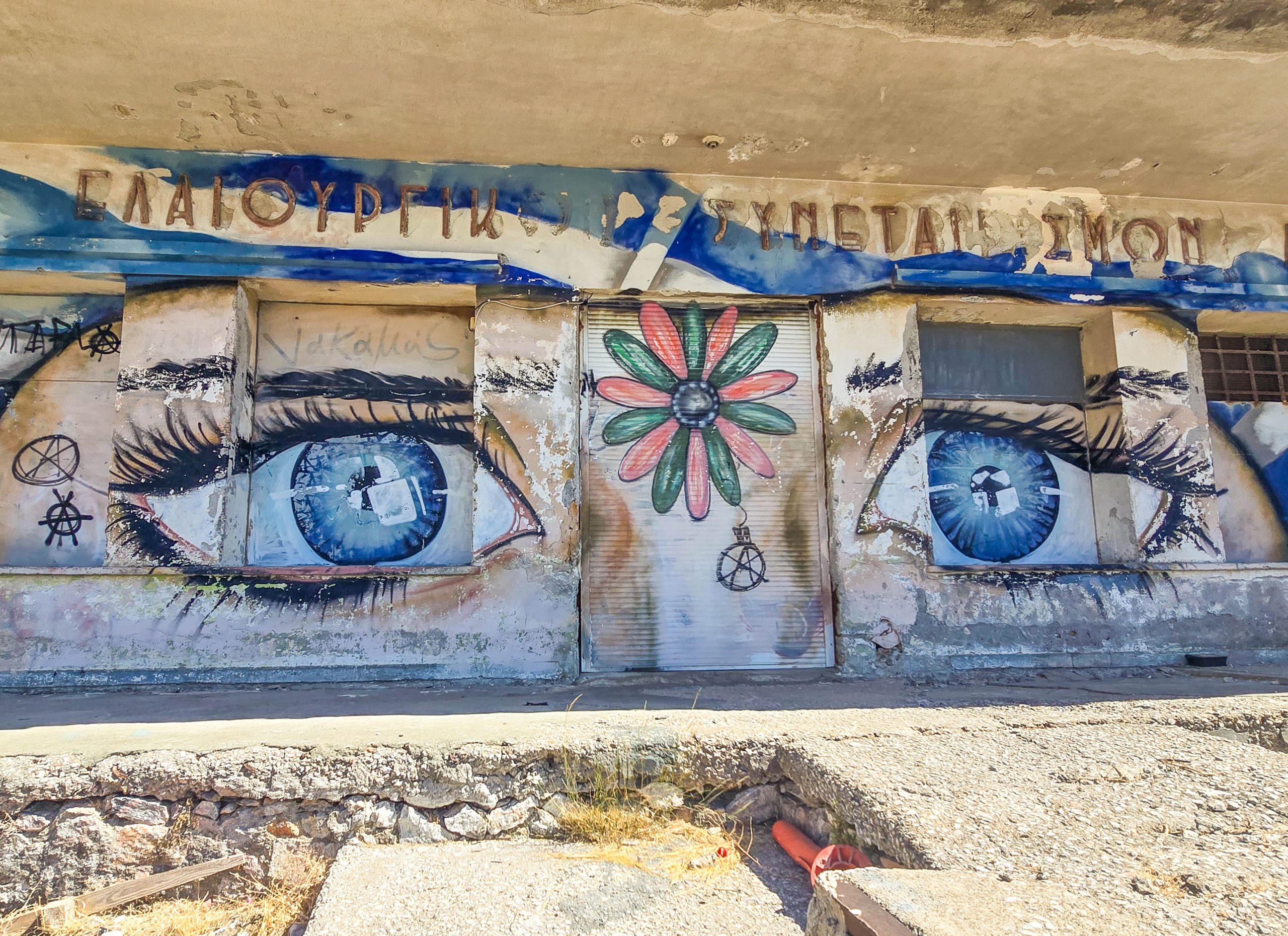
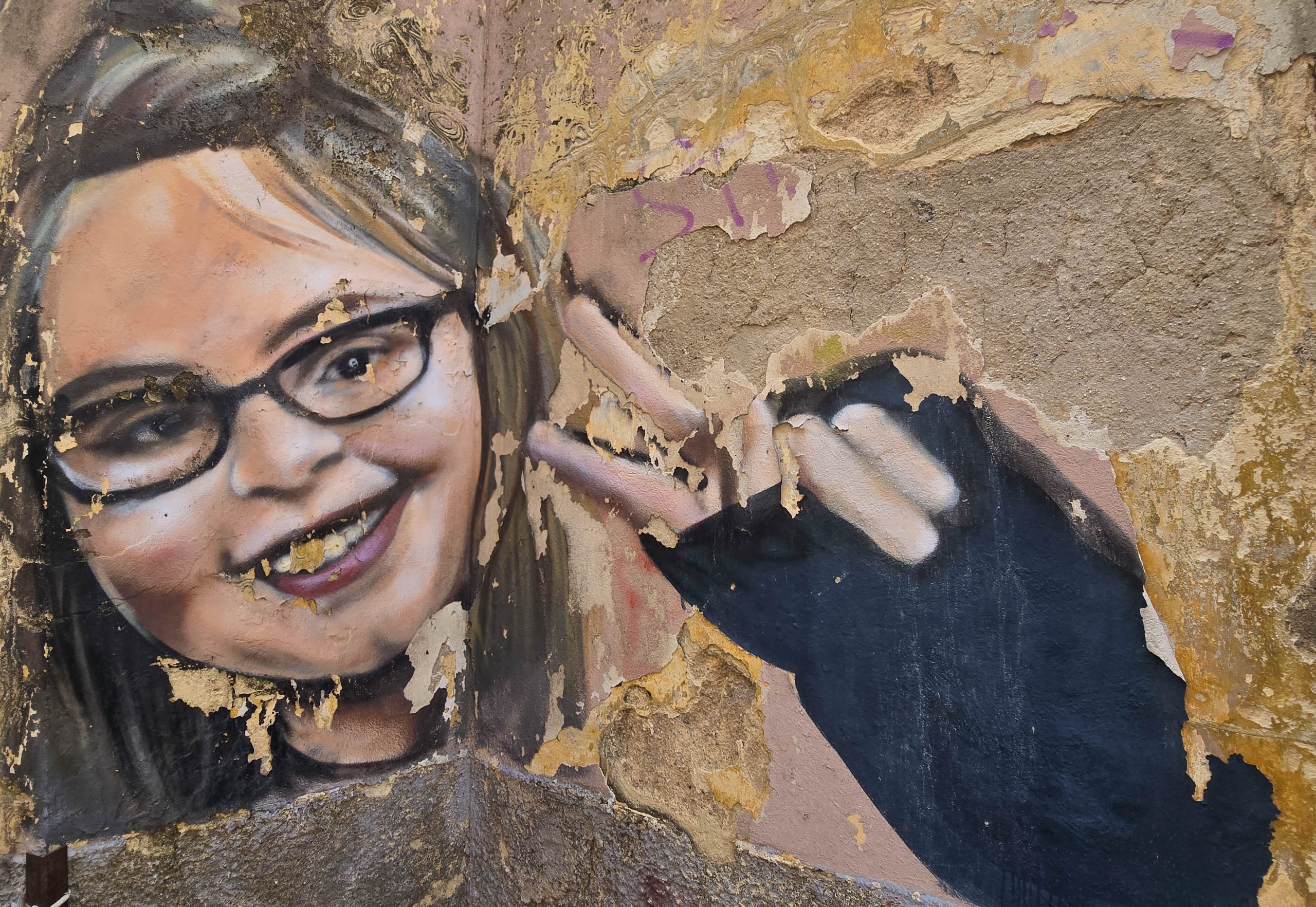
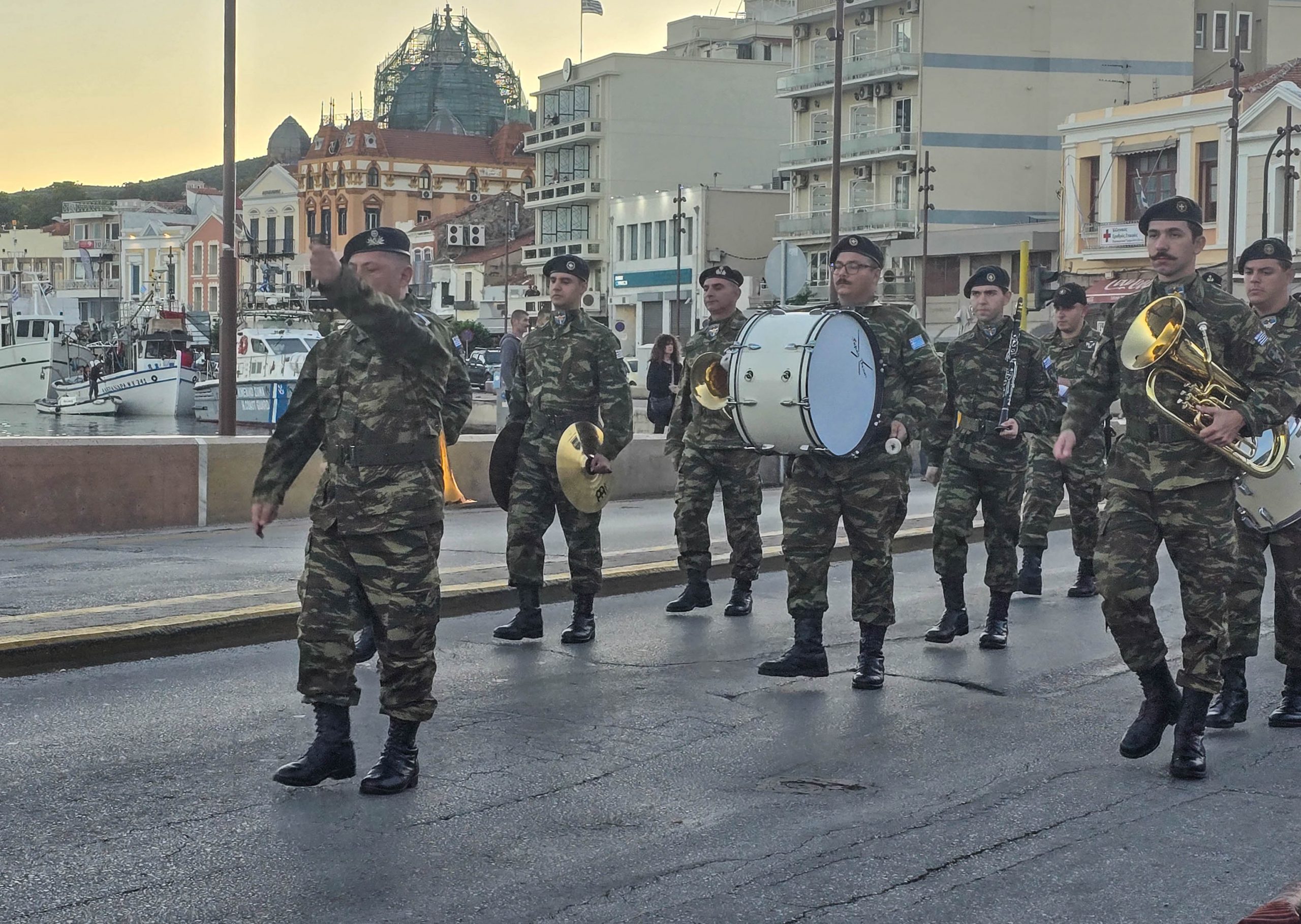
After exhausting almost every corner of the town, I retreated once more to Plaz. Just me, a sun lounger and a book. As the sun made its slow journey across the sky, I passed back through Sappho Square, arriving just in time to witness a quiet Sunday ritual. A small military detail lowered the flag — an almost unnoticed punctuation mark to the day before cafés fill with friends and families making the most of this last sliver of the weekend.
That night, a full moon rose over Mytilene. I walked down to the Statue of Liberty to watch its reflection dance on the water before returning to the apartment to pack. Although I had a flight to Athens the following day, I still hadn’t decided where to go next. The plan was to throw it into the lap of the gods and see what’s departing from Piraeus when I get there.
The following morning there was brisk, chill wind cutting through the harbour. Another storm was on its way — Storm Barbara, due any day. The harbour was noisy, not with Monday morning traffic, but with a huge flock of seagulls circling overhead. In one corner, along the harbour wall, lay a mass of dead sardines, the birds feasting noisily. Whether this was the aftermath of an earlier storm or something that had happened overnight, I had no idea.
Soon I was on my way to the airport, passing some remarkable old mansion houses with striking architecture — next time, I’ll put them on my list. I’ve never struggled to settle into a place, but both Lesvos and neighbouring Chios are islands where I feel perfectly at home. There’s something about their everyday authenticity that resonates deeply, a sense of life being lived rather than performed. They’re places where I can simply slip in, walk, watch, and feel part of things. And that, more than anything else, is what keeps drawing me back.
Discover more from A Greek Oddity
Subscribe to get the latest posts sent to your email.
Fifteen years of writing about Greece. Thirty plus years of travelling it. Now condensed into a travel planning toolkit.
Take a look


Love reading your travels Stephanie but where did you go next?!!
I’ll have to wait to find out!
HI Elizabeth. Thank you so much for your kind words – it’s very much appreciated. ❤️
Well you won’t have to wait too much longer. I’m just finalising the next post and will publish it later today. I don’t think you’d guess where it was! 🥰