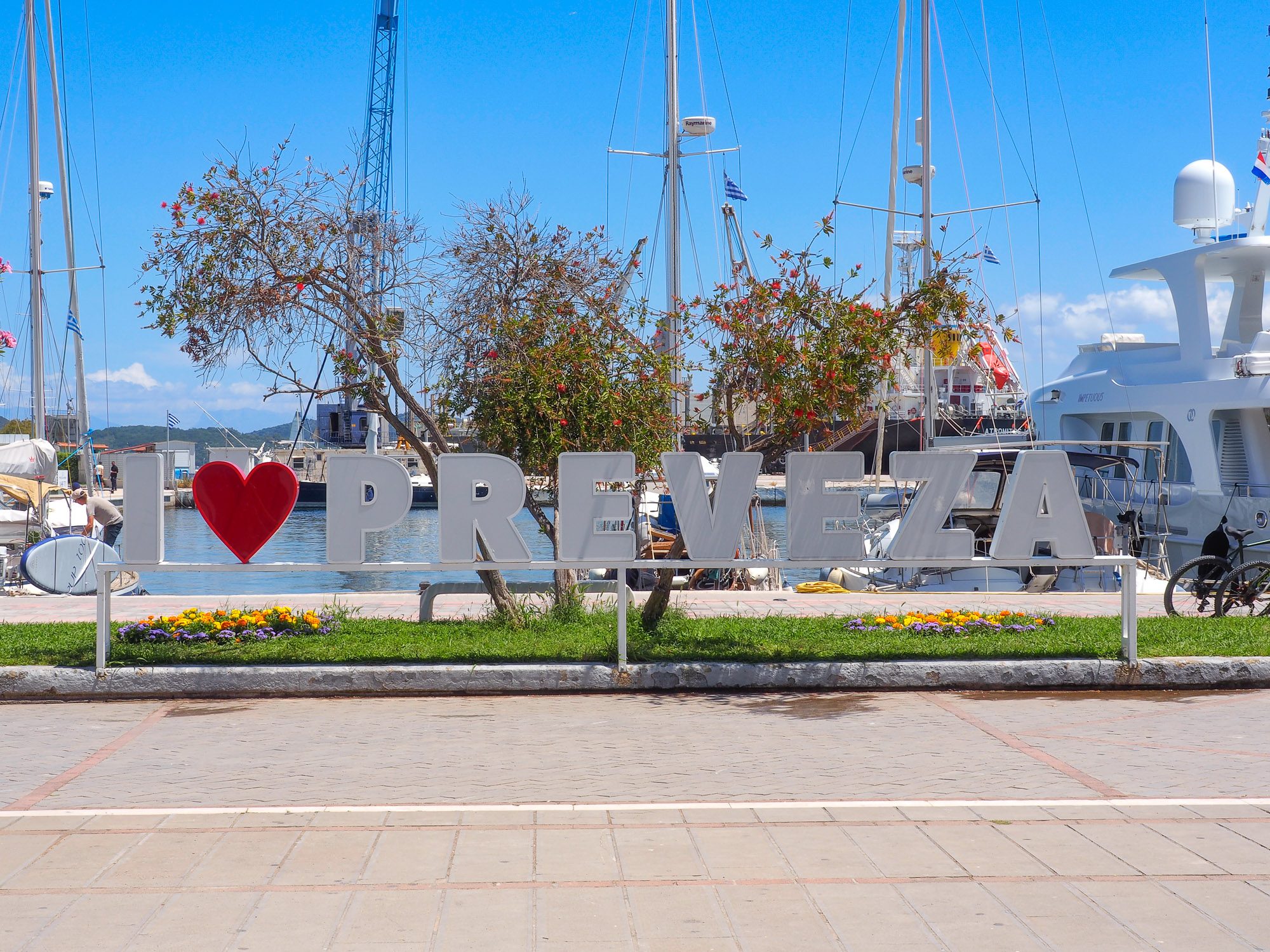
Ioannis Was Right: Why Preveza Deserves More Than Four Nights
There are times when the best travel advice comes not from a guidebook but from someone who knows a place well enough to override your original itinerary.
I had told my friend Ioannis that we were planning six nights on Lefkada and four in Preveza. His reply was unambiguous.
“I don’t agree. I recommend the opposite. So here is my proposal for you………….”
And there we had it. The final ten days of our itinerary fully formed, arrived at in seconds, from someone who had made up my mind for me before I had time to absorb it. Sometimes it is refreshing to have someone else take the reins.
Preveza old town was the destination. Getting there meant the 0745 bus from Nidri Town Hall, a fairly reliable service that runs into Lefkada Town with plenty of time to make the connection for the 0900 Preveza bus.
Lefkada Local Bus Service
Aktio-Preveza Airport Bus Schedule
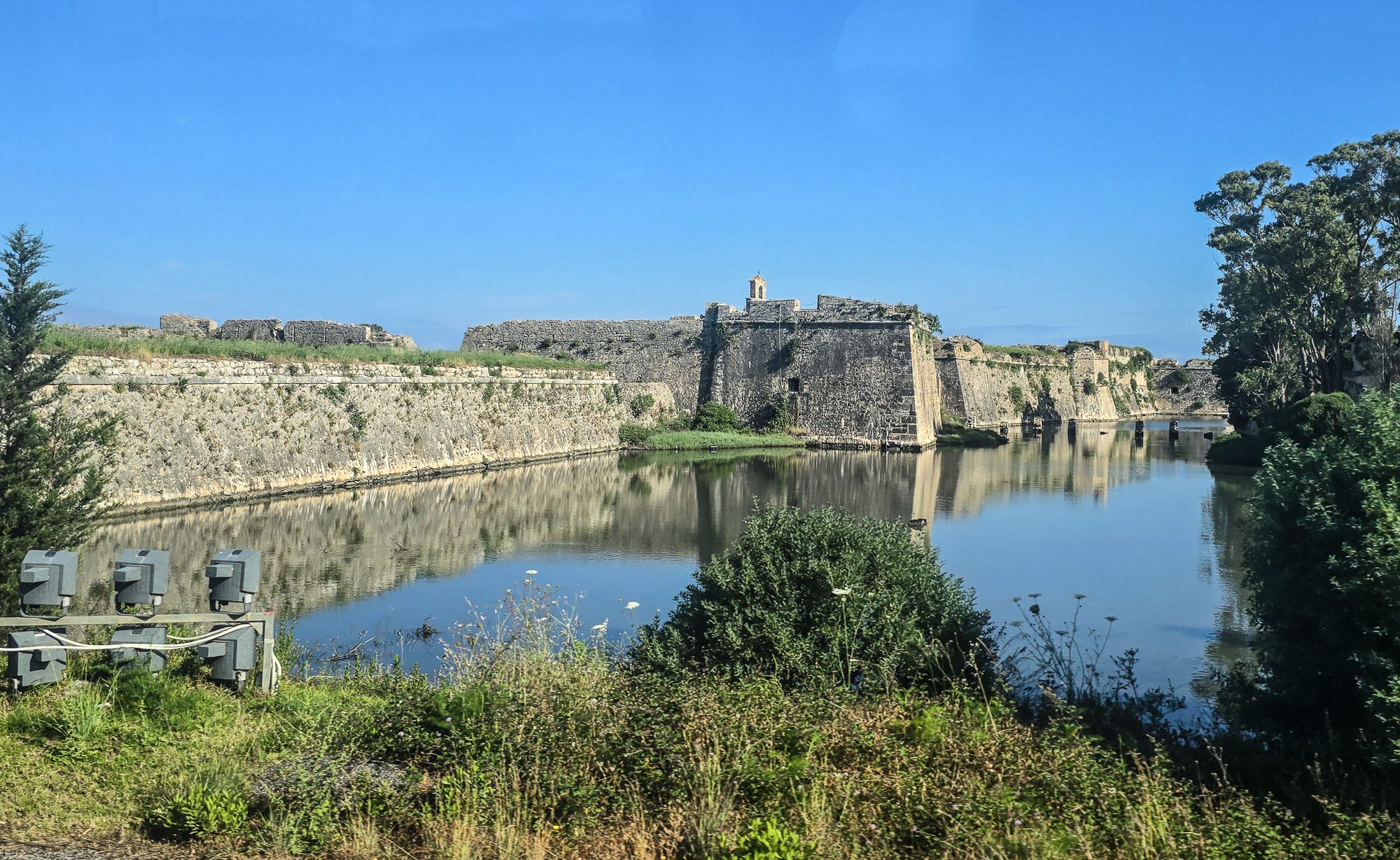
I left Lefkada feeling as though I had barely touched it, and this is true. During our stay, we’d focused on the immediate surroundings and the boat trips. It is definitely a place I need to come back to and explore properly at a more leisurely pace. The bus took us over the floating, swinging bridge that we’d explored just a few days earlier, giving us a fine view of Agia Mavra fort. It seemed to take on a different character under blue skies, a different place from the one we had walked around in heavy cloud. On the other side, the patchwork of the reed beds in a muted palette of green, ochre and burnt umber is framed by the lagoon’s perimeter. Timeless.
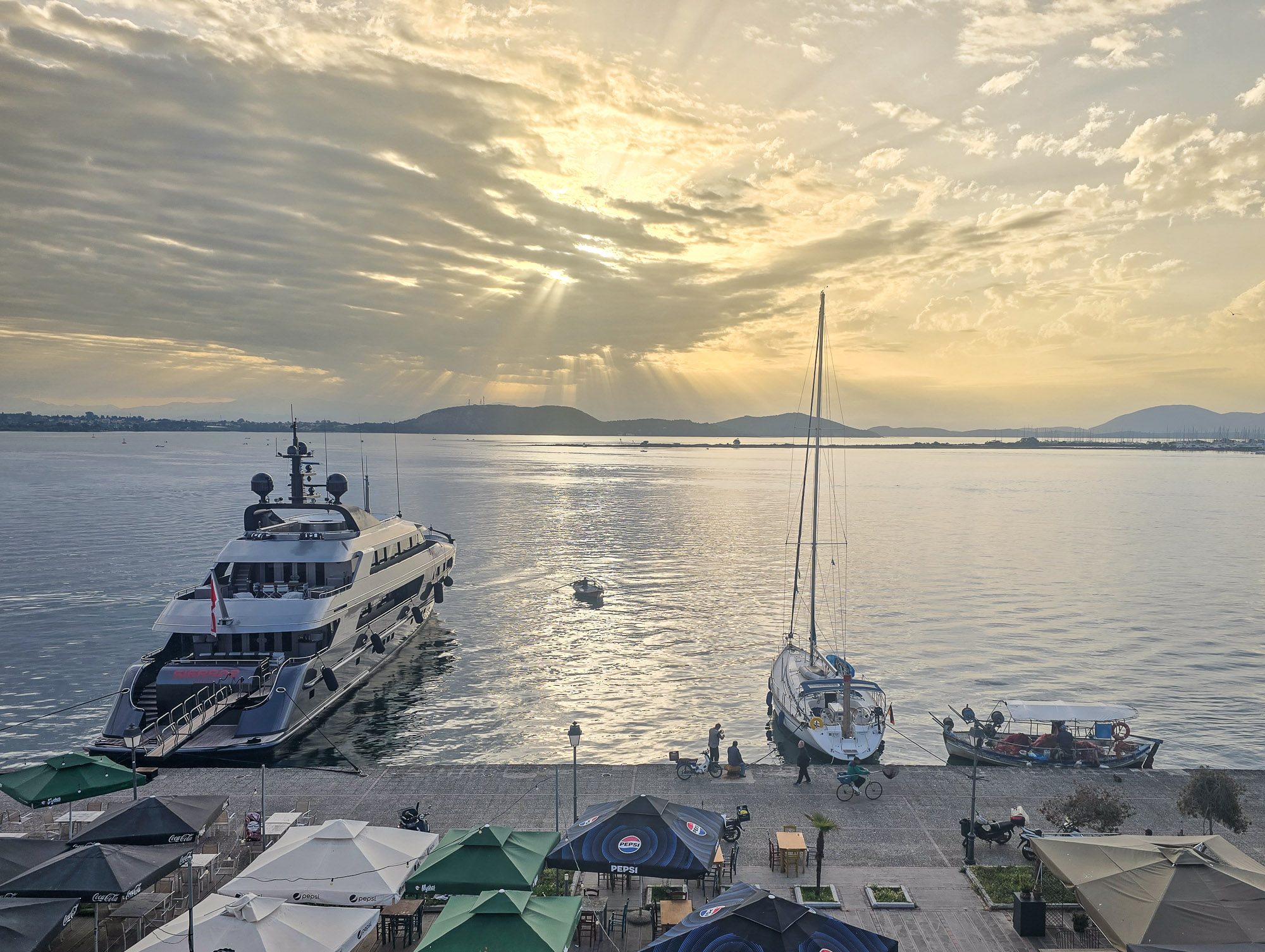
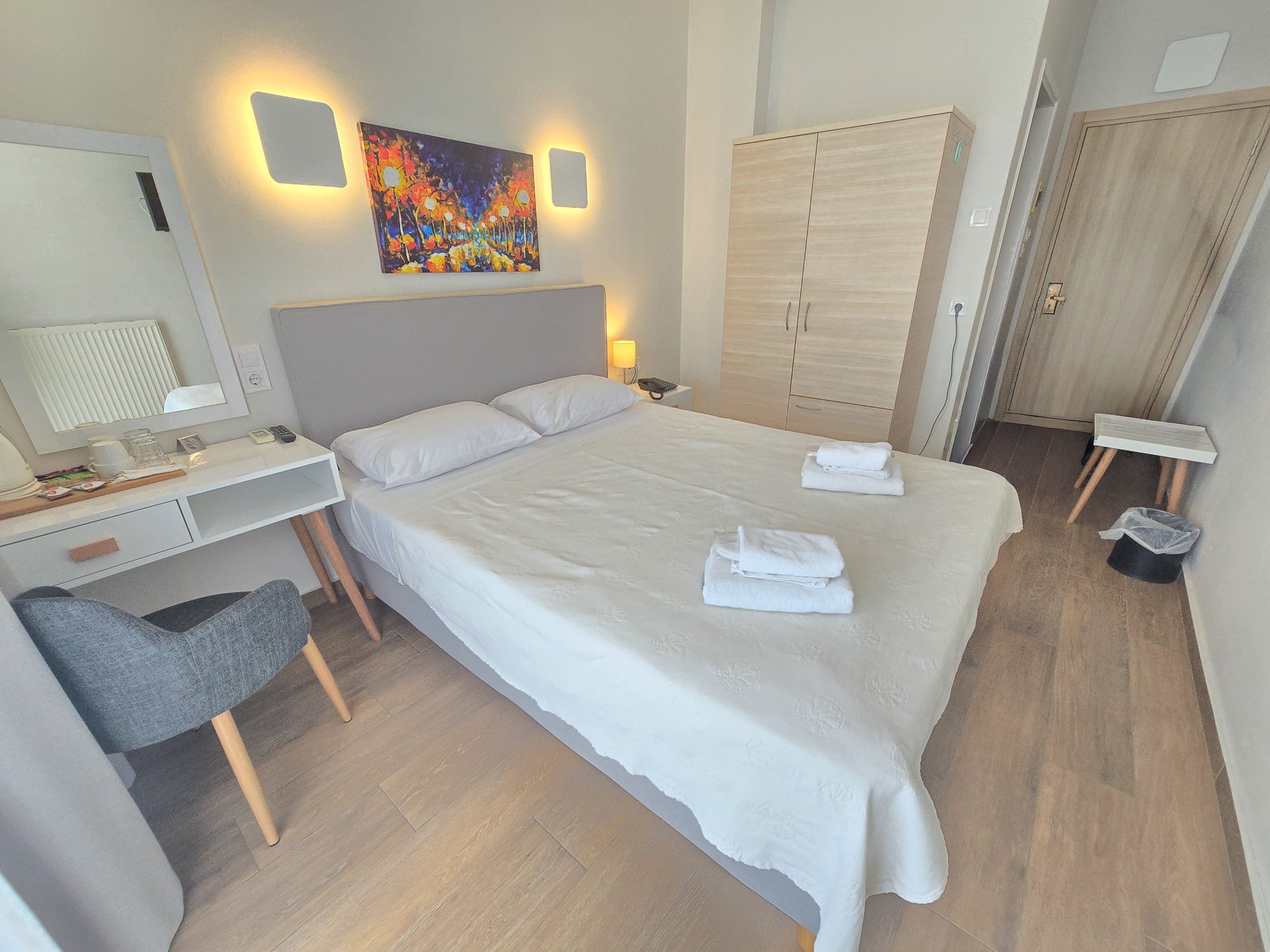
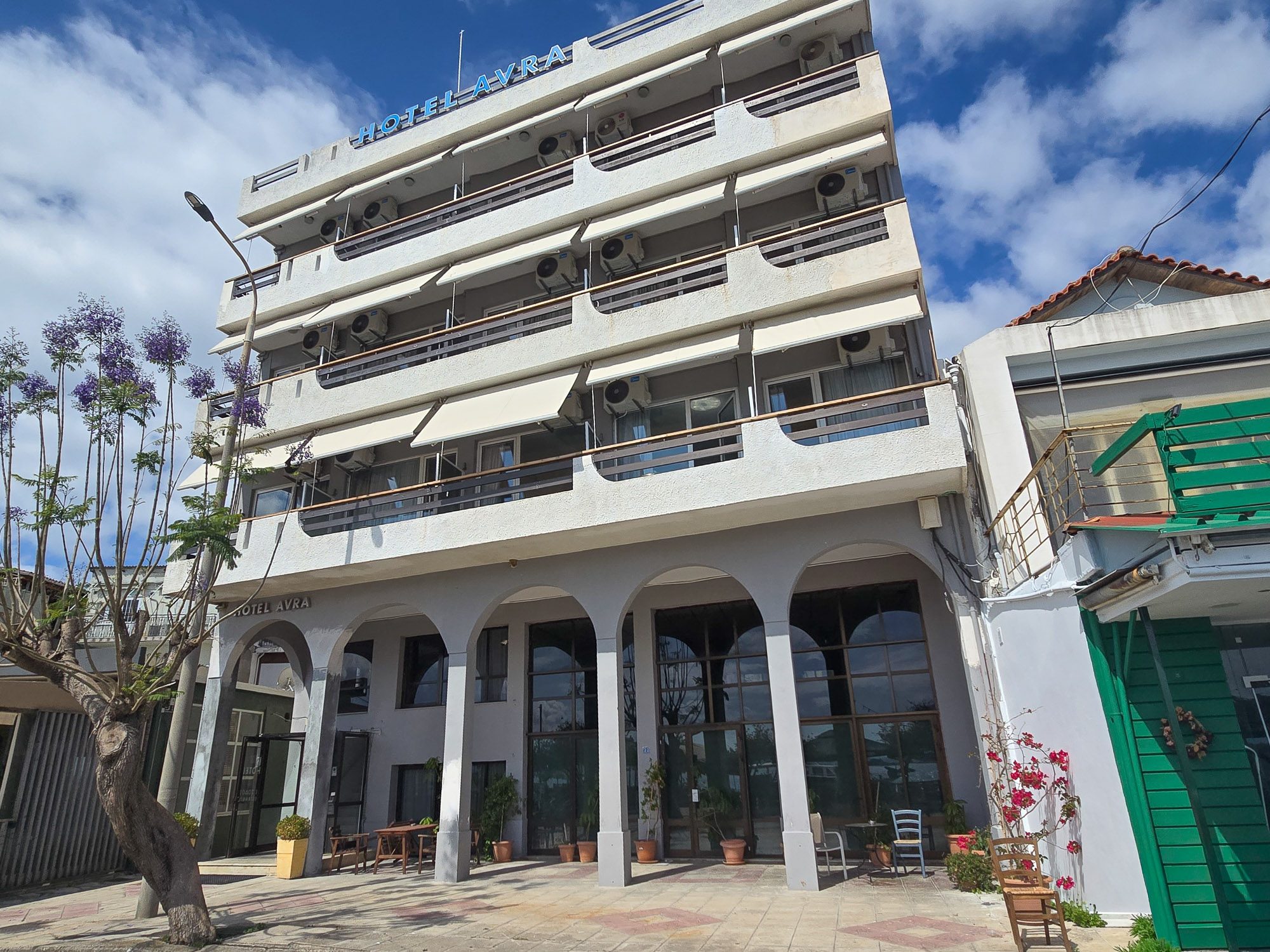
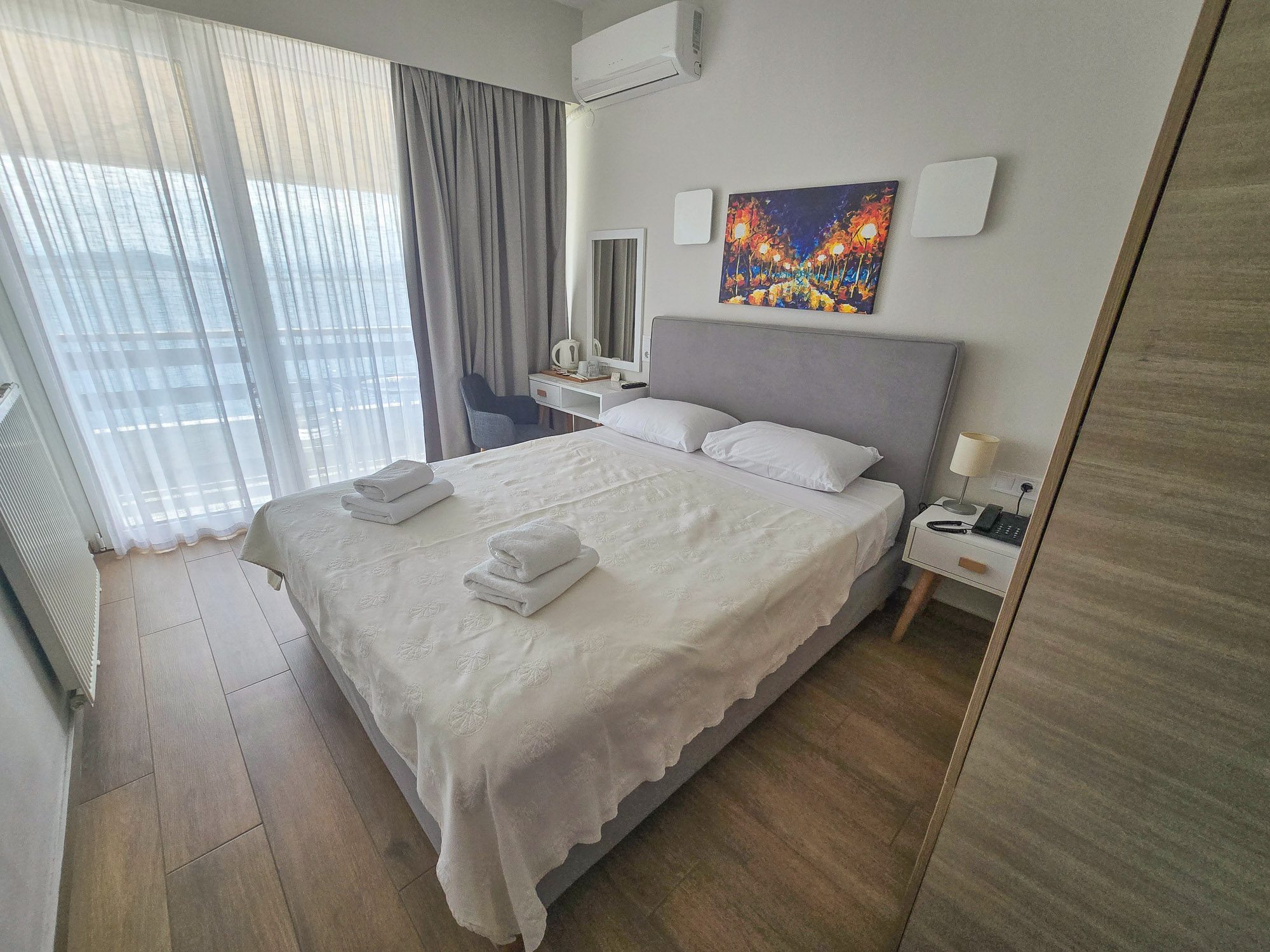
After forty minutes, we arrived in Preveza Town. We’d starred our hotel on Google Maps, so we jumped off at a stop that looked in close proximity to it. We had booked the Avra Hotel purely on location, right on the harbour front in Preveza. It felt very much of its era, practical, unapologetically concrete and built to maximise views rather than charm. In a way, it contrasted quite nicely with the older parts of Preveza, where you still get glimpses of faded Venetian influence and older stone buildings tucked behind the promenade. The building itself was characterless, though very clean and modern. The kind of accommodation that does exactly what is needed without drawing attention to itself. The harbour was right outside, and our balcony gave us the views over it. That’s all we needed.

First Impressions
Preveza has a very different feel from the islands. I would describe it as an unshowy, lived-in Greek town with a touch of grandeur now slightly faded, but with a strong local heartbeat. This is a town that knows itself and doesn’t feel the need to shout about it.
It is not instantly dramatic in the way that somewhere like Nafplio or Parga can be. Preveza reveals itself more slowly, which in my experience is generally a good sign. The old town is a tangle of narrow lanes lined with colourful shutters, small floral-filled squares and cafés shaded by vines. OK, so yes it has made an effort to be pretty but there is nothing wrong with that. There is a slightly Venetian feel in places, mixed with an unmistakably mainland Greek atmosphere.
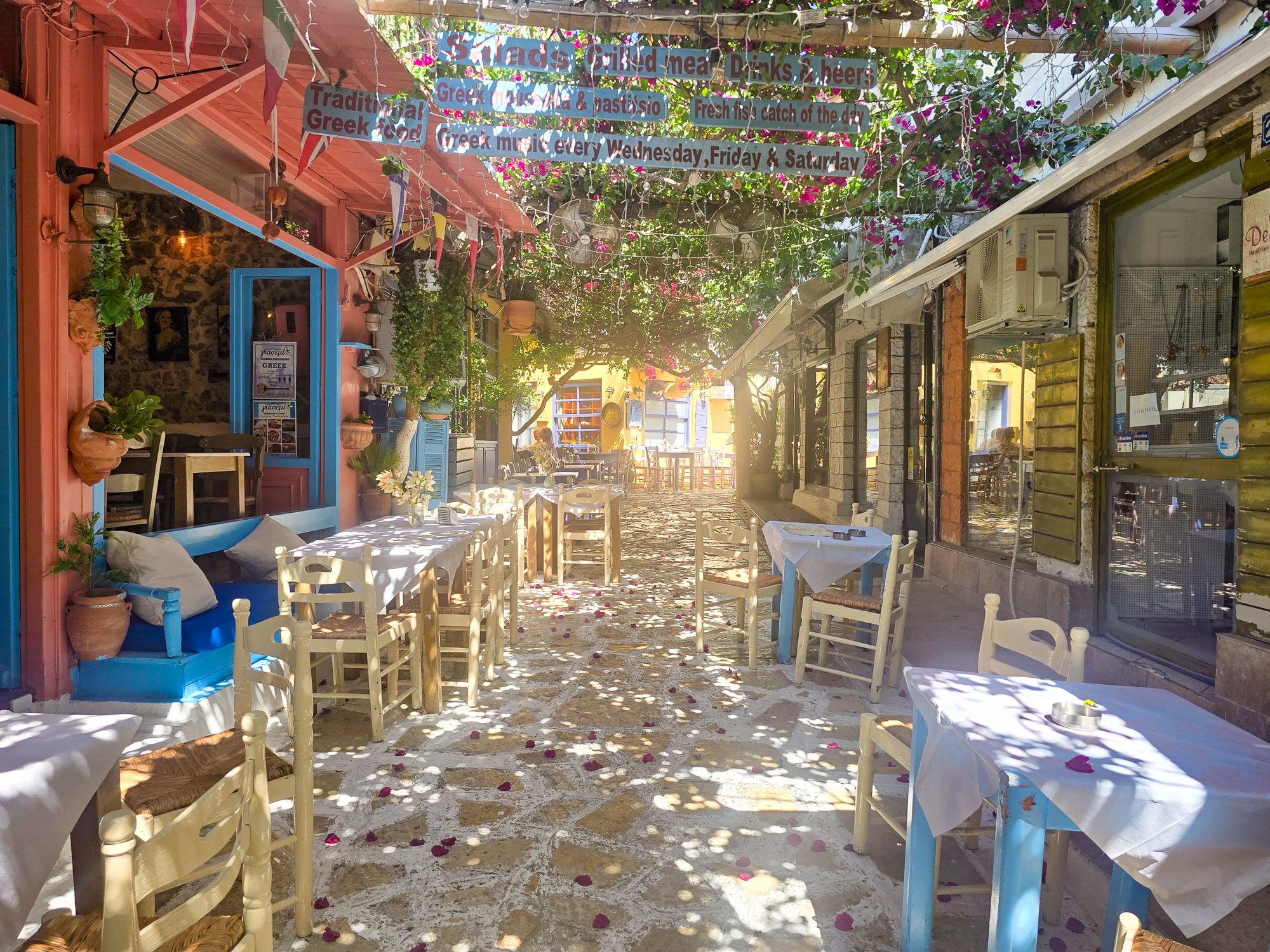
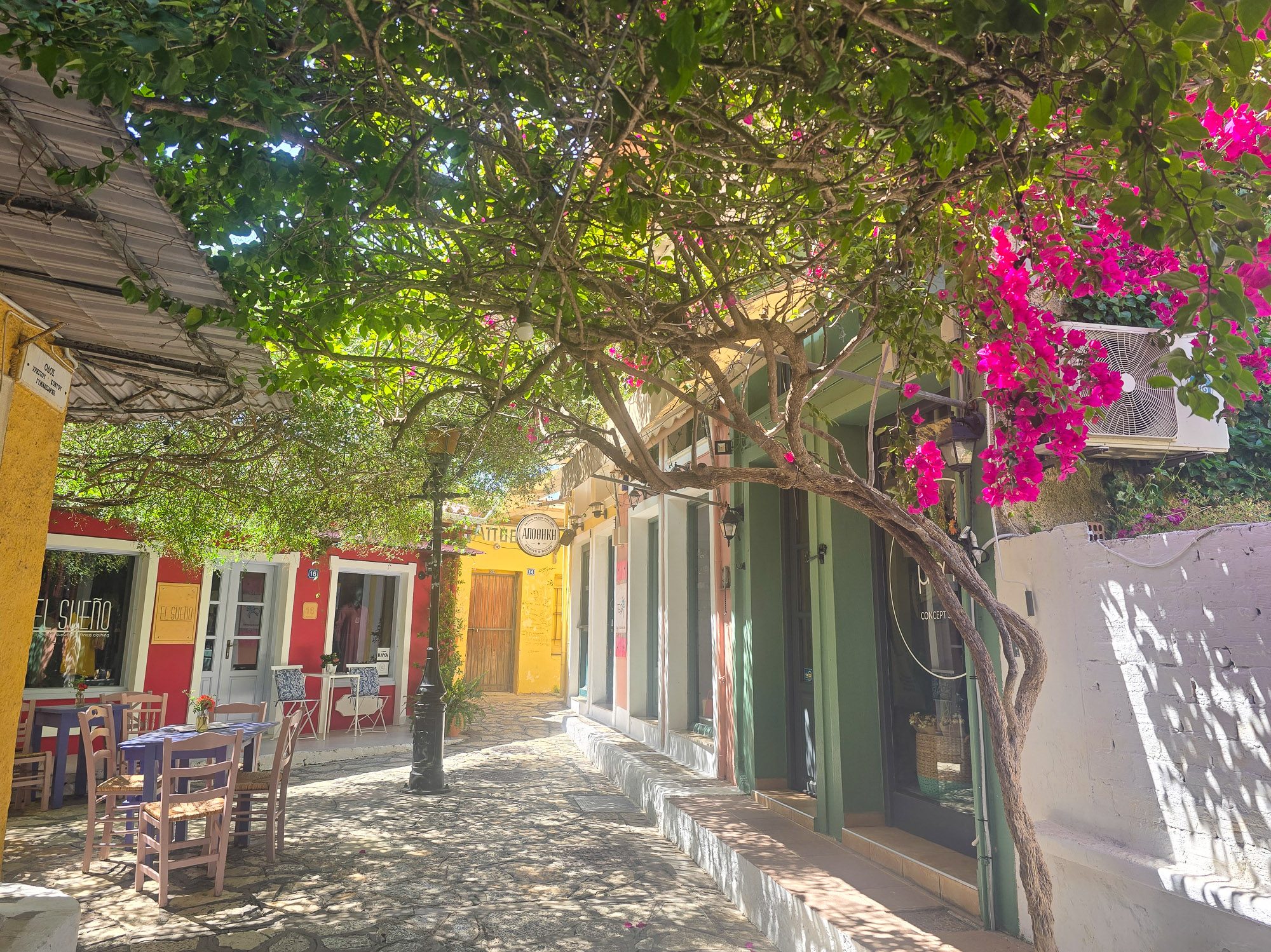
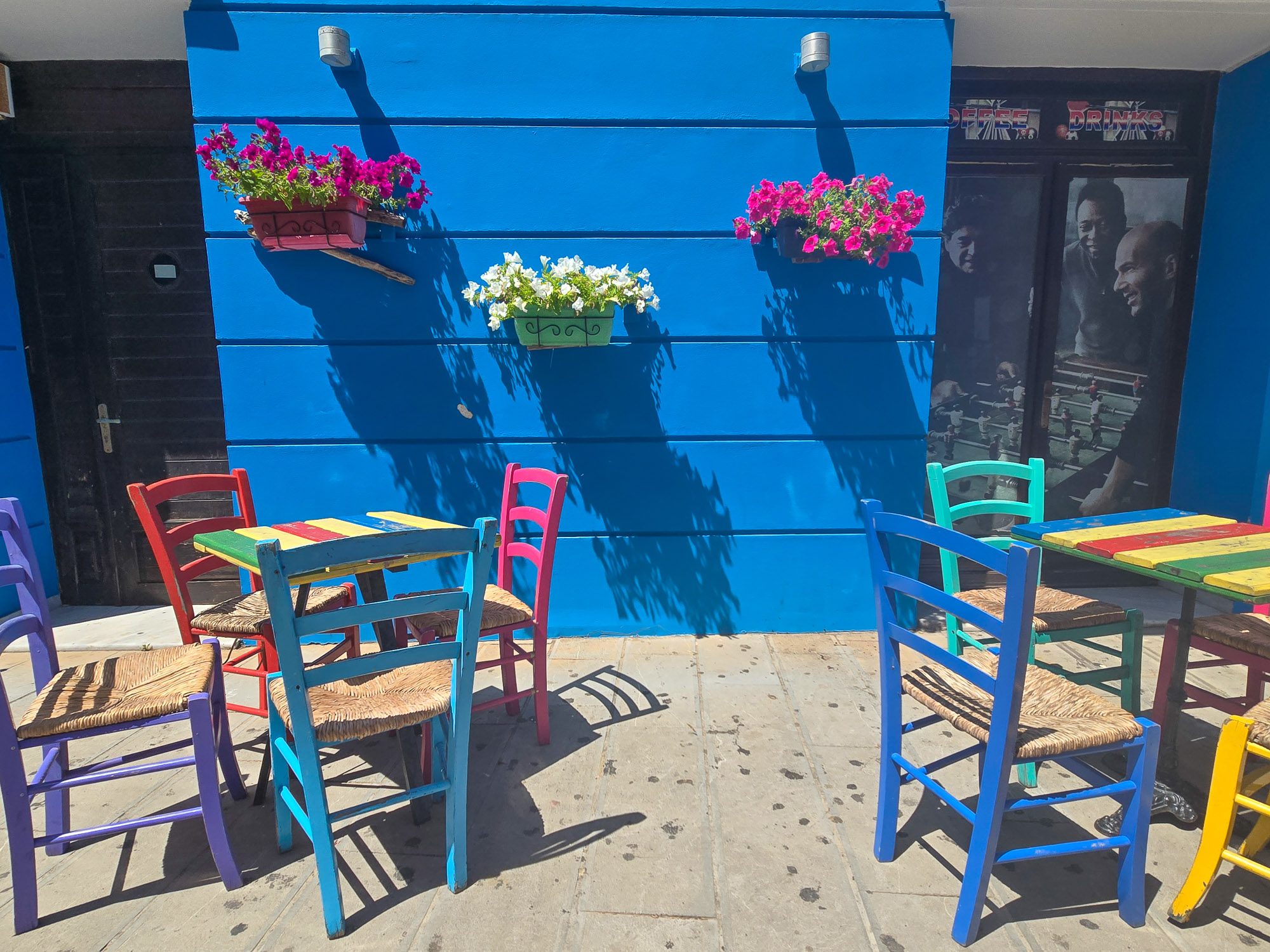
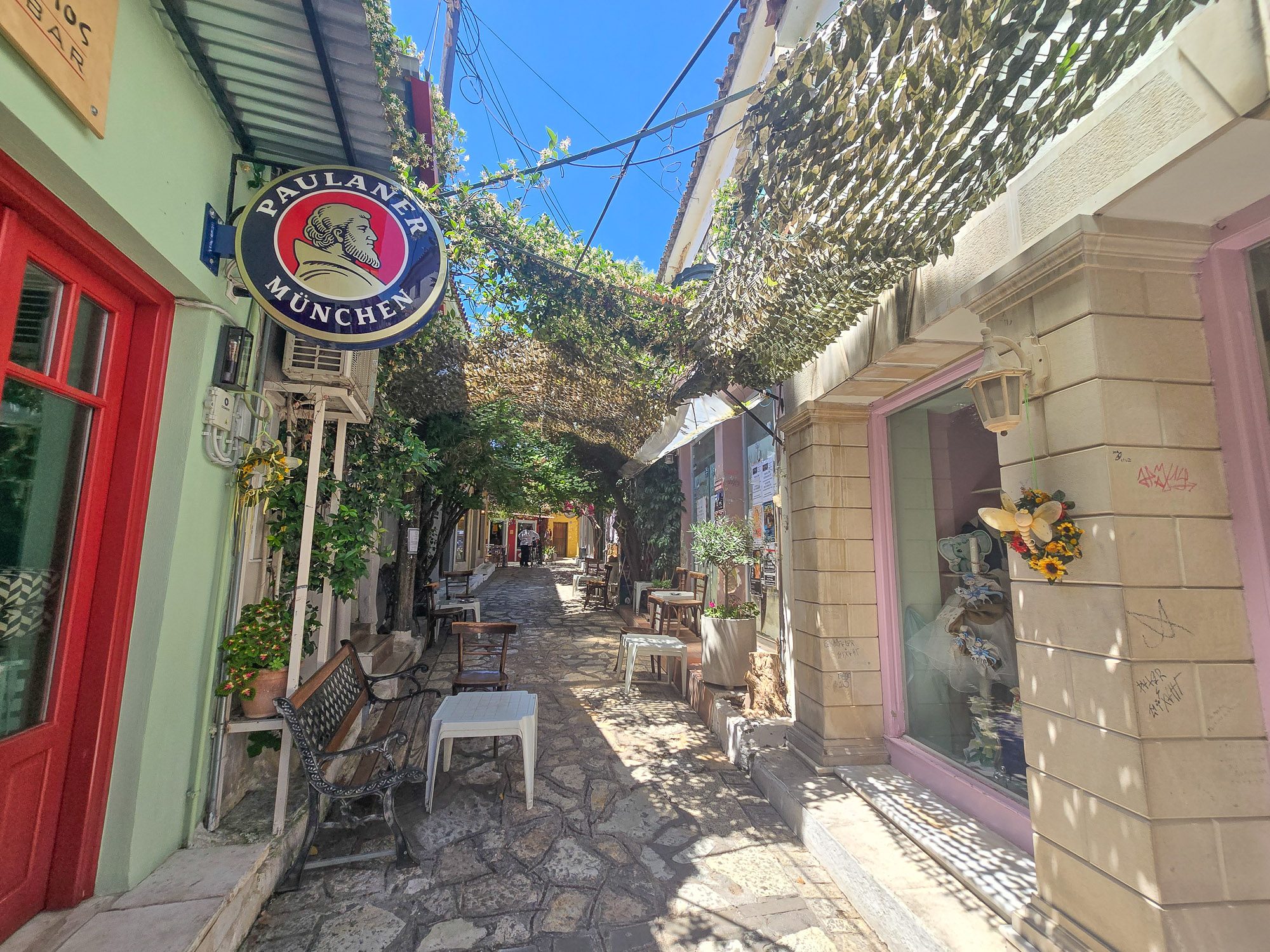
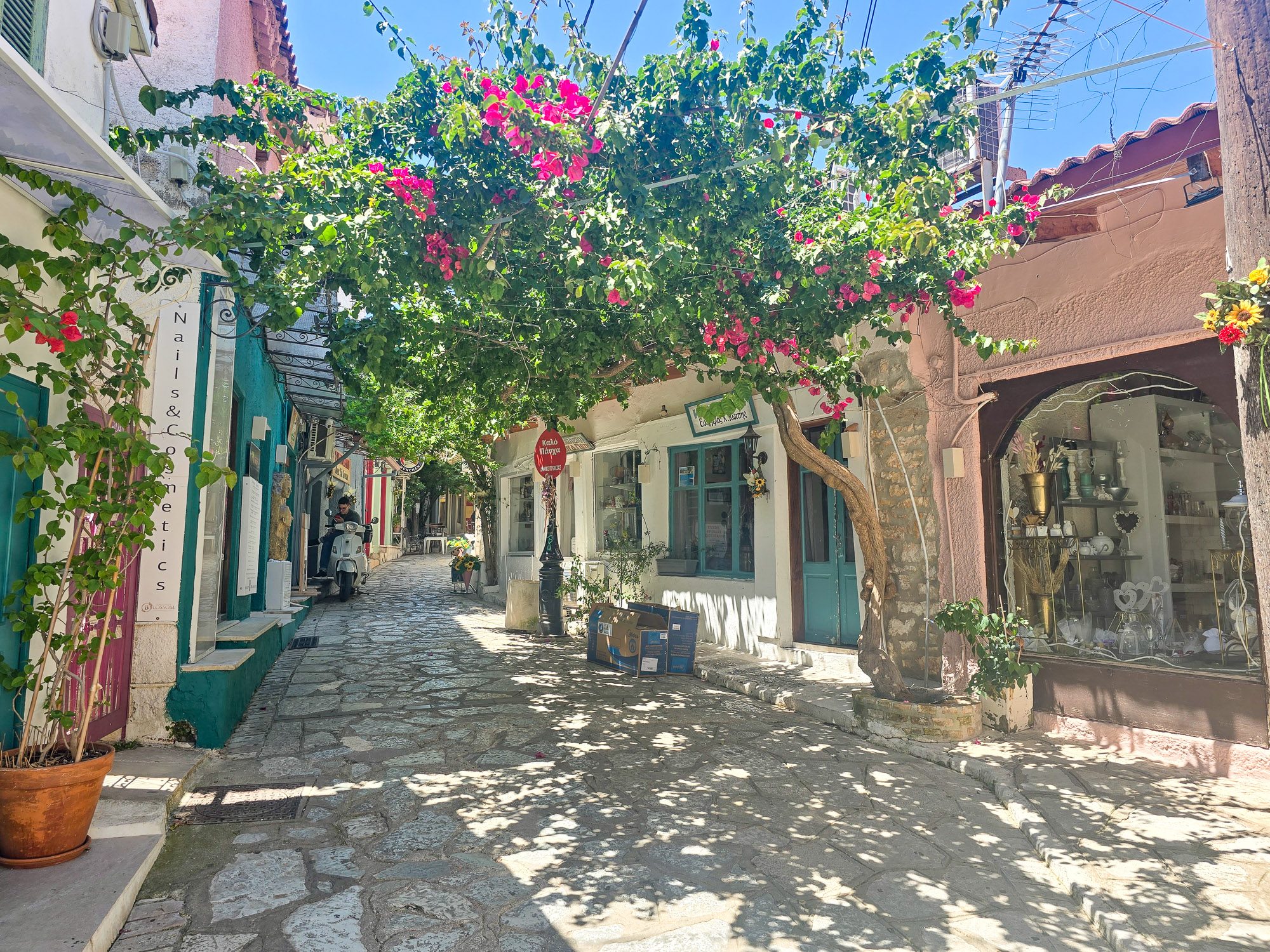
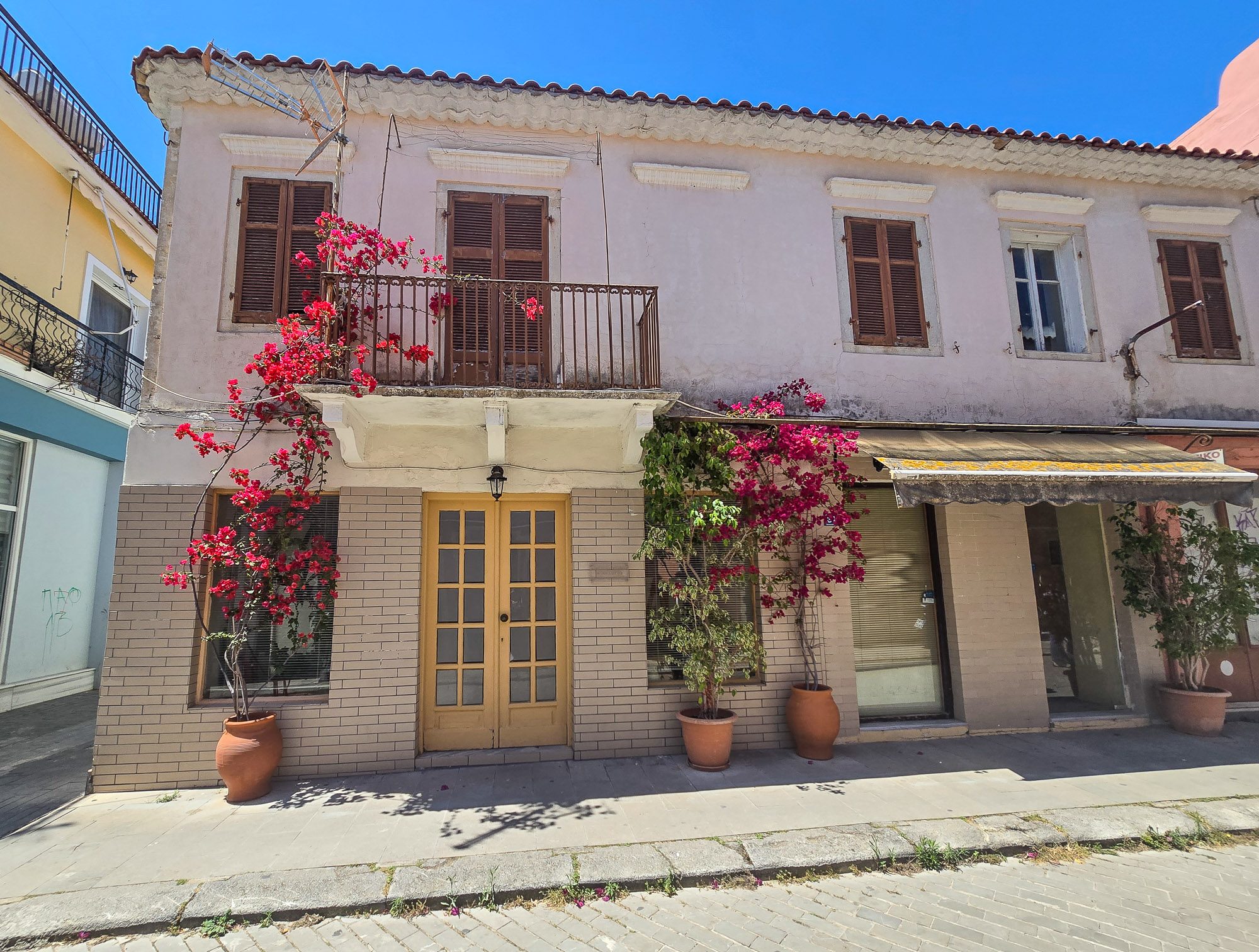
It didn’t take long to settle into the town’s gentle rhythm. Pensioners chatting outside bakeries, students, local shops, scooters darting through the lanes. It felt like a place people actually live, not somewhere polished ‘purely’ for visitors.
The modern part of Preveza was less characterful, but sat comfortably alongside the old quarter, functioning as any ordinary Greek town should.
The location gives Preveza character too. It sits between sea, lagoons and history, with the ruins of ancient Nicopolis nearby and the Ambracian Gulf shaping local life in ways that go back centuries.
Wandering the Old Town
Rather than setting out with any particular purpose, we wandered, following whichever street looked most inviting and allowing the town to unfold at its own pace. It didn’t take long to realise that this was somewhere best appreciated by meandering.
The old town is charming. Elegant old buildings, softened by time and wear, stand shoulder to shoulder with the ordinary rhythms of daily life. Hardware shops spilt onto the pavement, with coils of hosepipe hanging like oversized necklaces, tins of paint stacked outside, and sweeping brushes leaning casually against the crumbling walls of a mansion-like building. Not shops arranged for visitors to admire, but proper everyday businesses housed within buildings that had clearly seen grander days.
As we wandered further, we found ourselves at the Venetian clock tower, built in 1792 and funded by the people of Preveza themselves during the final years of Venetian rule. On the south face, a marble inscription records its origins alongside a carving of Preveza’s coat of arms from the Venetian era.
What you will not find is the original bell. Around 1808, Ali Pasha, (yes, him again) had it removed and installed in the clock tower above the main gate of his castle in Ioannina, where it eventually ended up in the city’s central square. It is still there today. Preveza has been keeping watch without its original bell for over two hundred years and appears to have accepted this without complaint.
Built into the outer wall of the tower is a fountain. The basin is part of a sarcophagus from ancient Nicopolis, the Roman city founded by Augustus Caesar just up the road to commemorate his victory at the Battle of Actium. At some point, somebody decided it would make a good fountain. They weren’t wrong, and here it still is, blending seamlessly with the cafe life surrounding it.
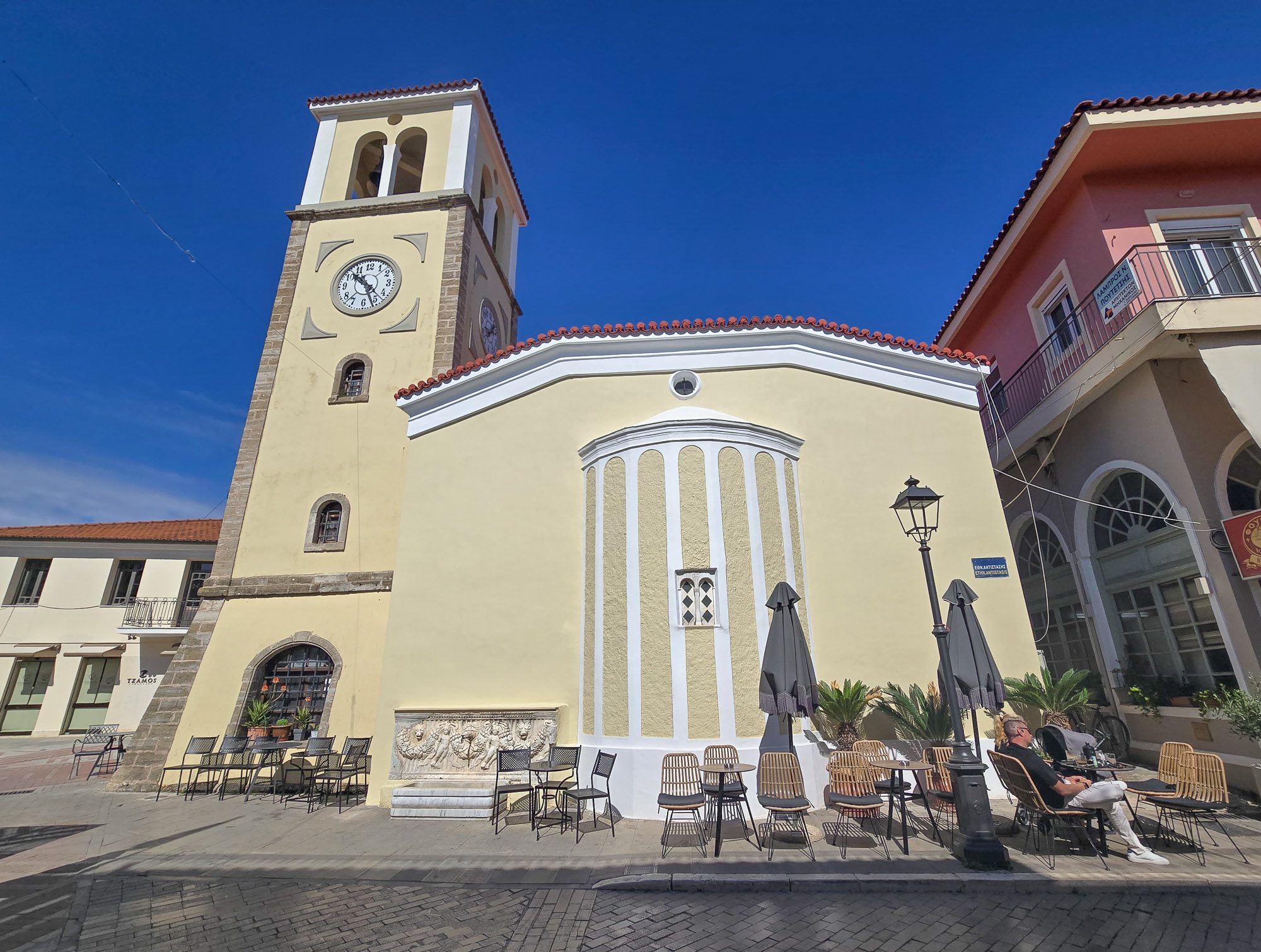
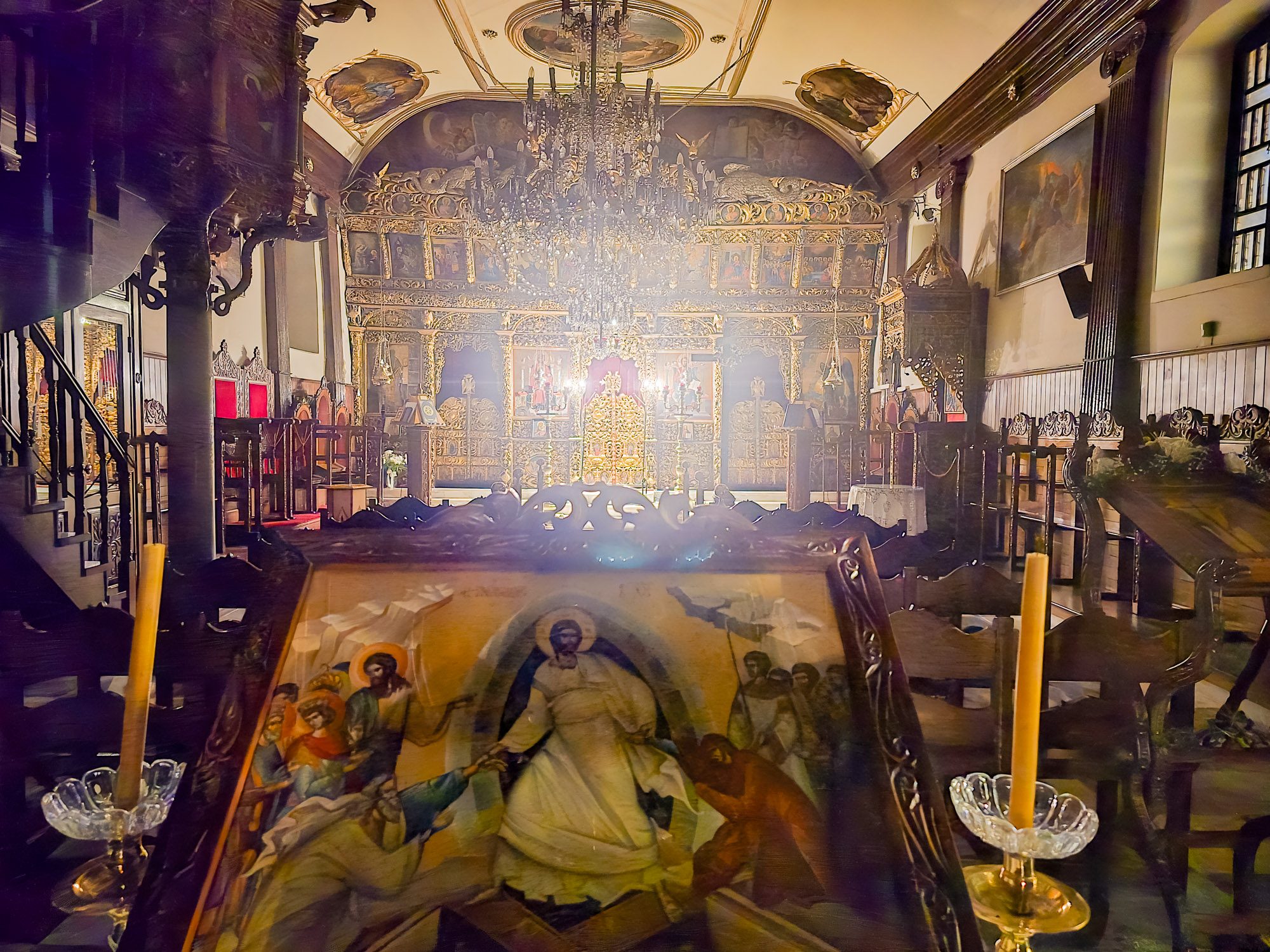
Next to the tower stands the Church of Agios Charalambos, the main metropolitan church of Preveza. Its presence is so much a part of the streetscape that it almost takes you by surprise. The church is known for its carved gold-plated wooden iconostasis and the paintings inside. Stepping in from the street felt like crossing into another world. Candlelight, icons, the familiar scent of beeswax and incense. The noise of the street left behind.

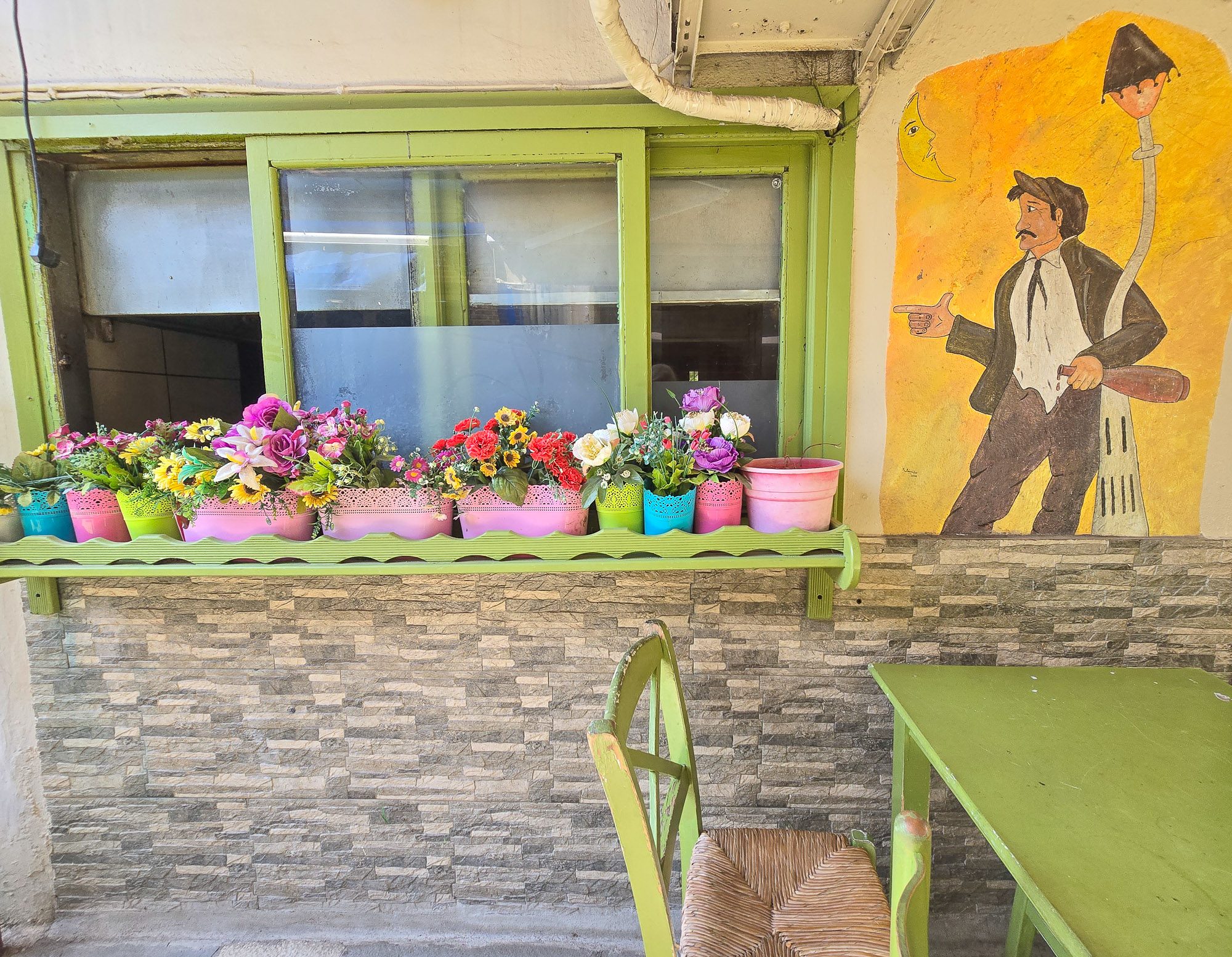
Just nearby is the cobbled alley of Saitan Bazaar. The name translates as Devil’s Bazaar, and the story behind it is one of those local legends that feels too good not to be at least partly true. During the Ottoman period, residents apparently took to smearing the cobblestones with fat so that Turkish soldiers patrolling in iron-nailed boots would slip. One officer fell, shouted “Saitan Bazaar” as he went down, and the name stuck. Whether it happened exactly like that is hard to say. The cobbles are still there. Make of that what you will.
Preveza, like most Greek towns, has a strong café culture. Pavements and little squares were filled with people over coffee, conversations stretching comfortably into the day. Quirky hidden corners with plenty of character.

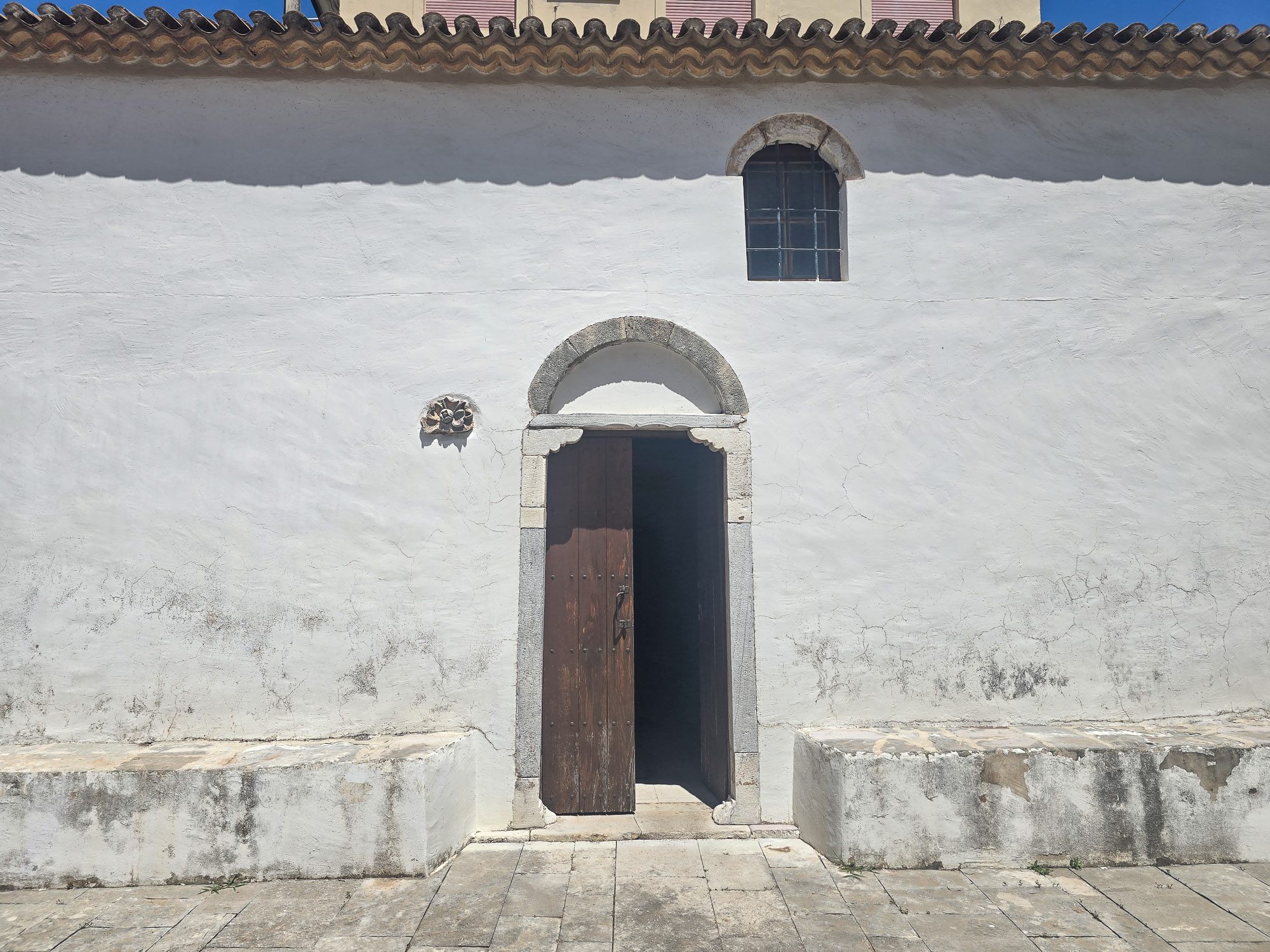
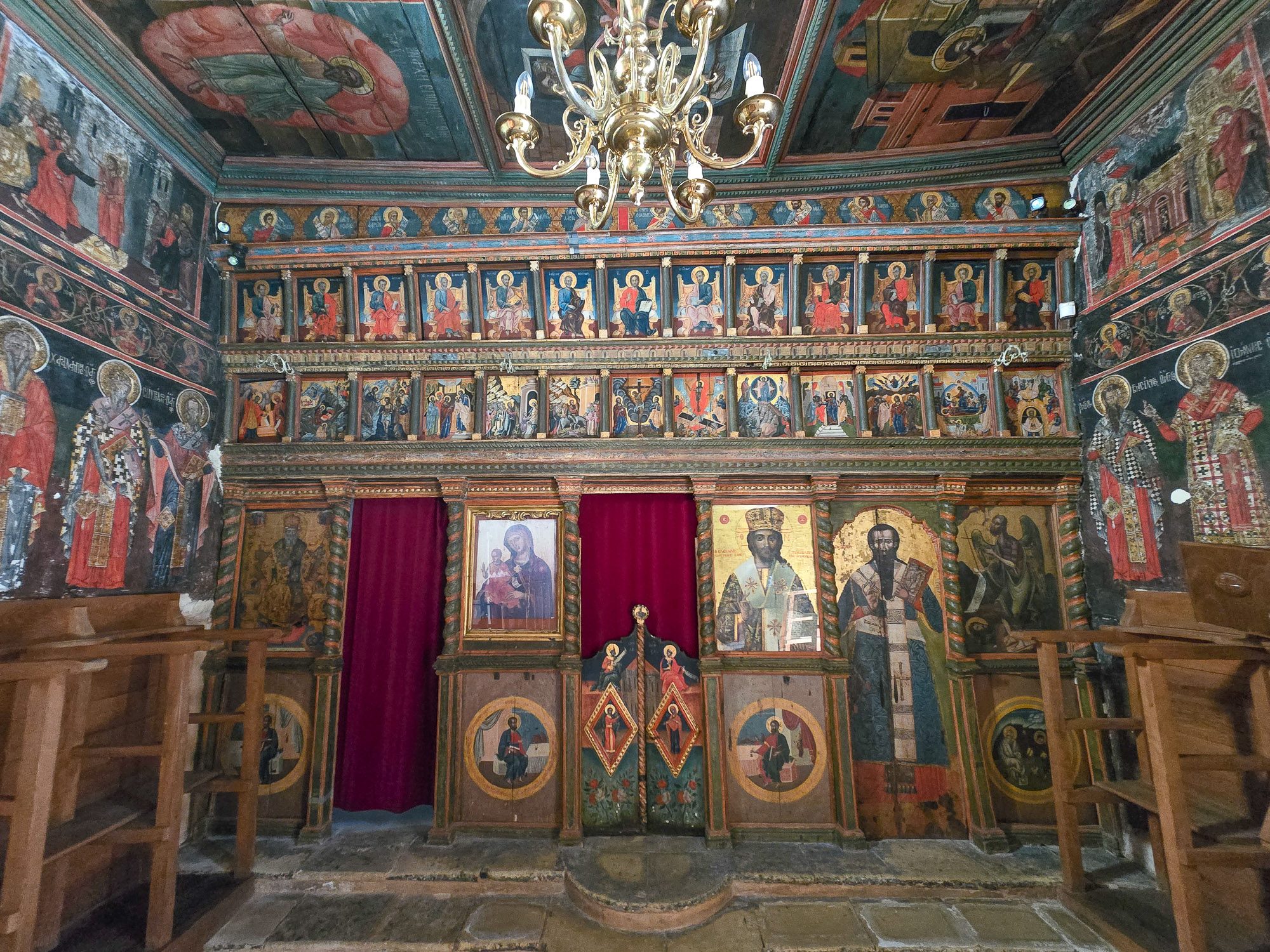
We also stumbled across the Church of Agios Athanasios, one of the older churches in town, built during the Venetian occupation. From the outside it looked charming but gave little away. Inside was a different matter. An explosion of colour — walls and a panelled ceiling covered in brightly coloured paintings depicting scenes from the Old Testament. Architecturally simple on the outside, unexpectedly elaborate within.
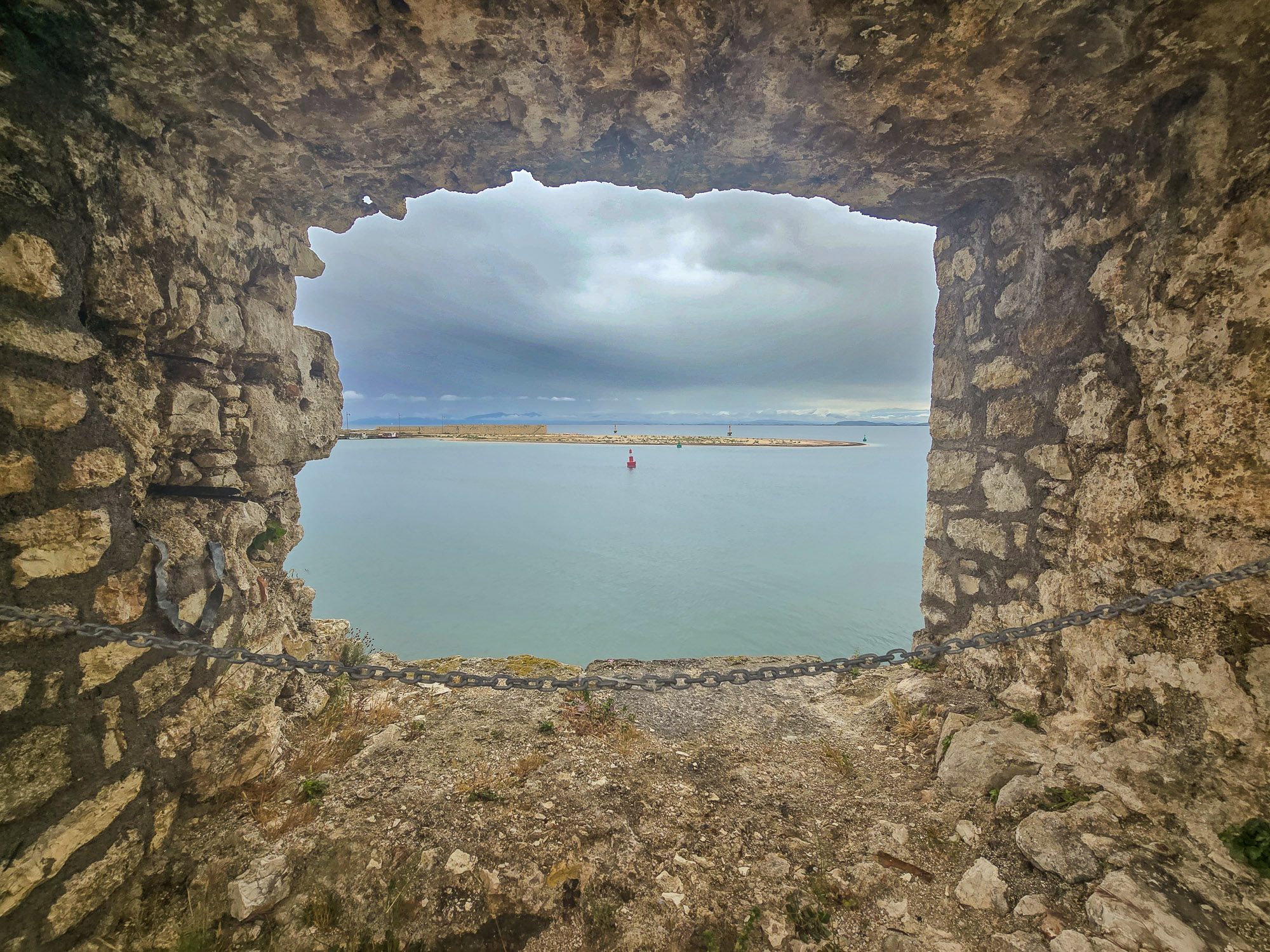
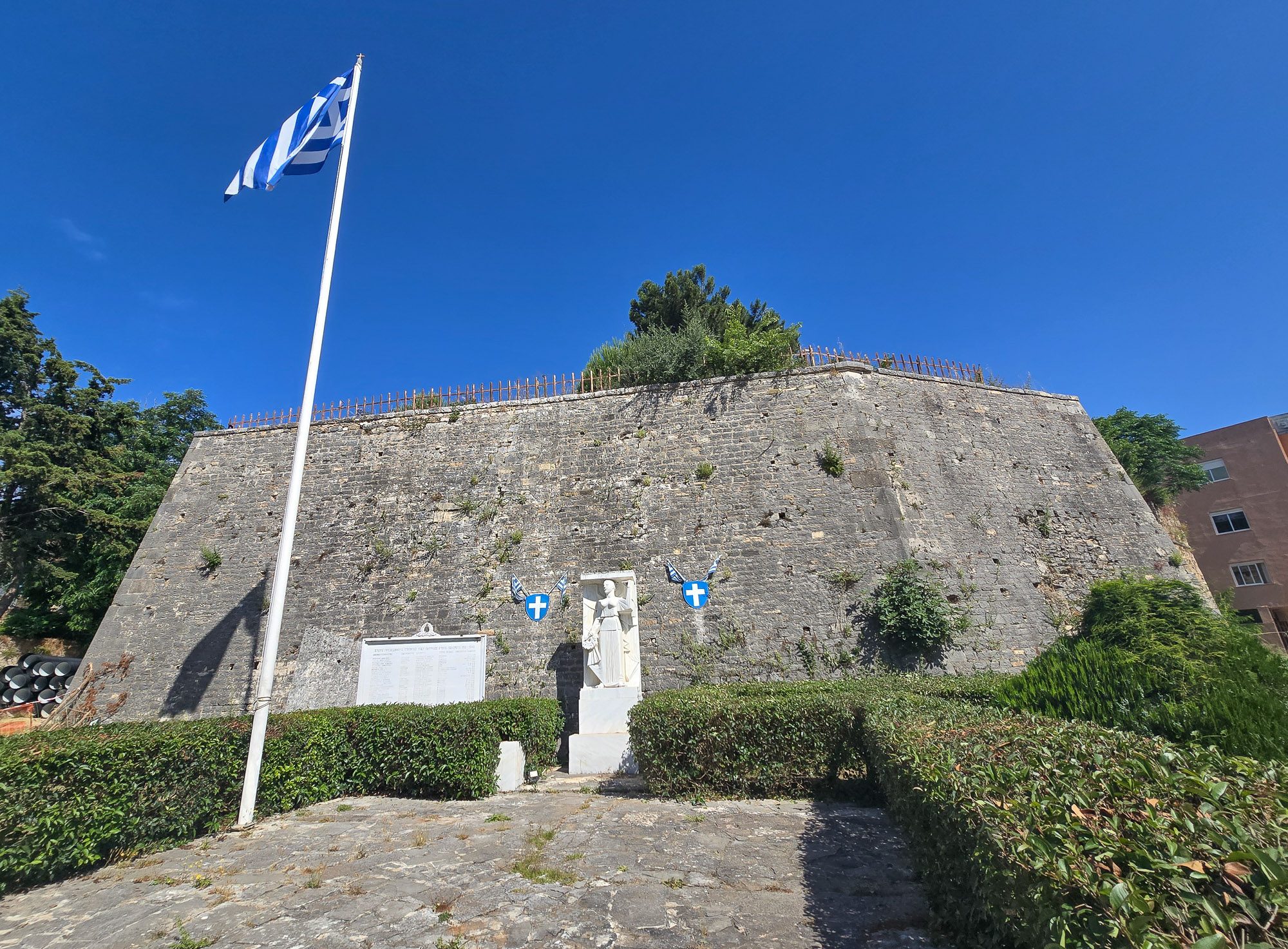
And then there is the castle. Preveza’s position at the entrance to the Ambracian Gulf has always mattered, and the fortifications are a reminder of how fiercely contested this stretch of coastline once was. The Castle of Agios Andreas, also known as Iç Kale, sits at the northern edge of the town close to the sea. Originally built by the Ottomans in the early seventeenth century, improved by the Venetians, then substantially rebuilt by Ali Pasha in 1807, it has since lost most of its interior to various demolitions over the twentieth century. What remains is the outer walls and the bastions, solid enough, but there is not a great deal to draw you inside.
The Waterfront
Drifting back towards the waterfront, we emerged onto a broad esplanade stretching the length of the marina, working harbour and shipyard. Fishing boats alongside sailing yachts, mechanics in the boatyards, cafés spilling onto the paving. The harbour works for a living, which makes it considerably more interesting to walk along than one that only exists for visitors.
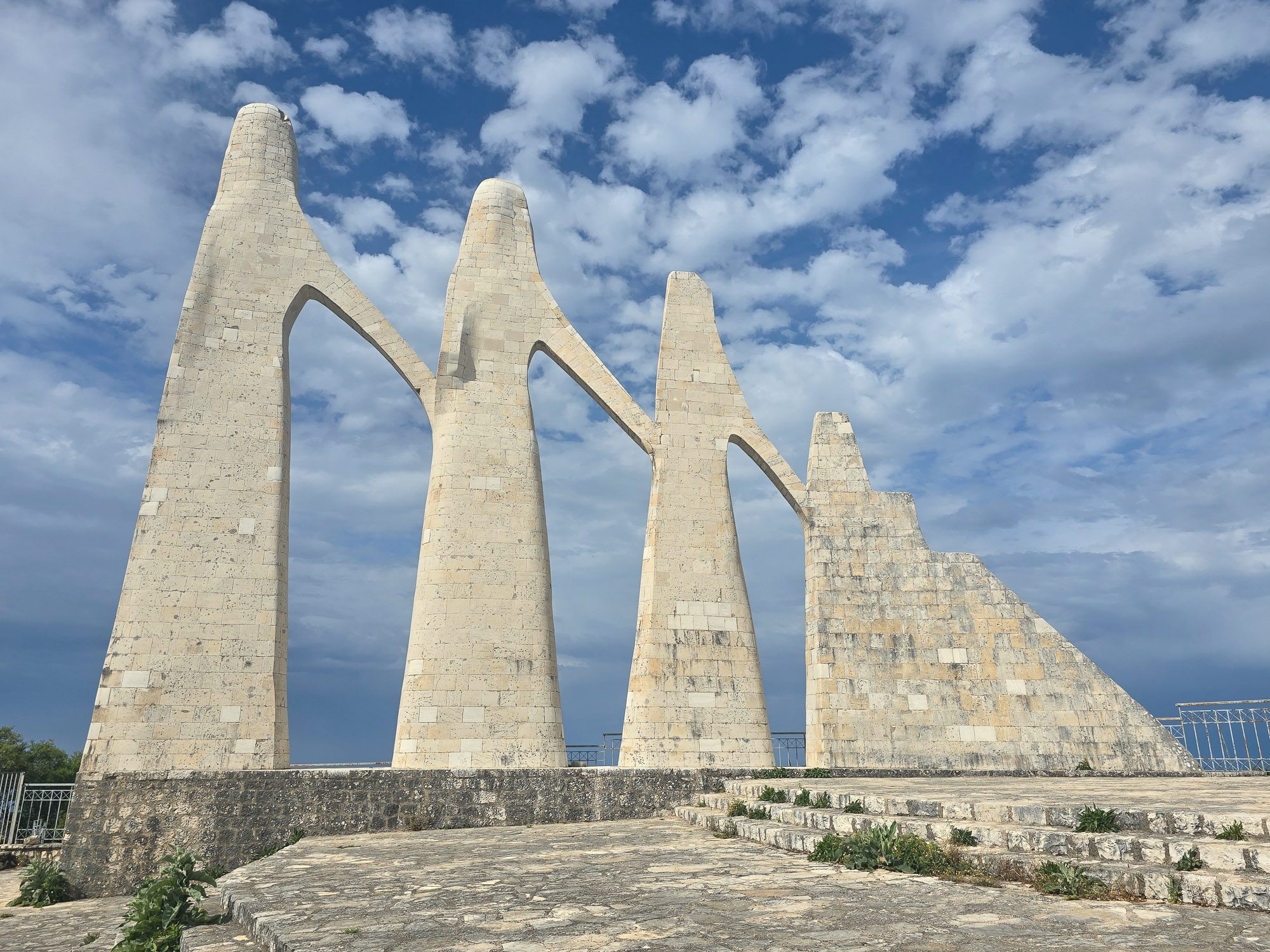
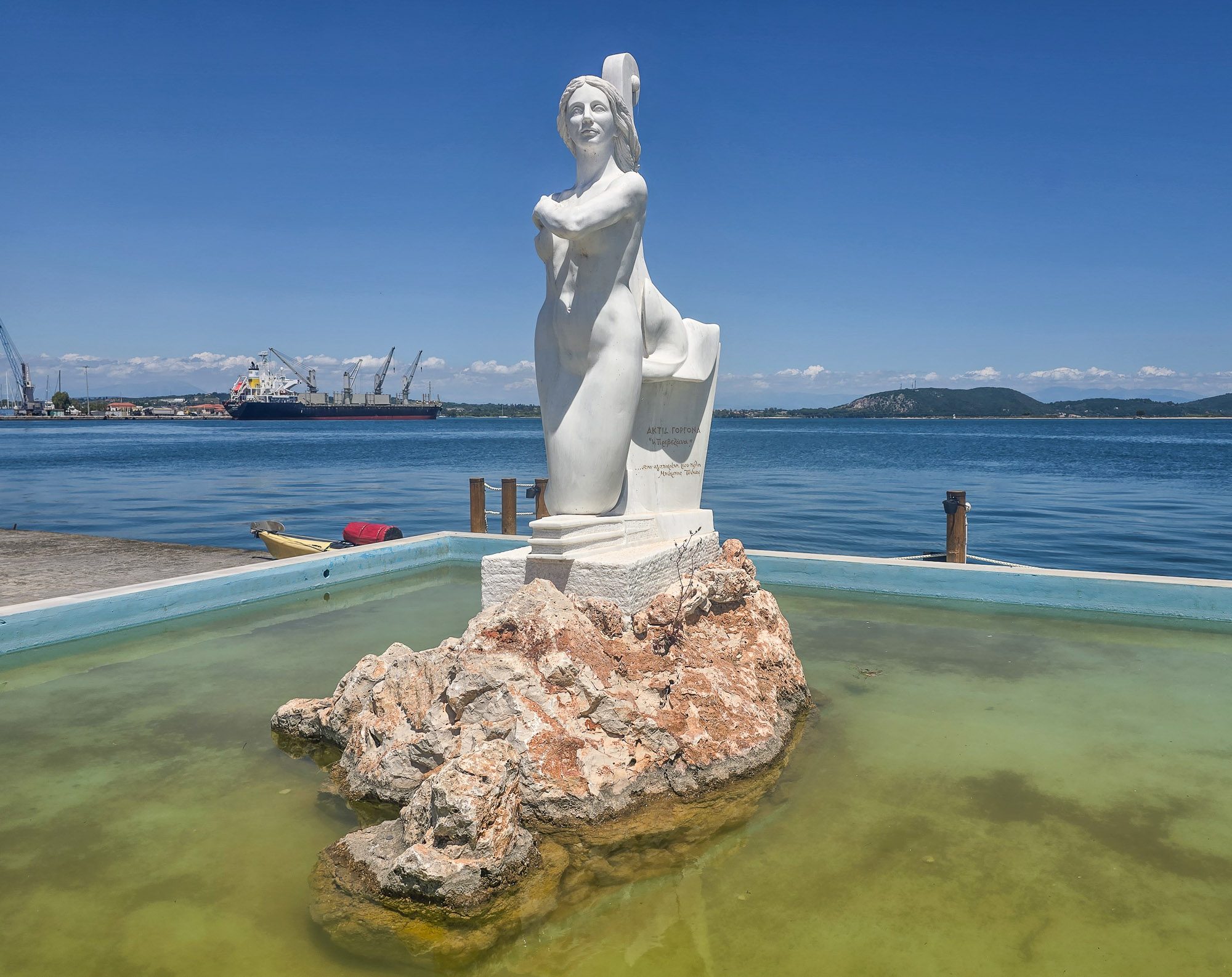
Marble statues punctuate the route. One that stopped us was the Actia Gorgona, the Mermaid of Actium, a contemporary sculpture rising from the waterfront. An appropriate choice for a town this closely tied to the sea, and a decent contrast to the older corners we had spent the afternoon in.
Preveza’s harbour has long shaped the town’s identity. Sitting at the entrance to the Ambracian Gulf, it has been strategically important for centuries, which perhaps explains why so many different powers sought control of this stretch of coast. The marina sits at the northern end of the waterfront, and it is one of the more significant yachting hubs in the Ionian. Three hundred berths, vessels up to 45 metres, and a constant procession of sailing yachts passing through the entrance channel. Across the narrow strait on the Aktio side, Cleopatra Marina and its associated yards can haul out over 1,500 boats between them, making this one of the largest concentrations of marine services in the eastern Mediterranean. Most of the yachts bobbing along the Preveza waterfront will have wintered somewhere over there.
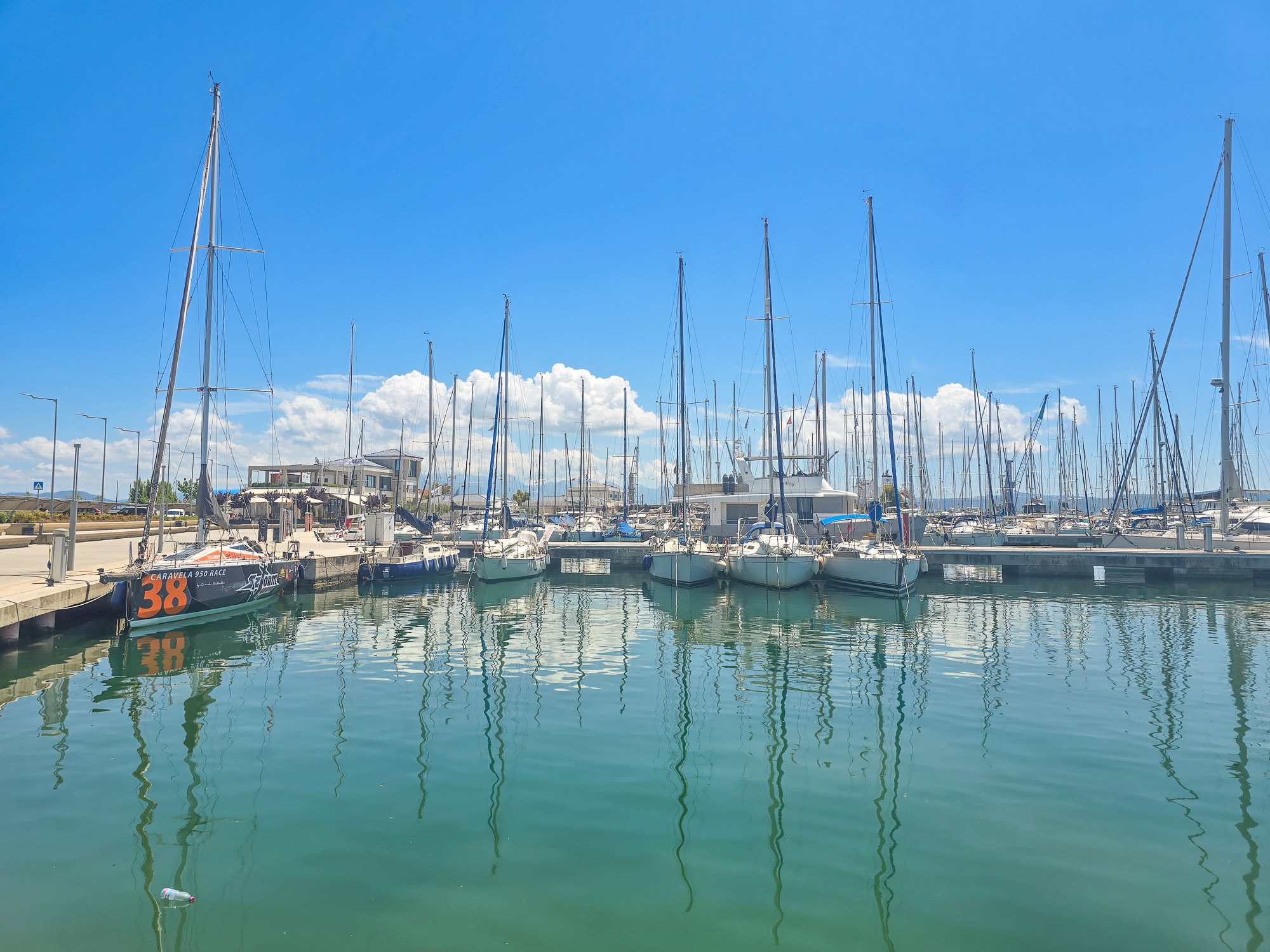
Beyond the marina, fishing boats came and went, ferries crossed nearby waters, and the shipyard added a sense that this was a place connected to the sea, not merely as scenery but as livelihood.
Further along stands the statue of Odysseas Androutsos. Born in 1788, he became one of the significant military figures of the Greek War of Independence, perhaps best known for the Battle of Gravia Inn in 1821, where a small force under his command held off a much larger Ottoman army. The inscription describes him as Archistratigos of Roumeli, commander of mainland central Greece. His story ended badly. Despite his military record, he fell out with political rivals and died under suspicious circumstances in Athens in 1825. The statue stands here on the waterfront of a town that was itself fiercely contested for centuries, which feels about right.

Ioannis, it was becoming clear, had known exactly what he was talking about (which I already knew!).
In the next post, we head out on foot, following the coastline around the tip of the headland.
Discover more from
Subscribe to get the latest posts sent to your email.
MY BIG FAT GREEK TRAVEL SURVEY
How do you really plan your Greek adventures? I'd love to hear from you.
TAKE THE SURVEY →