The MS Christina and the Forgotten Islands: Why Nidri Was Worth it After All
There were plenty of boat trips on offer in Nidri. Most of them went to beaches or consisted of a series of swim stops. The MS Christina did some of that too but also went somewhere more interesting. A sailby of the wartime submarine cave of Papanikolis and the islands of Kalamos and Skorpios – latter making it clear through a set of signs that made the no-access policy perfectly clear. We also got the opportnity step foot on the interesting little island of Kastos.
The MS Christina – The Forgotten Islands Boat Trip
The notification from the MS Christina office came just in time. We had one last day in Lefkada, and thankfully, their boat trip had the numbers they needed to run. I’m glad, otherwise I may have found myself on a boat trip to visit some swimming pigs.
The MS Christina is a traditionally styled gulet that runs daily during the main season (though not as regularly in mid-May). Their cruise, called the Forgotten Islands of Kastos and Kalamos, was to take us around several islands and islets – some uninhabited or, in the case of Skorpios, completely off limits. I was more interested in the opportunity to visit Kastos. I love a small island and considered it an opportunity to do a recce before returning one day to spend several days there.
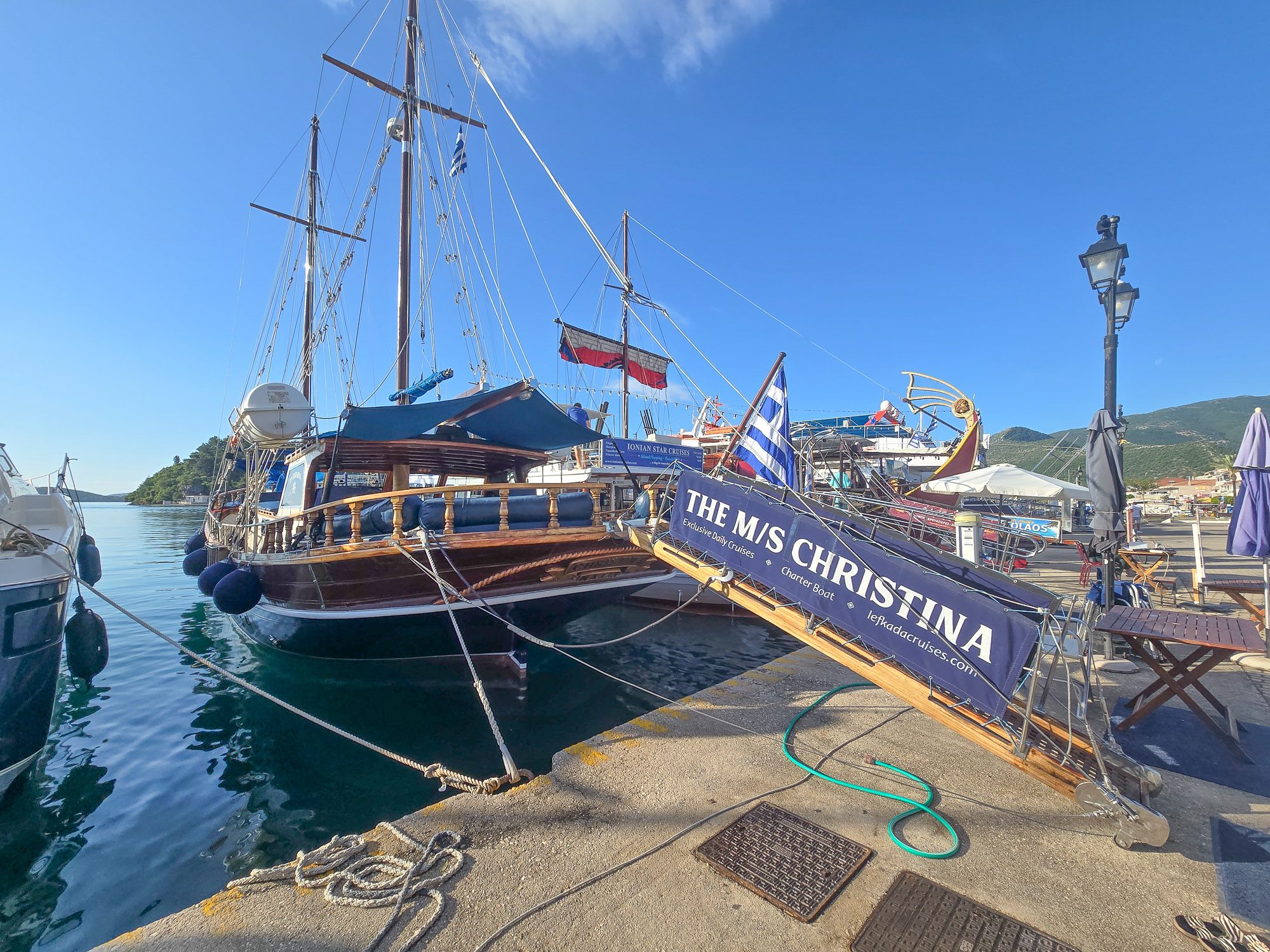
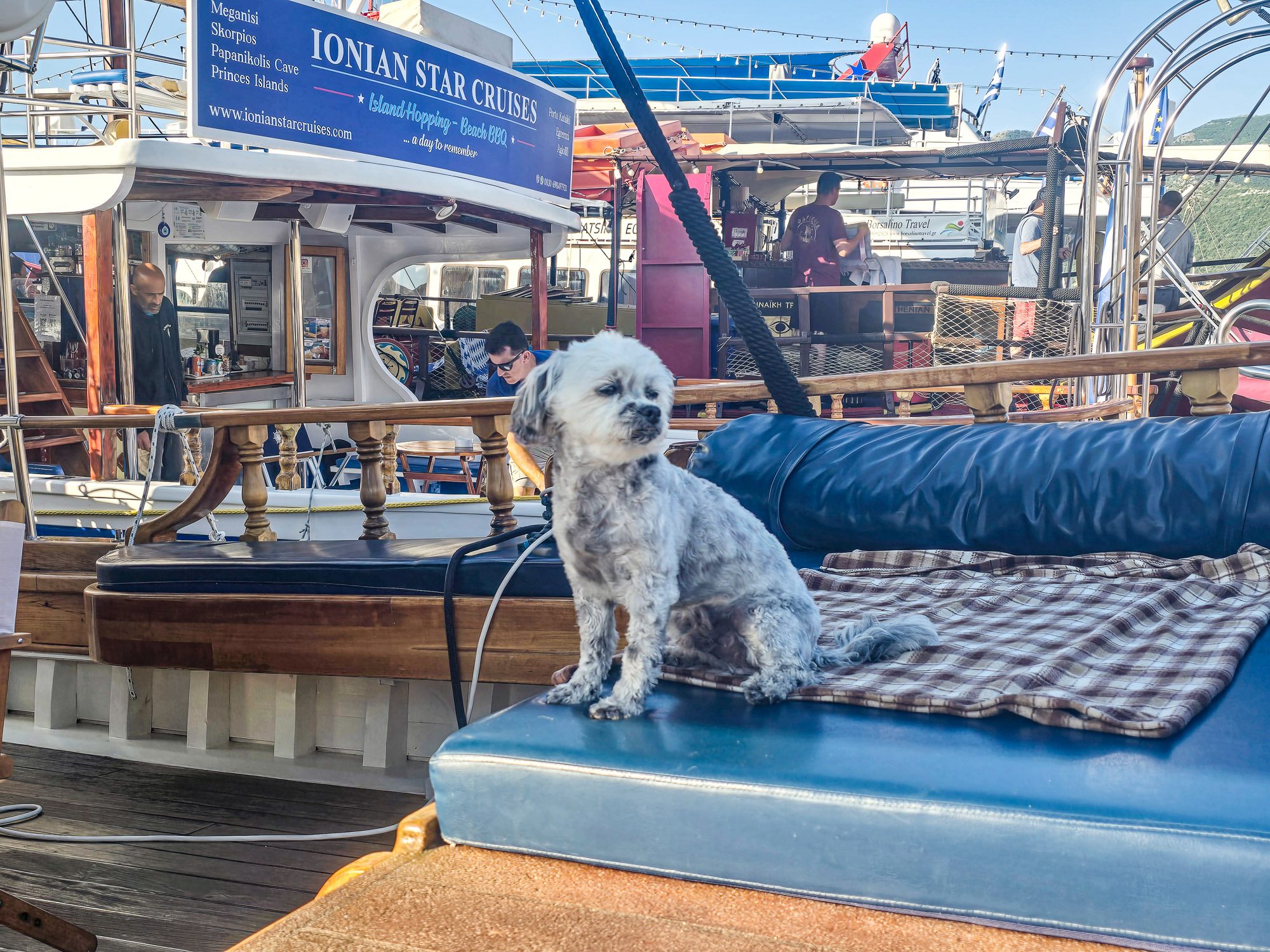
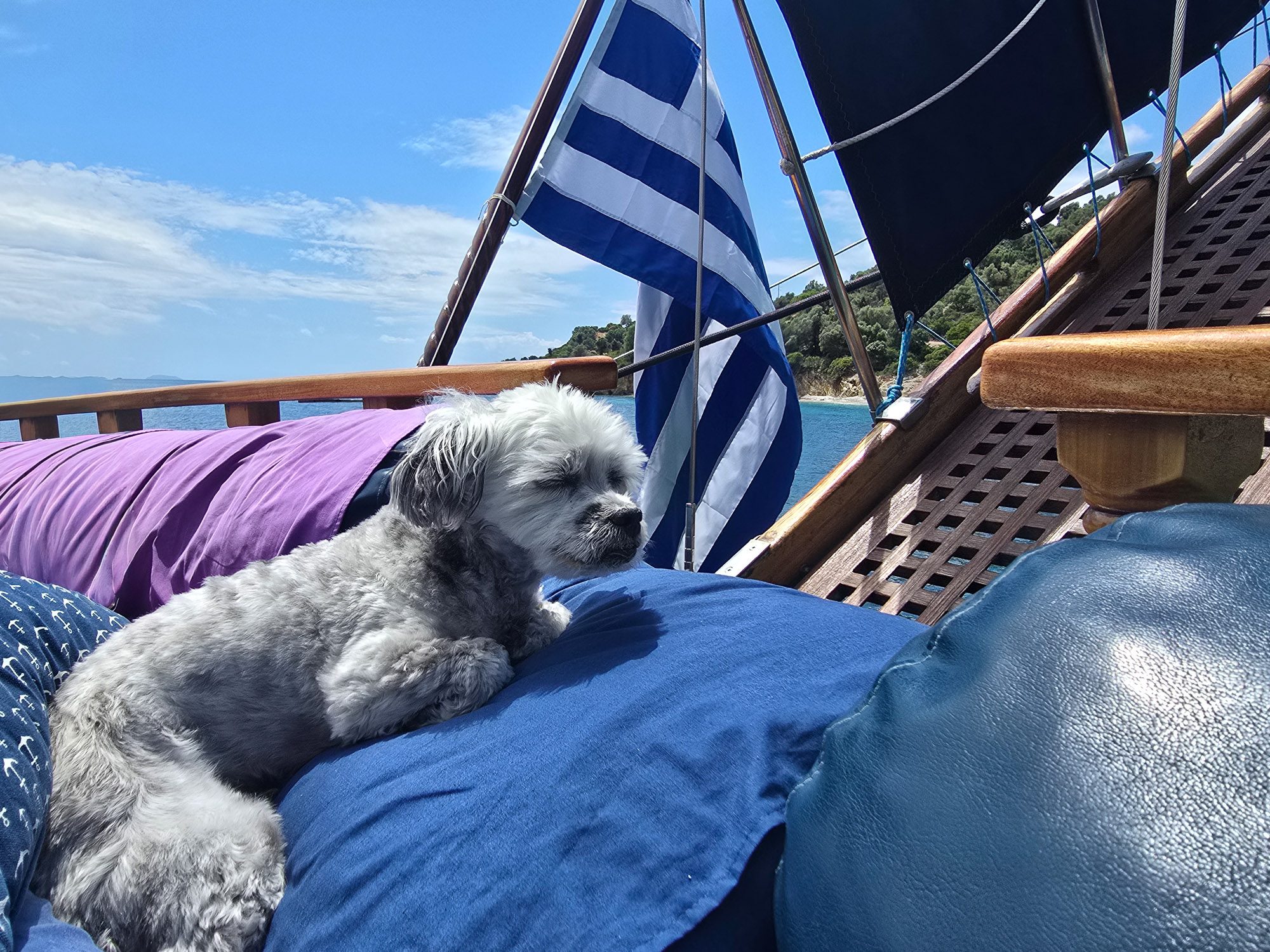
The Christina is a family operation. Greek captain Stelios, English wife Jane, their teenage children, assorted friends, and dog Alfa who was just as much a part of the team as Captain Stelios.
Before we set off, we were told that this was the fifth trip of the season, and so far, dolphins had been spotted on every single trip. I immediately accepted full responsibility for ending that run. I have not seen dolphins in Greek waters in over twenty years, despite scanning the seas with the intensity of a frigate on pirate patrol every time I sail. They know. I don’t know how, but they know.
The other passengers were a varied group. A spontaneous drinking collective assembled itself early when a cluster of northern Europeans discovered a shared nationality (my lips are sealed on which one in question). Entertaining for the first hour. Less so as a long-term arrangement, but these things happen.
Cave of Papanikolis
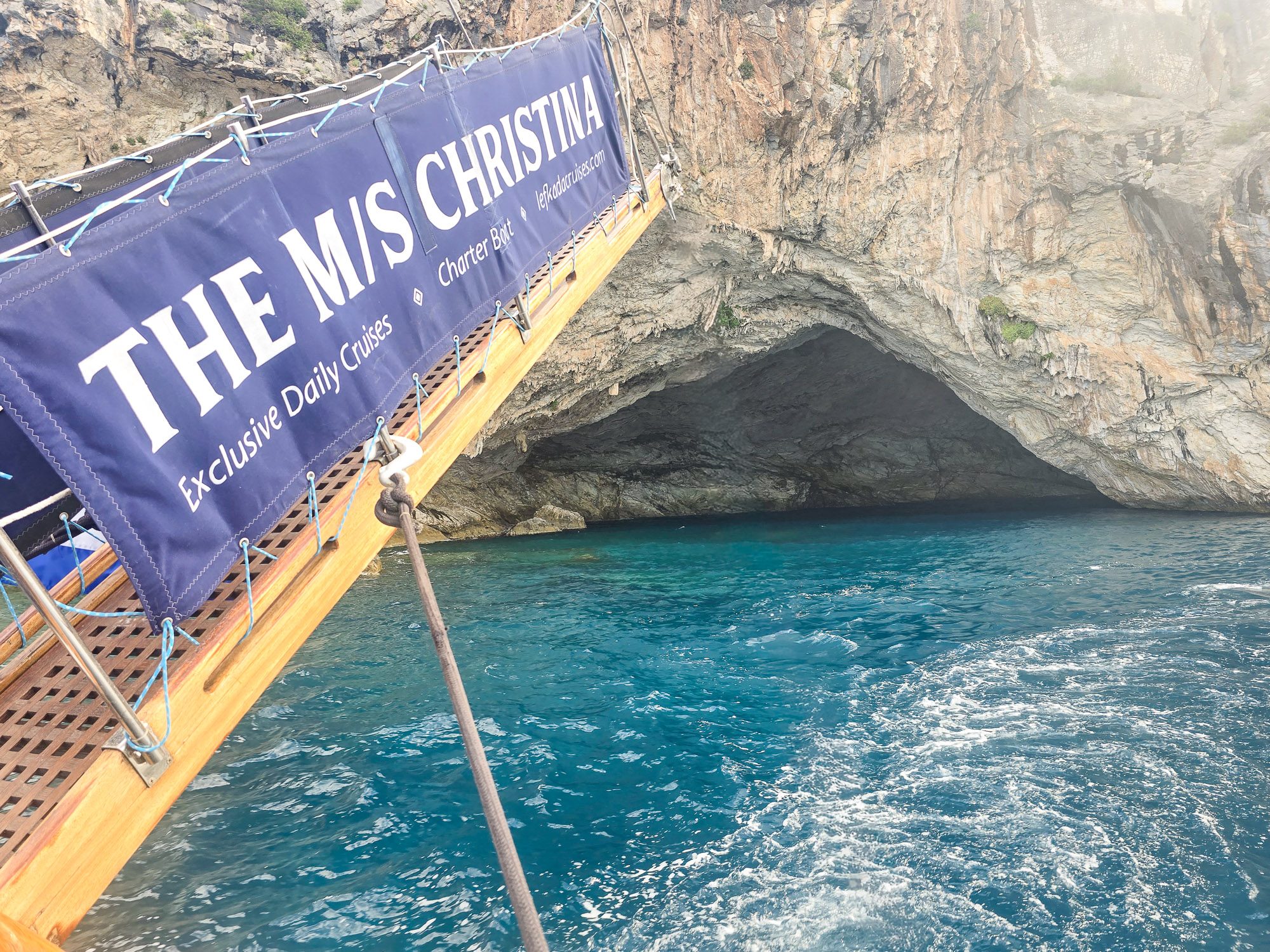
The first stop was the Cave of Papanikolis on the western coast of Meganisi.
The first stop was the Cave of Papanikolis on the western coast of Meganisi. The cave takes its name from the submarine Y-2 Papanikolis, which, according to local tradition, used it as a hiding place between operations during the Second World War. The submarine itself was named after Dimitris Papanikolis, a naval hero of the Greek War of Independence and the first man to successfully use a fireship to destroy an Ottoman vessel. One name, three layers of history.
The Y-2 was one of only two Greek submarines to survive the war, carrying out nine patrols in total including SOE commando operations across the Aegean. Whether she actually hid in this particular cave is part legend, but the cave is substantial enough to have managed it. The entrance is sixty metres wide and twenty metres high, extending roughly 120 metres into the rock with a small sandy beach hidden at the far end.
The story gives it considerably more weight than its appearance alone might suggest.
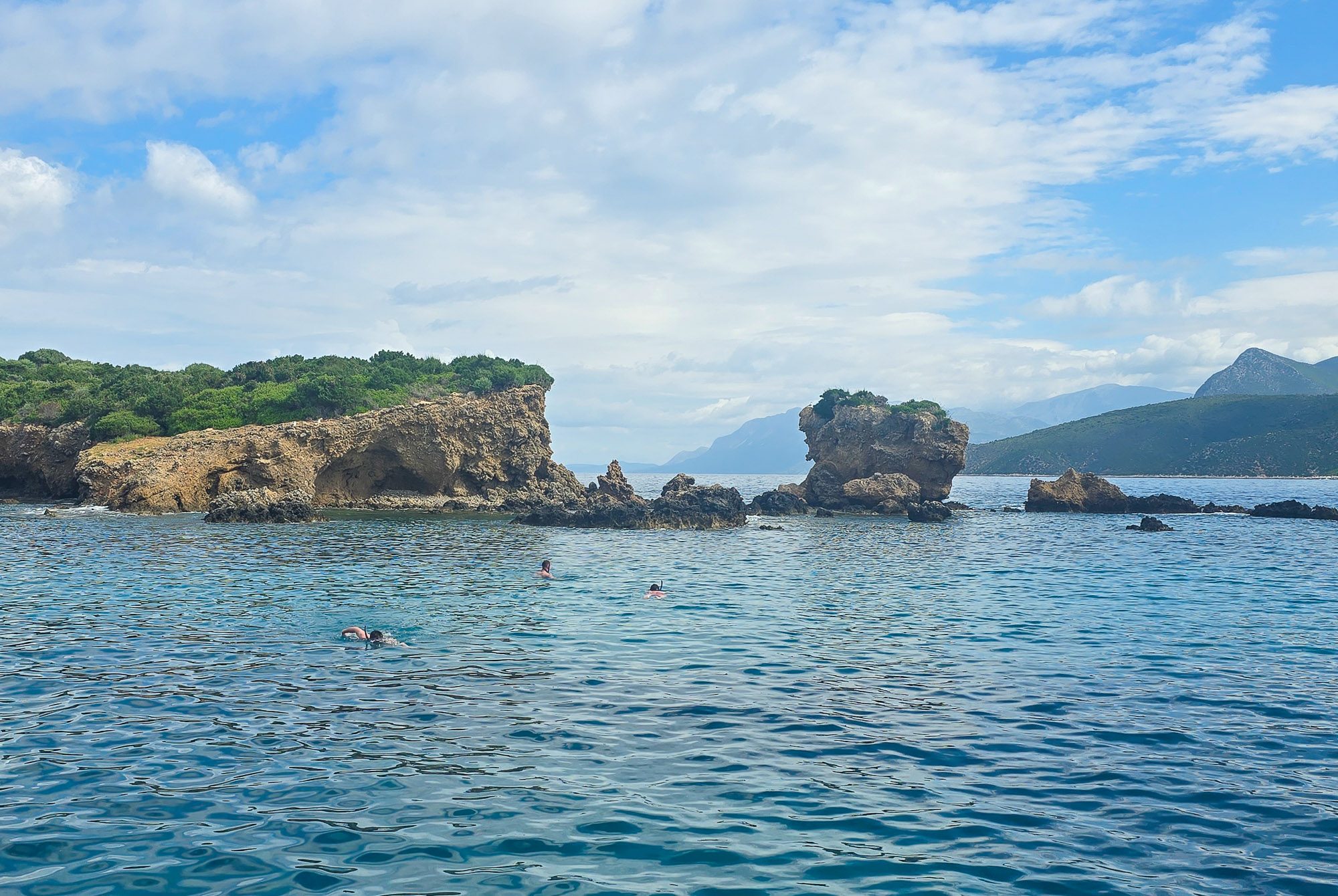
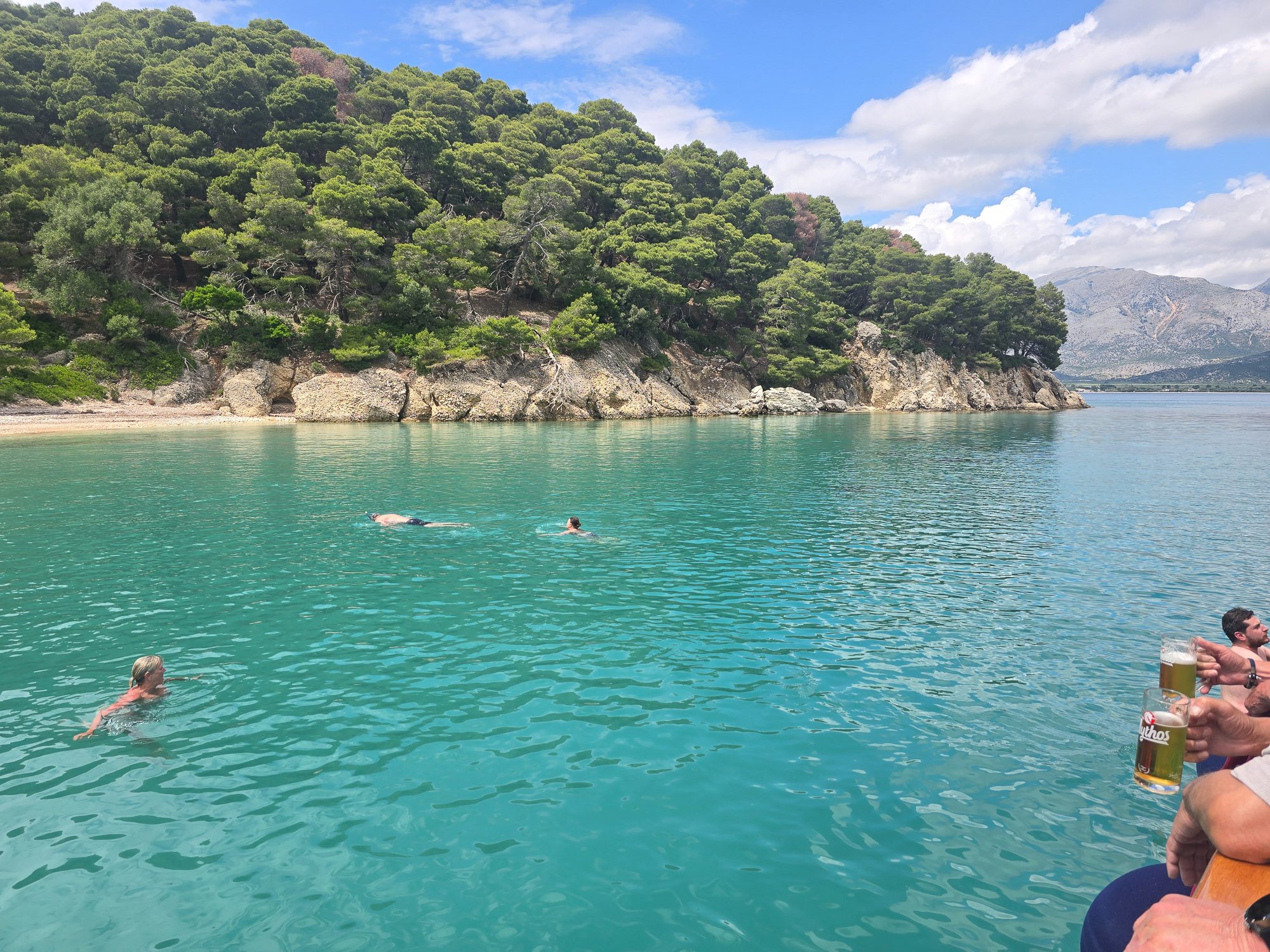
From there, the route took us past the islet of Formikoula. Impressive, jagged outcrop, sea caves, the sort of thing that looks good from a boat. There was a swim stop. The day was warm but overcast, and the water did not look especially inviting. I stayed on board, thinking ahead to our land visit to Kastos especially as Jane had suggested that the highlight was the church.
Kastos
Kastos was the highlight. Worth the trip, worth Nidri, worth the gauntlet of boat trip salespeople. The lot.
The approach set the tone. The island came into view with the Epirus mountains rising behind it on the mainland, and there was a moment where the scale of the landscape lands properly. After Nidri, the peace and tranquility felt immense.
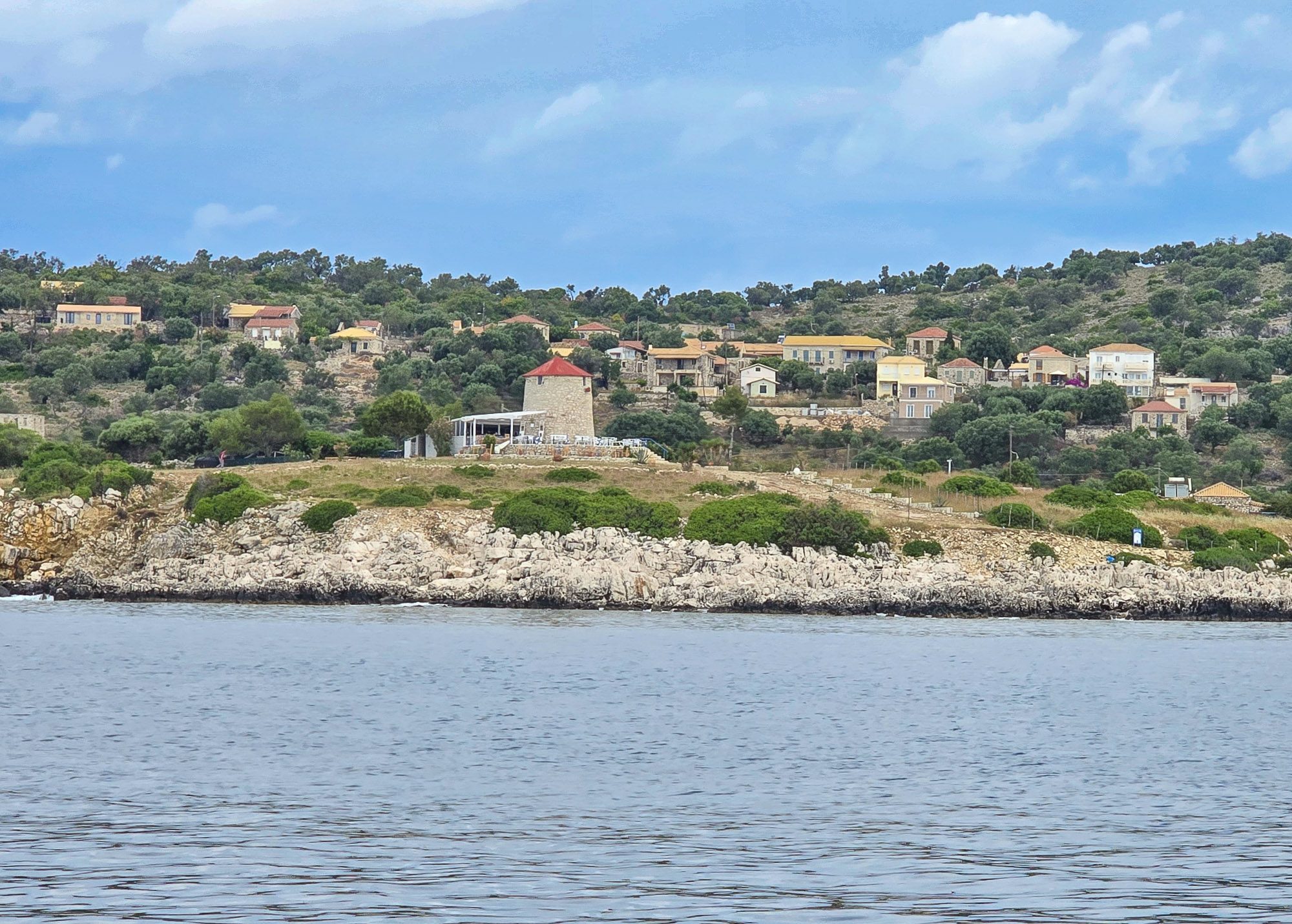
Kastos has a permanent population of around forty, which tells you most of what you need to know about the pace of life here. The island has no cars and the boats that service it do not carry vehicles, which is either a selling point or a dealbreaker depending on your outlook.
What is easy to miss is that the coastal village you walk into is not the original settlement at all. For centuries, the inhabitants lived four kilometres away at altitude, out of sight of the sea, because the Saracen pirates who raided the Ionian gave them no choice. A bay on the western side of the island is still called Sarakiniko or Saracen Bay. People only came down to the coast in the nineteenth century, once the seas had calmed enough to make it a viable proposition. During the Greek War of Independence, it also served as a hiding place for some of the movement’s leading figures, including General Kolokotronis.
Once ashore, we followed Jane, who led a short walk through the town to the church. Not everyone came. They missed out. The Church of Agios Ioannis Prodromos was far more elaborate than I’d expected for such a small island. Though I guess one doesn’t necessarily follow the other.
It was built in the centre of the new settlement when the residents moved down to the coast. Inside, it has a wood-carved iconostasis and richly decorated with oil paintings by Spyridon Gazis, one of the most important icon painters from Lefkada, who had studied in Venice. That explains a great deal about why it looks the way it does on an island this size.
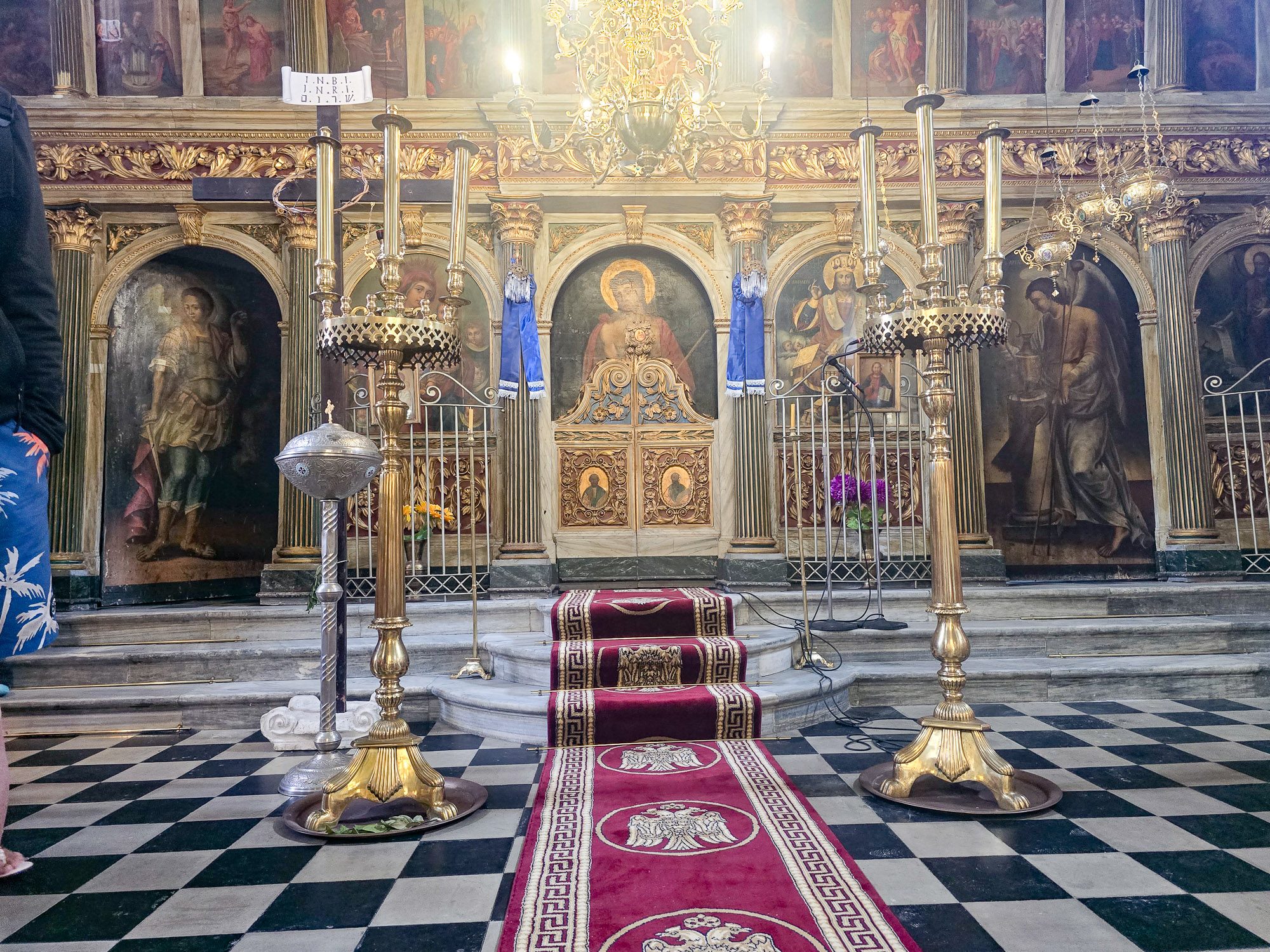
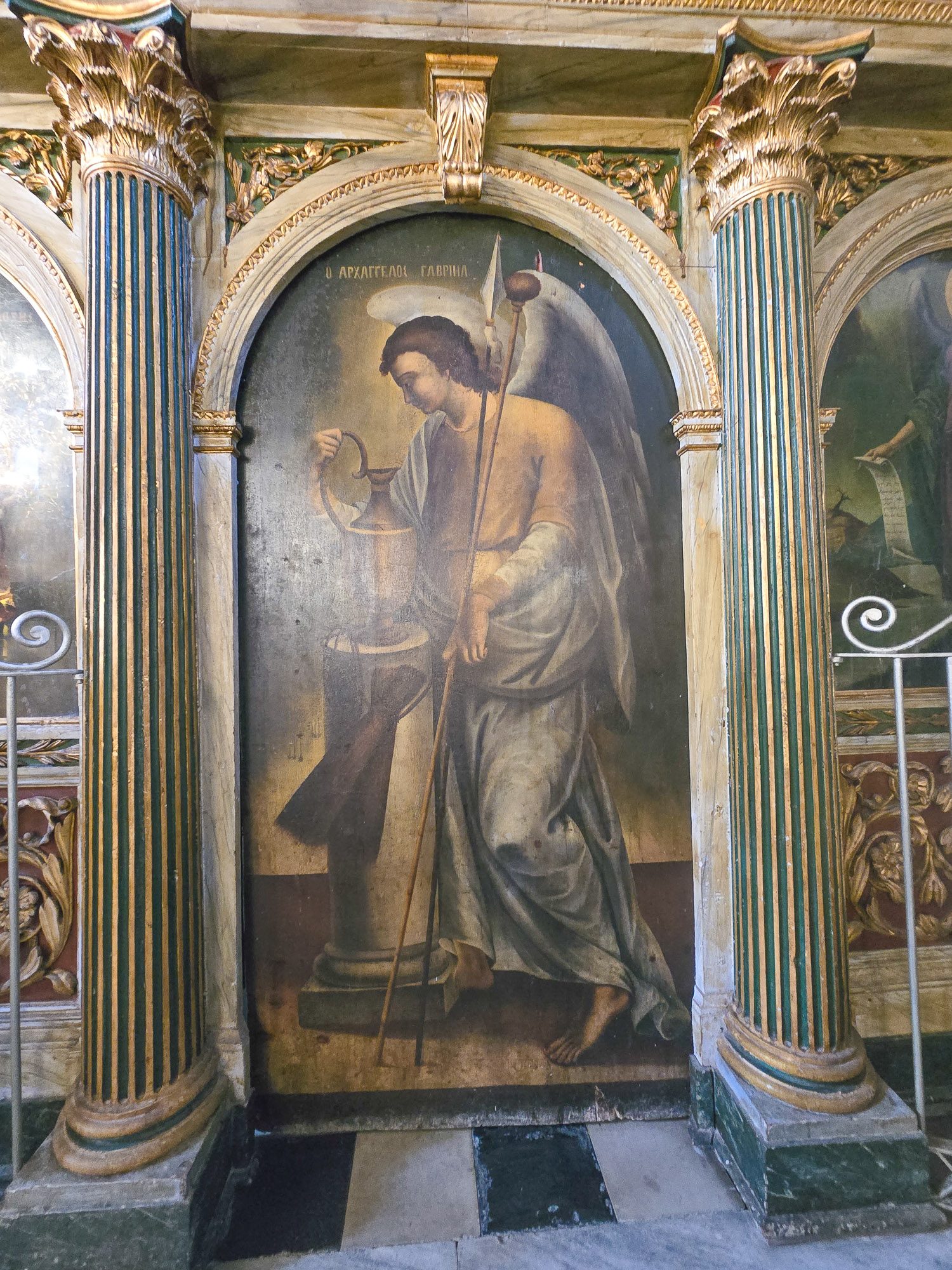
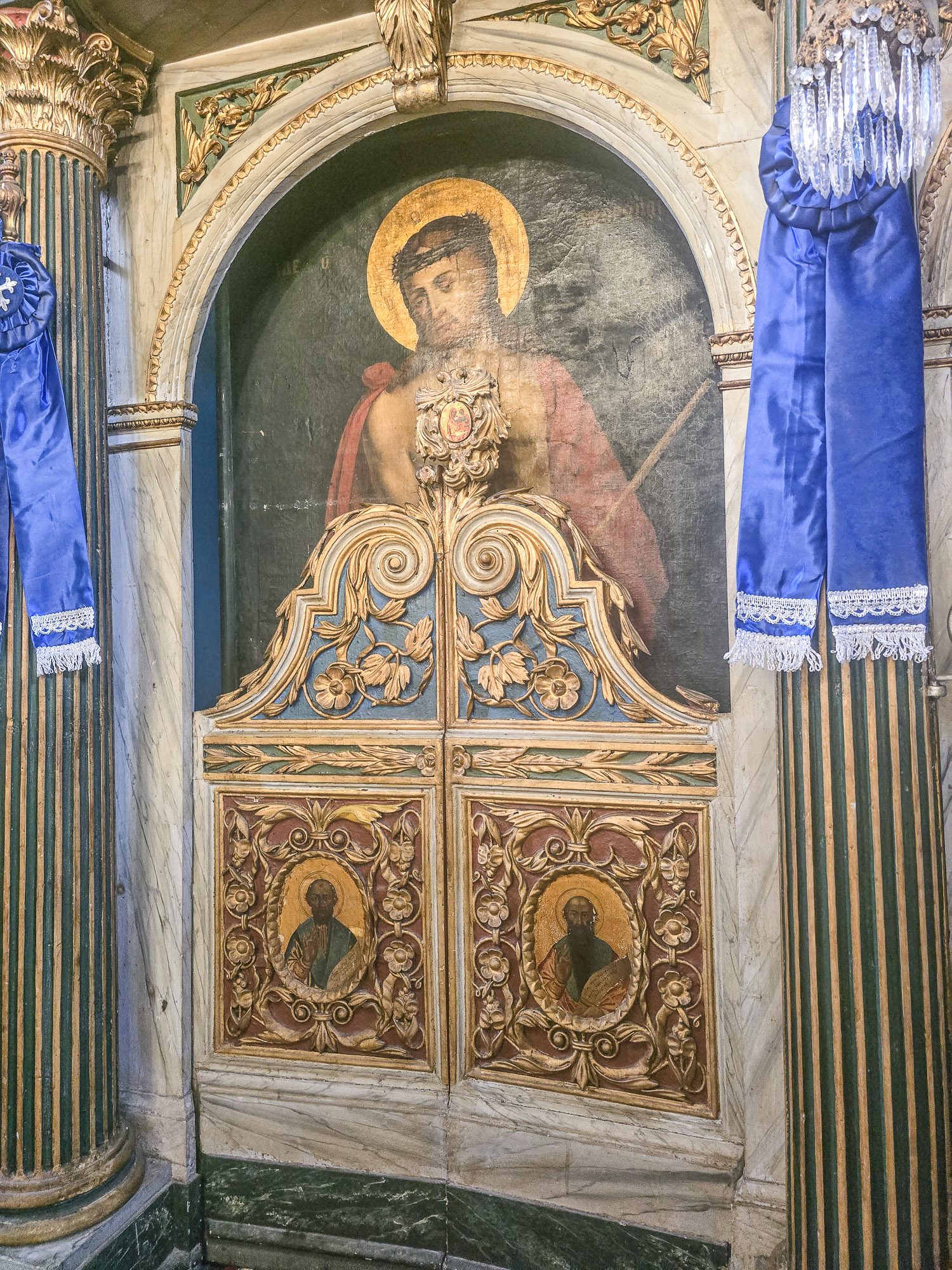

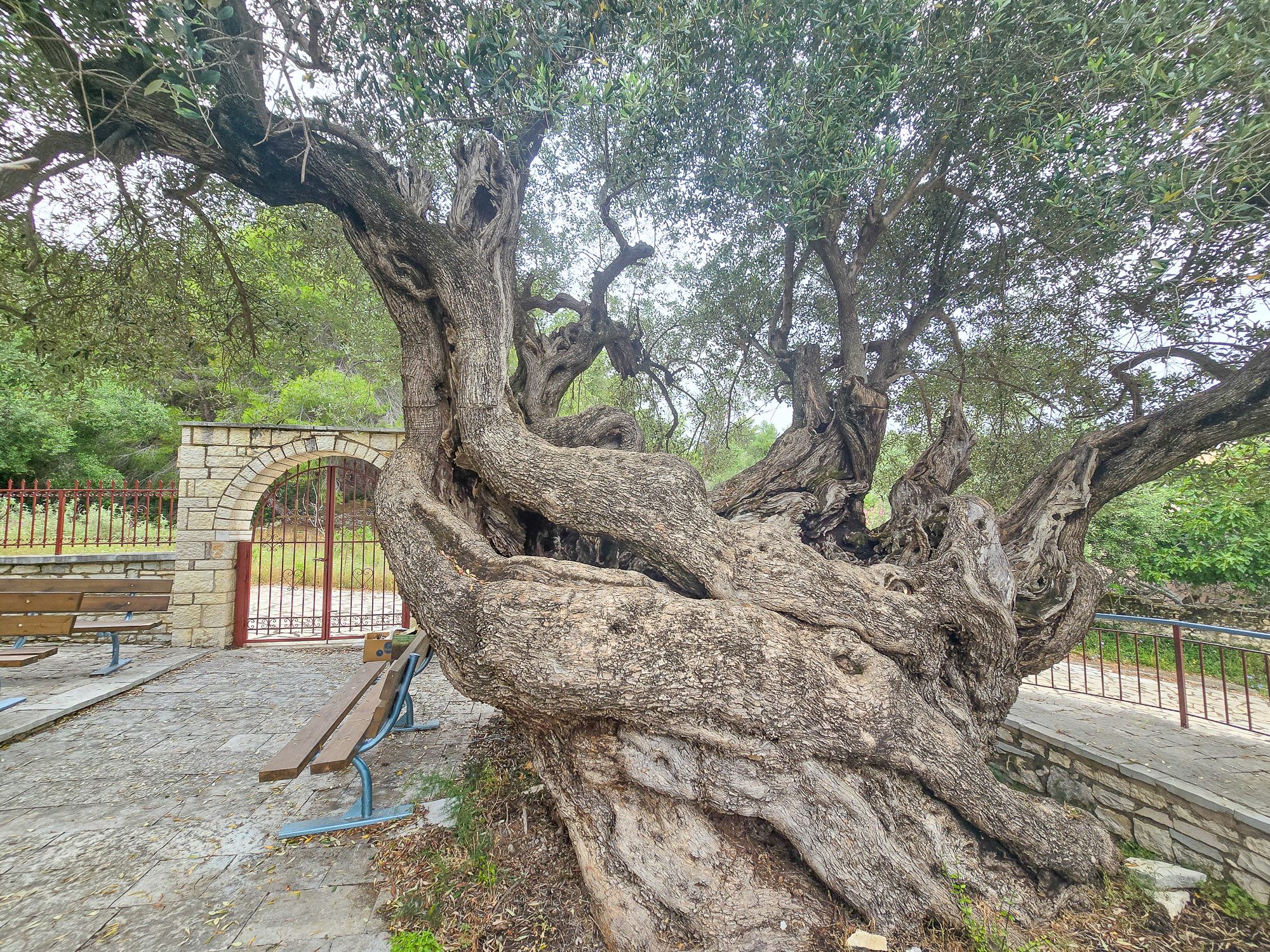
Outside the church, Jane pointed out a crypt accessed by a set of steps down below the nether regions of the church. Peter went down and in whilst I admired a gnarly old olive tree that could probably tell some stories.
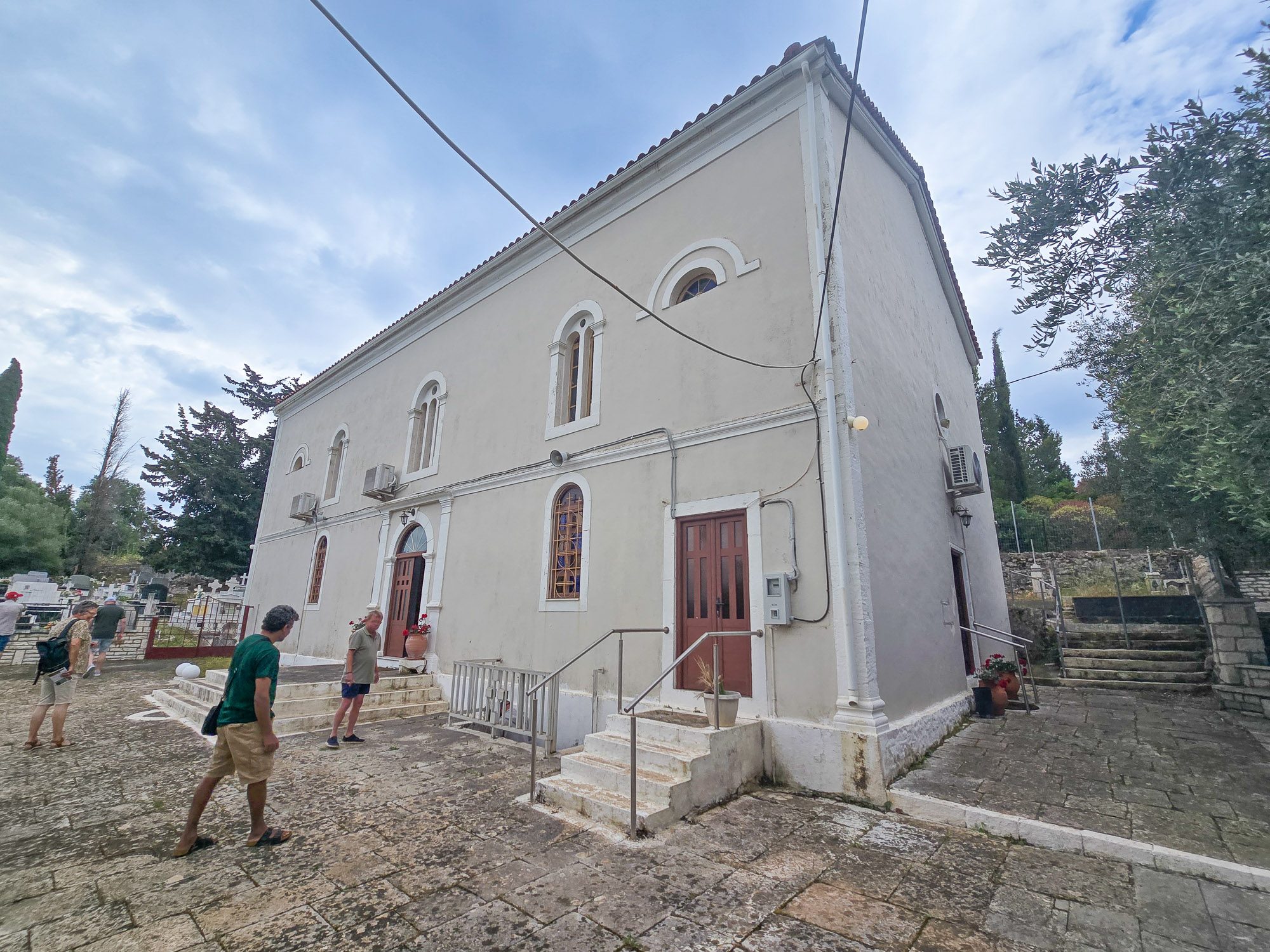
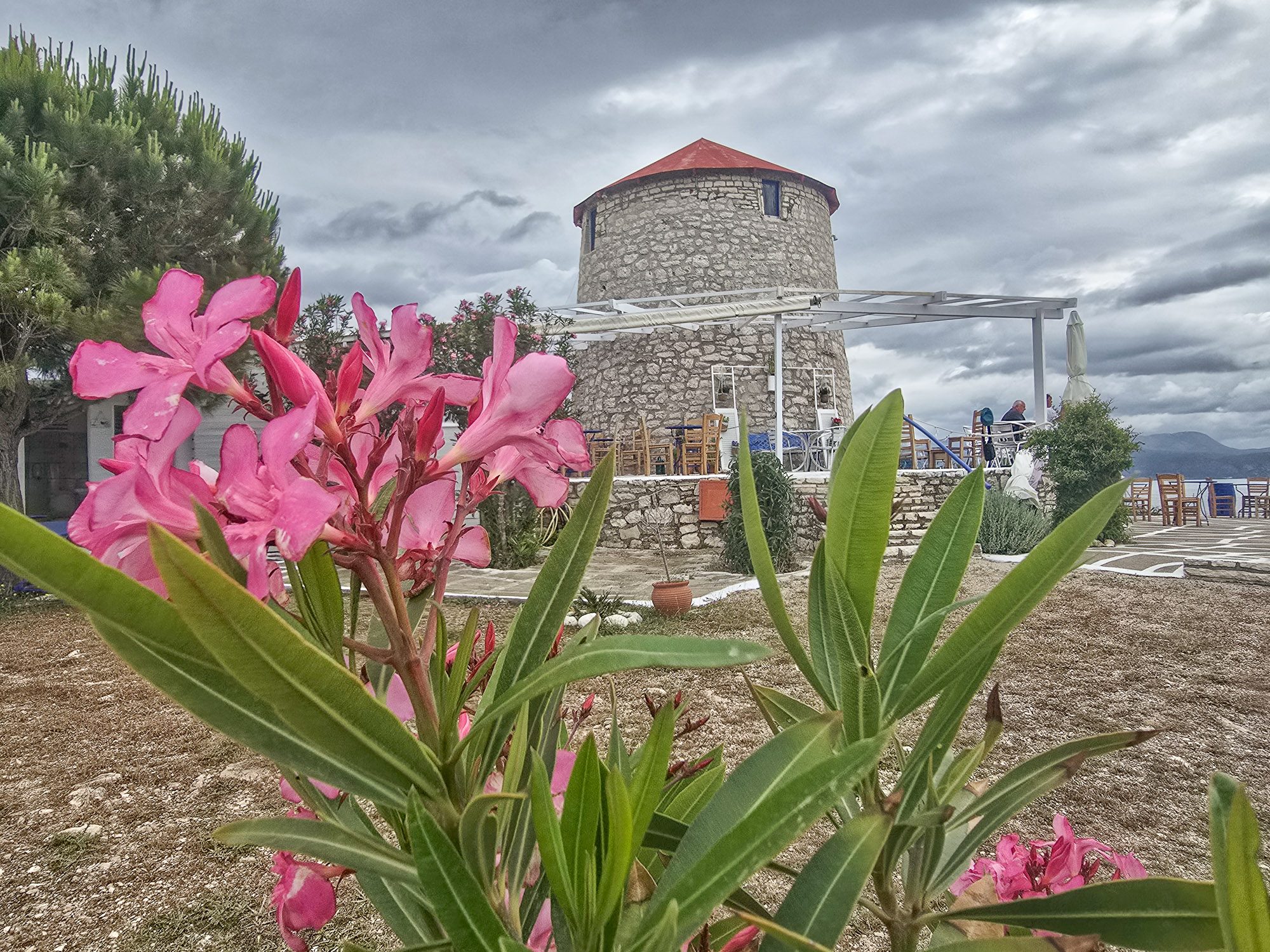
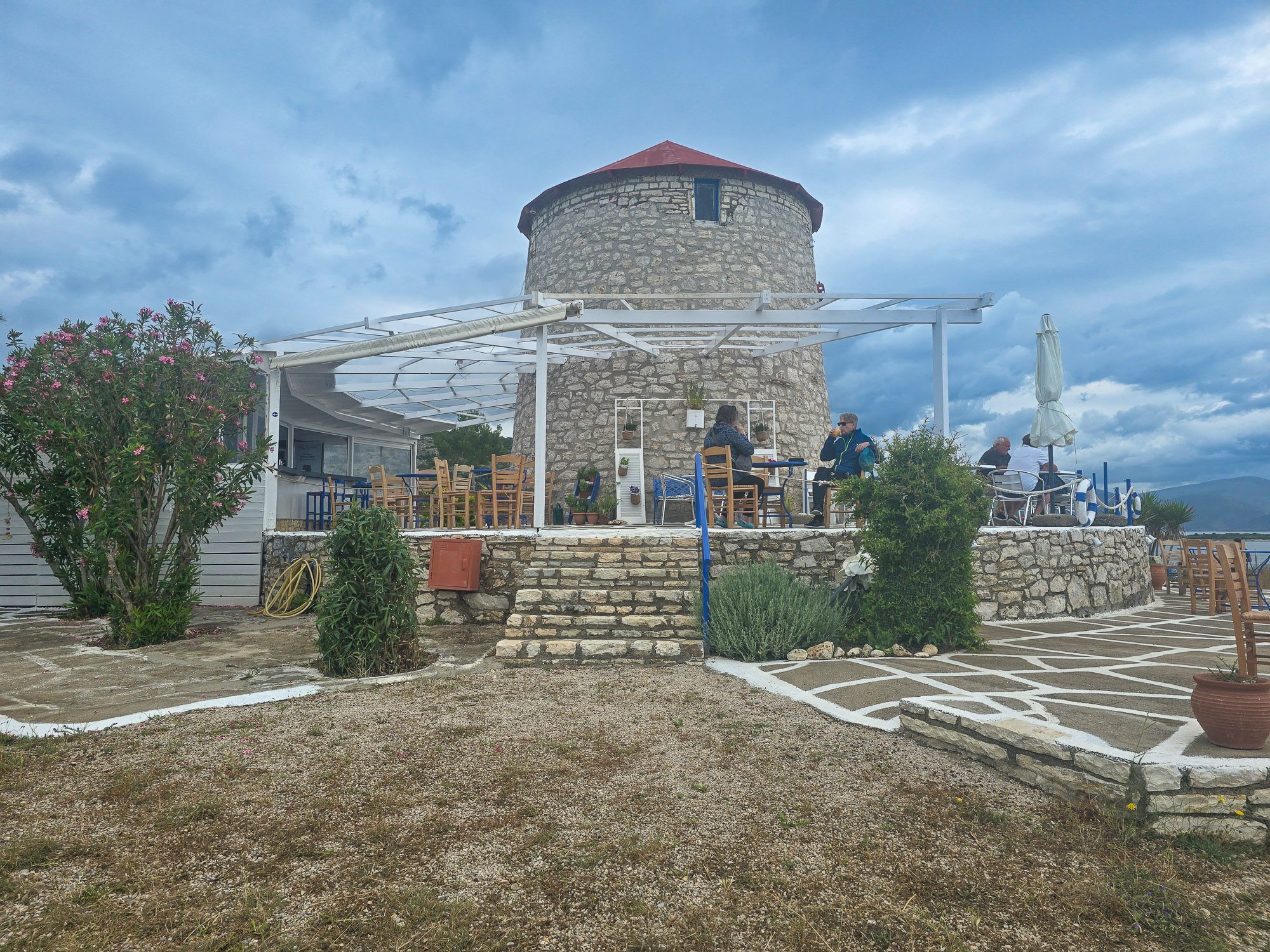
The path from the church took us towards the windmill café. Just as we arrived the sky began to darken. It all looked rather ominous. It was time to make our way back towards the main village and harbour.
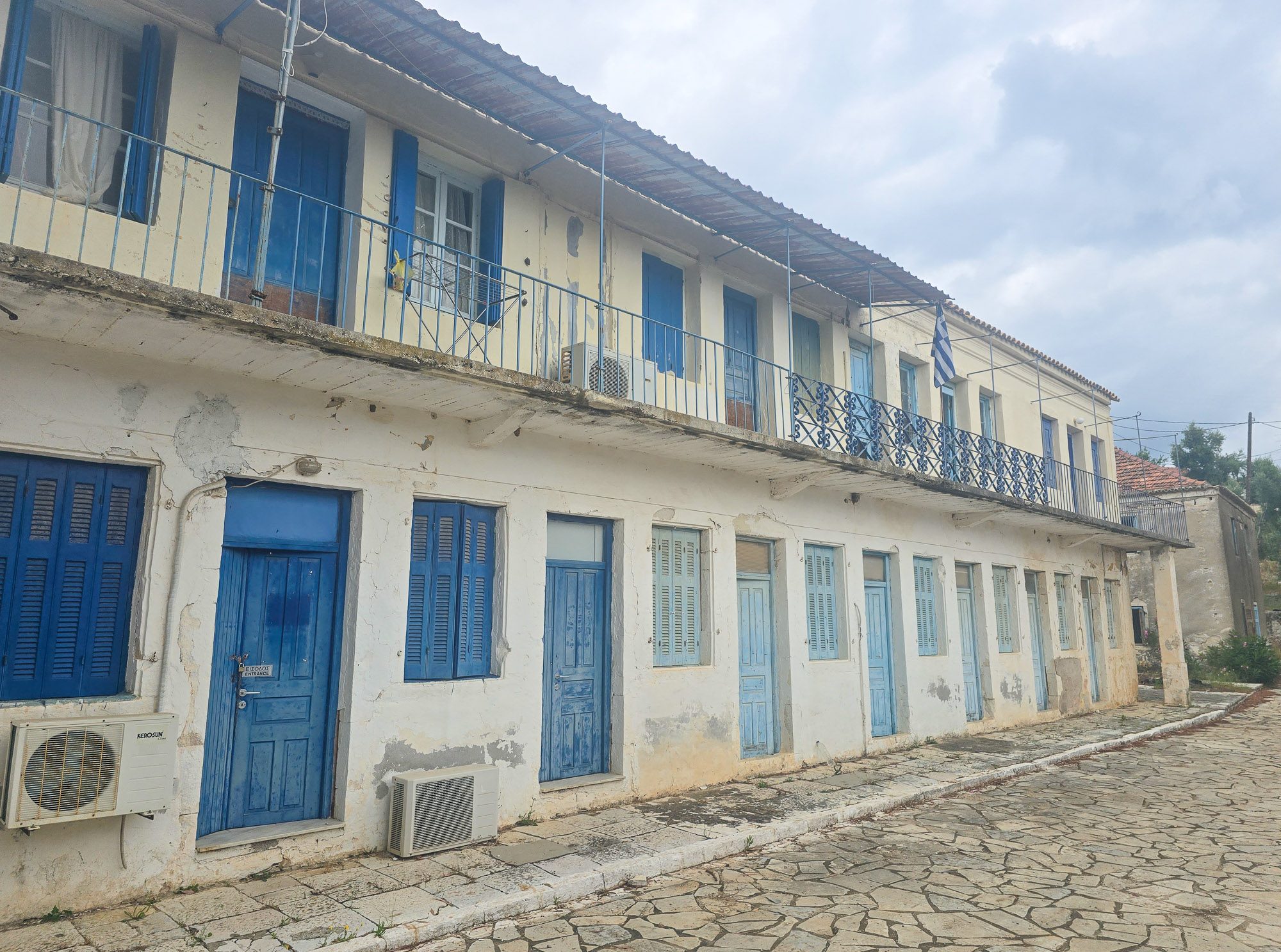
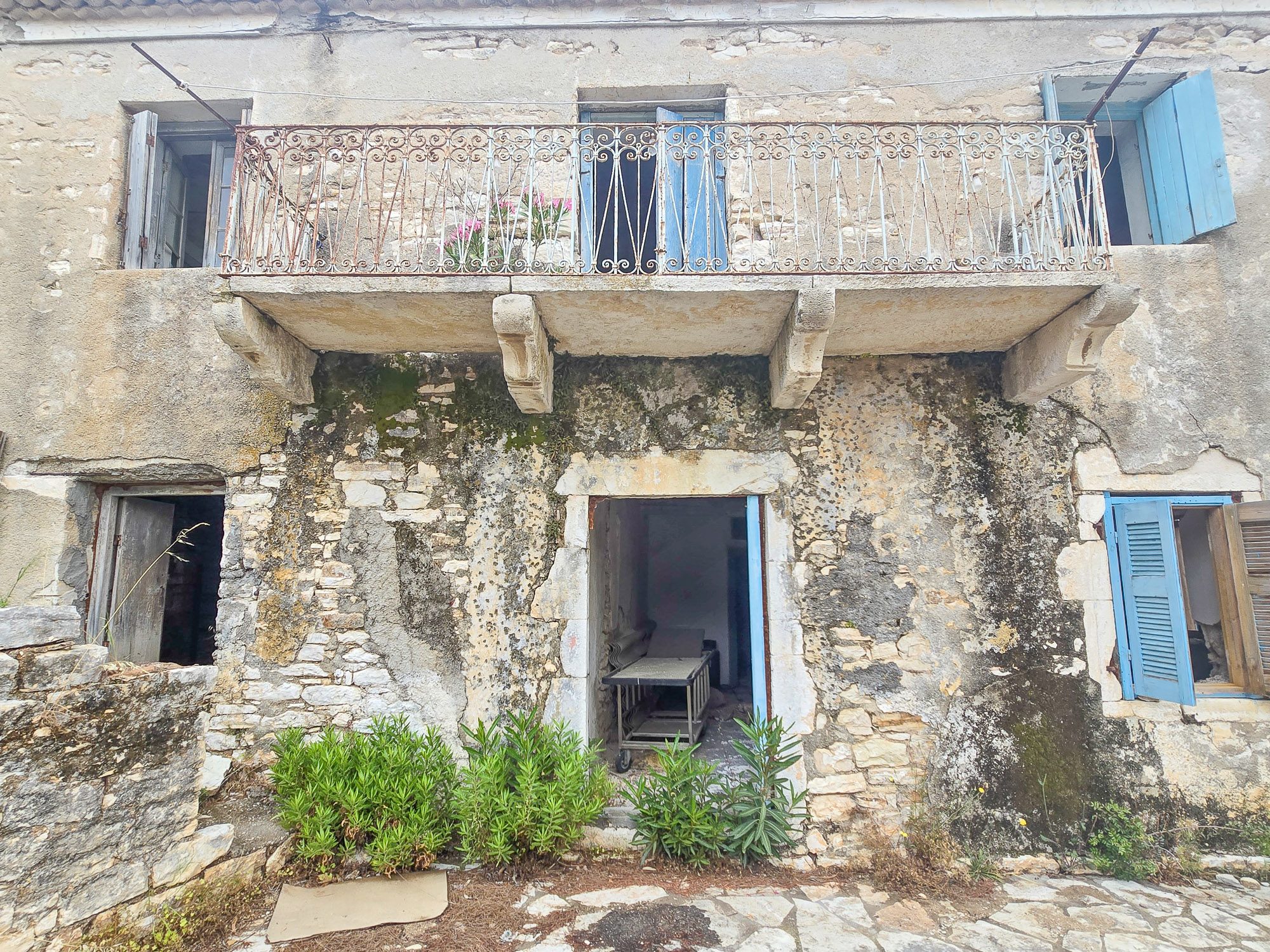
Kastos has not been tidied up for visitors. Stone houses with peeling render, wrought iron balconies, faded shutters. Some abandoned, some carefully restored, sitting alongside each other. At one point, I came across a building that seemed to have once served some kind of medical purpose. Through the open doorway of an abandoned building, a hospital trolley. Nobody had moved it. Nobody apparently needed to.
Kastos once had a school. It closed in 1981 when the last pupils graduated, and the building now serves as the local community office. What exists now is an island with forty permanent residents, no cars, one church, three tavernas, three cafes, a mini market and a community office that used to be a school.
Kastos felt like somewhere I could stay. Not for a night. For a while. I’ll file that away in my mental register.

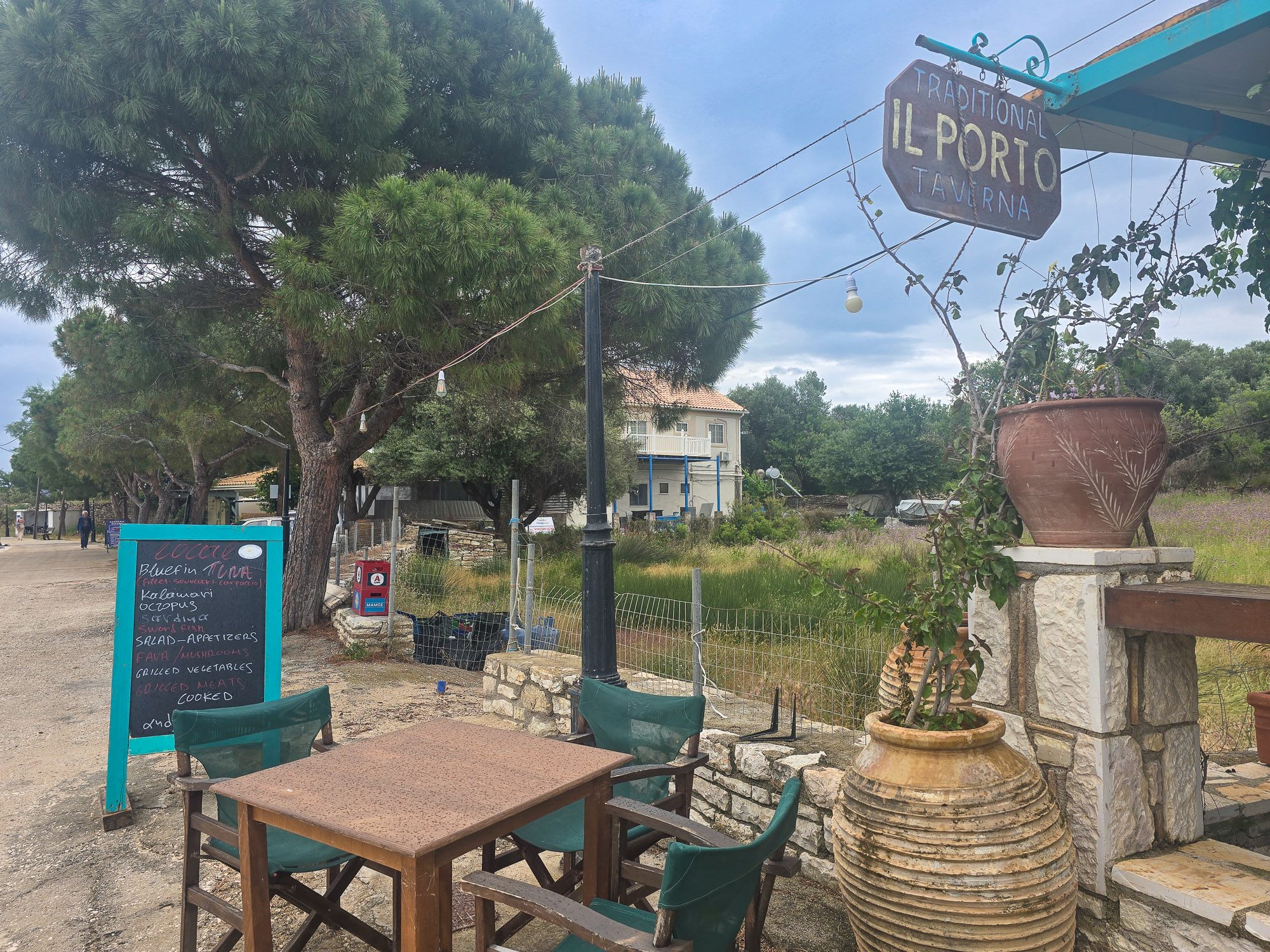
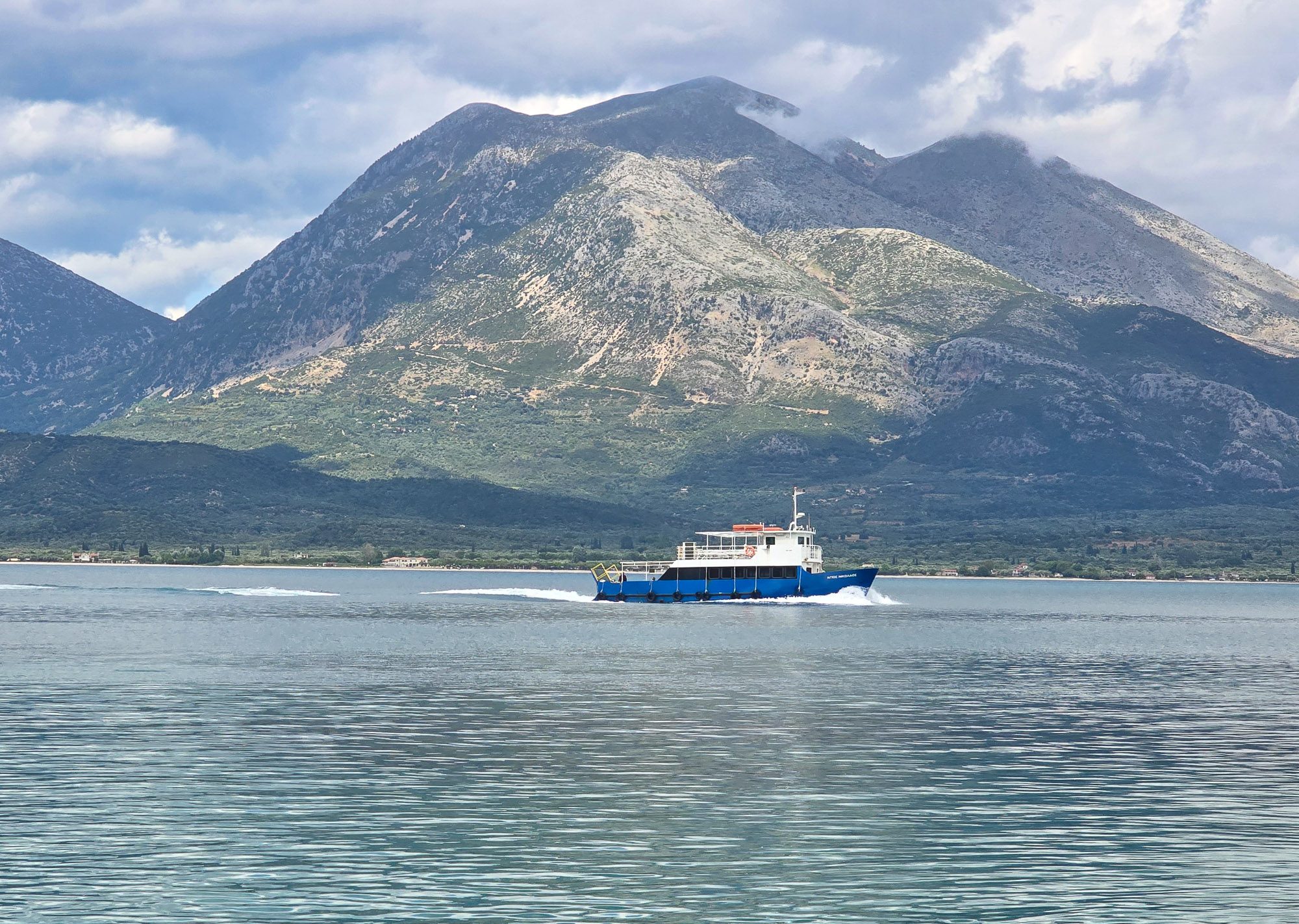
On the way back to the boat, we passed the Agios Nikolaos, the local vessel that connects Kastos and Kalamos to the mainland port of Mitikas. That was enough to start making plans I had not previously intended to make.
The Return
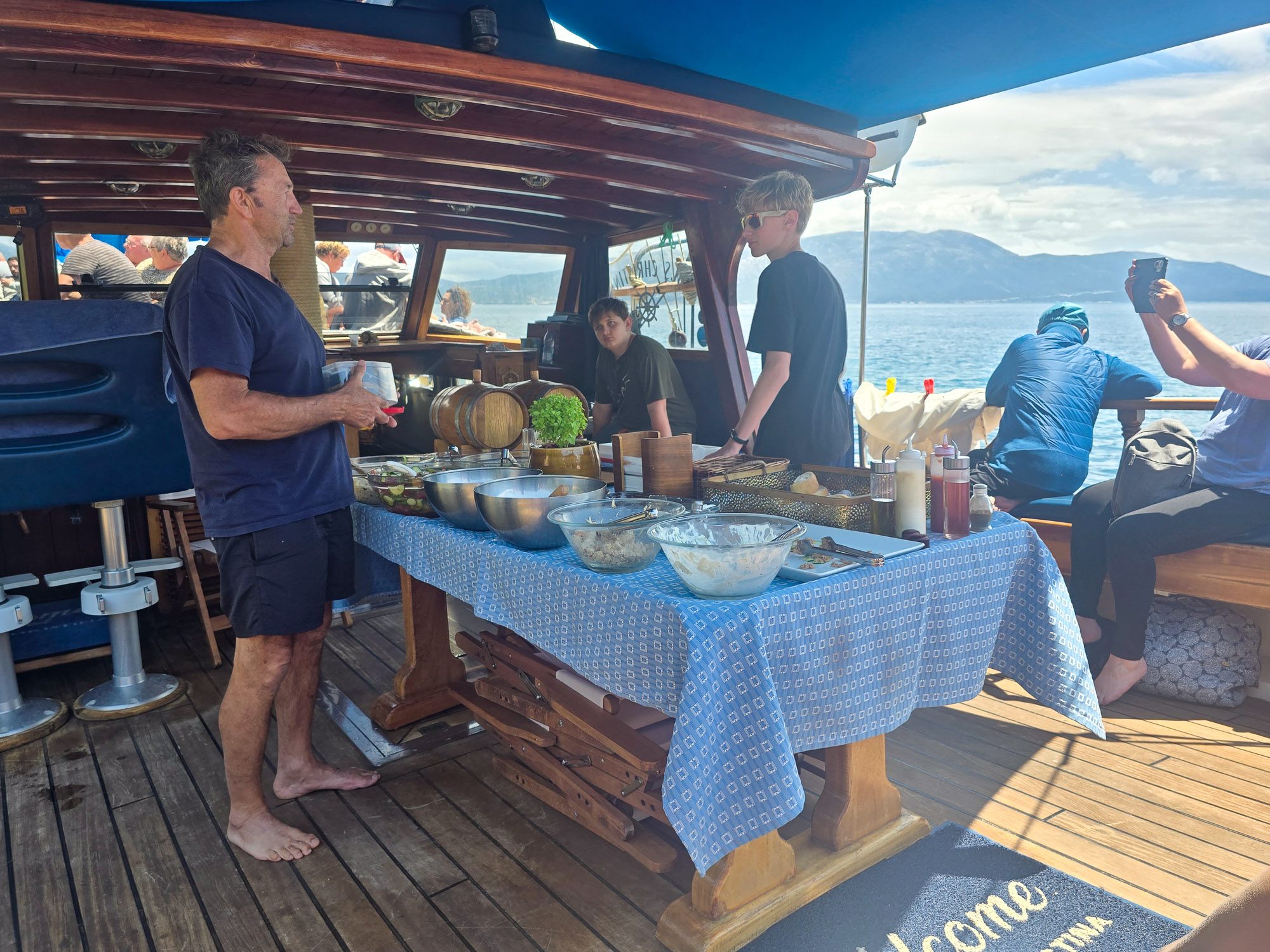
Lunch was served anchored off Limni Beach on the northern coast of Kastos. A straightforward boat barbecue, well done and well timed. They ran it well. The teenagers worked with an unselfconscious competence that suggested they had been born into this life. They carried trays of drinks on a rocky boat with absolute skill. I was impressed. Obviously so were Northern Europeans who by now taking full advantage of the bar service. Alfa the sea dog took that time to chill next to us whilst he watched pints of his namesake being downed like it was going out of fashion.
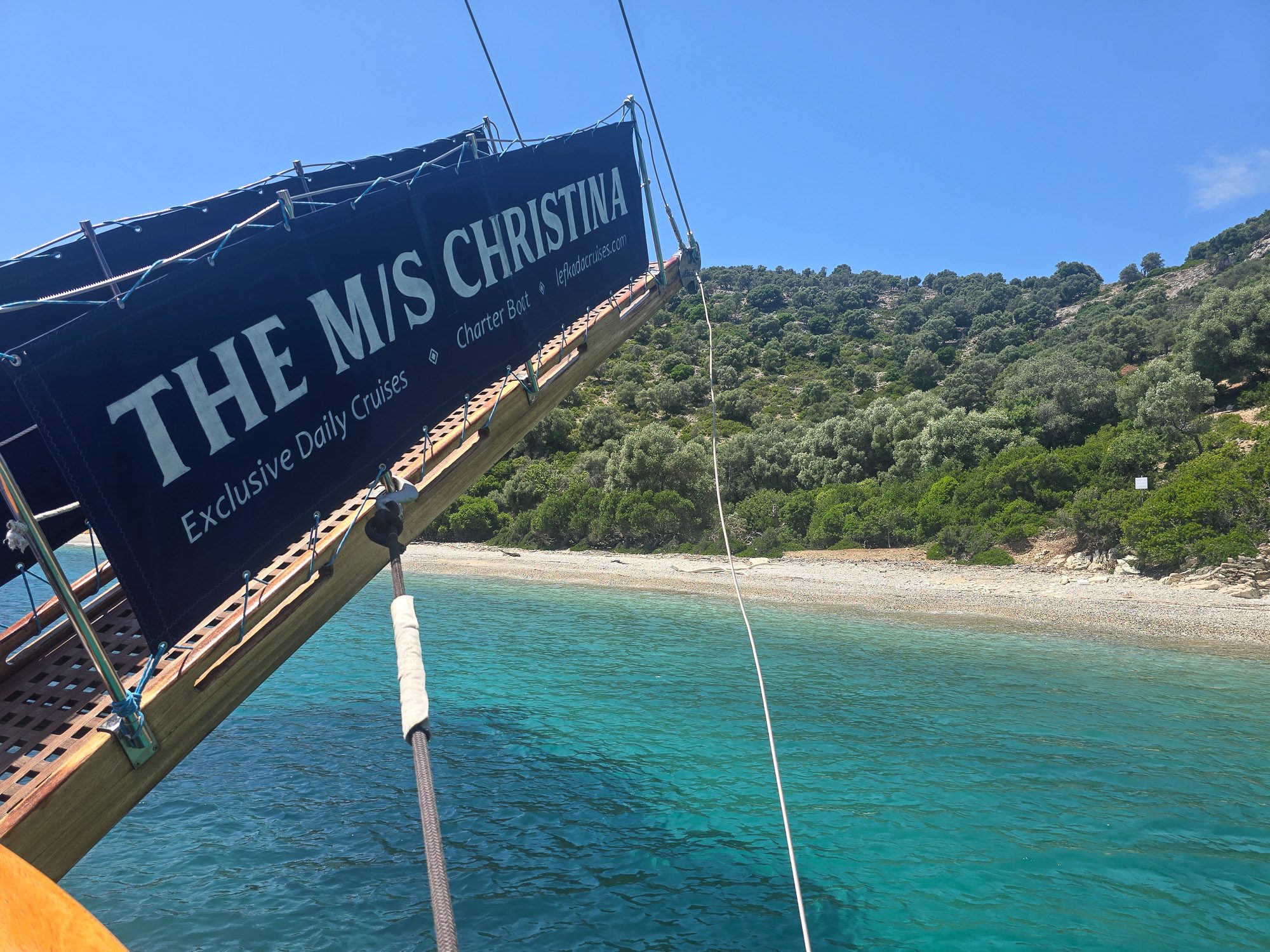

We continued our journey around the northern tip of Kalamos, stopping at Asprogiali Beach for another swim stop. Here the Epirus mountains across the water came into view properly. The Agios Nikolaos made it’s way back to the little port of Mitikas.
Skorpios
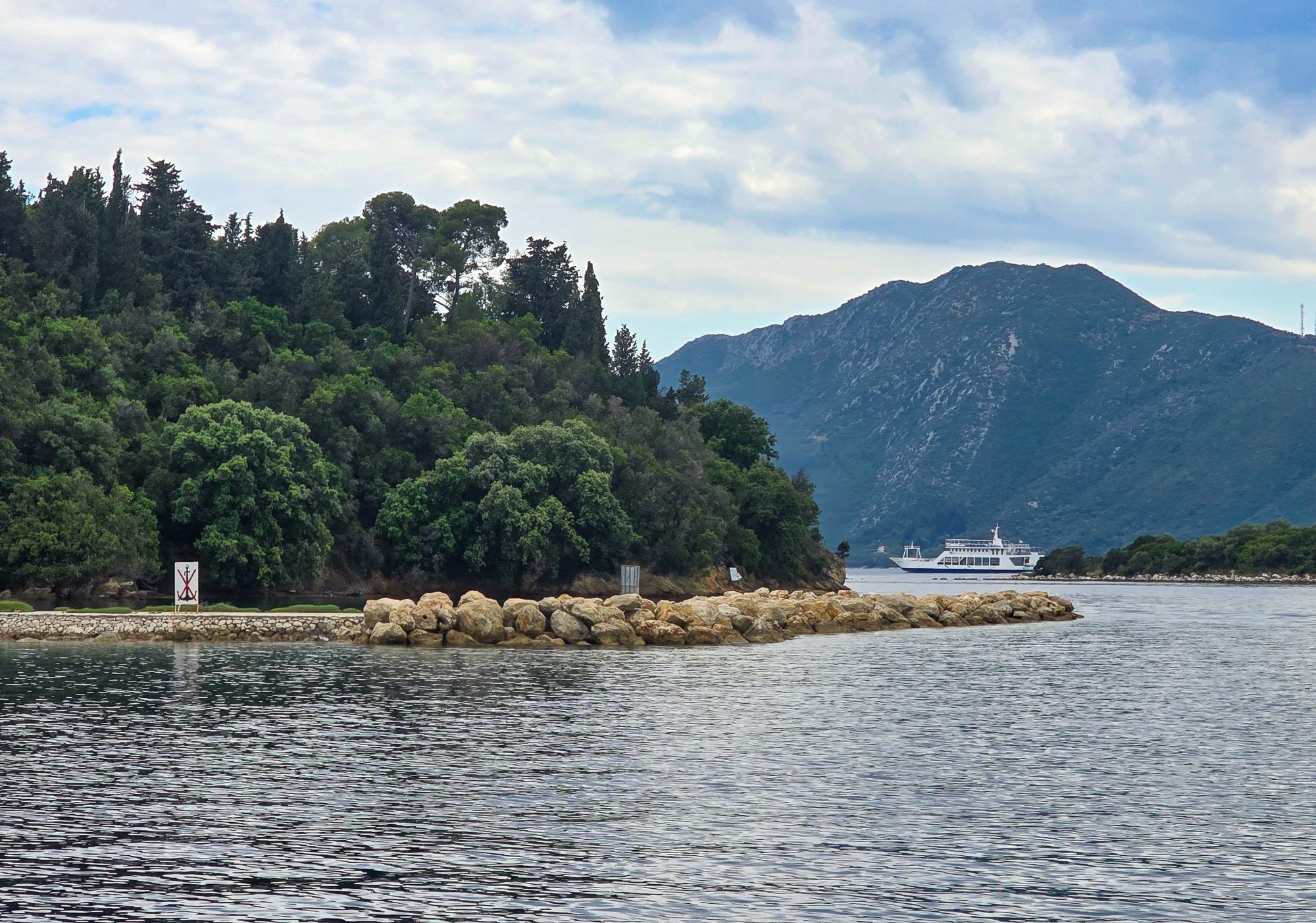
On the way back to Nidri, we passed Skorpios. Onassis bought the island in 1963 for roughly €11,000 in today’s money, imported his own sand and trees, and turned it into one of the most famous private islands in the world. He married Jackie Kennedy here in 1968. He, his son Alexander and his daughter Christina are all buried on the island. The family tombs are still there, somewhere behind the no-entry signs.
The island is now leased long-term to Russian billionaire Dmitry Rybolovlev, who has been developing it into an ultra-exclusive resort at a reported cost of over €240 million. The plan includes a sixty-bedroom hotel, a superyacht marina, a helipad, stables, a football pitch and an amphitheatre, designed by Norwegian firm Snøhetta. No more than fifty guests at a time are expected to pay around a million euros each per week. Workers arrive by boat from Lefkada with their phones confiscated. Security cameras and snipers cover the island around the clock. From the water, the security infrastructure is visible if you know what to look for. Elevated wooden observation platforms are built into the treeline, designed to blend in rather than deter. They look almost like tree houses. They are not.
Jane, who had been sailing past Skorpios for long enough to have formed views that went considerably beyond the standard commentary, pointed out that Athina Onassis, the last surviving heir and the woman who sold the lease, does not speak Greek and has visited the island only twice. With no known descendants, no Onassis family member will be left to reclaim it when the lease eventually expires.
And honestly, there was not much to see. While fellow passengers leapt to the railings with their cameras, I found myself less moved than expected. Photograph what, exactly? Warning signs and treeline. The Onassis mythology is real enough – a wedding, a dynasty, a burial ground. But somewhere between Athina selling the lease and the snipers in the trees, Skorpios stopped being that story. A private island is an extraordinary thing to own. It is also, it turns out, an extraordinary thing to simply walk away from. In a world where so many people have so little, the casualness with which the very wealthy can acquire, develop and discard assets of this scale is something I find hard to sit with.
Madouri
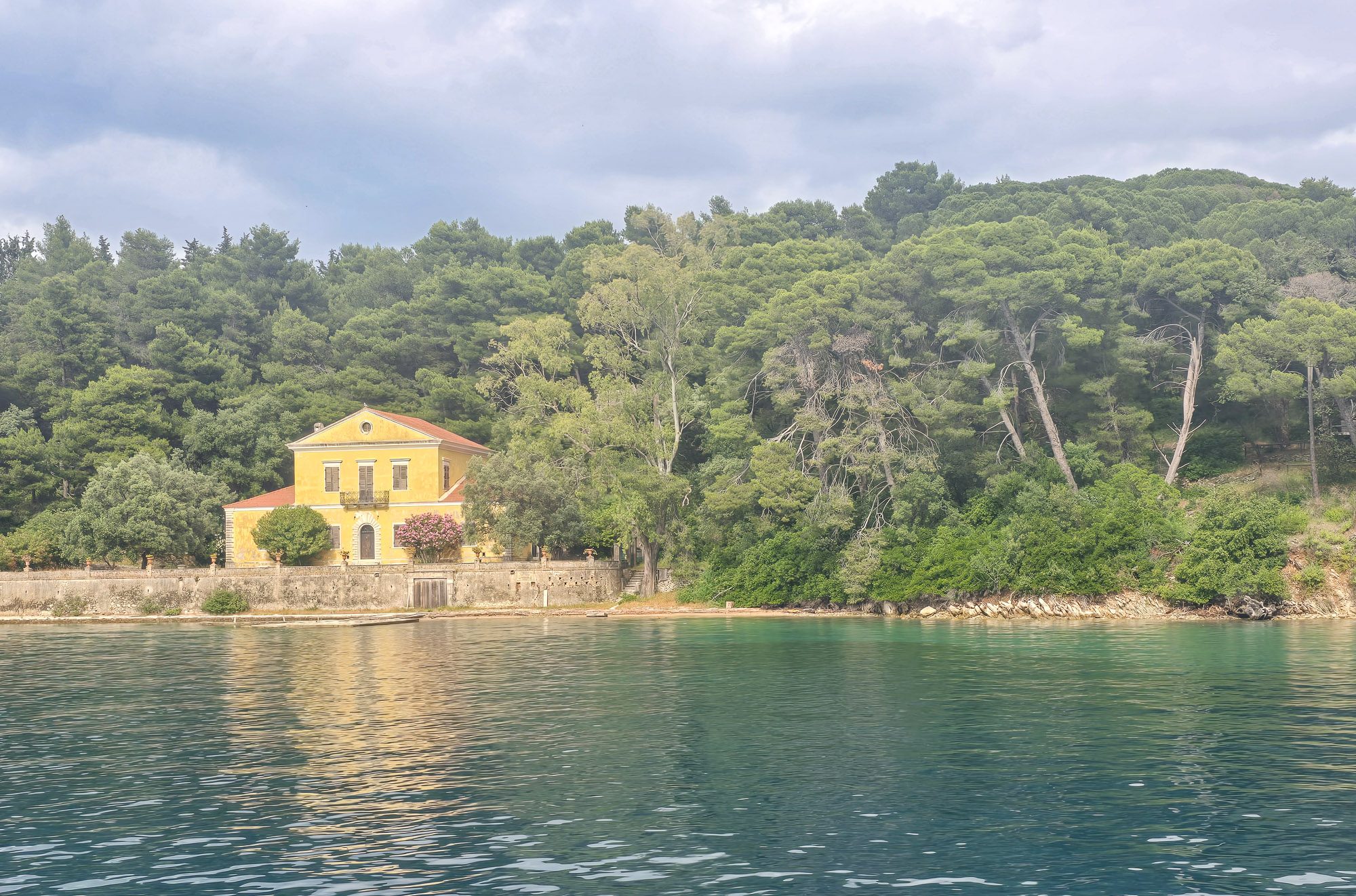
Closer to Nidri, we passed Madouri. A small, heavily forested island just 700 metres off the coast, privately owned by the Valaoritis family. The yellow mansion visible from the water was built between 1859 and 1864 and was where the nineteenth-century Greek poet Aristotle Valaoritis grew up and wrote some of his most celebrated work. He was known to sit at a marble table outside the mansion under an old olive tree. In June 1925, leading Greek poets, including Palamas and Sikelianos, gathered on the island to mark the centenary of his birth, reciting his poems under the trees. Billy Wilder used the villa as a principal location in his 1978 film Fedora, starring William Holden.
The current owners are the poet’s great-grandchildren. You cannot visit without their permission. From the boat, the photograph is as close as anyone gets. Which, for a poet’s island, seems about right.
Of all the boat trips on offer in Nidri, the MS Christina was the right choice for us. Not a white party cruise, not a swimming pig spectacle, but a day that took us somewhere worth going and left us with something to think about. Kastos did that more than anywhere else on the trip. An island with forty people, no cars, a church that has no business being as beautiful as it is, and a pace of life that makes Nidri feel like a different planet. Kastos and Kalamos are now firmly on the list for a future stay. The Agios Nikolaos from Mitikas will get us there. Next time.
You can find out more about the MS Christina here: MS Christina Forgotten Islands Cruise
In the next post, we leave Lefkada behind and head to Preveza.
Discover more from
Subscribe to get the latest posts sent to your email.
MY BIG FAT GREEK TRAVEL SURVEY
How do you really plan your Greek adventures? I'd love to hear from you.
TAKE THE SURVEY →