Lefkada Town: A Floating Bridge, a Medieval Fort and Church Bell Towers that Move
Nidri in bad weather is not somewhere to linger. So we caught the bus into Lefkada Town, crossed a bridge that swings open for passing yachts, spent the best part of two hours inside a medieval fort that most people drive straight past, and then got happily lost in a town built to survive earthquakes. Not a bad day for a rainy Tuesday.
A Rainy Day in Lefkada
Our third day on Lefkada brought more rain. We made another attempt to find a boat trip and struck lucky, locating a small agency on the main street promoting the MS Christina. It was not exactly what I had pictured, but it did include a visit to the island of Kastos. Not one that we would wave to as we sailed past, but one where we would actually be able to set foot on the island. The trip was scheduled for our last day in Lefkada, subject to sufficient numbers. Our details were taken. Now all we could do was wait.
Nidri in bad weather is not somewhere to linger, so we caught the bus to Lefkada Town. KTEL Lefkadas runs approximately every one to two hours throughout the day, and the bus stop outside the town hall, just across from the Smile Inn, was already busy when we arrived. It appeared everyone had the same idea, including a group of middle-aged women in disposable rain ponchos in varying shades of pastel. The Brits really do know how to make the most of inclement weather.
The bus was late. Some people gave up and left as the bus shelter could only keep so many people dry at one time. Those of us who persevered were rewarded with a seat when it eventually arrived, if not dry floors which didn’t remain dry as we dripped all over them. As the bus left Nidri, I could see that the clouds had rolled right down into the village, hovering above the houses, the peak of the Skaros Mountains just peaking out at the top. It didn’t look like the gloom was going to shift anytime soon.
Fort of Agia Mavra
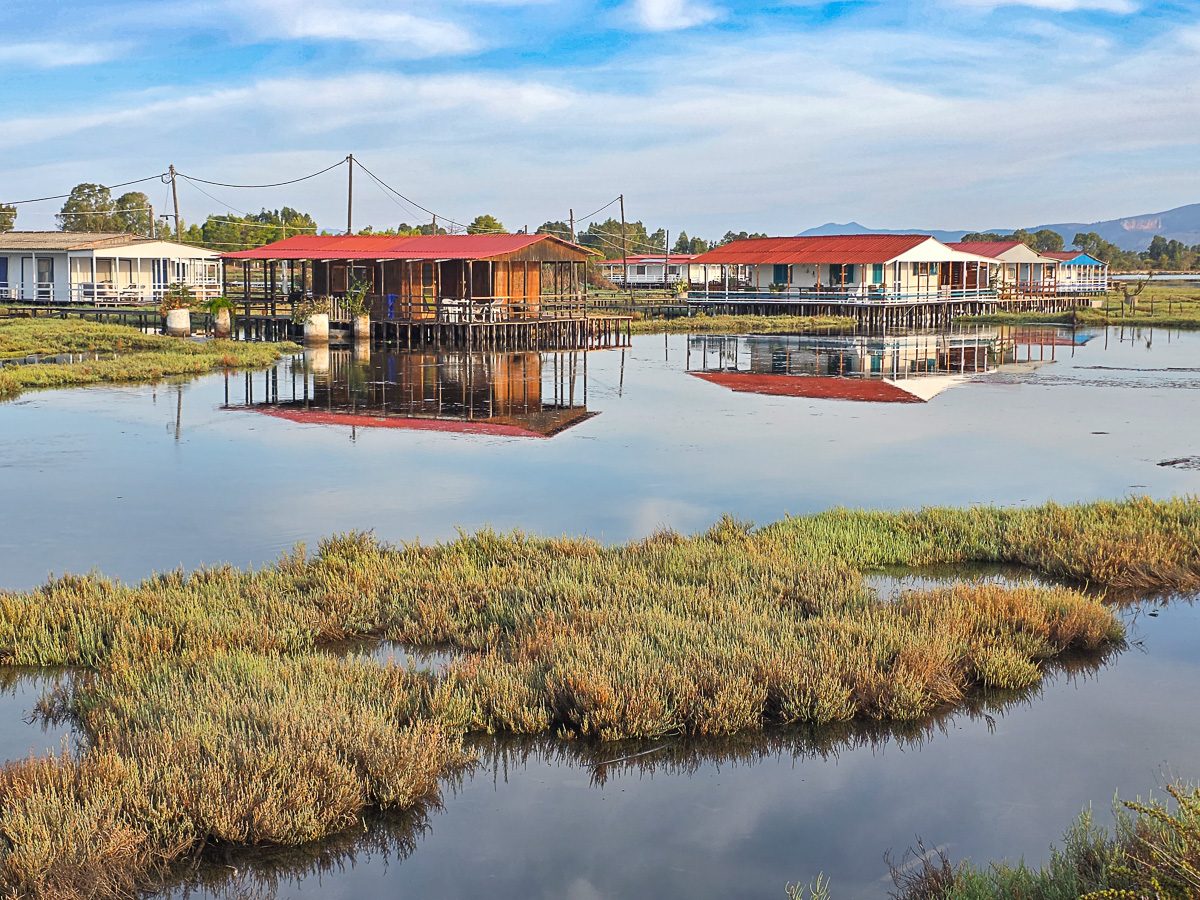
Our first stop in Lefkada was the Fort of Agia Mavra. It had caught my eye whilst scanning Google Maps, or rather, the fact that it was set in a lagoon had. The fort sits on a low spit of land at the narrow entrance between Lefkada island and the mainland, part of a managed wetland system of salt marshes and reedbeds which are subject to seasonal flooding. Water levels are controlled by pumping stations, moving water between the lagoon and the sea as needed.
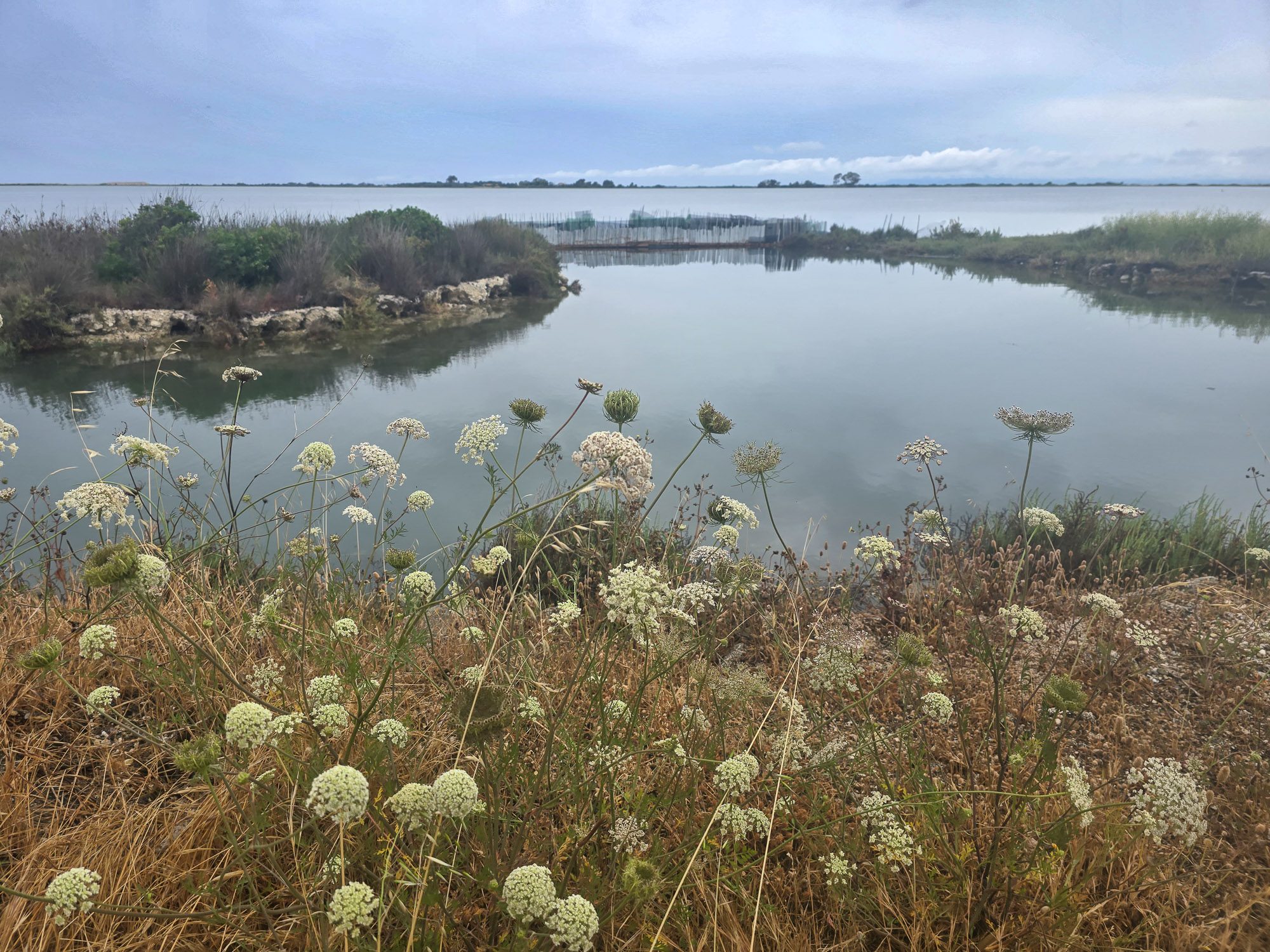
The lagoon is not just scenery. It is a working landscape. The shallow, brackish water has supported fishing here for centuries, and it still does. Mainly grey mullet, sea bream, sea bass and eel, species comfortable moving between salt and freshwater. Mullet are the most significant locally, used to produce avgotaraho, the cured roe that occasionally appears on menus. Fishing here is low-key and traditional: fixed nets and simple trap systems rather than open-sea pursuit. It fits the feel of the place.
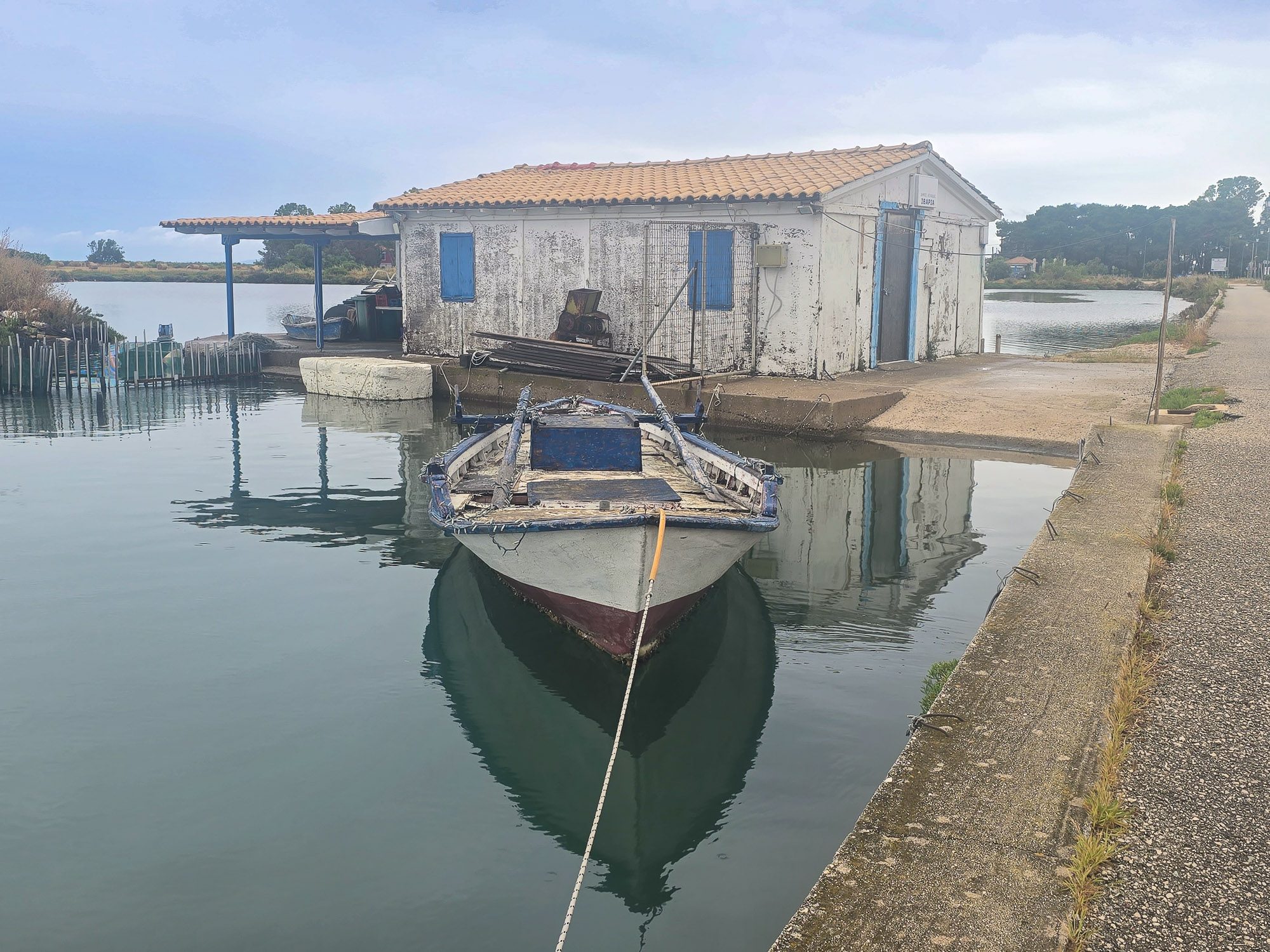
The crossing to the fort is interesting in itself. The channel was cut in the seventh century to separate Lefkada from the mainland for defensive reasons, maintaining it as an island rather than allowing silt to gradually attach it to the shore. For centuries, the only crossing was by small boat. A wooden bridge followed in the nineteenth century, though it had to open for passing vessels, so some form of movable crossing has always been part of life here.
What serves as the bridge today is the Floating Bridge of Agia Mavra, officially named FB Santa Maura, a purpose-built floating vessel that carries road traffic and swings aside when boats need to pass through the channel. It looks like a converted ship. It is not. It sits in place like an ordinary road until a queue of yachts appears, at which point it pivots, the traffic waits, and Lefkada briefly reasserts itself as an island.
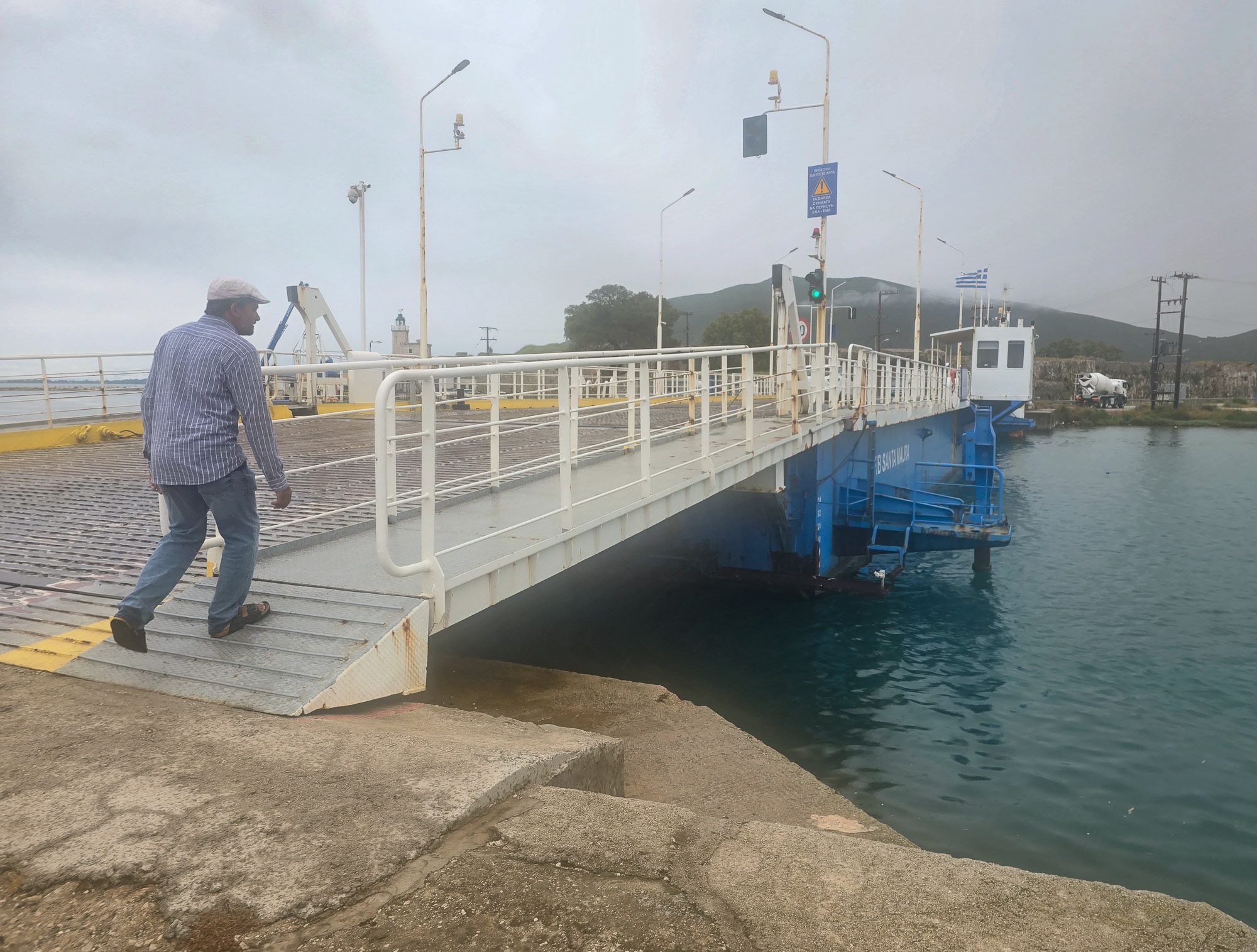
The entrance to Agia Mavra Castle sits just metres from the floating bridge, which means most people driving onto the island pass it at speed without a second glance. That would be a mistake.
By the time we reached the fort, the rain had stopped, but the murk remained. As we crossed the moat and walked through the main gate, we felt that the weather suited the place rather well. This is not a fort that benefits from sunshine and a gift shop. It works better when the clouds are down and you have the place more or less to yourselves, which we did.
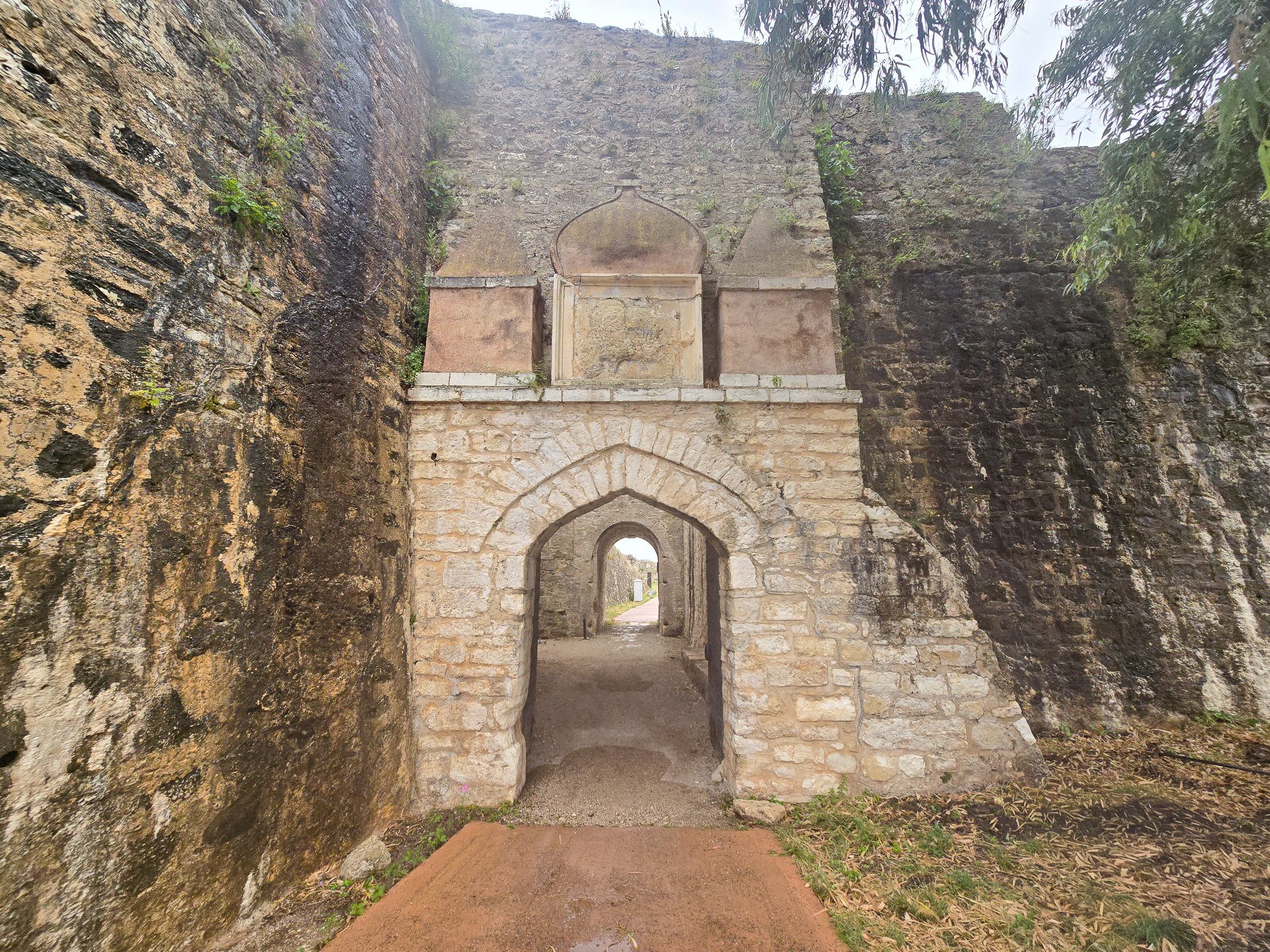
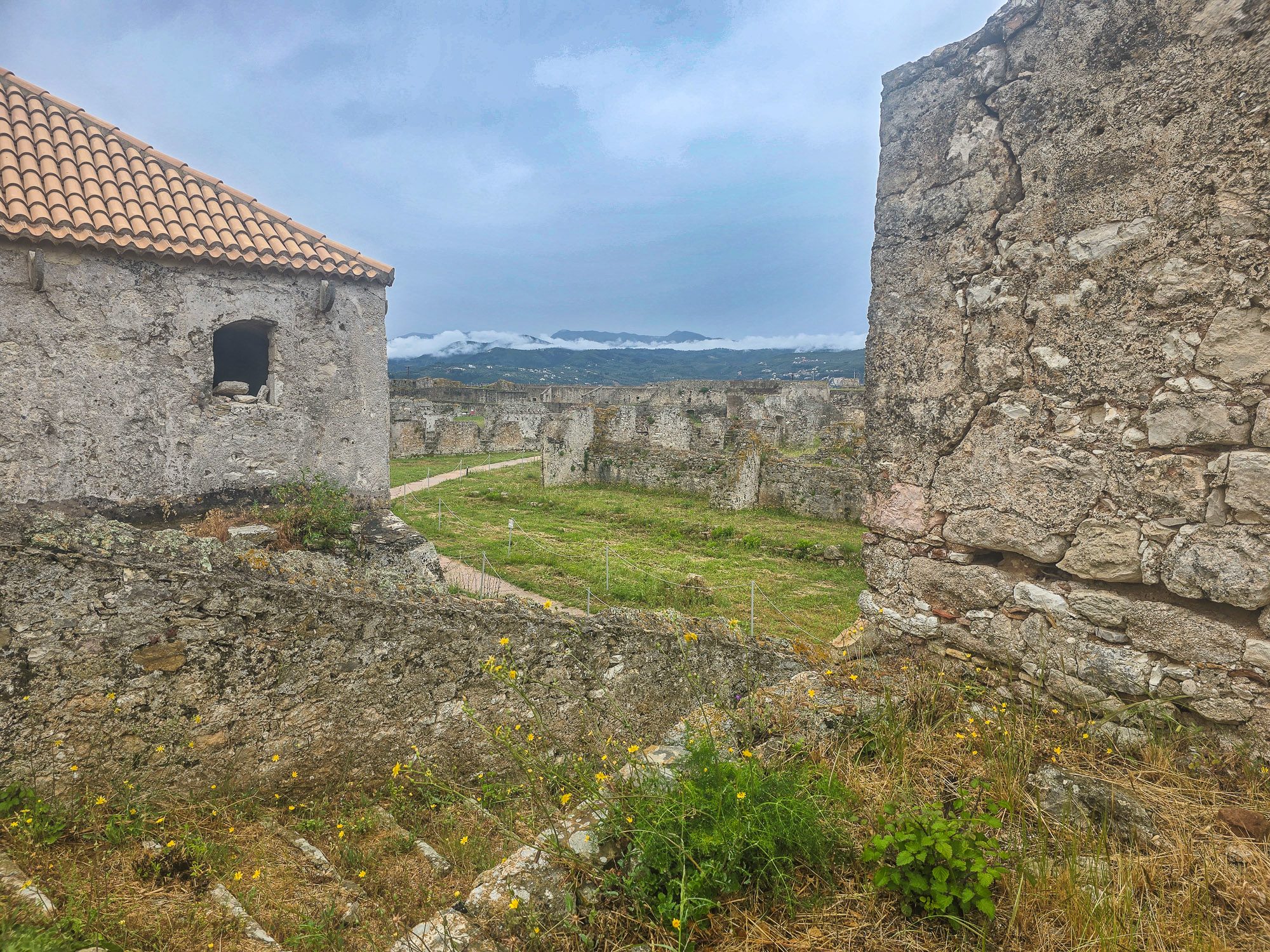
The first thing that struck us was the scale. Agia Mavra covers around 25,000 square metres, and it is low and spread out rather than tall and imposing. It works with the landscape rather than dominating it. The walls are thick, the bastions angular and practical, designed for artillery rather than show.
The castle was first built around 1300 by the Frankish ruler Giovanni Orsini, who understood that whoever controlled this narrow crossing between the island and the mainland controlled everything. The Ottomans took it in 1479 and expanded it. The Venetians seized it back in 1684 after a sixteen-day siege and refined it further, removing the walled town that had grown up inside and turning the whole structure into a purely military installation. The French came next, then the British, each leaving their mark. What remains is a fort built in layers, shaped by whoever needed and/or wanted it most at the time.
There is a small projection room just inside, which runs a short film on the history of the castle. It is well done and worth ten minutes of your time before you set off, if only because it helps make sense of what you are looking at once you are outside.
And there is a lot to look at.
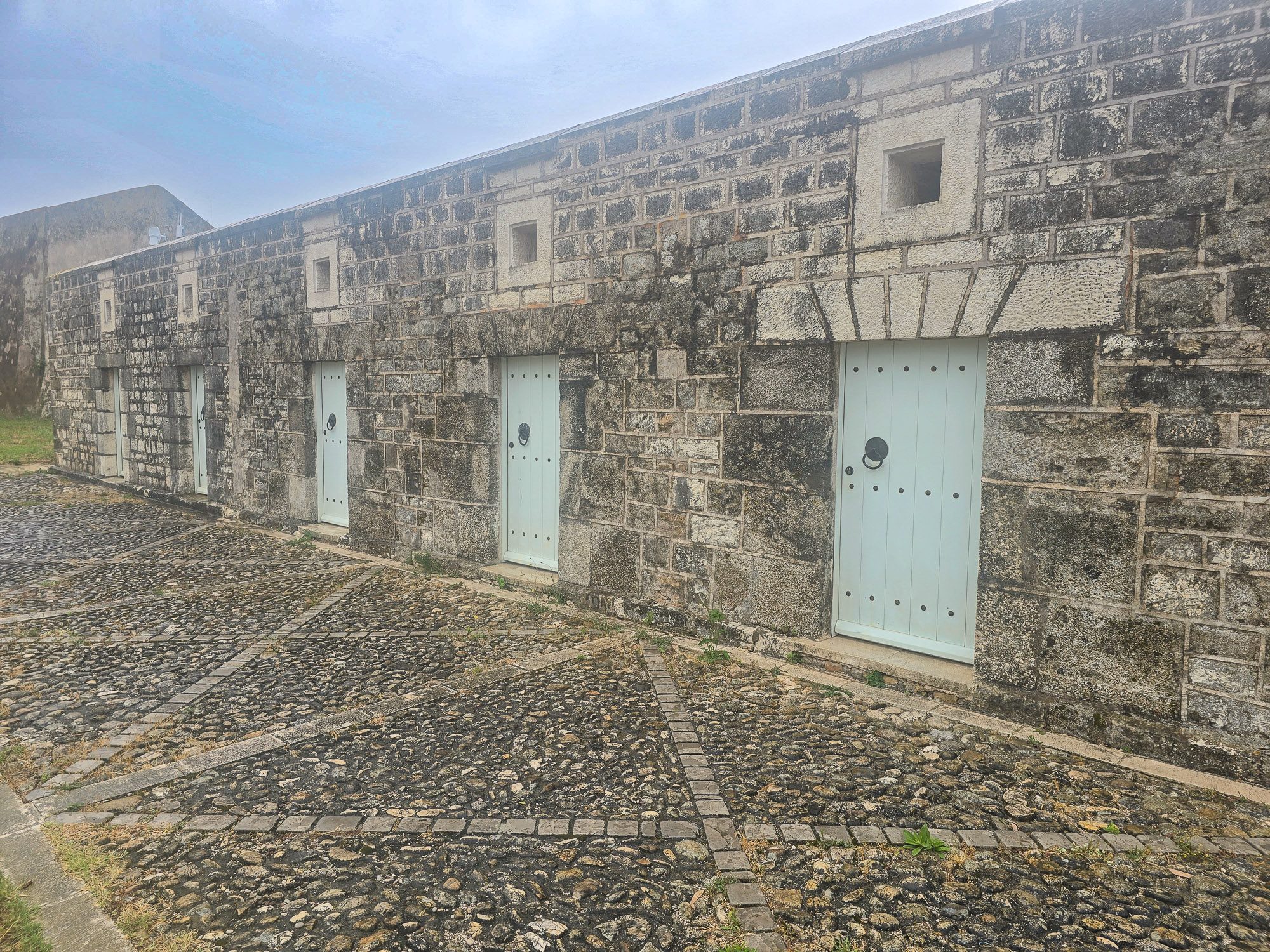
Through the inner arched gateway and into the main compound, the space opens up. A long, wide interior of grass and gravel paths, ruins spreading out on all sides. The barracks block is the most intact surviving structure, a row of solid buildings that still have their doors. Beyond it, the ruins become more fragmentary. Walls without roofs, doorways leading nowhere, the footprint of buildings you have to imagine back into existence.
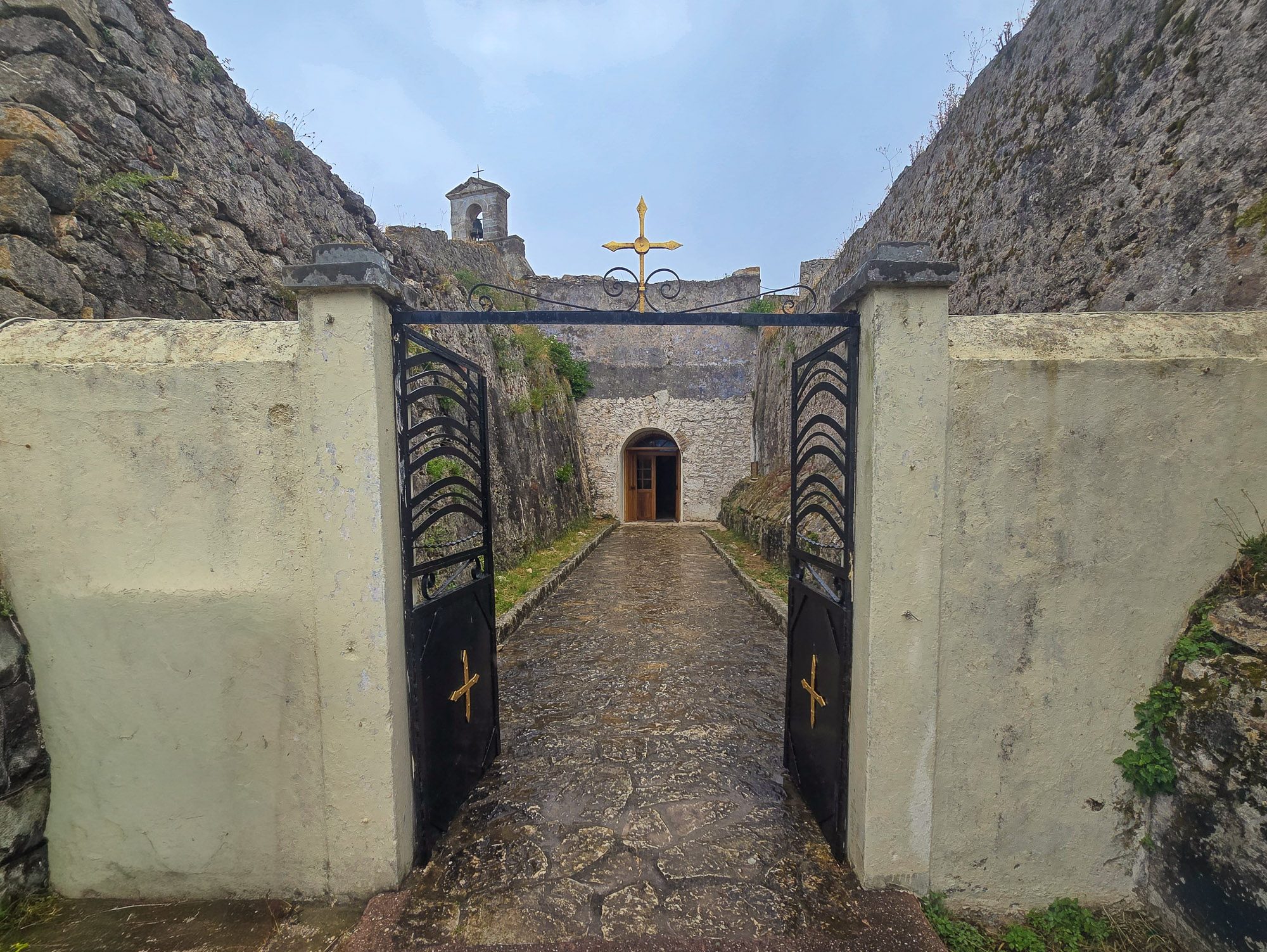
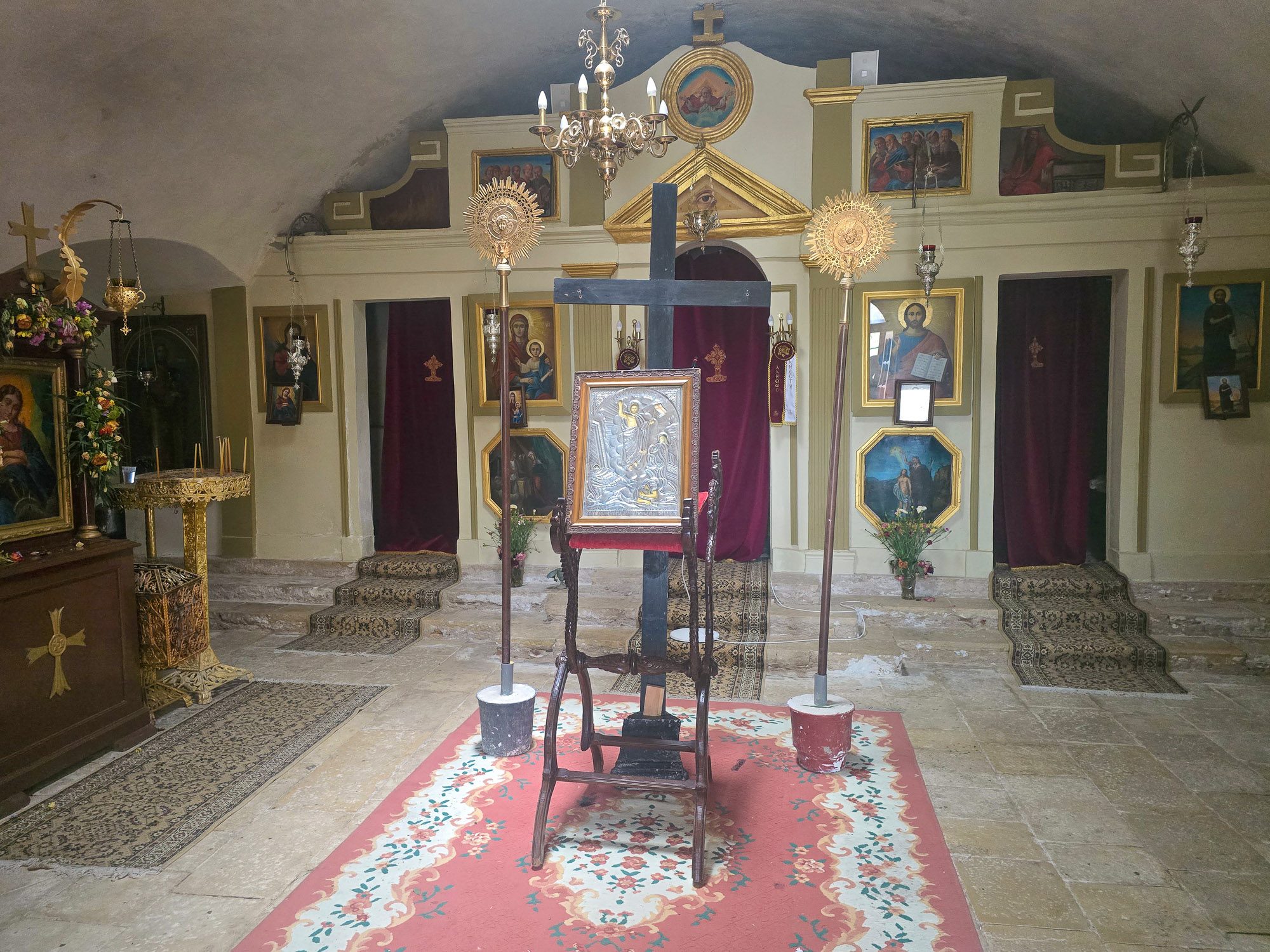
We found the Church of Agia Mavra set back against the inner walls. Easily missed from the outside. Inside, it was a different matter. Richly decorated, icons gleaming in the low light, red carpet on the floor, a chandelier overhead. The kind of interior you would not expect from a building that looks, from the outside, like it has seen better days. It is still very much in use, which explains it.
Agia Mavra was a third-century martyr from Thebais in Egypt, put to death for refusing to renounce her faith. The Angevins introduced her worship to Lefkada in the fourteenth century, building a small church in her honour. It was rebuilt, converted into a mosque under the Ottomans, converted back under the Venetians, damaged in the earthquake of 1743, destroyed during the British siege of 1810, rebuilt again, collapsed in 1869, and finally relocated to its present position in 1889. The church you see today sits inside the Bastion of Saint Mark, its cannon loopholes repurposed as windows and its air duct serving as a dome. A building that has refused, not unlike its patron saint, to stay down.
Further in, the Franciscan convent — or what remains of it. A hulking semi-ruin, enough of the structure still standing to suggest its original size, with information boards explaining what stood here and why. The Franciscans arrived under Venetian rule and clearly built something substantial. Very little of it survived intact.
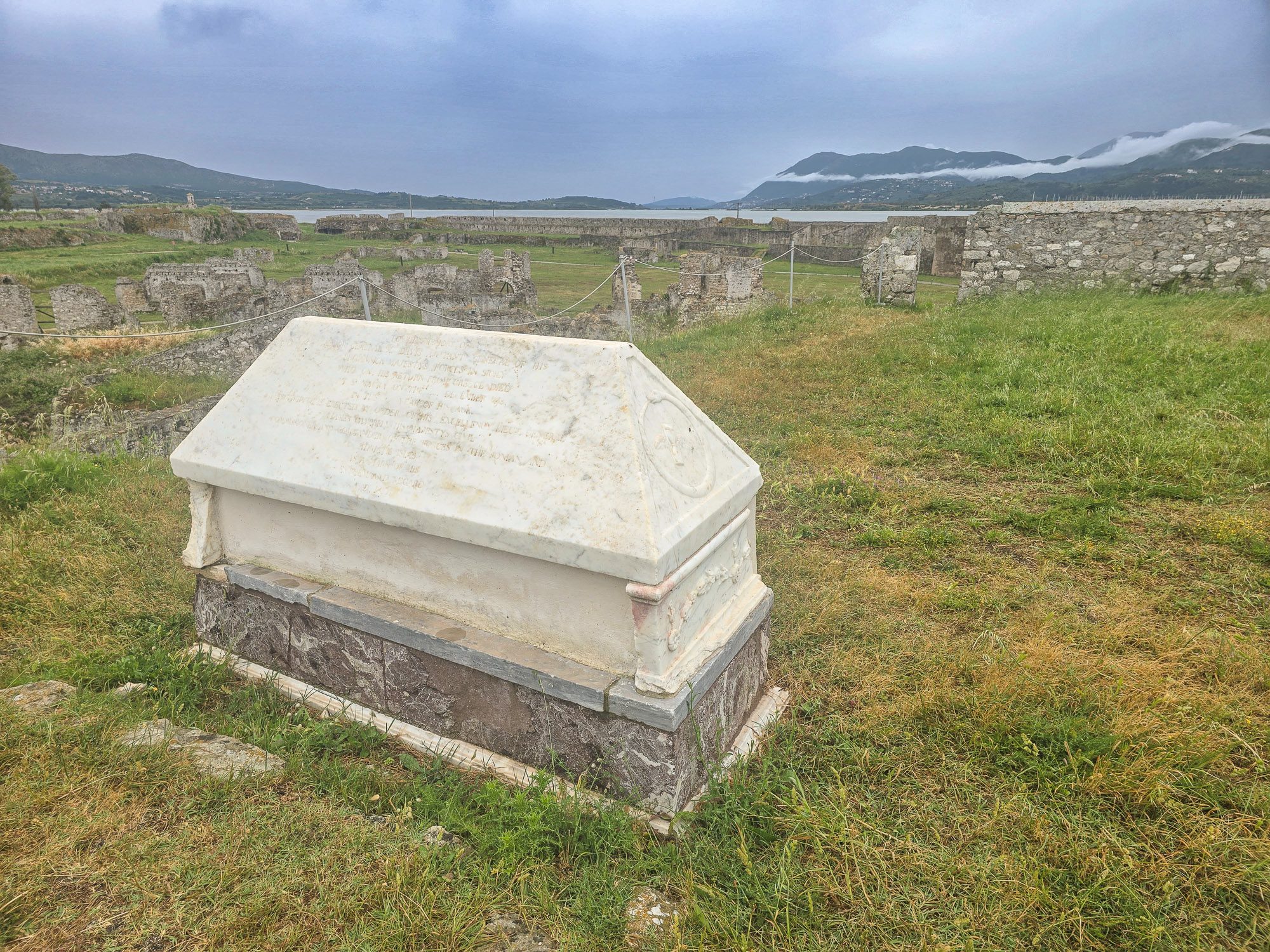
Scattered across the grass nearby are two marble tombs. British. The inscription on one reads as a memorial to Major General H. Davis, Adjutant General of His Britannick Majesty’s Forces in Sicily, who died here at Santa Maura on his return from Greece. Erected by order of Lieutenant General James Campbell, His Majesty’s Civil Commissioner and Commander of the Forces in the Ionian and Adriatic Isles, as a mark of his esteem and regard. The date is worn and difficult to read, but the period is clear enough. British officers garrisoned here during the protectorate years, one of several who did not make it home.
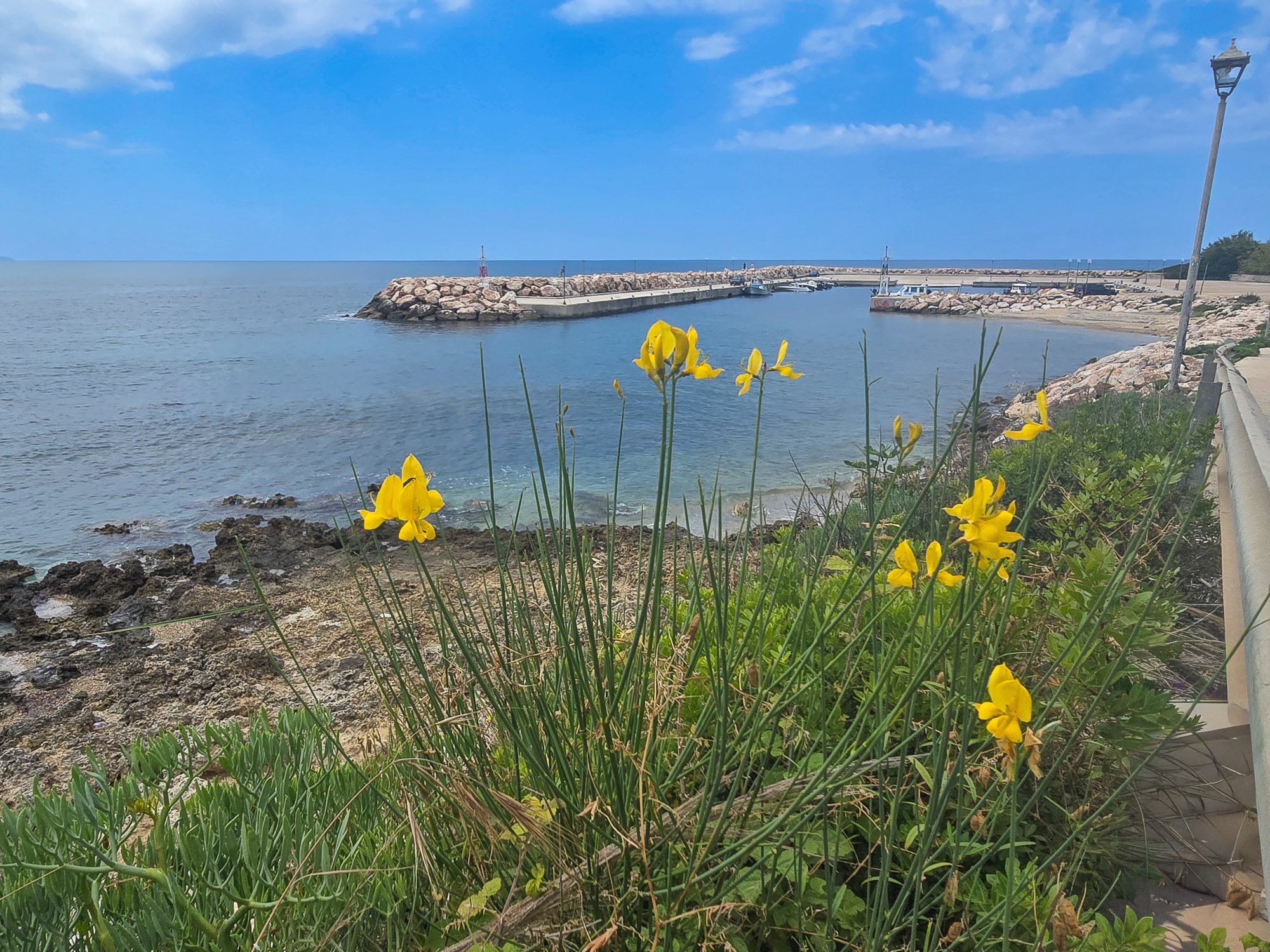
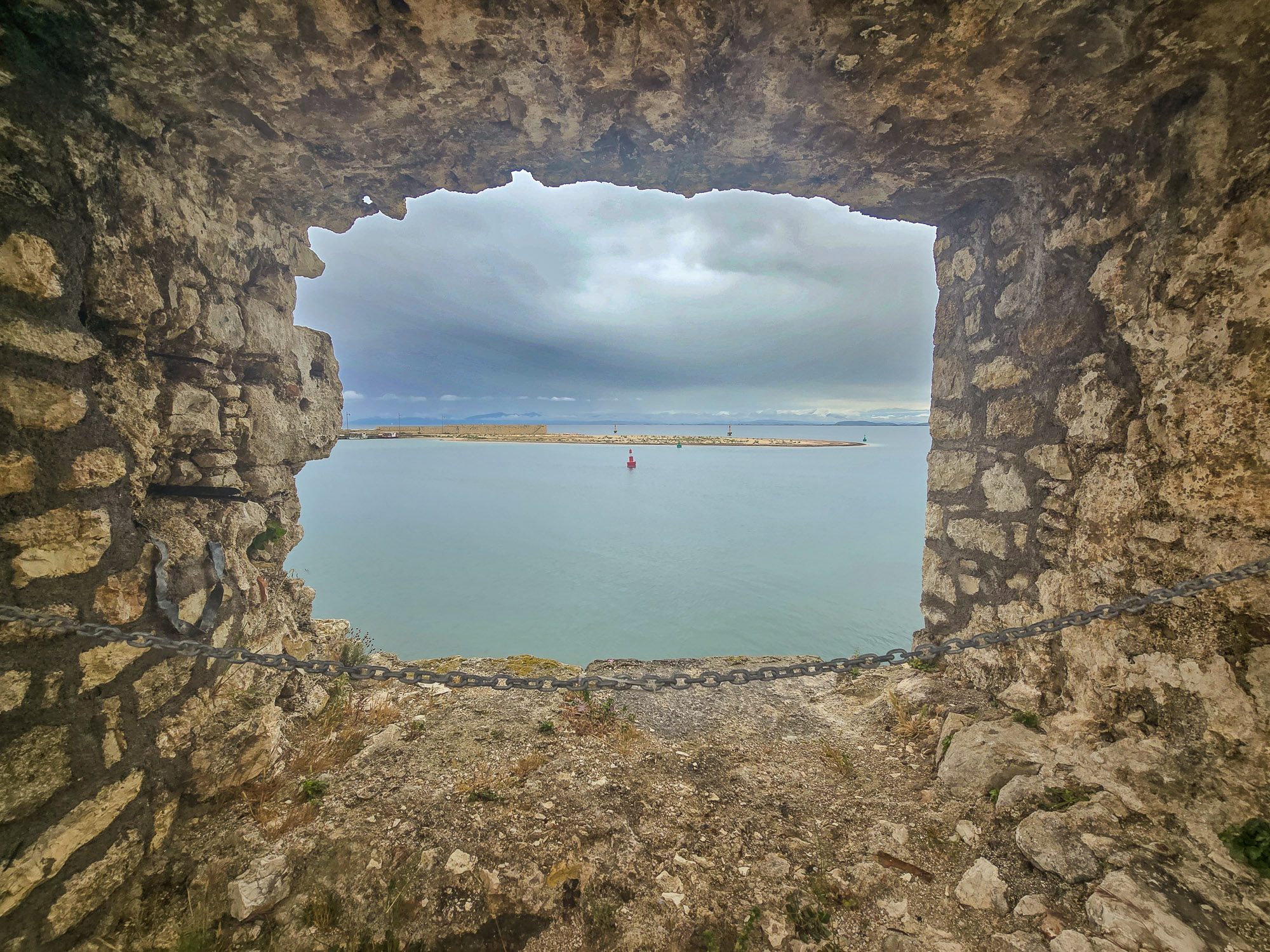
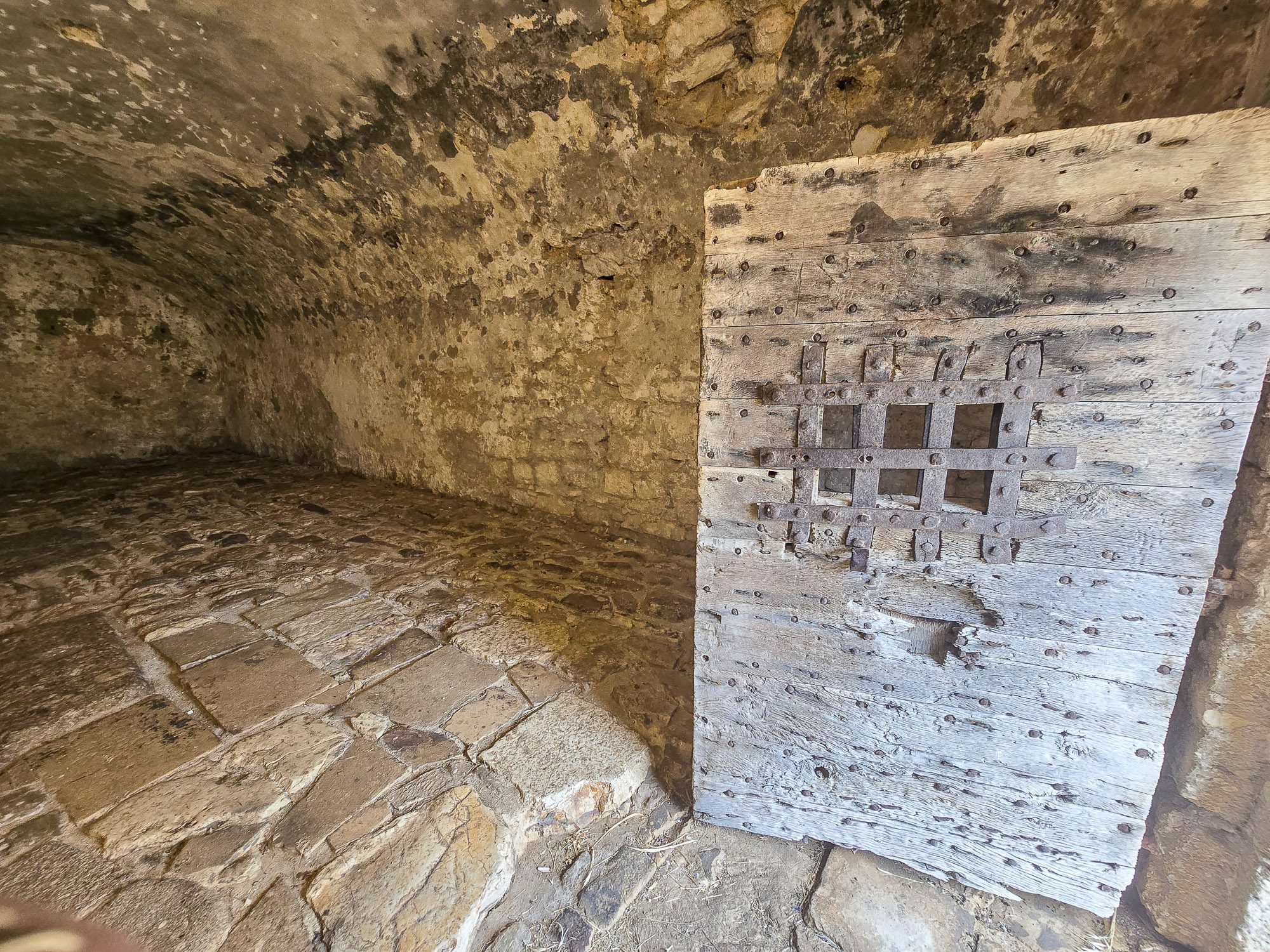
Up on the ramparts, we were offered little vistas over the surrounding landscape. On one side, the open sea. On the other, the lagoon and wetlands stretching back towards Lefkada town, and the mountains beyond disappearing into low cloud. Exposed and slightly windswept, even in May. Yellow spring flowers were growing from the stonework. A tunnel through one of the bastions was dark enough to need a phone torch.
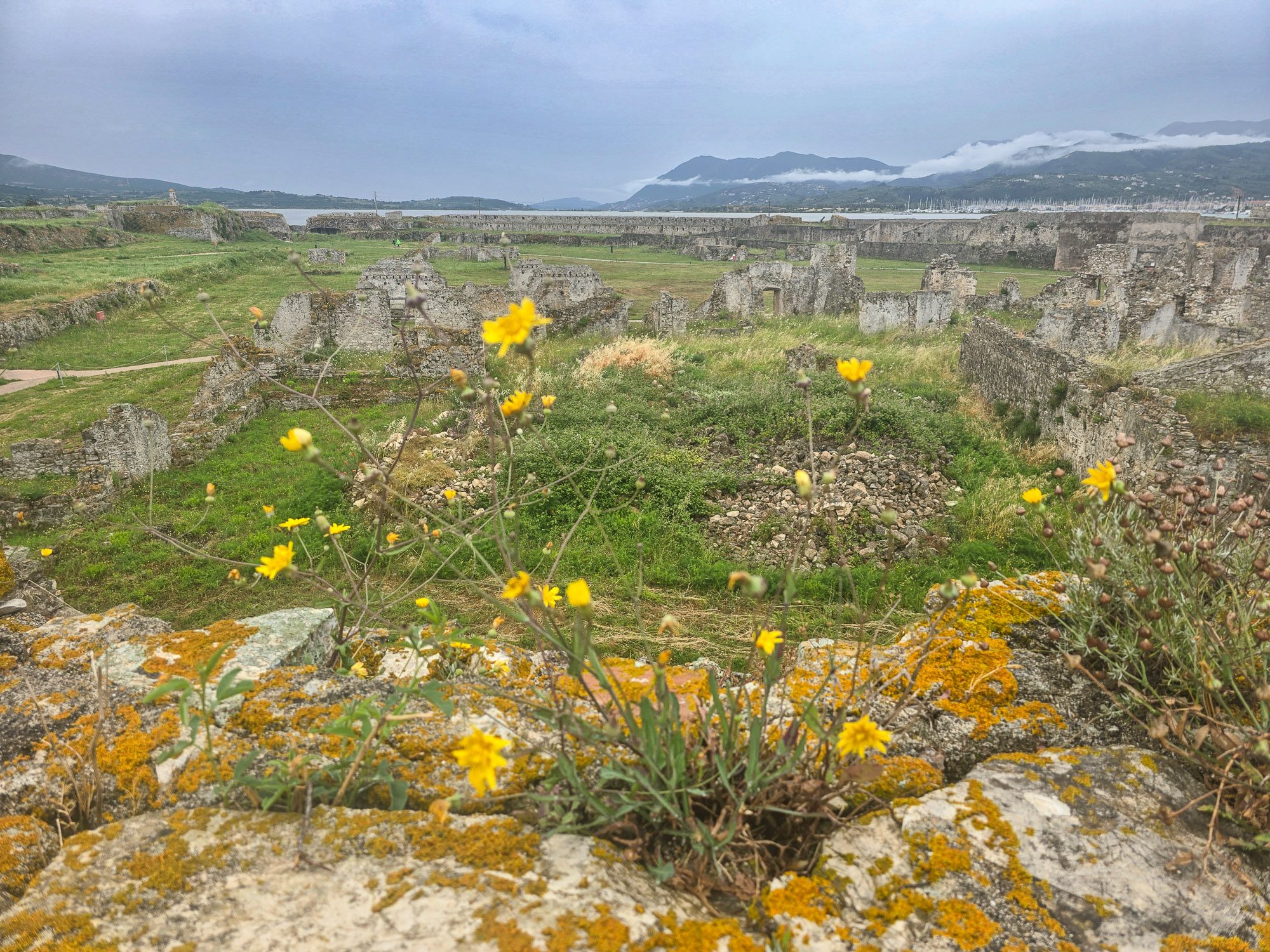
We were still up on the walls when the floating bridge began to move. It’s this kind of stuff that really appeals to a geek like me. Below us, a small flotilla of yachts had been queuing in the channel by the floating traffic light system. The bridge swung through ninety degrees, temporarily asserting Lefkada’s true island status. Road traffic stopped on both sides whilst the yachts filed through one by one. The whole operation took perhaps fifteen minutes and resumed its only land-based connection to the mainland.
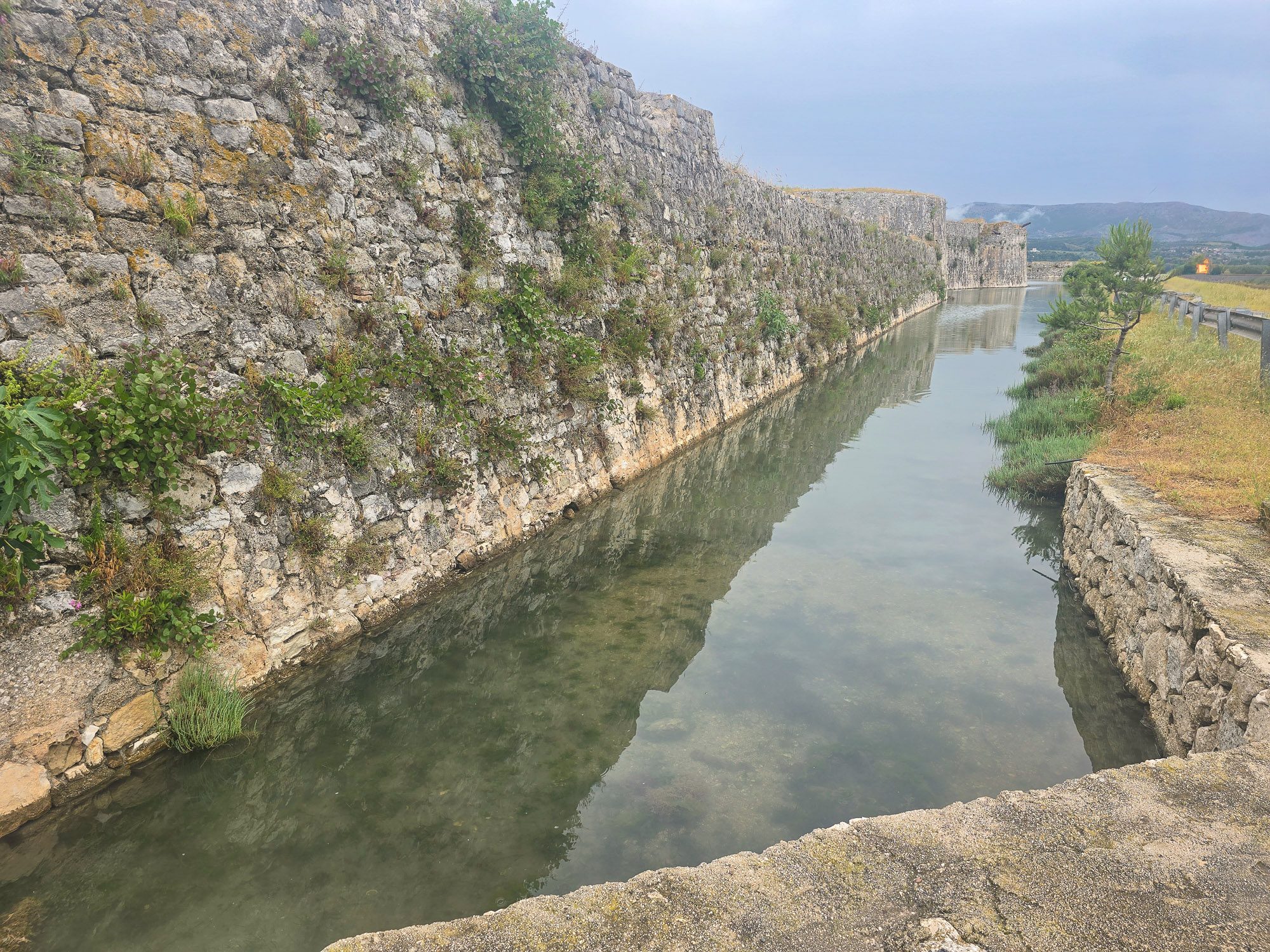
Before leaving, we walked the moat. A long, straight channel of still water running between high stone walls, with the odd tree growing from the stonework above. Quiet. It felt like the oldest part of the whole complex, though that may simply have been the atmosphere of a grey morning and too much medieval history.
Lefkada Town
From the fort, we headed into the town centre. The outskirts looked thoroughly modern, the result of both development and the rebuilding that followed the 1953 earthquake. Once inside, the character changes. Narrow lanes that twist rather than lead anywhere in particular. We did not follow a route. We let it pull us along.
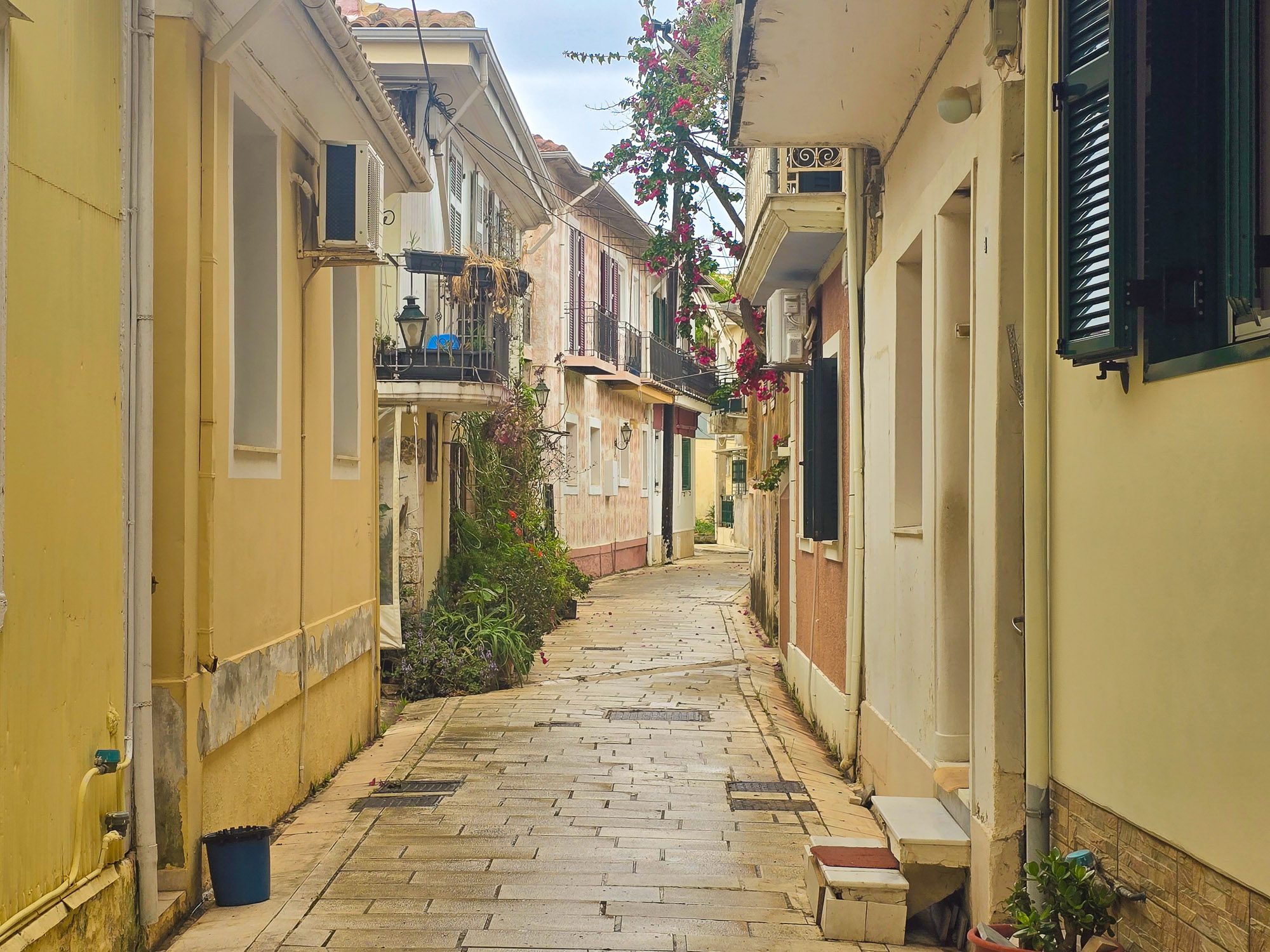
Every so often, the lanes opened into a small square, a few trees, a couple of cafés, people sitting longer than they had probably intended. Then they closed in again, balconies leaning towards each other, glimpses of domestic life through half-open shutters.
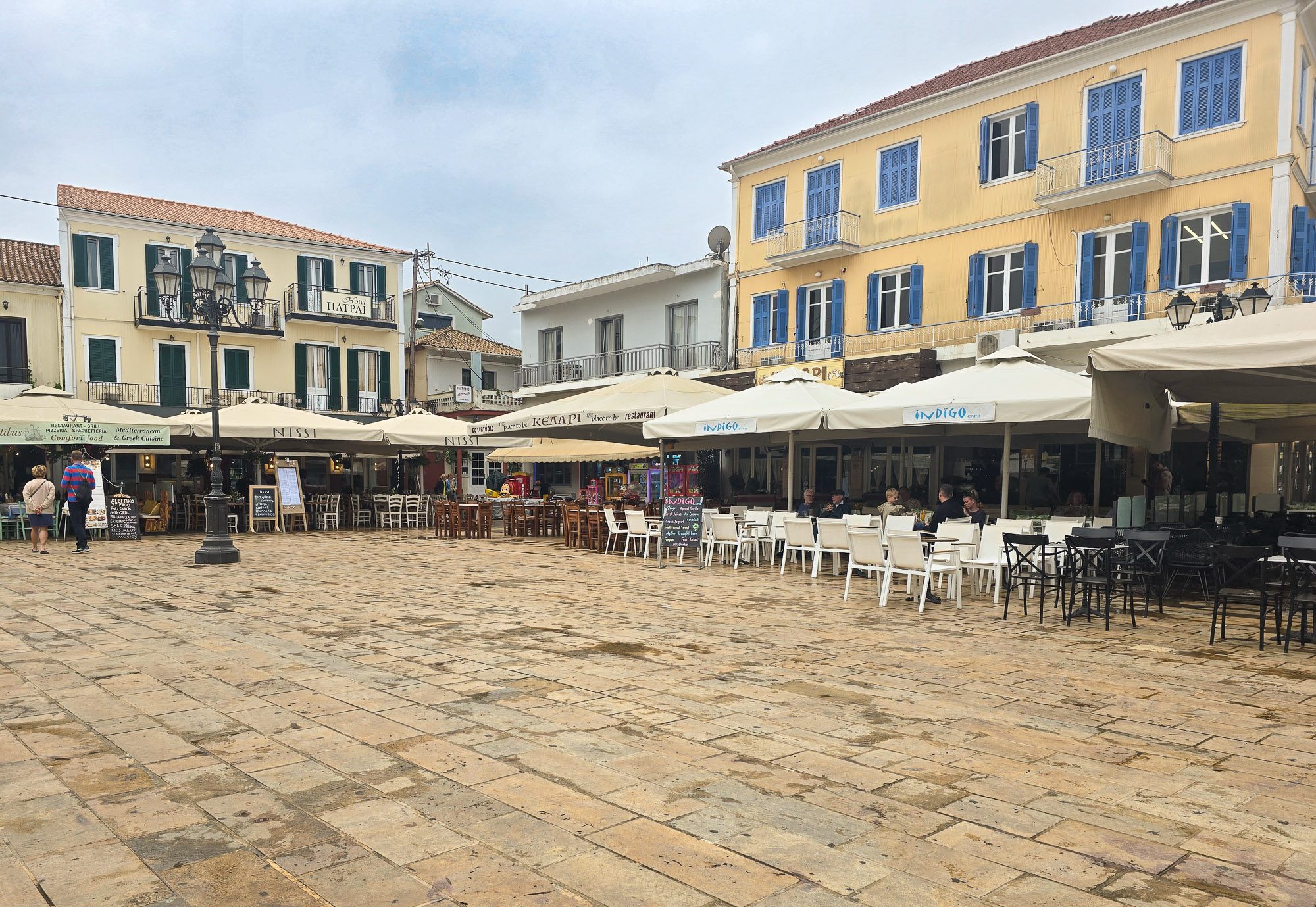
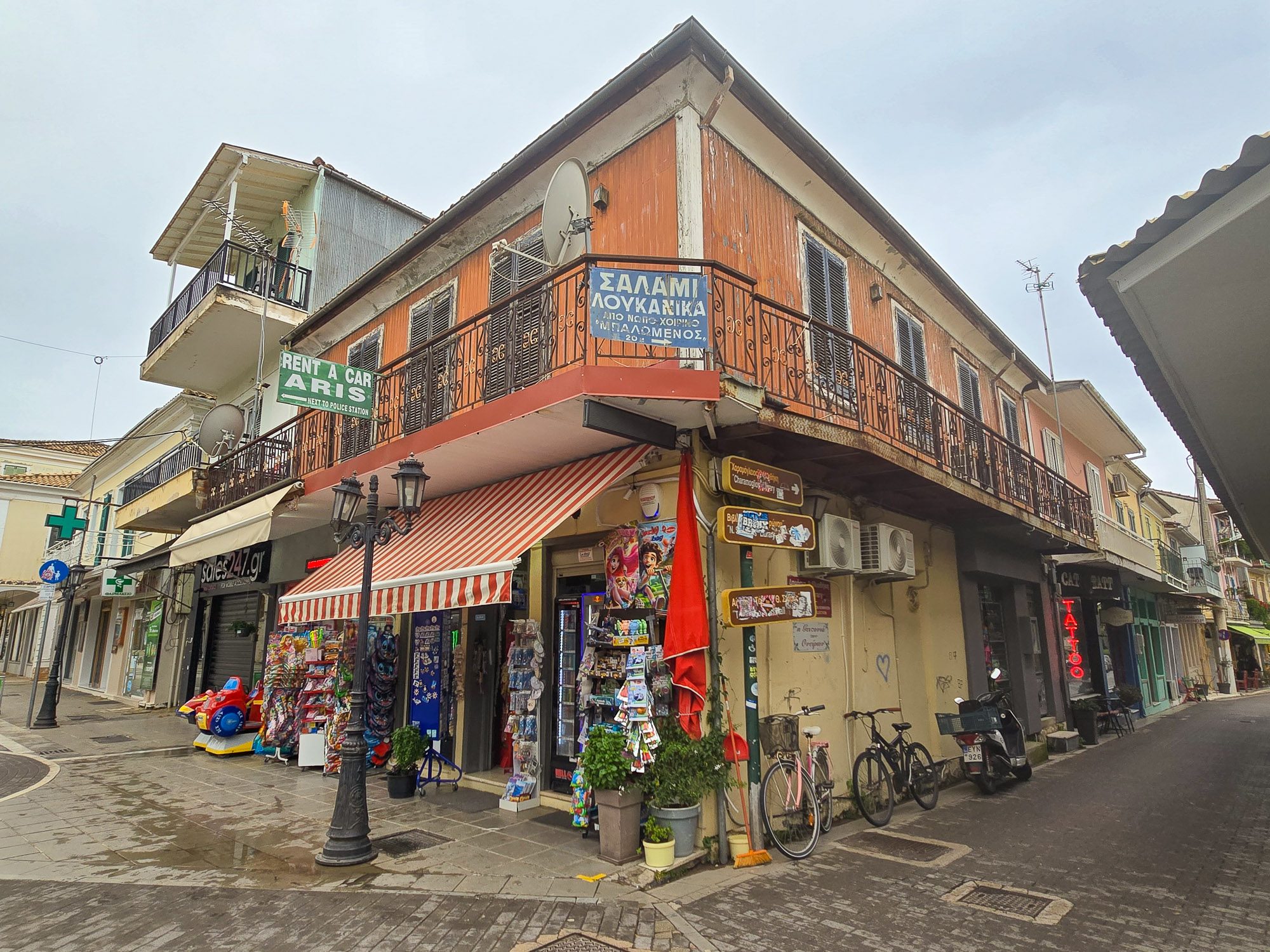
Eventually, we drifted onto the main shopping street, the spine of the town. Busier here, but not oppressively so. Local shops rather than chains, a mix of residents and visitors, the ordinary rhythm of a place going about its business.
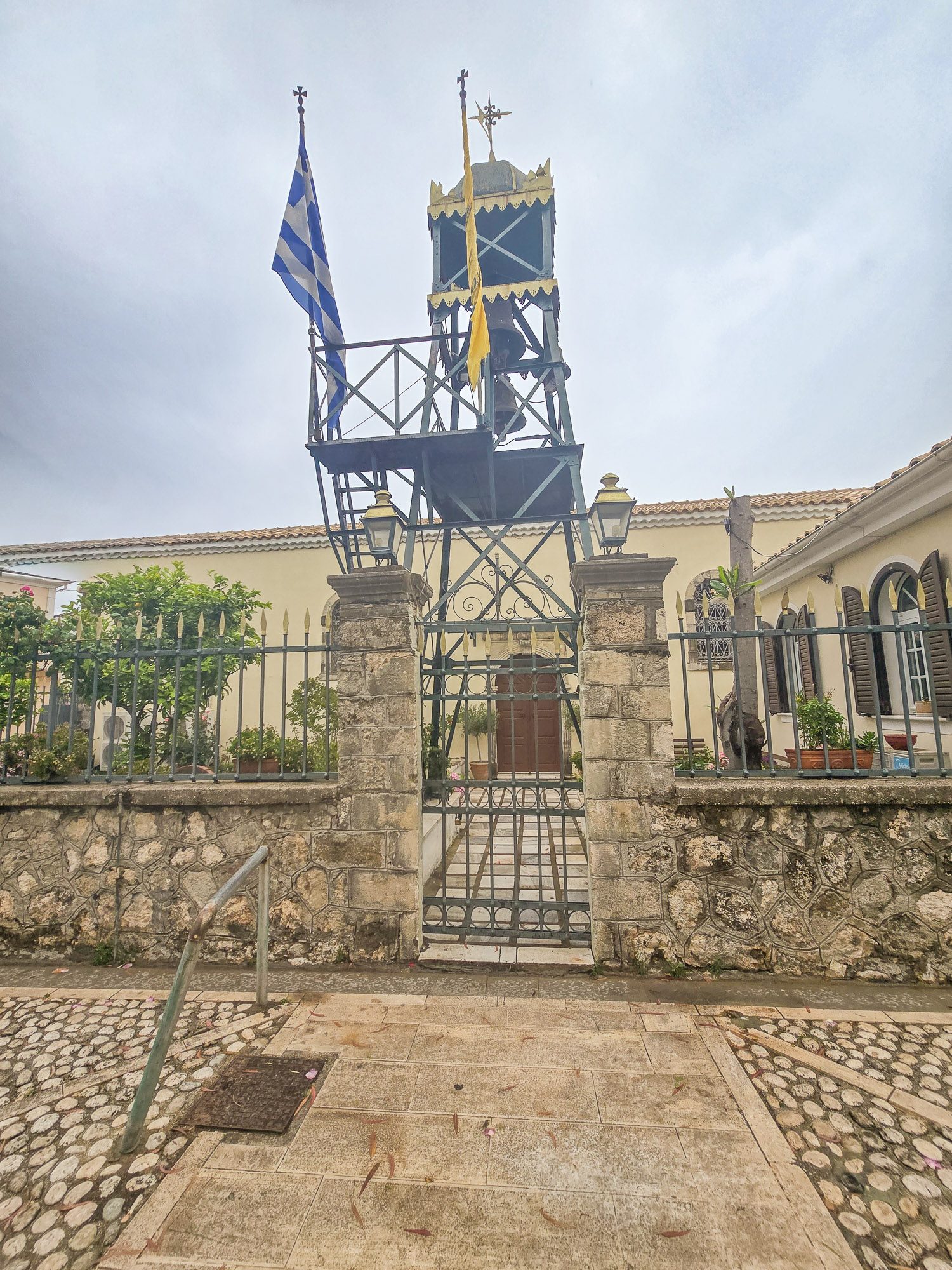
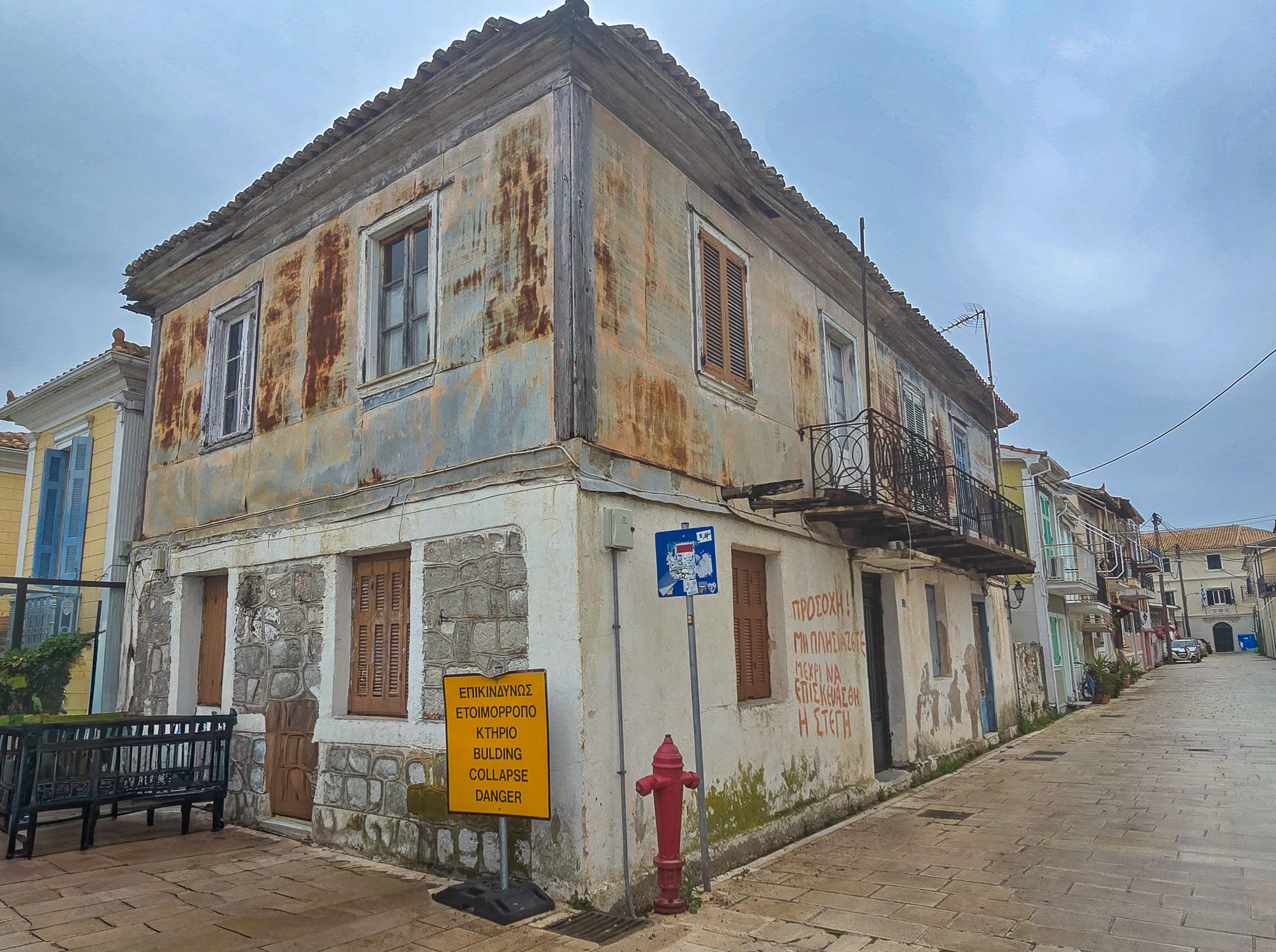
The churches were hard to miss, though not for their size. What sets them apart are the bell towers: tall, narrow metal lattice structures built separately from the main church building that look as though they were assembled from a very ambitious Meccano set. This is not aesthetic eccentricity. Lefkada sits in one of the most seismically active zones in Greece. Heavy stone towers kept collapsing, so they stopped building them in stone. The metal structures flex rather than crack. Practical logic, unusual results.
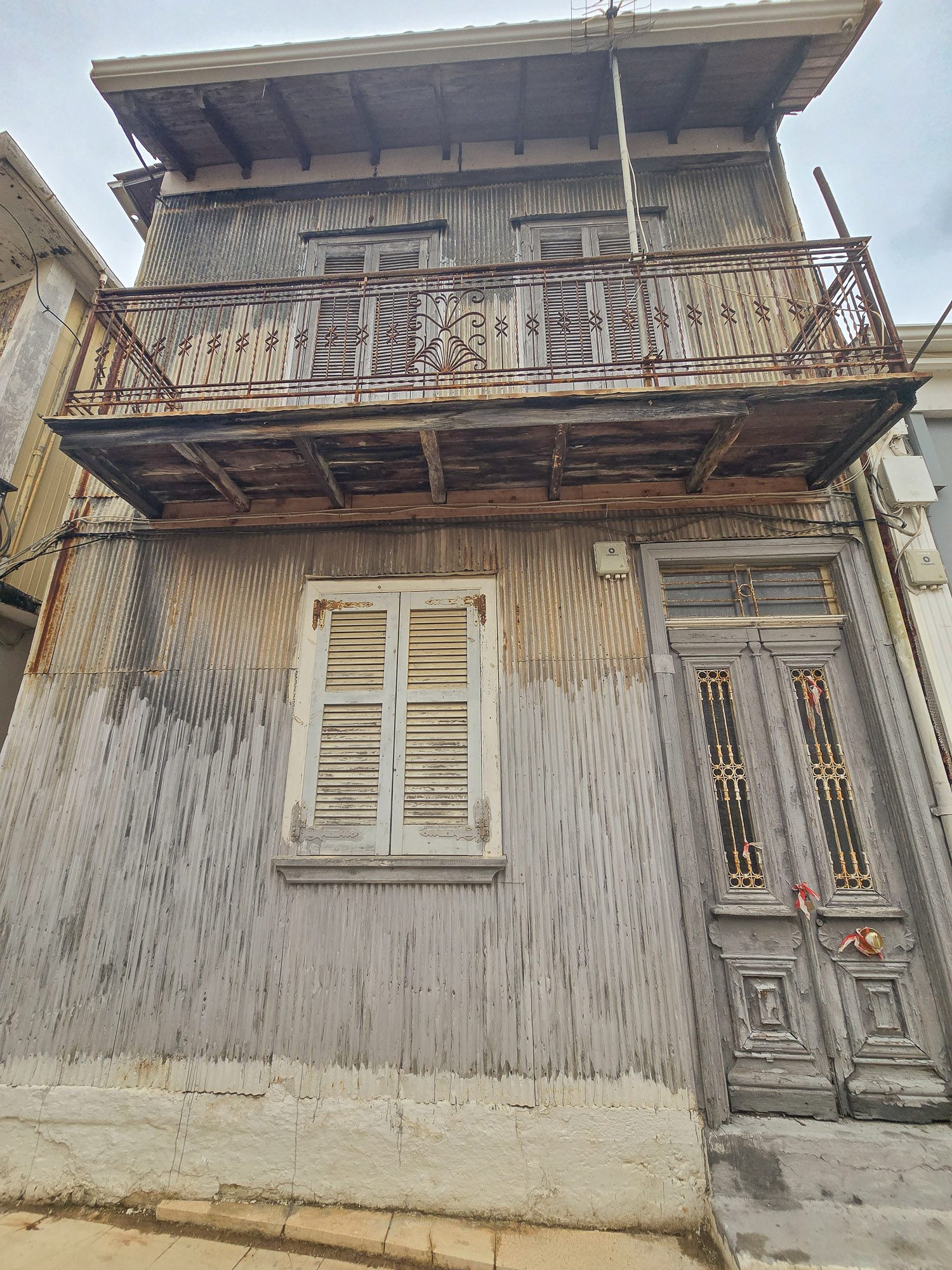
The same thinking shaped the houses. Many are clad in metal sheets over wooden frames, built to absorb movement rather than resist it. The main street has some fine examples: tall, narrow-fronted buildings in ochre, pale blue, pink and green, with shuttered windows and small wrought iron balconies. The Venetian influence is there, adapted to local conditions and local reality.
We had covered a lot of ground and got so absorbed in the back streets that catching the return bus back to Nidri was no longer an option. We found a taxi rank near the bus stop and headed back.
Back at the hotel, a message arrived. The MS Christina trip was going ahead the following morning, our last day in Lefkada. More of that in the next post.
Discover more from
Subscribe to get the latest posts sent to your email.
MY BIG FAT GREEK TRAVEL SURVEY
How do you really plan your Greek adventures? I'd love to hear from you.
TAKE THE SURVEY →