Icons, Incense and the Panigyri of the Twelve Holy Apostles (Sochos 2026)
In February 2024 I’d arrived in Sochos during Apokries expecting little more than one of Greece’s most distinctive carnival celebrations, but what I found was a village unlike any other. The bell bearers may be its most recognisable symbol, but beneath the surface there seemed to be layer upon layer of tradition waiting to be uncovered.
So when I learned that Sochos hosts the largest traditional oil wrestling festival in Greece, all part of the Panigyri of the Twelve Holy Apostles, I was compelled to return.
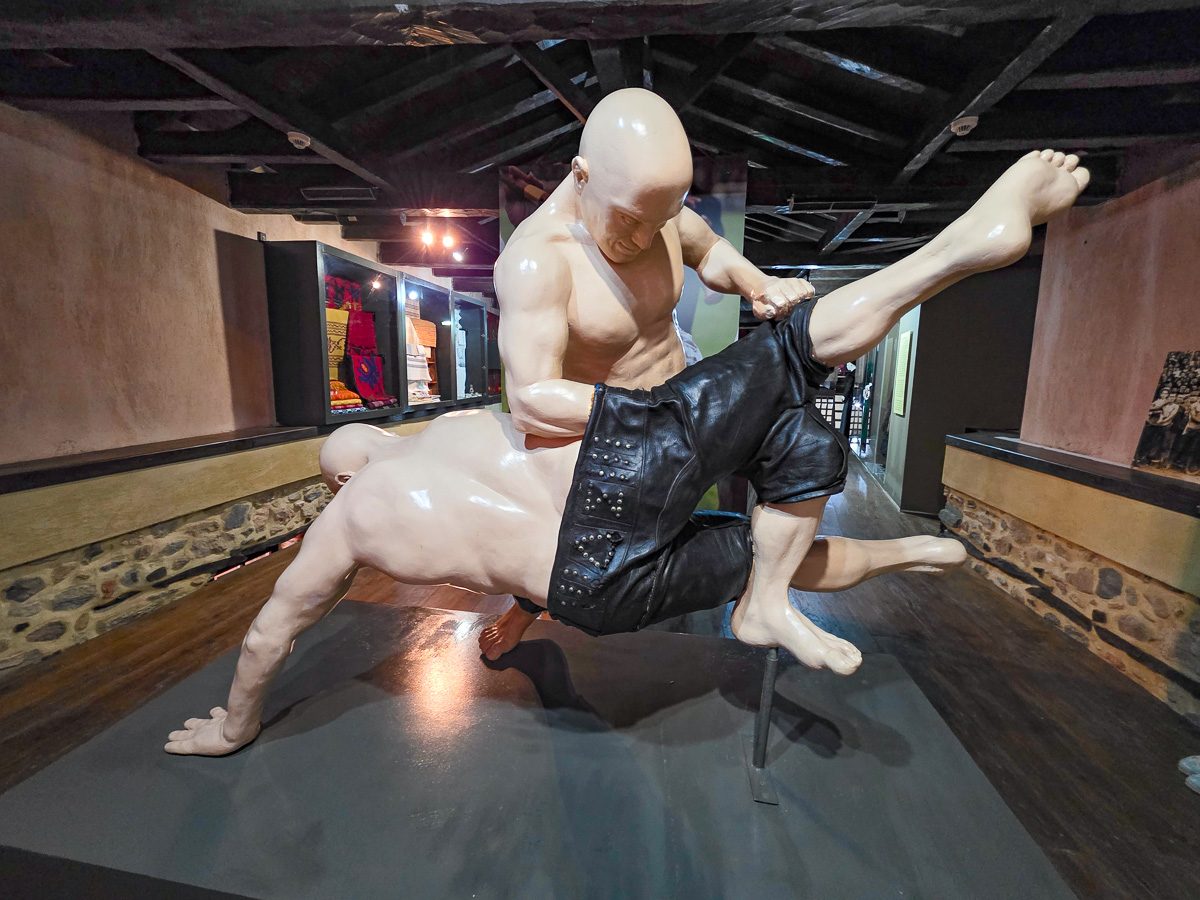
Sochos Folklore Museum and More Carnival Capers
I arrived several days before the festivities began to revisit the excellent local museum, explore parts of the village I’d missed first time around and simply settle into everyday life before other visitors arrived. Within hours I already felt completely at home.
I was staying at Sochos Traditional Houses where my host, Marina, welcomed me like an old friend. Among the information she handed me was the festival programme, neatly outlining three days of religious celebrations, music, theatre, children’s events and, of course, wrestling.
Although my previous post explored the fascinating and often fiercely debated history of oil wrestling itself, here in Sochos the emphasis is rather different.
The wrestling cannot be separated from the village’s annual Panigyri of the Twelve Holy Apostles, held every year on the 28th, 29th and 30th of June. Wrestling may be the headline attraction, but it sits comfortably alongside church services, processions, traditional music, theatre and events that involve almost every generation of the community.
The Panigyri of the Twelve Apostles: Where Tradition Begins
On Sunday evening as the beginning of the festival beckoned, there was a certain frisson in the air.
Just before seven o’clock, people started gathering outside the Church of Agios Georgios. Families chatted in small groups, neighbours greeted one another, and children darted between conversations. Thanks to an earlier encounter with some wonderfully welcoming local people, (something I’ll come back to in another post), I never once felt like an outsider.
Then, at ten past seven, the church bells rang out.
Not a polite peal, but a joyful cascade that echoed across the rooftops and rolled down through the village. Within minutes the courtyard began to fill. There was an unmistakable feeling that something important was about to happen.
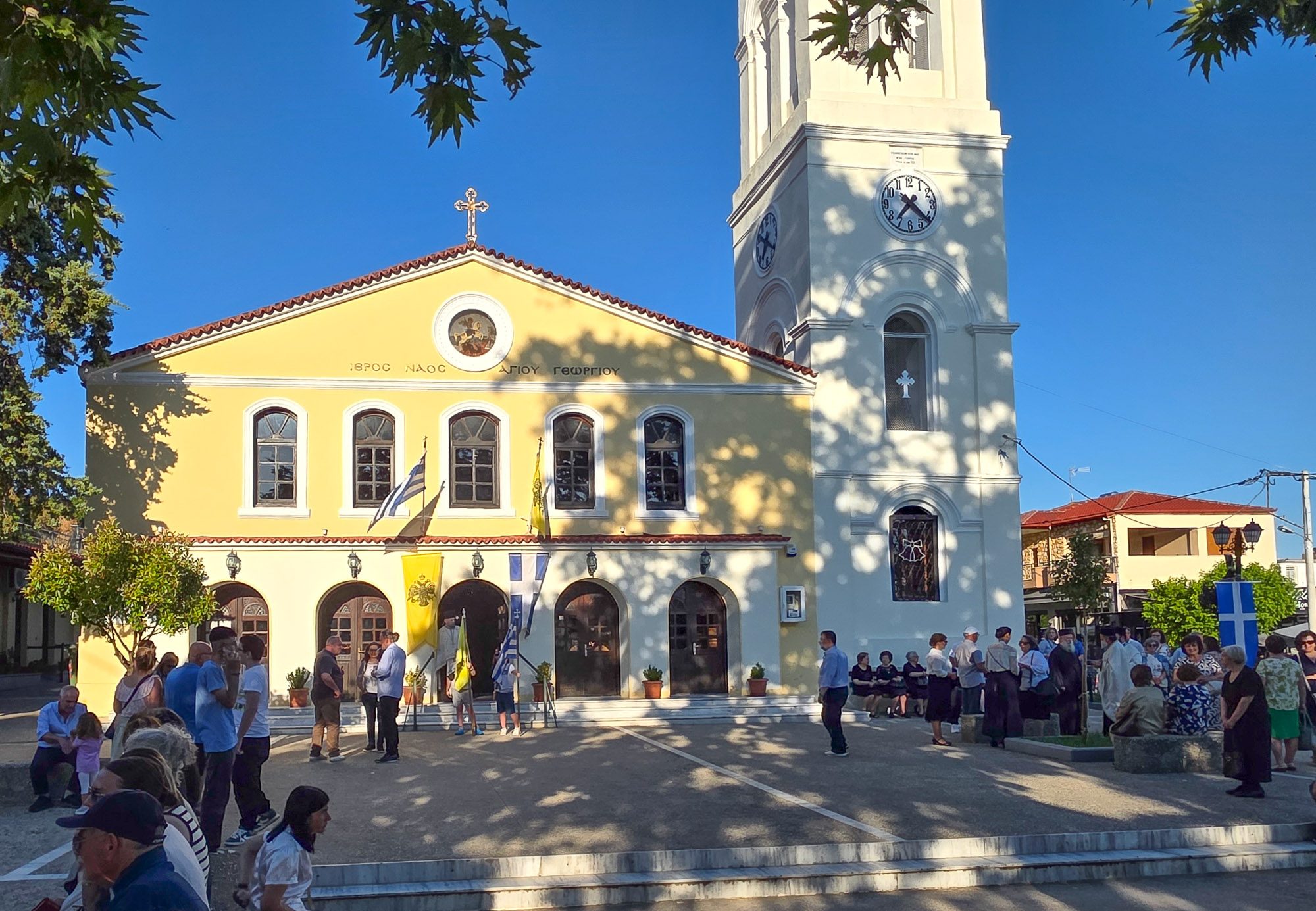
Shortly before half past seven, the municipal band assembled along the steep cobbled street beside the church and the atmosphere quietly shifted. The chatter softened as those taking part in the official procession emerged from the church.
At the front came young boys proudly carrying flags. One bore the familiar blue and white Greek flag while another carried the yellow Byzantine flag emblazoned with its striking double-headed eagle.
Behind them came members of the Sochos Cultural Association, many of whom I recognised from my visit during Apokries. They all looked magnificent in their traditional costumes. The women looked regal. Perhaps it’s their posture, perhaps the richness of the costume itself, but they seem to possess a quiet authority. Dare I say it, even a slightly formidable air. They have a presence that naturally commands respect and gives the impression that they are keeping a watchful eye over proceedings.
The clergy followed.
There were priests aplenty. Priests wearing the tall black kalimavkion hats of the Orthodox Church, others with long black veils flowing behind them, some carrying ornate crucifixes while others gently swung thuribles, allowing fragrant clouds of incense to drift through the gathering crowd. A number of beautifully decorated icons emerged from the church, two of them framed with fresh flowers for the procession ahead.
Once everyone was assembled, the procession slowly began its ascent to the upper village.
I’d hurried ahead to gain a higher vantage point and even managed to video call Peter so he could share the moment from home. Once the procession reached me, I slipped to the back, joining what had become one continuous river of people winding its way through the narrow streets.
The climb was surprisingly demanding. The route levelled briefly before climbing once more towards the upper reaches of the village. Even in the early evening, the heat that had gripped Greece throughout the week lingered stubbornly in the air.
My admiration grew with every step for the elderly women making the climb with effortless determination. Many exceeded me in years yet negotiated the steep streets as though they had walked them every day of their lives.
As we approached the old Alonia, the traditional threshing circle now incorporated into the Menelaos Vasilikos Stadium, the atmosphere became noticeably more festive. Market stalls lined both sides of the street.
On offer were phone cases, trainers, elaborately decorated cupcakes, and books. There were brightly coloured battery-powered toys that flashed and spun. Others offered loukoumades, grilled meats and cold refreshments, sending the unmistakable aroma of a village fair drifting through the warm evening air.
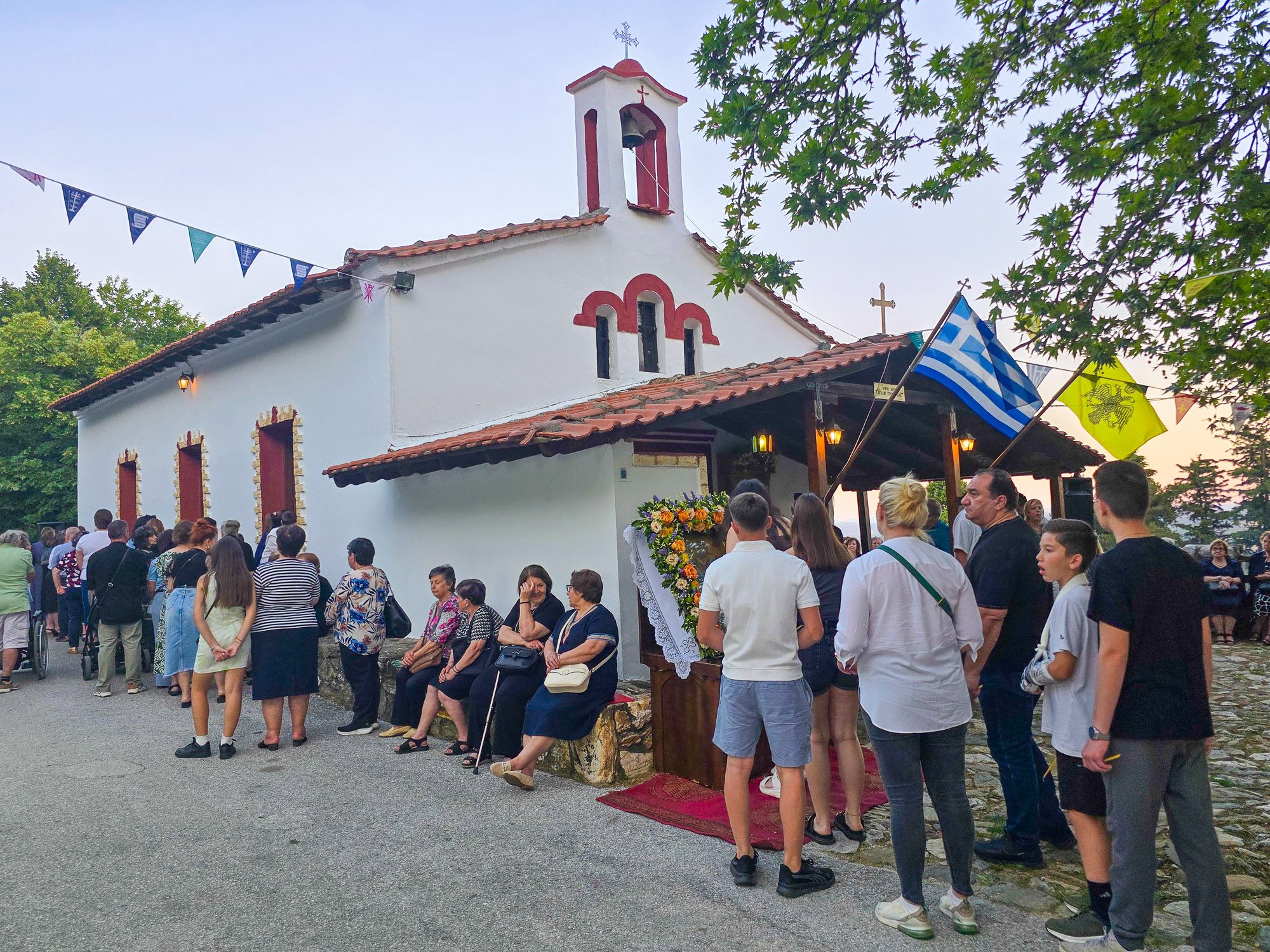
The procession’s destination lay just beyond. Perched above the stadium stands the small Church of the Holy Apostles, its position overlooking the arena beneath.
Here the larger flower-decorated icon was placed on a wooden easel outside the church, flanked by members of the Cultural Association. A queue quickly formed. Well… a Greek queue of some description.
Somehow everyone managed to find their turn as people carrying slender beeswax candles patiently waited to approach the icon before entering the church.
Inside, Festal Vespers was celebrated at the Church of the Holy Apostles.
The queue slowed as worshippers moved quietly in and out while others, including several elderly villagers seated in wheelchairs outside, listened to the service through the open windows. Even as a person of no faith, I felt something quite moving in this moment of religious unity.
From Vespers to the Old Threshing Circle
Gradually attention shifted towards the stadium below.
People drifted down the steps into the arena, taking seats on the concrete terraces that flank two sides of the field. The remaining sides were lined with cafes, food stalls and refreshment stands where smoke from the barbecues drifted lazily across the evening sky which this evening held a full moon.
The stadium occupies one of the highest points in the village, sitting just below the tip of the hill the village was built on.
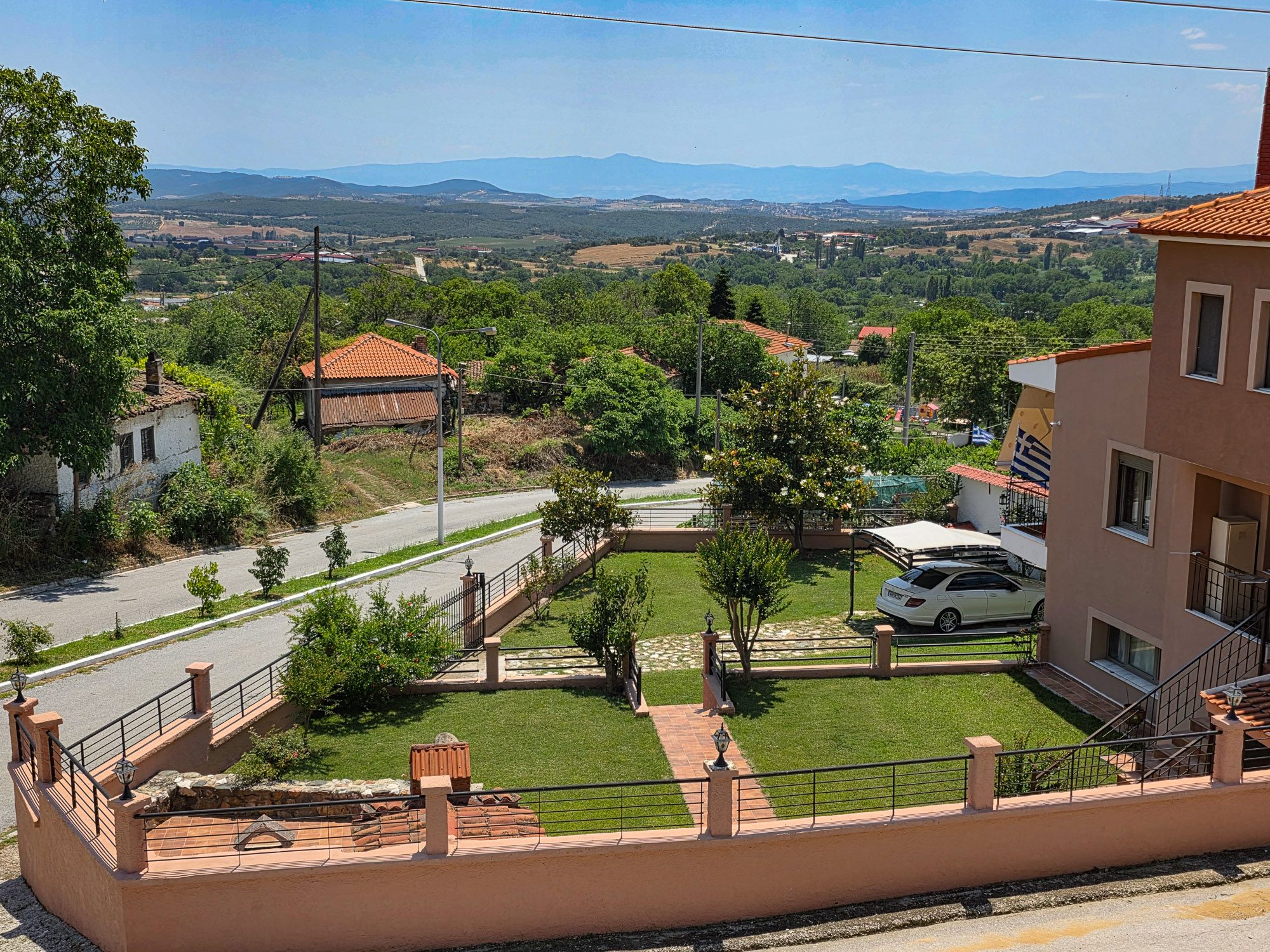
Down on the arena level, I crossed to the opposite side, which rewarded me with expansive views across the countryside below. Today Sochos is best known for livestock farming, but this was once tobacco country, and the old threshing floor and the surrounding landscape hint at that longer agricultural past.
As dusk began to roll in, the evening’s cultural performance got underway.
Entitled The World: Creation, it brought together local music, dance, and theatre in a production that involved several cultural groups from the village. Many of the performers were familiar faces from my earlier visit.
It was a beautifully staged interpretation of life, creation and death, performed by people of every age. Children shared the stage with grandparents. Teenagers performed alongside adults. Nobody appeared to be there simply as a spectator. This felt like a community telling its own story.
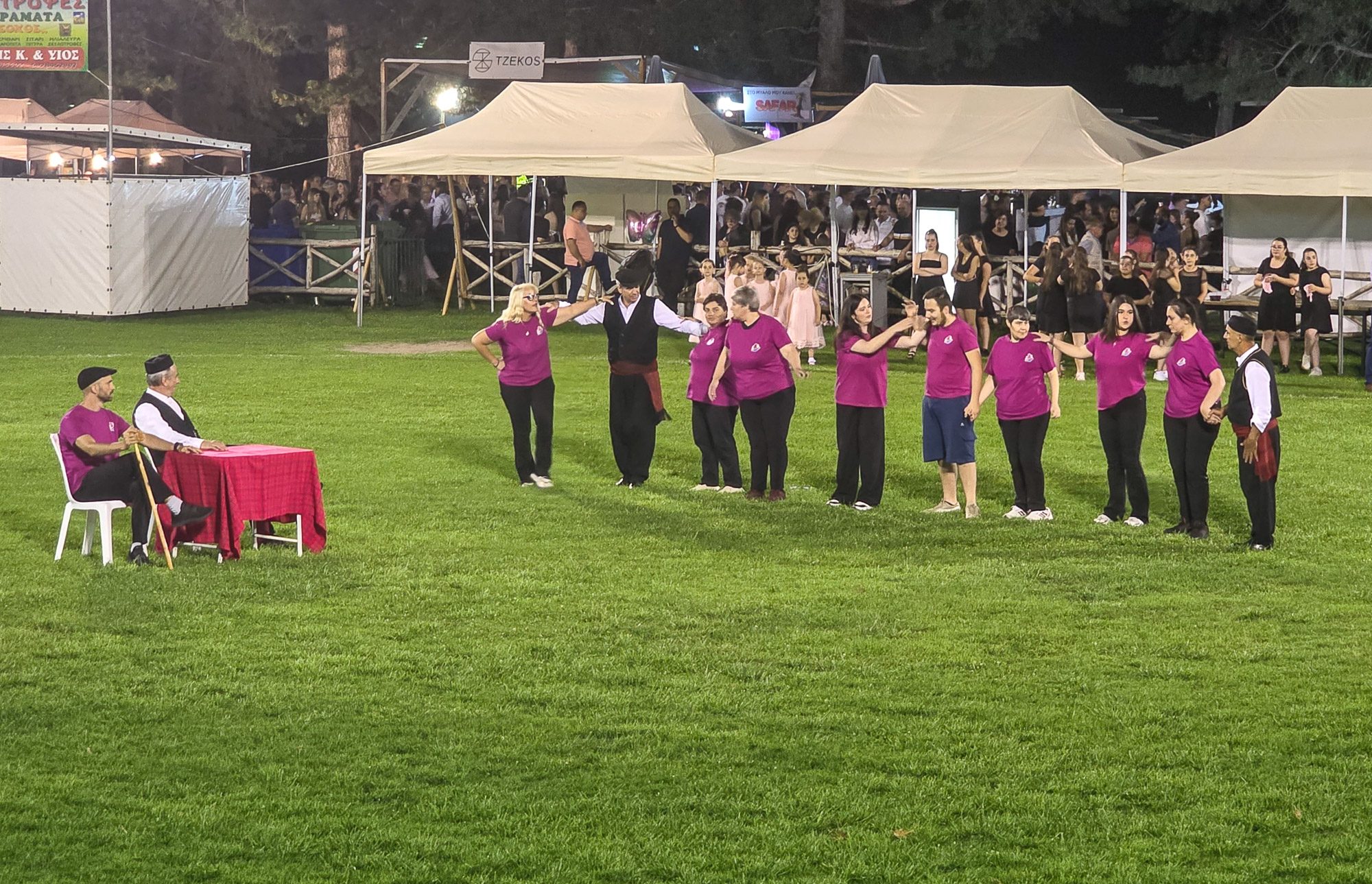
Among the participants were members of Thalpori (Θαλπωρή), a local organisation supporting people with disabilities and mental health needs in the Sochos area. Their name translates roughly as “warmth”, “comfort” or “loving care”, a fitting reflection of the support they provide. I remembered a wonderful performance they’d given at Apokries, and how moved I’d been by it. This evening they went one step further.
The dance they performed is based on the Mihanikos, which evolved on the island of Kalymnos as a way to honour sponge divers, particularly those left with lifelong limitations due to decompression sickness. It usually begins with a line of male dancers performing the Syrtos or similar. After a minute or two, a man with a walking stick is encouraged to join them. Despite his effort, he struggles to move his legs. He wavers and then falls to the ground. The first time you see this, it’s traumatic. The moment is left to rest with the audience for a while.
After a few seconds, one of the other dancers helps him to his feet, and from that moment on he can dance without aid. The dance has since found its way into festivals across Greece, and watching it, it’s not hard to understand why.
Tonight’s performance by Thalpori, alongside the Sochos Cultural Association, was equally moving, if not more so. Once again I found myself watching a whole community make sure that every one of its members had a place in the circle.
Of all my decades of travel in Greece, there are very few places where tradition feels quite so naturally woven into everyday life. Here it isn’t recreated for visitors or performed simply because it’s expected. It still belongs to the people who live here.
And tomorrow, that same sense of tradition is very much focused on the children.
Day 2 – The Children Take Centre Stage
Monday dawned at a gentler pace. The previous evening’s celebrations had given way to a quieter village, subdued slightly by the ever-increasing heat that had settled over northern Greece. Early in the morning, Divine Liturgy was celebrated at the Church of the Holy Apostles.
By mid-morning the programme began with children’s athletics, the 100 and 1,500 metre races, standing long jump, art activities, a shooting competition and tug of war.
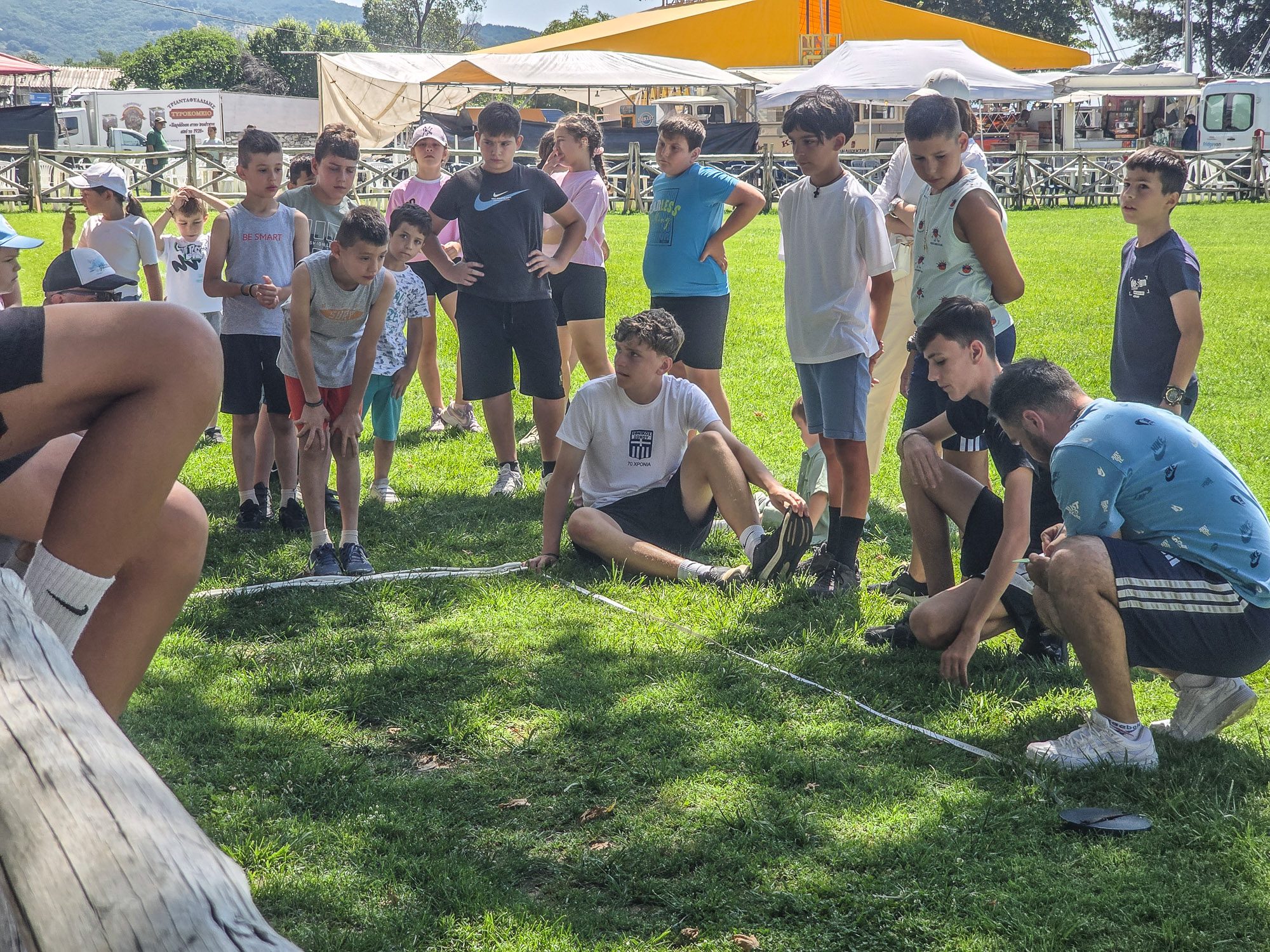
The new generation of Pechlevanides Take the Field
After a few hours’ interlude, by early evening the stadium had begun to fill again, the familiar sound of the zournades and daoulia drifting across the field as the musicians warmed up. If you’ve never heard them before, they’re impossible to mistake. The zourna is a piercing double-reed instrument whose sound carries effortlessly across open spaces, the daouli a large double-headed drum providing the heartbeat beneath it all. Together they create the unmistakable soundtrack of village celebrations throughout Macedonia, and after two visits to Sochos I’ve come to associate that sound with the village itself.
Here I caught my first glimpse of the wrestling competition, which this evening is specifically for the younger members of the community.
Unlike the large oil wrestling competitions held across Turkey, where hundreds or even thousands of competitors may require well over a dozen weight divisions, Sochos and the other panigiri-based festivals keep things deliberately simple.
There are just four categories, competitors grouped according to a combination of age, height and weight, with organisers retaining enough flexibility to move wrestlers between categories where necessary to keep the contests evenly matched. It’s a practical system, one that suits a village event and still preserves the competitive spirit of the sport.
The younger wrestlers compete in Categories Three and Four. One important distinction is the youngsters wrestle in the same traditional style but without the olive oil, allowing them to develop technique safely, with oil only introduced for the finals of these younger categories. Even so, they still wear kispet or kiouspetia for the Greek version, though a much lighter type than the adults wear. There is considerable emphasis on safety with bouts limited to around ten minutes and closely supervised.
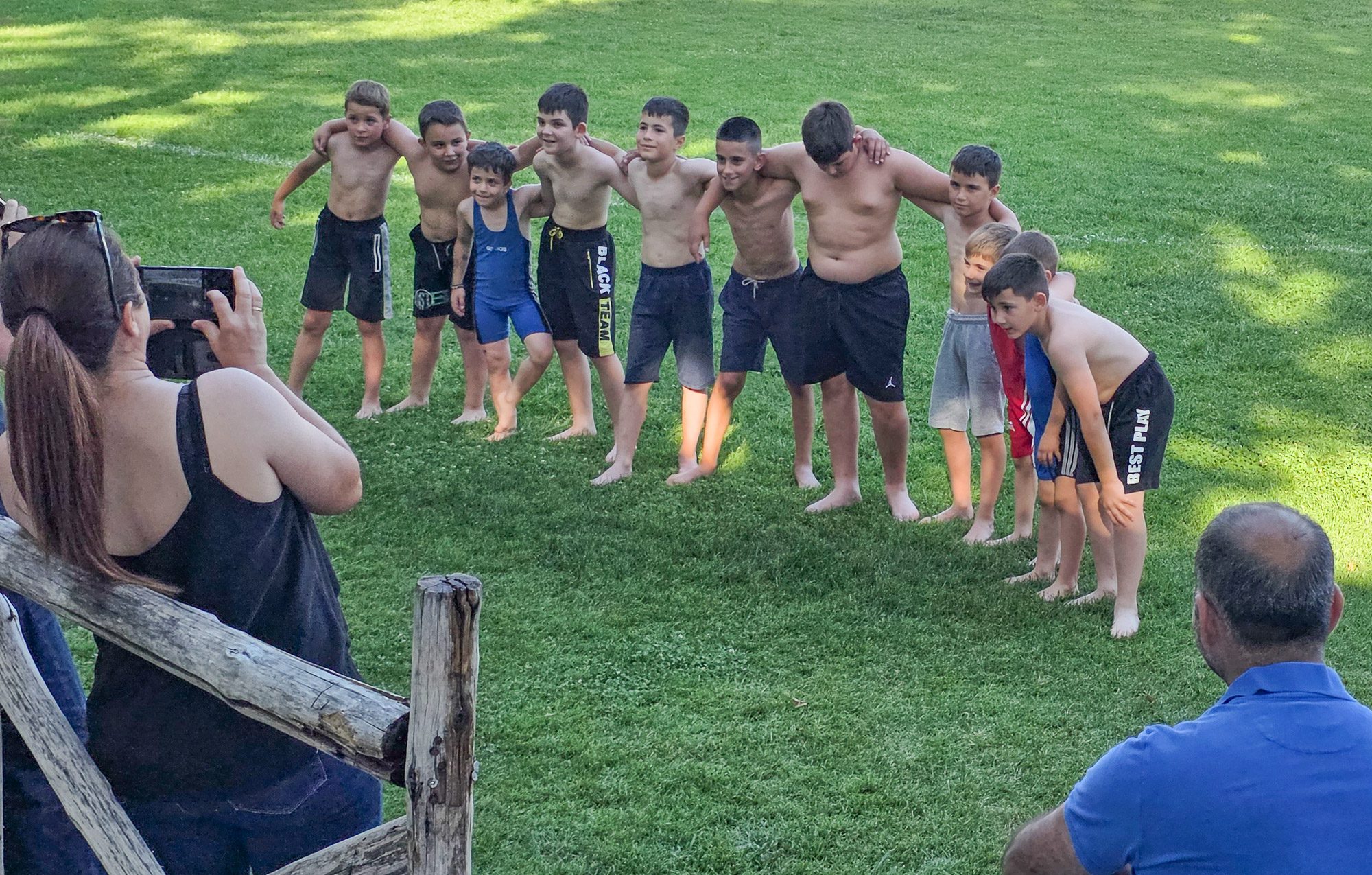
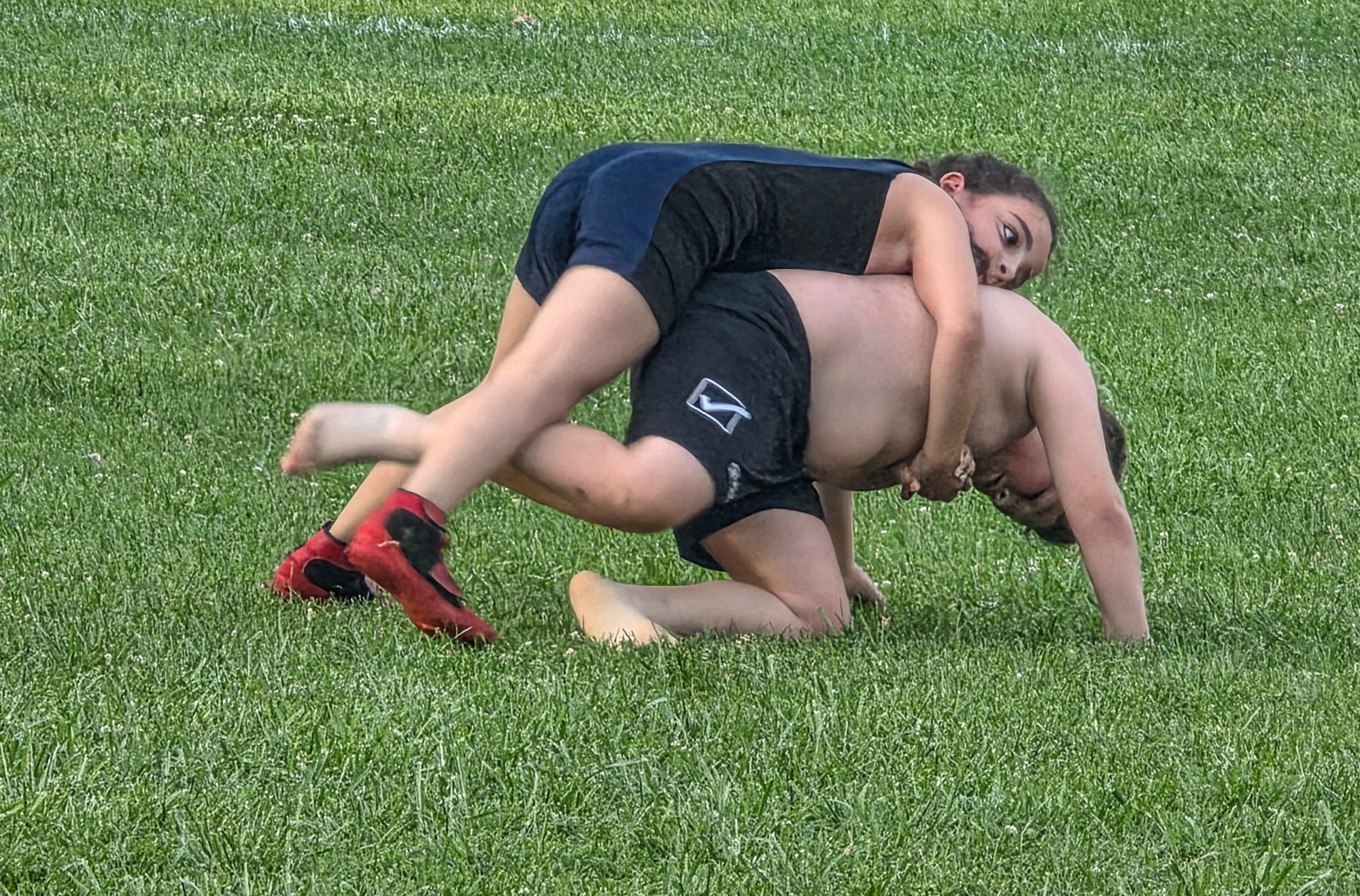
There was an obvious difference between the younger children in Category Four and the older competitors in Category Three. The age gap reflected in their size, strength and confidence, the older wrestlers attacking with noticeably greater intensity, their grappling more purposeful and tactical. Yet regardless of category, one characteristic remained exactly the same. Determination.
Whenever one child found themselves underneath an opponent, there was never a sign of giving up. They simply kept searching for a way to get back on the offence.
Among the competitors I was surprised to see a girl. Not because she was there, but because traditional oil wrestling remains such a male-dominated sport. No allowances were made for her gender. She wrestled with the same commitment and also took the hard slams to the ground as everyone else on the field. She struck me as someone who had older brothers, but maybe it’s purely the training. Whatever it was, she was fantastic and earned every bit of the applause she received.
Winning, however, never seemed to be the whole point. Yes, medals were awarded, and there was prize money too, although the financial rewards at this level are modest. Nobody is competing for riches. They compete because this tradition matters.
After every bout, regardless of the result, the two wrestlers shook hands. It wasn’t optional. It was part of the ritual. Victory was celebrated. Defeat was accepted. Both competitors left the arena with their dignity intact. And what better life lesson for young people than this.
After each contest, another tradition unfolded. The pair of wrestlers walked slowly around the arena carrying a red and white cloth between them, and as they passed, spectators stepped forward to place money onto it. This is known as the parsa, a collection taken after each bout to help fund the prizes and keep the festival alive.
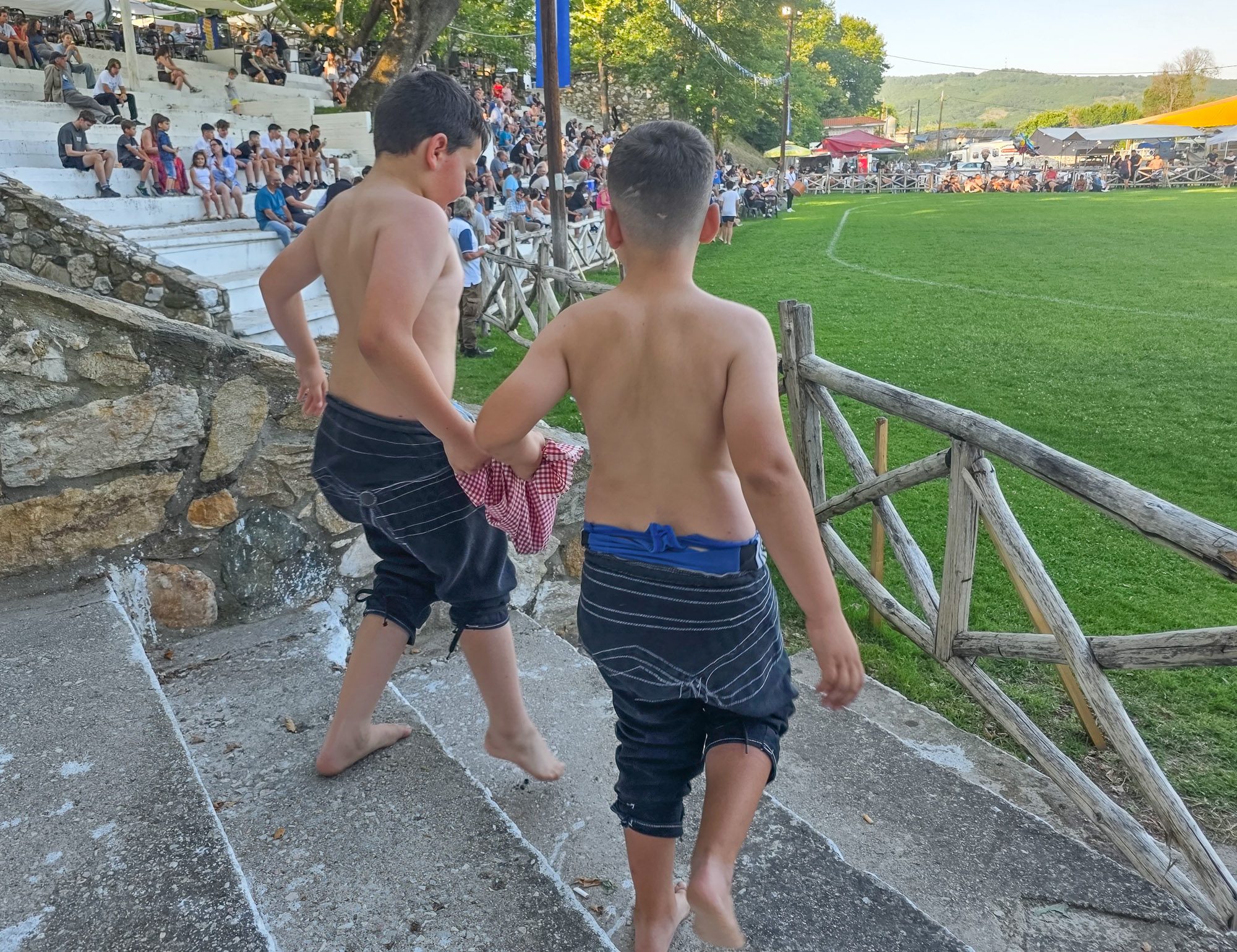
As the final children’s bouts came to an end, proud parents gathered around sons and daughters who had given everything on the field, coaches offering quiet words of encouragement, friends congratulating one another regardless of the result.
The wrestling arena slowly emptied, and preparations began for the final event the following evening for categories one and two. Marina had told me to be prepared for a late night – and she wasn’t wrong!
Join me for that and more in part 3 for the final day of this spectacular festival.
Discover more from
Subscribe to get the latest posts sent to your email.
MY BIG FAT GREEK TRAVEL SURVEY
How do you really plan your Greek adventures? I'd love to hear from you.
TAKE THE SURVEY →