Meet the Champion: A Conversation with Christos Christoforidis
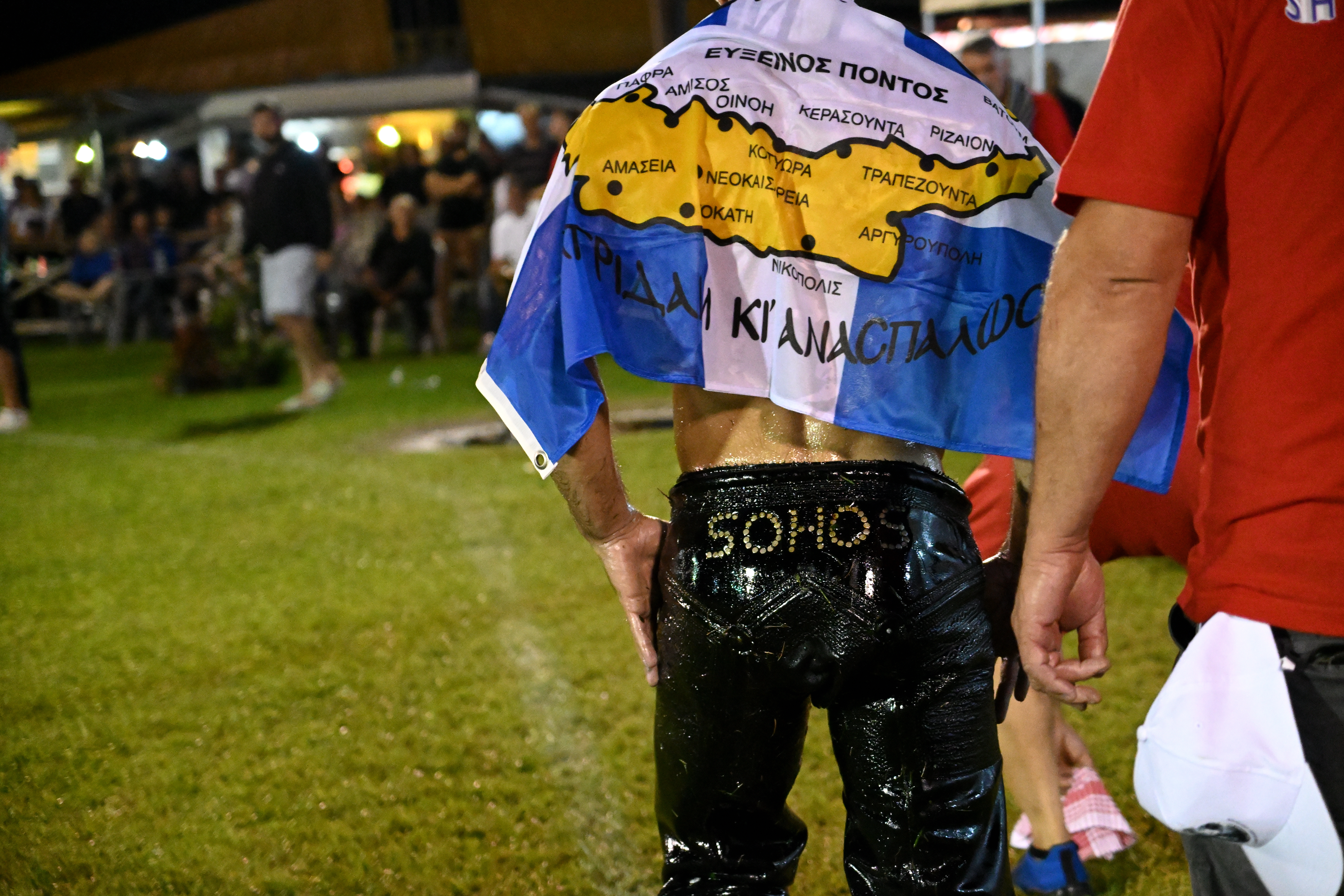
Christos Christoforidis is a Thessaloniki-based wrestler and member of the Wrestling Club of Olympic Champion Nikolaos Karypidis, named after the Greek wrestler who placed fourth in the 63kg category at the 1968 Mexico City Games. He has been training there since December 2012. He also coaches at Grappling School Thessaloniki and is a Beach Wrestling World Series champion. At Sochos this year he won his category outright with five wins, including victories over two North Macedonian national freestyle champions in his semifinal and final.
After watching him compete, I was keen to find out more, and Christos turned out to be a generous interviewee.
Q: How did you first get into wrestling?
A: “I knew the sport from a very young age through my uncles and had already been going to a wrestling gym from the age of three or four. I officially joined a club just before I turned thirteen.”
Q: What drew you to that club specifically?
A: “It was the first club I found. I really liked the training atmosphere and even more the sport itself. I simply wanted to join on the spot and wrestle. Even though I was only twelve I went to the gym on my own, without my parents.”
Q: What were you hoping to achieve at Sochos this year?
A: “I was chasing first place. I would be very happy with only that.”
He got it.
Q: You faced two North Macedonian national champions in your semifinal and final. What was that like?
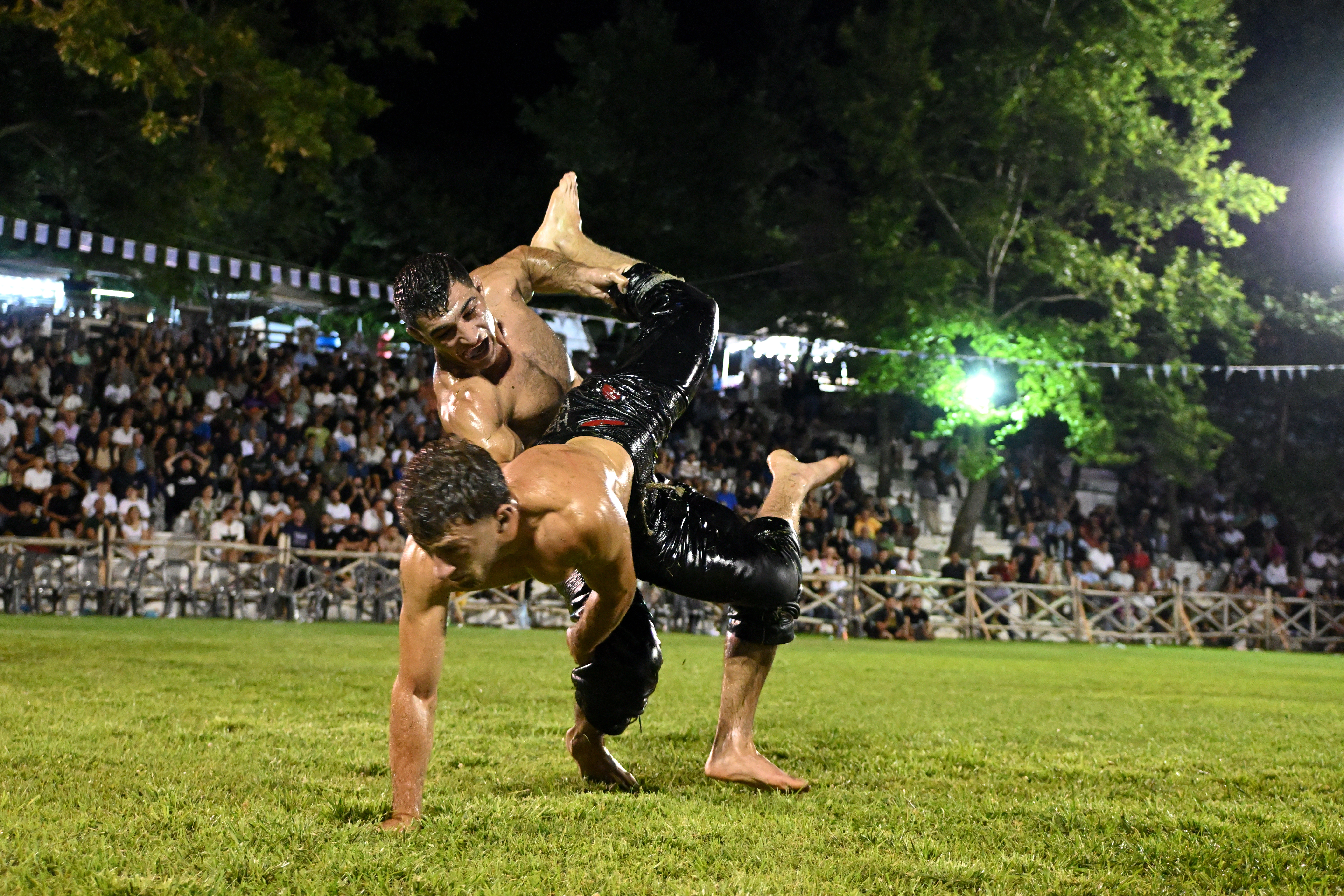
A: “Certainly when you compete against champions, that alone shows a lot. Although I was in very good condition, the athletes from Skopje know oil wrestling very well, which makes things quite difficult. It is much more dangerous to make a mistake and have them exploit it. You have to be much more careful because one mistake can cost you immediately.”
Q: Your family has Pontic roots. Can you tell me about that?
A: “My great-grandparents grew up there, in Santa in the Pontus region, and from either Trebizond or Samsun on what is now Turkey’s Black Sea coast. From a very young age I knew how to speak Pontic, since I spoke Pontic with my grandmother, my uncles and aunts, and of course with my parents too.”
It is exactly the kind of story I wrote about in Part One of this series. The 1923 population exchange that moved well over a million ethnic Greeks out of Asia Minor into a Greece many of them had never actually lived in, carrying dialects, customs and traditions with them. Christos is a living thread of that history.
Q: Has that heritage shaped you as a person and as a wrestler?
A: “Pontic families have a stricter discipline, but it is good for shaping principles.”
Q: The origins of oil wrestling are fiercely debated. Where do you personally stand on that question?
A: “The only thing that is 100% certain is that wrestling, which is the main sport, comes from ancient Greece.”
This from a man who researched the Turkish, Mesopotamian and Balkan angles before answering, and whose own family lived for generations inside the Ottoman world. He has considered the alternative. This is where he has chosen to stand.
Q: How does oil wrestling differ from Olympic or freestyle wrestling?
A: “The basic skills are the same. It requires more emphasis on patience because it is a much longer match and you must keep in mind above all not to risk being put on your back. Better to concede a point that will not cost you as much.”
He then added something unprompted: “I think it may be the best sport and all children should do it from primary school age.”
Q: Have you competed in oil wrestling festivals outside Greece?
A: “There were proposals twice for oil wrestling abroad but in the end it did not work out and I did not go. I would certainly want to at some point. As for the international competitions I take part in abroad, these are mainly beach wrestling world championships. There the level is even higher because you compete against international champions and even Olympic champions.”
Q: Can you explain the parsa tradition to someone who has never seen it?
A: “After each match we pass through the stands holding cloth, and we shout Άντε μπάρμπαδες — come on, uncles — to encourage people to give money to the wrestlers. The custom is called βγάζω την πάρσα, bringing out the parsa.”
Q: Finally, how would you describe what wrestling means to you?
A: “It is a noble sport, but a difficult one. It asks for ambition and humility in equal measure.”
A fair description of the whole festival.
Thank you Christos. I really appreciate your time and good luck for future competitions.
Discover more from
Subscribe to get the latest posts sent to your email.
MY BIG FAT GREEK TRAVEL SURVEY
How do you really plan your Greek adventures? I'd love to hear from you.
TAKE THE SURVEY →