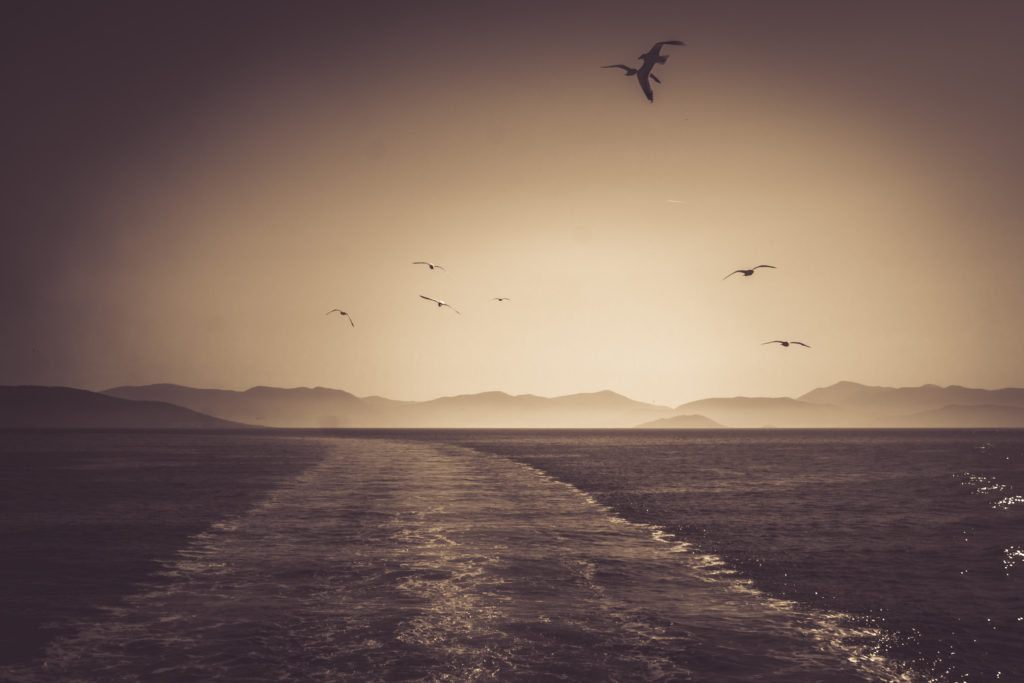
From Nafplio to Athens: Familiar Ground and a Few New Corners
Athens needs no persuasion. After six nights in Nafplio, I was ready for it — the noise, the layers, the familiar streets and a few places I had been meaning to get back to for years. This post covers the final stretch of a two-month trip, from leaving Nafplio to a few days in Athens that reminded me exactly why I keep coming back.
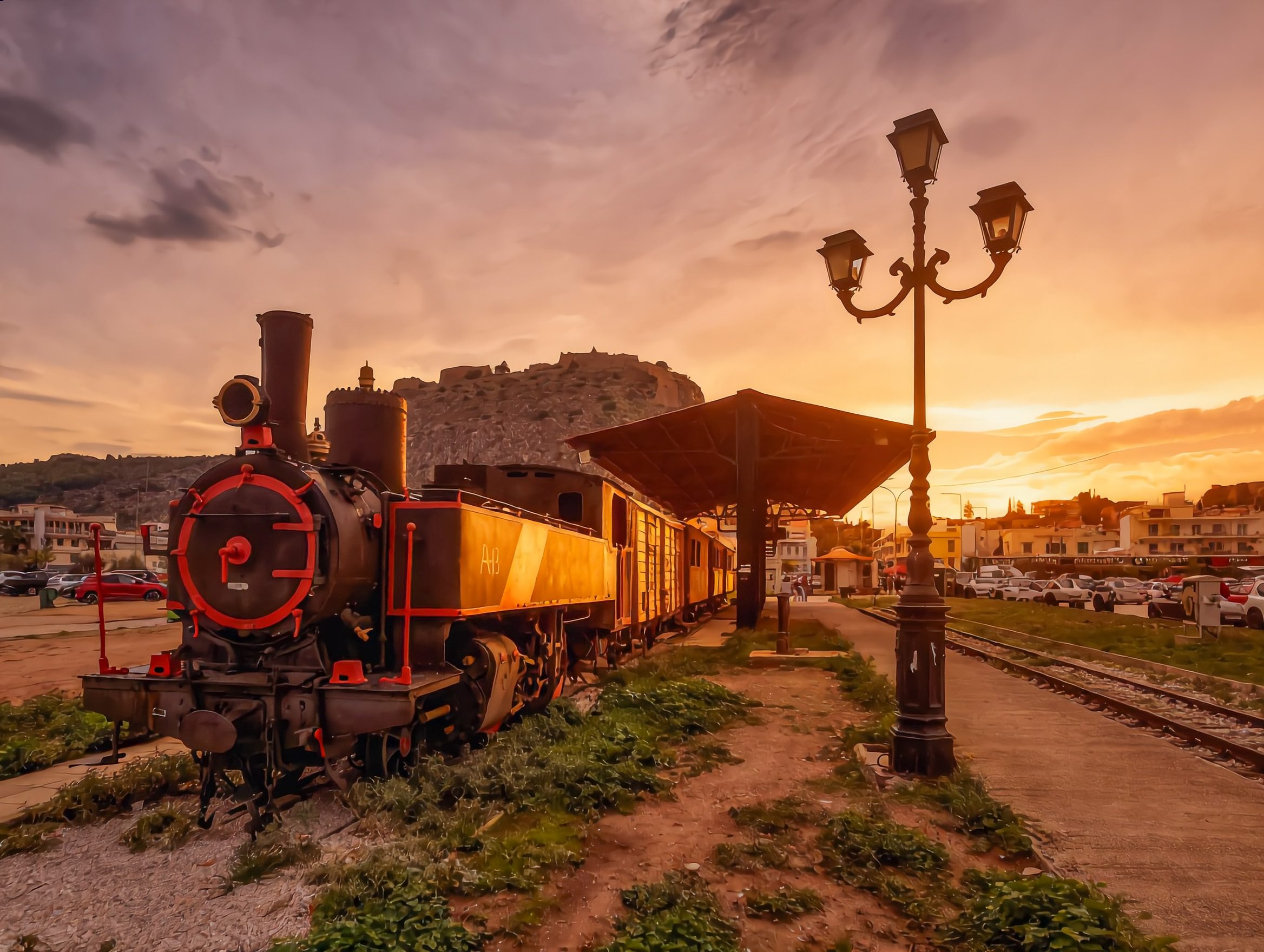
Six nights in Nafplio came and went, and the slower pace was just what was needed at this stage of the journey. I spent much of my time meandering the streets of the old town and around Akronafplia fortress – but not Palimidi Castle. Wild horses wouldn’t drag me up there again. I’m still a bit traumatised after the vertigo-inducing walk down a few years ago.
Nafplio is one of those places where, at almost every turn, you are met with a beautiful vista or an atmospheric corner. The layers of Ottoman, Venetian, and later Hellenic history meld into one to create a town that feels both lived in and theatrical. Although I am always keen to explore new territory, there is something to be said for returning to familiar ground where you have the opportunity to breathe and just be.
That is what Nafplio has been for me on this trip.
I did pay a second visit to the Nafplio Folklore Museum, initially as part of a loose attempt to track down contact details for the Laskarideio Folklore Museum in Nea Kios. But once inside, it was worth another look in its own right. It is a nicely curated space, and one that rewards a slower pass through.
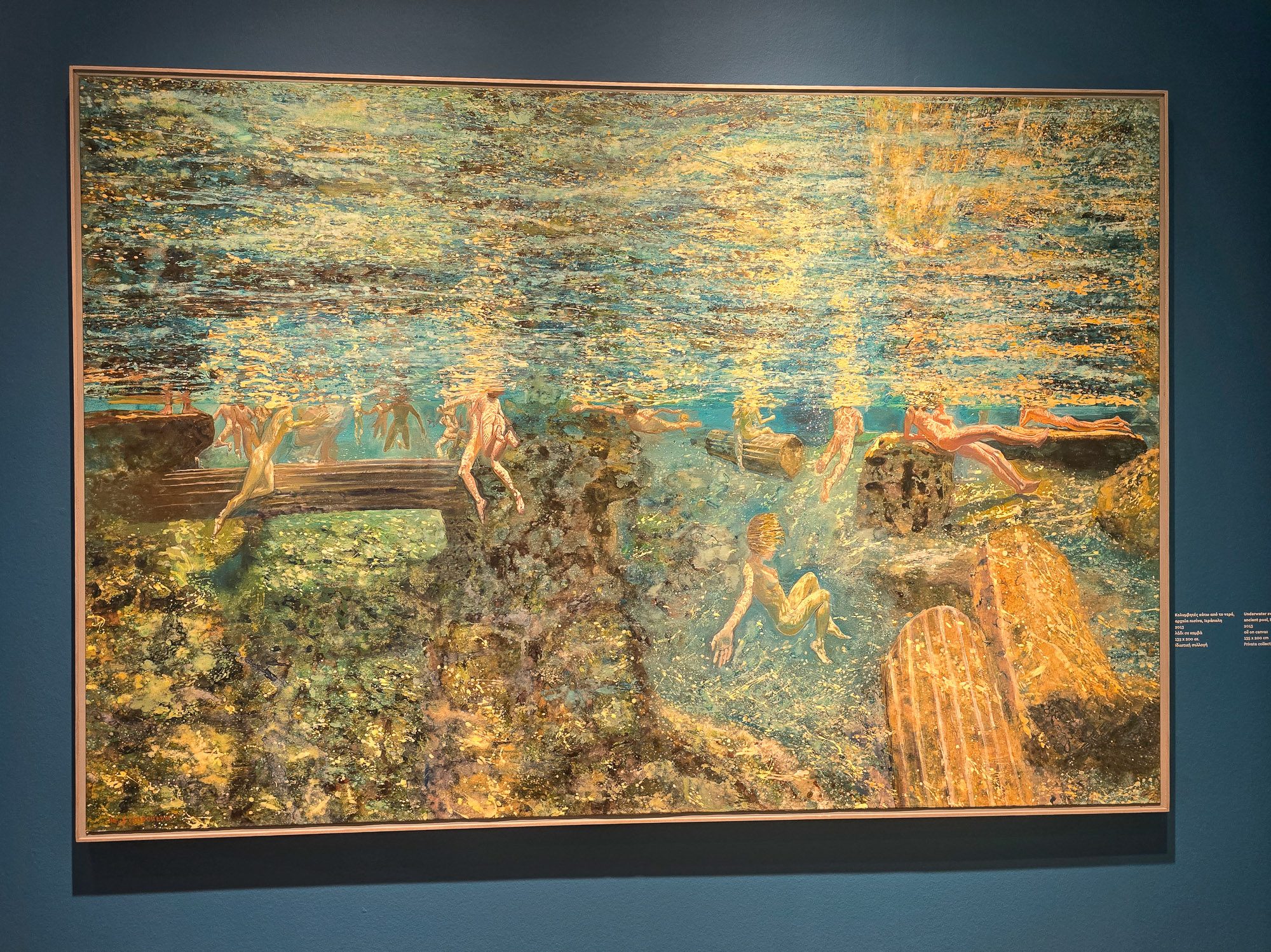
I also spent time at the National Gallery in Nafplio, set in a neoclassical building that feels absolutely appropriate for what it houses. One of the standout exhibitions was The Greek Struggle for Independence, 1821. Photography was clearly not encouraged, with watchful guardians ensuring that the rule was respected. There was also a temporary exhibition, Traces of Presence, Historical Masks, drawn from the collection of the National Historical Museum. The standout for me was an exhibition of works by the Greek artist Maria Filopoulou. Her water-themed work is particularly striking. Seascapes, swimmers, shifting light. There is a sense of movement in her paintings that is totally captivating.
Leaving Nafplio
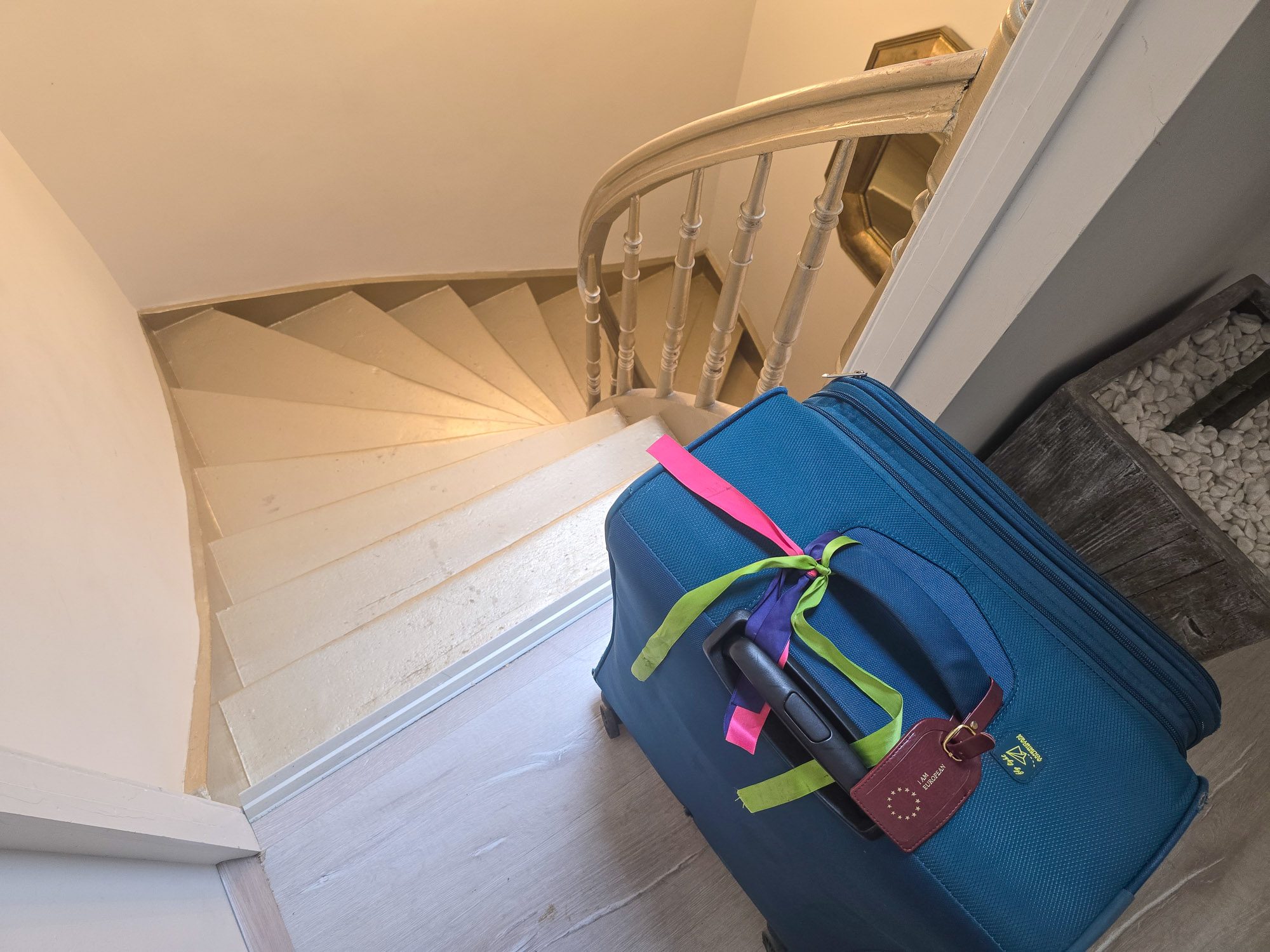
As reluctant as I was to leave, the time had come. But first things first. Getting my luggage down the 42 golden steps.
You don’t travel solo for this long without learning a few practical solutions. Mine involved sitting on the top step, laying the case on its side next to me, and bumping my way down on my derriere one step at a time, sliding the case alongside me. By the time I reached the final ten steps, a man appeared and offered to carry it the rest of the way. Oh well – the thought was there!
I trod the familiar route to the bus station, passing through side streets and across the square without any pangs of sadness, because I knew that I’d be back. How could I not? I’d always felt a connection with Nafplio since my first visit. Not just with the charm of the old town, but the surrounding landscape and just a sense of connection that I can’t quite explain.
There are way too many images of Nafplio to include in my posts, but you may click on the image below to see more from my Nafplio album.
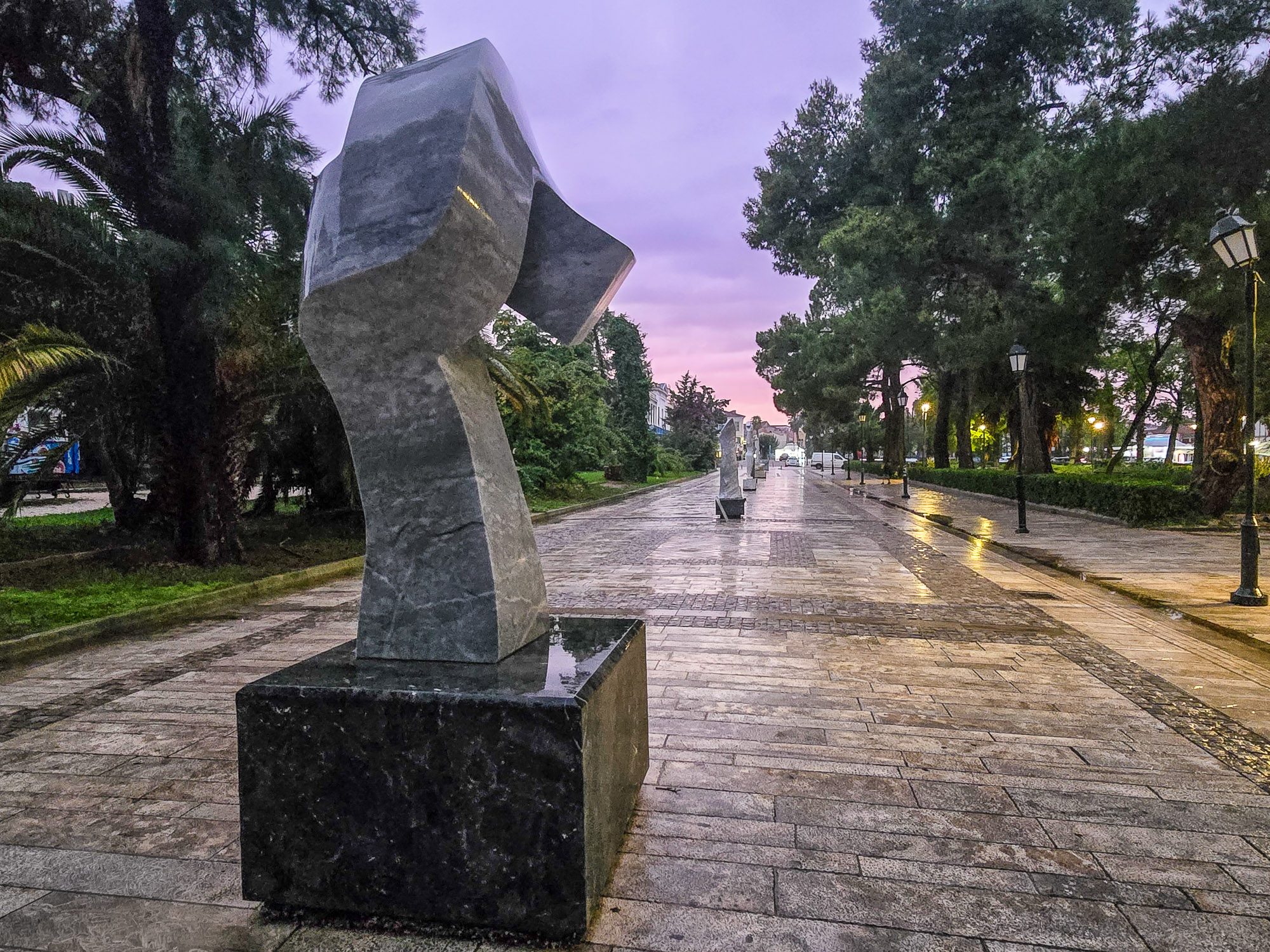
It’s always a pleasant bus journey back to Athens through a route through that stunning landscape of the Peloponnese I mentioned. The bus passed Corinth, with clear views of Acrocorinth rising in the distance. Not the sort of moment I could capture from a speeding bus, so I didn’t bother.
We crossed the Corinth Canal and continued towards Athens, passing through Perama or as I call it, the Ship Hospital, where rows of ships sat mid-repair or in various stages of attention.
Normally, I would stay on the bus all the way to Kifissos Bus Station, but this time I tried something different. A tip from my host on Spetses suggested getting off at Eleonas and taking the metro into the centre. I had marked it on Google Maps, so I knew when we were getting close. The bus veered off the main highway into a landscape of scrapyards and back streets before dropping us passengers at a fairly unremarkable junction. The metro entrance was not obvious, but a glass-covered lift nearby seemed promising. It delivered me straight down into the station, and from there it was a simple ride to Monastiraki for a couple of euros. A far better option than the usual taxi from Kifissos.
Back in Athens
With my return flight home only just booked, I had to find somewhere new to stay. My usual choice, the Attalos Hotel, had no availability, so I booked Above Athens, just by the Metropolitan Cathedral. Easy to find, the welcome was warm, and it served its purpose well for three nights.
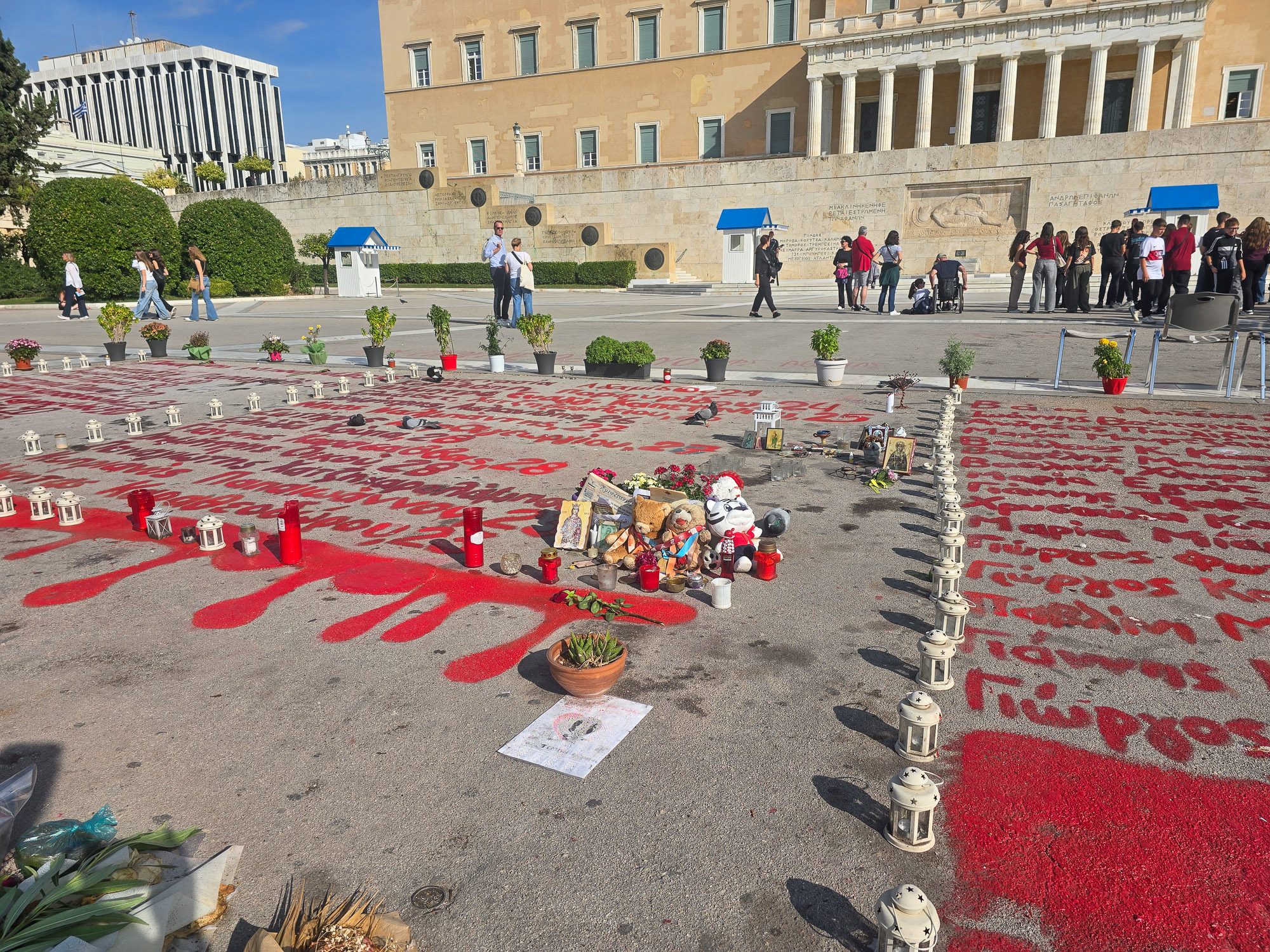
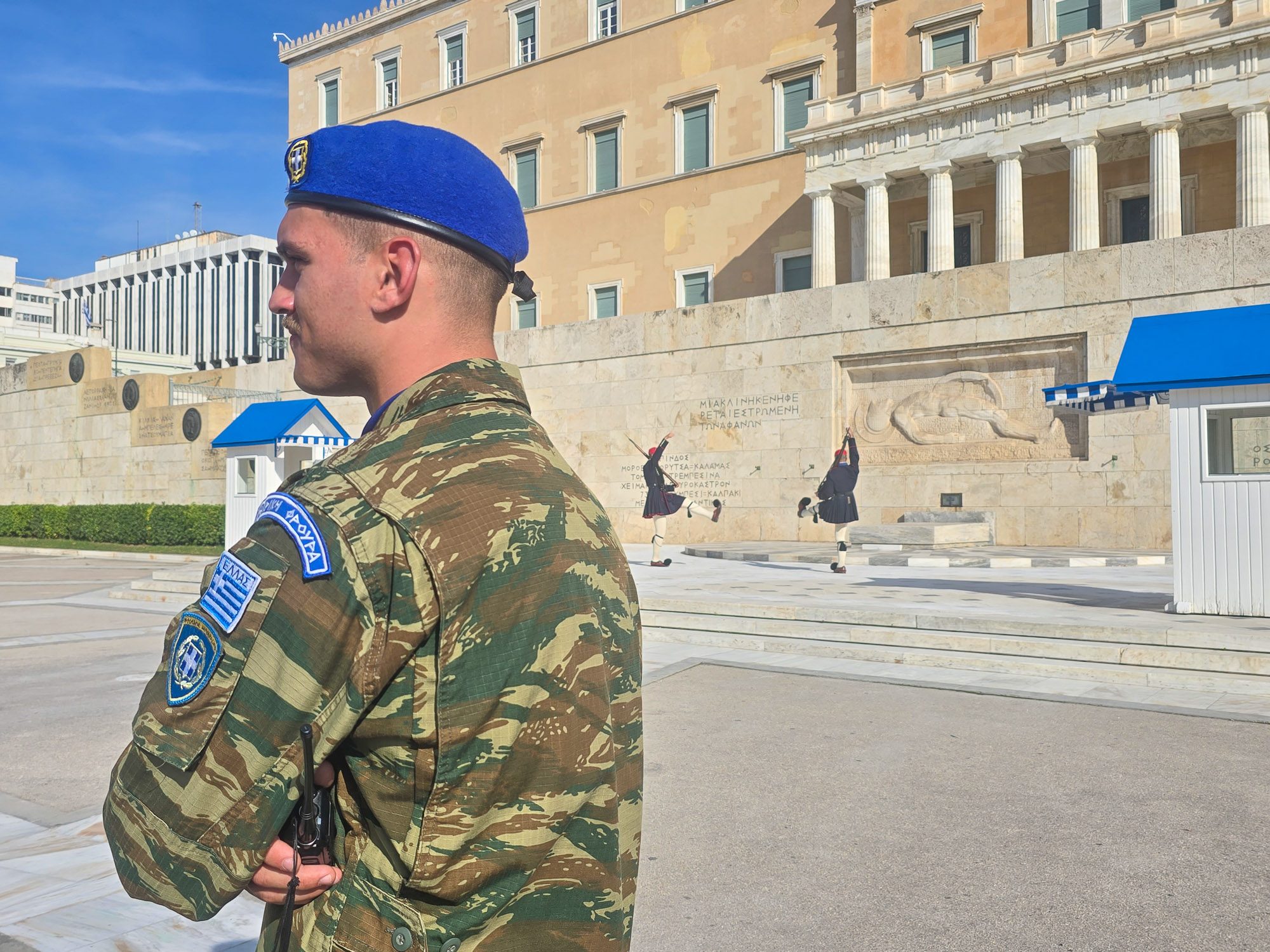
Once the luggage was dropped, I made my usual pilgrimage to Syntagma Square to see the Evzones. The memorial to the Tempi victims was still very much present. It’s a moving tribute and a reminder that this tragic event and the 57 lives that were lost will not be forgotten – nor will those responsible.
From Syntagma Square, I wandered towards Plaka. I noticed that the Free Gaza graffiti was even more prominent than on my last visit. Plaka now feels more like a tourist trap than it ever did, and I’m not sure why I always seem to gravitate towards it. Habit, I guess.
I covered a lot of ground over the next couple of days. Some familiar, some new. Psiri remains a favourite, although returning there after having my phone stolen on a previous visit felt like a small act of defiance. I kept my eyes peeled, ready to spot the little crook that had lifted it from my restaurant table. His face is vividly etched into my memory – though I wish it wasn’t.
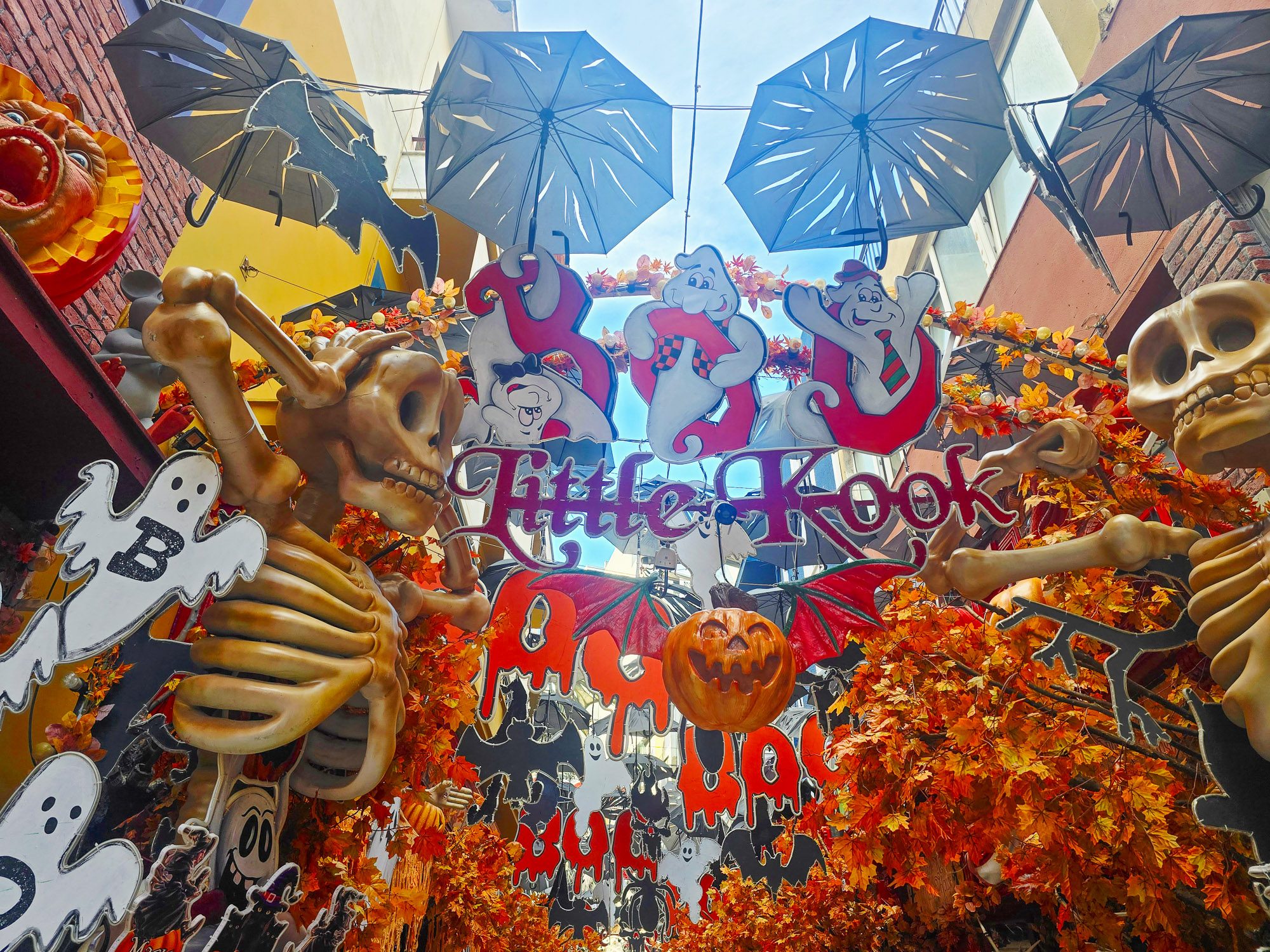
Little Kook was in full Halloween mode, as expected. Monastiraki Square continued to leave me feeling a bit icky. It seems to feel a little more worn each time, and one where the less savoury characters seem to gather. It always feels as thought it would benefit from a bloody good jetwash. And yet somehow, I like it.
Technopolis City of Athens
I decided it was time to head away from the well-trodden tourist trail. I like to try to explore a new place on each visit to Athens. One day, I headed out to Technopolis City of Athens. Although I had visited before, I had never properly explored the Industrial Gas Museum. The site covers around six and a half acres. The gasworks were founded in 1857 and operated until 1984, making it one of the most complete surviving examples of nineteenth-century industrial architecture in Greece. Much of the original machinery is still in place, allowing you to follow the coal production process through the site. Since 1999, Technopolis has operated as a cultural venue, and in 2013, the museum formally opened. The old gas holders now serve as exhibition spaces, cafés, and event venues, including the Mikis Theodorakis Stage – the main space for concerts and musical events.
During my visit, the Meet Market was in the process of setting up, with artisans preparing their stalls. The Meet Market is a roaming pop-up event in Athens that brings together local designers, makers and street food vendors in a relaxed, festival-like setting. It’s as much about the atmosphere as the shopping, with music, drinks and a social buzz.
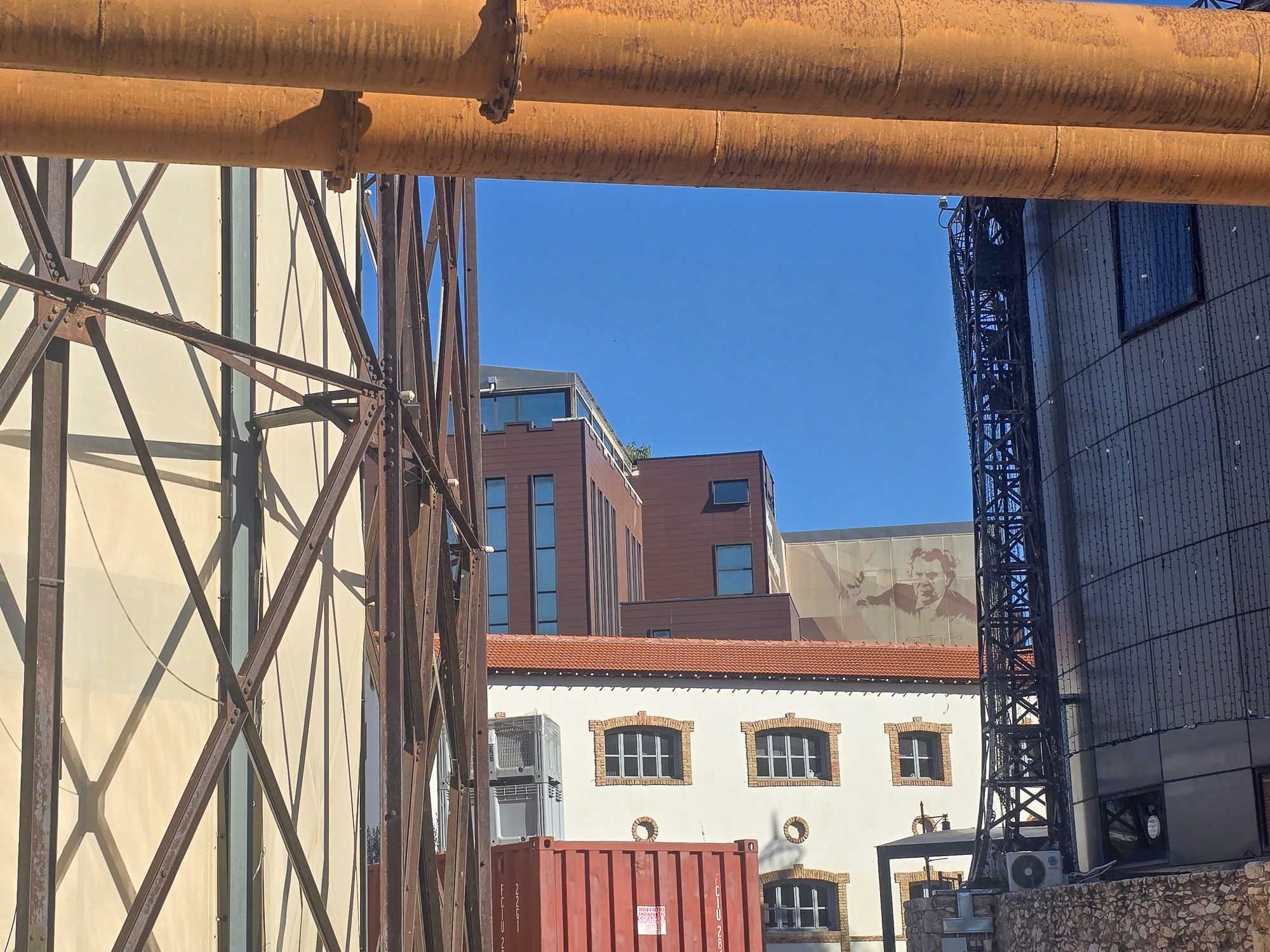
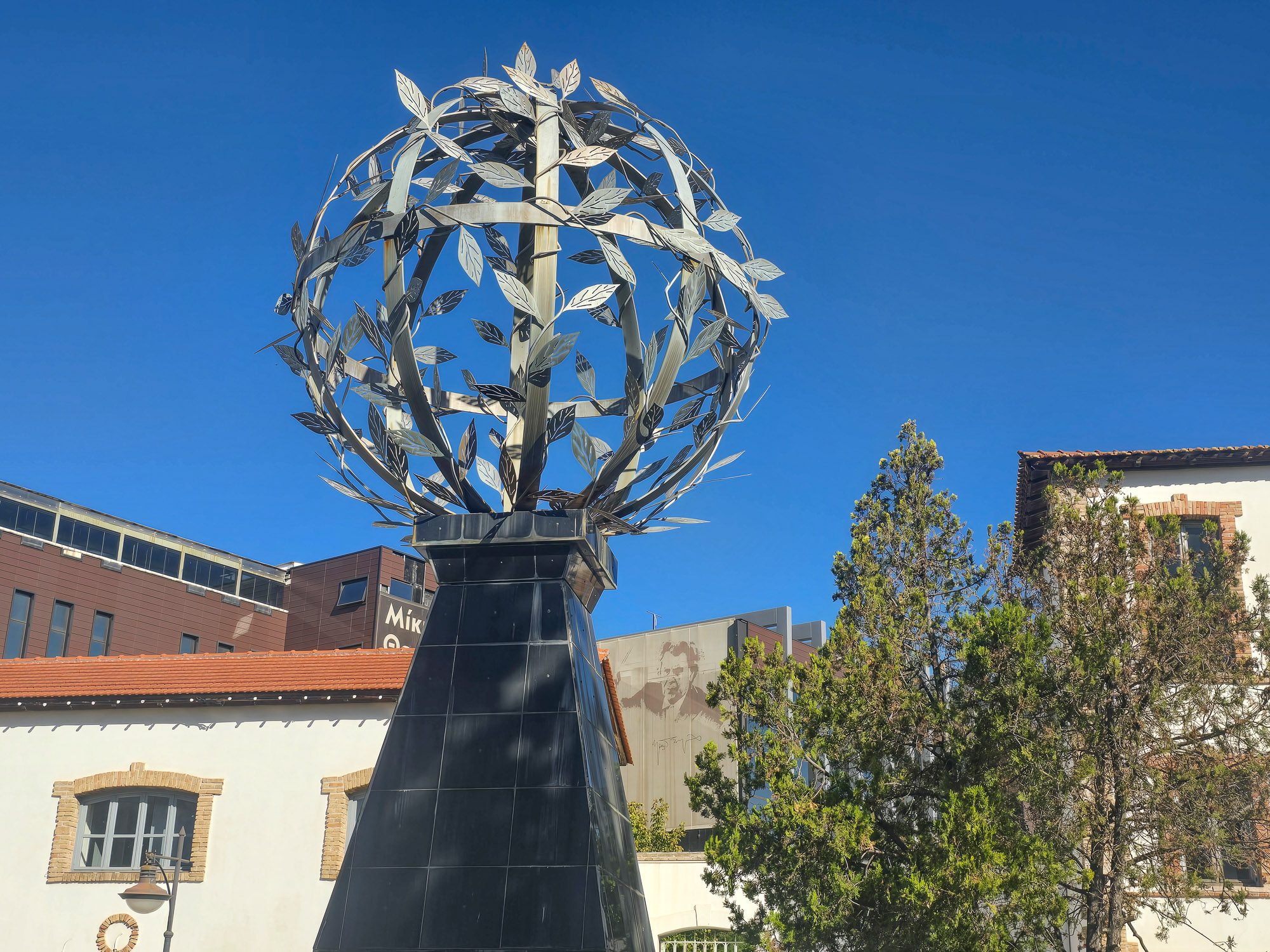
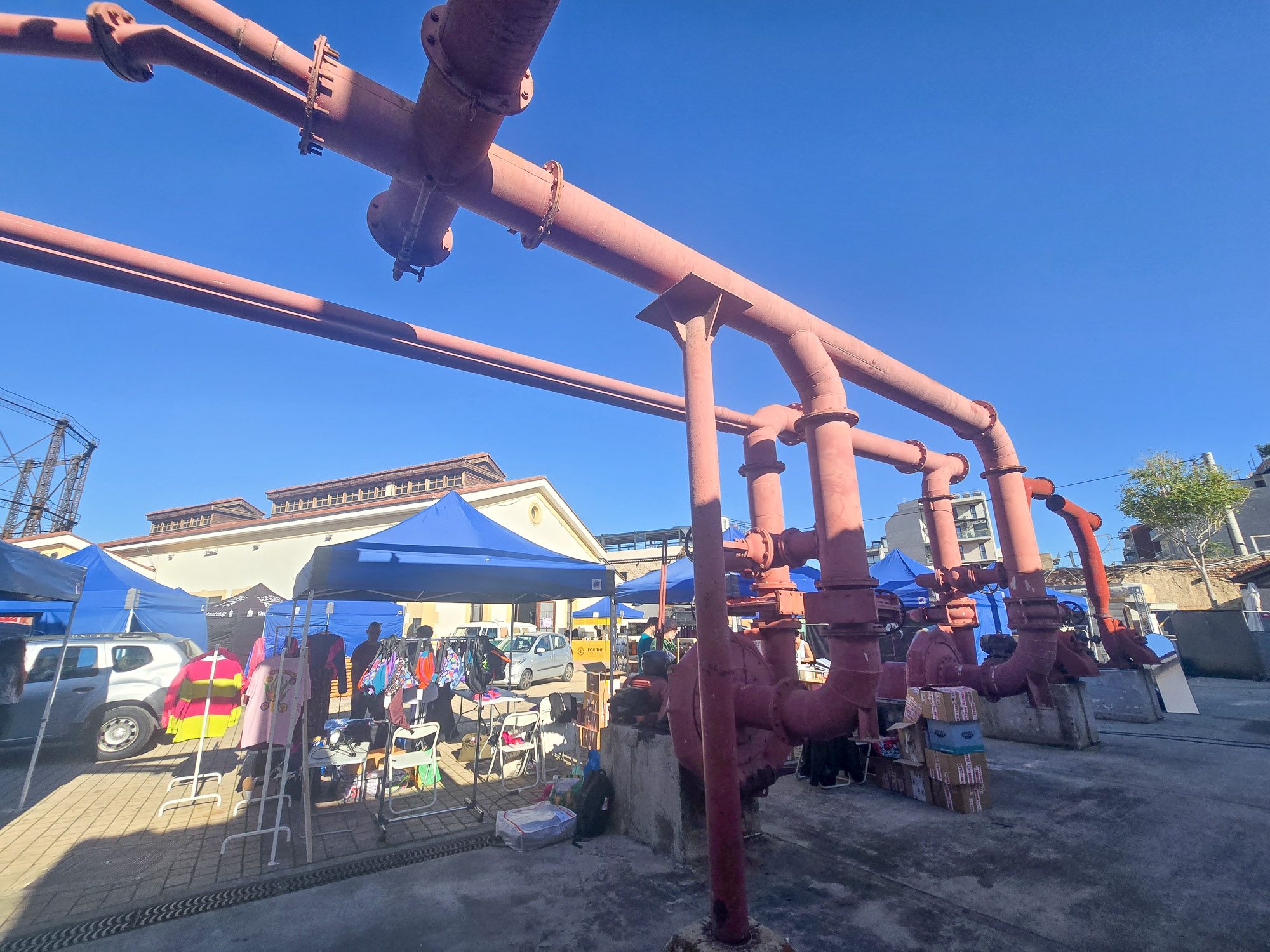
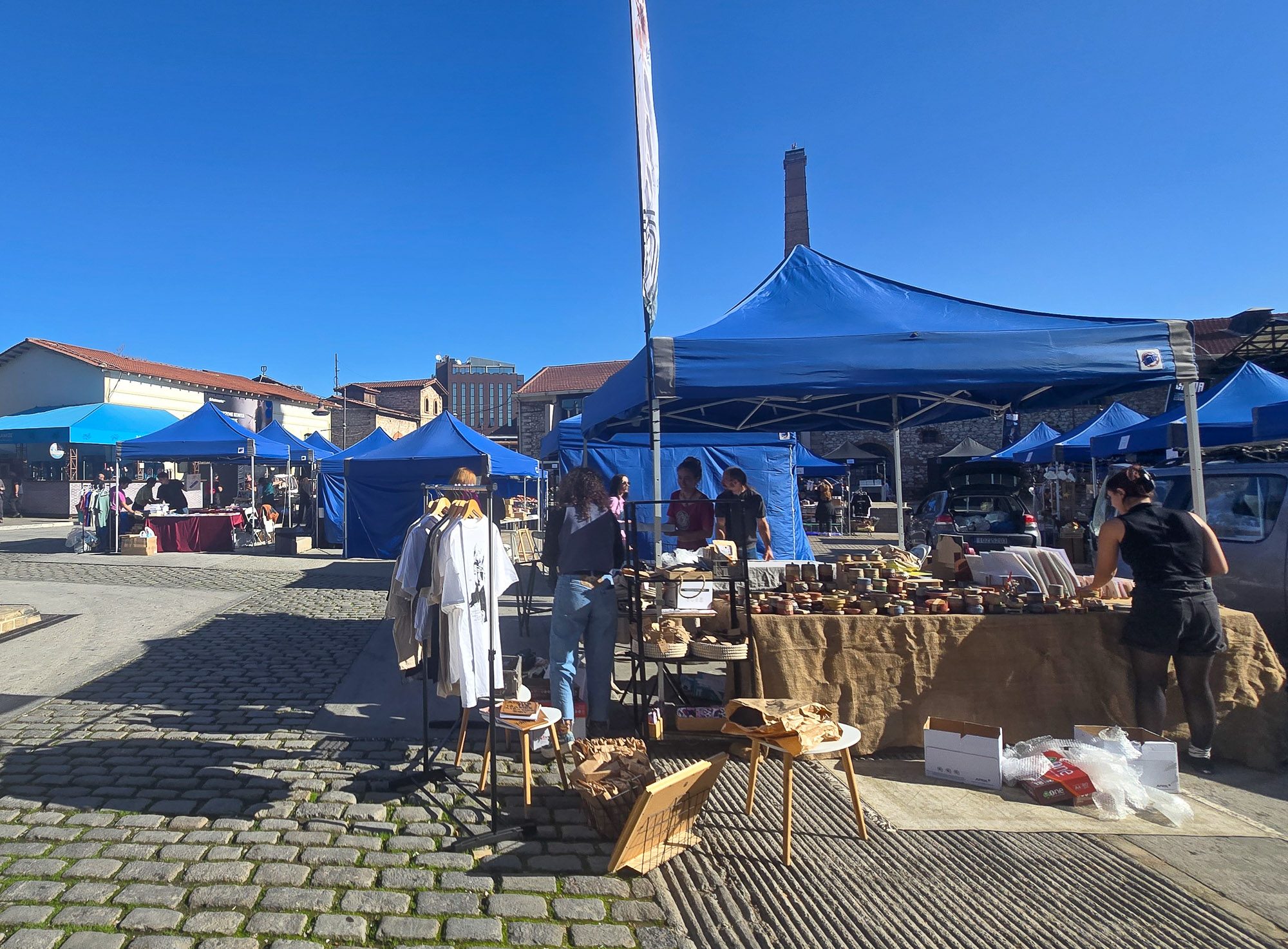
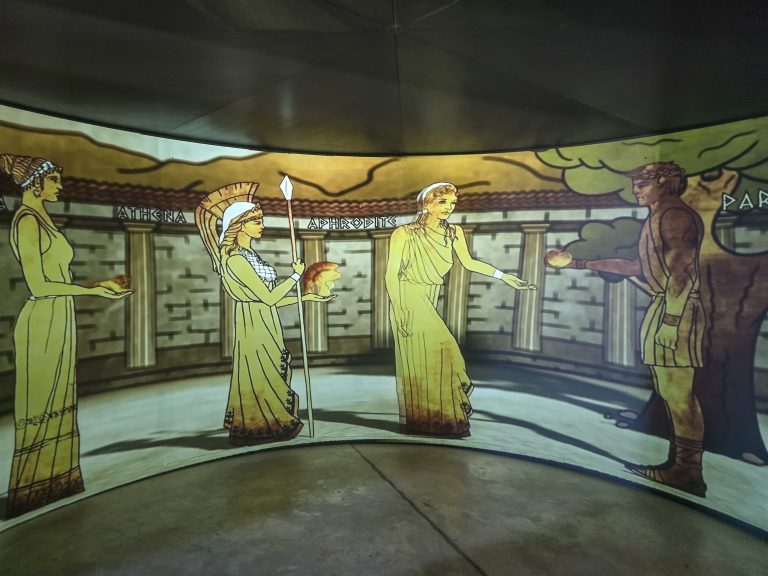
In one of the event spaces housed in a gas cylinder, something else caught my attention. It was in the process of setting up for an event, but as I stood reading the sign, a lady waved me in.
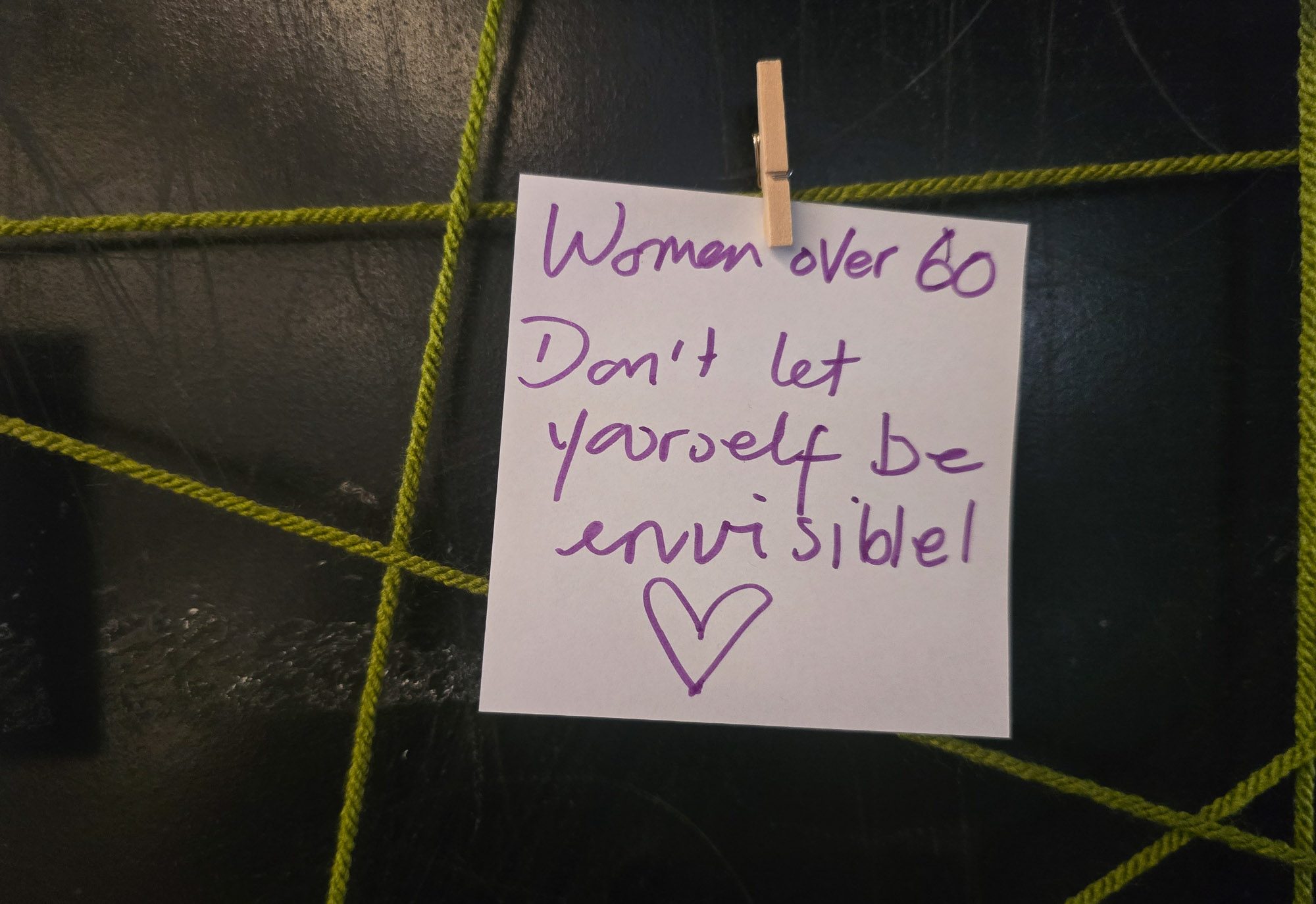
Inside was an exhibition centred on women’s stories. Twelve women, all over the age of sixty, sharing their lives through recorded audio. I was able to follow along with translations as I moved through the space. Reflections on identity, expectations, and the shape of lives lived over time. I was even invited to leave my own message on a board before I left. There was too much pressure to write something profound.
Benaki Museum Pireos 138
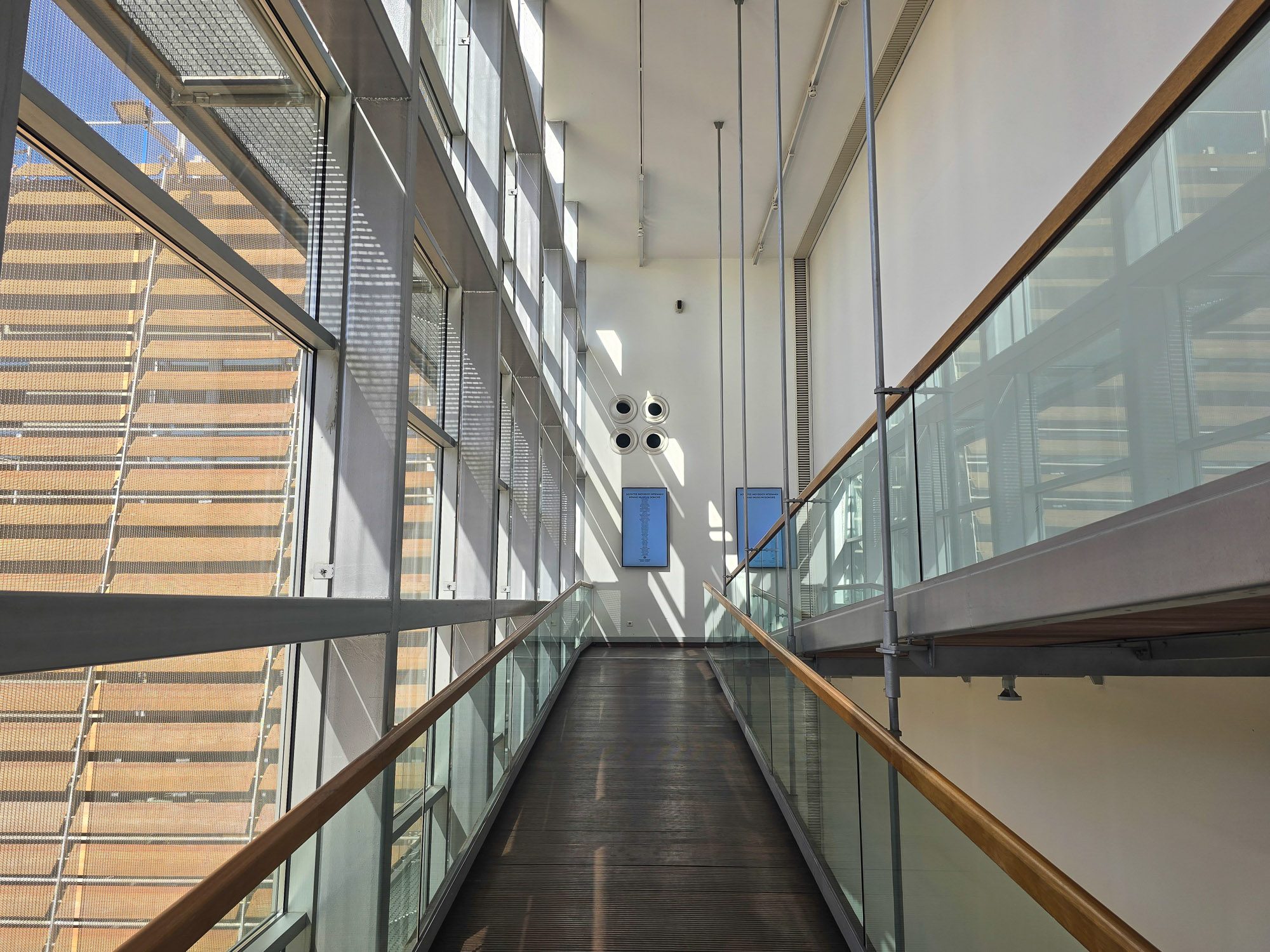
From Technopolis, I walked to the Benaki Museum, Pireos 138. It was definitely walkable, but in the nearing midday heat (albeit late October), it was not exactly comfortable. Upon arrival, I headed straight to the café for refreshment – a nice wodge of apple pie and a pot of Earl Grey.
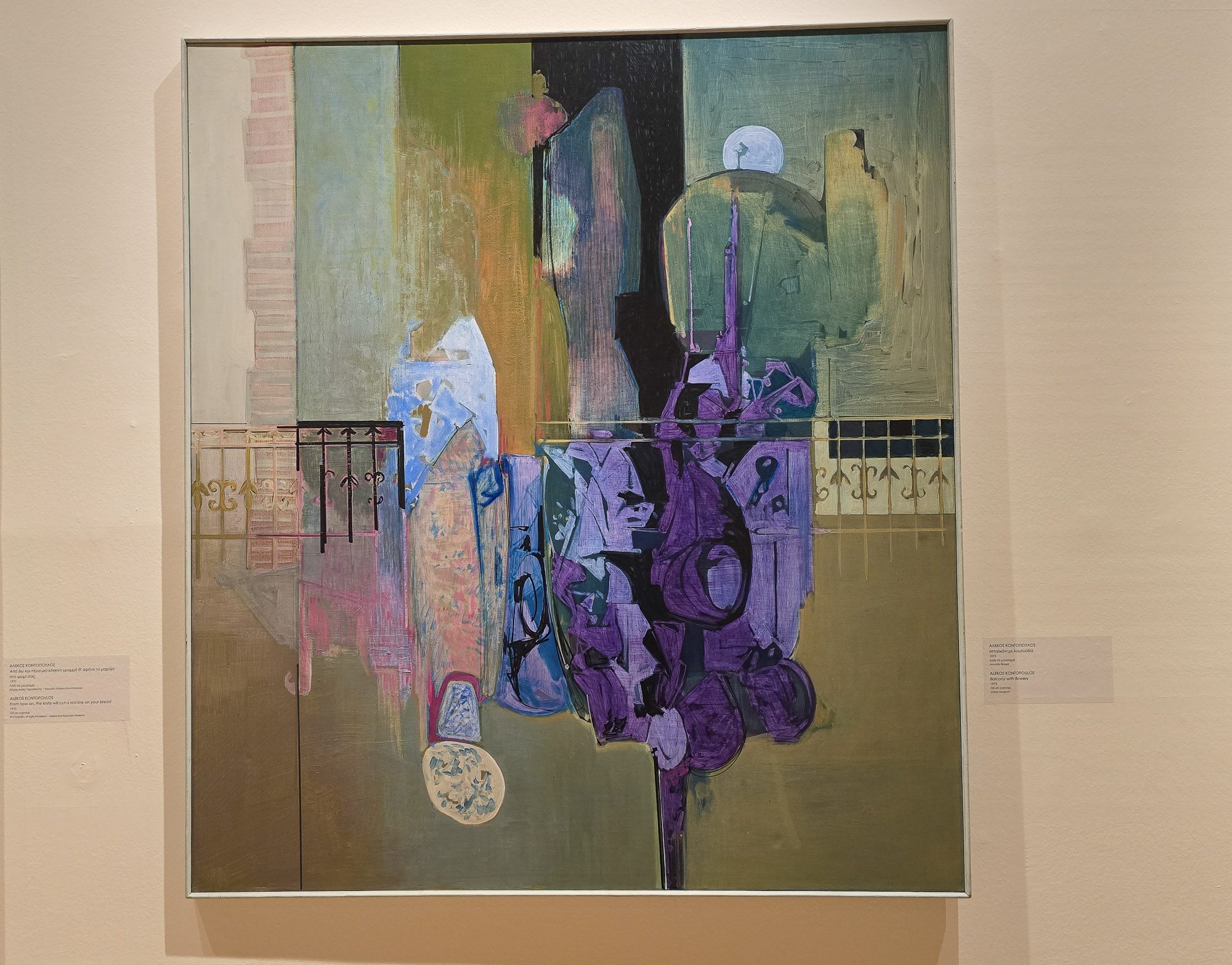
The architecture of the building alone was worth the visit. There were two main exhibitions on at the time. Juvenilia explored the early work of eleven Greek artists, tracing the ideas that would later define their mature style. This I loved – modern art floats my boat, and I spent over an hour admiring the vibrant and exciting works.
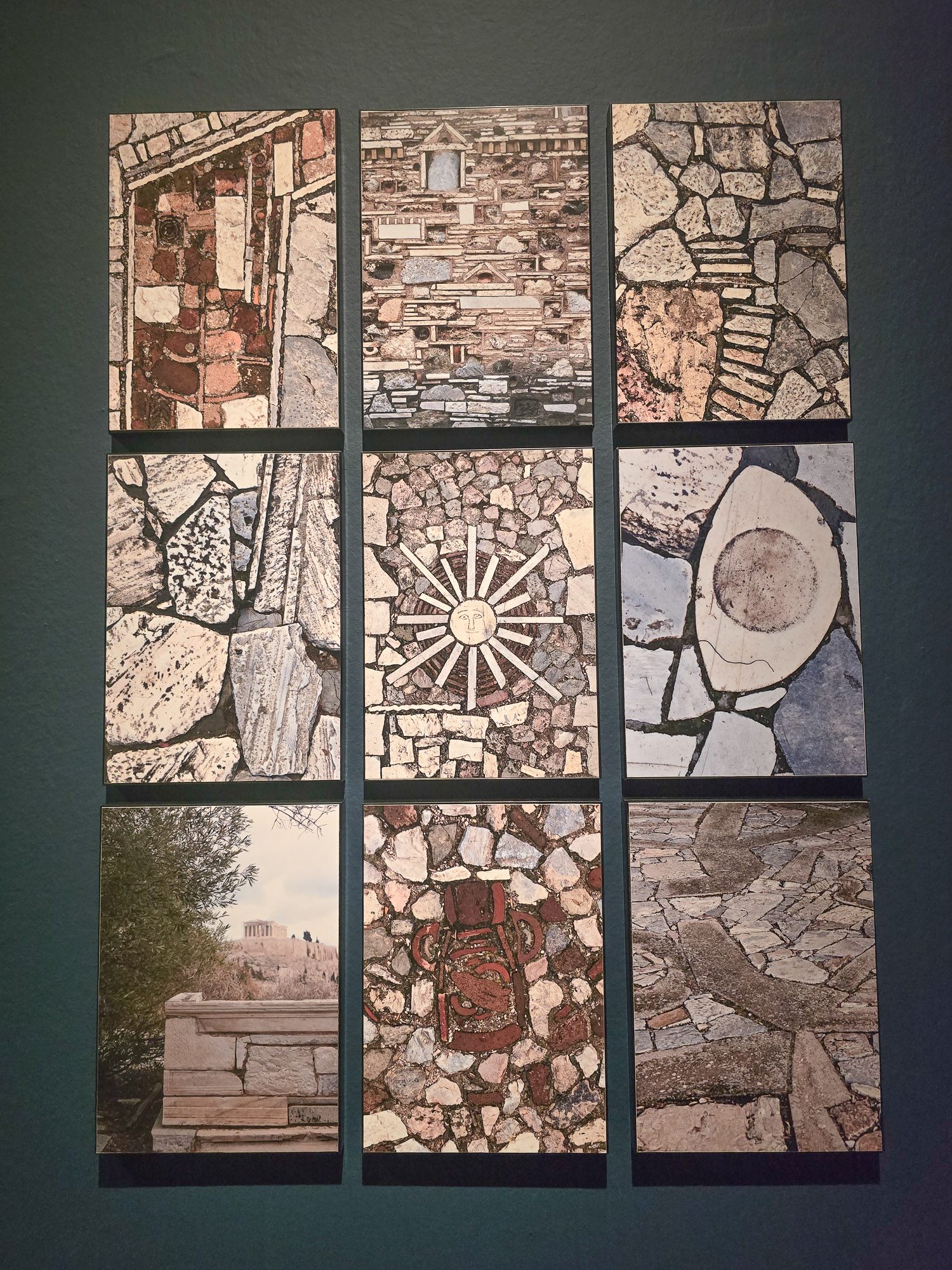
The second was entitled Aesthetic Topography. I wasn’t entirely sure what it was about until I entered, but the exhibition focused on the work of Dimitris Pikionis, Greek architect and painter.
The exhibition presents his creative process through six architectural works, combining sketches, drawings and his own written reflections. At its centre was his design for the pathways leading to the Acropolis and Philopappos Hill, where fragments of materials are embedded into the paving, creating a layered visual narrative. Although the translated text was a bit high-brow (for me), this part of the exhibition I found interesting and reminded me that I was well overdue for another visit to Philopappos Hill – I remember those pathways well.
After leaving the museum, feeling culturally replenished, I meandered through Metaxourgeio and Gazi towards Thissio. After about an hour, I reached the point when I’d had enough of the aimless wandering, and I had the sudden urge to step away from the city altogether. So I ordered a taxi and headed to my favourite place to go when I want to get some respite from the hubbub of the city.
Stavros Niarchos Foundation Cultural Centre
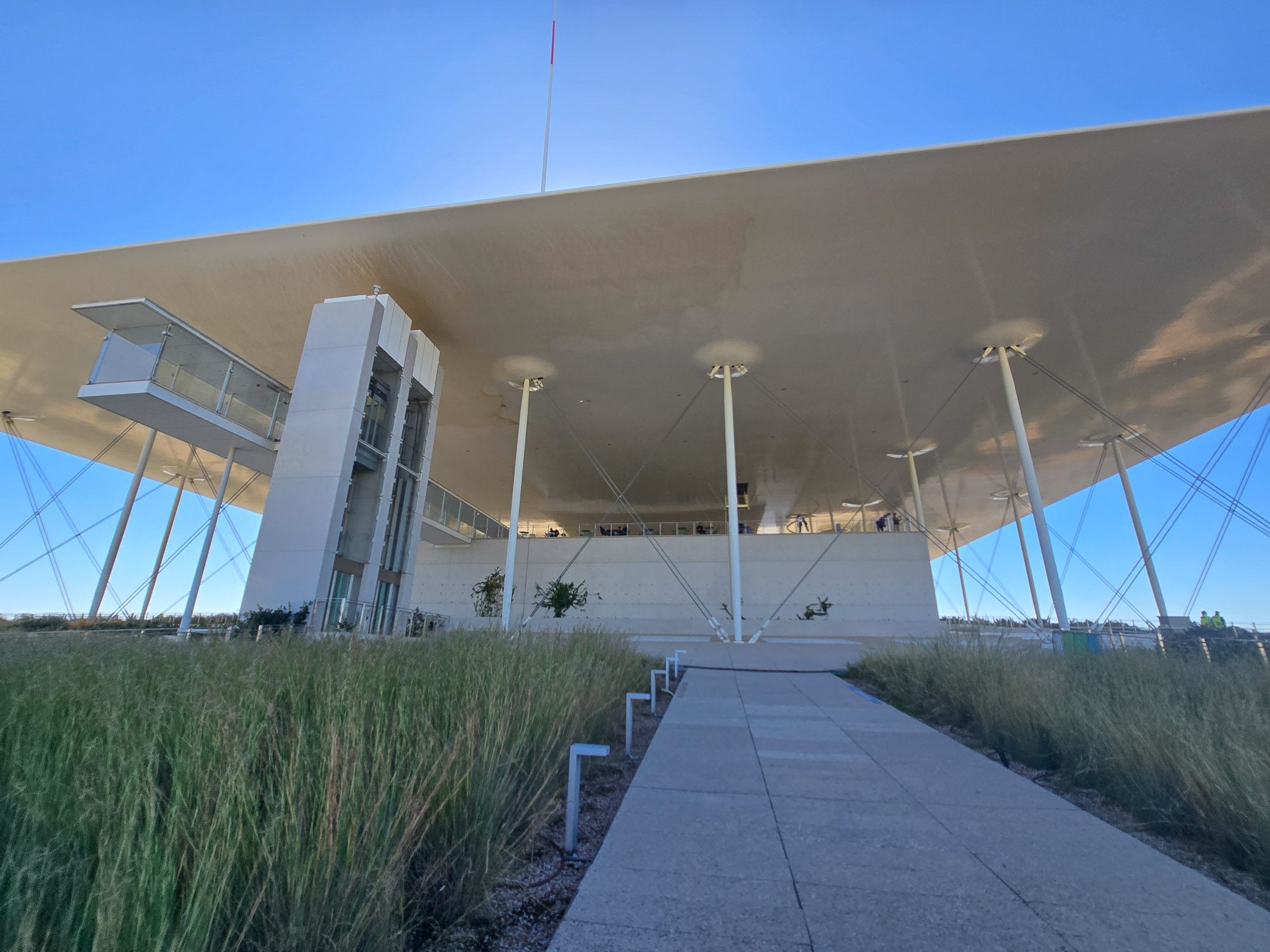
There is something about this place that draws me back every time I come to Athens, and yet it rarely seems to feature on the typical list of places to visit – I mean, there’s a lot of competition! It is home to both the Greek National Library and the Greek National Opera, set within a large public park designed by architect Renzo Piano. The entire project opened to the public in 2016 and has since become one of the most significant cultural developments in modern Athens.
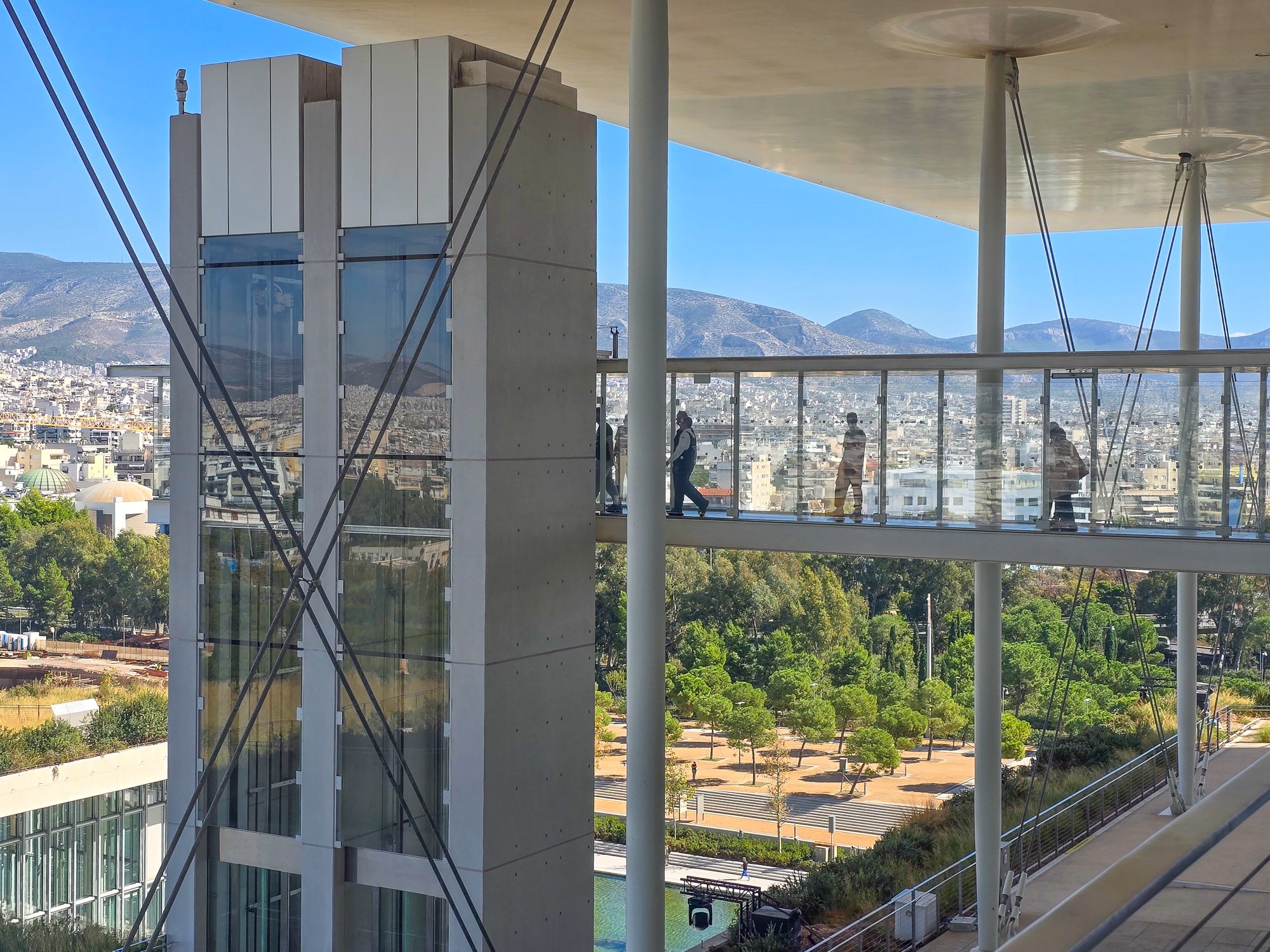
At its centre sits a vast, clean-lined structure that rises gently from the landscape. You make your way up through an urban garden, past olive trees and open green spaces, until you reach the top. There is a lift to the lighthouse (a tad vertigo-inducing, but I just look at my feet), from where you will be offered the most spectacular views.
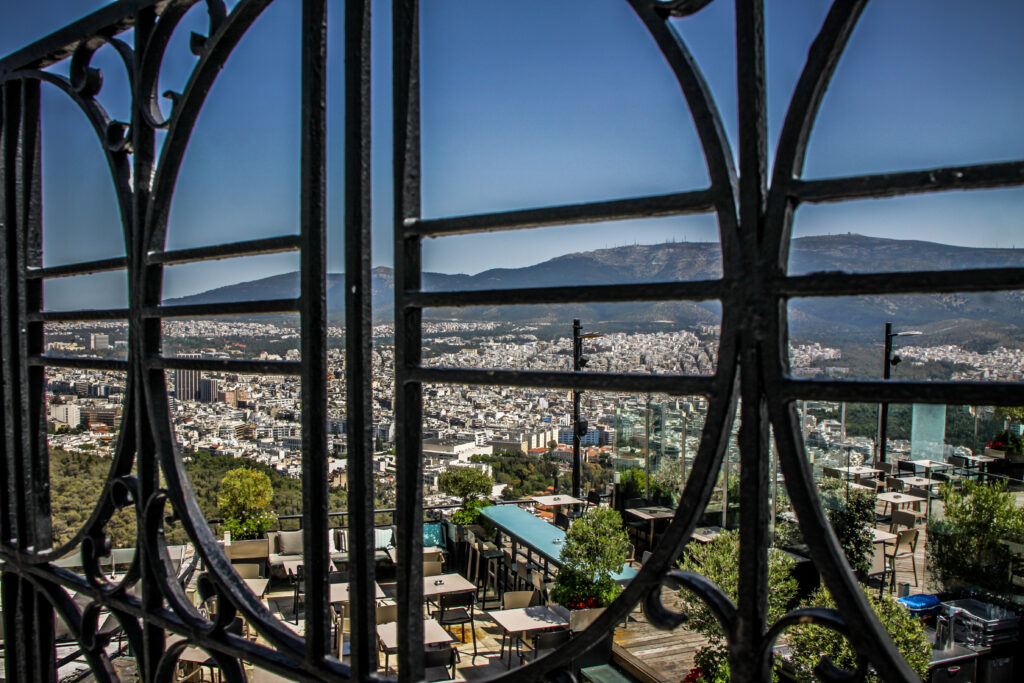
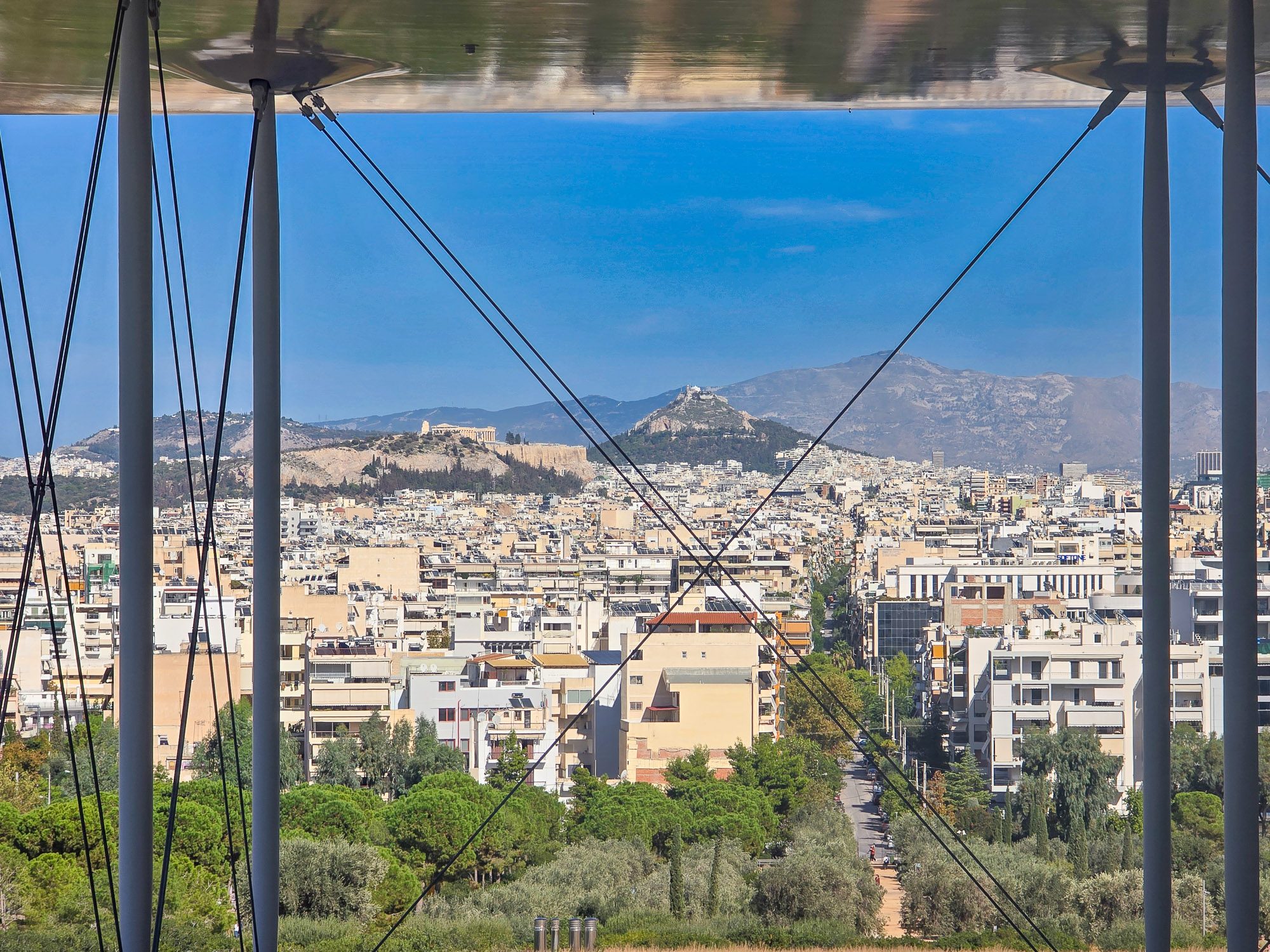
The view opens out in all directions. Back towards the Acropolis on one side, the hills of Mount Aigaleo on another and out across Piraeus and the Saronic Gulf over to the Peloponnese. It gives you a different perspective on the city. Removed, but still connected. And the way the tension wires perfectly frame Lycabbetus Hill – entirely intentional, which completely boggles my mind.
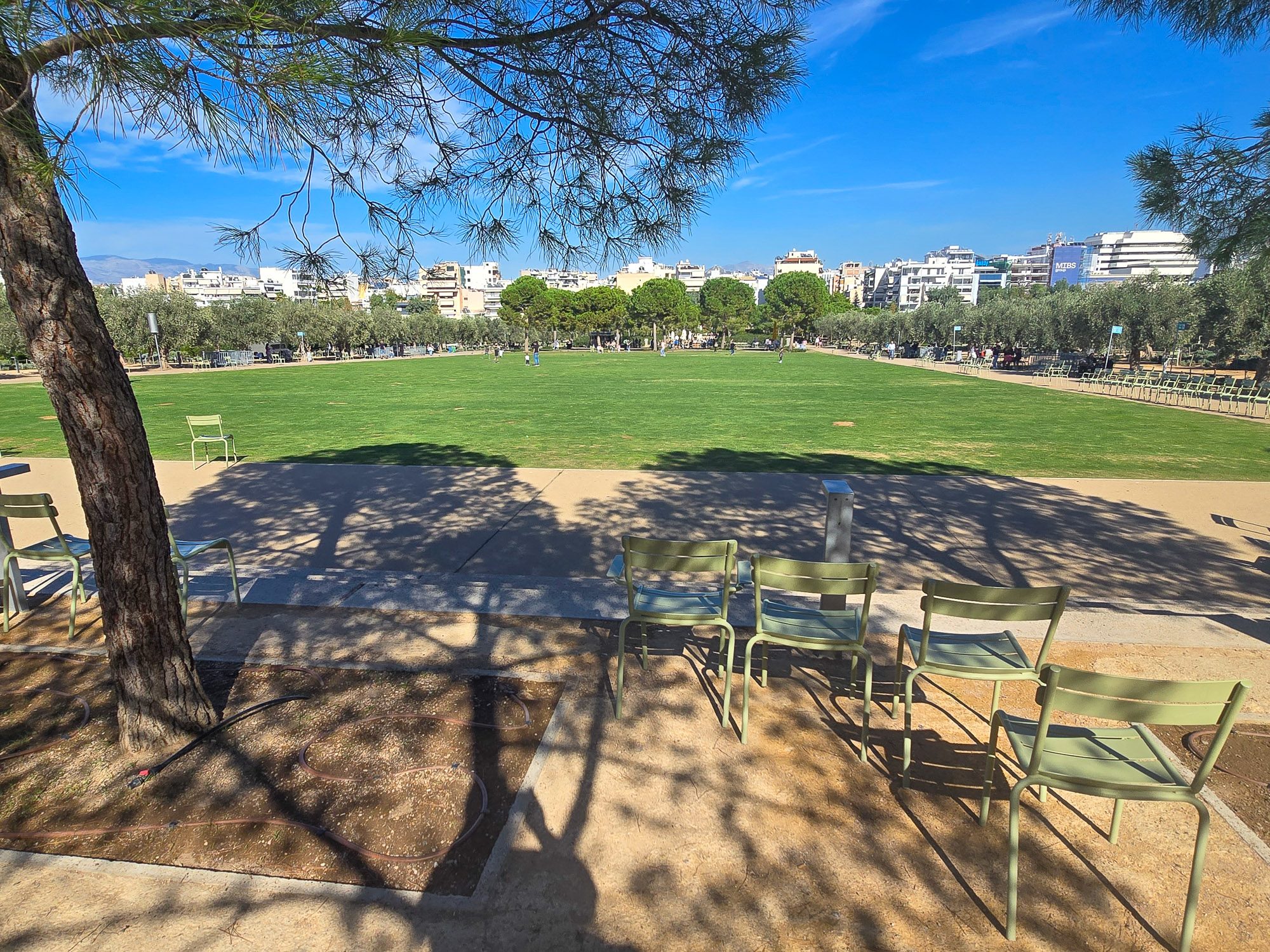
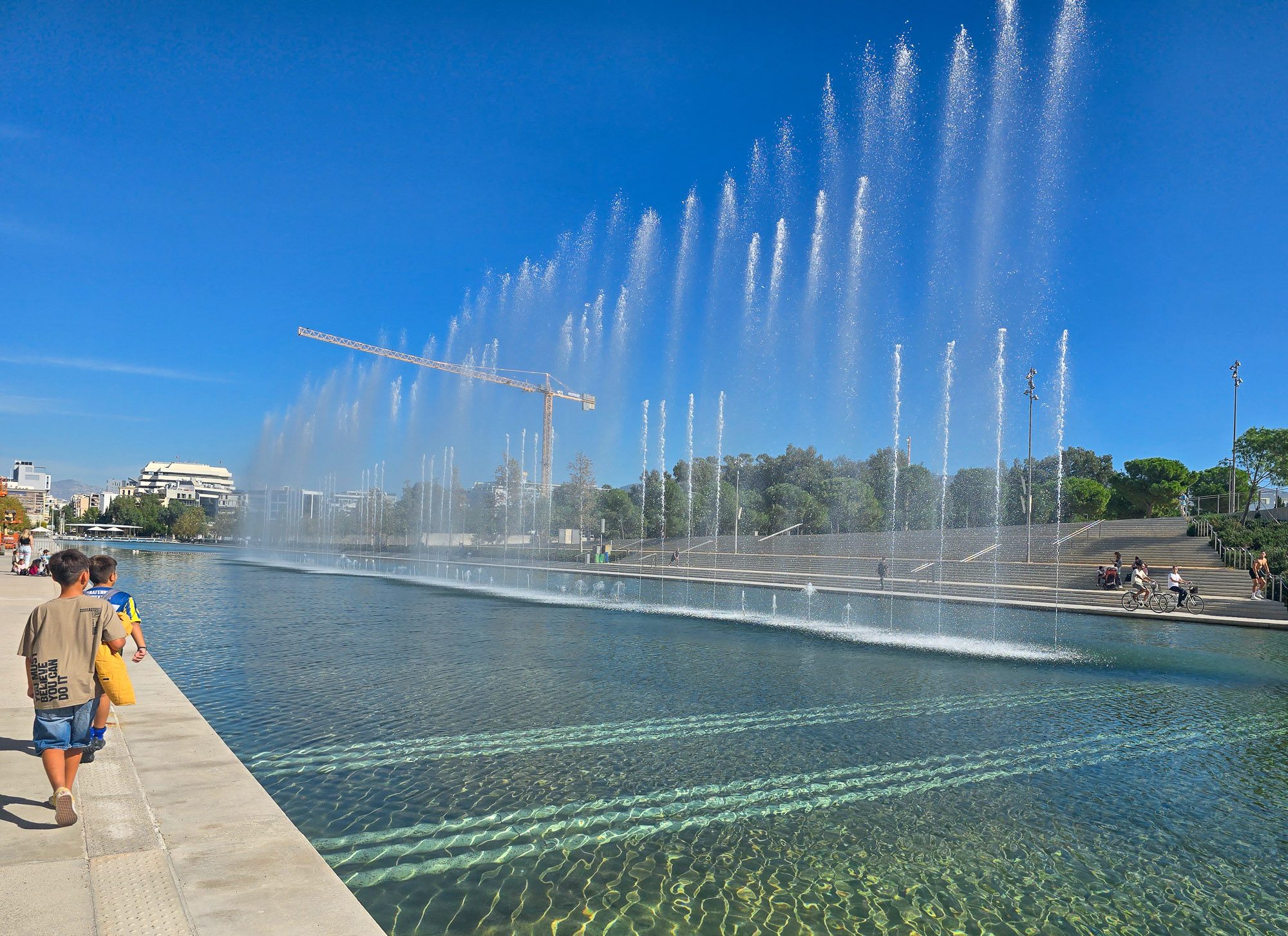
The gardens give me so much joy. The planting is simple but effective, with native species that are drought-tolerant, all part of the intentional eco-friendly design. You can wander through the gardens and stumble across a couple of seats underneath an olive tree, inviting passers by to sit, admire, reflect and absorb the tranquillity. A large green space is where families gather to meet with friends, share picnics and let the children run freely and safely. If you time it correctly, you may even catch the choreographed dancing fountain installation along the canal. The kids love it. And so do I!
I’ve written more about the SNFCC in previous blog posts, but this link will take you to a post I wrote a few years ago about the development of the site, and how and where to catch the free shuttle bus from central Athens. Definitely put this on your list.
Following in the Footsteps of Monty Don Part 1 – Stavros Niarchos Foundation Cultural Centre
Athens is the perfect place to pause before the journey home – but the trip isn’t quite over yet. There is one more place that I wanted to visit. More in the next blog post.
If you are planning an independent trip to Athens or the Peloponnese (or anywhere in Greece), the A Greek Oddity Travel Planning Toolkit has everything you need, including transport guidance, itinerary planning tools and a curated resource library.
Discover more from
Subscribe to get the latest posts sent to your email.
MY BIG FAT GREEK TRAVEL SURVEY
How do you really plan your Greek adventures? I'd love to hear from you.
TAKE THE SURVEY →