Laskarideio Folklore Museum, Nea Kios: A Story Stitched Across the Aegean
Few people visiting Nafplio make the eight-kilometre trip around the Argolic Gulf to Nea Kios. Fewer still have heard of the Laskarideio Folklore Museum. But the town was built by refugees from Kios in Asia Minor after the 1923 population exchange, and the museum holds what they brought with them. It took some persistence to get inside. It was worth every bit of it.
If you have been following this trip from the beginning, you will already be familiar with the thread running through it – tracing the remnants of Hellenic history in Asia Minor. When this trip started in Istanbul two months ago, I sought out Greek connections — from Hagia Sofia and Irene from the Byzantine era, to the old Greek school in Fener and the remains of the Greek orphanage on Büyükada island. I then travelled to Marmara Adası, a small island that was predominantly Greek until the population exchange of 1923, still with a few Greek houses intact (sometimes barely). The trip then took me to Ancient Troy, followed by the islands of Bozcaada and Gökçeada, again former homes to a substantial Greek population. It is a subject that fascinates me.
Before I arrived in Nafplio, I knew I wanted to explore beyond the usual tourist trails and whilst looking at the map, I noticed a place called Nea Kios. Any place beginning with the name Nea, invariably means it was a new town created by refugees of the 1923 population exchange, and that was enough to pique my curiosity. A little more digging revealed a small museum there called the Laskarideio Folklore Museum, which exhibited relics from Asia Minor. That was decided. A visit was in order.
Visits were by appointment only, but trying to make contact with someone to arrange a visit proved rather more challenging than expected. I am, if anything, determined. It took several days through various channels, but I eventually managed to speak to someone who could make the necessary arrangements. Theodoros would meet me there at 10.30 the following day.
Nea Kios sits just eight kilometres west of Nafplio at the tip of the deep bay on the Argolic Gulf. I could have got there by bus, but for such a short distance it was a faff. On the morning in question, I picked up a taxi next to the Nafplio bus station. It was a good call because the driver, Nikos, was great, though he had never heard of the museum despite being a local.
He drove me out along the coastal road with the gulf on our left and the flat agricultural land stretching away to the right. It was an easy journey. I had arrived in plenty of time before my appointment, which suited me well. I wanted to walk around the town to get a feel for it before heading to the museum.
As was to be expected for a new town, the streets of Nea Kios were laid out in a clear grid pattern with broad avenues, modern houses that lacked any real character, and a couple of substantial churches dotted around the neighbourhood. However, the back story is worth considering.
The population exchange between Greece and Turkey, formalised in the aftermath of the Greco-Turkish War, forced around 1.2 million Orthodox Christians out of Asia Minor and into Greece, while around 400,000 ethnic Turks left Greece for Turkey. On paper, it could read as something organised and administrative. In reality, it began as chaos. Greece was not prepared for the scale of what arrived on its shores.
Over time, structures emerged. The Refugee Settlement Commission, established with international support, began allocating land and creating new settlements, some rural, some near existing towns where work might be available. In many cases, groups from the same original communities were settled together to preserve at least something of what they had shared. Their social structure. Their trades. Their dialect.
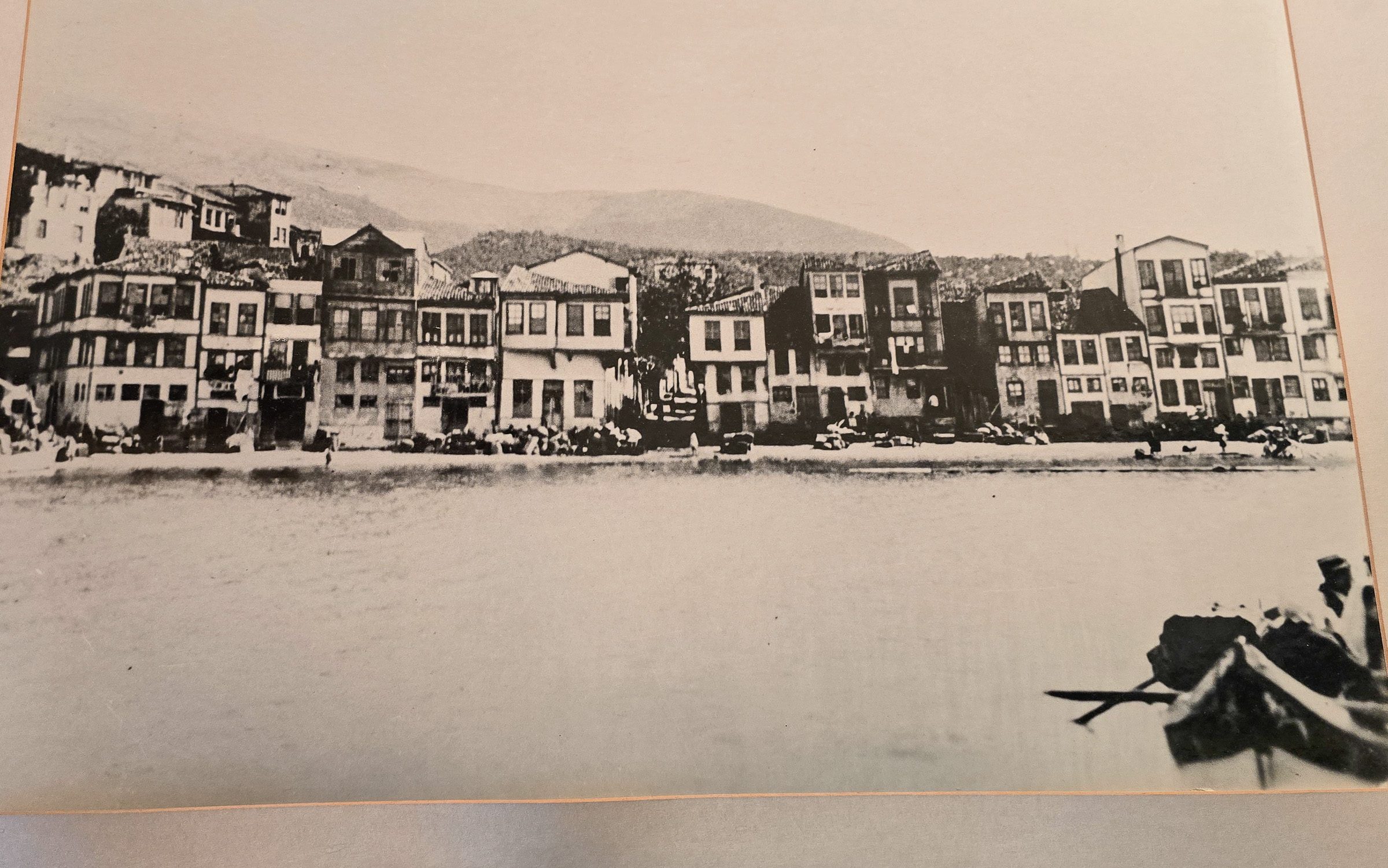
Kios, or Cius, was a town in Bithynia, on the shores of the Sea of Marmara. The people who came from there brought its name with them. Places like Nea Kios were deliberate reconstructions of something that had been lost. Nea. New. A continuation of somewhere else.
The challenges didn’t end upon arrival. The area of Nea Kios was nothing but marshland, which had to be drained before any building could begin – no mean feat.
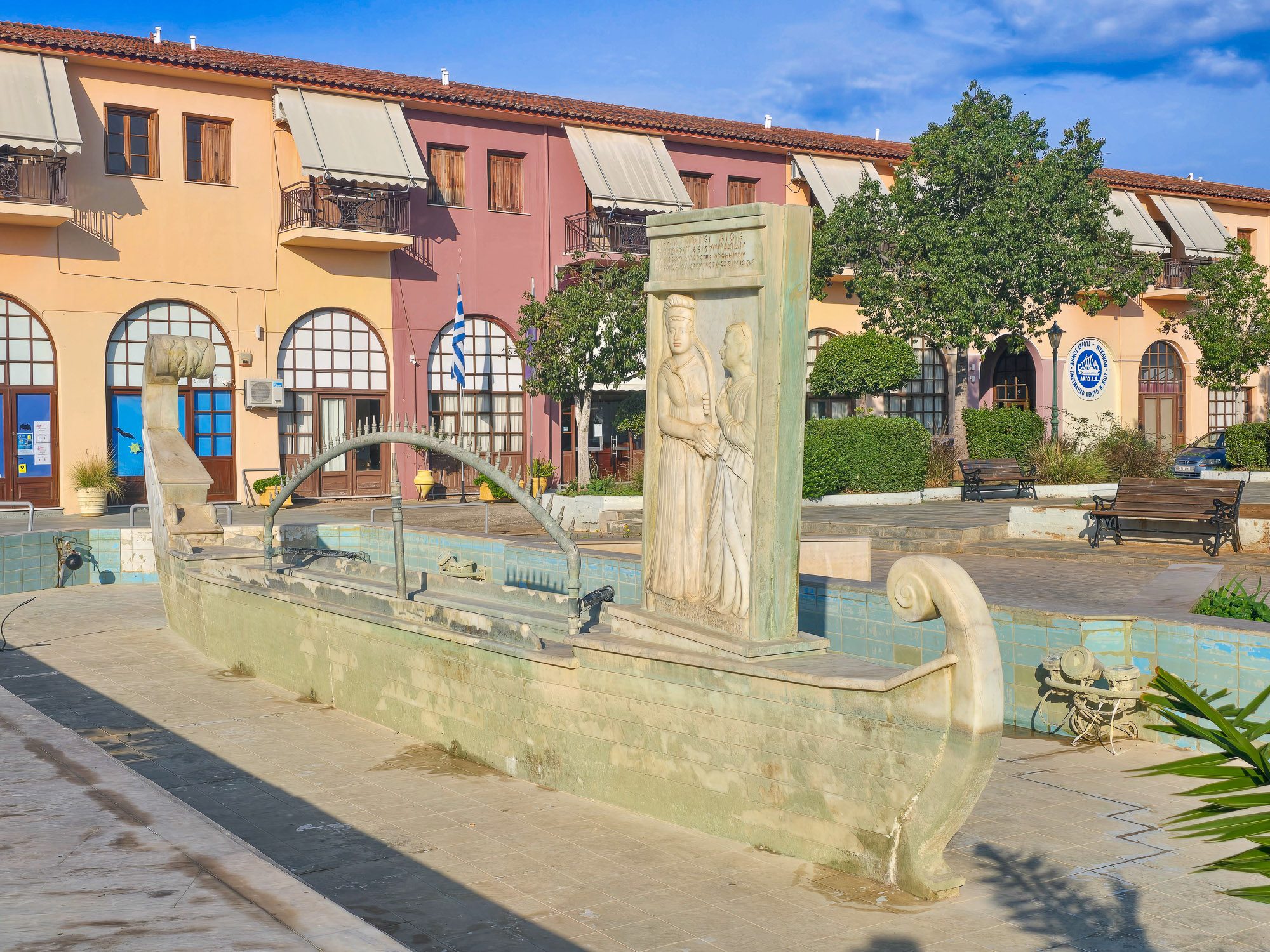
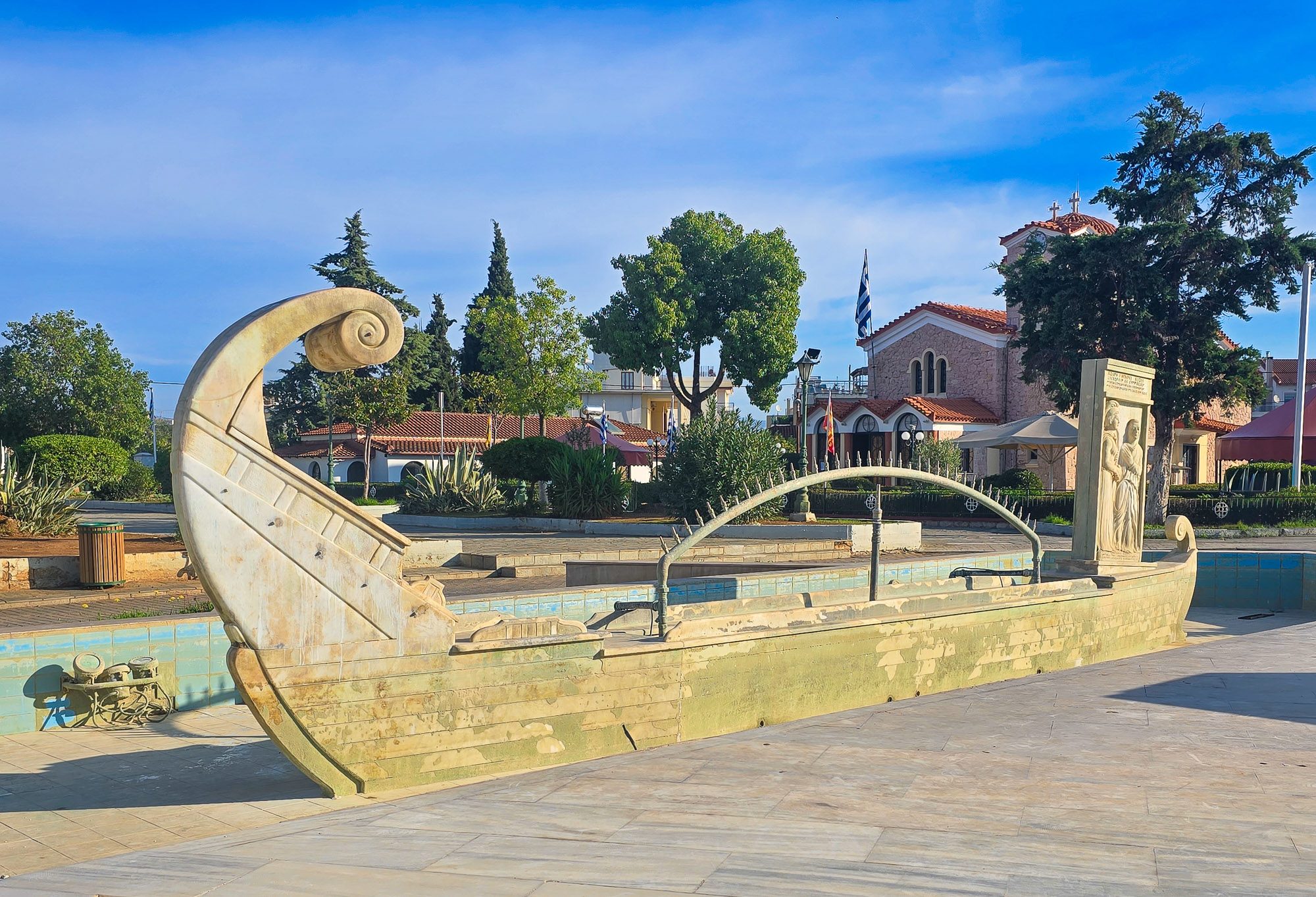
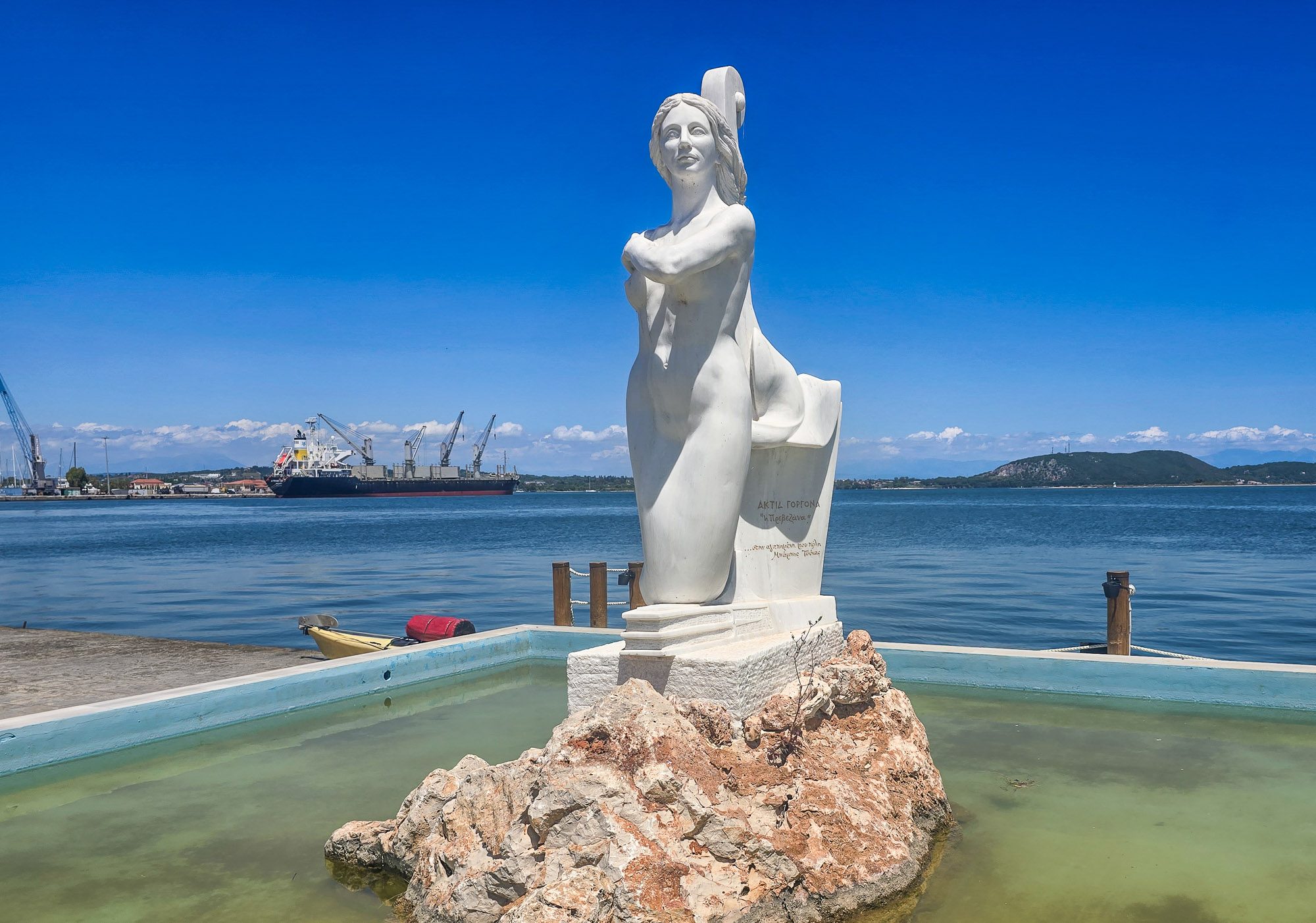
The square at the centre of the village told a moving story. A memorial stood at its heart, a stone fountain in the form of a boat. Not a replica of anything specific, but a stylised interpretation of an ancient Greek galley, all long hull and scrolling prow. The kind of form that suggests passage rather than arrival.
Inside the boat was a memorial stone heavy with symbolism. I interpreted it as Hellas in her female form, greeting a refugee, a more humble figure who had just arrived on the shores of Greece from Asia Minor. Above them, an inscription: “From ancient Kios, they set out as allies, exchanging homelands, following the path of uprooting, to settle here in Nea Kios.”
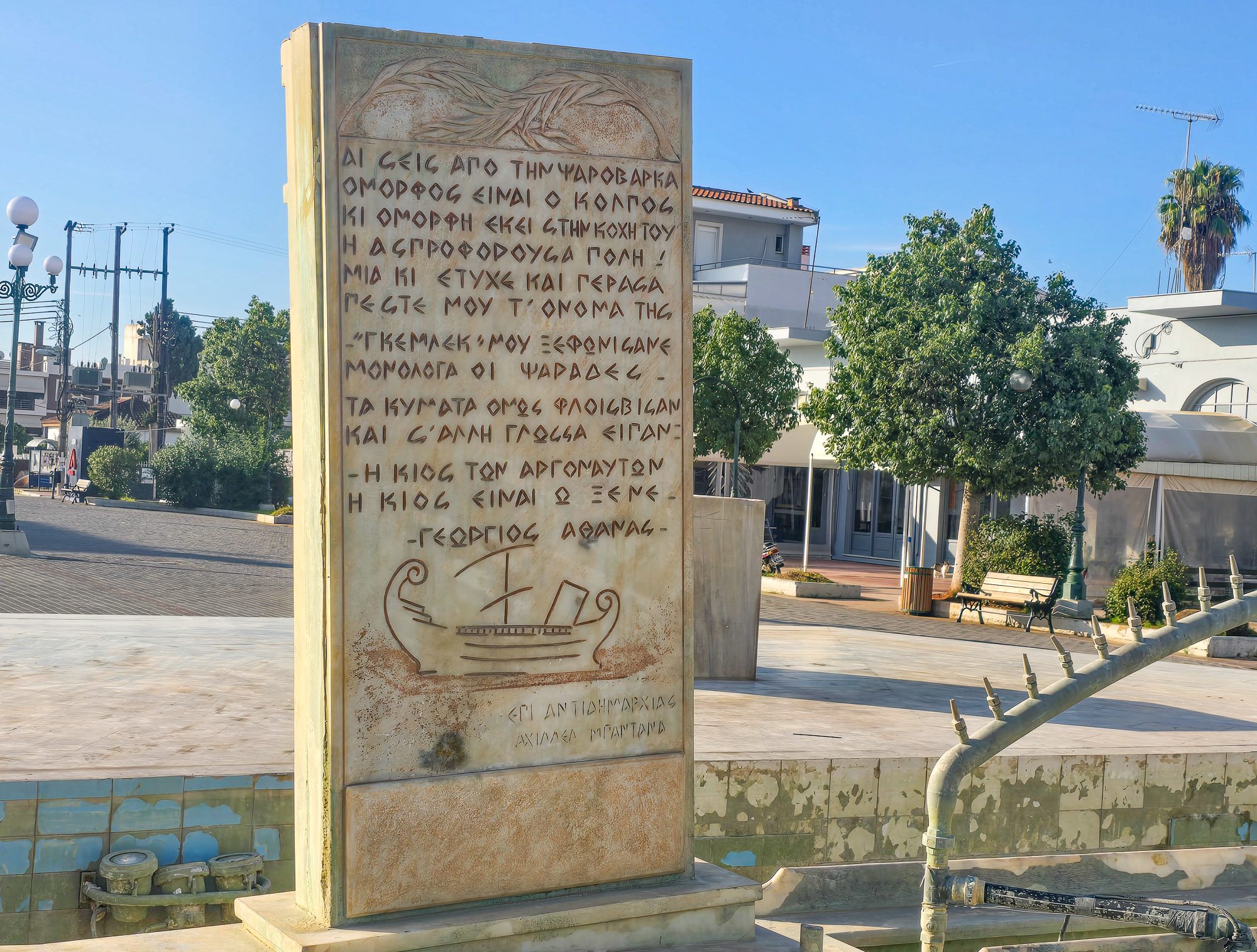
On the opposite face of the monument, a more poetic inscription.
“Others came from Psarovarka. Beautiful is the gulf of Kios, beautiful even in her sorrow, the desolate city. Once, in good times, I was called by her name. ‘My homeland’ — they vanished, though the fishermen remained. But the waves kept speaking, and spoke in another language. Kios of the Argonauts, Kios still lives within me.” — Georgios Athanas
And that phrase ‘Kios of the Argonauts’ is not just poetic licence. According to ancient tradition, Kios in Bithynia was founded by the Argonauts during their voyage in search of the Golden Fleece. So the choice of a boat as the memorial’s central form is doing two things at once. It references the mythological origins of the place these people came from, and the very real sea crossing their descendants were forced to make centuries later to start again somewhere new.
One line stayed with me: the idea that the waves of that distant shore kept speaking, but in another language.
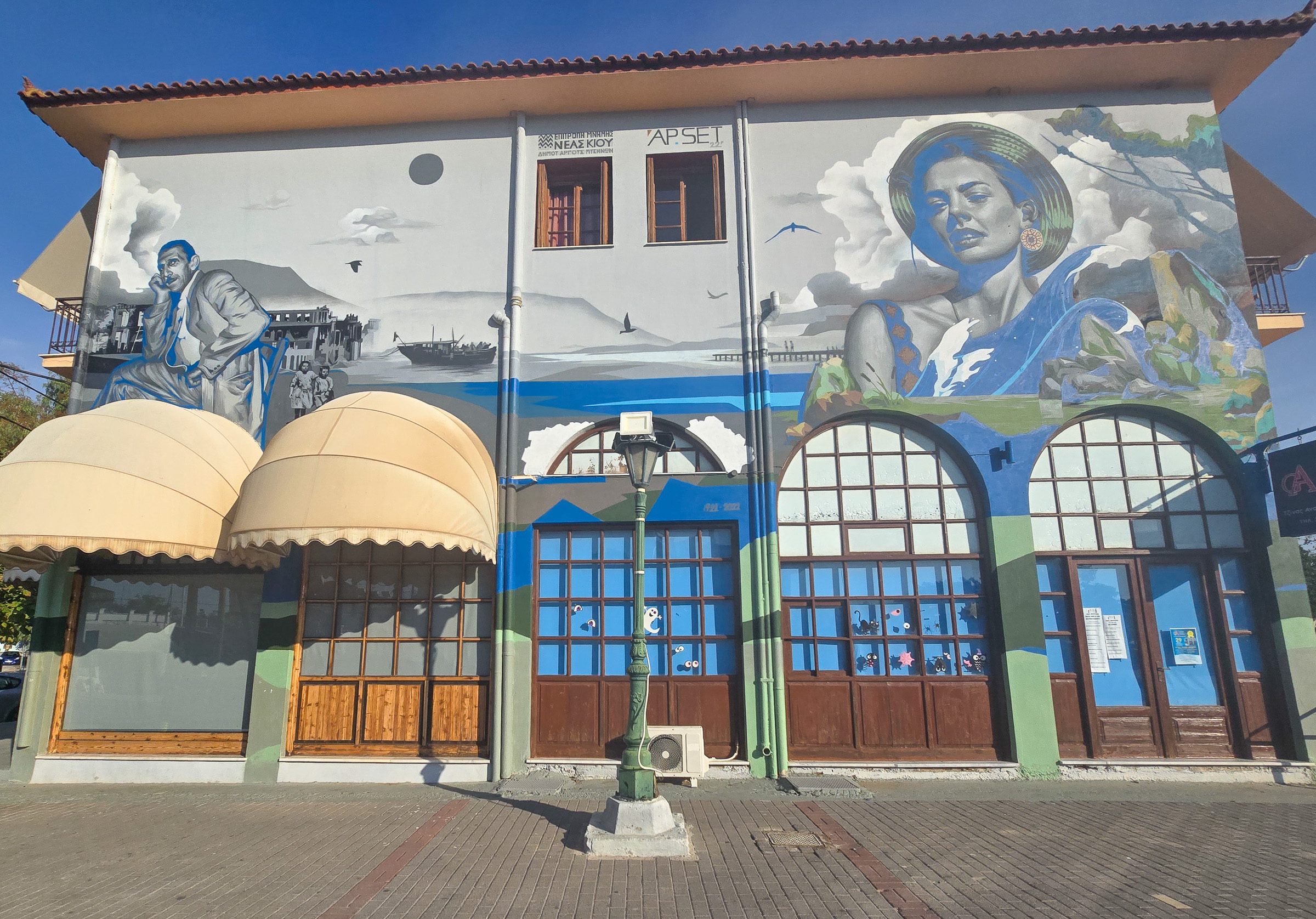
Adjacent to the square, a couple of buildings were adorned with some very striking street art. At first glance, it reads as contemporary decoration. But looking more carefully, I could see that the murals were part of the same conversation as the monument. It spoke of past and present as monochrome background images rendered into colour. Figures caught between something remembered and something lived. Past and present, pulled together in a symbol of hope. It’s a beautiful piece, but it was only during my visit to the museum that I discovered its significance.
The Laskarideio Folklore Museum
The museum was just a short walk from the square. A small single-storey building set along a residential street, close to a large church. Easy to miss if you weren’t looking.
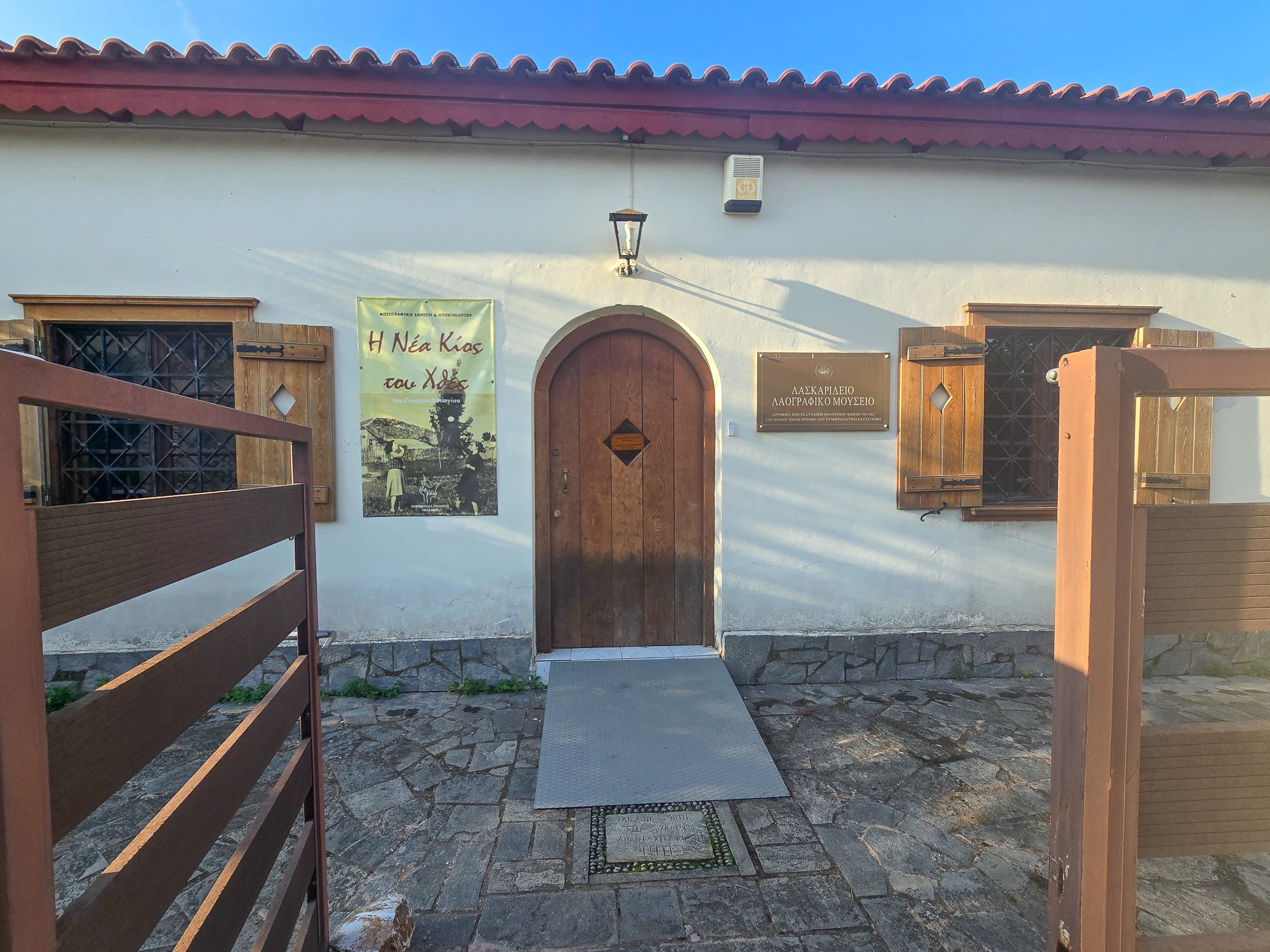
The door was closed when I arrived, but I could hear voices inside. I knocked.
Theodoros, the man I had spoken to on the phone, was there to greet me. After a brief introduction to the guardian, he told me there were information sheets in each room and to ask him if I had any questions. Then he left me to it. As I had expected, everything was written in Greek, but have Google, will translate!
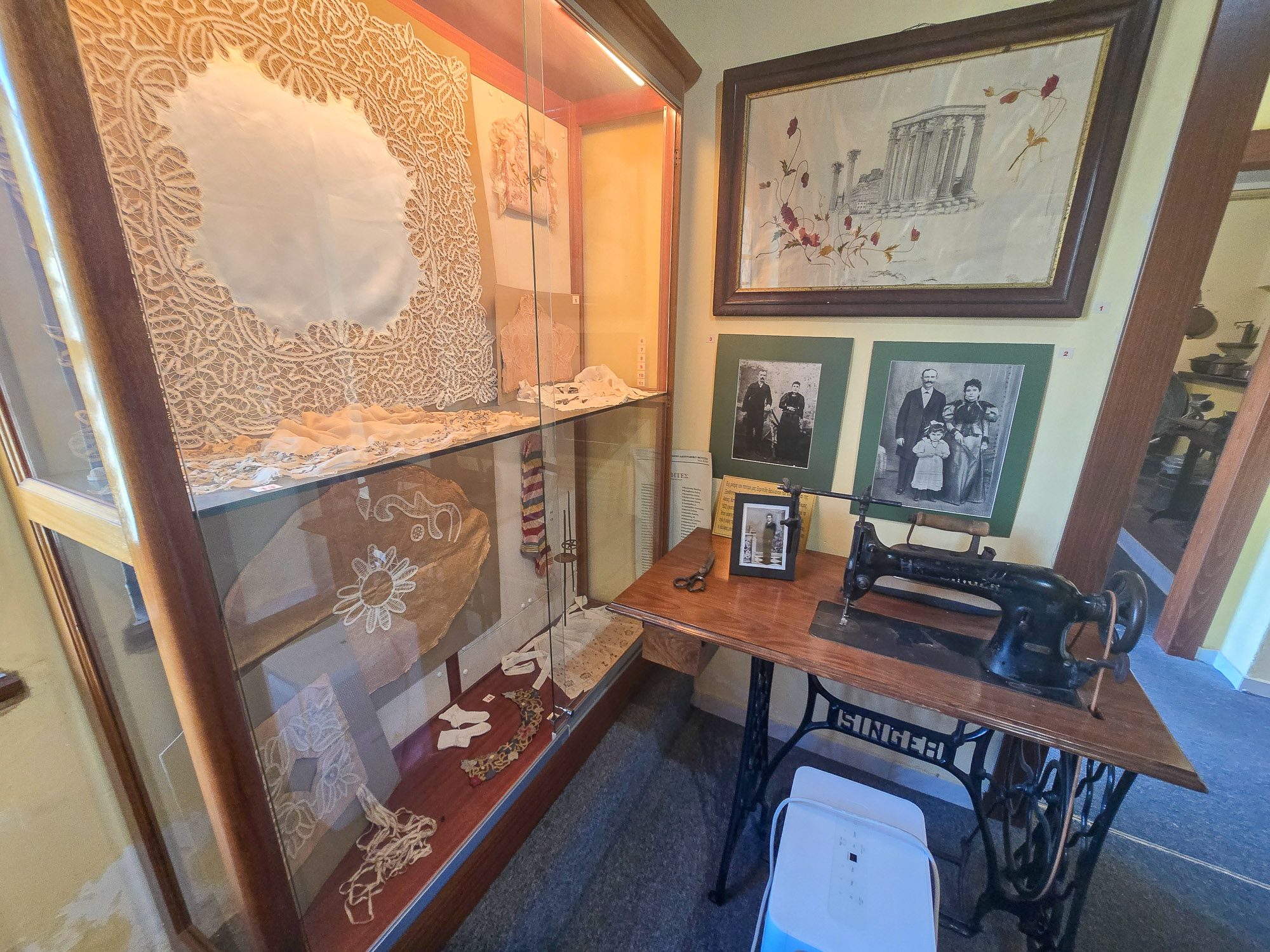
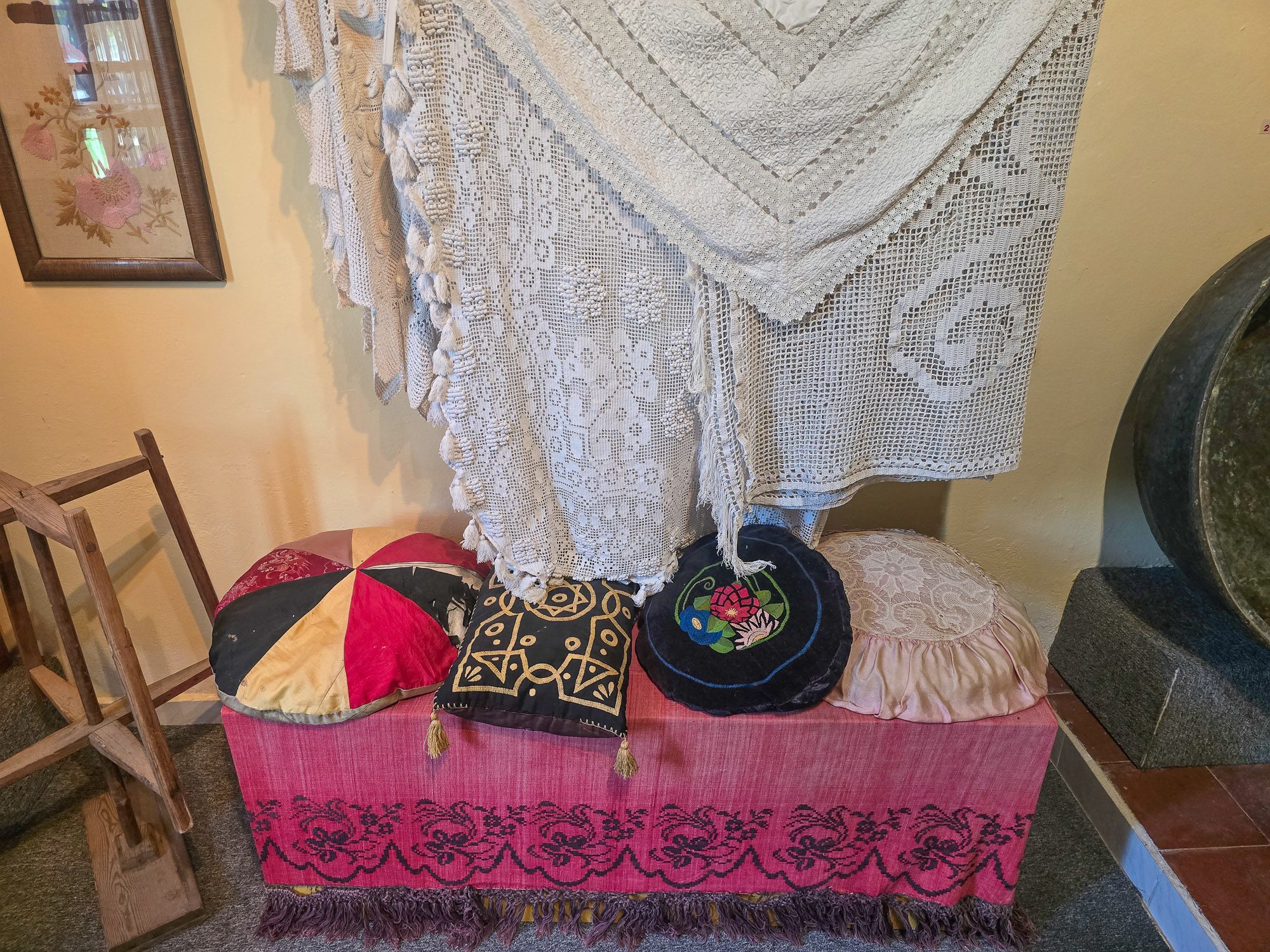
The museum has been in operation since 1982. It consists of four rooms with every surface packed with artefacts carried from another life. The first room was fascinating, stuffed full of clothing, sewing equipment and a revelation that Kios had been at the heart of a thriving silk industry. Located on the shores of the Marmara Sea, many of the homes were built with two or three storeys, often with a sachnisi and a space allocated especially to rear the silkworms. The houses were spacious and built using the Baghdadi method, which I’d never heard of until then. It is a method of building that originated in Iraq, using flexible materials for climate control, but more importantly, to lessen the impact of seismic activity.
Women played a significant role, trained in the craft, some travelling to nearby cities such as Bursa to develop their skills. Families were involved across generations. This was not an industry bolted onto the town. It was woven into the way people lived. In Asia Minor, silk was a way of life. In Nea Kios, it became a way of trying to rebuild one.
A silk factory was established after the refugees arrived. It provided structure and income and, perhaps just as importantly, a sense of continuity with something familiar. For a time, it worked. The factory even won recognition in Thessaloniki in the 1930s. But like so many things, it did not last. The war years brought occupation and further disruption. A second interruption, just as the first had begun to settle.
A second room gave an insight into the journey from Kios to Nea Kios. It was full of documents and photographs which once translated (it took a while) revealed many incredible and often moving stories.
Official forms from 1922. Personal details carefully recorded in a neat hand. A small photograph attached to one. A family looking out from another time. A long document in Ottoman script, a reminder that these communities had existed within a multilingual, multi-layered world that did not sort neatly into the categories that followed.
Testimonies described departure. Watching familiar places disappear. One panel described Easter 1922, Greek soldiers celebrating near Lake Askania. An ordinary occasion. The last Easter before everything collapsed.
Carefully curated and squeezed into every available space — jewellery, wall clocks, lace, furniture — these were the kind of everyday things that once shaped how people lived.
The third room was dedicated to all things ecclesiastical. Religious icons, hagiography, and things held so sacred that they may have taken priority over more functional items when leaving under duress. Photographs told stories of Easter time when effigies of Barabbas were made from straw, often twelve feet high. Carnival events, Clean Monday, fasting — all of it observed and celebrated, but on the shores of a town far from Greece.
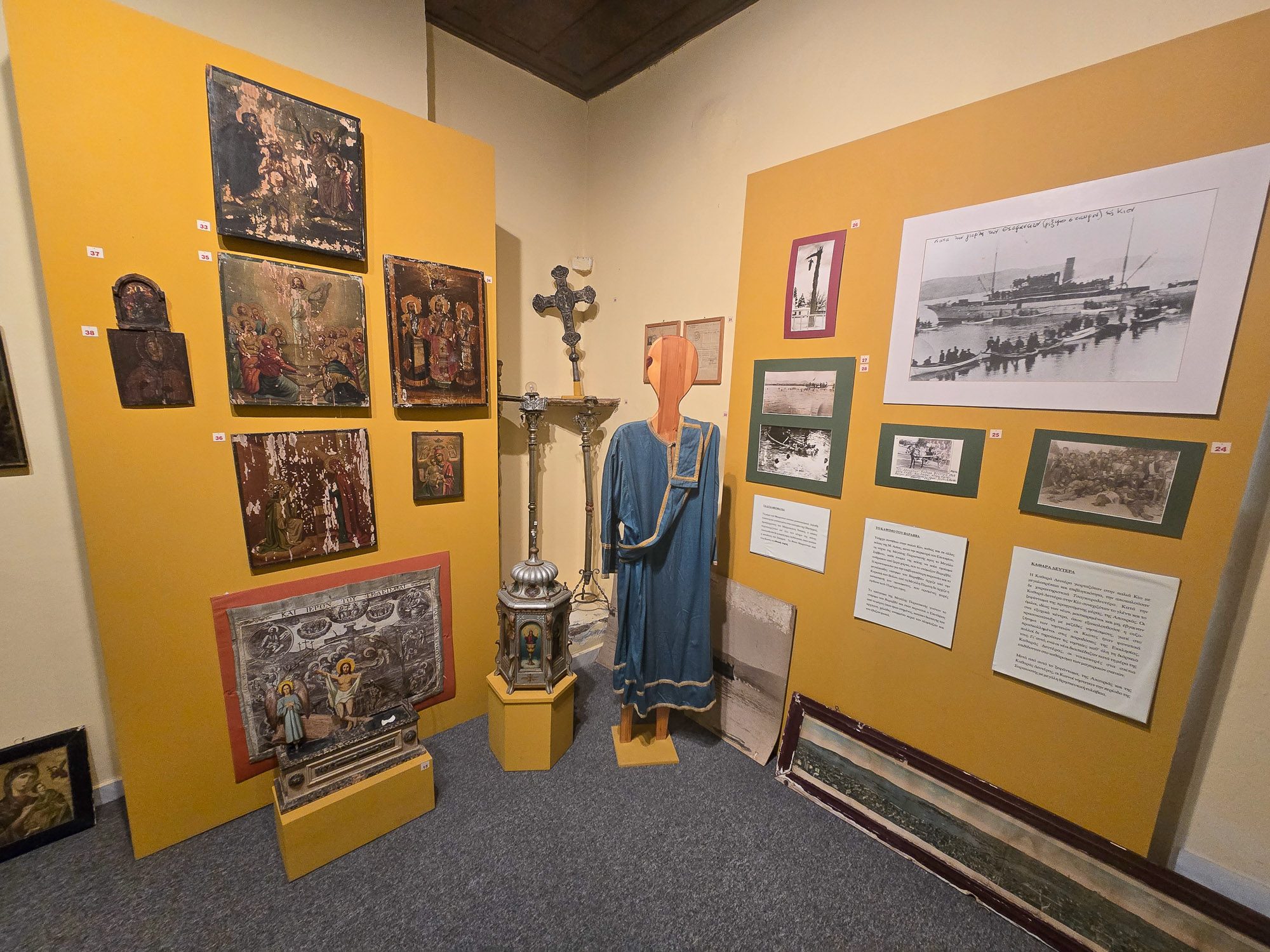
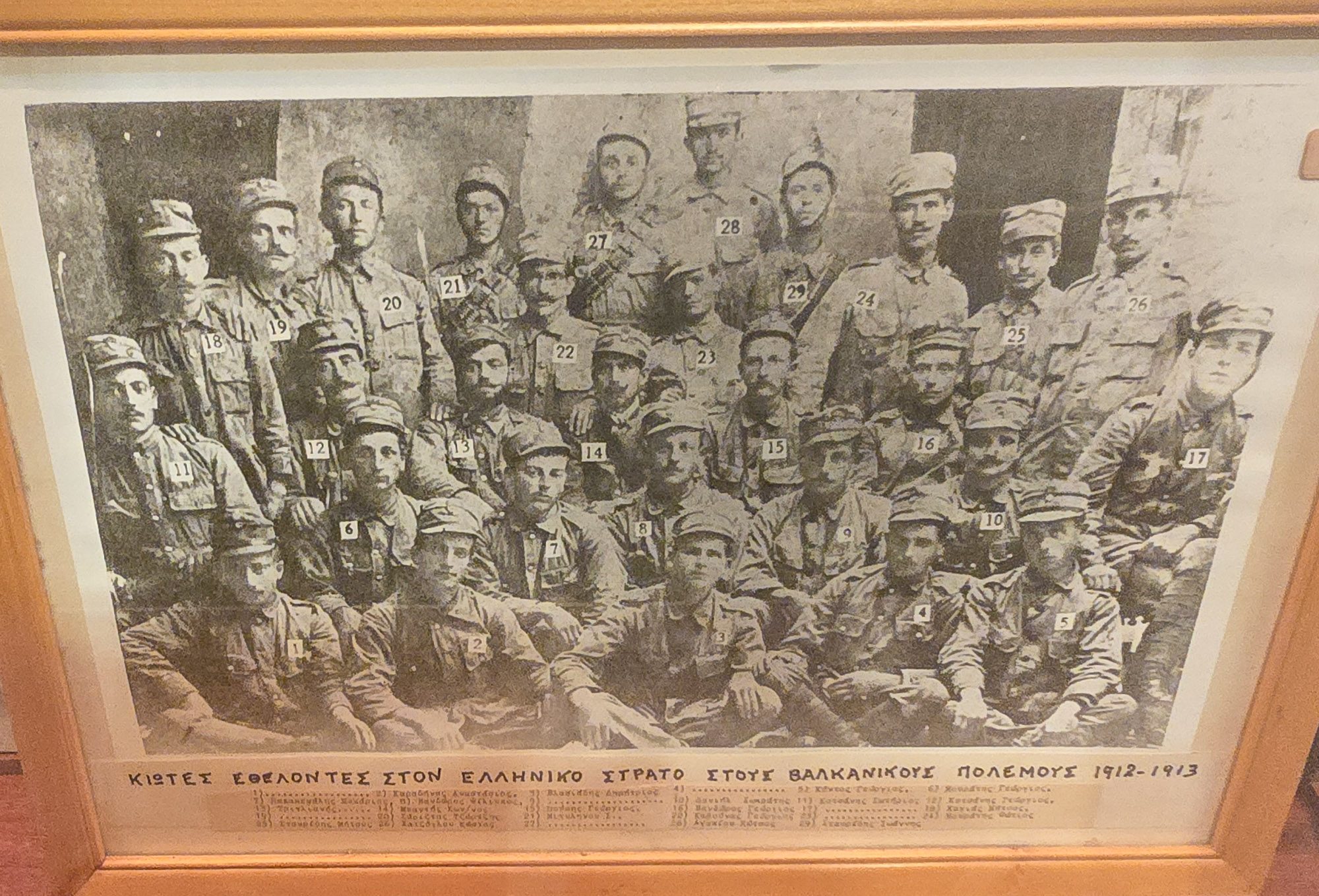
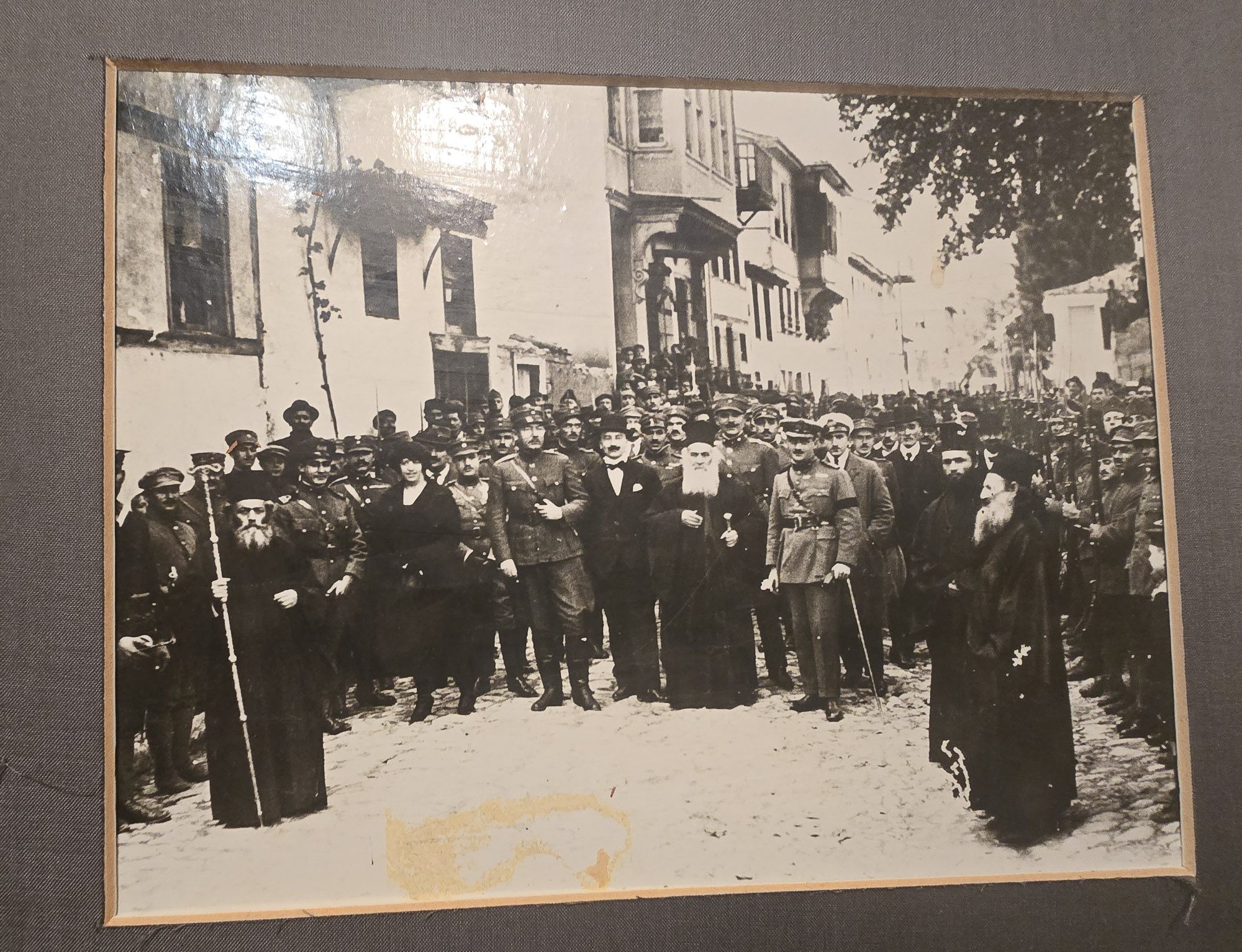
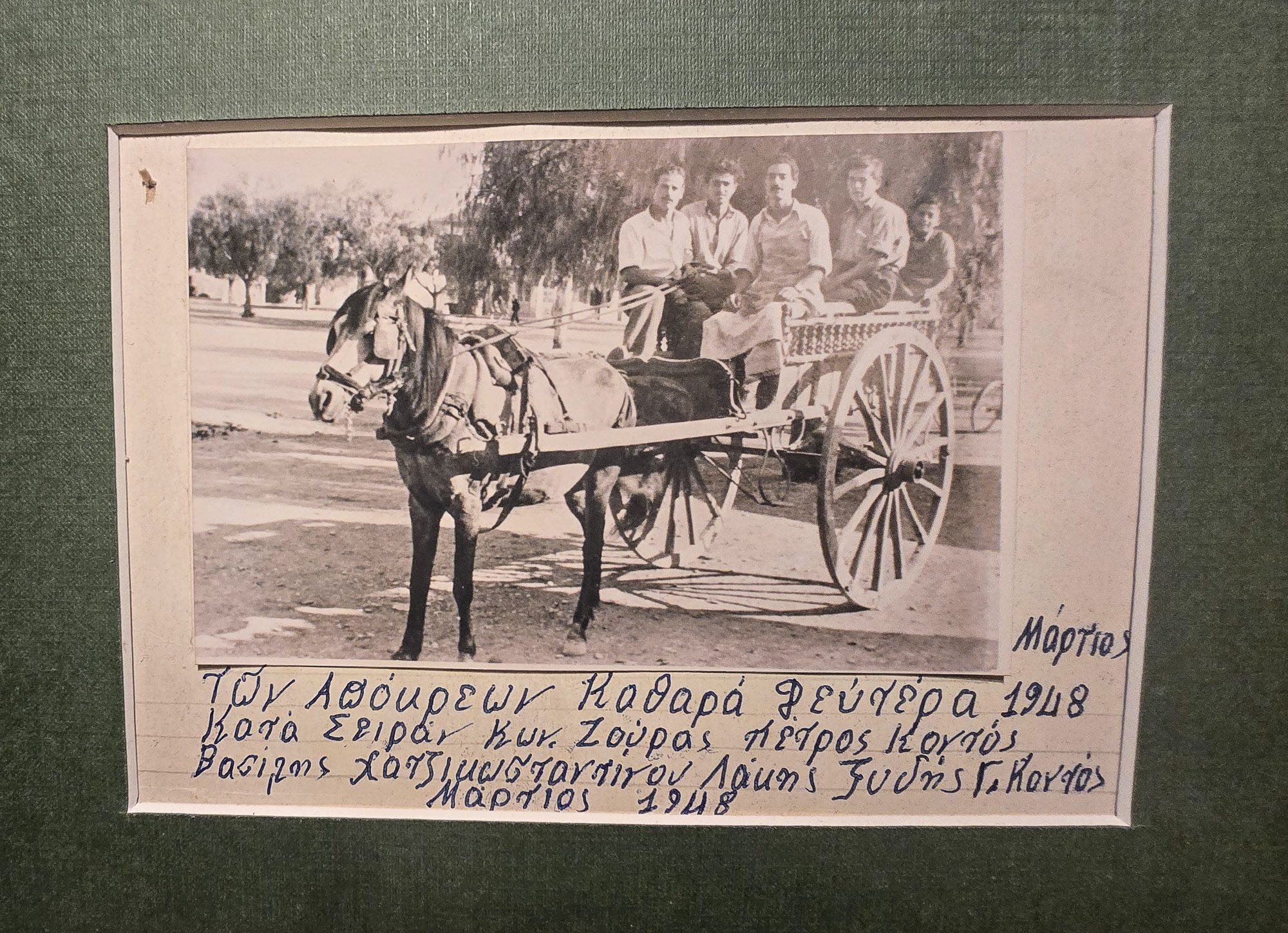
Then the space opened up into a larger room. The walls were covered in newspaper clippings, notices of dances and festivals and gatherings, articles about development and progress and local pride.
The people of Nea Kios organised events, celebrated and wrote articles about their town in local papers. They built something. The newspaper clippings were not grand historical documents. They were the ordinary evidence of a community finding its feet and then, in time, finding something that looked like a future. Not only about the present, but about the future in a place now home to second and third generation families from Kios, Asia Minor.
And if I couldn’t be surprised anymore, as I drew to the conclusion of my visit, I spotted a photograph of Melina Mercouri with a musician whom I instantly recognised as the main feature of the street art in the square. Yiannis Papaioannou, a rebetiko musician born in Kios, Bithynia in Asia Minor, was one of those who carried that history with him into a different life, shaped by the kind of displacement I had been reading about in the rooms behind me.
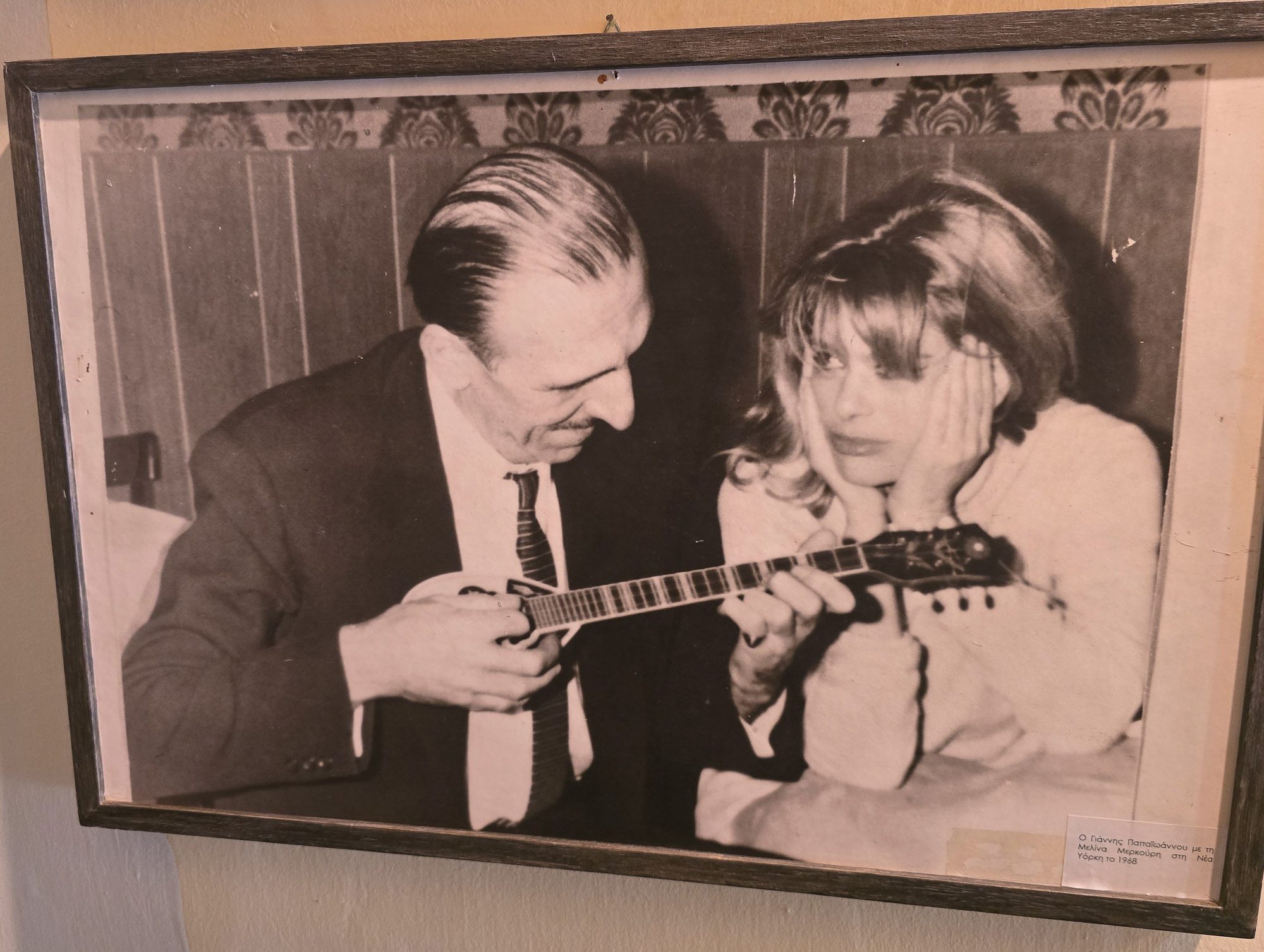
The street art had been completed and presented to the people of Nea Kios as part of the commemorative events for the 100th anniversary of the Asia Minor Catastrophe in 2022. This missing piece of the puzzle has now confirmed that the story tells of a journey from persecution to making the journey across the sea and finding and creating a new life.
The Laskarideio Museum exists, according to one of its own panels, as ‘a key of memory’. Its purpose is to connect past and present, to preserve an identity, and to pass these stories to the next generation.
It is easy to dismiss folklore museums as just another museum, and, in some respects, the artefacts are similar throughout Greece. But I do believe that each has its own unique story. You just have to seek it out, ask questions, be curious, and who knows what will be revealed. I left a little more informed than when I arrived. And that, in the end, is why we travel.
Before calling Nikos to pick me up, I walked down to the harbour.
It was late October, and everything was a little subdued. The traces of a busier summer were still there, cafe bars lining the back of the waterfront, closed or half-waiting. A pebbled beach edged the gulf, straw parasols still in place, looking out across the water towards Nafplio.
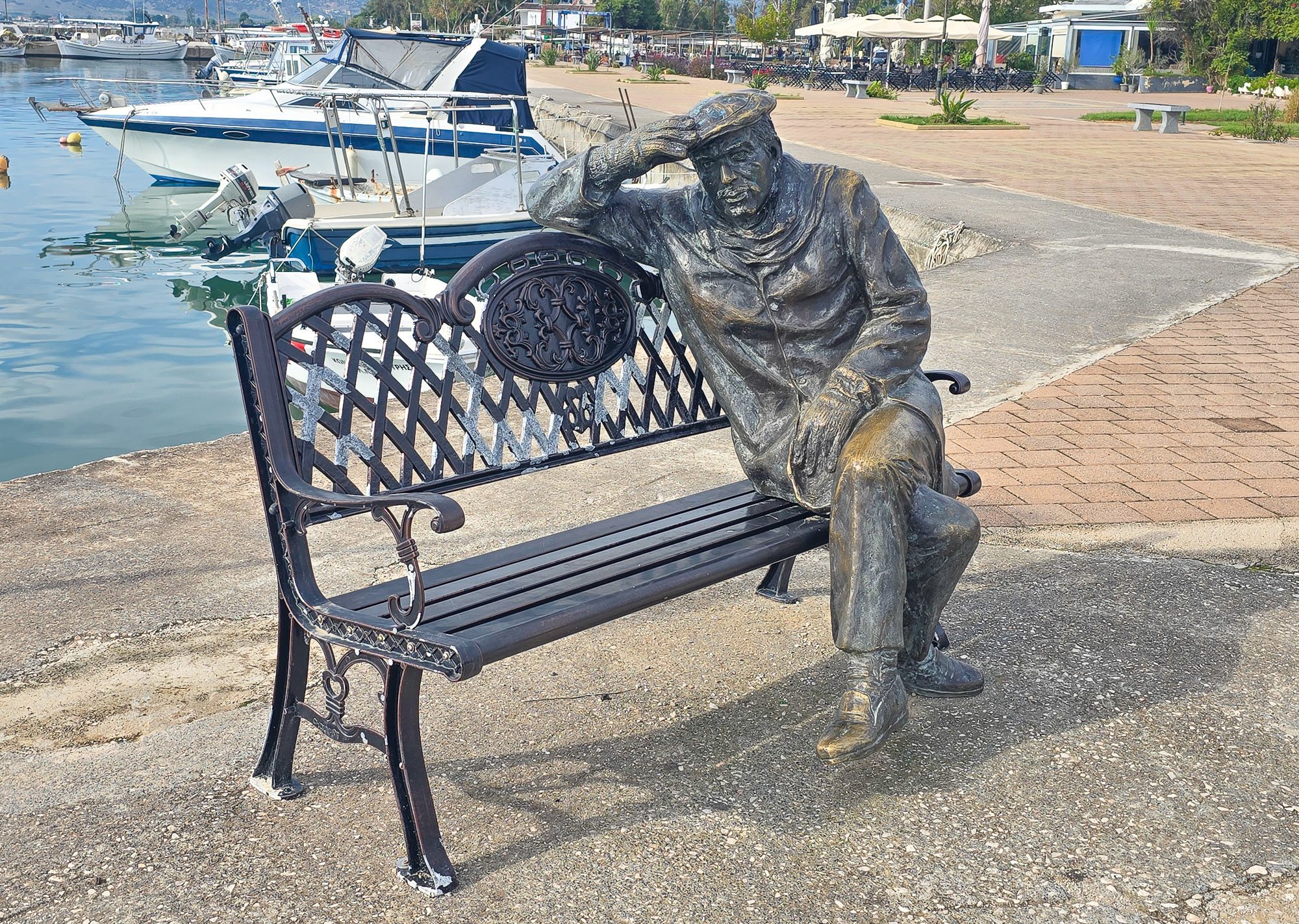
Along the harbour, there was a bronze statue of a fisherman with shiny patches on his foot and his knee, polished bright where people had reached out and touched him. It is a very evocative piece, capturing a thought, an expression, a moment in time.
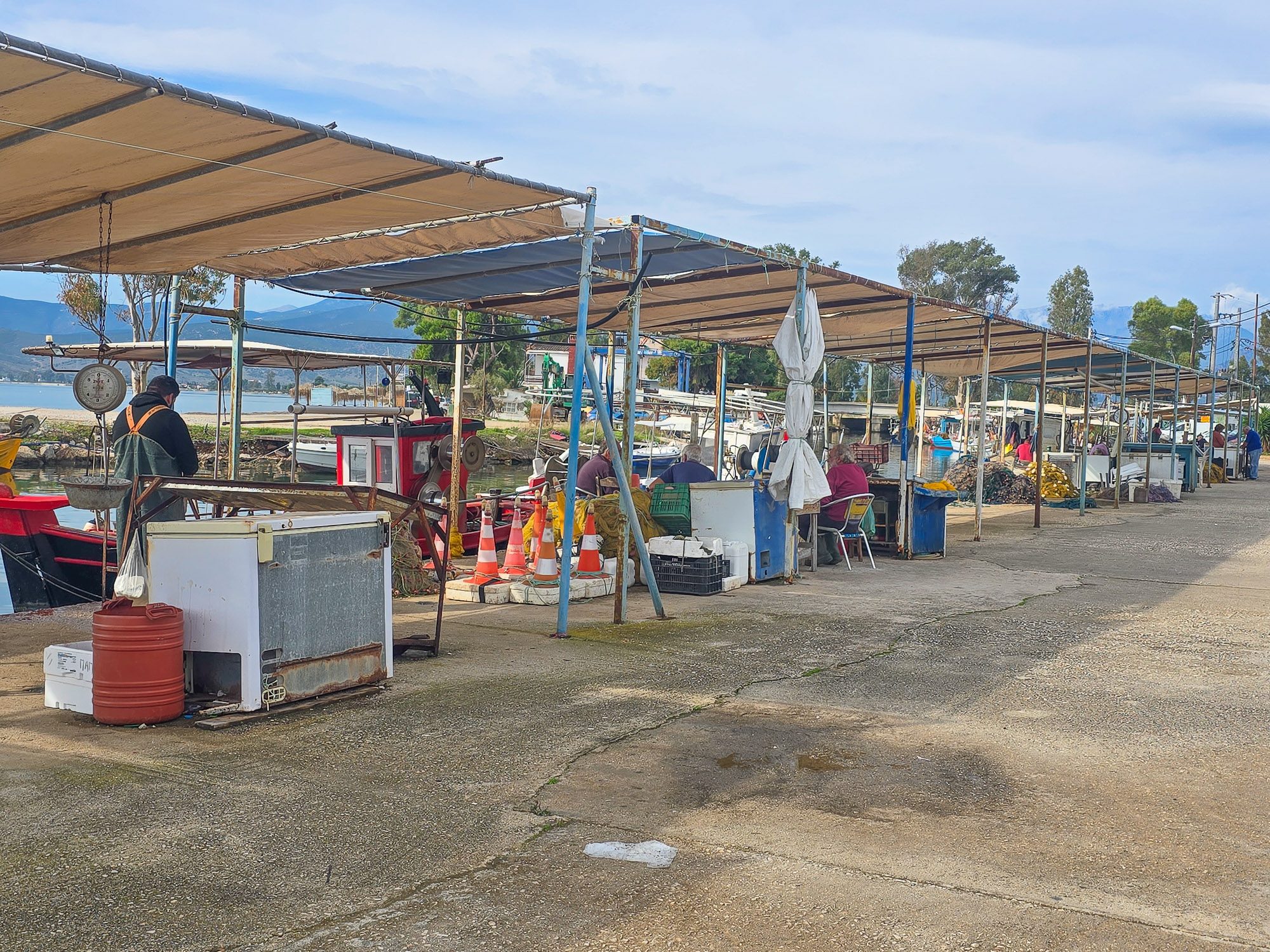
At one end of the harbour, a long row of simple kiosks made from scaffolding poles with awnings lashed to the top was home to a fish market. Each fisherman had their own pitch where they sorted, cleaned and prepared their catch for sale. Plastic crates stacked by type of fish. Weighing scales ready for the next customer. I did not count the stalls, but there must have been space for twenty, maybe more. This was where people came to buy fish. Properly.
I phoned Nikos and asked him to pick me up near the fish market.
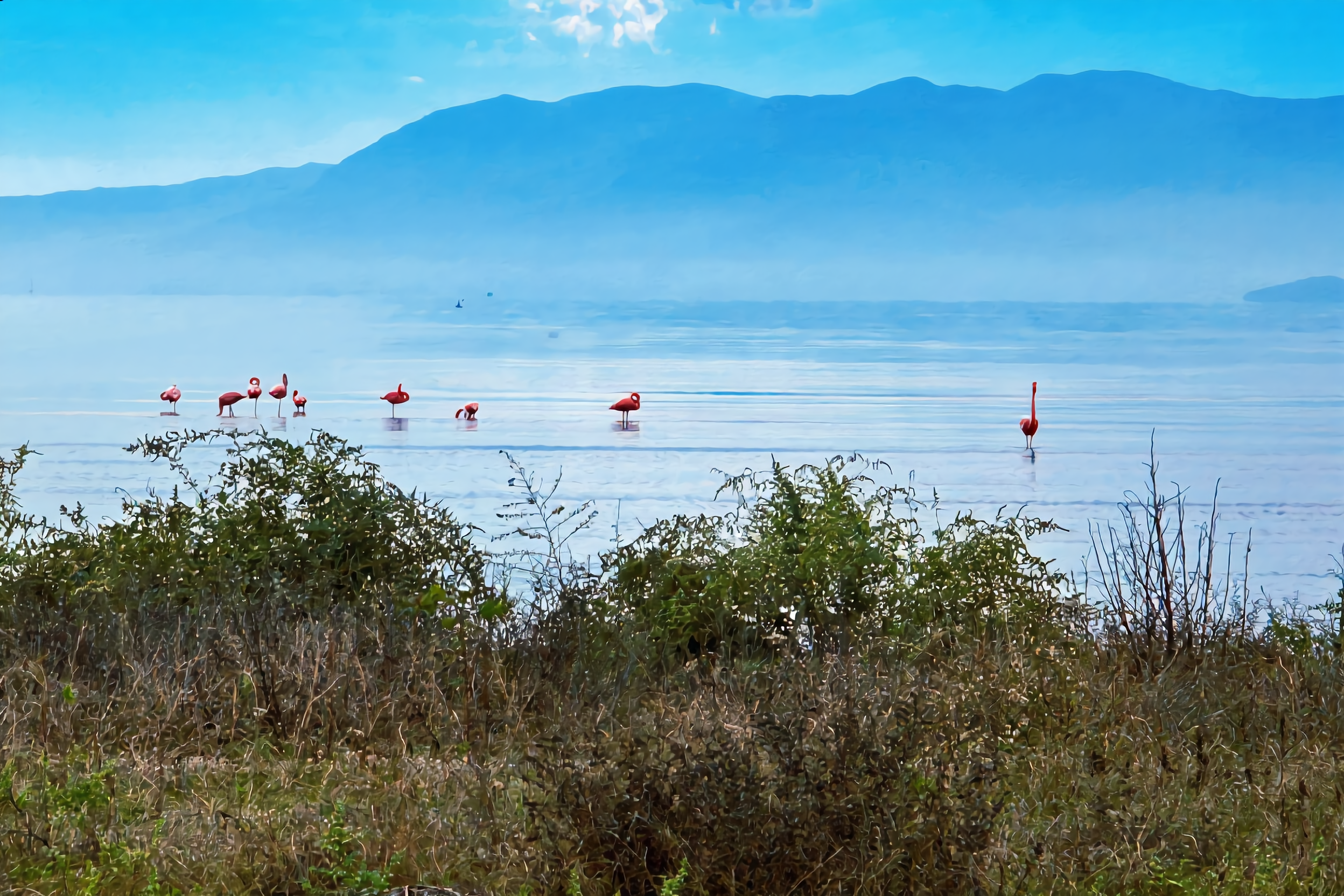
On the road back towards Nafplio, he pointed to movement along the shoreline. Flamingos were wading in the shallows just off the coast. “Shall we stop and look at them?” Nikos asked. Of course, I jumped at the chance.
After finding a lay-by to park in, we crossed the road and picked our way down to the water, moving carefully through the reeds to avoid disturbing them. The gulf was hazy with mist. Atmospheric, but not wholly ideal for photographs. I stood and watched.
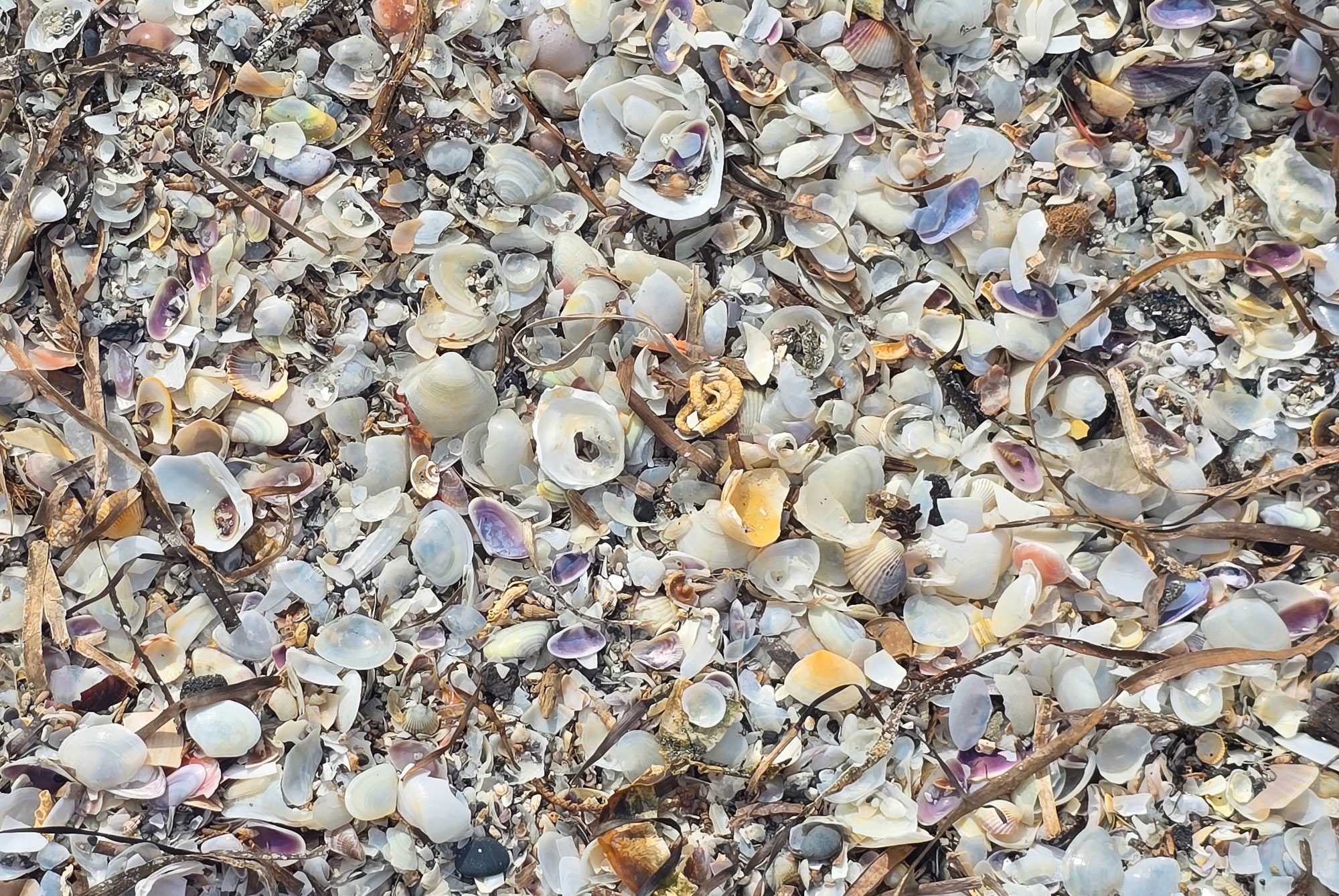
The flamingos’ movements were slow and measured. Heads disappearing beneath the surface and then lifting again. The shoreline was covered in small shells, pink and occasionally translucent, crunching softly underfoot. While I watched, Nikos gathered a handful to take home to his daughter.
I could not have asked for a better ending to what had been a very interesting day.
You can find the contact details for the Laskarideio Folklore Museum here: Museum contact details
If you are planning a trip to the Peloponnese, the A Greek Oddity Travel Planning Toolkit has everything you need to travel independently, including transport guidance, itinerary planning tools and a curated resource library.
Discover more from
Subscribe to get the latest posts sent to your email.
MY BIG FAT GREEK TRAVEL SURVEY
How do you really plan your Greek adventures? I'd love to hear from you.
TAKE THE SURVEY →

Very interesting Stephanie – I do like a museum that has a personal touch which clearly this one does.
HI Liz. Yes it was a very interesting visit. It always feels extra special when I have a whole museum to myself and you wouldn’t believe the amount of times that’s happened! 😍