Preveza to Tzoumerka: Mountain Villages, Wax Figures, Cliff Monasteries and the Largest Stone Bridge in the Balkans
Some days of travel arrange themselves neatly around a guidebook itinerary. Others are shaped by someone who knows the place better than any guidebook could. Our friend Ioannis from Epirus Traveller took us from Preveza into the mountains of Tzoumerka for a day that covered a Roman aqueduct, a wax museum unlike anything I have seen before, a monastery built into a cliff face, a village of silversmiths, and a stone bridge over a turquoise river. I am not good with bridges. I crossed it anyway.
Today we have arranged to meet with our friend Ioannis from Epirus Traveller who is going to take us from Preveza up to the Tzoumerka National Park. As someone who absolutely refuses to take a hire car up precipitous mountain roads, this beats running my shattered nerves through the mill, hands down. Plus, travelling with someone who was born and raised in the area can give you far more insight into a place than any guidebook can. And, there is no better company than our good friend Ioannis.
We’d arranged to meet close to our hotel that morning. He’d already planted a seed of intrigue the night before by telling me he had a surprise for me. I must say, Ioannis is the best surprise giver I know, so my curiosity had been well and truly piqued.
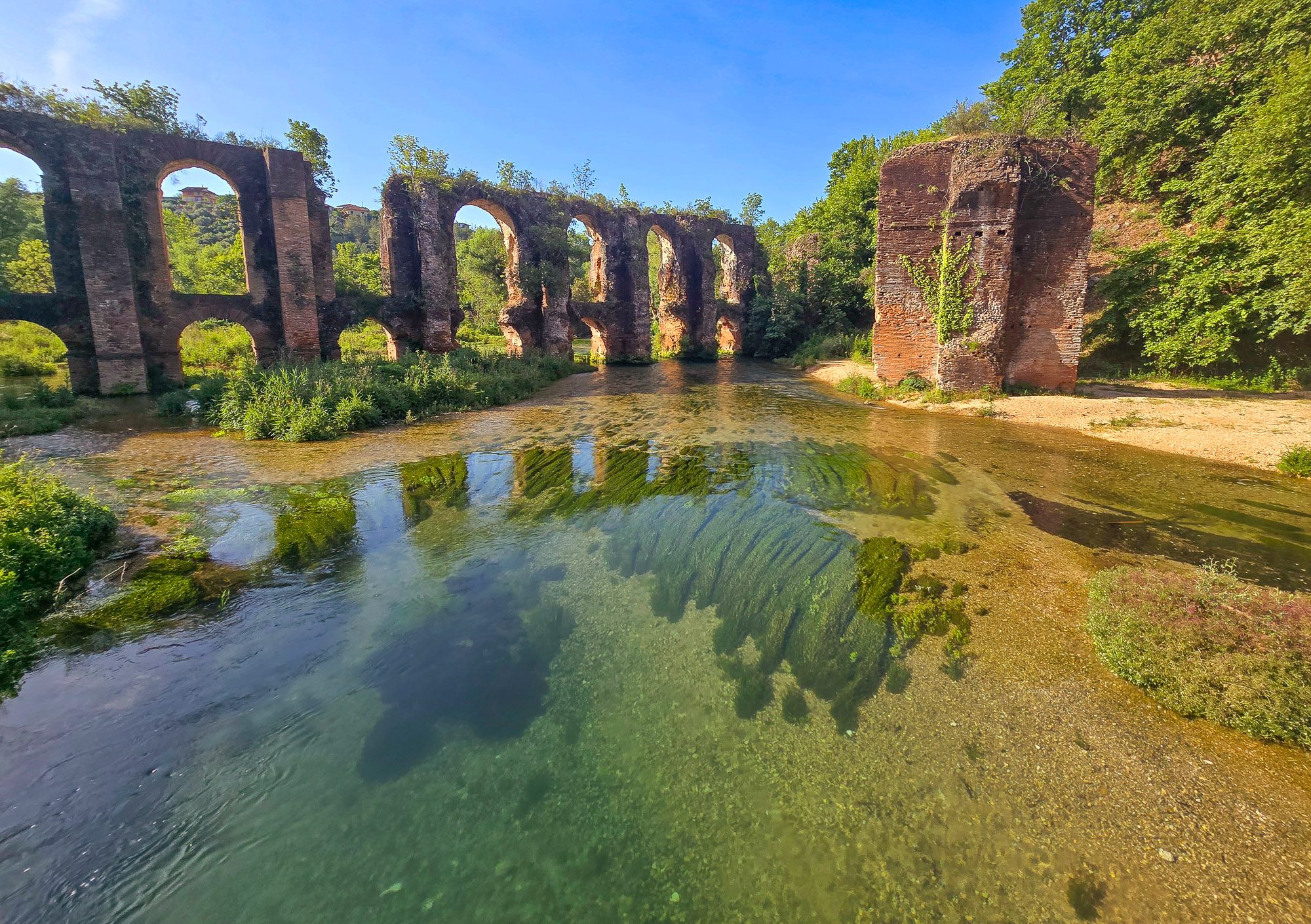
Leaving Preveza Town behind, we set off towards our first stop of the day, the Roman Aqueduct of Nikopolis near Agios Georgios, where its surviving arches stride across the Louros River. The aqueduct once stretched for around 50 kilometres, carrying water from the Louros springs to the ancient city of Nikopolis, founded by Augustus after the Battle of Actium.
Apart from being a historically significant area, this spot is particularly picturesque. The surviving arches, or kamares, now well and truly melded with the greenery into the landscape, are reflected in the pool formed beneath them. Crystal clear shallows reveal every pebble on the river bed while bright red poppies spring up through the gravel at the water’s edge. Plane trees line the riverbanks, their branches creating patches of welcome shade.
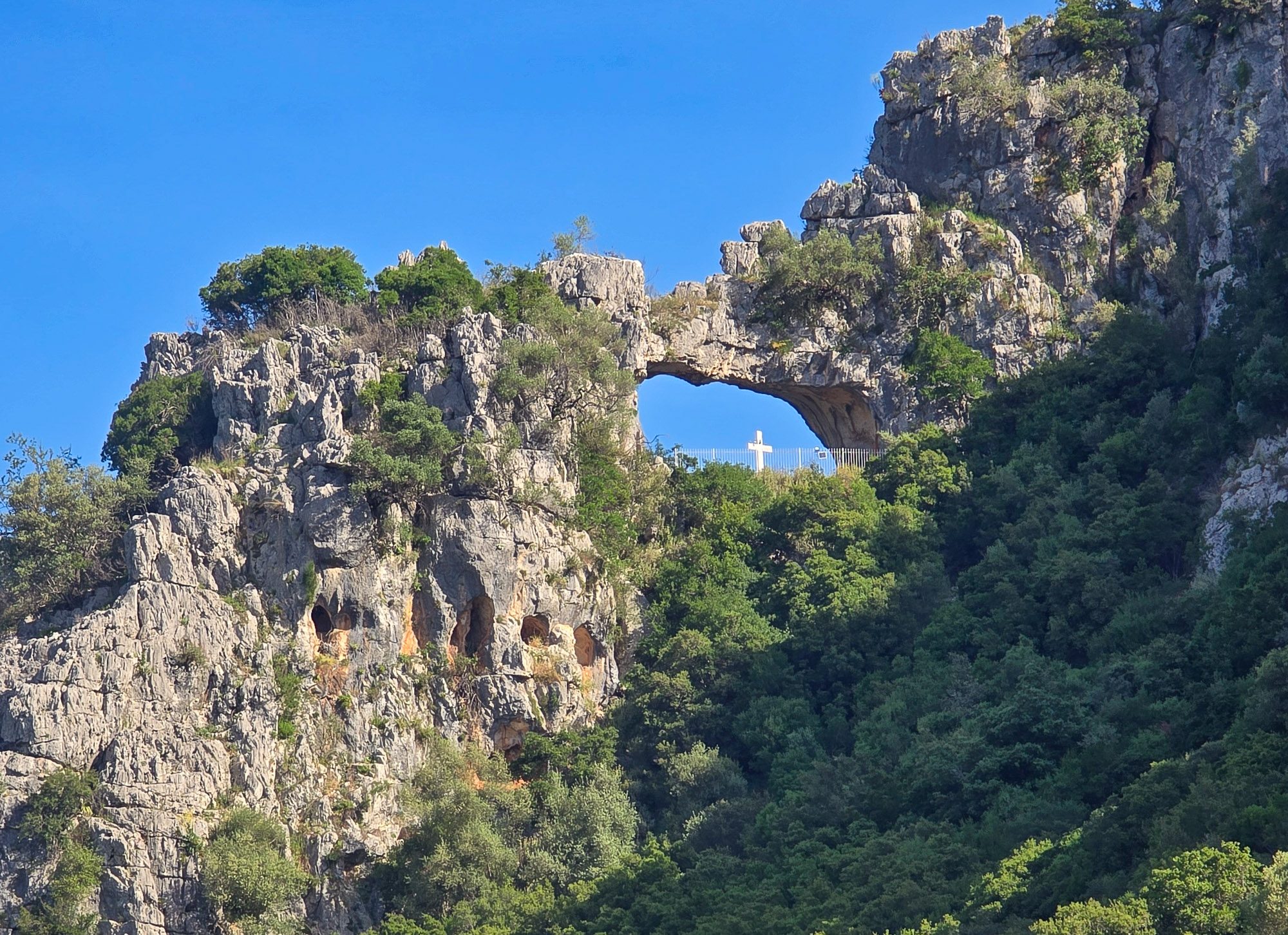
On the opposite side of the road, high on a rocky formation, stands another intriguing landmark known as the Bridge of Agios Georgios, known by the locals as Drakotripa, the Dragon’s Hole. The natural opening cuts directly through the ridge of the Zerovouni mountains, and beneath it stands a large white cross erected by the local community.
According to local legend, Saint George chased a dragon across the mountain on a winged horse. When he blessed the area, the rock split open and fresh water burst forth from the mountain. While the dragon and winged horse may belong firmly in folklore, there may be a grain of truth behind the tale in relation to the nearby springs.
“This”, said Ioannis, “is just a flavour of what will come tomorrow when we continue the tour. Now it is time for your surprise.”
Pavlos Vrellis Museum of Greek History
A short drive north brought us to the village of Bizani, where the Battle of Bizani was fought in 1913 during the First Balkan War. My sense of direction isn’t the best at times, so it came as something of a surprise to learn we were only around six kilometres from Ioannina and its famous lake. Approaching from the direction of Preveza somehow made it feel much further away.
We pulled into a small car park from where Ioannis led us up a broad sweeping driveway that curved towards the entrance. At the top stood a magnificent building constructed in my favourite architectural style. Ioannis had brought us to the Pavlos Vrellis Museum of Greek History.
When I was in Ioannina the previous year, Ioannis had urged me to visit this place. Unfortunately, time hadn’t permitted. Now, I’ve managed to make it.
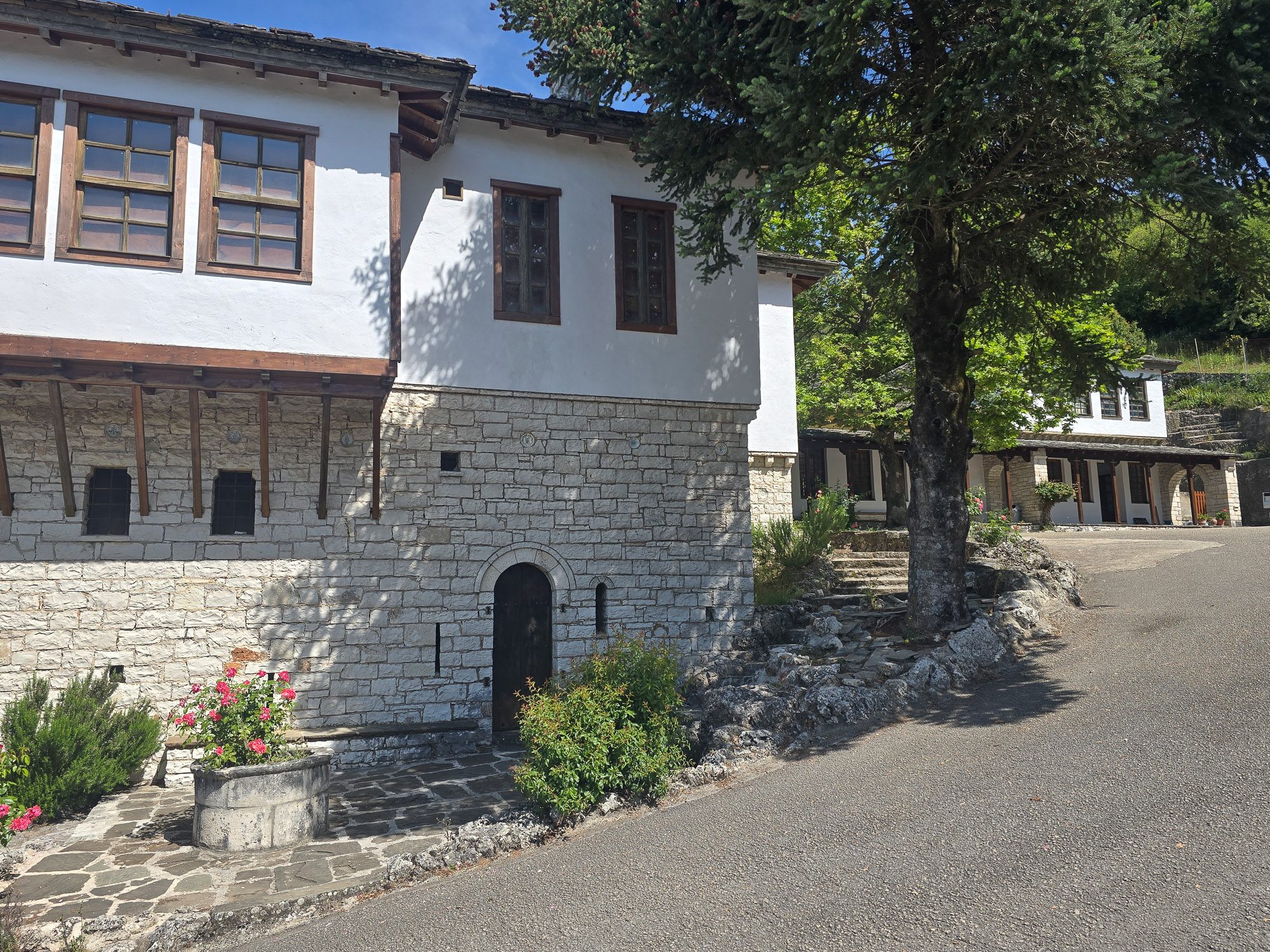
The museum itself is extraordinary, but it wasn’t long before I realised there are actually two stories here. One is the story told by the exhibits. The other is the story of the man who created them.
Pavlos Vrellis was born in 1923 in the nearby village of Elliniko. He studied sculpture at the Athens School of Fine Arts and later worked as an art teacher and headmaster. At the age of sixty, rather than slowing down, he embarked on a project that would consume the next twelve years of his life.
His belief was simple. History was in danger of becoming detached from ordinary people. He wanted visitors to stand in front of a scene and feel something. He considered it his contribution to his homeland. Almost his duty.
What many visitors don’t realise is that the museum at Bizani wasn’t his first attempt. The original opened in his home village of Elliniko in the 1980s and quickly became one of the region’s most popular attractions. But Vrellis remained dissatisfied. The vision in his head had grown larger than the space available. Rather than settling, he started again.
It began when he purchased little more than a rocky hillside. He designed the buildings himself, planned the roads and pathways, shaped the terraces, designed the courtyards, gardens and viewpoints. The architecture, inspired by the fortified mansions of eighteenth-century Epirus, was integrated into the natural landscape so thoroughly that the museum appears to have grown from the hillside rather than been built on it. Stone walls emerge from the rock. Pathways curve through the grounds. Nothing feels forced.
What impressed me most was the sheer determination behind the whole project. Financial difficulties. Technical difficulties. Practical difficulties. Yet Vrellis continued. In 1995, the museum opened. Even then, he kept refining it.
Most people spend their lives talking about what they would like to achieve. Pavlos Vrellis just got on with it.
The buildings, though, are only part of the story. Inside, the museum takes visitors on a journey through some of the most important periods of Greek history.
Photography was not permitted, which initially I found a bit disappointing. Then I realised it was one of the museum’s greatest strengths. Without a camera in hand, I paid far more attention to what was around me.
Visitors make their way through stone-clad tunnels which take you up, down and around the exhibits, low lighting representing the gloom and atmosphere of dark candlelit life before electricity. The figures are astonishingly lifelike. Created from wax and dressed in authentic clothing, they occupy carefully recreated historical settings. Real hair, glass eyes, original artefacts, furniture, books, weapons and everyday objects contribute to an extraordinary level of realism.
Rather than displaying isolated exhibits in glass cases, Vrellis created complete scenes. Visitors encounter monks, revolutionaries, scholars, soldiers, villagers and political figures frozen at pivotal moments in history.
The Secret School. The years of Ottoman rule. The Greek War of Independence. The Macedonian Struggle. The Battle of Bizani. The mountains of Pindos during the Second World War. Each scene has been researched in remarkable detail. Although what I could see here today in the architecture and landscape felt distinctly rooted in Epirus, the stories and history exceeded those boundaries, encompassing the broader story of Greek history.
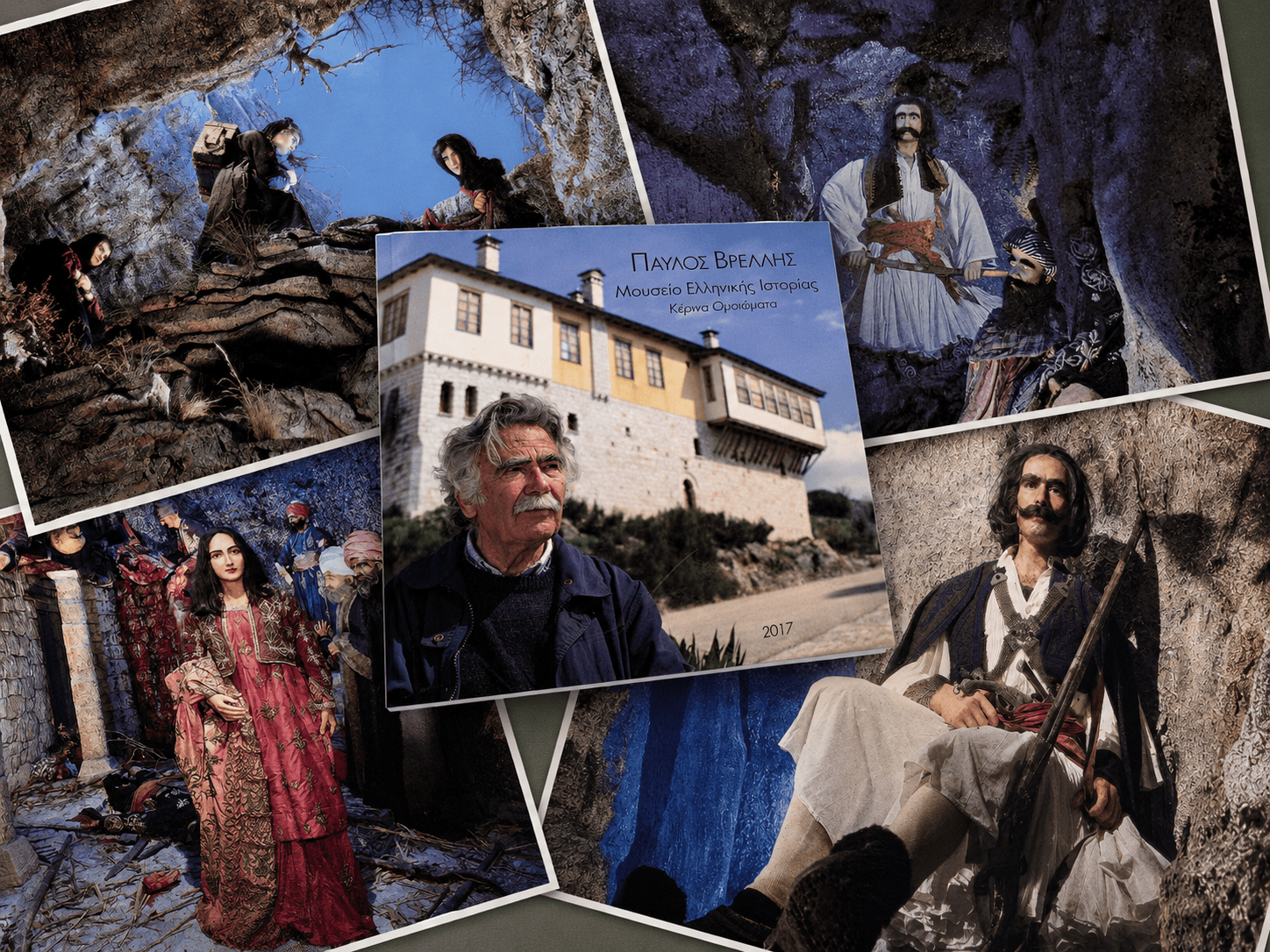
Everywhere I looked, I was reminded that this place existed because one man refused to compromise on his vision.
Perhaps the most remarkable thing is that Vrellis never seems to present himself as some great artistic genius. The impression I took away from this experience was of a craftsman. Someone who worked steadily, patiently and stubbornly until the job was done. Today that legacy continues through his children, Konstantinos and Anna.
Ioannis introduced us to Konstantinos and Anna during our visit. Having spent the morning learning about his father’s extraordinary achievement, it was a pleasure to meet someone now entrusted with preserving that legacy. Like their father, they both came across as remarkably humble and showed a clear dedication to continuing what Pavlos Vrellis began.
Many visitors will leave remembering the exhibits. Thanks to Ioannis and his insight into this incredible family, I found myself thinking as much about the man as the museum itself.
Tzoumerka National Park – the Monastery of Kipina
Leaving the museum, we climbed back into the car and began heading east towards the Tzoumerka Mountains.
Winding roads carried us through a rich and verdant landscape, across rivers of deep turquoise blue and steadily upwards into the mountains, where the river eventually became little more than a turquoise thread in the distance below. We were now at an elevation of over 1,000 metres.
Tzoumerka National Park is one of the most unspoilt alpine regions in mainland Europe. Sheer cliffs, dense forests and deep ravines give the landscape its distinctive character. Just when it seemed we had reached the highest point possible, Ioannis pulled over to the side of the road.
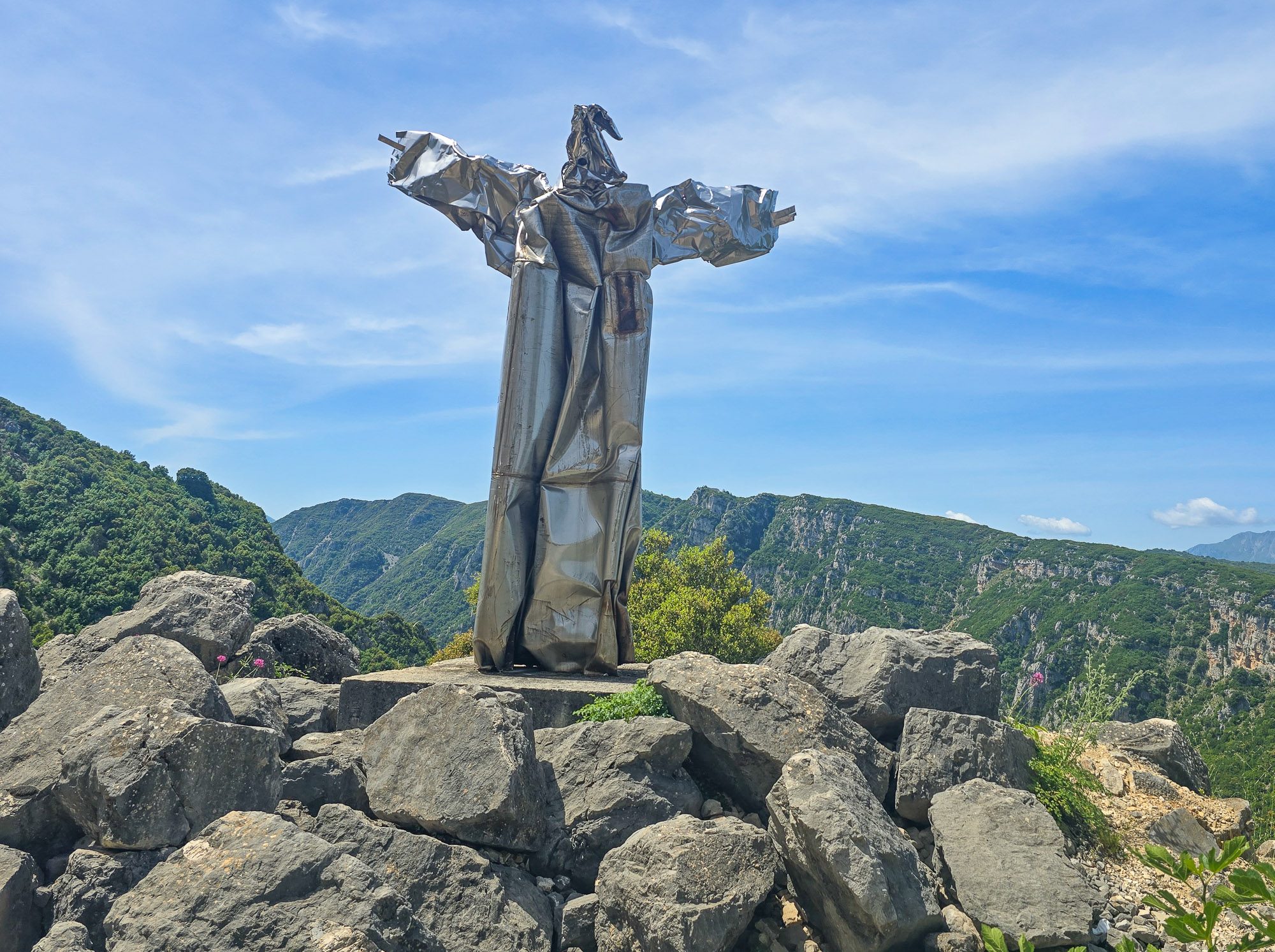
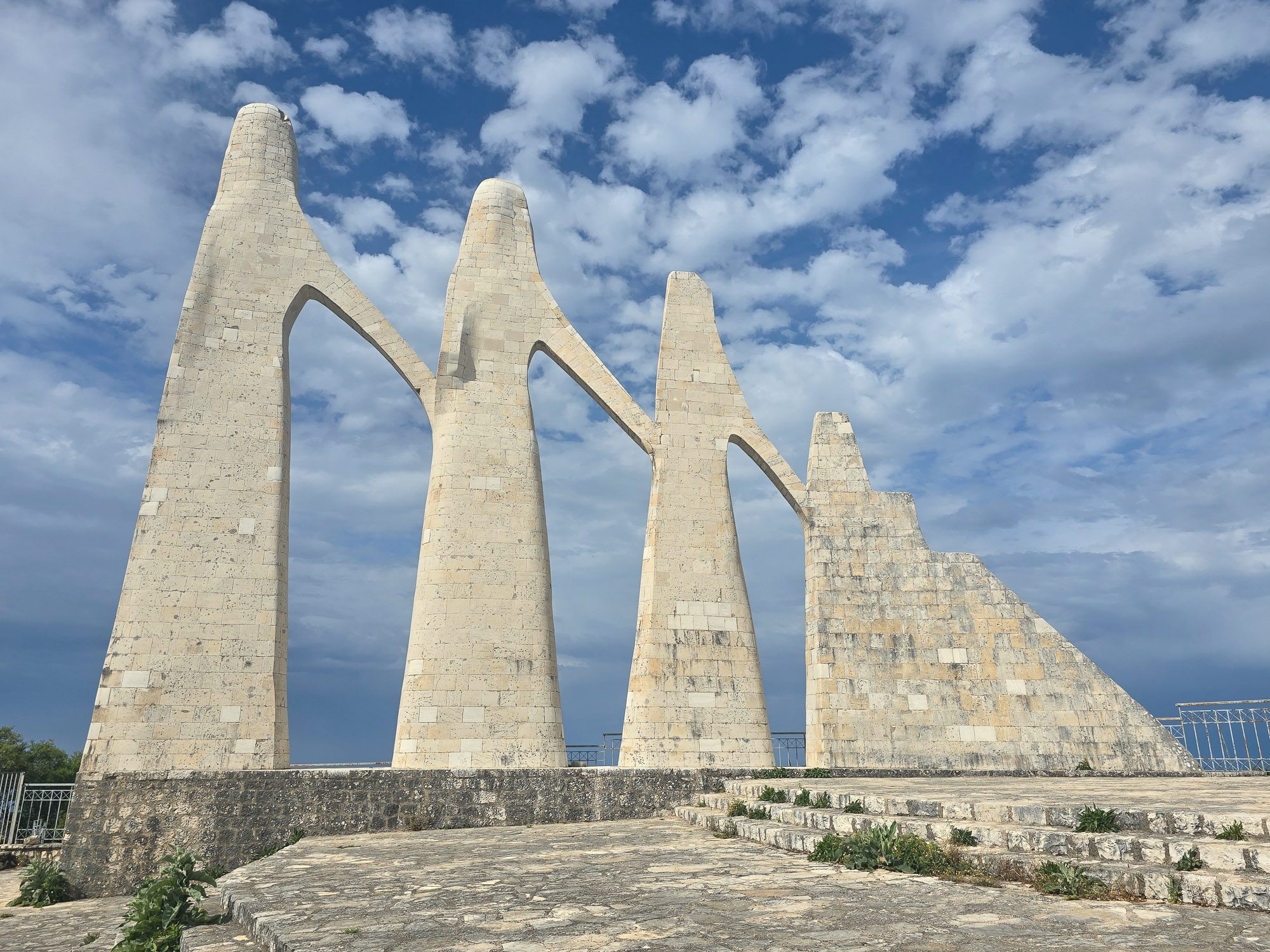
Standing by the roadside was a memorial dedicated to the victims of a tragic bus accident that occurred near Tsimovo during the 1950s. Mountain roads in Epirus in the past were significantly more dangerous than today, with limited barriers, narrow carriageways and difficult weather conditions. Fatal transport accidents were not uncommon in remote mountainous regions, but this one clearly left its mark on the memory of the local community.
The memorial was created by the renowned Greek sculptor Theodoros Papagiannis. The monument is both striking and moving. Born in Elliniko (coincidentally the same village Pavlos Vrellis created his first museum) in 1942, Papagiannis is known for his elongated figures influenced by ancient Greek art, Cycladic sculpture and local folklore. Many of his works are created from scrap metal and repurposed industrial materials, transformed into powerful pieces of public art and very fitting for a memorial such as this.
From there, we continued climbing. Hairpin bends carried us through the villages of Petrivouni, Pothistika and Paleochori. Every so often, a tortoise would appear in the road, crossing at its own pace while traffic waited patiently. Although Ioannis insists he doesn’t know much about plants, he still managed to point out various species of flora and fauna unique to the region along the way.
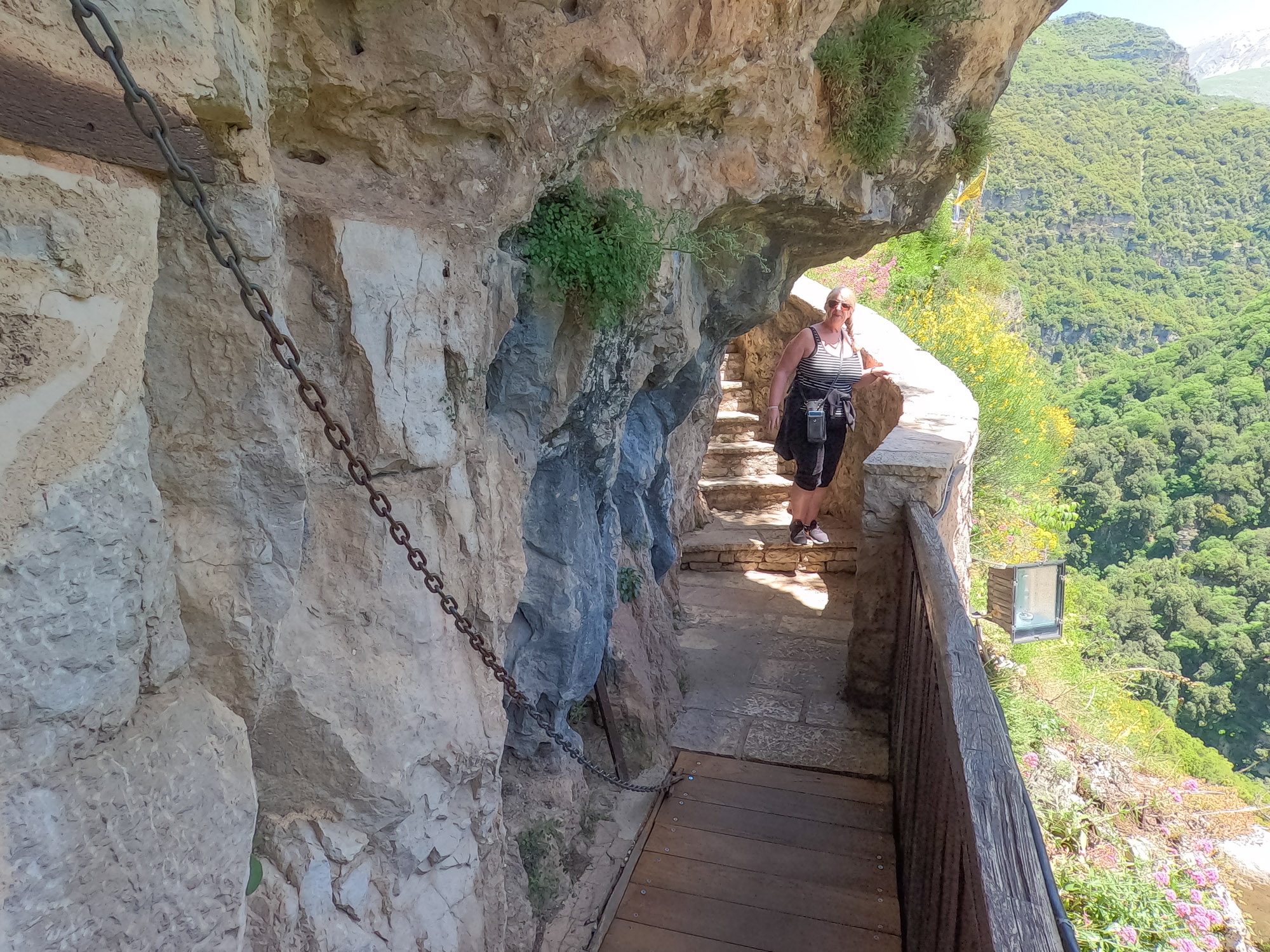
Just when I thought we couldn’t possibly climb any higher, we reached our next destination. The Monastery of Kipina. At first glance, Kipina hardly looks real. Built directly into the vertical rock face above the Kalarrytikos Gorge, it appears less like a building and more like part of the mountain itself.
The monastery clings to the cliff with the gorge dropping away below. The surrounding mountains rise steeply on every side, emphasising just how isolated this place once was. But its position was no accident.
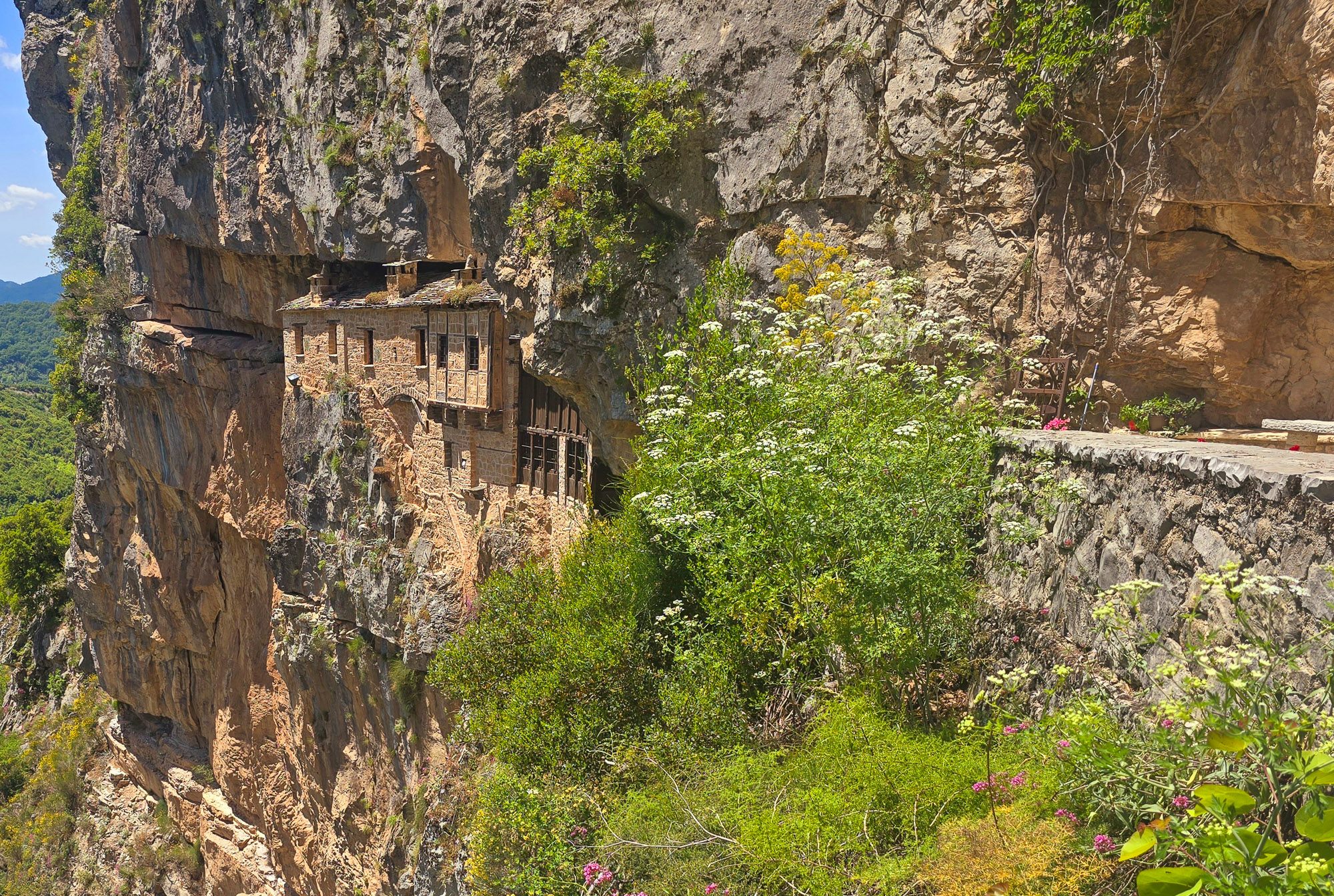
The monastery dates back to the thirteenth century and takes its name from the gardens once cultivated by the monks, the Greek word “kipos” meaning garden.
For centuries, remote monasteries such as Kipina played an important role during periods of unrest and Ottoman occupation. Their isolation provided protection while their communities helped preserve religious traditions, education and Greek identity. Looking around, it is easy to understand why the location was chosen. Approaching the monastery unnoticed would have been difficult. The gorge, cliffs and surrounding mountains provided natural defences long before anyone thought of modern security systems.
Reaching it involves crossing a narrow wooden drawbridge attached to the cliff face.
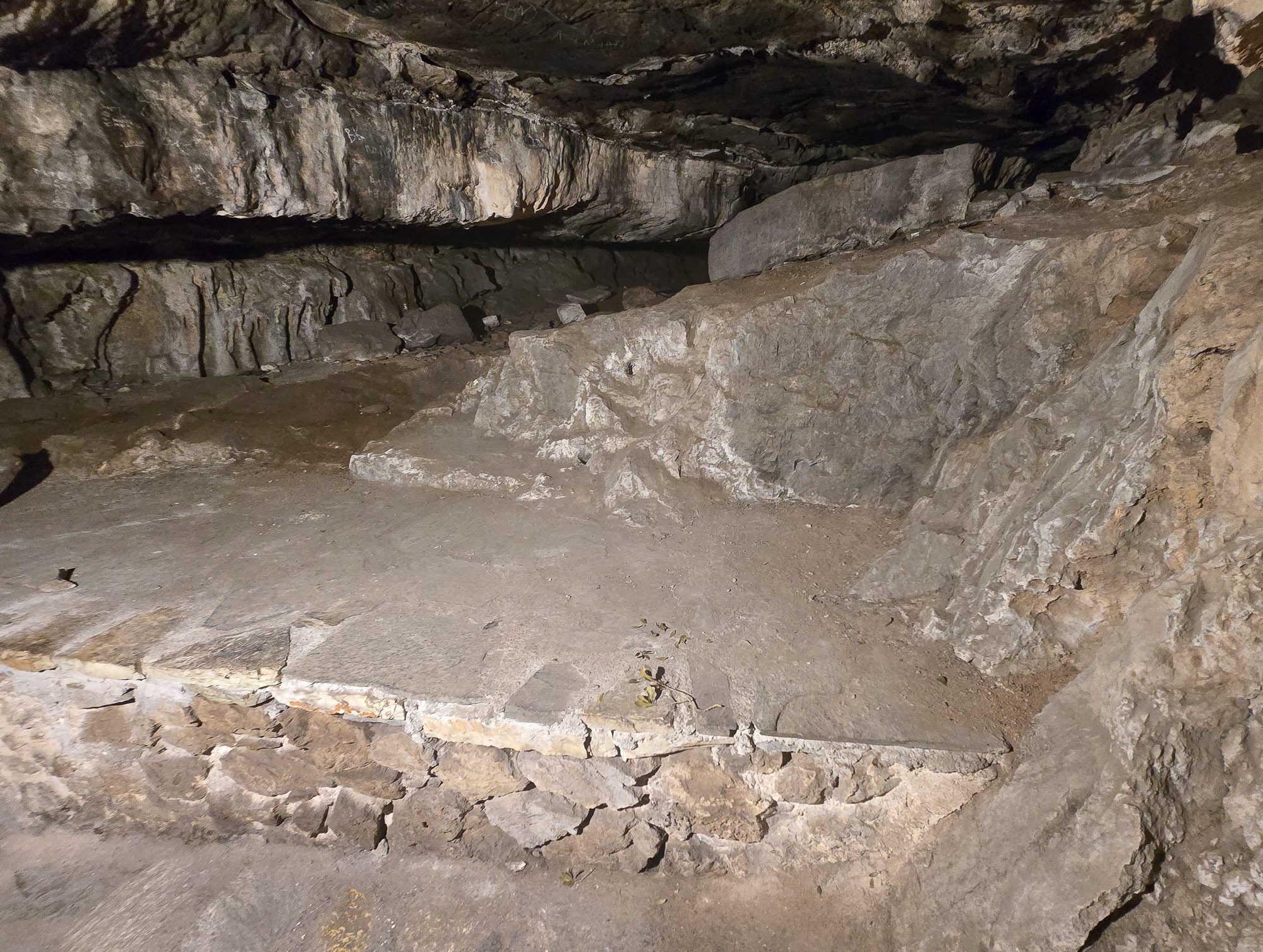
Once you enter the complex, you immediately get the sense that this is indeed part of a cave. A survey map of the cave system shows that hidden behind the monastery is a cave network that extends for around 240 metres into the mountain and is believed to follow the course of an ancient underground river. Behind the small chapel, narrow passages and chambers disappear into the darkness.
Local tradition associates parts of the cave with the Secret School during Ottoman rule, while the caves also provided a place of refuge during periods of conflict. Travellers, monks and local people could seek shelter here when times became dangerous. The monastery was reportedly used as a meeting place and base during various uprisings against Ottoman rule, particularly during the nineteenth century. The cave offered a concealed location away from the main settlements of the valley. Looking at the map, it becomes clear that the monastery is only the visible part of a much larger complex concealed within the rock. Today, you can still see the part of the cave complex that served as the secret school – though beyond that is out of bounds.
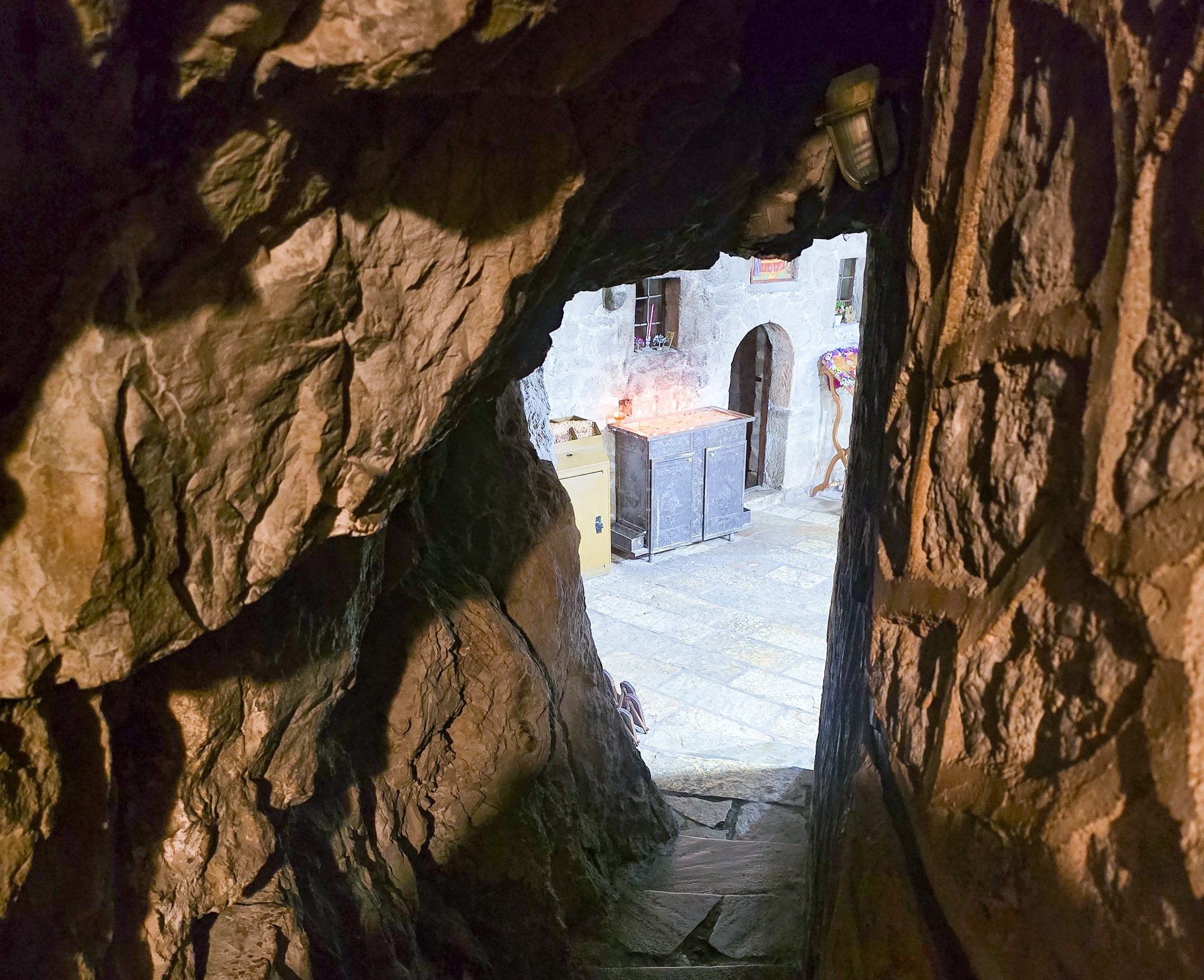
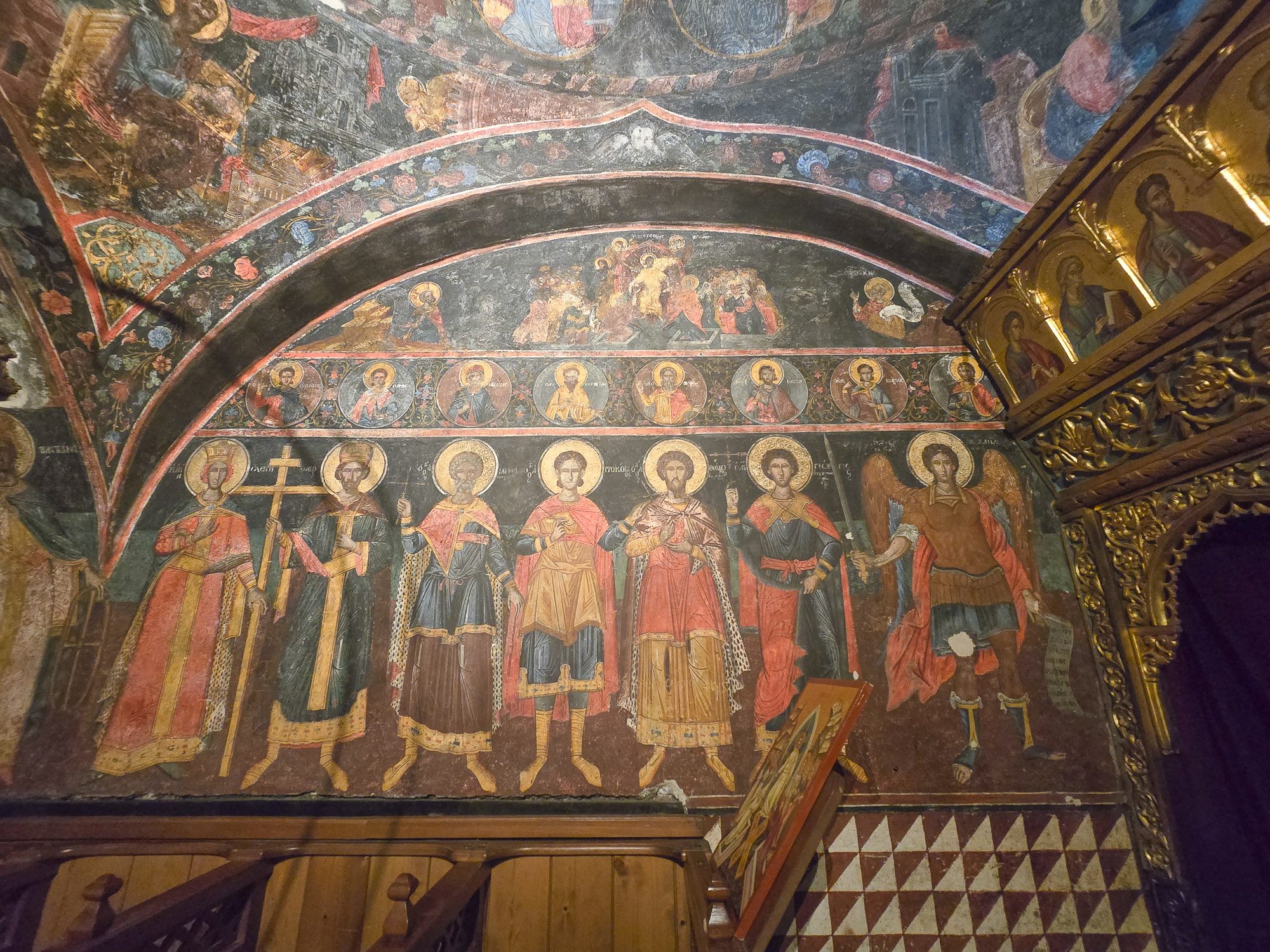
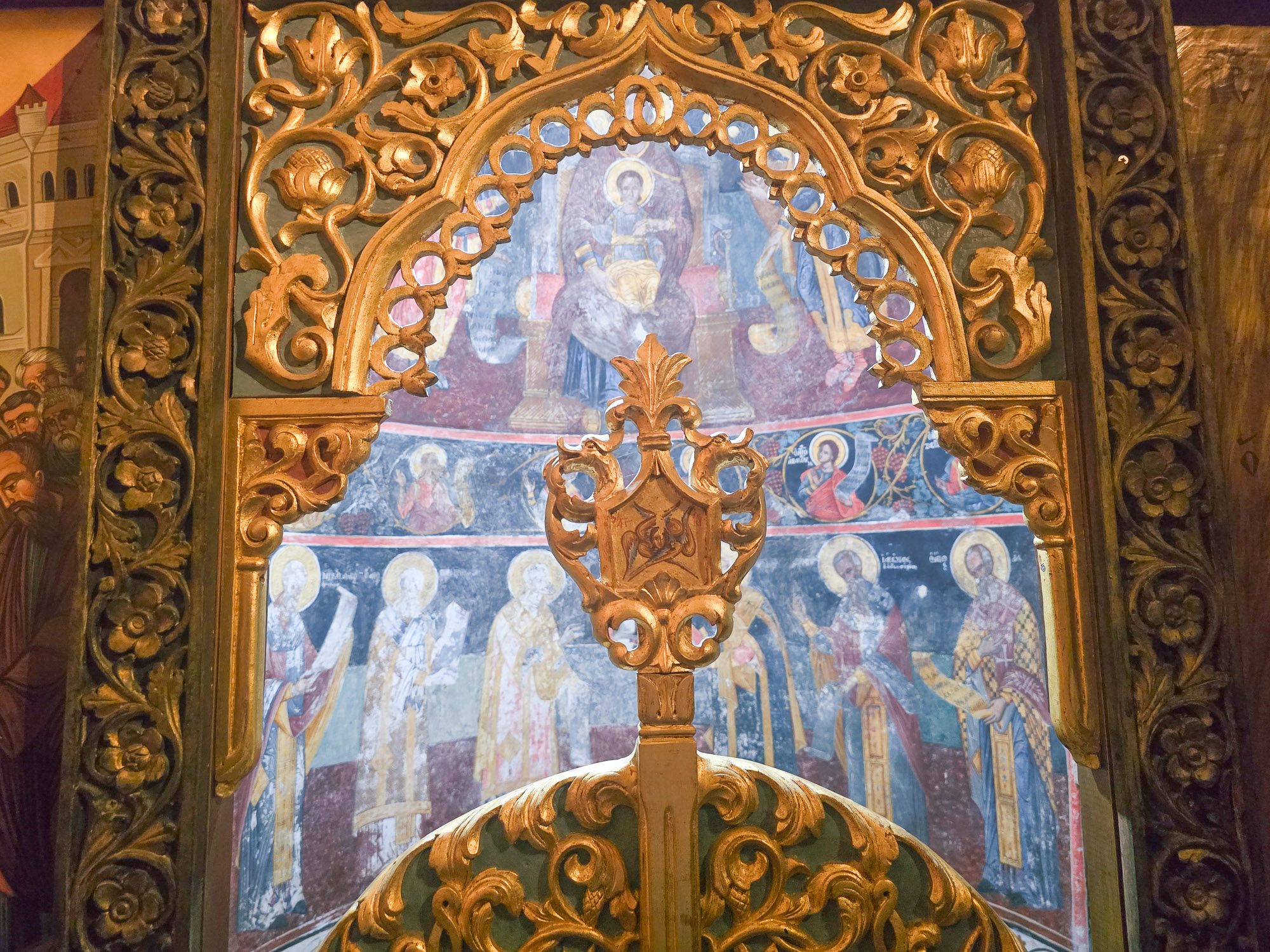
The small chapel is dedicated to the Dormition of the Virgin Mary (Koimisis tis Theotokou). The katholikon (main church) is very small because it was built into a natural cavity within the rock face. The interior contains post-Byzantine frescoes, some dating from the 17th century. The iconostasis is relatively simple compared with many larger monasteries. Because the walls are partly natural rock, the chapel feels very different from a conventional church building.
The interior is relatively modest compared to some of Greece’s more famous monasteries. Nothing here feels designed to impress visitors. Instead, it feels authentic. A place built for purpose rather than spectacle.
The Village of Kalarrytes
After leaving the monastery, we continued towards Kalarrytes. Along the way, we crossed iron bridges and passed alpine cows wandering along the roadside at their own pace. One particularly disgruntled cow seemed rather annoyed that we had interrupted its grass munching.
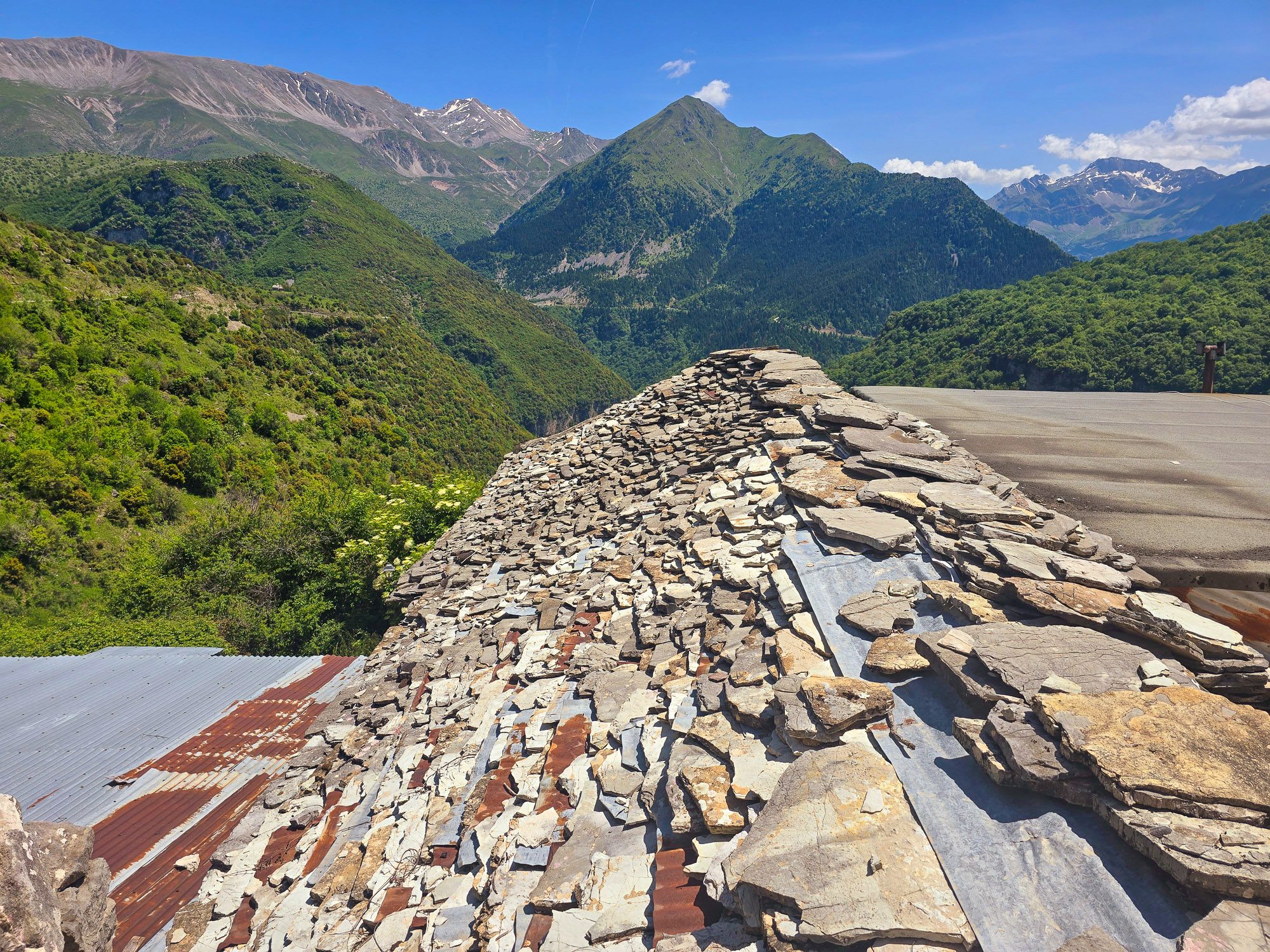
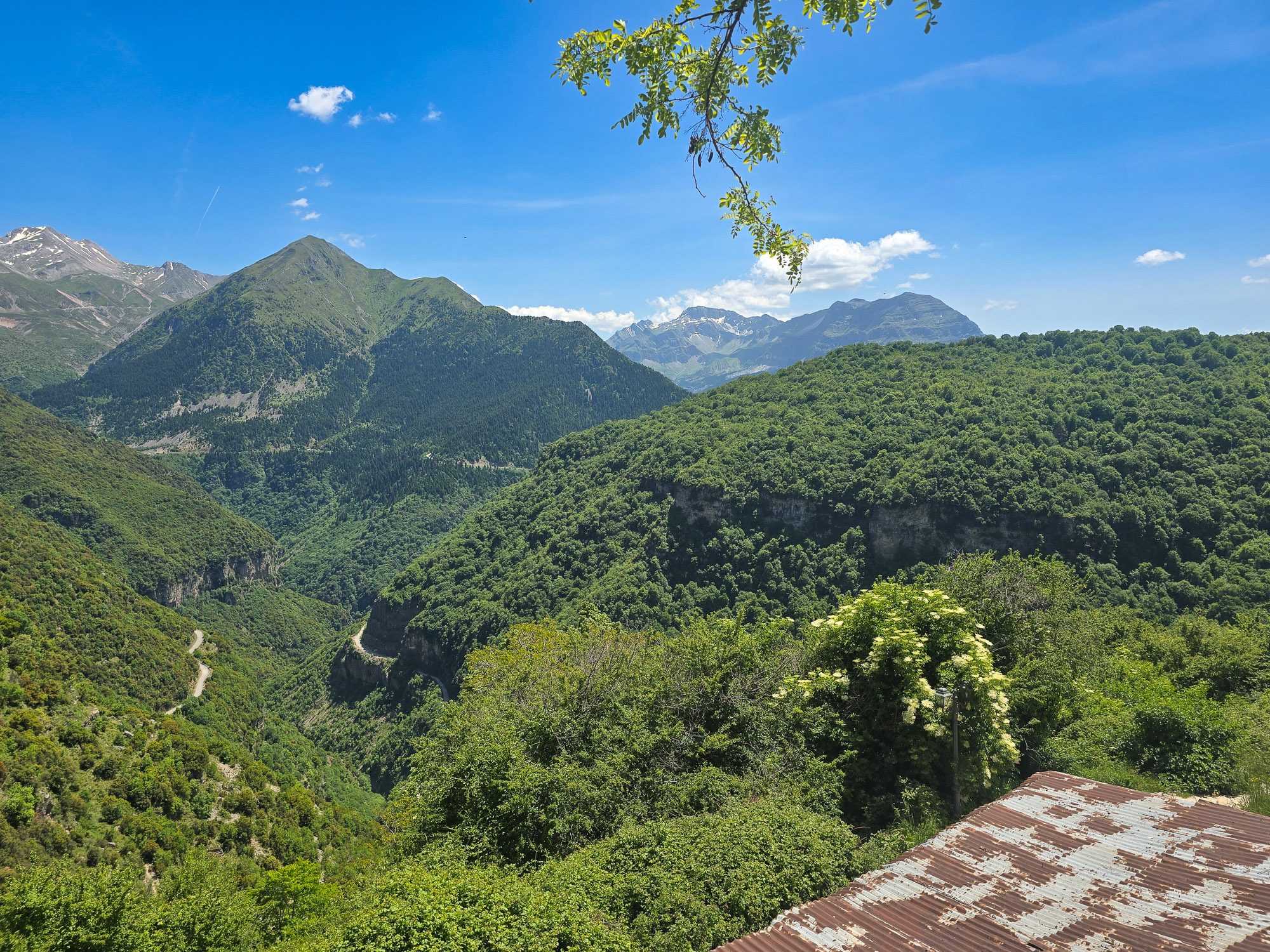
Kalarrytes is one of those villages that instantly captures your attention. Built almost entirely from local stone and crowned with slate roofs, it occupies a spectacular position high in the mountains.
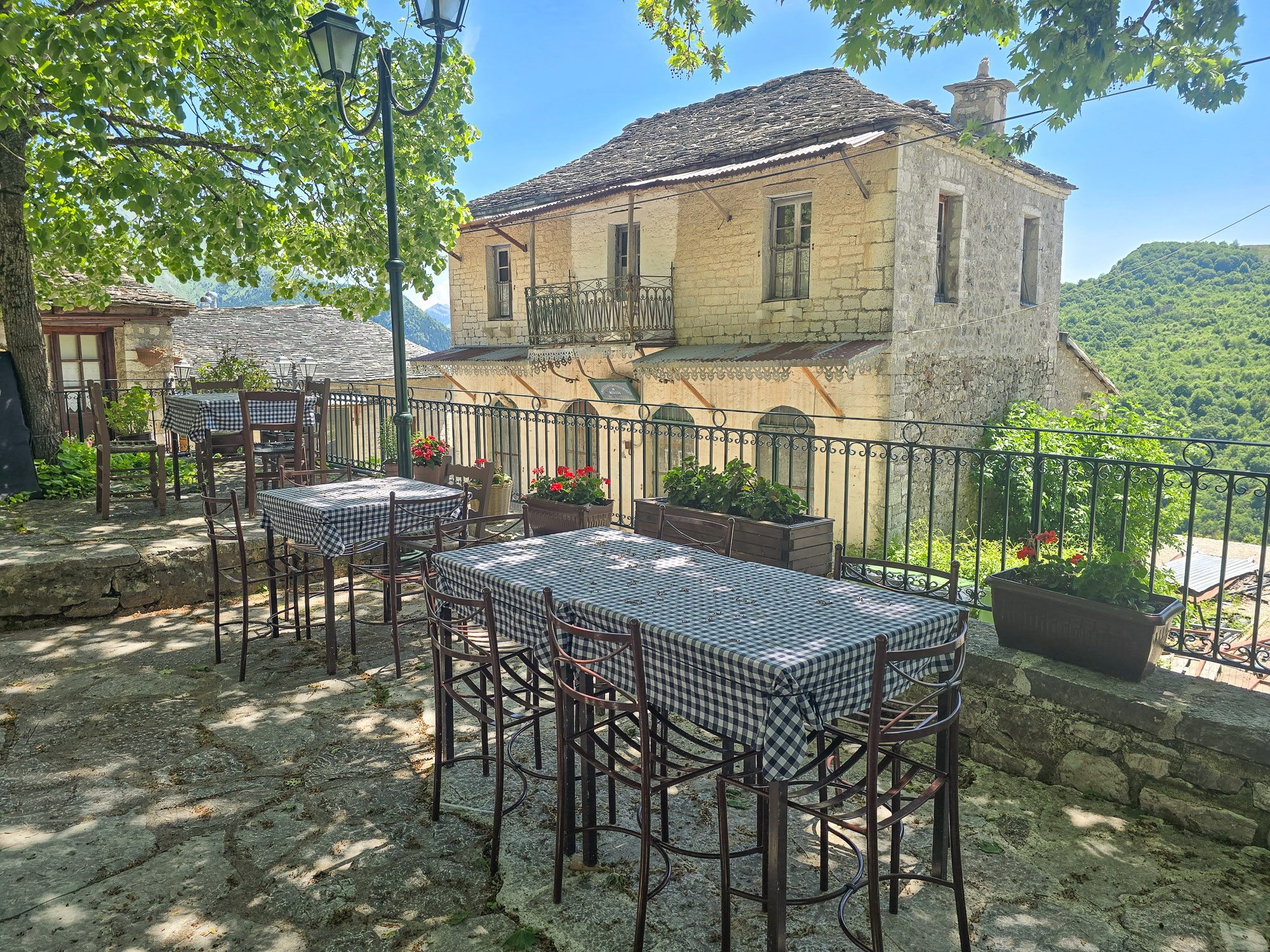
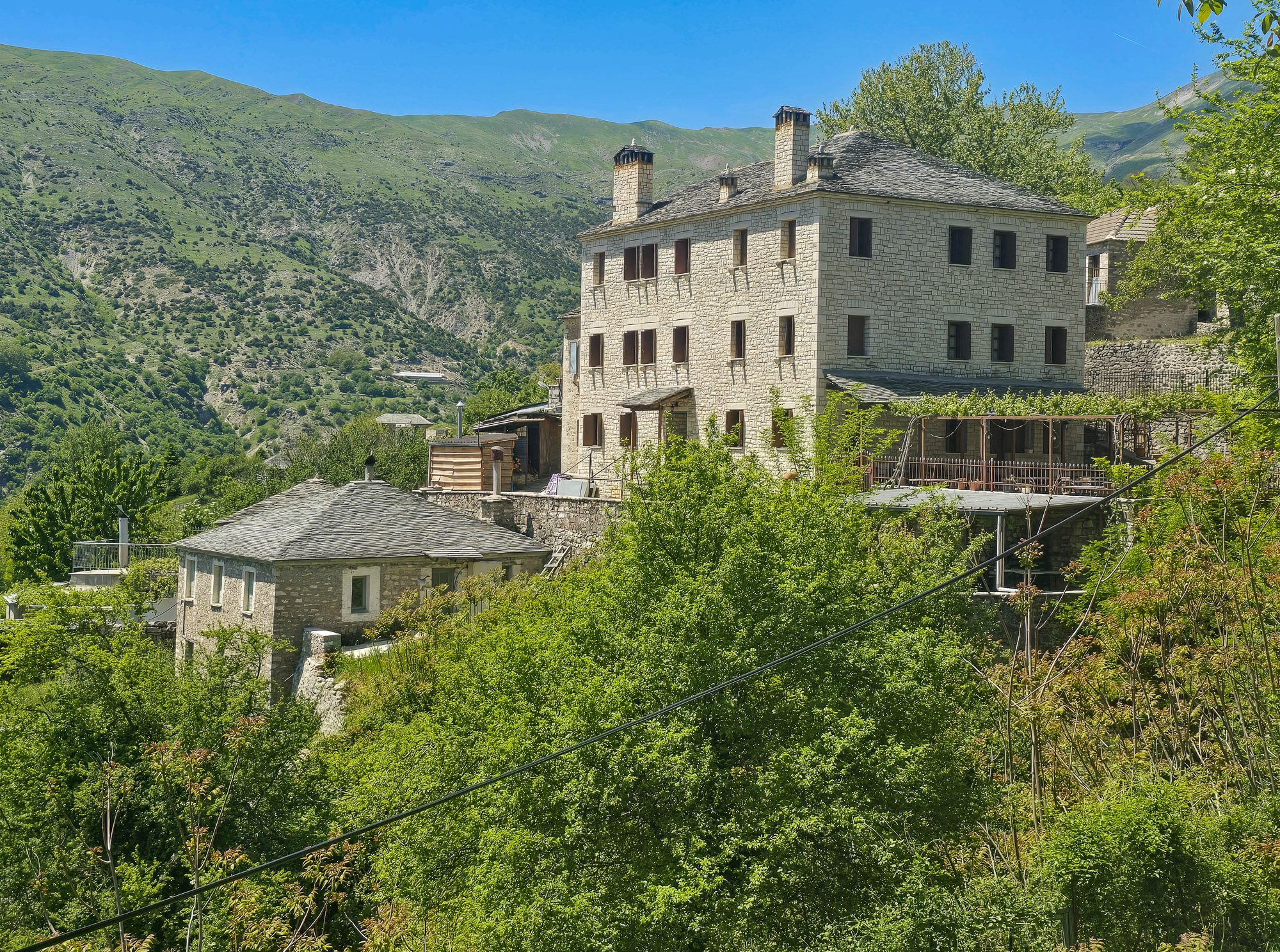

During the eighteenth and nineteenth centuries, Kalarrytes became one of the wealthiest villages in Epirus. It was famous throughout the Balkans for its silversmiths and merchants, many of whom travelled extensively throughout Europe. The village is even connected, albeit indirectly, to the origins of one of the world’s most famous luxury brands. The Voulgaris family were silversmiths from Kalarrytes before relocating to Paramythia, where Sotirios Voulgaris was born in 1857. He eventually made his way to Rome, and in 1884 opened a small shop that would become Bulgari. The craft that took him there began in these mountains.
Today, the pace of life is rather different. During our visit, there wasn’t another soul to be seen. The only sounds were birdsong and the occasional distant cowbell. This is a place where you could just sit and really connect with the landscape and nature. I didn’t want to leave, but lunch was calling.
The Village of Pramanta
Eventually, it was time to continue on to Pramanta. This wasn’t simply another village stop. This was Ioannis’ home village. The place where he grew up.
Part of the wider Pindus mountain range, Pramanta sits at an elevation of 840 metres in North Tzoumerka in the shadow of the imposing peak of Stroggoula. This region is a magnet for hikers, mountaineers and those crazies who like to dangle from cliffs on a rope. And Pramanta is often the starting point for such activities.
As soon as we arrived, it became obvious that Ioannis wasn’t simply a guide passing through. Everywhere we went, there were greetings, conversations and handshakes. He seemed to know everyone.
Lunch was at Boutzas Taverna, a family-run restaurant established in 1957. When Ioannis recommended the lamb, there was never really any question about what we would order. This wasn’t simply local produce. The lamb came from animals reared on the mountain slopes below by the family who own the taverna. That was an opportunity we couldn’t allow to pass by.
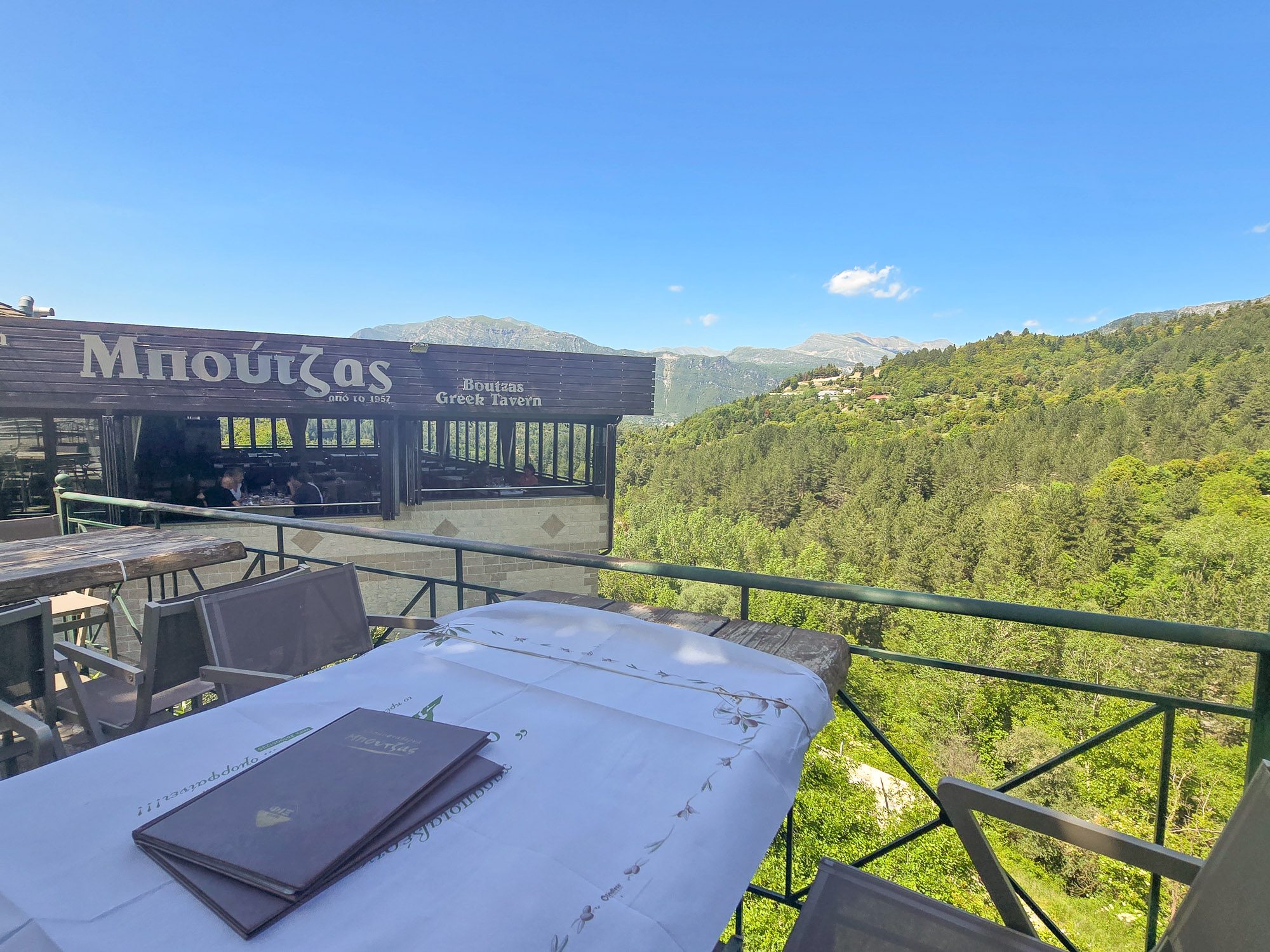
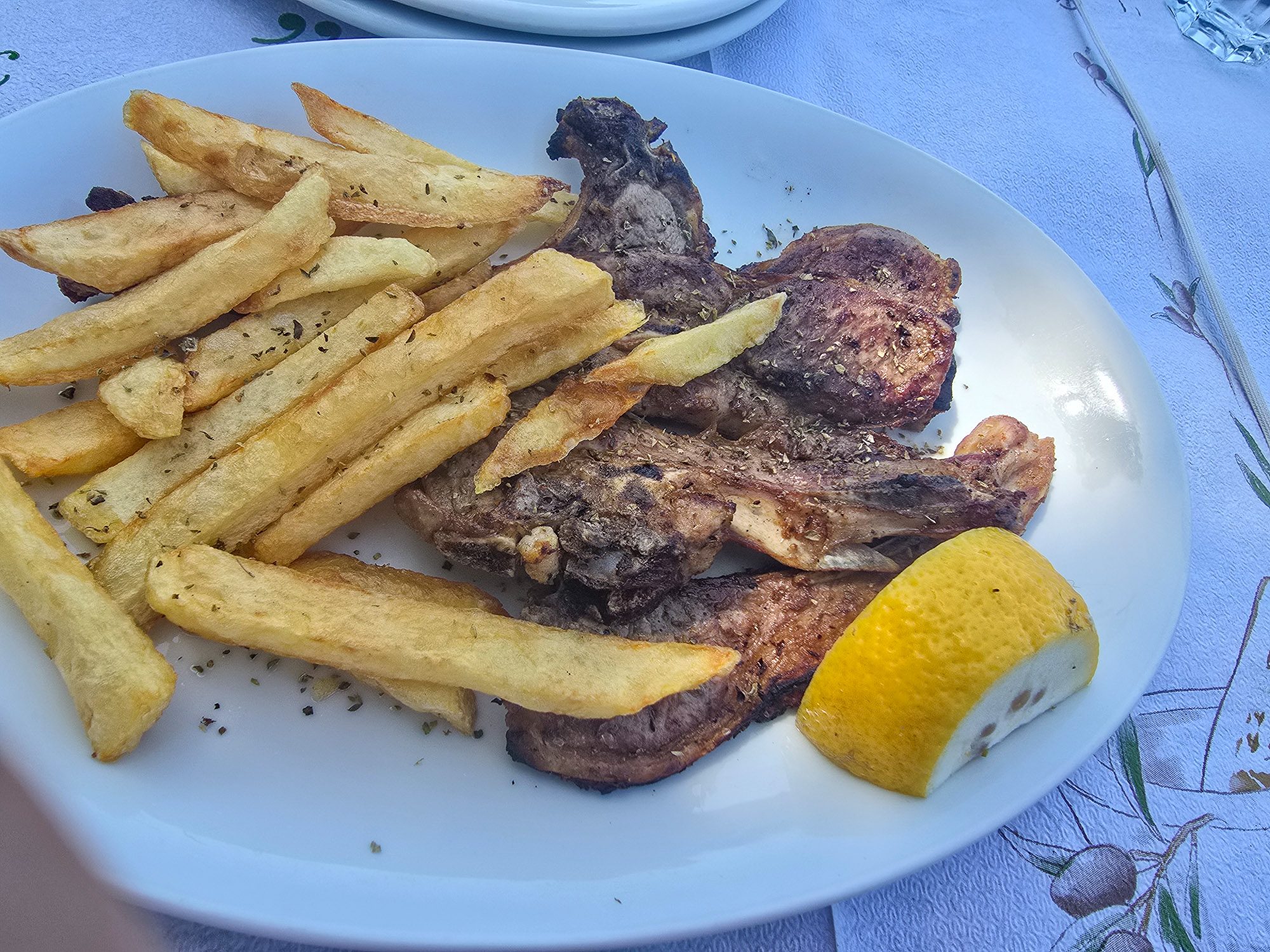
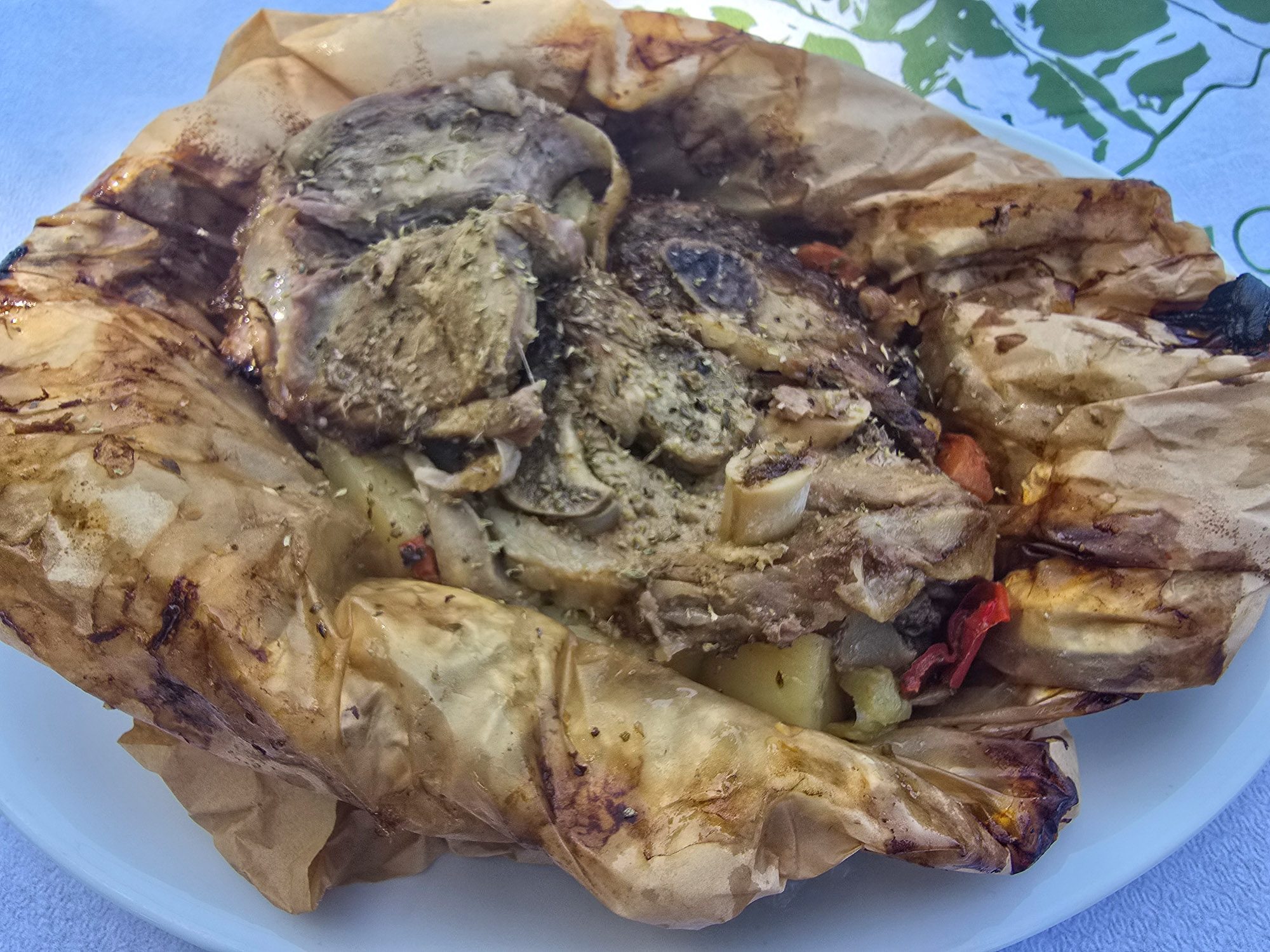
The setting was glorious. Mountain views stretched away beyond forests and valleys, while the food was every bit as good as Ioannis had promised.
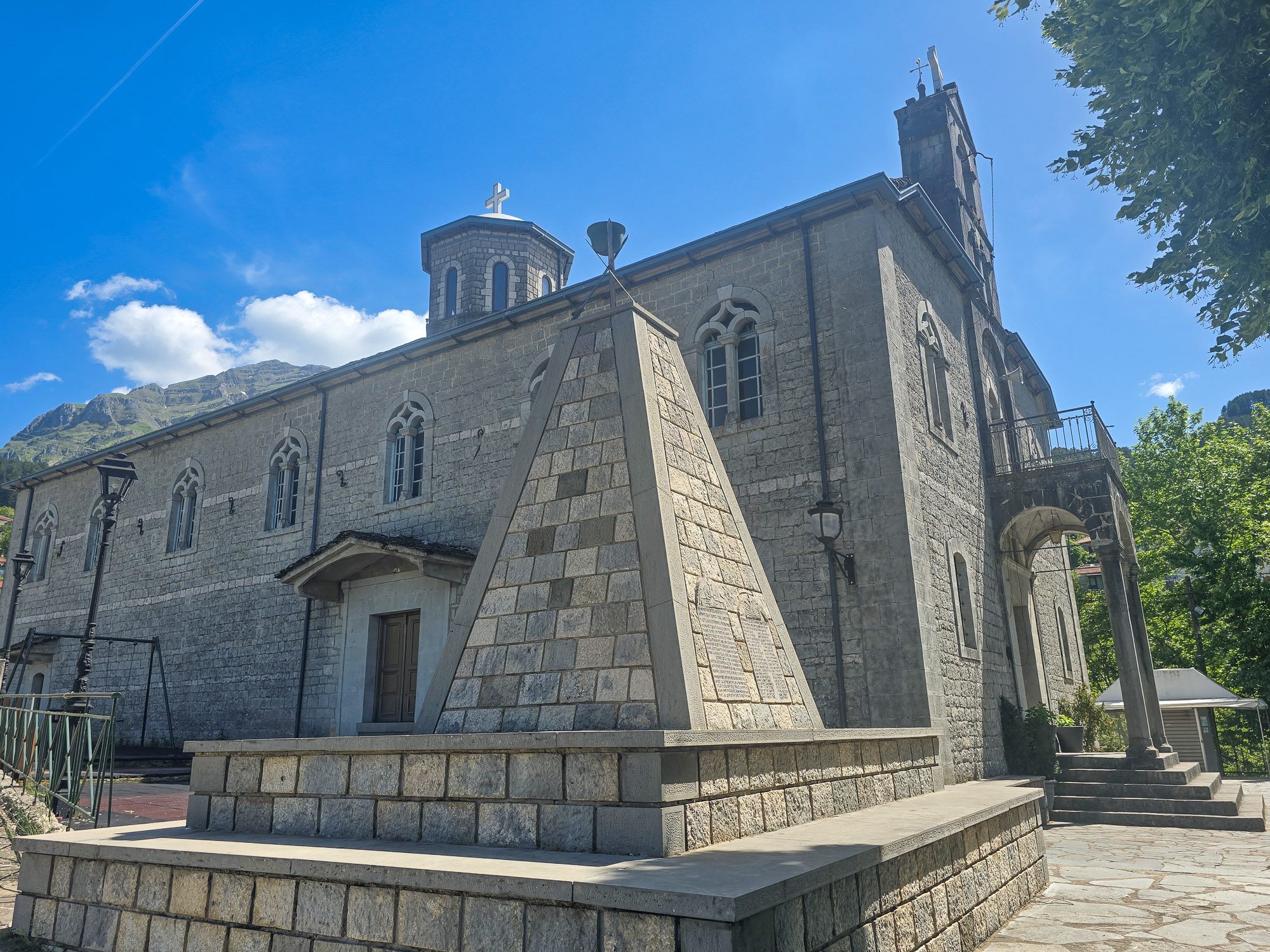
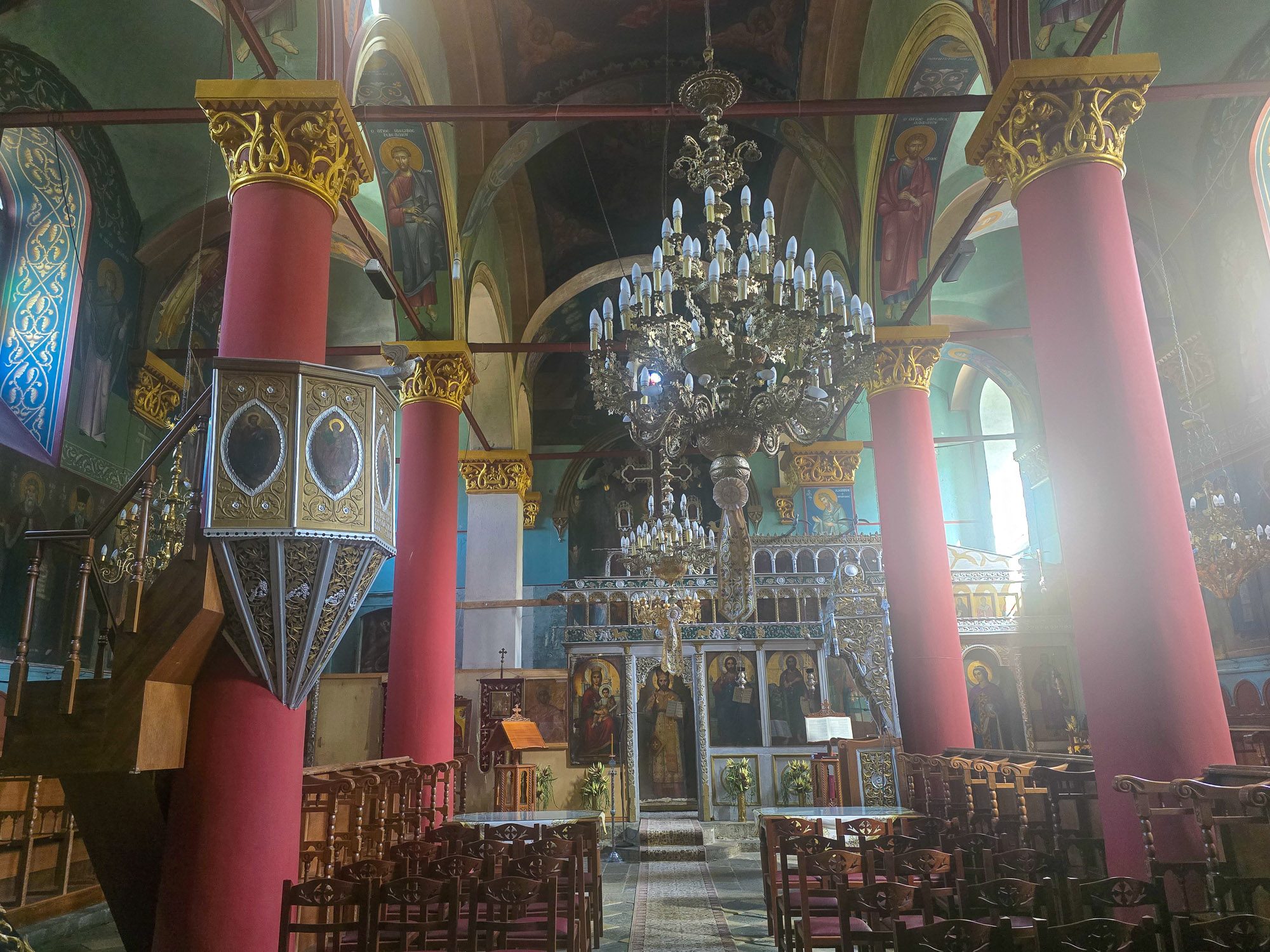
After lunch, we wandered into the centre of the village, taking a look inside the austere-looking Church of Agia Paraskevi as we passed. The interior was far less stark than its exterior would suggest, with colourful icons and gilded details bringing warmth to the space.
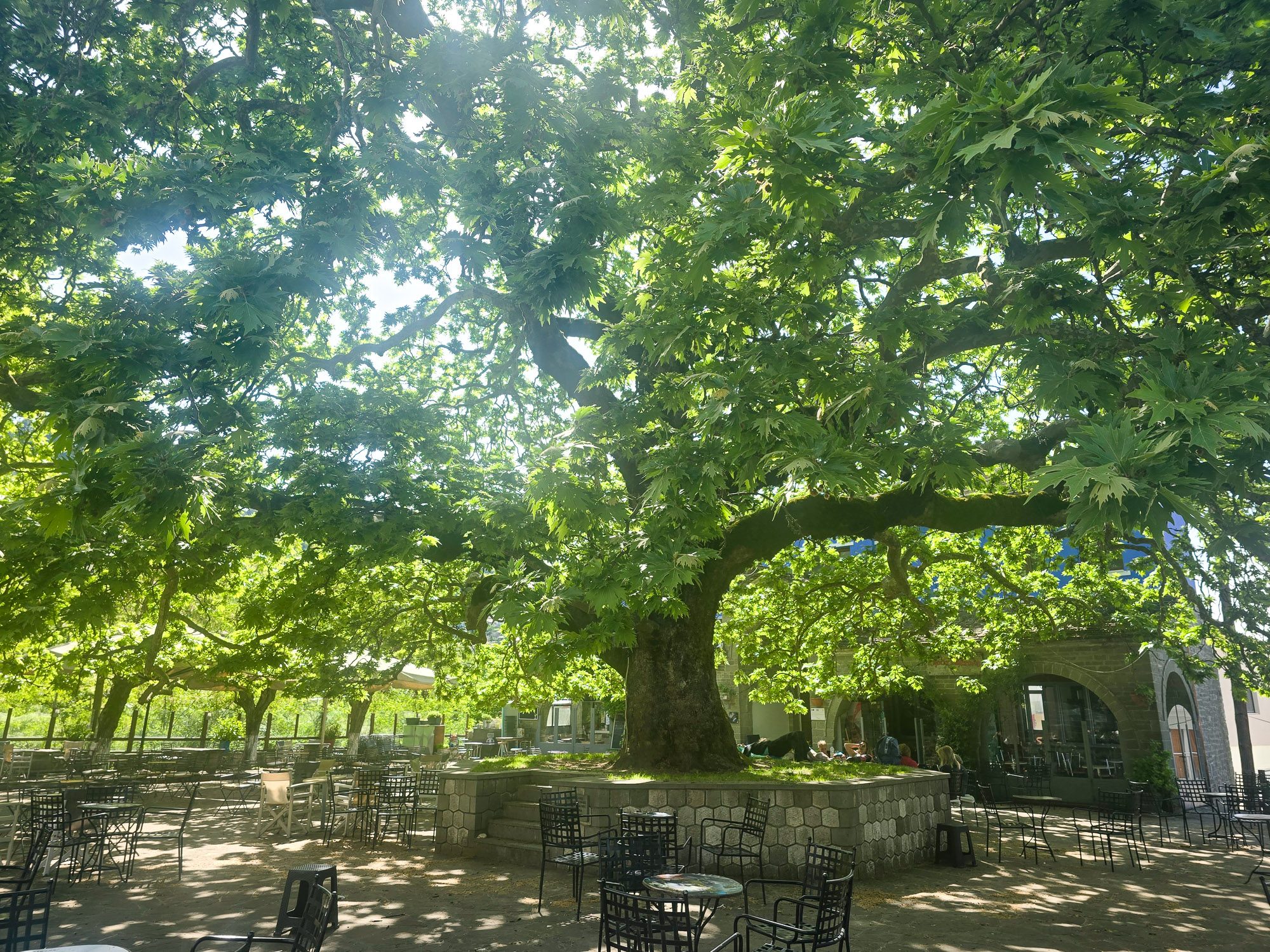
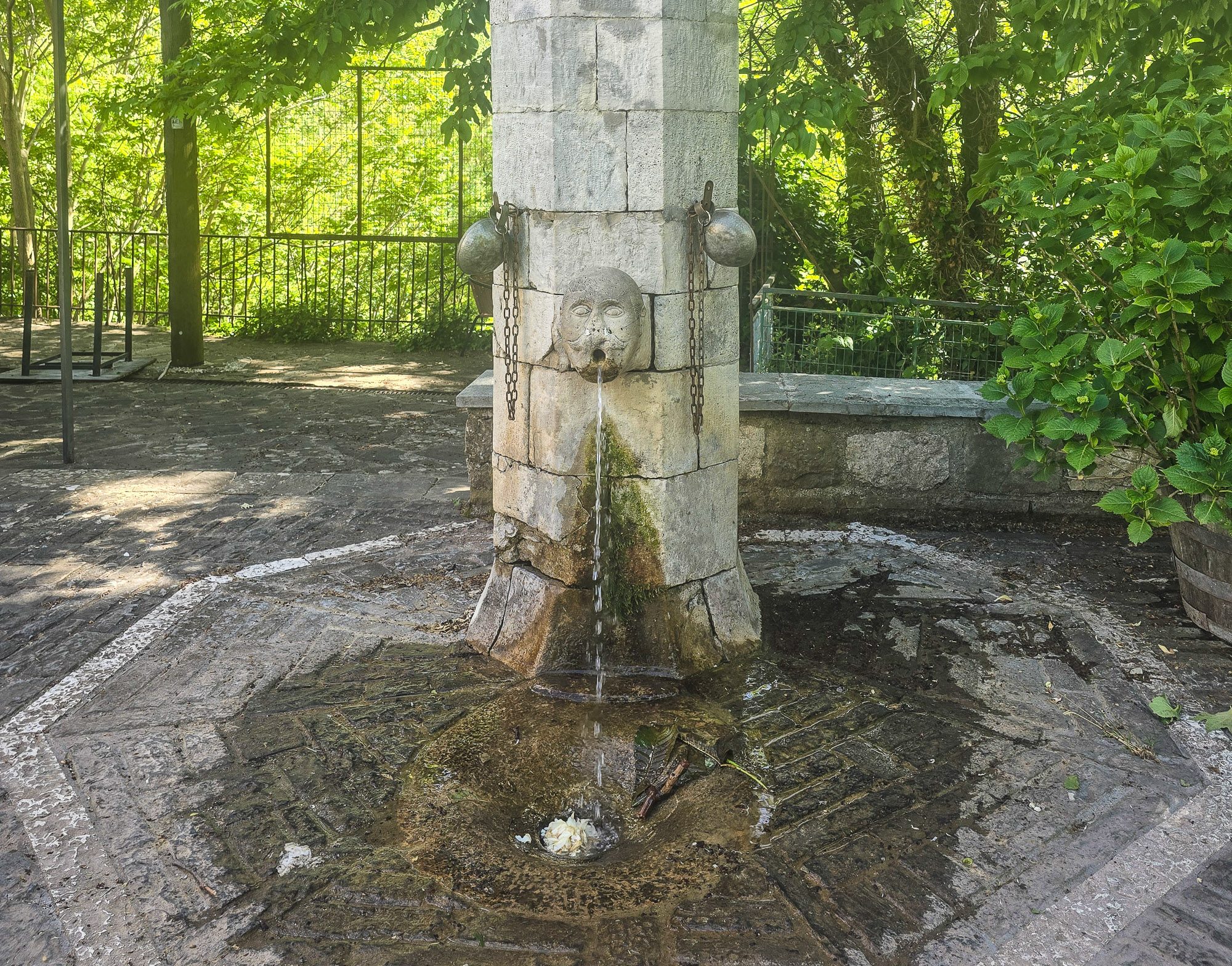
Pramanta’s square is shaded by an enormous plane tree and centred around historic stone fountains. “This is our racist fountain” Ioannis told us, pointing to a carved stone head spewing mountain water from its mouth. The Arapis fountain dates from 1887 and local tradition says the ‘arapis’ (meaning black or dark-skinned man) used to be stationed in the village whilst collecting taxes during Ottoman times.
Around the square was a sculpture called The Flight, dedicated to the resilience of the people of Pramanta who suffered during World War II. Next to it, a depiction of a man wielding a hammer. This is a tribute to the village’s master stonemasons, whose skills helped shape much of Tzoumerka’s architectural heritage. For generations, craftsmen from Pramanta travelled far beyond the village, building bridges, churches and stone houses across the region. One of the most famous was Kostas Bekas, who built the iconic Plaka Bridge over the Arachthos River.
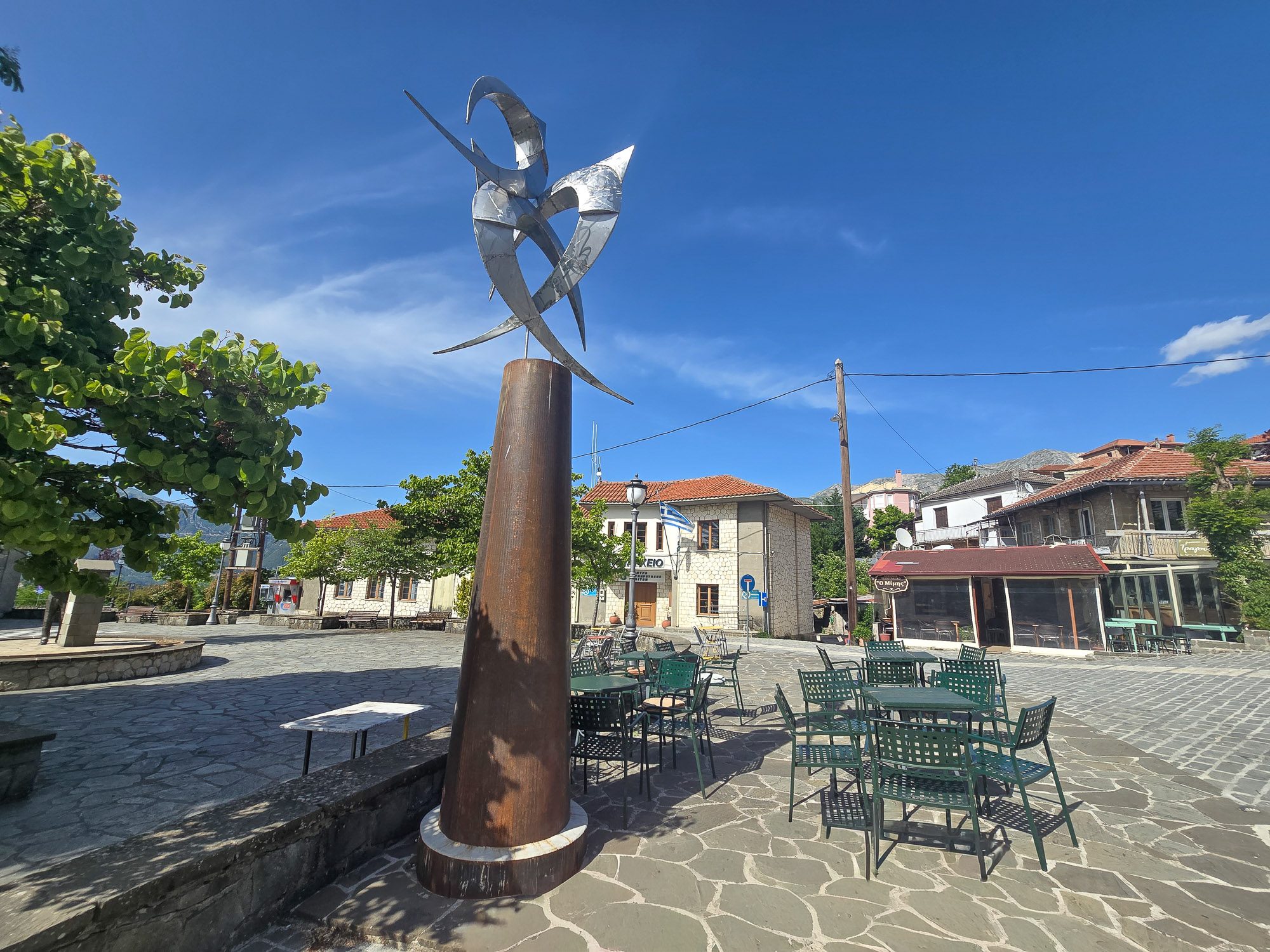
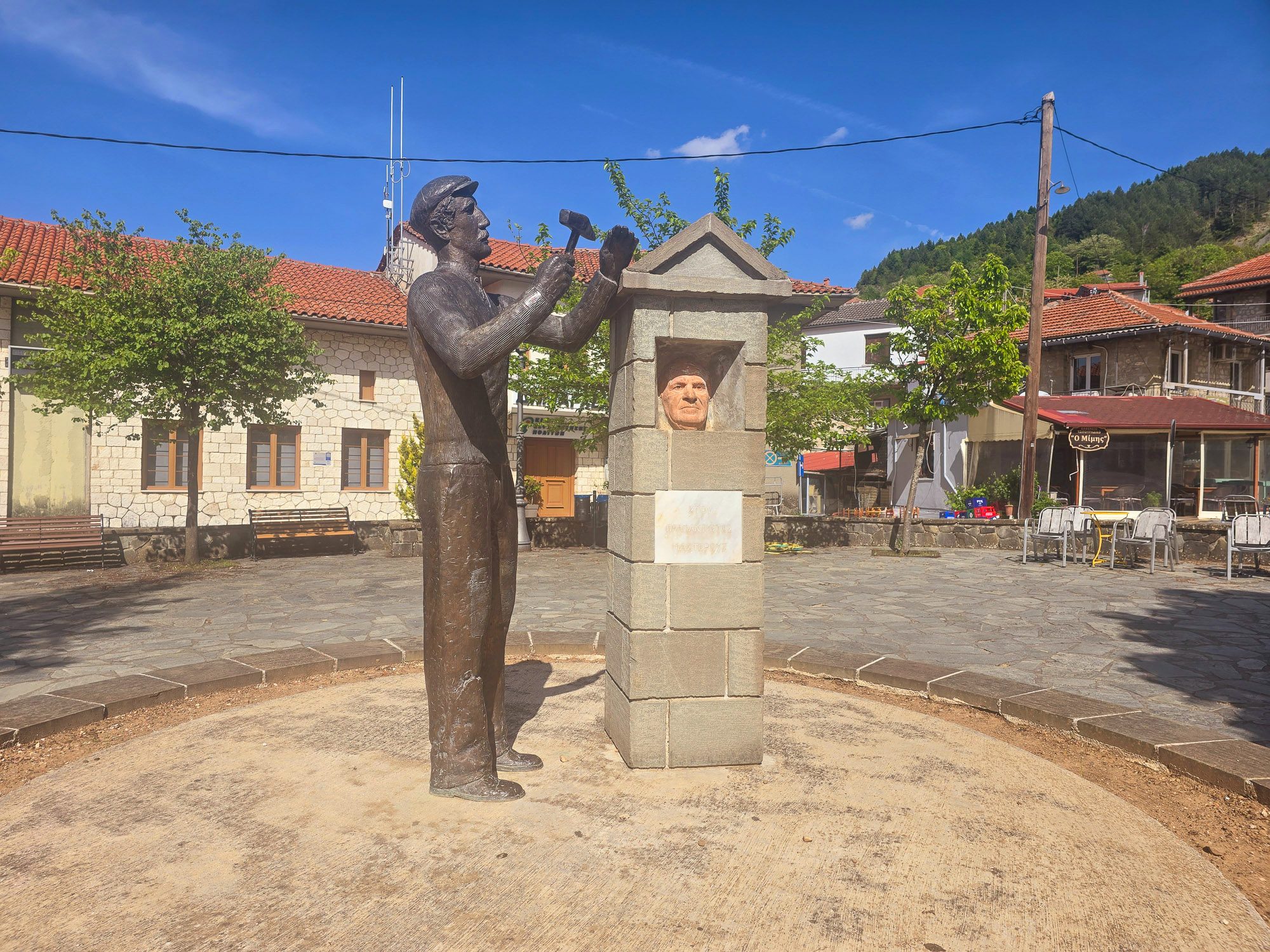
This little corner of the village felt like a world away from modern life. As we wandered beneath the trees, Ioannis shared stories from his childhood. Stories of exploring mountains, scrambling through ravines and disappearing into the wilderness with friends for hours at a time.
Much of it sounded like the sort of thing that would send modern health and safety officers into convulsions, but this was another time. As always, the stories were delivered in Ioannis’ own inimitable style.
Another story Ioannis told was about the rivalry between his village, Pramanta, which is located in the prefecture of Ioannina on one side of the mountain and the neighbouring village of Mellisourgoi, located in the Arta prefecture on the other. The story began in the early 1980s. The population of Pramanta had gradually expanded, and over time, the village needed more water for its residents.
It was well known that Mellisourgoi, on the other side of the mountain, had the benefit of being close to the source of several springs at its feet, so the mayor of Pramanta asked if they could have access to more water. The request was denied. The mayor then submitted another plea asking only for the water they didn’t need – the overflow, if you like. Remaining steadfast over this valuable resource, the second request was also refused.
Pramanta, however, had an ace up its sleeve. They decided to block the only road which goes to Mellisourgoi. Of course, this was never going to be sustainable but calling their bluff must have worked because nowadays both the water and the road flow freely between the two villages. Whether Mellisourgoi have another version of this story, I honestly couldn’t say.
The Plaka Stone Bridge
From Pramanta, we began our descent back towards the Arachthos River, passing through the small hamlet of Ktistades along the way.
As we followed the road running parallel to the river below, I spotted a stone bridge in the distance. I suddenly had a churning feeling in the pit of my stomach. I think I knew exactly what was coming.
My difficulties with vertigo are well-documented. Ioannis, on the other hand, seems rather fond of encouraging people, particularly me, beyond their comfort zone. He glanced across with a mischievous grin.
The bridge in question was the famous Plaka Bridge. Built in 1866 by Kostas Bekas, the master builder from Pramanta, whose stonemasons were commemorated in the village square. Its enormous single arch spans the Arachthos River, and it’s the largest stone bridge of its kind in the Balkans. For many years, it stood on the border between Ottoman-controlled Epirus and free Greece, serving as a customs crossing and meeting point. Following severe flooding in 2015, the historic structure collapsed into the river below. What visitors see today is the result of a painstaking reconstruction completed in 2020.
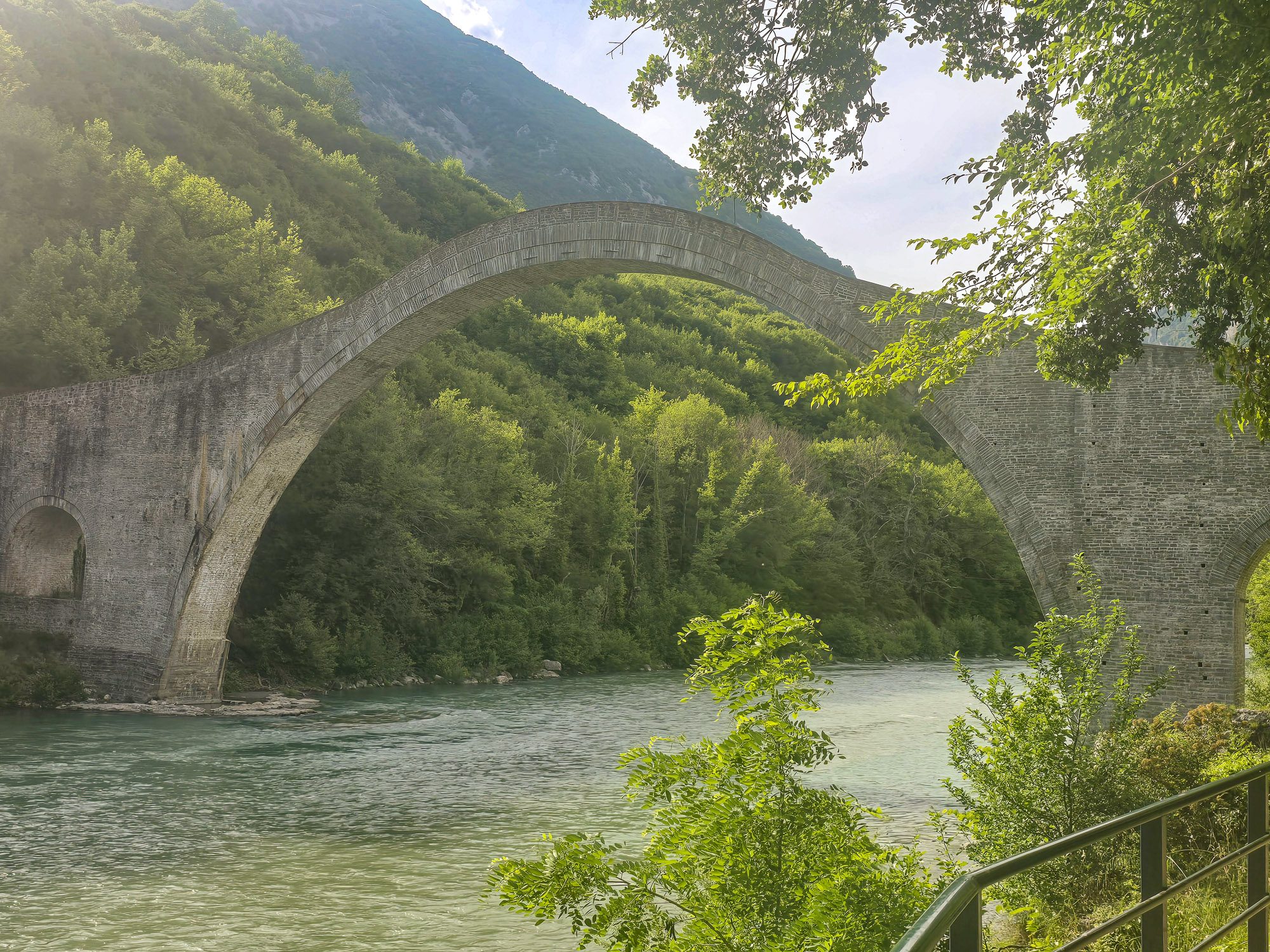
As we exited the car, I began to wring my hands with anxiety. “This is an easy bridge to cross,” Ioannis assured me. “It has high walls on both sides. Much easier than the ones in Zagori.”
I wasn’t totally convinced. I hate the sensation of vertigo, especially when my head begins spinning on its axis. Anything over 6 feet off the ground will do it. However, that feeling was far outweighed by the sense of FOMO and not wanting to leave with regrets. If I walked away without trying, I knew I would spend the rest of the trip wishing I had.
And besides, who was I to argue with a former officer of the Presidential Guard!
Step by step, I made my way up the steep incline, clinging onto Peter for dear life. As we reached the highest point of the bridge, I nudged Peter out of the way long enough to get the evidence I needed. Do you see what lengths I go to for the blog!
Standing in the middle of that great stone arch above the turquoise waters of the Arachthos felt like the perfect finale to a remarkable day.
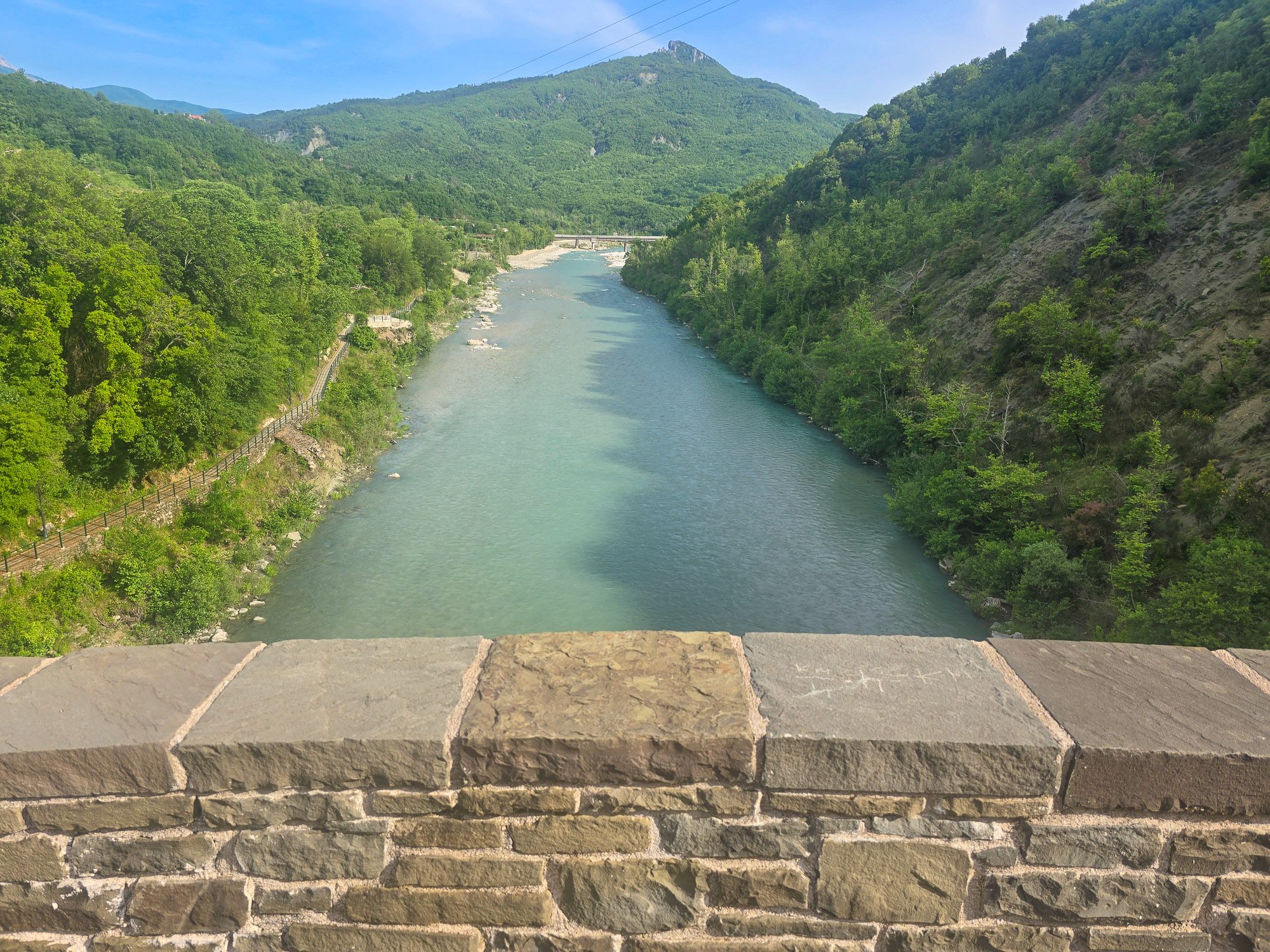
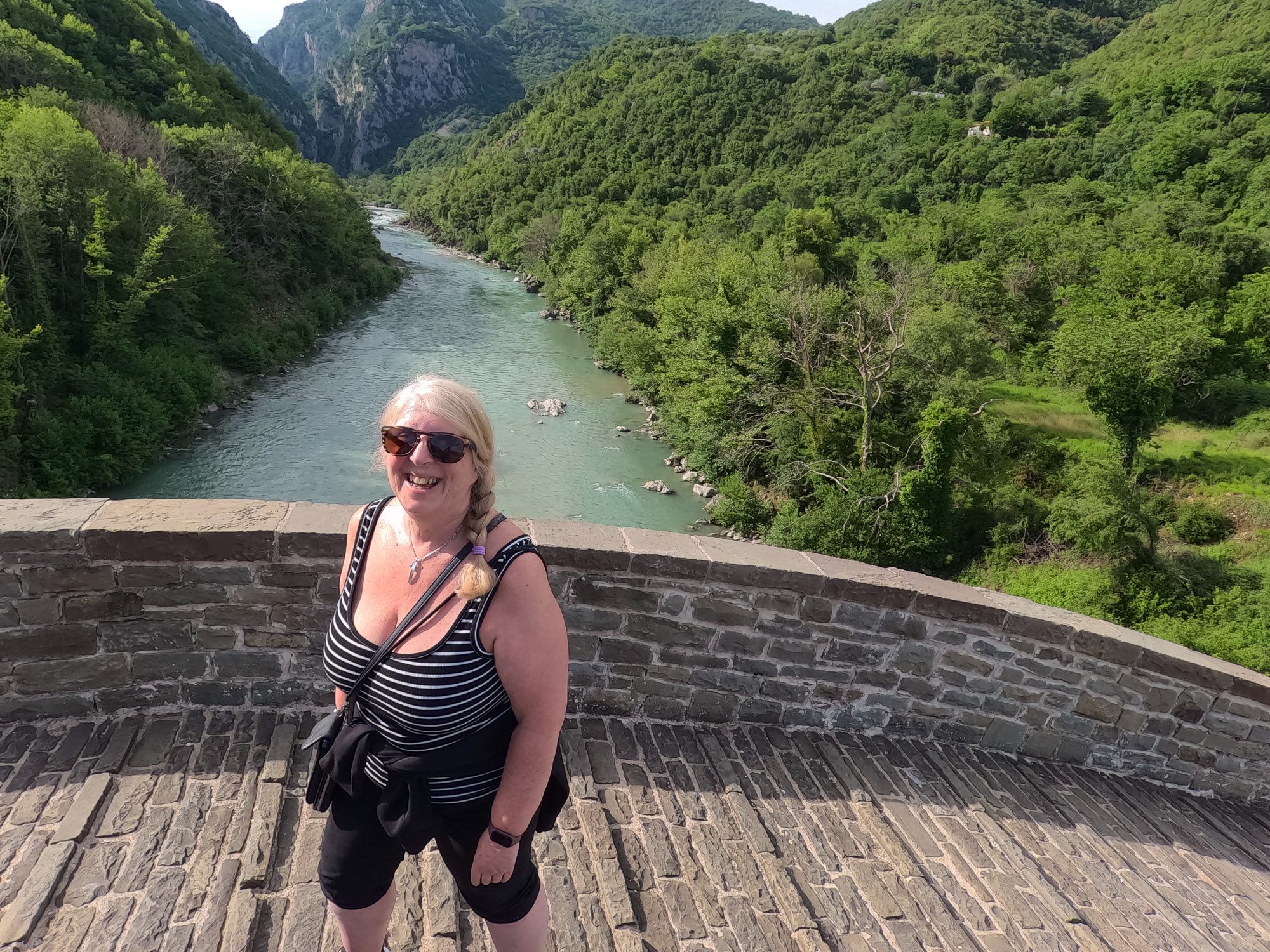
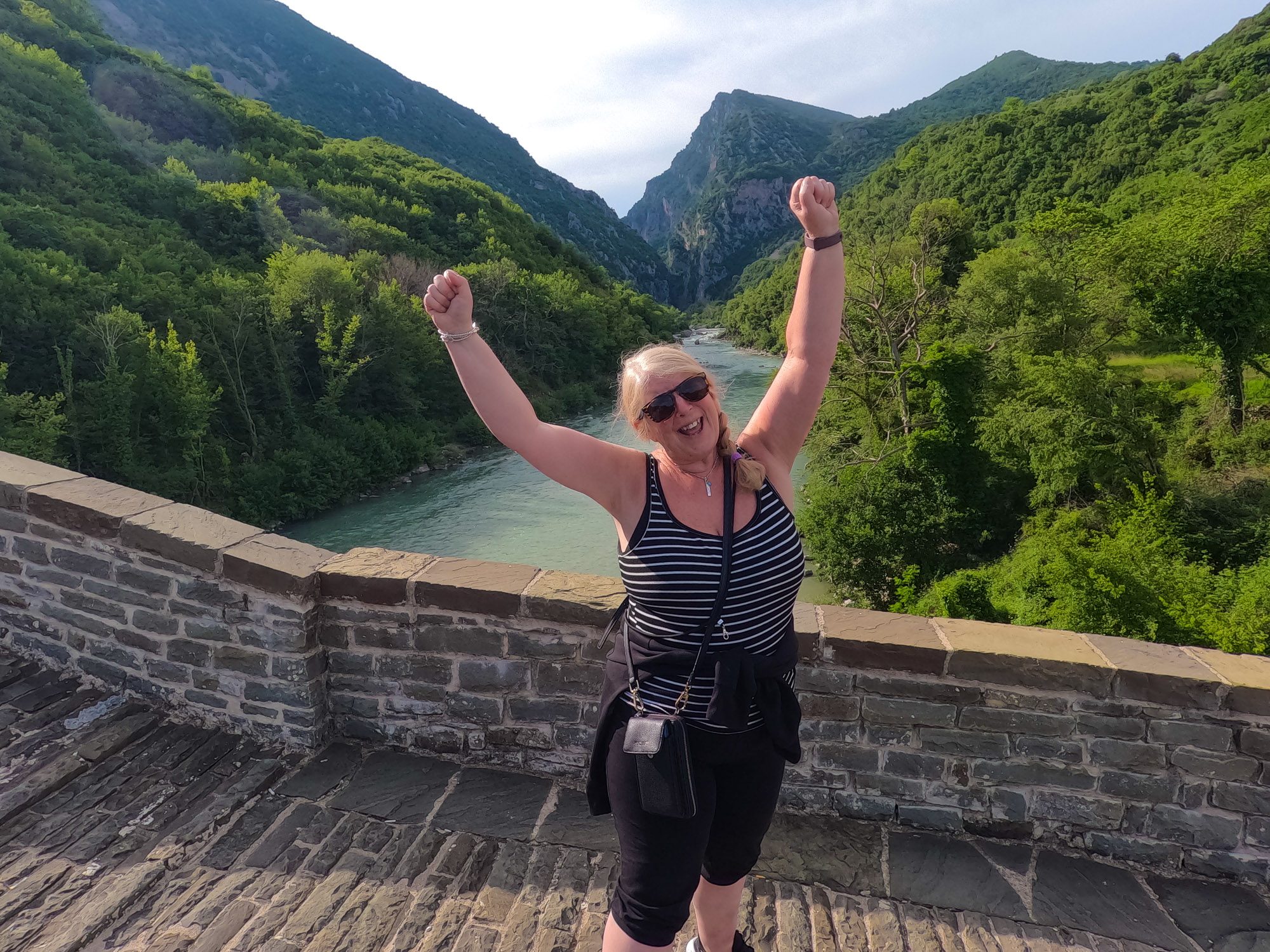
There is an amazing sense of satisfaction gained from pushing yourself. I know crossing a bridge is hardly Mount Everest. But it was ‘my’ Mount Everest.
And I did it.
The following day would bring more adventures.
Discover more from
Subscribe to get the latest posts sent to your email.
MY BIG FAT GREEK TRAVEL SURVEY
How do you really plan your Greek adventures? I'd love to hear from you.
TAKE THE SURVEY →


Very interesting post Stephanie – I’ve been a while catching up – I also have vertigo so feel your pain 😢
Thank you Liz! Glad you liked that one. Yes vertigo is a real disadvantage when travelling through Greece. ❤️