Zakynthos to Patras: Ferries, Forts and Familar Sunsets
Getting from Zakynthos to Patras was, in my mind, quite straightforward (ish). The ferry goes from Zakynthos town to Kyllini. Simple. I’d bought my ticket online via my own app, Plan Your Greece, which took about thirty seconds. The next bit was less clear.
When I say that I travel by making it up as I go along – I mean exactly that. Although for this solo part of the trip I have a vague notion of what direction I will be travelling, I haven’t checked out any of the transport connections or even where I’d be staying up until a few days before. I’m travellling with a certain faith that wherever I want to go, there will be a public transport option to get me there. We’ll see.
Sometimes, however, I can be a bit too blasé about things. I’d decided to buy a ferry ticket to Kyllini, hoping there would be a connection from there to Patras. I remembered seeing buses to Kyllini from Patras, but that was nine years ago. KTEL Aitoloakarnanias (shortened to KTEL Aitolnias), drew a blank, while the KTEL Achaia routes from Patras seemed mostly to be itineraries to and from Athens. In the end, I decided to just wing it. I’d get to Kyllini and figure it out from there. ChatGPT suggested a bus to Varda and a connection to Patras, but I wasn’t about to put my faith in that.
On our last night on Zakynthos we went back to Isalos restaurant by Keri harbour because we loved the location and the hospitality of Dimitris and his brother. Chatting to Dimitris, he mentioned he was heading back to university in Athens. Out of interest, I asked how he got to and from Zakynthos out of season. “The bus” he said. “The ferry and bus run all year round”. Hmm. I don’t suppose it goes to Patras, does it? “It does”, he said. Dammit – why didn’t I think of the bus boat thing! Of course there would be a bus boat connection from Zakynthos just like there is from Kefalonia. Dimitris told me that the bus for Patras departed the bus station in town at 10am in time for the ferry departure at 10:30. All I needed was to get to the bus station beforehand for the ticket.
Sunday morning, after saying goodbye to my compadres, I got into a pre-arranged taxi at 9am. Chatty driver. Turns out he had four hundred olive trees to tend to in between driving.
At the bus station I bought my ticket. The lady asked if I needed a ferry ticket too, I told her I already had one. Rather annoyingly, Levante Ferries don’t issue e-tickets, so I’d need to collect mine at the port, and I asked whether the bus would stop near the ticket kiosk. Yes, she said, though I was conscious the timing would be tight. I was right to be. The bus pulled up right at the ferry ramp. Ten minutes to departure, I ran to the ticket kiosk halfway along the port entrance to be confronted with a queue. My nerves were jangled as I pictured my luggage heading to Patras whilst I was still clutching my ferry ticket on the quayside on Zakynthos. Ticket eventually in hand, I pegged it onto the ferry with minutes to spare thoroughly relieved.
KTEL Zakynthos Bus and Boat Ferry Schedules
From the deck I watched as the Mare di Levante pulled slowly out of the port and onto the open sea towards the Peloponnese. Zakynthos town panorama in all its glory in front of me.
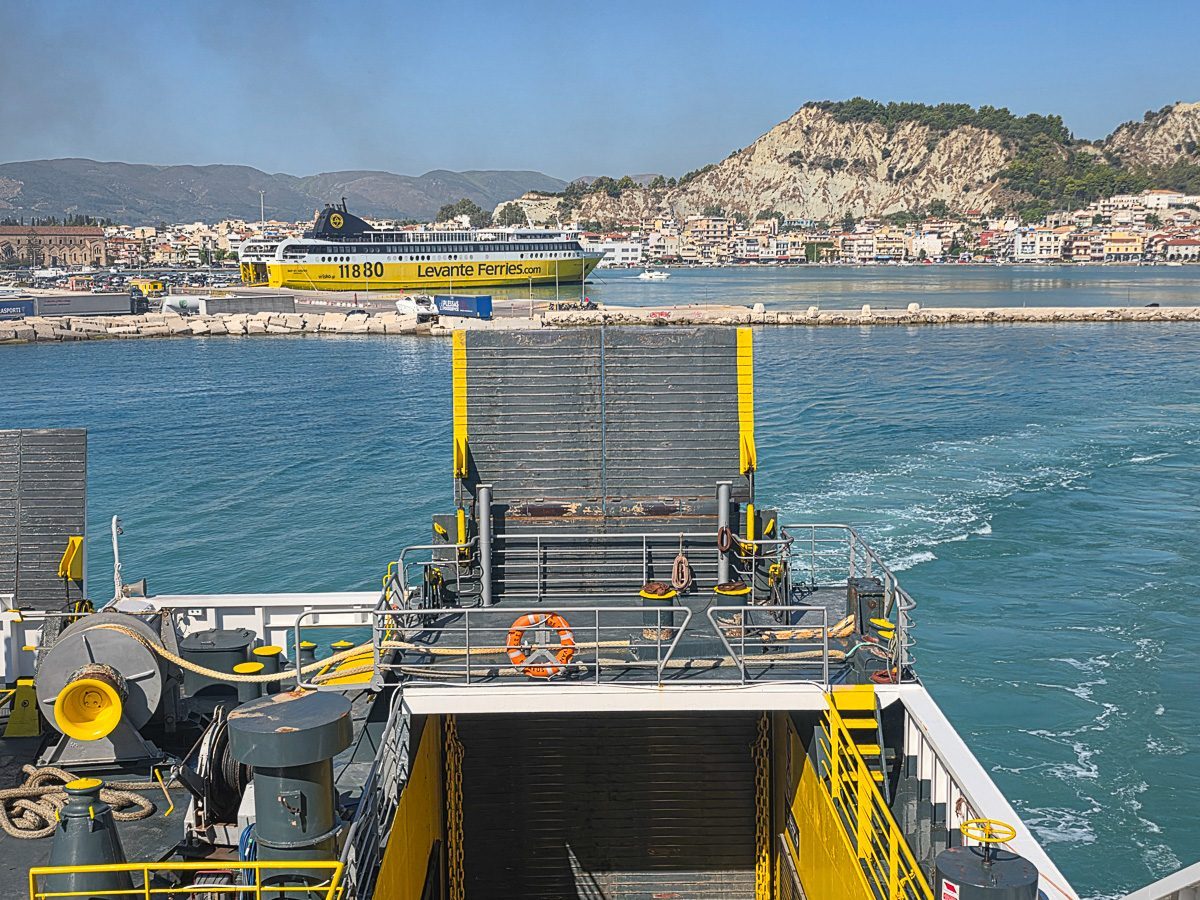
An hour and a half later, we arrived at Kyllini, a small port, a pleasant residential stretch backed by low rolling hills. It wouldn’t have been the worst place in the world to get stuck.
Back on the bus, we headed out along the highway towards Patras. As we drove through Varda, I was amazed to see mile after mile of polytunnels. Turns out this stretch around Varda and Nea Manolada is one of Greece’s main producers of Greece’s strawberries and blueberries. Around 40% of Greek domestic strawberry production comes from the prefecture of Ilia, with cultivation concentrated particularly around Varda, Nea Manolada and Vouprasia. Mild winters, sandy soil, plenty of sun, it apparently makes the whole area ideal for early-season fruit.
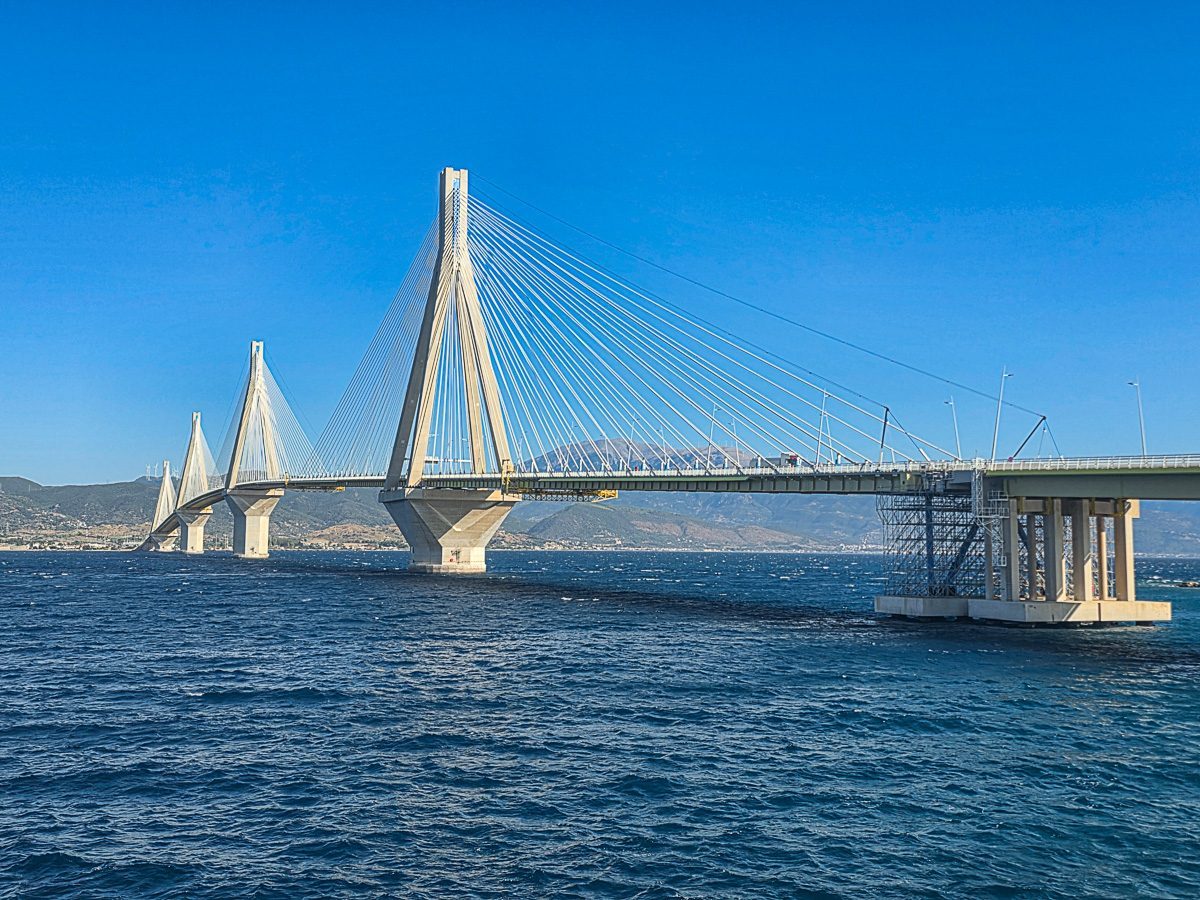
As the bus made the approach towards the Patras coastline, coming in from the far side of the city, I caught a glimpse of the Rio-Antirrio bridge but I’d be seeing it up close soon enough.
Once in the city I tried to spot anything I recognised. It had been nine years since I was last here and the stretch along the main road into the centre had definitely changed. I found myself scanning the buildings for one of the old abandoned carpet factories that had been such a significant part of my previous visit, but the bus was moving too quickly and I couldn’t pick it out.
One of those abandoned factories, along with another nearby, had been home to displaced people when my daughter and I came to Patras nine years earlier to volunteer for Foodkind. We spent two weeks as part of a small team providing two meals a day and medical attention to several hundred displaced men and many unaccompanied minors.
The factories were remnants of Patras’s industrial past, but by then they had taken on a very different purpose. One stood overlooking the port, and for many of the young men living there, the port represented a possible route onwards to Italy and beyond. They repeatedly attempted to hide themselves on lorries leaving the city, often being caught and beaten by the police. It was one of the reasons our medical service was so busy.
It is strange how a place can become permanently attached to a particular memory. For me, Patras will always be connected to those abandoned factories, the young men waiting for their chance to leave, and two weeks that were very different from the Patras I am seeing today.
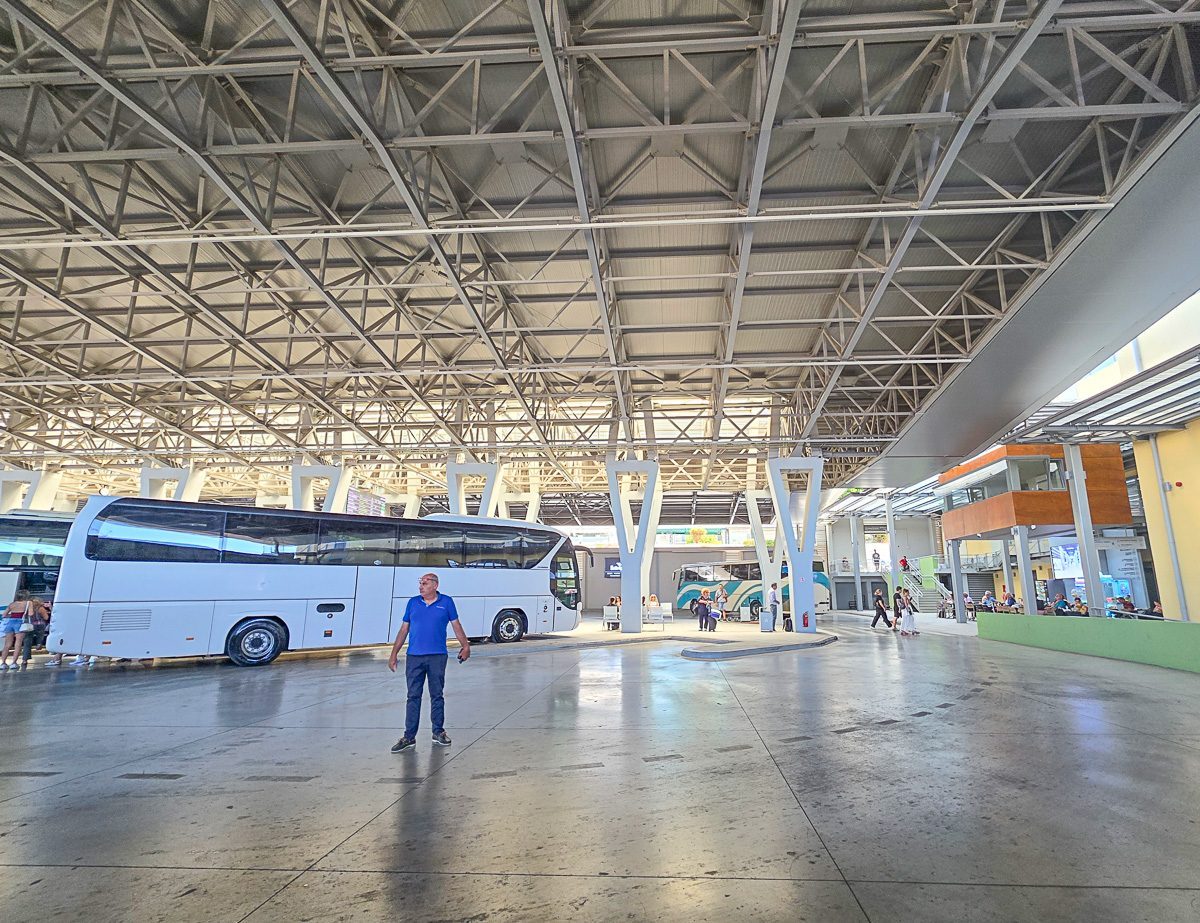
We finally pulled into the KTEL intercity bus station. This wasn’t the bus station I remembered either. The new terminal occupies the site of the old Mills of Saint George, part of Patras’s once-thriving industrial waterfront. The mills themselves had a history going back to the nineteenth century, first as a liquorice-processing factory and later as a flour mill, before production finally ended in 1990. Now the industrial machinery has gone and the site has been given a completely different life as the city’s bus terminal. And it’s pretty spectacular – for a bus station.
With luggage retrieved I put my hotel into Google Maps and criss crossed the inclining grid like streets. I’d underestimated the distance from the bus station to my hotel. In the mid-afternoon heat it was a challenge. The Olympic Star Hotel was a budget option that included breakfast. The room was a bit tired and tatty but clean. More importantly it was right in the heart of the city. It would do for two nights.
Patras is what I’d describe as an ordinary town. It’s more of a place to pass through rather than make a main destination. With its ferry connections to Italy it is often used as an overnight stop before travelling onwards. Nonetheless, it’s an interesting city with character.
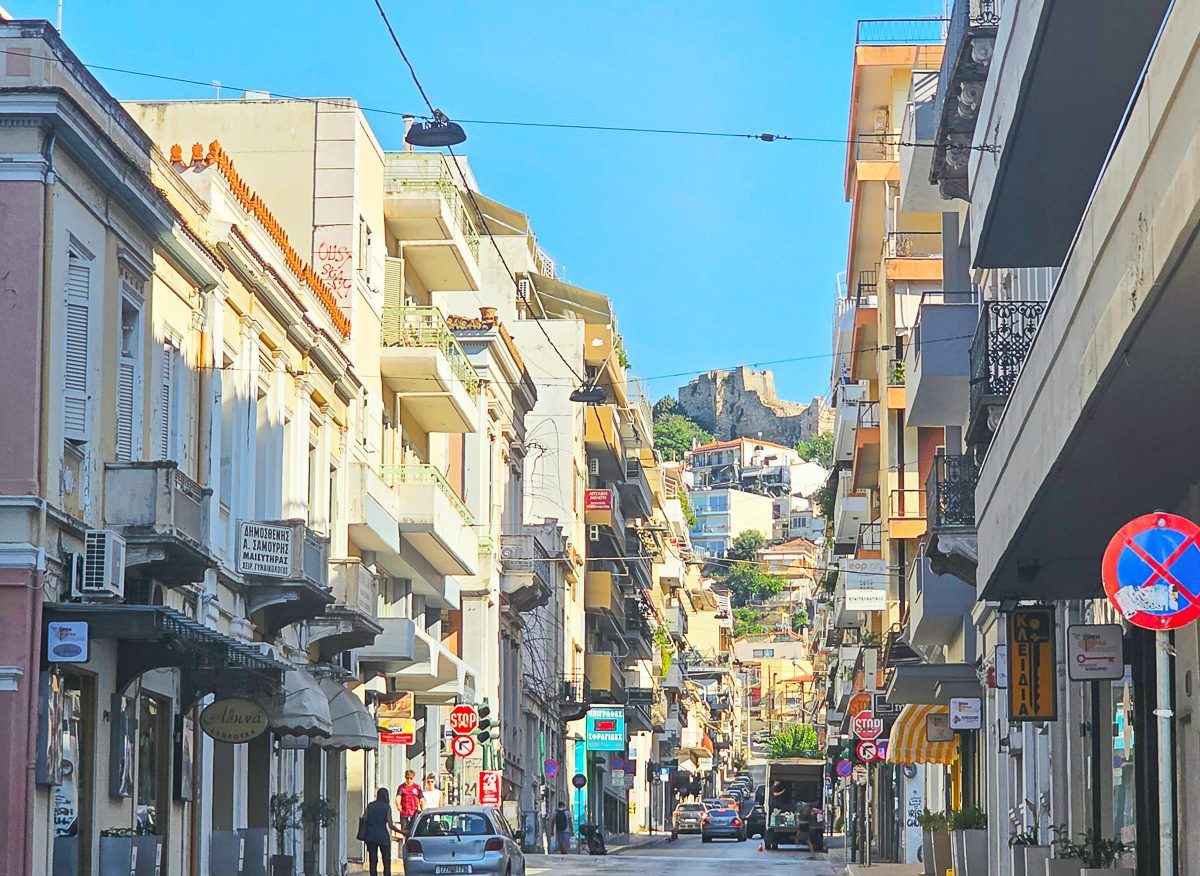
Patras has been inhabited since prehistoric times and was, at one point, a significant Mycenaean settlement, though what most visitors come for sits considerably later than that. The Medieval castle above the town dates to the 6th century AD, built on the ruins of the original acropolis, and the Roman Odeon, tucked just below it, was built under Emperor Augustus and then largely forgotten until it was rediscovered by accident in 1889, buried under its own rubble. It wasn’t fully restored until the 1950s, and it’s now used for concerts and cultural events.
The Cathedral of Agios Andreas, meanwhile, is one of the largest church in Greece (possibly ‘the’ largest depending on how you measure it), built on the spot where Andrew the Apostle is said to have been crucified, his skull kept inside in a reliquary.
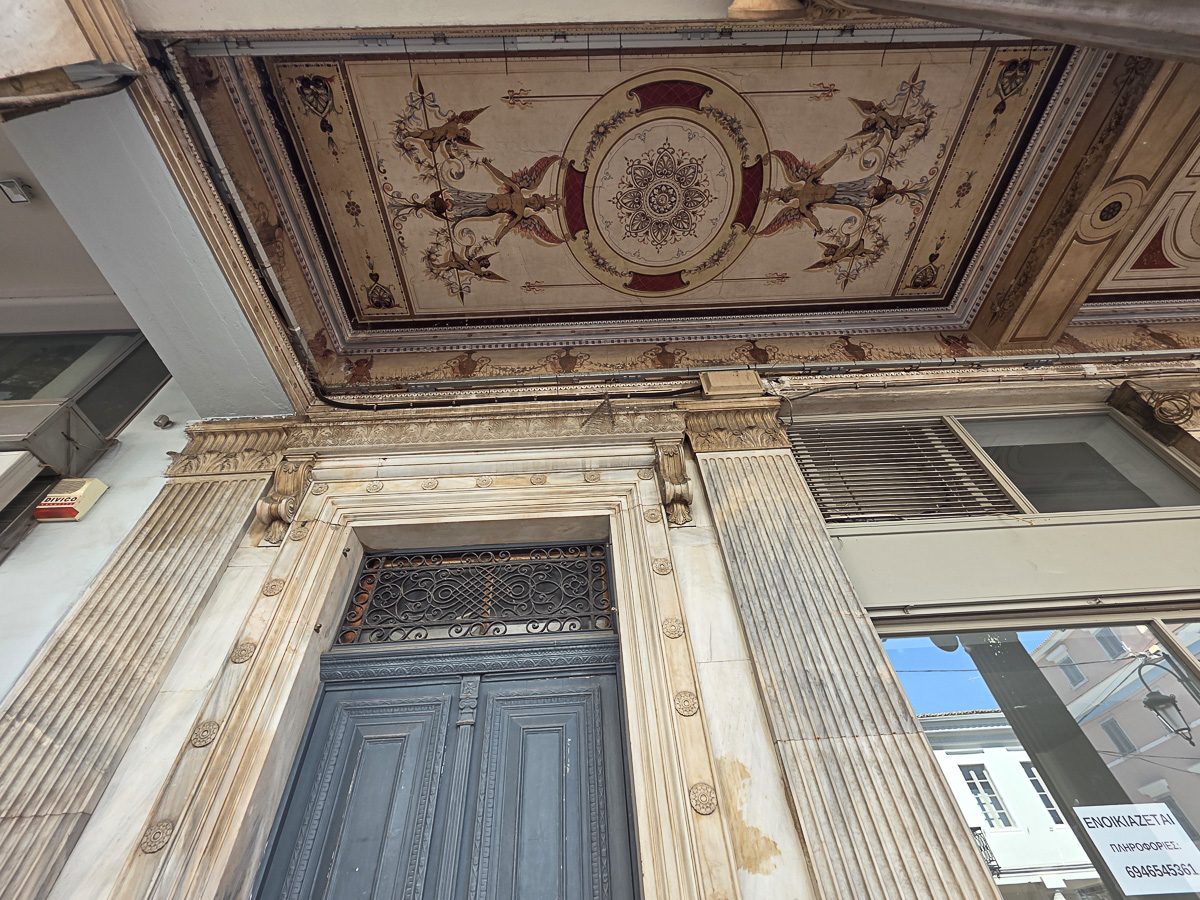
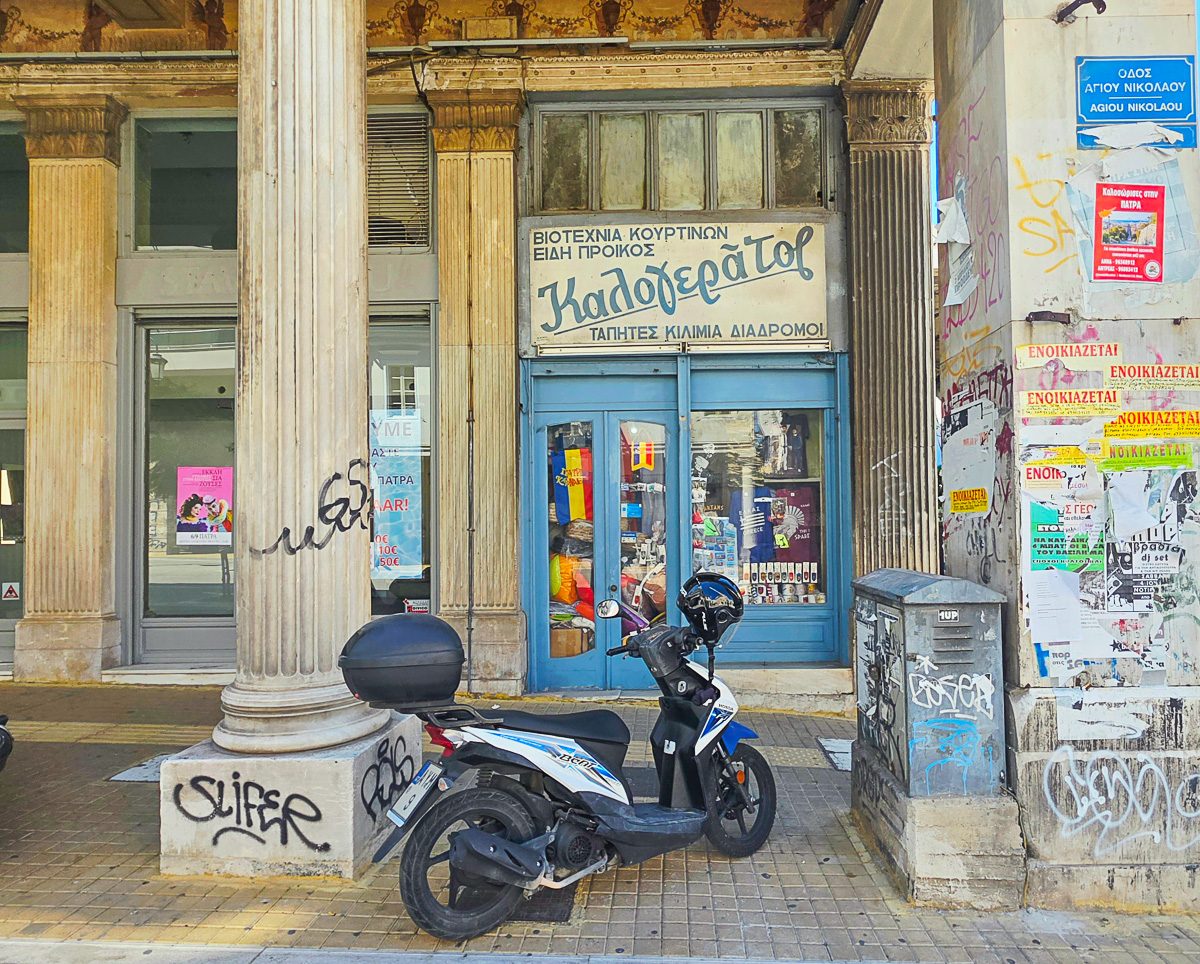
What I do like about Patras is its architecture: grand arcades, houses with substantial front doors, the sort of confident nineteenth-century streetscape that comes from a city that once had serious money to spend. Most of it dates from the late 1800s, when Patras grew rich exporting Corinthian currants and ploughed the profits into neoclassical mansions and public buildings. The arcades themselves go back to the original 1829 town plan, modelled on Italian Renaissance cities. Ernst Ziller, the architect behind a good deal of Athens too, designed several of the buildings around King George I Square. Plenty of that grandeur was lost to twentieth-century redevelopment, but what’s left still gives the centre a swagger the rest of the city doesn’t quite match.
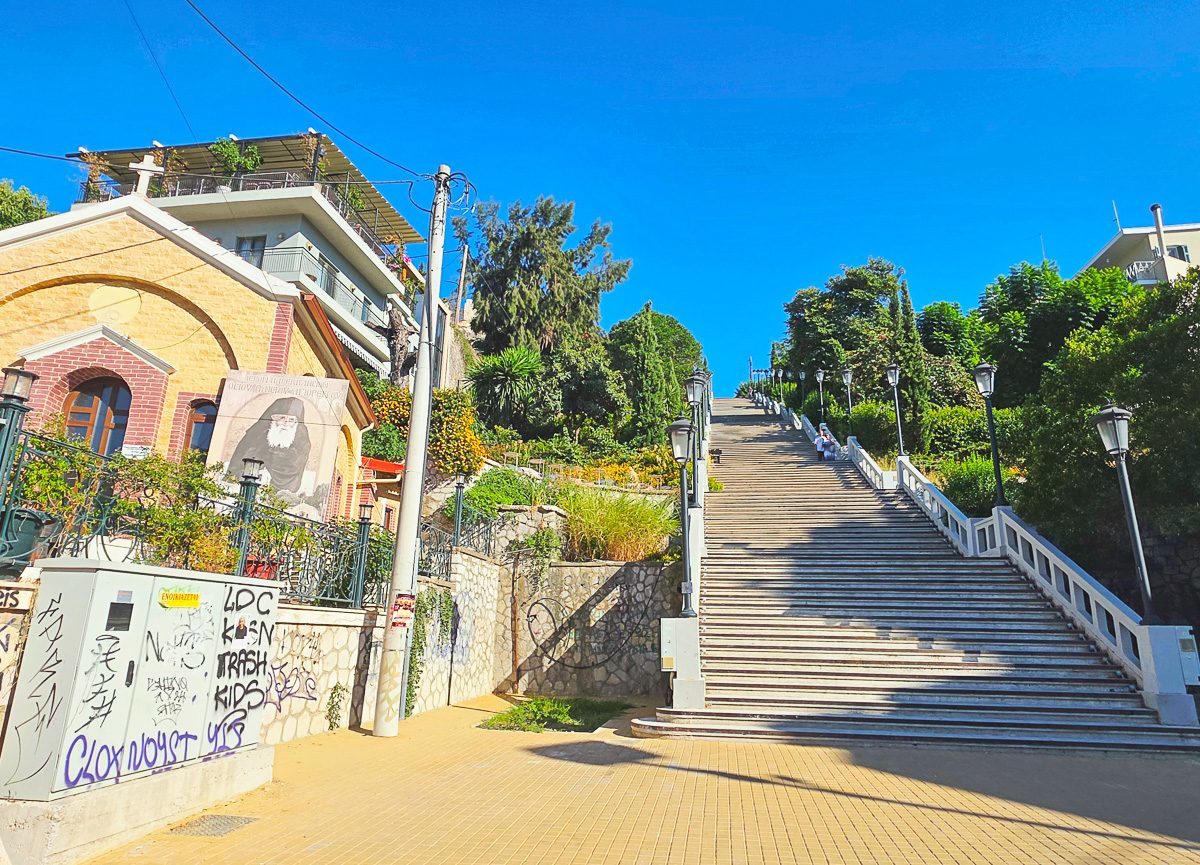
Although I had the intention of discovering some of the highlights of the city I’d missed on my previous visit, the heat and the humidity was too much. My half-hearted attempt to see the city took me to the bottom of the steps of Agios Nikolaou, all 200 of them (or thereabouts). The steps connect the lower town with Ano Poli and the kastro. I’d once enjoyed a lovely meal in a taverna at the foot of the kastro and wanted to eat there again but the glare from the marble steps reflecting back the heat didn’t entice me further.
Instead, I abandoned the idea immediately and picked up a taxi on the square and headed to a place I knew well.
Mare Mare
Mare Mare beach cafe holds a lot of memories. During the volunteering stint, it was a place where after meal prep in the afternoon, we volunteers would head to, to decompress for an hour or so. If we had a day off (1 per week) it was a place to spend your time well into the evening away from the crowds of the city.
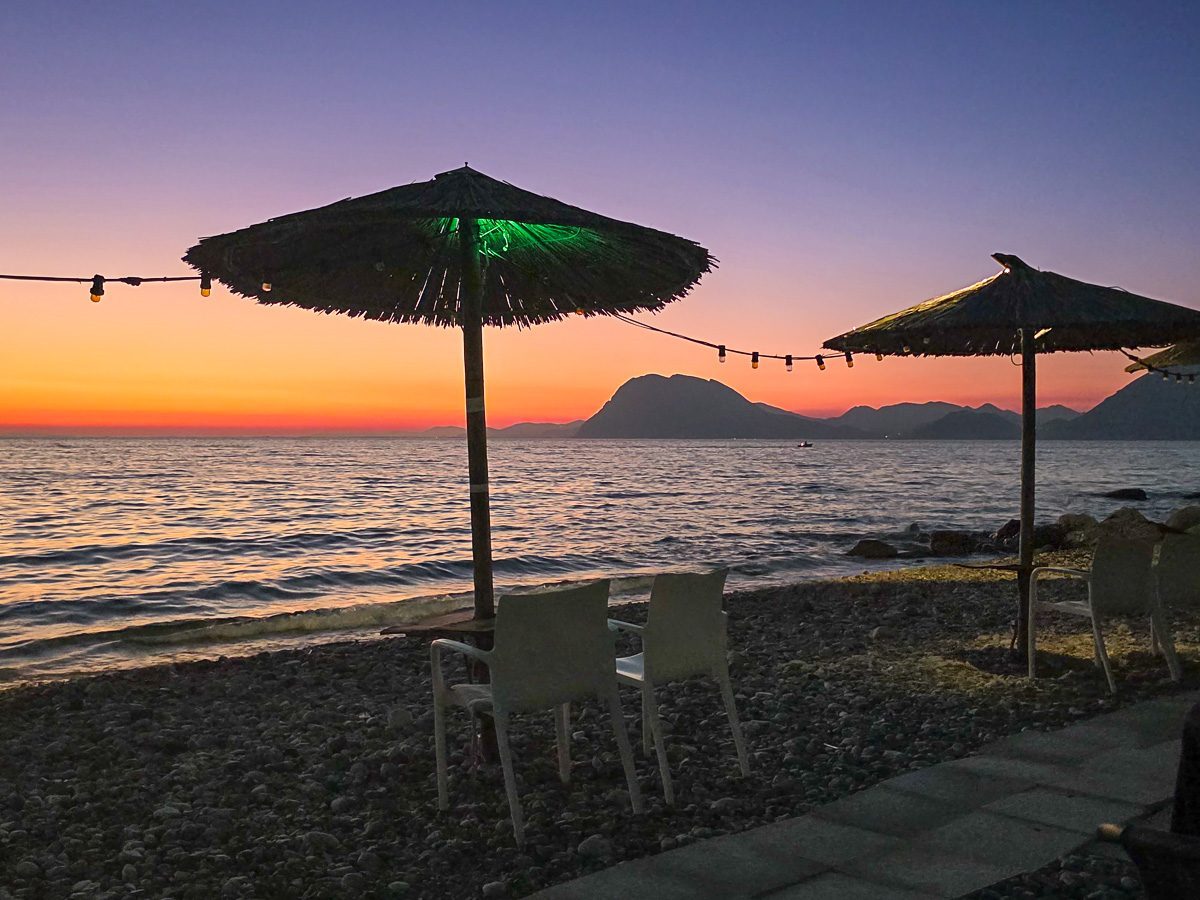
The bar sits on the edge of a large pebble beach that looks out towards the hills behind Missolonghi. I will swear that this is one of the best sunset spots in Greece, and I decided to see if my memories of it still bear out in reality.
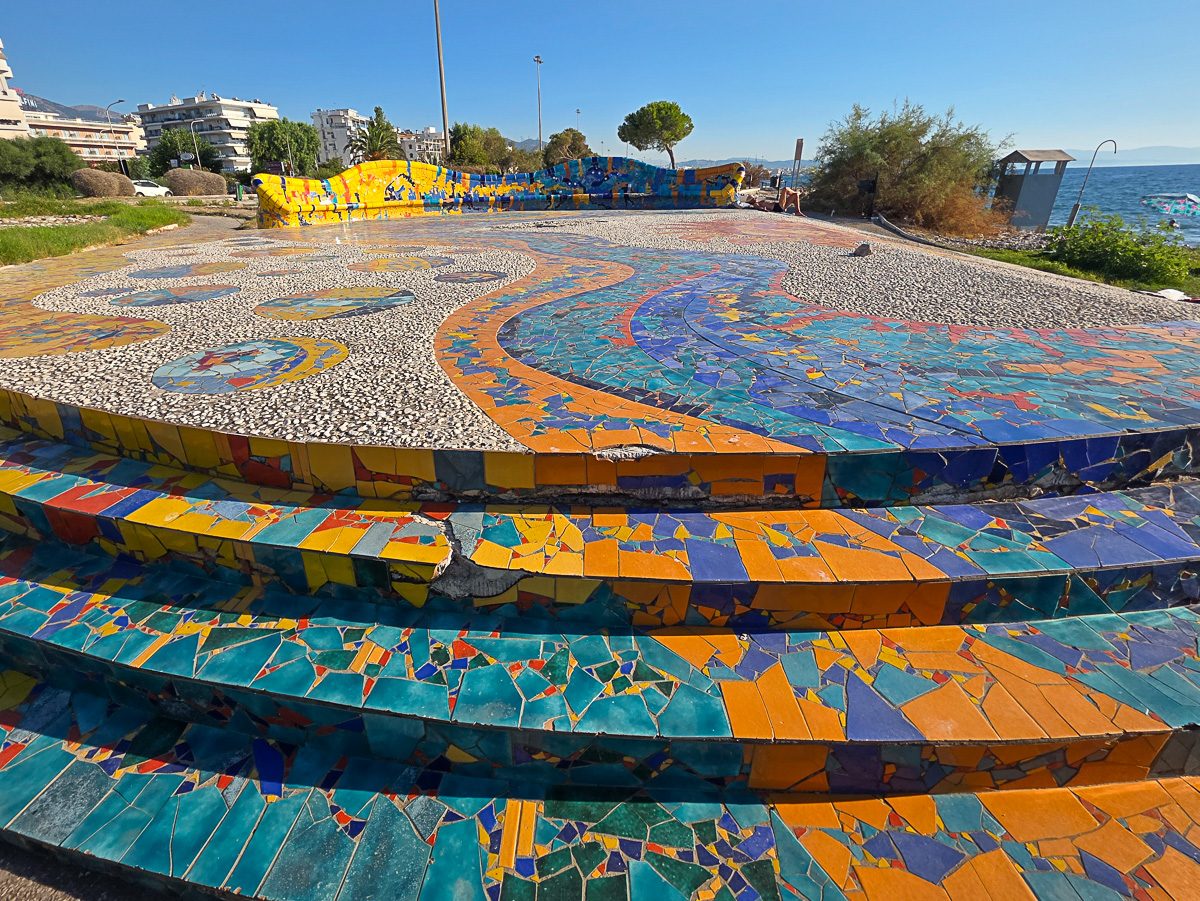
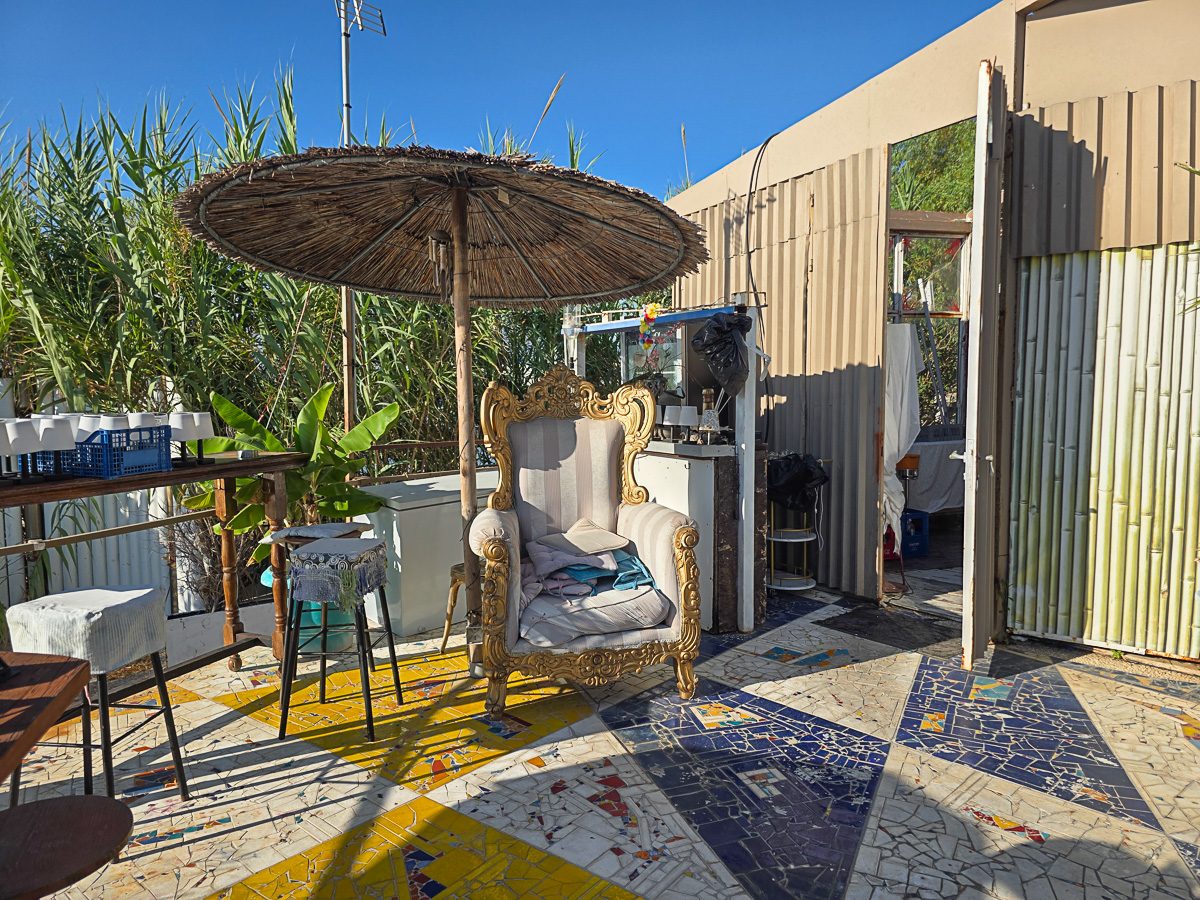
I settled under a table with a lemon granita and a panini – a much more limited menu since I was last here. At around 6pm, some people packed up and left whilst others that had probably just finished work settled down to catch the last of the rays. I kept shifting my chair to chase small patches of shade until, around eight, the sun finally started to drop. The sunset didn’t disappoint. Deep red first, then orange and yellow rising above the mountains across the gulf, chilled music somewhere behind me, a handful of people watching the same thing in silence. It was magnificent. Theory confirmed. The sea and the beach here isn’t the most spectacular but I maintain that this sunset over Missolonghi is.
Rio to Antirrio and Back
I had another full day in Patras and the heat was still too oppressive to stay in the city so I had an idea.
I’d been mulling over which route to take to my next destination which required heading over to the mainland from Rio to Antirrio. I had my heart set on catching the boat from one side to the other but would then have to pick up a bus on the other side. Alternatively, a bus would leave Patras and go straight to Nafpaktos. But I could do both. Today I would take the boat from Rio to Antirrio and then back.
I asked at my hotel’s reception how to get to Rio by bus – apparently a bus to the hospital and another to Rio Port. The timings were very limited and it all sounded a bit convoluted so I asked them to call a taxi for me – why make life difficult.
Around 15 minutes later, I arrived at the port. One thing to note is that there is a west port and east port and which one the ferries depart from depends on the direction of the wind. And talking of the wind, there was a fair old breeze whistling down the strait. The mountains either side funnel wind through the strait like it’s being squeezed through a wind tunnel. In autumn and winter it’s often strong enough that the crossing can be rough even when Patras and Nafpaktos, a few miles off in either direction, are sitting there perfectly calm. The bridge itself was engineered with all this in mind, built to cope with gusts over sixty knots, which is around 110 kilometres an hour. Get much past that and motorcycles, caravans and empty high-sided trucks get banned from crossing the bridge altogether, and the ferries stop running too. Thankfully not today.
I approached a waiting boat and asked the man standing on the ramp if I needed a ticket. He opened out his arms and exclaimed “It’s free!”. Yes it’s free to foot passengers but paid for vehicles.
Up on the deck I took a seat facing the bridge, admiring its magnificent and aesthetically beautiful architecture. Even before we set off the wind across the deck was so strong I had to grip my phone tight whilst taking photographs so it wasn’t whipped out of my hands. The Greeks sat inside away from the wind but I absolutely relished the break from the relentless heat. It was still hot and somewhat resembled being inside a tumble dryer.
This is definitely the best way to see the bridge, slowly gliding across the strait – around 20 minutes in total.
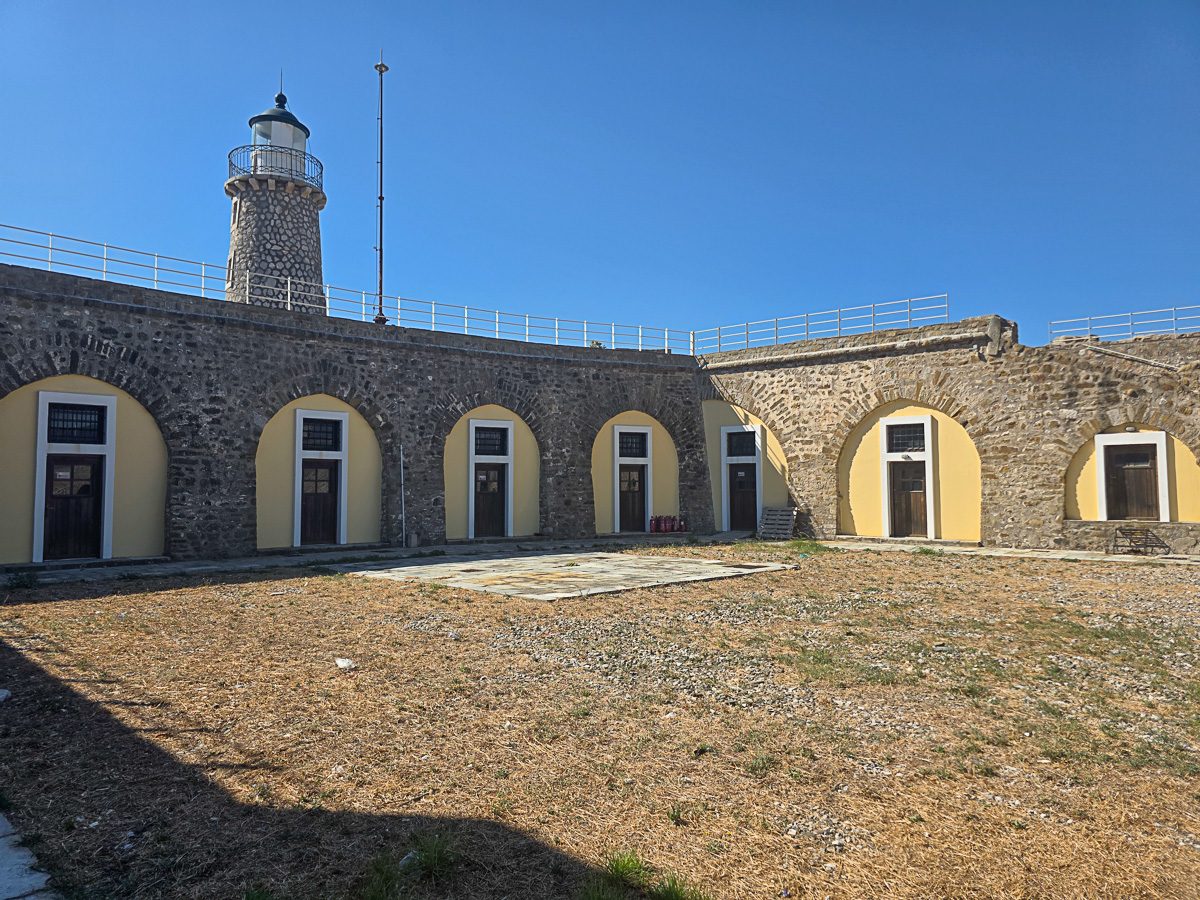
Once on the other side I was drawn to the small fort by the port – a twin to the other more forlorn one sitting on the Rio side. I paid 5 euros to visit out of curiosity and mainly because there’s not much else here.
The fort here at Antirrio was built at the same time as its twin across the water at Rio, the two of them designed as a matching pair to control the narrow strait between the Peloponnese and mainland Greece, what the Ottomans apparently called the Dardanelles of Lepanto – Lepanto being the name given to what we now know as Nafpaktos by the Venetians.
Between them they had the crossing covered from both sides. Over the centuries the ownership changed hands more times than either fort cared to count: Ottoman-built, reinforced under Suleiman with heavier artillery, besieged and taken by the Genoese admiral Andrea Doria, handed back and refortified, reinforced again under Barbarossa, destroyed by the Knights of Malta and passed briefly to Venice, surrendered to the Venetians under Morosini, then handed back to the Ottomans after the Venetians themselves wrecked it following the Treaty of Karlowitz in 1699. Whatever purpose either fort still had by the later Ottoman period seems to have faded along with the fighting over the strait itself. Antirrio eventually passed to the Greek state, and a lighthouse went up on its southern bastion in 1880.
Inside the fort there was very little to see. I clung to a narrow sliver of shade along one side and made my way to a series of locked doors at the bottom. Peering through the dust covered panes of glass I could see that each room was an archive of archaeological finds. There were metal shelves stacked with files and tables with various artifacts laid out – just as if an archaeologist had popped out for lunch.

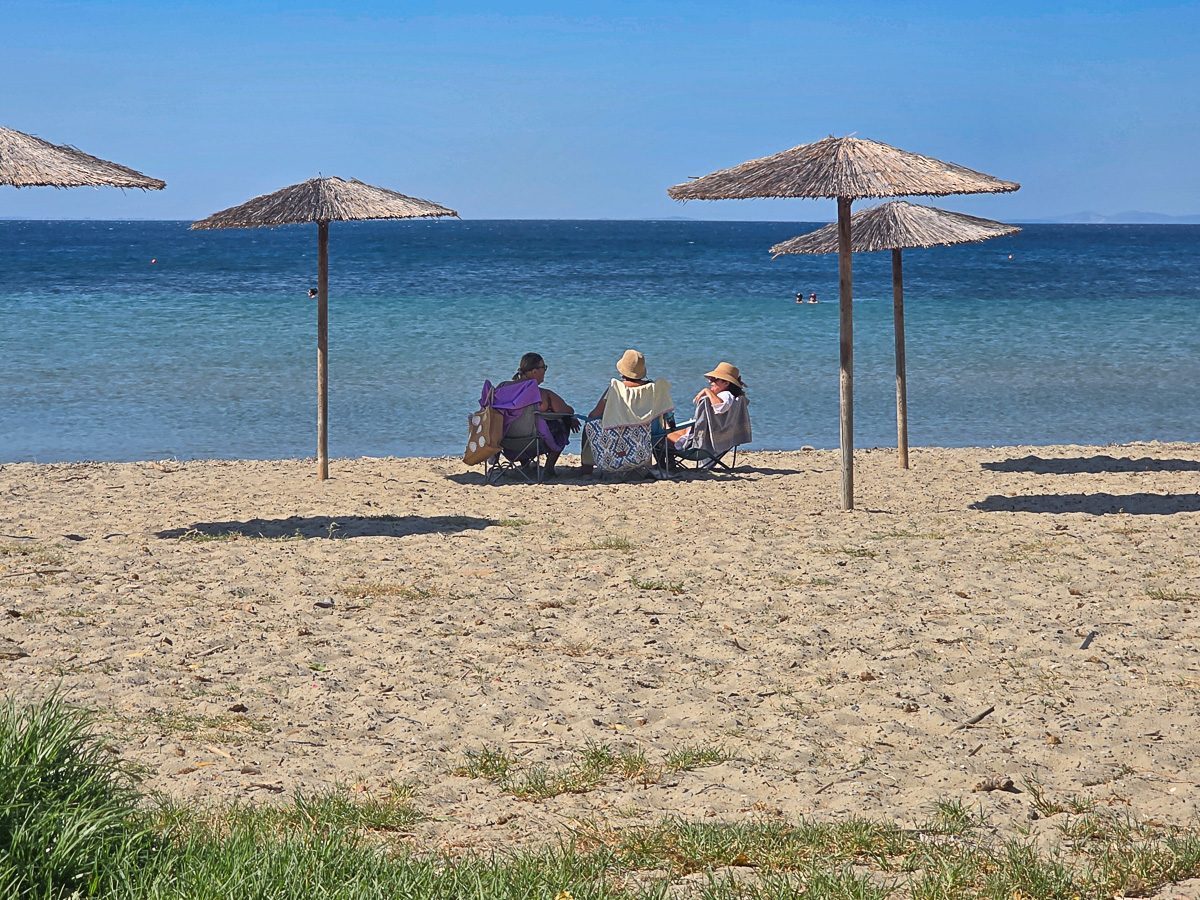
After leaving the fort I took a stroll past the village church and along the tree shaded back street until I reached Antirrio Beach. This place was a little treasure. A short stretch of sand backed by a few cafes, locals taking a dip in the crystal waters to stave off sunstroke. It was so peaceful. I sat with a cold drink and just watched life go by – for a while anyway.
Time to head back. A ferry was waiting to leave – two were currently in operation so there is always a ferry waiting to leave, shuttling across the strait every 20-30 minutes or so. I went over on the Georgios and back on the Demitrios, which was slightly newer. However it didn’t have seats along the side providing those unfettered views of the bridge. Instead inside a table at the front gave a slightly different view.
Once disembarked, my next challenge was to find a taxi to take me back. At a desolate looking bus stop was a taxi phone number. Trying to explain where I was and where I wanted to go was another matter. In the end she hung up on me. Luckily I had a card for another Patras taxi who did manage to understand me.
Back in Patras town I had a look around the shops. I’m not really a shopper but I do like clothes so had a little looksie and ended up buying a couple of things – but sshhhhhhh – don’t tell Peter. I’d already sent him home with a pile of stuff I wasn’t going to wear.
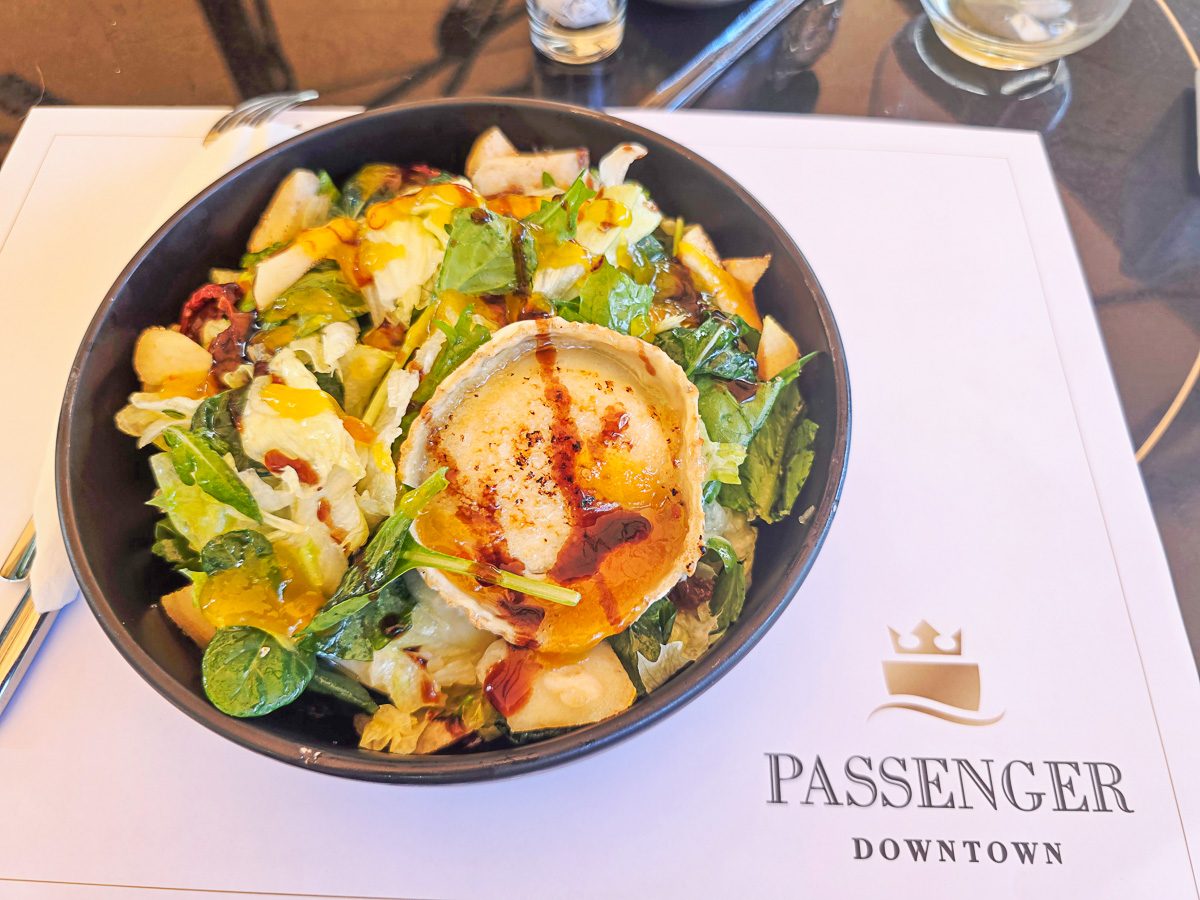
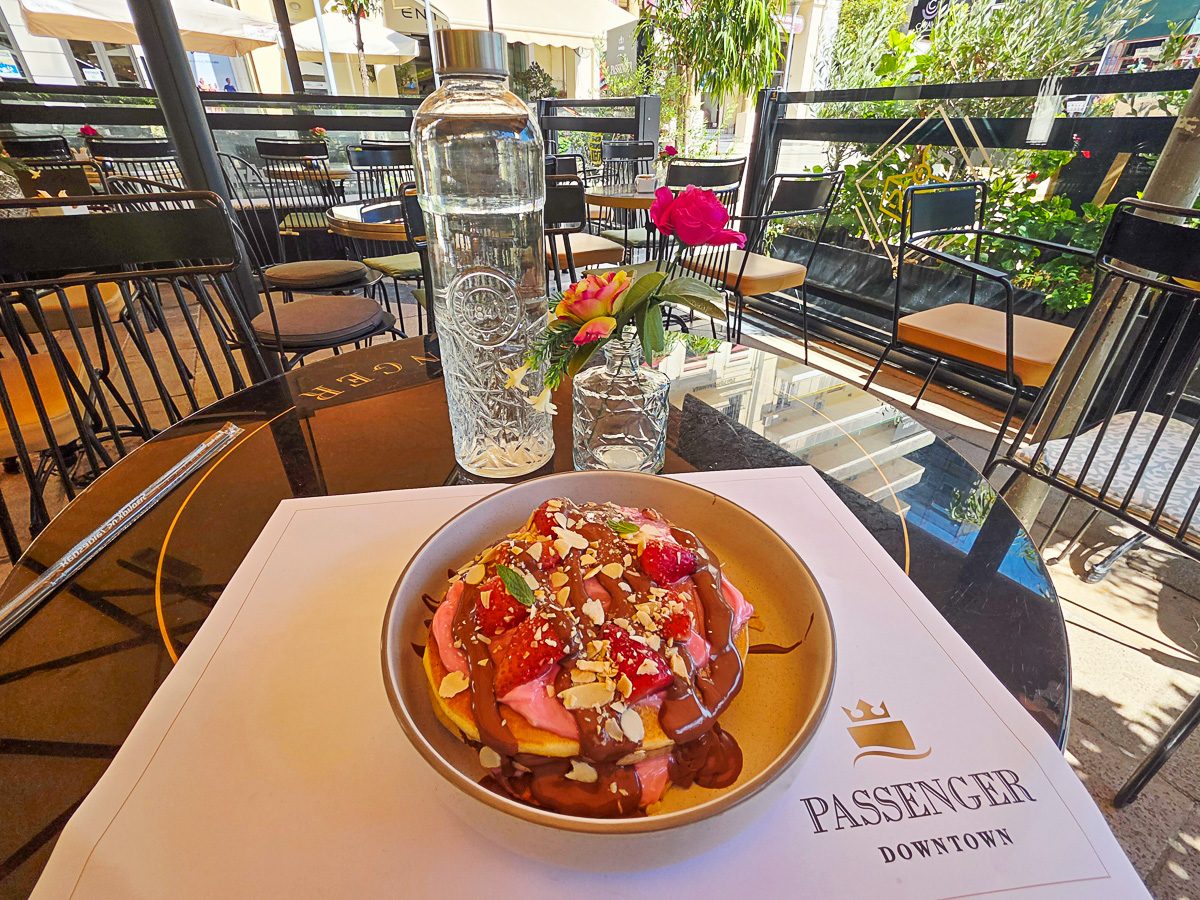
In one corner of St George’s Square was a pretty little cafe called Passenger Downtown and it was a good choice. The staff were very friendly and the shade and electric fans made it comfortable.
I had a goat’s cheese salad and a chocolate crepe with a cold drink followed by a cup of tea. The crepe was far larger than I’d envisaged so they put it in a takeaway box for me – that was dinner.
And that was about as much of Patras I saw.
Maybe our paths will cross again one day.
Discover more from
Subscribe to get the latest posts sent to your email.
MY BIG FAT GREEK TRAVEL SURVEY
How do you really plan your Greek adventures? I'd love to hear from you.
TAKE THE SURVEY →