
Nafpaktos: A Walk Through 500 Years of History
A Room With a View
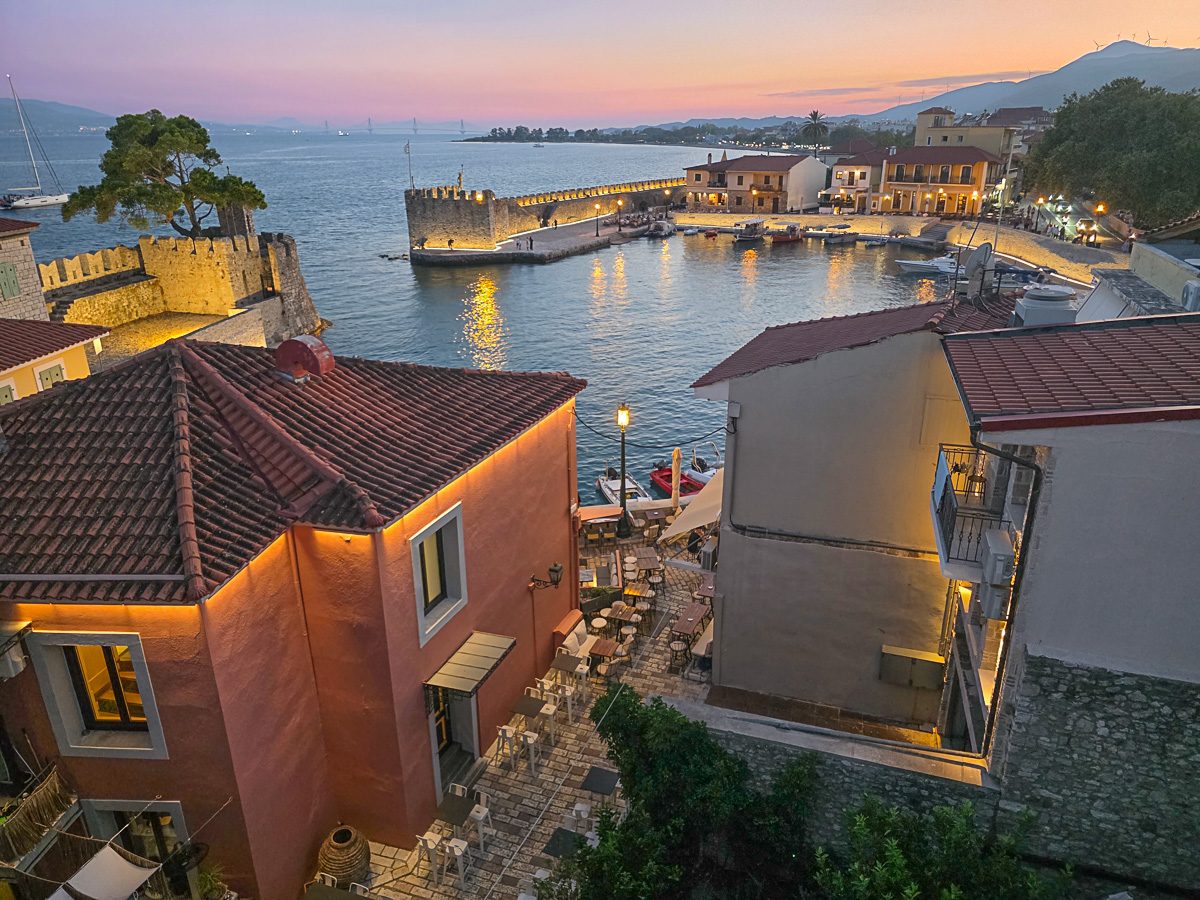
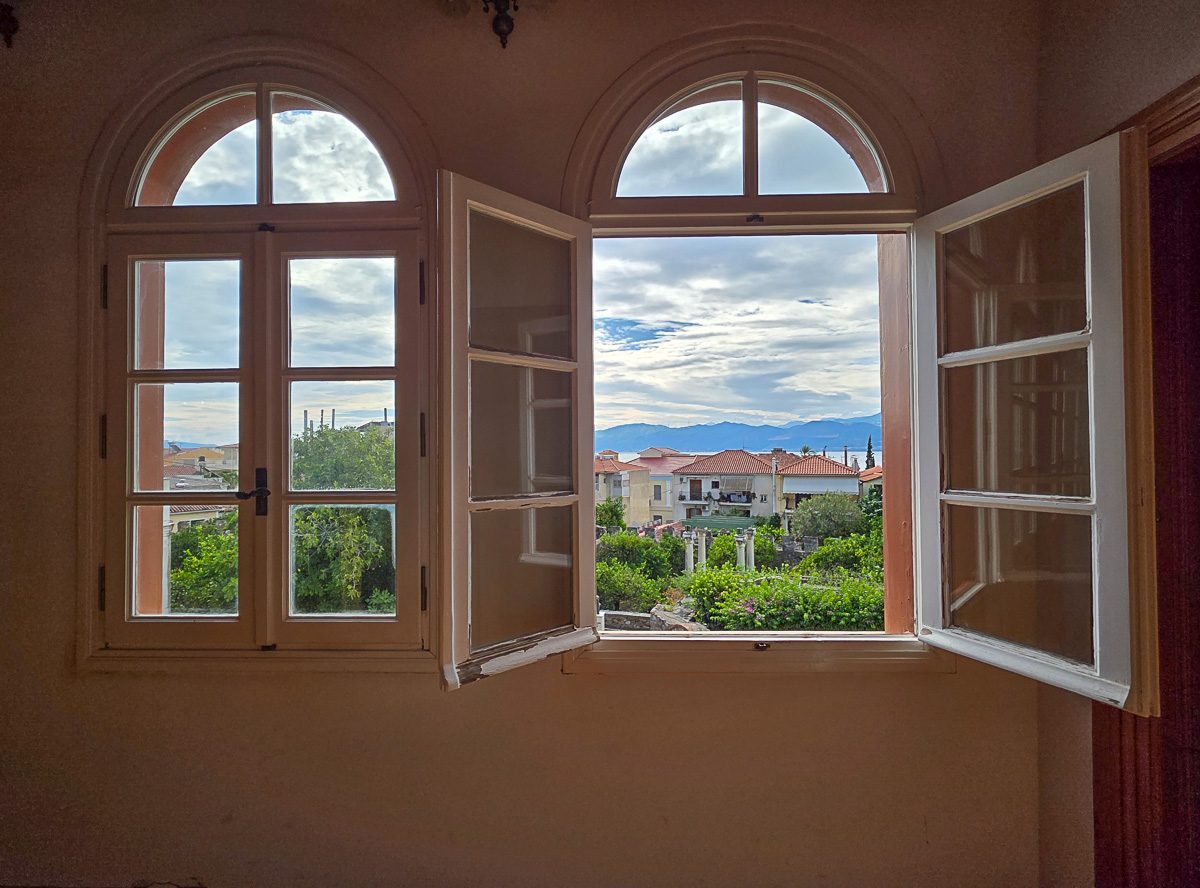
I’d booked Pepo’s Guesthouse in Nafpaktos only a few days before arriving for four nights. I don’t usually deliberate extensively over accommodation (good location, comfy bed just about does it), but this time I did, agonising between somewhere with a washing machine or somewhere in a great location with a view (very old lady of me I know). The view won. I’d booked through Booking.com, then gone looking at the room photos on the guesthouse’s own website afterwards, the way you do once it’s too late to change your mind. One room had a spectacular view of the kastro, honestly breathtaking, but since I’d only just booked I assumed I’d end up with whatever was left over.
I’d messaged the hotel earlier to let them know my arrival time. Margarita greeted me. The guesthouse itself is unmanned, run remotely from their boutique hotel one street back. She told me that my room was the one they call Fos meaning Light. Unbelievably, the room turned out to be the one with the view. That was all it took, I extended from four nights to six on the spot. More on the hotel in the next post.

How Nafpaktos Was Built
Nafpaktos has answered to several names at once rather than one after another. The Greek name Naupaktos itself is Greek in origin and goes back to antiquity, coming from naus (ship) and pegnymi (to build), a reference to shipbuilding here in the town’s earliest days. It likely never fully disappeared from everyday use even while other administrations kept their own records under other names.
The Byzantines used Nafpaktos and a variant, Epachtos, interchangeably. The Venetians, once they took control in 1407, recorded the town as Lepanto, an Italianised version that became the name history remembers the 1571 battle by, (even though the battle itself was fought some distance from the town). The Ottomans, after 1499, called it Inebahti or Aynabahti in their own administrative records. When Greek independence reached the town in 1829, Nafpaktos became the official name under the new Greek state.
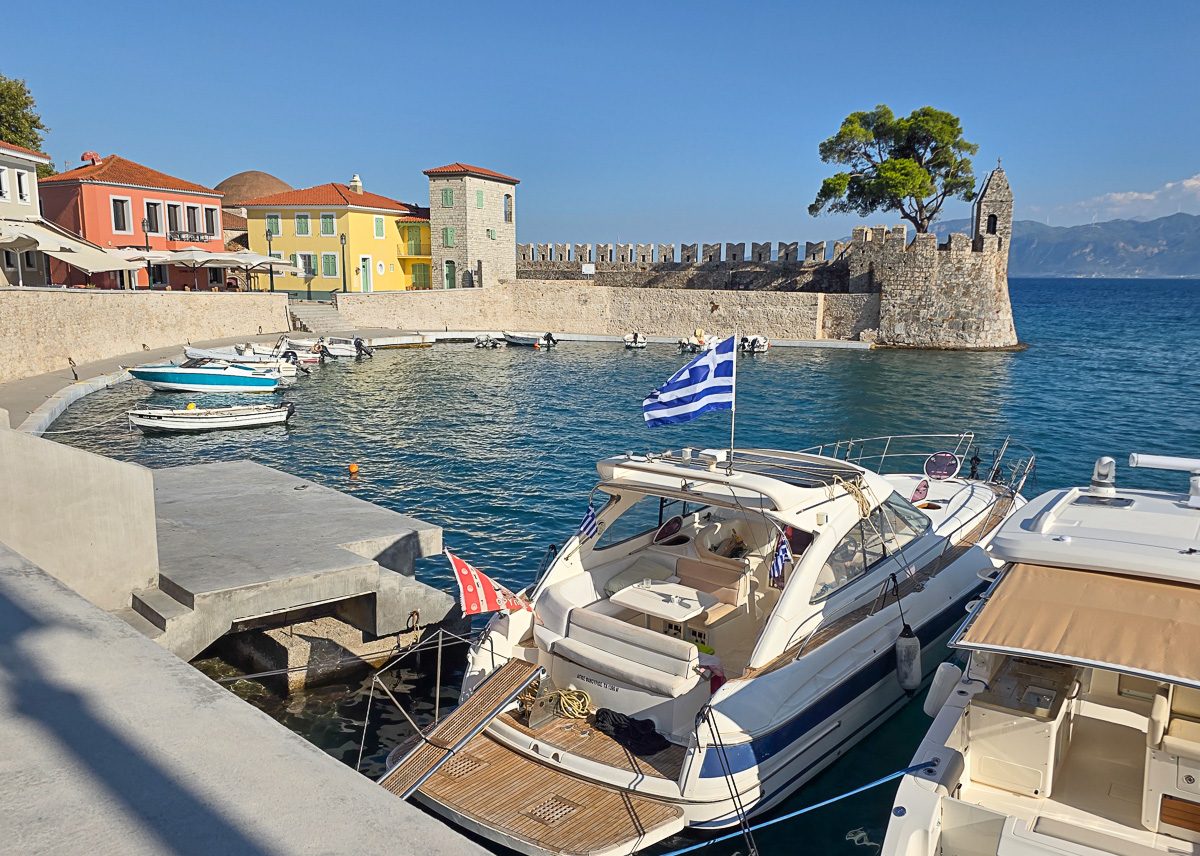
The Byzantines built the town’s earliest defences, the basic square towers and the shape of the walls running down the hillside to the harbour, functional rather than grand. When the Venetians took formal control in 1407, they didn’t start over, they built onto what was there, adding rounded bastions, strengthening the fortifications, and constructing the harbour itself, still recognisably the same one today. They also constructed warehouses and the infrastructure that turned Nafpaktos into a thriving trading port. Cotton, wheat and salt moved through it to Venetian territories across the eastern Mediterranean.
The Ottomans took the town in 1499 and added what they needed on top – a mosque near the harbour, public baths, and in 1914, the local bishop, Metropolitan Serapheim had built a clock tower perched on top of the ancient fortifications. As many layers as a filo pastry pie.
The town’s most famous moment arrived in 1571, when Pope Pius V in response to the Ottomans capturing Cyprus from Venice, pulled together the Holy League. This was a one off alliance made up of mainly Spanish and Venetian ships with smaller contributions from Genoa, the Papal States and the Knights of Malta.
What resulted was the Battle of Lepanto – the largest naval battle Europe had seen since antiquity. Over four hundred ships, close to 170,000 men, fought largely hand to hand somewhere out in the Gulf of Patras despite being given the name of the town. Tens of thousands died in a single afternoon. Another well known fact is that Cervantes, the author of Don Quixote also fought aboard one of the galleys, losing the use of his left hand for his trouble.
Peace in the region still remained elusive. Mediterranean pirates gathered there in such numbers the town earned the nickname “little Algiers.” Venice briefly retook the town in 1687, repairing rather than rebuilding, before handing it straight back to the Ottomans, and Ottoman rule continued largely unbroken until Greek independence finally arrived in 1829.
A Walking Tour of the Kastro
I began my explorations of the Kastro area at Botsaris Tower just to the left of the far corner of the square – look for the Botsaris sculpture and you’ll see the perimeter wall behind it.
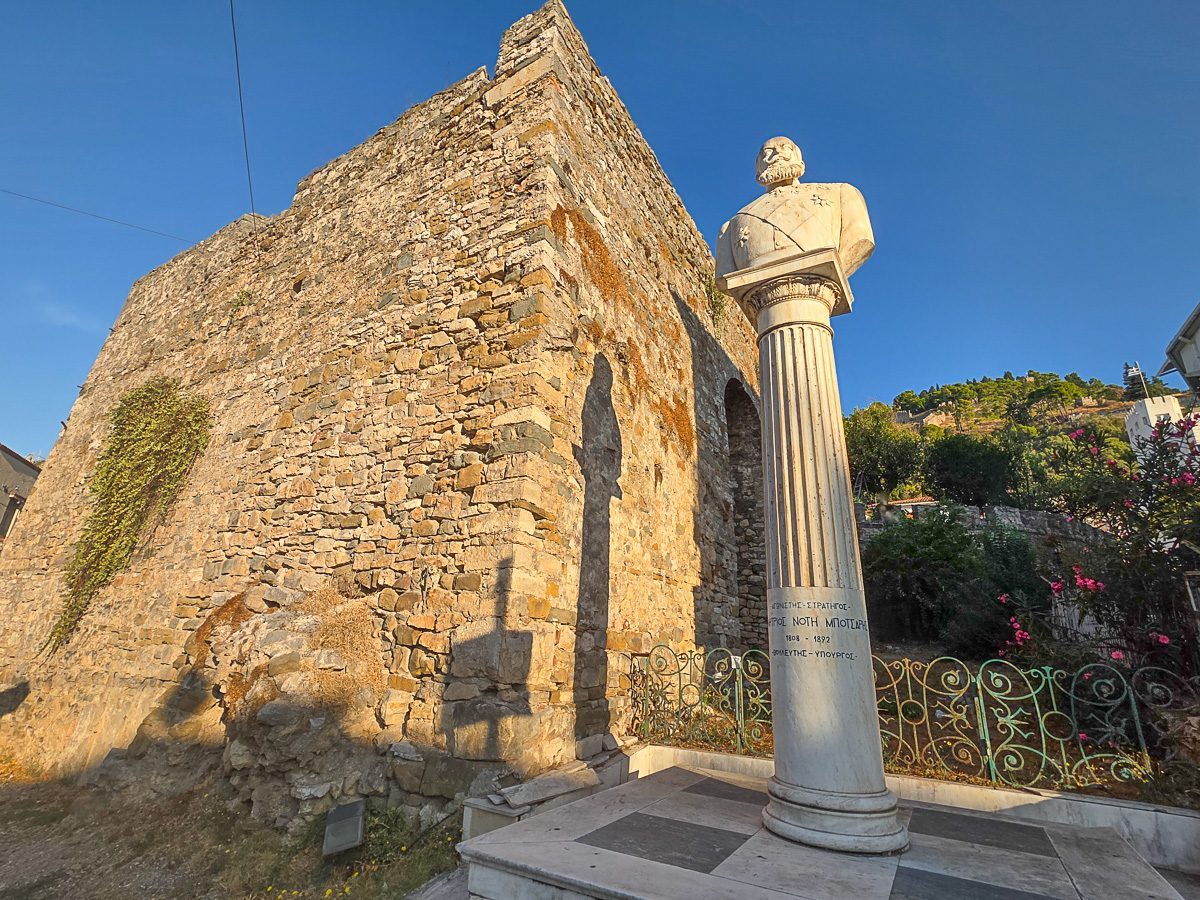
When you arrive at the gate – if it isn’t open ring the bell. I did and a man appeared from nowhere with a key and from then on I was left to my own devices.
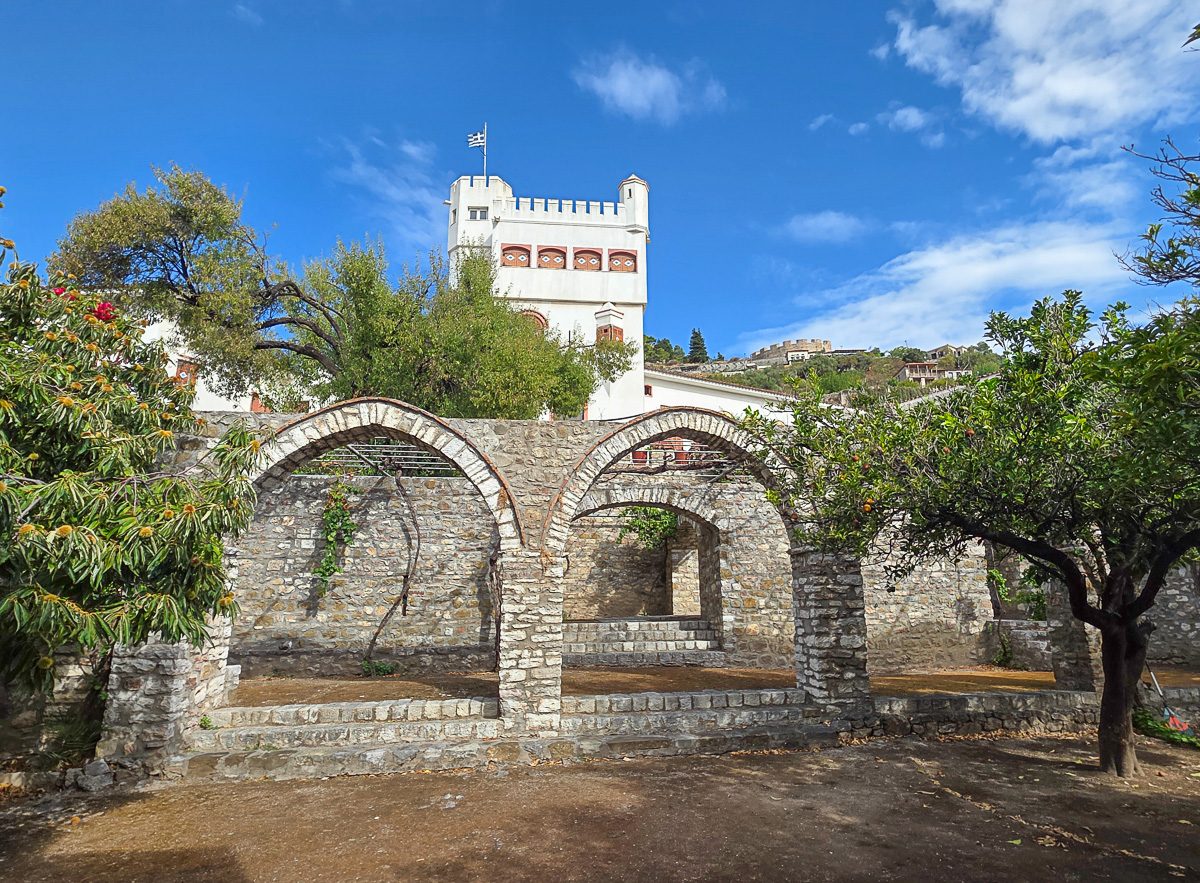
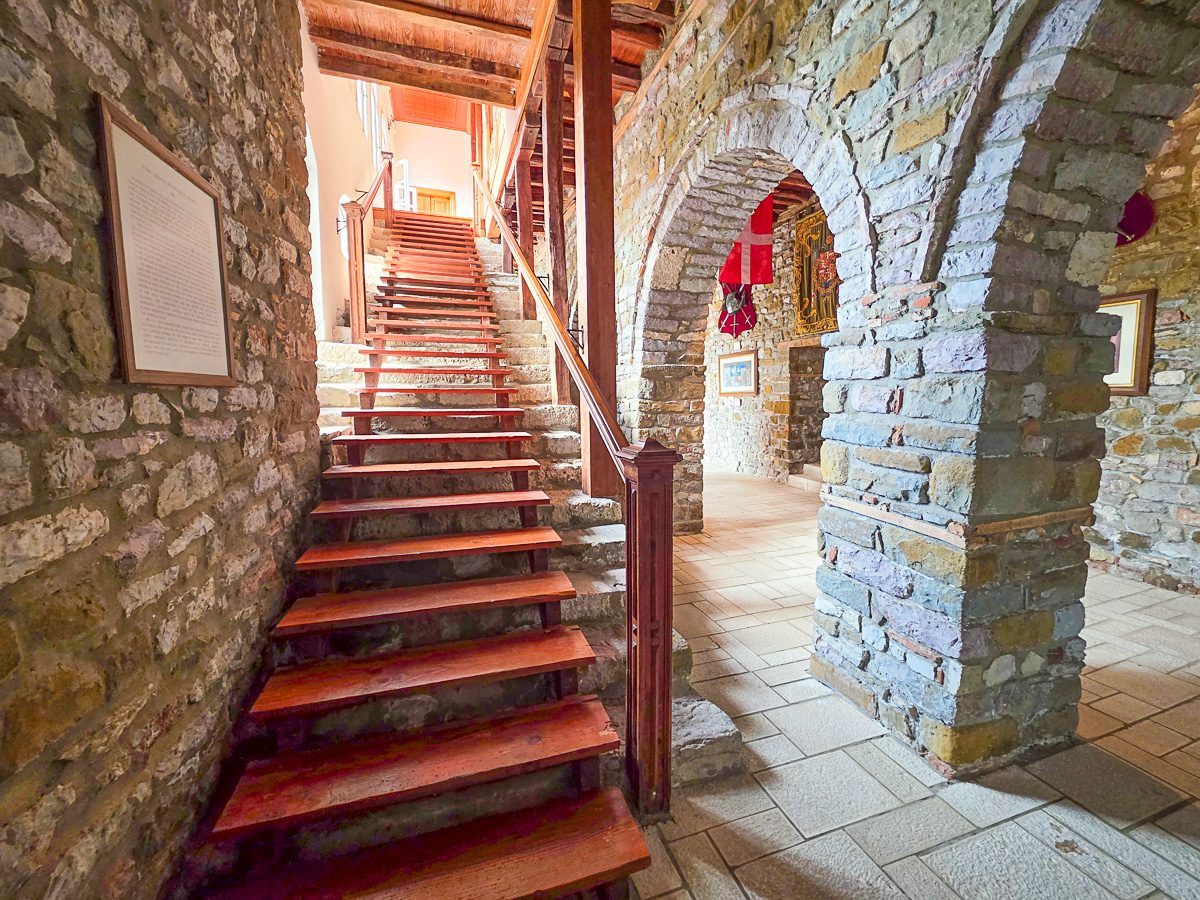
It’s a slightly odd building to look at first. Best viewed from the garden, it looks like a faux castle, the type of replica castle you’d see in an amusement park – I don’t mean to be facetious, it’s just what it reminds me of. In the interior however, it’s stark and austere yet holds a presence suited to its former inhabitants.
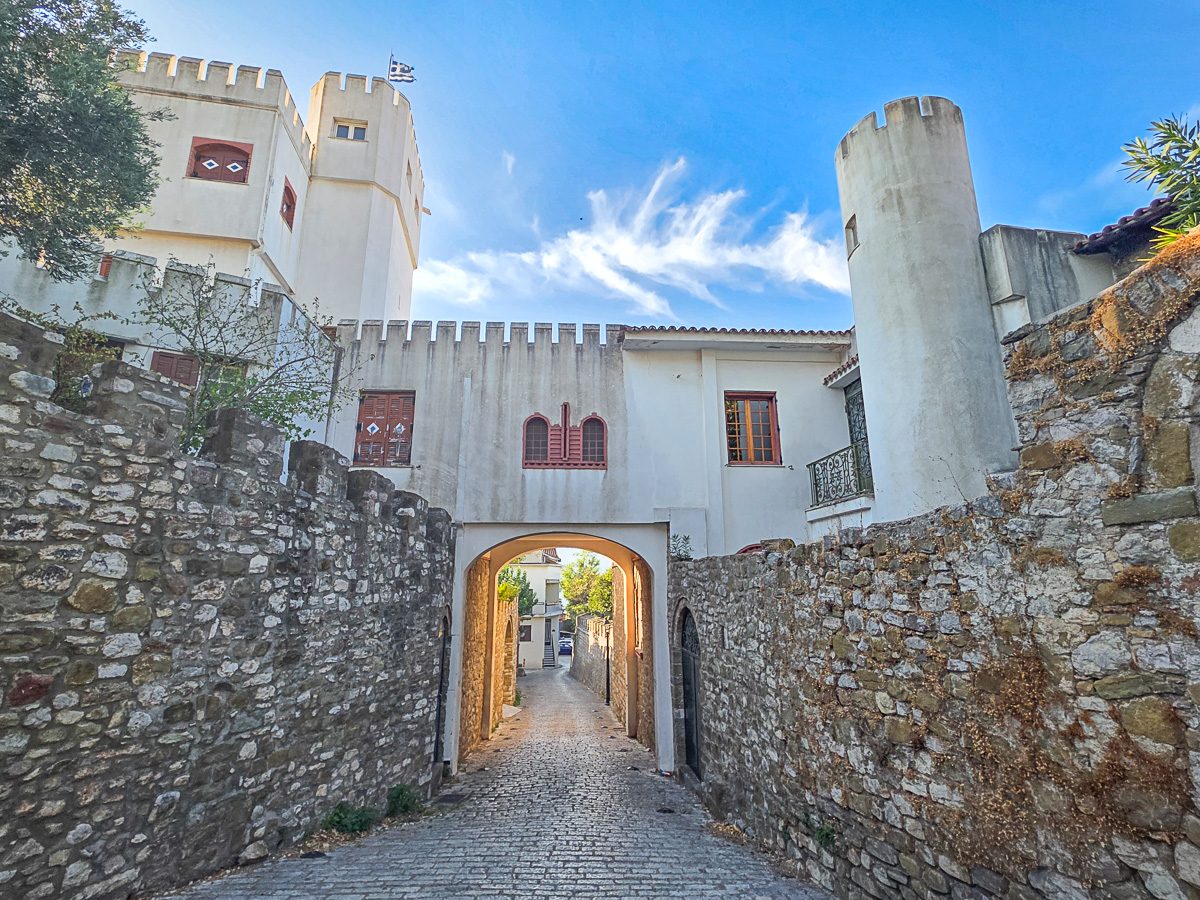
The western tower went up in the fifteenth century, built by Venetian builders and originally served as the residence of the Venetian governor and the Latin bishop. The eastern tower was added in the sixteenth century by the Ottomans, once they held the town, for their own governors. After the town’s liberation in 1829 it passed to General Notis Botsaris, one of the key heroes of the War of Independence.
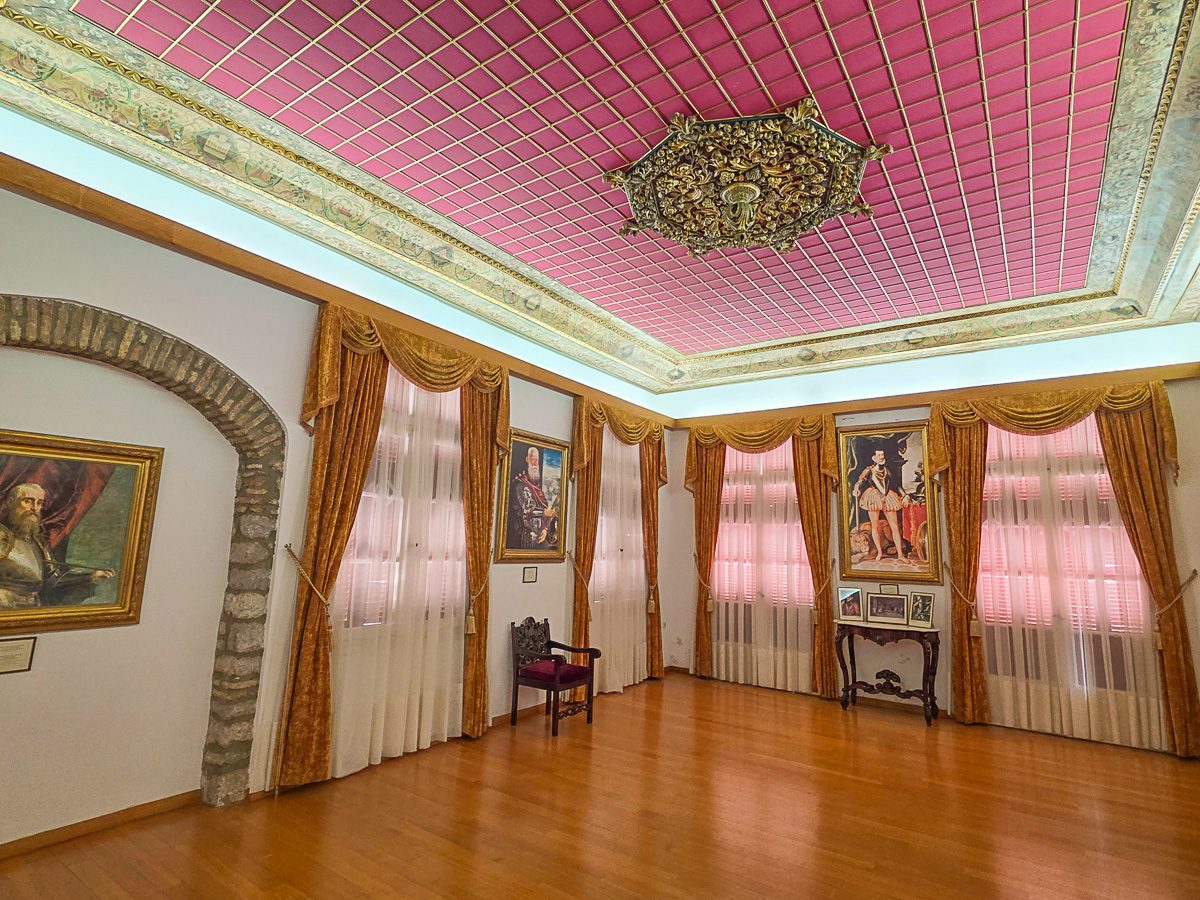
Inside is an exhibition of replica paintings, armour and artefacts from the Battle of Lepanto and more than anything I think it gives you a sense of scale of the battle. And then the view. From the top, over the rooftops of the old town, tiled roofs and washing lines, straight out to the gulf and the mountains beyond.
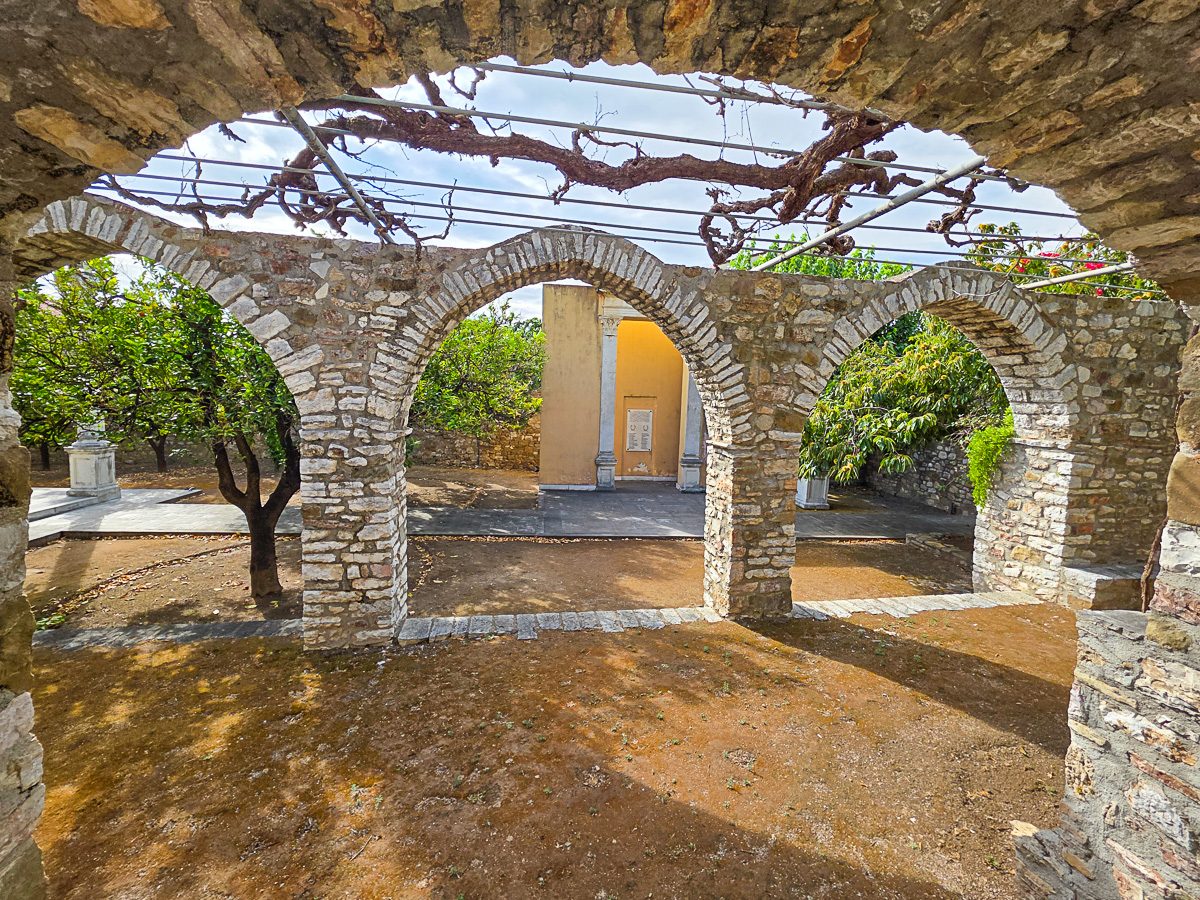
The highlight for me was the garden The garden splits into two distinct halves. One side opens right out, fruit trees, pomegranates hanging heavy and orange-red against the leaves, a citrus grove behind them, lemons and limes. The other half is the opposite, a series of stone archways and steps that break the space up into smaller, separate pockets. A pergola of vines running along one stretch overhead. Monty Don would say, it’s structured to draw you further into the space.
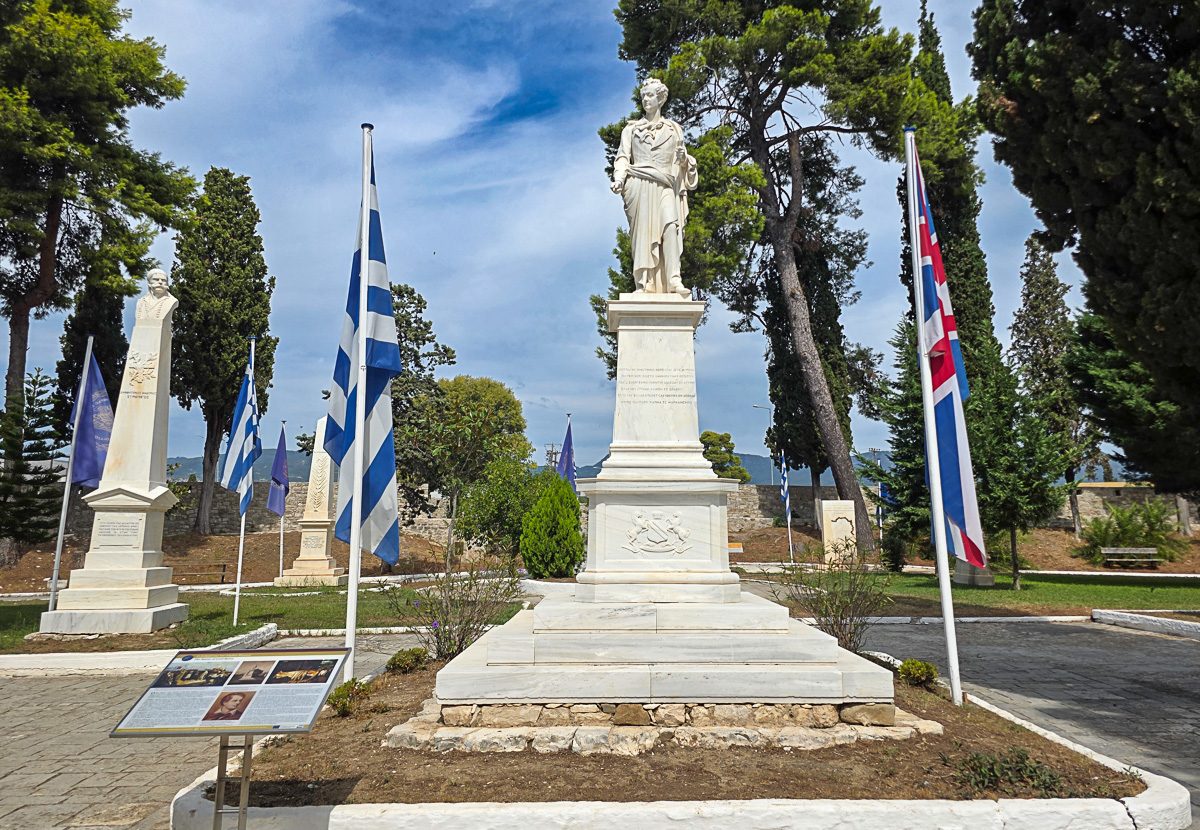
At the bottom of the garden there is a temple-fronted memorial facade with pediment framing a marble plaque honouring the Greek sailors who fought at Lepanto under Don Juan of Austria.
A marble colonnade cuts straight through the middle of the orchard, fluted Ionic columns on raised marble plinths, wooden crossbeams overhead to support vines and other climbing plants.
Visit – it’s worth it and no climb required.

Opening times: Daily 0900 – 1330
Contact Phone number: +30 26340 29779
Entry: Free
Next, I make the slow climb to the Kastro. I’ll hold my hands up and say that I didn’t do this on the same day as visiting Botsaris Tower. With temperatures in the high thirties, I set out at 7am in the morning just as the sun began to rise over the town. And it was perfect.
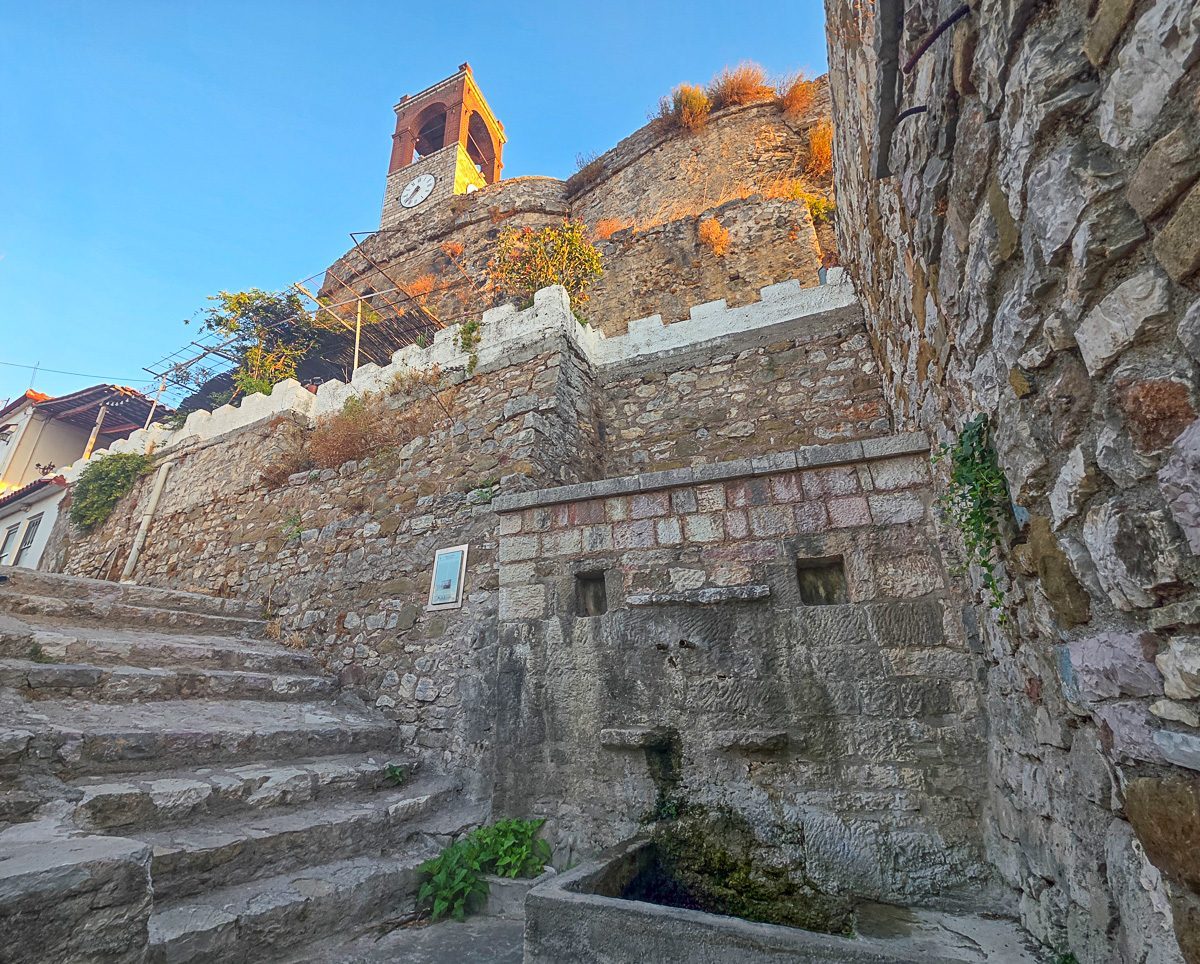
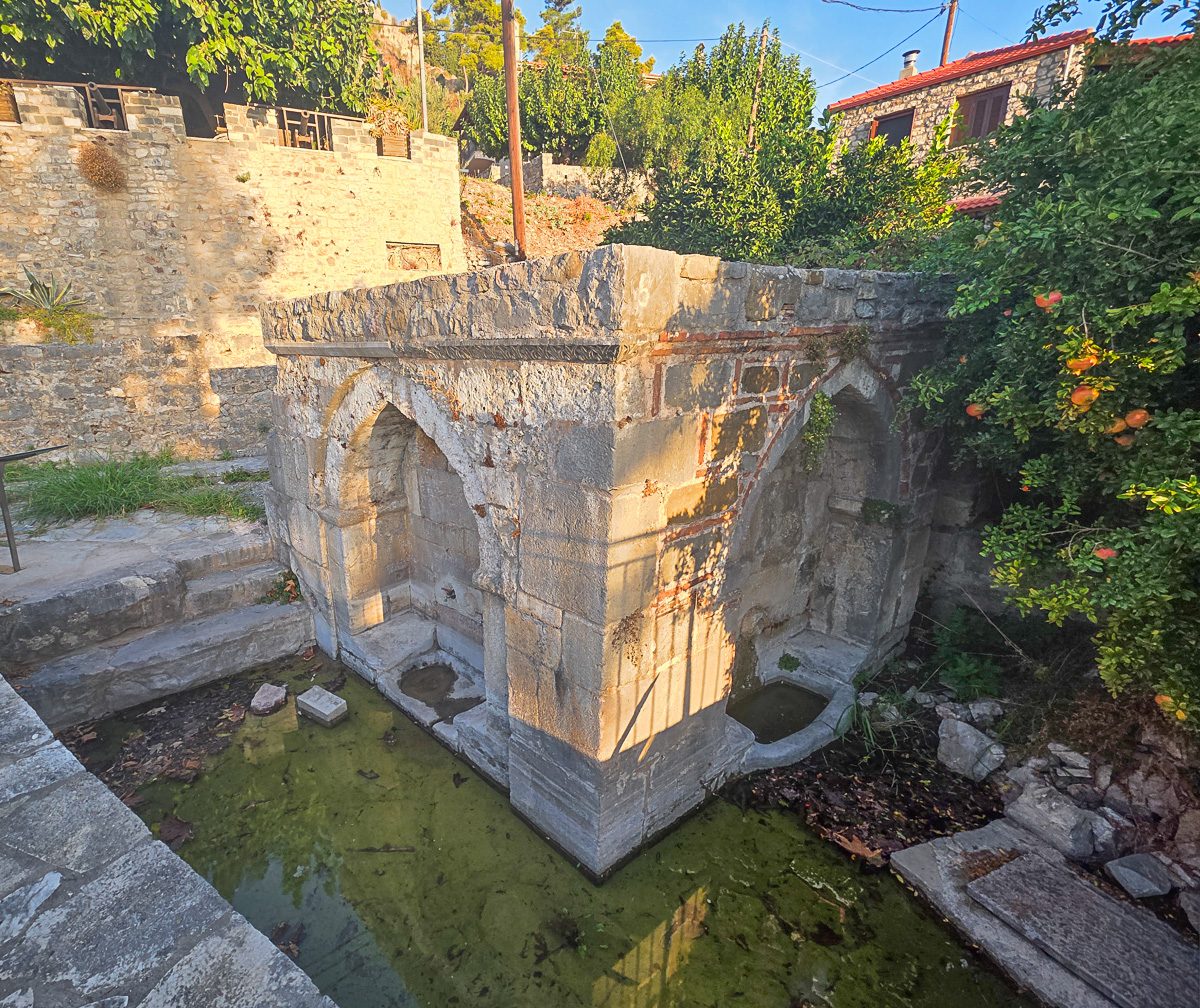
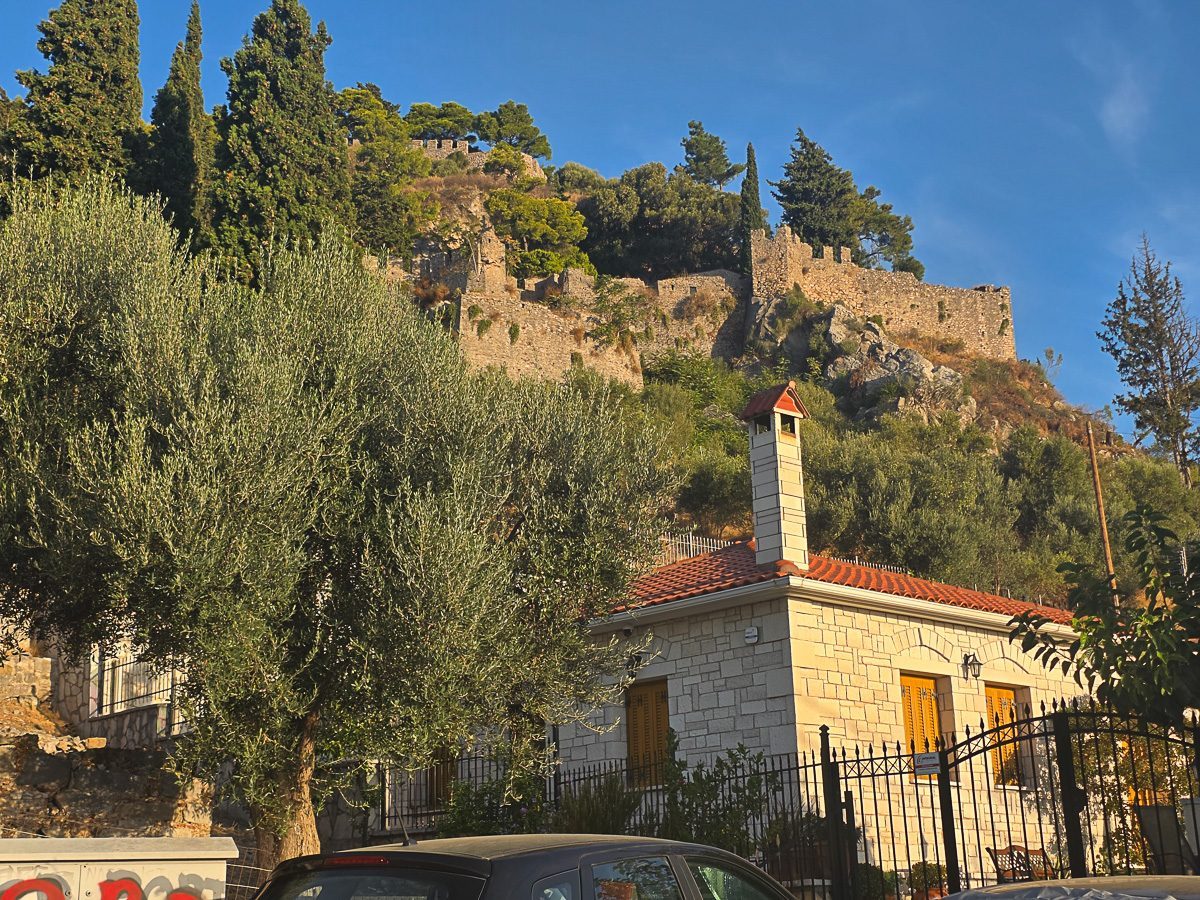
There are several routes up the kastro beginning either at Botsaris Tower or further along from Ilarchou Tzavela. I began my walk from a set of steps next to the Church of Agios Dimitrios. From the view from my hotel room the walk looked difficult but it was a fairly gradual rise. It didn’t take long before I was at the foot of the Clock Tower. Next to it the Pappas Fountain, just one of many Ottoman fountains within the castle grounds. It still functions and as I passed it seemed it was a much needed refill station for bees who hovered over the water spout just long enough to replenish before flying off in another direction.
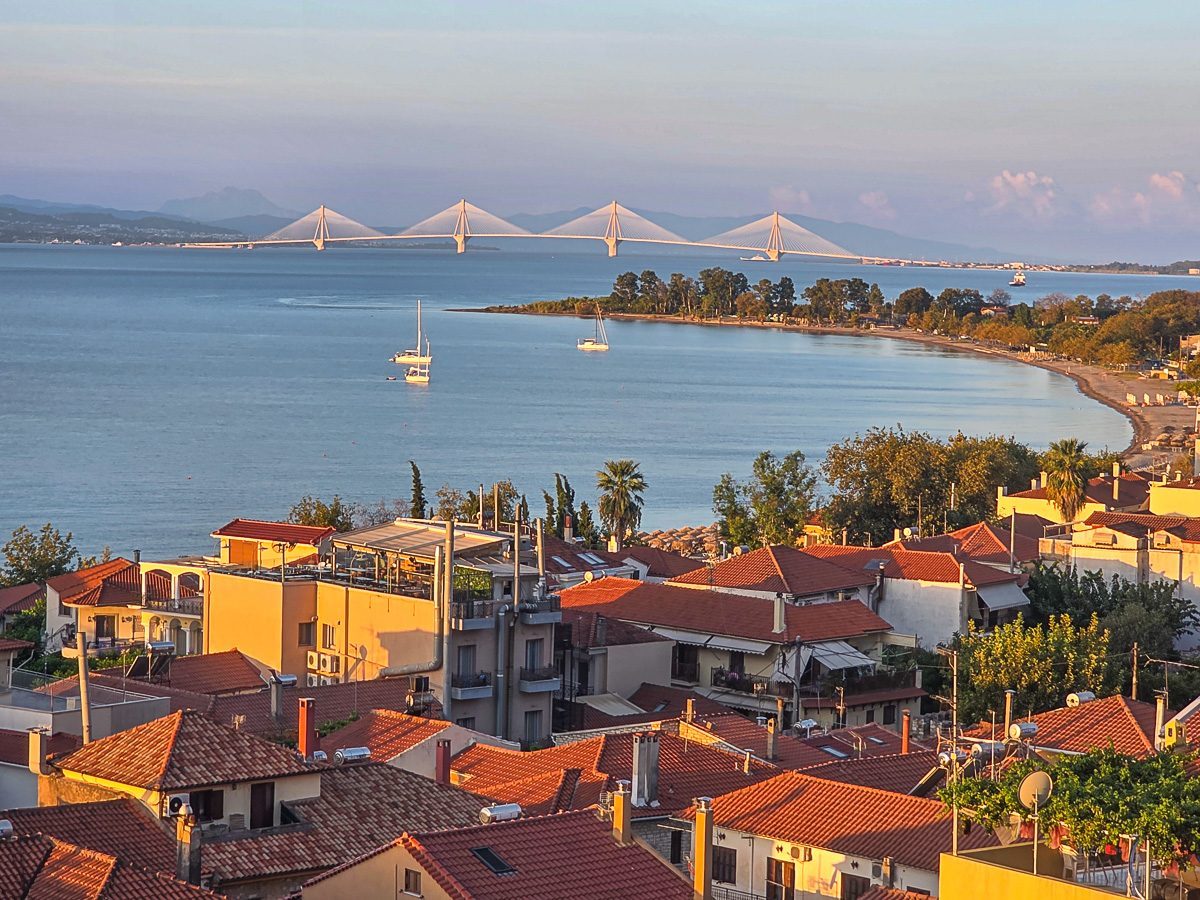
I didn’t have to climb much higher to begin to get the most amazing view of the Rio Antirrio Bridge, crisp and clear before it began to dissolve into the heat haze. The walls and terracotta tiles of the houses painted hues of golden egg yolk yellow.
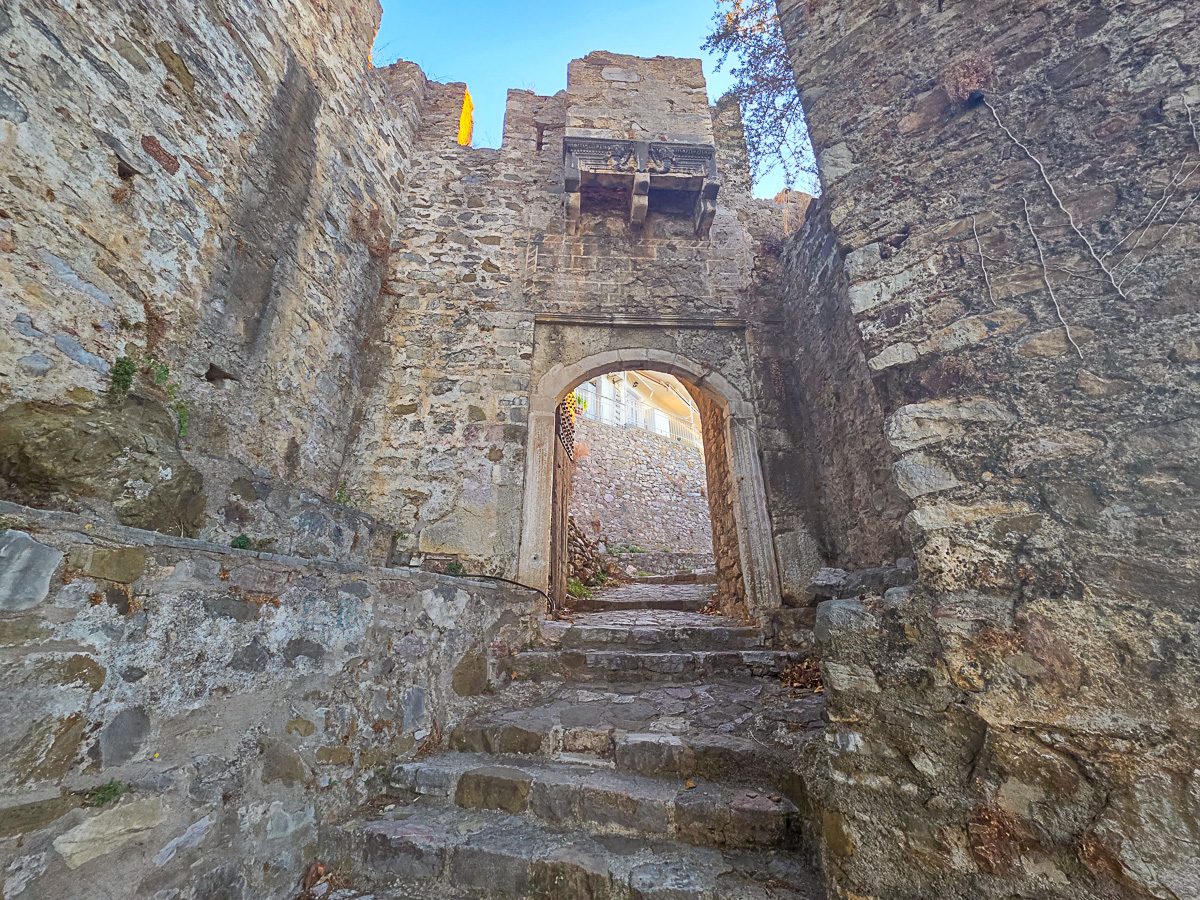
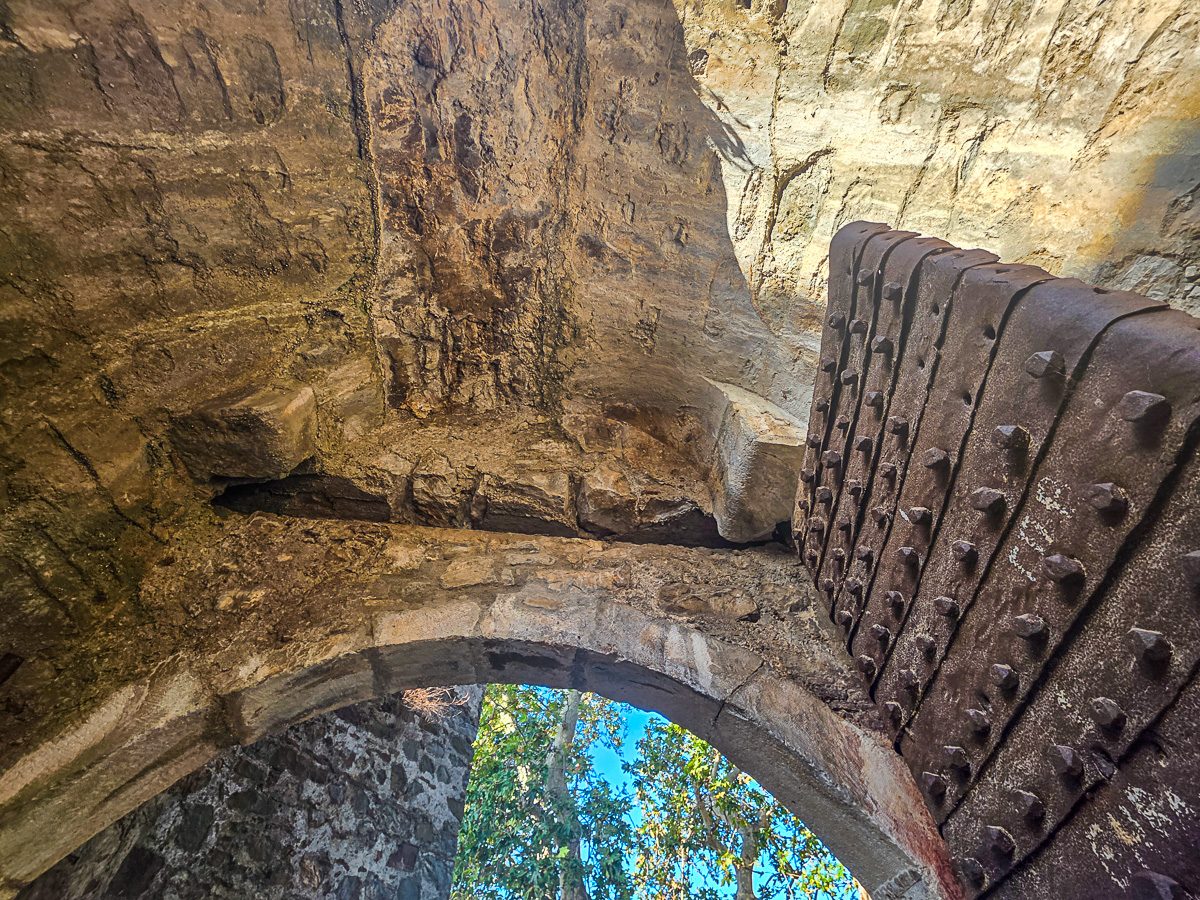
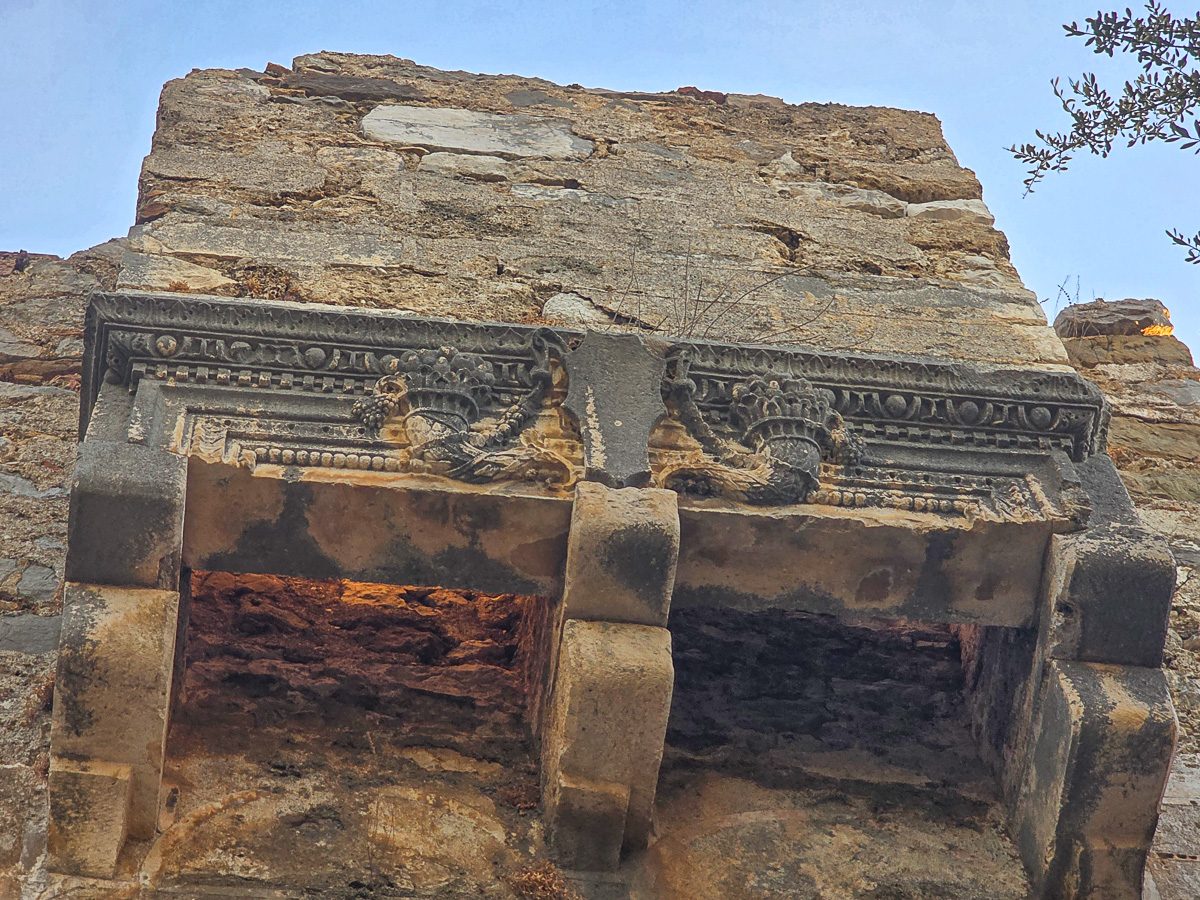
Next another water fountain standing next to the Sideroporta or the Iron Gate, though there’s no iron in sight now, just a wooden door still holding its own against the weather and time. Above it, a protruding structure decorated in ornate carved stonework sitting on two heavy corbels, garlands and relief work dark with age against the rough grey stone. On the underside are two openings built for only one purpose. Dropping something nasty on any unwanted visitors.
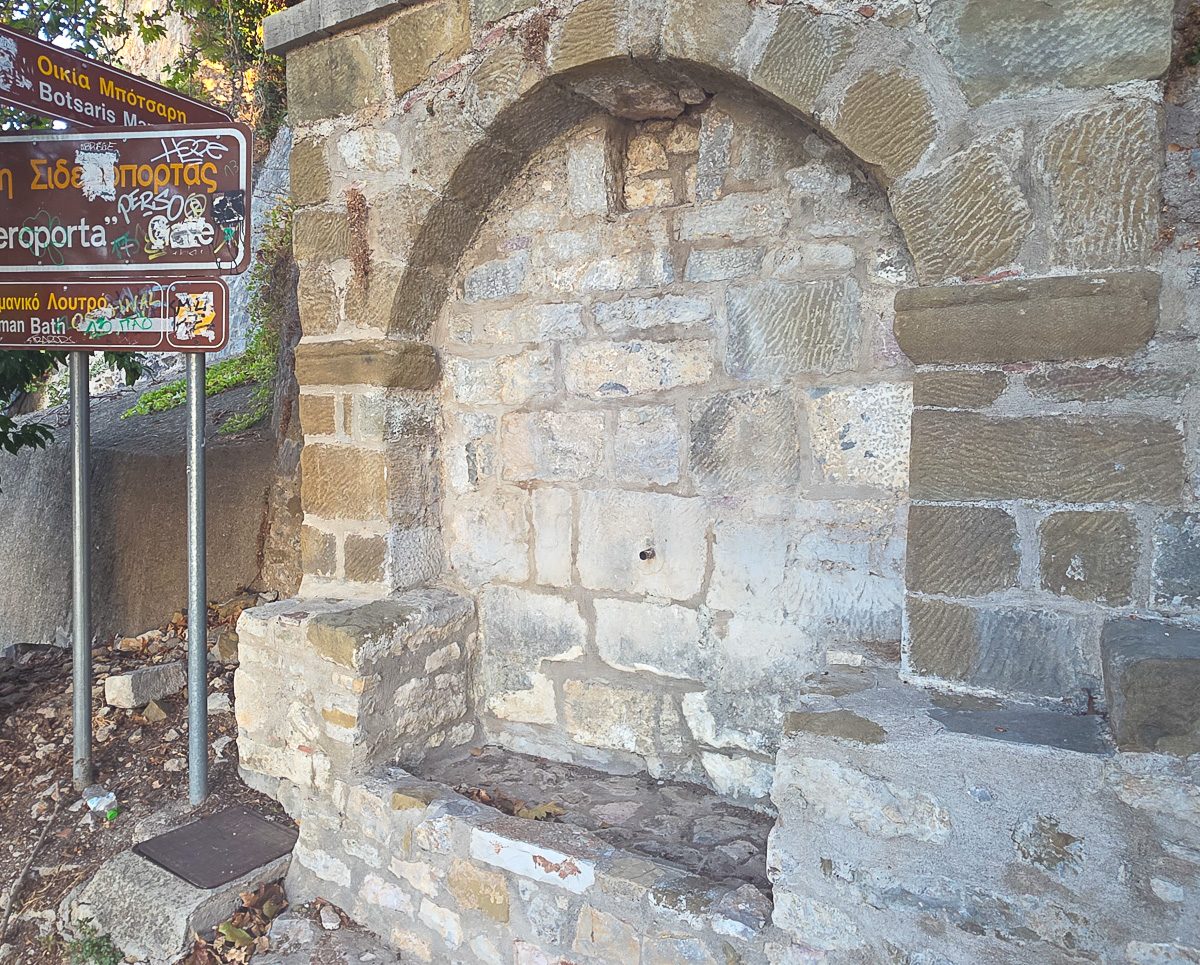
Higher up, this stretch of the castle is where the Ottoman presence in Nafpaktos was clearly most substantial. The Vezir Mosque was one of eight mosques the town once had and, along with the Fethiye Mosque down by the harbour, one of the best preserved, wasn’t just a mosque but the centrepiece of a whole complex, a religious endowment that also funded a fountain, a bath house, and a school.
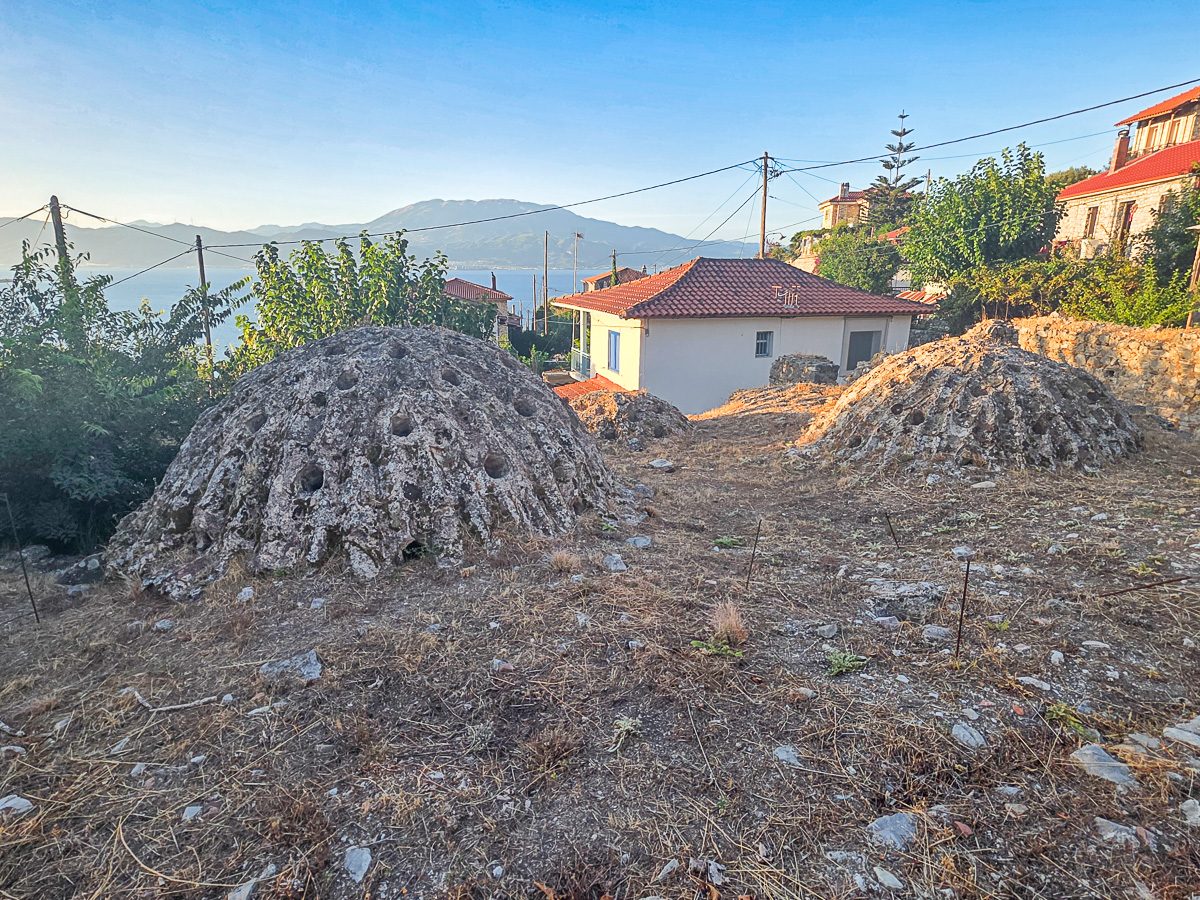
The bath complex sits just south of the mosque, a sequence of rooms, an antechamber, a cold bath, changing rooms, a lukewarm room, and finally a heated space with four domed compartments, the whole thing built on the belief that body and soul both needed cleansing before prayer. Water mattered here as much as worship did. At one time forty-five fountains and two hundred and forty-five springs existed across the town. Nineteen fountains survive today inside and outside the castle walls. The Minaret Fountain tucked against the mosque’s western wall was one of them. Its Islamic arch mostly gone but a marble slab and the basic outline still intact after restoration.
The Tzavellas Mansion closeby was all locked up with no signs of being able to visit so I continued on with the kastro still looming above me. As I carried on I heard a voice above me. I looked up to see a bare-chested man looking down over his terrace. “Where you go?” “To the kastro” I replied. “Where you from?” he asked. “The UK” I said, clarifying ‘England’ so as not to confuse it with the Ukraine. (it happens). “Where your husband?” he continued grilling me. And just as I was about to explain the whole Zakynthos – husband on plane thing his wife came to the rescue and told me that the walk along the road around was very nice.
And just beyond that I realised that this was not just any old road. It was a main tarmacced road. You can get to the castle by car! OK so that would have been an option but I suspect that the interesting stuff lies below only seen on foot. One thing’s for sure, the view of the Rio Antirrio Bridge gets better the higher you climb.
After all that the castle wasn’t open. I’d arrived too early. Instead of hanging around I made my way back down finding other pathways to take me another route. It’s well worth the effort and I made my way back down with a sense of achievement.
Back down at the harbour, the place has a completely different feel. Cafe culture is where the experts come to learn how to spin out a cup of coffee for a whole afternoon whilst people watching. I’ll admit I didn’t always feel comfortable in parts. Next to my hotel and squeezed between the harbour wall are a couple of cafe’s with a gap enough for one walking person. This was my handiest way out but sometimes when busy with poseurs – locals and the yachters, I felt like I was running the gauntlet. I don’t often get such a strong sense of discomfort but I felt it there. Weird.
However, move down to the harbour front and there are some more jigsaw pieces to uncover the story of Nafpaktos.
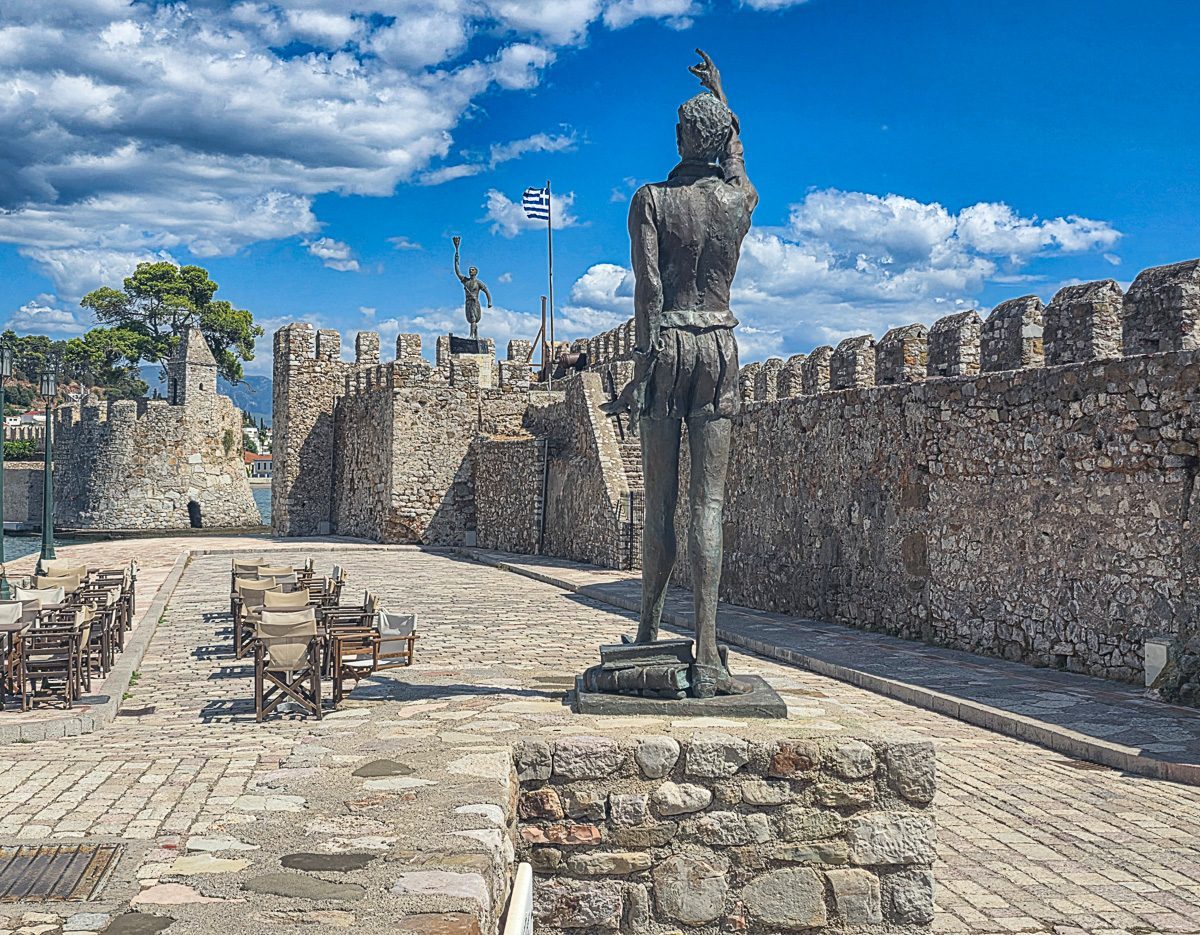
The first thing I noticed were two prominent statues. The first of Miguel de Cervantes, author of Don Quixote who at the age of twenty three as a soldier in the Spanish army, fought at the Battle of Lepanto. In doing so, he permanently lost the use of his left hand earning him the name of the ‘One handed man of Lepanto’.
Further along standing atop the fortifications, a second statue holds a torch aloft against the sky. Georgios Anemogiannis, a fireship captain from Paxos who tried to burn an Ottoman warship in this same harbour during the War of Independence in 1821. He was captured, and was killed for it. Two hundred and fifty years separate the men these statues commemorate, but they are both connected to this same small stretch of water.
Also in the harbour close to where an arch takes you onto the beach, there is a small memorial space with around a dozen marble plaques commemorating the soldiers or sailors who fought and died at Lepanto. English, Spanish, Italian, Maltese, Croatian, others too weathered to make out properly.
Adjacent to my accommodation is the Fethiye Mosque, distinguished by its yellow exterior. The dome can’t be seen from ground level, but I did get excellent views from the roof terrace of Pepo’s Guesthouse. Built in 1499 on the direct orders of Sultan Bayezid II, immediately after the Ottomans took the town from the Venetians, “fethiye” meaning conquest, it served as Nafpaktos’s main mosque until the 1820s. It’s since been restored and repurposed as an exhibition space, opening only for occasional shows rather than regular hours, which is probably why it stayed shut the whole time I was there.

That covers what I discovered about Nafpaktos’s layered history. I’ll say this: it’s probably one of the most interesting castle complexes I’ve visited. In the next post, more on Pepo’s Guesthouse, the beaches, and some of the restaurants I sampled along the way.
Discover more from
Subscribe to get the latest posts sent to your email.
MY BIG FAT GREEK TRAVEL SURVEY
How do you really plan your Greek adventures? I'd love to hear from you.
TAKE THE SURVEY →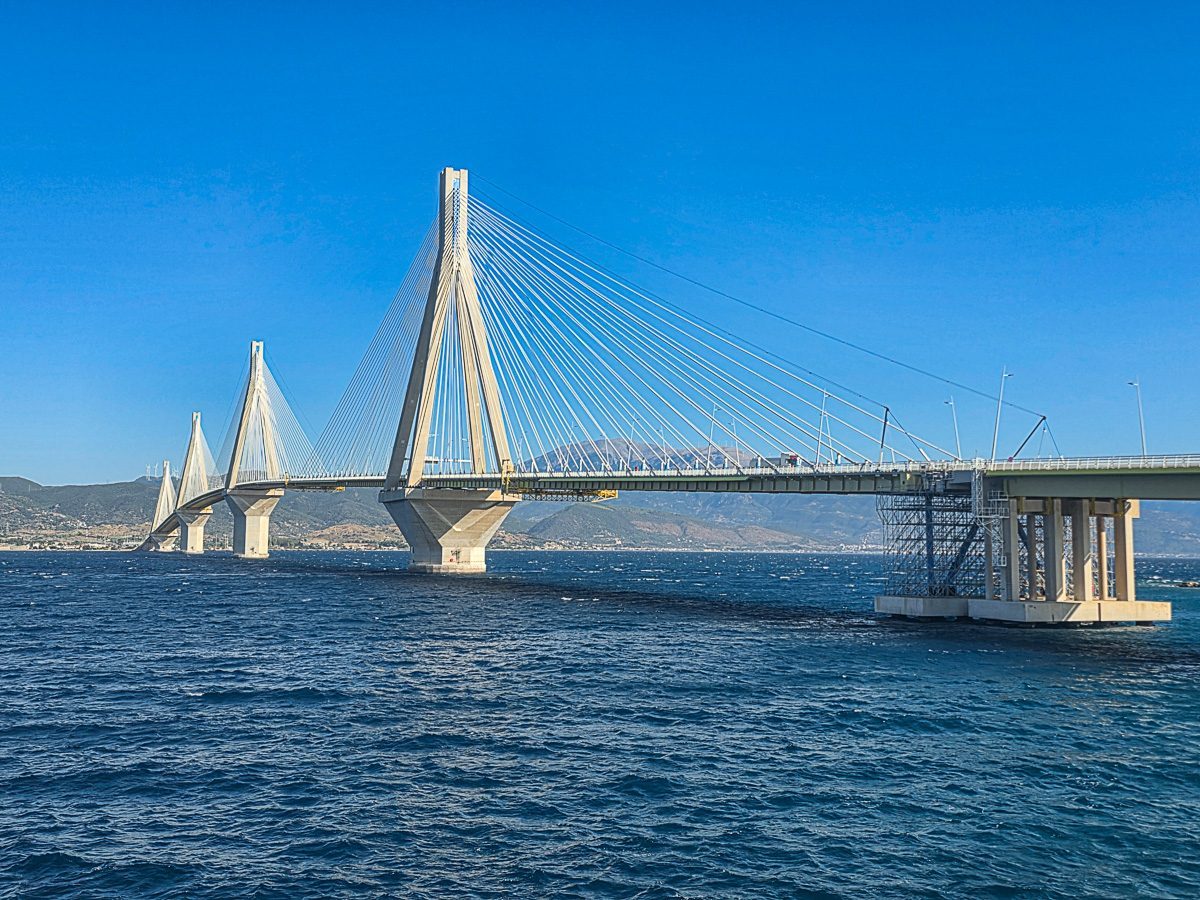

I’ve been to Nafpaktos twice now and it’s one of my favorite towns in Greece. Thanks for the details that I didn’t know about!
Hi Colleen
Good to hear from you. Thank you for reading the post. ❤️
I think being there for 6 days I had plenty of time to explore – in fact at one point I’d run out of things to explore.
Don’t get me wrong – the town is beautiful and I really liked it but I definitely think I should have stuck to my original 4 days. I was too taken with the room with the view! 😍