Aitoliko to Astakos and a Room Below Mount Veloutsa
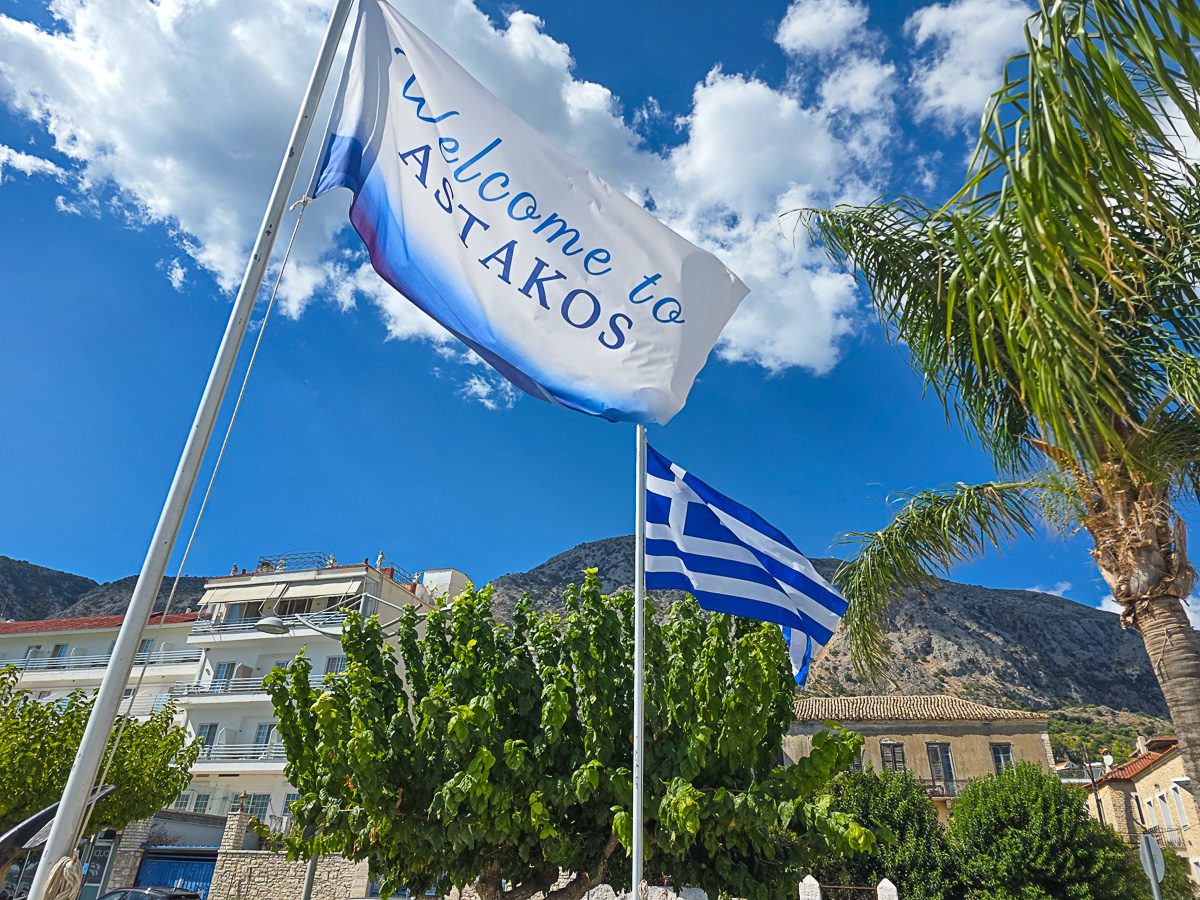
Astakos had never really been on my radar for this trip. I had an idea that after Aitoliko I would head for Mytikas to visit the island of Kalamos, which had evaded me on a previous visit to these parts. Before I booked bus tickets or accommodation, I took one more look at the map and spotted Astakos, which began to intrigue me.
Getting to Astakos from Aitoliko
After checking out the KTEL bus timetable, I could see that this would be a straightforward connection and from then on, the fate was sealed. Astakos sounded on paper like the exact place I needed to settle for a while. Three lots of two-night stays in a row isn’t how I normally travel, but that’s how the dice fell.
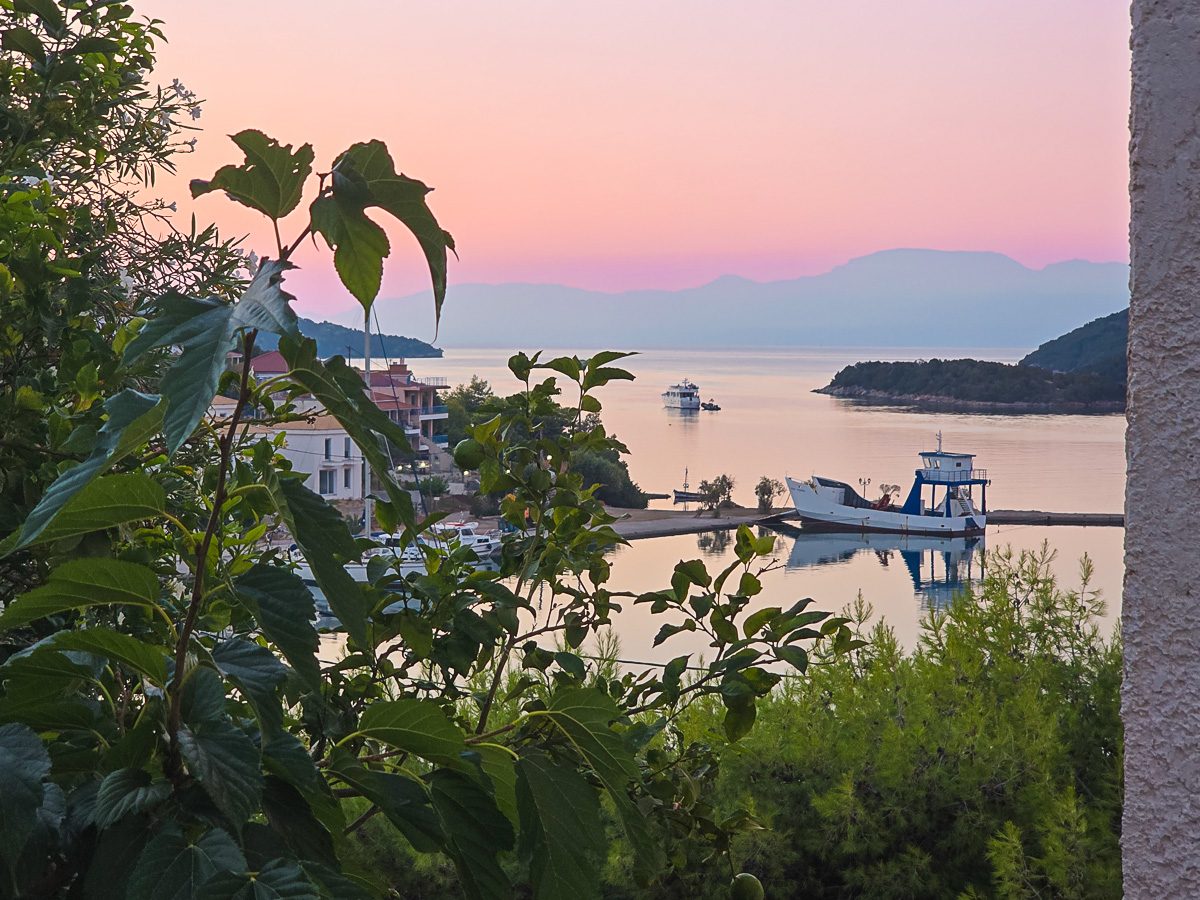
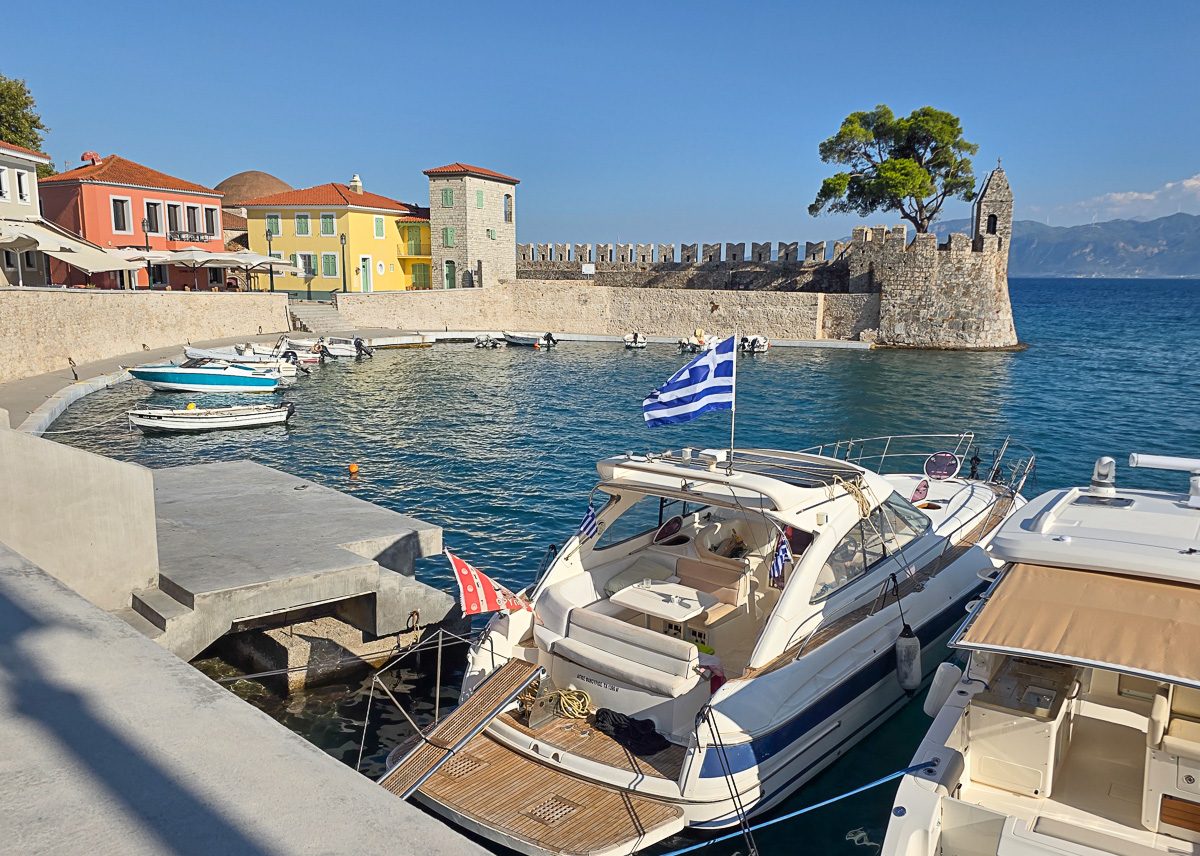
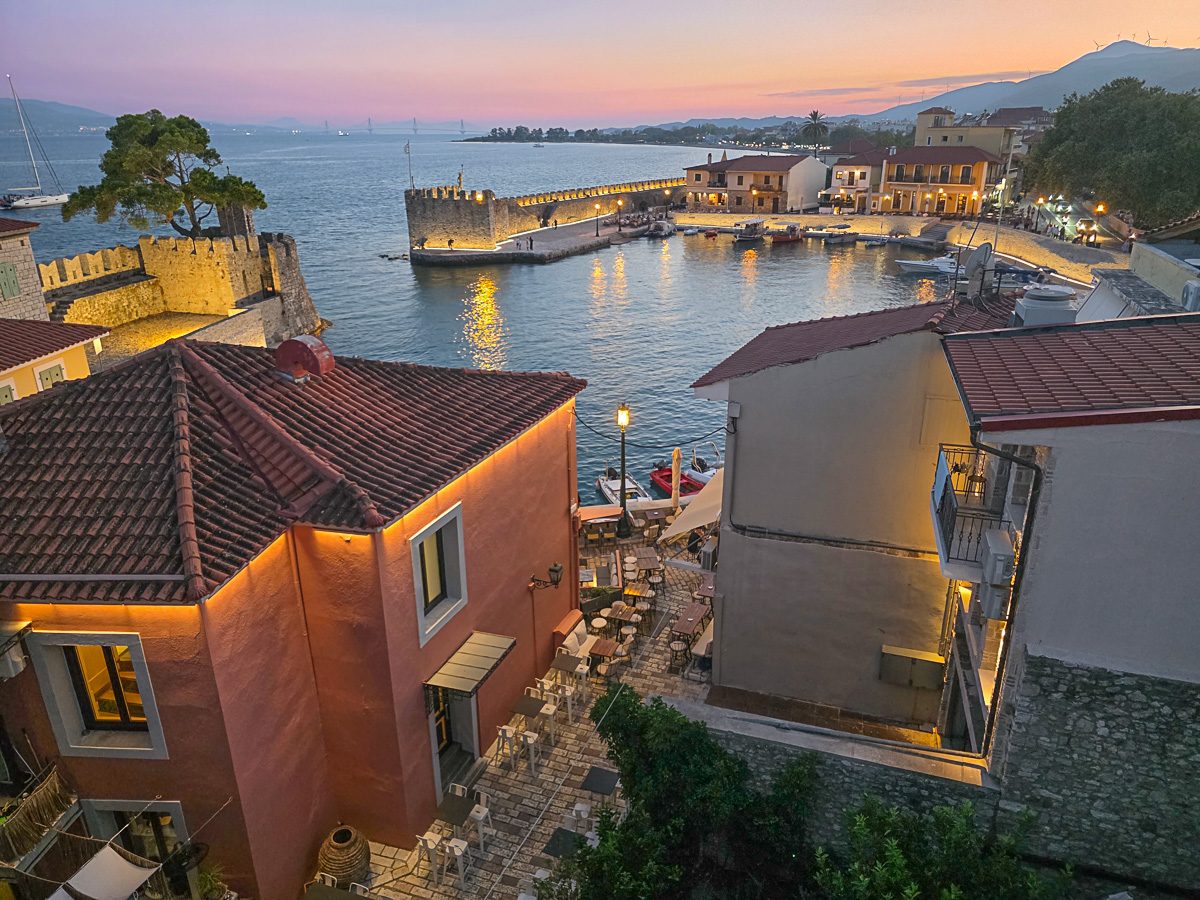
I didn’t know much about Astakos before arriving except that it was set in a deep protected bay, at the mouth of which lay a cluster of islands known as the Echinades. Having recently stayed in Nafpaktos and seen what a hooha they made of their connection to the Battle of Lepanto, I was now going to be within touching distance of the ‘actual’ location where the battle had taken place.
Getting there was easy. There was a direct bus from Aitoliko to Astakos, just one a day, though trying to make myself understood at the small bus station in Aitoliko took a bit of unravelling. Ensure you pronounce your vowels correctly or you’re likely to get Astakos mistaken for Astiko and accidentally find yourself on the local bus instead of the regional. A former colleague of mine, a German who spoke English without a trace of an accent, once told me I had flat northern vowels.
Anyway, it was all simple enough, but because of the previous day’s confusion (you don’t know the half of it), I arrived at the bus station well in advance of the departure time. It really wasn’t necessary, as the bus was running late. From the bench outside the bus station, I could see the buses making their way over the bridge. And each time I’d stand, grab my luggage and prepare to board. And for at least three of these buses I’d be told “Ochi” by the lady in the bus station. The fourth was the correct one and only fifty minutes behind schedule.
After leaving Aitoliko from the opposite bridge, we made our way through some really beautiful landscape and quiet little villages. These small hamlets all followed the same pattern, a main street lined with cafés, the tables taken by men in flat caps. Ordinary places, the sort where I could easily have got off, ordered a drink and let the day set its own pace. The bus had other ideas.
Some way out of Aitoliko we came into fruit-growing territory. Swathes of agricultural land on either side, orchards with some of the trees trained flat against wires, and grapevines here and there. I made a mental note to find out what this area is known for. Citrus, as it turns out.
This is the plain of the Acheloos, the second longest river in Greece, and thousands of years of silt washed down from the Pindos mountains have left the land around its delta deep and fertile, ideal for oranges and mandarins.
It went on all the way through Neochori, then over the long Katochi bridge and across the Acheloos, which took us out of Aetolia and into Acarnania.
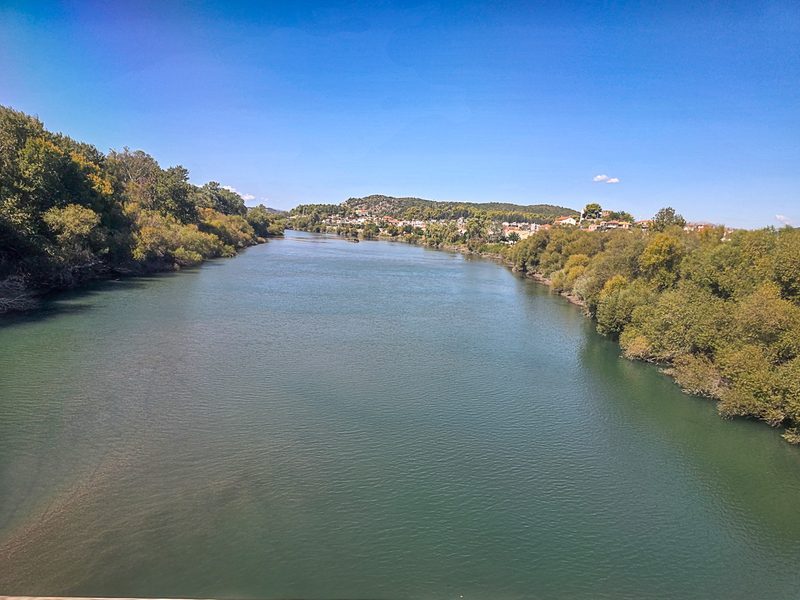
Since I left Patras, KTEL Aitoloakarnanias buses have been with me most of the way, but it is here that I begin to wonder how the two regions came to be one, merging their names into one of the biggest tongue twisters I’ve encountered in Greece. The Acheloos has been the dividing line between the two for a very long time.
They were very different neighbours. Aetolia, to the east, had a rough reputation. In the fifth century BC its people were still living in open villages under petty kings and were dedicated to piracy, though their archers and slingers were good enough to send an Athenian invasion packing in 426 BC. They went on to organise themselves into the Aetolian League, one of the leading military powers in Greece, which played a major part in driving a Gallic invasion out of the country in 279 BC. Acarnania, to the west along the Ionian coast, was a looser affair, a confederation of cities with Stratos as its seat that lasted into the Roman period.
Around 270 BC the two peoples settled their differences and agreed on the river as their mutual border, and it held under the Romans too.
The two were joined into a single prefecture soon after the Greek War of Independence, with Messolonghi as its capital and Agrinio as its largest city, and they have stayed joined ever since. In Greek the combined name, Aitoloakarnania, is one long word, and in English it turns up as Aetolia-Acarnania, but whichever version, it’s enough to test the tongue of any non-Greek speaker.
The bridge we’d just crossed is a late arrival. Until the late 1950s the only way across between Neochori and Katochi was the perataria, a hand-operated wooden raft ferry that carried people, animals and goods, and in winter the fast, heavy water of the Acheloos made even that difficult. The bridge, around 200 metres long, finally solved the problem.
Beyond the river, the landscape settled into low rolling hills covered in olive and pine, until we began to drop down towards Astakos, its deep bay already in view.
The bus wound its way along the head of the bay and made the approach from the back of the town. It stopped on a small side street alongside a tiny KTEL office whose primary function was that of a café.
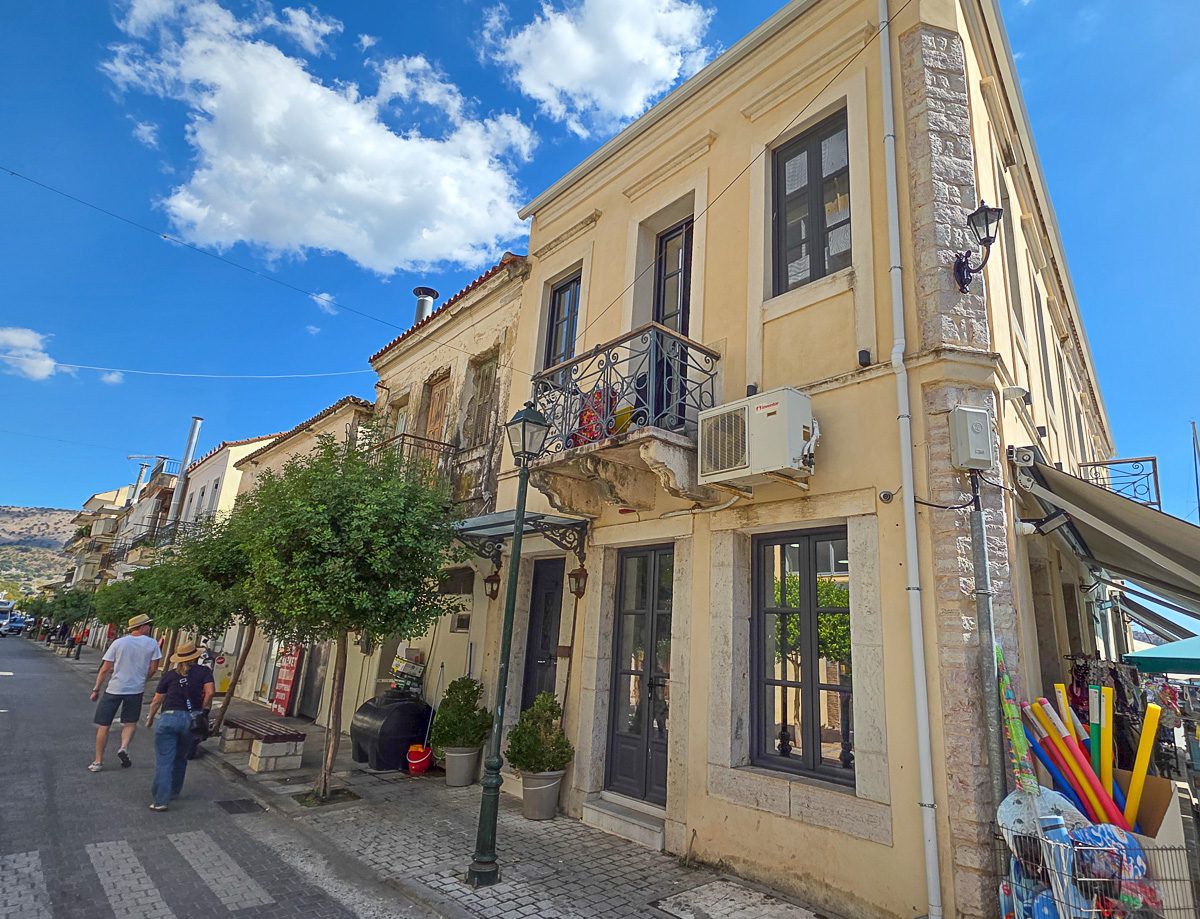
I thumbed my accommodation into Google Maps and set off, luggage in tow. The streets were quiet, with small citrus trees planted along the pavements and the odd bench in between. Wrought-iron balconies overhead, and on one building, carved stone scrolls propping up one. I could already see where I’d be spending a lot of my time – feeding my obsession with old doors and door knockers. A positive feeling about a place doesn’t always arrive this quickly. Here it did, and I knew instantly I’d made the right choice.
Where I Stayed in Astakos
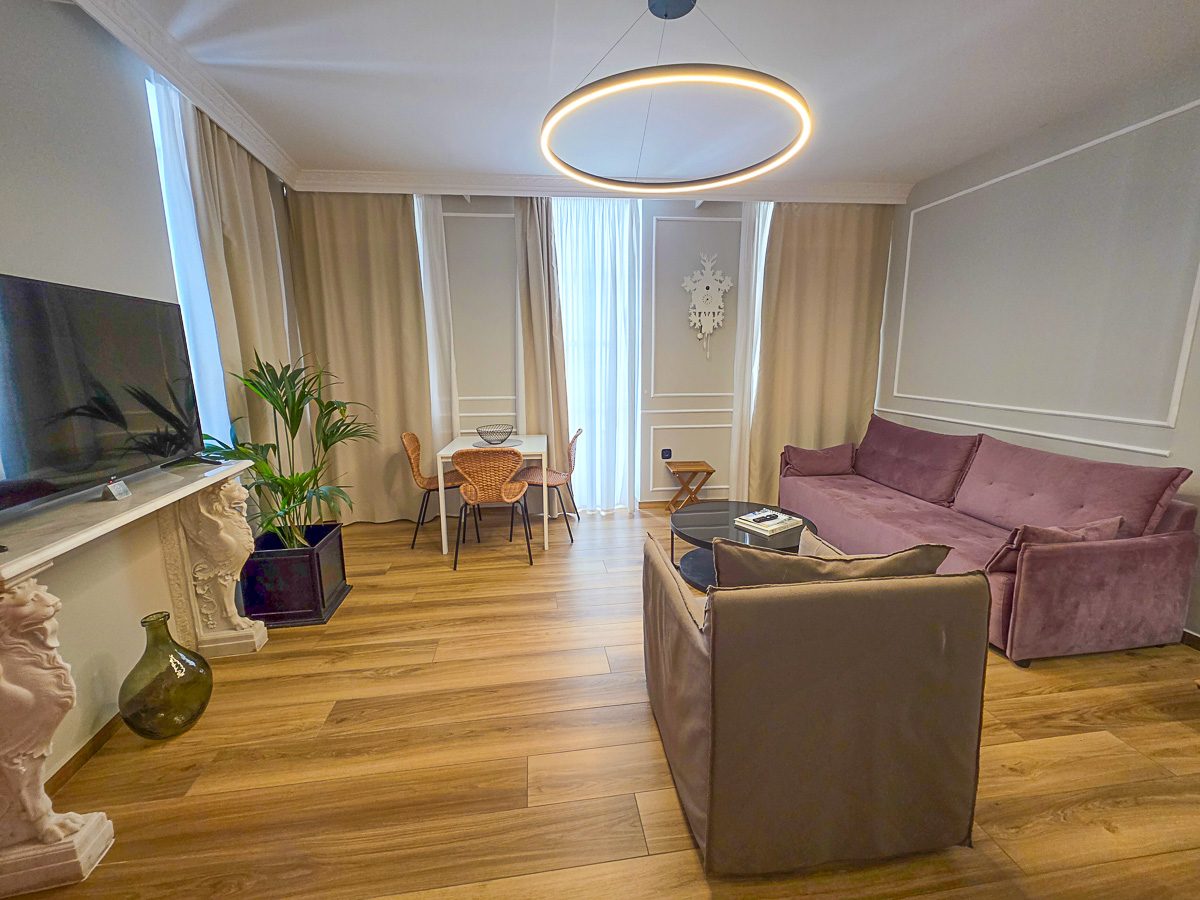
I’d booked six nights at Nostalgia Suites, right on the street behind the harbour. It’s a beautiful neoclassical house with an iron balcony, and my apartment was far too spacious for one person, but I was going to relish every moment of it. Arrival was all digital, with my host Vassiliki sending me everything I needed before I got there. A flight of steps took me up to one of two apartments, mine overlooking the street and the mountain behind the town.
I did get a peek into the other apartment one day. It had a spiral staircase up to the mezzanine level, which looked wonderful, but my vertigo wouldn’t have coped and I’d probably have set up camp in the living room.
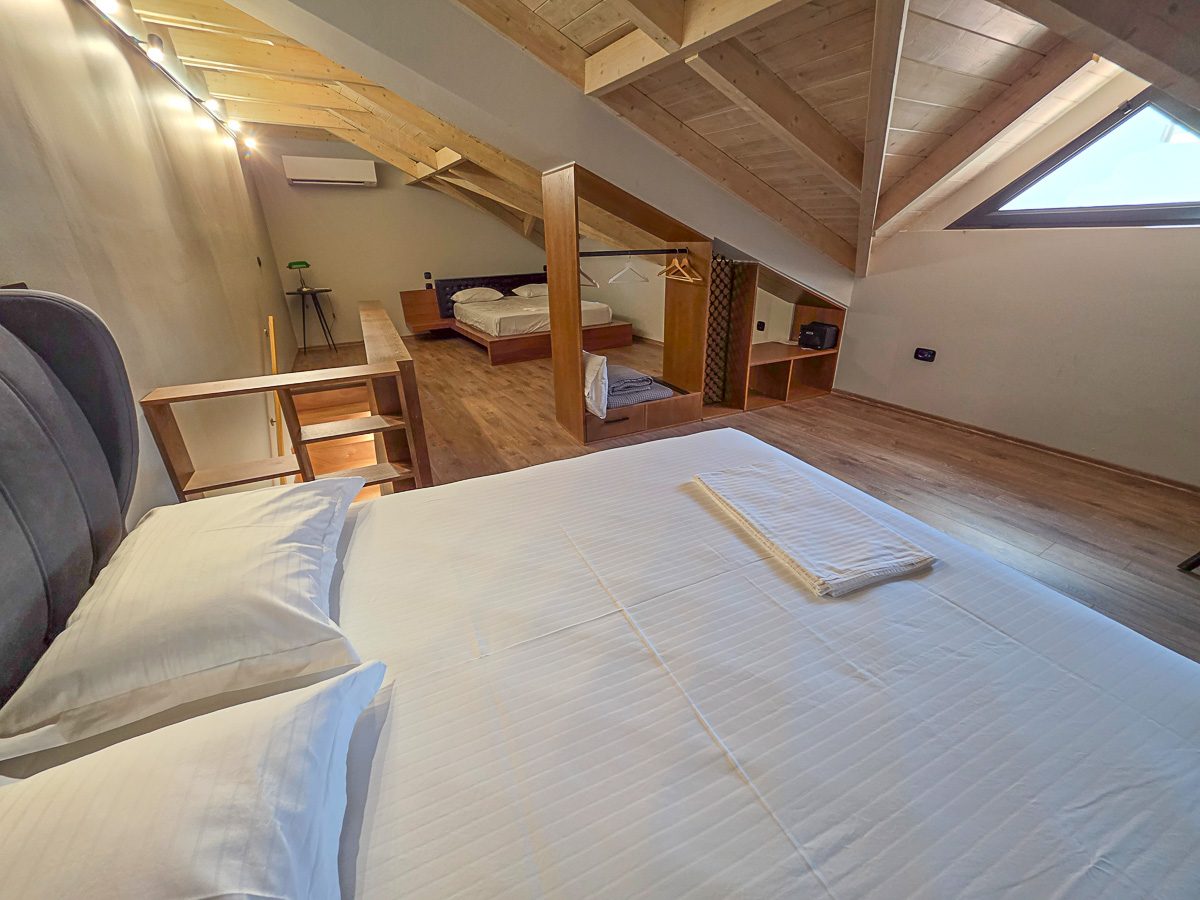
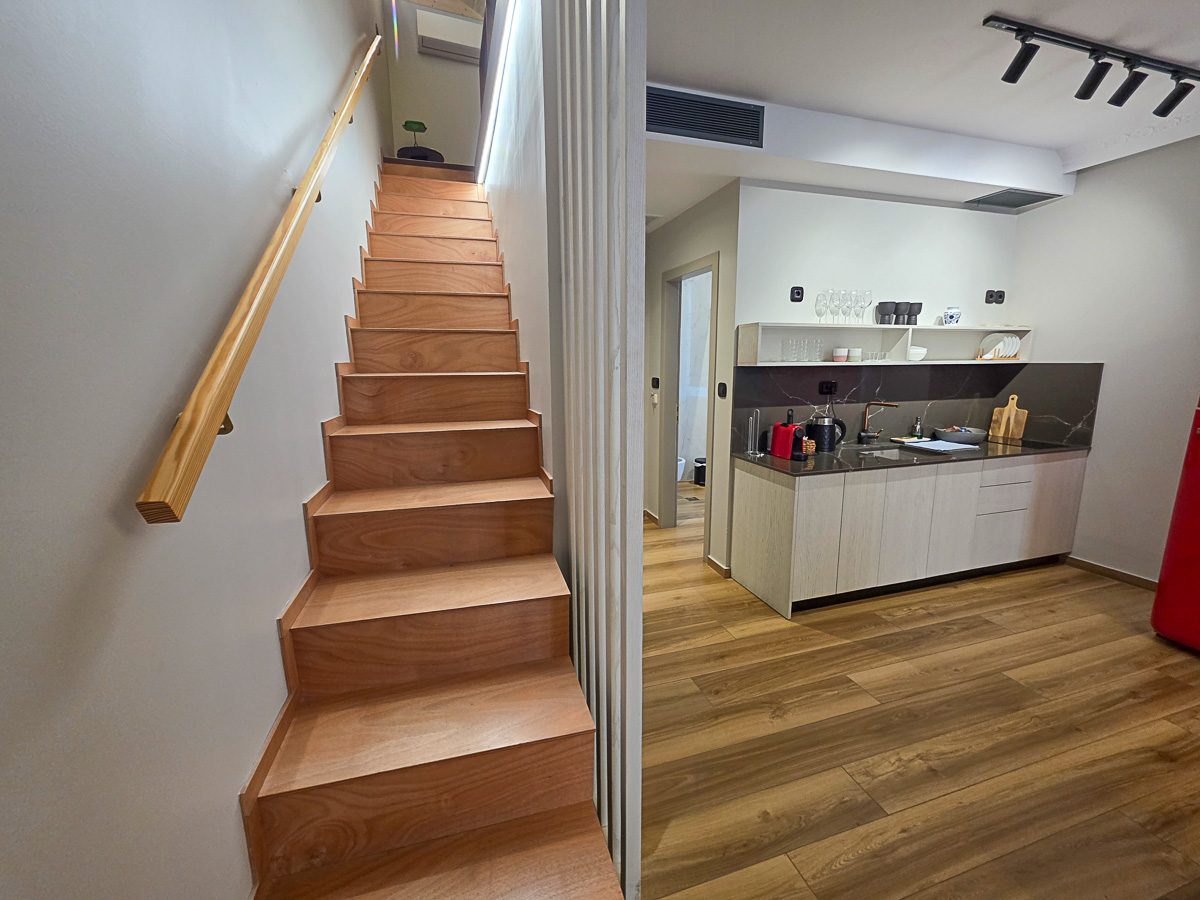
Instead, my apartment had a straight wooden staircase with strip lights leading the way up to a huge loft space, with a double bed at each end and a clothes-hanging space dividing the two.
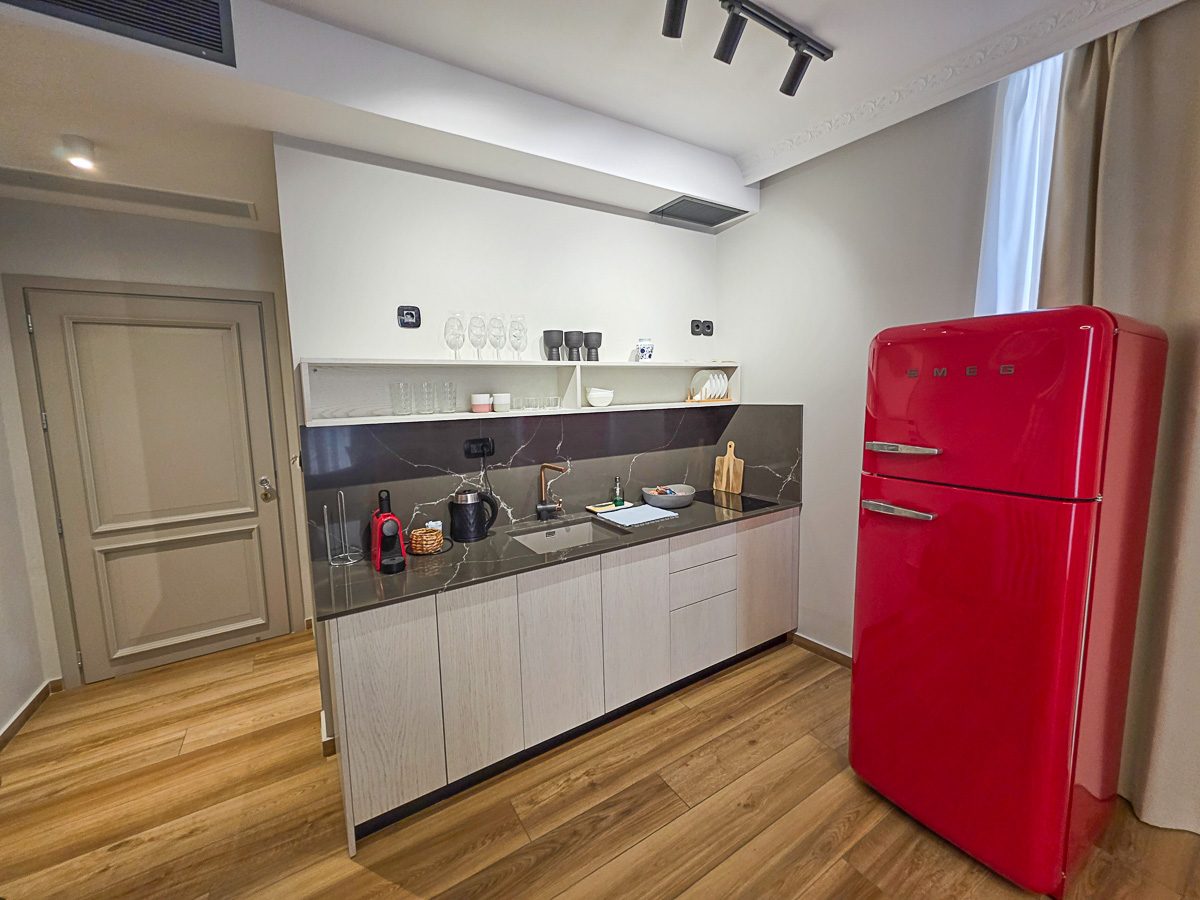
The living space was very generous. A good-sized kitchenette with a two-ring cooker, a huge American-style fridge-freezer, a kettle and a coffee machine, along with a good selection of cooking accoutrements. This was of no interest to me as I never self-cater, but a kettle is always useful. The kitchen sink was almost the size of a small bath – just the job for getting on top of the laundry without causing a monsoon. Vassiliki had also provided a few breakfast items.
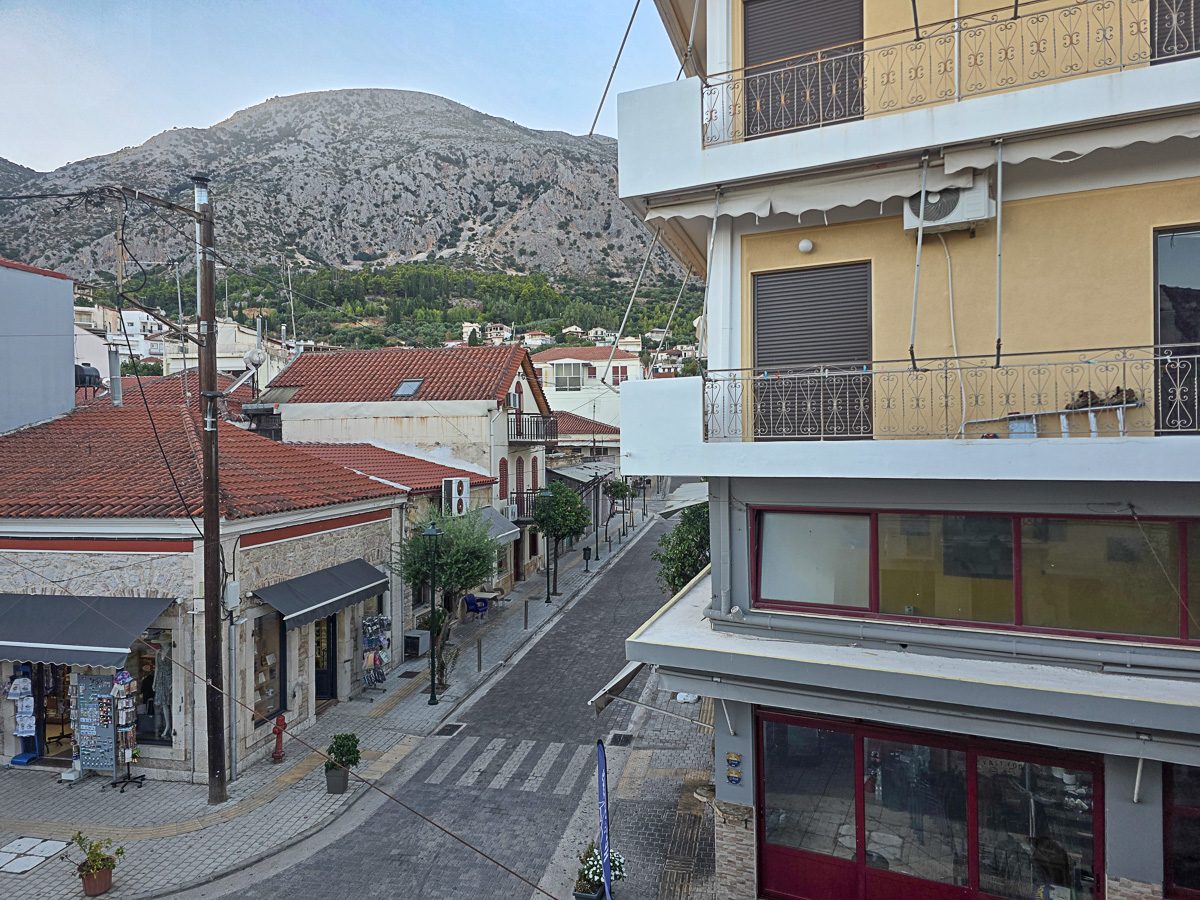
The living area had a dual aspect, with floor-to-ceiling doors opening onto a metal balcony that faced away from the harbour, giving me views of the main street and, along a side street, up to Veloutsa. This last bit surprised me more than anything. Mount Veloutsa, the southern tail of the Acarnanian mountains, rises bare and grey behind the rooftops, and Astakos is built at its foot.
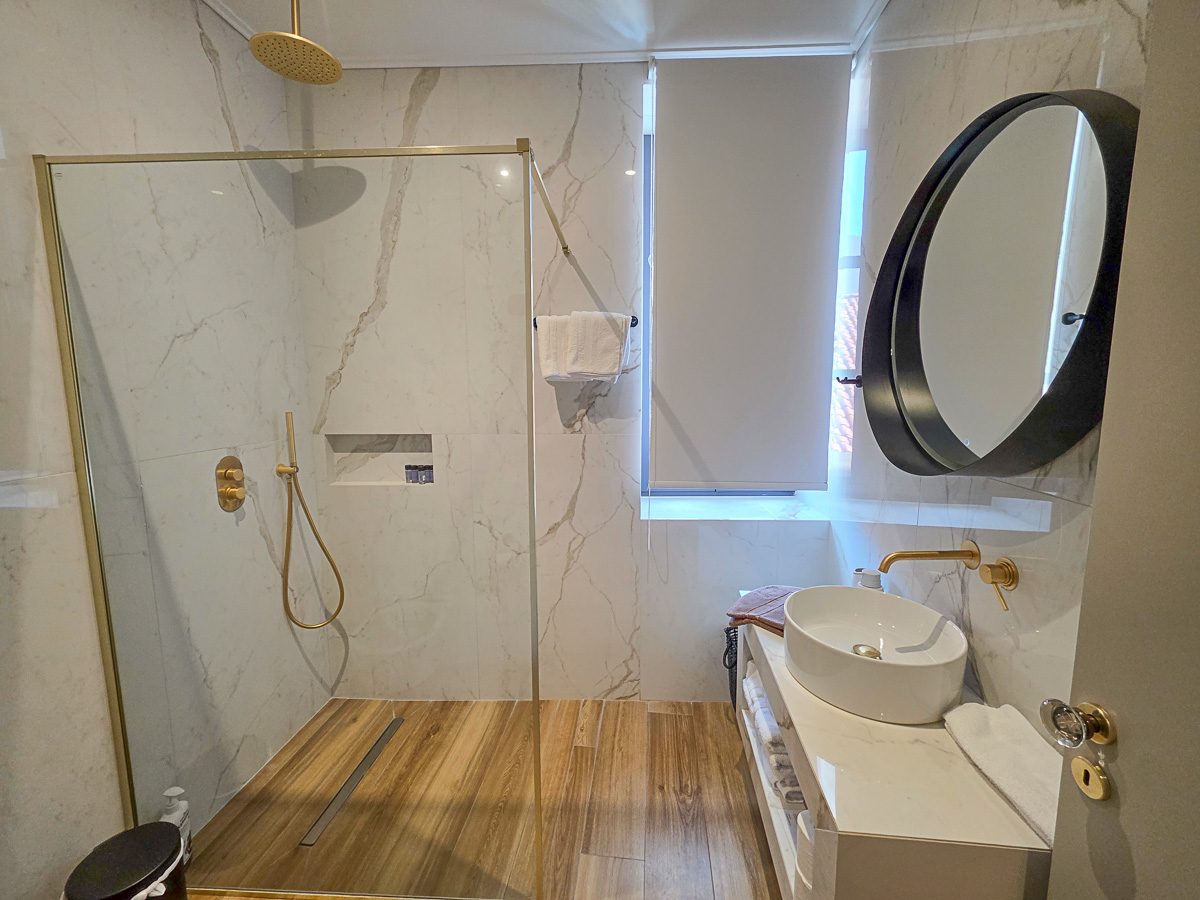
As for the bathroom, after some of the ones I’ve had before, this one felt colossal, with a walk-in shower big enough for several people at once. It all felt very newly refurbished – no ick factor and no creeping shower curtain that somehow always melds itself to your body.
Yes, I pushed the boat out a little for this one, but it was absolutely worth it.
A Short History of Astakos
Astakos is the Greek word for lobster, but the name comes from the ancient Acarnanian city of Astacus, which stood about two kilometres north-east of the modern town. It declined under the Romans, when the founding of Nicopolis around 30 BC drew the people of Acarnania away, and by the Byzantine period the town, now called Dragamestos, had moved inland to the north.
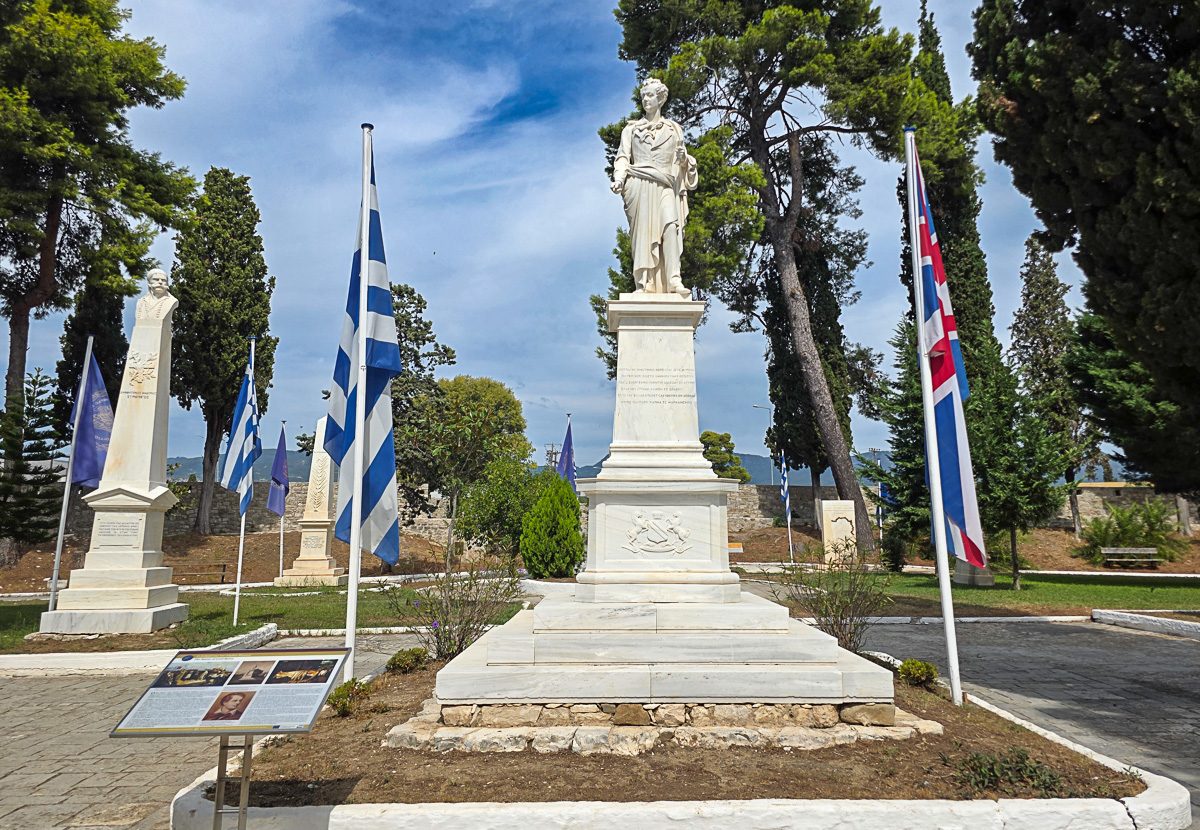
The best-known event in the bay’s history is the Battle of Lepanto, fought on 7 October 1571 just off the Echinades, which I covered in my Nafpaktos post. In 1825 the bay saw another naval victory, when Admiral Miaoulis, whose bust I’d passed on Tourlida, defeated a Turkish-Egyptian fleet nearly three times the size of his own with ships from Hydra.
For centuries the town’s major export was acorns. Behind Astakos lies the Xiromero oak forest, around 150 square kilometres of valonia oak, some trees up to 800 years old. Locals gathered its acorns for over 600 years, carrying them down to the harbour in sacks to be shipped to Italy and the rest of Europe, where the tannin in the acorn cups was used to tan leather. Xiromero cups were rated the best in Greece for tannin, which made Astakos one of the country’s more notable export ports.
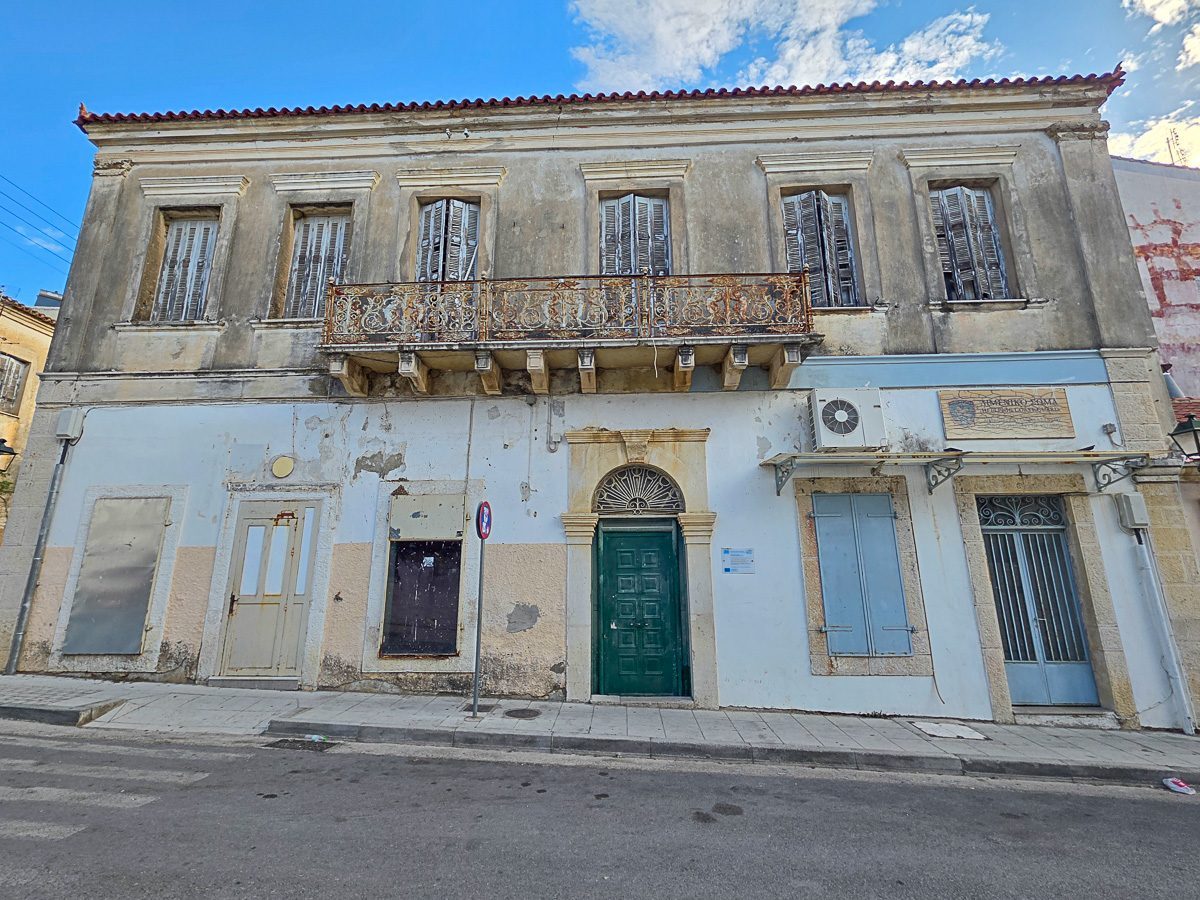
The neoclassical houses that still stand in the town date from the end of the nineteenth century, when Astakos was a thriving commercial centre, and some are now listed by the state.
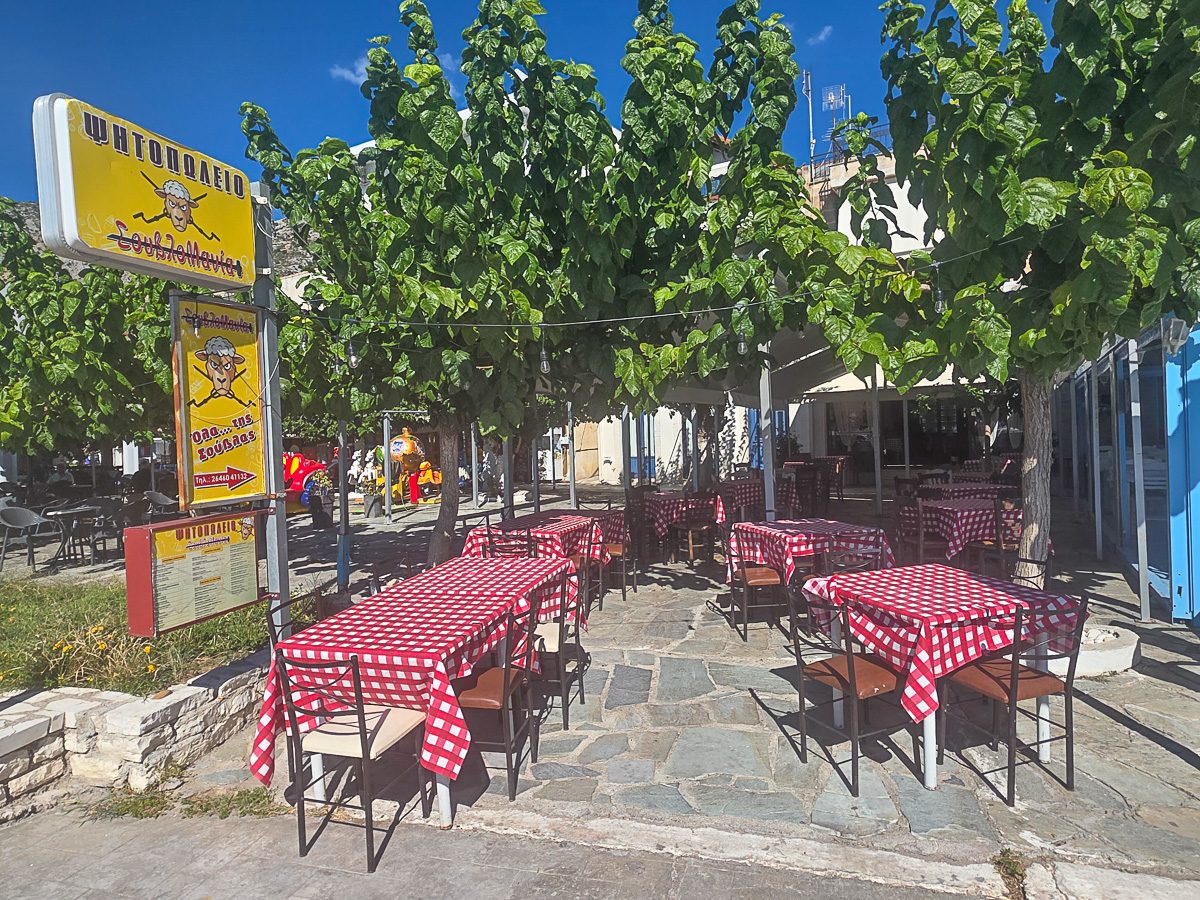
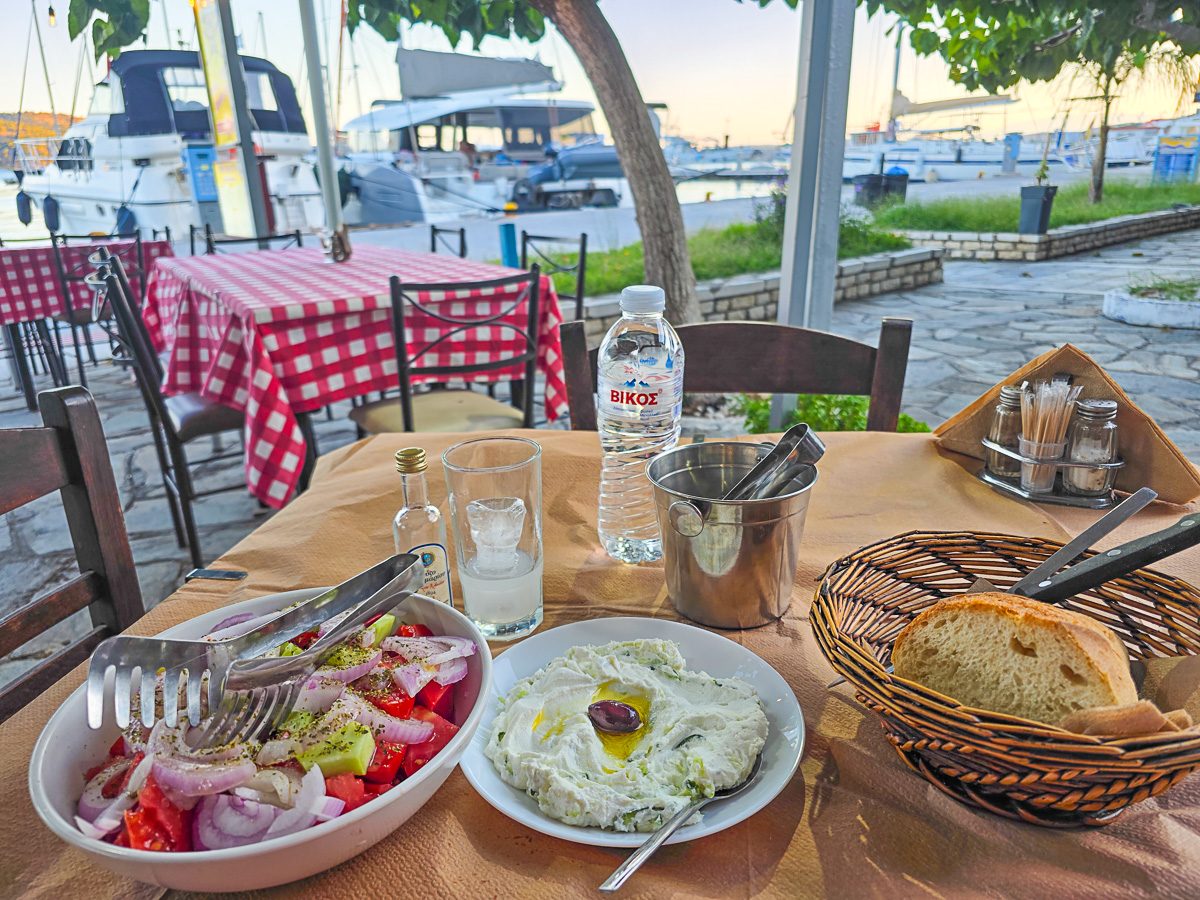
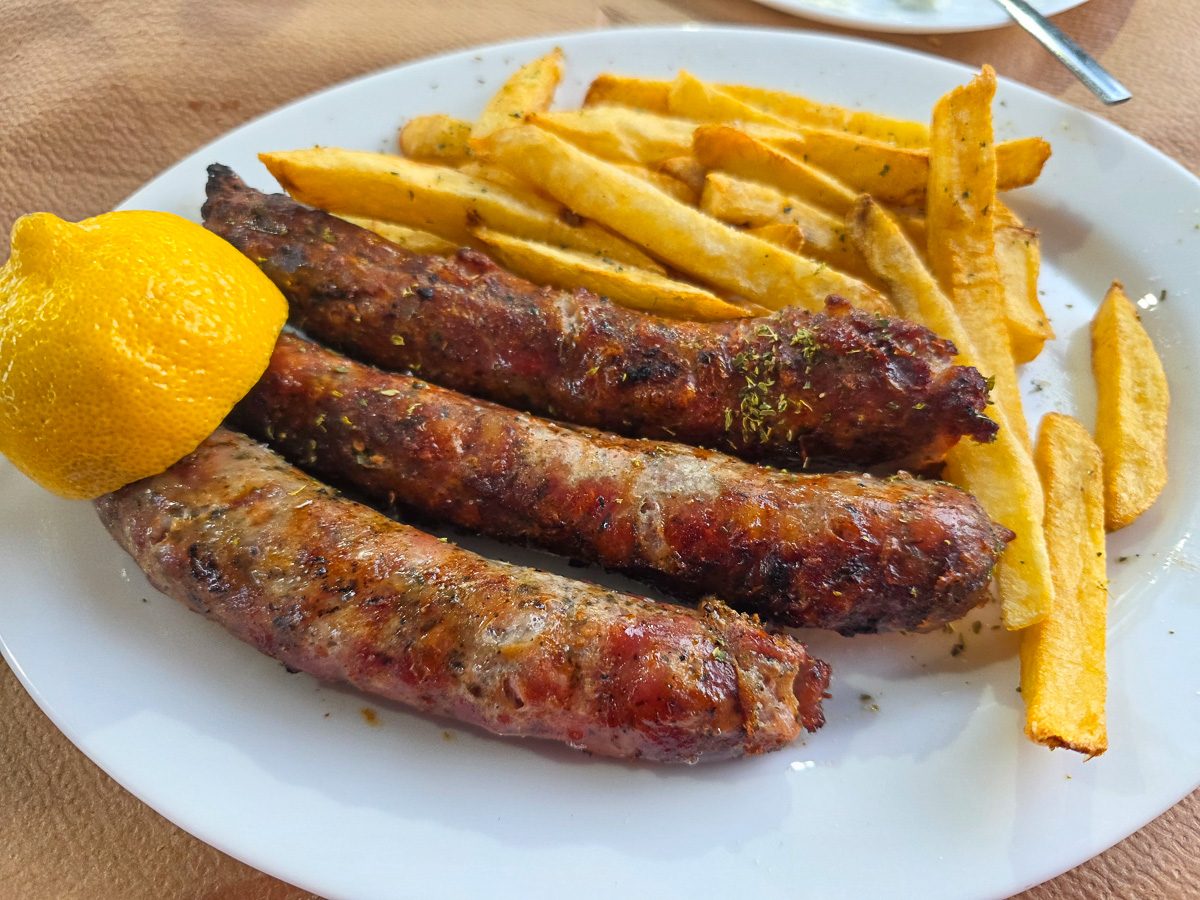
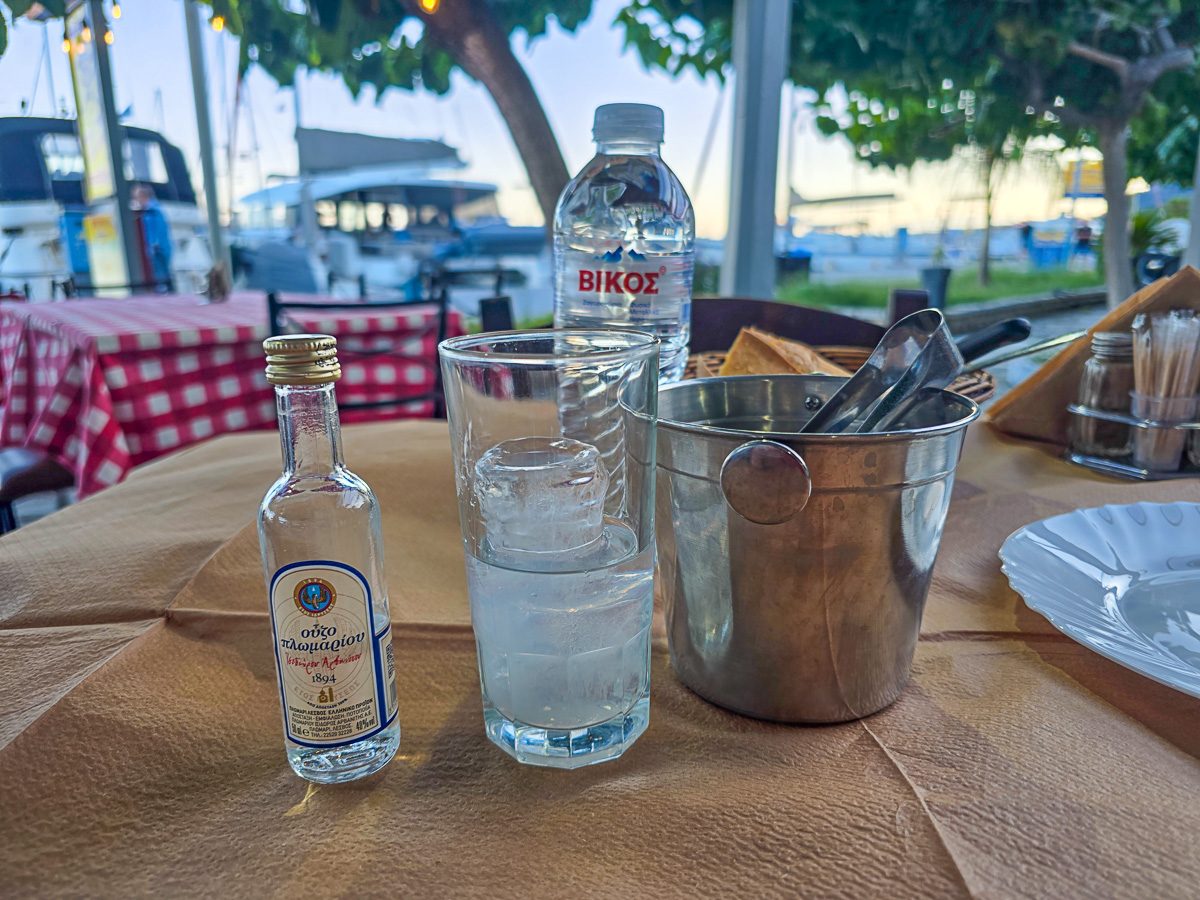
That evening I took thirty second walk to the harbour front and Souvlomania. I was drawn by the red and white chequered tablecloths. That usually works out well for me, and it did again: a Greek salad, tzatziki and grilled loukanika, with a baby bottle of Plomari ouzo. The angry looking sheep on the taverna’s signage says all you need to know about a grill house serving lamb chops and mutton ribs.
Tomorrow I begin exploring the harbour, the beaches and get up close and personal with the town’s magnificent architecture.
Discover more from
Subscribe to get the latest posts sent to your email.
MY BIG FAT GREEK TRAVEL SURVEY
How do you really plan your Greek adventures? I'd love to hear from you.
TAKE THE SURVEY →