Exploring the Kleisova Lagoon in a Traditional Gaita
Since arriving on Tourlida, I’d been trying to arrange a boat trip around the Kleisova Lagoon. The season had clearly started winding down, and I wasn’t sure any of the boats were still running. I’d found a couple of numbers online and spent my first afternoon calling them, no answer from either.
The man at Tourlida Seaside gave me another number and told me to try in the morning. It turned out to be one of the numbers I’d already tried the day before. Timing, apparently, was the whole problem. This time a morning call worked.
I spoke to a lovely lady called Elena, from Messolonghi by Locals, who said she’d arrange either a sunset or a morning trip. I weighed it up, and the thought of mosquitoes in the evening was an instant no. As it happened, I was due to check out the following morning, but thanks to Elena I was able to arrange a 9am start, meaning I’d be back in plenty of time.
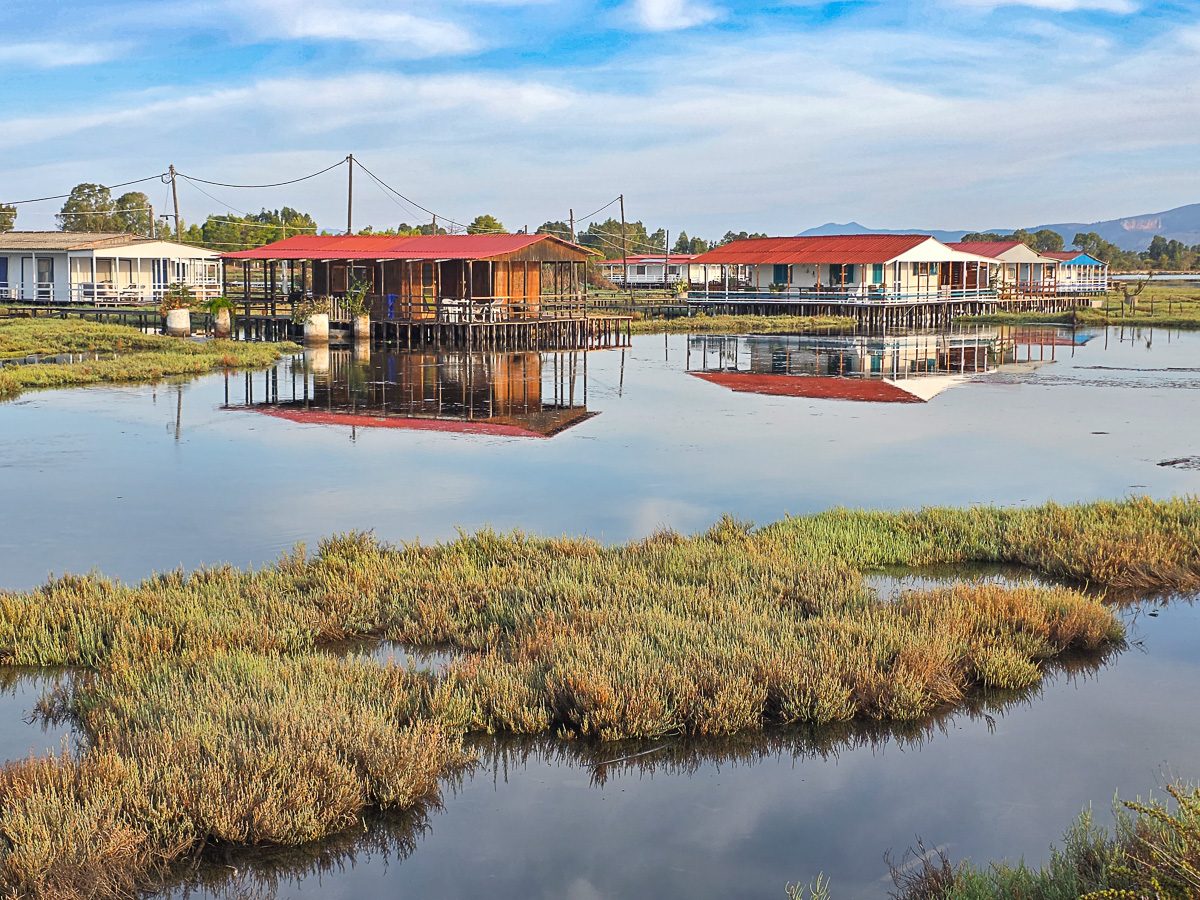
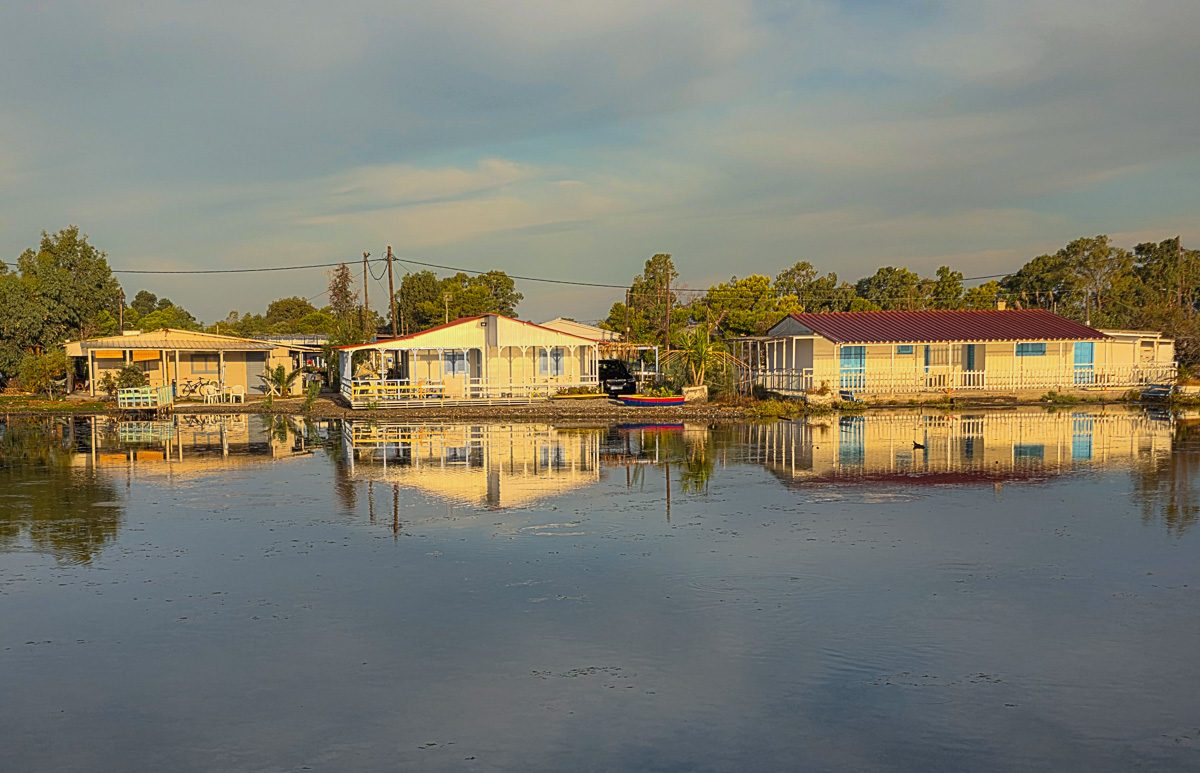
Elena dropped me a pin for where to meet, a twenty-minute walk along the island road towards Messolonghi. I set off well in advance to allow for a million and one photo stops. Good call, as it turned out. The light was still low, everything gentle hues of peach, and the water looked like it had been frozen in time. The Pelades along the way reflected their ramshackle charm into it, doubled, upside down, barely distorted at all.
Continuing along the road a little further ahead, I noticed movement along the edge of the water. At first I thought they were gulls, but the closer I got, I could see that they were in fact a small colony of flamingoes standing just a few metres out from the edge of the road. So this is where the little blighters had been hiding in plain sight of every passing car. I inched myself closer one step at a time but nothing scared them. I suppose they’d become acclimatised to the traffic, albeit quite far and few between.
There’s a certain elegance about flamingoes in the way they step through the water, and bend their long neck into the water, to raise up and preen their feathers. Occasionally they’d stop to crane their necks around with another gently breaking the ripples of their reflections. It looked almost balletic.
These flamingoes didn’t have one ounce of pink on them, likely juveniles as it takes a year or two of steady feeding on shrimp before the pink begins to come through. It was a magnificent spectacle nonetheless and most certainly worth the wait.

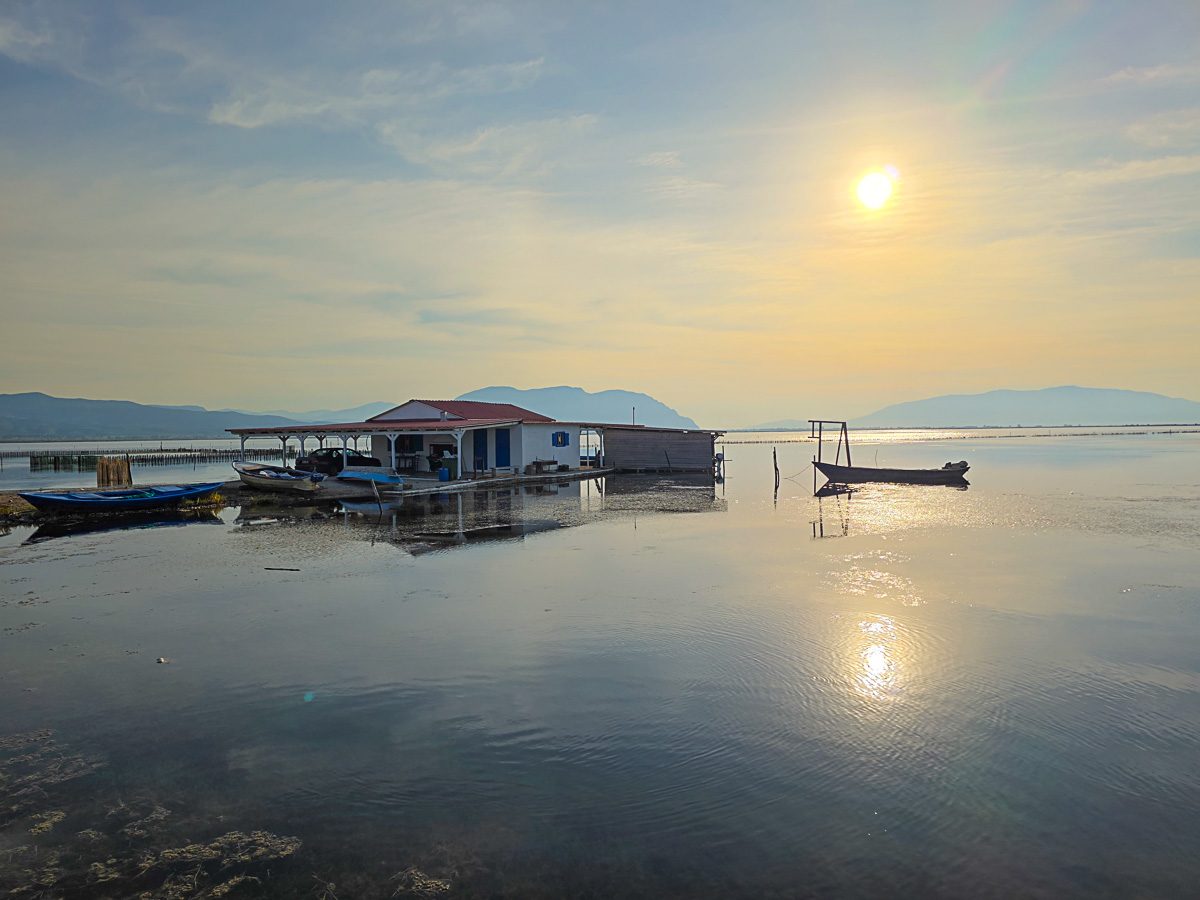
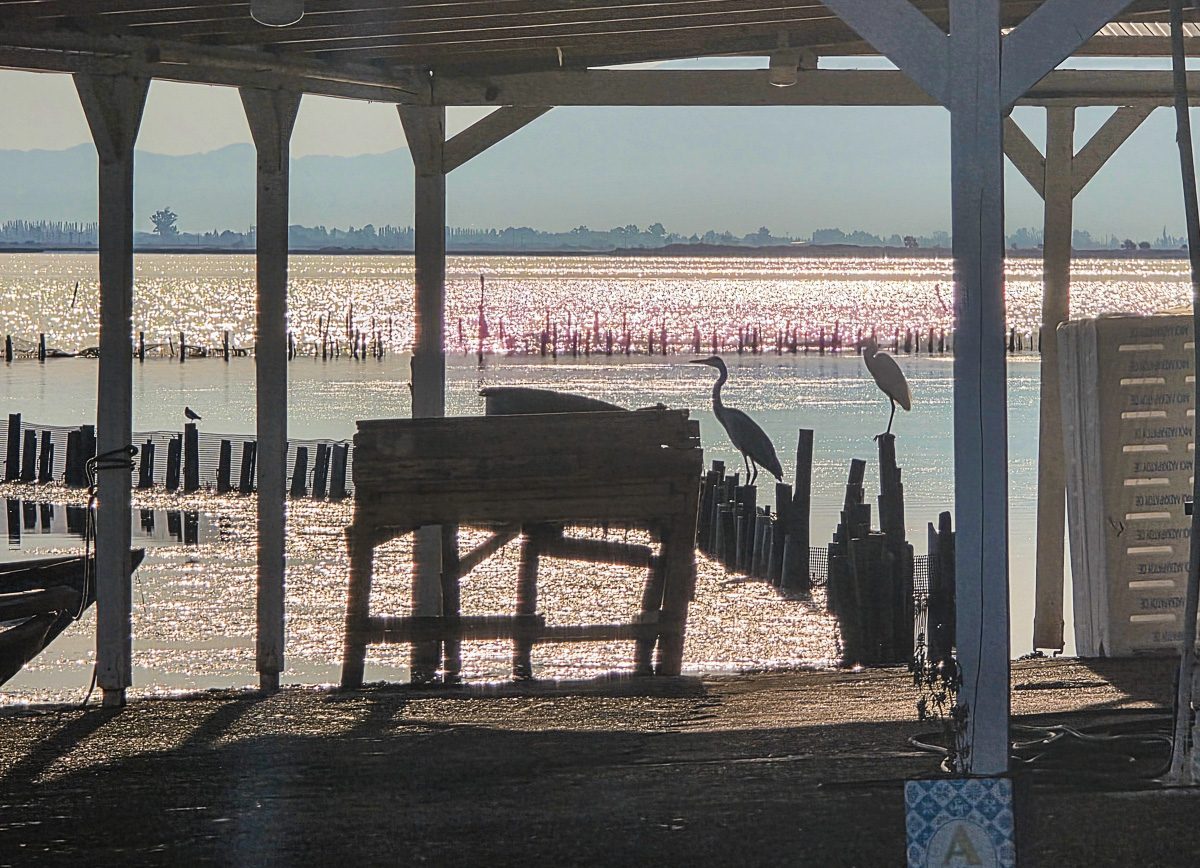
Eventually I pulled myself away and carried on to the meeting point, visible from a fair distance, a traditional wooden pelada jutting out into the water on its own crooked legs. A car was already parked there, but no sign of anyone, only two grey herons standing on the circular posts jutting out of the water, still as the building itself. Until I got too close, that is. Then they dropped off their perch and flew low and unhurried across the lagoon, looking for another vantage point from which to hunt their prey.
A little later, a car arrived and out stepped a man who introduced himself as Andreas. He told me to give him a minute while he filled the boat with fuel, and got on with it without much further ceremony. While that was happening, another car arrived, and a younger man introduced himself as Giorgios. It became clear soon enough who was who. Andreas the fisherman who would be hands-on doing the actual work of captaining the boat, Giorgios the ecologist and guide.
Once we were all aboard, Andreas eased us out through a channel marked by rows of vertical wooden stakes, and the lagoon opened up properly in front of us.
The Boat
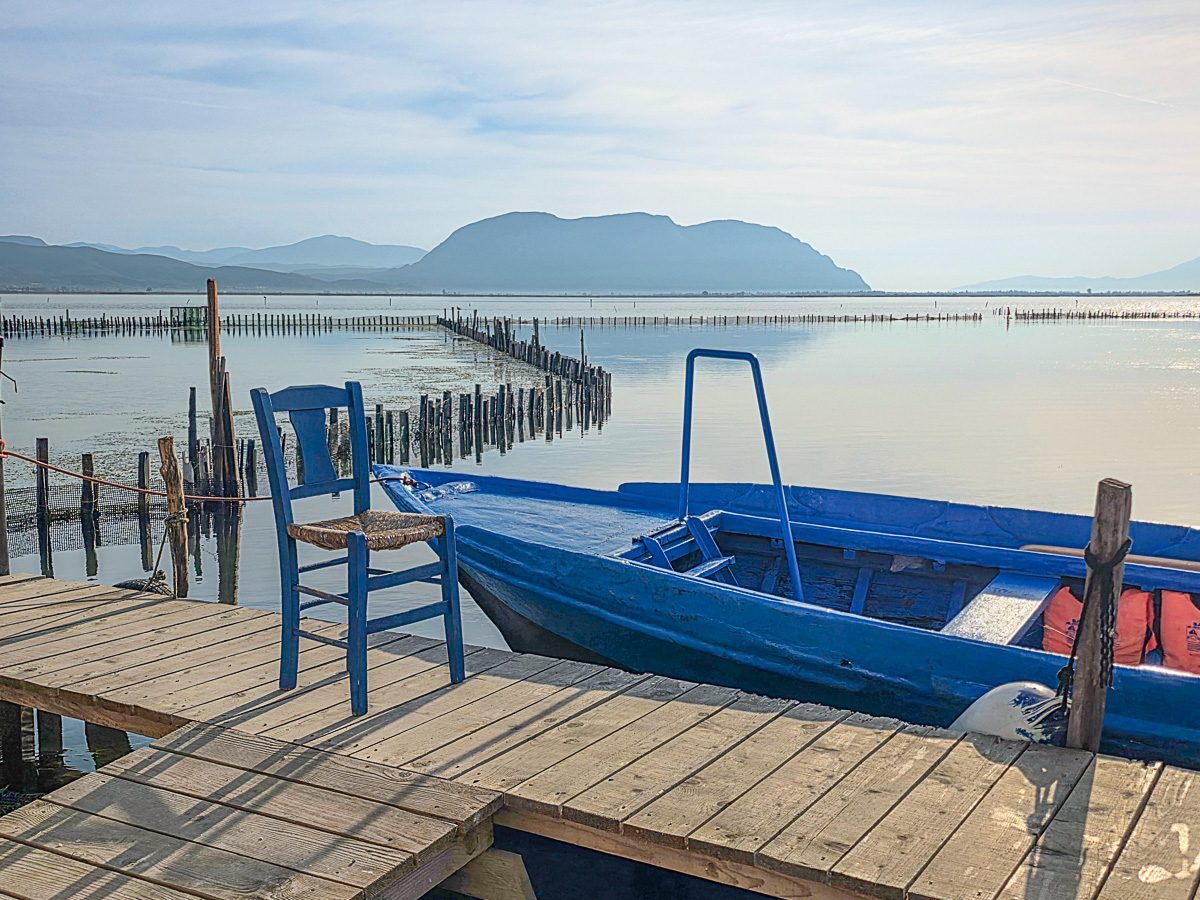
The boat itself is called a gaita, the traditional design for these waters, and it’s built around the fact that this lagoon is barely water at all in places, averaging around 80cm deep, rarely more than two metres anywhere. Flat-bottomed, no keel, and steerable from either end, which matters more than it sounds like it should when there’s no room to turn around in a channel the width of a car. Andreas told me these boats were once pushed along with a pole for short distances, the same principle as a gondola in Venice, though nobody bothers with that now. The outboard motor did the job well enough.
What a Lagoon Actually Is
Giorgios began explaining what I was actually seeing. The Greek word for lagoon is limnothalassa, which translates roughly as sea lake, and that’s a fair description. Sea water that’s been effectively cut off from the open sea, shallow, and because so little water actually exchanges in and out, it swings far more with the seasons than open water ever would, very cold in winter and really warm in summer.
Some of the separation happened naturally, over thousands of years. Some of it by human intervention. A road connecting the city to the island was completed back in 1881, built to solve a straightforward problem – the surrounding water was too shallow for shipping to reach the port of Messolonghi directly. Then, in the 1920s, a canal was cut to open a more direct route from the open sea, which changed the ecology of the whole system again, and the economics of the town along with it.
Giorgios pointed out a narrow causeway where a handful of people were standing half naked covered in lagoon mud. The mud here has a local reputation for healing, particularly for arthritis and aching joints, black, sulphur-rich, built up over years where lagoon sediment meets the salty water and decomposing seaweed. It’s not just folklore either. A clinical study some years back found real benefit for osteoarthritis symptoms from mud like this. Here this is a common sight where you’ll find people doing exactly this, spread out along the shore, coated head to toe, waiting for the sun to do the rest.
The Fish Traps
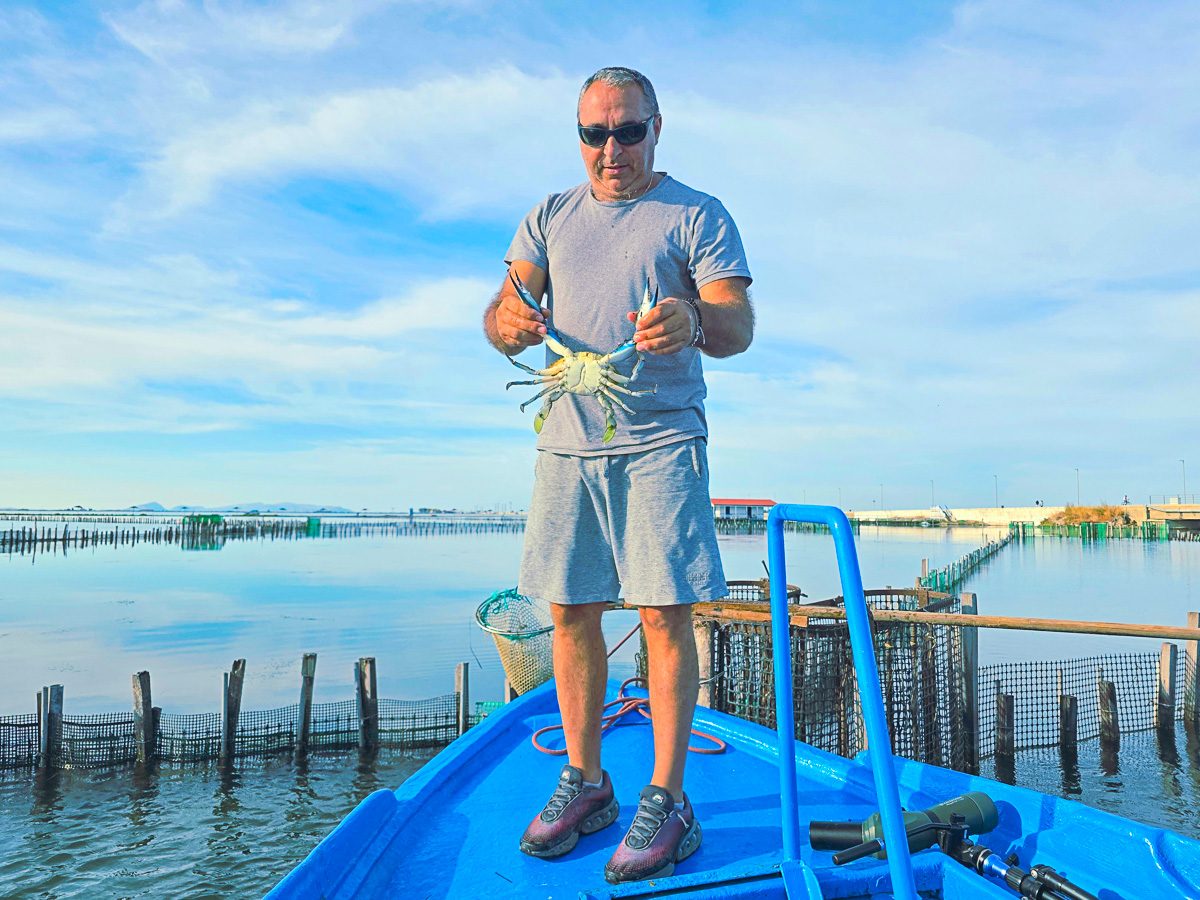
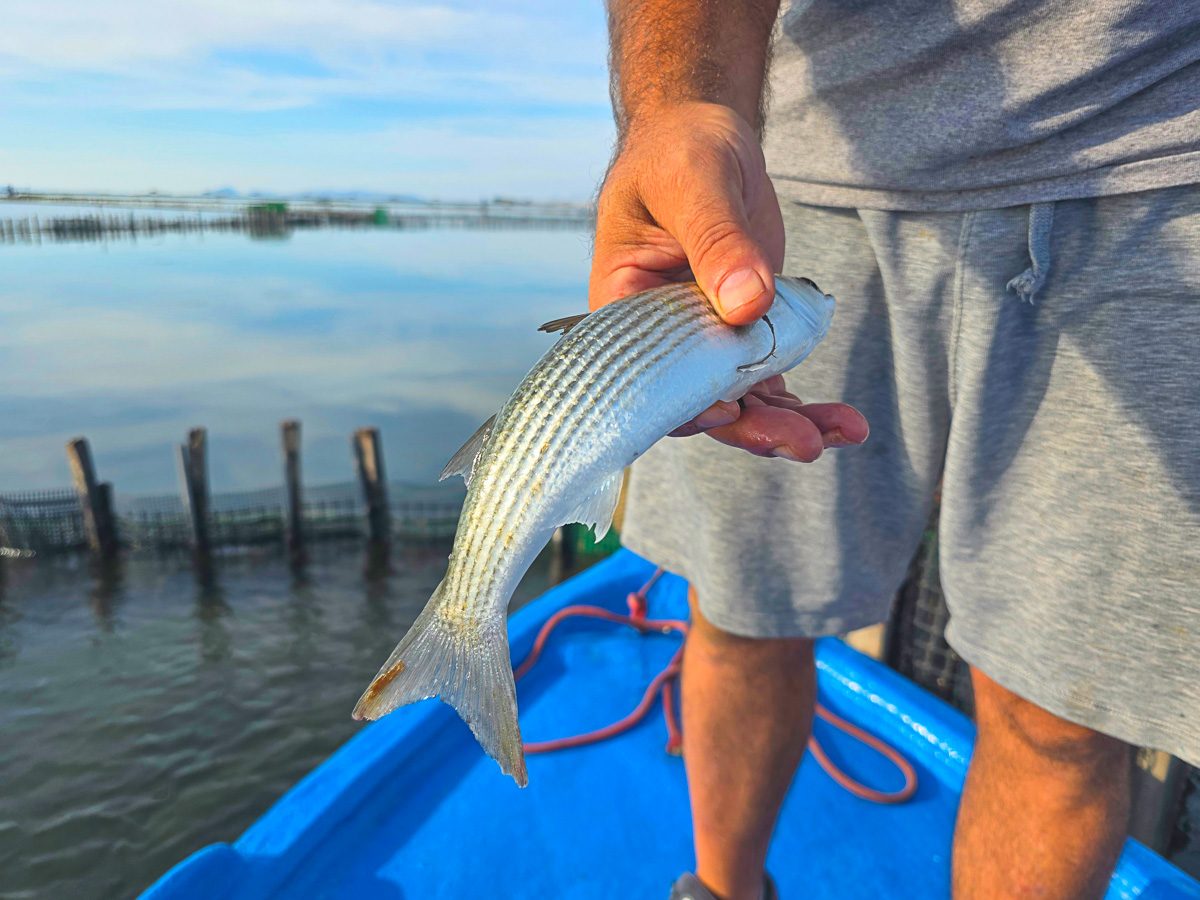
We passed several vivari as we went, fixed traps built as fences and low dams across the narrow connections between lagoon and sea. Fish, Giorgios explained, can’t regulate their own body temperature, so unlike us they don’t choose where to be, the water does it for them. They move into the lagoon in winter, when it holds onto warmth better than the open sea, and leave again through the rest of the year, back out to colder water, back out to spawn. The traps are left open from February through June to let them in freely. Then they close, and whatever’s inside stays inside, funnelled eventually through narrow corridor channels straight into waiting nets. Checked twice a day, Andreas told me, whatever the weather’s doing, and whilst we were there – check he did. Pulled from the trap were several small grey mullet along with a few unwanted guests – the blue crab.
Giorgios explained that the crab isn’t native at all, but an Atlantic species, Callinectes sapidus, that first reached the Mediterranean in the late 1940s, almost certainly hitching a ride in a ship’s ballast water. It’s since spread along nearly the whole Ionian coast, this lagoon included, with no natural predator here to keep its numbers in check.
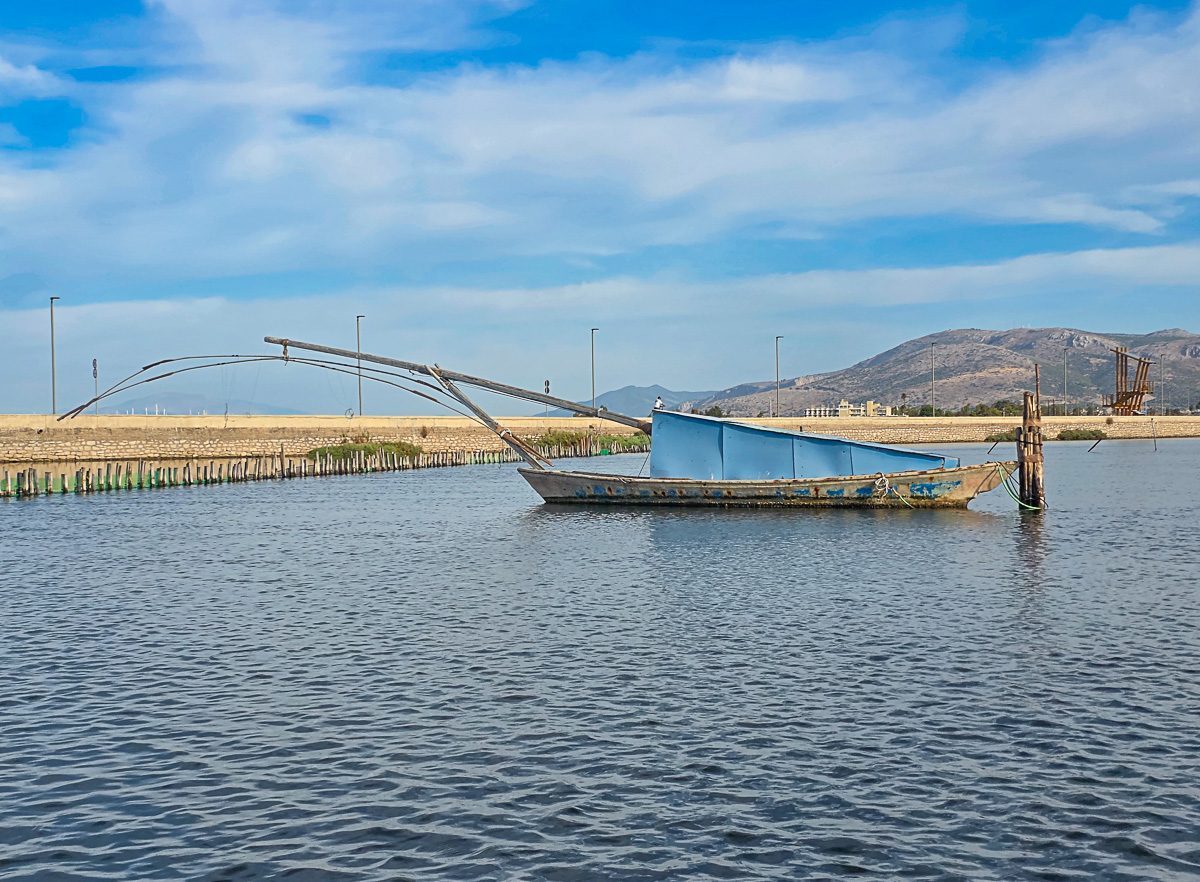
As we continued gliding through the water Andreas pointed out a boat rigged with long, curved wooden poles arching out over the water, a priari, the traditional design used for a fishing method called stafnokari. A net hangs from a small wooden crane fixed to the edge of the boat, dropped and hauled to catch large quantities of fish at once, a technique documented here as far back as 1500 AD. It’s not really used in this part of the lagoon any more, Giorgios told me, as the boat is physically hard to manoeuvre and takes real skill to work properly. It’s still practised occasionally in Aitoliko, further along the coast. The method has since been listed as part of Greece’s intangible cultural heritage, one small acknowledgement of something that’s slowly fading, only a single shipyard left still building the gaites and priaria the whole tradition depends on.
Deeper Into the Lagoon
The whole system is bigger than it looks from any single point on land. Kleisova, Aitoliko, a central lagoon, Paleopotamos, all connected, all part of one continuous body of shallow water rather than separate lagoons that happen to sit near each other. The Evinos River shapes the eastern edge of it, the Acheloos the western, and both have spent thousands of years building up sand, clay and gravel barriers that hold the whole arrangement together and keep the open sea out. Geologically speaking, none of this is old, around 10,000 years for the system as it stands now, which sounds like a long time until you learn the process is still visibly happening in places, land still forming, still shifting, well within living memory for some of the older fishermen working here.
Giorgios told me the story locals still tell to explain it. Acheloos, the river god himself, wanted to marry a woman from this area, and it brought him into conflict with Hercules. Out of that fight came a broken horn, one said to carry magic tied to fertility and abundance. It’s an old way of accounting for something that was, underneath the myth, a real and observable environmental process, land appearing where there was water, water reclaiming land, nothing here ever quite permanent.
Wildlife
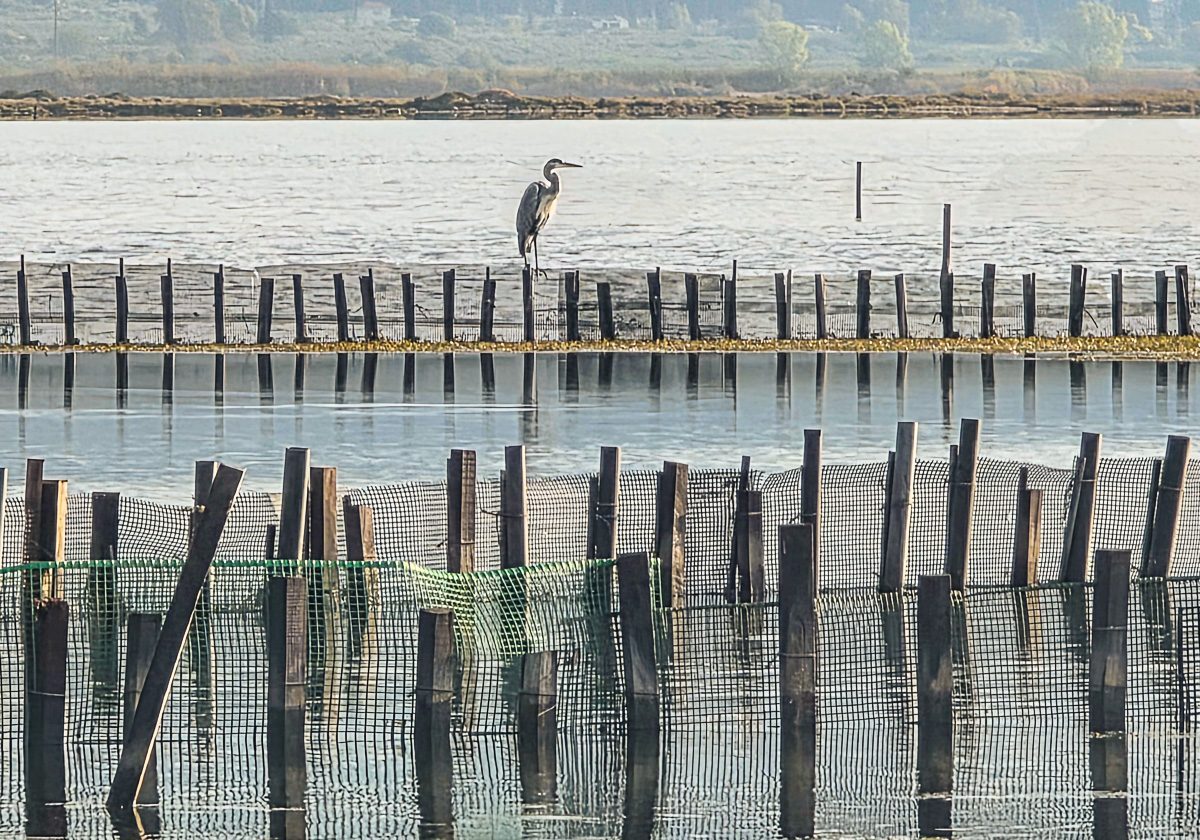
Around 280 bird species use the wider national park across the year, something like 60 of them endangered, and the wetlands act as a stopover for birds moving vast distances between continents, a service station rather than a destination for most of them. We watched herons standing dead still in the shallows, waiting on something only they could see, cormorants drying their wings out on the poles of an old pelada, and, further out, something large circling once, high enough that nobody aboard could confidently identify it, a raptor of some kind, big enough that its shadow crossed the water before the bird itself did.
Kleisova Island
As we drew closer to the small island of Kleisova, the conversation shifted from ecology into history, and the story that I didn’t expect.
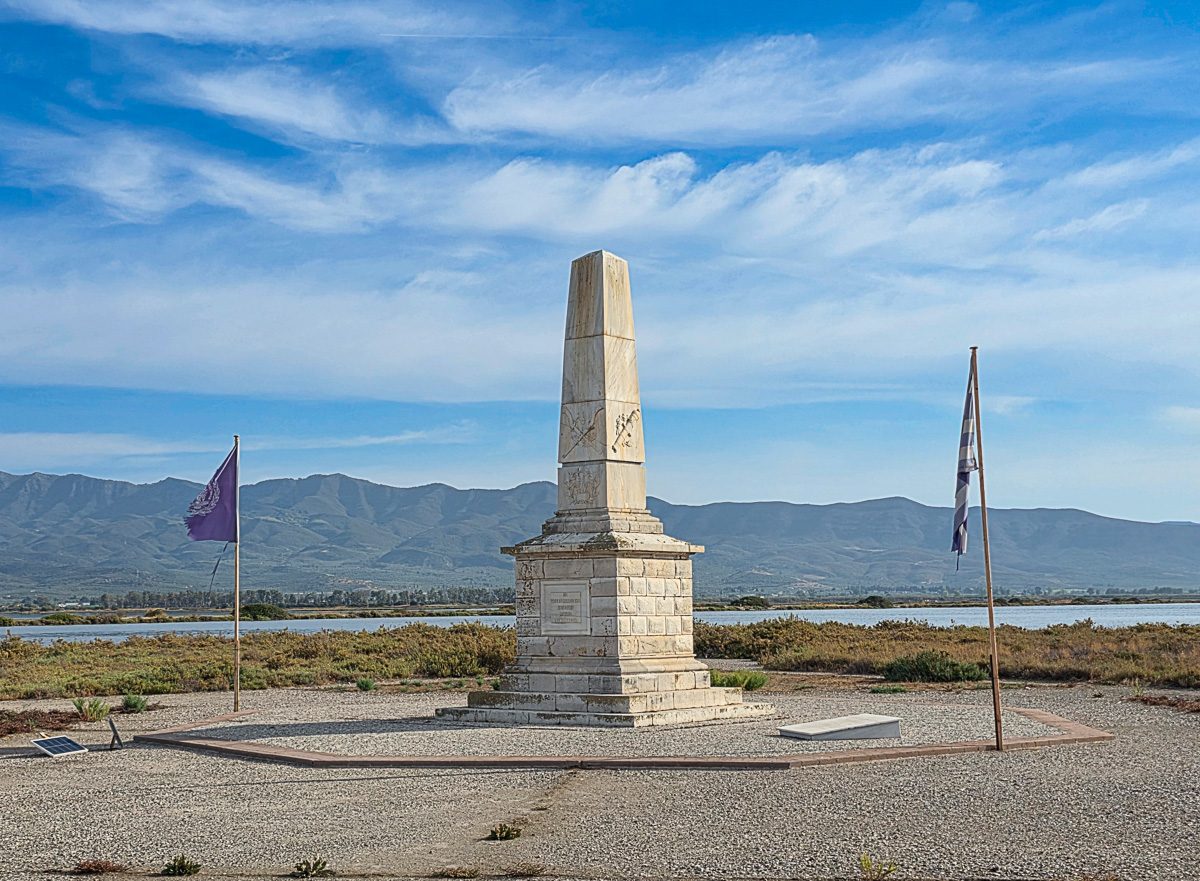
This lagoon was of significant importance during the Greek War of Independence, because it offered a route towards the Peloponnese that the Ottomans badly wanted closed. Messolonghi had already withstood two earlier sieges before the Ottomans returned in force in 1825, determined this time to starve the city out rather than storm it, cutting off its access to the lagoon entirely.
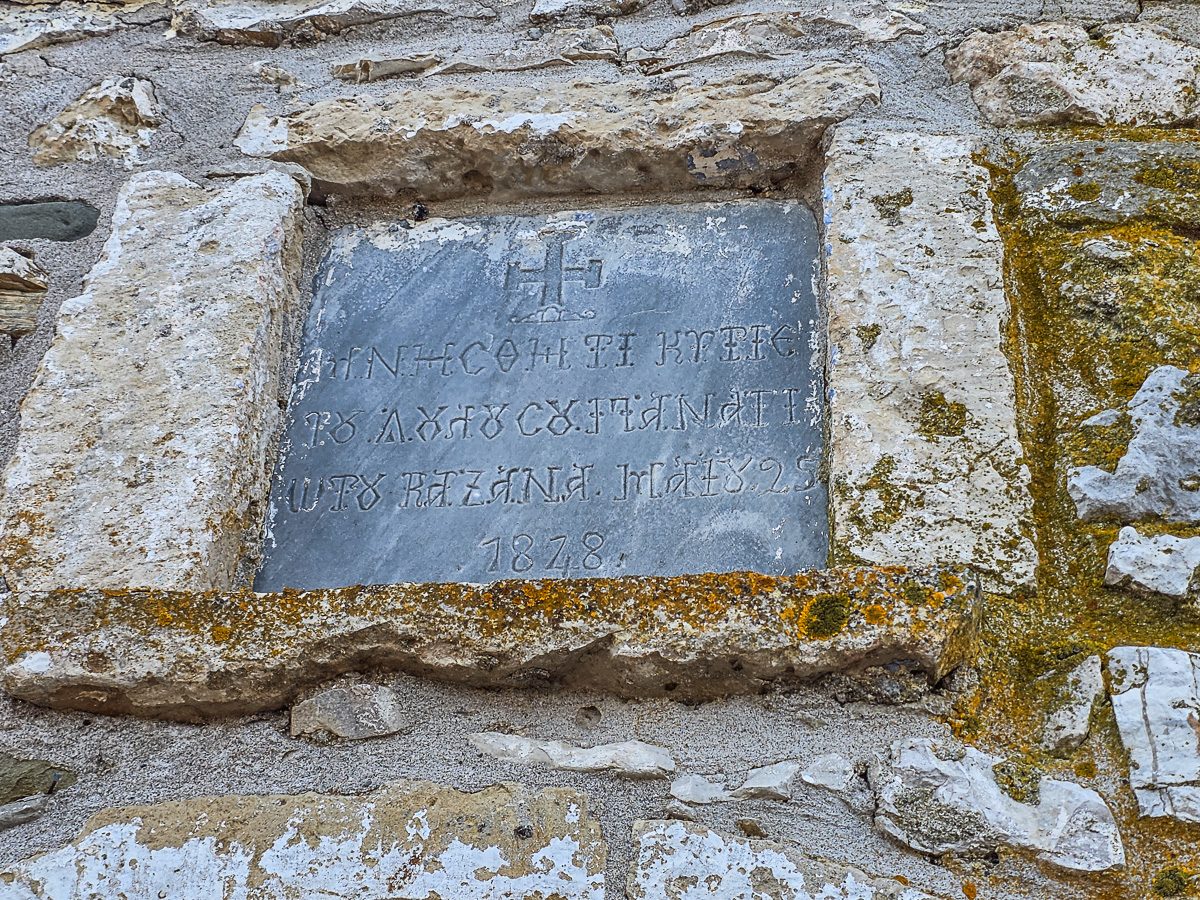
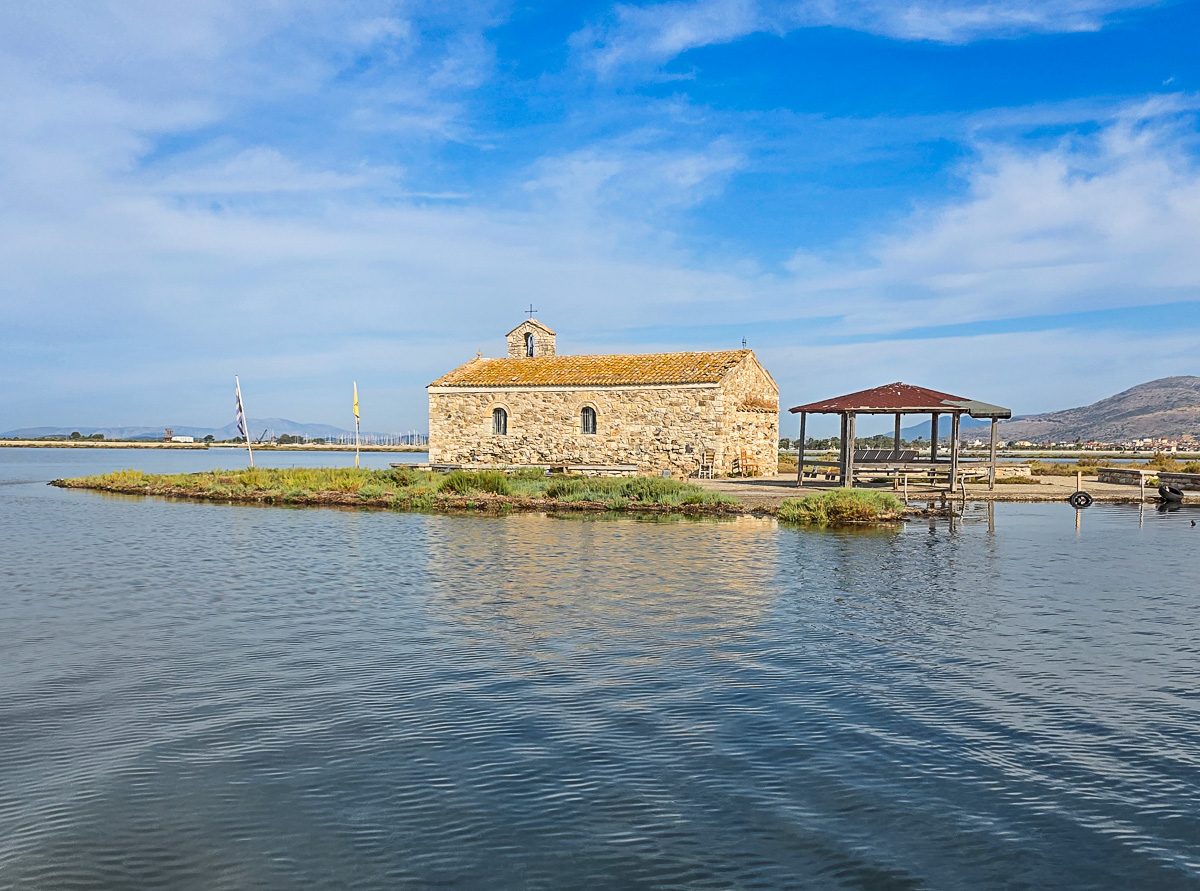
On the 25th of March 1826, the fighting reached Kleisova itself. Around 130 Greek defenders held the islet against an Ottoman force numbering in the thousands, and, against every expectation, they won, an unlikely victory inside a siege that was otherwise grinding the city down day by day. It changed nothing in the end. The siege dragged on for months longer, food ran out completely and by April the defenders made a desperate attempt to break out at night in columns, the Exodus of Messolonghi, betrayed before it had properly begun. Thousands were killed. Barely a thousand made it through. Some chose to take their own lives rather than be captured. That’s some story for such a tiny island.
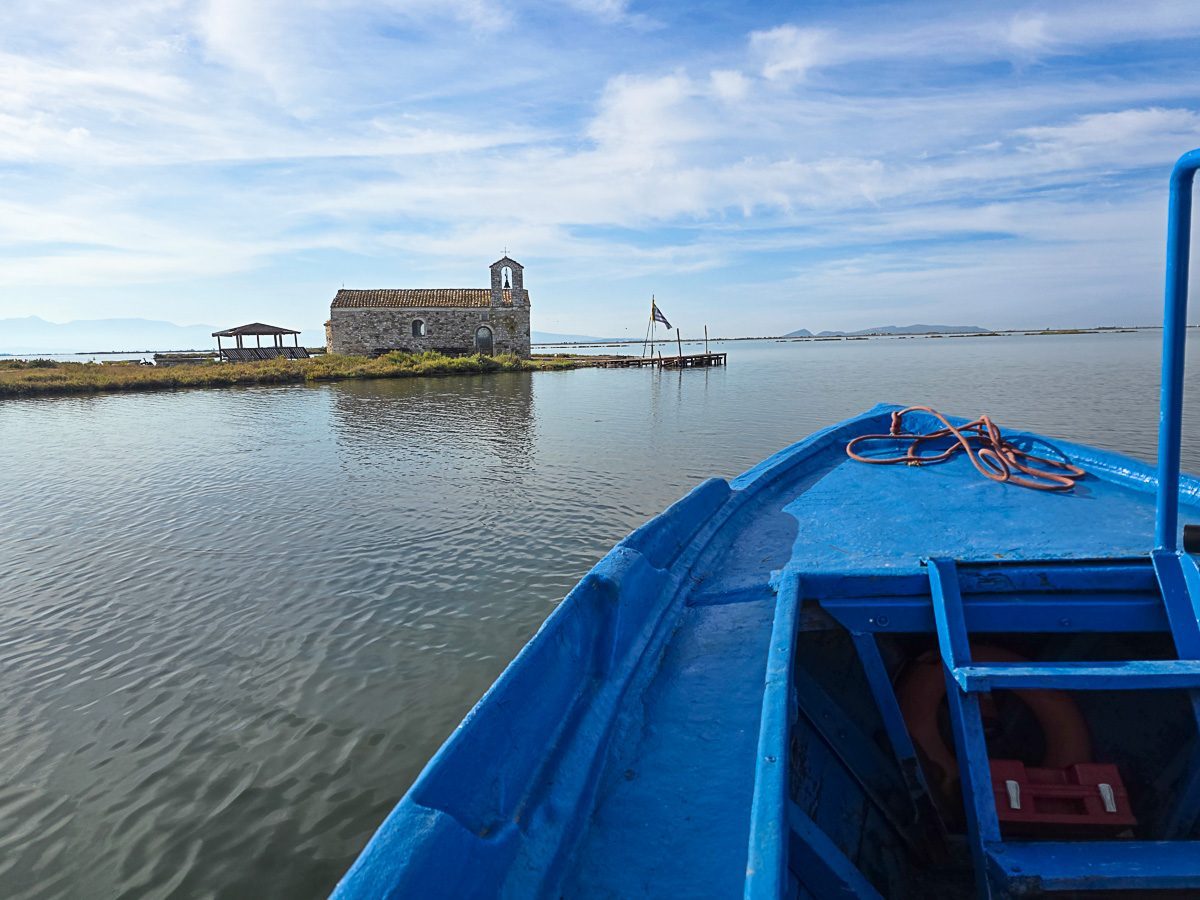
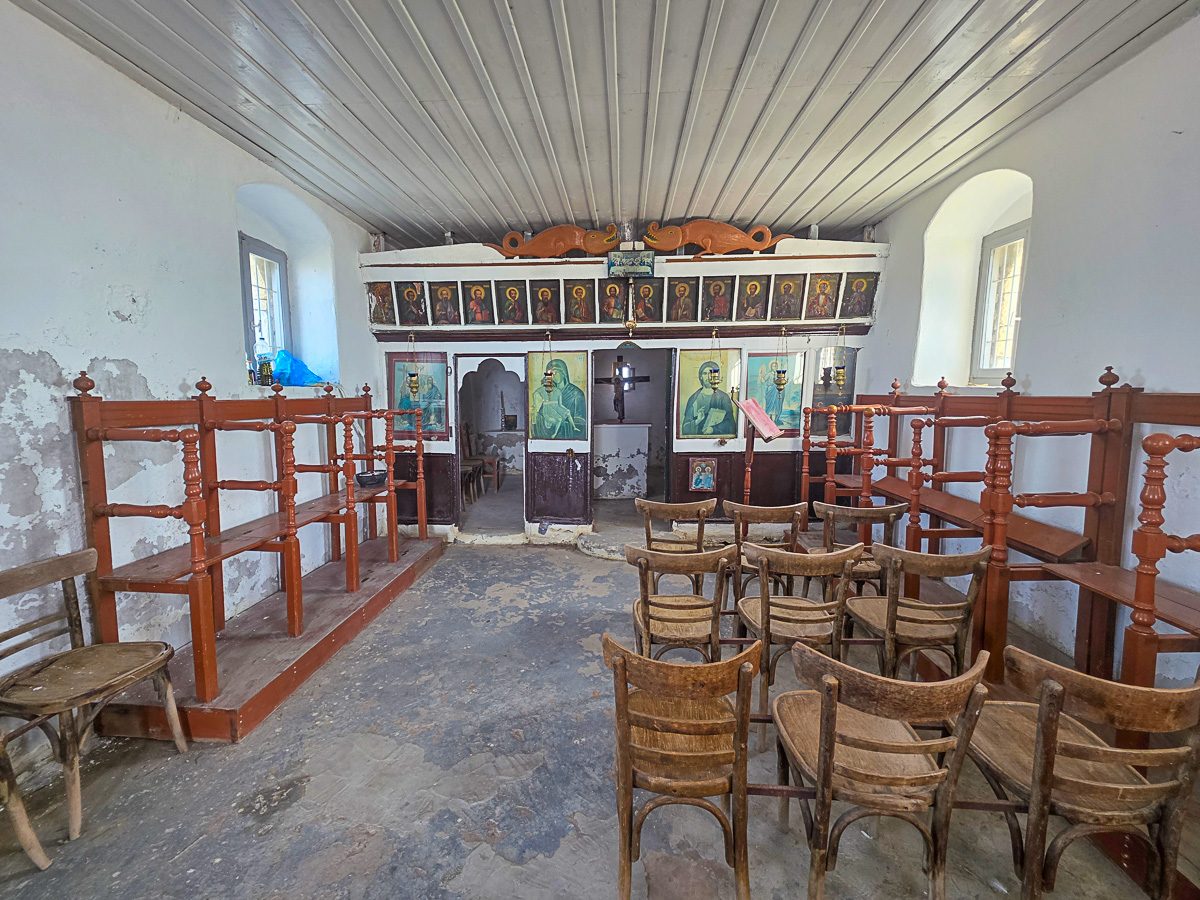
We disembarked on the island and whilst Giorgios set up the spotting scope and the binoculars, Andreas opened the church for me. There are religious services held twice a year at the small Agia Triada Church in remembrance, and a full battle reenactment staged every March on the islet itself. This year to mark the two hundredth anniversary of the Exodus, a much larger programme took place.
Before we left the island, Giorgios showed me a group of nesting pelicans sitting on their large circular structure, far enough away from humans but only picked up by the spotting scope.
Salt, From the Water
Further round, the salt pans came back into view, from a completely different angle from the one I’d had walking the road to the museum a few days earlier. Giorgios walked me through the process again from the water. Seawater is channelled into the pans from March, left to evaporate slowly across spring and summer, harvested in September once it’s fully crystallised. Two products come from all of that patience, ordinary table salt, and afrina, the finest grade, essentially fleur de sel, skimmed off only by hand before the rest has had time to fully dry, valued for its texture and crunch rather than the volume you get from it.
I told Giorgios that I’d bought some Afrina from the museum the day before. He asked me to describe the packet of salt that I’d bought and from that worked out it had been made by his own family. I wish I’d asked him more questions about this but before I knew it we’d moved onto the final stage of the tour.
Whose Lagoon Is It, Anyway
Back to Andreas for this part, since it’s his working life rather than Giorgios’s field of study. The lagoon itself belongs to the Greek state, but the right to actually fish it goes to cooperatives, who bid for ten-year contracts at auction when they come up. Once a cooperative wins one, the work never really stops, guarding the fisheries around the clock, repairing whatever damage storms and tides do to the traps and the structures. None of the cooperatives own any of the water itself. What they own is the right to work it, and they pay the state accordingly for that privilege, year in, year out.
At this point we’d almost arrived back at the pelada where we’d begun. Andreas guided us back through the narrow channel with ease, bringing this unique experience to a close.
An hour on a flat-bottomed boat with a fisherman and an ecologist told me more about this lagoon, its water, its birds, its history, its salt, than a week of reading about it beforehand could ever have done. Worth every unanswered phone call it took to get there.

Book your lagoon trip with Messolonghi by Locals here:
Alternatively visit their hub in central Messolonghi
El. Venizelou & Kostas Katsis, Messolonghi
0030 2631 302 048
0030 6940 742 001
Discover more from
Subscribe to get the latest posts sent to your email.
MY BIG FAT GREEK TRAVEL SURVEY
How do you really plan your Greek adventures? I'd love to hear from you.
TAKE THE SURVEY →