
Aitoliko: Slow Ambles Round Crumbling Houses, Lagoon Walks and Interrupting a Taverna Lock-in
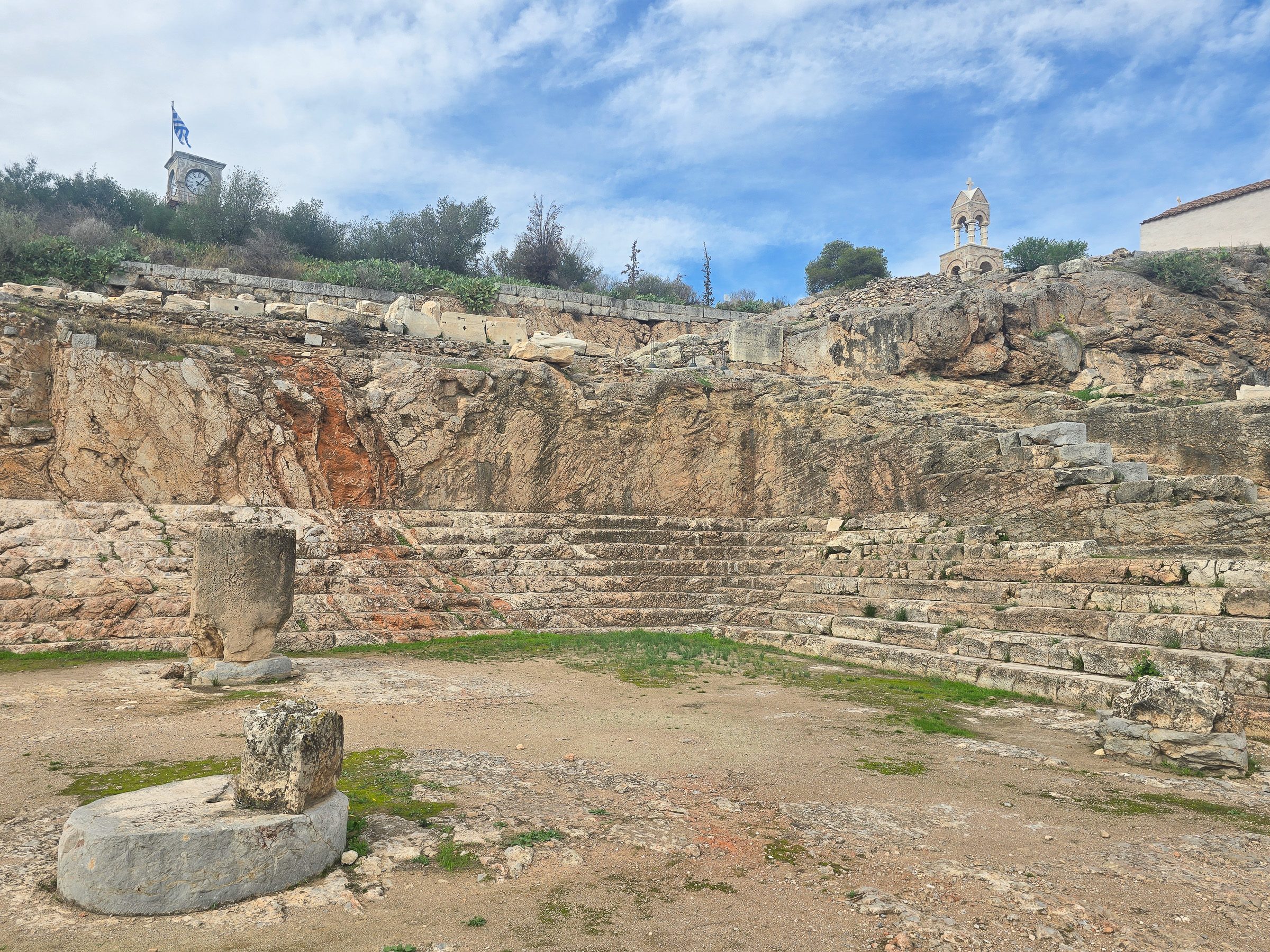
I don’t know what I expected from such a tiny island that takes thirty minutes to circumnavigate and just five minutes to walk from east to west, but Aitoliko has plenty of facilities for its residents, including an open-air theatre which, judging from the posters on the railings, has a thriving amateur dramatic group that hosts theatrical events throughout the summer.
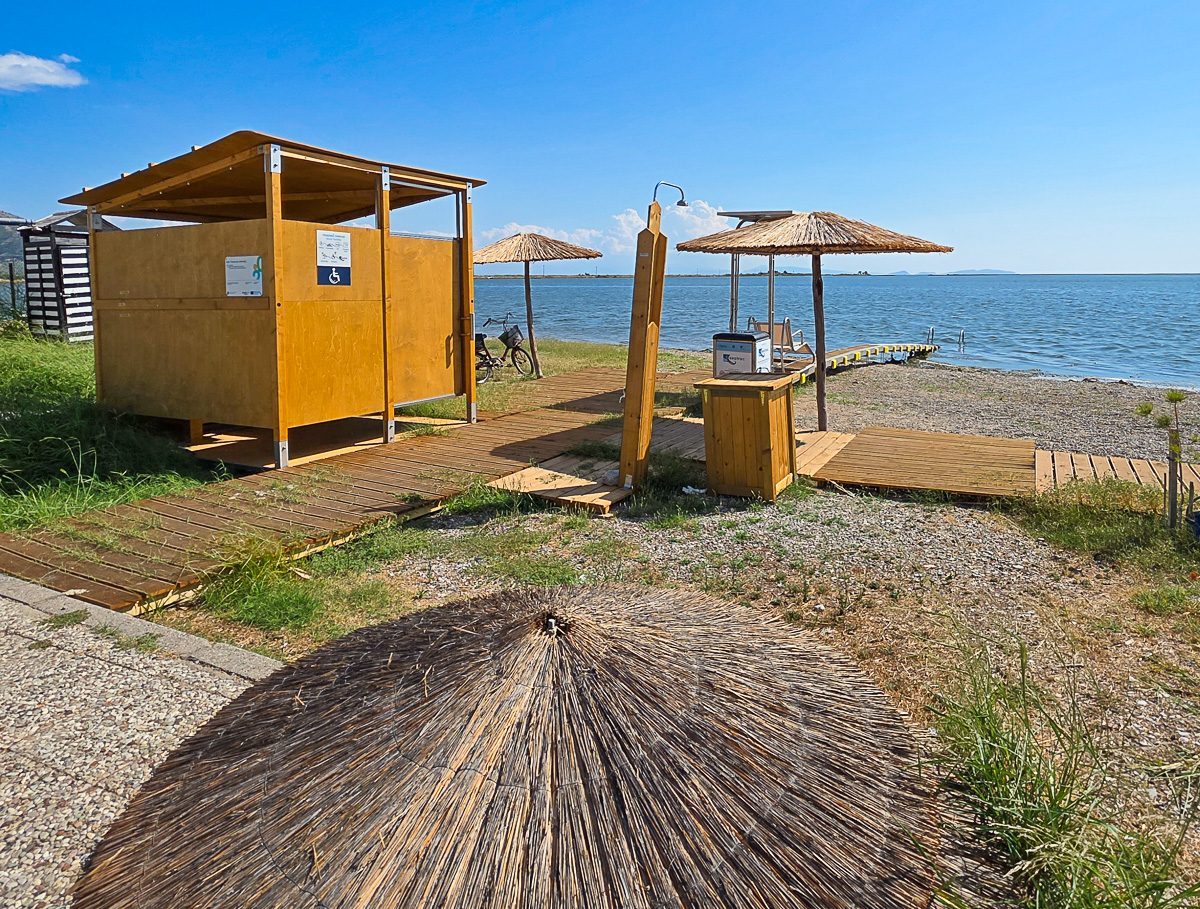
There is a small beach of sorts, tiny but also boasting a Seatrac facility. It isn’t a beach that would make me want to linger too long but so far the region of Aitoloakarnanias has demonstrated more Seatracs than I’ve seen anywhere, and that deserves some credit.
In a way, Aitoliko feels like an island of two halves. Where the bridges and the main street cut the island in half, the southern part feels more regimented, maybe slightly more modern. However, take a turn towards the back of the Church of Taxiarches, across the plateia and past a second church, and it all becomes a bit more higgledy-piggledy and architecturally fascinating.
The Church of the Panagia is worth a pause in its own right. It stands beside what was once the town hall, now only in name since local government moved to Messolonghi. Inside, a marble inscription marks the exact spot where Georgios Karaiskakis was put on trial for treason in 1824, the trial I’d already touched on. The church also holds one of the oldest gold-embroidered epitaphioi in existence, one of only five examples of its kind left anywhere in the world.

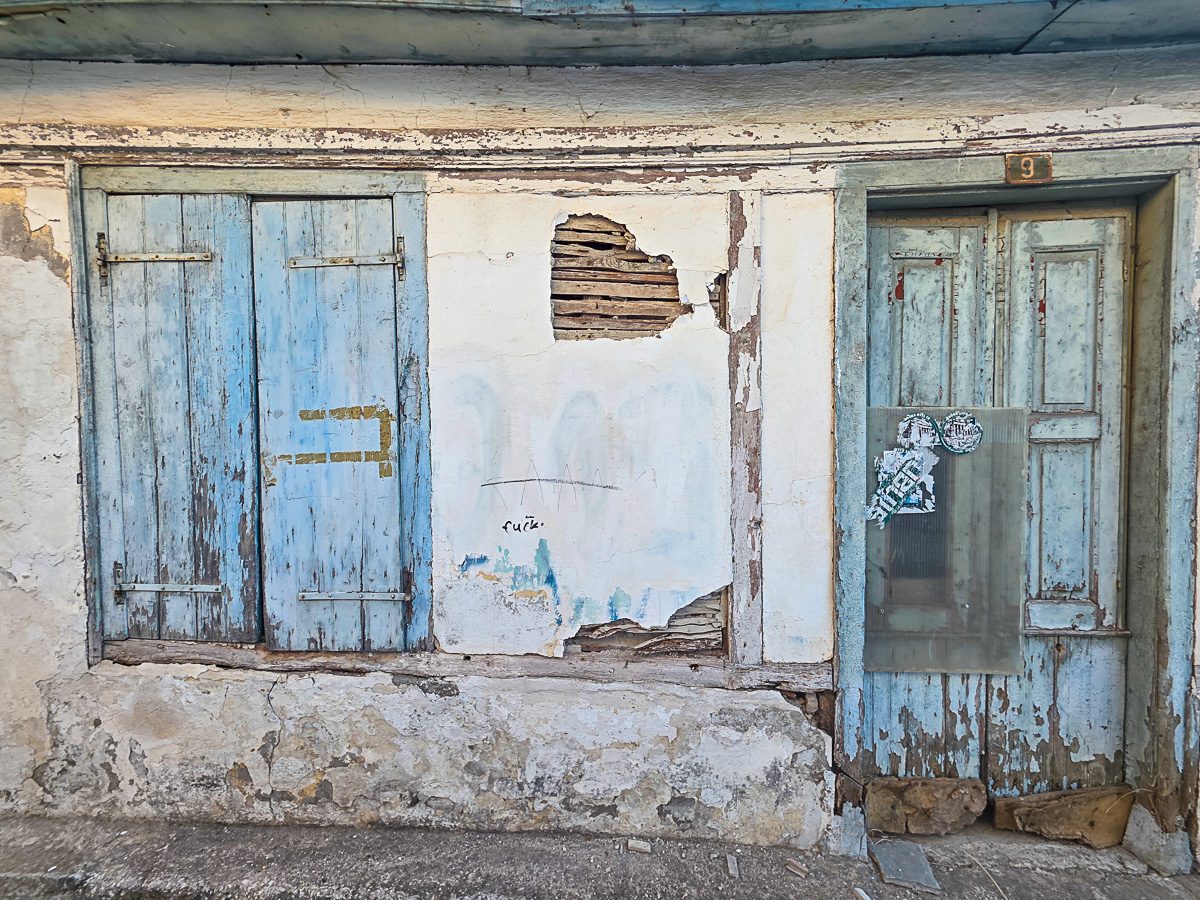
Most readers of the blog will know that I have an absolute fascination with architecture and there’s nothing I like better than to wander around the back alleys looking for a grand old door with peeling layers or an unusual door knocker and a bit of decay thrown in for good measure. Where this odd fascination comes from, I’ve no idea. Give me an hour ambling through quaint old neighbours over a Margarita in a beach bar any day. Aitoliko didn’t disappoint.
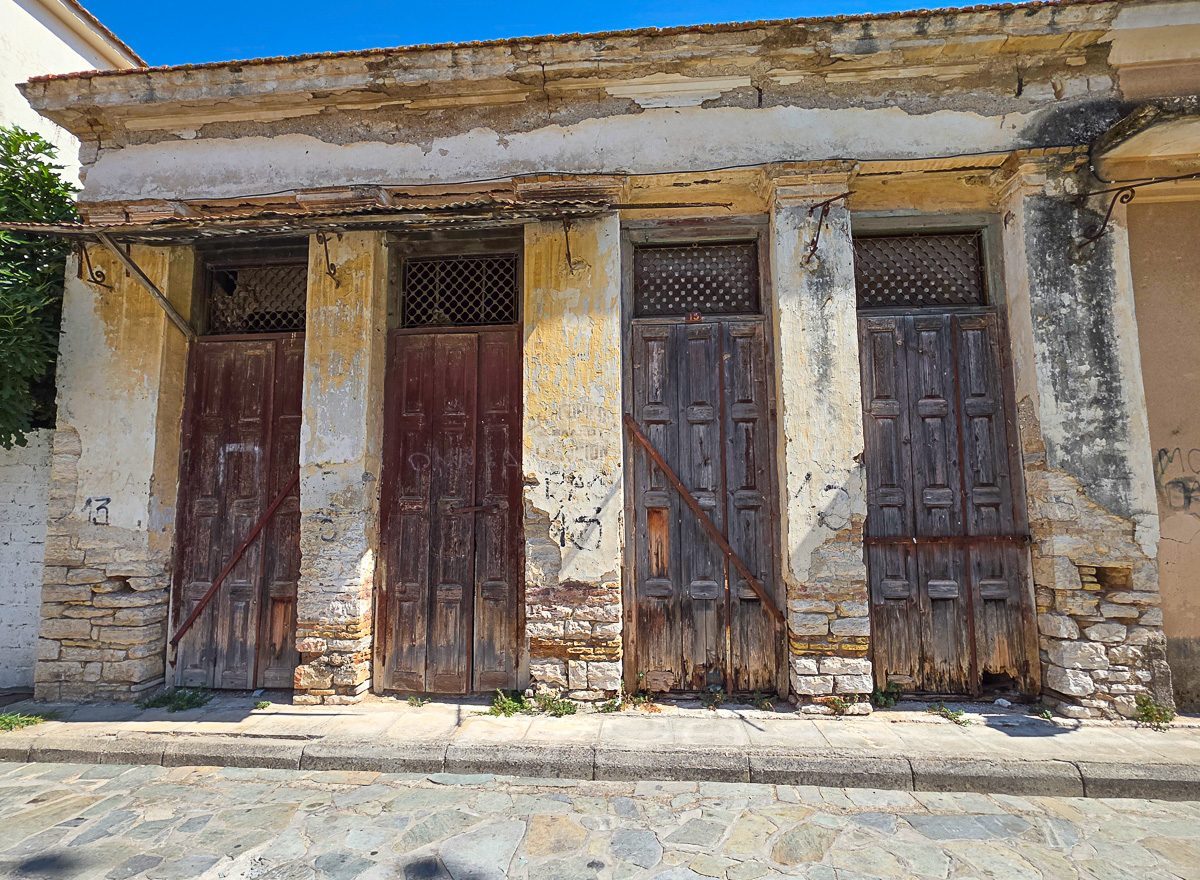
This type of building below, can be seen in many towns, but the thing they all have in common is that these were usually trading towns or ports. A row of old shopfronts or storerooms known as apothikes, built as a single terrace with shared columns supporting an upper floor, typically from the eighteenth or nineteenth century when a town’s merchant class was expanding. Each wide wooden door would originally have opened onto a single shop, workshop, or storage unit, often family-run, dealing in whatever the town traded, textiles, grain, oil, or general goods, with barred or lattice windows above the doors to ventilate the storage space.
Aitoliko and Messolonghi, both once important trading ports in the nineteenth century, would have had plenty of buildings exactly like this one.
There was just the right amount of tumbledown and dilapidation to give Aitoliko a sense of charm rather than neglect. I spent a good while poking my nose through broken shutters and collapsed doors, peering in at past lives frozen mid-interruption. Furniture still arranged as if someone might come back for it, buried under years of dust and fallen plaster, a staircase leading up into nothing but a collapsed roof opening the house up to the sky.
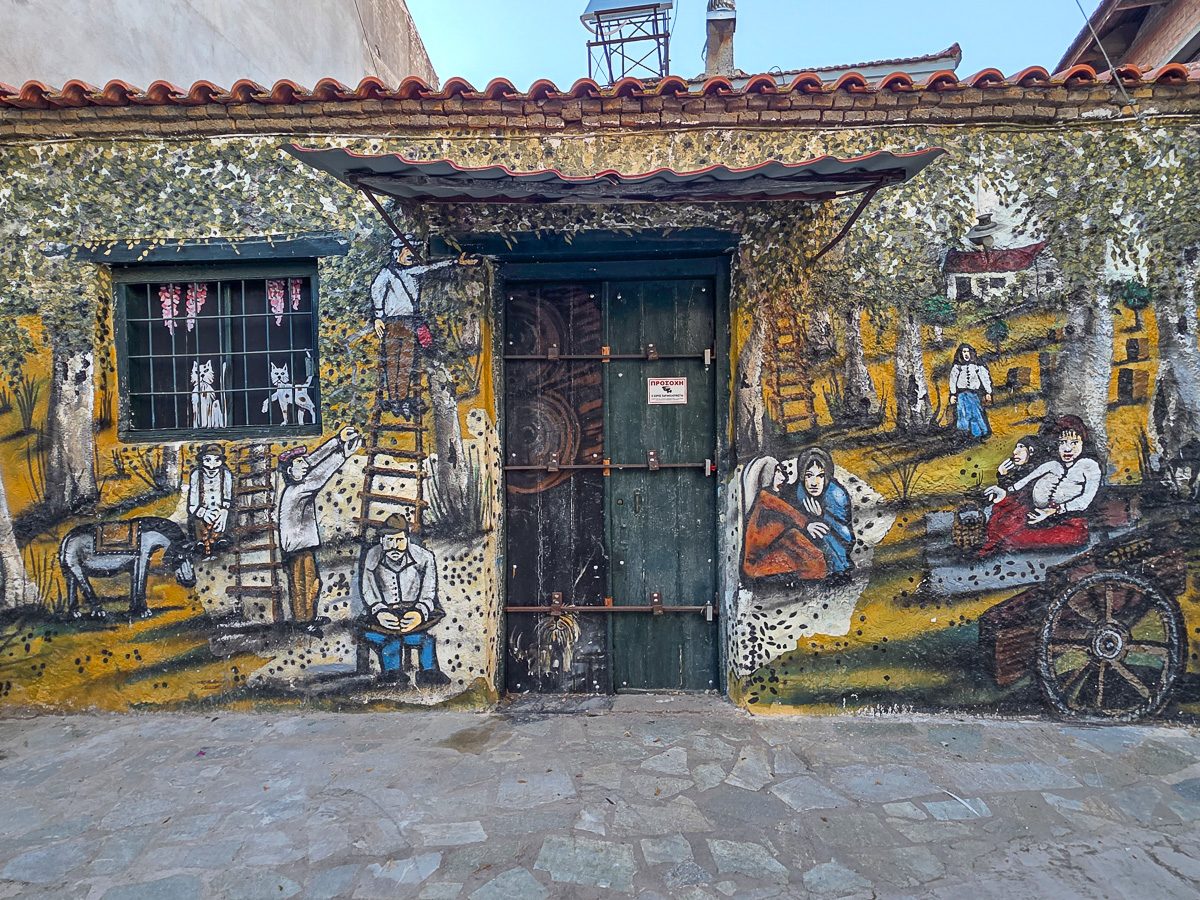
Deep in the heart of these winding alleyways were several striking murals painted onto the exterior of some houses. One told the story of a rural scene, complete with cats peering out of a window. Another wall portrayed a dark silhouette of a stilt house against an orange background. Further along, a painting of a bougainvillaea spilling out of a large clay pot next to its identical real self. Iron balconies with nothing left but their naked skeletons standing directly opposite a doorway barely holding itself together and shuttered windows held together by a wing and a prayer. This is me in my element. Weird?






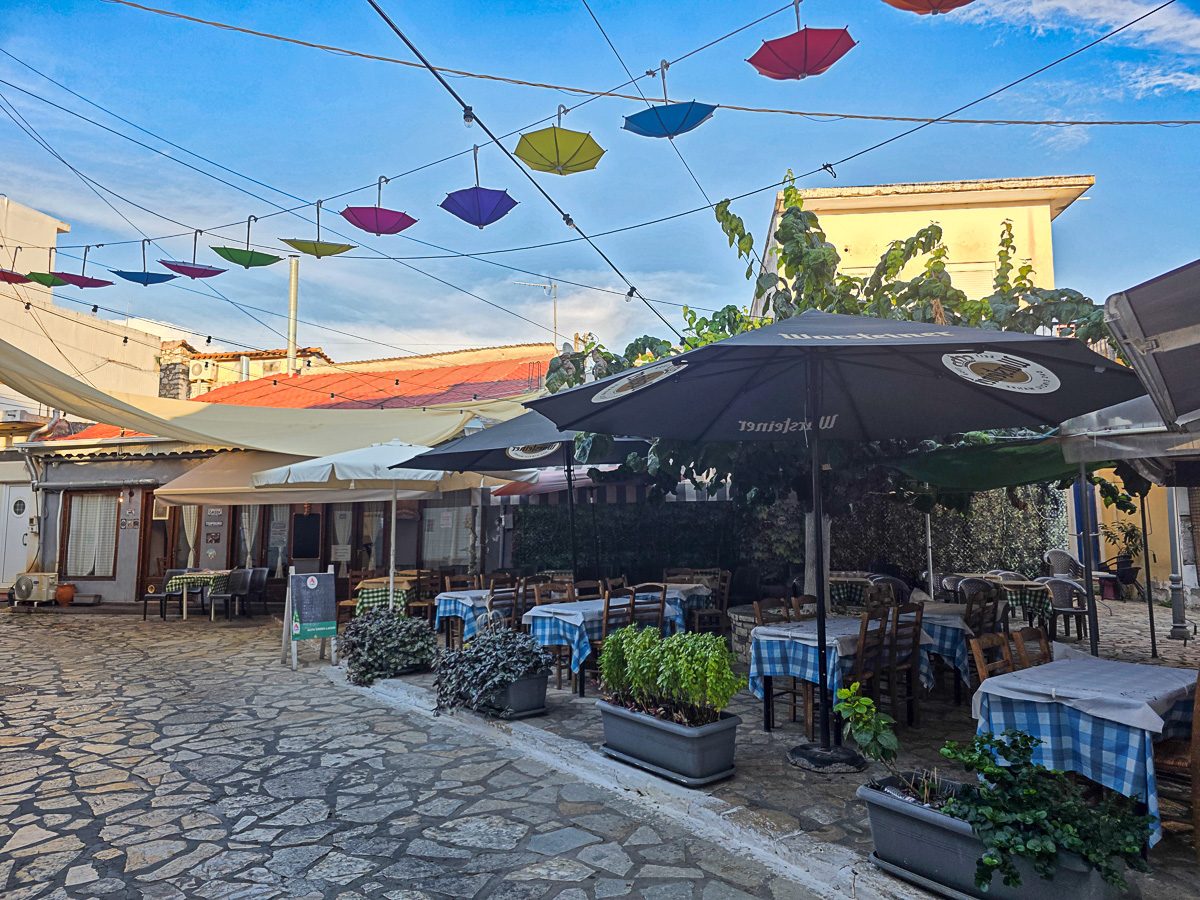
After taking every twist and turn in the alleyways, I spotted a nice little taverna and set my sights on it for dinner. Although I couldn’t see anyone around, I could hear lively music playing inside. I strolled up and down outside a couple of times before biting the bullet to walk through the door. As it swung open, I felt like I’d just intruded on a secret gathering. The room was dimly lit, a group of about nine men sat in a loose type of circle, and the smell of alcohol hung heavily in the air. Heads turned, and at that point I felt like a police officer who’d come to close down a speakeasy. I had inadvertently walked in on what, where I come from, we’d call a lock-in.”
“Are you open for food?” I asked whilst slowly backing out of the door. “Yes, yes” said a man from behind a counter. I took a seat outside and waited. There was a tumbleweed thing for a while, but eventually the man came out and presented me with a menu, which I perused after ordering an ouzo.
One by one, the men began to leave. The first, a small wiry man, clearly a fisherman, with skin as dark as night and a weather-beaten look, wove his way unsteadily between the tables. A ginger tom that was doing nothing except minding its own business caught his eye. He bent to touch it, but the cat moved swiftly out of reach. The man followed it between the table legs, bending to stroke it whilst calling it gently. Again the cat dodged his every attempt. Eventually he called the cat a ‘Malaka’ and went on his way, gently swaying as if he had been standing in his boat being rocked side to side by the waves of the lagoon.
Others left soon after. One man attempted to mount his bicycle but then gave up trying to cock his leg over the seat and wheeled it down the alleyway instead.
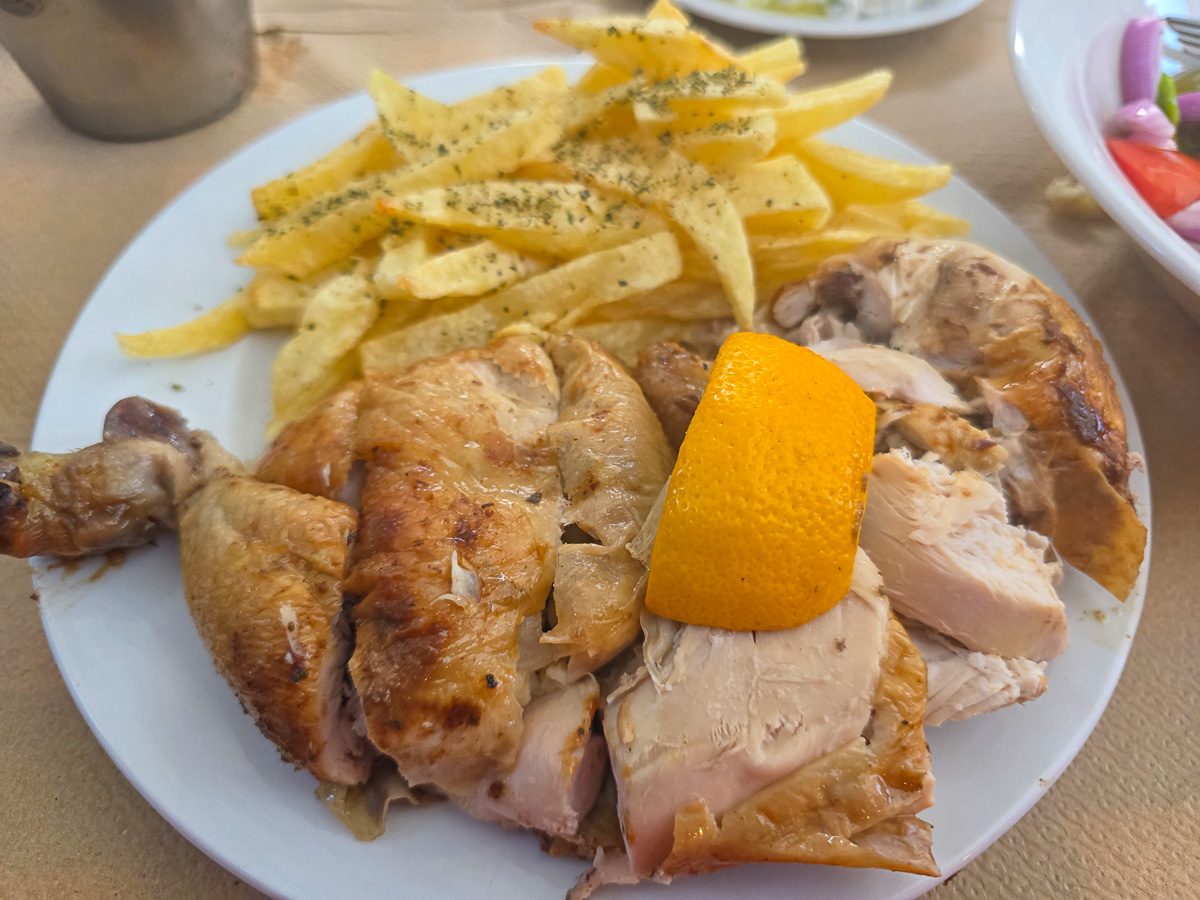
Then my food arrived. Tomato salad, tzatziki and Kotopoulo souvlas – spit-roasted chicken. However, I didn’t expect it to be a whole half chicken (if you see what I mean). It was juicy and succulent and very good value at 12€. In fact the whole meal with the ouzo came to 22€ including tip. To Koutouki Taverna not only provided good food, it also gave me some unexpected entertainment.


One morning I decided to head over the western bridge to walk along the other side of the lagoon. A thunderstorm was forecast later that day and I could sense its approach in the air. Hopefully it would clear some of the humidity that’s been ever-present for the last couple of weeks.
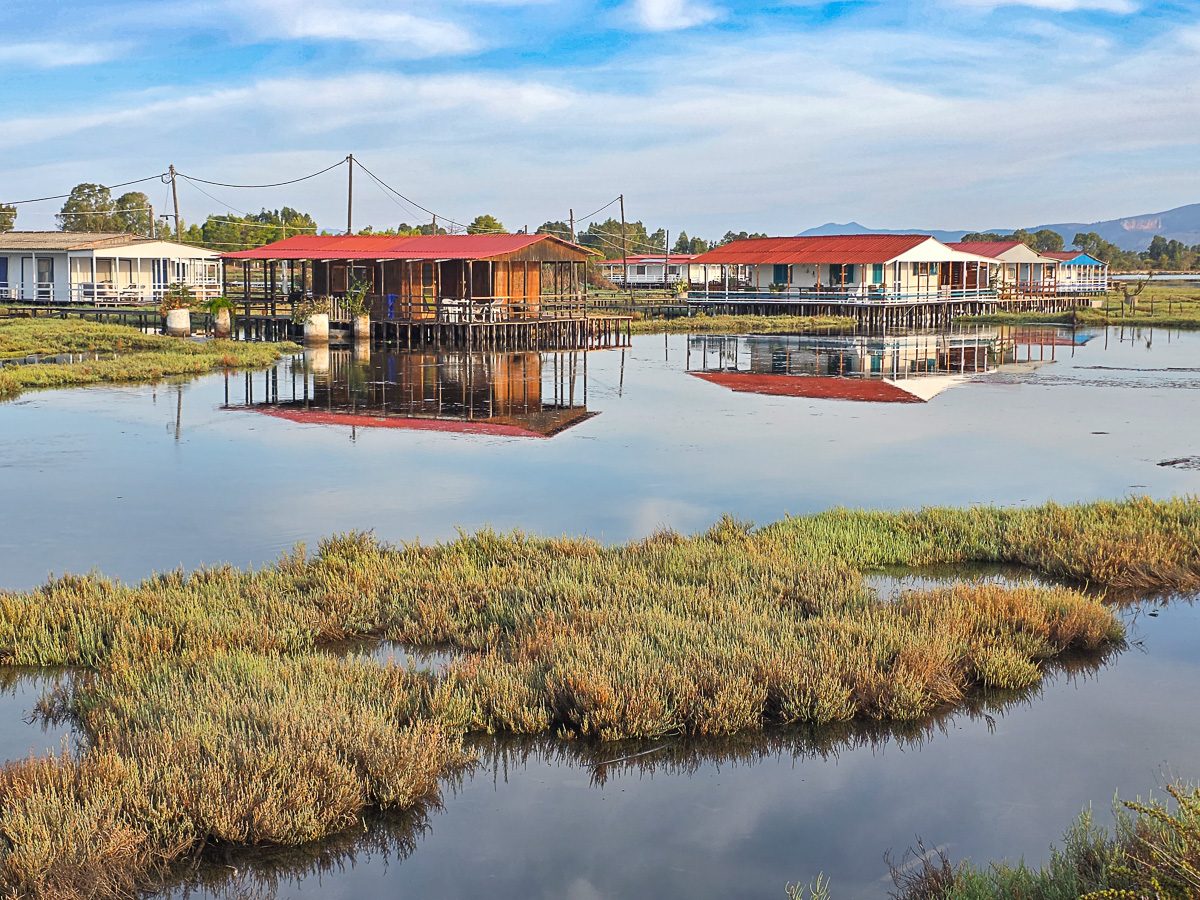
The thing with an approaching storm is that it adds a certain amount of drama to the experience and to the images. In this instance, it provided the perfect backdrop for the mandraki, a small enclosed shelter for a cluster of traditional fishing boats. Concrete piles, wooden bridges just high enough for a boat and its captain to sail out into the open lagoon. Rickety wooden jetties, a convenient vantage point for an egret to look for its next meal. The silence. Being close to a lagoon is a completely different experience from being next to the sea. It’s the flatness, the reflections, the wide open space and the wildlife that choose to inhabit this type of environment. It’s quite special.
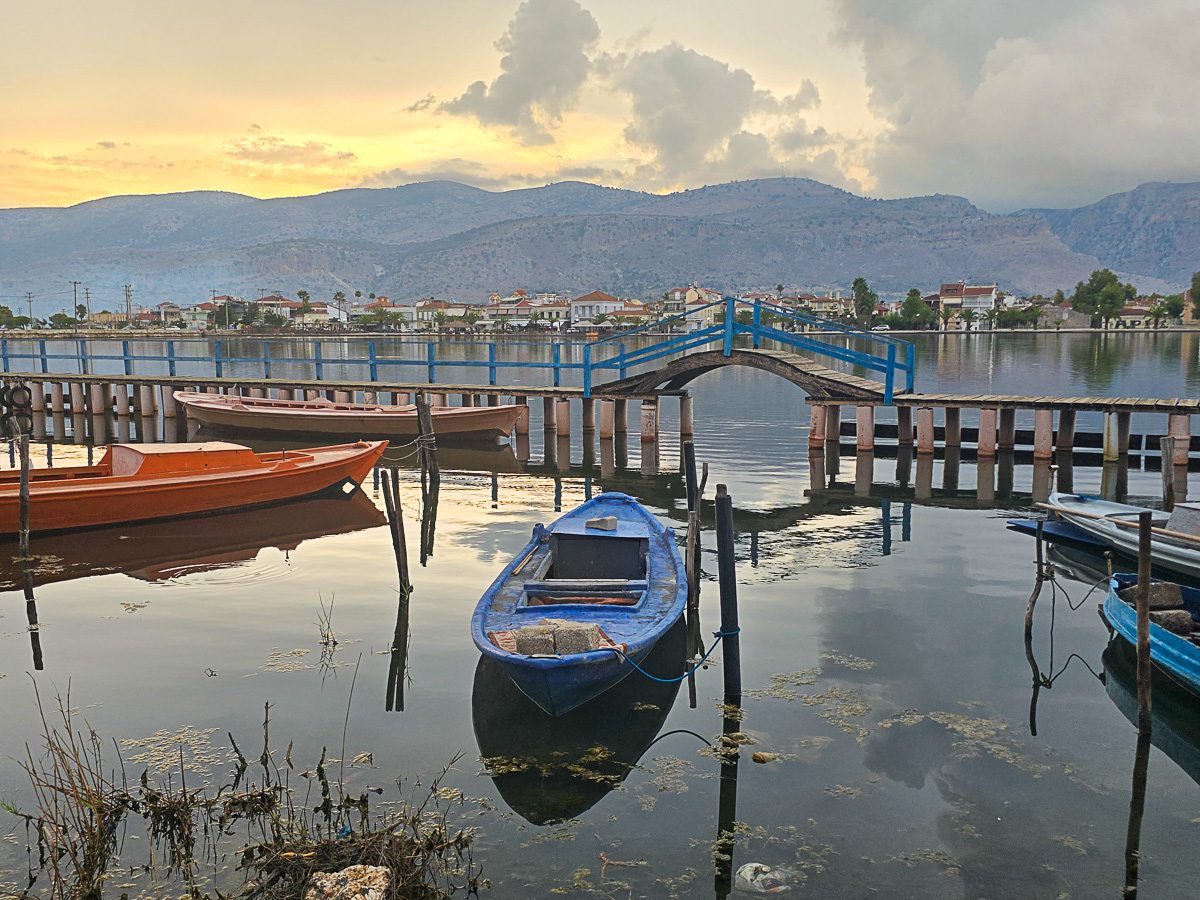

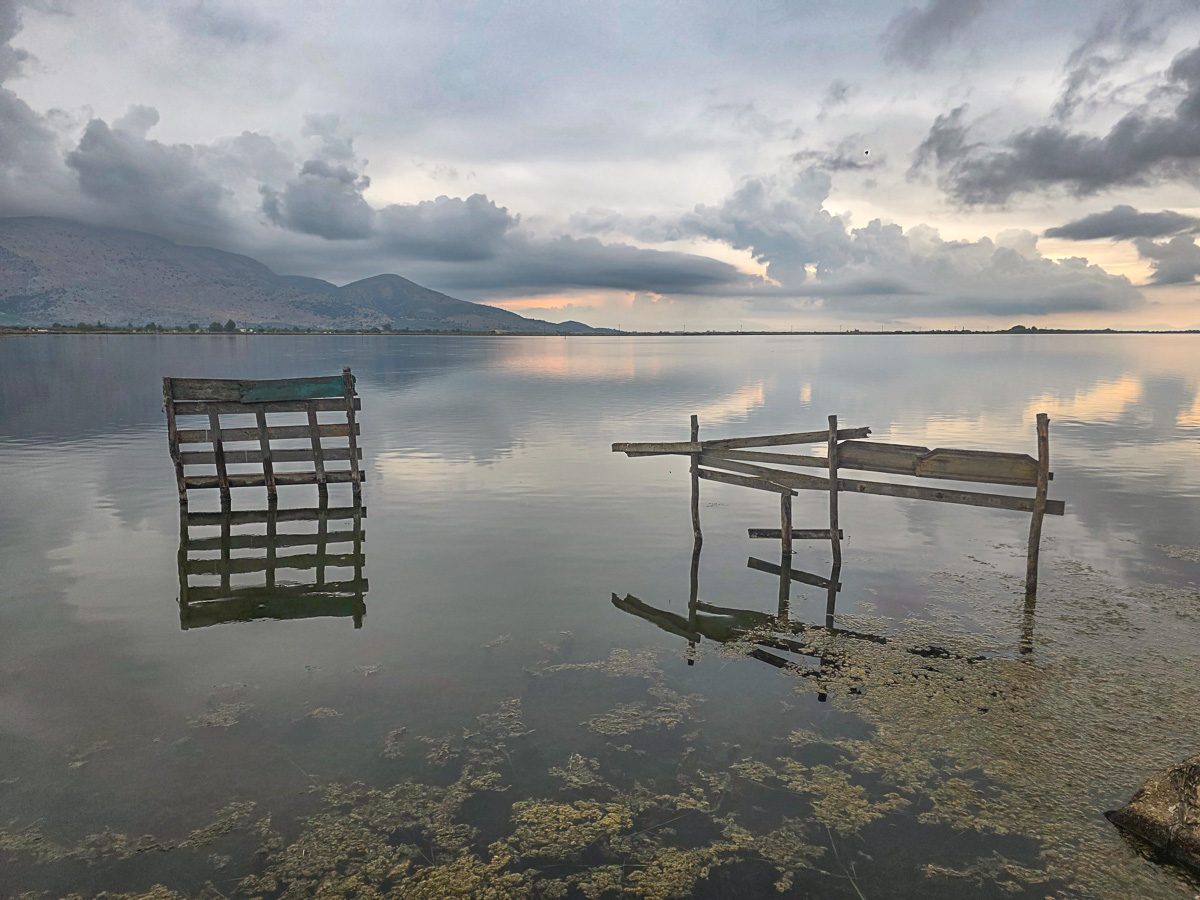

On my way back towards the bridge, the sound of hammering broke the silence. Across from the mandraki, a man was working away in his small boat repair workshop. A traditional craft which I’m sure is a dying art. He kindly obliged to let me take a short video of him at work.
Just as I approached the bridge, flashes of lightning appeared somewhere in the direction of Messolonghi. It was time to get supplies and batten down the hatches.
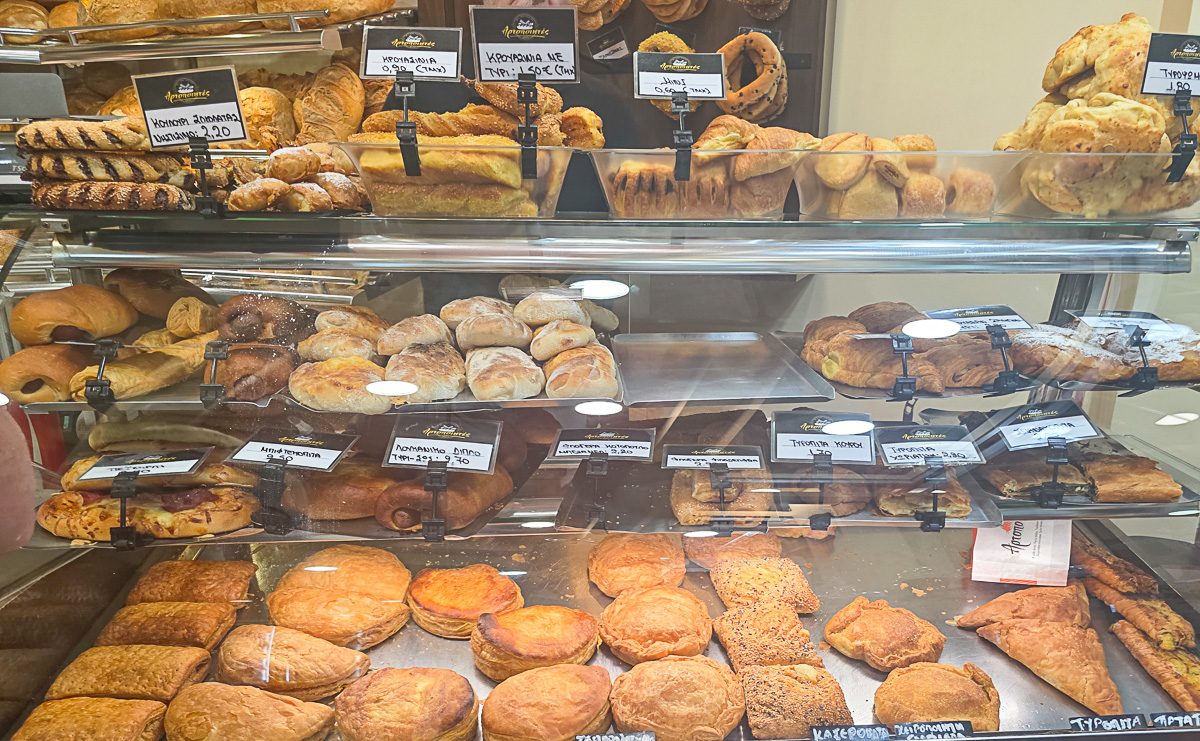
Just around the corner from the Alexandra Hotel and on the main street cutting east to west, is the fantastic bakery Artopoiites. There are bakeries – and there are bakeries and this is one of the truly exceptional ones. As the storm rolled in and the rain began to pound, I tucked into one of the best spanakopitas I’ve ever had.

Again, I found myself realising that two days on Aitoliko wasn’t long enough. I truly believe that to get the sense of a place properly, you need to linger for a while. See the sunrise and watch it set. Observe everyday life, the routines and patterns. Connect with a person or two. That’s why travelling in Greece by hire car will never work for me. That hit-and-run approach to ‘doing’ a place rather than actually seeing and feeling it just isn’t for me. Limited bus schedules force you to stay – and that’s a good thing. Yes, hauling luggage from one place to another can be exhausting, but the problem isn’t the mode of transport. It’s the fact that I haven’t yet mastered the art of light packing, and maybe I never will. But I’ll keep trying.
It was time to hit the road and travel to the next destination. I’d purchased my ticket from the small KTEL office the day before just because there was some confusion when I’d made enquiries earlier, and it all took a bit of unravelling. When asking for a ticket to Astakos, ensure you pronounce your vowels clearly, or it could be misunderstood as the word Astiko, and you may accidentally find yourself on the local bus instead of a KTEL Intercity. A former German colleague did once tell me that I had flat northern vowels.
Anyway, Astakos was indeed the next destination. A place I’d blindly stuck a pin in on the map, as it was vaguely in the direction I was heading. Onwards and upwards.

Discover more from
Subscribe to get the latest posts sent to your email.
MY BIG FAT GREEK TRAVEL SURVEY
How do you really plan your Greek adventures? I'd love to hear from you.
TAKE THE SURVEY →